
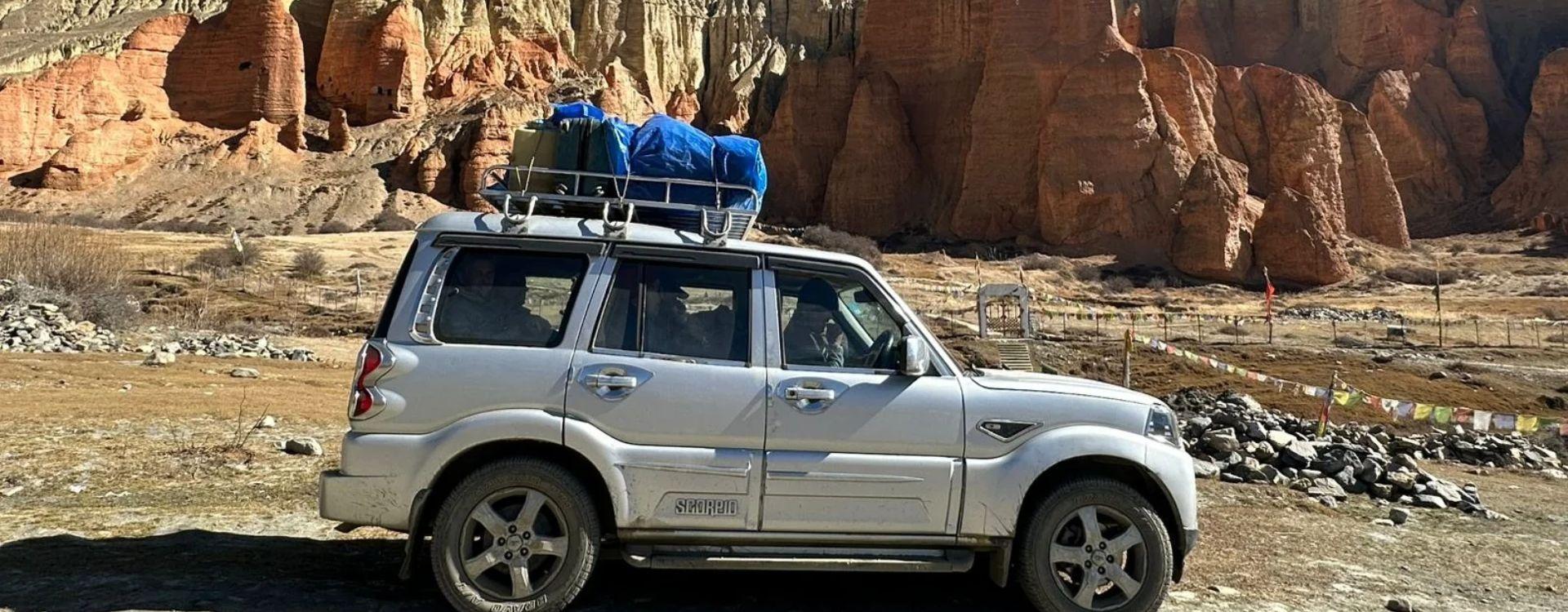
Nepal Hiking Team (NHT) provides ground transfers, trailhead transportation, domestic flights, and helicopter charter services exclusively to travelers who book our trekking or tour packages.
Getting around Nepal is an important part of planning a trekking holiday, cultural tour, or sightseeing trip. The country's geography ranges from busy urban roads and major highways to narrow mountain roads, remote villages, and high-altitude destinations. Transportation requirements can therefore change considerably depending on where you are travelling.
Nepal Hiking Team arranges transportation across Nepal for airport transfers, trekking access, sightseeing, cultural tours, and private holidays. Available options include private cars, 4WD jeeps, Hiace vans, tourist buses, shared transportation, domestic flights, and helicopter services.
Our Kathmandu-based team coordinates transportation according to your itinerary, group size, luggage requirements, road conditions, and preferred travel arrangements. We also work with external transportation providers, including Ace Transport, for suitable ground transportation services.
Choosing the right vehicle involves more than passenger capacity. Road accessibility, journey length, seasonal conditions, driver experience, vehicle condition, and the practical requirements of each destination all influence transportation planning.
This guide explains the transportation options available in Nepal, how they are used for popular trekking regions, and what travelers should consider before arranging their journeys.
Understanding Transportation in Nepal
Nepal has a varied transportation network. Major cities and popular tourist destinations are connected by highways, while many trekking trailheads require additional travel along rural and mountain roads.
The most suitable transportation depends on the destination.
For example, a private car is generally practical for Kathmandu airport transfers and sightseeing. A tourist bus can accommodate group journeys between Kathmandu and Pokhara, while a four-wheel-drive jeep may be more appropriate for remote mountain roads.
Some trekking destinations, particularly in the Everest region, require domestic flights to reach the starting point. Helicopters are another option for selected mountain sightseeing experiences and planned trekking connections.
When arranging transportation, Nepal Hiking Team considers:
- Destination and road accessibility.
- Number of passengers and luggage requirements.
- Private, shared, or group transportation preferences.
- Road surface, distance, and seasonal conditions.
- Vehicle suitability and availability.
- Travel schedules and connecting services.
- Passenger safety, comfort, and accessibility.
These considerations help determine which transportation option is practical for each part of your journey.
Types of Transportation Available in Nepal
Private Car Transportation
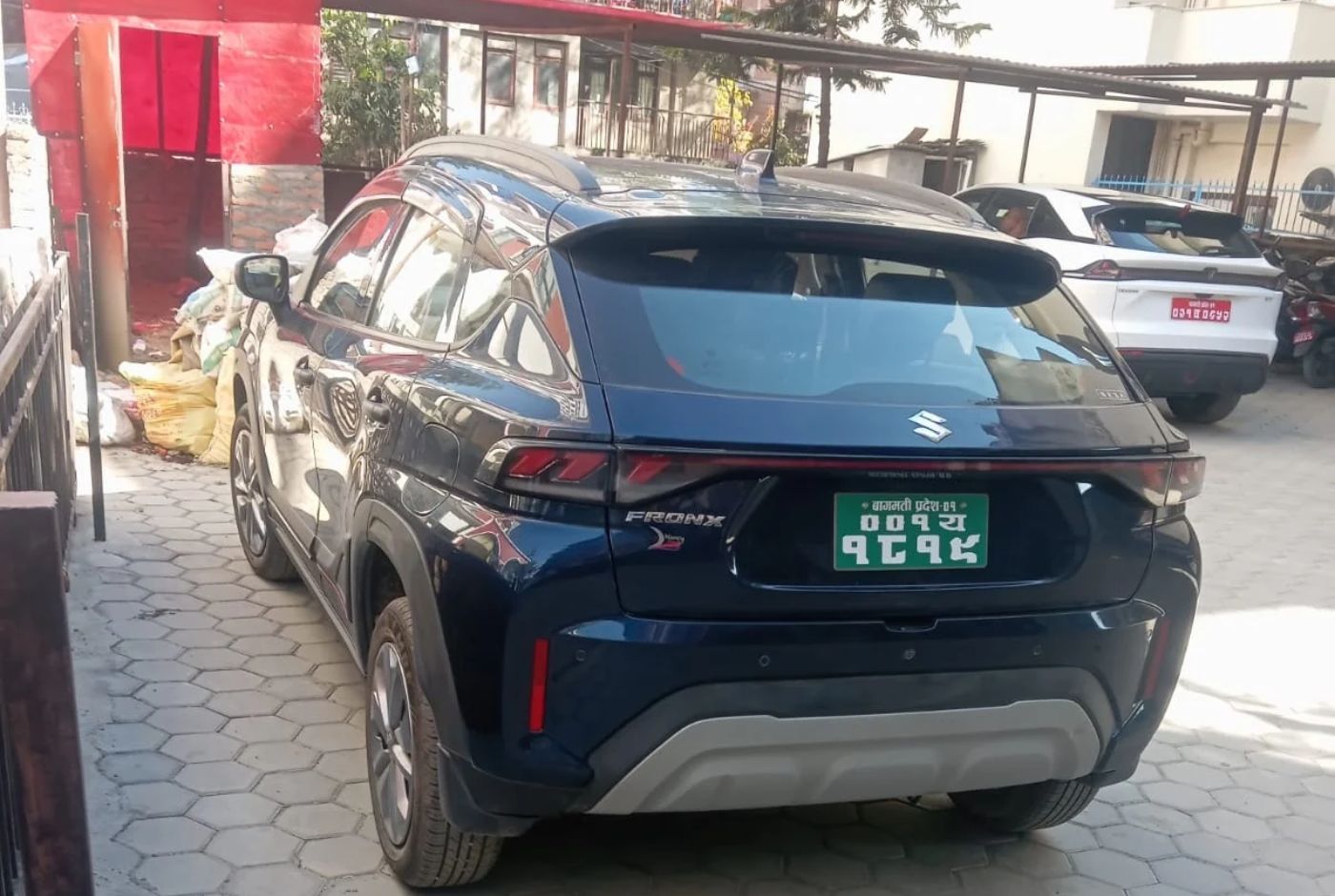
Private cars are commonly used for airport transfers, hotel pickups, Kathmandu Valley sightseeing, and journeys between accessible destinations.
A dedicated vehicle offers flexibility over departure times, planned stops, and travel arrangements. It can be particularly suitable for couples, solo travelers, families, and small groups who prefer not to share their journey with other passengers.
Nepal Hiking Team arranges private cars according to passenger numbers, luggage capacity, and journey requirements. Common uses include:
- Tribhuvan International Airport pickups and drop-offs.
- Kathmandu Valley sightseeing.
- Hotel and restaurant transfers.
- Kathmandu to nearby destinations.
- Private transportation between major tourist destinations.
A standard private car is not suitable for every mountain road. Where a route includes rough surfaces, steep gradients, or difficult terrain, a more appropriate vehicle may be required.
Private Jeeps and 4WD Vehicles
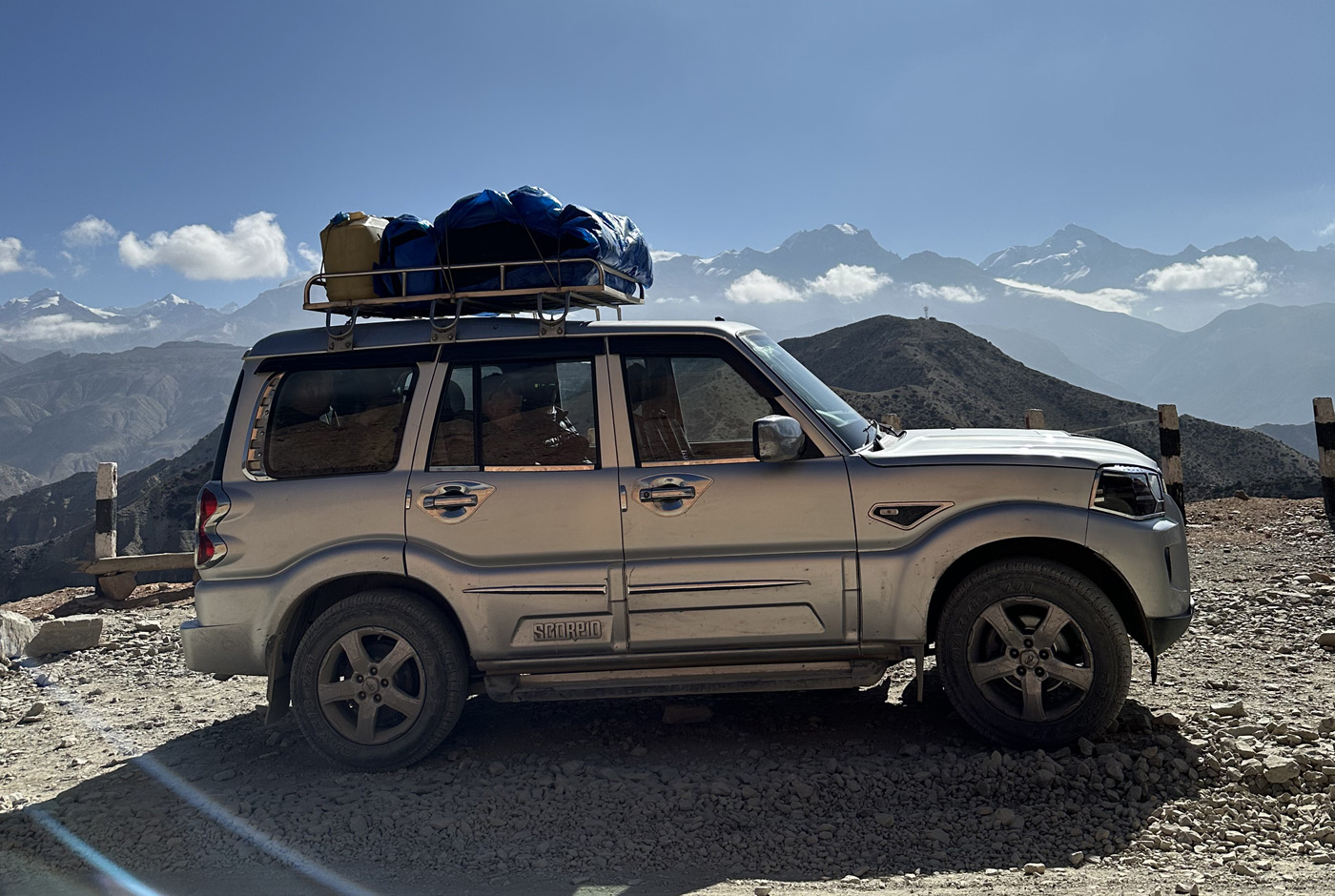
Four-wheel-drive jeeps are important for accessing several trekking and travel destinations in Nepal where road conditions can be challenging.
Unlike major highways, mountain roads may include gravel surfaces, uneven tracks, steep sections, river crossings, and narrow bends. Road conditions can also change after rainfall, landslides, or other seasonal events.
A suitable 4WD vehicle provides greater capability for these journeys, although four-wheel drive does not make every road safe or accessible in all conditions. Nepal Hiking Team arranges jeep transportation for suitable destinations and itineraries, including:
- Upper Mustang and Lo Manthang overland journeys.
- Manang and selected Annapurna routes.
- Manaslu trekking access.
- Remote mountain villages and road-accessible trailheads.
- Selected off-road sightseeing journeys.
- Vehicle selection depends on the road section, weather, passenger numbers, luggage, and current accessibility.
For some journeys, a jeep is required for only one section of the itinerary. Other sections may be completed by tourist bus, domestic flight, or another appropriate vehicle.
Hiace Vans and Minivans
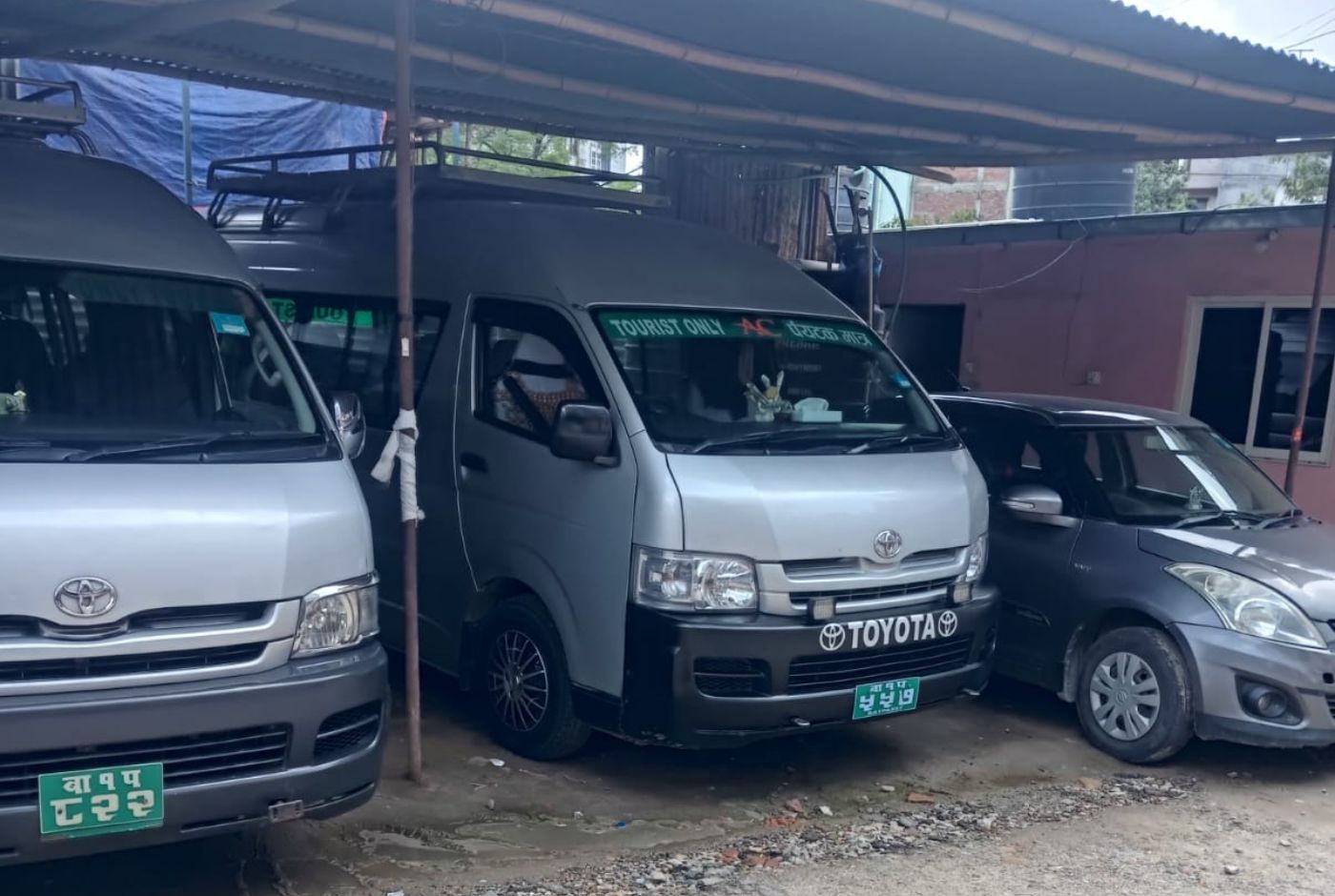
Hiace vans and suitable minivans provide an alternative to standard cars for families, small groups, and trekking parties travelling together. They offer additional passenger and luggage capacity, making them practical for airport transfers, sightseeing, and longer overland journeys.
Nepal Hiking Team arranges Hiace transportation for:
- Group airport pickups and drop-offs.
- Kathmandu sightseeing.
- Hotel-to-hotel transfers.
- Kathmandu to Pokhara and other accessible destinations.
- Suitable trekking access routes.
- Private family and group holidays.
When selecting a van, we consider the actual number of passengers and the amount of luggage being carried. A vehicle with enough seats may still have insufficient luggage space for a trekking group carrying duffel bags and additional equipment. The final vehicle is therefore selected according to the complete transportation requirements.
Tourist Bus Transportation

Tourist buses are a practical transportation option for travelers moving between Nepal's major tourist destinations. They are particularly useful for journeys connecting Kathmandu, Pokhara, and Chitwan. Compared with arranging separate private vehicles for every traveler, a suitable tourist bus allows more passengers to travel together.
Nepal Hiking Team considers tourist bus transportation for: Kathmandu to Pokhara, Pokhara to Kathmandu, Kathmandu to Chitwan, Chitwan to Pokhara, and other suitable intercity routes.
Bus facilities, seating arrangements, departure schedules, and journey durations depend on the operator and service selected.
Travelers should also consider that road journeys in Nepal can take longer than expected because of traffic congestion, road construction, weather, and changing road conditions. For example, our Annapurna Base Camp Trek includes an overland tourist bus journey from Kathmandu to Pokhara, followed by a private jeep transfer towards the trekking starting point.
This combination allows travelers to use group transportation for the main highway section and a more suitable vehicle for the mountain access road.
Shared and Private Transportation
Travelers can choose between private and shared transportation depending on their itinerary, budget, and personal preferences.
Private transportation provides greater control over departure times, stops, and the overall travel arrangement. It is useful for families, couples, small groups, and journeys requiring specific pickup or drop-off locations.
Shared transportation allows travelers following the same route and schedule to use one vehicle instead of arranging separate transfers.
Where practical, Nepal Hiking Team considers shared transportation as a more resource-efficient alternative to multiple individual vehicles. For example, when a group of trekkers is travelling from Kathmandu to the same destination, arranging a suitable shared vehicle can reduce unnecessary vehicle journeys. The availability of shared transportation depends on the route, departure date, passenger numbers, luggage requirements, and operating arrangements.
Public Transportation in Nepal
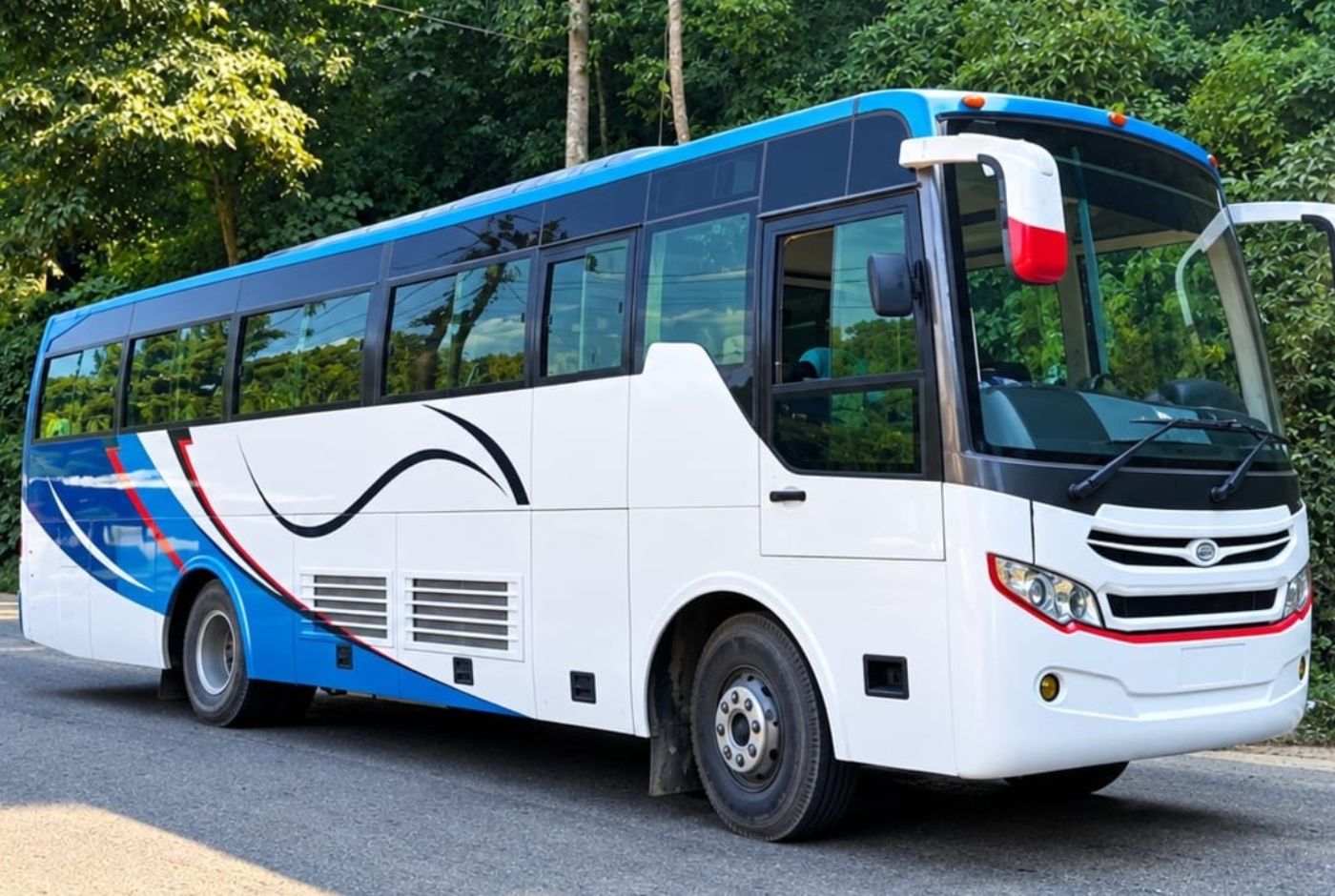
Public transportation is available across many parts of Nepal through local buses, microbuses, and other shared road services.
These services are used extensively by local communities for everyday travel and can be an economical option for independent travelers.
However, public transportation is not equally convenient for every destination. Some routes have limited departure schedules, crowded services, restricted luggage space, or connections that do not align with trekking itineraries.
Nepal Hiking Team considers public transportation where it is practical for the journey. For organized trekking groups, tourist buses, private vehicles, or suitable shared transfers may offer a more manageable arrangement. Our approach is to select transportation according to the actual requirements of the trip rather than recommend public transportation where it creates an unnecessary safety or operational concern.
Domestic Flights in Nepal

Domestic flights connect Kathmandu and other major cities with several important destinations across Nepal. For trekking itineraries, flights can significantly reduce overland travel and provide access to areas where road transportation is difficult or impractical.
Depending on the route and current airline schedules, domestic flights may be arranged for destinations including:
- Lukla for Everest region treks.
- Pokhara for Annapurna region journeys.
- Other operating domestic airports according to the itinerary.
The Everest region is a particularly common example of domestic flight transportation.
Travelers joining the Everest Base Camp Trek generally fly to Lukla, where the trekking journey begins. Depending on the season and flight operations, departures may operate from Kathmandu or Manthali Airport in Ramechhap.
When flights operate from Ramechhap, an additional road transfer from Kathmandu is required. Read our guide to Lukla flight arrangements for further information about seasonal departures and transportation connections.
Helicopter Transportation and Sightseeing
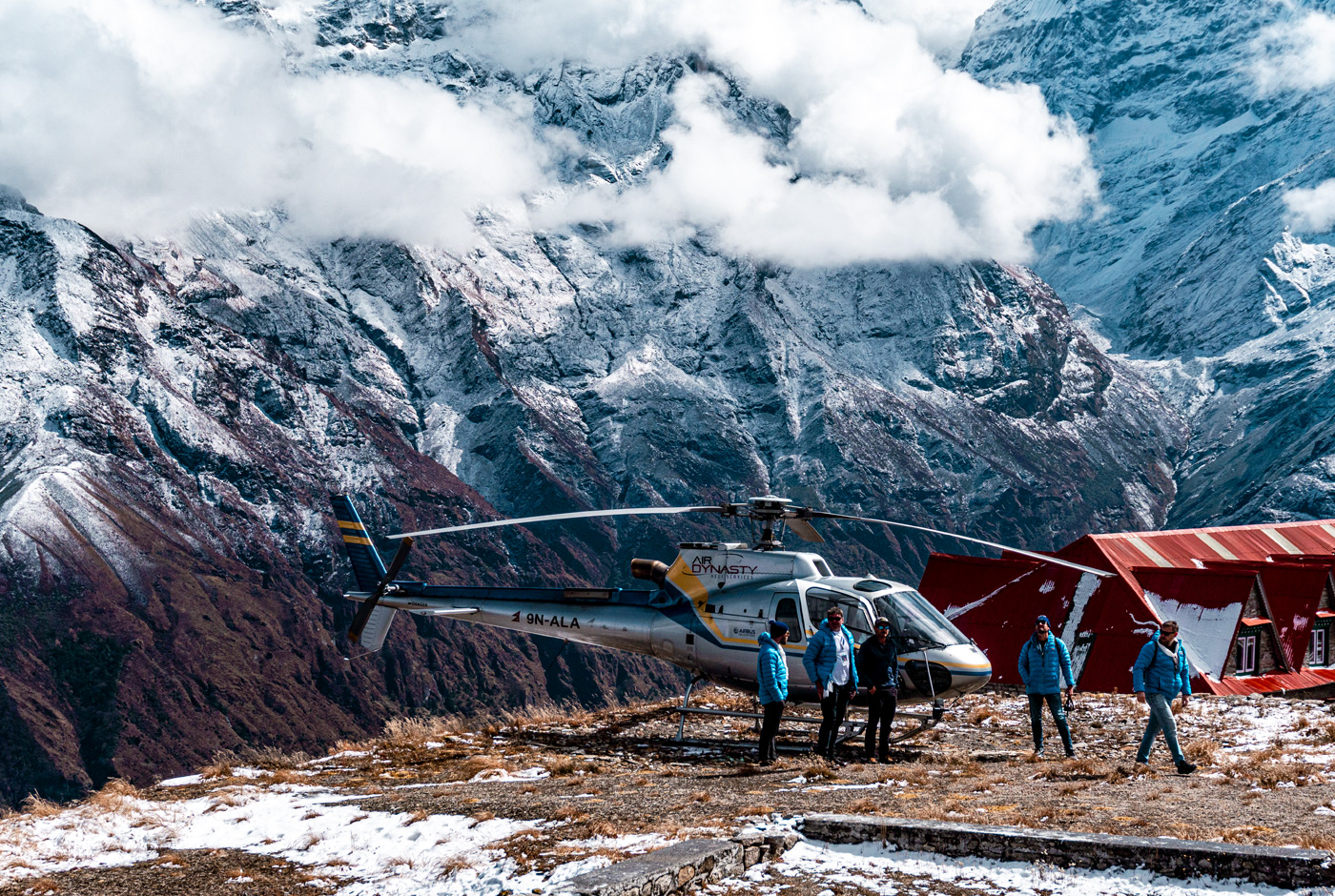
Helicopters provide access to selected destinations in Nepal where travelers prefer a direct flight or a mountain sightseeing experience. They are particularly useful for certain high-altitude sightseeing journeys, planned trekking connections, and private travel arrangements.
Nepal Hiking Team arranges suitable helicopter services for experiences such as:
- Everest Base Camp and Kala Patthar sightseeing.
- Everest region helicopter tours.
- Annapurna region helicopter experiences.
- Langtang helicopter tours.
- Selected trekking and overland journey connections.
- Private helicopter charter arrangements.
A helicopter journey can provide mountain views and access to destinations without requiring the traveler to complete the entire journey on foot.
However, helicopter transportation has specific operational requirements. Passenger weight, luggage restrictions, weather, landing permissions, altitude, and aircraft availability all influence whether a particular journey can operate. Landing at high-altitude destinations may also be restricted by operational and safety requirements.
Helicopter sightseeing and point-to-point transportation are arranged according to the approved itinerary and operating company's conditions. Explore our helicopter tours in Nepal for available experiences.
Our Ground Transportation Provider: Ace Transport
Coordinating road transportation requires suitable vehicles, experienced drivers, clear schedules, and communication between the travel company and the transportation provider.
Nepal Hiking Team works with external ground transportation providers, including Ace Transport, to arrange suitable road journeys for our travelers.
Ace Transport is based in Kathmandu and provides vehicle rental and transportation services for different travel requirements. Its published services include cars, vans, jeeps, Hiace vehicles, and buses.
Depending on the journey, we coordinate the appropriate vehicle for airport transfers, Kathmandu sightseeing, intercity transportation, and selected mountain routes.
Working with transportation providers allows us to arrange different vehicle categories without treating every journey as a one-size-fits-all service.
The transportation provider and vehicle assigned to a particular trip depend on the destination, passenger requirements, schedule, road conditions, and availability.
- Vehicle Maintenance and Transportation Standards
- Mechanical condition and roadworthiness
- Passenger safety equipment
- Cleanliness and passenger comfort
- Government requirements and documentation
- Supplier communication and review
- Driver Standards and Road Safety
Sustainable Transportation Practices at Nepal Hiking Team
Transportation is one of the sources of environmental impact associated with tourism. Vehicle fuel consumption contributes to greenhouse gas emissions and local air pollution, while unnecessary journeys can increase traffic and resource use.
As part of our sustainability management practices, Nepal Hiking Team considers environmental impacts when selecting transportation options.
Our approach focuses on practical improvements rather than describing any journey as completely sustainable.
Choosing Shared Transportation Where Practical
When travelers are following the same route and schedule, shared transportation can reduce the number of vehicles required.
We consider tourist buses, shared transfers, group transportation, and suitable public transportation where these options meet the requirements of the journey.
For example, a group travelling together in one appropriate vehicle can reduce the need for several separate cars.
Supporting Electric and Lower-Emission Vehicles
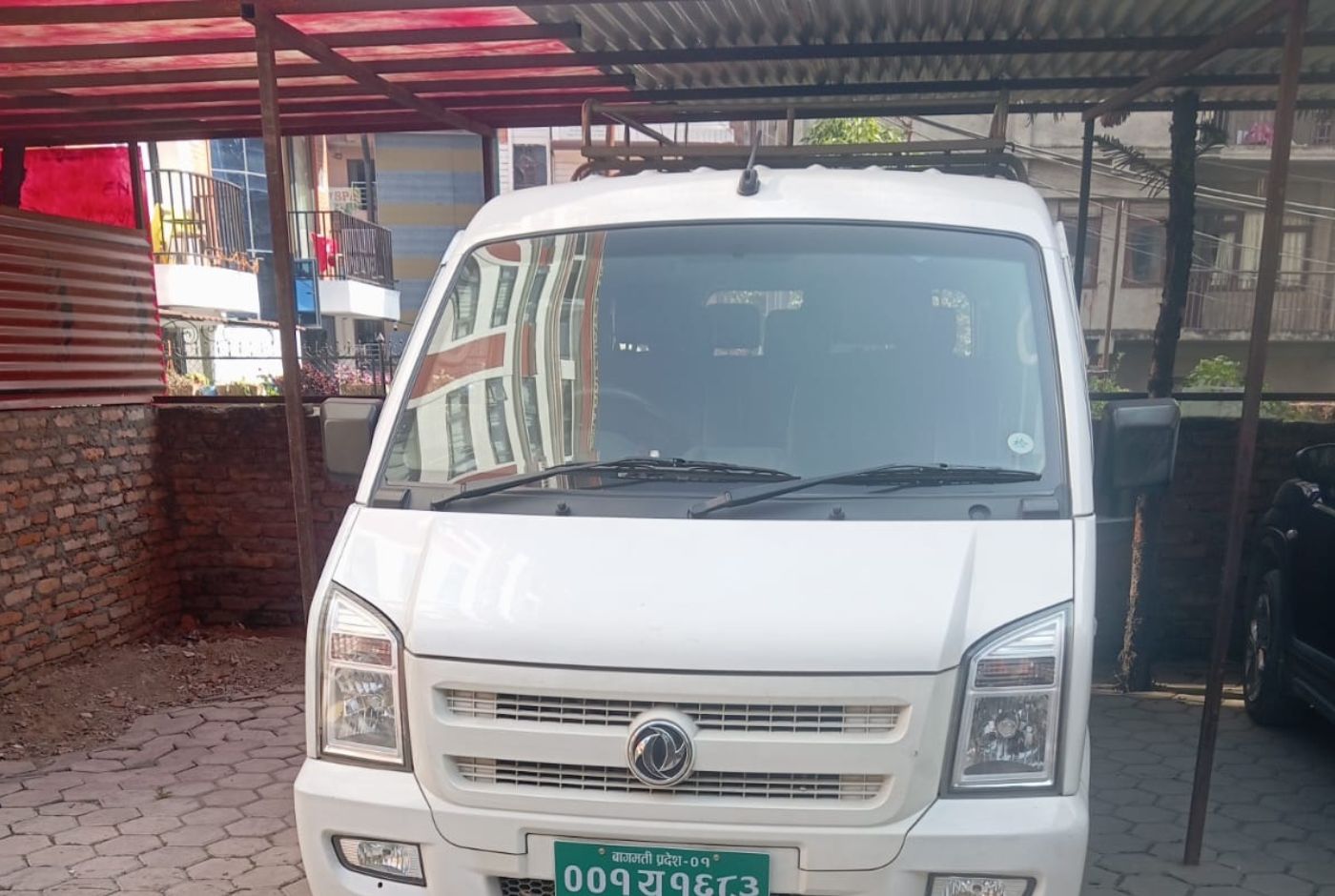
Electric vehicles and more fuel-efficient vehicles are considered where they are available and operationally suitable.
We particularly consider them for:
- Airport transfers.
- Hotel transportation.
- Kathmandu Valley sightseeing.
- Short-distance city journeys.
For longer mountain journeys, electric vehicle availability may be limited by charging infrastructure, driving range, road conditions, and the transportation requirements of trekking groups.
In these situations, we select an appropriate available vehicle and continue to consider lower-emission alternatives as they become practical.
Reducing Unnecessary Fuel Consumption: Our transportation expectations encourage drivers to avoid unnecessary engine idling, use direct routes where practical, maintain suitable tire pressure, and drive smoothly. We also consider vehicle sharing and route planning to avoid unnecessary journeys and repeated transfers.
Responsible Travel and Waste Management
Passengers are encouraged to carry reusable water bottles, avoid unnecessary single-use packaging, and keep waste inside the vehicle until an appropriate disposal point is available.
Drivers and guides are encouraged to remind travelers not to throw waste from vehicles or dispose of it along roadsides, rivers, and natural areas.
Our transportation practices form part of Nepal Hiking Team's wider commitment to responsible tourism and environmental protection. Read more: Sustainable Practices at Nepal Hiking Team
Transportation for Popular Trekking Regions in Nepal
The transportation requirements for trekking differ from one region to another. Some routes begin with a domestic flight, while others require several hours of road travel before the walking section starts. Here are some examples of how transportation is arranged for popular trekking destinations.
- Everest Region: Domestic flights connect Kathmandu or Manthali Airport (Ramechhap) with Lukla, depending on the season and flight operations. Road transfers from Kathmandu to Ramechhap and helicopter connections are available for selected itineraries. Explore our Everest Base Camp Trek. For road-based itineraries like the Everest Base Camp Trek by Road, ground transport is provided in private 4WD jeeps tailored to group size.
- Annapurna Region: Transportation commonly combines tourist buses, private vehicles, and mountain jeeps. Our 14-day Annapurna Base Camp Trek includes a tourist bus from Kathmandu to Pokhara and jeep transfers towards Hile and from Samrung to Pokhara. Explore our Annapurna Base Camp Trek, Annapurna Circuit Trek, and other packages.
- Langtang Region: The Langtang region is accessed by road from Kathmandu, with transportation arranged towards Thulo Syabru. Private vehicles or shared transportation are selected according to the itinerary, road conditions, and availability. Explore our Langtang Valley Trek.
- Manaslu Region: The Manaslu Circuit Trek begins with a road journey from Kathmandu towards Machha Khola. Suitable jeeps and private vehicles are arranged according to road conditions, trekking access points, and return transportation requirements. Explore our Manaslu Circuit Trek.
- Upper Mustang: Upper Mustang transportation includes private jeeps, road transfers, and domestic flights, depending on the selected itinerary. Overland journeys provide access to destinations such as Kagbeni and Lo Manthang, subject to road accessibility and weather conditions. Explore our Upper Mustang Trek and Upper Mustang Overland Tour.
- Kathmandu, Pokhara, and Chitwan: Private cars, Hiace vans, tourist buses, and domestic flights are available for travel between these major tourist destinations. Our Kathmandu, Pokhara, and Chitwan Tour combines transportation across all three destinations.
How to Choose the Right Transportation for your Trekking and Tour in Nepal
The best transportation option depends on your itinerary rather than simply choosing the most expensive or fastest vehicle.
Before making a reservation, consider the following factors.
- Group size: A private car may be suitable for a couple, while a Hiace van or bus may be more practical for a larger group.
- Luggage: Trekking equipment, duffel bags, and personal luggage require additional space. Confirm luggage capacity before selecting a vehicle.
- Road conditions: Some mountain destinations require 4WD vehicles, while major highways can generally be travelled by suitable cars, vans, and buses.
- Travel time: Domestic flights can reduce overland travel time, but they are subject to weather and operational conditions. Road journeys provide an alternative where suitable.
- Budget: Shared transportation and tourist buses can be economical alternatives to private vehicles, depending on the route and availability.
- Comfort and accessibility: Families, older travelers, and people with particular mobility requirements may need specific seating, pickup arrangements, or vehicle facilities. These requirements should be discussed before booking.
- Seasonal conditions: Rainfall, landslides, snow, road construction, and mountain weather can affect transportation schedules and accessibility.
Discussing these factors before your trip helps us recommend transportation that suits your actual travel requirements.
Arrange Your Transportation in Nepal with Nepal Hiking Team
From airport pickups in Kathmandu to mountain jeep journeys, tourist buses, domestic flights, and helicopter experiences, Nepal Hiking Team arranges transportation services exclusively for travelers who book a trekking or tour package with us.
Our team considers your destination, group size, luggage, road conditions, vehicle suitability, and itinerary when planning transportation. We also communicate vehicle maintenance and driver expectations to our transportation suppliers as part of our commitment to responsible travel.
Whether you are preparing for the Everest Base Camp Trek, travelling through the Annapurna region, exploring Upper Mustang, or planning a private holiday in Nepal, we arrange the road and air transportation required for your journey.
Post a Comment