1 Days
Check Our Risk-Free Booking Policy View Details

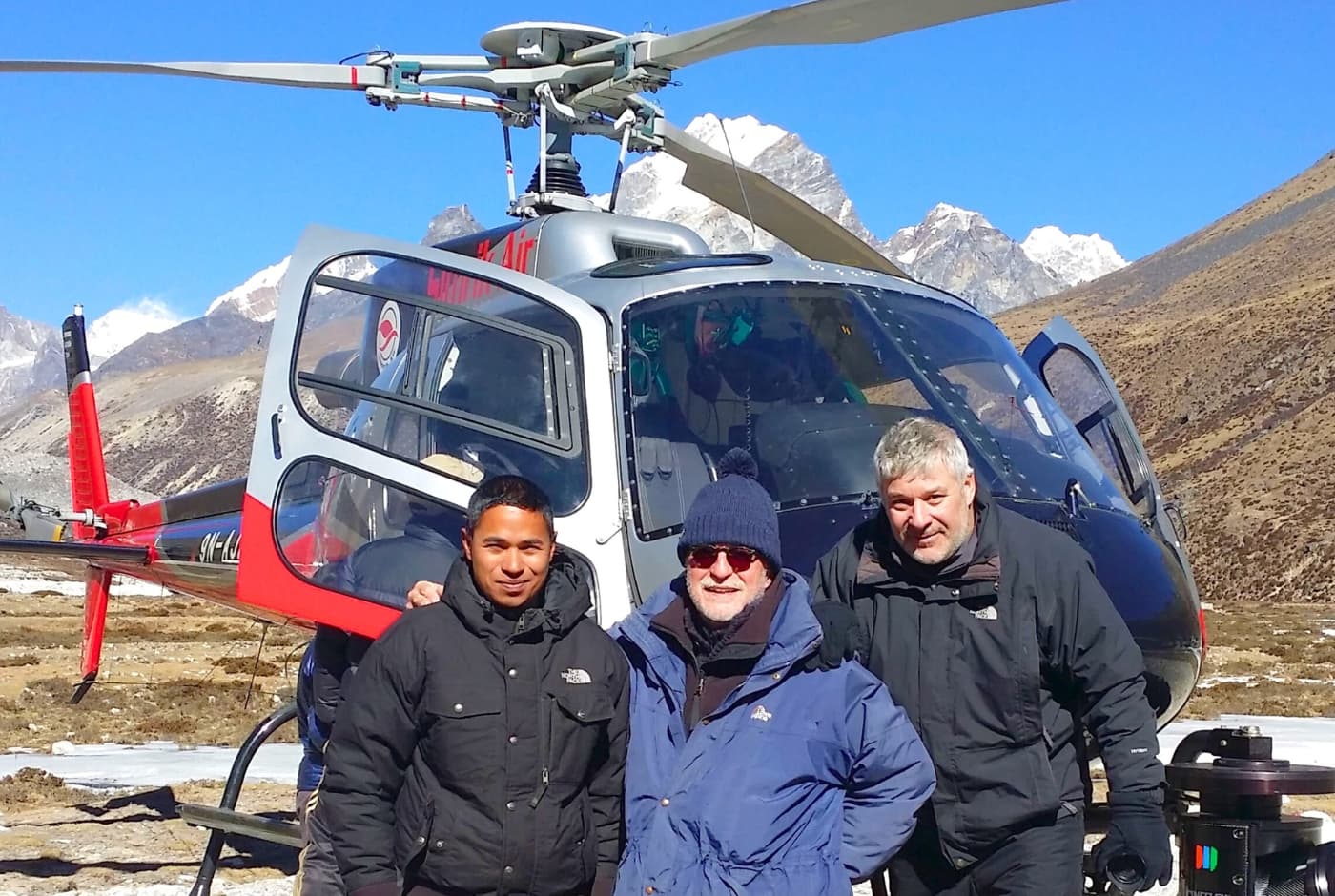
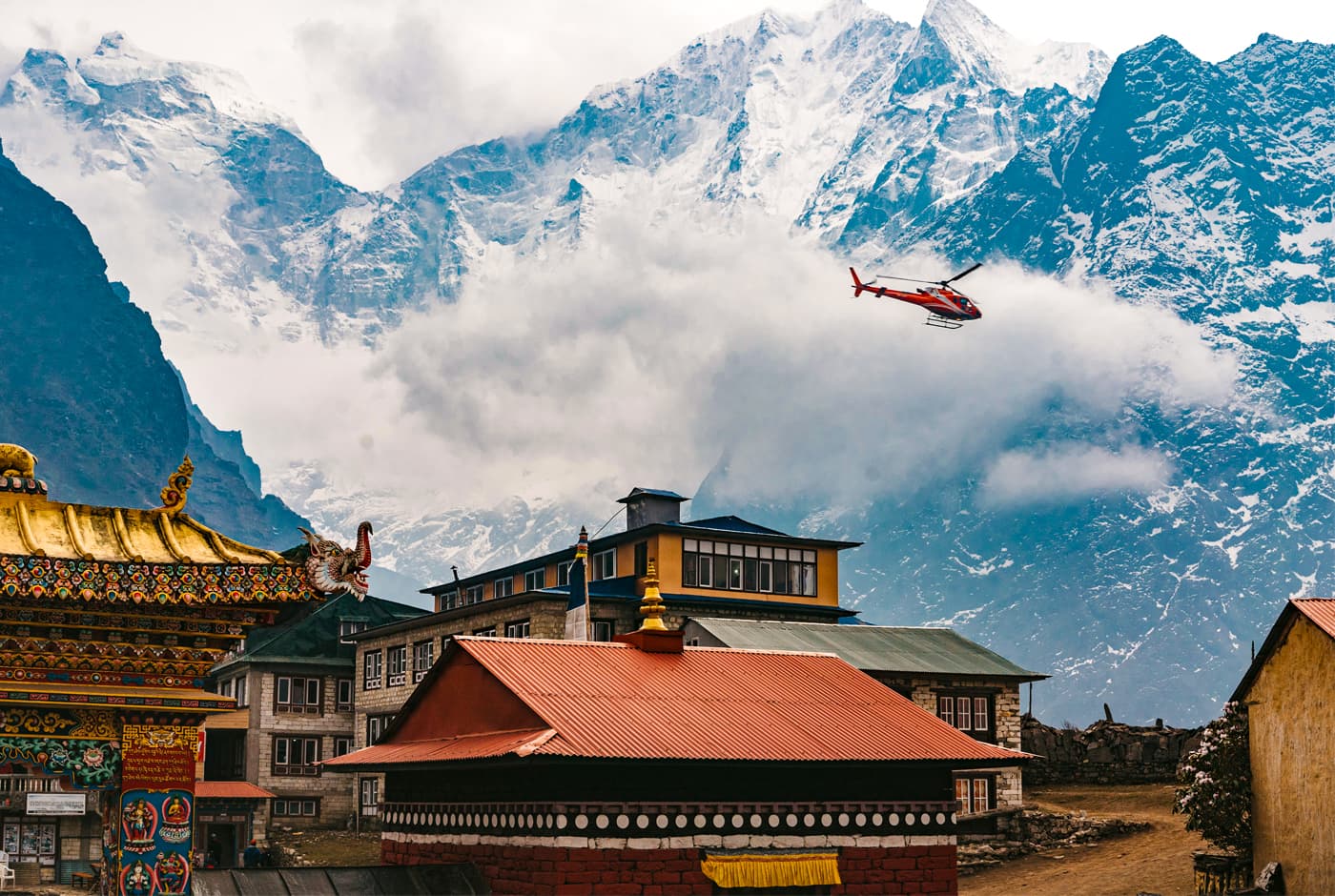
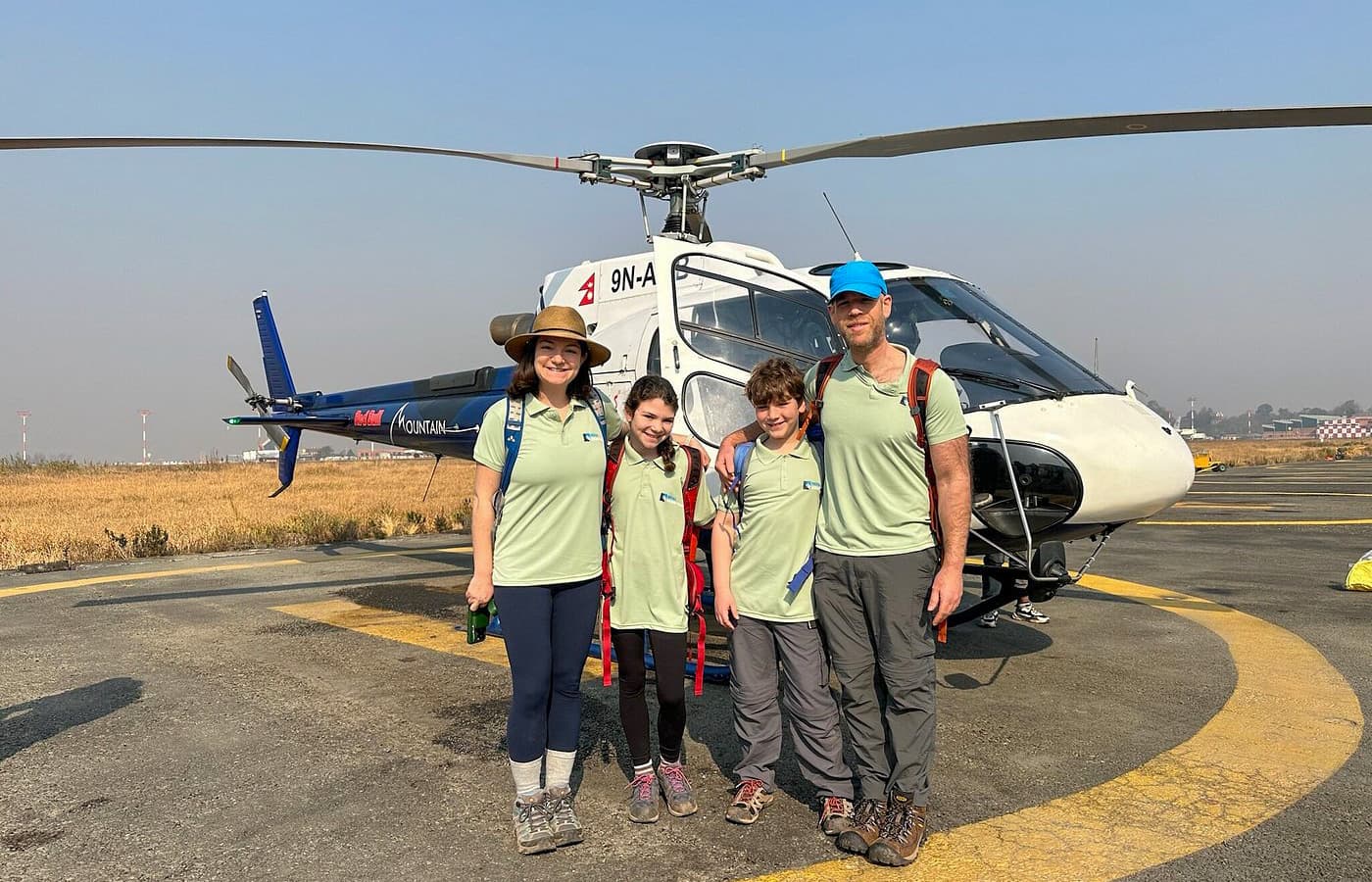
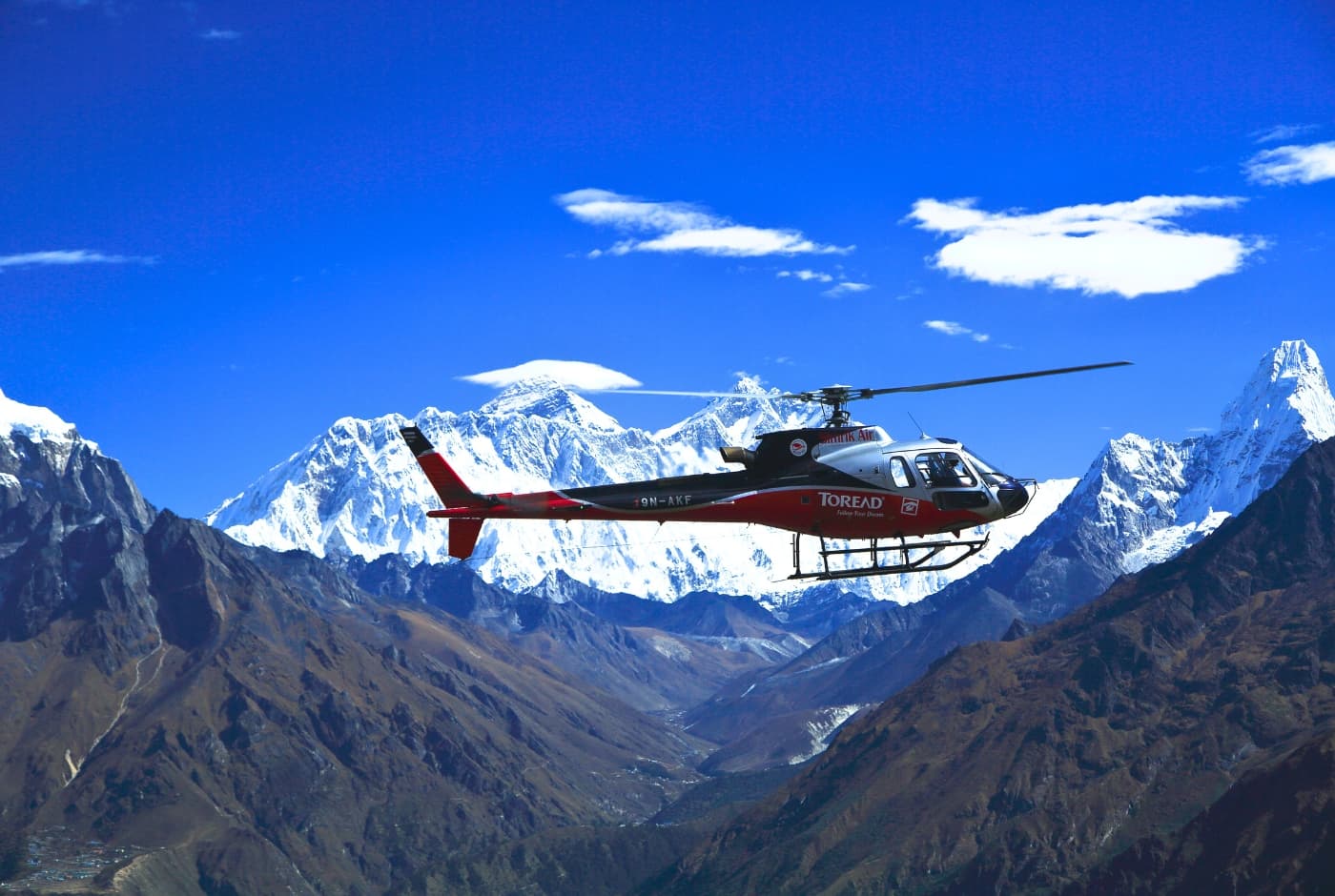
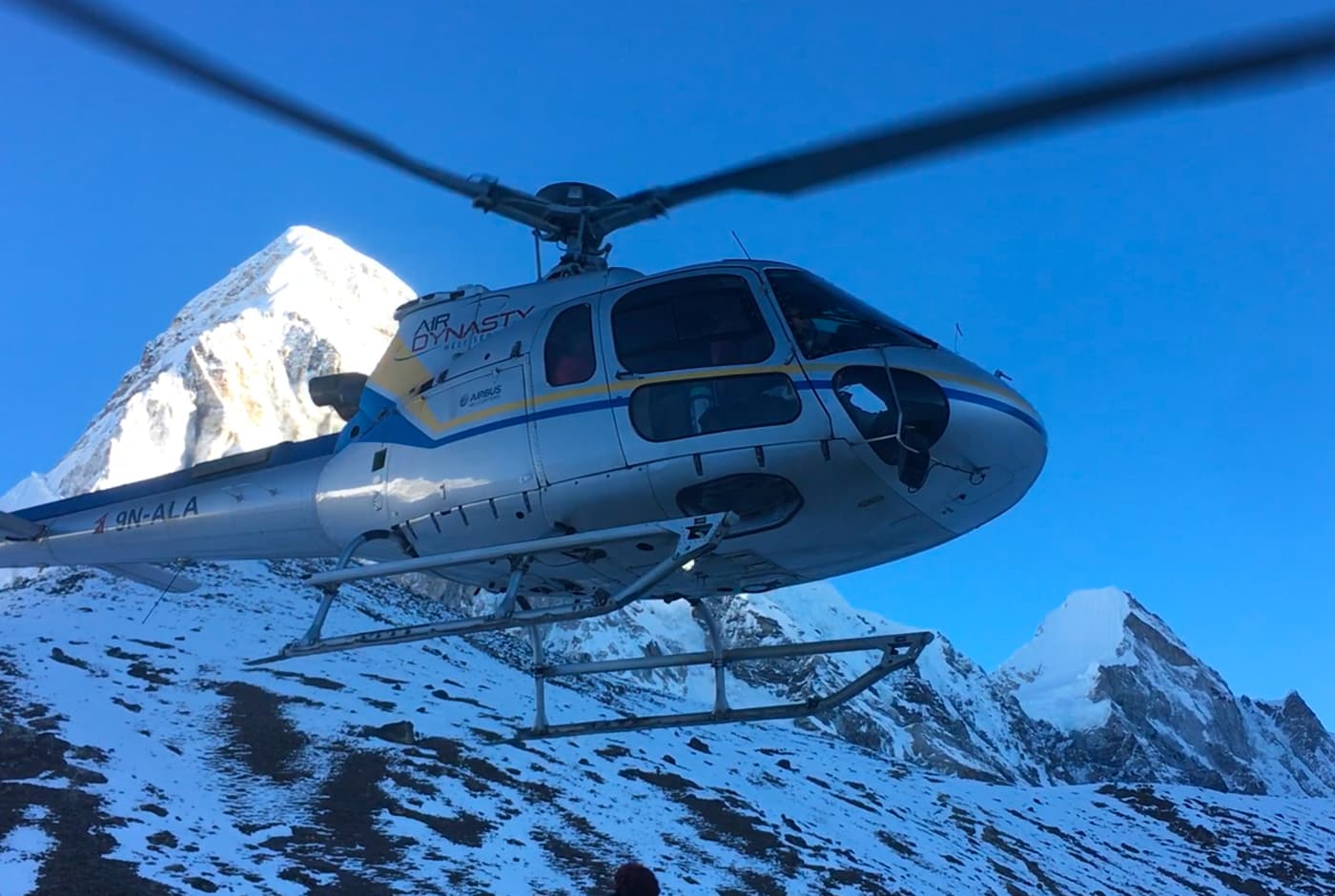
An early flight from Kathmandu, a landing high on Kala Patthar, and a return to the city by lunchtime: this Everest helicopter tour reaches the closest ground-level view of Mount Everest in a single morning, with no trekking. The key experiences are:
The Everest Helicopter Tour is the fastest way to stand at the foot of Mount Everest and return the same day. It suits travellers short on time, those who would rather not trek, and anyone who wants the region's highest views without days on the trail.
The tour lands directly at Kala Patthar, not at Gorak Shep. At 5,545 metres (18,192 feet), Kala Patthar is the standard viewpoint for the clearest ground-level sight of Everest's summit. It stands higher than Everest Base Camp and looks straight at the peak, which the base camp, lower on the glacier, cannot.
At this altitude, thin air limits the weight a helicopter can safely lift, so the aircraft carries only two passengers at a time up to Kala Patthar. The group flies together as far as Pheriche (4,240 metres), and the helicopter then shuttles guests to the viewpoint in pairs. A group of five, for example, is flown up across three rotations. Each pair spends around ten minutes at Kala Patthar, and no longer, both to limit time at altitude and to keep the rotations moving.
The tour involves no trekking and suits most ages and fitness levels, though the short spell at high altitude means guests still feel the thinner air, and anyone with a heart or breathing condition should seek medical advice first. Spring (March to May) and autumn (September to November) bring the clearest skies and steadiest weather, and are the best times to fly. Flights are not advised during the monsoon (June to August) or deep winter, when cloud hides the mountains and conditions raise safety concerns.
The tour begins and ends in Kathmandu and runs across a single morning.
The helicopter leaves Kathmandu (about 1,400 metres) before dawn and flies east into the Khumbu, landing briefly at Lukla (2,860 metres) to refuel. Lukla is the usual starting point for the Everest Base Camp Trek and holds one of the shortest mountain runways in the world.
From Lukla, the route climbs the valley over Namche Bazaar, Tengboche, and the terraced Sherpa settlements, with the Khumbu Glacier and green foothills opening ahead. The helicopter continues to Pheriche (4,240 metres), the staging point for the Kala Patthar landings.
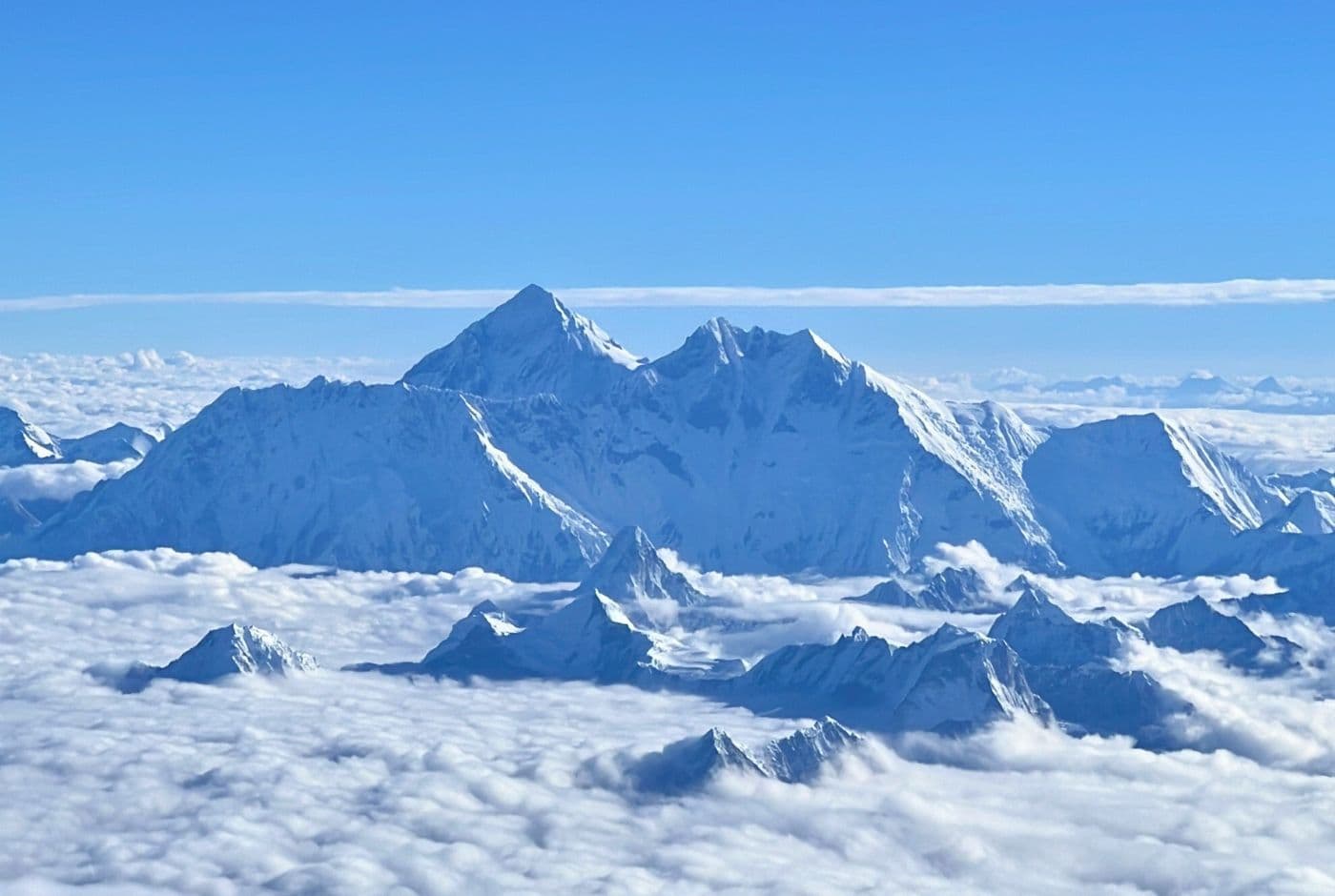
From Pheriche, guests are flown up to Kala Patthar (5,545 metres) two at a time. From the landing, Everest, Lhotse, Nuptse, Pumori, and Ama Dablam stand across the horizon, with Everest Base Camp and the Khumbu Icefall in view below. Each pair takes in the scene for about ten minutes before the short flight back to Pheriche to rejoin the group.
Once everyone has flown, the helicopter returns down the valley to Lukla for a final refuelling stop, then flies back to Kathmandu, where the tour ends.
Nepal Hiking Team's Everest Helicopter Tour is the quickest route to the base of Everest and back. We also offer several alternatives, each with its own pace and focus.
Adds a guided tour of Kathmandu's UNESCO sites and a Gokyo Lakes flyby to the Everest flight, spread across four days.
Combines a Lukla flight, a short hike to a high Everest viewpoint, and a visit to Khumjung village, with a helicopter return to Kathmandu.
The classic on-foot route through the Khumbu for travellers who want the full trek to Everest Base Camp and Kala Patthar.
Nepal Hiking Team is a Nepal-based operator that arranges the tour end to end: permits, airport transfers, and coordination with the helicopter company. Travellers regularly note our clear communication and hassle-free planning across leading review platforms.
We set expectations before you fly. The two-passenger limit at Kala Patthar, the shuttle from Pheriche, and the roughly ten minutes at the viewpoint are all explained in advance, so nothing on the day comes as a surprise. If the minimum group size is not met, the flight is cancelled and refunded in full.
Mountain weather turns quickly, and we treat safety as the deciding factor. Flights are booked into the most stable windows, delays or cancellations are called when conditions require, and the short, managed time at altitude keeps exposure to thin air to a minimum.
To check dates, arrange a private or group departure, or confirm the current price, contact the Nepal Hiking Team directly. Booking with the operator puts you in touch with the team that runs the flight, with no agent in between and pricing confirmed at the source.
The mountain flight gets canceled very often at any time of the year. So in the event of a flight cancellation due to inclement weather or whatever reason, we will refund you the full fare after deducting the cost of airport transfers from your original payment.
Choosing an Everest Helicopter Tour with Nepal Hiking Team ensures a highly vetted, luxurious, and safe experience. Our tours typically include crystal-clear aerial views of Mount Everest and the Gokyo Valley, a stop at the Kalapatthar, and direct, stress-free logistics, all managed by certified, highly-rated guides.
Read our genuine feedback from past travelers with Nepal Hiking Team sourced from TripAdvisor, Google, Facebook, and Trustpilot.
Had the best experience possible trekking to Everest Base Camp with the Nepal Hiking Team! The guides were incredibly kind, humorous, and highly knowledgeable about the mountains and local culture. They always prioritized our safety and well-being.
I highly recommend Bishal and the Nepal Hiking Team for anyone planning this trek!
 +
+ +
+We had the best time in Nepal. The beautiful views and warm hospitality of the Nepali people are truly unparalleled.
Instrumental to our amazing experience were our guide, Netra, and porter, Vasu.
We were super well taken care of. Netra was quick to assess our physical abilities and was able to effectively set the pace for our hikes. He had very good knowledge of the route and terrain. Importantly, this was our first time attempting a hike at a high altitude, so he took extra care to check on us regularly.
On a personal note, proper gear, including a powerful down jacket for -20 degrees Celsius and a proper hiking backpack, is super essential.
Overall, I would highly recommend the Nepal Hiking Team and Netra/Vasu for your Nepal adventure!
NHT is an excellent choice for anyone planning to trek to EBC or explore other trails in Nepal. Ganga ji and his team (including Prakash ji, Druba ji, and other guides) were knowledgeable, friendly, and managed our group of 20+ people with great efficiency. They provided plenty of information and supported everyone throughout the entire trek.
The team was especially helpful in making arrangements for some group members who had to turn back from Namche or Lobuche due to health issues. They handled helicopter rides and hotel bookings seamlessly. When Ramchep Airport closed due to bad weather and roadblocks, the team quickly arranged alternative flights from KTM to Lukla and ensured we got out of Kathmandu without a hitch.
Highly recommend NHT!
The NHT team demonstrated exceptional professionalism and competence throughout our journey. There were several instances where things could have taken a wrong turn, but they always came up with effective solutions. In the end, everything worked out even better than we initially hoped.
A huge shoutout to Prakash for his calm and reliable leadership. Kudos to Dhruba for his endless positivity and optimism (along with his great leadership!). Sabine brought warmth and steady guidance to the trail, while Vishal’s youthful energy and amazing dance moves made the journey even more memorable.
This team created a fantastic experience through their hard work, unwavering positivity, and solid leadership.
I’m extremely thankful to Nepal Hiking Team for giving me this extraordinary experience.
I finished the trek to Everest Base Camp (EBC) with my guide, Thakkal, who was remarkably kind and supportive. He encouraged me whenever my confidence faltered and kept a close eye on my condition, making necessary adjustments along the way. Without his guidance and encouragement, I wouldn’t have been able to complete this challenging trek.
I also want to thank Ganga from the Nepal Hiking Team for his excellent arrangements and quick adjustments, especially since my flight to Nepal was severely delayed.
This trip was perfect and gave me memories that will last a lifetime. I highly recommend Nepal Hiking Team! I’m already planning to use their services again for my next adventure.
Booking with a Nepal-based operator gives you real ground knowledge that overseas resellers cannot match. We know the daily weather patterns over the Khumbu, the refuelling realities at Lukla, the altitude limits at Kala Patthar, and the pilots who fly this route every season.
When a flight window is marginal or a schedule has to shift, that local judgment is what gets you to the mountain safely and back. It also means your payment goes directly to the team running the flight, with no agent margin in between.
At Kala Patthar's altitude, the thin air limits how much weight a helicopter can safely lift, so we take two passengers at a time up to the viewpoint. We fly the whole group together as far as Pheriche (4,240 metres), then shuttle guests up to Kala Patthar (5,545 metres) in pairs. This is a safety limit set by physics, not a comfort choice, and every serious operator on this route works the same way.
A group of five flies up to Kala Patthar across three rotations from Pheriche: two, then two, then one, each pair flown up, given their time at the viewpoint, and flown back down before the next goes. Because of this, total tour time grows with group size, and a larger group spends longer at the Pheriche staging point waiting for their turn. We build this into the schedule so nobody is rushed and the rotations run in order.
Each pair spends around ten minutes at Kala Patthar, and no longer. There are two reasons: the short stay keeps your exposure to the thin air at 5,545 metres to a minimum, and it keeps the rotations moving so everyone in the group gets their turn. Ten minutes is enough to take in Everest, Lhotse, Nuptse, Pumori, and Ama Dablam and get your photos from the highest standard viewpoint in the region.
If the group does not reach the minimum number of passengers needed to fly, we cancel the tour and refund you in full. A shared helicopter needs a viable number of seats filled to operate, and rather than run it at a loss or ask you to cover the gap, we return your entire payment. We tell you as early as possible so you can adjust your plans. If you would rather not depend on a group forming, a private flight guarantees your departure.
We land directly at Kala Patthar, not at the lower Gorak Shep helipad that many tours use. Gorak Shep sits below the viewpoint and does not look straight at Everest's summit. Landing at Kala Patthar itself puts you at the highest and closest ground-level view of the peak, which is the whole point of the flight.
The tour requires no walking beyond boarding and stepping out of the helicopter, and no acclimatisation days. It suits most ages and fitness levels, including families and travellers who cannot trek. The single physical factor is altitude: you step out briefly at Kala Patthar (5,545 metres), where the air is thin and the cold is sharp.
It is a strong option for anyone who wants to reach the Everest region but cannot manage a multi-day trek. Keep in mind that we land at 5,545 metres and you are outside the helicopter for about ten minutes at that height, and the helicopters we use are not pressurised, so you feel the altitude during the stop. If you have a heart or respiratory condition, or a history of severe altitude sickness, speak to your doctor before booking.
Serious altitude sickness is unlikely because your time at height is measured in minutes, not days, and you gain and lose that altitude quickly. Some travellers still feel mild lightheadedness or breathlessness during the brief stop at Kala Patthar. Move slowly at the viewpoint, breathe steadily, and stay hydrated before the flight. Anyone with a known sensitivity to altitude should raise it with their doctor first.
Spring (March to May) and autumn (September to November) give the clearest skies and the steadiest flying weather, and are the best times to book. These seasons offer the most reliable mountain visibility and the highest chance of flying on your chosen date. For a fuller picture of conditions month by month, see our Everest Base Camp Best Time.
The flight depends entirely on visibility and stable wind over the Khumbu, and mountain weather can turn within the hour. Even in peak season, early cloud or wind can push a departure back or cancel it, which is why we fly at first light when conditions are calmest. Keeping a buffer day in your travel plan is the single best way to protect against a weather delay.
Winter (December to February) can deliver very clear mountain views, but brings colder temperatures at the Kala Patthar stop and a higher chance of weather disruption. The monsoon (June to August) often carries heavy cloud that hides the peaks and makes flying unreliable, so we do not recommend it. If you have limited flexibility in your dates, spring or autumn is the safer choice.
The package includes hotel-to-airport transfers in Kathmandu, the shared Everest helicopter tour, and government taxes and our service charge. It does not include meals, accommodation, the Sagarmatha National Park and local area fees, travel insurance, or personal expenses. We do not include travel insurance, but we strongly recommend it for a flight of this kind.
Yes. We land inside Sagarmatha National Park, so park entry and the local rural municipality fee apply.
Sagarmatha National Park and Khumbu Pasang Lhamu Rural Municipality fees, are not included on package.
The shared group flight is the more economical option, since the helicopter cost is divided across the party, up to a maximum of five passengers. A private flight gives you the helicopter to yourselves with full control over your schedule, at a higher total cost. Per-person cost falls as your group grows. Contact us with your group size for an exact quote.
Book through the inquiry form on our website, or contact us directly by email or phone. A deposit of 20 of the package cost confirms your booking, with the balance settled before the flight. We accept major credit cards, bank transfers. Card payments may carry a small bank surcharge, which we will confirm at the time.
There are two cases. If the group does not reach the minimum size needed to fly, we cancel and refund you in full. If we cancel for weather, we refund the full fare minus the airport transfer cost already incurred that morning. Either way, we tell you as early as we can on the day.
The route runs Kathmandu to Lukla, Lukla to Pheriche, Pheriche up to Kala Patthar and back, then Lukla and back to Kathmandu. We collect you from your hotel, transfer you to the airport, and fly to Lukla (about 45 minutes) to refuel, then climb the valley to Pheriche to begin the paired shuttle up to Kala Patthar. After everyone has flown, we return down the valley to Lukla for a final refuel and the flight back to Kathmandu. Total time is roughly three to four hours and increases with group size.
We use modern, well-maintained helicopters built for high-altitude work, with large windows for viewing and experienced mountain pilots at the controls. These aircraft are not pressurised, which is standard for helicopter operations in this region. Our pilots monitor conditions throughout the flight and will delay or turn back if the weather demands it.
On departure you get the Kathmandu Valley from above, then the Lukla airstrip with its famously short runway, the Khumbu Glacier, and the approach to Everest Base Camp. Across the horizon stand Mount Everest, Lhotse, Nuptse, Changtse, Pumori, and Ama Dablam. From the Kala Patthar landing, Everest's summit is in clear view on a good day].
On a clear day, yes. From Kala Patthar you get the closest ground-level view of Everest's summit (8,849 metres), which is exactly why we land there rather than at a lower point. Spring and autumn give the clearest skies. Weather can reduce visibility, which is why we delay or cancel when needed, but even with the summit partly clouded, the surrounding peaks and the glacier stay in view.
Our pilots are experienced in mountain flying, operate modern and well-maintained helicopters, and watch the weather closely, delaying or cancelling whenever conditions are unsafe. We structure the route and the paired shuttle from Pheriche to respect both the weight limits at altitude and the time you spend high up. Safety is the deciding factor on every flight, ahead of schedule.
Tell the pilot straight away. The helicopter can descend or land if needed, and dropping altitude usually eases altitude-related discomfort quickly. For motion sickness, take preventive medication before the flight, stay hydrated, and keep your eyes on the distant horizon rather than nearby objects.
We do not sell insurance, so we recommend comparing policies and choosing one that fits a high-altitude helicopter flight. Look for cover that includes helicopter activity, high-altitude exposure above 5,000 metres, emergency evacuation, and cancellation or interruption for weather. Since we land at 5,545 metres and mountain flights face weather delays, evacuation and cancellation cover are worth having.
Dress in warm layers, even though the flight is short. At Kala Patthar (5,545 metres) it is cold, especially in the early morning when we fly. Wear a warm jacket or fleece, comfortable trousers, and closed-toe shoes, and bring a hat, UV sunglasses, sunscreen, and lip balm. Avoid loose scarves or anything that could catch in the helicopter doors.
A camera or phone, UV sunglasses, any medication you need, and a small amount of cash for the park fee and incidentals. Pack light, since cabin space is limited and every kilo counts at altitude. A zoom lens helps with distant peaks, and a lens cloth is useful for condensation on the windows.
No. This is a single-morning flight with no scheduled meal stop, so bring a light snack if you want one. The only stops are the brief refuels at Lukla, which are operational rather than dining stops.
Bring a reusable bottle filled with purified water before you leave your Kathmandu hotel. The flight is short, so you will not need much, but staying hydrated helps you handle the altitude at Kala Patthar.
Kathmandu has full coverage and Lukla has patchy signal, but the higher legs of the flight and the Kala Patthar landing have little to none. For a few hours, most travellers simply disconnect and take in the mountains. Your pilot carries communication equipment for operational needs.
There are no facilities at Kala Patthar or Pheriche beyond the basics, so use the toilets at Lukla during the refuel stop. Plan around this, especially given the early start.
Yes. We run the tour as either a shared group departure or a private flight for you and your party. A private booking guarantees your departure without waiting for a group to form, and lets us adjust timing to suit you, subject to weather and feasibility.
Yes. We can arrange a guided Kathmandu day tour through the valley's UNESCO World Heritage sites and historic neighbourhoods, which pairs well with a single-day flight. If you would rather have the flight bundled with sightseeing and a Gokyo Lakes flyby across several days.
If a single morning feels too brief, our Everest View Heli Trek combines a Lukla flight with a short hike to a high Everest viewpoint over five days, and our Everest Base Camp Trek covers the full route on foot. Both give you more time on the ground among the mountains.