
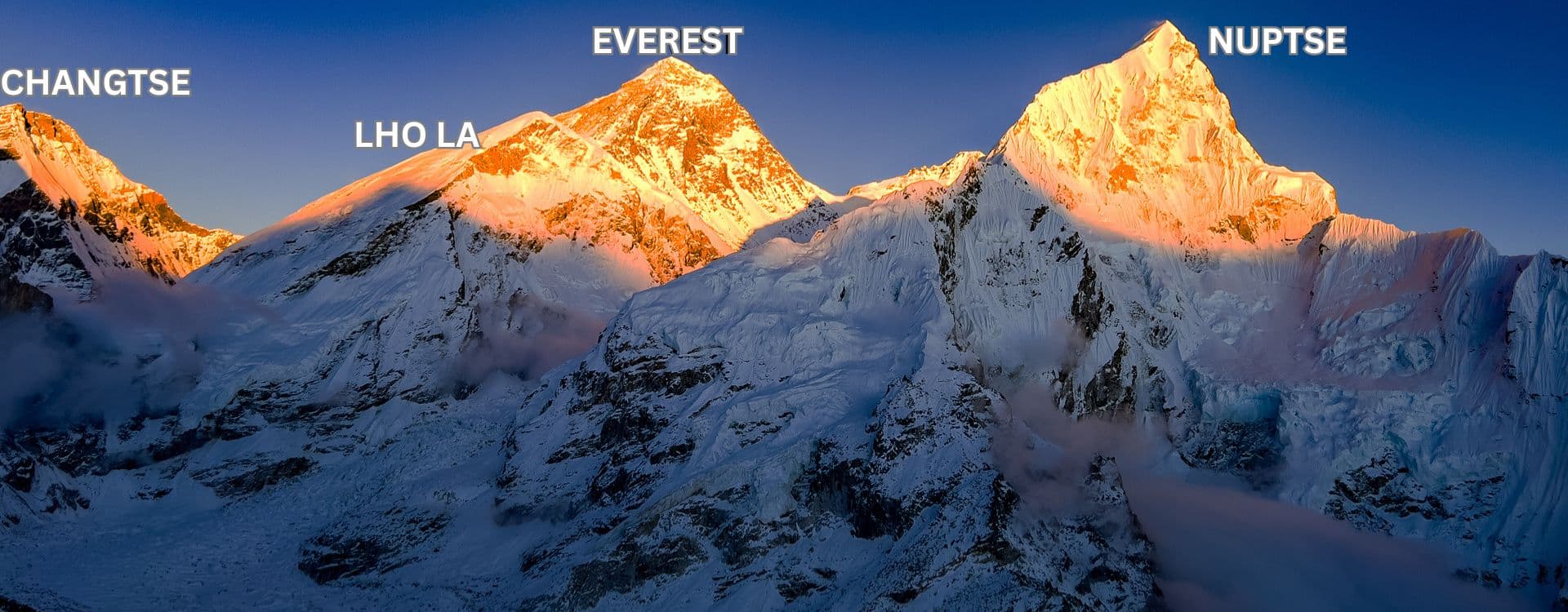
Have you ever wanted to get so close to Mount Everest that you can actually see it properly? Kala Patthar makes that happen! This rocky hilltop gives you a straight, clear view of Everest that even Everest Base Camp can't offer. When the morning sun hits the peak and lights up the ice and rock around it, you'll get why people walk for days through thin air and freezing cold to reach this spot. It's not just about ticking off a viewpoint, it’s about standing there and taking in something you'll remember for the rest of your life.
From the top of Kala Pathhar, you can see Mount Everest right in front of you, along with Lhotse, Nuptse, Pumori, and Changtse. You can see Ama Dablam's perfect pyramid shape in the distance, and the Khumbu Glacier. This guide tells you everything about Kala Patthar, why trekkers love it, what you'll see from there, and why it's the best place to witness Everest up close. The Everest Base Camp trek with Nepal Hiking Team takes you to Kala Patthar and lets you make memories of a lifetime.
Location of Kala Patthar
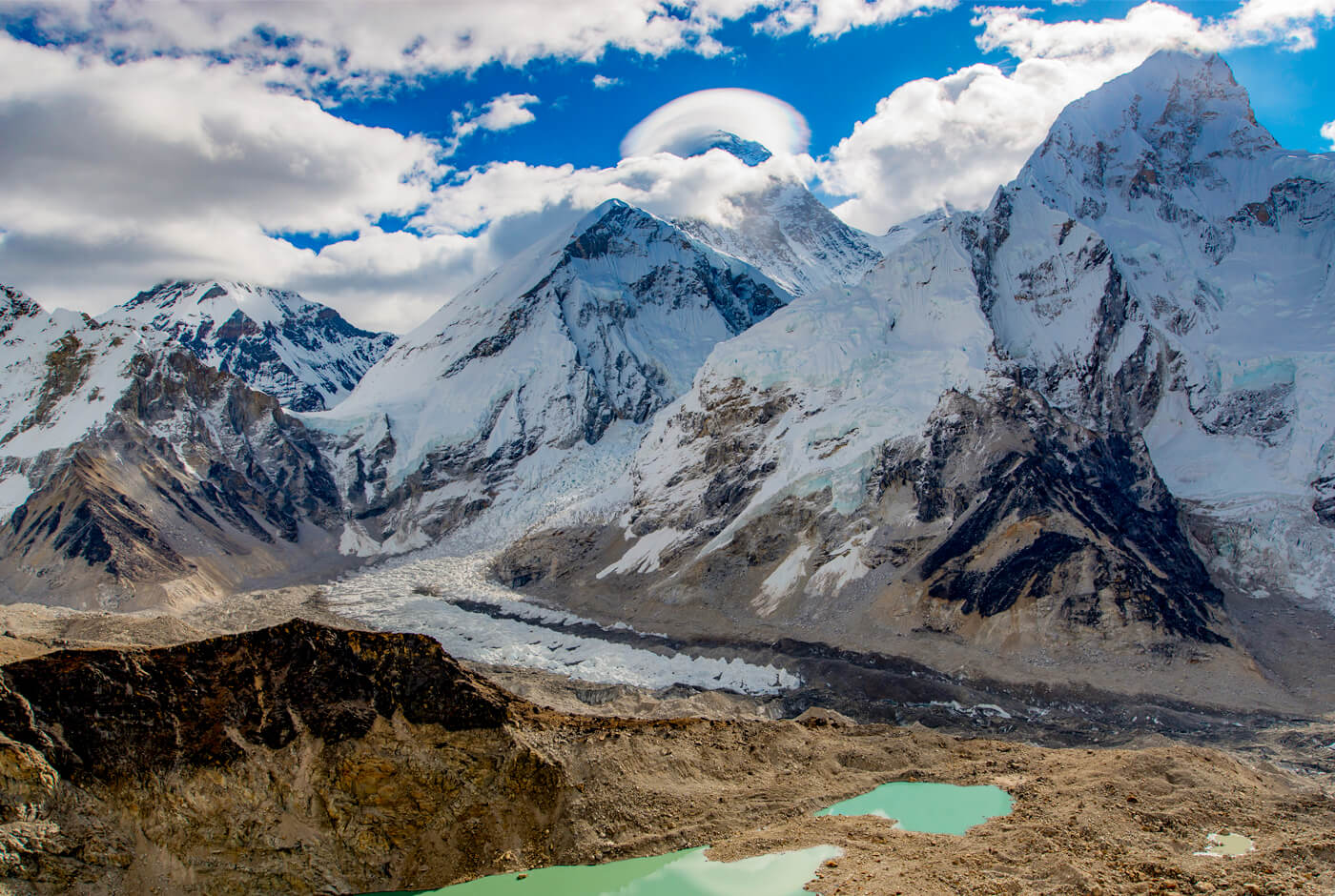
Kala Patthar isn't a separate mountain. It's a rocky ridge beside Pumori in Nepal's Khumbu region. You'll find it inside Sagarmatha National Park, the same area that protects Mount Everest. The name "Kala Patthar" means "black rock" in Nepali, which makes sense when you see the dark, rough surface up close.
Right below this ridge is Gorakshep, a small village that works as the final stop for trekkers. Most people sleep there, catch their breath, and then wake up early to climb Kala Patthar before the sun comes up.
Here's what you should know about where it is:
- Height: About 5,643 meters (18,481 feet)
- Location coordinates: Around 27°59.750′ N and 86°49.705′ E
- Distance from Gorakshep: Roughly 2 kilometers, but the climb takes about 1.5 to 2 hours because of the steep path and thin air.
If you're already doing the Everest Base Camp trek, you'll end up in Gorakshep anyway. Most trekkers prefer to go to Kala Patthar because even though it's hard work at that altitude, the view you get is better than anything you'll see at EBC itself. You’ll get to go higher, see more, and get the kind of photos that actually show Everest the way it deserves to be seen.
Mountains That Can be Seen From Kala Patthar
From the top of Kala Patthar, trekkers get one of the clearest Himalayan panoramas in the whole Everest region. The viewpoint offers views of towering eight-thousanders, ridges, glaciers, and snow-covered peaks across Nepal and Tibet. The mountains stand incredibly close because of Kala Patthar's position above Gorakshep, making it the perfect spot to identify many famous and obscure peaks in a single view.
Below is the full list of mountains visible from Kala Patthar on a clear day:
| Mountain Name | Height (m) |
|---|---|
| Mount Everest | 8,848.86 |
| Lhotse | 8,516 |
| Nuptse | 7,861 |
| Changtse | 7,543 |
| Gyala Peri | 7,294 |
| Pumori | 7,161 |
| Ama Dablam | 6,812 |
| Kantega | 6,782 |
| Lingtren | 6,749 |
| Khumbutse | 6,665 |
| Thamserku | 6,608 |
| Taboche (Tawoche) | 6,495 |
| Cholatse | 6,440 |
| Arakam Tse | 6,423 |
| Lobuche West | 6,135 |
| Lobuche East | 6,119 |
| Khongma Tse (Mehra Peak) | 5,820 |
Facts About Kala Patthar
Kala Patthar isn't just some high point you pass on the Everest region. It's become one of the main reasons people come to this region in the first place. The view you get from up there beats almost everything else in the Himalayas, showing you Everest and the peaks around it without anything blocking your line of sight.
Here are the basic facts you need to know about Kala Patthar:
| Fact | Details |
|---|---|
| Elevation | 5,643 m (18,481 ft) |
| Location / Region | Khumbu (Everest Region), Nepal, within Sagarmatha National Park |
| Best Seasons to Visit | March to May and September to December |
| Difficulty | Moderate to Strenuous |
| Nearest Airport | Lukla (Tenzing–Hillary Airport), commonly used as the starting point for the trek |
| Typical Access Routes | Trekking route and trekking and heli tours |
| Comparable / Nearby Viewpoints | Gokyo Ri, Renjo La Pass, Chhukhung Ri, Nangkartshang Hill, and Mount Everest |
Altitude of Kala Patthar
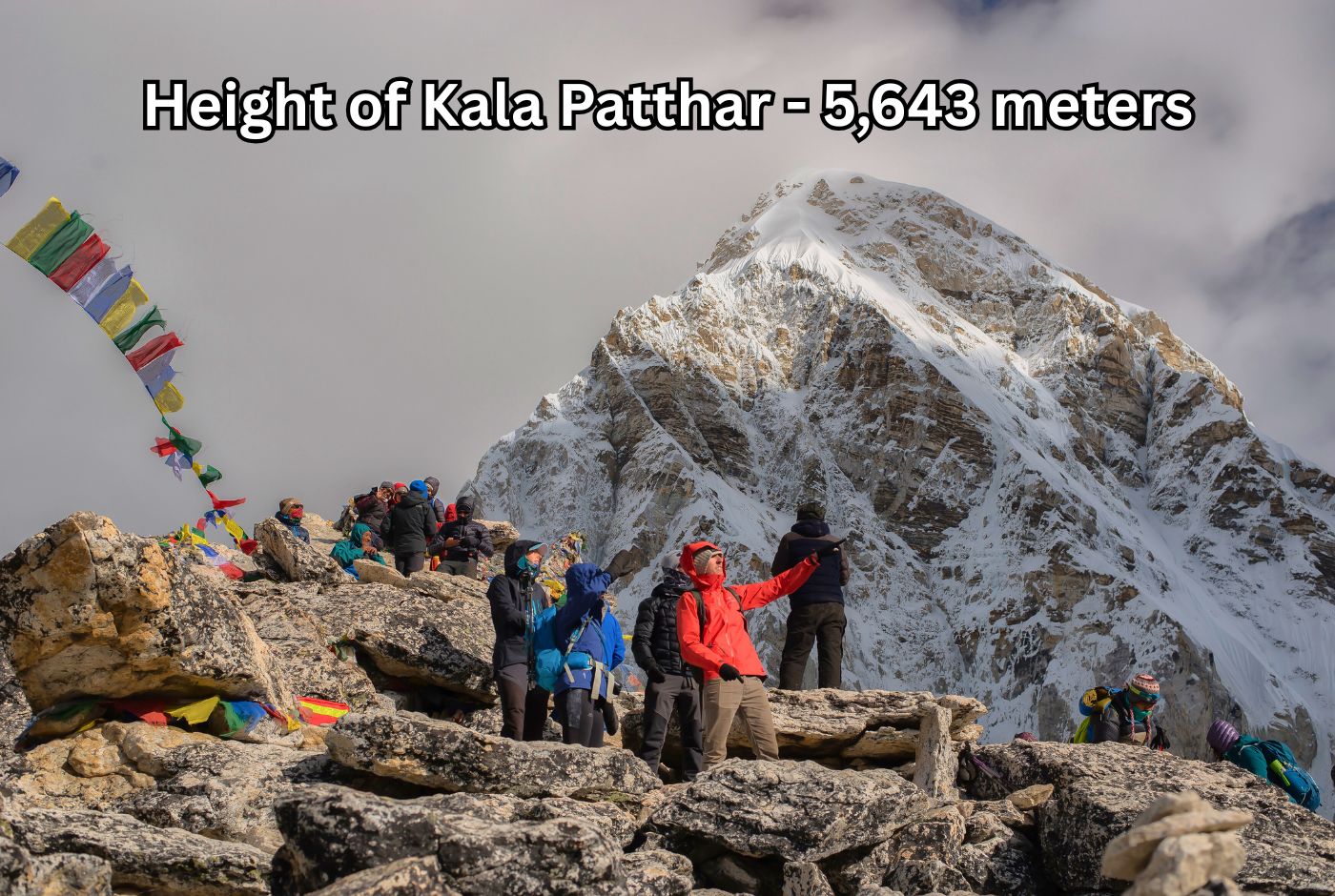
For years, trekkers debated the actual height of Kala Patthar. Old maps and guidebooks listed it at around 5,550 meters (18,208 ft), which already sounds impressive. As GPS technology improved and more accurate surveys were conducted, the numbers changed. Current measurements put Kala Patthar at approximately 5,643 meters (18,513 ft), nearly 100 meters higher than previously thought.
The Story Behind the Name “Kala Patthar”
The name "Kala Patthar" fits this place perfectly. In Hindi and Nepali, "Kala" means black, and "Patthar" means rock. When you stand on top and look around at all the white snow and ice covering Everest, Lhotse, and Pumori, this dark ridge really does stand out like a black stone.
What's interesting is that the name doesn't come from the Sherpa language, even though this area has been Sherpa territory for centuries. Early Sherpas actually called it Gorakshep Peak, after the small village sitting right below it. Somewhere between the 1950s and late 1970s, "Kala Patthar" began appearing on maps and in guidebooks.
Some people think British explorers heard local guides using the term and wrote it down that way. Others believe it came from early mapping teams trying to label the region's peaks. There's even a theory that the 1979 Hindi film called "Kala Patthar" helped spread the name, though that's hard to prove. By 1980, when Harka Gurung published his book about Nepal, Kala Patthar was already known as the go-to viewpoint for Everest.
Comparison Table: Sunrise vs. Sunset at Kala Patthar
To help you decide which climb works better for your trek, here's a quick breakdown of what sunrise and sunset each bring to the table.
| Aspect | Sunrise at Kala Patthar | Sunset at Kala Patthar |
|---|---|---|
| Departure Time | Very early, from around 4:00 to 4:30 AM | Mid to late afternoon from 4:00 to 5:00 PM |
| Lighting | Golden color on Everest’s summit | Warm, diffused light; pink or purple |
| Visibility | Usually excellent, as the morning air is crisp and clear | Clouds may build in the afternoon |
| Temperature | Very cold, as it can drop well below freezing | Still cold, but sometimes slightly milder than pre-dawn |
| Wind Conditions | Relatively calm at first | Higher winds, especially during March to June and December to February |
| Crowds | Busier as many people trek early for sunrise | Fewer people who provide you with a more peaceful experience |
| Photo Opportunities | Close-up and sharp mountain shots | Deep shadows, glacier texture, and dramatic color tones |
| Challenges / Tips | While trekking early, consider starting pre-dawn and bring warm layers and a headlamp. | Bring extra warm clothes, a flashlight, and be mindful of changing light. |
Kala Patthar’s Top 5 Must-See Attractions
Everyone says Kala Patthar offers the best view of Everest, but most trekkers climb up there without really knowing why it's special. They just follow the crowd at 4 a.m., half-asleep, trusting that the view will be worth it. There's actually a reason this spot beats every other viewpoint on the Everest region trek. It's not about altitude or bragging rights; instead, it's geometry, light, and a rare kind of alignment that doesn't happen anywhere else on the trail. While travelling with the Nepal Hiking Team, trekkers get to do the Everest Base Camp Trek and reach Kala Patthar with the utmost safety and convenience.
Here's what makes the view from Kala Patthar different from everything you've seen so far.
Everest's full shape
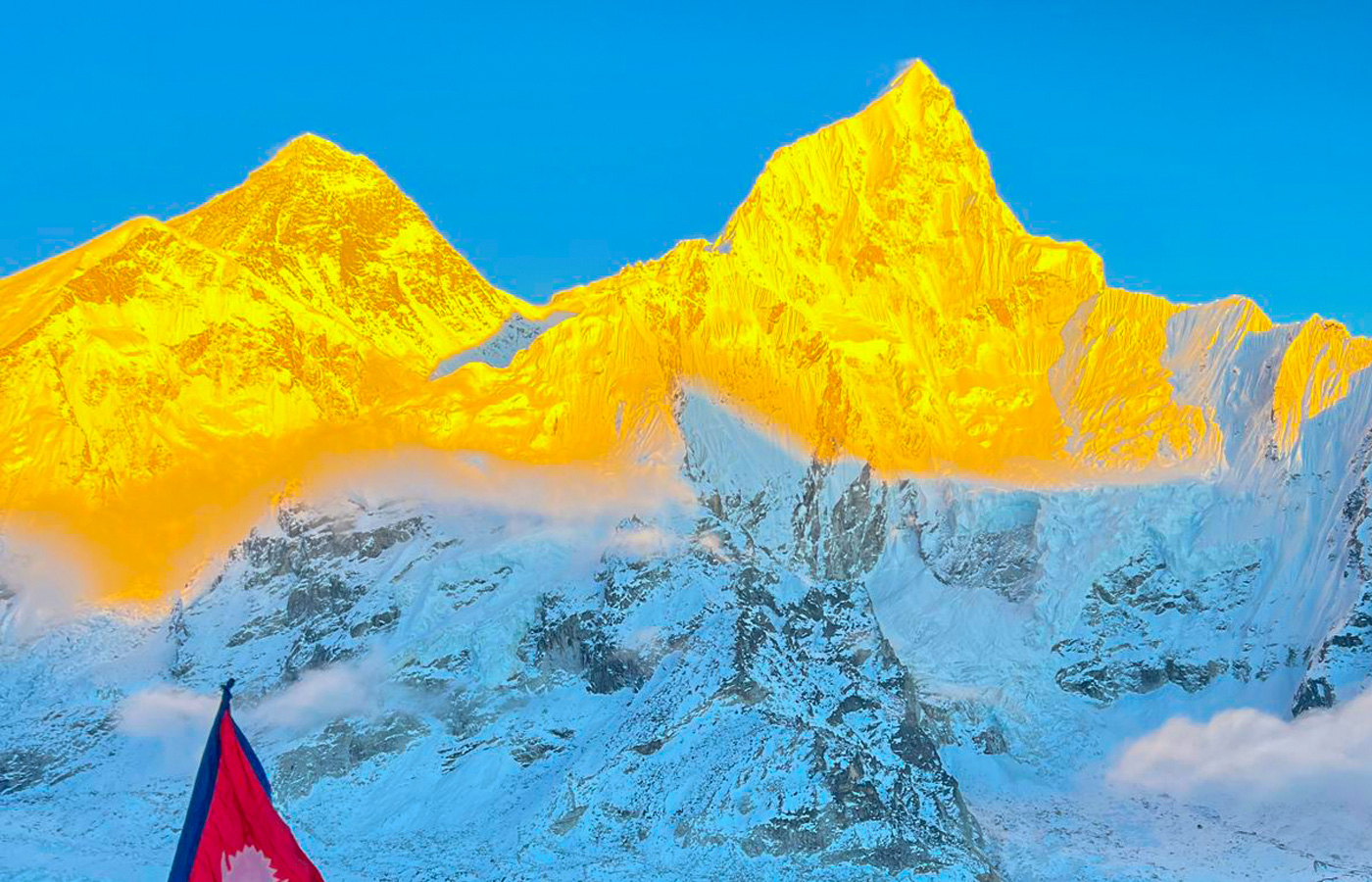
For most of the trek, Everest hides. From Namche, it's barely a triangle in the distance, and in Tengboche, Nuptse blocks half of it. Even from Gorak Shep, just below Kala Patthar, the view feels incomplete. However, when you reach the top of Kala Patthar, nothing can block the view of Everest.
From Kala Patthar, you finally see the whole pyramid of Everest’s summit clearly. You can make out:
- The south face
- Summit ridge
- Wind trail blowing off the top
- Gentle slopes leading into the Western Cwm.
Gorak Shep and the Khumbu Glacier
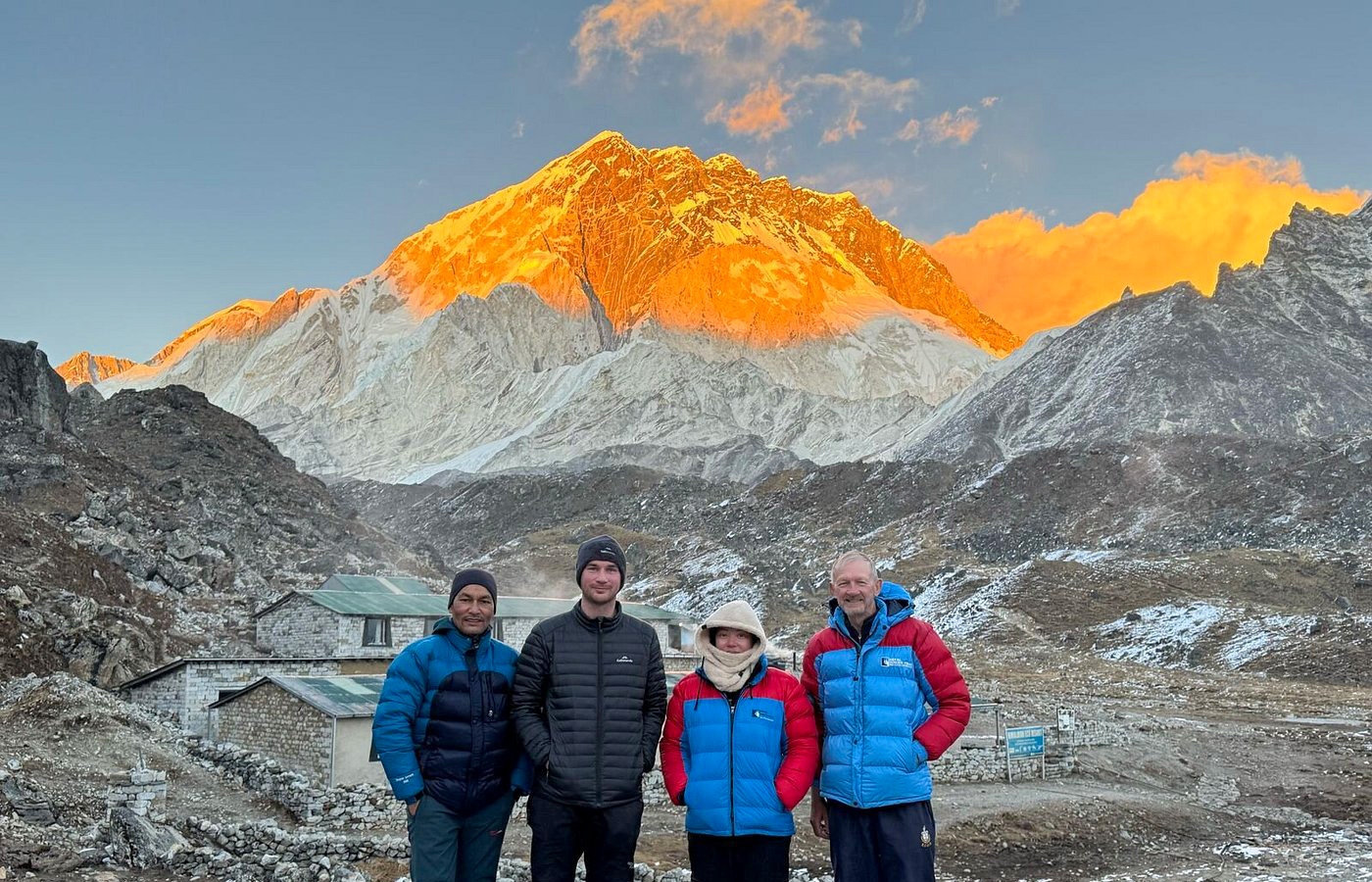
From Kala Patthar's summit ridge, you can see Gorak Shep and the Khumbu Glacier spread out below, giving you a good sense of how the glacial systems work in this area. Gorak Shep, the last settlement before you reach Everest Base Camp, looks tiny from up here, just a handful of lodges clustered together.
The Khumbu Glacier itself becomes remarkably clear from this elevation. Its surface, the flow patterns in the ice, and the structure of the Khumbu Icefall are all visible in ways that ground-level trekking cannot. The icefall is one of the most technical and dangerous sections of a climbing expedition. Kala Patthar provides insight into the glacial processes that have shaped the valley and also clarifies why Everest Base Camp is positioned at its specific location.
A Complete Himalayan Panorama
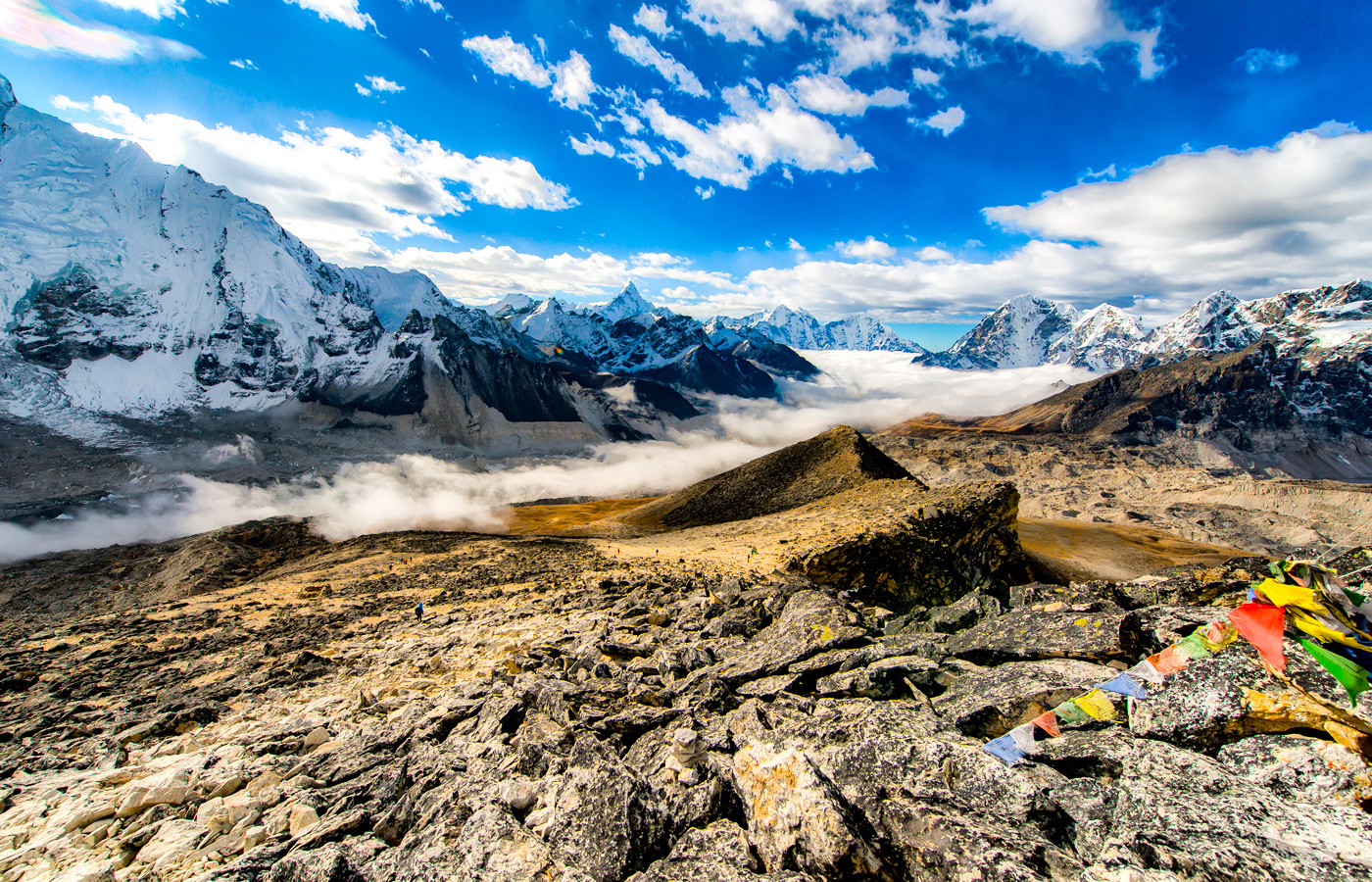
While Mount Everest naturally dominates the view, Kala Patthar's actual value lies in its comprehensive panoramic perspective of the entire Khumbu mountain range. The viewpoint's position on Pumori's southern ridge offers an ideal vantage point for understanding the spatial relationships among major peaks. Pumori rises directly behind the viewpoint, and Nuptse forms the massive southern wall of the Everest massif. Further, Ama Dablam maintains its distinctive presence down the valley.
Additional peaks, including Lingtren, Khumbutse, Changtse, and Lhotse, complete the encircling wall of eight-thousanders and seven-thousanders. Kala Patthar allows trekkers to comprehend the actual layout of the region. It changes your trek from just walking through the landscape to actually understanding how everything fits together in 3D.
Dynamic Light and Alpenglow Magic
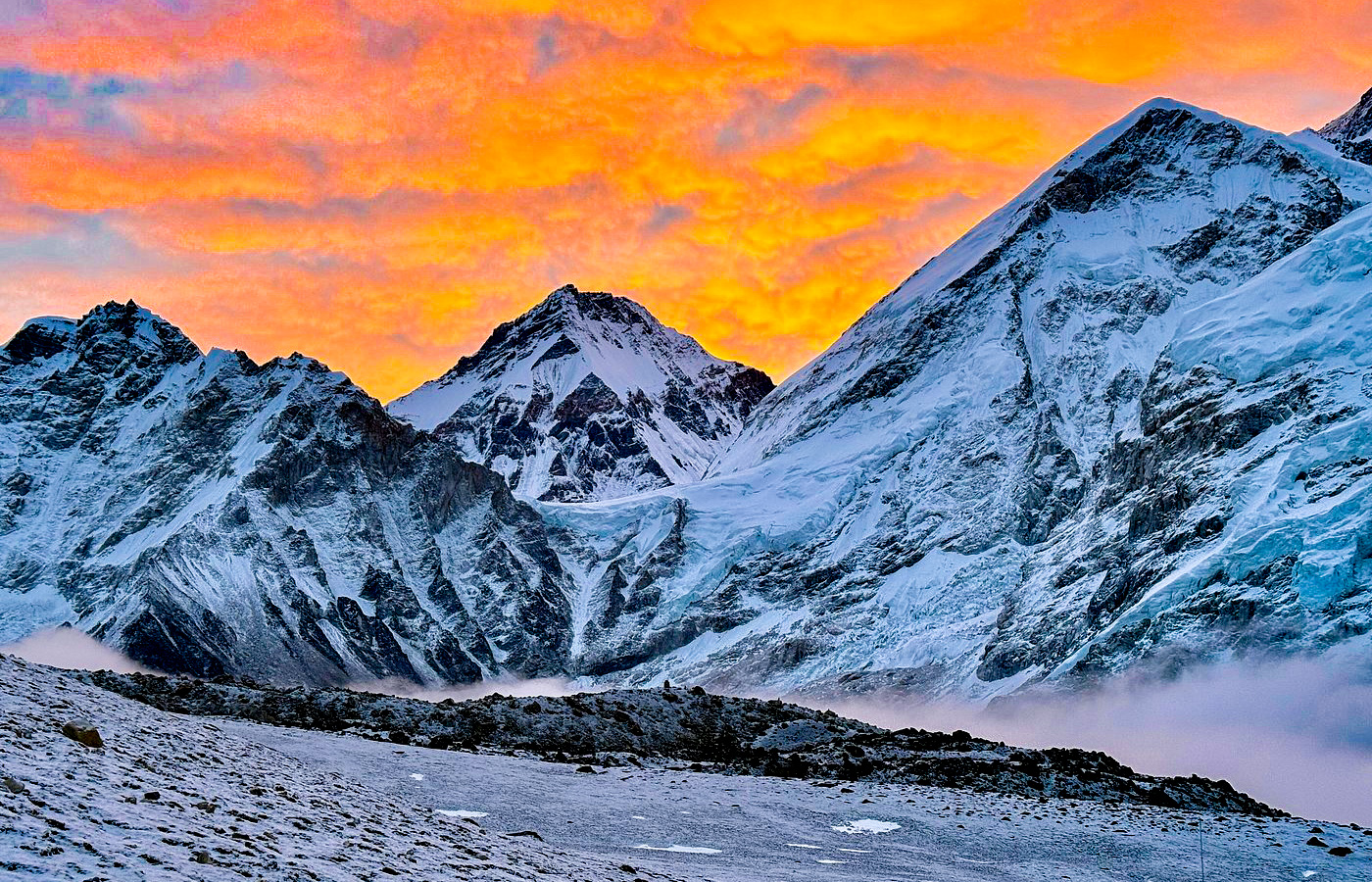
The interplay of light at high altitude creates dramatic visual conditions that change throughout the day. Kala Patthar is particularly renowned for its sunrise conditions, which draw most trekkers to make the predawn climb. At sunrise, the first light falls on the upper elevations of Everest and surrounding peaks, creating colors from soft pink to deep orange, then finally brilliant gold.
As the sun goes down, warm light transitions through rose tones before the peaks turn purple. These lighting conditions reveal topographical details that remain undiscovered during midday's flat light.
Tracing the Climbing Route to Everest
Kala Patthar gives you one of the best views of Everest's South Col climbing route. You can spot the South Col itself sitting between Everest and Lhotse, that's where climbers set up Camp IV at around 7,920 meters. If you've got binoculars, you can actually follow the Southeast Ridge all the way up to the summit. You can also see part of the Western Cwm, the glacial valley that leads climbers up the mountain.
This perspective provides practical insight into the challenges of high-altitude mountaineering. The exposure of the upper ridges, the vertical gain required above the South Col, and the technical sections become apparent. It contextualizes the difference between trekking at 5,500 meters and climbing at 8,000-plus meters in the death zone.
Difficulty While Reaching Kala Patthar
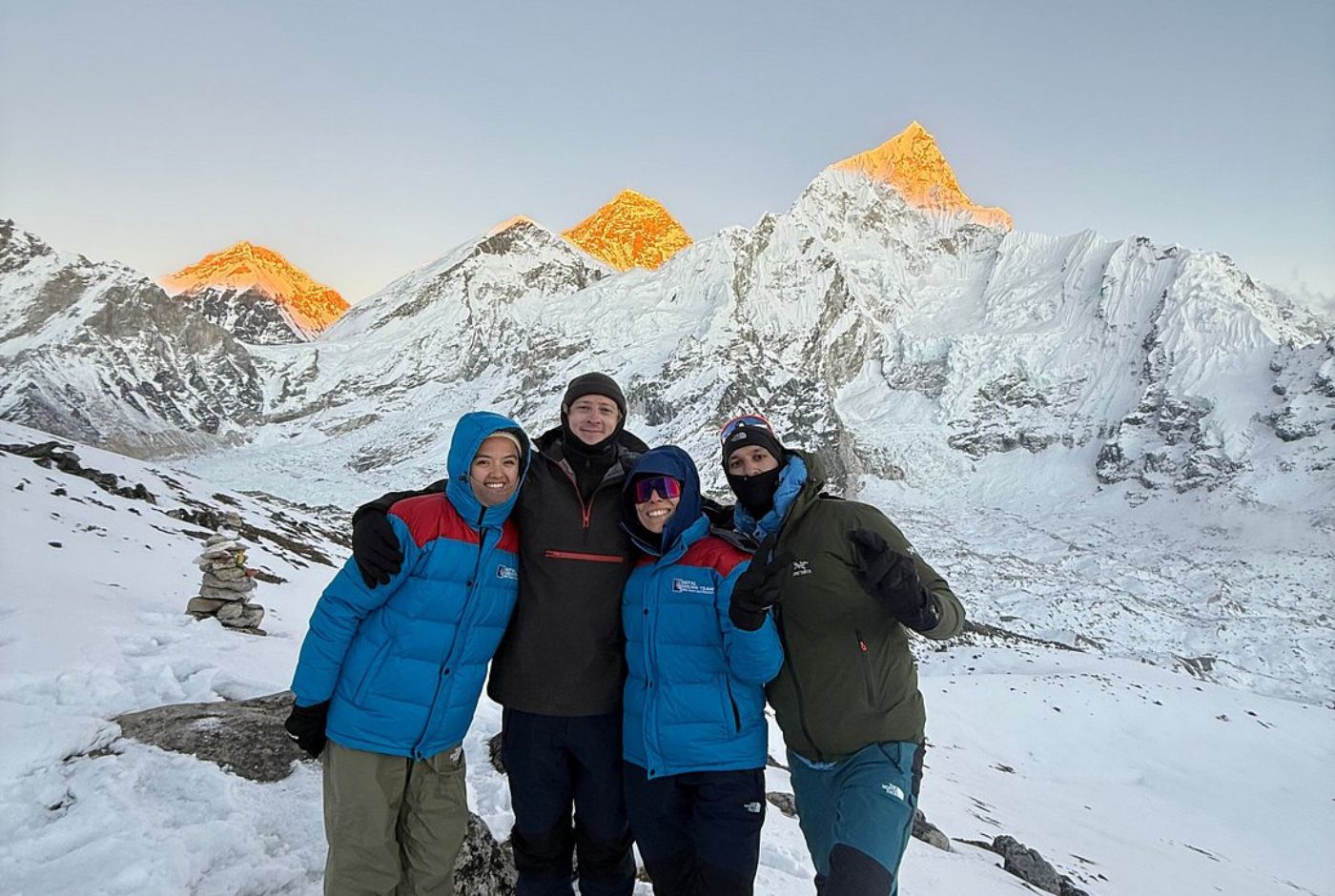
Getting to the top of Kala Patthar isn't a casual morning hike. The trail from Gorak Shep takes about 1.5 to 2 hours, but at 5,643 meters, every step becomes a challenge. The air holds roughly half the oxygen you're used to, making your lungs work overtime. Even experienced trekkers who've been fine for days sometimes struggle on this final push. The path itself is steep and covered in loose rocks that shift under your boots. If you're going for sunrise, you're doing all this in the dark with just a headlamp. The wind cuts through every layer you're wearing, and temperatures before dawn regularly hit minus 10 or 15 degrees. This is why timing matters as spring and autumn offer the best conditions, while winter brings serious ice, and the monsoon season hides everything behind clouds.
The trick to reaching Kala Patthar is to forget your normal pace entirely. Slow becomes the only speed that works up here, so take three or four breaths between steps if you need to. Use trekking poles for balance and to take weight off your legs. The mental challenge matches the physical one, so you have to focus on the next step and mentally prepare yourself. Some mornings, trekkers turn around halfway, and that's a smart call if your body is giving up on you. If you make it to Kala Patthar, you’ll get to see Everest glow in the sunrise, and the Khumbu Glacier spreads out.
Getting to Kala Patthar: Your Route Options
There are several ways to reach Kala Patthar, depending on how much time you have and what kind of experience you're after. Here's what actually works for different types of trekkers.
The Traditional Route: Everest Base Camp Trek
Most people reach Kala Patthar through the classic Everest Base Camp trek. You start with a flight from Kathmandu to Lukla. From there, it's about 12 to 16 days of trekking through Sherpa villages and mountain valleys. You'll spend nights in Namche Bazaar, walk past ancient monasteries in Tengboche, and gradually work your way higher into the Khumbu region. The final push from Gorak Shep to Kala Patthar usually happens before dawn, so you're standing on top when the first light hits Everest.
Everest Base Camp with Helicopter Return
Here's a smart way to do the Everest Base Camp trek without spending as much time walking back down. On the EBC with heli return trek, you trek up the traditional route over 11 days, walking through the Khumbu Valley and getting properly acclimatized as you go. You'll visit Everest Base Camp, wake up before dawn to climb Kala Patthar for that famous sunrise view over Everest, and experience all the key moments of the classic trek. Once you've reached the top of Kala Patthar and hiked back to Gorak Shep, you don't have to retrace your steps for another week. Instead, you board a helicopter that flies you directly back to Lukla, and from there to Kathmandu.
Everest Base Camp vs. Kala Patthar
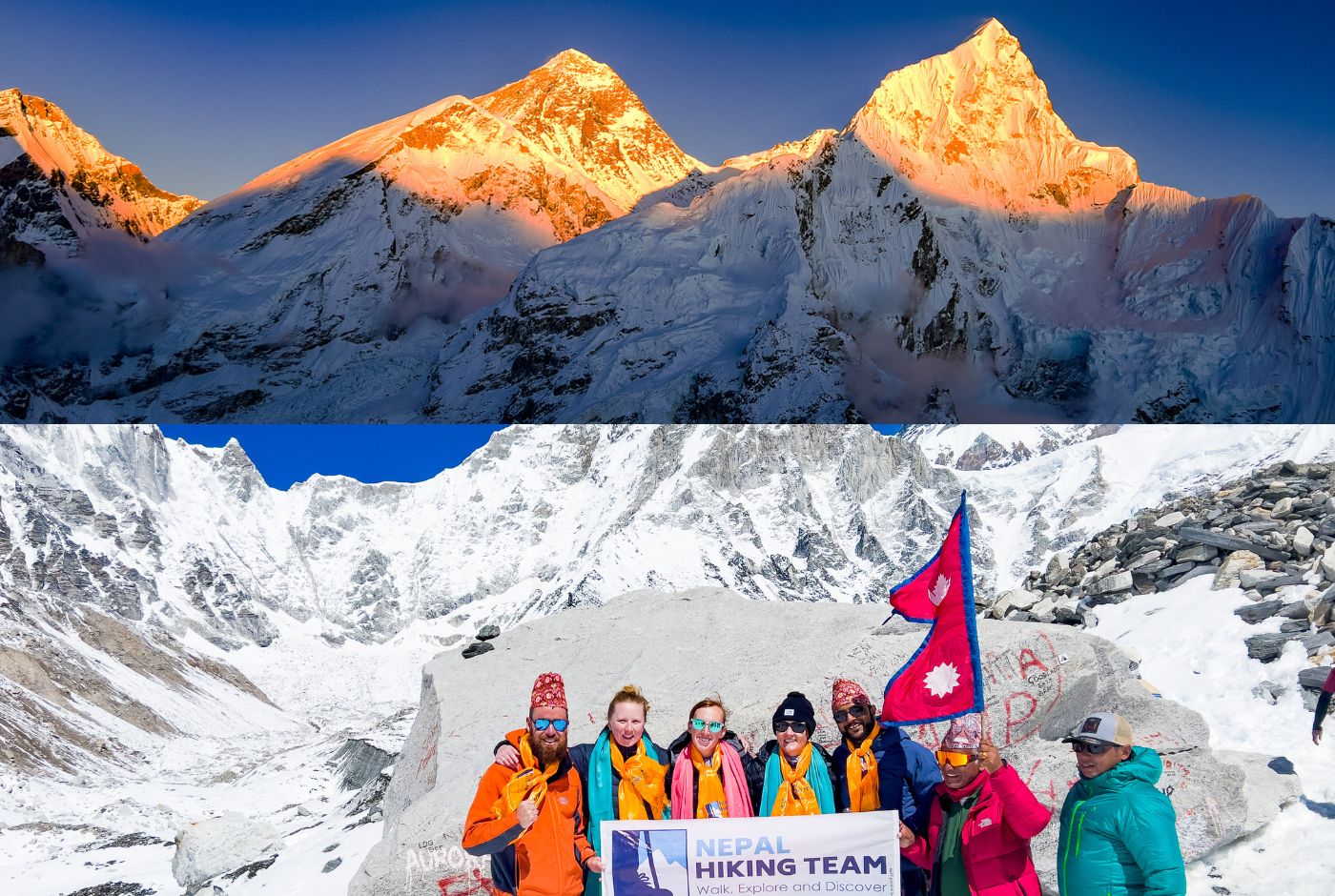
When people picture the Everest Base Camp trek, they usually imagine standing right at the foot of the world's tallest mountain. Everest Base Camp does give you that feeling. You're walking on the Khumbu Glacier, seeing where climbers actually prepare for their summit attempts. However, you don't actually see Everest's summit from EBC. Nuptse, the massive ridge to the west, blocks your view almost completely.
That's where Kala Patthar changes everything. At around 5,643 meters, Kala Patthar sits higher than Everest Base Camp and gives you a straight view of Everest's summit, along with Lhotse, Nuptse, Pumori, and the rest of the peaks.
Here's how the two compare:
| Feature | Everest Base Camp (EBC) | Kala Patthar |
|---|---|---|
| What it's for | The actual base for Everest climbers | A viewpoint built for taking in the mountains, nothing else |
| Height | Around 5,364 meters | Around 5,643 meters |
| View of Everest | The view of Everest is blocked by Nuptse, so you can see the Khumbu Icefall but not the summit. | Clear, complete view of Everest's summit and surrounding peaks. |
| How hard is it? | Easier part of the standard trek, no technical skills needed | Steeper and rockier, but still doable without climbing experience |
| What it feels like | Busy, especially in peak season | Quieter, more personal, especially at sunrise or sunset |
| Photos | Suitable for camp life, glaciers, and the icefall | Perfect for wide mountain shots, especially with sunrise colors |
| Altitude risk | High, but slightly lower than Kala Patthar | Higher, so you need to be more careful with acclimatization |
Conclusion
Reaching Kala Patthar represents more than simply reaching a high elevation in the Everest region. It offers a perspective on the Himalayas that few other accessible points can match. After days of trekking through the Khumbu Valley, standing at this viewpoint brings together everything you've been walking toward, including the view of Everest and its neighboring peaks. The physical dimension of earning this view at 5,643 meters tests your preparation and pacing.
Whether you arrive through the traditional multi-day trek, an upgraded itinerary with better accommodations, or a customized schedule, the reward at the Kala Patthar remains the same. The view from Kala Patthar doesn't just show you mountains; it shows you what consistent effort and proper preparation can achieve at extreme altitude.
If you're ready to experience the Kala Patthar journey yourself, consider beginning your Everest Base Camp trek with Nepal Hiking Team and let a trusted local team guide you.
Post a Comment