13 Days
Check Our Risk-Free Booking Policy View Details

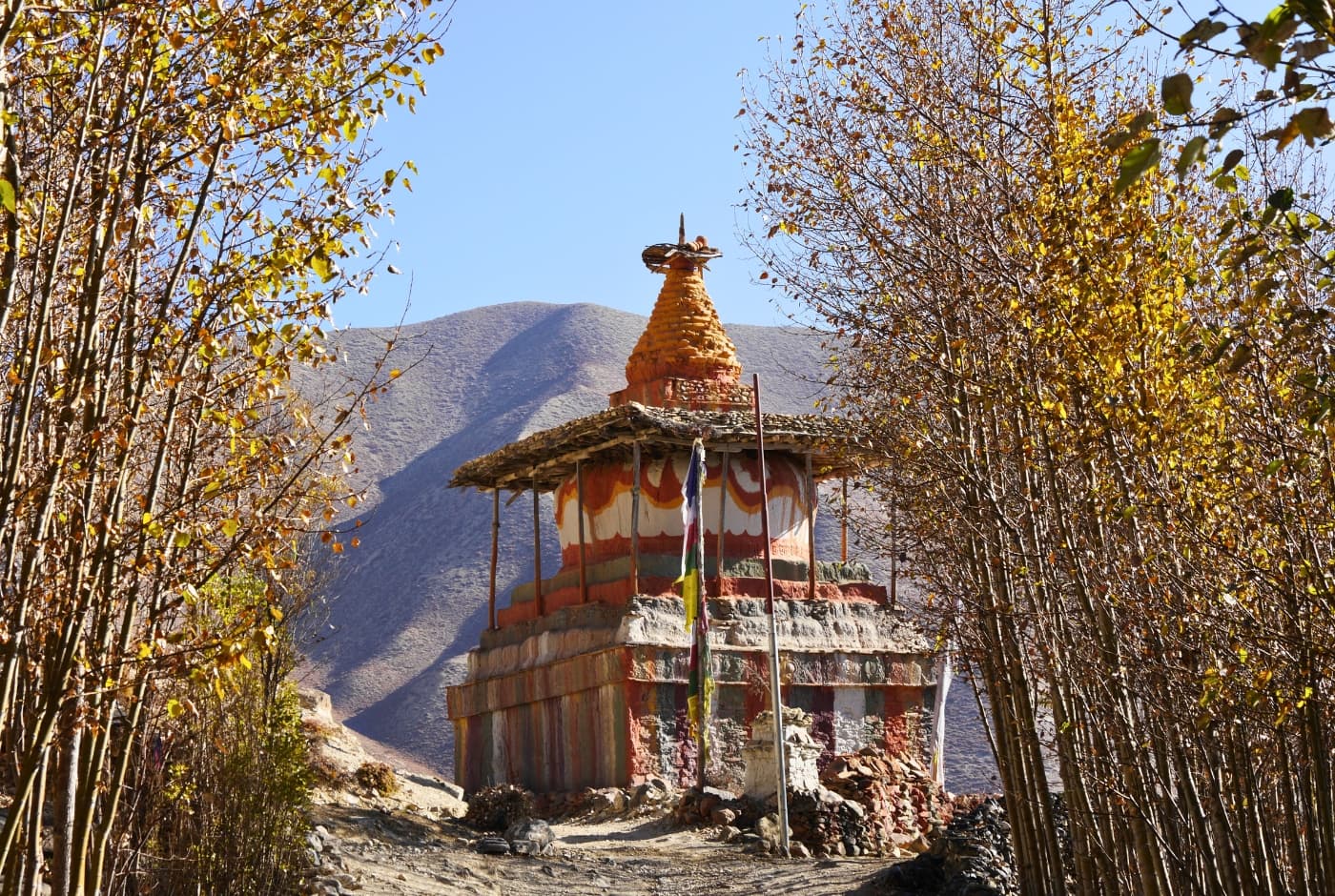
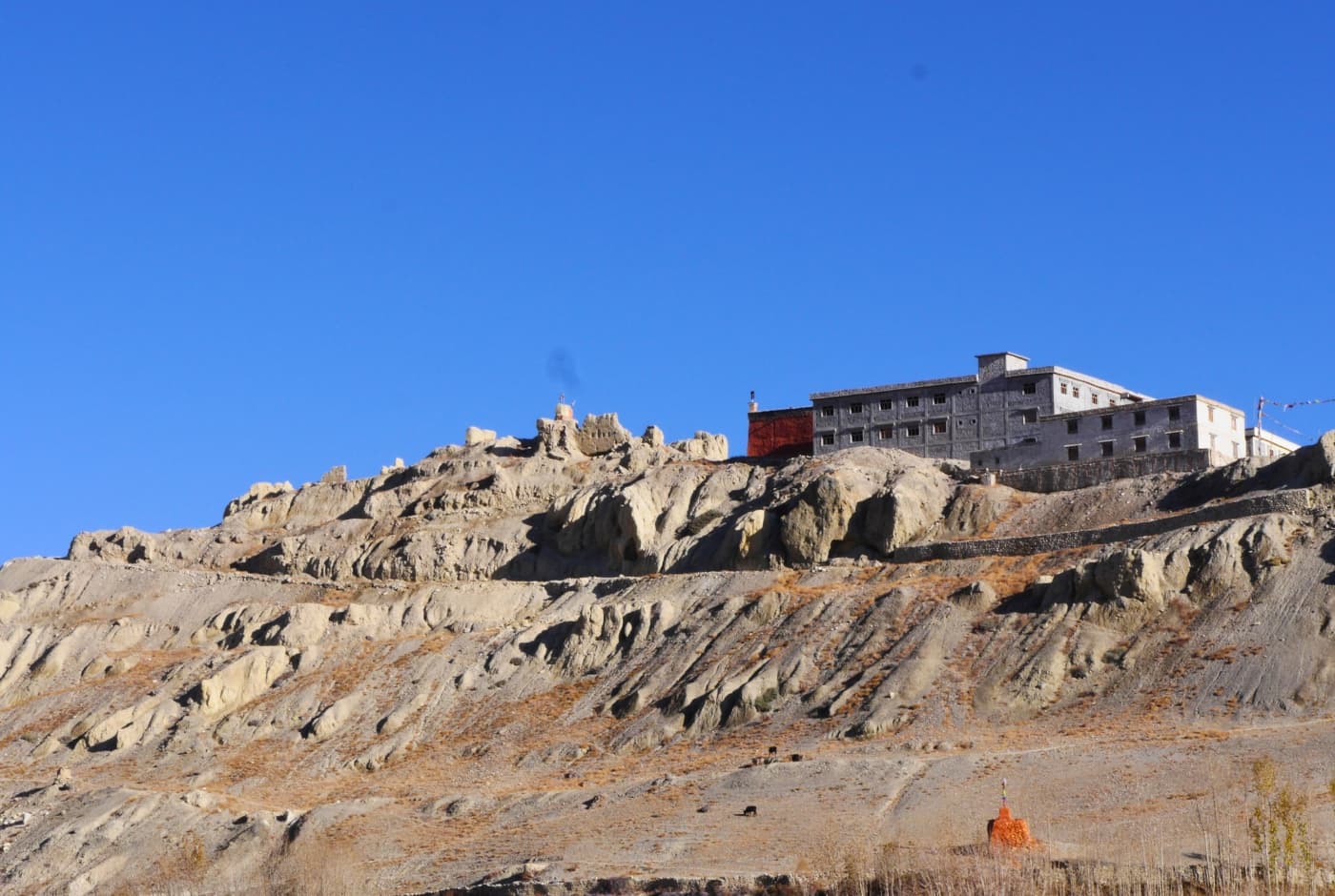
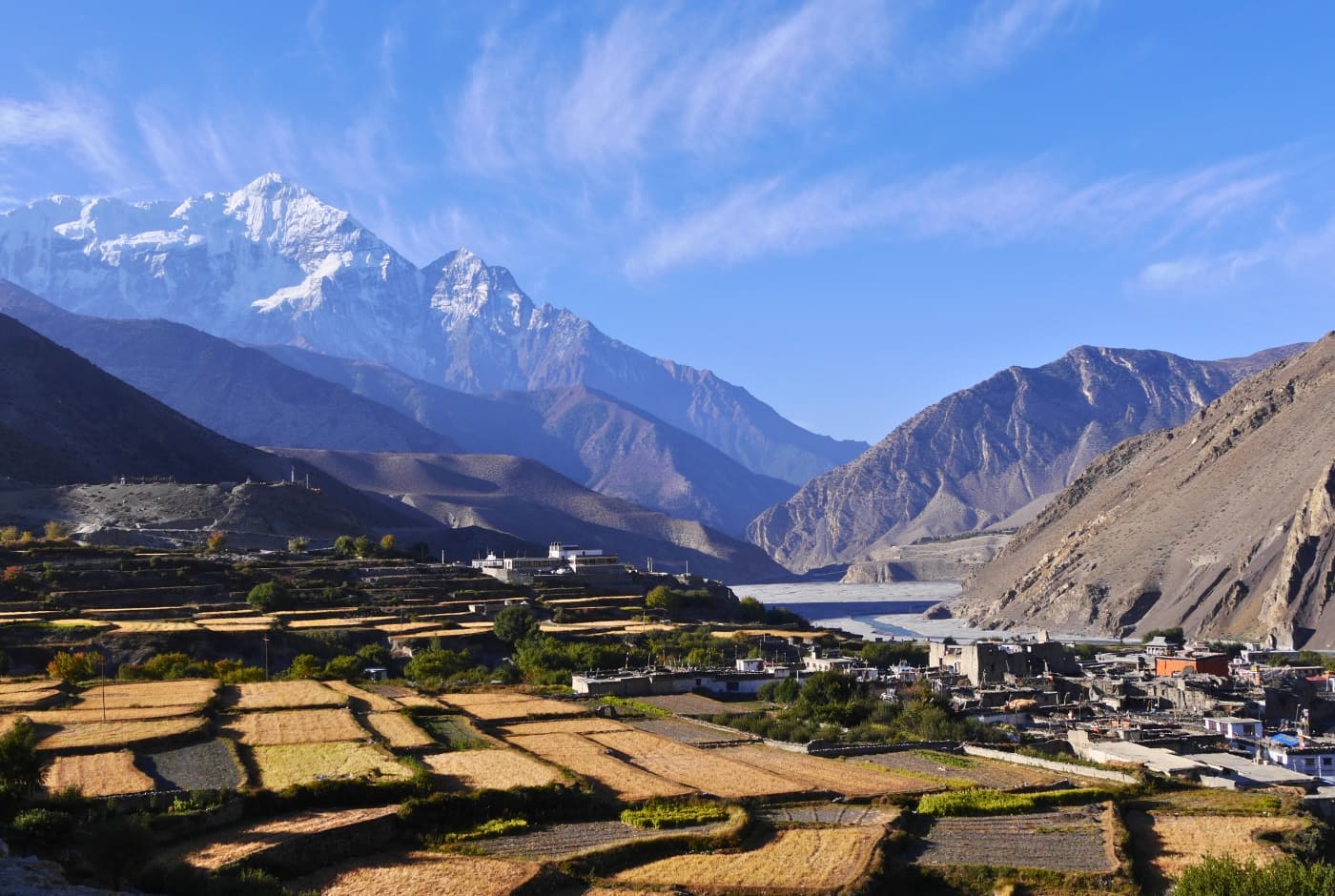
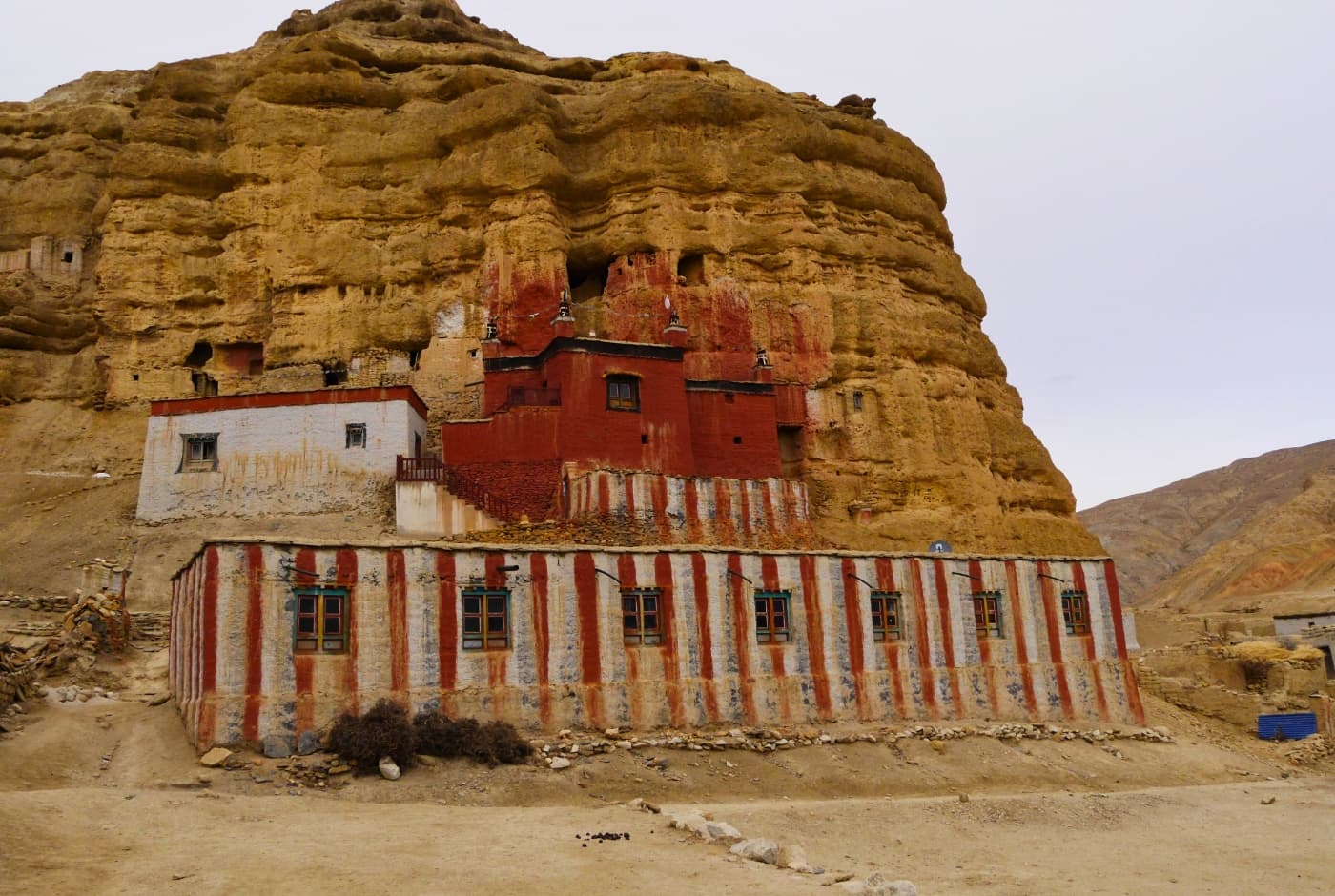
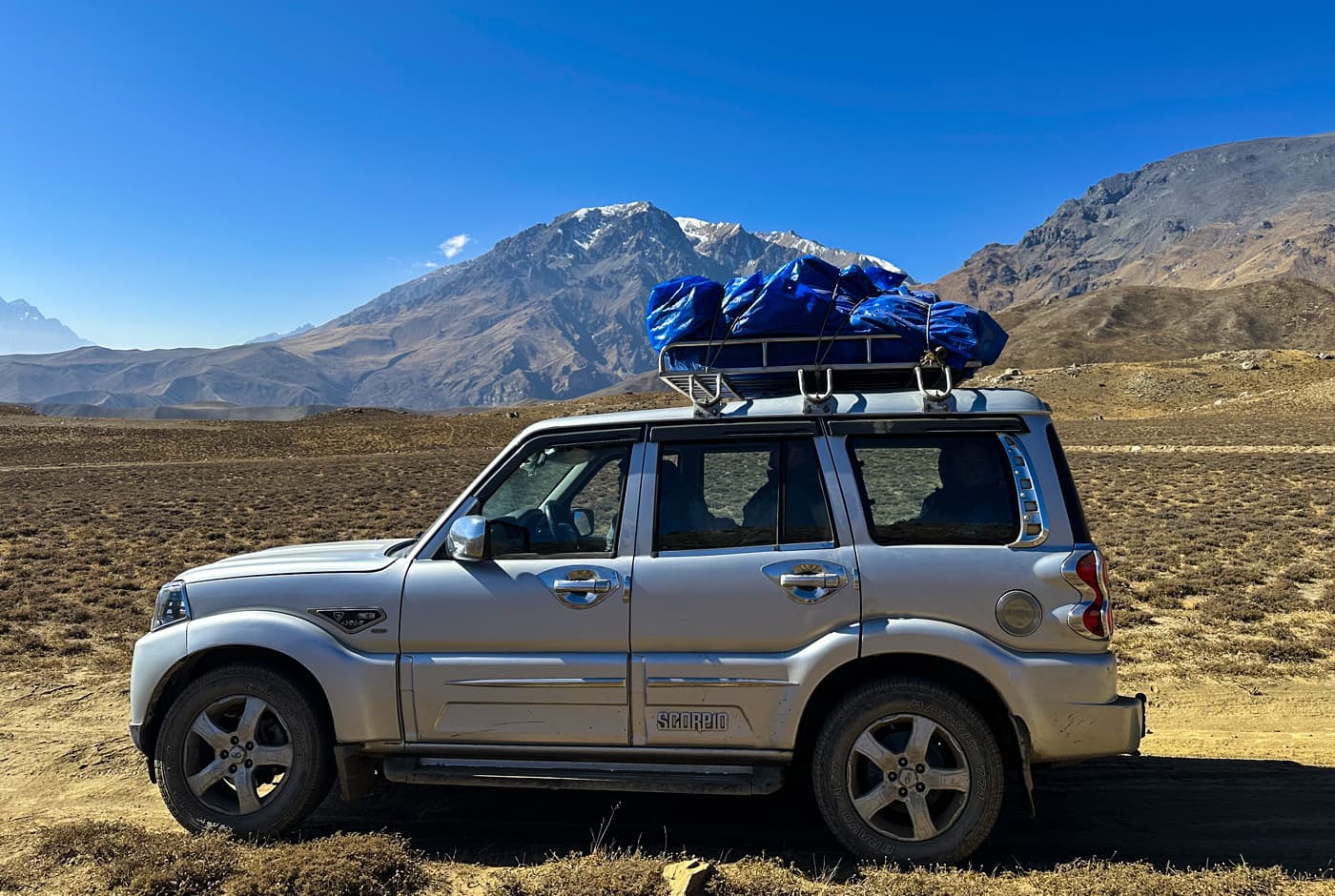
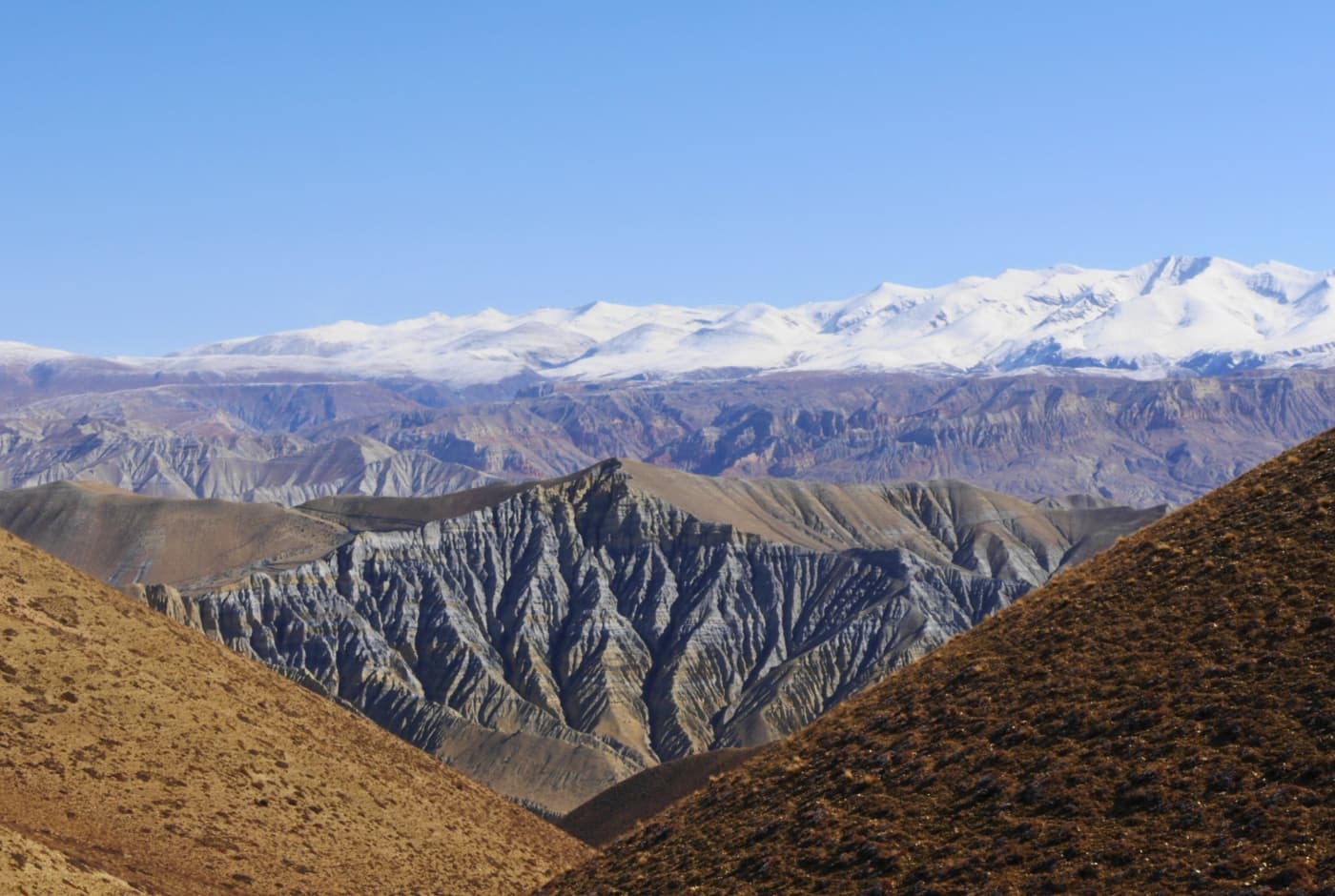
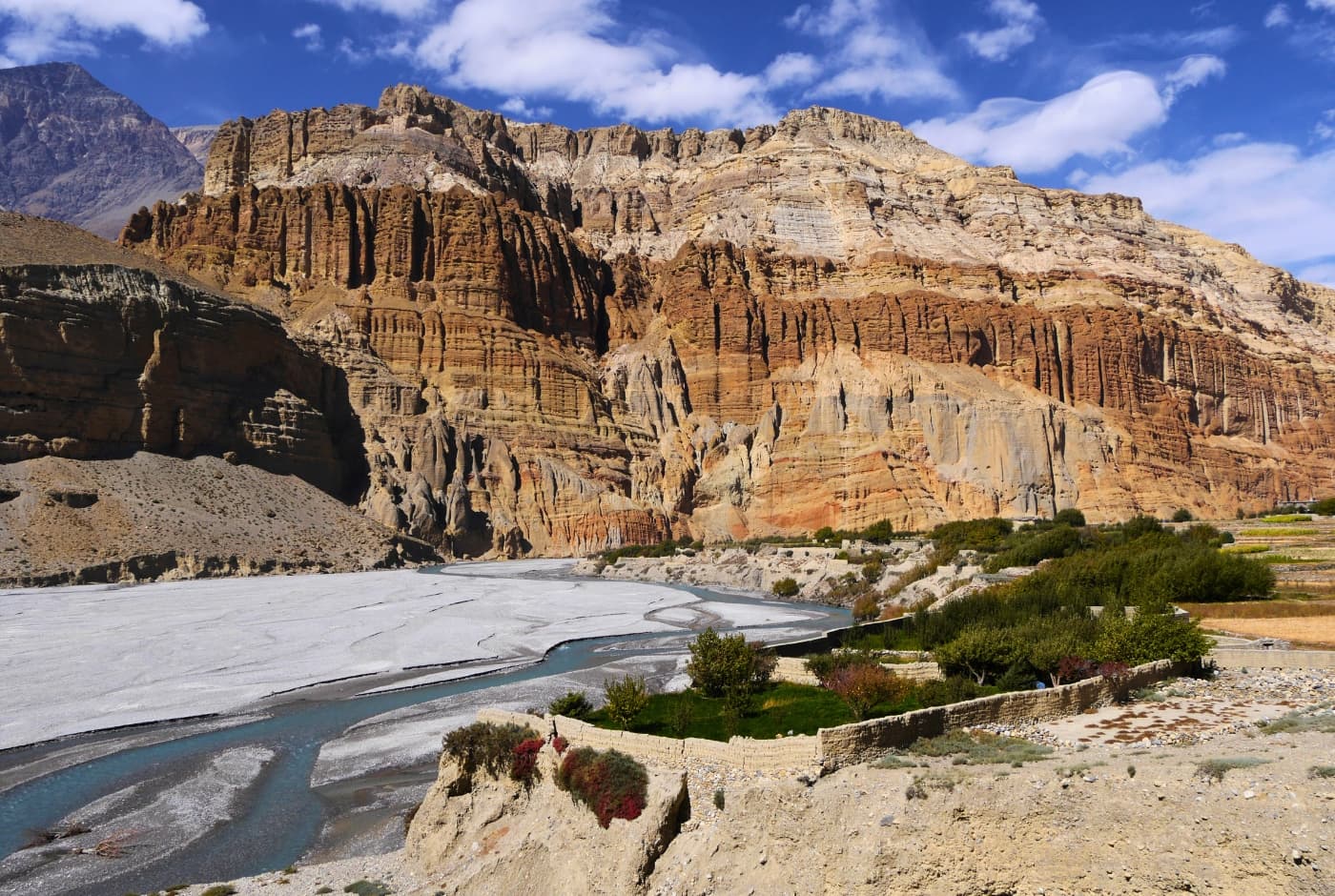
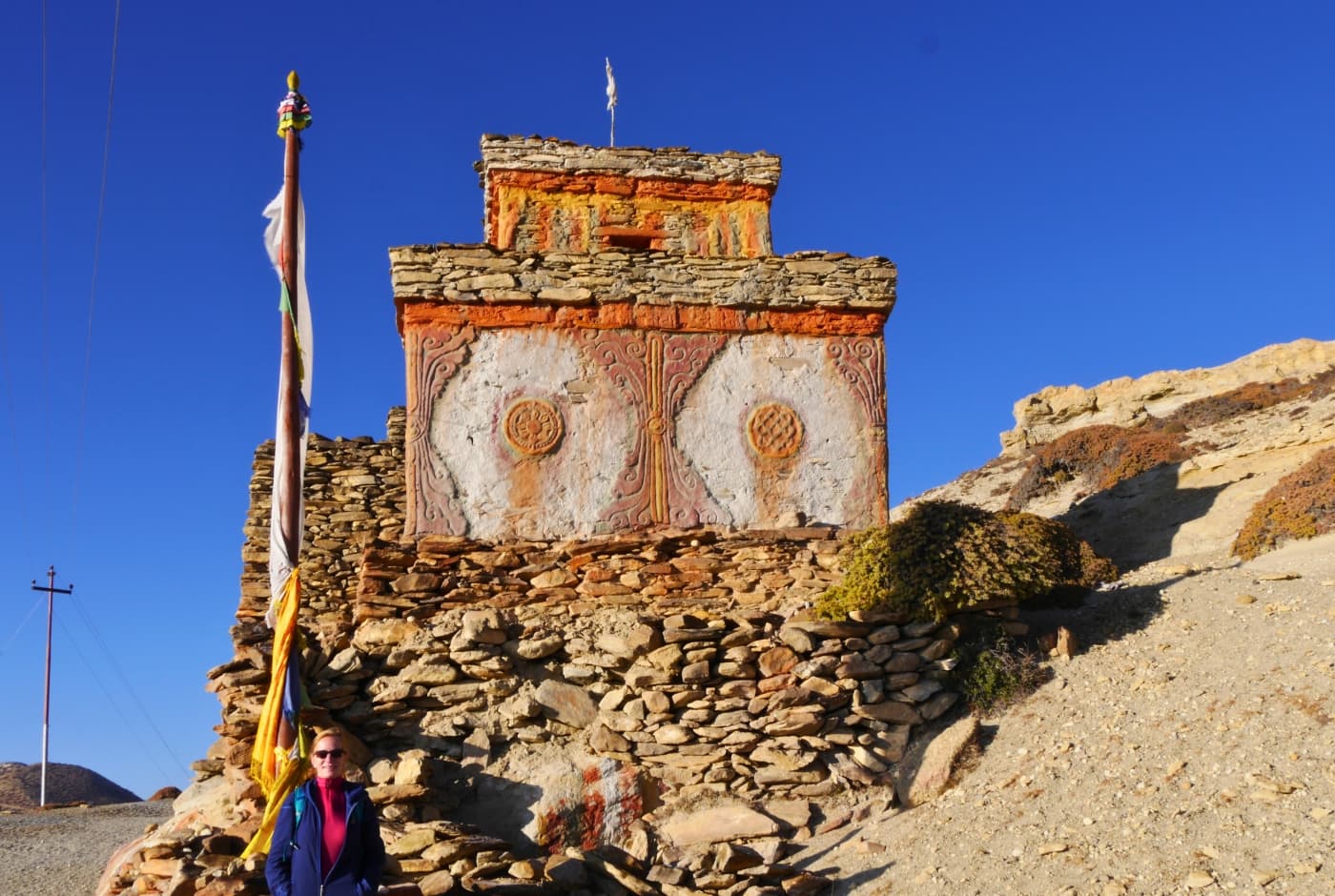
The Upper Mustang, also known as Lo-Manthang, is the most preserved kingdom between Dhaulagiri and Annapurna. It is a region of barren landscape and a rain shadow area in the Annapurna region. Since it was made accessible to tourists, it became a well-liked hiking & trekking destination. It also has become a popular tourist location due to the road connectivity and vehicle accessibility.
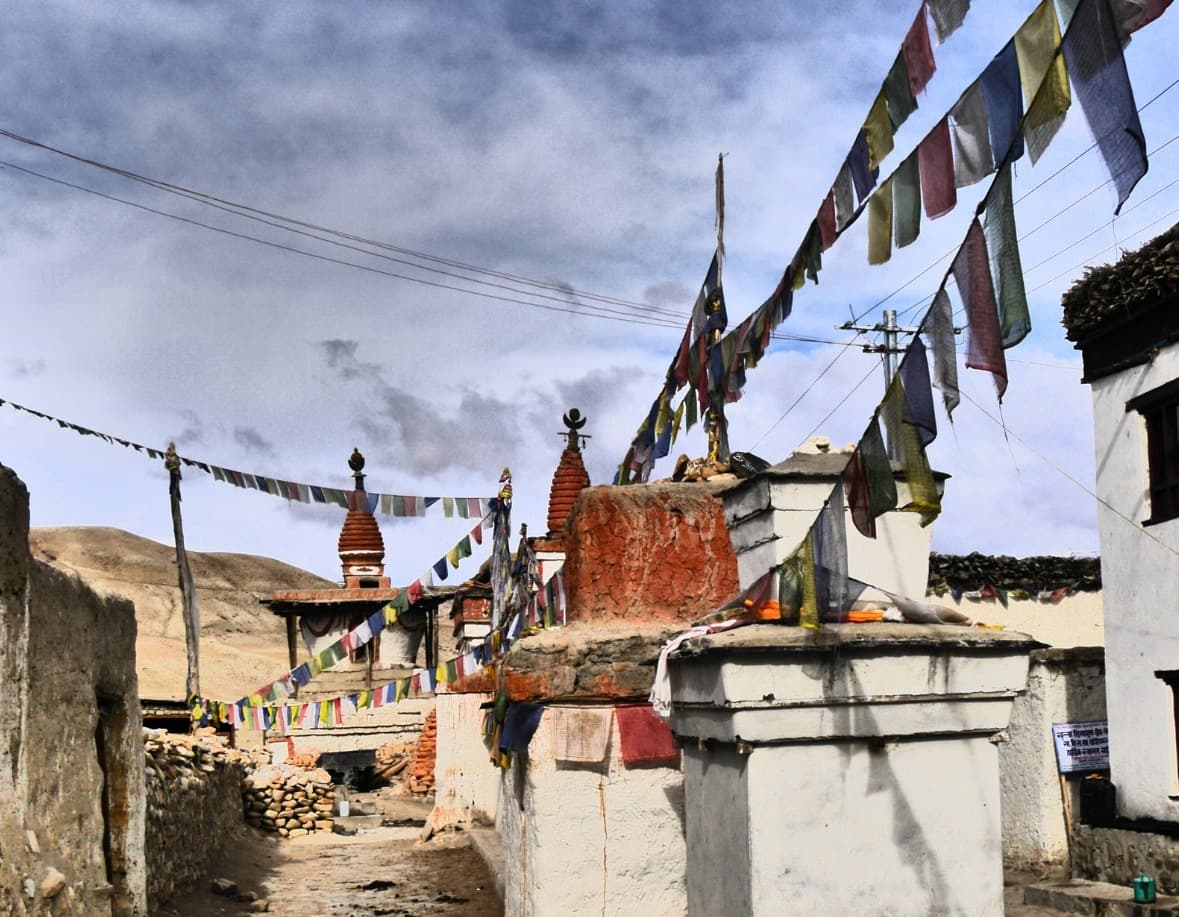
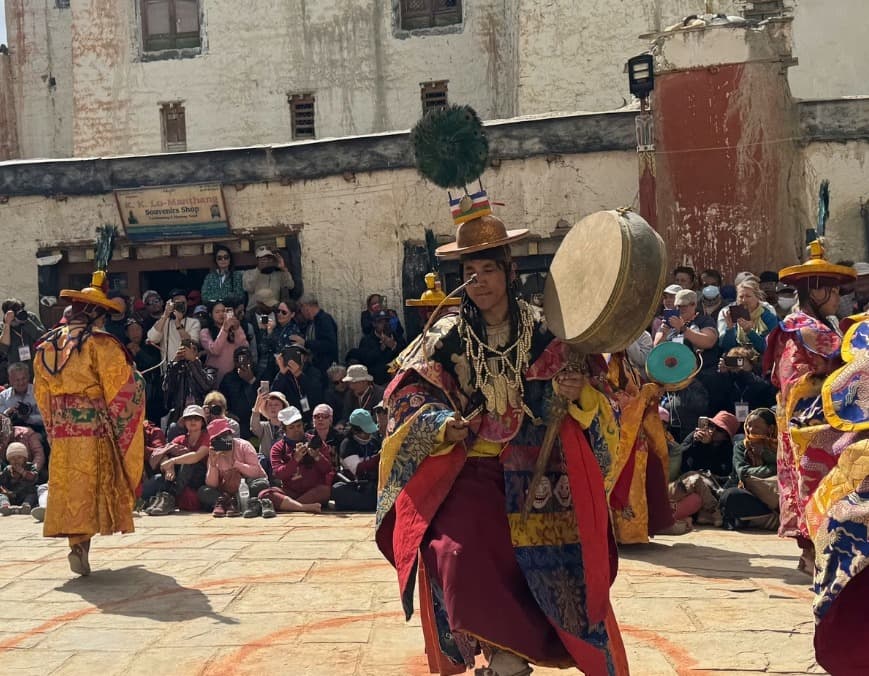
As you continue your trek to Upper Mustang, you’ll be introduced to the region's rich tradition and Buddhist culture. The ancient monasteries, decorated with prayer flags and wall paintings, will take you back in time. With this wonderful Buddhist resemblance all over, the trek will be very unique.
Discover the remote and intriguing cultures and customs of the Gurung, and Tibetan people through the Upper Mustang Trek with Drive Back. Upper Mustang is covered with tall hills, and several tall peaks will captivate you. In the villages leading to this old kingdom, there are several Buddhist relics, Chhortens, and monasteries. The palace of the previous monarch of Lo Manthang provides information about the long-lasting culture and customs. The Upper Mustang, which is a portion of the Tibetan Plateau, gives the impression that you have visited Tibet. This will become even more incredible due to the diverse and rich culture here.
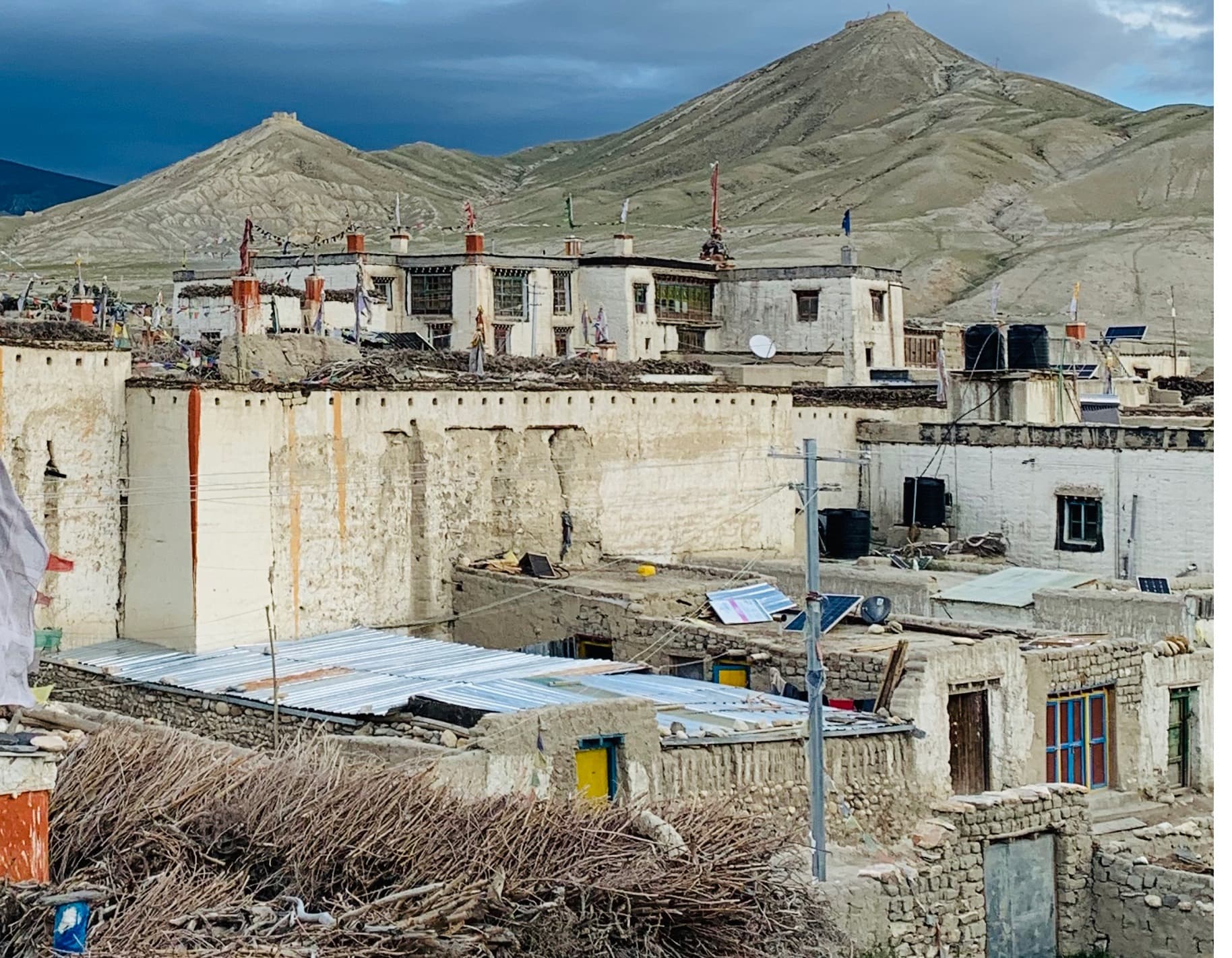
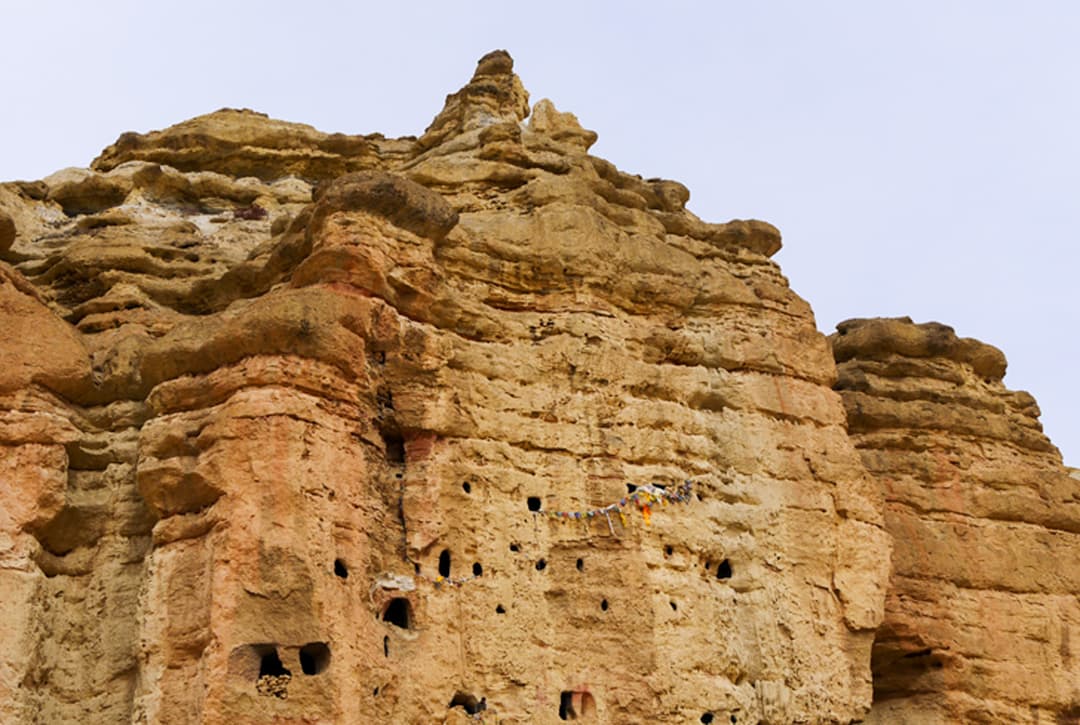
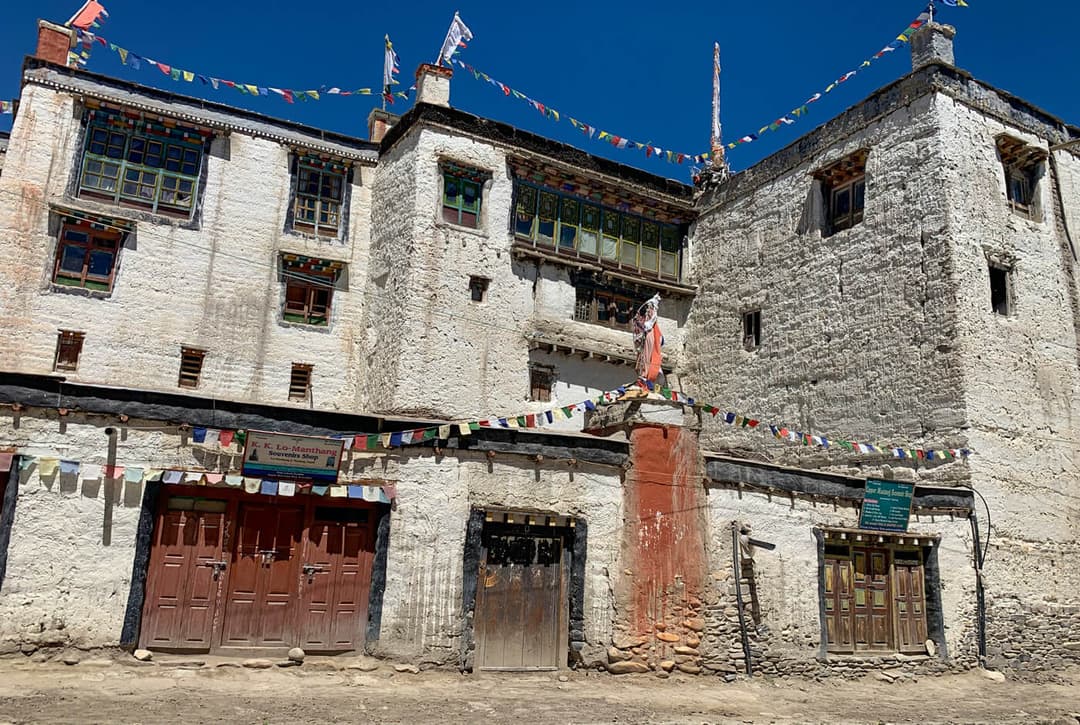
Additionally, you’ll find the architecture of the houses in the Upper Mustang very appealing. The Mustang region is preserved, as the houses are still traditional, made out of stones and mud bricks. The highlight of this trek is Lo-Manthang, the forbidden kingdom of Upper Mustang. This city is filled with beautifully decorated caves, built thousands of years ago. You can find mesmerizing Buddhist stupas that are captivating.
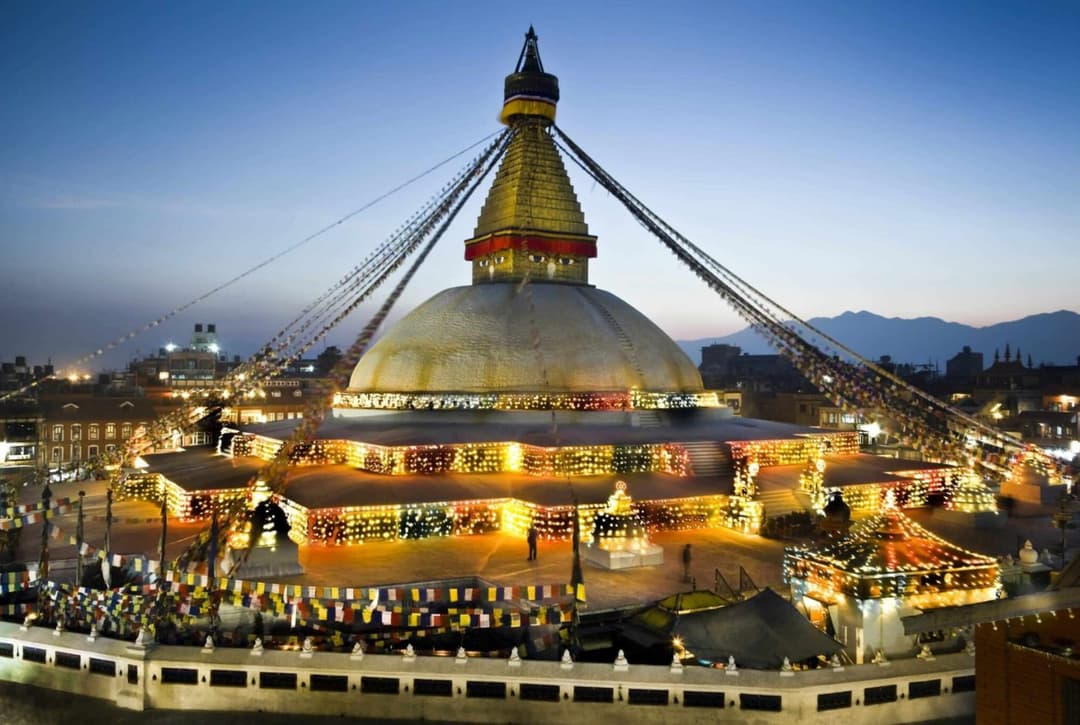
When you arrive at the Tribhuvan International Airport, you’ll find our staff waiting for you at the arrival terminal. A sightseeing tour will be organized for Kathmandu before you go on your adventure. You’ll explore all the heritage sites around Kathmandu such as Kathmandu Durbar Square, Swyambhunath, Pashupatinath, Boudhanath Stupa, Etc. After the half day of sightseeing, you’ll catch a flight to Pokhara.
Before starting your trek to Upper Mutan, you will stroll around the vibrant city and explore the lakeside streets. Then, from Pokhara, you’ll fly toward Jomsom and trek up to Kagbeni. It is the headquarters of Mustang and the gateway of Upper Mustang. It will then take you to Muktinath, the most sacred place for both Hindus and Buddhists.
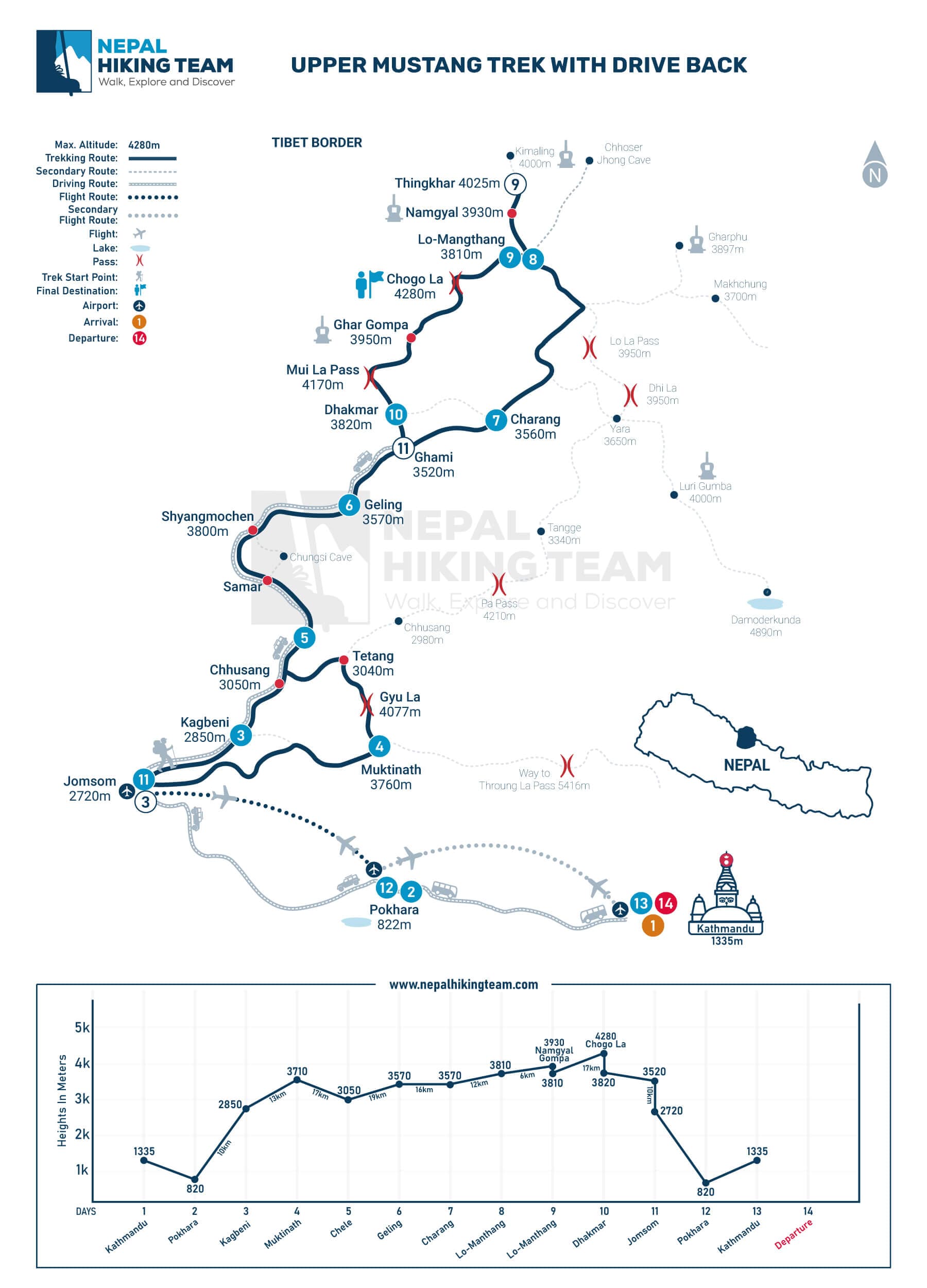
Then, you’ll move to Chusang, Geling, and Charang and reach the Kingdom of Lo-Manthang. Here, you’ll have the chance to explore the Namgyal Gompa and the Tingkhar Village before returning to Lo-Manthang. The adventure continues with a hike to Chogo La (4210m/13810ft), the highest point on this trek. Then, you’ll cross the Charang River and climb up to Ghar Gompa before walking to Dhakmar.
The next day, you’ll start your trek towards Ghami, where you’ll drive to Jomsom. You’ll take a flight back to Pokhara city and the following day fly back to Kathmandu.
If you require any personalized Upper Mustang Trek with Drive Back or any kind of trip, feel free to contact the Nepal Hiking Team.
Difficulty: Before proceeding into these amazing landscapes of the Upper Mustang, you must understand the difficulty of the trek. The Himalayas unfold a vast expansion of peaks and deep valleys. You will drive through the region from Pokhara to Lo-Manthang and back to Pokhara again. But you will hike short trips, so you will need to be physically fit as well.
Acclimatization: The acclimatization day is one of the most crucial points in any high-altitude trip. For those who are unfamiliar, acclimatization is a period of rest during your high-altitude thrill, allowing your body to adjust to shifts in altitude. In the desert-like terrain of Upper Mustang, the importance of acclimatization cannot be exaggerated. Despite the seemingly steady ascent, the region sits at an elevation of 3,840 m/12,595 ft. above sea level. Ignoring the necessity of acclimatization will lead you to risks of high altitude sickness or Acute Mountain Sickness (AMS).
Support and Guidance: An extensive counseling session before you go on any journey is very important. It makes sure trekkers are well-equipped with knowledge and techniques to steer the adventures ahead.
Therefore, a well-planned itinerary can be the compass that leads you through the maze of rough terrains and diverse altitudes. This will increase your chances of completing this trip successfully.
The Upper Mustang Overland Tour is almost conducted throughout the year. But the best time to go is spring, autumn, and summer. Every season has its unique aesthetics offering unique terrains, natural settings, and trekking experience.
Yes, you can go on the Upper Mustang Overland Trek during the summers as well. Upper Mustang lies in the rain shadows of the Annapurna range. So, summer drives are pleasant, well-lit, and dry. The weather is perfect and the trails are in superb condition with warm and sunny days with stunning visibility.
The Mustang region's Rivers and ecosystem are at their peak during this season. Even though you may encounter some damp weather in the lower Mustang, making the trails slippery and muddy, the natural beauty is enhanced.
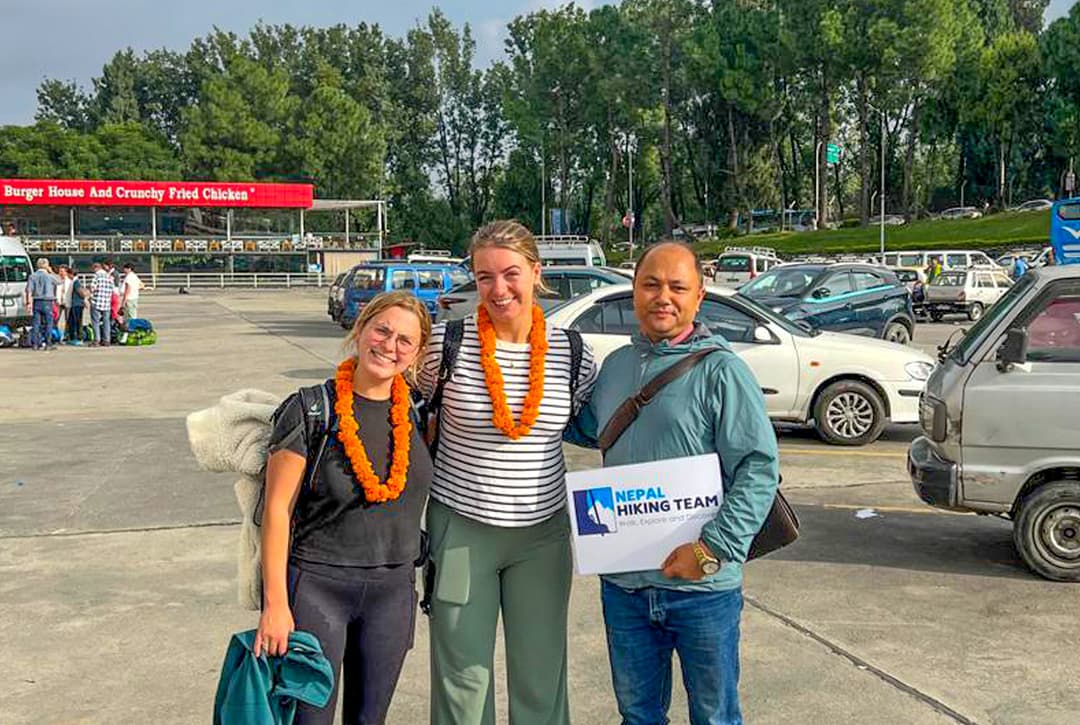
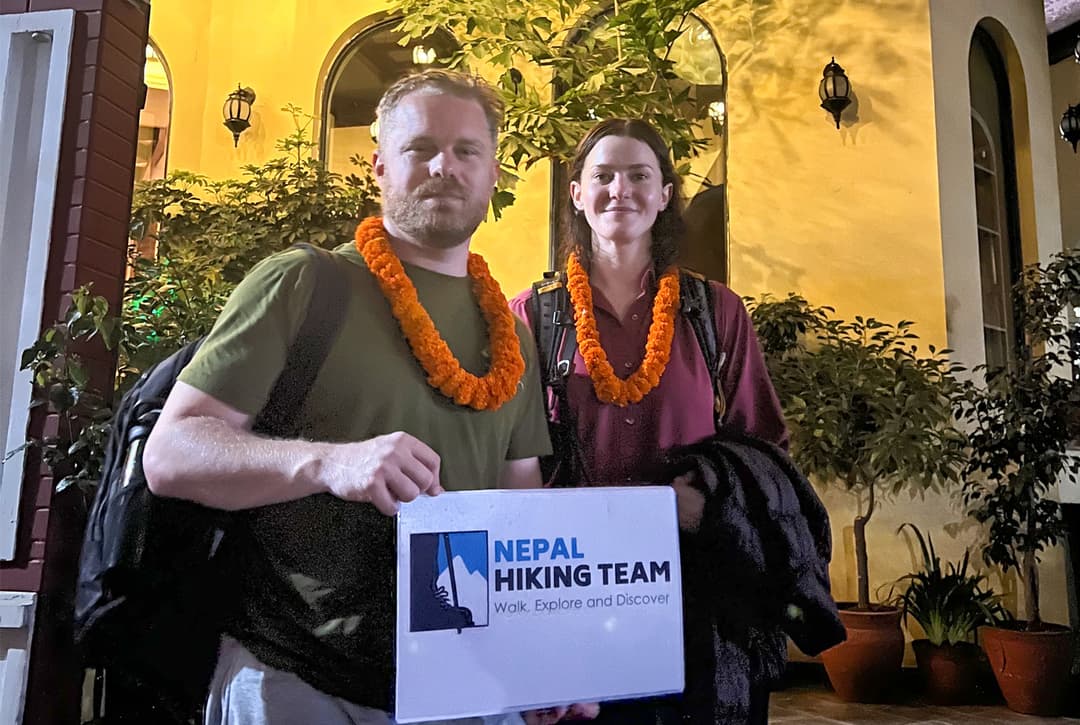
Our staff at NHT will meet you at the airport and transport you to your hotel for your check-in. You’ll receive a brief overview of the journey. There are no scheduled events after that, so you can spend the time however you like. You can explore your surroundings if you have time.
Overnight at the hotel.
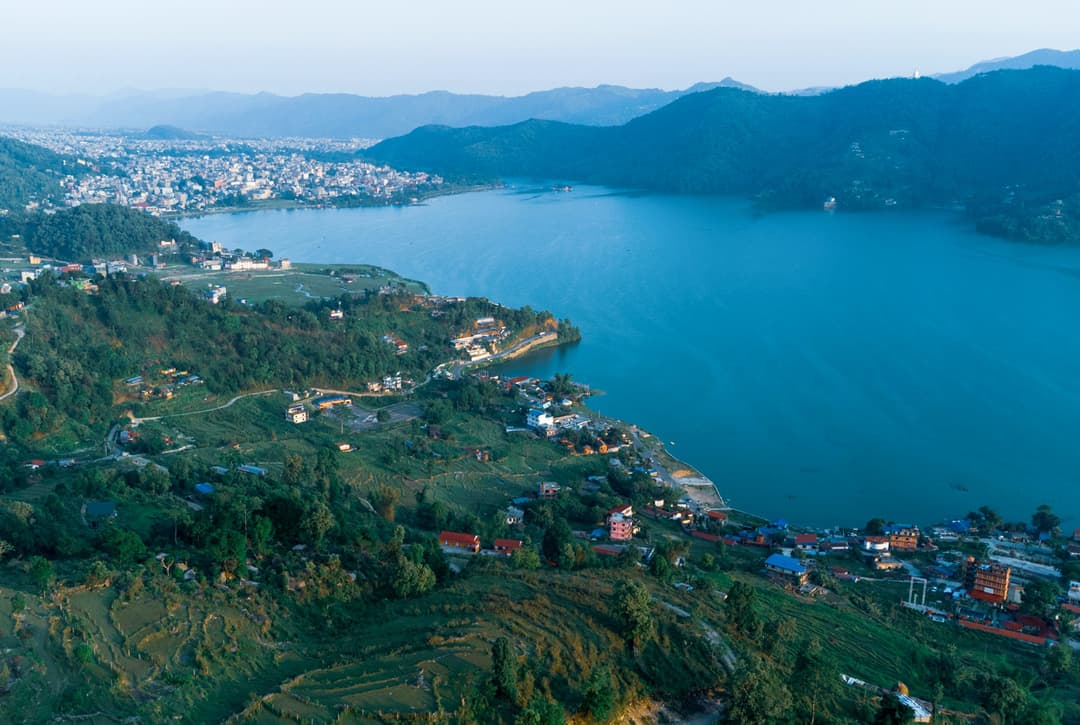
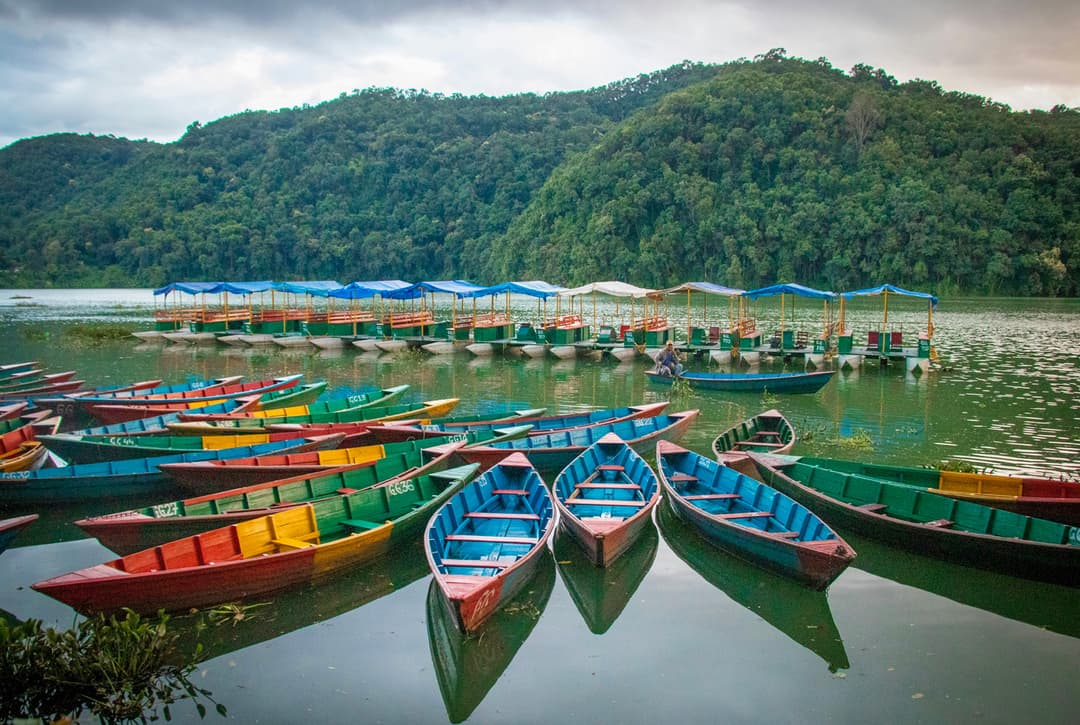
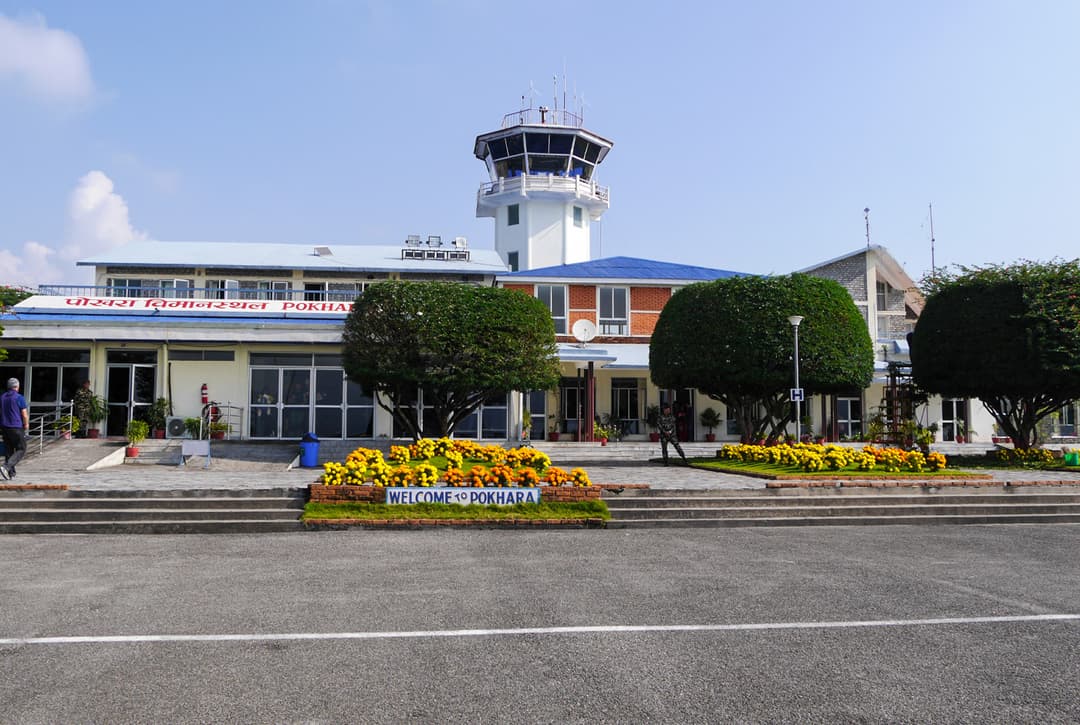
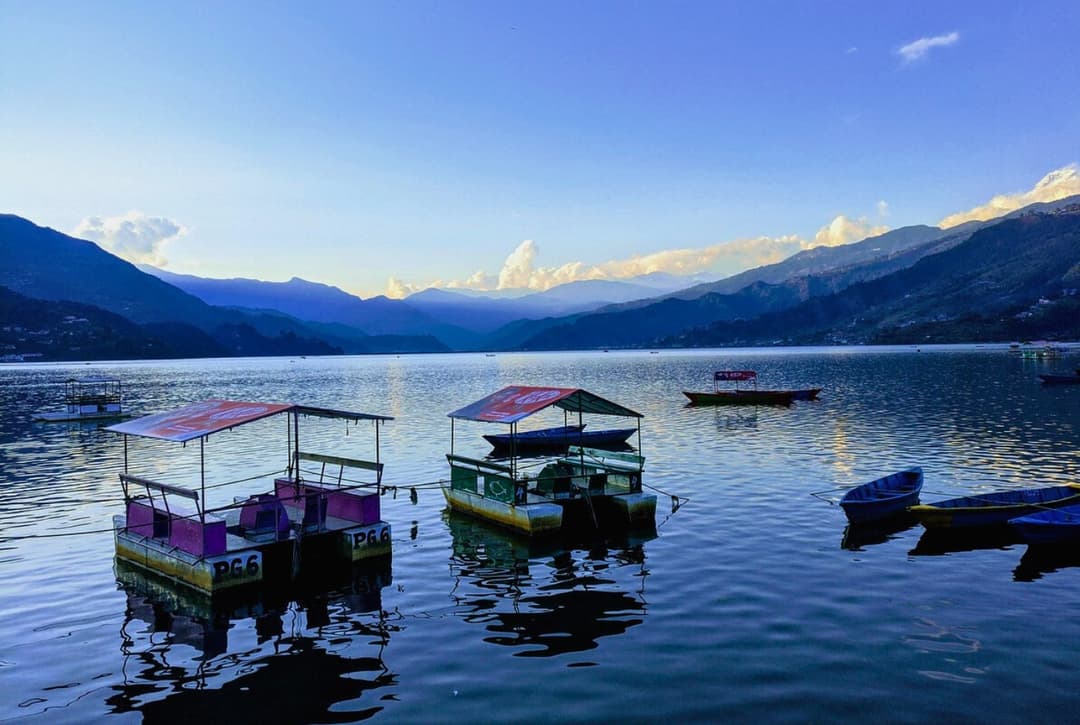
Free morning and afternoon flight to Pokhara. Check in at the hotel and explore if time permits.
Overnight at the hotel, brekafast included.
We’ll fly to Jomsom early in the morning, across the Snow-Capped Peaks of Annapurna and Dhaulagiri. The views of the gigantic massifs reach more than 8,000 meters. The River with the World’s Deepest Gorge is simply breathtaking. From Jomsom, you’ll start our upper Mustang trek to Kagbeni. This is the main gate to the upper Mustang, situated at an altitude of 2,800m. Kagbeni village dates to around the 14th century, when it served as a checkpoint for traders from Nepal.
Overnight at Guesthouse, brekafast, lunch, and dinner included.
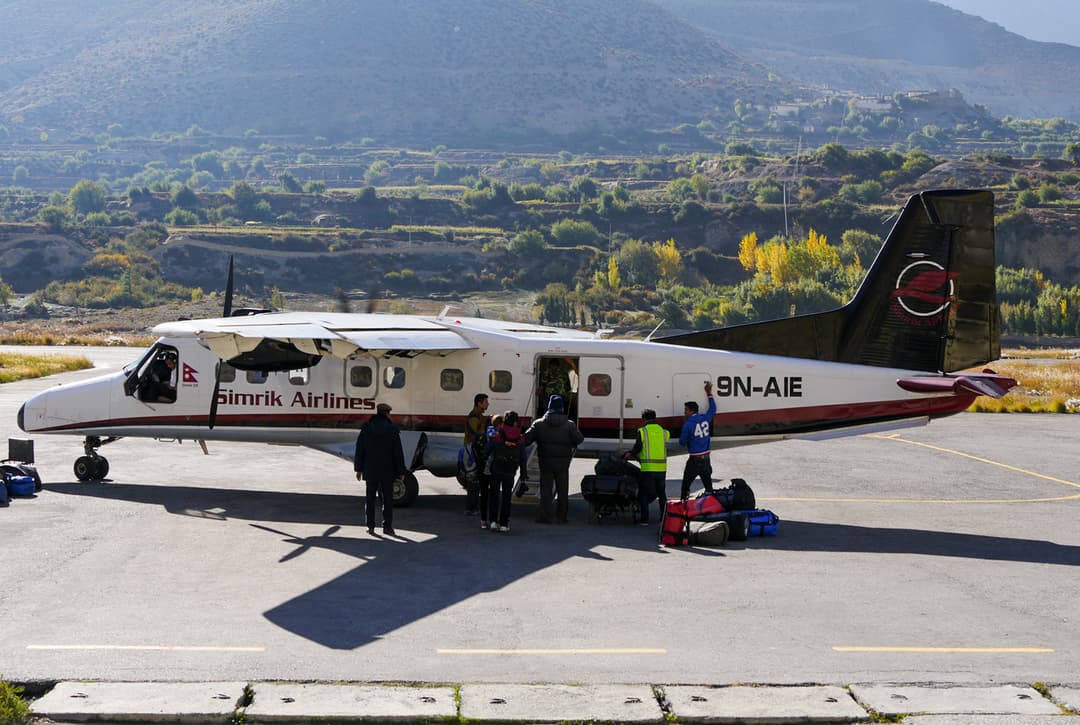
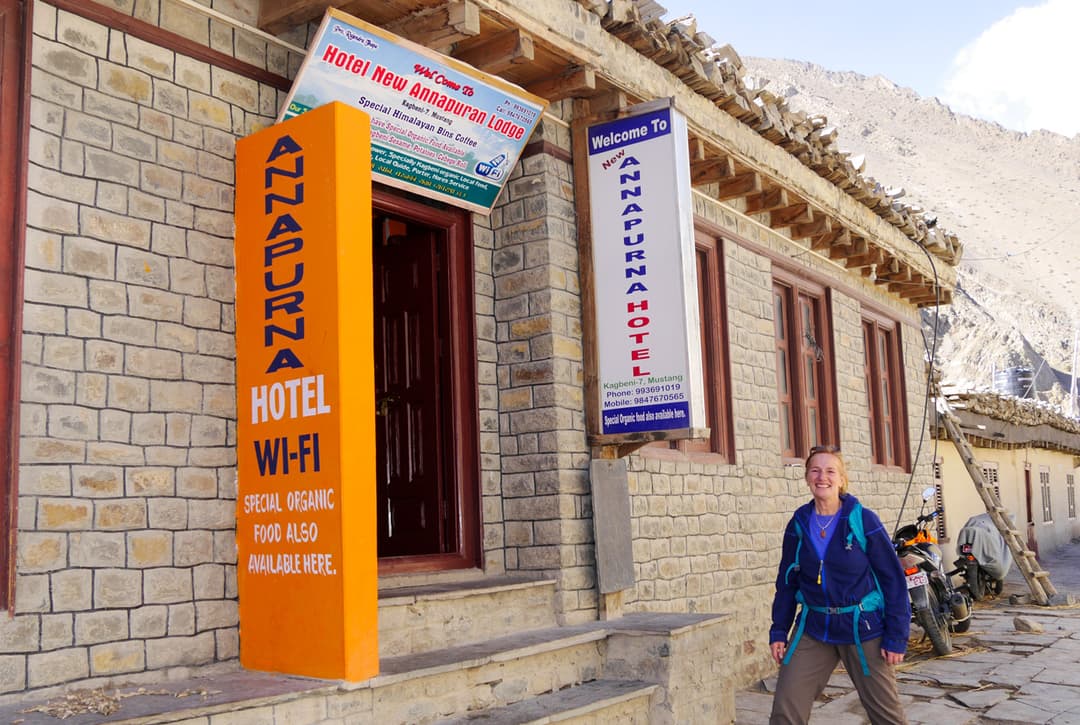
After breakfast, we begin trekking along the eastern bank of the Kali Gandaki River. The trail crosses small ridges and dry hills before reaching Tangbe village, known for its whitewashed houses and apple orchards.
We continue toward Chhusang, passing red cliffs and a natural rock tunnel formed by erosion. From the river valley, the trail climbs steadily through a narrow rocky gorge to Chele.
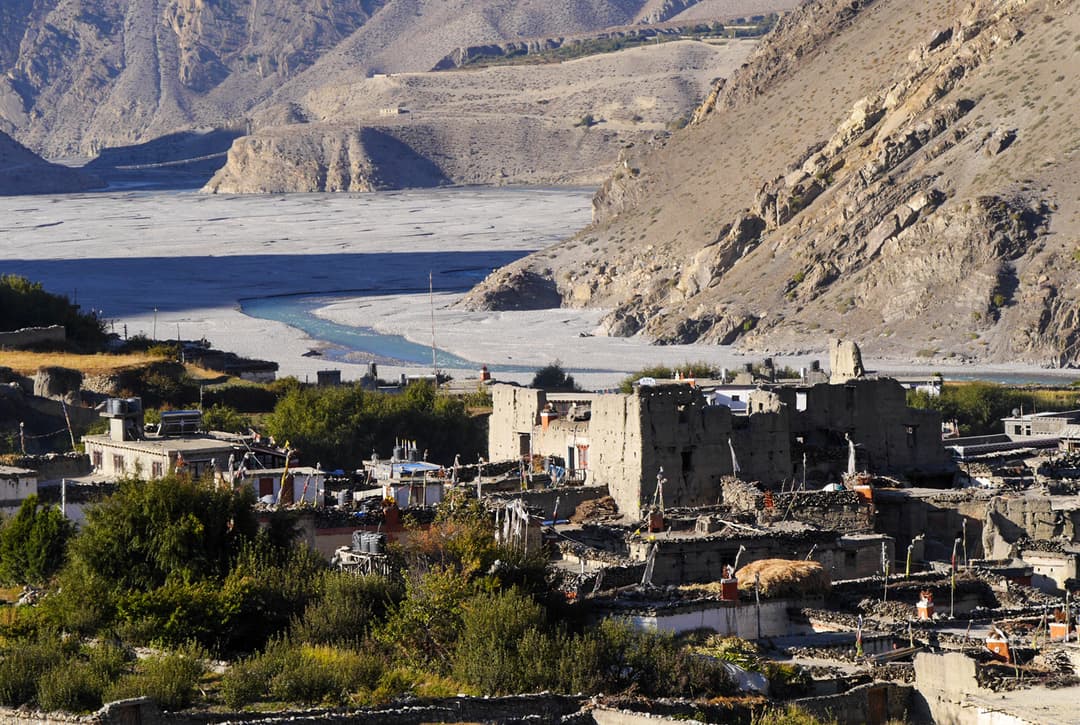
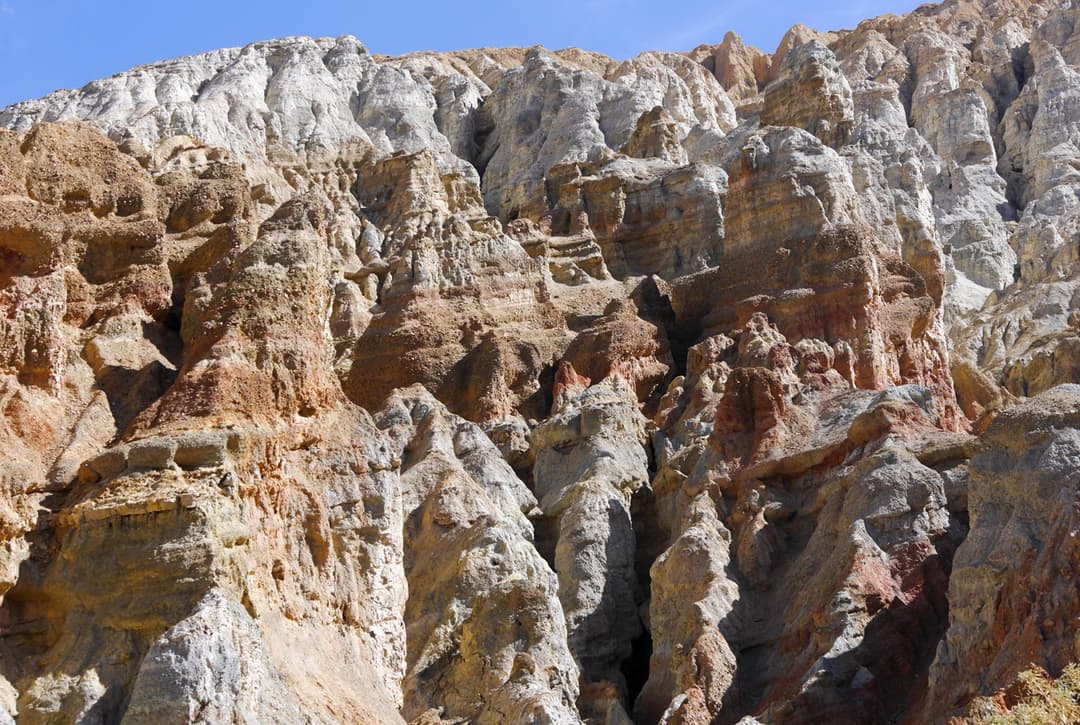
Today, the landscape begins to feel distinctly Upper Mustang. The trail climbs across dry hills and wind-carved terrain, following steep canyon walls shaped by centuries of erosion. The vegetation becomes sparse as the region enters the rain-shadow zone of the Himalayas.
After trekking past Samar village, we take a side trail to the sacred Chungsi Cave. This cave is believed to have been blessed by Guru Rinpoche, and it remains an important pilgrimage site for local communities. The short hike to the cave involves a steady climb, but the setting and spiritual significance make it worthwhile.
From Chungsi Cave, we continue across a ridge and descend into a dramatic valley before gradually ascending toward Shyangbochen. The route offers wide views of Nilgiri and distant Annapurna peaks to the south. Shyangbochen is a quiet settlement surrounded by open landscapes and traditional Mustang architecture.
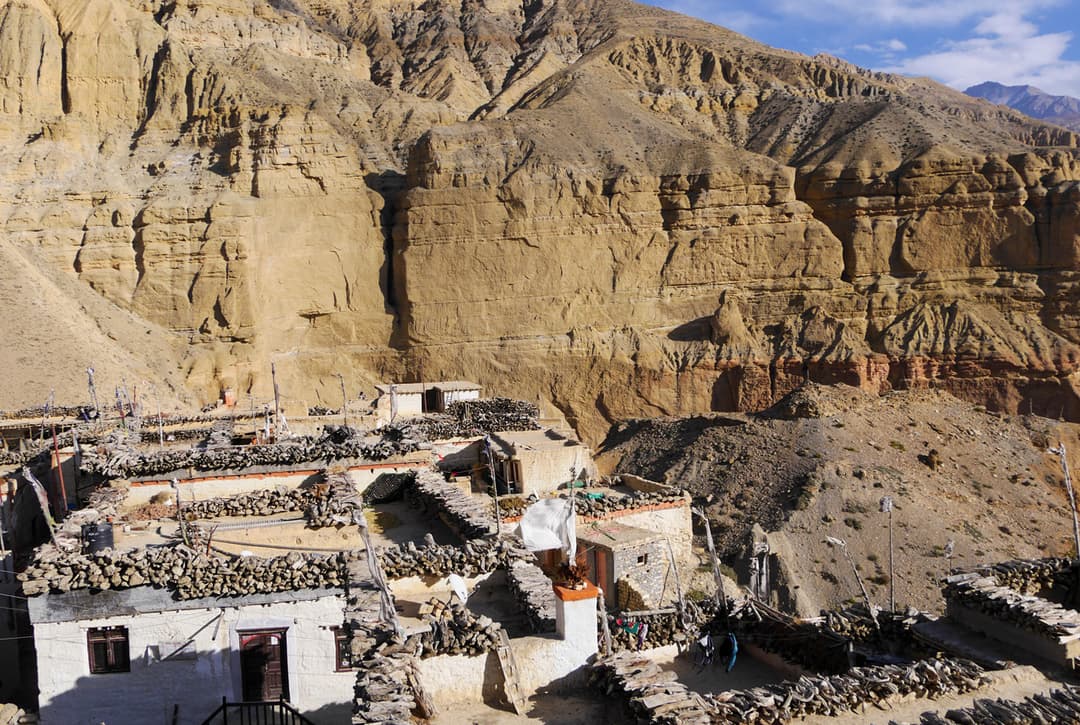
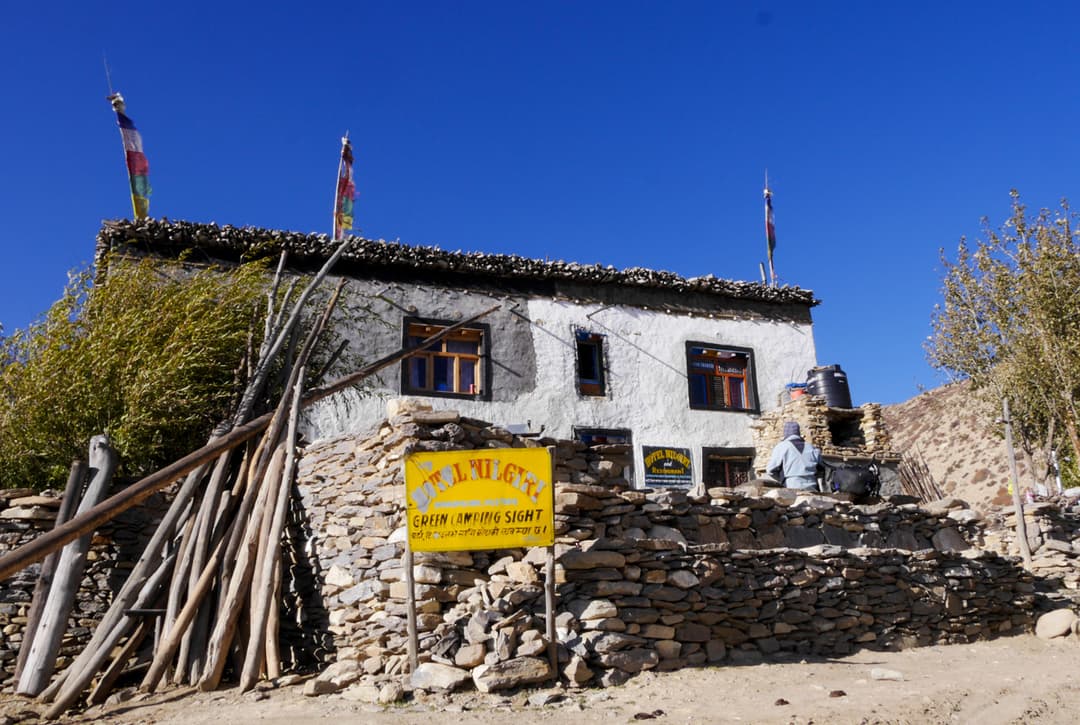
Leaving Shyangbochen, the trail gradually ascends to Nyi La Pass (4,010m), one of the high points of this section. From the top, you enjoy wide views over the Mustang landscape before descending toward Ghami, a traditional village surrounded by barley fields and stone houses.
After crossing the Ghami Khola via a steel bridge, you pass the longest Mani wall in Mustang, an impressive stretch of carved prayer stones lining the trail. The route then climbs steadily to a ridge before descending gently into Charang village.
Charang is known for its striking five-story white Dzong and the nearby large red monastery. Inside the monastery, you can see ancient statues, Thangka paintings, and detailed murals depicting seated Buddhas and protective deities.
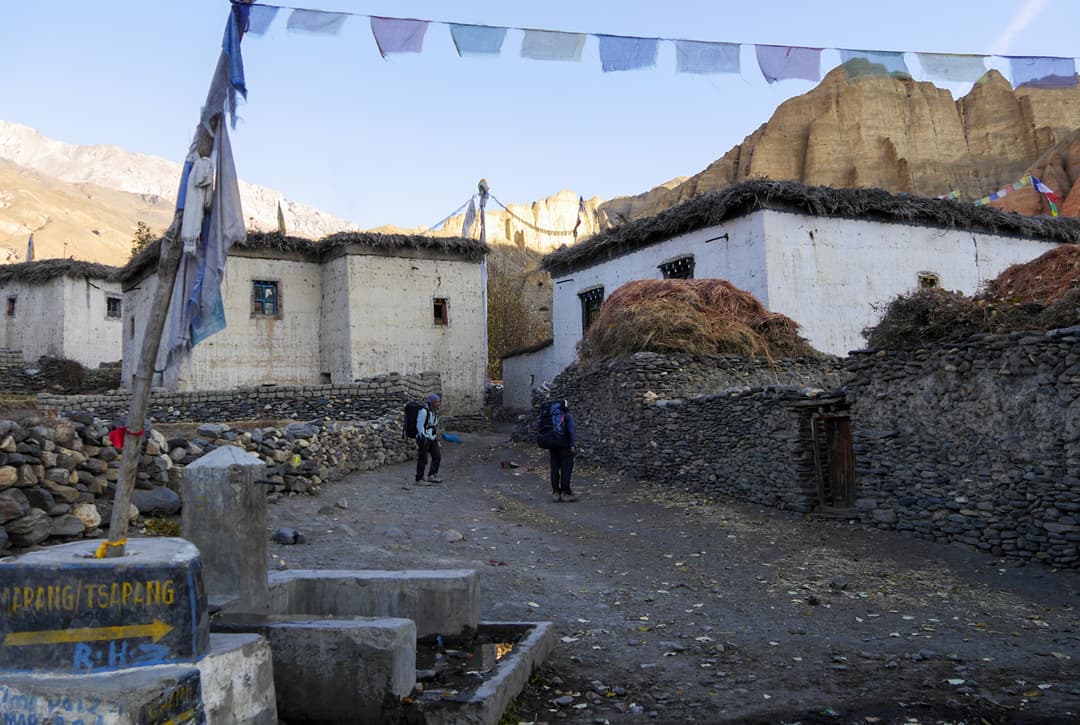
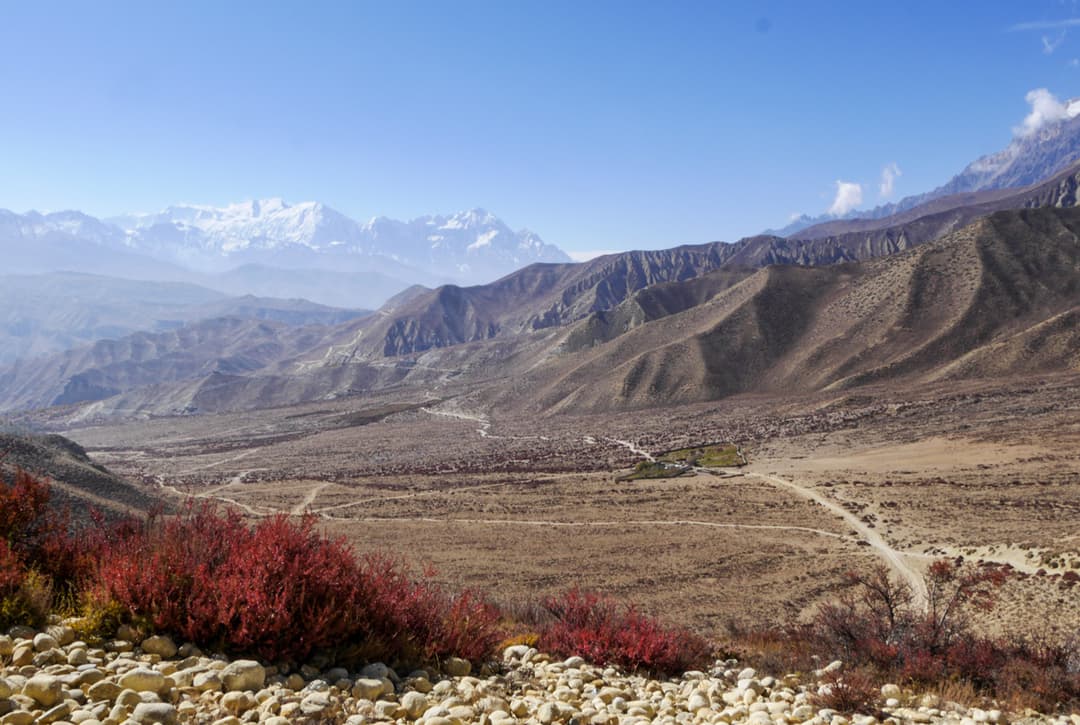
Our trail ascends steadily until Lo-Gekar. Lo-Gekar Gompa is older than Samye Gompa in Tibet. It is one of the oldest Gompas in the region. After visiting Lo-Gekar, we continue our upper Mustang trek to Lo-Manthang. The trail to Lo-Manthang is well-defined, with some minor climbing.
We will pass the walled city of Lo, then proceed with the trial, make a short descent, cross a stream, and climb to the plateau of Lo-Manthang.
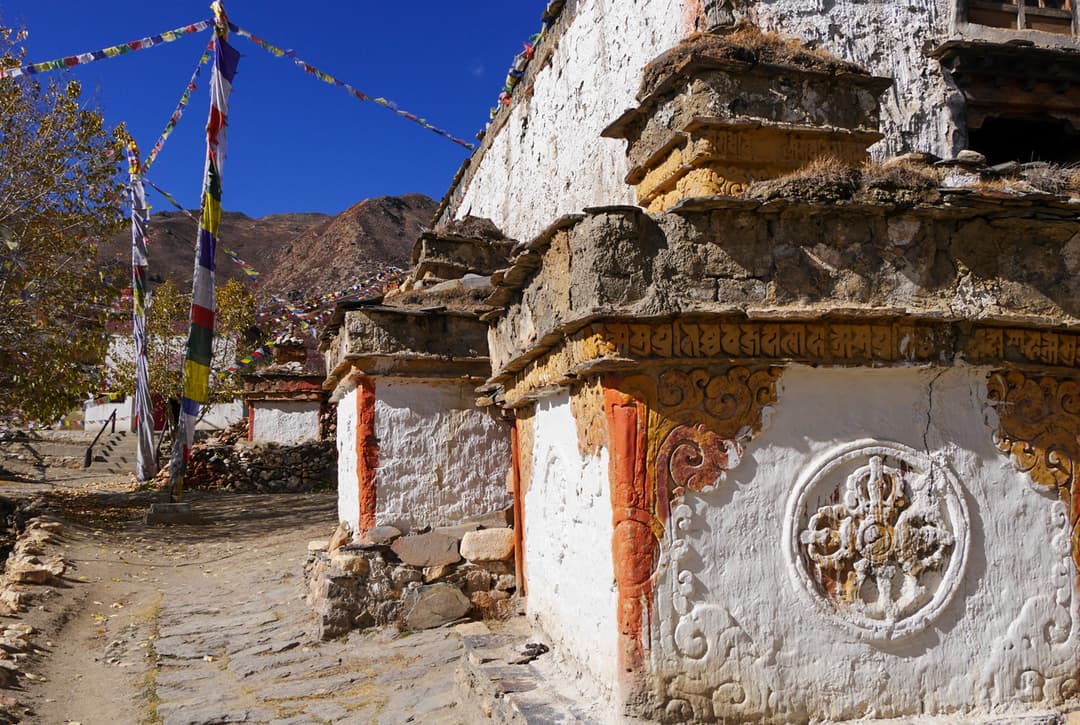
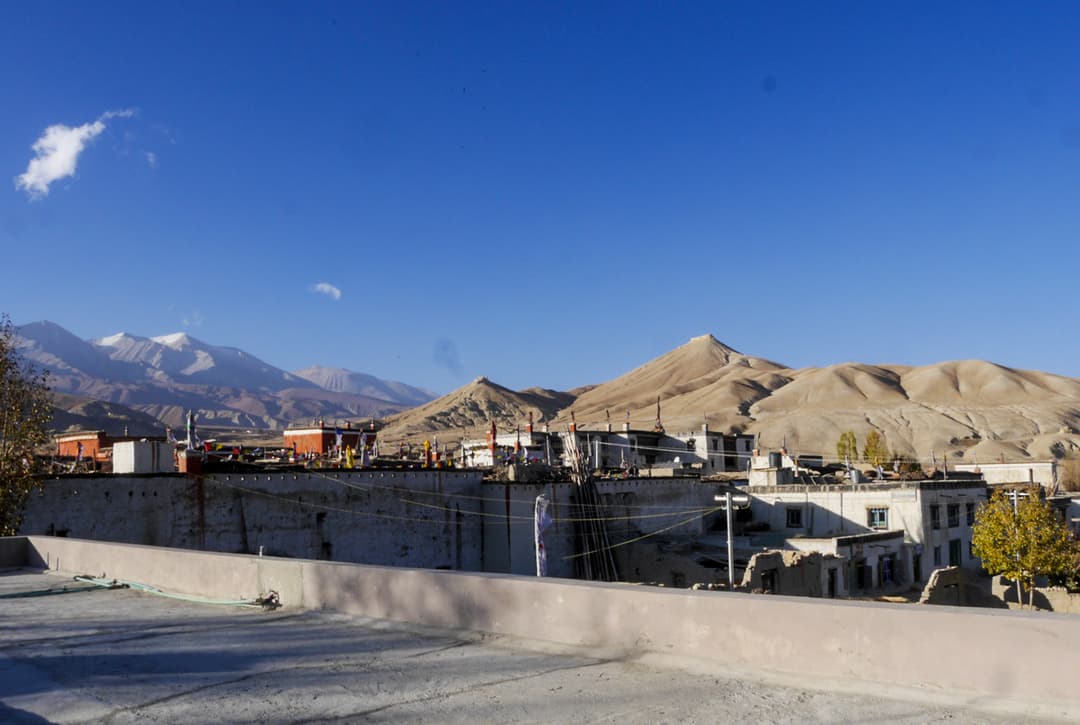
Today we begin by exploring the ancient walled city of Lo Manthang. In the morning, we visit the main monasteries inside the city, including Jampa Lhakhang, Thubchen Gompa, and Chode Monastery. These historic sites reflect the strong Tibetan Buddhist heritage of the region and house important murals, statues, and sacred artifacts.
After lunch, we take short side trips outside the city. We hike to Namgyal Gompa, perched on a hilltop overlooking the valley, then continue to Tingkhar village, one of the last settlements northwest of Lo Manthang. The walk offers wide views across the Upper Mustang plateau before returning to Lo Manthang in the late afternoon.
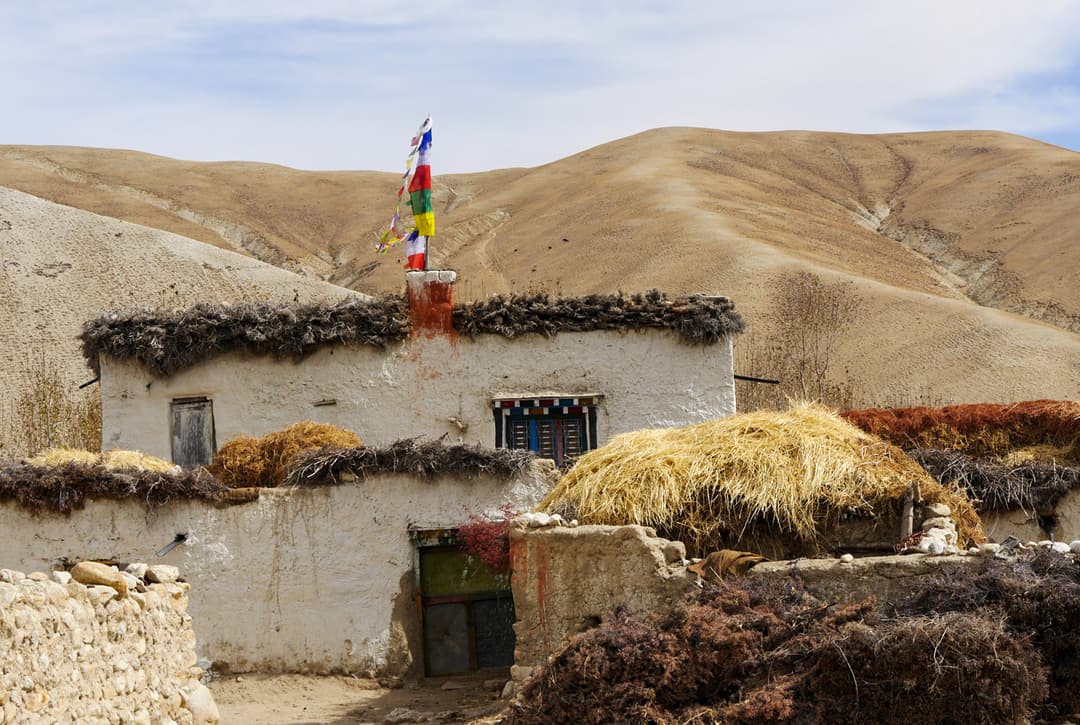
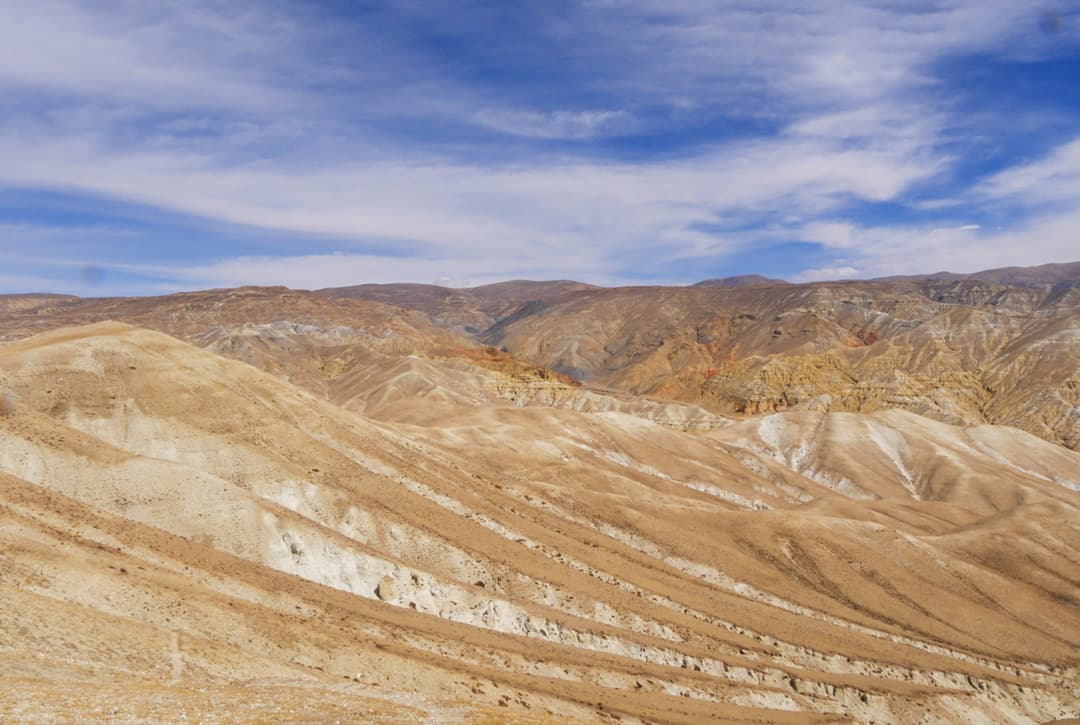
After breakfast, we take a short jeep drive north of Lo Manthang toward Chhoser Village, located near the Tibetan border.
The drive follows a rugged trail across wide, open valleys shaped by wind and erosion.
From Chhoser, we begin a hike to explore the famous Sky Caves, ancient cave dwellings carved high into the cliffs. These multi-story caves are believed to be over 2,000 years old and were once used for meditation, burial, and shelter. Climbing to the caves involves a steady uphill walk, but the views across the dramatic Mustang landscape make the effort worthwhile.
We also visit Nyiphuk and Garphu Gompa, monasteries carved into the rock. These sacred sites offer insight into the region's spiritual heritage and its long-standing connection to Tibetan Buddhism.
After completing the hike, we return by jeep to Lo Manthang, where you have time to relax or further explore the walled city.
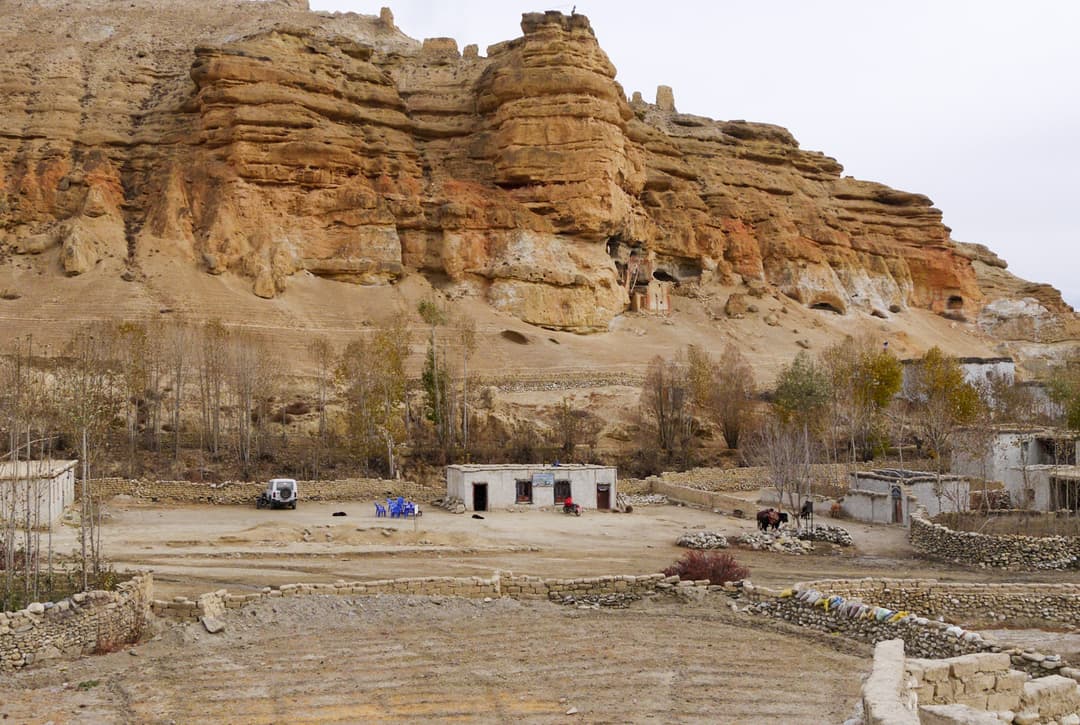
After breakfast, we drive from Lo Manthang to Jomsom by jeep, descending through the Upper Mustang landscape. The route passes villages such as Ghami, Samar, Chhusang, and Kagbeni, following the Kali Gandaki corridor with views of cliffs and deep gorges.
Optional: From Kagbeni, a 1.5-hour detour can be arranged to visit Muktinath Temple (3,710m), one of Nepal’s most important pilgrimage sites, before continuing to Jomsom.
We arrive in Jomsom by late afternoon.
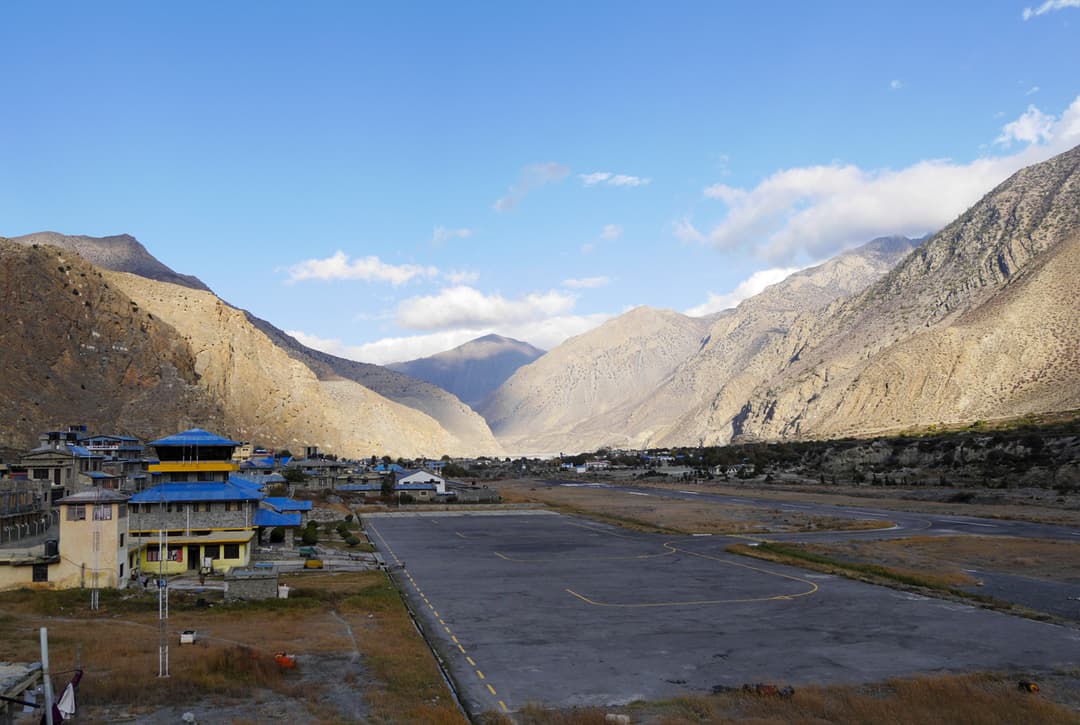
In the early morning, board a short flight from Jomsom to Pokhara, enjoying spectacular views of Dhaulagiri (8167m), Nilgiri (7061m), and surrounding peaks.
Trip Note: Weather in Jomsom is highly unpredictable, and flights are sometimes delayed or canceled. In the event of a disruption, we will arrange a jeep drive to Pokhara (approx. 7 hours) and adjust the Kathmandu connection accordingly.
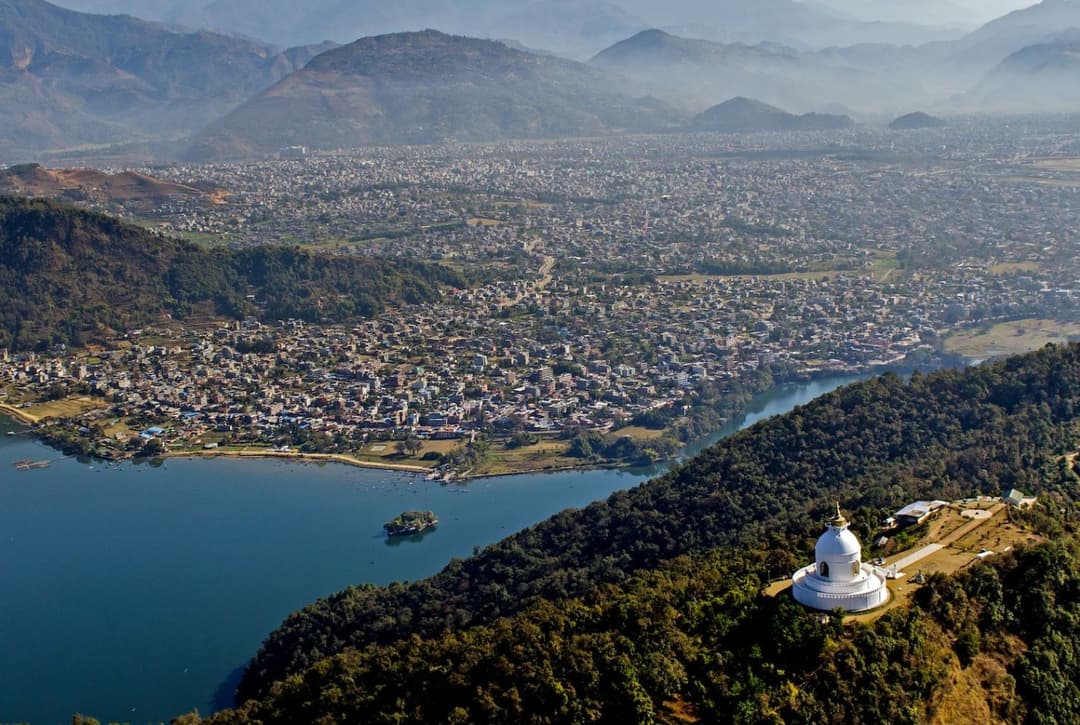
Fly to Kahtamndu. Transfer to the hotel, and free time. Overnight stay at a hotel in Kathmandu, including breakfast.
Approximately 3 hours before your scheduled flight, a Nepal Hiking Team representative will bid you farewell after taking you to the International airport.
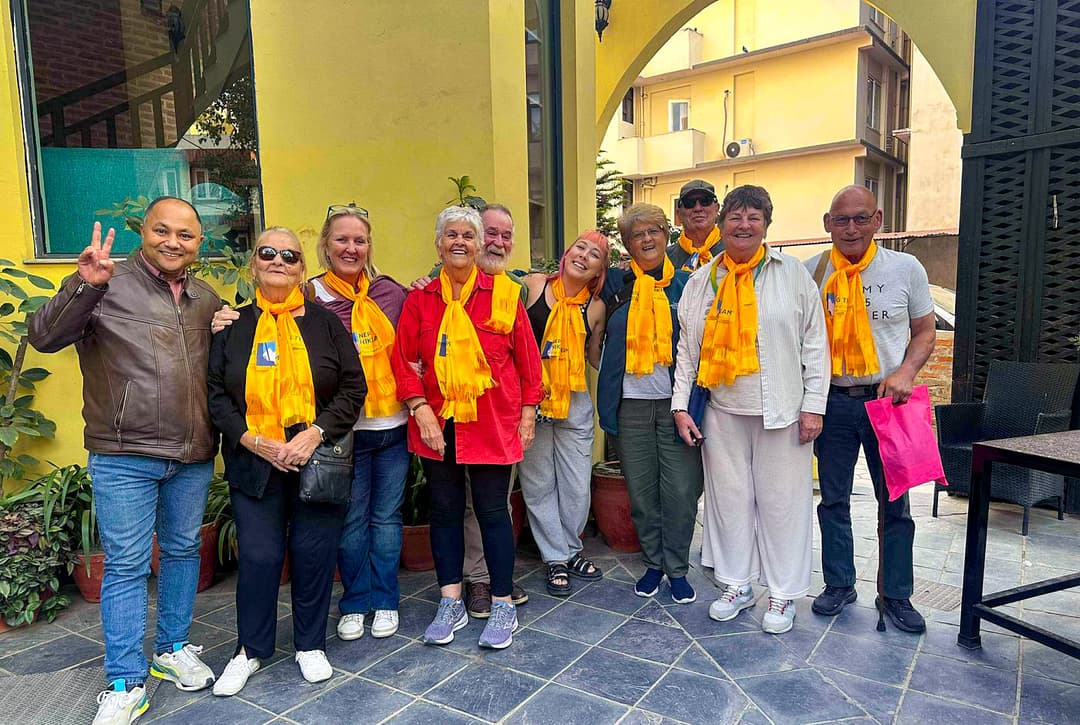
Read our genuine feedback from past travelers with Nepal Hiking Team sourced from TripAdvisor, Google, Facebook, and Trustpilot.
A more remote trek than the usual routes, but all the more rewarding for it. The scenery was spectacular, with fascinating history and culture. We trekked up the western trail and returned via the eastern side, covering 170 km.
From past experience, we knew Nepal Hiking Team was excellent.
This time, we were even luckier with our fantastic guide, Dipendra “Dip.” Nothing was ever too much trouble, and his smile lit up every tea house. He also kept us off the road as much as possible, with only about 10% of our trek on it.
Ask for Dip 👍🏻
I traveled from Kathmandu to Pokhara and then flew to Jomsom for a journey through the Upper Mustang, particularly arranged by the Nepal Hiking Team. This was my first time using their services, and I organized everything from home in Sydney, Australia.
Our guide in Mustang was Yubraj, who was incredibly organized and made our trip enjoyable. Unfortunately, I injured my knee while walking from Lo Manthang to Yara. Yubraj swiftly arranged for a vehicle to reach the remote area and transport me to Muktinath by road. He also adjusted our itinerary after the accident. I highly recommend him as a guide to others.
The Nepal Hiking Team was easy to deal with and always punctual with their correspondence.
Did the Upper Mustang trek with Nepal Hiking Team for the first time.
Everything—from airport pickup to accommodation and logistics—was flawless. The response time via email before the trip was also prompt when finalizing details.
During the trek, we made some unusual and demanding requests (probably more than once), yet our guide and porters did their best to accommodate us—even going as far as trying to find a live chicken for dinner on our last night in Lo Manthang!
The trek wasn’t the toughest, but our safety was always their priority. Midway through the descent, one of our team members was hit with AMS in the middle of the night. Balaram, Arun, and their team acted immediately, rushing everyone to a lower altitude and arranging a helicopter to Pokhara for medical treatment. Despite facing a lot of issues with an unhelpful insurance company, they managed to secure the helicopter in time, ensuring our team member received medical attention before his condition worsened. Huge kudos for that!
Would definitely recommend Nepal Hiking Team to anyone looking to trek in Nepal.
We visited Upper Mustang in October/November, having trekked Gokyo Lakes the previous year. The landscape and trail in Upper Mustang were vastly different. In many ways, Upper Mustang was more breathtaking, and the trail felt more challenging than Gokyo Lakes. I appreciated that Upper Mustang was less traveled, making it quieter and the experience more humbling. Visiting a local home in Lo Manthang was like stepping back in time by centuries.
Our trek started from Jomsom to Lo Manthang, and we returned by jeep. Many visitors explore Upper Mustang by motorbike, which I highly recommend, as it allows you to cover nearly everything you would on foot. However, a major downside of trekking was walking on dusty roads shared with bikes, jeeps, and buses.
Nepal Hiking Team was, as always, fantastic. Our guide and friend Arjun was outstanding, and our porter Tuk was excellent. The owners, Balaram and Ganga, personally welcomed us.
I highly recommend Nepal Hiking Team!
I was with Nepal Hiking Team in spring this year, doing the Upper Mustang Trek. I choose this company for all the good reviews. Because of this, I was expecting good services from them, and they did not disappoint! When I landed at the Kathmandu airport, I was greeted by Ganga and his team with flower garlands. Then I was transferred to my hotel. As the trek started from Jomsom, I knew that I had made the right choice going with NHT because of their constant reassurance and care that they showed thought the initial days of my time with them. I loved my Kathmandu and Pokhara tour, and even more beautiful was the trek at Mustang itself. I have never seen or experienced such fantastic culture and practices anywhere else, and it was so new and refreshing for me. I was with my guide, Raj, who was my trusted companion on the entire journey. He was unique and brilliant and so funny- he made the trek ten times better than it would have been otherwise. I am so thankful to Nepal Hiking Team for fulfilling my desire for a beautiful trip. I cannot emphasize enough how much I enjoyed my time with them and how much I look forward to joining them again in the future.

Nepal Hiking Team is highly regarded for its excellent service, organization, and care. Past travelers highlight the company's prompt communication, seamless logistics from airport pickup to accommodation, and the professionalism of their guides and porters. Reviews specifically mention guides like Dipendra ("Dip"), Yubraj, Raj, and Arjun for their dedication, humor, and ability to handle challenging situations, such as arranging emergency transport when a trekker suffered Acute Mountain Sickness (AMS). The owners, Balaram and Ganga, are also noted for personally welcoming guests, ensuring a trustworthy and personal experience.
The company prioritizes trekker safety above all. As evidenced by a traveler's review, when a team member showed symptoms of AMS in the middle of the night, the guide and porter acted immediately to descend to a lower altitude and arranged a helicopter to Pokhara for medical treatment, even when faced with difficulties from an insurance company. Their guides are experienced, insured, and equipped with a comprehensive medical kit to manage health issues on the trail.
Nepal Hiking Team provides a comprehensive support system tailored to the Upper Mustang Trek. This includes an experienced, English-speaking guide and a porter (for every two trekkers) who carries your luggage. They also provide essential gear like a down jacket, sleeping bag, and a duffel bag for the trek. Their service includes arranging all permits, flights, and ground transportation, allowing you to focus entirely on the experience. Their flexibility is also noted, with guides accommodating unusual requests and adjusting itineraries in case of injury.
Upon your arrival at Tribhuvan International Airport (KTM), a representative from Nepal Hiking Team will be waiting for you at the arrival terminal. They will greet you and provide a private vehicle transfer to your hotel in Kathmandu, where you can check in. You will also receive a brief overview of your upcoming journey.
The cost of the Nepal entry visa is not included in the package price. You can obtain a visa upon arrival at Tribhuvan International Airport or at Nepalese embassies/consulates abroad. It is your responsibility to arrange this. The package does not specify the exact visa fee, as it varies by nationality and duration of stay. Be sure to bring a few passport-size photos, as they are also required for your trekking permits.
Yes, the "Cost Includes" section covers all ground transportation by private vehicle, including airport transfers for both your arrival and departure. On your final day (Day 13), a Nepal Hiking Team representative will take you to the international airport approximately three hours before your scheduled flight.
The group size for this trek requires a minimum of 2 people. You can book directly through the Nepal Hiking Team website. If the scheduled departure dates do not suit your availability, you can contact the team to arrange alternative date options. The itinerary can also be personalized based on your preferences.
While the page doesn't detail the deposit structure, it provides a comprehensive list of "Cost Includes." This covers all ground transport, 3-star hotel accommodations in Kathmandu and Pokhara (with breakfast), all internal flights (KTM-Pokhara-Jomsom-Pokhara-KTM), full board meals (breakfast, lunch, dinner) with tea/coffee during the trek, the best available lodge accommodation during the trek, an experienced guide and porter, all necessary permits, and a comprehensive medical kit. Costs that are excluded are listed separately.
All necessary paperwork and permits, including the Annapurna Conservation Area Permit (ACAP) and the Special Trekking Permit for Upper Mustang, are included in the package cost. You will need to provide three passport-size photos to Nepal Hiking Team for processing these permits. They handle all the logistics, so you don't have to worry about obtaining them yourself.
The Upper Mustang region, also known as the Lo-Manthang kingdom, was a restricted area for a long time. Trekking here requires a special permit in addition to the standard Annapurna Conservation Area Permit (ACAP). This permit is included in your package cost, and Nepal Hiking Team arranges it for you using the passport-size photos you provide. The permit helps regulate tourism and preserve the unique, preserved Tibetan-Buddhist culture and landscape of this rain-shadow area.
Upper Mustang is a uniquely preserved kingdom with a landscape that resembles the Tibetan Plateau. Its barren, desert-like terrain is a stark contrast to the lush green hills of other trekking regions. The area is rich in ancient Buddhist culture, featuring centuries-old monasteries like Lo-Gekar Gompa (older than Samye Gompa in Tibet), the walled city of Lo-Manthang, and the ancient Sky Caves near Chhoser. The architecture, consisting of mud-brick and stone houses, and the strong Tibetan Buddhist traditions make this a culturally distinct and historically significant trek.
The Sky Caves near Chhoser Village are a major highlight of this trek. These are ancient, multi-story cave dwellings carved high into the cliffs, believed to be over 2,000 years old and used for meditation, burial, and shelter. The itinerary includes a dedicated excursion day (Day 9) where you take a jeep to Chhoser and then hike to explore these caves, including Nyiphuk and Garphu Gompa, which are monasteries carved into the rock.
The package includes three key flights: a 30-minute flight from Kathmandu to Pokhara (Day 2), an early morning scenic flight from Pokhara to Jomsom (Day 3), and a return flight from Jomsom to Pokhara (Day 11). The flights offer stunning views of the Annapurna and Dhaulagiri mountain ranges.
The weather in Jomsom is highly unpredictable, and flight disruptions are possible. The itinerary explicitly states that in the event of a flight delay or cancellation, Nepal Hiking Team will arrange a jeep drive from Jomsom to Pokhara (approximately 7 hours) and adjust your Kathmandu connection accordingly to ensure minimal disruption to your travel plans.
All ground transportation is provided by private vehicle and is included in the cost. This covers airport transfers in Kathmandu. For the final leg of the trek, a significant portion is a 8-9 hour jeep drive from Lo-Manthang back to Jomsom (Day 10), allowing you to cover the distance comfortably and see the landscape from a different perspective.
The trek is considered moderately difficult, primarily due to the high altitude. While you will have jeep support for a portion of the return journey, the itinerary involves several days of trekking for 5-7 hours over varied terrain, including dry hills, canyon walls, and passes like Nyi La (4,010m). The maximum elevation reached is 4,210m at Chogo La. A good level of physical fitness is required, as you'll be walking on trails that can be dusty and rocky.
Acclimatization is crucial for a safe trek. Despite the dry, desert-like terrain, the region sits at a high elevation (Lo-Manthang is at 3,810m). Ignoring the need to acclimatize can lead to Acute Mountain Sickness (AMS). The itinerary is designed with a gradual ascent and includes a full exploration day in Lo-Manthang (Day 8), which serves as an acclimatization day, allowing your body to adjust to the altitude before the excursion to even higher points like Chogo La (4,210m).
While the trek is not technically challenging (no mountaineering or glacier crossings), it is best suited for those with some trekking experience or a high level of physical fitness. The daily walking distances (up to 16-18 km) and the high altitude make it a demanding endeavor. However, the presence of a supportive guide, porter, and a well-planned itinerary significantly increases your chances of a successful and enjoyable experience. The option to drive back from Lo-Manthang also reduces the total walking days.
Your safety is a priority. The itinerary includes a gradual ascent with an acclimatization day in Lo-Manthang. Before the trek, an extensive counseling session is provided to equip you with knowledge about AMS symptoms and prevention. Your guide carries a comprehensive medical kit to monitor your health and manage any issues. As per a traveler's review, the team is prepared to act quickly, arranging immediate descent and helicopter evacuation if a serious case of AMS arises.
You will be accompanied by an experienced, English-speaking trekking guide who is knowledgeable about the region's culture, terrain, and safety protocols. Additionally, a porter will be provided to carry your luggage (with a ratio of one porter for every two trekkers). The porter's salary, insurance, equipment, and all their logistics (food, lodging, flights) are covered by the package, ensuring a well-supported and ethical operation.
Yes, travel insurance is mandatory and is listed in the "Cost Excludes" section. You must have a comprehensive travel insurance policy that covers emergency evacuation, including helicopter rescue, at high altitudes up to at least 4,500m, as well as trip cancellation, medical expenses, and lost baggage.
To reduce your packing burden, Nepal Hiking Team provides a down jacket and a four-season sleeping bag for the duration of the trek, which you return after the trip. They also give you a Nepal Hiking Team duffel bag for your gear and a trekking map to help you follow the route.
You are responsible for your personal trekking equipment, which is listed in the "Cost Excludes" section. Essential items include sturdy, broken-in trekking boots, comfortable trekking pants and shirts, a warm fleece jacket, a waterproof/windproof jacket, thermal base layers, a sun hat, a warm beanie, sunglasses, sunscreen, a water bottle, and personal toiletries. A detailed packing list is usually provided by the company upon booking.
Items like cold drinks, water, snacks, and other personal expenses are not included in the cost. You should bring enough cash (Nepalese rupees) to cover these expenses, as ATMs are not available on the trek. Hot showers, also not included, can be paid for at the tea houses.
In Kathmandu and Pokhara, the package includes a total of four nights' accommodation (2 nights in each city) at a 3-star category hotel. This includes breakfast and provides a comfortable, clean environment to relax before and after your trek.
During the trek, you will stay in the "best available twin sharing lodge" (tea houses). These are basic but comfortable guesthouses that provide a bed, a shared bathroom, and a common dining area where meals are served. The specific lodge names are not listed, but the itinerary includes overnight stays in Kagbeni, Chele, Shyangbochen, Charang, and Lo-Manthang, among others.
The page does not specify details on mobile network coverage or Wi-Fi availability. Given the remote, high-altitude nature of the Upper Mustang region, connectivity can be limited or non-existent in many villages. It's best to expect no reliable internet or phone service for the majority of the trek and to use this as an opportunity to disconnect.
The package includes "full board meals with tea/coffee (breakfast, lunch, dinner) during the trek." You will be served these meals at the tea houses where you stay. The cost excludes lunches and dinners while in Kathmandu. The itinerary also notes that on the trek days, "B.L.D" (Breakfast, Lunch, Dinner) are included.
Drinking water and cold drinks are listed in the "Cost Excludes" section, meaning they are not covered by the package price. You can purchase bottled water, boiled water, or other beverages at the tea houses along the trail. To save costs and reduce plastic waste, it is highly recommended to bring a reusable water bottle and use water purification tablets or a filter to treat tap water, which is often available at the lodges for a small fee or for free.
While not explicitly mentioned in the itinerary, the "Top Moments" section highlights the opportunity to "enjoy the famed local apples and apple wine (Marpha)" in the Jomsom area. Marpha, a village you pass near the start of the trek, is renowned for its apple orchards and apple products, making it a delightful local specialty to try.
Yes, the package can be personalized. The page states, "If you require any personalized Upper Mustang Trek with Drive Back or any kind of trip, feel free to contact the Nepal Hiking Team." A private trek allows for greater flexibility in itinerary, pace, and departure dates, ensuring the experience is tailored specifically to your interests and needs.
Joining a group trek is an excellent option for solo travelers or those looking to share the experience with like-minded people. The cost is typically lower as expenses like the guide and porter are shared. The scheduled departures listed on the website are for the "group joining option." It's a great way to meet new people while still enjoying the support of the Nepal Hiking Team's professional guides and logistics.
Tips and gratuities for trekking staff and drivers are not included in the package price. While it is a personal gesture, tipping is a customary way to show appreciation for good service. The recommended amount can vary, but it is common to tip as a group. Your guide can provide guidance on appropriate amounts based on the level of service and the duration of the trek. It is best to budget for this expense separately.