12 Days
Check Our Risk-Free Booking Policy View Details


The Khopra Ridge trek is a popular and quieter trail in the Annapurna region that combines panoramic Himalayan views with forest trails, community-run lodges, and traditional villages. It is known as an excellent alternative to the more crowded Ghorepani–Poon Hill and Annapurna Base Camp trek.
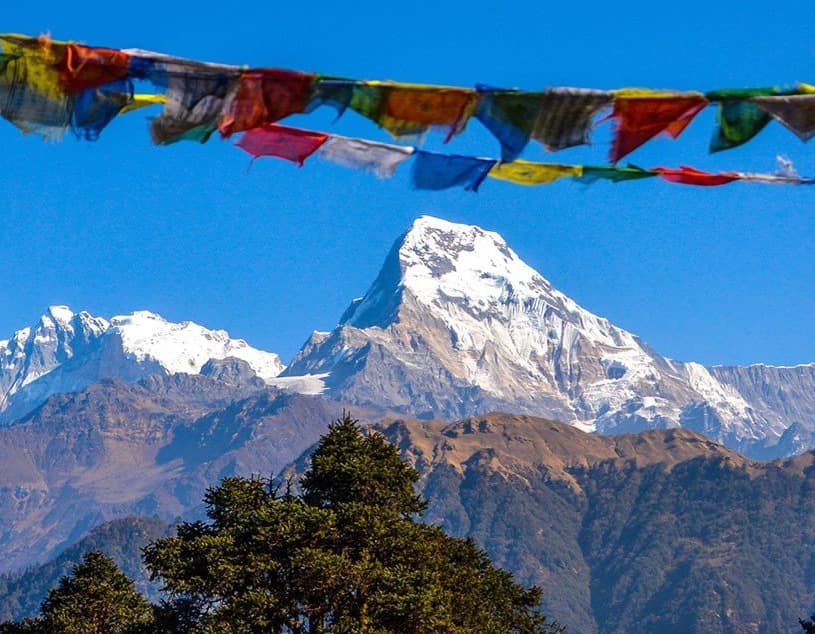
The 12-day trek reaches Khopra Danda at 3,660 m, offering panoramic mountain views, especially during the shoulder seasons of March to May and September to November. In addition, the trail also includes the Muldai Viewpoint, another popular point for a mountain panorama.
This trek is also about the people and landscapes of the peaceful side of the Annapurna region. Moreover, the trail passes through traditional Magar and Gurung communities such as Ghandruk, Ghorepani, Swanta, Nangi, Chistibung, and more.
The trek is considered easy to moderate and requires good physical fitness. It is an excellent choice for trekkers seeking spectacular Annapurna mountain views and genuine local interaction away from mass tourism.
The Khopra Ridge Trek begins the moment you arrive in Kathmandu. From Kathmandu, we will head towards Pokhara, followed by a short drive to Kimche and a trek to Ghandruk. The trail then continues towards Tadapani, a traditional Gurung and Magar village offering a close-up insight into mountain lifestyle.
From Tadapani, the landscape becomes more alpine, with lush forest giving way to open meadows and high ridges. Along the journey, we will go for an early morning hike from Dobato to Muldai Viewpoint, which offers one of the best panoramic views of Dhaulagiri, Annapurna South, Machhapuchhre, Hiunchuli, Nilgiri, and others.
Leaving Dobato, the trail continues through Bayeli Kharka and descend through forest to Chistibung. As you move forward along the Chistibung to Khopra Ridge section, the trail becomes quieter, steeper, and more demanding as you gain altitude.
Upon arriving in Khopra Ridge, the trail opens to panoramic mountain views. After enjoying a majestic sunrise view, we will descend to Swanta Village and continue our hike toward Ghorepani. On the final day, we will hike to Poon Hill for a sunrise view, enjoy breakfast, and descend to Banthanti for a drive back to Pokhara.
Note: For a more exciting experience, trekkers can add an additional day to this Khopra 12-day itinerary to hike up to Khayer Lake. The lake is at a height of approximately 4,600 m, which is higher than the Annapurna Base Camp. In addition, the hike to the lake is quite challenging, as you will gain an altitude of over 800 m.
Here are some alternatives to the Khopra Danda Trek:
A short trek through the Annapurna Conservation Area, offering warm hospitality and rich natural beauty.
Experience a scenic and peaceful trekking trail in the Annapurna region and enjoy an adventurous flight between Kathmandu and Pokhara.
Enjoy a high-altitude trek and cross the legendary Thorong La Pass at 5,416 m.
At Nepal Hiking Team, our Khopra Ridge Trek takes you on quieter and more peaceful trails of the Annapurna region and the local mountain communities. The route passes through traditional Gurung and Magar villages, alpine pastures, rhododendron forests, and high ridges with views of Dhaulagiri, Annapurna South, Machhapuchhre, and Nilgiri.
The itinerary follows a gradual approach to higher elevations, with overnight stops at Ghandruk, Tadapani, Dobato, Chistibung, Khopra Ridge, and Ghorepani, and also has the option to explore the sacred Khayer Lake upon request. Along the way, community-run lodges provide simple accommodation and opportunities to interact with people living in these mountain settlements.
Our local guides accompany you throughout the trek, managing the daily pace and helping you adjust to the changing altitude and trail conditions. Whether you are trekking independently, with friends, or as a family, they provide practical support from the beginning of the route to the return journey.
Nepal Hiking Team handles the trekking logistics, including permits, accommodation, transportation, meals, guides, and porter support, so you can focus on the trail itself. The result is a well-organized Khopra Ridge Trek that combines quieter trails, local communities, and some of the Annapurna region's most expansive mountain viewpoints.
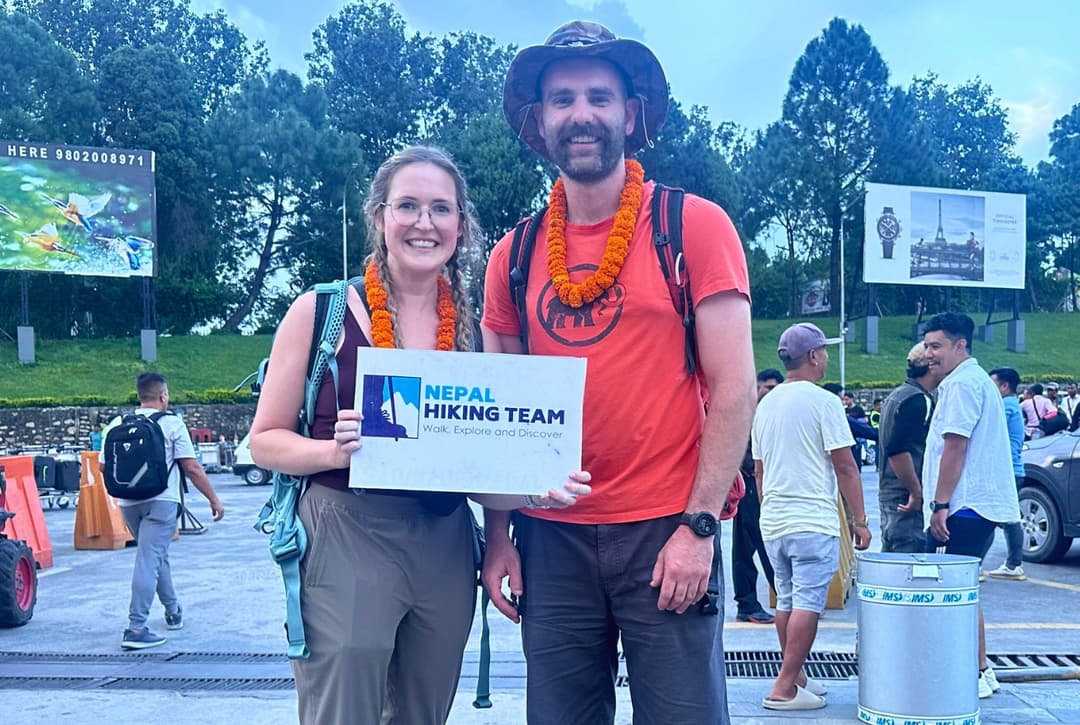
On this day, you’ll arrive at Tribhuvan International Airport. One of our staff members will meet you at the airport and transfer you to the hotel safely. After check-in, you can then rest well at the hotel for a while before a short pre-trek meeting.
We'll give you all the Khopra Ridge Trek information and introduce you to your guide during the pre-briefing session at your hotel. We provide some essential trekking gear, and after the meeting, you are free to rest and relax at the hotel or stroll around the neighborhood.
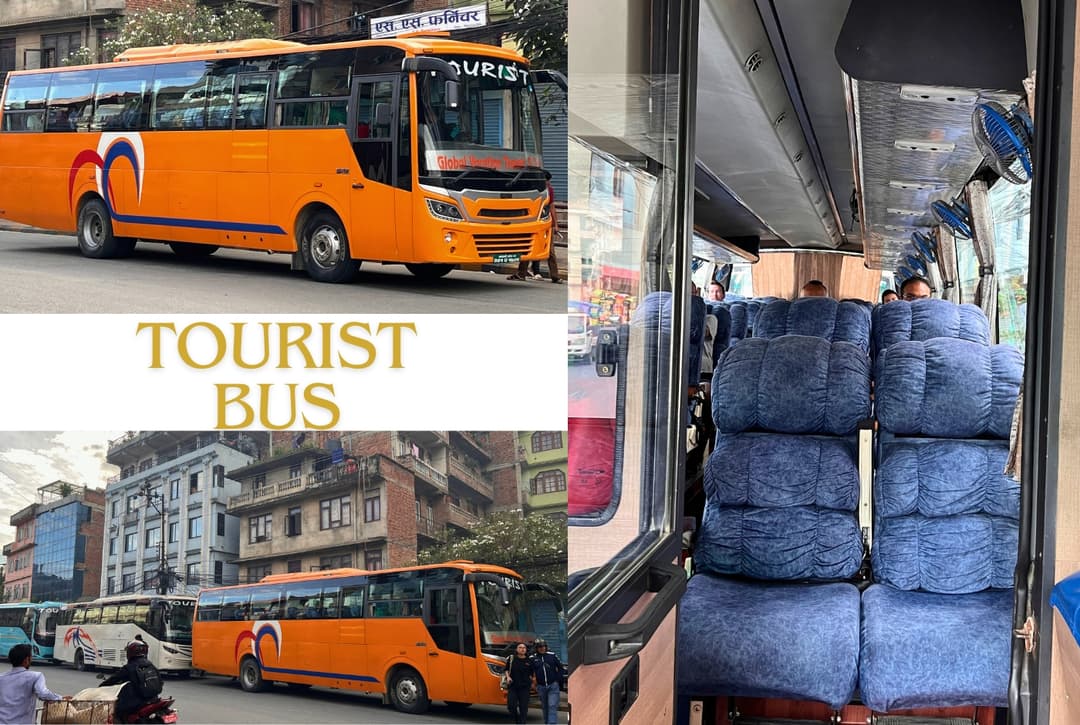
After breakfast, you’ll leave Kathmandu and travel by road to Pokhara. The 204-kilometer journey takes you through the changing landscapes of central Nepal, with rivers, terraced hills, villages, farmland, and green hills along the way. Although the drive is generally described as taking 6–7 hours, ongoing construction along the Prithvi Highway can currently make the journey considerably longer, with 8–9 hours or more possible depending on traffic and road conditions.
Once you arrive in Pokhara, you can check into your hotel and spend the evening at your own pace. If you still have some energy after the drive, Lakeside is a convenient place for a relaxed walk or meal before the trek begins.
Alternative: You can also fly from Kathmandu to Pokhara if you prefer to avoid the long road journey. The domestic flight takes approximately 25 minutes and costs an additional USD 115 per person for a one-way ticket. Flight delays and cancellations can occur, particularly during the summer months, so the flight option is subject to weather and operating conditions.

After breakfast, you’ll drive from Pokhara to Kimche, a village located close to Ghandruk. The road journey covers around 40 km and takes approximately 2 hours, although the actual duration can vary with traffic and road conditions. The drive takes you through rural settlements, terraced farmland, and green hills, with views of the surrounding Annapurna landscape along the way.
Kimche is the starting point for today's short walk. From here, you’ll trek approximately 5 km to Ghandruk, which takes around 2–3 hours. Set in the Kaski District, Ghandruk is one of the best-known Gurung villages in the Annapurna region. After reaching the village, you can explore its traditional stone-paved paths, visit the Gurung Cultural Museum, and take in the views before settling in for the night.


Leaving Ghandruk behind, you’ll follow the forested trail toward Tadapani. The approximately 6-kilometer walk takes around 4 hours and passes through rhododendron and oak forests. The trail is mostly shaded, with streams, waterfalls, birds, and grazing buffalo adding to the rural character of the route.
As you gain elevation, there are occasional openings in the forest where you can catch views of the surrounding Annapurna peaks. In spring, the rhododendron forests are particularly colorful when the trees are in bloom. After reaching Tadapani, you’ll spend the night at one of the established trekking settlements along this section of the Annapurna route.


Today, the trail takes a quieter turn as you leave Tadapani and head toward Dobato, also known as Bhaisi Kharka. The route covers approximately 7 km and takes around 5–6 hours, beginning with a walk through dense rhododendron and oak forest.
There are several gradual climbs and descents along the way, followed by a more sustained ascent toward Dobato. As you gain altitude, the dense woodland gradually opens into meadows and higher grassland. You’ll encounter fewer settlements and trekkers on this section, making it noticeably quieter than the Ghandruk–Tadapani trail. The final uphill stretch brings you to Dobato at 3,420 meters, where you spend the night.


An early morning start allows you to hike to Muldai Viewpoint before breakfast. The viewpoint sits above Dobato and is known for its wide Himalayan panorama. On a clear day, you can see Dhaulagiri, Annapurna, Machhapuchhre, Hiunchuli, and other peaks across the surrounding ranges.
After returning to Dobato for breakfast, you continue toward Bayeli Kharka before descending through forest toward Chistibung, also known as Dhankharka. The route covers around 7 km and takes approximately 4 hours. Chistibung is a small settlement with community-run lodges, where you can enjoy a simple home-style meal and spend the night in a quieter part of the Annapurna region.


The trail climbs steadily from Chistibung toward Khopra Ridge, also known as Khopra Danda. Although the distance is only around 5 km and the walk takes about 3–4 hours, the continuous uphill sections and increasing altitude make this a more demanding part of the trek.
As the trail climbs above the forest, the landscape becomes more open, and the surrounding mountains begin to dominate the view. At Khopra Ridge, around 3,660 meters above sea level, you’ll have broad views toward Dhaulagiri, Annapurna South, Nilgiri, Machhapuchhre and Hiunchuli. A community-run lodge provides accommodation for the night, and the exposed ridge can be considerably colder than the lower villages, so warm layers and your sleeping bag are important.


After enjoying the morning views from Khopra Ridge, you’ll begin the descent toward Swanta Village. The trail drops through bamboo and mixed forests, gradually moving into the lower and more settled landscape around Swanta. The walk covers approximately 7 km and takes about 5 hours, with a combination of descents and shorter uphill sections.
Swanta is a traditional mountain village with Gurung and Magar households. The village is also known for its small community cheese factory and local initiatives. Once you arrive, you can settle into a community lodge, enjoy a local meal, and take some time to experience the quieter rhythm of village life.
Note: Hikers can add an optional one-day side trip to Khayer Lake (4,665 m)- for a customized trip.
If you want to extend your Khopra Ridge adventure, you can add a separate day for Khayer Lake, a sacred lake for Hindus situated at approximately 4,665 meters. The round trip from Khopra Ridge generally takes around 5–9 hours, depending on your walking pace and how much time you spend at the lake. Because it is a demanding high-altitude excursion, the side trip requires an additional day and should be arranged in advance so the itinerary can be customized accordingly.


Today, you’ll leave Swanta and continue toward Ghorepani, covering approximately 9–10 km in around 5–6 hours. The trail first descends toward a small river before crossing a suspension bridge and continuing toward Chittre, which sits at approximately 2,390 meters.
From Chittre, you join the more established Ghorepani trail and continue through extensive rhododendron forest toward the village. Ghorepani, at 2,880 meters, is one of the better-known stops in the Annapurna region and has more lodges and facilities than the smaller settlements along the Khopra route. After arriving, you’ll have time to rest before the early morning hike to Poon Hill.


You’ll start the morning before sunrise with a hike to Poon Hill, one of the most visited viewpoints in the Annapurna region. From the viewpoint, you can see the Himalayan ranges stretching across the horizon, including Dhaulagiri and Annapurna, along with peaks such as Nilgiri and Machhapuchhre in clear conditions.
After spending some time at Poon Hill, you’ll return to Ghorepani for breakfast before continuing downhill toward Banthanti. The trekking section covers around 6 km and takes approximately 4–5 hours. At Banthanti, your vehicle will meet you for the drive back to Pokhara. Once in Pokhara, you can rest at your hotel or take a relaxed walk around the lakeside area.


After breakfast, you’ll leave Pokhara and drive back to Kathmandu along the Prithvi Highway. The journey covers approximately 204 km and is generally listed as a 6–7-hour drive, although current road construction, traffic, and other conditions can make the journey longer.
The return journey takes you through the hills, riverside settlements and rural landscapes of central Nepal before reaching Kathmandu. Once you arrive, you’ll check into your hotel and have the remainder of the day free. You can rest or spend your final evening exploring Thamel, shopping for souvenirs or enjoying a meal in the city.


Your Khopra Ridge Trek officially comes to an end today. A representative from Nepal Hiking Team will transfer you to Tribhuvan International Airport approximately 3 hours before your scheduled flight.
After completing the trek, you’ll have some final time in Nepal before departing for your onward destination. We’ll make sure you reach the airport on time for your international flight.
Ready to plan your Khopra Ridge Trek? Contact Nepal Hiking Team to check available dates, discuss your preferred itinerary, and arrange the trek with a team based in Nepal.


Khayer Lake is a high-altitude alpine lake in the Annapurna region, reached as a demanding day hike from Khopra Ridge. Located at around 4,660 meters (15,290 ft), the lake sits amid rugged Himalayan terrain with expansive views of the surrounding peaks.
The trail to Khayer Lake is considerably quieter than the main Annapurna trekking routes, making it appealing to trekkers looking for a more remote mountain experience. The journey passes through open alpine landscapes and steep sections, with the round trip from Khopra Ridge generally taking around 8–10 hours or longer.
Khayer Lake also holds religious significance as a pilgrimage site associated with Khayer Baraha, particularly during Janai Purnima. Combining high-altitude scenery, relative solitude, and cultural importance, the lake makes a challenging but rewarding extension of the Khopra Ridge Trek.
The Khopra Ridge Trek is known as a community trek because it was developed to create tourism-based income for local Gurung and Magar communities. Several sections of the route use community-managed lodges, with tourism revenue supporting local schools, health facilities, and other community initiatives.
The community-trek concept is closely associated with Mahabir Pun, whose work helped promote community-based tourism and livelihood opportunities in rural mountain areas. Today, the Khopra Trek combines quieter trails and Himalayan scenery with a tourism model that encourages visitors to support local communities along the route.
The Khopra Ridge Trek can be a suitable first Himalayan trek for reasonably fit beginners, but it should not be mistaken for an easy walk. The lower sections pass through rhododendron forests, traditional villages, and established trails, allowing trekkers to gradually gain altitude. The route becomes more demanding around Dobato and Chistibung, with steeper climbs and uneven terrain leading toward Khopra Ridge.
At 3,660 meters, Khopra Ridge is the highest overnight point on the main trek. Beginners should pace themselves, stay hydrated, and pay attention to how their bodies respond to the increasing altitude. With proper preparation, a sensible pace, and experienced guide support, first-time trekkers can complete the route.
The effort is rewarded with expansive views of Dhaulagiri, Annapurna South, Nilgiri, and Machhapuchhre, along with quieter trails and community-run mountain lodges. The optional Khayer Lake extension is considerably more demanding, reaching around 4,660 meters, so beginners should treat it as an additional high-altitude challenge rather than an essential part of the trek.
The Khopra Ridge Trek is a moderate trek suitable for reasonably fit trekkers. Most days involve around 4–7 hours of walking through forests, villages, meadows, and uneven mountain trails, with steeper sections after Tadapani and on the approach to Khopra Ridge at 3,660 meters.
Proper pacing, hydration, and acclimatization are important as the altitude increases. The optional Khayer Lake excursion is more demanding, taking around 8–10 hours round trip and reaching approximately 4,660 meters.
With adequate preparation and guide support, the main trek is manageable for first-time Himalayan trekkers who are comfortable with sustained uphill walking.
The Khopra Ridge Trek covers approximately 53 km (33 miles) on NHT’s 12-day itinerary. Trekkers walk around 6–7 km per day on average, with daily hiking generally taking about 4–6 hours. The final section from Chistibung to Khopra Ridge is around 5 km and takes approximately 3–4 hours.
The highest overnight point on the main trek is Khopra Ridge (Khopra Danda), at 3,660 meters (12,008 feet). Trekkers who add the Khayer Lake excursion can reach approximately 4,660 meters (15,288 feet), but this is a day hike rather than an overnight stop.
The best time to trek the Khopra Ridge is generally spring (March–May) and autumn (September–November). These months usually bring stable weather, clearer mountain views, and comfortable trekking conditions.
In Kathmandu and Pokhara, you will stay in comfortable 3-star hotels, subject to availability. During the trek, accommodation is arranged at the best available teahouses and community lodges along the route.
Rooms on the trail are generally simple, with twin beds, basic bedding, and shared bathrooms. Hot showers may be available at some lodges for an additional fee, while facilities become more basic at higher elevations. Some lodges also offer larger shared rooms.
Most teahouses have a communal dining area where trekkers can enjoy meals and warm up around a central stove after a day on the trail. While the Khopra route does not offer luxury mountain hotels, its community lodges provide a practical and comfortable place to rest along this quieter trekking route.
Read our genuine feedback from past travelers with Nepal Hiking Team sourced from TripAdvisor, Google, Facebook, and Trustpilot.
We recently completed an eight-day Khopra Danda trek with Nepal Hiking Team and also included a visit to Chitwan National Park. We chose Nepal Hiking Team after searching for an ethical, locally owned Nepal trekking company that specializes in small group tours to less visited regions, and they exceeded our expectations.
From our first contact, Ganga Raj Thapa responded promptly to all our questions and helped us carefully plan the trip. He was consistently friendly, professional, and supportive throughout the entire process.
The whole journey was very well organized. Every detail was handled smoothly, including hotels, transportation, meals, and permits, allowing us to simply enjoy the experience without worrying about logistics.
Our trekking guide, Yubraj, took excellent care of us. He was attentive, knowledgeable, and always focused on our comfort and safety on the Khopra Danda trail. Our porters, Sudip and Khagendra, were equally impressive, friendly, hardworking, and a pleasure to spend time with. In Chitwan, our safari guide was also professional and well informed, which made the wildlife experience even more memorable.
We highly recommend Nepal Hiking Team to anyone planning a trek in Nepal, whether it is the Khopra Danda trek, Chitwan tour, or any other Himalayan adventure. We would gladly travel with them again.
We completed a 9-day trek to Khopra Danda. We hiked through enchanted, luscious forests with moss-covered trees and blooming rhododendron and highland-like terrain and had marvelous views of the Annapurna and Dhaulagiri range.
Our guide Raj and porters Sabin and Ganesh were fantastic and great fun to trek with - we loved their interactions with us, each other, and the tea house staff.
Ganga, who coordinated our trip, was very responsive to our questions and accommodating of our schedule tweaks.
Overall, we had a great experience in Nepal and with Nepal Hiking Team!
Guided by - Rajesh Gurung
I completed a 9-day Khopra Danda Trek with Nepal Hiking Team, with a total trip duration of 15 days, including transfers from Kathmandu to Pokhara and back, plus extra days in both cities.
Nepal Hiking Team did a fantastic job organizing this private trek for me.
Ganga, one of the owners, is incredibly responsive, professional, and dependable. That’s why this was the 2nd trip I chose to travel with them.
A special thanks go to my guide, Rajesh, and porter Vishal. They took excellent care of me throughout the entire trip.
- Guided by Rajesh Gurung

Just returned from a memorable 7-day Khopra Ridge Circuit trek with Nepal Hiking Team, accompanied by our two teenage sons, aged 17 and 19. To sum it up—there’s no need to search for another trekking company!
In my view, this trek is the perfect introduction to hiking in Nepal, offering breathtaking, up-close views of both the Annapurna and Dhaulagiri ranges on a less-traveled route. It provides an incredible experience of Nepalese high-altitude trekking, reaching up to 3,700m—low enough that altitude sickness wasn’t an issue for our family. The journey begins with easy daily sections, gradually progressing to moderate hiking days, leading to the trek’s highlights: Dobato with Mulde Peak and the Khopra Community Lodge. We walked through mountain forests filled with blooming rhododendron trees and passed through charming alpine villages. This route contrasts sharply with Ghorepani Poon Hill, which you visit on the final day and where you encounter a much busier trail.
Tip: If you’re looking for an extra challenge (weather permitting), consider adding either Hidden Lake or the ascent to Khopra Ridge, both of which take you above 4,000m.
Our guide, Uttam, assistant guide, Bipen, and porters, Anish and Sabin, took exceptional care of us, making the trek not only safe but also an enjoyable cultural experience. They provided support and pampering throughout the journey. Uttam ensured our safety at all times, pacing the trek within our physical abilities, organizing breaks, managing logistics, and offering insightful briefings each day. Beyond the trek itself, it was a wonderful opportunity to experience Nepalese hospitality—singing, dancing, freshly prepared meals, and friendly conversations that gave us insight into local life.
All accommodations were in lodges—clean, with decent food, and while higher up they were more basic, hot showers weren’t always available in these remote areas.
Ganga and Bilaram at the head office made planning effortless, offering thoughtful suggestions, clear communication, and quick responses whenever adjustments were needed. From the initial planning to arrival, the trek itself, and departure, the service was seamless. They also conduct thorough briefings before and after the trek, not only sharing insights about the experience but also actively seeking feedback to enhance their service.
A solid eight thumbs up from our family!
We just wrapped up our 9-day Annapurna Panorama trek plus Khopra Ridge Trek with NEPAL HIKING TEAM, and it was an incredible experience! The views of the Himalayas were absolutely stunning, and we had the BEST guide, Mr. Nara Bahadur!
We can’t recommend him and Nepal Hiking Team enough!
A big shoutout to Mr. Ganga Raj Thapa, who not only organized our trek but also took care of our entire stay in Nepal. When our international flights got rescheduled, he was super flexible and adjusted our itinerary without any extra cost.
Truly top-notch service!
The standard group size for the Khopra Ridge Trek is a minimum of two trekkers and a maximum of ten. In case of a private booking, there is no limitation on the no. of trekkers
Likewise, our departure date is fixed, and we will depart as scheduled, even if only one trekker is booked at the applicable solo traveller price.
Yes, solo travelers are welcome to join our scheduled group tours. Even if you’re the only person booked for your chosen date, we’ll still arrange the trek for you at our solo traveler rate.
Yes, we offer private Khopra Ridge Treks for families, groups, and solo travelers. With a private trek, you can choose your preferred departure date and enjoy a walking pace that suits your group.
Likewise, solo private treks are also available, although they cost slightly more than joining a scheduled group departure.
Yes, most international travellers can get on arrival visa upon arriving in Kathmandu by simply filling out the online form (trekkers can fill the form beforehand as well), pay the visa fee, and proceed to immigration department.
Note: Few nationalities are required to apply for visa before arriving in Nepal, so guests are requested to stay updated with official government portals and websites.
Yes, Nepal Hiking Team provides airport pickup and drop-off services as a part of the trip package inclusion. One of our representative will greet you at the airport on your arrival day and safely transfer you to the airport on the departure day.
During your stay in Kathmandu and Pokhara, we provide 3-star hotel stays with breakfast included on your departure day. Guests can upgrade the hotels based on their requirements, comfort, and preferences for an extra cost.
Hotel rates typically start at around USD 45 per night for a single room and USD 50 per night for a twin or double room, with breakfast and applicable taxes included. However, the exact rate can vary depending on the hotel category, location, availability, and travel season.
During peak trekking seasons, hotel rates may be slightly higher, while off-season stays may offer more favorable prices.
During the pre-trek briefing in Kathmandu, guests will meet their guide and go through the final trek preparations, go through the itinerary, check guest’s passport and travel insurance, and collect any remaining balance.
We will also provide trekking essentials like down jacket, sleeping bag, and a duffel bag with 70L capacity. Trekkers can also clear any queries and questions during this briefing.
To book your trek, simply complete our online booking form with your traveler details. You can provide your flight and travel insurance information later if those arrangements are not finalized at the time of booking.
A 20% deposit is required to confirm your reservation and secure your place on the trek. Once we receive your booking details and deposit, our team will confirm the arrangements and guide you through the next steps.
Trekkers cna settle the remaining balance during the pre-trek briefing in Kathmandu, before you head to the trail. You can pay the outstanding amount by cash or card, whichever is more convenient.
Also, our team will confirm the balance and payment details during the briefing so everything is clear before your trek begins.
Once your trip is confirmed, the 20% deposit is non-refundable because it is used to secure advance arrangements such as guides, permits, and accommodation. However, if you cancel your trip, we can convert the deposit amount into a travel credit with no expiry date which trekkers can use as a credit toward a future trip with Nepal Hiking Team.
If you prefer to fly instead of traveling by bus, let us know in advance so we can arrange the flight for you. Regular domestic flights operate between Kathmandu and Pokhara, with a flight time of around 25–30 minutes.
The air fare also depends on the airline, travel season, and how early you book. Moreover, a one-way ticket typically costs around USD 115 when booked in advance.
The Khopra Ridge trek begins at Kimche, which is about 40 km from Pokhara. We will arrange a private vehicle for the drive, which usually takes around 2 hours depending on road and traffic conditions. From Kimche, you’ll start the trek on foot toward the villages and trails leading to Khopra Ridge.
The Khopra Ridge Trek is generally considered a moderate trek, with a mix of gradual sections, uphill climbs, and some longer walking days. It can be a good option for fit beginners and regular walkers who are comfortable hiking for several hours each day.
The optional hike to Khayer Lake is considerably more demanding, involving a longer and steeper day at higher altitude, so it requires good fitness and preparation.
The Khopra Ridge Trek covers approximately 53 km (33 miles) of walking portion. On average, trekkers will walk around 6-7 km, although the distance may vary on the itinerary and terrain.
No, there is no age limit for the Khopra Ridge Trek. The trail is considered as easy to moderate and suitable for explorers with basic fitness, health, and hiking experience. Nepal Hiking Team has guided trekkers from young children to those in their 70s.
While preparing for the Khopra Ridge Trek, trekkers should focus on cardio and leg strength exercises such as regular walking, stair climbing, jogging, and uphill training. Likewise, you can include a 4 to 6 hour long hike, preferably with a daypack to help you get used to sustained walking. Lastly, trekkers should break in their boots before the trek to avoid blisters and injuries.
Yes, travel insurance is required for the Khopra Ridge Trek as the trail reached up to 3,660 m at Khopra Ridge and up to 4,600 m with an optional hike to Khayer Lake. Your policy should specifically cover high-altitude trekking, emergency medical treatment, and helicopter evacuation, as these may be necessary in case of a serious illness, injury, or altitude-related emergency.
Our licensed trekking guides carry essential safety equipment, including first-aid kits and pulse oximeters, and check on trekkers throughout the journey. If someone feels unwell, your guide will adjust the walking pace, recommend rest, and monitor your condition throughout the trek.
In case of a serious medical emergency, our team will coordinate emergency evacuation, including helicopter rescue when necessary. We also choose reliable teahouses along the route and prepare appropriate evacuation plans before the trek begins.
Spring (March to May) and autumn (September to November) are generally the most favorable seasons for the Khopra Ridge Trek. These months typically bring more stable weather, clearer skies, and better visibility of the surrounding mountains.
Likewise, spring also brings rhododendrons into bloom, while autumn usually offers crisp mountain views after the monsoon. The trek is possible in other seasons, but rain, snow, or cloud cover can affect trail conditions and mountain visibility.
Yes, the Khopra Ridge Trek can also be done during the summer/monsoon and winter seasons, although the trail conditions are different. During the monsoon months, you can expect rain, muddy and slippery sections, and reduced mountain visibility due to clouds.
Winter brings colder temperatures and the possibility of snow or icy trails at higher elevations. With appropriate preparation, suitable clothing and gear, and adjustments to the itinerary when necessary, the trek can be arranged during these quieter seasons.
Although there are no specific vaccinations required for the Khopra Ridge Trek, it is still a good idea to get your routine vaccinations before travelling to Nepal. In addition, trekkers can also consult a doctor for rabies vaccination as you may encounter dogs and other animals throughout the trek.
To avoid altitude sickness during the Khopra Ridge Trek, trekkers should maintain a steady pace, stay hydrated, and follow guide’s instructions to adjust to increasing altitude. Similarly, our guides carry pulse oximeters to monitor oxygen level and promptly adjust the pace, rest, or suggest descent in case you experience severe altitude sickness symptoms.
Yes, porter service is included with our Khopra Ridge Trek package. One porter carries the main luggage for up to two trekkers, with a combined weight limit of around 25 kg per porter.
Guests can carry a small daypack with personal essentials such as water, snacks, a camera, and anything you may need during the day’s walk. This arrangement keeps your main load with the porter while allowing you to hike more comfortably.
Yes, guests can store their extra luggage or belongings at the hotel in Kathmandu or Pokhara. This service is generally provided by the hotels to keep your luggage safe and secure while you are on the trail.
Yes, every trekker receives an official Khopra Ridge Trek completion certificate at the end of the journey. The certificate recognizes your successful completion of the trek and serves as a keepsake to remember your time on the trail with Nepal Hiking Team.
The Khopra Ridge Trek provides mainly a community-run lodges or traditional teahouses with basic twin-sharing rooms, clean beds, and shared bathrooms. In addition, the accommodation facilities become more basic as you gain altitude with fewer facilities compared to the lower villages.
Wi-Fi is available at some teahouses along the Khopra Ridge route, although the connection can be slower or less reliable at higher elevations. Some lodges may also charge an additional fee for internet access.
Whereas, for mobile connectivity, NTC and Ncell SIM cards are widely available in Kathmandu and Pokhara, and network coverage is generally available in parts of the trekking route. However, coverage can become limited or unavailable in more remote and higher sections of the trail.
Most teahouses provide charging facilities, particularly at lower elevations, although availability and fees can vary between lodges. At higher elevations, charging is more limited and may cost around NPR 200–500 per device.
As most lodges/teahouses rely on solar power, so charging can be slower or unavailable when there is limited sunlight. Bringing a fully charged power bank is recommended to keep your phone, camera, or other essential devices powered throughout the trek.
At lower elevations, many teahouses have Western-style toilets, while facilities become more basic as you climb higher with squat toilets and shared bathrooms rather than private facilities.
It’s useful to carry your own toilet paper, hand sanitizer, and other personal hygiene essentials, as these may not always be readily available along the trail.
Teahouses along the Khopra Ridge route serve a variety of freshly prepared meals to keep trekkers fueled throughout the day. Some of the common options include dal bhat, noodles, pasta, soups, rice dishes, and simple continental meals, with menus varying from one lodge to another. Nonetheless, food options may become more limited at higher elevations.
Yes, vegetarian and vegan meals are generally available at teahouses along the Khopra Ridge route. Trekkers with food allergies, intolerances, or other dietary requirements, can let us know when booking your trek so that we can make the necessary arrangements for the trek.
As food choices become more limited at higher elevations, providing these details early helps us plan suitable meals for your trek.
Safe drinking water is widely available at teahouses throughout the Khopra Ridge Trek. Boiled or filtered water is usually available at the teahouses or lodges for a small additional charge.
Moreover, trekkers can carry a water purification tablets or a portable filter bottle to filter the natural spring water for drinking. This helps reduce plastic waste and relying on single-use bottled water along the trail.
Yes, trekkers can customize or personalize the itinerary for the Khopra Ridge Trek based on their travel dates, fitness, and trail conditions with a private booking. Guests can also add extra rest days, adjust the waling pace, and even include optional side trips like hike to Khayer Lake.
On the other hand, scheduled group departures follow a fixed itinerary and schedule so there is less flexibility in changing the daily route or schedule.
Yes, Nepal Hiking Team can arrange a guided city tour upon request. The tour will include some of the city’s major temples, cultural landmarks, and UNESCO-listed heritage sites, such as Pashupatinath, Boudhanath, and Kathmandu Durbar Squares, depending on your interests and available time. This type of city tour offer trekkers a unique way to experience Kathmandu alongside your trekking itinerary.
Tipping is not mandatory, but it is a common way to show appreciation for the service provided by your guides and porters. If you choose to tip, you can do so at the end of the trek. There is no fixed amount, so you can decide based on your budget and your experience with the team.
Usually, trekkers choose to give tips directly to their guides and porters as a thank-you for their support throughout the journey.
We recommend carrying around NPR 20,000 to NPR 25,000 in cash for personal expenses during the Khopra Ridge Trek. This can cover additional costs such as hot showers, Wi-Fi, device charging, snacks, drinks, and other small purchases along the trail.
ATMs are limited and may not be reliable in remote mountain areas, so it’s best to withdraw the cash you need in Kathmandu or Pokhara before starting the trek. Having some extra cash is also useful in case you need to cover unexpected expenses.