
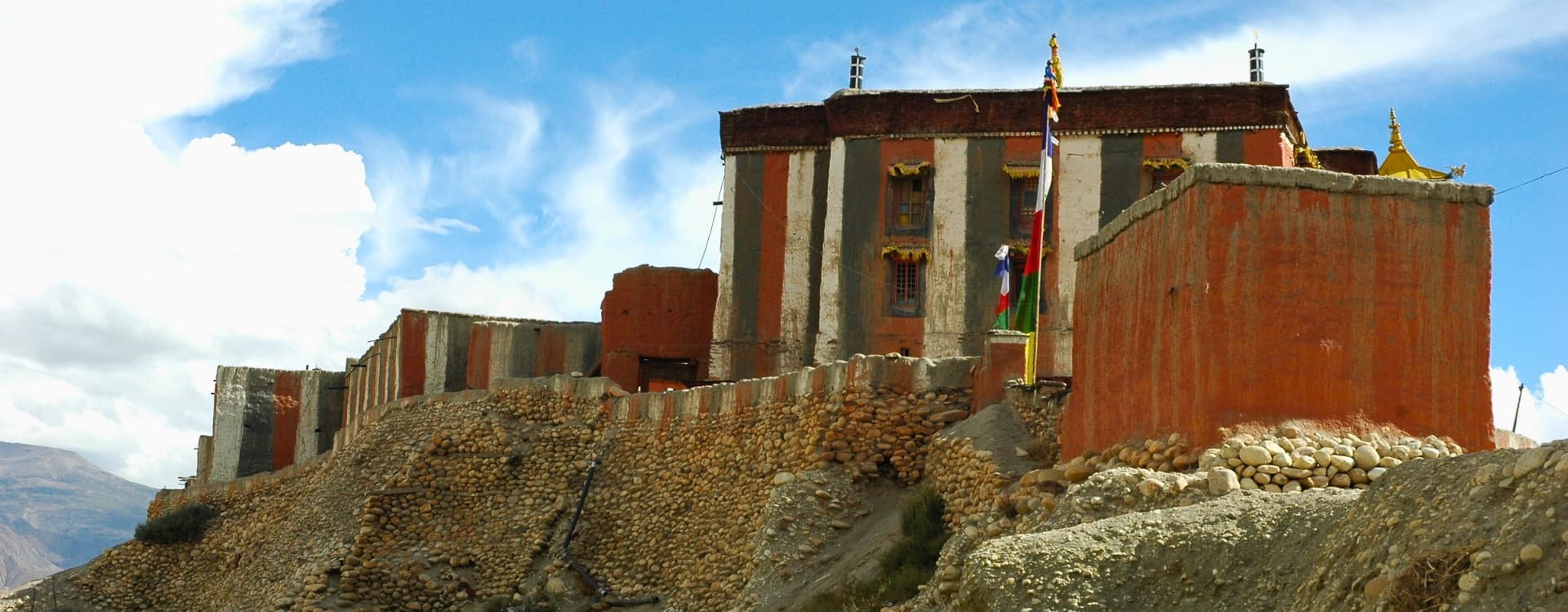
Trekking to Upper Mustang is unlike any other trekking journeys in Nepal. Traveling to Upper Mustang is nostalgic and mesmerizing. The landscapes, stunning mountains, river sides villages overshadowed by huge naked mountains is just brilliant. Not to forget the sacred villages hidden amidst the barren plateau is fascinating. What is more amazing is the rich culture that this region possesses.
Located North of Nepal in the Himalayas, Mustang includes the Kali Gandaki River Valley and has its own language, religion (Tibetan Buddhism and pagan rituals) and tradition. High mountains and a harsh climate produce a semi-arid and spectacular landscape. Close to Tibet (China) the capital Lo Manthang remained isolated until recently as a track allows today trucks to deliver goods which impact its lifestyle. Its population migrates South during winter to sell handicrafts, Tibetan medicines or to study.
All in all, journey to Upper Mustang is surreal. Everything about this place is amazing.
What are the best places to visit in Upper Mustang?
Upper Mustang, the ancient "Forbidden Kingdom" of Nepal, offers a mesmerizing blend of Tibetan Buddhist culture, dramatic desert landscapes, and centuries-old sky caves. The most unmissable destinations in this remote trans-Himalayan region include:
Lo Manthang, the crown jewel of Upper Mustang, a 15th-century walled city anchored by the Royal Palace and ancient monasteries like Jampa Lhakhang and Thubchen Gompa, and the epicenter of the vibrant three-day Tiji Festival each spring. The Chhoser sky caves near Lo Manthang, breathtaking multi-tiered man-made structures dating back thousands of years.
Dhakmar's dramatic eroded crimson cliffs and the longest Mani wall in Nepal, flanked by Ghar Gompa, an 8th-century monastery of world historical significance. Kagbeni, the 500-year-old earthen walled gateway village threading labyrinthine alleys along the sacred Kali Gandaki River. Marpha, the Thakali apple capital, and Muktinath Temple, the sacrosanct dual-faith sanctuary at the foot of Thorong La, revered by Hindus and Buddhists alike.
Top-Rated Trekking Destinations and Villages in Upper Mustang Nepal
The following destinations constitute the authoritative Upper Mustang places to visit list, sequenced thematically rather than merely geographically, to reflect their distinct experiential registers.
Capital of Mustang - Lo Manthang
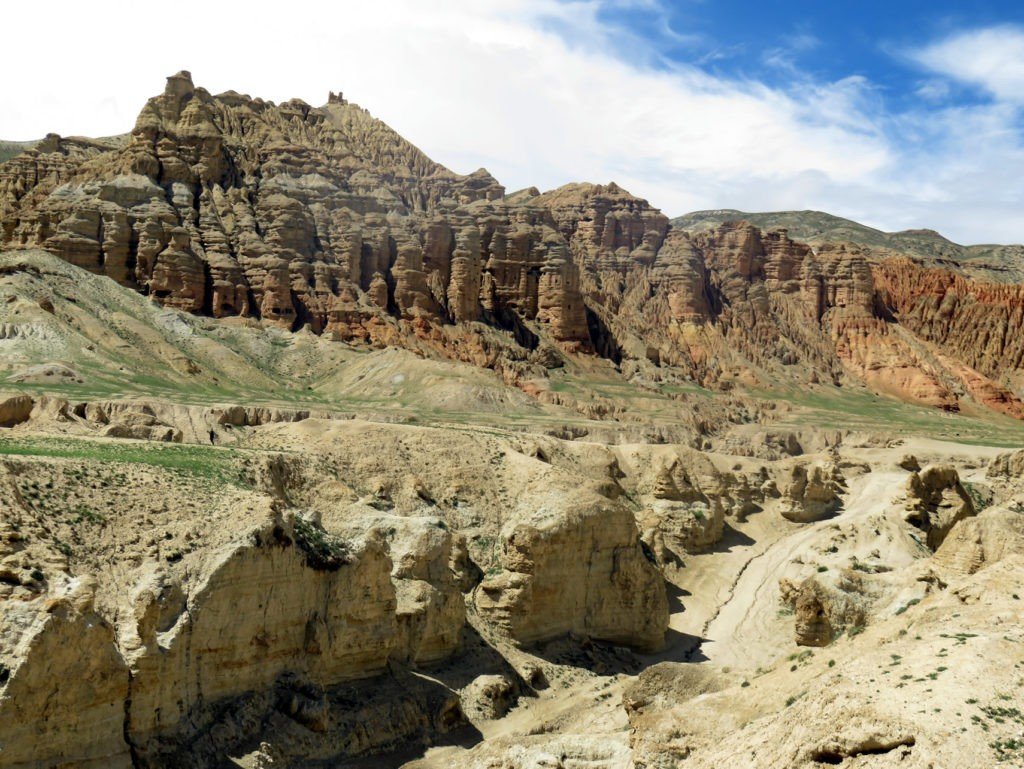
Lo Manthang is the heart of the Mustang region and home to the Loba people. Founded in the 11th century, it features a medieval palace, walled caves, and ancient monasteries. In 2008, the Nepalese government listed it as a tentative UNESCO World Heritage Site, recognizing its unique Tibetan Buddhist culture. Upper Mustang’s dramatic, semi-arid landscapes resemble treks in Ladakh, shaped by the Kali Gandaki River. Once isolated, Lo Manthang now sees gradual change with road access. Locals often migrate south in winter to trade Tibetan medicines, sell handicrafts, or pursue education.
The village which is covered with chain of stone houses if looked from the top looks like a fort. And to add more beauty to it, the houses are colored with simple white colors. However, the monasteries are coated with varieties of bright colors. The distinctive landscape of the Lo Manthang is full of ancient caves, carved rocks, caved temples and the chortens. In general, the whole of Mustang region, in each villages you will get to see at least one gumbas or monasteries be it small or huge. Hence, Outstanding Universal Value (OUV) recognized its potential thus Lo Manthang has officially declared as ancient Budhhist heritage.
This is a brief introduction of Lo Manthang. In a whole, every villages and town that is passed in this journey is astoundingly amazing. Along these lines, in this blog we will be discussing what a traveler should look forward in their trek to Upper Mustang.
Lo Manthang was established by King Ame Pal, the founder of the Lo Kingdom. It is a walled city surrounded by rugged mountains, serving as a strategic and spiritual hub for centuries. The Sakyapa sect of Tibetan Buddhism has historically been predominant here, influencing the spiritual, educational, and social structures of the region.
Two full days represent the minimum. Three is the honest recommendation. Budget additional time for the Tiji Festival if visiting in May.
The Tiji Festival is the premier cultural event in Upper Mustang, a vibrant, centuries-old ritual dance drama performed by monks of the Choede Monastery over three days in the walled capital. It enacts the myth of the deity Dorje Jono's battle against a demon causing drought and suffering. Monks perform in elaborate brocade robes and terrifyingly beautiful masks to the guttural drone of long horns, cymbals, and sustained chants.
Trekkers commonly rent local horses to explore the nearby Chhoser valley, home to the multi-story Jhong Cave complex, an intricate system of dozens of interconnected cave rooms hand-carved into a sheer white cliff face over 2,500 years ago.
Kagbeni:
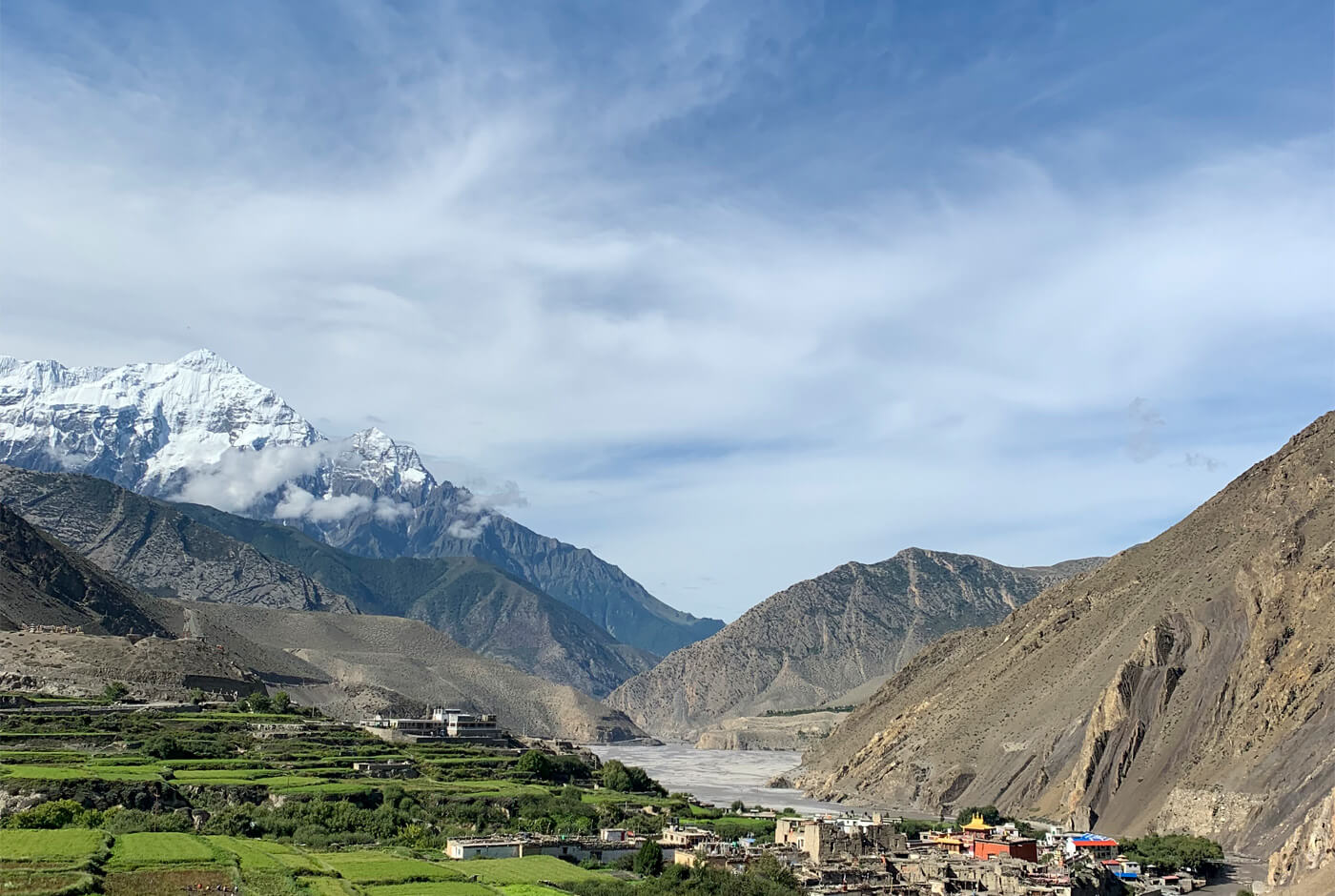
Kagbeni constitutes the morphological threshold between the Annapurna Circuit's pedestrian accessibility and the sacrosanct terrain of Upper Mustang proper. This village is the entrance gate of Upper Mustang and the first permit checkpoint for foreign nationals. Ancient monasteries, traditional mud-brick architecture, local life rhythms, superb landscape panoramas, and the Kali Gandaki River valley collectively constitute its primary draw.
Kagbeni presents narrow alleys, red-walled monasteries, and apple orchards at an elevation where the river valley begins its dramatic transformation into rain-shadow desert.
What most Upper Mustang travel guides Nepal fail to communicate adequately is Kagbeni's atmospheric density. Its earthen towers and wind-worn alley walls concentrate centuries of habitation into a medieval spatial vocabulary that still functions, still breathes, still operates as a living settlement rather than a museum reconstruction. Spend a night. Walk the perimeter at dusk when the Kali Gandaki light dissolves into copper and the prayer flags articulate their mantras to the rising wind.
Chooser Cave:
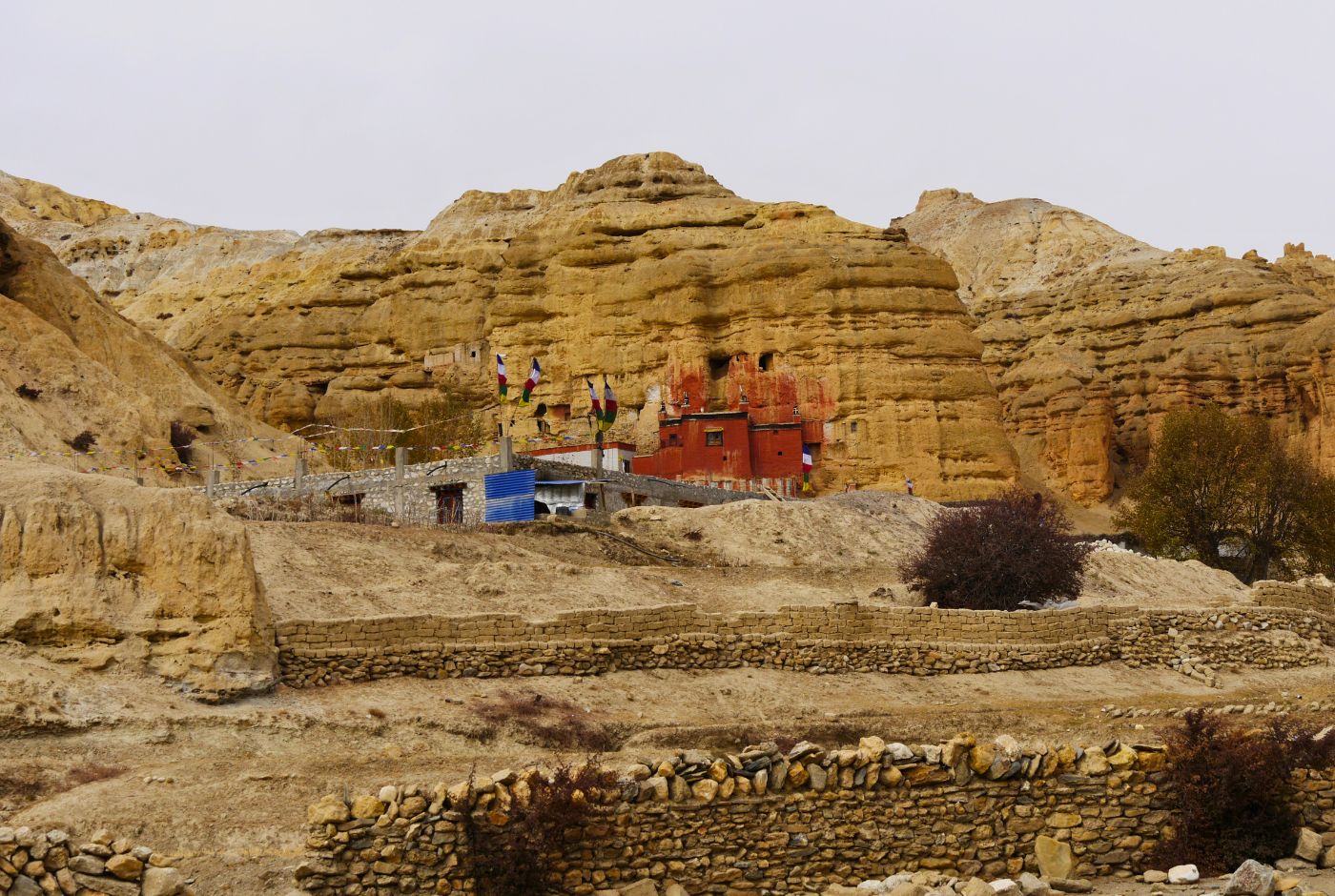
The Chhoser Cave (officially known as the Shija Jhong Cave or simply Jhong Cave) is a highly enigmatic, multi-story Sky Cave complex carved into a towering mud-sandstone cliff near the village of Chhoser, located roughly 7 to 9 kilometers north of the walled capital of Lo Manthang in the Mustang District of Nepal.
This five-story man-made structure carved into a vertical cliff contains approximately 150 rooms distributed across its levels, connected by wooden ladders. Fifth-floor apertures command panoramic views across the Choser valley and the surrounding plateau. Inside its face, the complex features over 40 vertically aligned, interconnected rooms and narrow, labyrinthine tunnels that are linked together by a series of steep stone steps and rustic wooden ladder
Historically, archaeologists and scientists tracking the origins of the cave date its earliest uses back over 2,500 years, with some burial artifacts tracing as far back as 1000 BCE. Over the millennia, the purpose of the Chhoser Cave shifted dynamically depending on the survival needs of the local Lopa people.
Today, visitors can easily access this ancient wonder from Lo Manthang by taking a short 30-minute 4WD jeep drive, a mountain bike ride, or a traditional horseback trek.
Dhakmar:
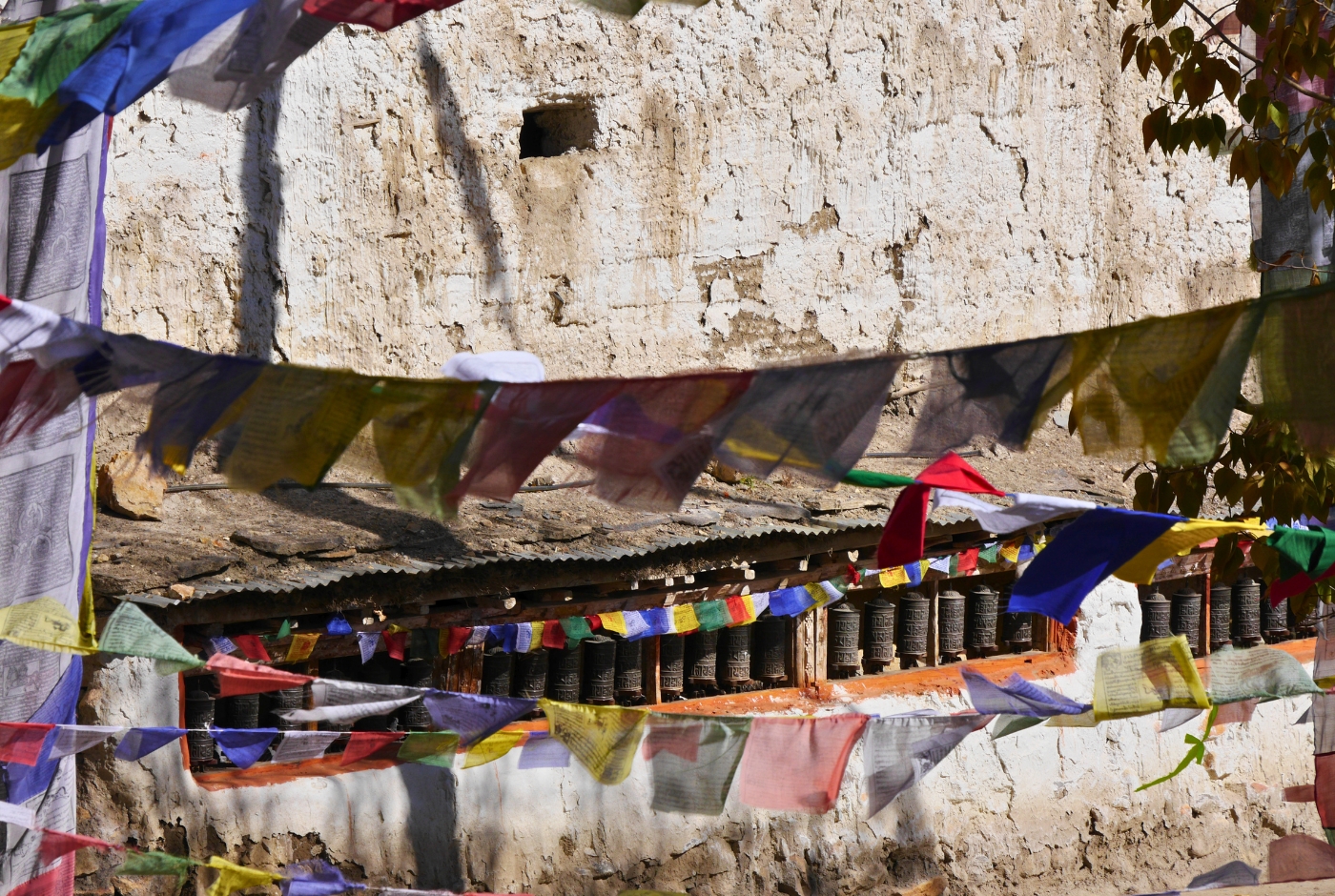
Dhakmar represents the region's most visually arresting geological formation. Enormous escarpments of wind-eroded sandstone rise in stratified ochre and crimson formations that geological time has sculpted into shapes hovering between architecture and catastrophe. At crepuscular light, the cliffs do not merely glow. They combust.
The Lo Tsho Dyun traditional settlements include Dhakmar as one of the core villages of the historic kingdom, embedded in a canyon landscape that has shaped both the physical and spiritual geography of the region.
Adjacent to Dhakmar, Ghar Gompa, also known as Lo-Ghekar Monastery, anchors the high trail between the canyon and Tsarang. Ghar Gompa is considered one of the oldest monasteries in Nepal and the second oldest in the world, built in the 8th century by Guru Rinpoche, Padmasambhava himself, and said to predate the famous Samye Monastery in Tibet. The monastery sits in austere isolation against a vast plateau sky, its whitewashed walls absorbing the silence of an elevation where wind and stone conduct the only conversations.
Ghami and the Sacred Mani Wall Complex
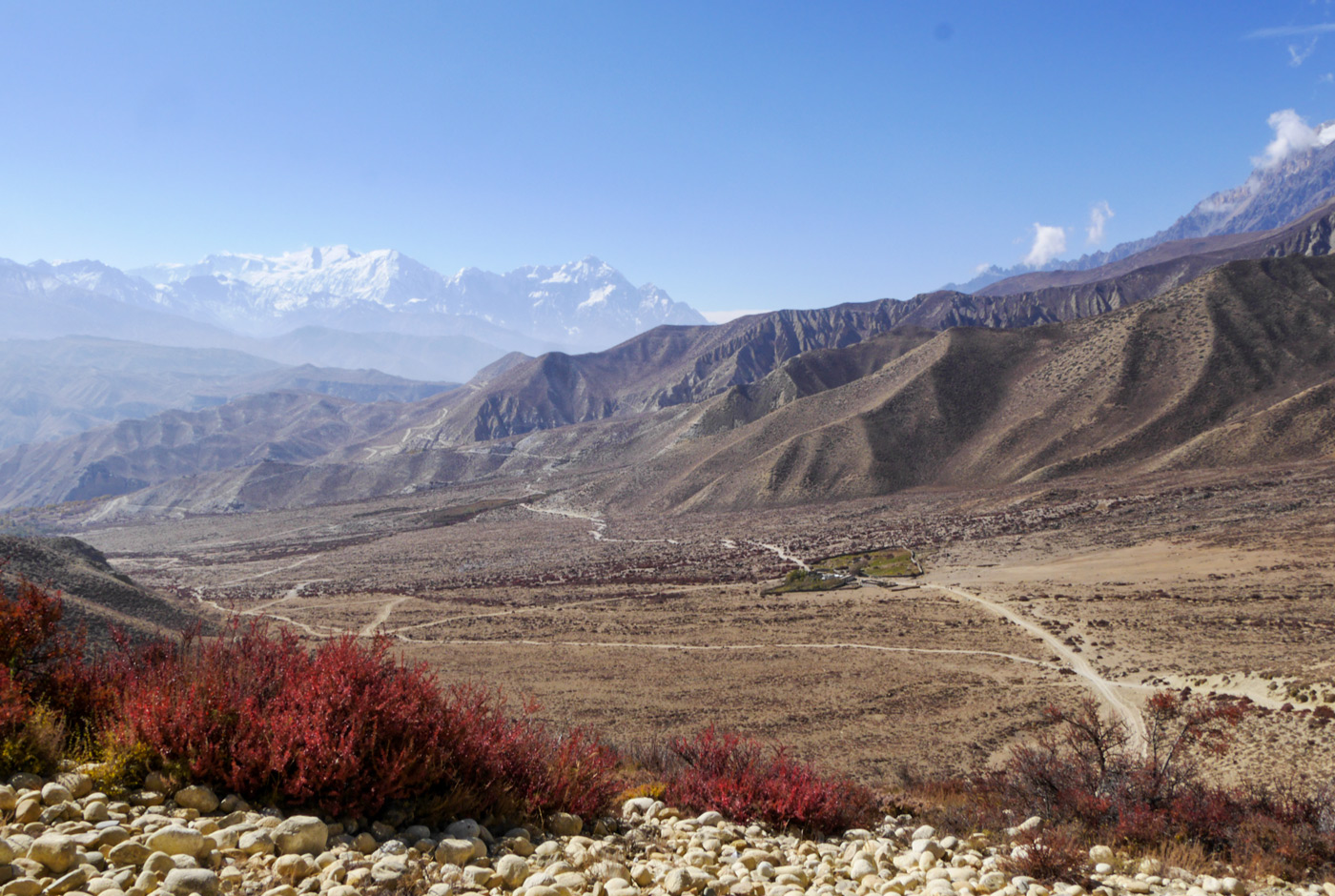
Ghami's Mani wall stretches for several hundred meters along the trekking route, constituting one of the most extensive inscribed stone structures in the Mustang region of Nepal. These walls, composed of thousands of individual stones each hand-carved with the mantra Om Mani Padme Hum, represent a cumulative devotional labor spanning multiple generations of Loba community members.
According to local lore, the Indian mystic Guru Rinpoche (Padmasambhava) slayed a massive, terrifying demoness who was preventing the construction of the Samye Monastery in Tibet. The long Mani wall is believed to have been constructed directly over the demoness’s intestines to pin her spirit down, while the towering red cliffs looming directly above the village represent her spilled blood.
Following strict cosmological traditions, trekkers and pilgrims must always pass the complex by keeping it on their right side, walking in a clockwise direction to align with the flow of merit and the sun across the sky. It sharpens every contour into something that belongs more to a Rothko canvas than a trekking guidebook.
In the heart of the village sits the Ghami Shedrub Dhargey Ling Monastery, a 14th-century sanctuary belonging to the Sakya school of Tibetan Buddhism. Originally built by Lama Namkha Pasang to provide a peaceful, orderly alternative for monks and nuns who were previously studying in harsh, isolated cliff caves, the monastery courtyard remains the absolute hub of local festivals, weddings, and communal life today.
Tsarang: The Fortress-Village of the Upper Plateau
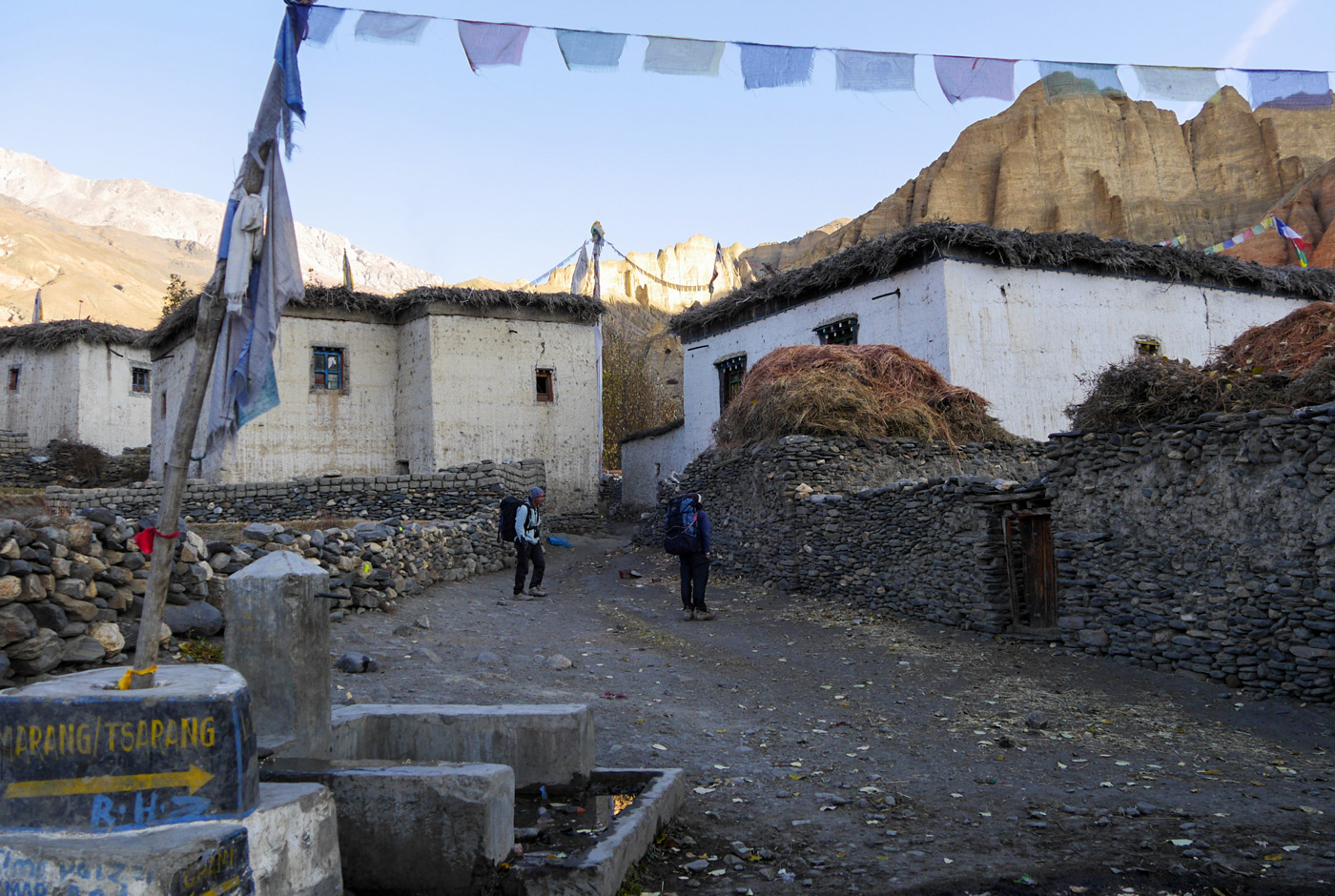
Tsarang features a large five-story dzong of the 14th-century fortress built by the founding king of Lo, Ame Pal; also an ancient monastery complex renowned for a significant collection of Buddhist statues, scriptures, and polychrome wall paintings. Right next to the fortress sits the sprawling Tsarang Gompa (Thupten Shedrup Dhargyeling Monastery), a 15th-century masterpiece belonging to the Sakya sect of Tibetan Buddhism.
Historically, Tsarang(also spelled Charang) acted as a crucial stronghold along the lucrative salt trade route between Tibet and India, protecting the kingdom's eastern flank.
The dzong, a castellated Tibetan fortress, commands the ridge above a deep lateral gorge. Its walls, though partially ruined, still convey the strategic military intelligence that positioned it there. Below, the monastery accumulates thangkas, ritual objects, and architectural elements across seven centuries of uninterrupted religious occupation. Tsarang is not merely a visual destination. It is one of the most authentic expressions of Mustang's ancient kingdom Nepal heritage that remains structurally accessible to trekkers.
Ghar Gompa Trail: The Most Scenic Trek Section in Upper Mustang
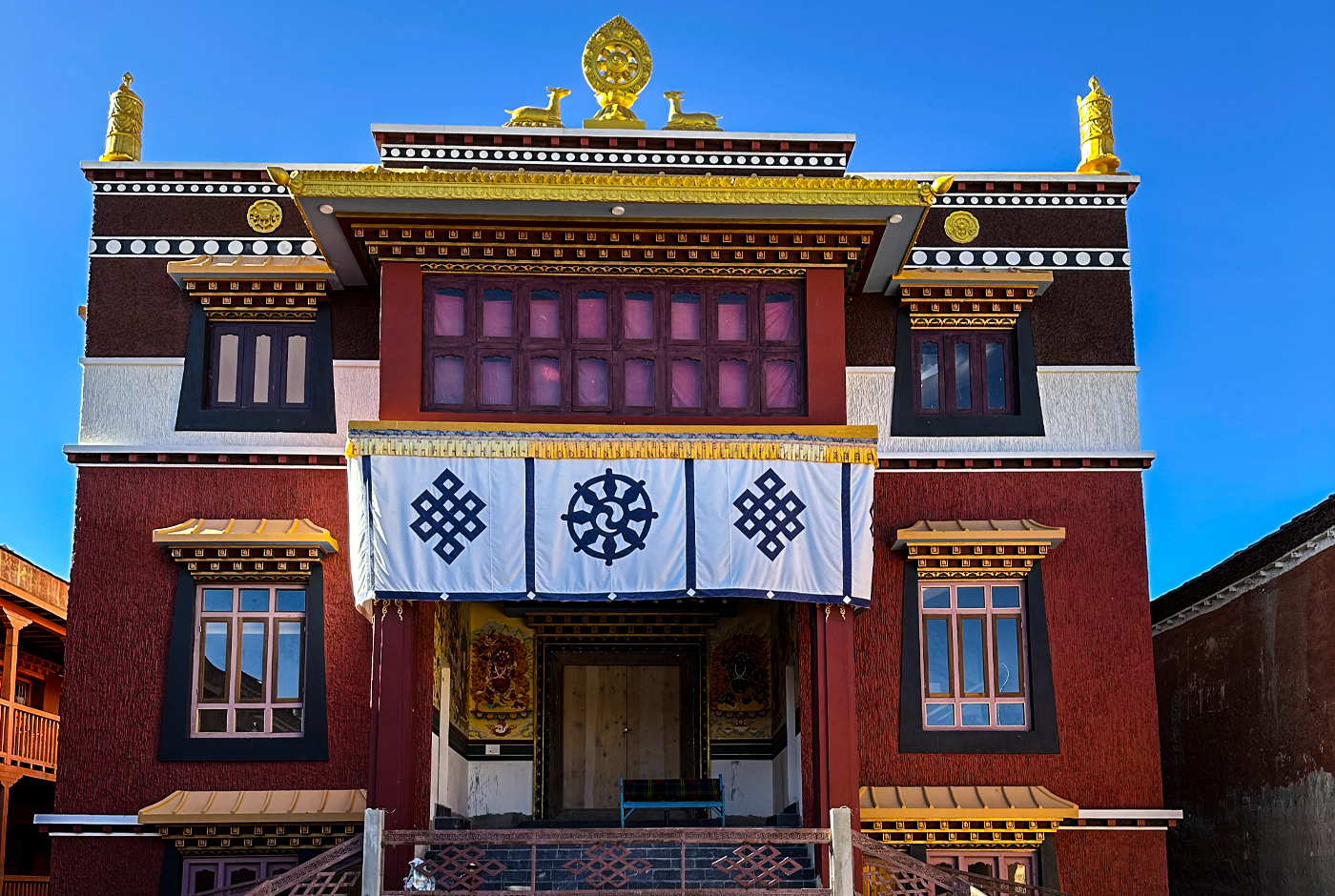
The crowning jewel and ultimate destination along this route is the legendary Ghar Gompa (also known as Lo Gekar Monastery), officially revered as the oldest active Tibetan Buddhist monastery in the world. Built in the 8th century by the iconic Indian mystic Guru Rinpoche (Padmasambhava), this historic sanctuary is actually older than the Samye Monastery in Tibet.
According to mystical lore, Guru Rinpoche had to slay a terrifying demoness threatening the region before the structure could stand. The blood she spilled permanently stained the colossal vertical cliffs of nearby Dhakmar into a brilliant, surreal shade of oxidized red. Arriving at the monastery complex reveals a striking whitewashed sanctuary nestled on a windy hilltop, guarded meticulously by 108 uniquely tiered chortens and ancient, mud-brick prayer walls that contrast beautifully against the golden desert dust
To preserve these ancient pigments from light damage, photography is strictly banned inside, but visitors can still experience the local custom of whispering a personal prayer. Local lore proudly promises that any wish made within the halls of Ghar Gompa will eventually come true.
Yara Village: Upper Mustang Hidden Trekking Routes
Yara is a highly unique, standalone settlement shaped by distinctive geographical anomalies, specific cultural structures, and a landscape that differentiates it from other Himalayan villages. Geographically, the village sits on a hilltop on the left bank of a dry river basin, experiencing a noticeably warmer microclimate compared to its neighbors.
However, it faces a fascinating environmental challenge: geographers and local lore note that Yara is situated over an unstable subterranean water table. Because of this shifting foundation, multi-story buildings cannot endure, forcing nearly all homes in the village to be constructed strictly as single-story dwellings. This architectural necessity directly faces a massive, naturally occurring sandy cliff that wind erosion has sculpted over centuries into staggering, gothic towers resembling giant sandcastles.
Culturally, this tiny hamlet is home to a tight-knit community of roughly 200 inhabitants belonging to the Lopa ethnic group. Of direct Tibetan descent, the villagers retain an ancient dialect, traditional dress, and distinct customs.
Most notably, Yara is one of the very few remaining places in the world where matriarchal family structures and fraternal polyandry, where a woman marries multiple brothers are still actively practiced by older generations to prevent family land from being fragmented.
The physical layout of the village reflects this close-knit life, with mud-and-stone homes tightly packed along narrow, winding alleys. The flat roofs are layered with wooden planks and packed earth, while the outer boundaries of the settlement are strictly guarded by traditional Mani walls and colorful chortens built to ward off negative spirits.
Luri Gompa
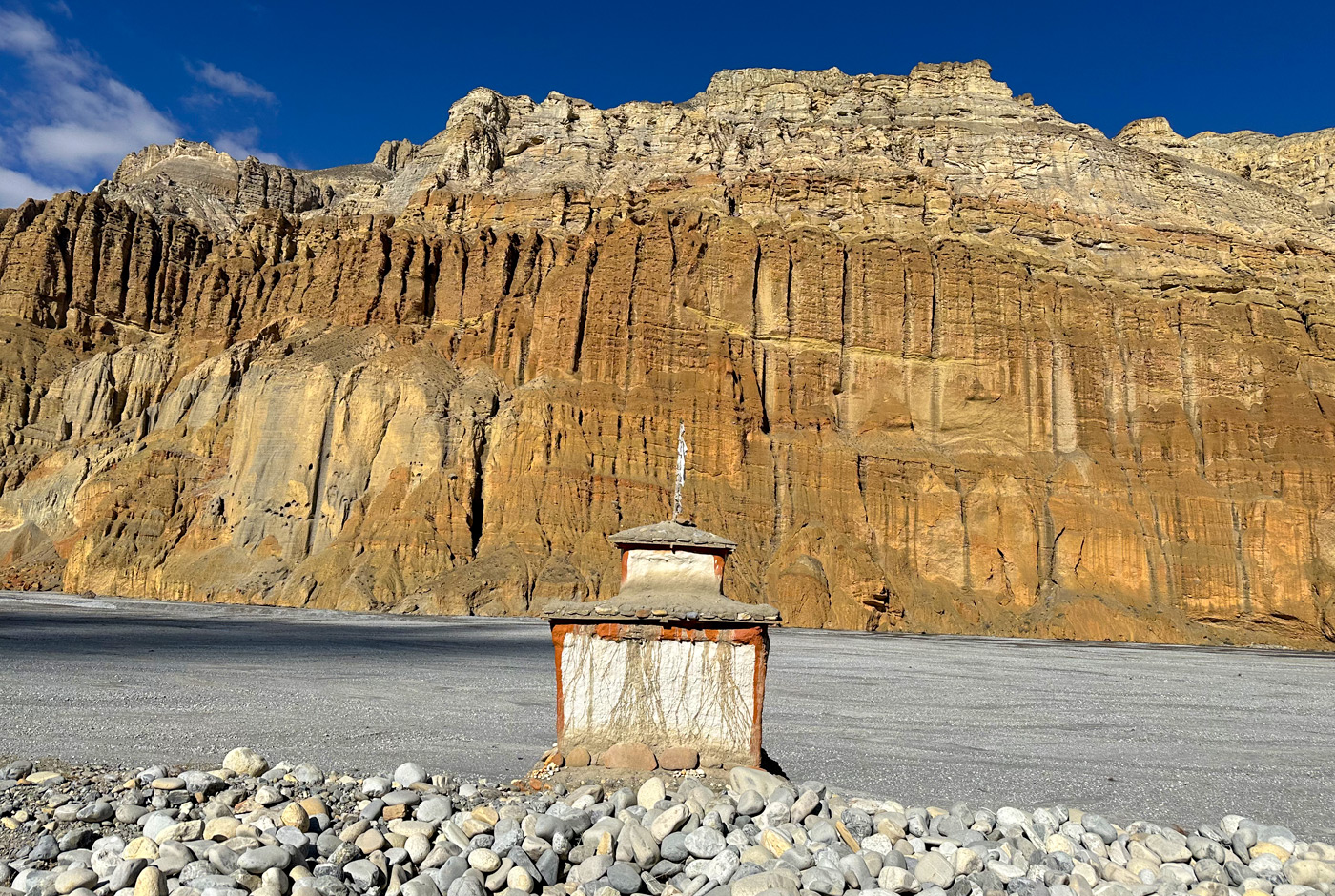
The eastern route through Luri Gompa remains the least-trafficked corridor in Upper Mustang, and consequently its most archaeologically and experientially potent.
Luri Gompa is a legendary, 14th-century cave monastery located just a short trek from Yara village in the remote Upper Mustang region of Nepal. Belonging to the Kagyupa sect of Tibetan Buddhism, it is one of the most enigmatic and visually striking religious sites in the entire Himalaya. Unlike traditional monasteries built as freestanding stone structures, Luri Gompa is carved directly into the heart of a sheer, fluted mud cliff, accessible only by navigating a steep, rocky path and entering through a narrow, wooden door on the cliff face.
The ceiling and the surrounding mud-plaster walls are adorned with masterful 14th-century frescoes depicting highly detailed images of Mahasiddhas (perfected masters), various deities, and intricate mandalas. These murals represent an invaluable apex of classic Indo-Newari and Tibetan artistic fusion, preserved for centuries by the bone-dry, desert-like climate of the rain-shadow region.
Because of its extreme isolation and sacred nature, Luri Gompa does not have a permanently residing monk community; instead, a monk from the nearby village of Ghara acts as the official keyholder. Trekkers wishing to step inside must coordinate in advance to ensure the keyholder is available to unlock the cave. Additionally, a small local preservation fee of NPR 500 is required to enter, and photography is strictly forbidden inside the main cave chamber to safeguard the ancient pigments from light damage.
Marpha: Apple Capital and Thakali Cultural Crucible
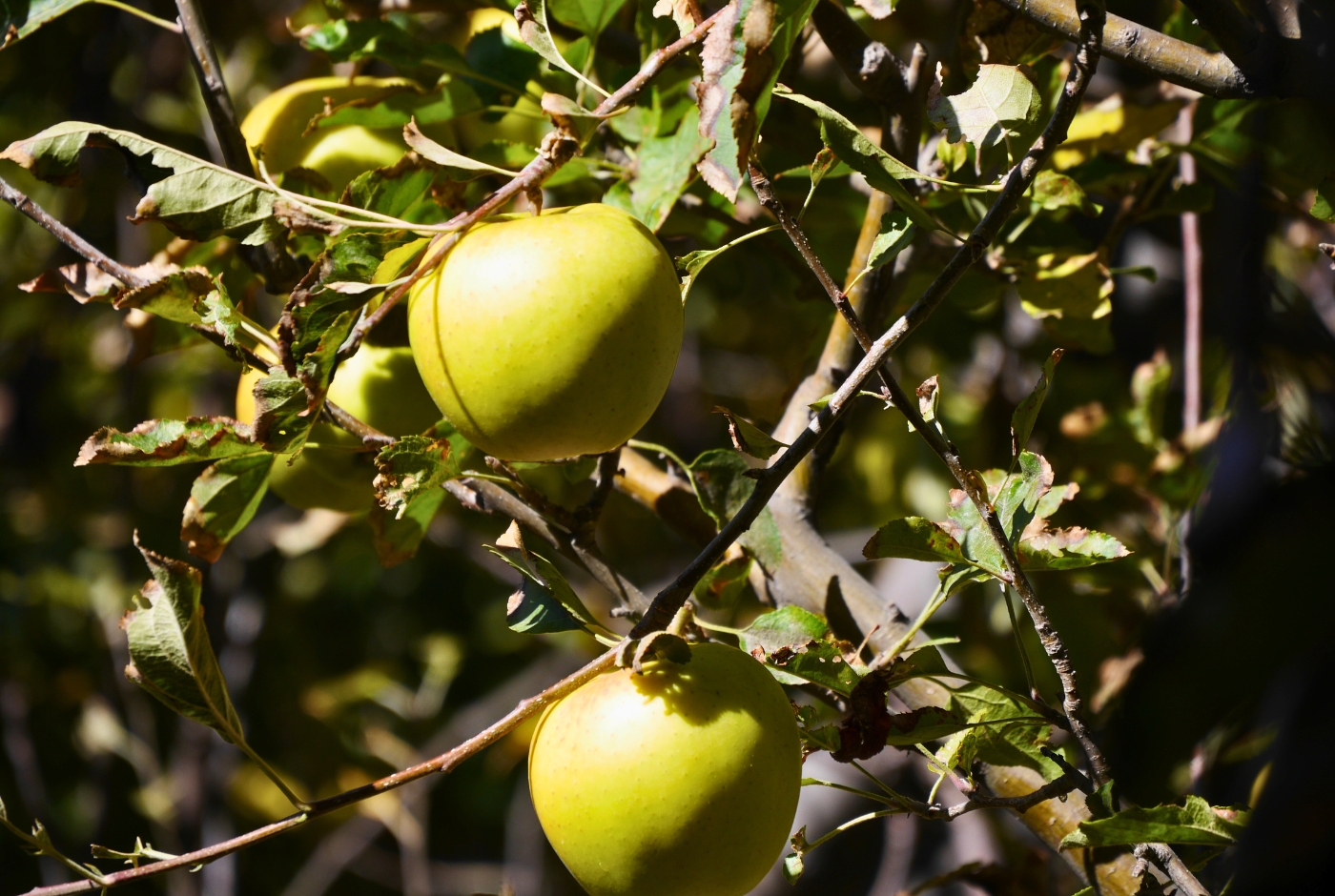
Situated at 2,650 meters in the Lower Mustang region and strategically sheltered behind a mountain ridge, Marpha is protected from the fierce afternoon winds that scour the Kali Gandaki Gorge, creating a peaceful microclimate that functions like a hidden oasis within the rain-shadow landscape. The name Marpha derives from the local Thakali dialect, where Mar means hardworking and Pha means people.
The lush greenery of apple orchards contrasts dramatically with the barren mountains behind the village. Notable sites include the Samtelung Monastery and a 300-year-old cliffside monastery used for spiritual rituals. Visitors can also explore the Kawaguchi House, named after Japanese monk Ekai Kawaguchi, who stayed in Marpha during his 1888 journey to Tibet.
The village is inhabited by Thakalis of four distinct clans: Lalchan, Hirachan, Jwarchan, and Pannachan, representing the four Ruby, Diamond, Jewel, and Emerald lineages of Thakali aristocratic tradition. The economy is anchored in agriculture, livestock, tourism, and a distilling industry that has made Marpha brandy internationally recognized.
Marpha functions as the ideal acclimatization and cultural decompression point for any Upper Mustang tour from Kathmandu Nepal. Its stone-flagged alleys, freshly baked apple pie emerging from lodge kitchens at altitude, and the evening puja resonating from Samten Choling Monastery above the roofline constitute a sensory register entirely distinct from the severe archaeology of the upper plateau.
Damodar Kunda
Damodar Kunda is a cluster of three intensely sacred, crystal-clear alpine lakes hidden at an altitude of 4,890 meters (16,043 feet) in the remote, forbidden wilderness of Upper Mustang, Nepal. Tucked away near the Tibetan border, this breathtaking landscape shifts from wind-carved desert canyons into a dramatic arena of jagged, snow-capped peaks. For adventurous travelers, it represents the ultimate frontier of isolation a place completely untouched by modern civilization, devoid of permanent settlements, and accessible only via a demanding multi-day camping trek over high mountain passes or by a spectacular helicopter flight.
Beyond its raw, dramatic beauty, Damodar Kunda is a living museum of ancient eastern mysticism. For millions of Hindus and Buddhists, these glacial waters are deeply holy, revered as the birthplace of the sacred Kali Gandaki River and the exclusive global source of Shaligram fossils mystical black stones dating back to the dinosaur era that are worshipped as manifestations of Lord Vishnu. Believers endure the harsh, high-altitude conditions because a single ritual dip in these freezing lakes is said to completely cleanse a lifetime of sins and free the soul. It is a rare destination where epic Himalayan adventure perfectly fuses with profound spiritual energy, making it an unforgettable bucket-list journey for anyone seeking the world's last remaining untamed spaces.
Things of attraction during trekking to Upper Mustang
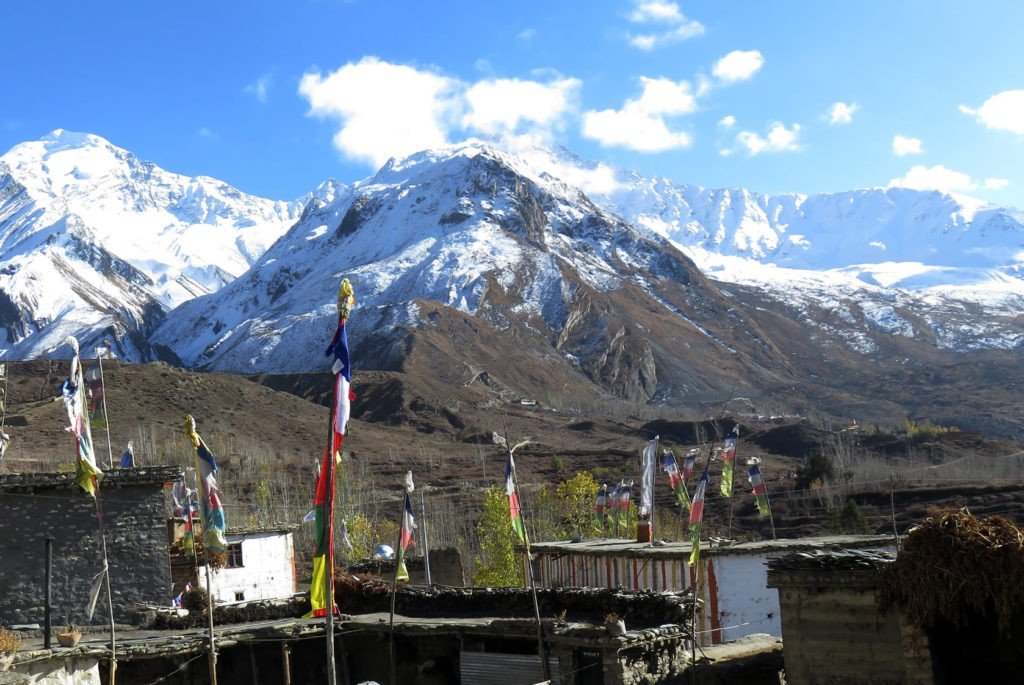
- World’s deepest gorge- Kali Gandaki Gorge: Kali Gandaki Gorge is one thing you will pass through in the initial phase of the trek. Kali Gandaki is one of the notable rivers of Nepal. It synchronizes with the Tibetan boundary and the Ganges and Brahmaputra watershed portion of the Indian border.
- Walled Caves: Formation of these amazing walled caves is still unknown. Many researcher has been studying these caves to find out who built these caves and why they were built in the first place. These caves are formed on the huge valley walls close to the Kali Gandaki River. There are more than 4o rooms inside the walled caves.
- Bon Po religion: Bon Po religion is the indigenous religious tradition of Tibet. There are not many followers across the world since it has been repressed and deposed by the Buddhism since 8th and 9th century. Bon po is an interesting religion which you can explore while trekking to Upper Mustang. In context of Nepal, it is practiced by small number of people in Nepal. You can find the communities who practice Bon Po religion in handful of places in Nepal.
- Experience the Stunning cultural landscape during the trekking to Upper Mustang: Upper Mustang is a unique combination of an arid mountainous environment with ingenious irrigation systems and earthen architecture. A chromatic harmony between earthen architecture and neighboring red cliffs, all this constitutes a unique cultural landscape. Surrounded by Trans Himalayas and bordered by the Kali Gandaki River, you can see vast pasture land where people daily life depends on. On thes lands, people grow crops and not far from these land is a charming human settlements.
- Gumbas and monasteries: All through the journey, you will come across several gumbas and monasteries. This earthen walled city is filled with beautifully made gumbas, chortens and monasteries. In these religious hub, you can get a chance to see monks praying and learning religious ethics from their scholars.
- Cultural villages: Jomsom, Kagbeni, Lo Manthang, Chhusang, and Many more. These villages for big part of the trek. Because, the visitors can really experience the authentic cultural and tradition of the people and the community through these villagers. Also, you get to understand how the life in the remote places operates without the modern technology and the great wealth. Villagers are engage on the work they do in their daily life and that is agriculture and looking after farm. Basically, cultural villages makes the trip to Upper Mustang even more interesting.
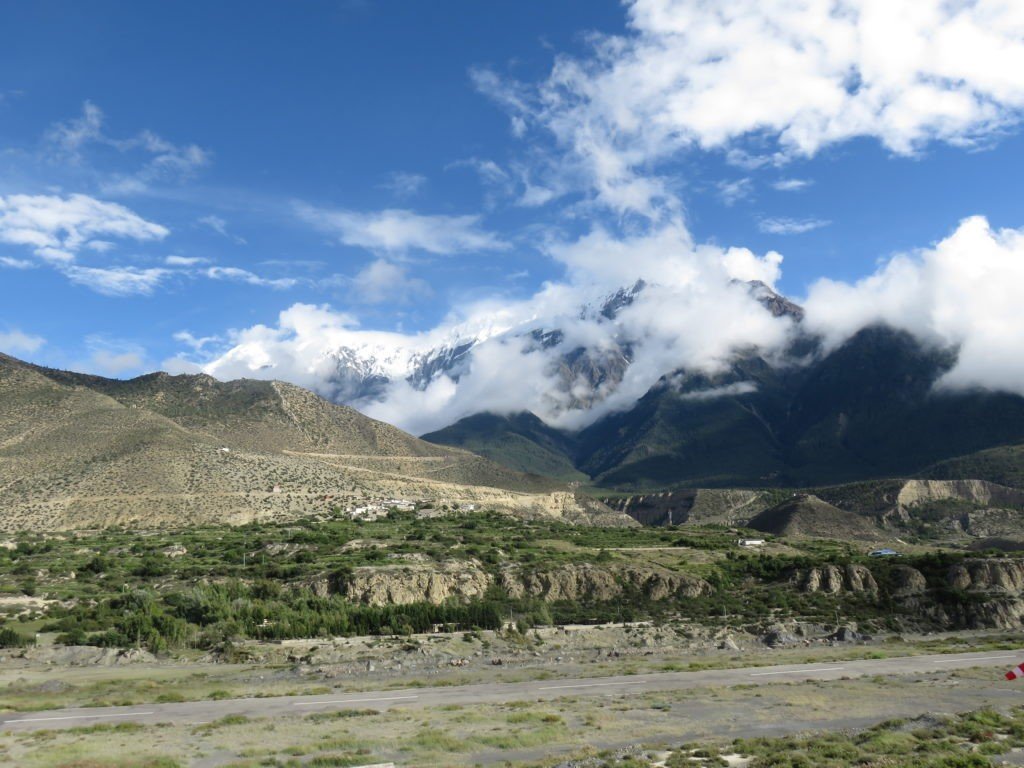
With all things said, you should know Upper Mustang is a restricted area in Nepal. Unlike ABC trek or EBC trek, you cannot wish to do solo trekking in Upper Mustang region. Government of Nepal has listed Upper Mustang as Restricted Area of Nepal. Henceforth, to enter the premises of upper mustang you have to have a special permit, one more trekker and a local guide. Solo trekking is not allowed in this region. To trek in Upper mustang, you need to be prepare with all the things mentioned above.
Best Trekking Packages Around Upper Mustang Region:
Upper Mustang Trek:
The Upper Mustang Trek is the best choice for hikers who want to avoid roads. You walk up the western trail to the capital of Lo Manthang, then loop back through the wild eastern side.
Uper Mustang Overland Jeep Tour:
The Upper Mustang Overland Jeep Tour is a fast and comfortable 7 to 9-day driving trip. You ride in a private 4x4 vehicle through the deep Kali Gandaki gorge straight to Lo Manthang. This package completely eliminates long days of walking, making it easy to see the ancient palaces and the famous Chhoser Sky Caves without physical strain.
Upper Mustang Trek With Yara
The Upper Mustang Ultimate Wilderness Expedition is a challenging 15 to 18-day camping journey. You take a jeep to the upper valley, then hike out from Yara into the high-altitude desert near the Tibet border. This rugged package is designed for experienced adventurers who want to reach the sacred Damodar Kunda Lakes at 5,400 meters.
Post a Comment