14 Days
Check Our Risk-Free Booking Policy View Details

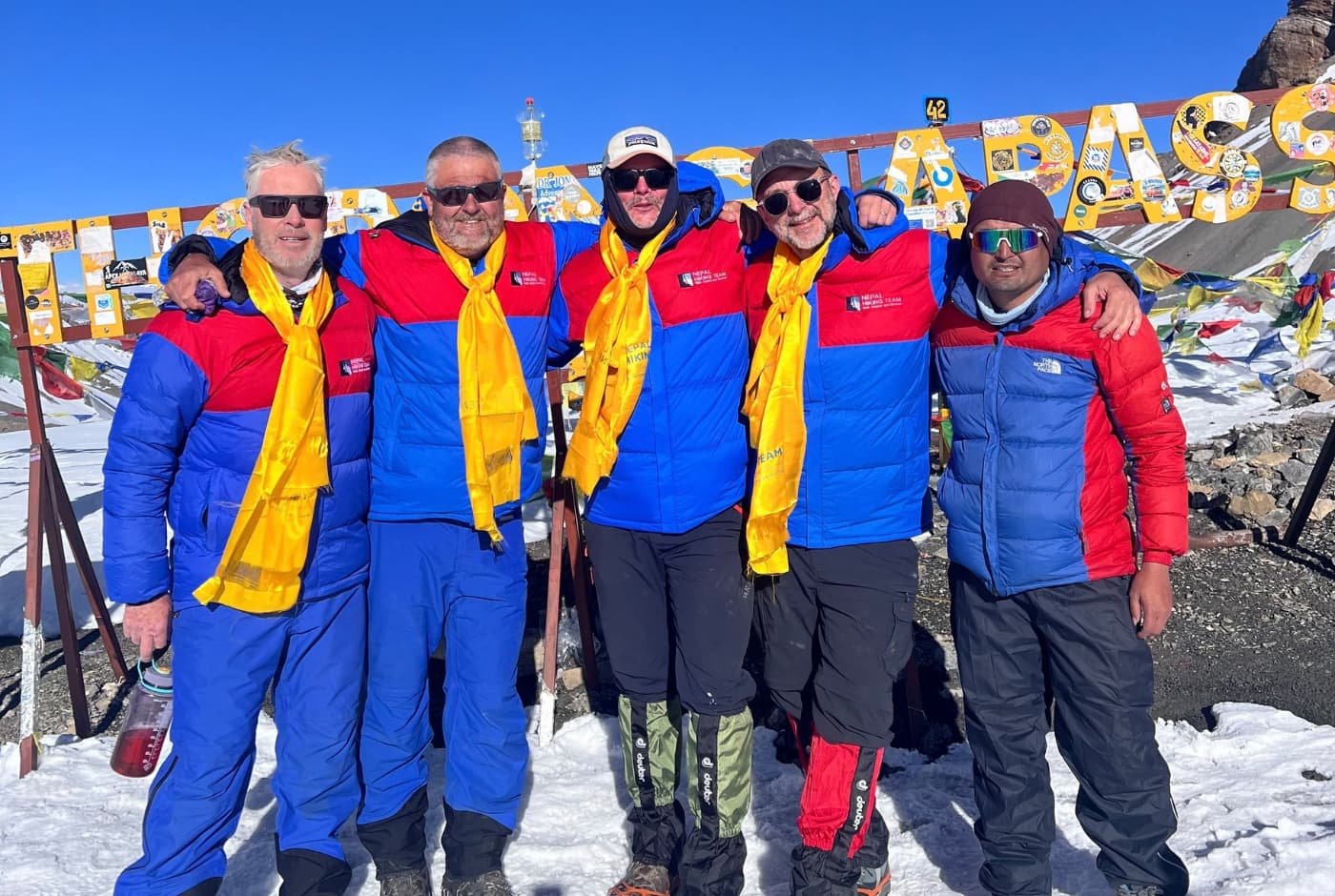
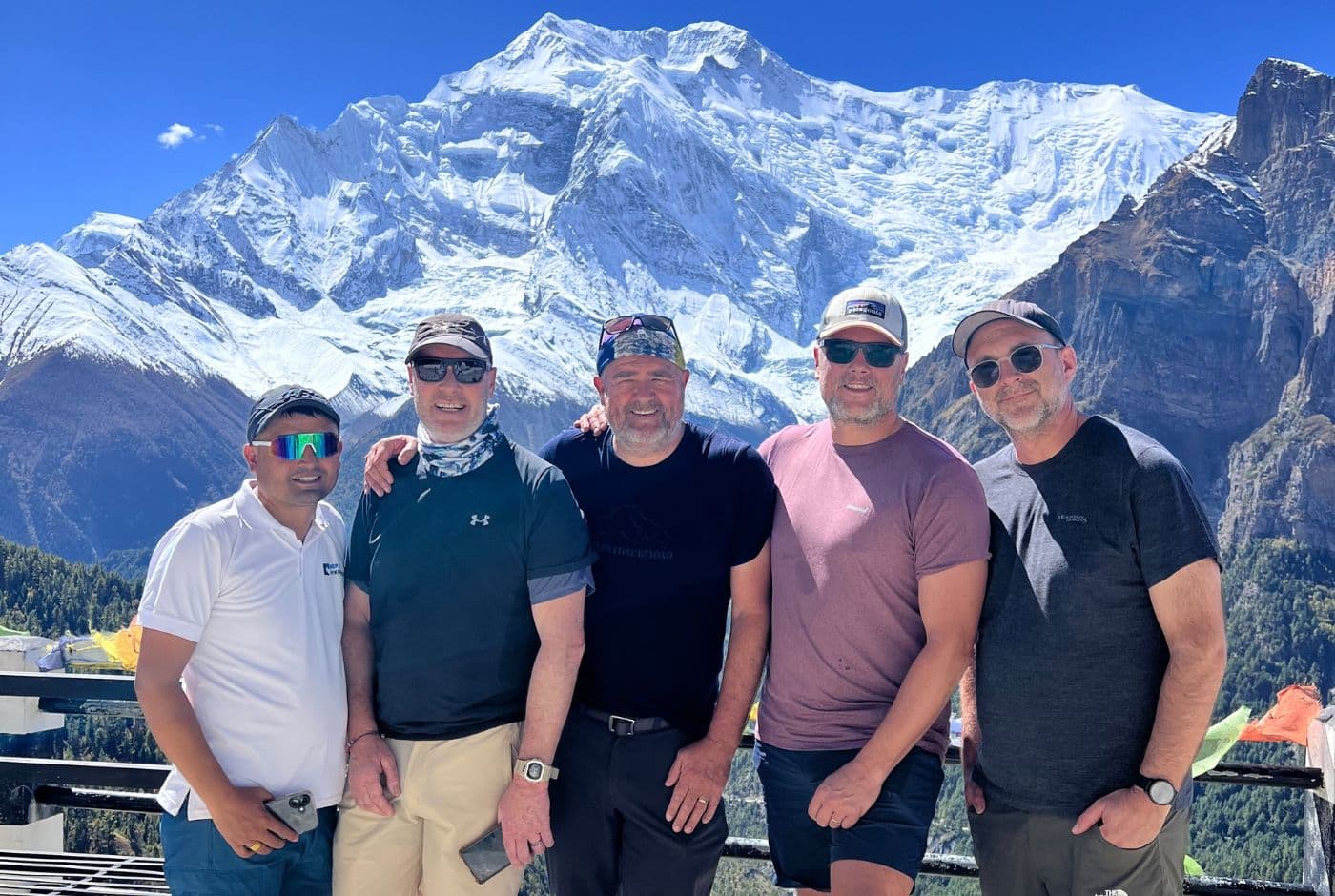
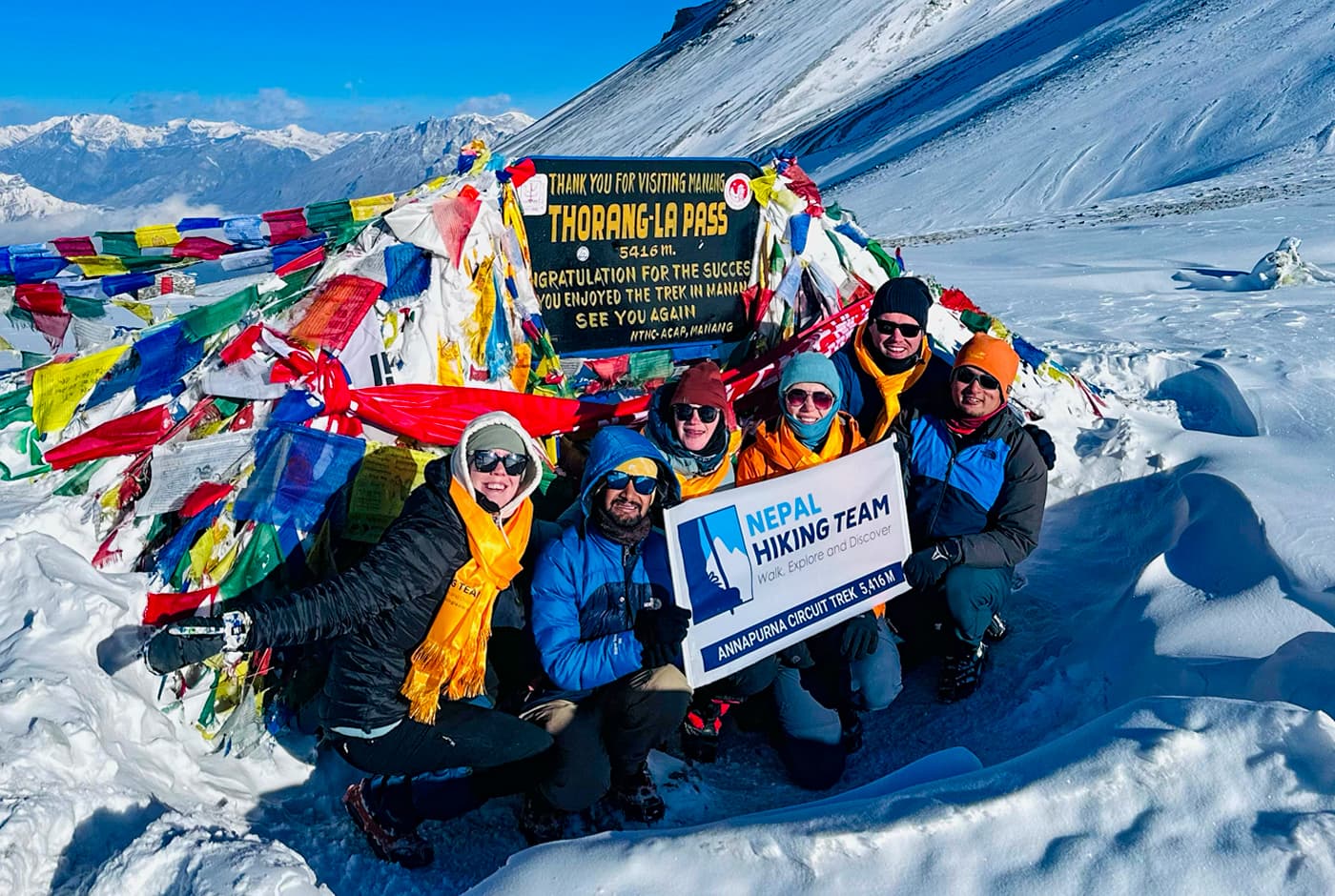
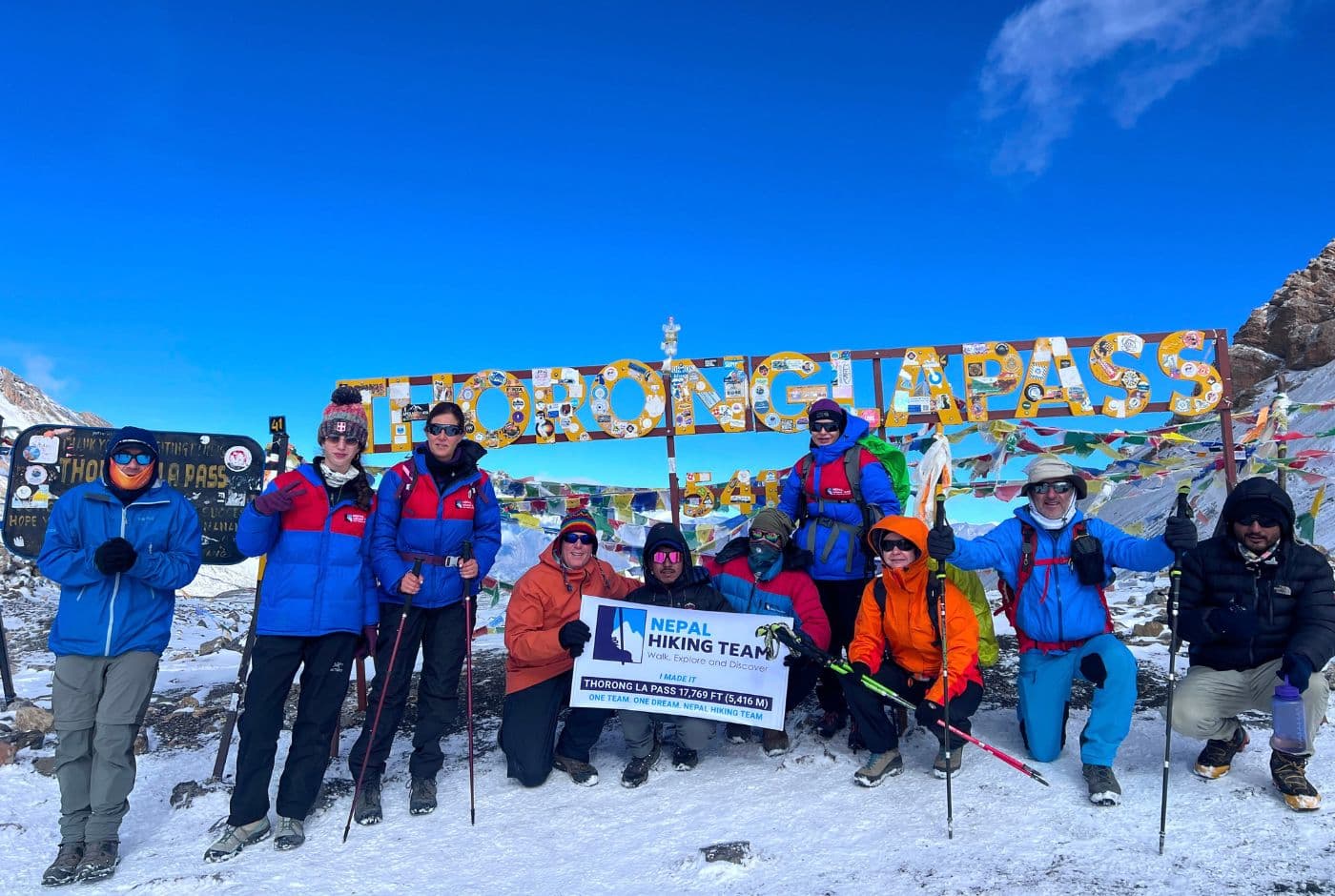
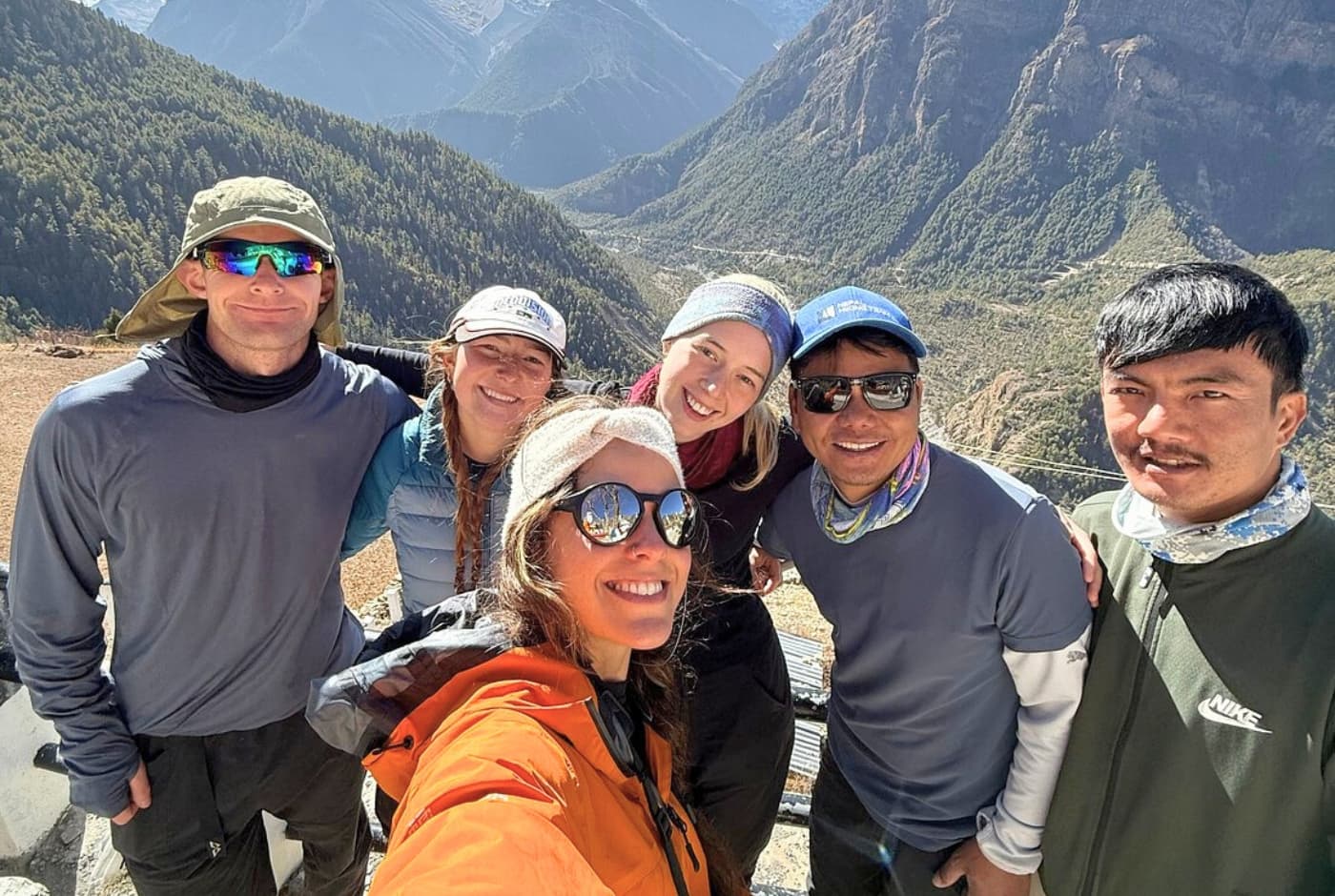
From high Himalayan passes to traditional villages and Mustang’s dry valleys, the ACT trek brings together the Annapurna region’s most memorable experiences.
The Annapurna Circuit Trek is one of Nepal's most rewarding long-distance Himalayan journeys. This 14-day itinerary follows a carefully paced route from Dharapani to Jomsom, combining scenic mountain trails, traditional villages, high-altitude landscapes, and the crossing of Thorong La Pass.
Starting in the green Marsyangdi Valley, the route climbs gradually through forested villages before entering the dry Himalayan landscapes of Manang and Mustang. The trek follows the scenic Upper Pisang, Gyaru, and Ngawal route, includes acclimatization in Manang, crosses Thorong La Pass, visits Muktinath Temple, and finishes through the quieter Lupra Valley before reaching Jomsom.
This trek is suitable for active travelers looking for a longer Himalayan journey with varied scenery, meaningful cultural experiences, and a major high-altitude pass. Previous hiking experience is helpful, but well-prepared beginners with strong fitness, patience, and proper acclimatization can complete the route successfully.
The route travels through the Annapurna Conservation Area, moving from the green Marsyangdi Valley toward the high valleys of Manang before crossing Thorong La Pass and descending into the dry Mustang region.
The Annapurna Circuit Trek is classified as moderate to strenuous. Daily walking distances, gradual altitude gain, uneven mountain trails, and the long Thorong La Pass crossing make this a physically demanding trek. A steady pace, proper acclimatization, and an experienced guide support are important for a safe and enjoyable journey.
The best seasons for the Annapurna Circuit Trek are spring from March to May and autumn from September to November. These months usually offer clearer skies, better mountain visibility, lower rainfall, and more reliable conditions for crossing Thorong La Pass. Early December can also be suitable, although temperatures are colder and snow becomes more likely at higher elevations.
The Annapurna Conservation Area Permit (ACAP) is the only required permit for the Annapurna Circuit Trek.
The journey begins in Kathmandu at 1,400 m (4,593 ft), with private vehicle transport by car or jeep to Besisahar and onward to Dharapani at 1,860 m (6,102 ft). From Dharapani, the trek starts along the scenic Marsyangdi Valley.
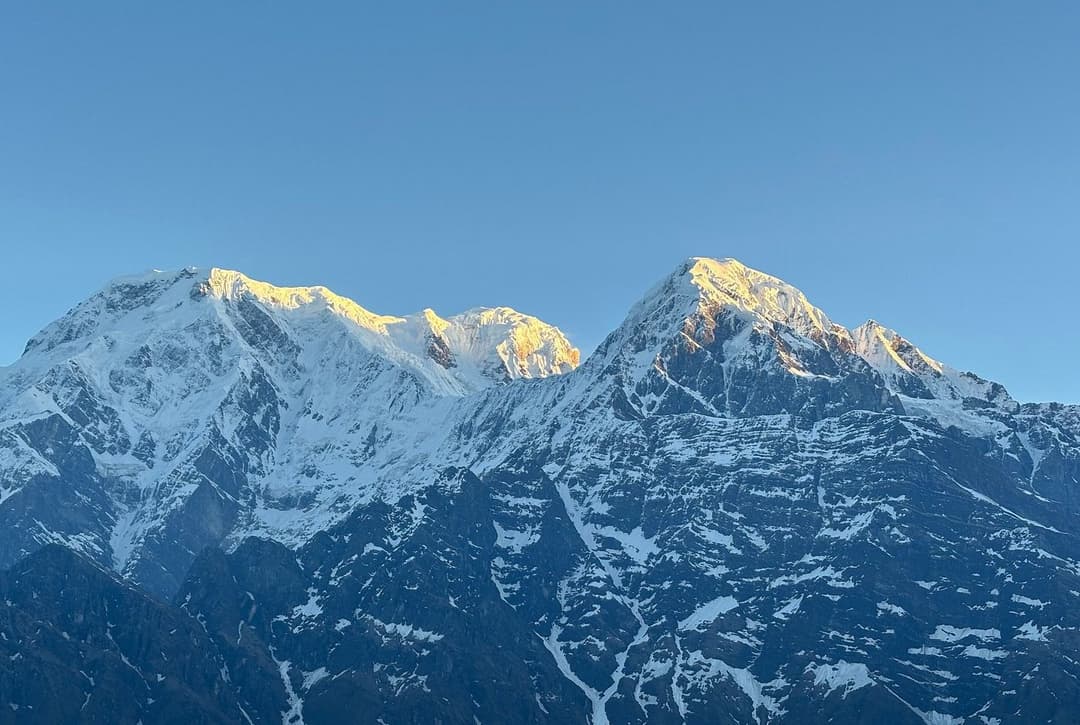
From Dharapani, the trail climbs through forested villages to Chame (2,670 m / 8,759 ft), then continues to Upper Pisang (3,300 m / 10,827 ft). This section offers views of Annapurna II, Pisang Peak, and the surrounding valley. The route then follows the scenic upper trail through Gyaru and Ngawal (3,660 m / 12,008 ft) before reaching Manang (3,540 m / 11,614 ft). Manang is the main acclimatization stop before entering the higher section of the trek.
After Manang, the trail climbs to Yak Kharka (4,050 m / 13,287 ft) and Thorong Phedi (4,450 m / 14,599 ft). The highest and most demanding day follows with the crossing of Thorong La Pass (5,416 m / 17,769 ft).
From Thorong La Pass, the trail descends to Muktinath (3,760 m / 12,336 ft). The trek then continues through Lupra Valley to Jomsom (2,720 m / 8,924 ft), where the walking journey ends before traveling to Pokhara by scenic flight (if available) or private vehicle, followed by onward travel to Kathmandu.
As road access now reaches Manang and parts of the route near Kagbeni, the New Annapurna Trekking Trails (NATT) help preserve a more authentic walking experience. Our Annapurna Circuit itinerary starts from Dharapani, avoiding long road sections where possible while maintaining the right balance of scenic trails, village experiences, and practical travel time.
Nepal Hiking Team offers several Annapurna Circuit Trek alternatives, allowing trekkers to choose an itinerary that suits their fitness level, available time, and travel preferences.
A shorter route covering the main Annapurna Circuit highlights, including Manang, Thorong La Pass, Muktinath, and Jomsom.
An extended itinerary continuing beyond Muktinath through Ghorepani and Banthanti before reaching Pokhara.
A longer Annapurna Circuit route that adds Tilicho Lake before rejoining the main trail toward Yak Kharka.
At Nepal Hiking Team, we run the Annapurna Circuit Trek with experienced licensed guides, dependable porter support, and a professional operations team that manages each stage of your journey from arrival in Kathmandu to departure.
Our Annapurna Circuit itinerary is designed with proper acclimatization through Ngawal and Manang before the crossing of Thorong La Pass. Our guides maintain a sensible walking pace, monitor your wellbeing at altitude, carry a first-aid kit and oximeter, and provide practical support throughout the trek.
We arrange permits, transport to Dharapani, lodge coordination, meals, porter support, and fixed-wing flight return from Jomsom to Pokhara.
With ethical porter practices, strong route knowledge, and reliable support on the trail, Nepal Hiking Team provides a safe, organized, and rewarding Annapurna Circuit Trek experience.
Upon arrival at Tribhuvan International Airport in Kathmandu, our representative will meet you outside the arrival terminal holding a Nepal Hiking Team placard. You will then be transferred to your selected hotel in Kathmandu. The drive usually takes around 20 to 30 minutes, depending on traffic.
After checking in, you will meet our Nepal Hiking Team office team along with your trekking guide for a short pre-trek briefing. Together, we will review the Annapurna Circuit route, daily walking plan, altitude considerations, weather conditions, packing essentials, and safety procedures for the journey ahead.
Nepal Hiking Team will also provide the trekking equipment included in your package, such as a duffel bag, down jacket, sleeping bag, and sun cap. This is also a good time to check your personal gear and prepare any last-minute items before leaving for the Annapurna region the next morning.
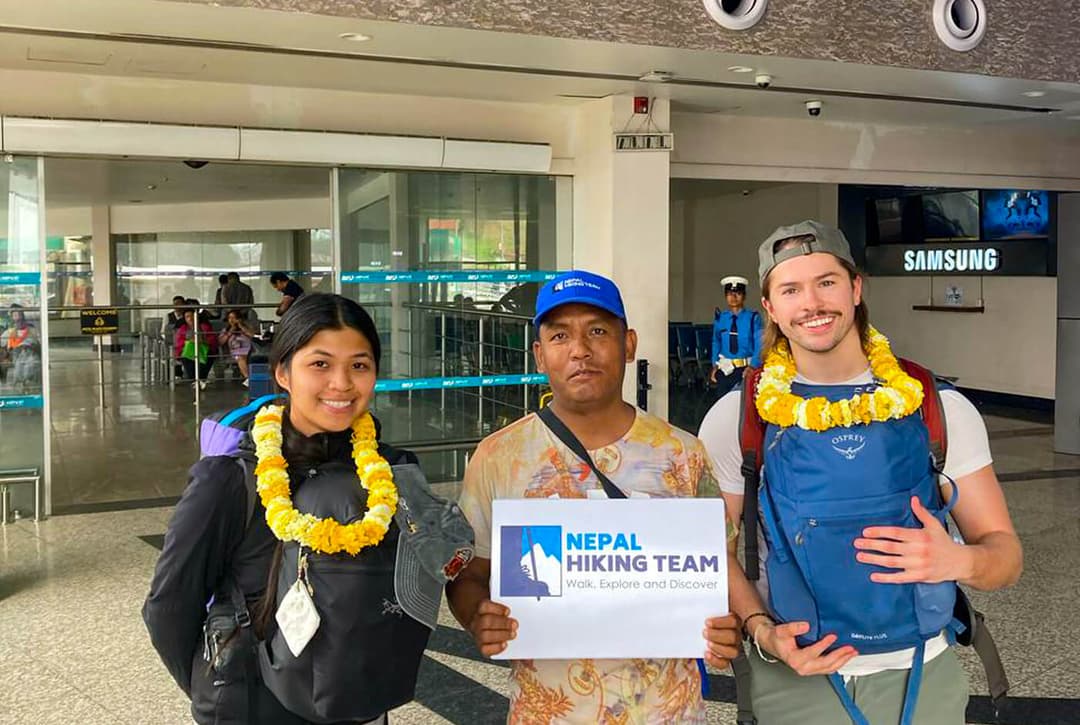
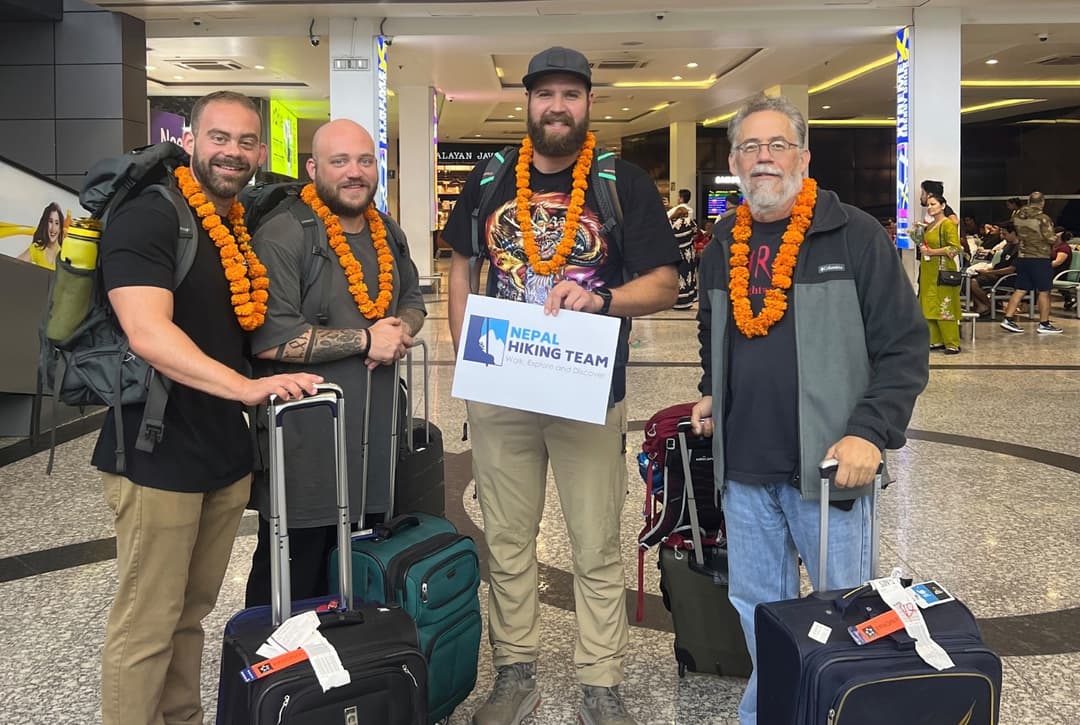
After an early breakfast, you will drive from Kathmandu toward Dharapani, the starting point of the trekking route. The journey first follows the highway through river valleys, terraced farmland, roadside towns, and rural settlements before reaching Besisahar, the main gateway to the Annapurna Circuit.
After Besisahar, the road becomes narrower, rougher, and more mountainous as it enters the Marsyangdi Valley. The drive passes villages, waterfalls, suspension bridges, and cliff-side sections before continuing through Jagat and Chamje toward Dharapani.
This is a long travel day, and the final mountain road section can feel bumpy and slow depending on road and weather conditions. Reaching Dharapani by vehicle, however, helps avoid the lower road-walking sections and allows the trek to begin from a better starting point.
By evening, you will reach Dharapani, a mountain village located at 6,102 ft / 1,860 m. The village marks the beginning of the main walking section of the Annapurna Circuit Trek.
Overnight stay will be at Phulbari Hotel or a similar local guesthouse in Dharapani.
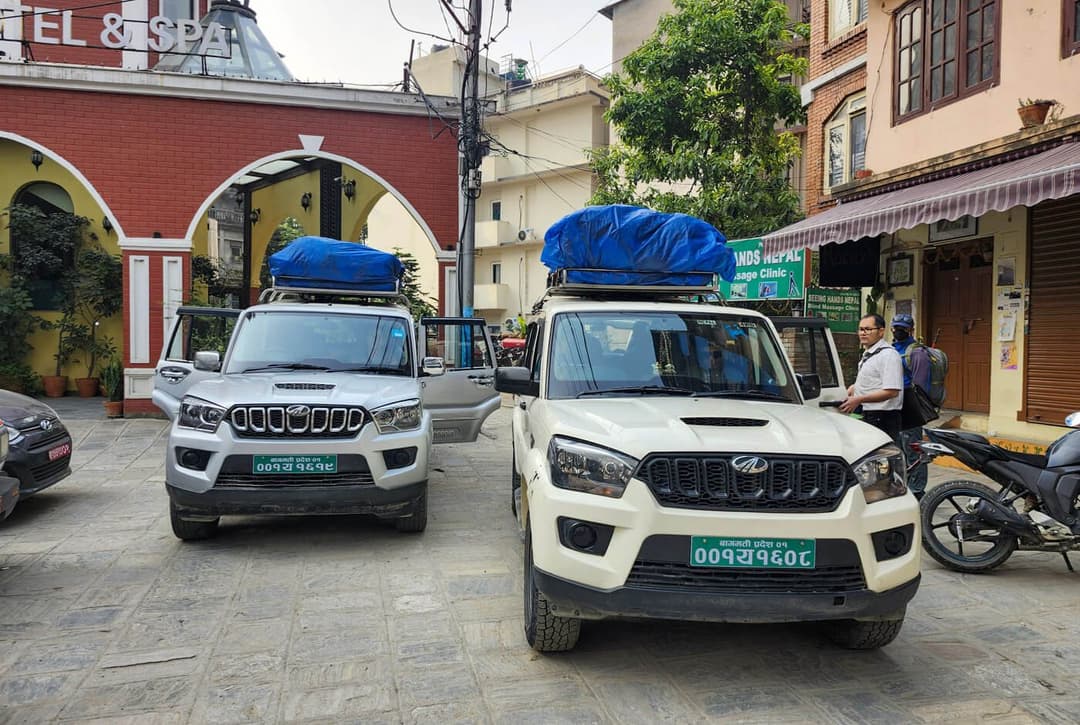
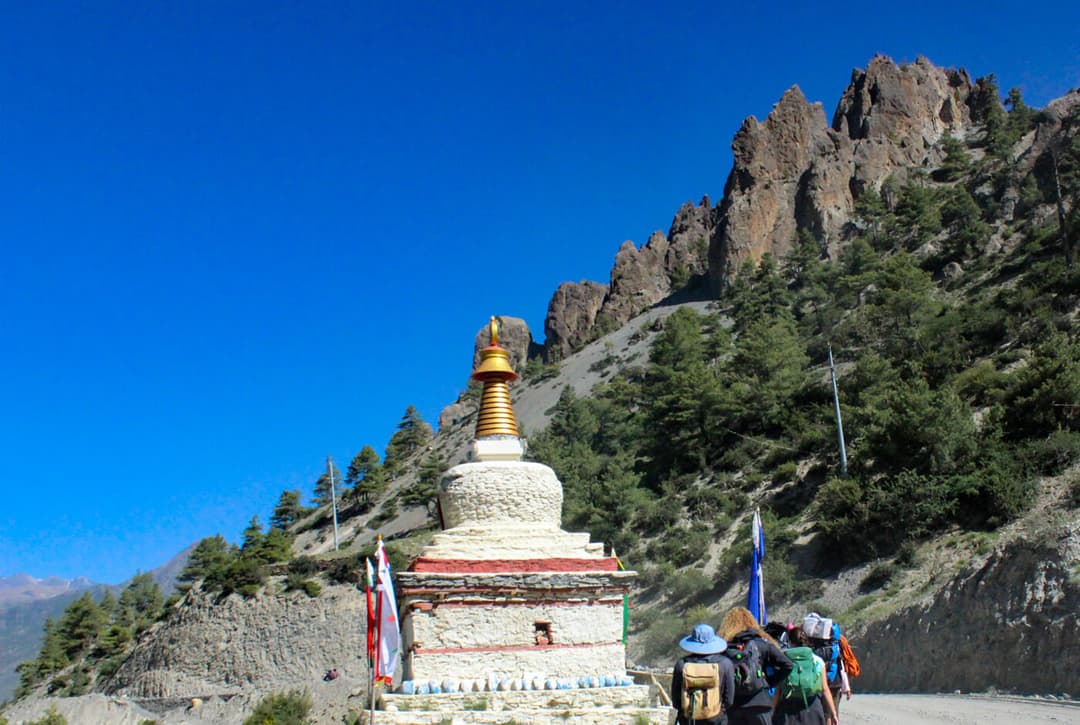
After breakfast in Dharapani, you will begin the first walking day of the Annapurna Circuit Trek. The trail follows the Marsyangdi Valley through pine and fir forests, stone villages, prayer flags, and gradually cooler mountain terrain.
The route passes Bagarchhap and Danaque before climbing steadily toward Timang. This climb is one of the first noticeable uphill sections of the trek, so a steady pace is important. As you gain height, the scenery opens beautifully, with views of Manaslu, Lamjung Himal, and surrounding snow-covered peaks on clear days.
After Timang, the trail becomes more gradual and continues through forested sections, small settlements, and mountain road crossings toward Thanchok, Koto, and Chame. This part of the day gives a strong sense of entering the higher Manang region, where the landscape becomes more alpine and the air feels cooler.
By afternoon, you will reach Chame, the administrative center of Manang District. The village is surrounded by dramatic ridgelines and offers views of Annapurna II and Lamjung Himal. If time allows, you can rest, explore the village, or visit the nearby natural hot spring.
Overnight stay will be at Four Seasons Hotel or a similar local guesthouse in Chame.
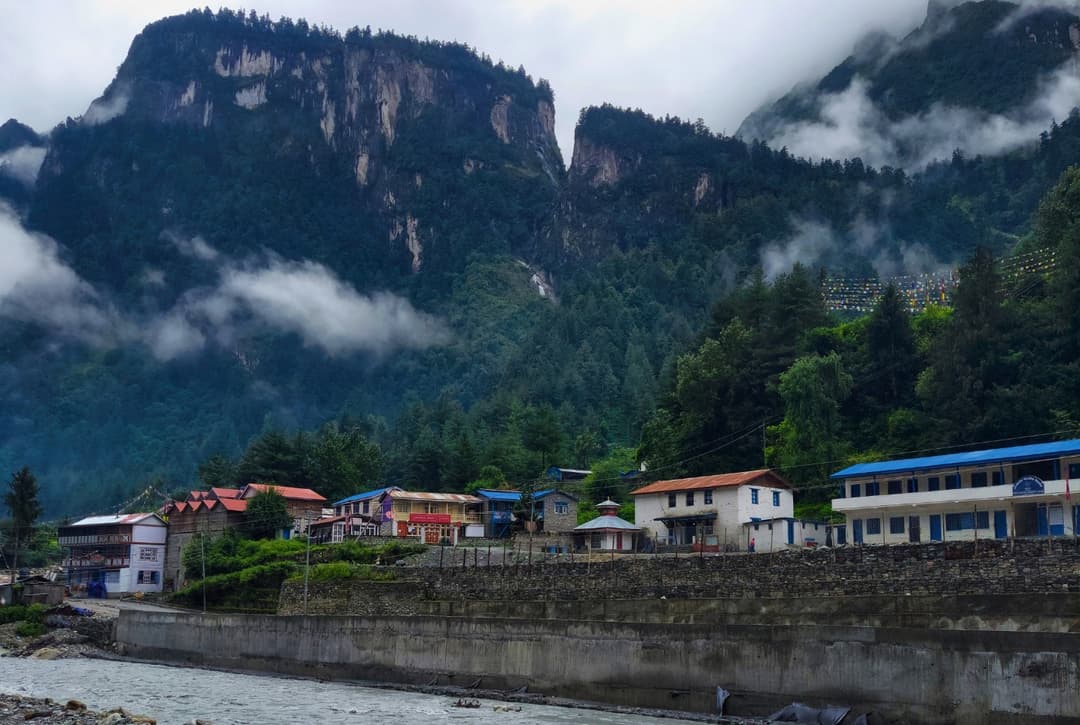
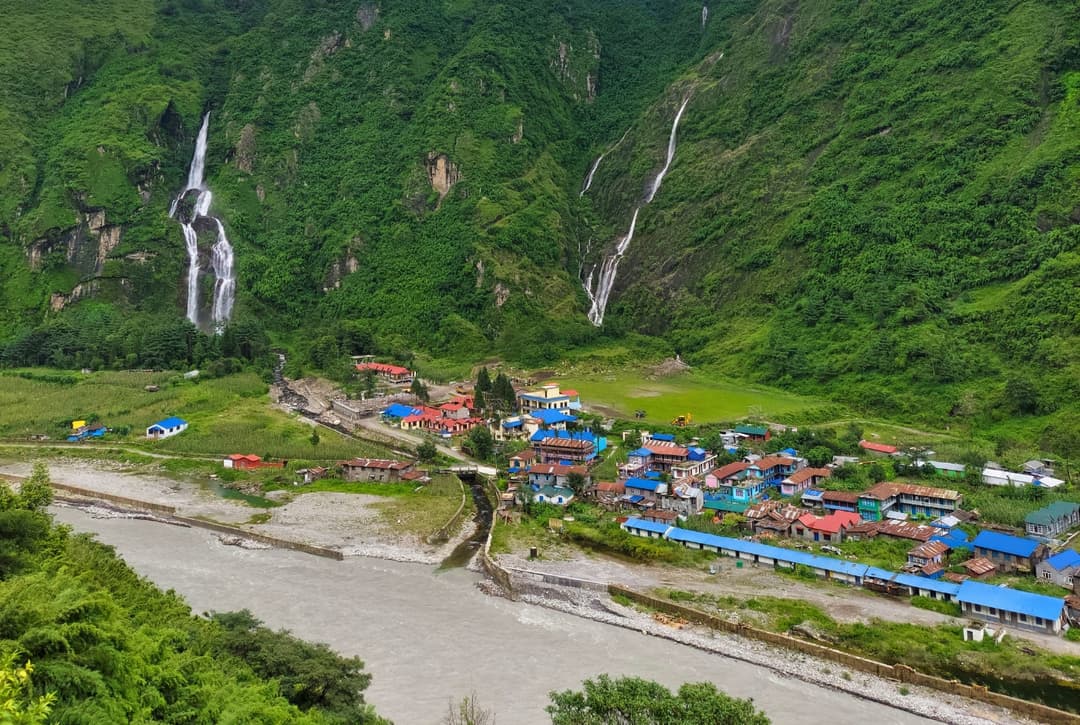
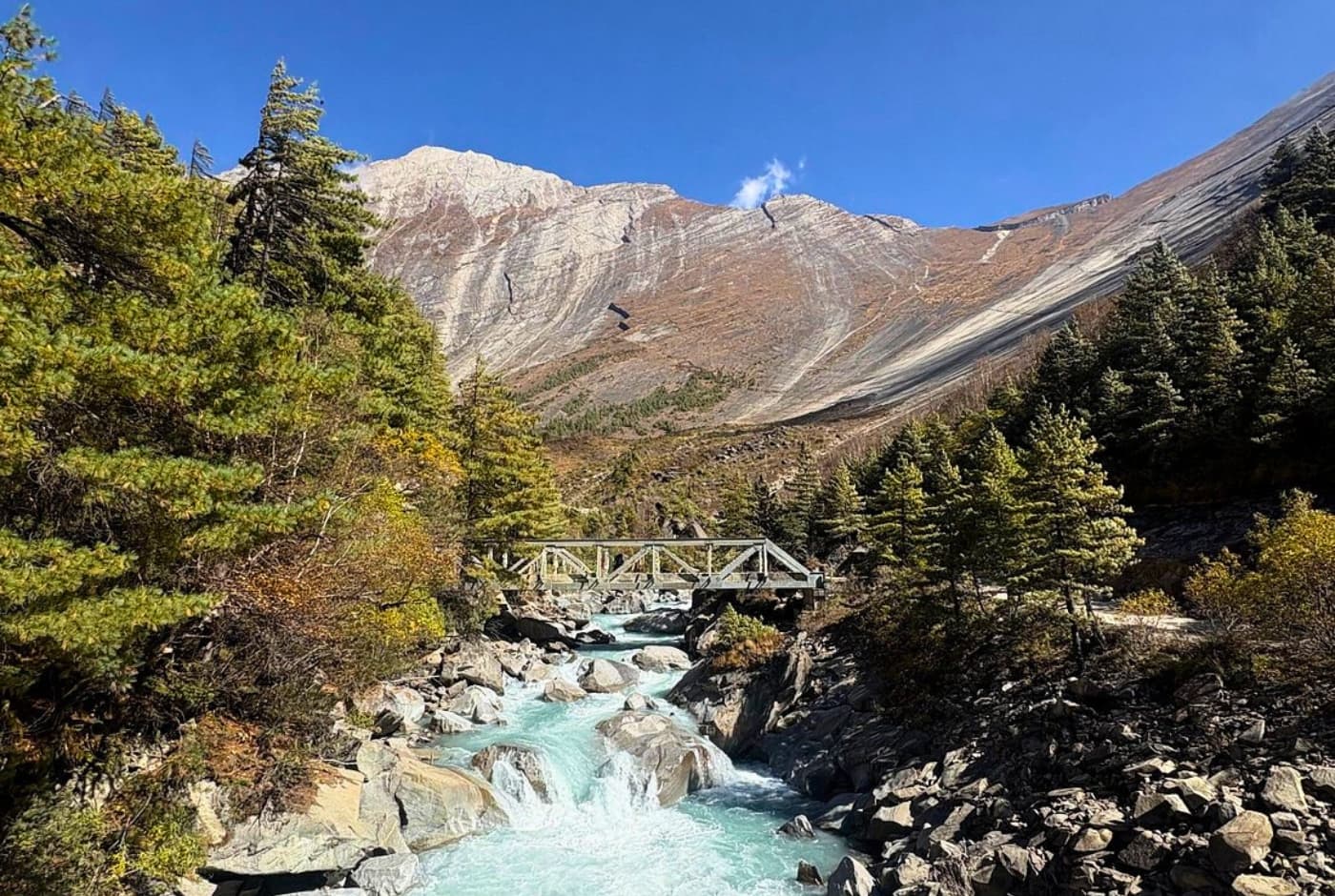
After breakfast in Chame, the trail follows the Marsyangdi River through pine forests, narrow valleys, and dramatic rock cliffs. Some sections follow the road, but the scenery becomes stronger as the valley opens toward the higher Manang region.
The route first reaches Bhratang, a well-known stop for apple orchards and fresh local apple products. Many trekkers take a short break here before continuing toward the higher valley.
After Bhratang, the trail crosses a long suspension bridge and climbs through pine forest toward Dhukur Pokhari. This section feels more alpine, with striking views of Pisang Peak, Annapurna II, and the surrounding ridgelines.
From Dhukur Pokhari, the trail continues toward Pisang. Upper Pisang sits higher above the valley than Lower Pisang and offers better views, a quieter village atmosphere, better accomodation options and a stronger sense of entering the high mountain landscape.
Staying in Upper Pisang also supports gradual acclimatization before taking the upper route through Gyaru and Ngawal the following day. If time allows, you can visit Pisang Monastery for wide views of the valley and surrounding peaks.
Overnight stay will be at Mandala Hotel or a similar local lodge in Upper Pisang.
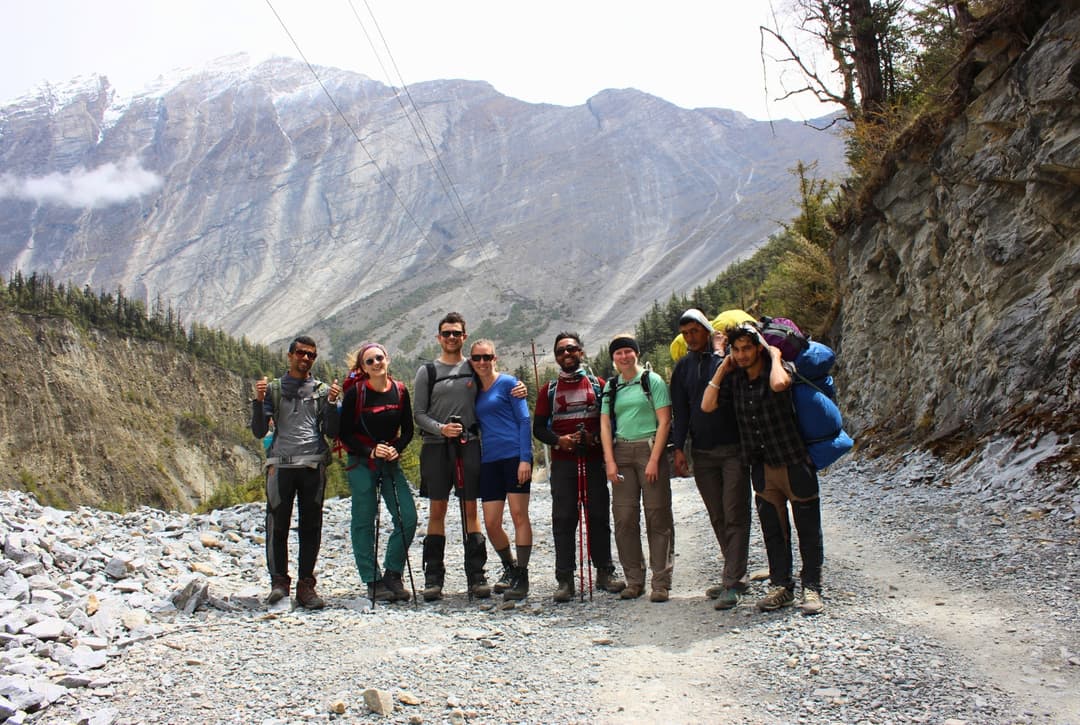
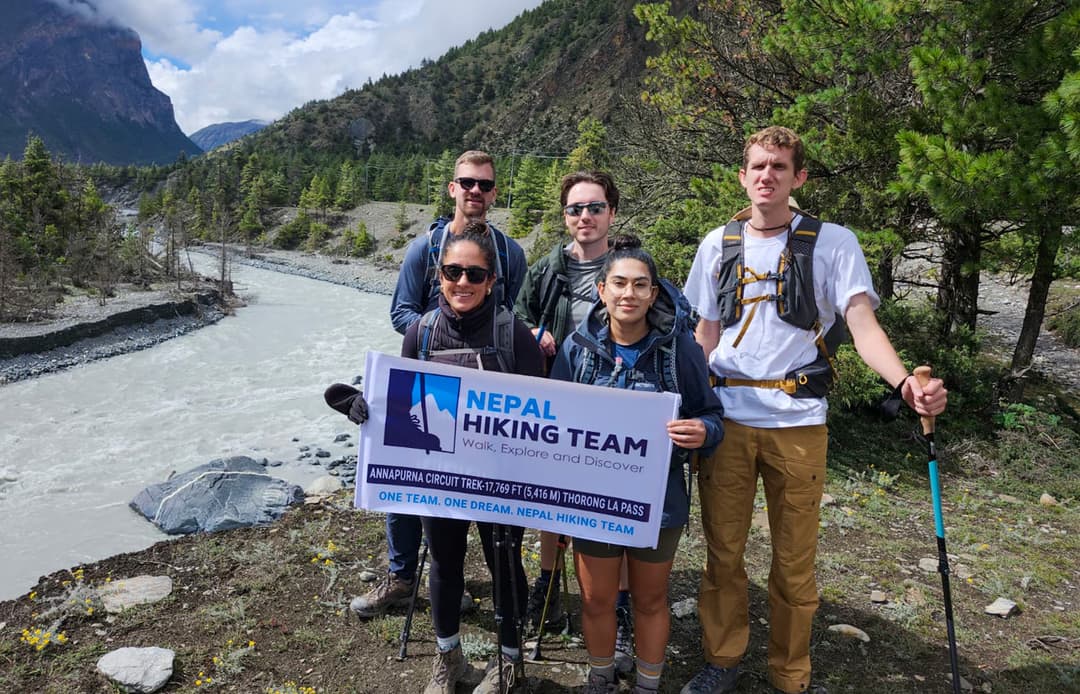
After breakfast in Upper Pisang, you will follow the scenic upper trail toward Gyaru and Ngawal. This is one of the most rewarding sections of the Annapurna Circuit Trek, but it also requires steady effort as the trail climbs above the valley into thinner mountain air.
The climb toward Gyaru is the main challenge of the day. The trail rises through long switchbacks, and the ascent can feel demanding, especially under the morning sun. However, the effort is well rewarded with wide views of Annapurna II, Annapurna III, Pisang Peak, and the Manang Valley.
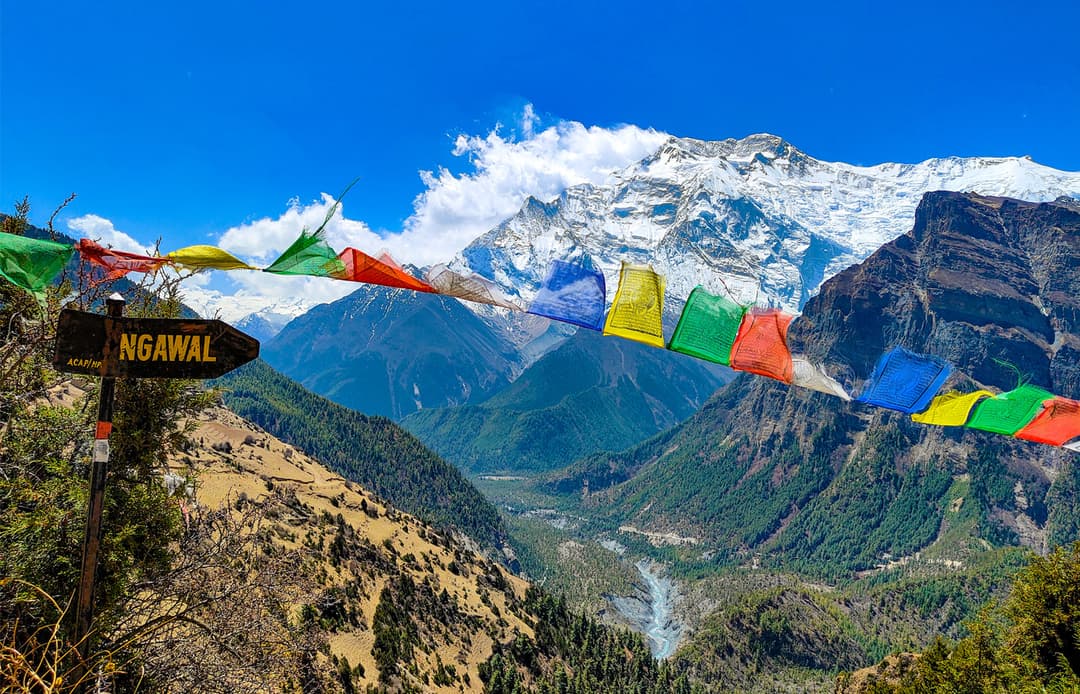
Gyaru is a beautiful highland village with stone houses, prayer flags, and strong Tibetan Buddhist influence. It is also one of the best viewpoints on this part of the route.
From Gyaru, the trail continues across open alpine terrain toward Ngawal. The walking becomes steadier, with broad mountain views, quiet trails, and a stronger sense of entering the high Manang region.
Staying overnight in Ngawal is an important advantage of this itinerary. Instead of walking all the way from Upper Pisang to Manang in one long and tiring day, this route breaks the upper trail into a better-paced section and supports gradual acclimatization before reaching Manang.
Overnight stay will be at Annapurna Guesthouse or a similar local lodge in Ngawal.
Leaving Ngawal, the trail descends gradually from the high village and continues across the drier upper Manang landscape. After the stronger climb on the previous day, this walk feels steadier, but the altitude can still make the pace slower than expected.
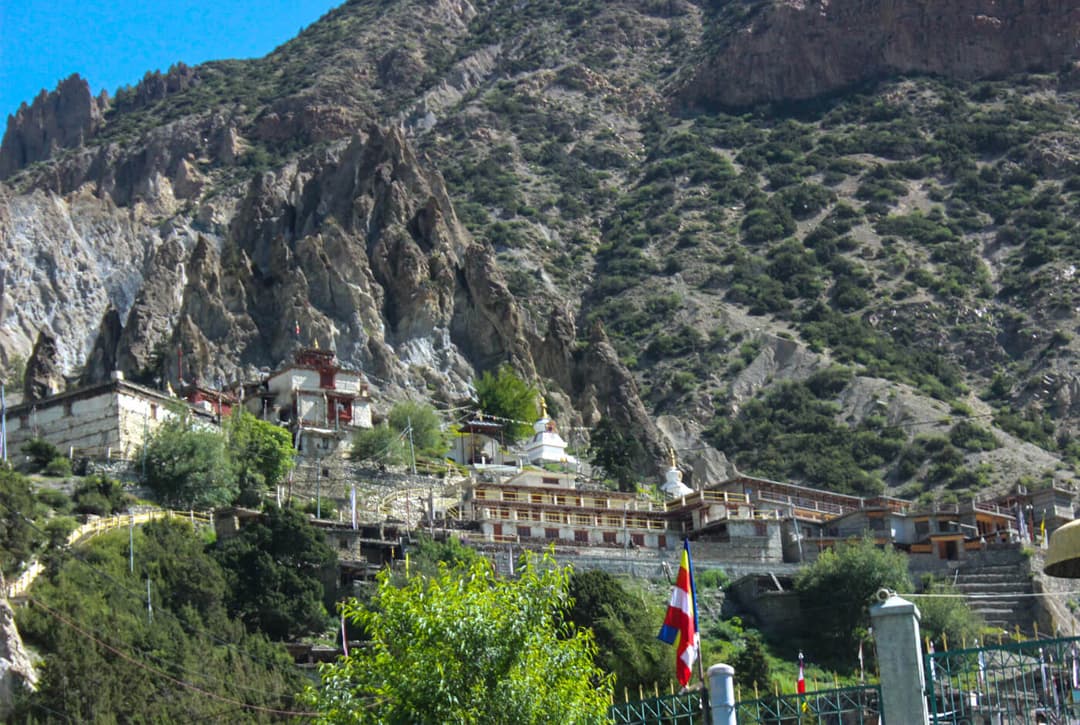
The route passes through small settlements such as Julu and Humde before reaching Braga, one of the most important cultural stops on this section of the Annapurna Circuit. Around Braga, the land becomes drier and rockier, with old houses, prayer flags, and the historic Samgag Samling Monastery adding a strong sense of Himalayan heritage.
From Braga, the trail continues toward Manang, the largest and most active village on this side of the pass. The walk is not very long, but it is an important transition day because you are now entering the main acclimatization zone before the route climbs higher toward Yak Kharka, Thorong Phedi, and Thorong La Pass.
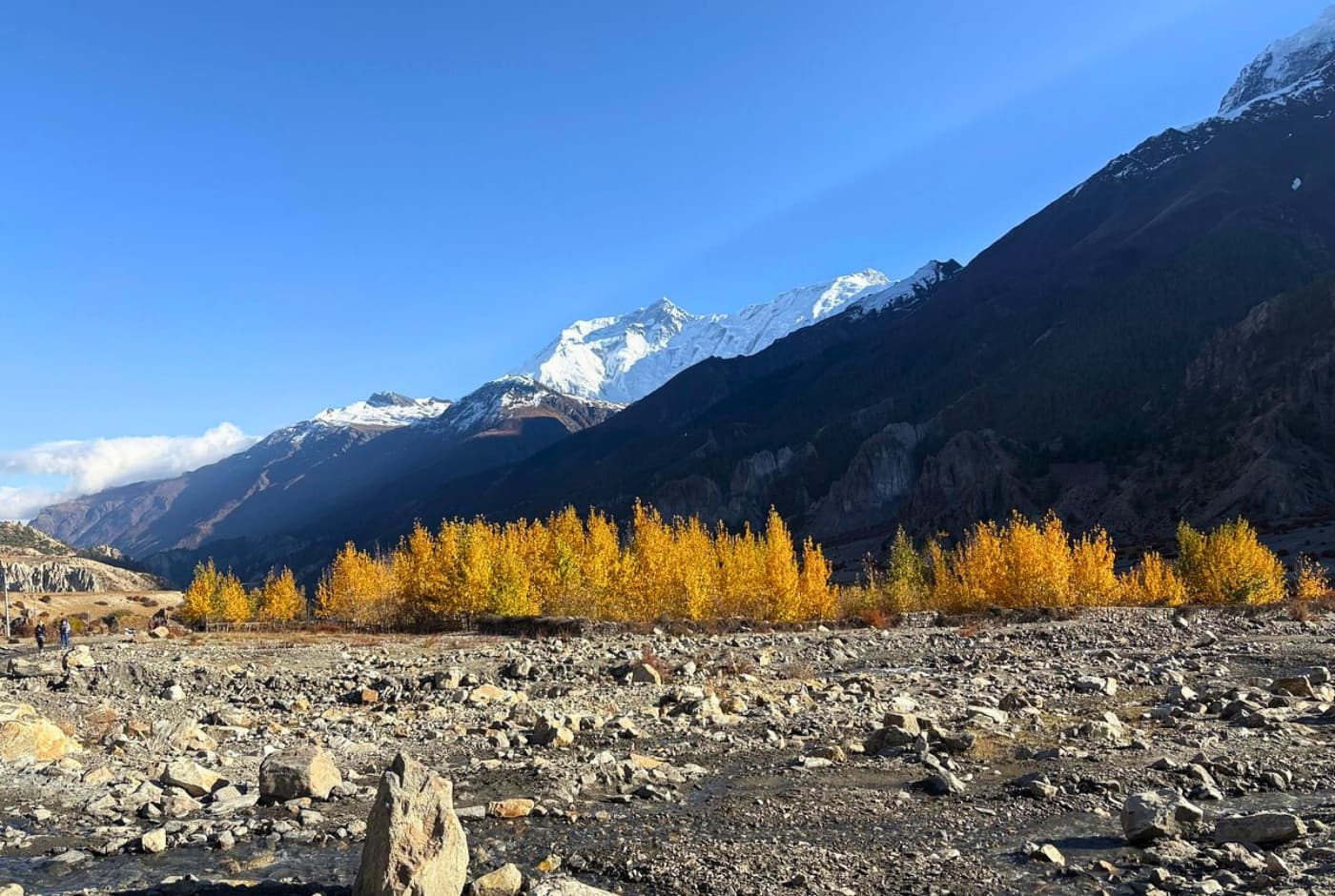
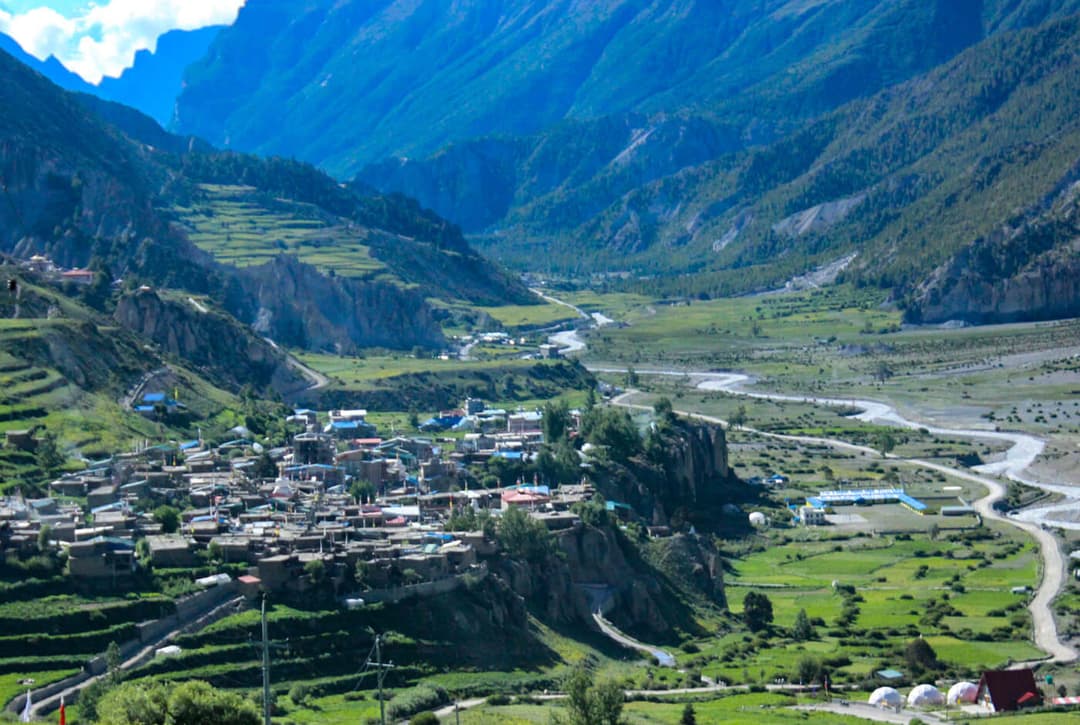
Manang sits below impressive mountain scenery, with views of Annapurna, Gangapurna, Tilicho, and the surrounding ridgelines. After arrival, you can rest, settle into the village, and prepare for the acclimatization day that follows.
Overnight stay will be at Tilicho Hotel or a similar local lodge in Manang.
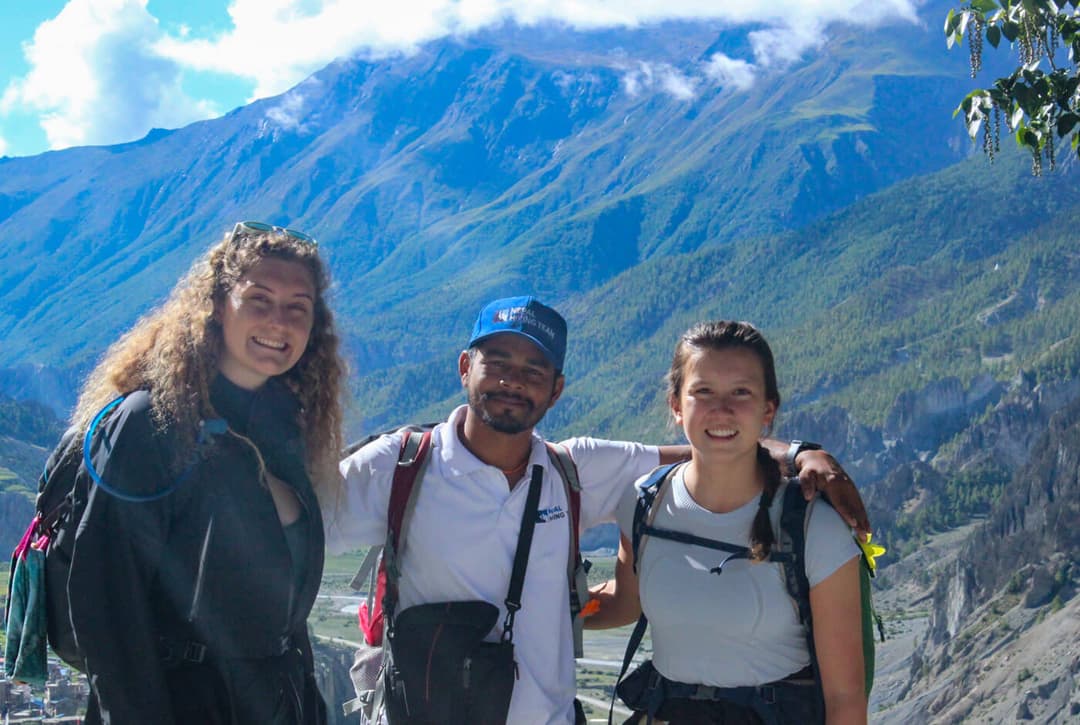
Today is an important acclimatization day in Manang before the trail climbs toward Yak Kharka, Thorong Phedi, and Thorong La Pass. Even if you feel well, this extra day helps your body adjust and prepares you for the highest section of the trek.
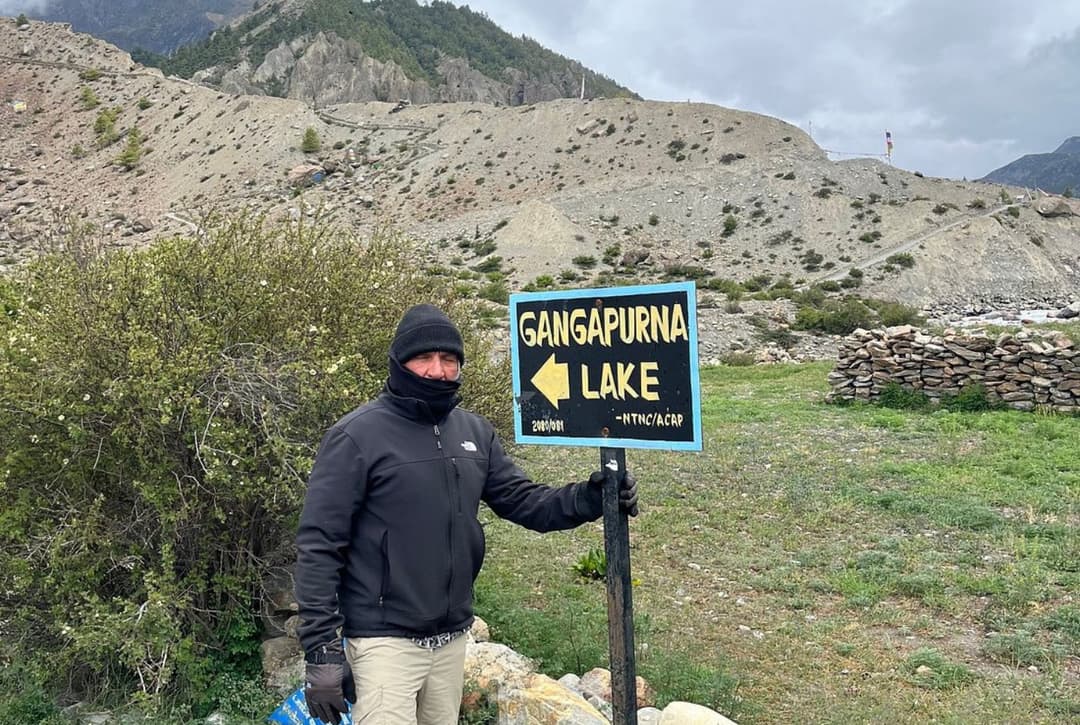
After breakfast, your guide will recommend a suitable acclimatization walk based on the group’s fitness, weather, and response to altitude. Common options include Gangapurna Lake, the Gangapurna Glacier viewpoint, Braga Monastery, or nearby viewpoints above the village.
These short hikes follow the “climb high, sleep low” approach, allowing you to gain some elevation during the day and return to sleep in Manang.
You may also attend the Himalayan Rescue Association’s altitude awareness briefing at evening, where trekkers learn about altitude sickness, warning signs, and safe trekking habits before crossing Thorong La Pass.
Overnight stay will be at Tilicho Hotel or a similar local lodge in Manang.
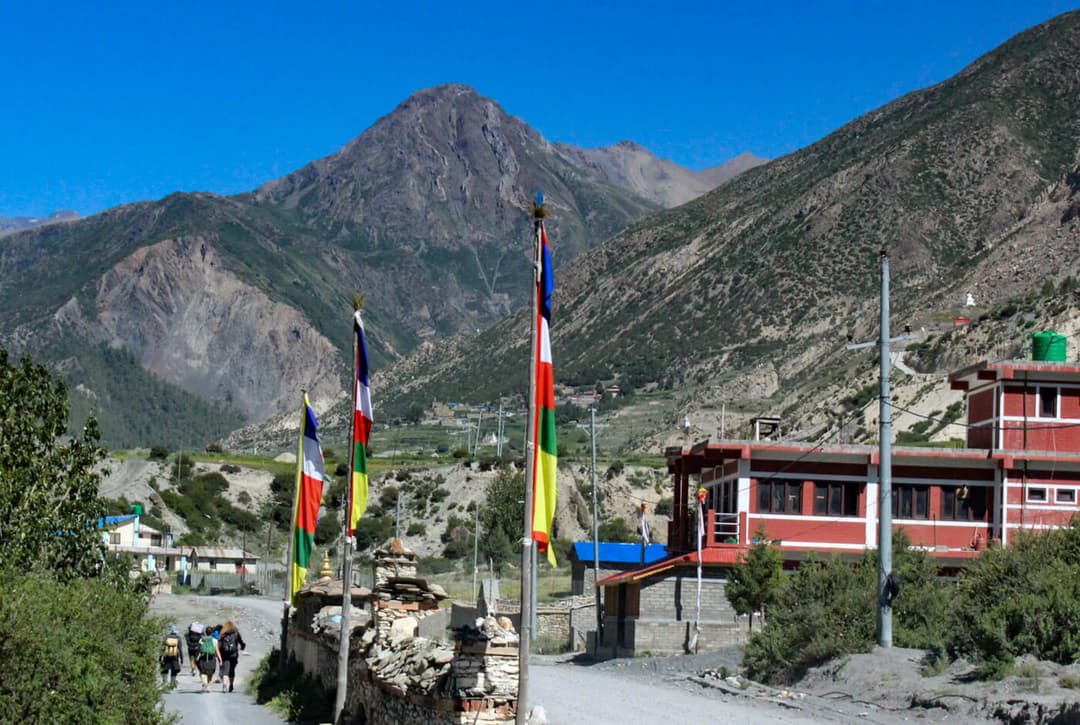
After breakfast, you will leave Manang and begin trekking toward the higher alpine section of the Annapurna Circuit. The walk is shorter than earlier trekking days, but the altitude makes a steady pace important.
The trail climbs gradually above the Marsyangdi Valley, passing Tengi and continuing toward Gunsang. The first part of the day involves the main elevation gain, so walking slowly and staying hydrated will help your body adjust.
As you move higher, the landscape becomes more open and rugged. Trees become fewer, the valley widens, and the trail passes through grazing areas used by yak herders during the warmer months.
From Gunsang, the route continues toward Yak Kharka through alpine meadows and high mountain terrain. Along the way, you may see yaks, blue sheep, mule trains, and distant views of Chulu East, Chulu West, and surrounding snow-covered peaks.
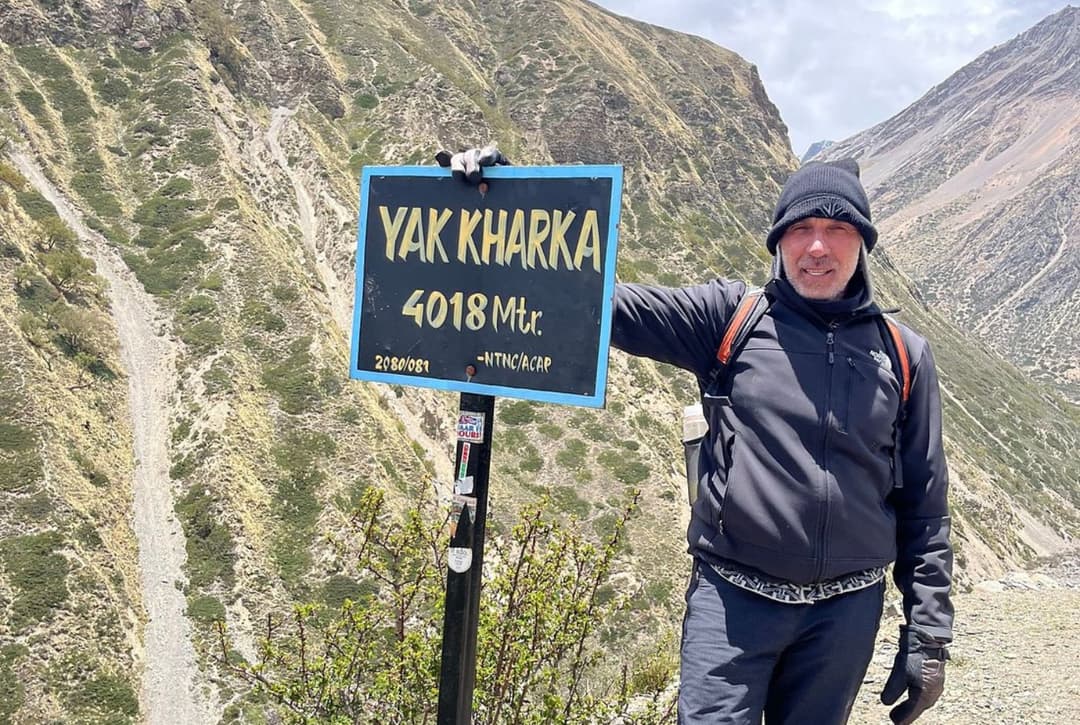
By early afternoon, you will reach Yak Kharka, a small high-altitude settlement used by trekkers and local herders. The rest of the day is for resting, keeping warm, and allowing your body to adjust before moving closer to Thorong La Pass.
Overnight stay will be at Hotel Thorong Peak or a similar local lodge in Yak Kharka.
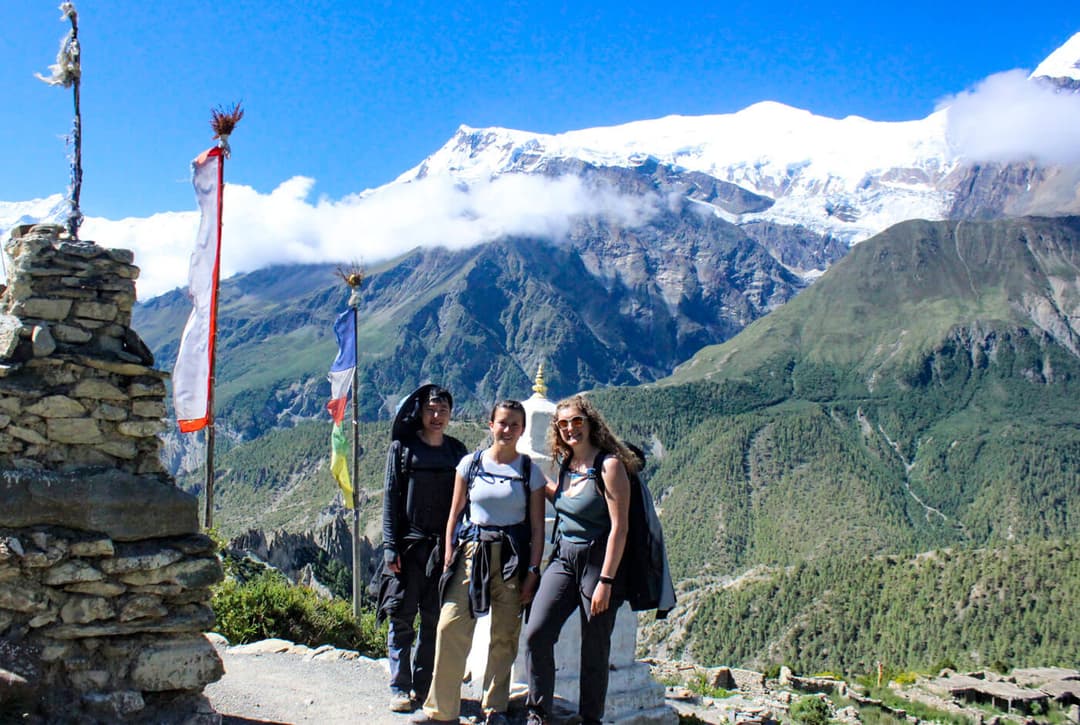
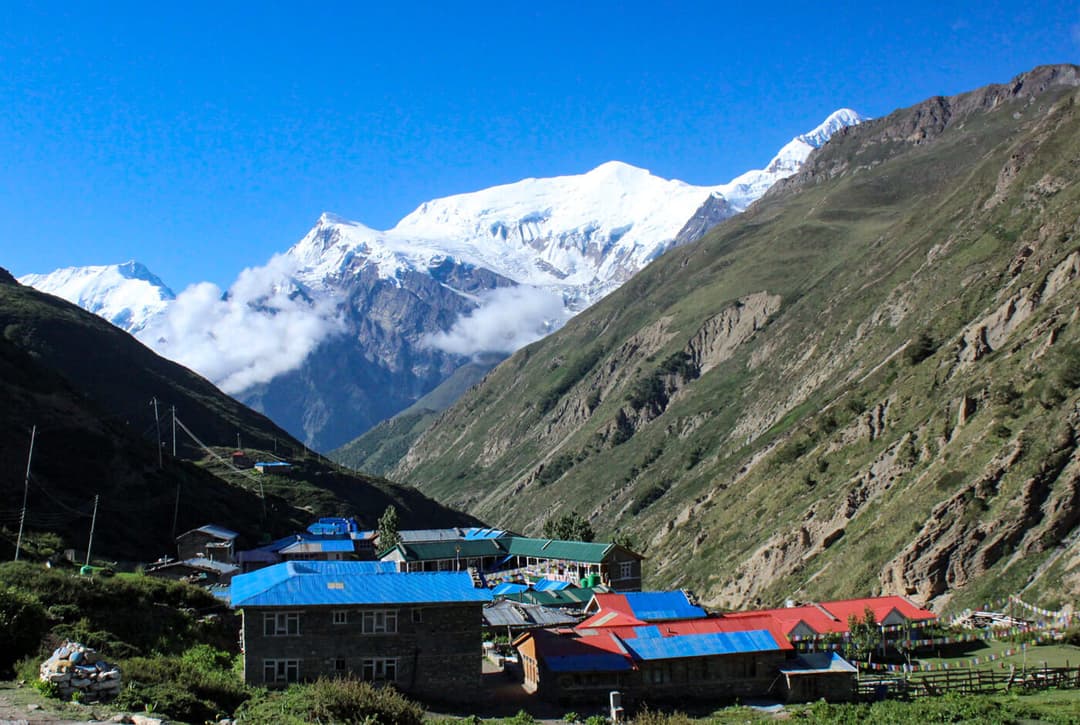
After breakfast, the trail continues toward Thorong Phedi, the final overnight stop before crossing Thorong La Pass. The distance is shorter than most trekking days, but the altitude makes the walk slower and more deliberate.
The route first climbs gradually across open alpine slopes toward Ledar. From here, the landscape becomes more rugged, with sparse vegetation, rocky terrain, and wide mountain views surrounding the trail.
After crossing the Jarsang Khola by suspension bridge, the path follows a narrow hillside section above the valley. This part requires careful footing, especially where the trail crosses loose rock and exposed slopes. Your guide will manage the pace and advise the group where extra care is needed.
The trail then reaches Thorong Phedi, a small settlement located below Thorong La Pass. After arrival, the rest of the day is used for rest, hydration, early dinner, and preparation for the pre-dawn start the following morning.
Some trekkers continue to High Camp, about 1 to 1.5 hours above Thorong Phedi. This shortens the pass-crossing day but means sleeping at a higher altitude. Your guide will decide the safest option based on weather, trail conditions, and the group’s health.
Overnight stay will be at Phedi Hotel or a similar lodge in Thorong Phedi.
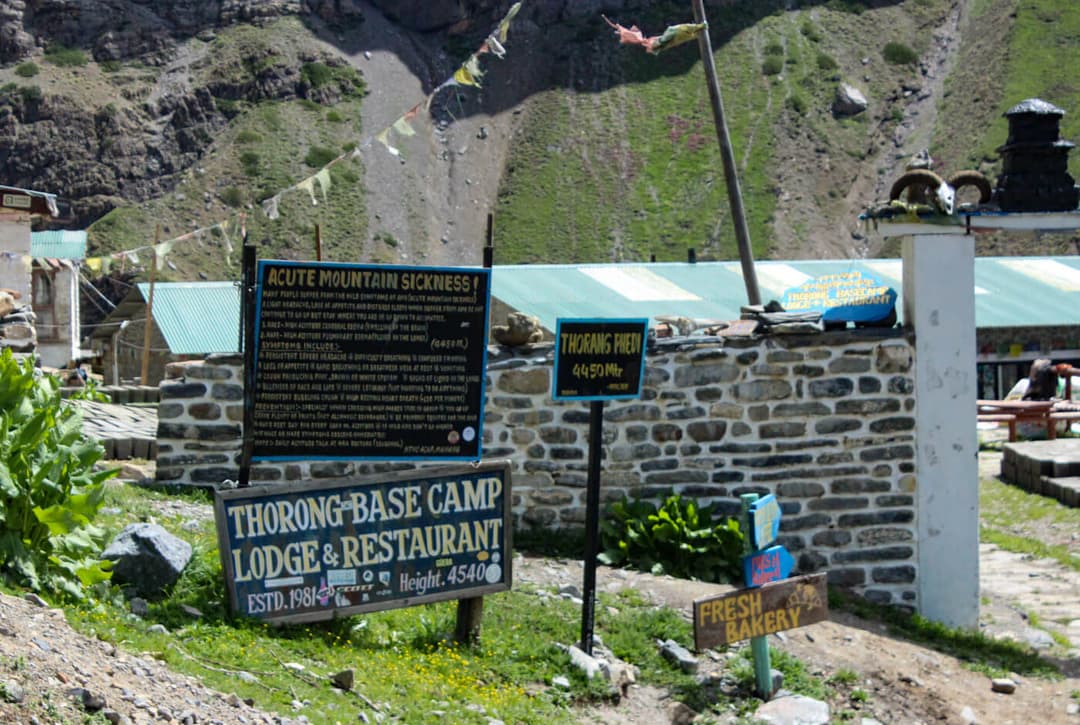
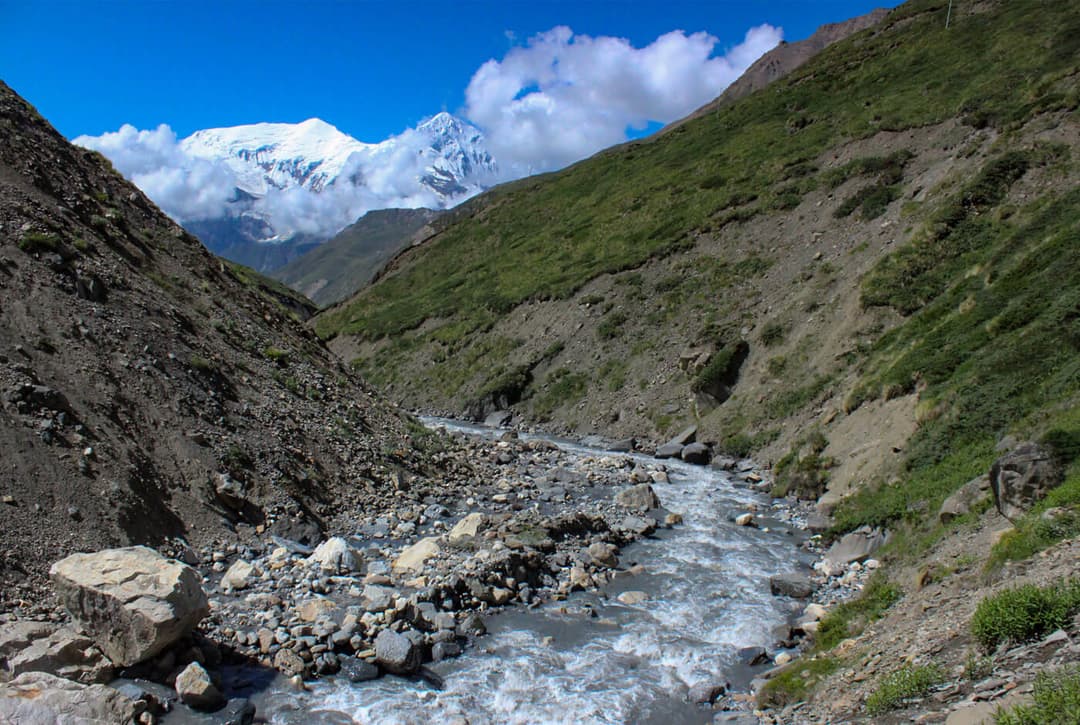
Today is the highest and most demanding day of the Annapurna Circuit Trek. You will cross Thorong La Pass, the major milestone of the journey, before descending into the dry Mustang side of the Annapurna region.
The day begins before sunrise, usually around 4:00 to 4:30 AM. With headlamps lighting the trail, you will climb slowly from Thorong Phedi toward High Camp and continue across rocky, high-altitude terrain toward Thorong La Pass. The morning can be very cold, and the trail may have snow or icy sections depending on the season.
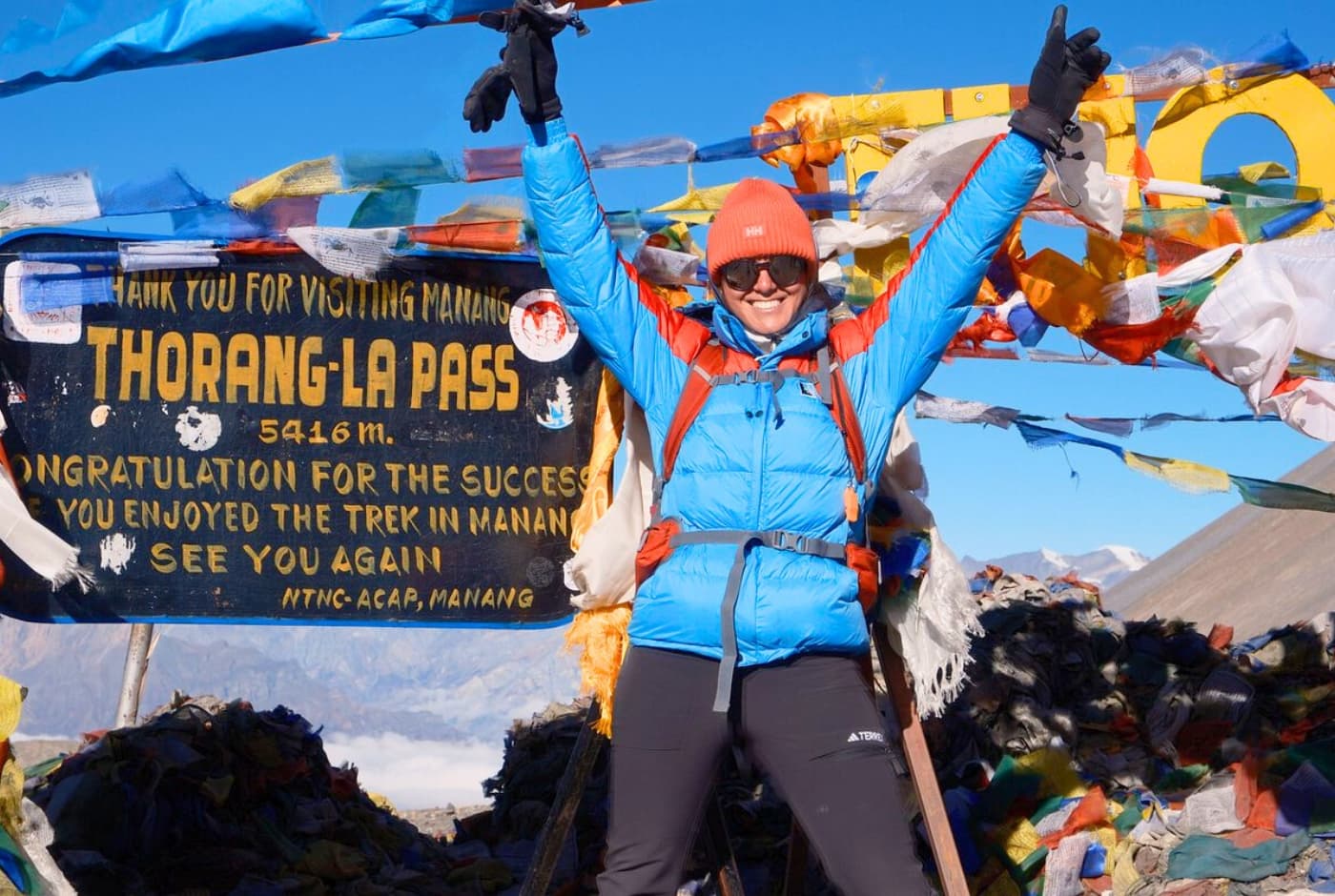
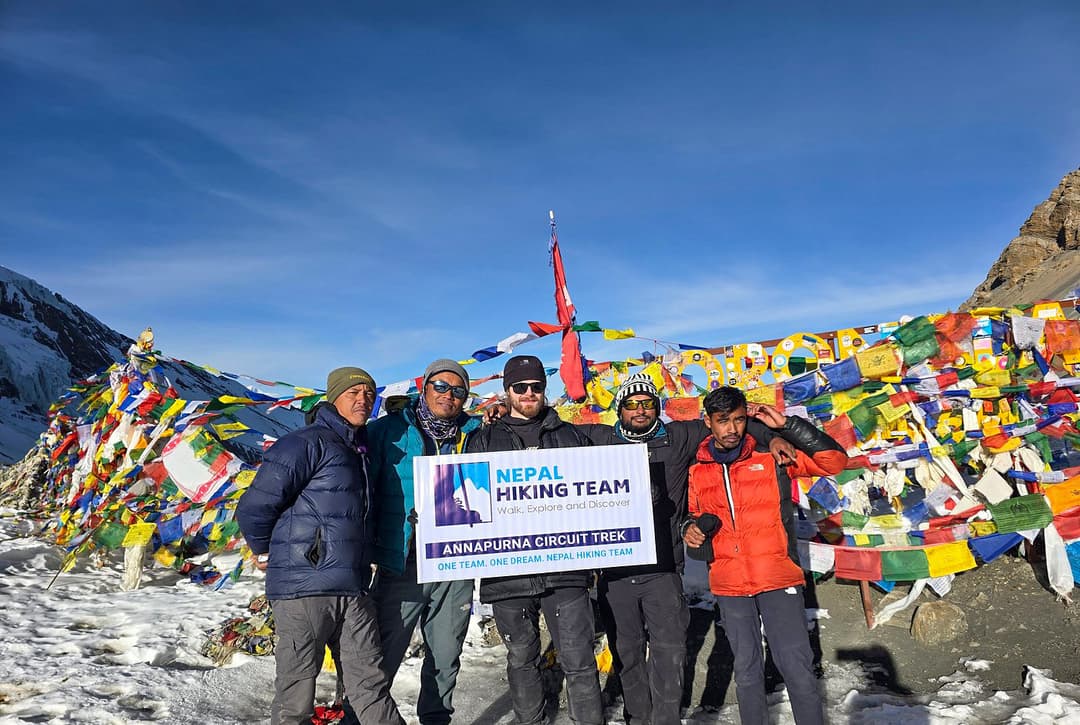
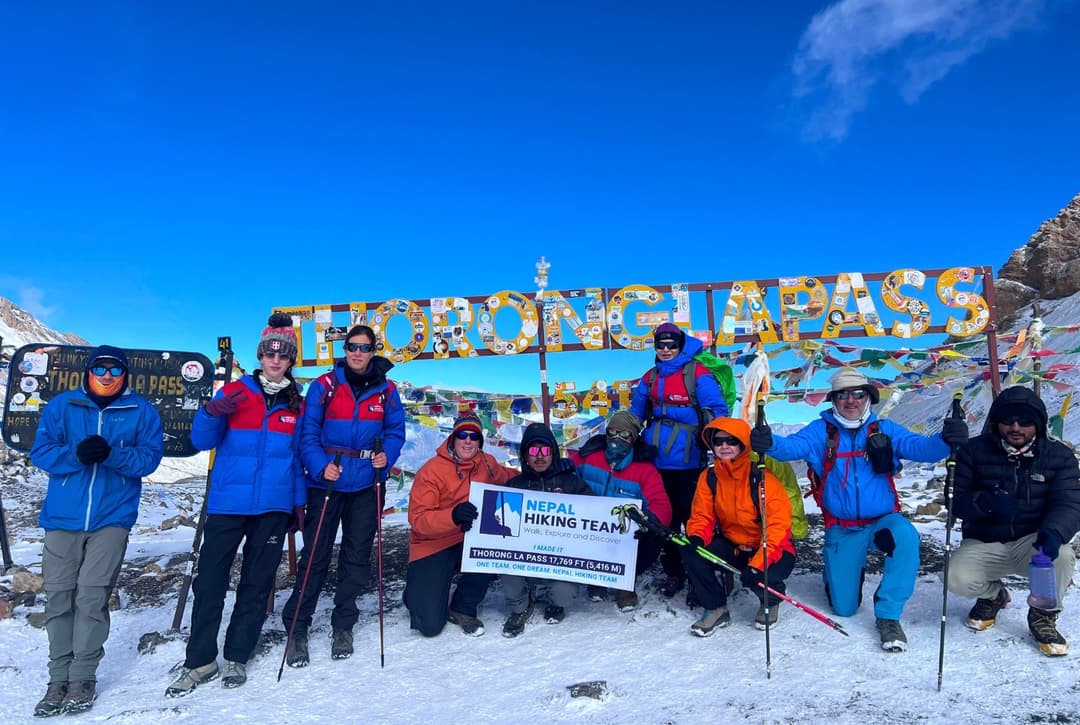
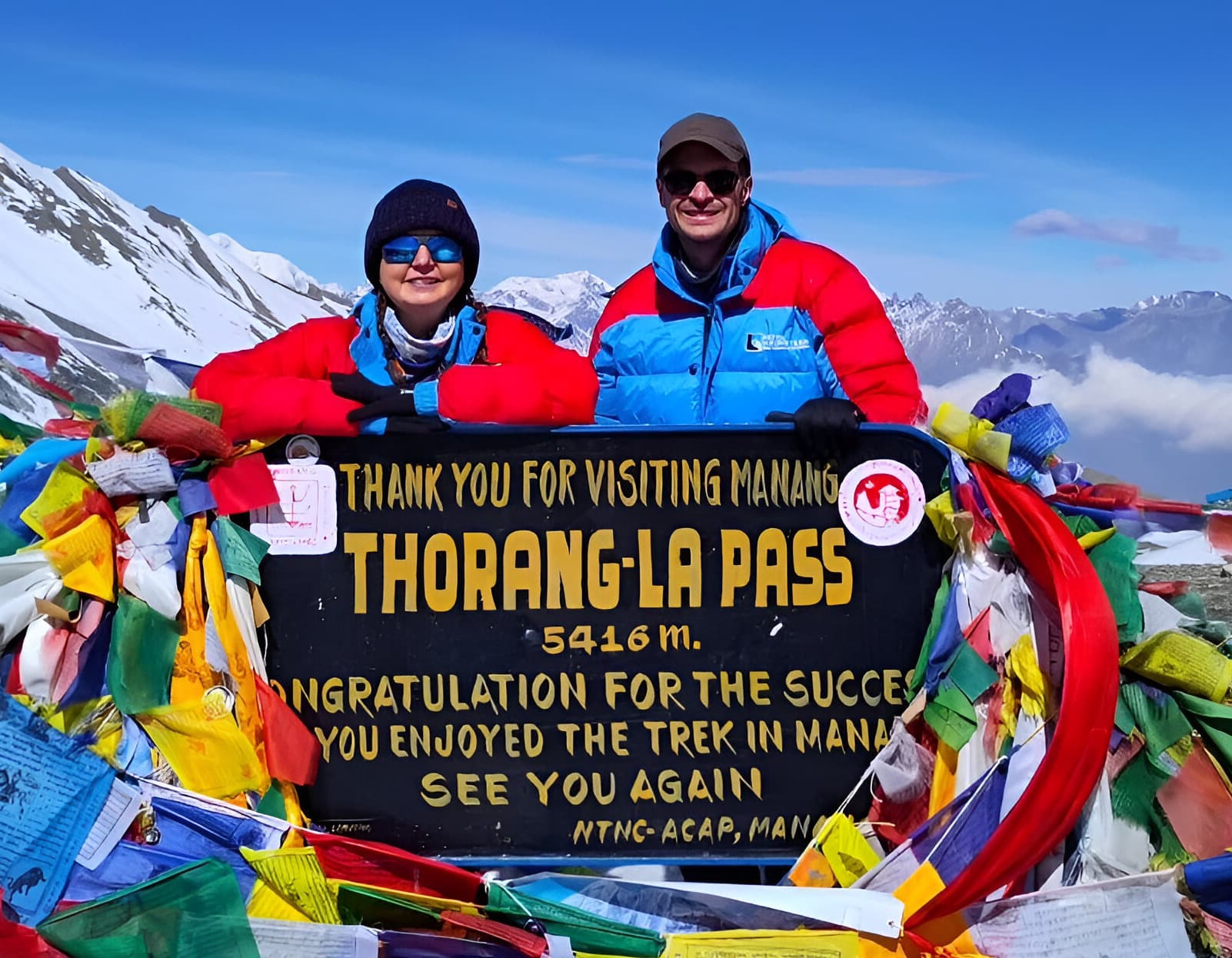
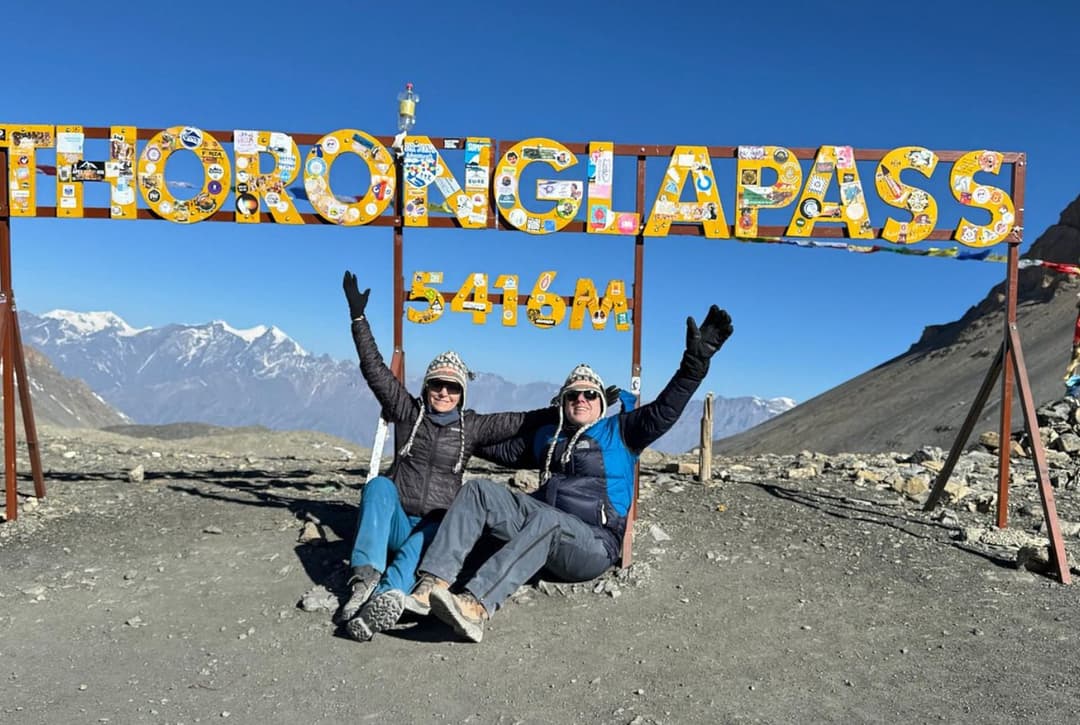
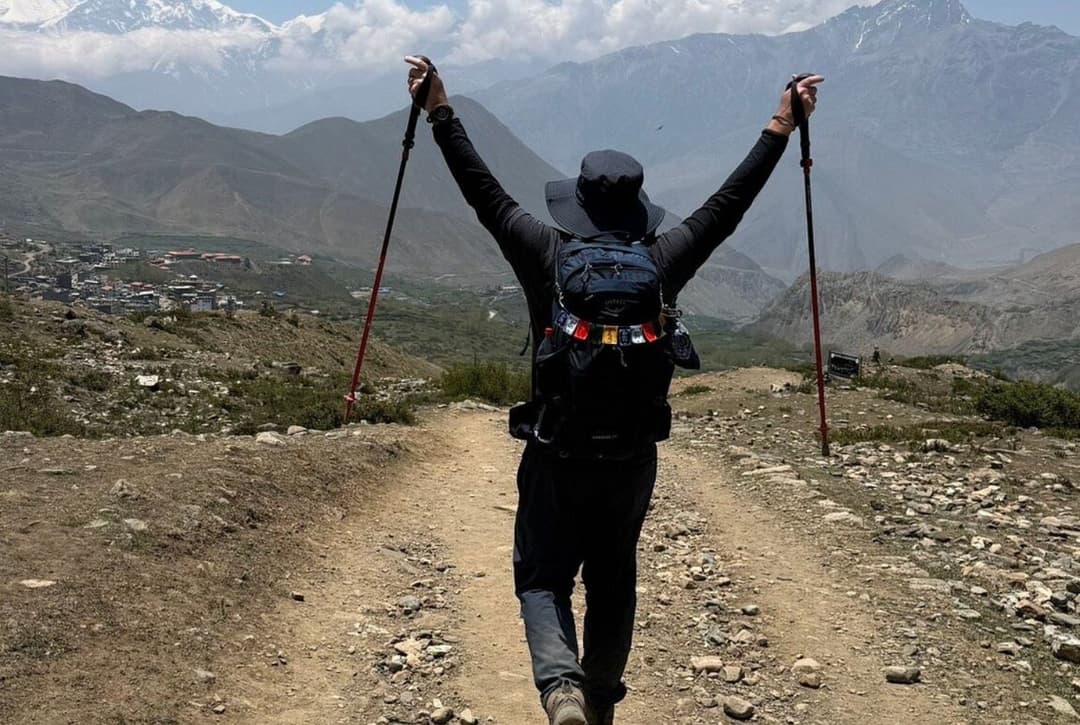
At this altitude, a steady pace is more important than speed. Your guide will manage rest stops, monitor the group, and keep the crossing on schedule before stronger afternoon winds develop. The final approach to Thorong La Pass feels slow because of the thin air, but reaching the top at 17,769 ft / 5,416 m is the greatest achievement of the trek.
The pass is marked by prayer flags and a signboard, with views of the Annapurna range, Dhaulagiri, and surrounding Himalayan peaks on clear days. After spending a short time at the top, you will begin the long descent toward Muktinath.
The descent is physically demanding and can be hard on the knees, especially when the trail is snowy, icy, muddy, or loose underfoot. Trekking poles are very helpful on this section.
You can visit Muktinath, an important sacred site for Hindus and Buddhists, known for its temple, 108 water spouts, and eternal flame.
Overnight stay will be at Eureka Hotel or a similar local lodge in Muktinath.
After breakfast in Muktinath, the trail follows the quieter Lupra Valley route instead of staying on the busier road to Jomsom. This gives the final trekking day a better trail experience, with open Mustang landscapes, dry hillsides, and wide mountain views.
The route passes near Jharkot before climbing steadily toward Lupra Pass, where you can see Dhaulagiri and the surrounding Mustang valley. After crossing the pass, the trail descends to Lupra, a village known for its strong Bon cultural influence.
From Lupra, the trail continues toward Jomsom through the dry Kali Gandaki Valley. This section can be windy and dusty, especially later in the day, so sunglasses and a buff or neck gaiter are useful.
By reaching Jomsom, you complete the main walking section of the Annapurna Circuit Trek. Jomsom is a major settlement and transport hub known for dry Mustang scenery, apple products, and its mountain airport.
Overnight stay will be at Himalayan Hotel or a similar local lodge in Jomsom.
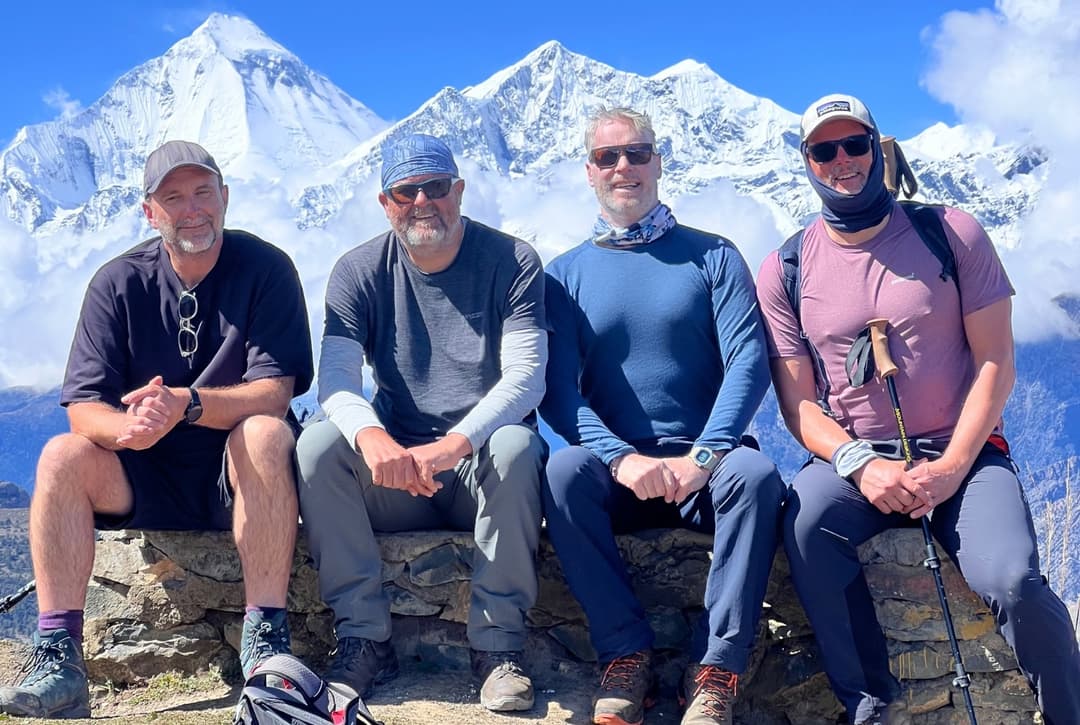
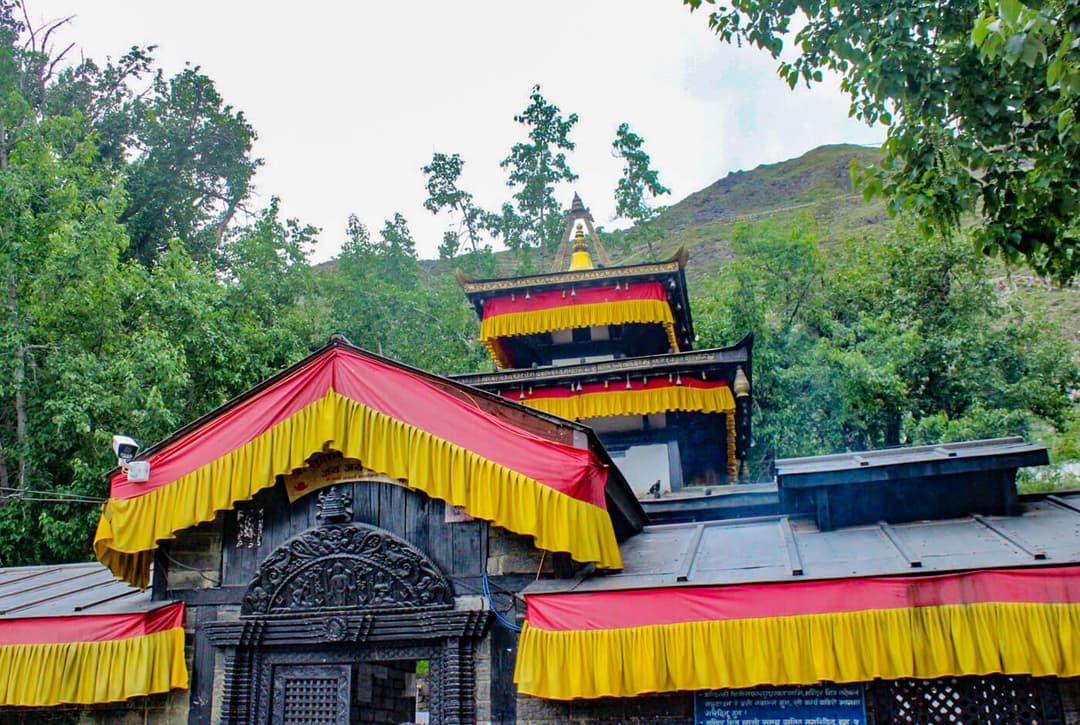
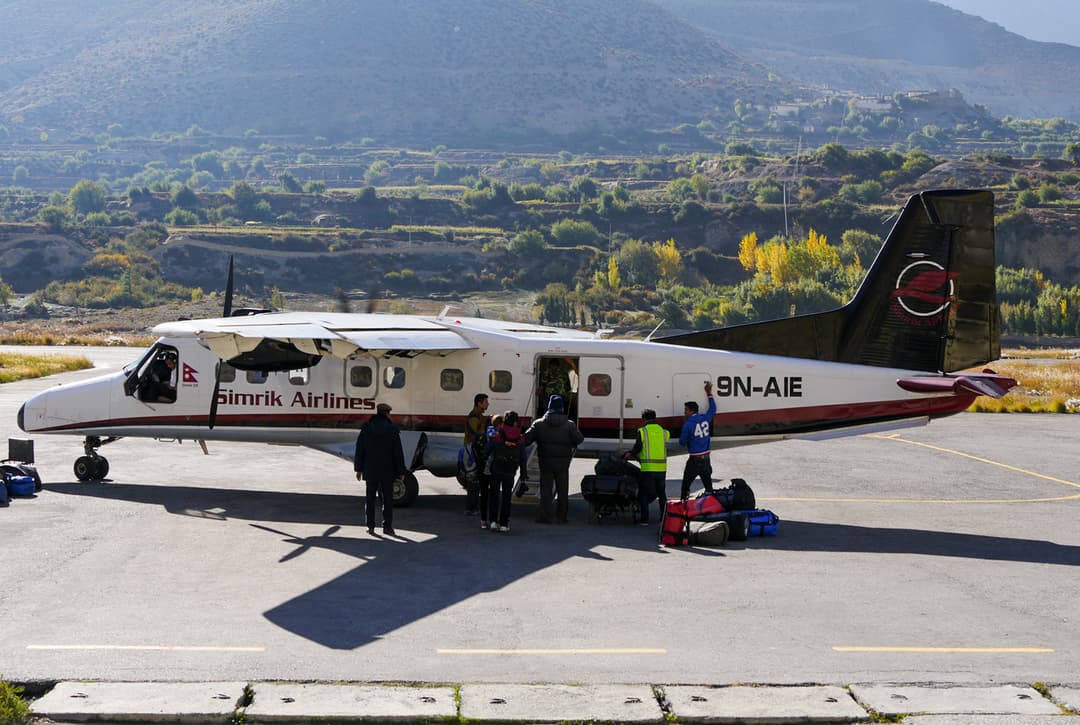
After breakfast, we will take a scenic flight from Jomsom to Pokhara, enjoying breathtaking aerial views of the Kali Gandaki Valley and surrounding Himalayan peaks, including Nilgiri and Dhaulagiri.
The flight takes approximately 20–25 minutes. Flights operate in the morning due to strong afternoon winds in Jomsom.
Upon arrival in Pokhara, we will transfer you to your hotel.
Overnight at Hidden Kingdom Hotel in Pokhara or a similar category hotel.
Flight Delays, Cancellations, and Alternative Road Transportation
Flights from Jomsom to Pokhara can occasionally be delayed or canceled due to unpredictable mountain weather, strong winds, or poor visibility. In such cases, Nepal Hiking Team will arrange alternative road transportation to ensure a smooth journey.
The scenic 6–7-hour drive from Jomsom to Pokhara follows the beautiful Kali Gandaki Valley, passing through Marpha, Ghasa, Tatopani, and Beni. Along the way, enjoy breathtaking mountain views, charming villages, and dramatic landscapes before arriving in Pokhara.
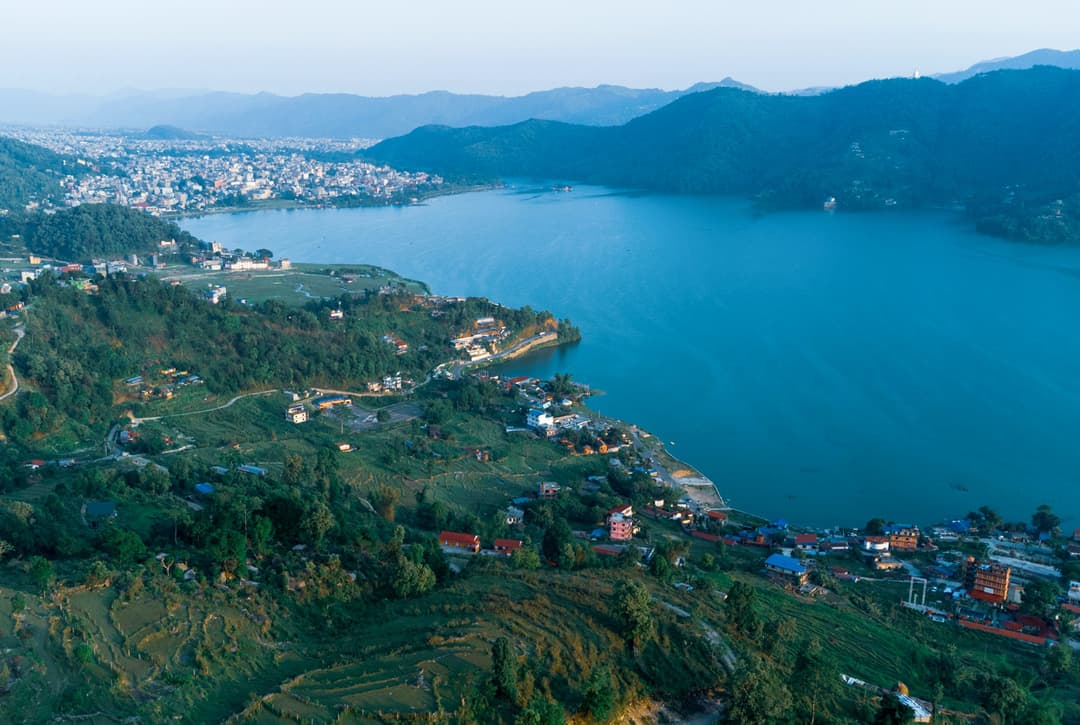
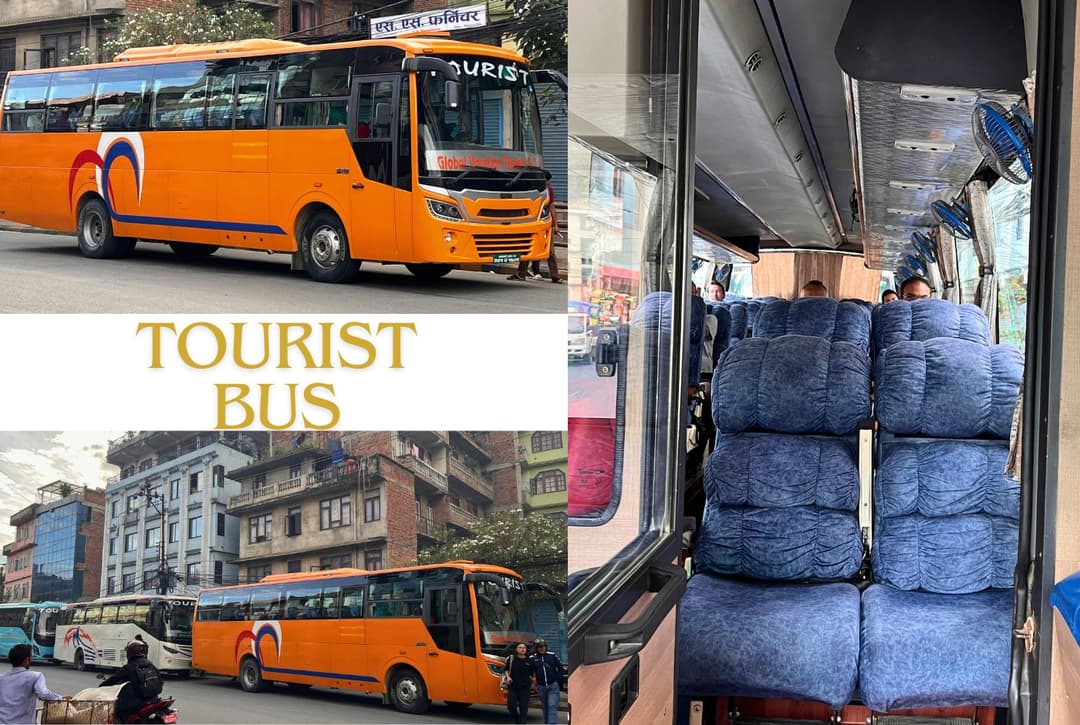
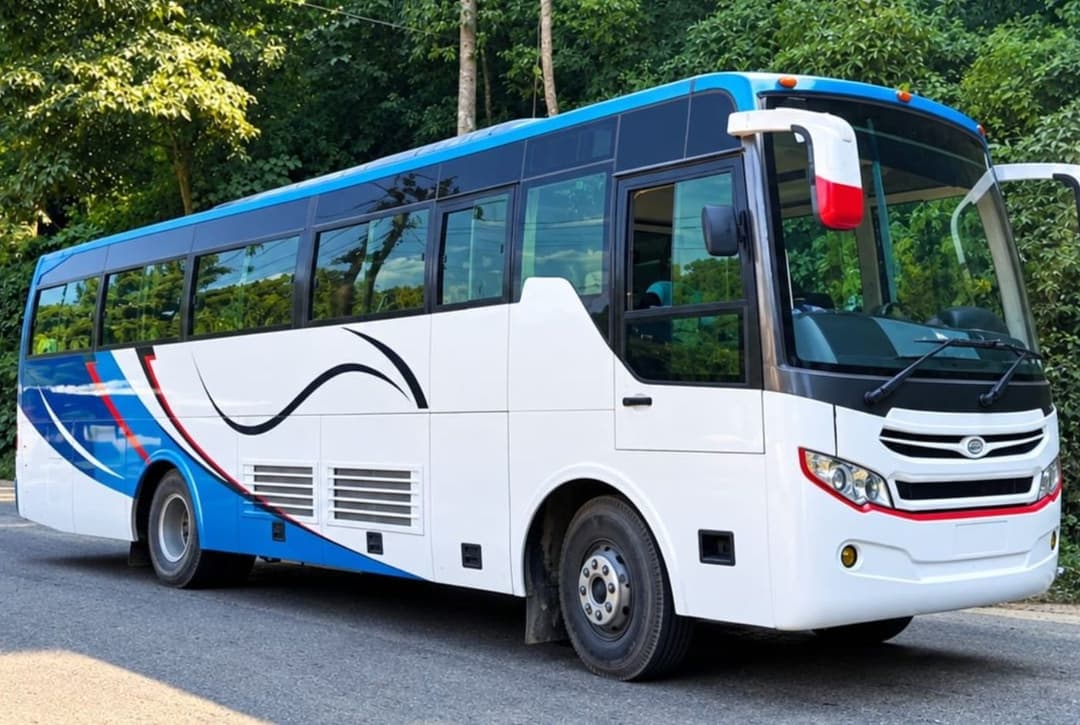
After breakfast in Pokhara, you will begin the return journey to Kathmandu by tourist bus. The drive follows the Prithvi Highway, passing river valleys, roadside towns, terraced hillsides, and rural settlements along the way.
The journey usually takes around 7 to 8 hours, depending on traffic and road conditions. From the road, you may see the Trishuli River, hillside villages, and the cable car route leading toward Manakamana Temple.
Upon arrival in Kathmandu, you will be transferred to your hotel.
During post-trek feedback session, Nepal Hiking Team will provide your trek completion certificate in recognition of your Annapurna Circuit journey and Thorong La Pass crossing.
At the scheduled time, our representative will transfer you from your hotel to Tribhuvan International Airport, usually about three hours before your flight. This gives enough time for check-in, security, and departure formalities.
Your Annapurna Circuit Trek with Nepal Hiking Team concludes with your final airport transfer.
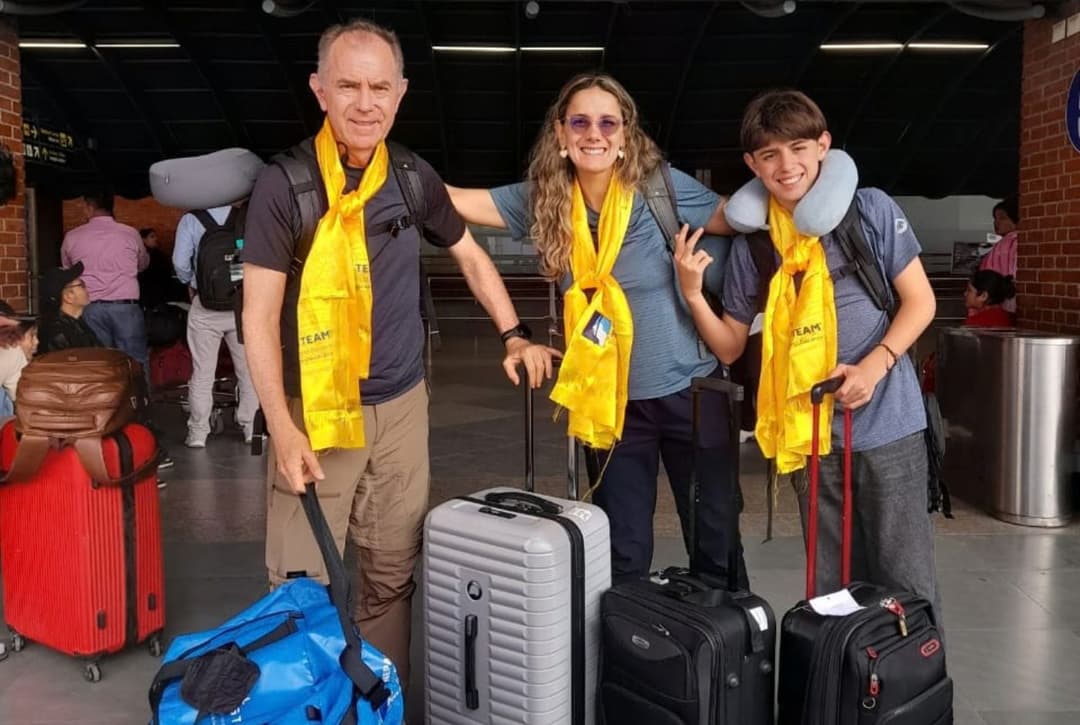
Your 14-day Annapurna Circuit Trek with Nepal Hiking Team means choosing a trusted Annapurna Circuit trekking agency with experienced guides, transparent pricing, responsible porter support, and reliable safety practices. From the upper trail through Ngawal to Manang, Thorong La Pass, Muktinath, and Jomsom, every detail is planned with care so you can focus on the trail, the mountains, and the achievement of completing one of Nepal’s classic trekking routes.
Nepal Hiking Team’s 14-day Annapurna Circuit Trek starts from USD 1,250 per person. This price covers the main trek arrangements, including permits, accommodation, meals during the trek, transportation, guide, porter support, and essential logistics.
Trekkers should carry around NPR 25,000 to 35,000 for personal expenses during the trek. This amount usually covers hot drinks, snacks, Wi-Fi, charging, hot showers, boiled water, and small purchases along the trail.
Only Nepali currency is accepted at most guesthouses, teahouses, and small shops along the route. ATMs are available in places such as Besisahar, Chame, Manang, Muktinath, and Jomsom, but they may not always work reliably, so it is best to exchange or withdraw enough Nepalese rupees before leaving Kathmandu.
The Annapurna Conservation Area Permit (ACAP) is required for the entire Annapurna Circuit Trek because the route passes through the Annapurna Conservation Area.
The ACAP fee is NPR 3,000 per person for foreign trekkers and NPR 1,500 per person for SAARC nationals. Nepal Hiking Team arranges the required permit before the trek begins, so you do not need to visit the permit office yourself in Kathmandu or Pokhara.
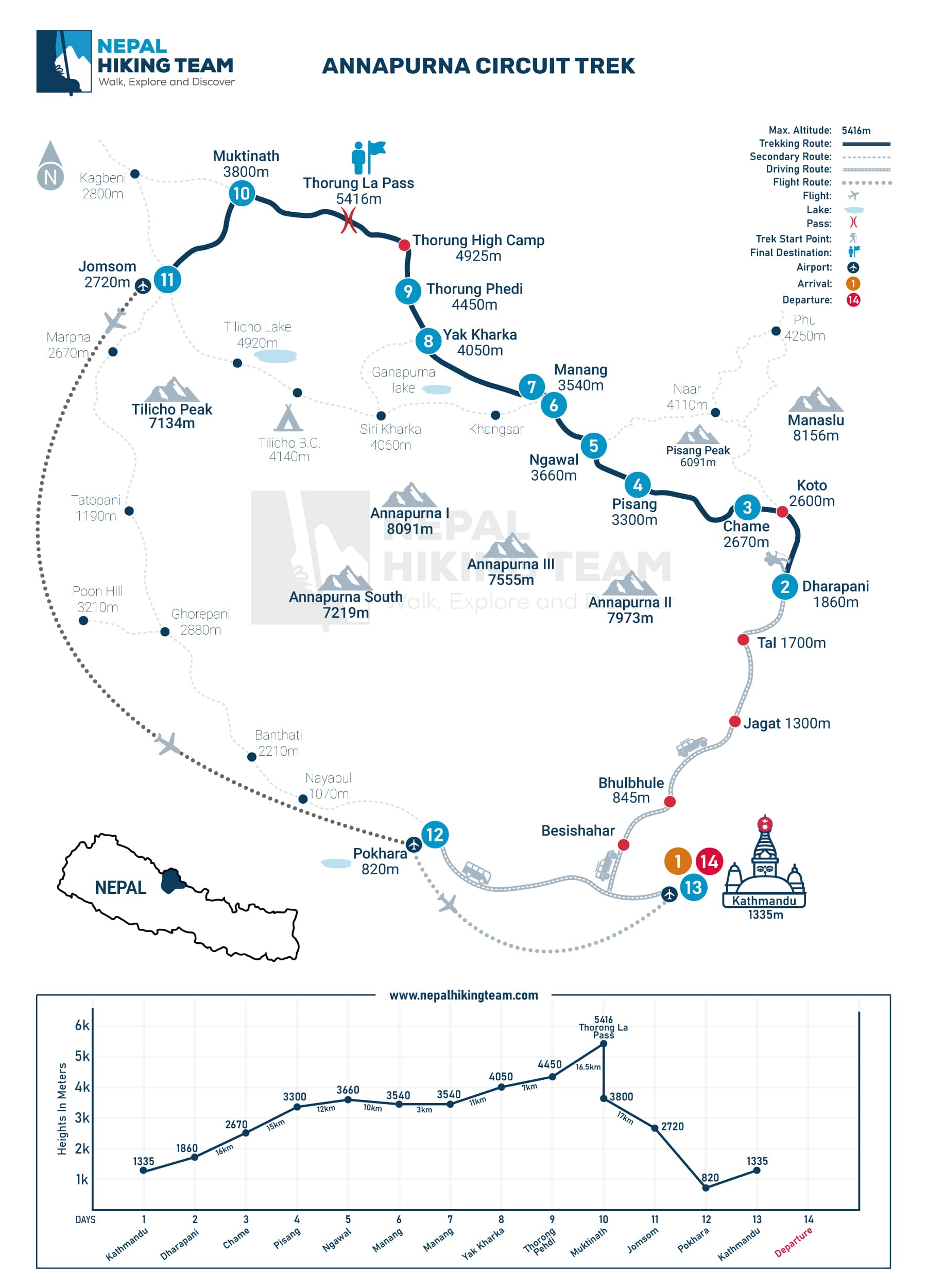
The Annapurna Circuit Trek route covers the main trail from Dharapani to Jomsom, passing through Chame, Upper Pisang, Ngawal, Manang, Yak Kharka, Thorong Phedi, Thorong La Pass, Muktinath, and Lupra Valley before ending in Jomsom.
Most trekking days involve around 5 to 7 hours of walking, with daily distances varying by altitude, terrain, and acclimatization needs. Shorter walking days around Manang, Yak Kharka, and Thorong Phedi help support a safer approach before crossing Thorong La Pass.
For a detailed route map, day-by-day distance breakdown, elevation profile, and walking sections, read our full guide here: Annapurna Circuit Trek Map.
The Annapurna Circuit Trek begins with a drive from Kathmandu to Dharapani, which usually takes around 8 to 9 hours. This road journey follows the highway to Besisahar before continuing into the Marsyangdi Valley by mountain road.
After completing the trek in Jomsom, the plan is to take the Jomsom to Pokhara flight, which takes around 25 minutes. If the flight is cancelled due to weather, strong winds, or operational reasons, the return journey to Pokhara will be arranged by private vehicle.
From Pokhara, the trip continues back to Kathmandu by road via comfortable tourist bus. A Pokhara to Kathmandu flight can also be arranged at an additional cost of USD 115.
The best time for the Annapurna Circuit Trek is during spring (March to May) and autumn (September to November). These months give the best balance of visibility, trail safety, temperature, and pass-crossing conditions, especially around Thorong La Pass.
Spring brings warmer daytime temperatures, longer daylight hours, and blooming rhododendrons in the lower forested sections. Higher areas around Manang, Yak Kharka, and Thorong La may still hold snow early in the season, but the route is usually manageable with proper guidance and preparation.
Autumn is the clearest and most settled trekking season after the monsoon. The air is cleaner, the trails are drier, and mountain visibility is often excellent across the Annapurna, Manang, Mustang, and Dhaulagiri ranges. It is also one of the busiest seasons on the route.
The trek is possible in winter, but cold temperatures, icy sections, and snow near Thorong La Pass can make the journey more demanding. Monsoon trekking is quieter and greener in the lower valleys, though rain, landslides, leeches, and road delays can affect the early sections before reaching the drier Manang and Mustang regions.
Accommodation on the Annapurna Circuit Trek is in local teahouse lodges. Rooms are usually twin-sharing with simple beds, blankets, and shared bathrooms, while facilities become more basic in higher places such as Yak Kharka and Thorong Phedi.
Meals are served at the teahouses and usually include dal bhat, noodles, soups, fried rice, pasta, potatoes, eggs, porridge, pancakes, tea, and coffee. Vegetarian meals are widely available, and vegan or gluten-free meals can be arranged with advance notice.
For drinking water, we recommend using boiled, filtered, or purified water instead of buying plastic bottled water. Carrying a reusable bottle and purification tablets is useful, especially in higher villages where water costs increase.
Manang is the main acclimatization stop on the Annapurna Circuit Trek before the trail climbs toward Yak Kharka, Thorong Phedi, and Thorong La Pass. Spending an extra day here helps your body adjust before entering the most demanding section of the route.
During the acclimatization day, trekkers can take short hikes to Gangapurna Lake, Braga Monastery, or nearby viewpoints above the village. These walks support the “climb high, sleep low” approach while giving wider views of the Manang Valley and surrounding peaks.
The rest day in Manang also gives time to recover, check your condition, and prepare for the gradual climb toward Thorong La Pass. For a detailed guide, read our blog on what to do during acclimatization day in Manang.
Thorong La Pass is the highest and most demanding point of the Annapurna Circuit Trek. The crossing starts early in the morning from Thorong Phedi to avoid strong afternoon winds and to allow enough time for the long descent to Muktinath.
The climb is steady and slow because of the altitude, so pacing is more important than speed. Your guide will monitor the group closely and help manage rest stops, weather conditions, and trail safety throughout the crossing.
After reaching the pass, the trail descends into the Mustang side of the Annapurna region. This section brings a sharp change in landscape, from high alpine terrain to dry valleys and open mountain scenery.
The Annapurna Circuit has road access in several sections, but our route uses quieter walking trails and NATT routes where practical. These paths help reduce time on motor roads and keep the trek closer to the older village trails, forest sections, and scenic ridge routes.
After crossing Thorong La Pass, the trail enters the Mustang side, where the landscape becomes drier and windier. Afternoon winds are common around Muktinath, Lupra Valley, and Jomsom, so early starts are useful in this part of the trek.
A windproof jacket, sunglasses, and a buff or neck gaiter are helpful for this section. Your guide will choose the safest and most suitable trail based on weather, road conditions, and the group’s pace.
Read our genuine feedback from past travelers with Nepal Hiking Team sourced from TripAdvisor, Google, Facebook, and Trustpilot.
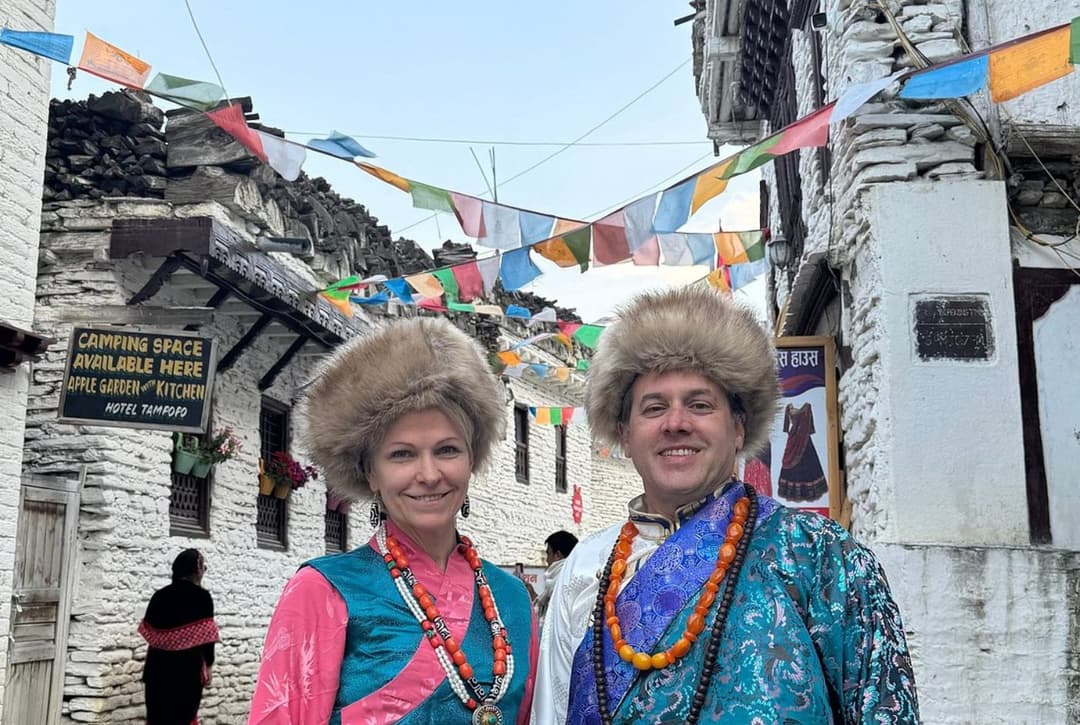
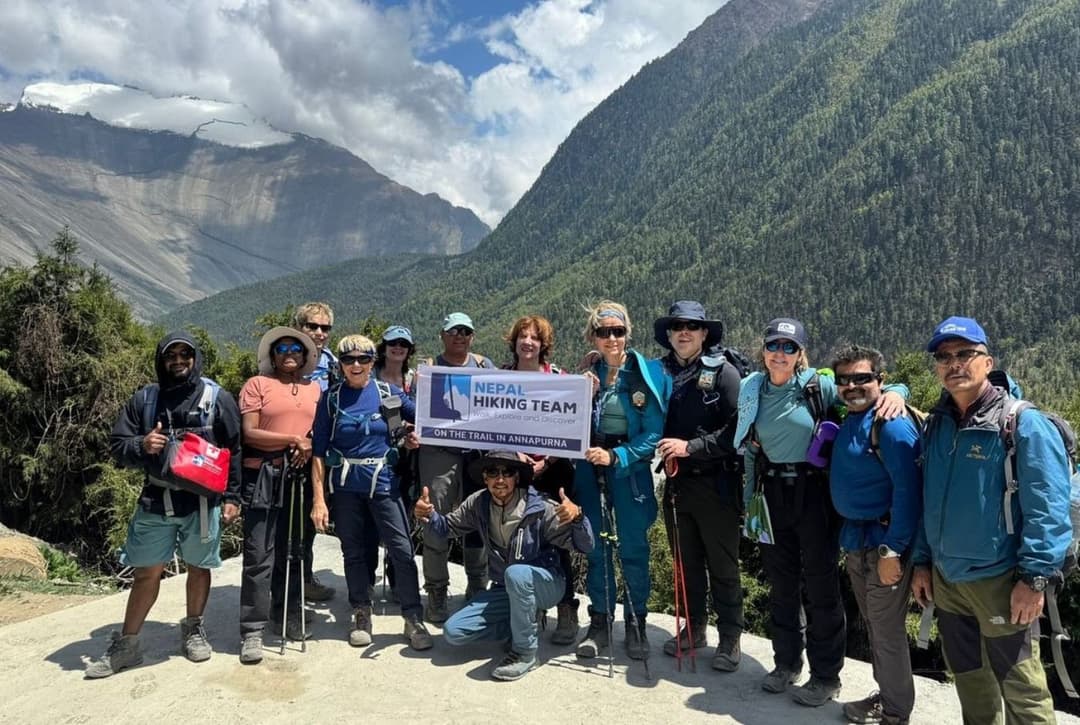
My wife and I completed the Classic Annapurna Circuit trek with 8 other friends. This was our first time visiting Nepal and our first Himalayan trek. The Nepal Hiking Team and our lead guide Arjun and assistant guides Gokul and Shankar were absolutely amazing right from their greeting till the end.
I hope to be back in Nepal soon and will certainly book our trek with the Nepal Hiking Team. You can’t go wrong with their expert assistance. Tell them what you desire, and they will try to make it happen if it is possible.
 +
+ +
+ +
+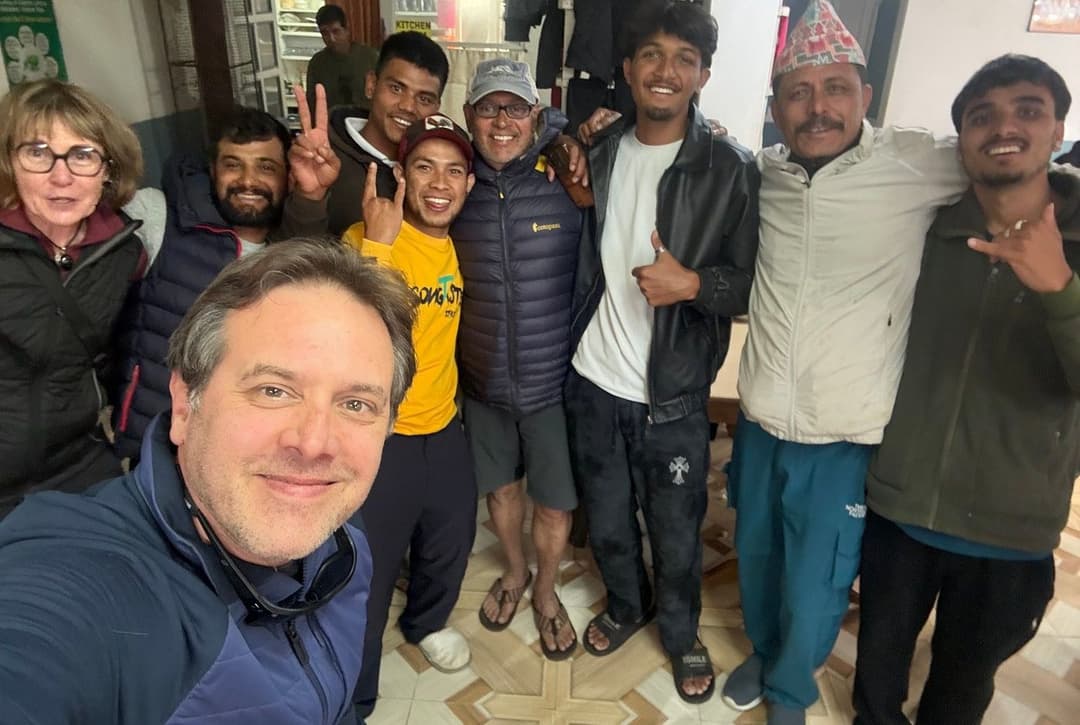 +
+We completed the Annapurna Circuit Classic Trek with BP Sigdel as our lead guide. He has exceptional trekking experience and excellent English, and he looked after us like family. From greeting us at the airport with flower garlands to our goodbyes with blessings and wishing us a safe journey home with protective shawls, we felt cared for and will cherish this beautiful trip of a lifetime.
I will forever be grateful to Gokul for guiding me and helping me during the trek. Thank you to Shankar for the excellent care, helping us at the teahouses and navigating the teahouse menus and meals. Our five porters were superhuman, fun, and always cheerful! Dipesh, Krishna, Ratna, Vinod, and Aman, so much gratitude!
Absolutely 5 stars! Your hospitality was superb! We had an amazing time with your guidance, and hopefully we’ll be able to visit Nepal again, as one trek with you is not enough! Thank you!
 +
+ +
+ +
+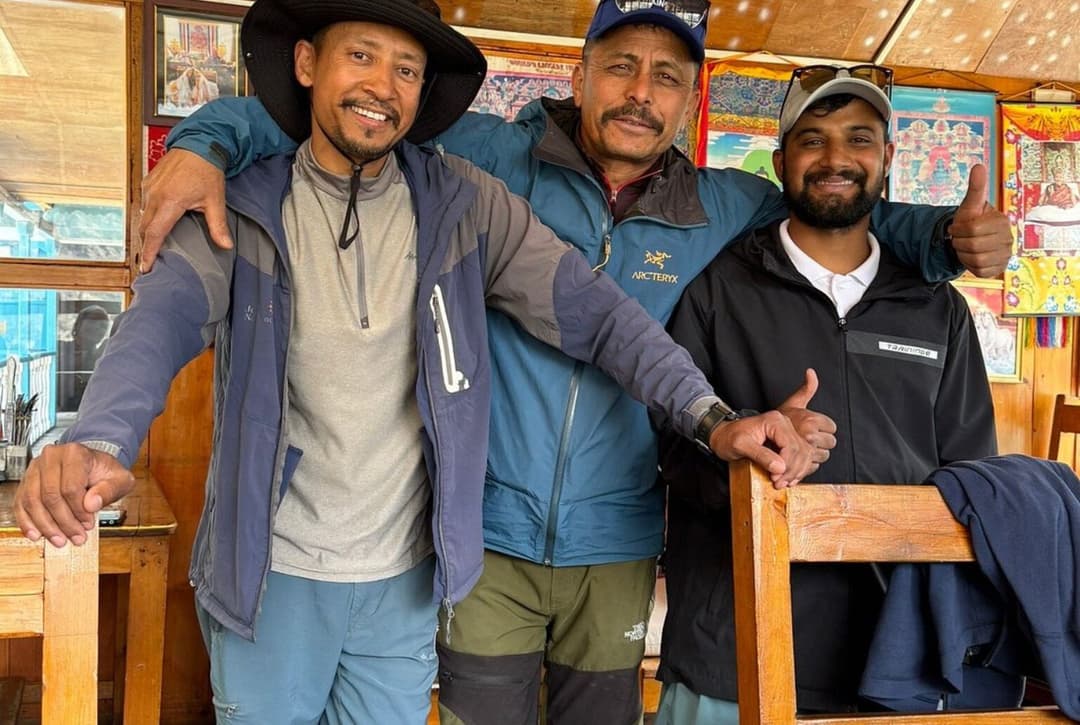 +
+Our guide Govinda was professional, knowledgeable,our porter Bashu and very caring throughout the trek. They ensured our safety, shared useful information about the local culture and mountains, and always made sure we were comfortable.
I highly recommend the Nepal Hiking Team to anyone visiting the Annapurna Circuit. Thank you for the wonderful hospitality!
 +
+ +
+ +
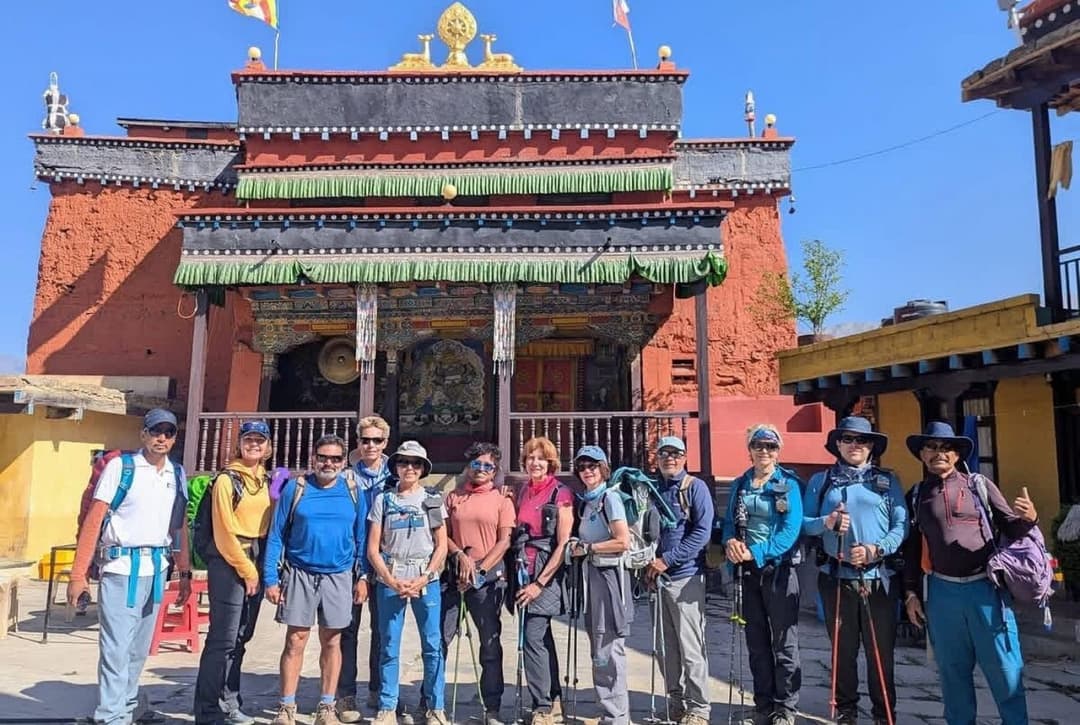
+I completed a 14-day hiking tour with 10 friends on the Annapurna Circuit.
The lead guide, Arjun, and assistant guides, Shania and Gokul, made sure that we were safe and aided us along the way. The porters were extremely cheerful while carrying our luggage and travelling with us.
I would highly recommend the Nepal Hiking Team for your Annapurna Circuit Trekking experience in Nepal.
Everything from start to finish was organized very well and our guide and porters were great.
All around a fantastic experience travelling to the Annapurna Circuit with the guides and porters of the Nepal Hiking Team. Highly recommended!!
The Annapurna Circuit Trek is a moderate to challenging trek. The difficulty comes from steady altitude gain, daily walking hours, mixed terrain, and the crossing of Thorong La Pass (17,769 ft / 5,416 m). With proper acclimatization, steady pacing, and guide support, most fit trekkers can complete the route safely.
You should be comfortable walking steadily on uphill, downhill, and uneven mountain trails for consecutive days. Building stamina before arrival makes a real difference. We recommend regular hiking, stair climbing, cycling, jogging, or long walks for several weeks before the trek to prepare your legs and cardiovascular fitness for the demands of the trail.
Fit beginners can complete the Annapurna Circuit Trek with proper preparation, but this is not an easy first trek. We recommend building walking fitness before arrival, preparing for consecutive trekking days, and following the guide's pace carefully, especially above Manang.
The Annapurna Circuit Trek is suitable for active travelers who want a longer Himalayan route with varied landscapes, cultural villages, and a major high pass crossing. It appeals to trekkers interested in remote mountain scenery, Gurung and Tibetan-influenced communities, and the challenge of reaching Thorong La Pass (17,769 ft / 5,416 m). Trekkers with previous hiking experience will feel most at home, but well-prepared beginners with good fitness can also join.
Yes, the Annapurna Circuit Trek is possible in winter, but it requires better preparation. The lower trails are quieter, but higher sections near Thorong Phedi and Thorong La Pass can be very cold, with possible snow or ice on the trail.
Yes, the trek is possible during monsoon, but rain can affect the lower sections of the route. Trails may become muddy, road travel can take longer, and mountain views may be less consistent, although the Manang and Mustang sides are relatively drier.
Weather around Thorong La Pass is cold, windy, and changes quickly, especially early in the morning. We start the crossing before sunrise to reduce exposure to stronger afternoon winds and allow enough time to descend safely to Muktinath.
Snow is possible near the higher sections of the route, especially in winter, early spring, and late autumn. Your guide will assess trail conditions and advise you on the safest approach.
We recommend carrying around NPR 25,000 to 35,000 for personal expenses during the trek. This usually covers hot drinks, snacks, Wi-Fi, charging, hot showers, boiled water, and small personal purchases.
Tipping is not mandatory, but it is a common way to thank your guide and porter for their support throughout the trek. Most trekkers offer tips at the end of the journey based on service, effort, and personal satisfaction.
You can book the Annapurna Circuit Trek by completing our online booking form and paying a 20% deposit. Once we receive your booking details and deposit, we will send you a confirmation email with the next steps.
You can pay the remaining balance after arriving in Kathmandu, before the trek begins. Payment can be made in USD cash, by credit card, or by bank transfer.
Please note that a 3.5% transaction fee is charged for card payments.
The 20% deposit is non-refundable, but it can be used as lifetime credit for a future trip with Nepal Hiking Team. If you have already paid the full amount, the remaining balance is refundable based on our cancellation policy.
Our Annapurna Circuit Trek group size (group departure) is usually 2 to 10 trekkers. We keep groups small, so the guide can manage pace, safety, and daily trail coordination properly.
Private group size depends on the number of trekkers in your own group.
For every 5 members, an extra assistant guide is provided to ensure our standard quality delivery.
Yes, your departure is guaranteed once your booking is confirmed. We only reschedule trips in rare situations such as natural disasters, political strikes, or serious weather-related disruptions.
Yes, solo travelers can join our fixed group departures. This is a good option if you want to share the trail experience and reduce the cost compared with a private solo trip.
The cost difference is also to be taken into account.
Yes, you can book a private trek tailored just for you or your group. At Nepal Hiking Team, we also cater to each guest with flexible schedules, personalised itineraries, and dedicated attention.
We drive from Kathmandu to Dharapani by private vehicle. The journey usually takes around 8 to 9 hours, following the highway to Besisahar and then the mountain road into the Marsyangdi Valley.
Fixed-wing air transport is arranged for the transfer from Jomsom to Pokhara, with an approximate flight duration of 25 minutes. However, this option is not always reliable due to unpredictable weather conditions and potential disruptions to airline operations, which may result in flight delays or cancellations.
The drive covers approximately 160 km and takes around 6-7 hours, depending on road and weather conditions. Although the journey is longer, it offers an opportunity to experience the beautiful Kali Gandaki Valley and the villages along the way.
The standard 14-day ACT package includes the return journey from Pokhara to Kathmandu by tourist bus. A private vehicle or domestic flight can be arranged at an additional cost if you prefer a faster or more comfortable return.
Accommodation on the Annapurna Circuit Trek is in local teahouse lodges. Rooms are twin-sharing with basic beds, blankets, and shared bathrooms, while facilities become simpler at higher elevations.
Single rooms are available in lower villages, depending on lodge availability. At higher places such as Yak Kharka, Thorong Phedi, and Muktinath, room availability is limited, so sharing may be required.
Teahouses serve common trekking meals such as dal bhat, noodles, soups, pasta, fried rice, potatoes, eggs, pancakes, porridge, tea, and coffee. Meals are simple, filling, and suitable for long walking days.
Yes, vegetarian, vegan, and gluten-free meals can be arranged during the trek. Please inform us in advance so your guide can coordinate meal choices with the teahouses along the route.
Yes, drinking water is available along the route. We recommend using boiled, filtered, or purified water instead of buying plastic bottled water, especially in higher villages.
Wi-Fi is available in many teahouses for an extra charge, but the connection can be slow or unreliable, especially after Manang and around the higher trail sections.
Yes, charging is available in most teahouses, usually for an extra fee at higher elevations. We recommend carrying a power bank as electricity can be limited during bad weather or busy trekking periods.
You should pack layered clothing, trekking boots, warm gloves, a hat, sunglasses, rain protection, toiletries, personal medicine, sunscreen, a water bottle, and a headlamp. Warm layers are especially important for Manang, Yak Kharka, Thorong Phedi, and the high pass crossing. You can refer to our detailed blog on What to Pack for Annapurna Circuit Trek in Nepal.
Microspikes are not required in every season, but they are useful in winter, early spring, and late autumn if higher sections of the trail have ice or compact snow. Your guide will advise based on current trail conditions.
An additional porter can be arranged for USD 220 per porter.
Yes, most travelers can get a Nepal tourist visa on arrival at Tribhuvan International Airport in Kathmandu. Please make sure your passport is valid for at least six months from your arrival date. You can refer to our Nepal Visa Information blog.
For a 14-day Annapurna Circuit Trek, a 30-day Nepal Visa (cost USD 50) will remain sufficient.
Yes, airport pickup and drop-off are included in the package. Our representative will meet you outside the arrival terminal holding a Nepal Hiking Team placard and transfer you to your hotel.
We use a comfortable 3-star category hotel in Kathmandu, such as Hotel Woodapple and Spa or a similar standard property. Hotel upgrades can be arranged on request at an additional cost.
Yes, extra hotel nights in Kathmandu or Pokhara can be arranged before or after the trek. Please let us know your arrival and departure plans so we can arrange the additional nights accordingly.
Yes, you can leave extra luggage safely at your hotel in Kathmandu while trekking. You only need to carry your trekking essentials in your duffel bag and daypack.
Yes, travel insurance is mandatory for the Annapurna Circuit Trek. Your policy should cover high-altitude trekking, medical treatment, emergency evacuation, helicopter rescue, trip interruption, and baggage loss.
You can explore the top insurance providers for trekking in Nepal.
If you feel unwell before crossing Thorong La Pass, your guide will assess your condition and choose the safest option. This may include resting longer, descending to a lower altitude, changing the plan, or arranging further support if needed.
Helicopter evacuation is not possible in Thorong La Pass. In case of emergency, you must descend to Thorong High Camp or Thorong Phedi depending on weather conditions.
Our guides monitor your pace, appetite, sleep, energy level, and response to altitude throughout the trek. They also check trail conditions, weather changes, and group readiness before entering higher sections of the route.
Regular oxygen-level in monitored after dinner.
Yes, our guides carry a basic first aid kit during the Annapurna Circuit Trek. The kit includes common supplies such as bandages, antiseptic, blister treatment, pain relief, stomach medicine, cold and cough medicine, oral rehydration salts, and basic items for minor cuts or trail discomfort.
Trekkers should still bring their own personal medication and any doctor-prescribed medicine they may need during the trek.
In an emergency, your guide will assess the situation, provide immediate support, and contact our Kathmandu office to coordinate the safest response. Depending on the case, this may involve rest, descent to a lower altitude, medical consultation, vehicle transfer, or helicopter evacuation.
Nepal Hiking Team is a trusted trekking company with experienced licensed guides, dependable porter support, clear logistics, and strong route knowledge across the Annapurna region. We take care of every detail so you can focus on the trail.
Choosing a right company for your Annapurna Circuit Trek is very critical. In our blog: How to Choose the best trekking agency for Annapurna Circuit Trek, we have discussed factors to consider during the agency selection process.
Yes, Nepal Hiking Team guides are government-licensed and experienced in leading high-altitude treks in Nepal. They understand trail conditions, acclimatization needs, lodge coordination, and safety management throughout the Annapurna Circuit route.
Our itinerary follows a steady pace with an overnight stop at Ngawal and a full acclimatization day in Manang before moving toward Thorong La Pass. This helps trekkers adjust gradually before entering higher altitude sections. Learn more about Acute Mountain Sickness (AMS) in our detailed blog.
Yes, we follow responsible porter practices including fair load limits, suitable gear, proper food and accommodation, fair salary, and porter insurance. We provide one porter for every two trekkers. Nepal Hiking Team promotes Sustainable Tourism in Nepal, practicing ethical porter protocols.
Our itinerary includes the scenic upper route through Gyaru and Ngawal, a proper acclimatization day in Manang, the Thorong La Pass crossing, and the quieter Lupra Valley route to Jomsom (following the road-free section) instead of the Kagbeni option. These choices create a better-paced, more rewarding trek with stronger cultural and landscape variety throughout the route.