17 Days
Check Our Risk-Free Booking Policy View Details

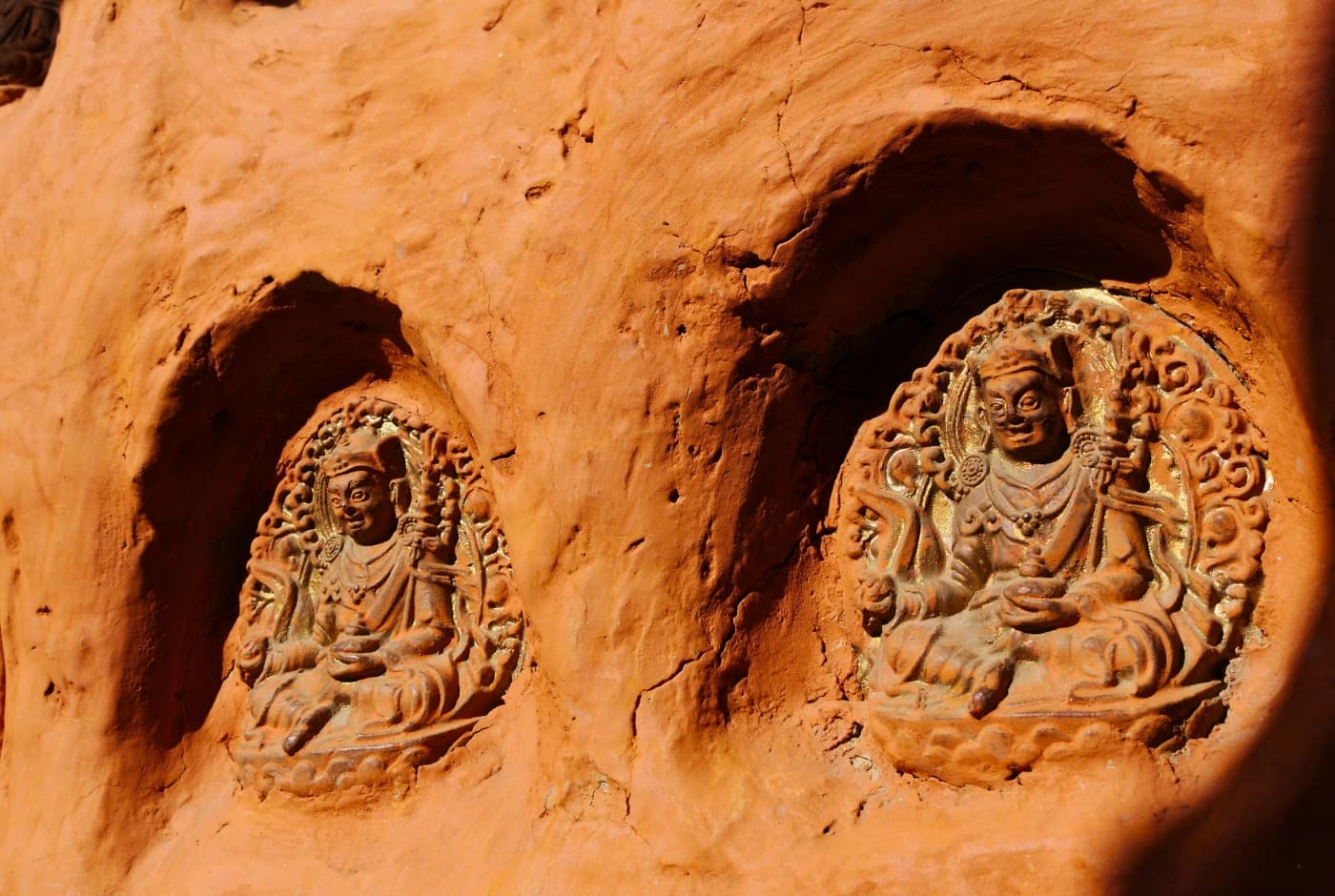
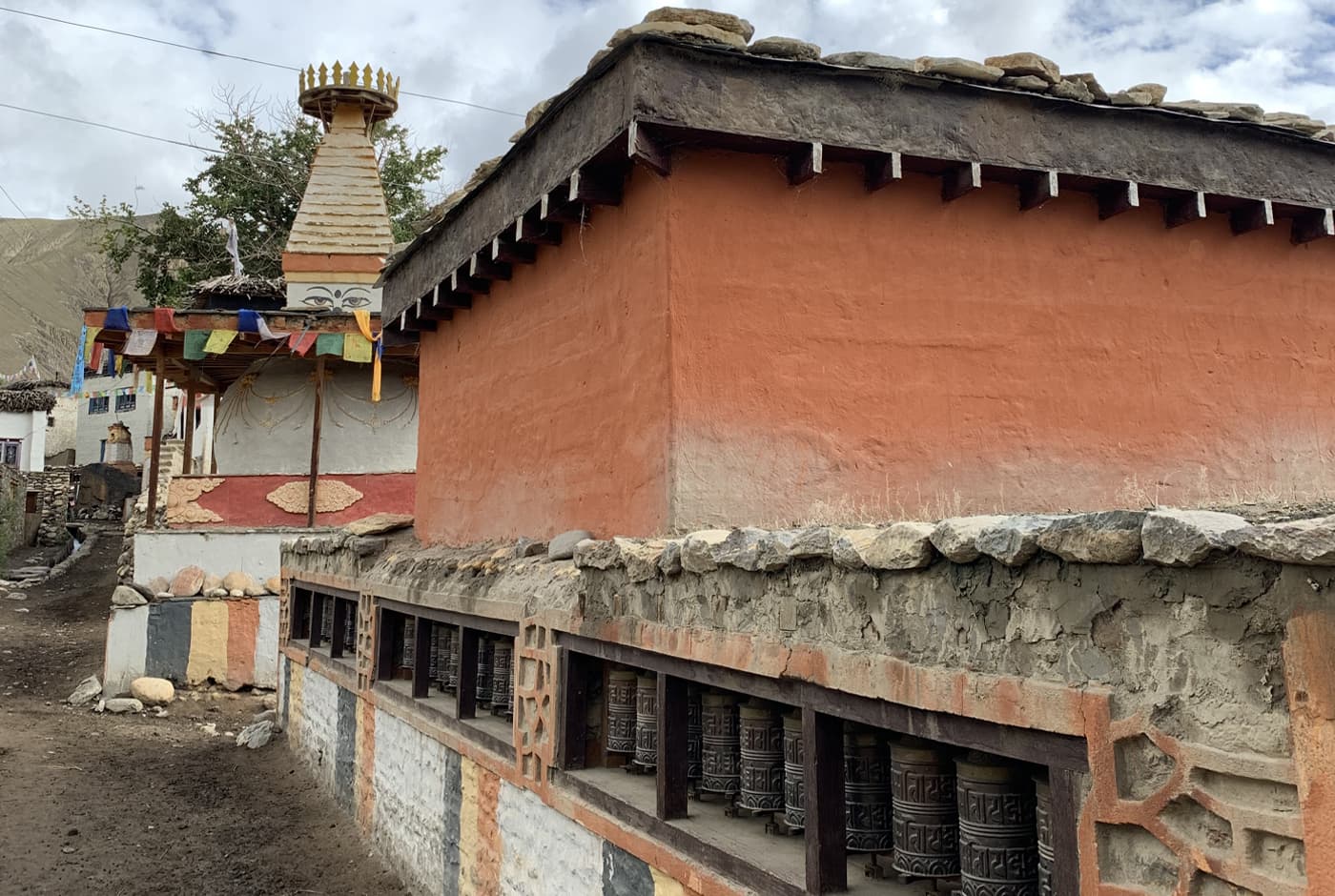
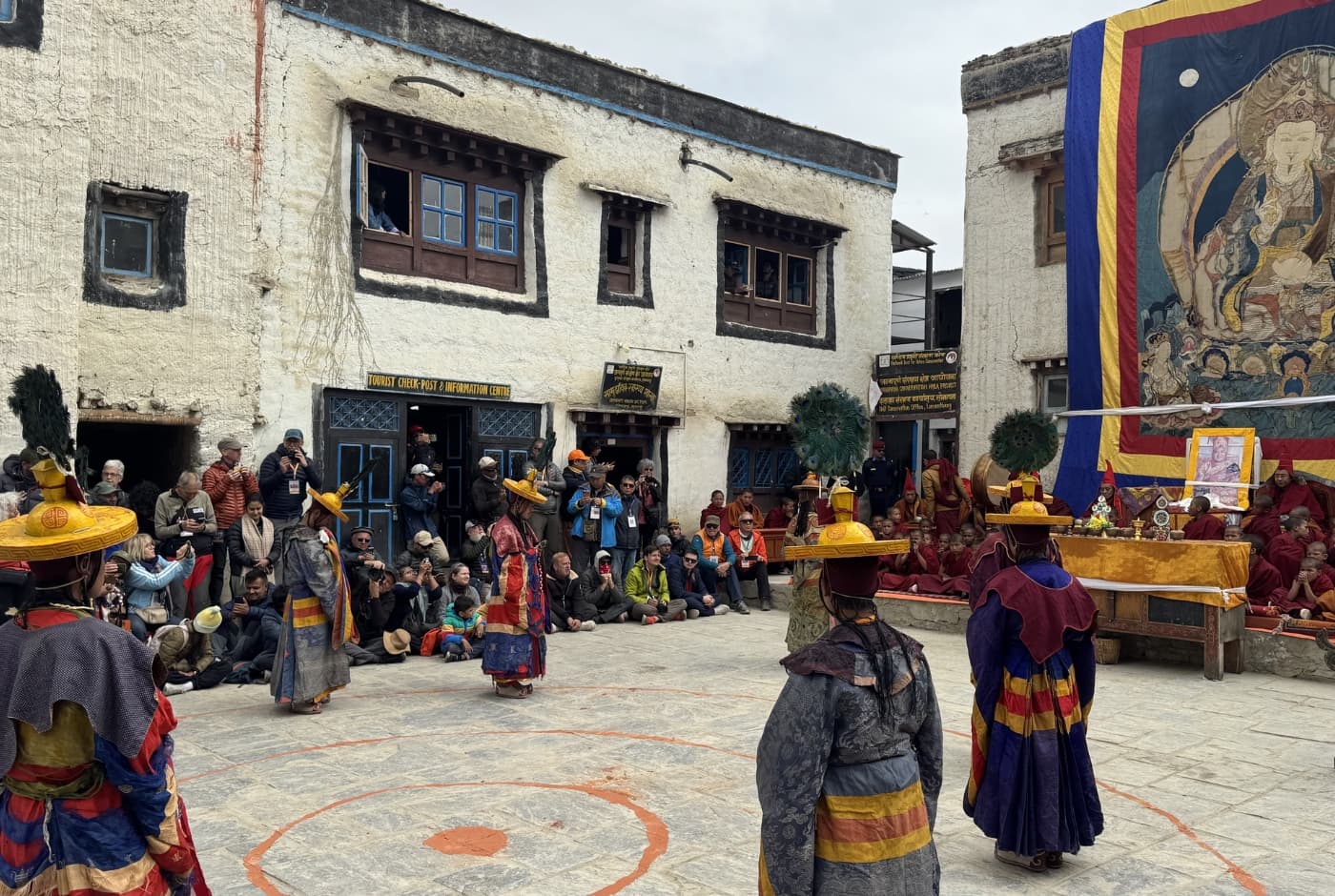
The 17-day Upper Mustang Tiji Festival Trek perfectly blends adventure and culture in one journey. Experience the vibrant Tiji Festival, the ancient Kingdom of Lo, and the varied landscapes of the Upper Mustang region.
The Upper Mustang Tiji Festival Trek is an immersive journey through Nepal's remote and spectacular region of Lo Manthang. This 17-day trans-Himalayan adventure explores the Last Forbidden Kingdom of Lo, ancient Tibetan traditions, and dramatic high-altitude desert landscapes.
The trek begins with a scenic drive from Kathmandu to Pokhara along the Prithvi Highway. From Pokhara, the journey continues to Kagbeni (2,804 m), passing through traditional villages such as Chele, Charang, Dhakmar, and Shyangmochen.
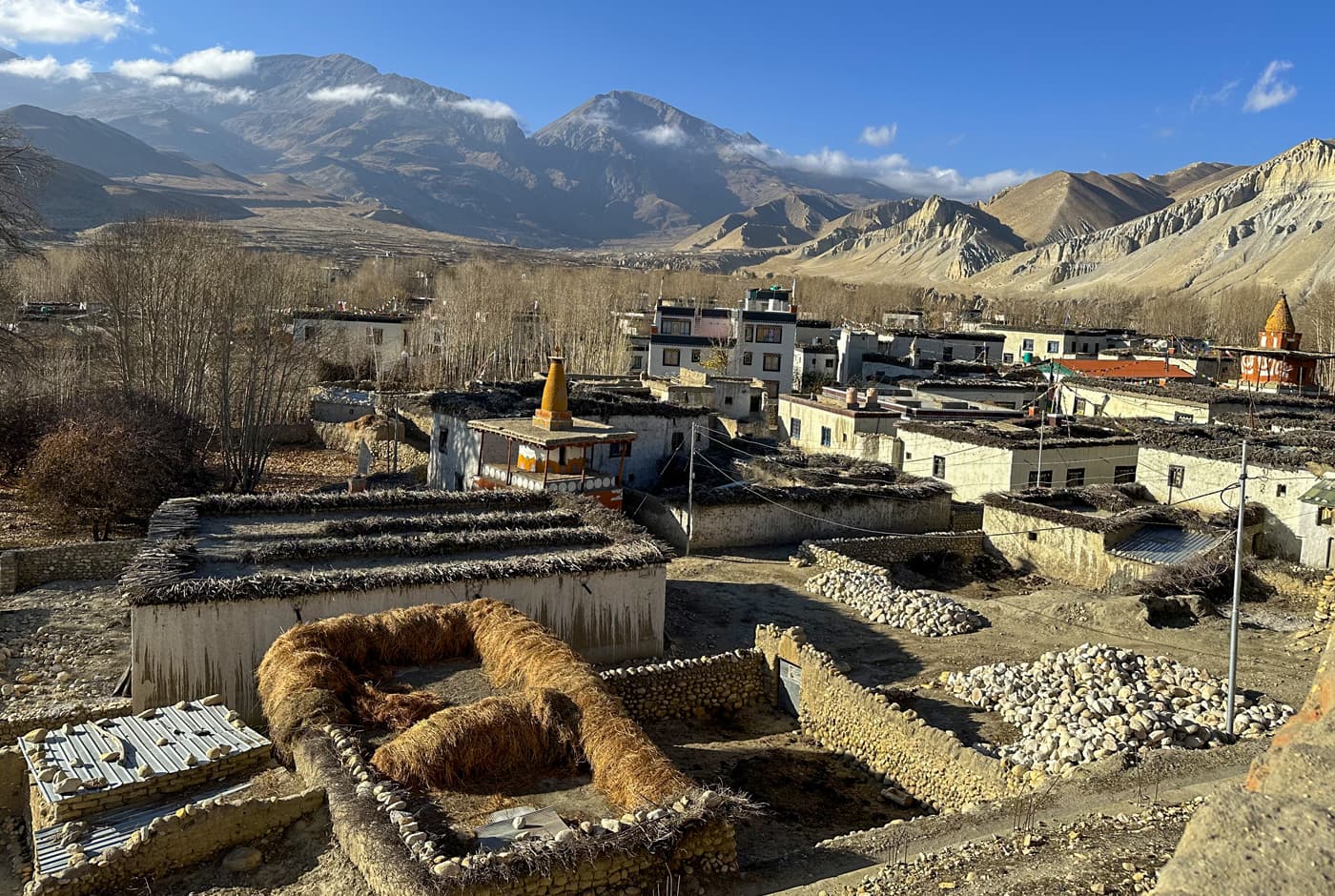
Throughout the journey, trekkers witness diverse landscapes ranging from lush green hills to the rugged desert-like terrain of Upper Mustang.
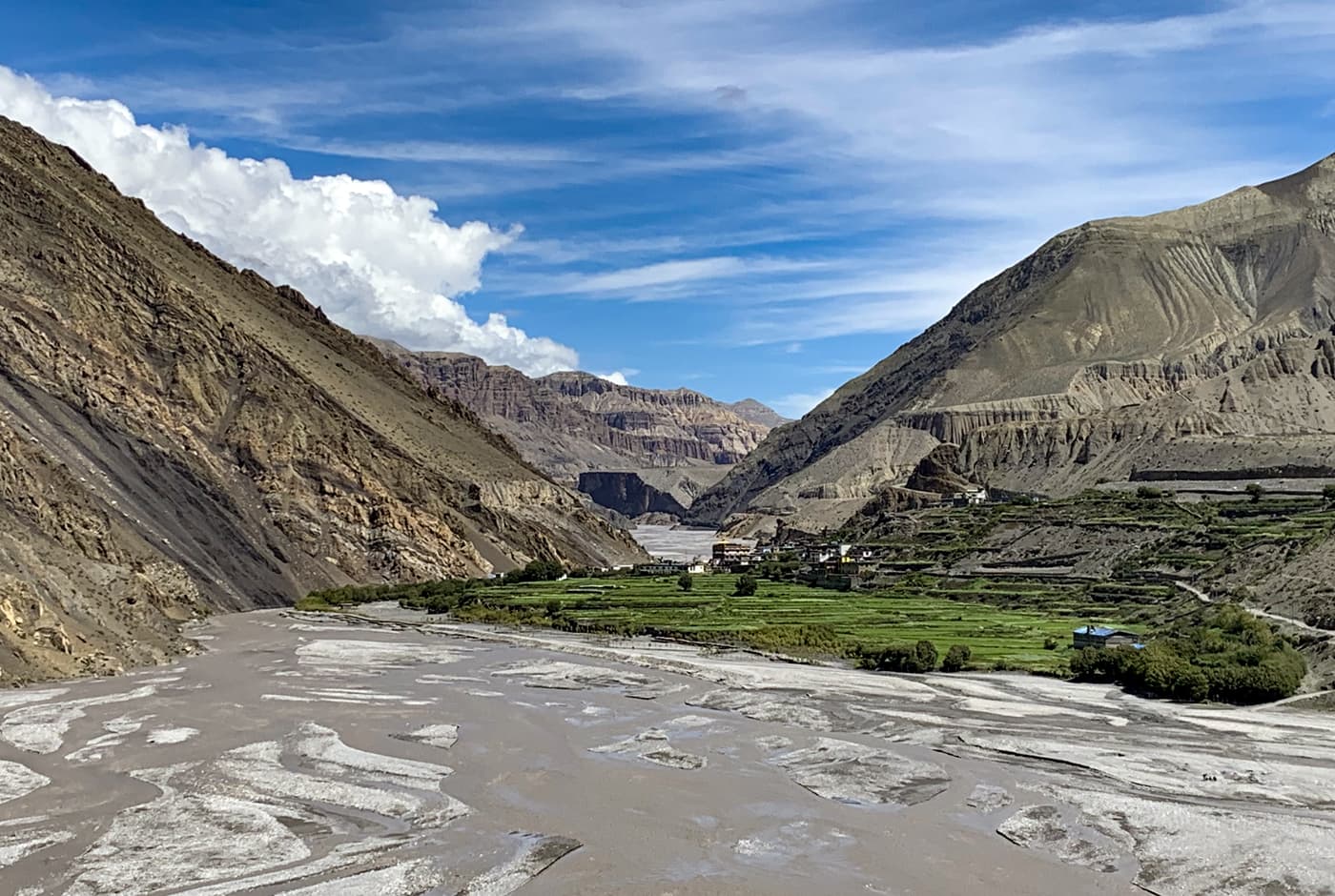
Centered around the iconic town of Lo Manthang and the vibrant Tiji Festival, the trek also passes through the world's deepest river gorge, explores centuries-old fortresses, and visits the historic Namgyal Gompa.
The best time for the Upper Mustang Tiji Festival Trek is during spring (March to May), when the weather is stable, skies remain clear, and trekking conditions are excellent. The Tiji Festival is generally celebrated in May and occasionally extends into early June.
This trek is considered easy to moderate, with daily walks lasting approximately 5 to 7 hours across mountain trails and varied landscapes. Two mandatory permits are required: the Restricted Area Permit (RAP) and the Annapurna Conservation Area Permit (ACAP).
The Upper Mustang Tiji Festival Trek begins in Kathmandu with a scenic flight to Pokhara. From Pokhara, a private drive takes you to Kagbeni, the historic gateway to both the Muktinath area and the restricted Upper Mustang region.
The complete journey includes approximately 125 km (77 miles) of trekking and around 490 km (304 miles) of travel by road and air, mainly between Kathmandu and Pokhara. The trekking trail officially starts from Kagbeni and passes through beautiful villages including Chele, Geling, and Charang.
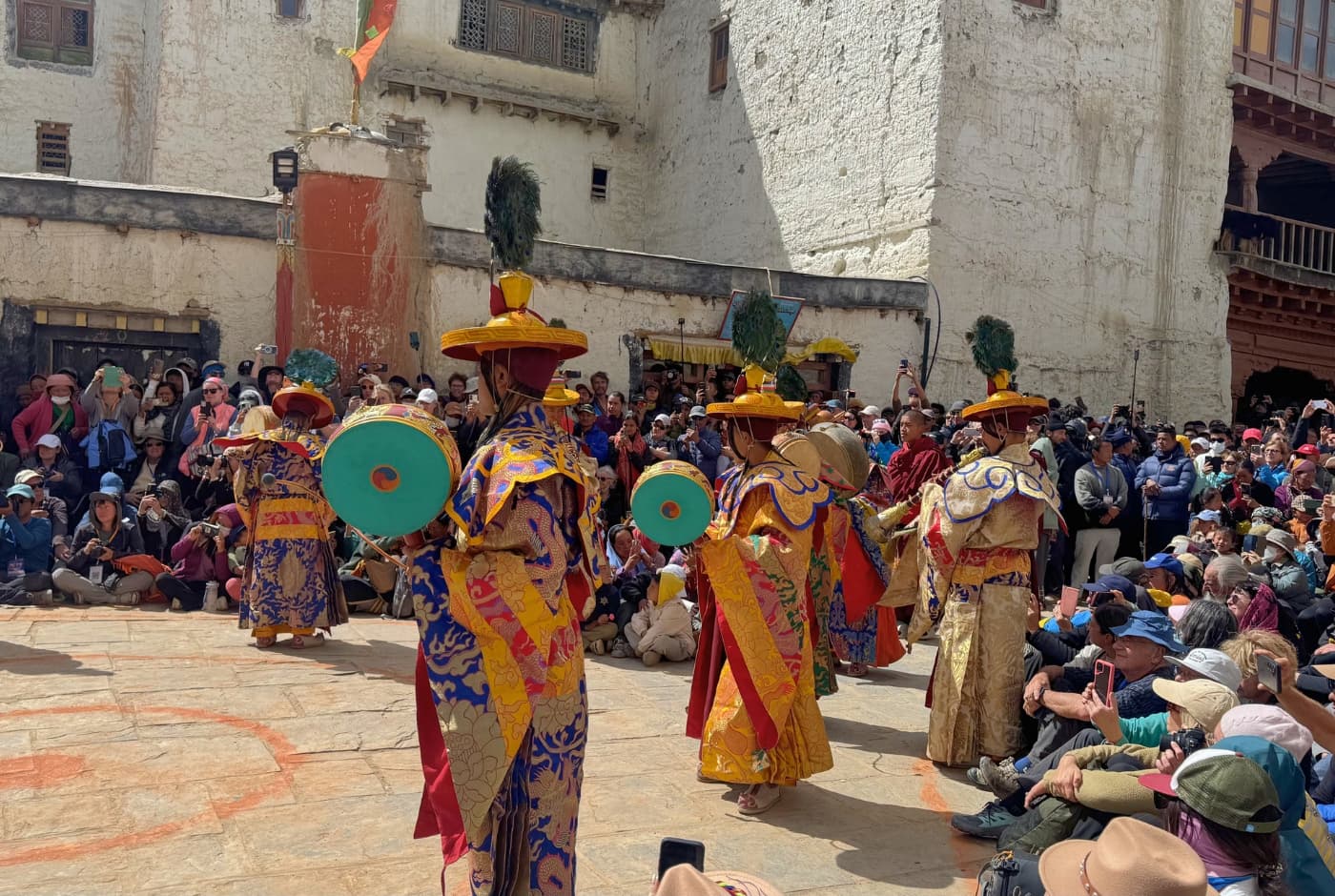
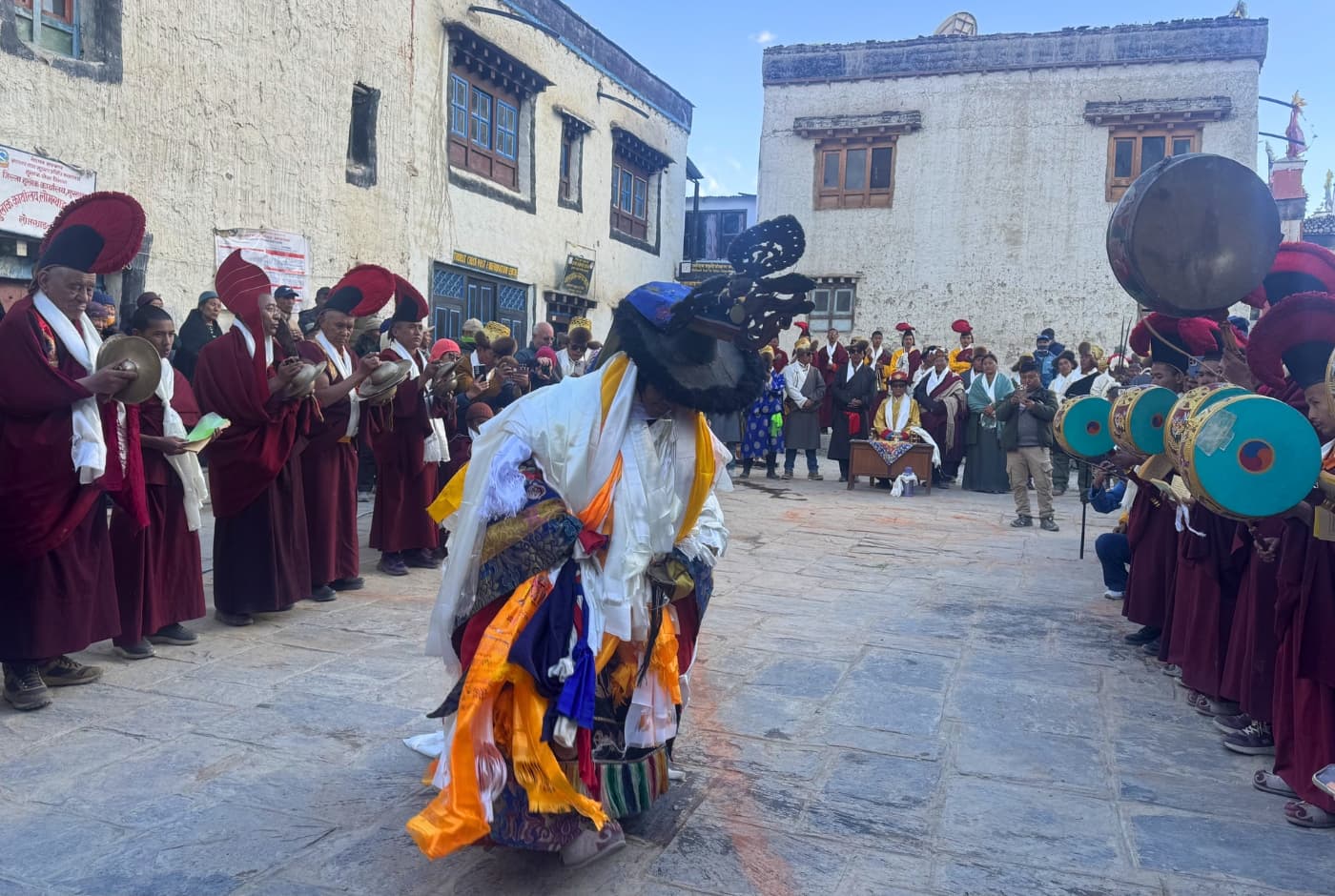
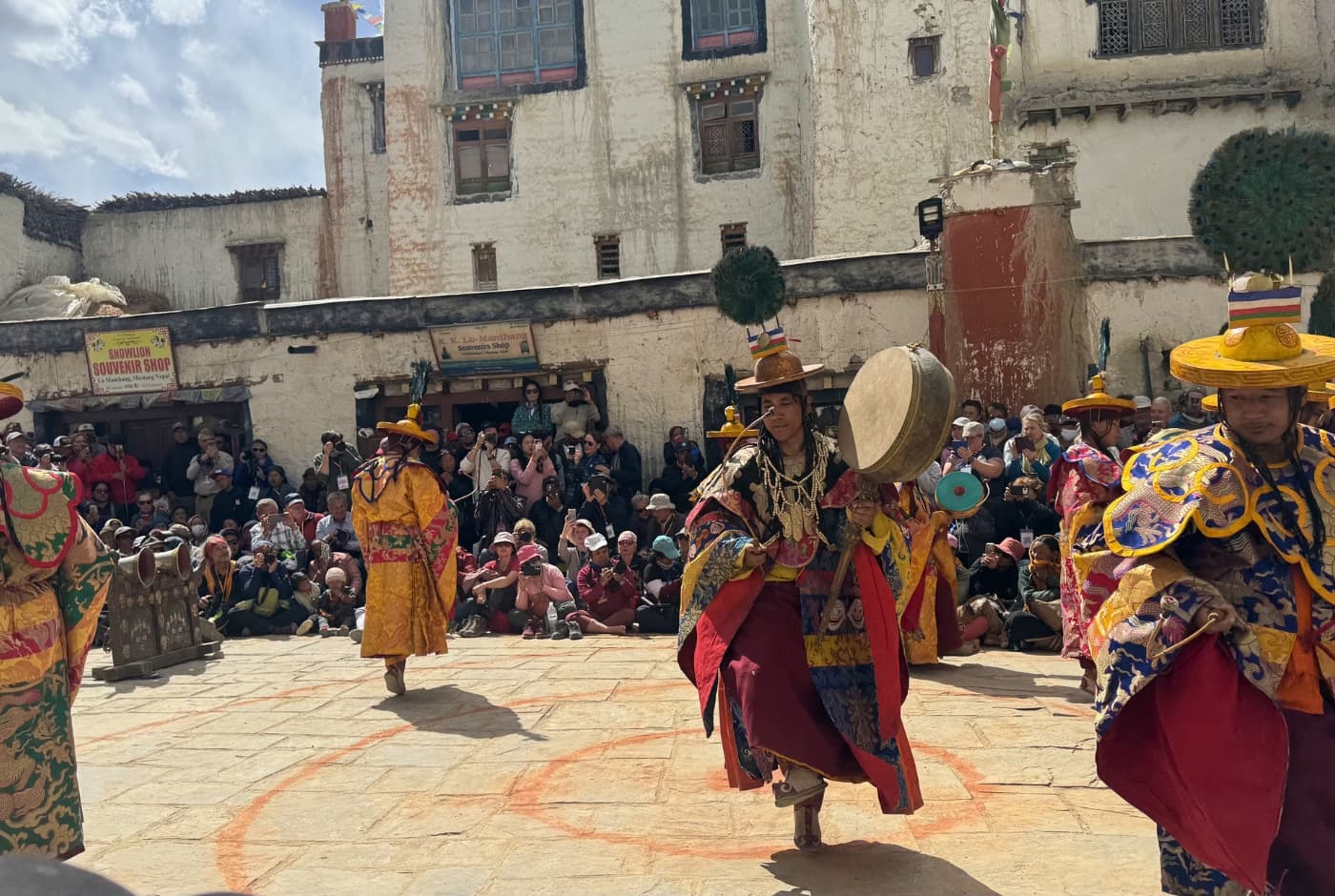
Trekkers eventually arrive at Lo Manthang (3,810 m), where they spend three days witnessing and experiencing the vibrant Tiji Festival. During the festival, monks perform sacred rituals and masked dances symbolizing the victory over evil, the removal of negative energies, and prayers for peace and prosperity.
After Lo Manthang, the trail descends through Dhakmar, Shyangmochen, and Chhusang before climbing to the sacred Muktinath Temple. The journey then returns to Pokhara and finally concludes with a drive back to Kathmandu.
The Tiji Festival, also known as the Tenchi Festival, is a three-day annual celebration based on the legend of Dorje Jono, who defeated evil and saved the Upper Mustang region from drought and destruction. The celebration begins with prayer ceremonies and traditional masked dances representing deities, celestial beings, and protector spirits.
In 2026, the festival was celebrated on:
Likewise, in 2027, the Tiji Festival will be celebrated on:
During the festival, local people wear traditional attire and celebrate with music, dances, local cuisine, and prayers for world peace, prosperity, and harmony.
Apart from the Upper Mustang Tiji Festival Trek, Nepal Hiking Team also offers several alternative trekking packages in the Upper Mustang region. Each itinerary provides a unique trekking experience.
| Trip | Duration | Difficulty | Price | Key Feature |
|---|---|---|---|---|
| Upper Mustang Trek | 16 days | Easy to Moderate | $2150 | A classic journey through Nepal's high-altitude desert landscapes and traditional villages to the Forbidden Kingdom of Lo Manthang. |
| Upper Mustang Trek with Drive Back | 13 days | Easy to Moderate | $1980 | A shorter version of the Upper Mustang Trek featuring a drive back from Lo Manthang followed by a scenic flight to Pokhara. |
| Upper Mustang Trek with Yara | 18 days | Easy to Moderate | $2300 | Explore Yara village together with Lo Manthang while experiencing Tibetan Buddhist heritage and Thakali culture. |
Book your Upper Mustang Tiji Festival Trek with a trusted local trekking agency for a safe, smooth, and unforgettable journey through one of Nepal's most culturally fascinating regions.
Our 17-day itinerary is carefully scheduled around the spring Tiji Festival while maintaining a comfortable trekking pace, reasonable daily walking hours, and proper acclimatization.
We also manage all essential logistics, including teahouse accommodation during the busy festival season, transportation, experienced guides, porters, and all required permits, including the Restricted Area Permit (RAP).
Whether you choose a private departure or join a scheduled Tiji Festival group, our flexible and well-paced itinerary is suitable for both first-time trekkers and experienced hikers.
Upon your arrival at Tribhuwan International Airport, Kathmandu, our representative will receive you and warmly welcome you before transferring you to your pre-booked hotel.
On your way to the hotel, you can see the bustling city of Kathmandu and the daily life of the locals. After arriving at the hotel, you will check in and rest for a while before a pre-trek meeting.
We will organise a short meeting and introduce you to your guide, briefly discuss the trek, weather conditions, and route situation. Likewise, we will also review the city tour plans for the following day.
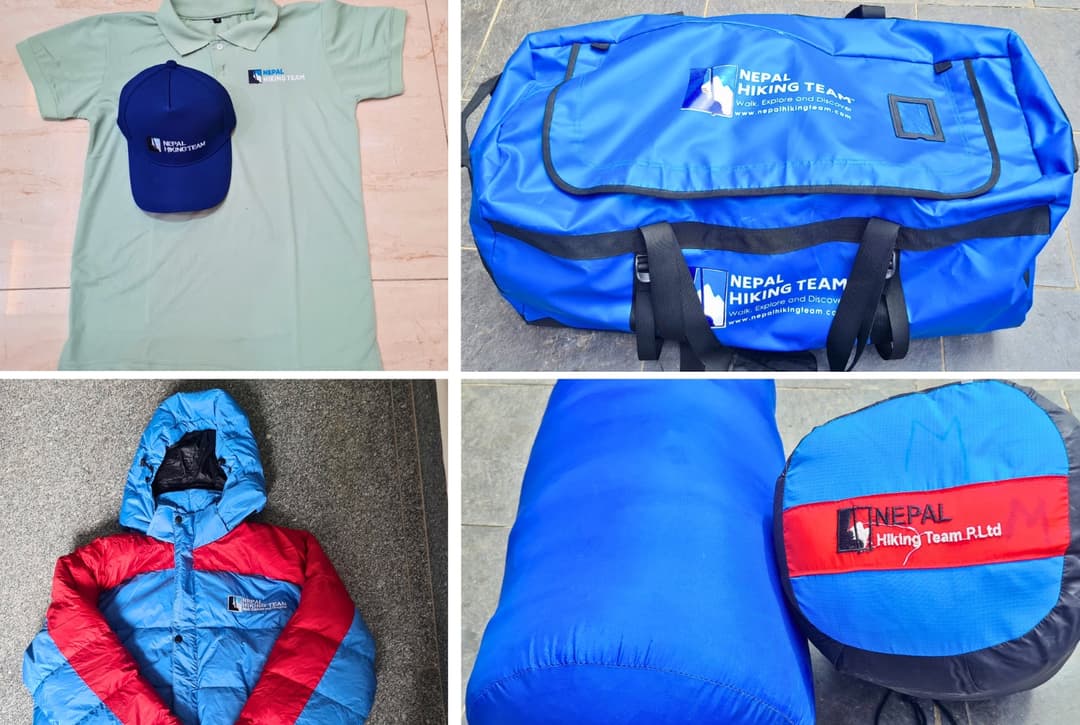
In addition, we provide the necessary trekking gear such as a duffel bag, a down jacket, a sleeping bag, an NHT t-shirt, a cap, and a detailed Upper Mustang map. At last, our team will collect a copy of your passport and travel insurance for the record and clear any remaining payment for the package, if it’s not paid.
Note: Meetings are scheduled for the second day if the guest arrives at night.
After a hearty breakfast at the hotel, you will start your day by preparing for the journey ahead. You can start organizing your items for your duffel bag and your day pack. As the duffel bag is carried by your porter, you can pack your belongings, such as jackets, sleeping bags, toiletries, and spare clothes inside it.
Whereas, you can pack your daypack with essentials like cash, permits, rain gear, snacks, and medications. After finishing packing, hikers can walk around the hotel for a few minutes to ensure the bag is well organized, balanced, and comfortable.
Besides, you can visit shops around the Thamel area for last-minute gear shopping for trekking poles, socks, shoes, and sunglasses.
If you feel energized or have, you can also visit popular sites such as Kathmandu Durbar Square and Boudhanath by booking a city tour for an additional cost.
You can also stay back to rest and relax at the hotel.
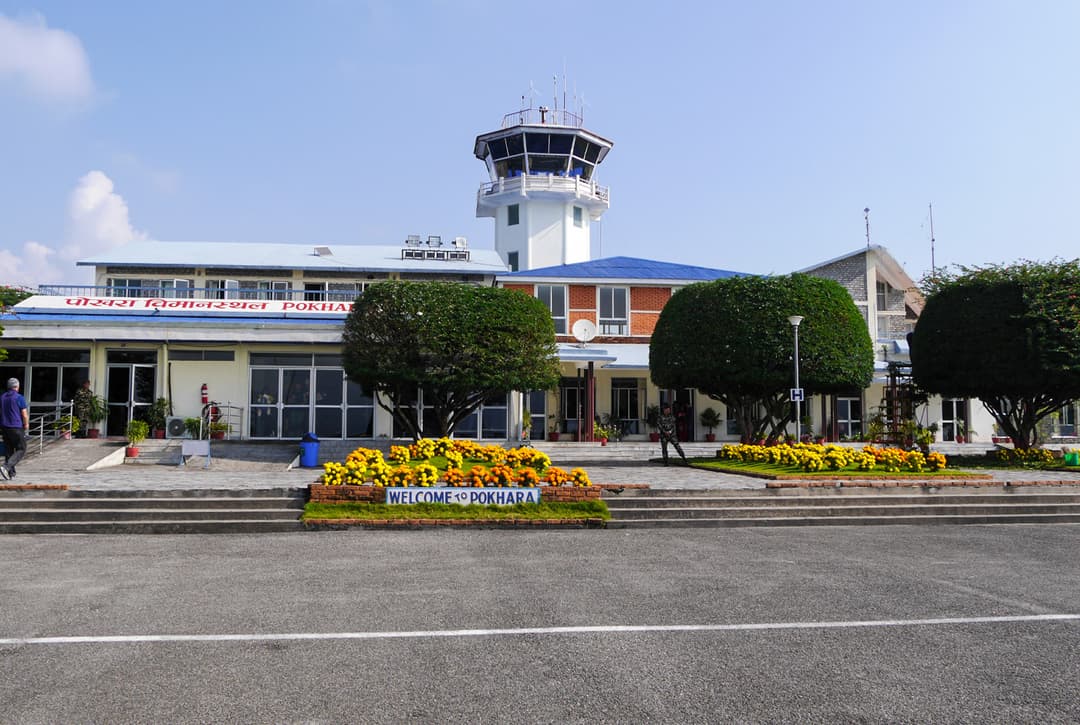
You will head towards Pokhara, the city of lakes, today on a 25-30-minute flight from Kathmandu. After breakfast, your guide will pick you up from the hotel and take you to the airport.
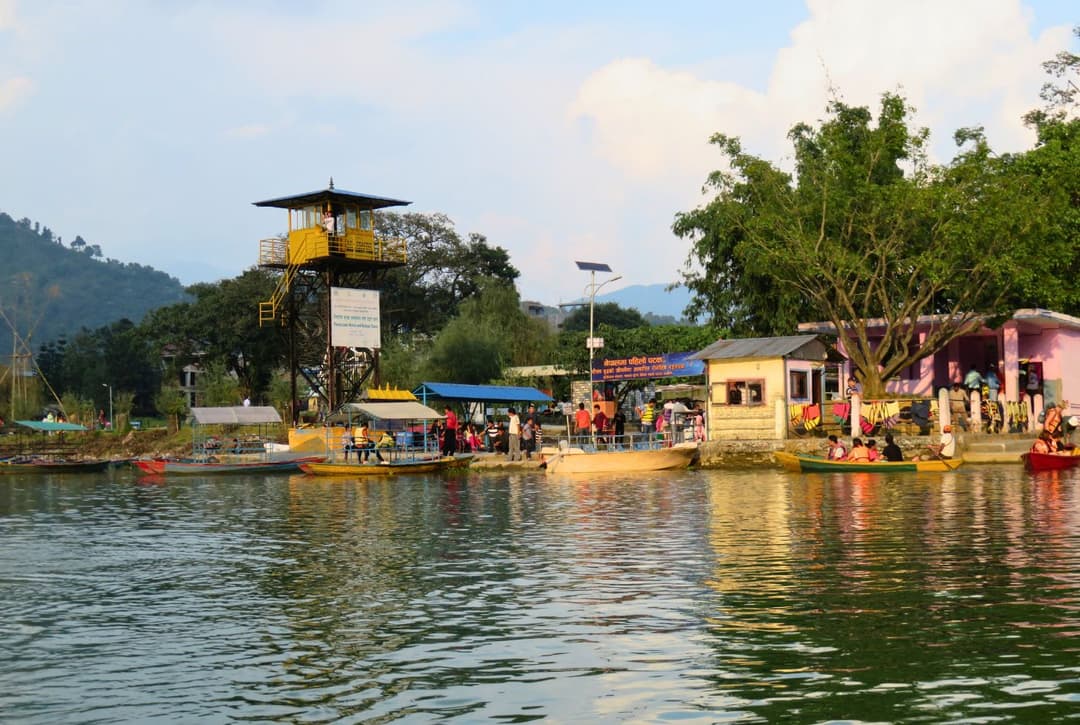
Upon arriving in Pokhara, your guide will check you in at the pre-booked hotel in Lakeside. Later on, you can stroll around the Phewa Lake, do some shopping, or simply relax at the hotel while preparing for the trek.
Leaving Pokhara, you will head towards Kagbeni, popularly known as the gateway to the Upper Mustang region. Kagbeni is also a sacred site for Hindus who visit this place to perform ancestral death rituals.
The road from Pokhara to Kusma, Beni, offers a transition from city to rural landscapes with green hills, traditional Nepalese villages, and distant views of Mt. Machhapuchhre on a clear day. Moving on, the road after Beni to Kagbeni is mostly off-road, featuring gorge sections and landslides/rockfall sections.
Along the route, you will pass the deepest gorge in the world with a dramatic shift to mountain landscapes. After arriving at the Kagbeni village, travellers can witness Tibetan-style houses, ancient monasteries, and views of Mount Nilgiri, Tilicho Peak, Thorung Peak, and Yak Kawa Kang.
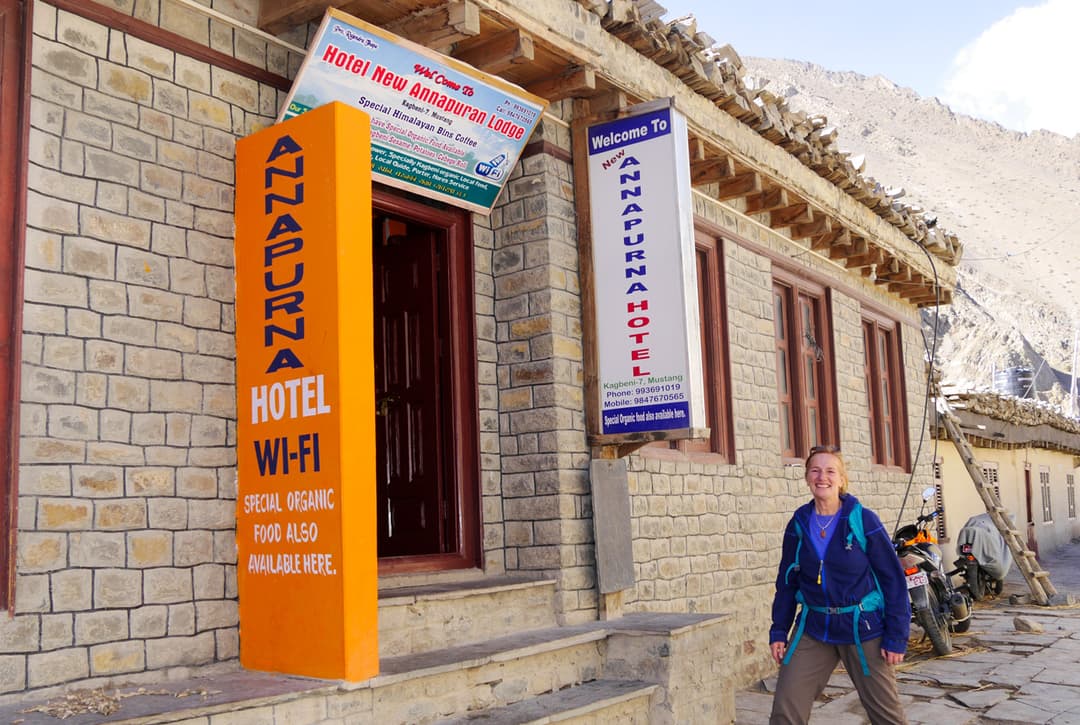
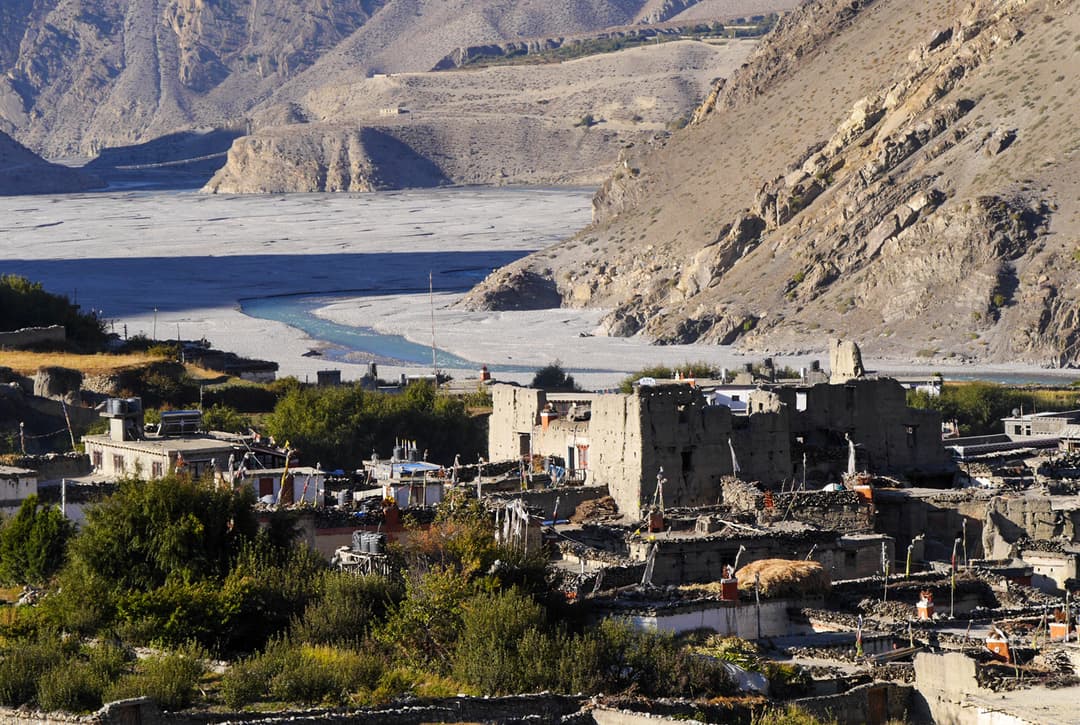
The trekking part officially starts today as you head towards Chele, a small traditional settlement at an elevation of 3,050 m (10,006 ft). You will leave Kagbeni village after breakfast and walk along the bank of the Kali Gandaki River, enjoying the views of Mount Tukuche and Nilgiri.
Along the way, hikers will pass through varied landscapes, sky caves, apple orchards, ancient gompas, and chortens. Similarly, you will traverse local settlements like Tangbe and Chhusang, inhabited by Gurung, Lopa, Thakali, and Tangbetani communities.
From Chhusang, the trail winds down to Kaligandaki, crosses a suspension bridge, and then climbs steeply towards Chele. Overall, the trek is moderate and manageable for beginners with a steady pace.
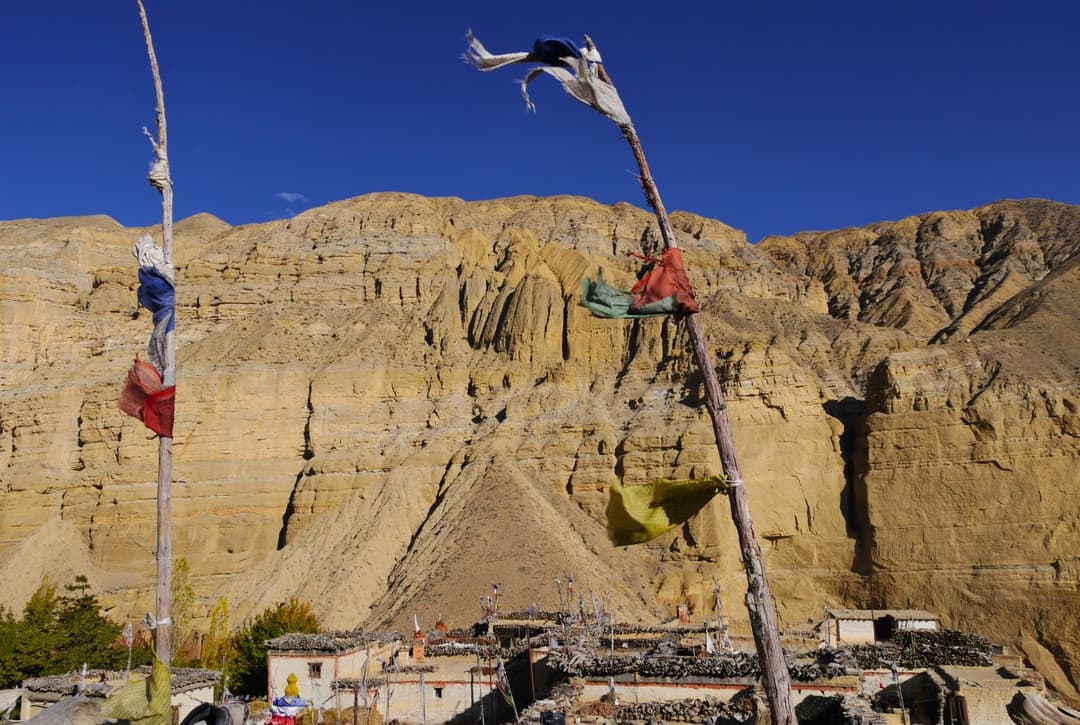
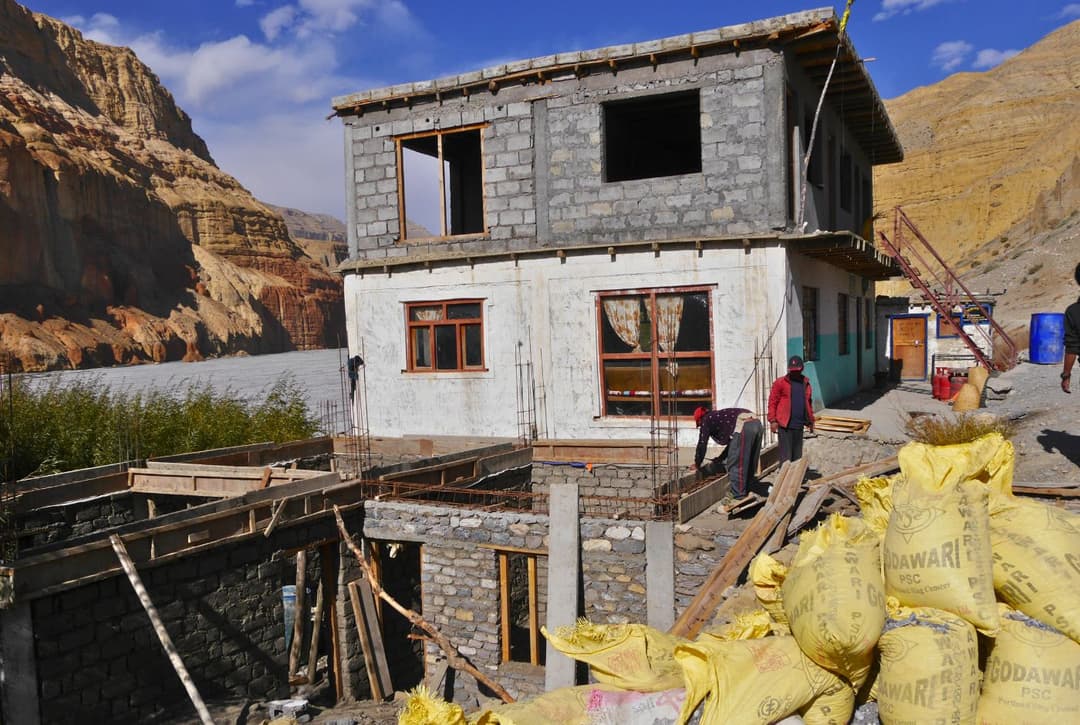
The journey from Chele to Geling starts with an early morning breakfast at the teahouse. Today, you will walk through the steep, rugged, and barren Himalayan terrain, cross passes like Taklam La and Yamdo La, experiencing authentic high-altitude trekking.
As you leave Chele, you will cross narrow gorges, Chungsi Cave, high-mountain passes like the Yamada La Pass at 3,860 m, and villages like Gyakar, Samar, and Syangboche. Along the trail, hikers can catch glimpses of Dhaulapurna, Annapurna, and Nilgiri.
The final stretch of the trail passes colorful chortens, mani walls, and traditional mud-and-stone houses while descending towards Geling village, your overnight stop. Trekkers often feel the shift in altitude and elevation on this day.
Today’s trek can feel moderately challenging due to steep ascents, sandy, and loose terrain. The route climbs towards the Nyi La pass, which is near the Tibet border, offering panoramic views of the northern terrains and the rugged southern valley.
While descending from the pass, trekkers will pass the colorful cliffs painted in shades of deep blue, grey, and red. Most of the trail is a dry, desert-like landscape mixed with rugged gorges and canyon pathways.
As you approach Charang village, the trail transitions from high-altitude climbs to an open valley with a gentle downhill leading you into the valley of Charang. The path can feel isolated and remote before reaching the vibrant settlement, home to a 500-year-old fortress (Dzong) and a red monastery.
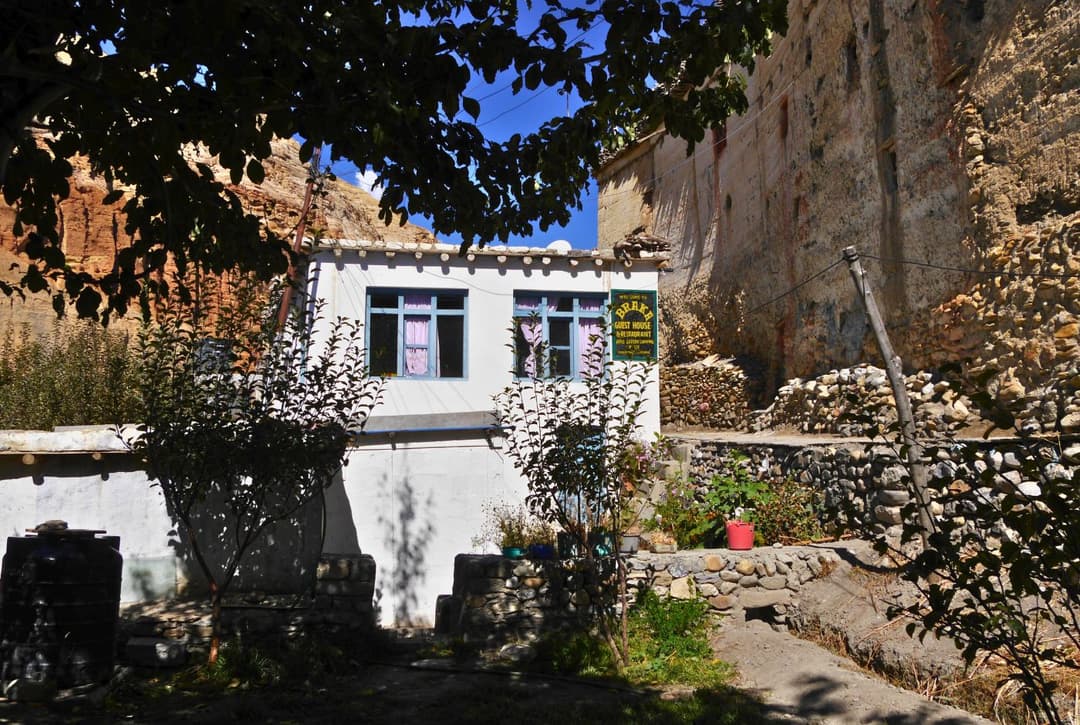
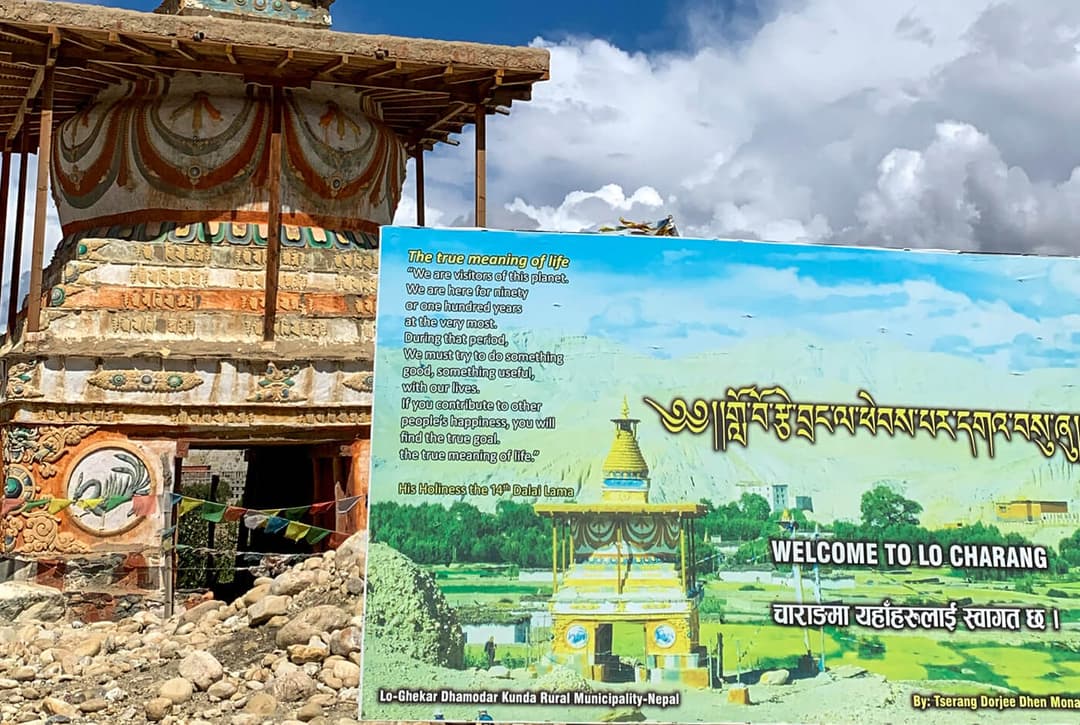
Leaving Charang, you will descend into the Charang Chu canyon and gradually climb through sand ridges towards Lo La pass at 3,950 m. From the pass, trekkers can catch their first sight of the ancient walled city, Lo Manthang, of Upper Mustang.
Besides this, most of the trail is classic Nepali flat and wide with gradual ups and downs, offering a perfect blend of adventure, remoteness, cultural immersion, and rich natural beauty. As you descend towards Lo Manthang, you are treated with views of surrounding peaks like Nilgiri, Annapurna I, Tilicho, Damodar Himal, and Bhrikuti.
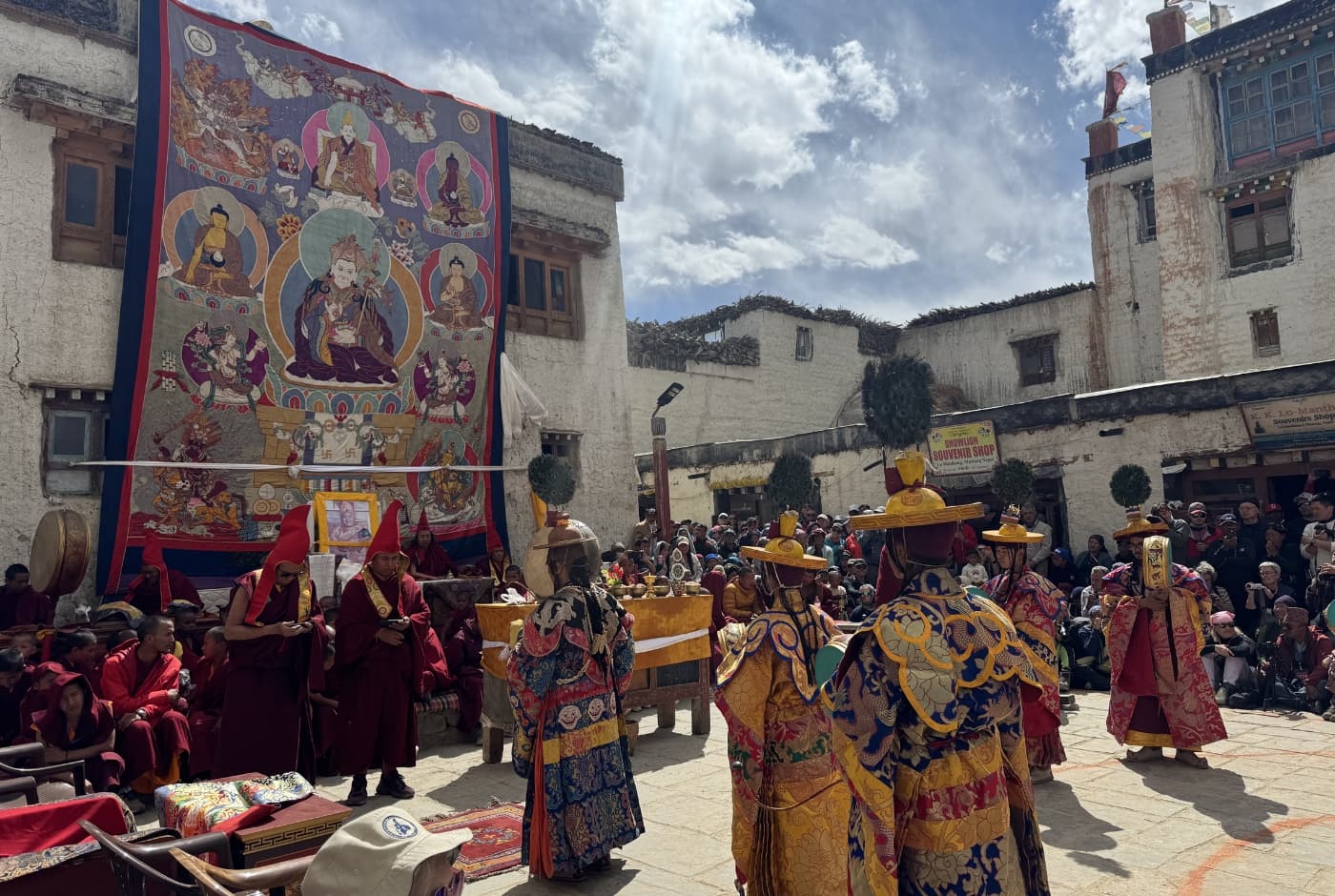
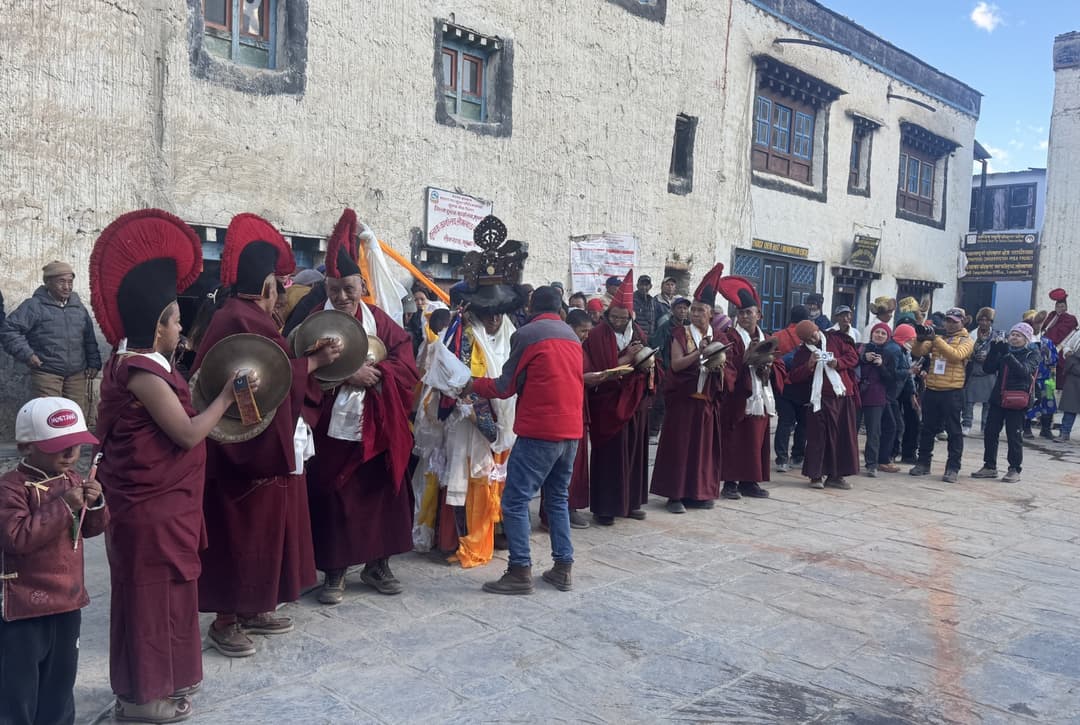
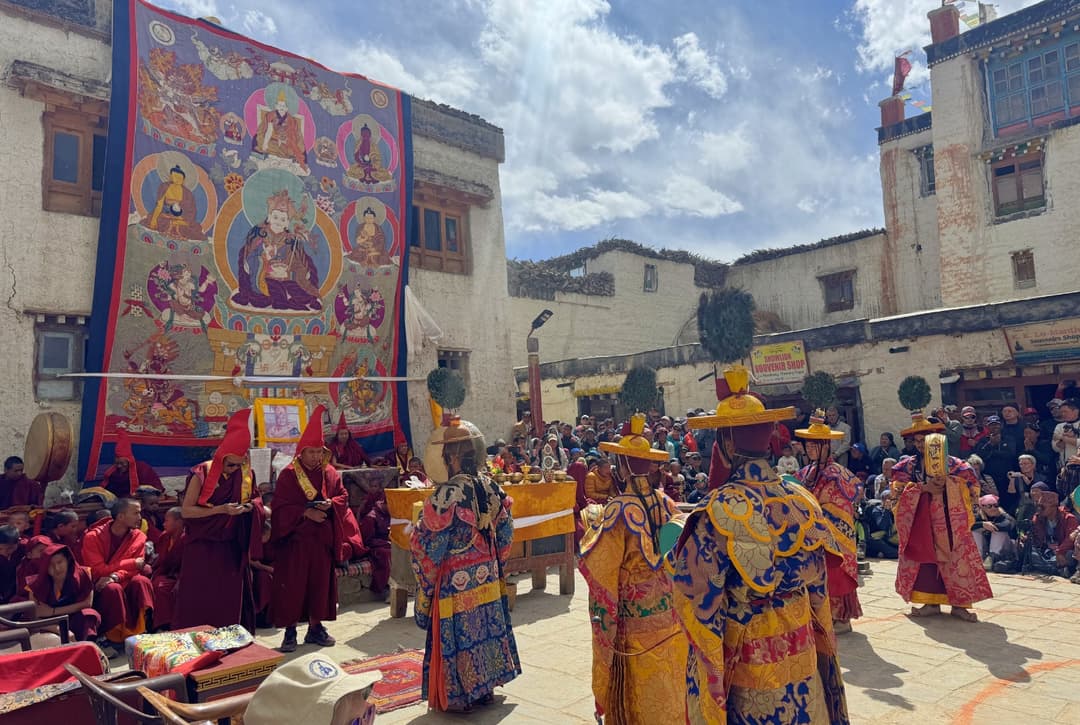
By the time you arrive at Lo Manthang, you will hear the sounds of dungchen (long copper horns), witness centuries-old thangka of Padmasambhava, and dancers performing the graceful Tsa Cham. This marks the beginning of the ancient 3-day Tibetan Buddhist celebration, the Tiji Festival.
The name “Tiji” is derived from “Tempa Chirim,” which means “Prayer for world peace,” and is celebrated to drive away evil spirits, bring prosperity to the valley, and pray for world peace. The celebration starts around 2 pm and lasts about 3 hours.
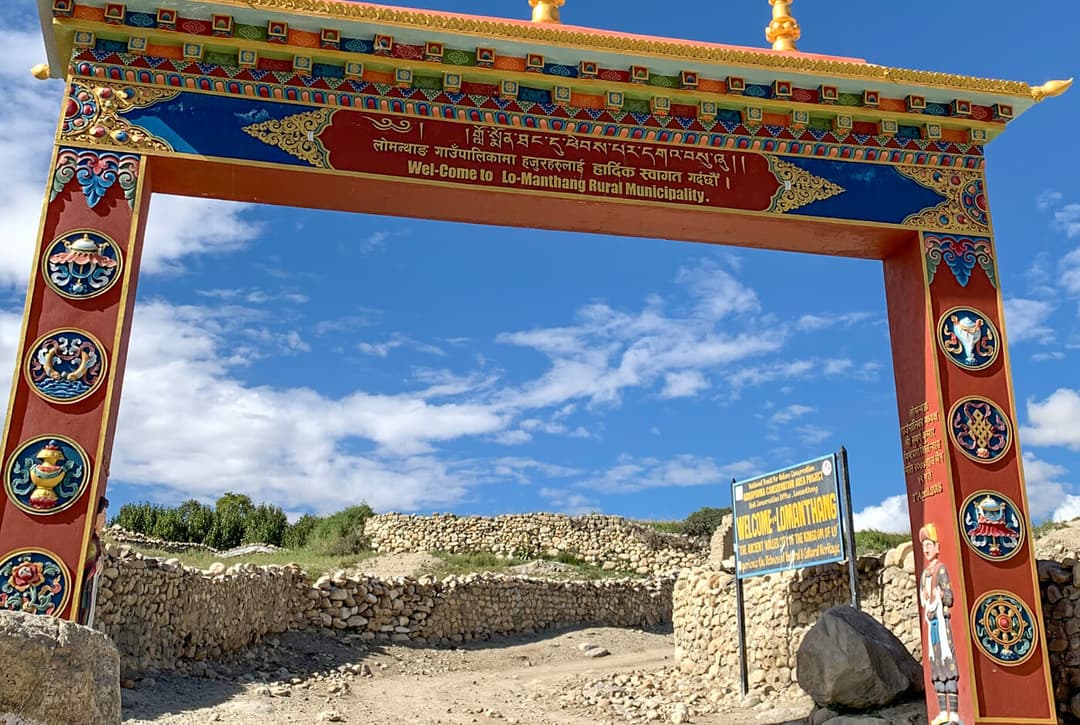
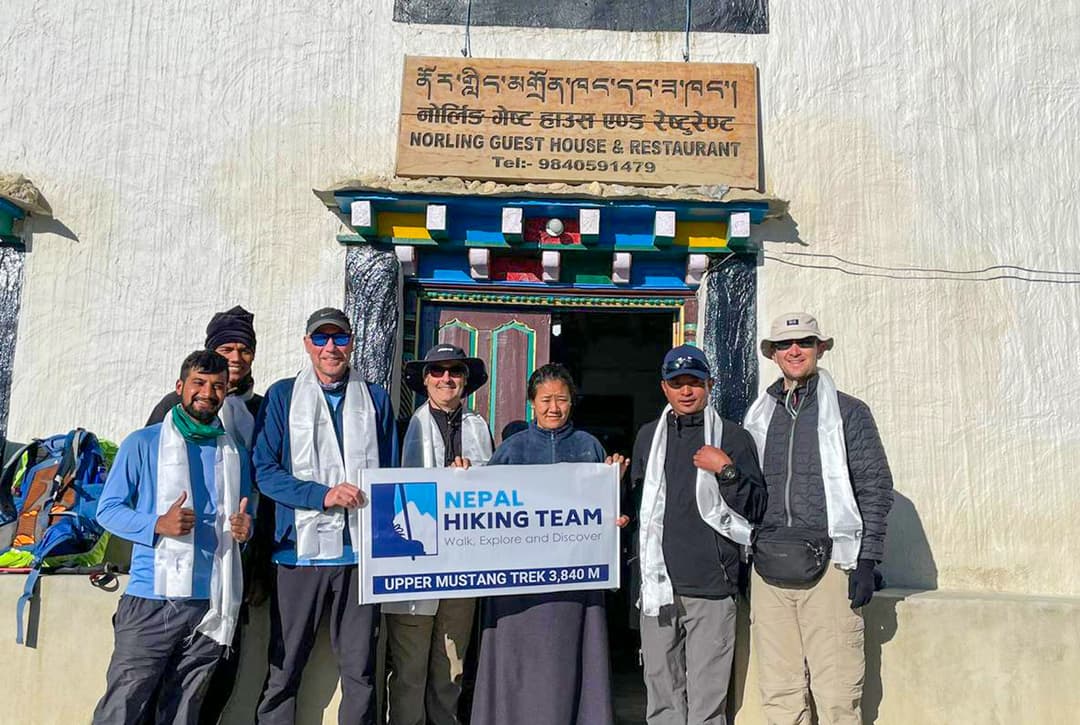
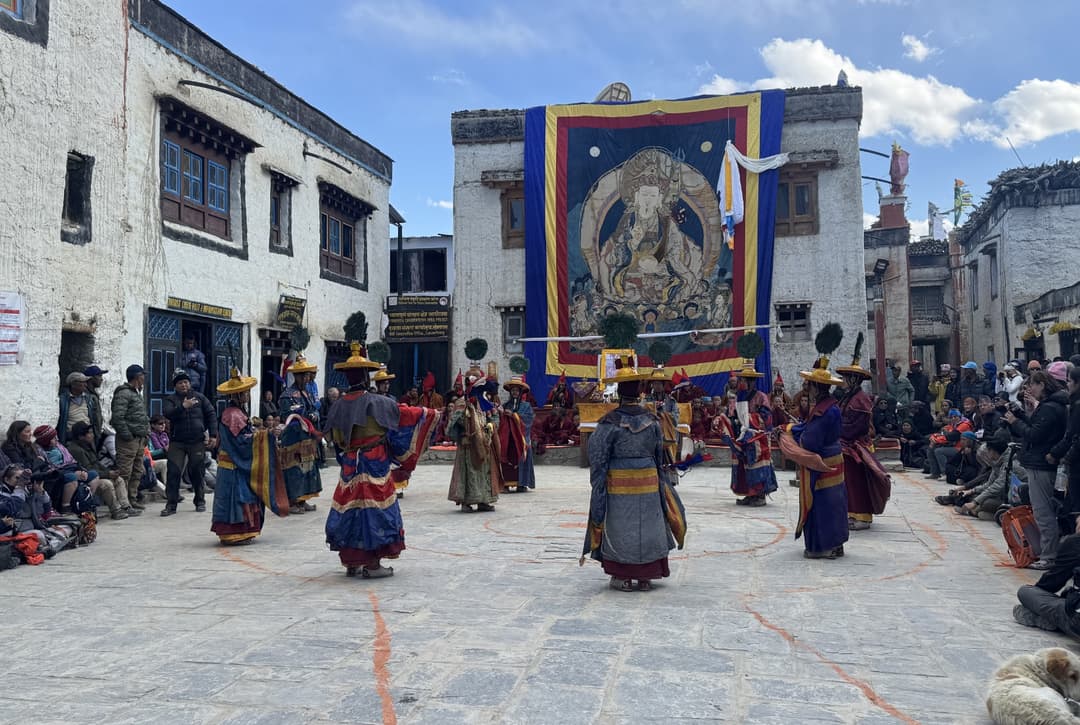
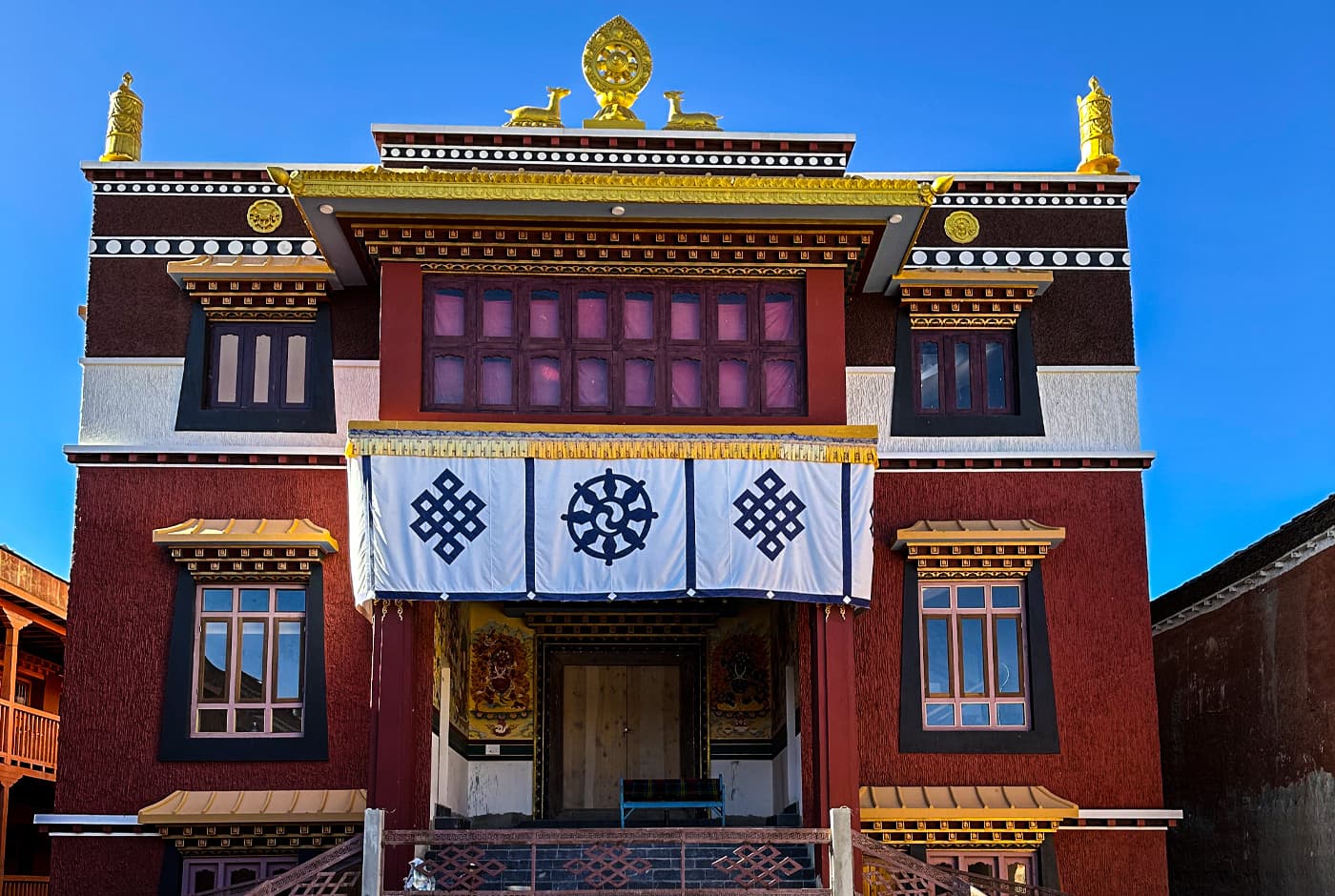
After having breakfast at the teahouse, you will explore the local Choedhe Monastery, where monks gather for an early morning Vajrakila prayer.
In the afternoon, monks display another large thanka showcasing Padmasambhava with the eight forms of the guru with the King and Queen making offerings below. The masked dancers begin performing Nga Cham, a drum dance where a straw dummy is brought out.
After that, Menle Dhakey Do, a series of dances telling the tale of Dorje Sonam defeating the demon and returning them to the Buddha realm. The second day of Tiji also features an animal mask dance, representing 20-24 different animals such as tigers, deer, yak, vultures, and horses, each representing the followers of Phurba or Vajrakilaya.
For the final dance, Dhakey is performed, where the main dancer pierces the straw dummy with a dagger symbolizing the defeat of the evil demon, Dorje Shunu. After experiencing the festival, you can roam around the village, experience local cuisines, and enjoy the warm hospitality.
On the third day of Tiji, you will start with a hike to Namgyal Gompa, perched at 3,840 m, an ancient monastery built by a monk named Ngorchen Kunga Zangpo in the 1400s. The road goes through willow-lined local villages before ascending towards the gompa.
This section is known for strong winds, especially during the afternoon; hence, trekkers are highly recommended to start the hike early in the morning. This helps explorers avoid the strong winds, dusty trails, and enjoy the clear mountain views.
After returning from the hike, you will enjoy a warm lunch at the teahouse and prepare for experiencing the last day of the festival.
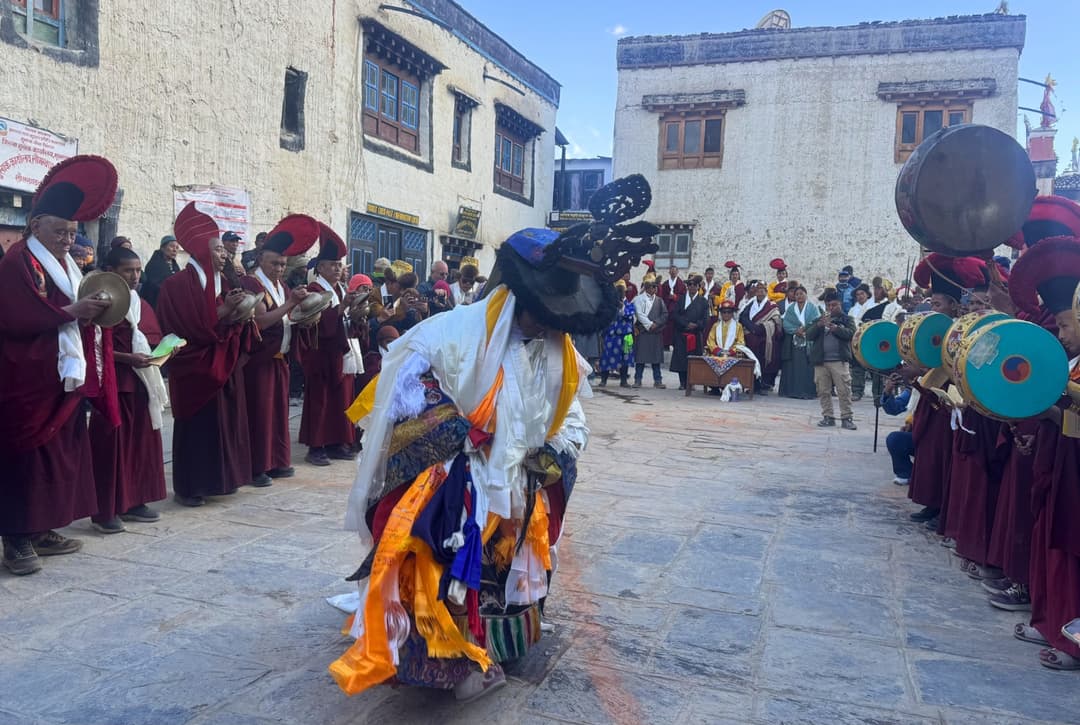
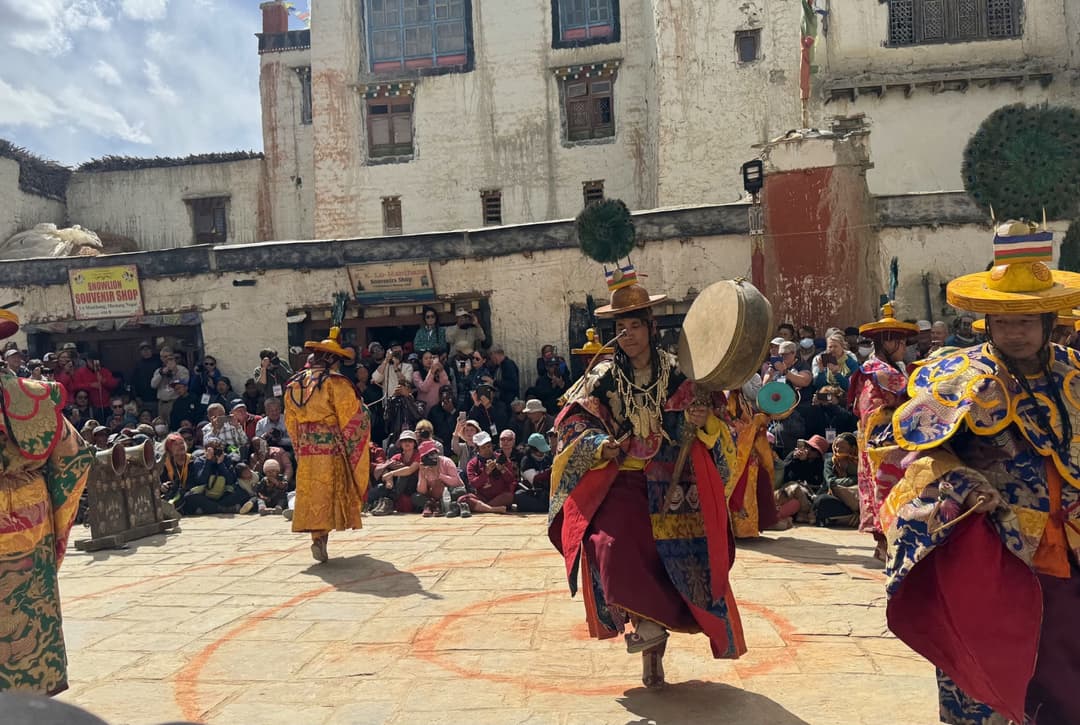
The last day of Tiji also starts with a morning prayer to Vajrakila at the monastery. The afternoon celebration starts at the palace courtyard with the ceremonial music and masked dance called Rha Chaam. Similar to the previous day, a dough dummy is brought out and is pierced by the main dancer, symbolizing the defeat of evil.
After this, the dance is moved to Jhiwa Chhorten, a stupa outside the walls where more prayers are chanted. On this day, different weapons are used symbolically to defeat evil and banished amid cheers and musket shots. The ceremony ends with participants shouting “Lha Gyalo,” meaning May God be Victorious.
Trekkers can enjoy the evening with joyful songs and dances, celebrating with the locals before returning to their teahouses for the night.
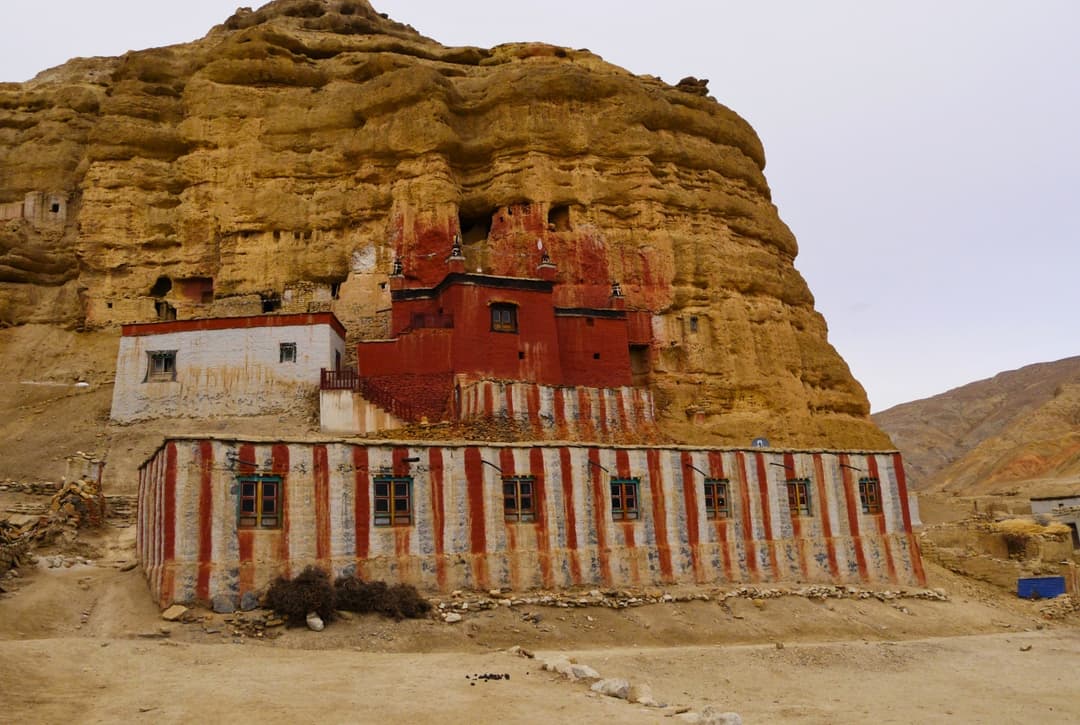
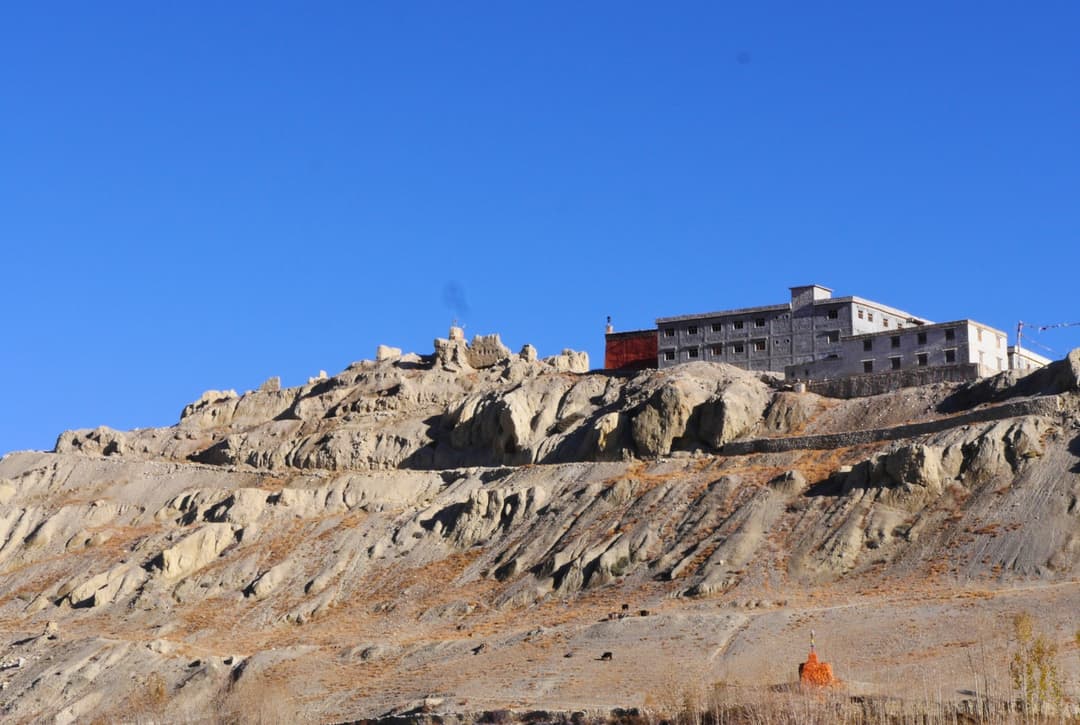
Today’s trail starts by the side of high-altitude gorges and mountains, with a gradual uphill and downhill section. Hikers can enjoy views of the Himalayas, rugged landscapes, ancient monasteries, chortens, and traditional villages such as Tingkar, Chosar, and Ghar Gompa.
Similarly, the route crosses the Chogo La pass at 4,280 m, the highest point of the trek, leaving the ancient walled city behind. The descent features multiple Buddhist sites that are culturally significant to the locals and wind-sculpted geological formations that add a desert-like terrain.
Crossing barren, sandy hillsides and alpine meadows, the trail descends to the Dhakmar village, surrounded by the bright red sandstone cliffs.
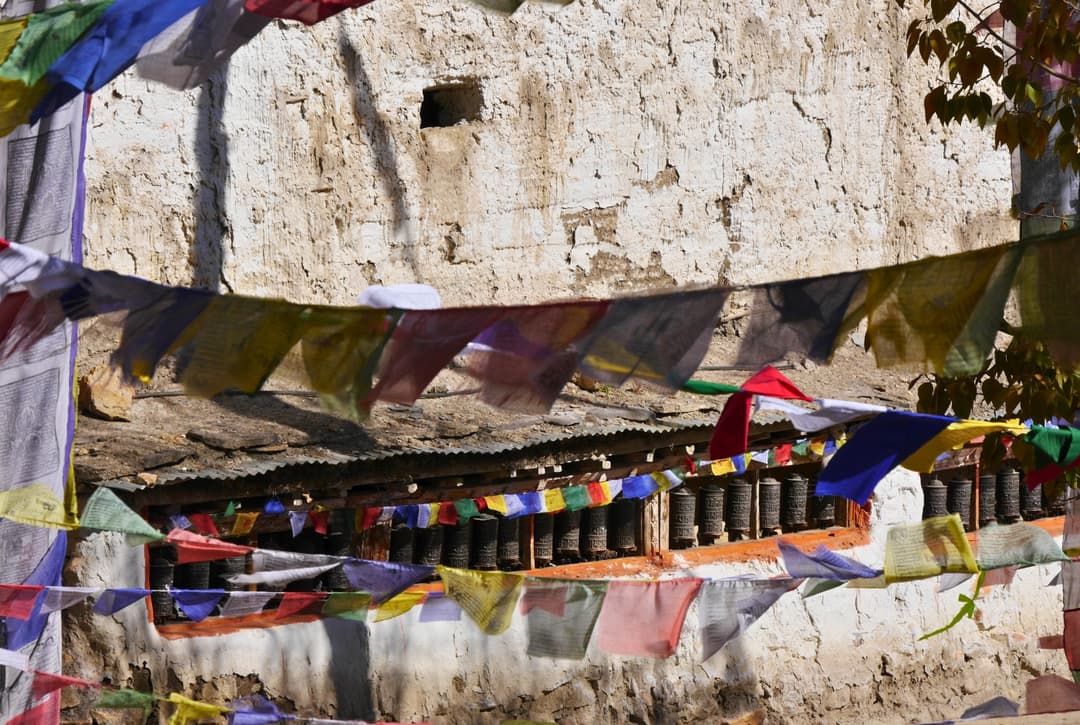
After having breakfast, we will head towards Shyangmochen with a demanding yet scenic ascent out of the Dhakmar valley. The route goes through heavily worn-down, tunneled rock and clay cliffs.
From Dhakmar to Ghami, the walk passes through a high-altitude desert-like region, beautifully carved Mani walls, crosses a bridge over Ghami Khola, and eventually reaches Ghami village. Continuing, you will cross the small settlement of Jaite and Tama Gaon, experiencing the rural life of local Mustang people.
After a brief downhill walk from Tama Gaon, you will eventually arrive at Shyangmochen. It is a small, quite high-altitude settlement that serves as a crucial stop for trekkers exploring the Upper Mustang region.
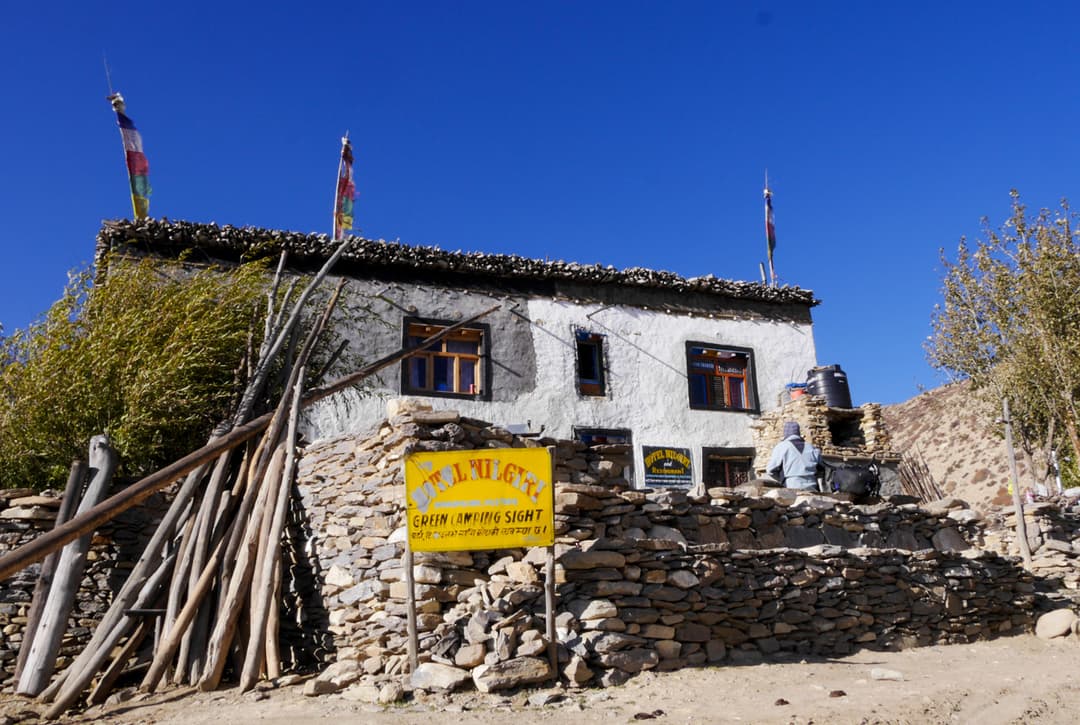
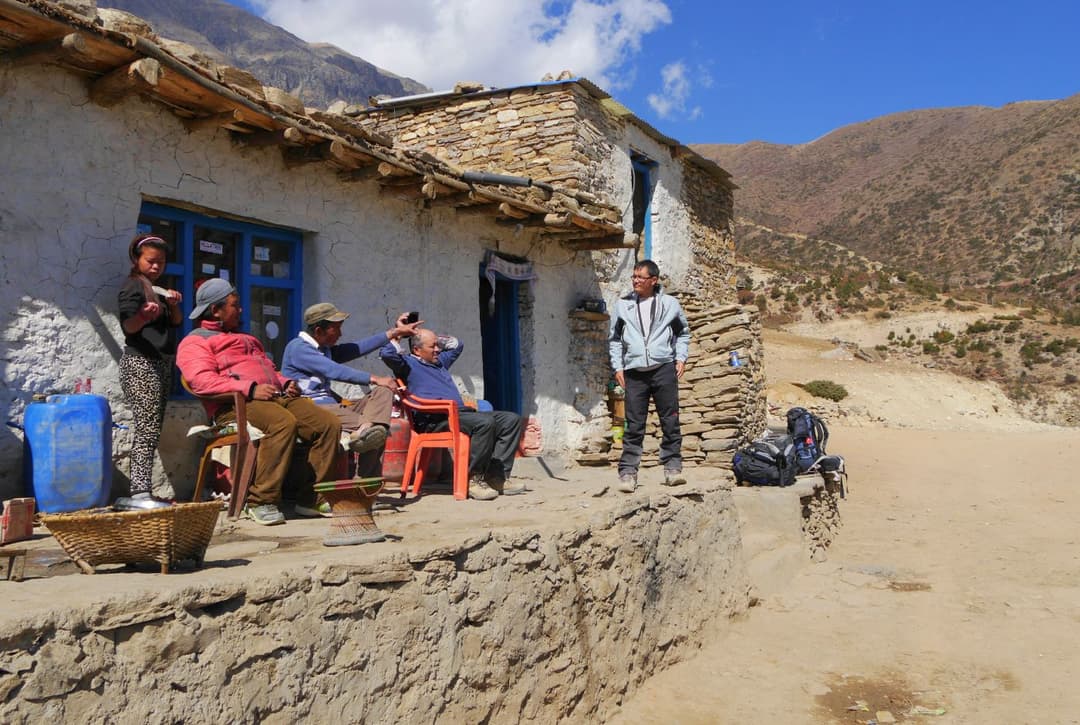
After an early morning breakfast, hikers begin their journey with a descent from Shyangmochen village. Although today’s trek is non-technical, it can feel challenging while crossing high passes like Taklam La or Dajong La.
In addition, trekkers can take a detour through the Samar village and explore the popular four-colored chortens and the sacred Ranchung Cave. The cave holds great significance to the locals, as they believe Buddhist monks have been meditating in that spot for centuries. This side trip also makes the trek more immersive and keeps the journey engaging.
Traversing through traditional Tibetan houses, farmlands, and high-desert terrain, you will arrive at the Chhusang village, surrounded by ancient cave dwellings and sandstone cliffs. The Chhusang village is widely popular for its red and orange cliffs and sky caves that were once used as a meditation place and burial sites.
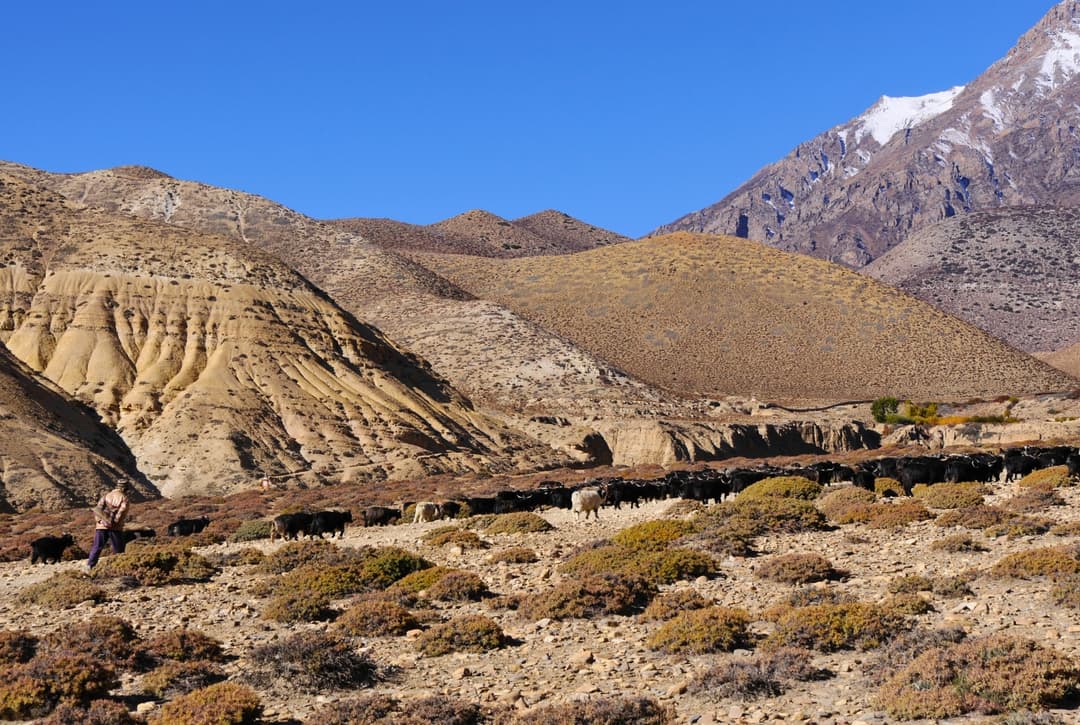
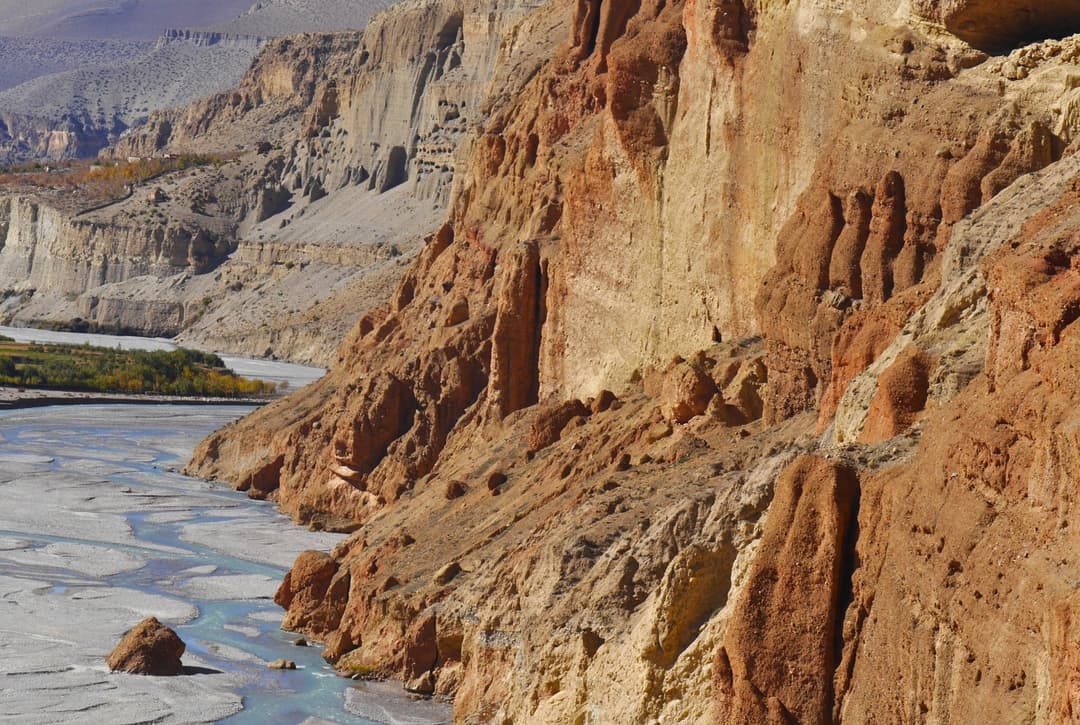
Leaving Chhusang, trekkers follow the Kali Gandaki riverbed and ascend gradually towards the Tetang village, inhabited by the Baragauwa community. From here, the route heads up to the Gyu La pass at 4,077 m, from where you can spot views of Nilgiri, Dhaulagiri, and the Annapurna range.
From the pass, adventurers will descend into a green valley and reach the scenic Jong (Dzong) village. Moving on, hikers will navigate through Jharkot and Ranipauwa before ascending towards Muktinath.
Muktinath is one of the world’s highest temples at an altitude of 3,800 m. The temple is highly revered in Hinduism and Buddhism, and is believed to be the place where Lord Vishnu attained salvation from a curse.
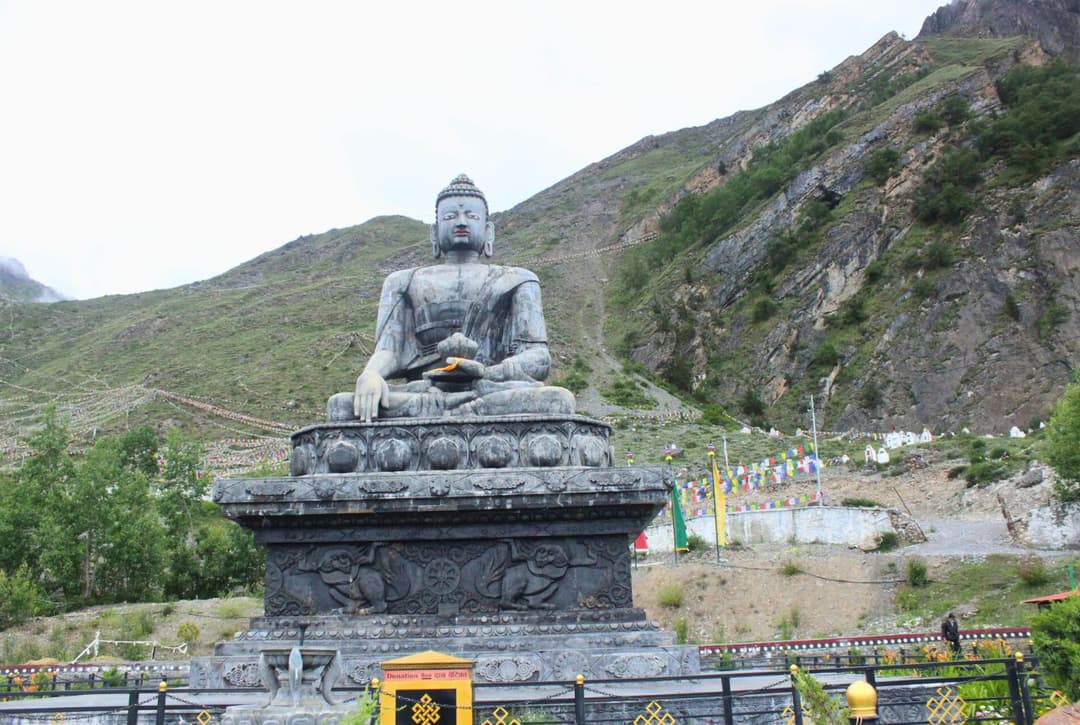
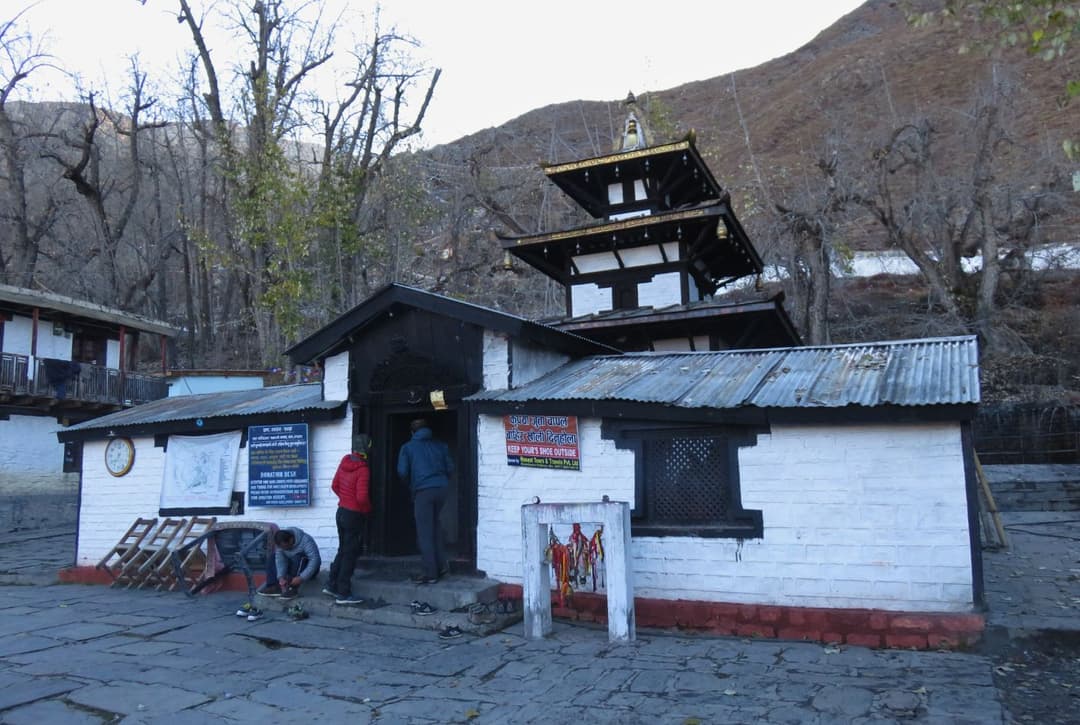
Today marks the end of the trekking portion with a drive back to Pokhara. You will start your journey after having breakfast at the teahouse. As you continue on the road, the terrain transitions from arid, desert landscape to lush, green subtropical forests.
Trekkers will drive alongside and often through the Kali Gandaki Valley, the popular Marpha village, and Tatopani hot springs. Besides, you can enjoy unobstructed views of Mount Dhaulagiri, Nilgiri, and the Annapurna massif throughout the journey.
Retracing your steps through the busy towns of Kusma and Baglung takes you back to the vibrant city of Pokhara. The transition from the high Himalayas to the bustling city of Pokhara adds another layer of adventure to this journey.
After resting for a while at the hotel, you can go for a walk around the lakeside, witness a golden hour sunset over Macchapuchhre, enjoy local cuisine, or recover with a relaxing massage at a nearby spa.
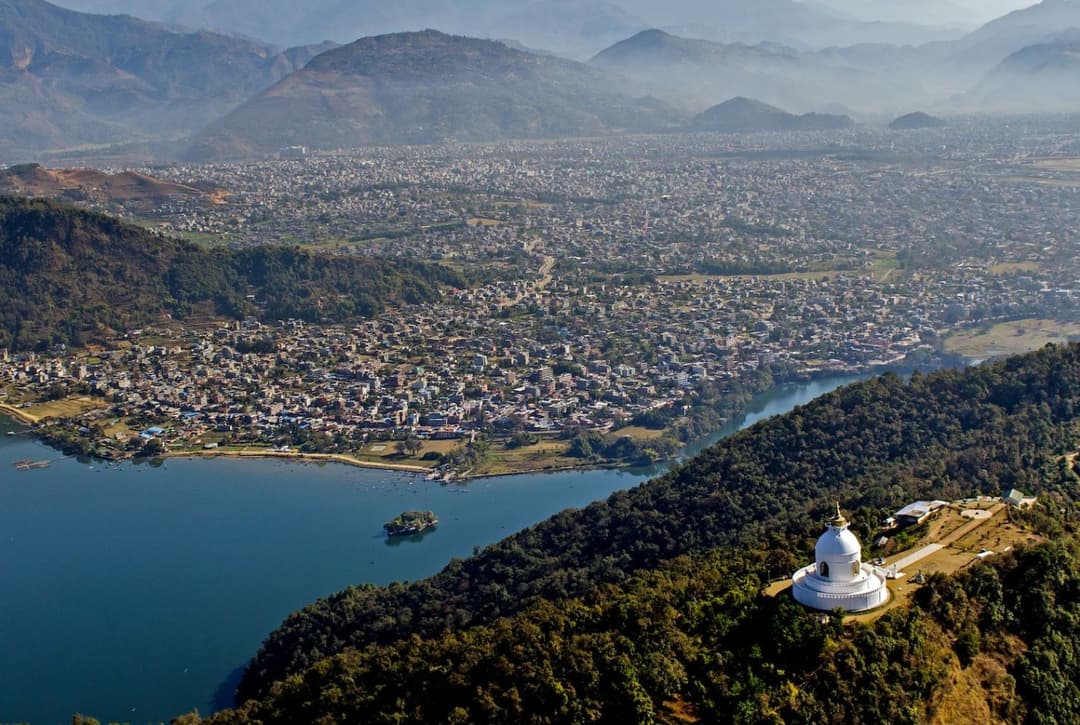
Today, you will return to Kathmandu with a scenic flight back to Kathmandu. Your guide will transfer you to the airport after having breakfast at the hotel. During the flight, you can spot hilltop settlements, rivers, green hills, and terraced farmlands that you saw while heading towards Pokhara.
Upon arriving in Kathmandu, we will hold a brief post-trek meeting where you can share stories about your overall experience. During this meeting, we will award you with a certificate as a memento for completing the 17-day Upper Mustang Tiji Festival Trek with the Nepal Hiking Team.
The certificates are handed out as a motivational milestone to help trekkers track their progress, display their accomplishments, and plan progressively for longer routes around the Himalayas.
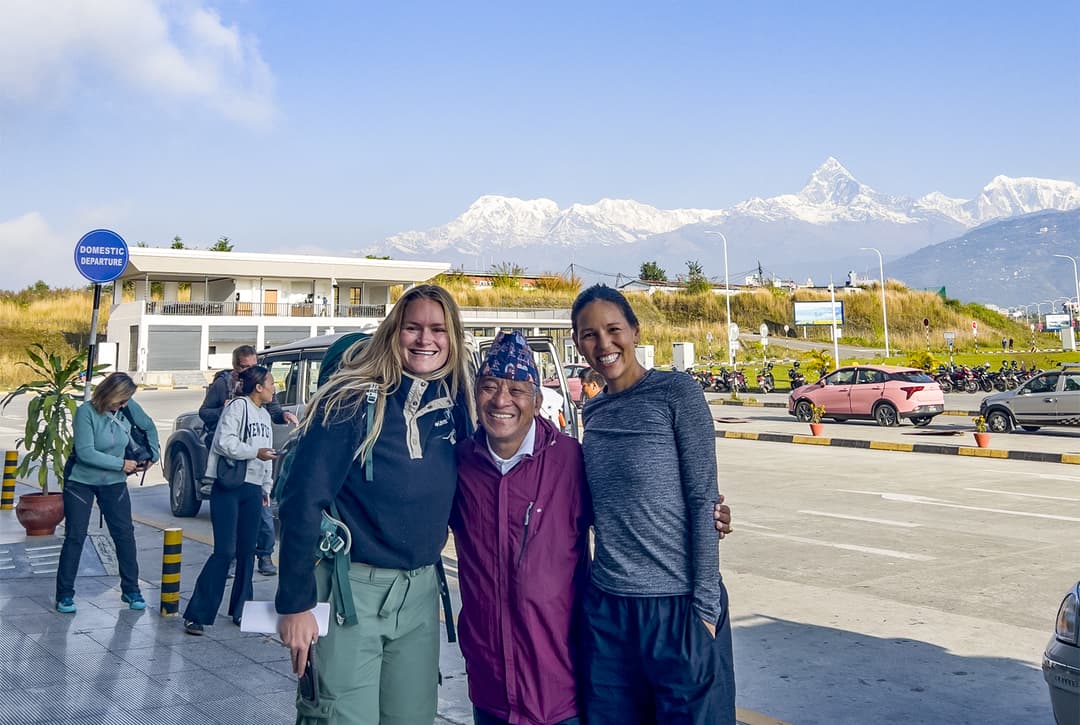
Today marks the end of your 17-day Upper Mustang Tij Festival Trek journey. After breakfast or based on your departure time, one of our representatives will transfer you to the airport, approximately 3 hours before your scheduled flight.
This allows you to check in your baggage, clear security screening, and immigration without any last-minute hassle. With your flight back home, camera full of photos and memories of the Himalayas, you will bid farewell to Nepal until your next trip.
The best seasons or months for trekking in Upper Musting during key local festivals are spring and late summer/early autumn. During the spring season, specifically in May/June, one of Lo Manthang’s most significant festivals, the Tiji Festival, is celebrated.
Similarly, during the summer/monsoon season or in August, the Yartung Festival is celebrated, which usually coincides with the Hindu festival, Janai Purnima. Moreover, festivals such as Losar (Tibetan New Year), Toren La, and La Phewa are celebrated in winter.
You can learn in detail about the different festivals celebrated in Upper Mustang here .
The Tiji Festival, also known as Techi, Tenji, or Tenpa Chirim, is one of the most popular festivals in the Upper Mustang region. The word “Tiji” is short for Tenpa Chirim, which means “Prayer for World Peace”.
The festival holds great significance to the Loba people. It was first started by Khenchen Sonam Lhundrup, the son of Mustang’s second king, in the early 15th century. It was officially established in the 17th century by the 8th King of Mustang, Samdup Rabten. The festival features the sacred masked dance associated with Vajrakila, which was taught by great masters like Padmasambhava at Samye Monastery.
The Tiji Festival is 3 days long, and is celebrated with masked dances called Tsa Chaam, Nga Chham, and Rha Chaam. Monks mark the beginning of the festival with the sound of dhungchen, a Tibetan instrument, followed by prayer rituals in the monasteries.
During the festival, sacred masked dances are performed in front of the Lo Manthang Palace courtyard, where dancers portray or tell the story of Dorje Sonam’s victory over evil.
In 2026, the festival was celebrated on:
May 14
May 15
May 16
The Tiji Festival 2027 will be celebrated on:
June 1st
June 2nd
June 3rd
The Sacred Mask Dance, or Bagcham, is a holy ritual celebration where the dance is performed by monks to ancient rhythms. Bagcham is revered as a protector ritual believed to ward off negative forces, preserve the spiritual identity, and maintain regional harmony.
The tradition was started during the time of Pachen Shakya Chokden, who instructed the performance to protect the Mustang region from spiritual and physical harm.
The festival was originally celebrated on the 29th day of the 9th month in the Tibetan Lunar calendar; however, it is now celebrated on the 29th day of the 5th month. Monks dance to the rhythm of Tibetan instruments like dungchen (long horns), rolmo (cymbals), and drums.
Each year, locals and devotees gather around the gompa to receive blessings, watch the dances, make offerings, and preserve their cultural identity.
The Upper and Lower Mustang regions both celebrate festivals with great cultural significance to the local communities. While similar, people from the upper and lower mustang celebrate each festival in their unique ways.
|
Festivals |
Upper Mustang |
Lower Mustang |
|
Tiji Festival |
3-day festival celebrated with masked dances, prayer chants, making offerings, and telling tales of the Dorje Jono’s victory over evil |
Most Lower Mustang locals travel to Upper Mustang to witness the prayer rituals, dance, and celebrate. Whereas others celebrate the festival with a community gathering at local monasteries |
|
Yartung Festival |
Celebrated with a direct royal participation in horse racing, traditional dance, and communal feasting |
3-day celebration with traditional dancing, horse racing, rituals, and feasting for community harmony rather than a royal monastic event |
|
Dhekep Festival |
It is not celebrated in the Upper Mustang region |
Annual celebration featuring masked monk dances, traditional Tibetan instruments, and prayer rituals for community prosperity, peace, and warding off evil spirits |
|
Yak Festival |
Not celebrated in the Upper Mustang |
Celebrated twice annually during the spring and monsoon as a traditional procedure to cure gastritis, jaundice, bowel issues, and altitude issues by drinking fresh yak blood |
During the Upper Mustang festival, local men wear traditional attire like Chuba or Chupa, a warm, ankle-length unisex robe usually made from thick wool or sheepskin. Similarly, they are paired with Docha, a knee-length boot made of leather and felt, a fur-lined hat (mainly during winter, and leather belts adorned with a traditional Tibetan dagger.
On the other hand, women wear Bakkhu or Kho, a sleeveless, robe-like dress that is worn over a full-sleeved blouse called honju. It is often paired with traditional jewelry in turquoise, coral, and amber in color. In addition, married women add a woven wool or silk apron, often called Pangden, with their bakkhu.
Lastly, monks performing the sacred Cham dances are adorned in colorful costumes and traditional masks representing deities and demons.
Foreigners cannot obtain the necessary permits, such as the Restricted Area Permit (RAP) for the Upper Mustang Tiji Festival Trek. International travellers are required to process the permit from a registered travel agency in Kathmandu or Pokhara before leaving for the Upper Mustang Trek.
You can go to a registered agency, submit a copy of your passport, a valid Nepal visa, passport-sized photographs, and your itinerary for the process.
The necessary permits are:
Although solo trekking is allowed in the region, independent trekking is strictly prohibited as it falls under the restricted region. This also helps monitor tourist volume, maintain safety, and preserve the region’s century-old Tibetan Buddhist culture and heritage.
Read our genuine feedback from past travelers with Nepal Hiking Team sourced from TripAdvisor, Google, Facebook, and Trustpilot.
A more remote trek than the usual routes, but all the more rewarding for it. The scenery was spectacular, with fascinating history and culture. We trekked up the western trail and returned via the eastern side, covering 170 km.
From past experience, we knew Nepal Hiking Team was excellent.
This time, we were even luckier with our fantastic guide, Dipendra “Dip.” Nothing was ever too much trouble, and his smile lit up every tea house. He also kept us off the road as much as possible, with only about 10% of our trek on it.
Ask for Dip 👍🏻
Did the Upper Mustang trek with Nepal Hiking Team for the first time.
Everything—from airport pickup to accommodation and logistics—was flawless. The response time via email before the trip was also prompt when finalizing details.
During the trek, we made some unusual and demanding requests (probably more than once), yet our guide and porters did their best to accommodate us—even going as far as trying to find a live chicken for dinner on our last night in Lo Manthang!
The trek wasn’t the toughest, but our safety was always their priority. Midway through the descent, one of our team members was hit with AMS in the middle of the night. Balaram, Arun, and their team acted immediately, rushing everyone to a lower altitude and arranging a helicopter to Pokhara for medical treatment. Despite facing a lot of issues with an unhelpful insurance company, they managed to secure the helicopter in time, ensuring our team member received medical attention before his condition worsened. Huge kudos for that!
Would definitely recommend Nepal Hiking Team to anyone looking to trek in Nepal.
I recently completed a most startling trek along with a friend to the restricted Upper Mustang Region of Nepal in April with the Nepal Hiking Team.
This was my second trek with Nepal Hiking Team to the Upper Mustang region. I have discovered that both my trips were well organized by NHT and everything was done very efficiently and wonderfully.
On my latest trek, I was in touch with Nepal Hiking Team and Ganga via email gave every detail about the trek. I was seeking for a trek that was different from my previous trek. Therefore, I decided to trek to the area on the east side of the Kali Gandaki River. All my queries were resolved via the emails within a short time. He also gave me a customized itinerary and quoted a price. I accepted his proposed program as it met all our requirements in a reasonable price.
For Upper Mustang Trek, a guide was must and NHT provided professional guides as well as a porter for two of us. The guide was Santa, a very admirable guide. He was much familiar with the areas that we strolled and looked after us very well. His main concern was our safety and wellbeing. The porter was Vishnu; he too was wonderful and strong. We enjoyed the company of both the porter and guide.
I hope that someday, I will trek to Nepal again and definitely I would book and trek with Nepal Hiking Team. I would highly suggest that anyone planning for visiting Nepal for a trek must contact them.
Thanks again Nepal Hiking Team.
Garfield Saunders (Age 77)
Victoria BC, Canada
Our Upper Mustang Tiji Festival group trek caters to 2 to 10 trekkers, with an average of 6 to 8 per group. You can also book a solo trek for a more personalized and private trekking experience.
Our group departures are guaranteed for scheduled dates regardless of group size.
Yes, solo trekkers can join our Upper Mustang Tiji Festival Trek group if the slot is available and the departure date aligns with their scheduling. If you’re not joined by other fellow trekkers, we will operate the tour at solo trekking rates.
You can swiftly book a private Upper Mustang Tiji Festival Trek if you’re traveling with your friends, family, or solo. Our private trips offer flexible departure dates, pacing, and daily walking hours.
If you’re a solo trekker, you will have to pay additional solo booking rates for our personalized and dedicated support.
Most nationalities, except for a few countries, can obtain visas upon arrival at Tribhuwan International Airport. For the visa processing, you will need a passport with a minimum of 6 months' validity, a passport-sized photo, proof of travel or itineraries, and a copy of travel insurance.
For complete information on the on-arrival visa process, visit our Nepal Visa Information page.
Yes, we arrange airport pickup and drop-off services for your arrival and departure via a private vehicle. These services are included in our trek package, and guests are not required to pay extra for them.
After booking, trekkers will stay at a 3-star hotel, such as the Woodapple Hotel & Spa in Thamel, and a similar-category hotel in Lakeside when in Pokhara.
In addition, guests can also upgrade their stay to a 4-star or 5-star hotel as per their preference, with prior notice. However, as our package includes accommodation in 3-star hotels, any additional cost regarding the upgrade will not be covered by the Nepal Hiking Team.
An extra night in Kathmandu can cost around USD 45 for a single room and USD 50 for a twin or double room. The cost includes breakfast and all applicable taxes.
Trekkers who are planning to extend their stay can notify us, and we will assist with the booking and accommodation arrangements. Please note that the extended booking will not be included in the trip cost.
During the pre-trek briefing in Kathmandu, we will introduce you to your trek guide, discuss the journey ahead, weather conditions, and any major route updates or changes. Similarly, we will collect a copy of your passport and travel insurance for the record, and clear any remaining payment for the trek.
After that, we will provide you with essential trekking gear like a sleeping bag, a down jacket, a duffel bag, a detailed Upper Mustang Tiji Festival Trek map, an NHT t-shirt, and a cap. During this meeting, trekkers can ask any last-minute questions regarding the trek, share their insights or concerns, and clarify any doubts.
You can book the Upper Mustang Tiji Festival Trek by filling out the booking form on our Departure section with your personal information, travel details, and flight details. Trekkers can provide their flight and insurance details later on as well.
After you fill out the form, you can secure your booking with a 20% deposit payment. Your spot will be booked once our team confirms your booking form and payment.
Trekkers can pay the remaining trip balance during the pre-trek briefing after arriving in Nepal. We accept both cash and card payments.
In case of cancellation, your 20% deposit won’t be refunded. The NHT team will store your 20% deposit payment as a future credit in the company’s system with no expiration date. This can be used for your future trip with us swiftly.
Similarly, if you’ve made the full payment, 80% of the payment will be refunded to your account promptly, while the remaining 20% stays as a future credit.
The Upper Mustang Tiji Festival Trek is considered moderate to challenging as it requires 5 to 7 hours of daily walking across high-altitude desert-like terrain. While the trek is non-technical, the rugged landscapes, strong afternoon winds, and steep ascent and descent can increase the risk of altitude sickness.
With proper preparation, acclimatisation, and a steady pace, the Upper Mustang Tiji Festival Trek is possible even for all hikers.
The walking portion of the Upper Mustang Tiji Festival Trek is approximately 125 km or 77 miles, while flights/land transfers cover about 490 km or 304 miles. The trekking trail officially begins at Kagbeni and ends at Muktinath.
No, there is no age limit for the Upper Mustang Tiji Festival Trek with the Nepal Hiking Team. Over the past 3 decades, we have guided trekkers from as young as 6 to older trekkers in their 70s safely and smoothly.
Travellers can start preparing for their Upper Mustang Tiji Festival Trek with light cardio exercises such as cycling, running, and swimming. This helps build leg strength, which is essential for the 17-day trek.
Similarly, hiking with a weighted backpack on varied terrain and breaking in your trekking boots helps your body gradually adapt to the journey ahead.
Yes, trekkers are required to have travel insurance for the Upper Mustang Tiji Festival trek, though the trek is non-technical. The policy should cover high-altitude rescue up to 5,000 m, emergency evacuation, and medical treatment for altitude sickness such as AMS, HAPE, and HACE.
Similarly, the policy should cover trip cancellation or interruption and medical repatriation. Based on our previous guests' recommendations, agencies such as AXA Travel Insurance, Genki Traveler, Worl Nomads, and Allianz Travel Insurance are some of the top choices.
Our guides are professionally trained to handle medical emergencies such as cuts and bruises along the trail, monitor your daily oxygen levels, and detect the AMS symptoms early.
When guests feel unwell or find the ascent or descent challenging, our guides arrange additional rest stops, maintain a slow and steady pacing, and even suggest returning to a lower altitude if your health doesn’t improve.
In case of serious injuries or altitude sickness, they coordinate with a helicopter for emergency evacuations. Our guides carry years of in-ground experience and prioritize the safety and well-being of each trekker.
The best time for the Upper Mustang Tiji Festival Trek is during spring, especially the month of May and sometimes June.
As the festival dates are determined using the Tibetan Lunar calendar, it usually falls in the third Tibetan month, which aligns with mid-May to early June on the Gregorian calendar.
While it is not mandatory, trekkers are recommended to get the rabies vaccination due to the presence of stray dogs along the Upper Mustang Tiji Festival trail. Nonetheless, you can consult with your doctor for personalized vaccination based on your medical history.
To reduce the risk of altitude sickness, you should maintain a steady hiking pace, stay hydrated, and eat nutritious meals throughout the journey. Trekkers should not rush the itineraries, especially after reaching higher altitudes such as Lo Manthang, where the air is thinner and the oxygen level drops.
Also, guests are advised to let their guides know when they start feeling uncomfortable or start showing signs of altitude sickness.
Your main luggage or the duffel bag will be carried by our porter throughout the trek. The maximum weight limit for one porter is 25 kgs, which is divided into two trekkers (one trekkers = 12 kgs max).
Trekkers are advised to pack heavy items such as jackets, sleeping bags, and extra clothes in the duffel bag and pack essentials like water, cash, snacks, and permits in their daypack.
Yes, you can store your extra luggage at the hotel’s safety locker back in Kathmandu. This service is provided free of cost, allowing trekkers to avoid overpacking while safely storing extra luggage.
Yes, Nepal Hiking Team provides essential trekking gear like a sleeping bag and a down jacket, which are rated to handle temperatures as low as -15°C, a t-shirt, cap, and a detailed map.
Similarly, we also provide a duffel bag with a 70 L capacity where you can pack your spare clothing, footwear, toiletries, sleeping gear, and other items.
Yes, trekkers will get a trip completion certificate after completing the Upper Mustang Tiji Festival Trek. This certificate is a token of appreciation and a way of honoring your dedication and accomplishment from the NHT family.
Throughout the trek, we provide twin-sharing lodges with comfortable beds, clean mattresses, blankets, and pillows. In lower altitude villages like Kagbeni, Muktinath, Chele, and Geling, some teahouses offer private bathrooms and hot showers.
Whereas, in higher altitudes such as Lo Manthang, facilities become more basic and extra amenities become more expensive.
Yes, teahouses in the lower regions offer Wi-Fi services for an extra charge. The cost of Wi-Fi goes up as you reach a higher altitude.
Similarly, you can purchase a local NTC or Ncell SIM card in Kathmandu or Pokhara and purchase data packs for internet connectivity. However, mobile networks can be unstable or unavailable in higher altitudes.
Yes, travellers can charge their devices, such as phones and cameras, during the Upper Mustang Tiji Festival Trek. Teahouses provide charging facilities for an extra cost, which can increase as the altitude increases.
You can also carry a power bank as a backup.
Yes, you can find Western toilets in teahouses in lower altitudes, such as Kagbeni, Chele, Geling, and Muktinath. In winter, especially in higher elevations, trekkers will find traditional squat toilets as Western toilets are harder to clean.
Our Upper Mustang Tiji Festival Trek package includes twin-sharing rooms. Trekkers can upgrade their stay to a single room for an additional cost, depending on room availability.
Lodges and teahouses along the Upper Mustang region offer a wide range of nutritious meals from multiple cuisines like Nepali, Tibetan, Indian, Italian, and sometimes Chinese.
Some of the staple dishes during the trekking trail are dal bhat, momo, soup, Tibetan bread, fried rice, and pasta. Teahouses prepare meals with vegetables and fresh ingredients from their own garden.
Yes, you can find vegetarian, vegan, or gluten-free meal options during the Upper Mustang trek. Trekkers can inform their guides in advance of any allergies or dietary requirements, allowing them to coordinate with the teahouses in advance.
Hikers can find several drinking water options during the Upper Mustang Tiji Festival trek. We recommend trekkers drink natural spring water only after using the purification tablets provided by our guides.
Similarly, you can also carry a reusable filtered water bottle or purchase boiled water at teahouses along the way for convenience. Although bottled waters are available, they can be costly in higher altitudes and are strongly discouraged due to their negative impact on the environment.
Yes, trekkers can book a private trip and customize the Upper Mustang Tiji Festival Trek itinerary based on their preferred service level, pacing, and special requests. In case of group departures, trekkers will follow our standard itineraries, which cannot be modified.
While tipping is not mandatory, you can offer a gratuity to your guide and porters at the end of the trek, before returning to Kathmandu. As a tip is a gesture of appreciation for their assistance and hard work, trekkers can tip the amount that reflects their service standard.
Trekkers are highly recommended to carry around NPR 25,000 to 30,000 to pay for extra amenities such as hot showers, snacks, Wi-Fi, and device charging. As ATMs are not available or reliable in the Himalayan region, it is best to withdraw the cash in Kathmandu or Pokhara before you start the journey.