21 Days
Check Our Risk-Free Booking Policy View Details

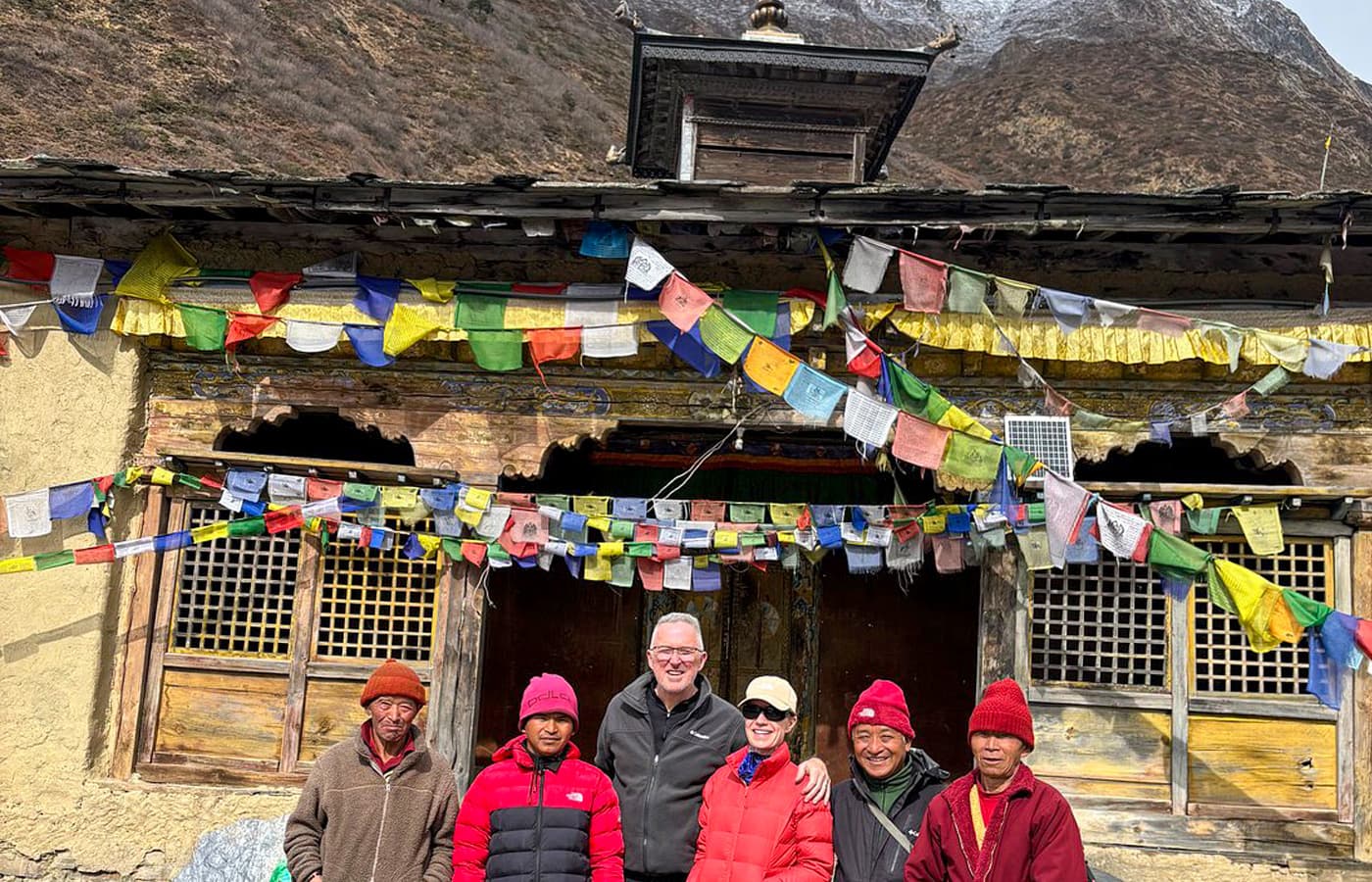
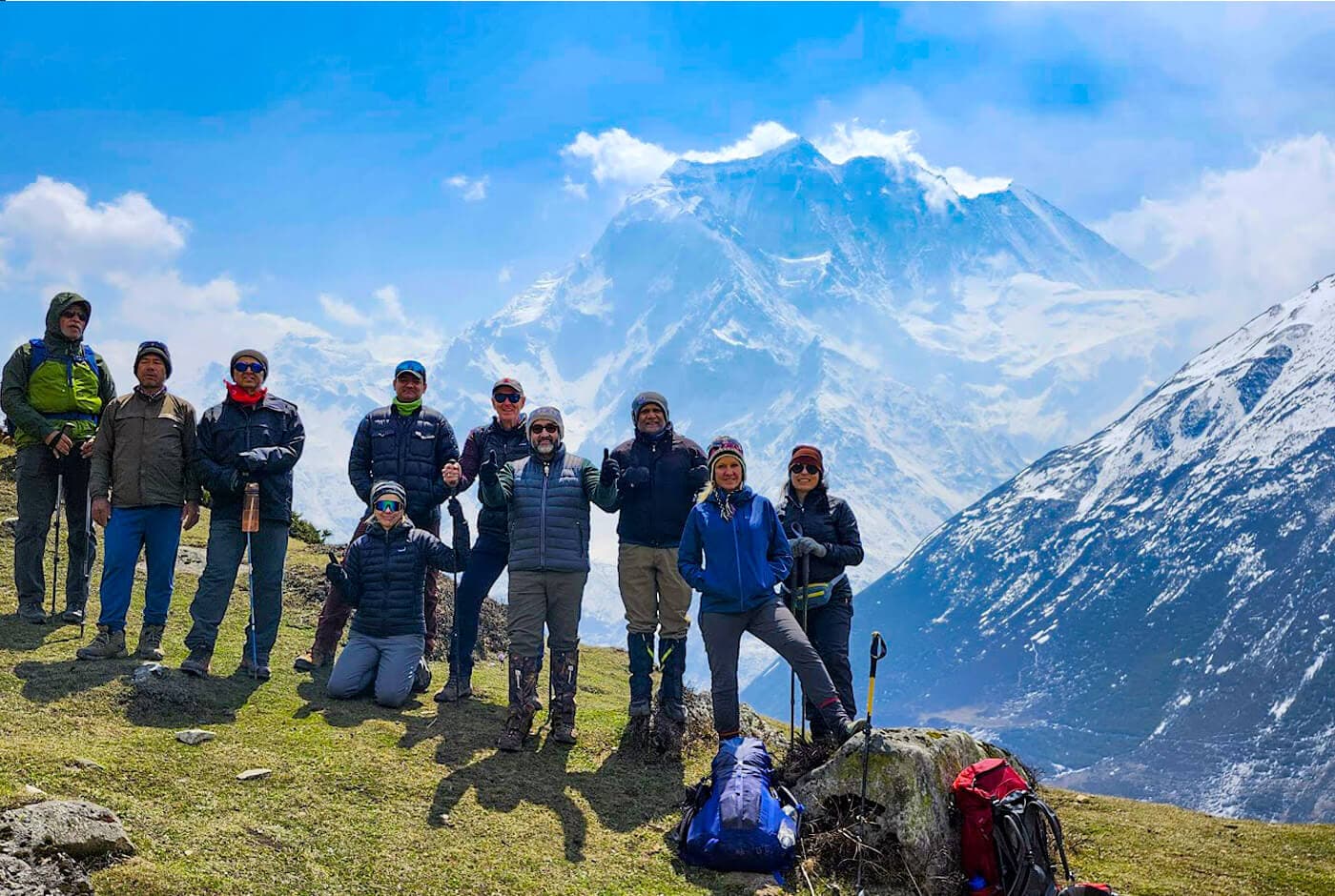
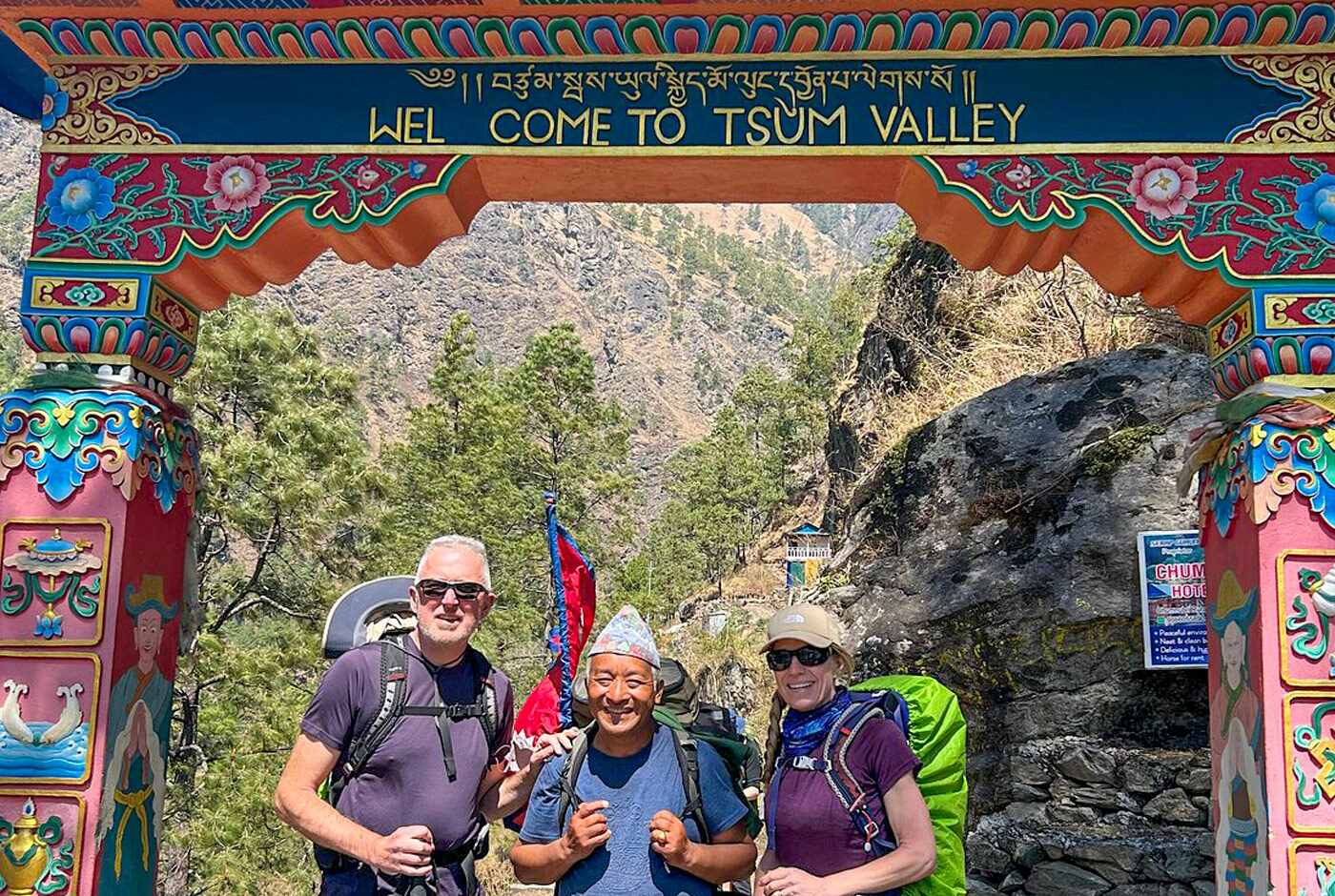
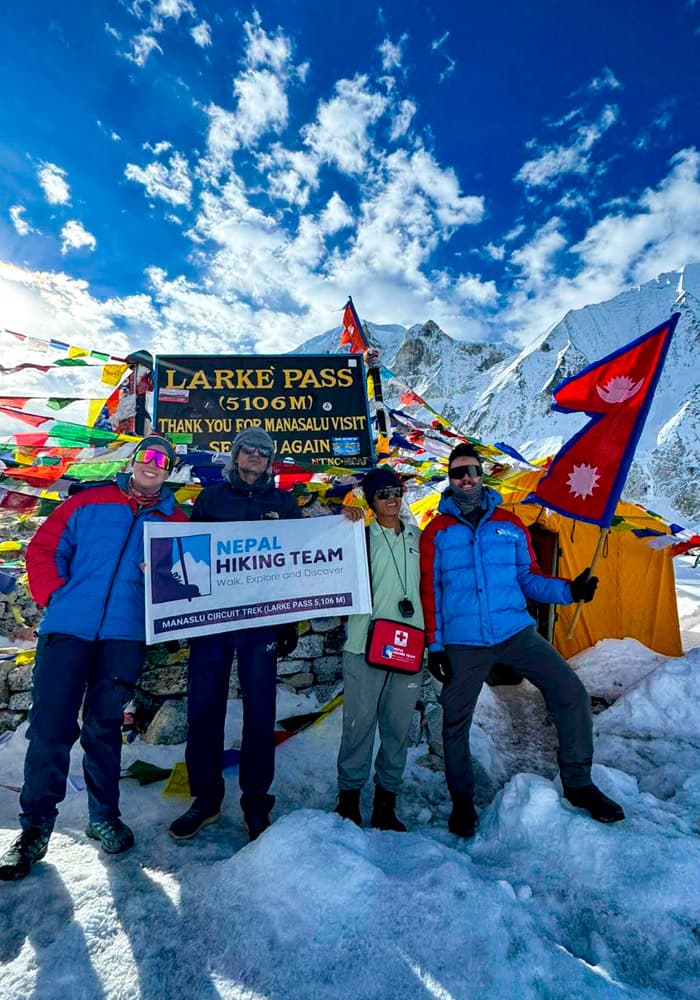
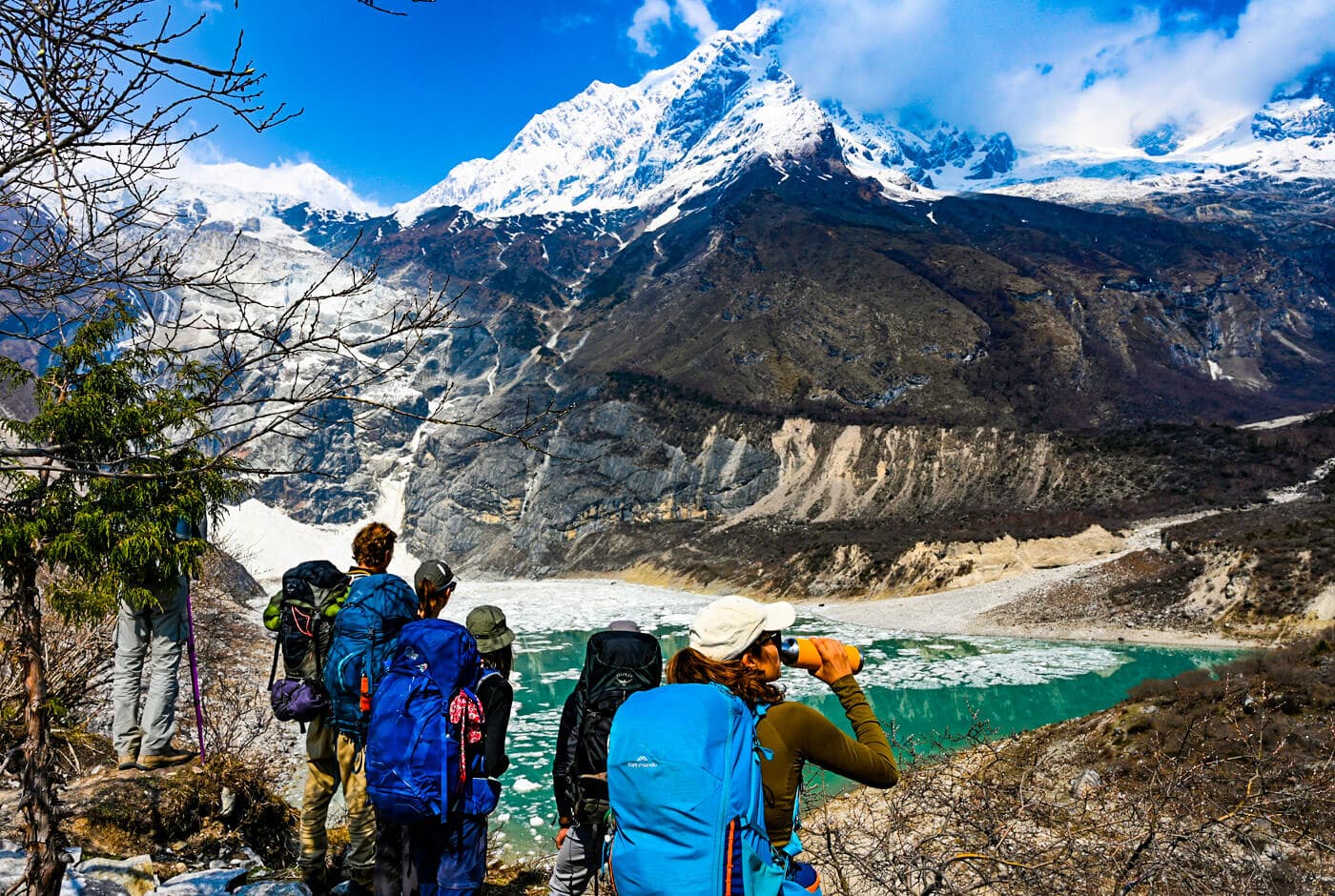
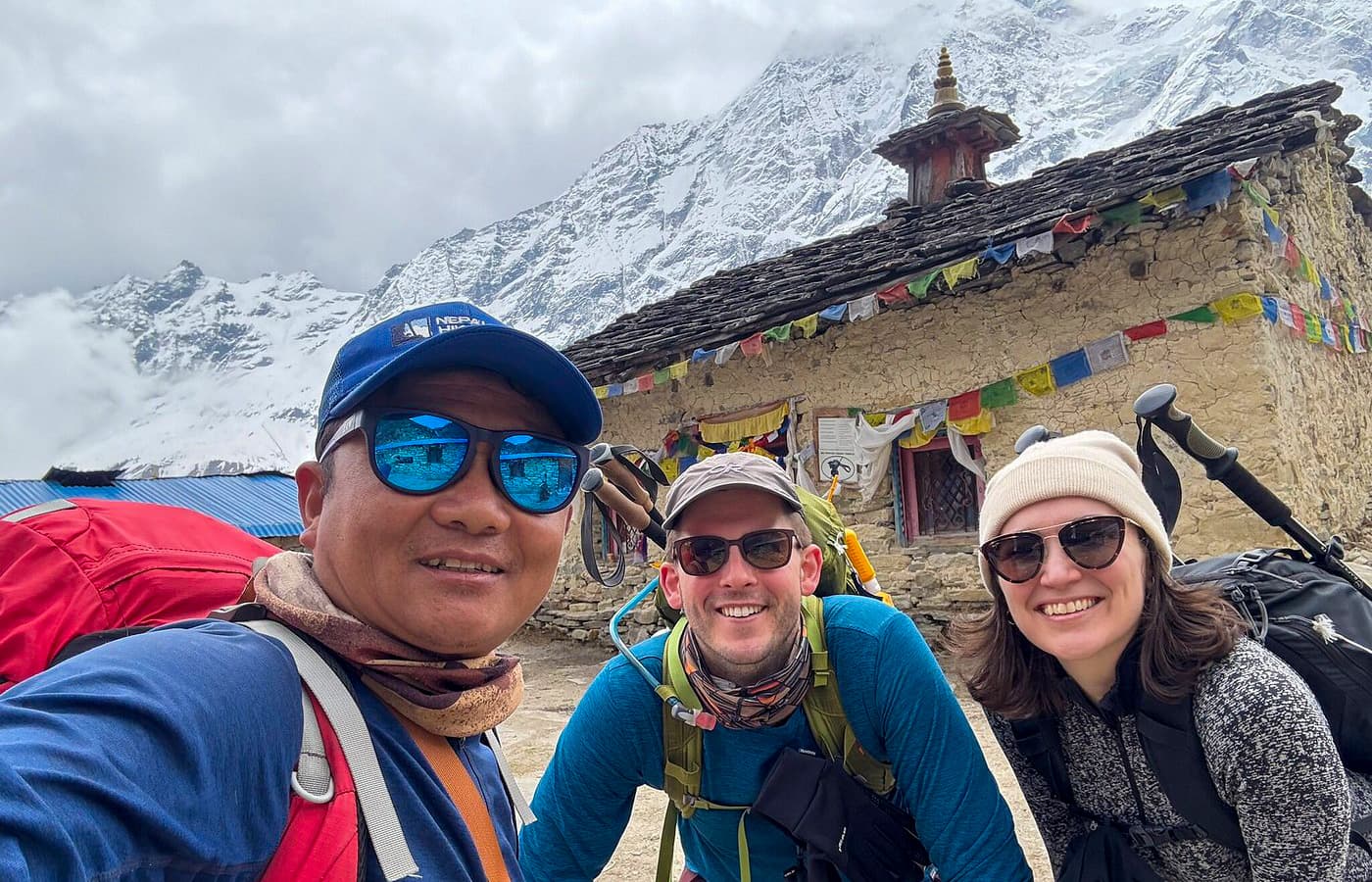
The Tsum Valley with Manaslu Circuit Trek is a 21-day Himalayan adventure that combines two of Nepal's most rewarding treks in the remote Himalayan regions into a single journey. The trek blends the cultural richness of Tsum Valley with the dramatic mountain scenery and high-altitude challenge of the classic Manaslu Circuit.
Starting from Kathmandu, the journey follows the Budhi Gandaki Valley through traditional Tibetan-influenced settlements before entering the secluded Tsum Valley. In this section, trekkers explore centuries-old monasteries, ancient mani walls, local villages, and sacred Buddhist sites that have preserved their cultural identity for generations.
After exploring the upper reaches of Tsum Valley, including Mu Gompa and Rachen Gompa, the route reconnects with the main Manaslu Circuit trail. The journey continues through the high Himalayan settlements of Samagaon and Samdo, where trekkers acclimatise before attempting to cross the high pass.
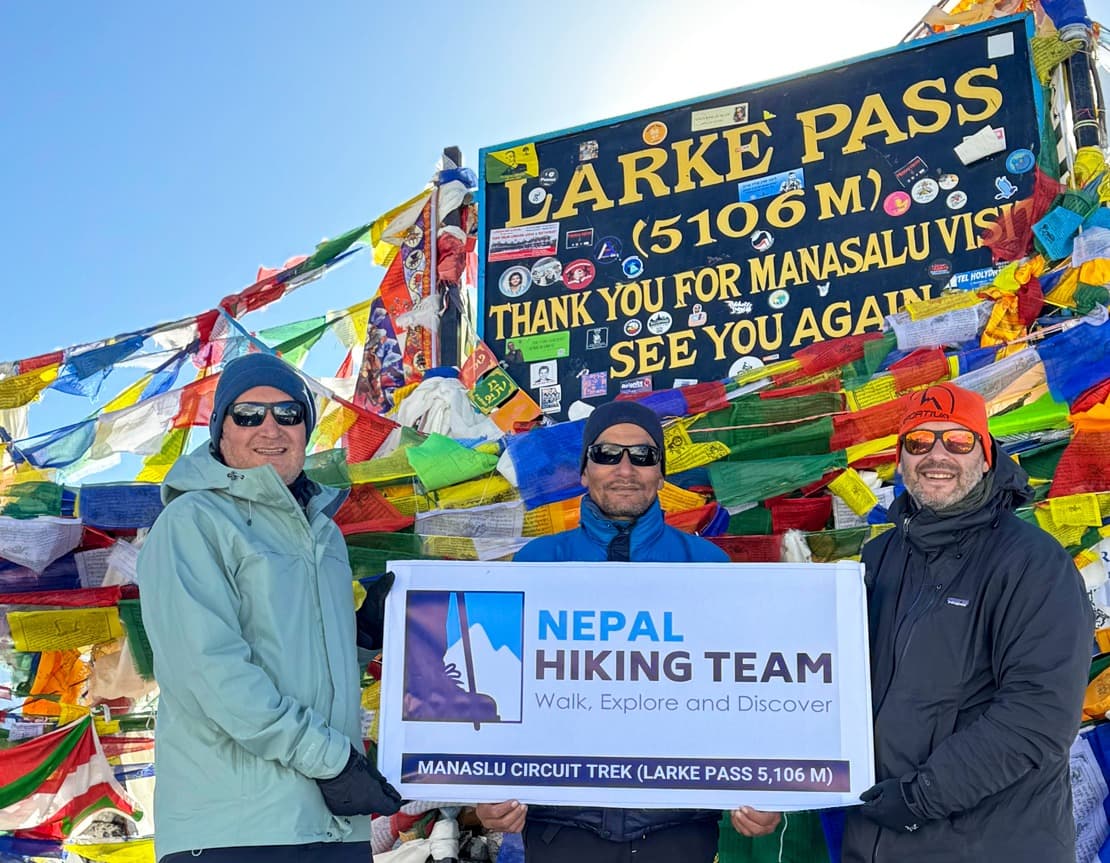
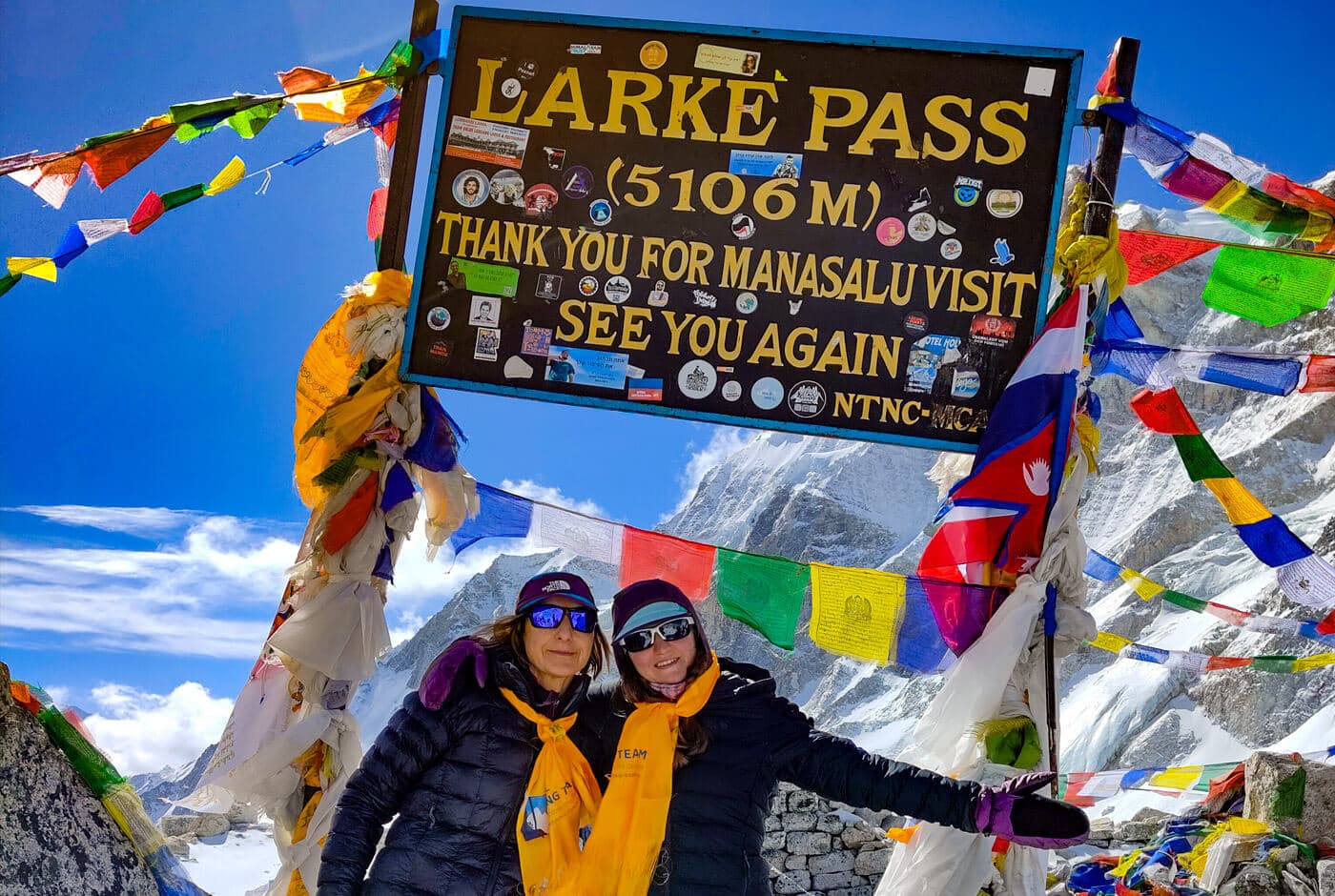
The trail reaches its highest point at Larkya La Pass (5,106 m), which rewards trekkers with panoramic views of Mt Manaslu, Himlung Himal, Annapurna II, and other surrounding ranges. While descending, the trail enters the Annapurna region through alpine valleys, glacial landscapes, and remote mountain villages such as Bhimphedi and Tilije, before ending at Dharapani.
The Tsum Valley with Manaslu Circuit Trek offers an unforgettable experience by combining a challenging high-pass crossing, remote mountain wilderness, and cultural immersion in one. The best time for spring (March to May) and autumn (September to November), with the most favorable weather and trail conditions.
As of 2026, even solo travelers can arrange the necessary permits through a registered trekking agency, but independent trekking remains prohibited. A licensed guide is mandatory as the region falls under the restricted zone.
Overall, this journey combines the spiritual heritage of Tsum Valley with the high-altitude adventure of the Manaslu Circuit, creating one of Nepal's most diverse trekking experiences.
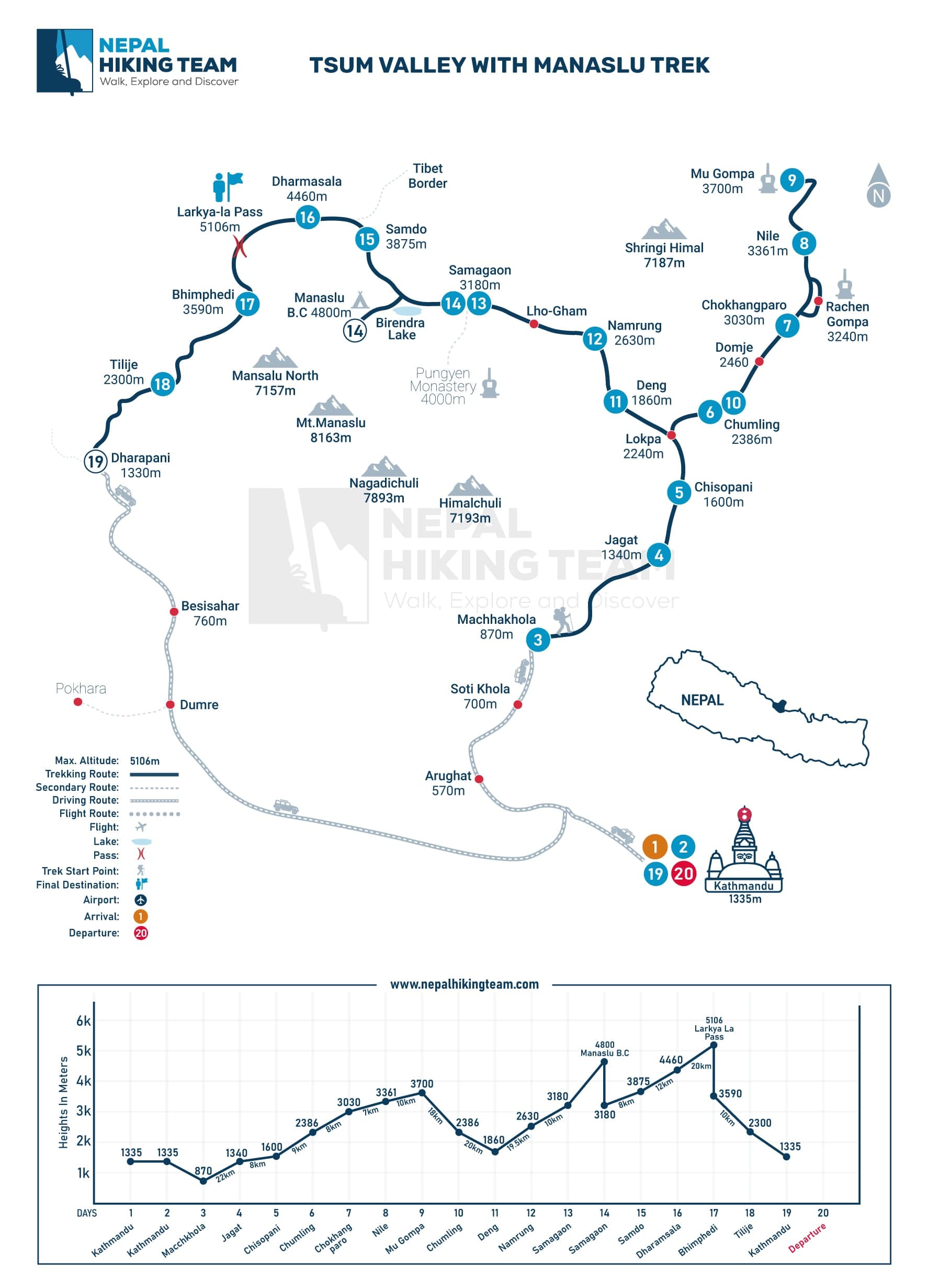
The trek begins with a scenic drive from Kathmandu via Dhading Besi to Machhakhola, the starting point for our Tsum Valley with Manaslu Circuit Trek. Following the Budhi Gandaki River, the trail passes through villages such as Jagat, Chisopani, Chumling, and Lokpa before entering Tsum Valley.
Within the lower Tsum Valley, the route explores culturally significant settlements including Chumling, Chhokangparo, Nile, and Mu Gompa. Trekkers visit ancient monasteries, traditional Tibetan Buddhist communities, and sacred sites such as Piren Phu, also known as Milarepa Cave.
After returning from Mu Gompa, the trail rejoins the main Manaslu Circuit route at Deng village and continues toward Namrung, Samagaon, and Samdo. Samagaon is a crucial acclimatisation point during the trek while offering exceptional views of Mt. Manaslu and surrounding peaks.
Beyond Samdo, the route climbs gradually toward Dharamsala, passing the Syacha glacier, before crossing Larkya La Pass at 5,106 meters. From the pass, you can see panoramic views of Cheo Himal, Himlung Himal, Kang Guru, Annapurna II, and Larke Peak.
Continuing on the trail, hikers descend through Bhimphedi, crossing alpine forests and small villages such as Tilije before reaching Dharapani, where the trekking portion officially concludes.
Apart from Nepal Hiking Team’s 20-day Tsum Valley with Manaslu Trek package, we offer several alternative routes with equally rewarding Himalayan experiences.
Complete the classic Manaslu Circuit trek with remote villages, rich Tibetan culture, and the crossing of Larkya La Pass at 5,106 m
Explore a remote Himalayan trek known for its century-old Tibetan culture, traditions, and the unique Shyagya tradition
Our Tsum Valley with Manaslu Circuit Trek is carefully designed to combine cultural exploration, safe acclimatization, and high-altitude adventure within one well-organized itinerary. The Nepal Hiking Team’s operational team manages transportation, accommodation arrangements, permits, and trekking logistics, allowing trekkers to focus on the experience itself.
Our government-licensed guides provide valuable insights into the history, culture, and traditions of both the Tsum Valley and the Manaslu region while arranging reliable teahouse accommodation and monitoring daily trail conditions. We also handle all required permits, including the Tsum Valley Restricted Area Permit, Manaslu Restricted Area Permit, Manaslu Conservation Area Permit, and applicable local permits.
Whether you are joining as an individual traveler or part of a group, our team customizes operational details according to weather conditions, trail status, and accommodation availability to help create a safer, clearer, and better-organized trekking experience.
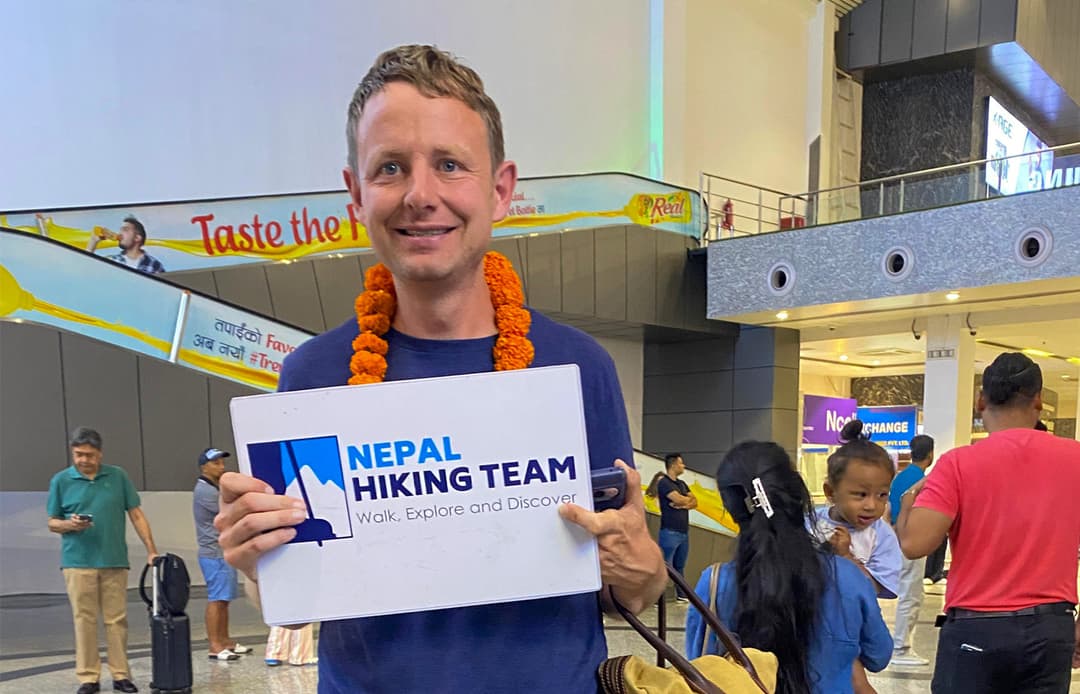
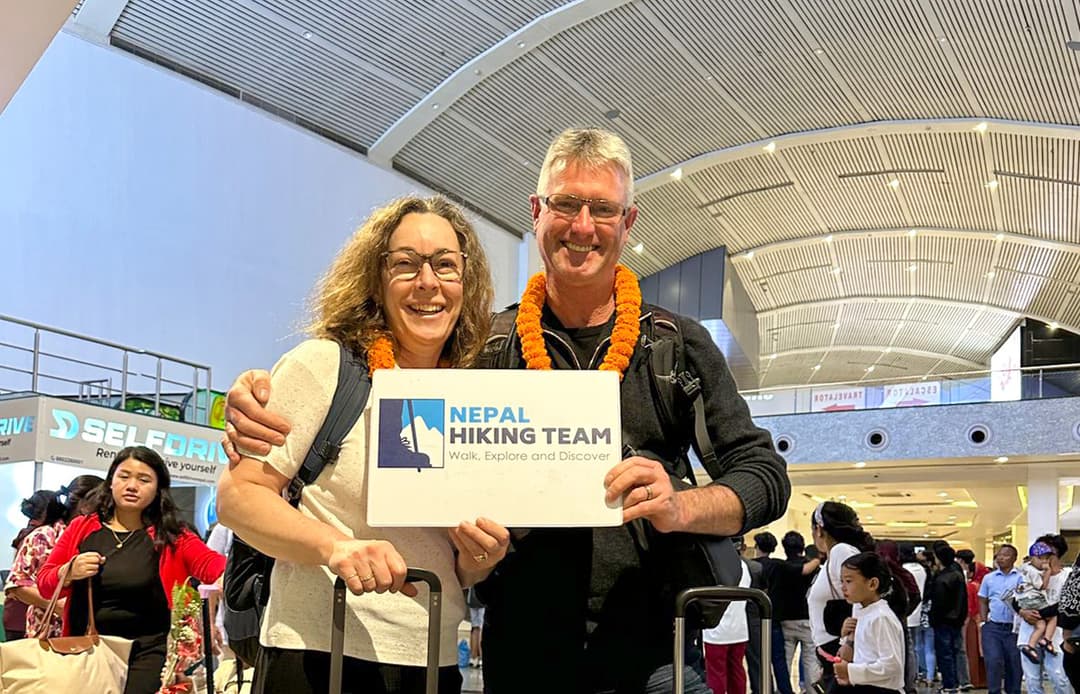
Upon landing at Tribhuvan International Airport, travelers will complete immigration procedures and collect their luggage before leaving the terminal. A Nepal Hiking Team representative will be standing outside the airport holding a welcome sign and will arrange transport to the hotel.
The journey into the city offers the first glimpse of Kathmandu's lively streets. Following hotel check-in, the rest of the day remains open for relaxation and recovery from travel. Trekkers can also explore the nearby area with a leisurely stroll through the local neighbourhood.
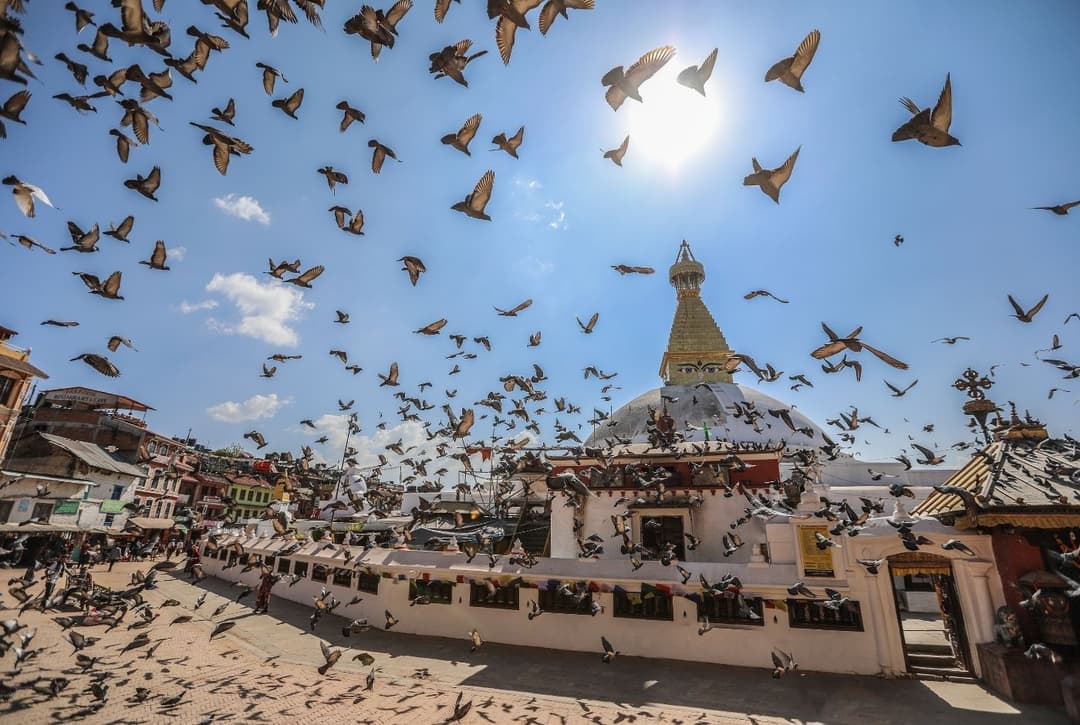
After breakfast, we will pick you up from the hotel and head out for sightseeing around the city. Our guide will take you to Nepal’s UNESCO World Heritage Sites, such as the Boudhanath. This spherical stupa at the heart of Boudha is one of the epicenters of Tibetan Buddhism in Kathmandu.
Similarly, the second location will be Swoyambhunath Stupa, also known as the Monkey Temple, which offers a panoramic view of the valley. Another location is the Pashupathinath Temple, one of Nepal’s most revered temples dedicated to Lord Shiva.
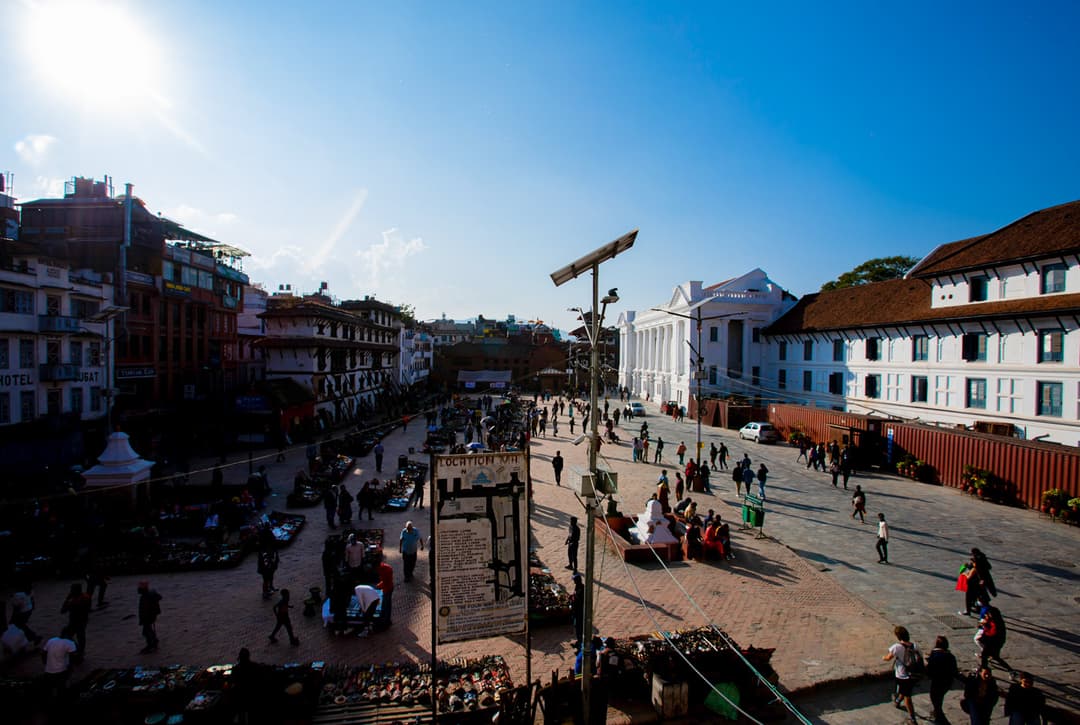
Lastly, we will also take you to the Kathmandu Durbar Square, which is also known as “the Museum of Temples”. The durbar was the royal residence of ancient Malla Kings and later the Shah dynasty of Nepal. While in Kathmandu Durbar Square, you will also visit the sacred home of the Kumari, the Living Goddess of Kathmandu.
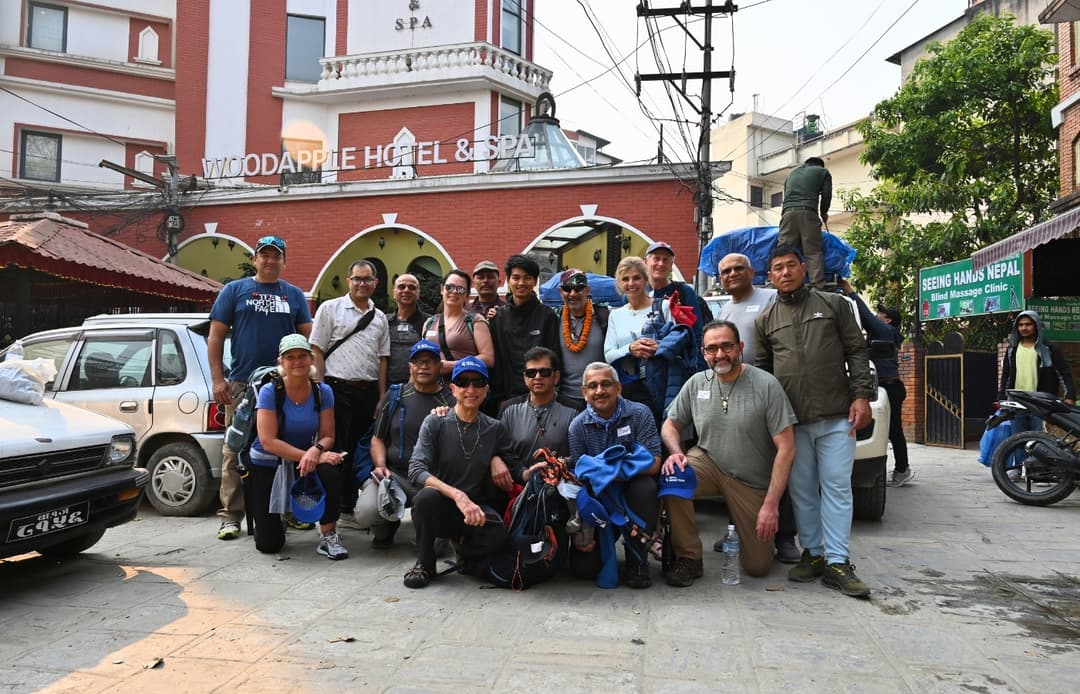
Overnight stay at Hotel Woodapple and Spa or a similar category hotel in Kathmandu.
Leaving Kathmandu, you will head towards Maccha Khola on a private vehicle. The drive takes about 8 to 9 hours, via the Prithivi Highway, passing terraced farmlands, river valleys, and roadside settlements.
Along the route, you will pass through Dhading Besi, Arughat, Soti Khola, and other local settlements, offering a glimpse of the Nepali rural lifestyle. The road follows river valleys, especially the Trishuli and Budhi Gandaki rivers.
On a clear day, travellers can get a glance of Mount Manaslu and Ganesh Himal in the distance. Most of the settlements around Labubesi are inhabited by the Gurung community.
You will reach your destination, Maccha Khola, for an overnight stay at a pre-booked lodge. Maccha Khola is a riverside village that serves as a primary starting point for treks in the Manaslu region.
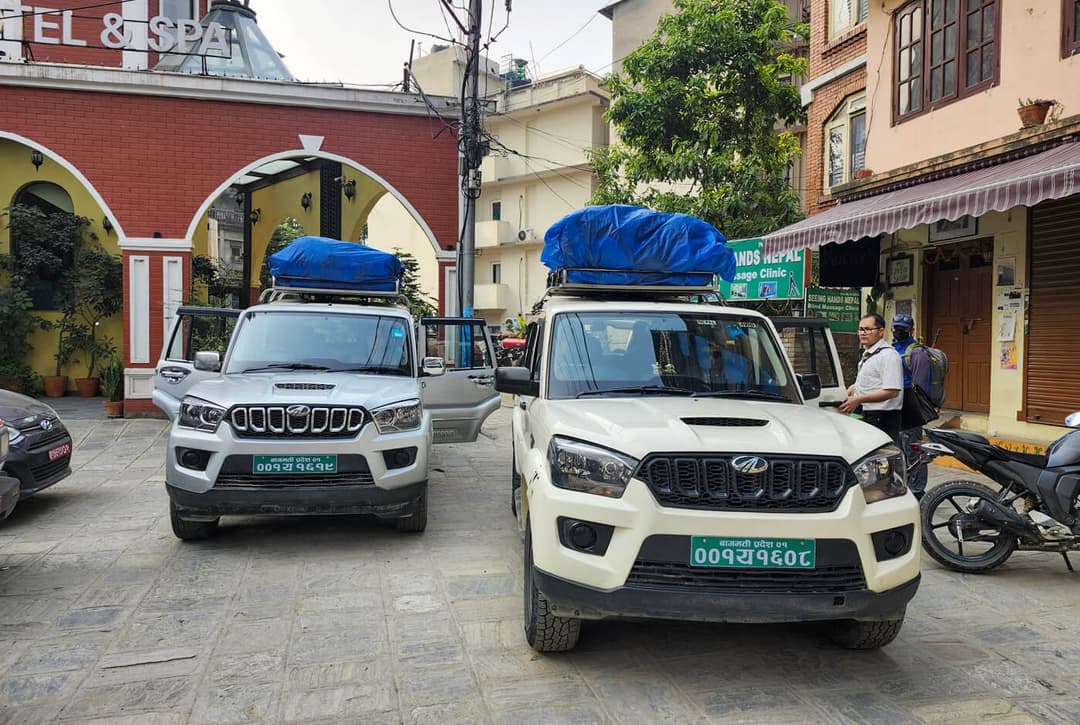
The trekking portion of the Tsum Valley and Manaslu Circuit Trek begins today via the off-road section for almost 2 hours. The road is traditional Nepali flat and traverses through gradual uphill and downhill sections, rhododendron, and subtropical forests.
The trekking trail is an hour longer than the road section. Continuing, you will reach Yaru Bagar, from where the main circuit trail and route to Ganesh Himal Base Camp separate.
Hikkers usually stop for lunch at Dovan, Ekle Bhatti, or Yaruphat, depending on one’s pace and walking speed. You will arrive at Jagat for an overnight stay.
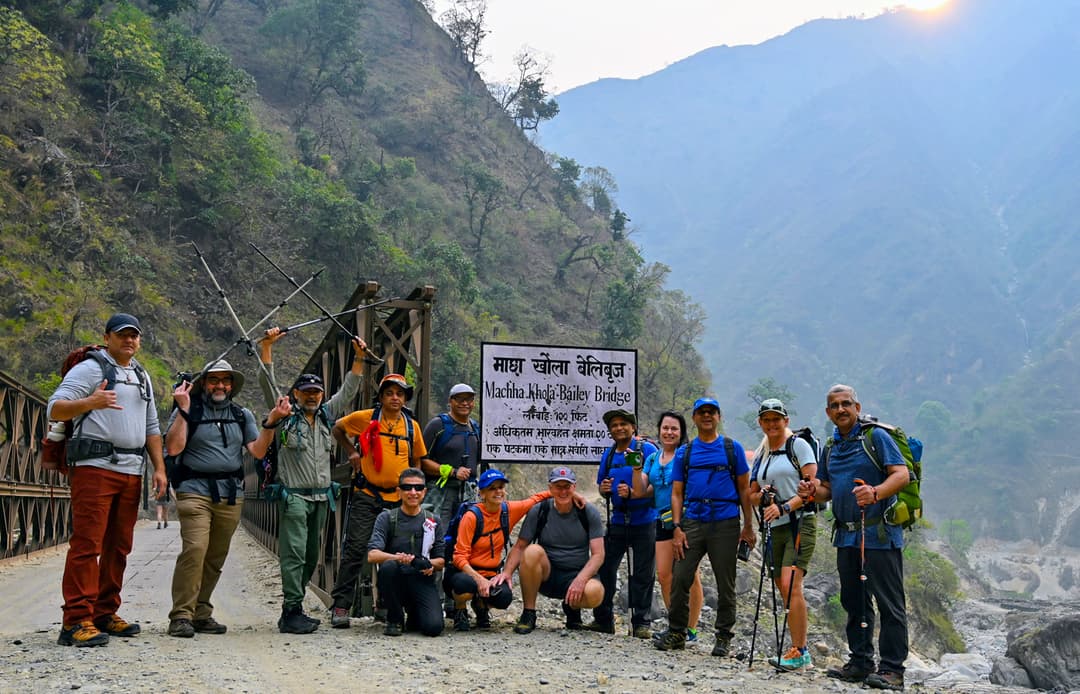
After breakfast, you will head to the local checkpoint where your permits will be checked. Then, you will leave the village and enter a dense forest area. Walking along the mixed terrain, the trail reaches the terraced fields of Sirdibas, a traditional Gurung village.
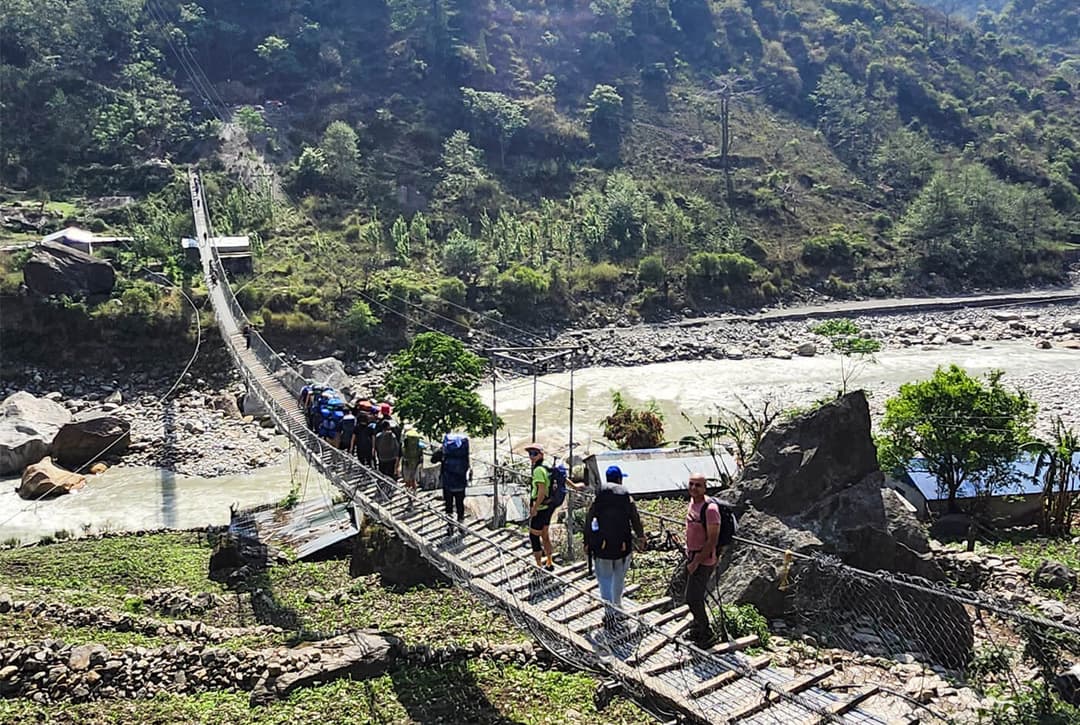
Moving on, hikers will pass mules while descending, cross a suspension bridge, and eventually reach the village of Philim. In this part of the trail, you can spot the Shingri Himal range in the backdrop.
This village marks your entry into areas deeply rooted in Tibetan Buddhism. You will spend the night at a pre-booked teahouse in the Chisopani village.
Leaving Chisopani, you walk for about half an hour to see a big, beautiful waterfall. This day gets tough because you climb uphill almost the whole way.
After walking into the pine and rhododendron forest, you go down the trail that takes you to Tsum Valley. You keep walking and pass through a small, pretty village called Lokpa on the old mountain route.
From Lokpa, you walk down for half an hour to Lungwa Khola, then climb up a winding trail for two more hours north through pines and rhododendrons until you get to Gumlung. After crossing the Siyar Khola, you finally reach Chumling in the lower Tsum Valley.
Chumling sits on the south side of Shringi Himal, where you get amazing views of the mountain. You’ll get to visit the old Chumling Gompa and walk through the village's stone streets.
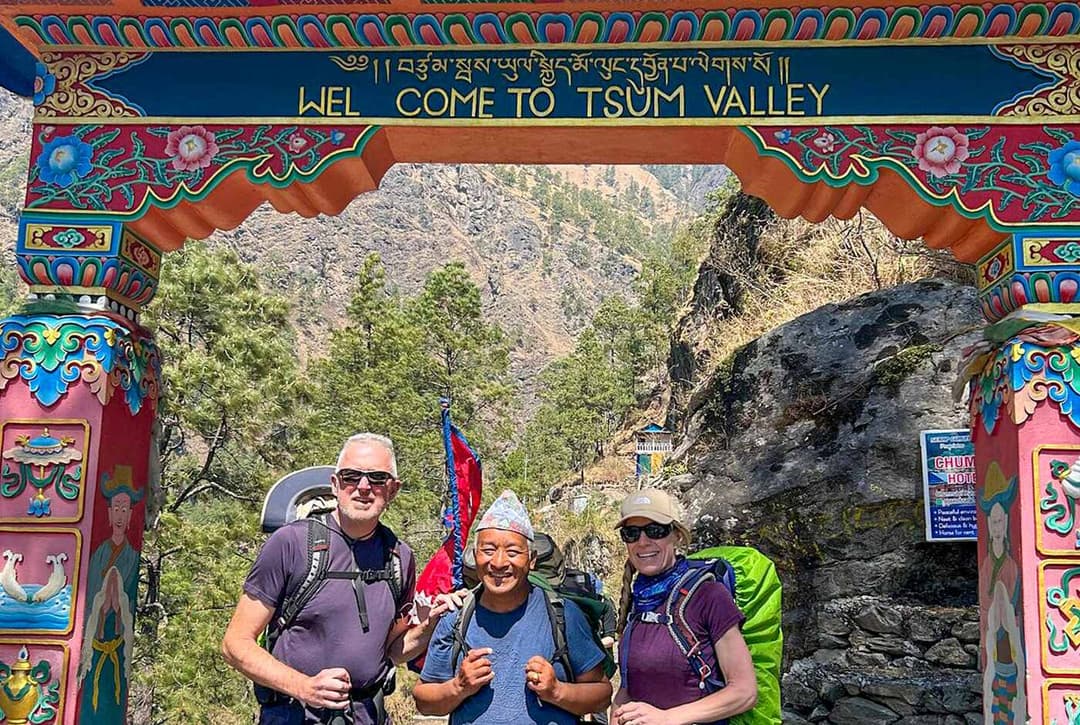
After breakfast at Chumling, you start walking towards Chokhangparo by crossing the hanging bridge to the other side of the river
You walk through rich farmland where people grow corn and potatoes. The houses look like classic Tibetan homes with stacks of firewood on the roofs, but they're not flat because it rains and snows here. You cross a big landslide area where rocks and floods wiped out everything back in 1999, killing five people, but now young trees cover the whole spot.
You pass through Rainjam and cross Serpu Khola, then climb for over two hours on a good but open trail to upper Tsum and the twin villages of Chokhangparo.
Chokhangparo is situated on flat ground and consists of two parts, known as Chokhang and Paro. If the weather stays clear, you get views of Himal Chuli and Ganesh Himal. Some families here still practice polyandry. This whole area is famous for its Tibetan Buddhist history.
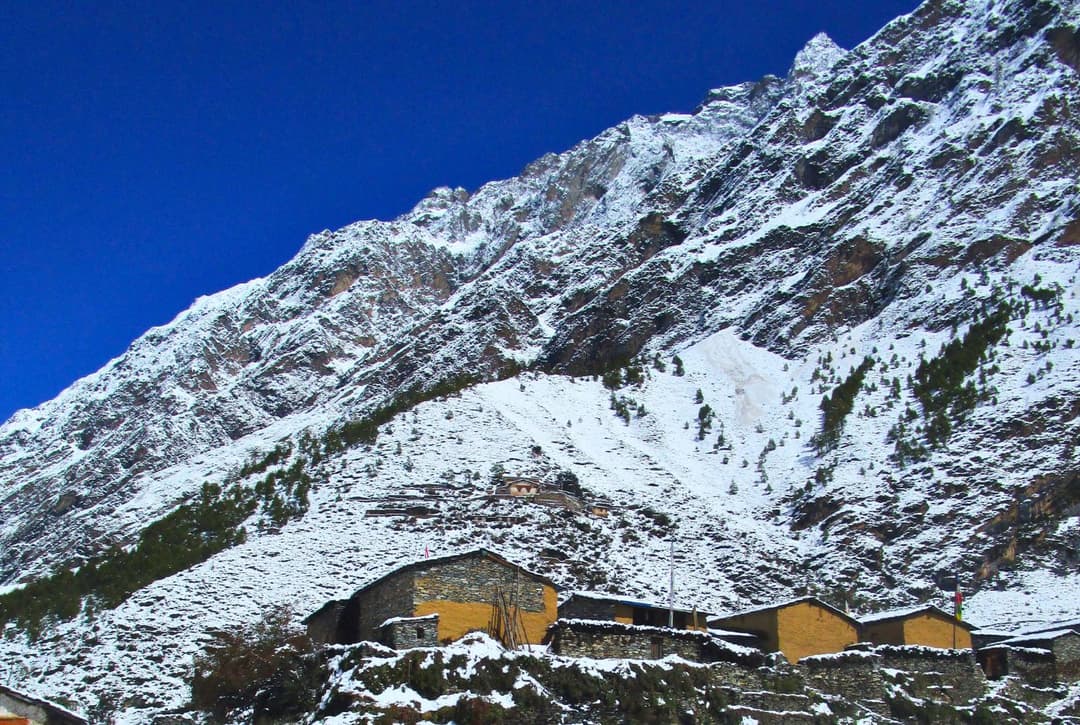
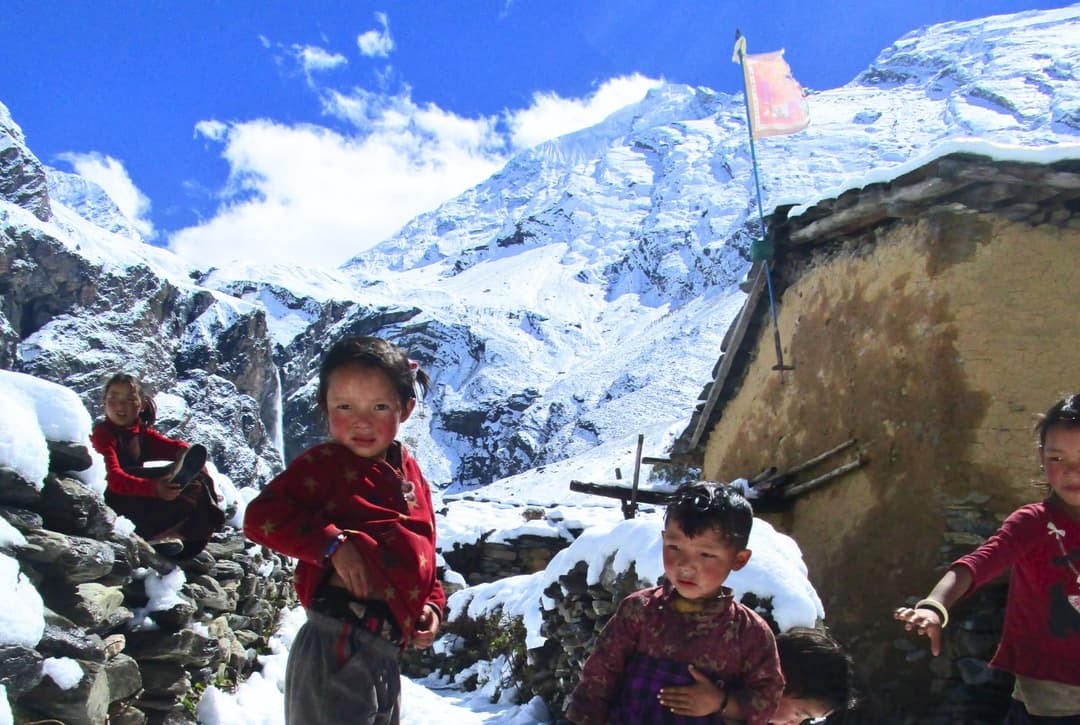
Climbing up from Chokhangparo, you might start feeling altitude sickness. Consider drinking a lot of water to stay healthy. You walk east through small villages and past a local school.
Slowly climbing over a ridge, you pass Lama Gaon through flat fields, looking across big crop areas and the river to Rachen Gompa. You often see Himalayan Tahr (wild goats) near here. The friendly locals speak Tsumba, which sounds like Tibetan, but they don't know much Nepali and don't see many visitors.
You leave an old Buddha stupa behind as you cross through Chhule village. All the kids here wear traditional Tibetan robes called chubas, and you see lots of yaks wandering around. You head upstream to cross the bridge and climb up to the Nile.
Nile is the last village going north in Upper Tsum Valley. The area has lost most of its trees and sits next to the Shiar Khola river
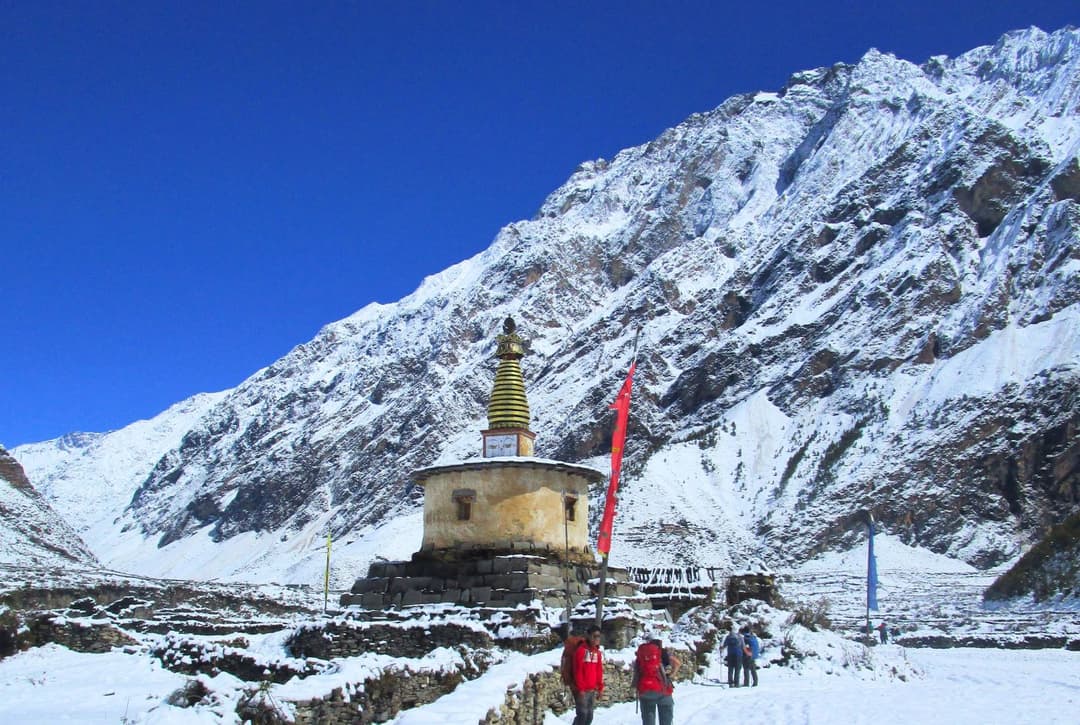
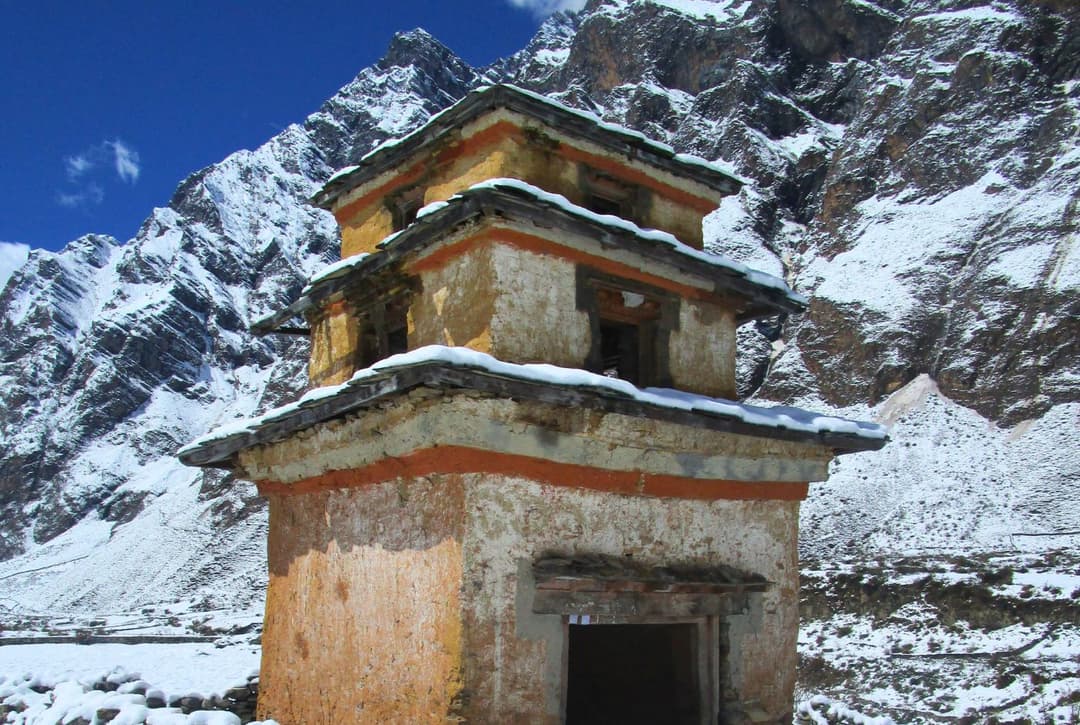
After leaving Chisopani and walking for half an hour, travellers will pass a waterfall, rhododendron, pine forests, and small settlements like Lokpa and Ripchet Village. From here, the route descends for about half an hour towards Lungwa Khola.
Then it climbs up for about two hours, passing through forest areas until the Gumlung, one of the traditional villages in the lower Tsum valley region.
Overall, you will cross the Siyar Khola and reach Chumling, a traditional Tibetan-Buddhist settlement and one of the major villages in the lower Tsum Valley. The village is nestled at the eastern bank of the river and is surrounded by rhododendron, pine, and juniper forests, creating a tranquil environment perfect for an overnight stay.
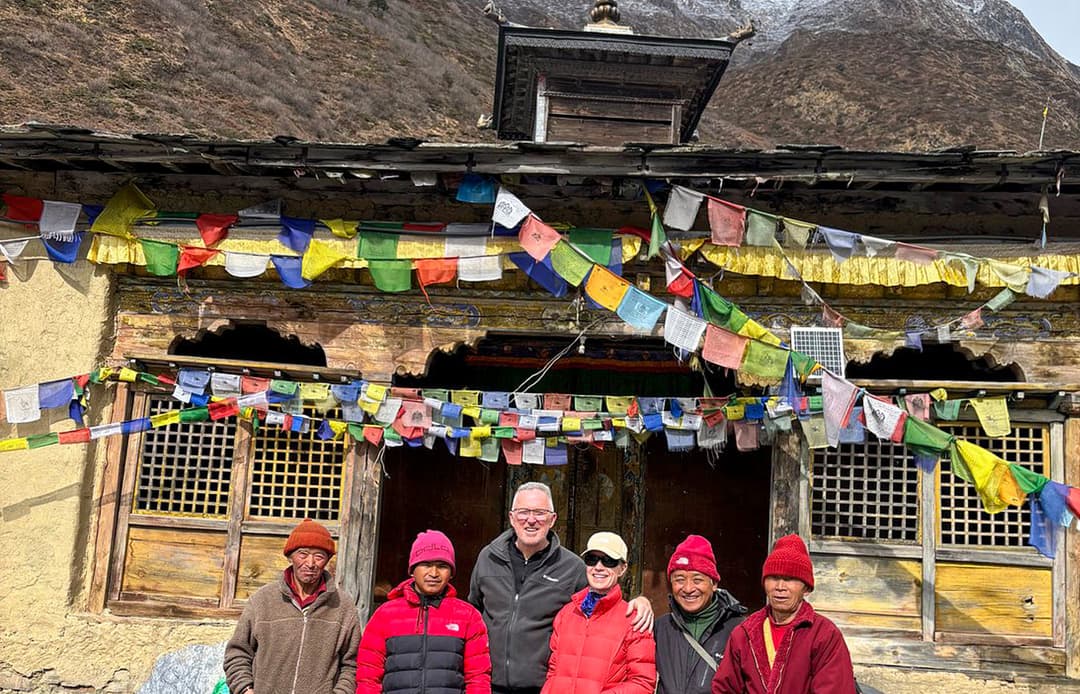
Today, you'll begin your descent from the sacred Mu Gompa, the largest monastery tucked away in Tsum Valley. As you walk back toward Chumling, the path takes you through quiet villages like Chho Syong, Nile, and Chokang Paro.
Each village shows you old Tibetan-style buildings and how local people live their daily lives. You'll pass ancient Mani walls and walk alongside streams that show just how pristine and remote this valley remains.
While leaving Tsum Valley, think about the special cultural things you saw, how kind the Tsumba people were, and the peaceful feeling from the monasteries. The walk down is easy, so you can enjoy the wide mountain views and take your last photos of this hidden Himalayan place.
By evening, you reach Chumling, where warm teahouses give you a good place to rest, eat local food, and talk with other trekkers after a day walking through Tsum's beautiful landscapes.
Today, you leave the beautiful Tsum Valley behind and get back on the main Manaslu Circuit trekking trail. The walk takes you through nice villages such as Lokpa and Nyak, where old stone houses and stepped farm fields show you how local people live every day.
As you walk, the trail opens up to amazing views of Ganesh Himal and Shringi Himal, giving you great spots to take photos and stop to look at the big mountains.
The walk to Deng has some easy parts and some moderate climbs, so you can enjoy both the views and the local culture along the way. Small streams, hanging bridges, and prayer flags on the path make the landscape even prettier.
When you get to Deng in the late afternoon, friendly teahouses welcome you with hot food and a place to rest, making a good stop before the next part of the Manaslu with Tsum Valley trek.
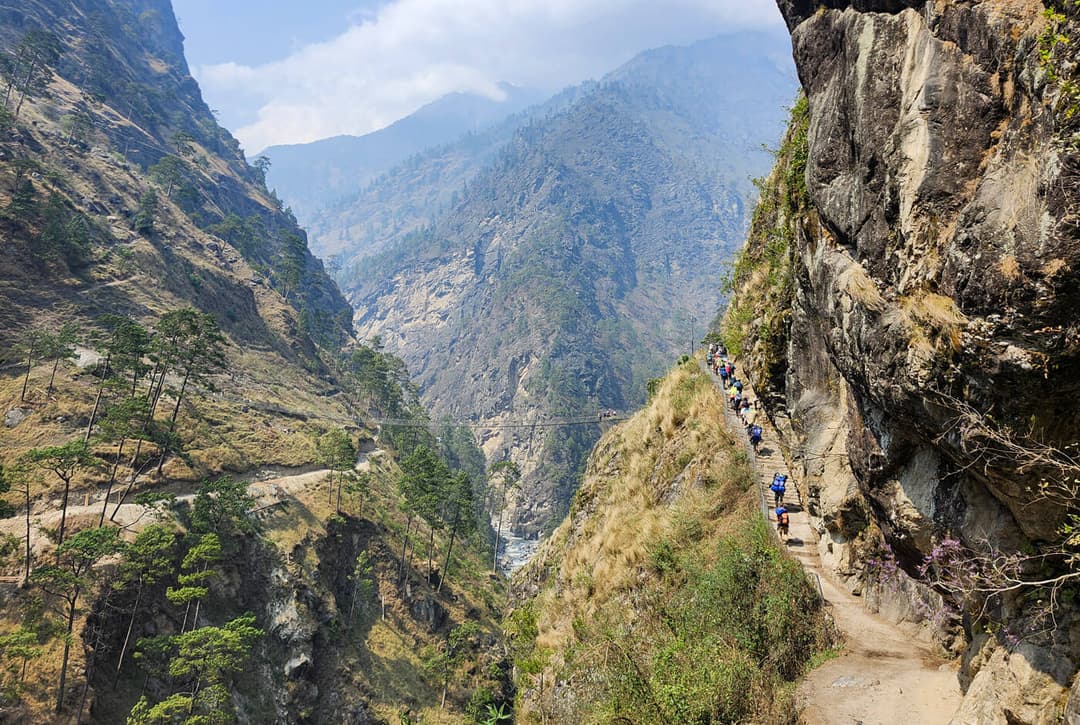
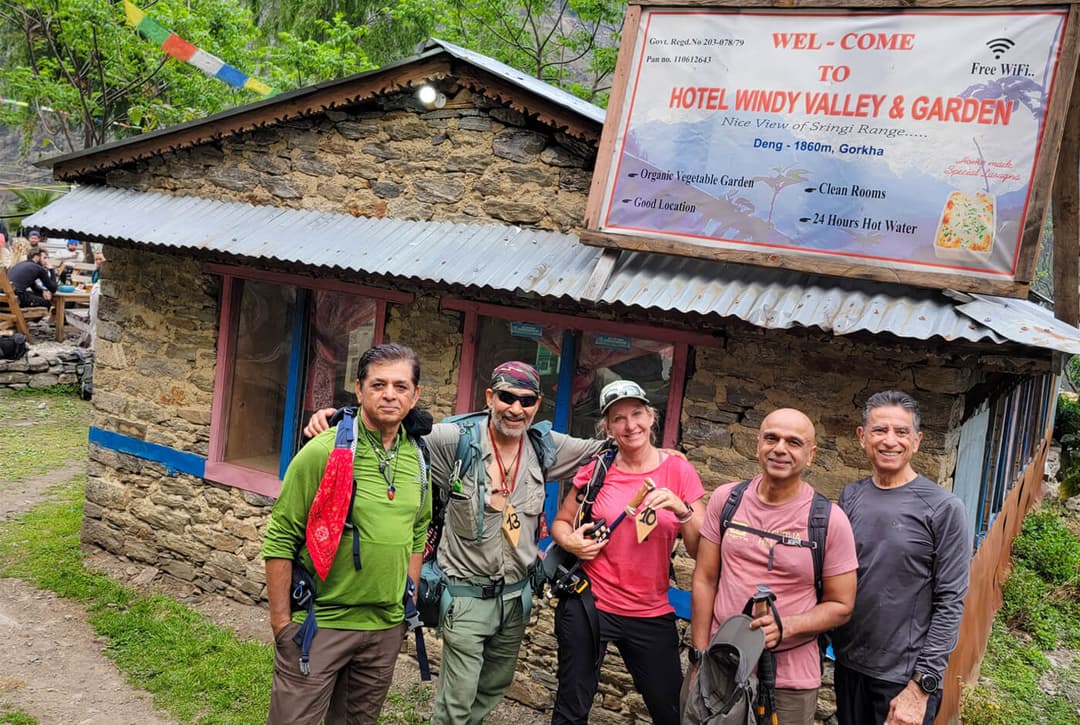
Today's trek takes you on a steep climb from Deng, following a nice trail that goes down to cross the Budhi Gandaki River before going up again through small villages and thick forests. As you walk higher, the valley gets wider with better views, making you feel like you're walking into a completely different place.
On the way, you see Mani stones carved with Buddhist prayers, showing you that you're getting into areas where Tibetan culture is strong. The prayer flags, stone walls, and chortens make the walk feel more spiritual and peaceful.
In the afternoon, you can visit Prok village as a two-hour side trip. From there, you get great views of Shringi Himal and other peaks.
By late afternoon, you reach Namrung, a bigger and more settled village. Namrung has good teahouses and is famous for its old Tibetan-style houses, local monasteries, and friendly people. It also gives you some of the first good views of Manaslu, so you can see the huge mountains that are coming up ahead.
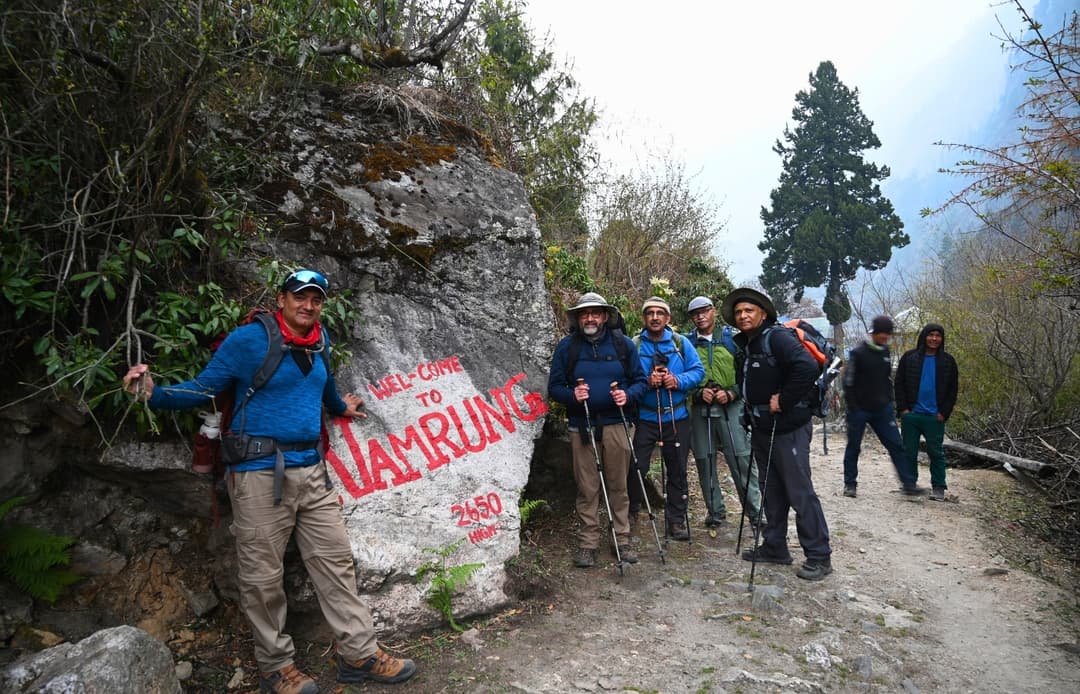
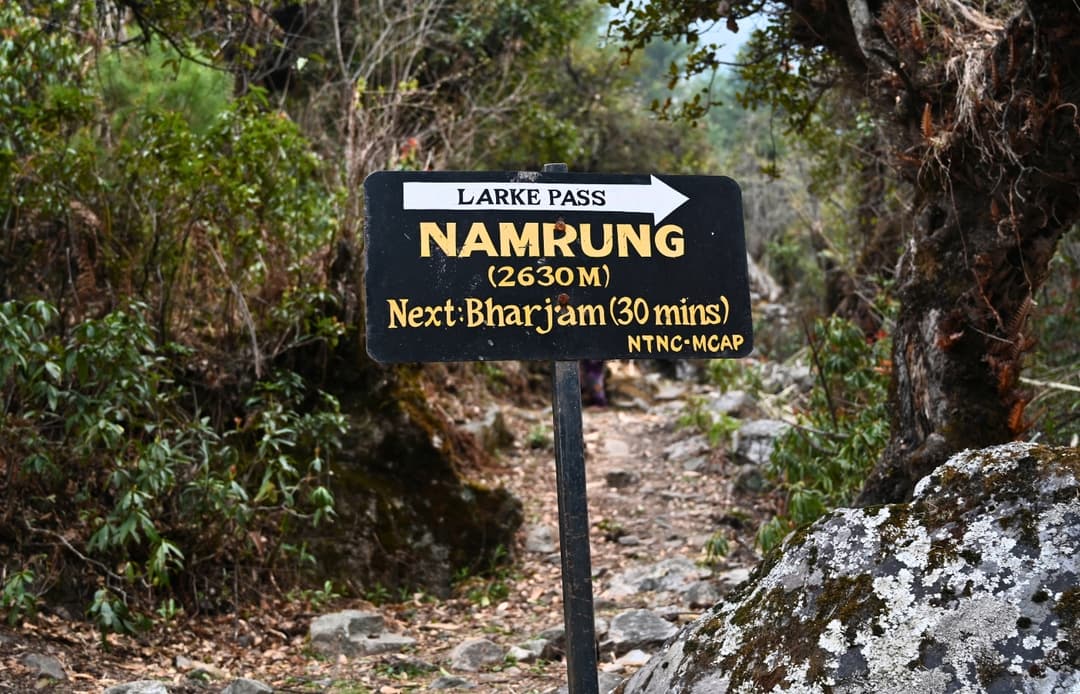
The hike starts on a manageable trail with a straight pathway for an hour, followed by a gradual ascent to reach Lhi village. It is the first settlement you will come across after leaving Namrung village.
On a clear day, you can spot North Manaslu and Ganesh Himal from the Lhi village. After a 40-minute walk from the village, the views of the Himal Chuli peak start opening up. Moving on, you will reach the Sho village, where you can stop for a short tea break.
Upon crossing the Sho village, you can witness part of the Manaslu range. Similarly, while walking from Sho to Lho village, you can witness the mani walls with a full view of Mount Manalsu at the back. From Lho, you will walk to the top of the village with a gradual ascent and a short descent, cross the suspension bridge, and enjoy views of Nadi Chuli Himal along the riverbanks.
Then, after a 40 to 45-minute gradual ascent, you will arrive at Shyala village. Travellers can enjoy views of Manaslu, North Manaslu, Nadi Chuli, Naike Peak, Rani Peak, Shyala Himal, and others from the Shyala viewpoint.
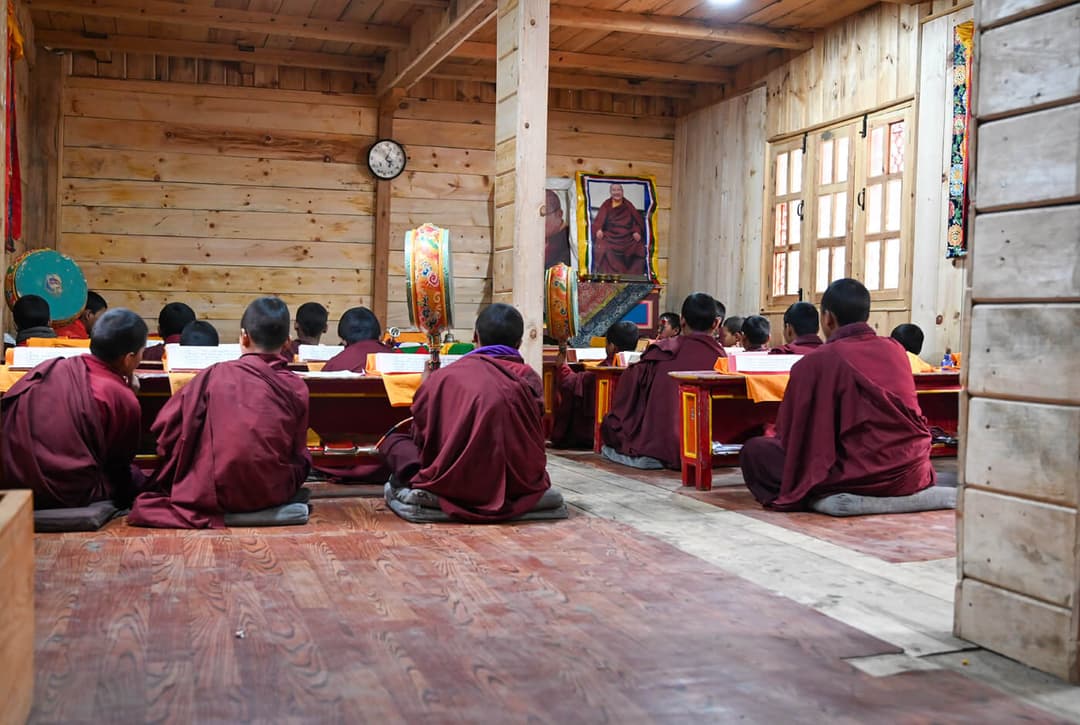
After an early morning breakfast, we will head downhill towards the Pungyen Gompa, a remote Buddhist monastery located at roughly 4,000 m. The gompa was established centuries ago, back in the 17th and 18th centuries, in honor of Lord Pungyen, a local deity believed to protect Mount Manalsu.
Today’s trail is mostly traditional Nepali flat and mountain terrain. After 2 to 3 hours of walking from the gompa, trekkers arrive at Samagaun, usually around 1 to 2 pm if you’re a fast-paced hiker.
You can rest for a while, enjoy a warm lunch at the pre-booked teahouse, and explore the Samagaun village.
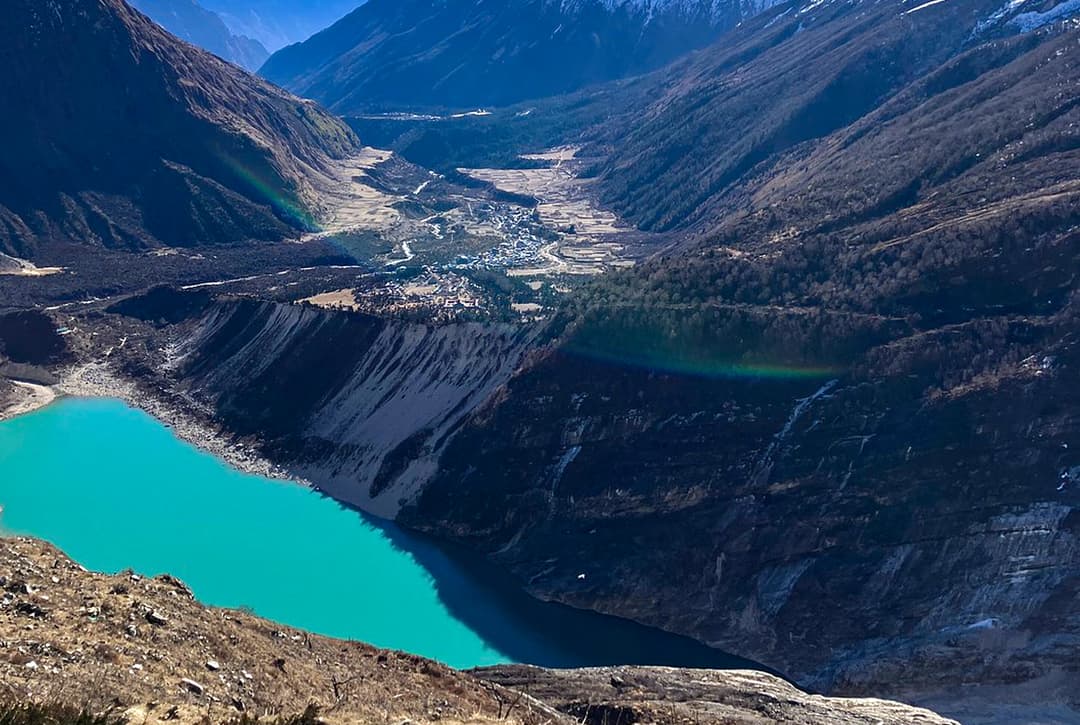
Today you rest for altitude adjustment in the lovely village of Samagaun (3,180m). If you want to explore, a good hike includes Manaslu Base Camp and Birendra Tal.
Another choice is a full-day walk to Manaslu Base Camp, which shows you close-up glacier and peak views. If you want something easier, the walk to Birendra Tal, a blue-green glacial lake at the bottom of Manaslu Glacier, makes a nice half-day trip.
Besides the hikes, Samagaun itself is worth walking around. The village shows the strong Tibetan culture here, with old monasteries, yak fields, and friendly locals. Walking through its narrow streets and watching daily life gives you a look at traditions that haven't changed for hundreds of years.
By evening, you come back to your lodge in Samagaun, whether after a big hike or a quiet day in the village. This rest day gets you ready for the higher places coming up and gives you some of the best cultural and scenic memories of the whole trek.
Today's trail takes you across open grass fields and a slow climb up the valley, with great views of Mount Manaslu and other peaks around it. After walking, you reach Samdo, an old Tibetan refugee village just one day's walk from the Tibetan border.
In the afternoon, you can walk around the village or climb up nearby hills for amazing mountain views. Staying in Samdo helps your body get used to the altitude and lets you see the strong Tibetan culture of this faraway place.
Today's trail takes you up and down through rivers and valleys around the circuit. The seasonal Tibetan market at Larkya Bazaar is your first stop. Here, you also see the Syacha glacier, which shows you the wild glacier landscapes of the Himalayas.
Then you walk next to the Budi Gandaki River, crossing wooden bridges and small streams along the way.
You climb uphill again through the Salka Khola valley until you reach Dharmashala, also called Larke Phedi, where you spend the night. Get good rest and get ready for tomorrow's big climb to Larkya Pass.
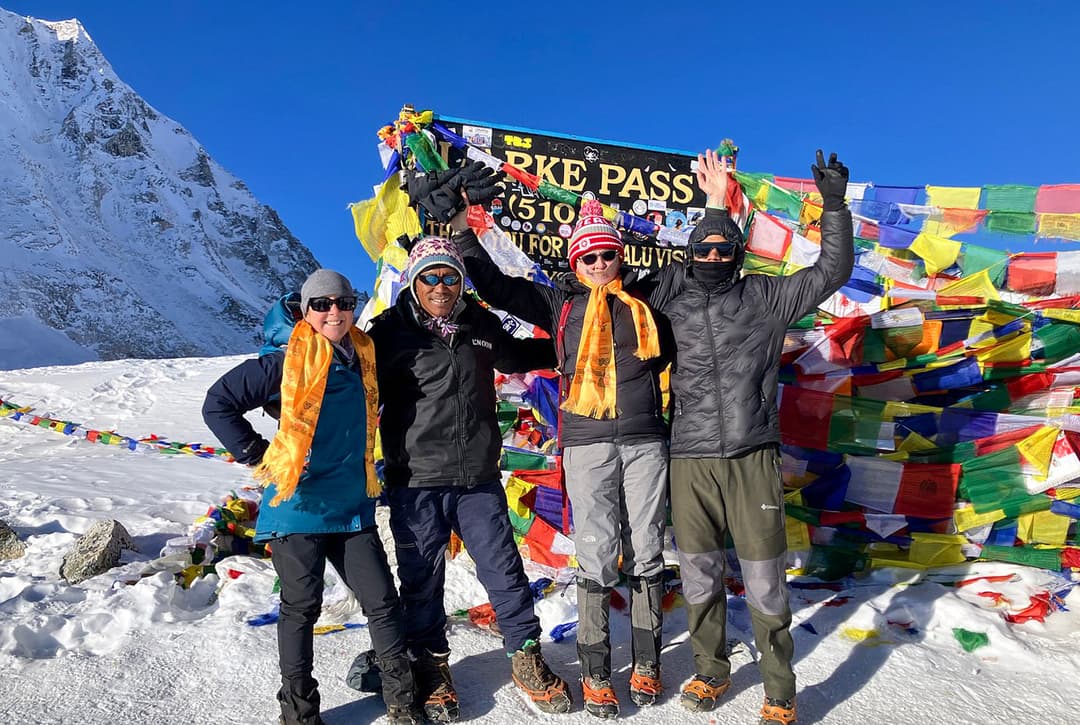
Today is one of the best days of the trek. You start with a steady climb towards Cho Chanda, working your way up to the snowy Larkya La Pass, the highest spot of the whole trip. The climb gets hard, but the amazing views along the trail keep you going strong.
At the top, all your hard work pays off with incredible 360-degree views of the Himalayas. From here, you see Mount Manaslu, Annapurna II, Himlung, and Cheo Himal, plus the sharp peaks of Gyaji Kung, Kang Guru, Namjung Himal, and Larke Peak. This mountain view is one of the most unforgettable sights of the whole trek.
After taking in the beauty, you carefully walk down from the pass, crossing rocky ground and rough trails before getting to Bhimphedi (3,590m). It's a long day on the trail, but the mix of adventure, stunning landscapes, and feeling proud of what you did makes it really special.
Leaving Bhimphedi, the trail gets easier as you climb slowly through stepped rice fields and small villages. The path takes you over the Kharcha La Pass (3,150m), giving you nice views of rolling hills and forest valleys before going down towards Tilije.
Tilije is a busy Gurung village known for friendly people and old traditions. After days walking in high rocky places, the lower height and greener areas feel really good. The evening here is perfect for resting, eating local food, and enjoying the quiet village life.
The last day of the trek starts with an easy walk down through green hills and old villages as you head to Dharapani, where the Manaslu Circuit meets the busy Annapurna trail. From here, you say goodbye to the mountains and start the long drive back to Kathmandu.
The drive goes through pretty valleys, rivers, and stepped fields, giving you one more chance to see Nepal's different landscapes. When you get to Kathmandu, you finish your Manaslu with Tsum Valley trip, taking home great memories of quiet trails, high mountain passes, and friendly local people.
Your Tsum Valley with Manaslu trek ends as we drive you to Tribhuvan International Airport for your flight home. Our team gets you there three hours early to take care of all the check-in and security stuff.
As you leave Nepal, you take much more than just photos and souvenirs with you. The deep memories and experiences from this trek will stay with you for many years. You did something really special by exploring this restricted mountain area.
If you're already thinking about your next mountain trip, we're here to help plan it. Future trips to Nepal, Bhutan, or Tibet are always possible with our experienced team.
We stand out as the best trekking company because of our expert local guides, personalized care, and unmatched commitment to safety and comfort. With decades of experience and thousands of excellent reviews, we ensure every trek blends cultural immersion, breathtaking scenery, and seamless service. Our trusted reputation makes us the first choice for unforgettable Himalayan adventures.
Tsum Valley is a remote pilgrimage area in the northern parts of Nepal, known as a “Hidden Valley of Happiness”. The valley reflects its deep roots in ancient Tibetan Buddhist culture and traditions that locals have kept alive for centuries. Likewise, the region was restricted to protect and preserve its fragile ecosystem and ancient Indigenous cultures, and to maintain national security along the Tibet-China border.
In 2008, the valley opened to tourists, offering spiritual immersion, rich culture, centuries-old traditions, majestic mountain views, on rugged, isolated trails. The trail passes through sub-tropical forests, local settlements, and varied terrain, leading trekkers to notable Buddhist monasteries such as Panago Gompa, Mani Dhungyar Gompa, Gurwa Gompa, and Longtrang Rinchen Pungpa.
The rhododendron groves along the trail provide additional scenic beauty to this raw and authentic Himalayan trekking trail. With up close views of peaks like Sringi Himal and Ganesh Himal, authentic teahouse accommodation, and isolated trails, Tsum Valley remains one of the scenic mountain treks in Nepal.
Trekking in the Manaslu region requires 4 different permits and a local entry fee, such as:
These permits and fees are necessary for all foreign trekkers to legally enter and trek through the region. Besides, a TIMS card is currently not necessary for trekking in Nepal.
For detailed information, you can check out the Manaslu Circuit Trek Permit 2026 blog.
Once a restricted area for solo trekking, Tsum Valley can be explored as a single traveller, accompanied by a licensed guide, from 2026. As per the recent trekking update, you can trek to Tsum Valley without having to join a group of two or more people.
Solo hikers can arrange the necessary permits through a registered trekking agency before the journey starts. However, independent trekking remains prohibited, and trekkers are mandated to hire a licensed guide.
Here, learn more about the Solo Trekking Permit requirement in the Restricted Areas of Nepal in 2026.
The Manaslu region is Nepal’s remote side, nestled within the Manaslu Conservation Area. The region is known for its rich Tibetan-Buddhism heritage, century-old cultures and traditions, and majestic mountain views, including the world’s eighth-tallest mountain, Mount Manaslu.
The Manaslu peak is also known as the “Mountain of the Spirit”. Likewise, it is notoriously referred to as the “Killer Mountain” due to its highly challenging ascent and high fatality rate.
Moving on, the trekking trails in the Manaslu region offer untouched wilderness, rugged, varied landscapes, and high-altitude passes such as the Larkya La Pass. The paths wind through traditional villages, providing a close up insights on preserved Tibetan culture, mountain lifestyle, and ancient monasteries.
Extending your Manaslu Circuit Trek with Tsum Valley provides a deep cultural immersion, untouched landscapes, peace, solitude, and better acclimatisation. The Tsum Valley, which is also known as the “Hidden Valley”, adds cultural and spiritual depth to this Himalayan journey.
From entering the Manaslu region via Machhakhola, Jagat, and Lokpa, to reaching higher elevations around Chumling, Chokhangparo, and Nile, you will witness multiple gompas, mani walls, vibrant prayer flags, and chortens that reflect Tsum Valley’s Tibetan-Buddhist culture.
Similarly, learning and understanding the century-old tradition of Shyagya, followed by the locals, the Tsumba people, also adds depth to your journey in the Manaslu region.
In addition, the scenery changes from subtropical forest areas in the lower regions to rugged, barren, and alpine rocky landscapes near Larkya La Pass, the highest point of the trek. This adds adventure and an authentic trekking experience in the Himalayas.
Overall, choosing the Tsum Valley and the Manaslu Circuit Trek offers a unique combination of spirituality, culture, and an authentic mountain trek. The journey also provides the solitude and remoteness that experienced trekkers seek.
The cost for the Tsum Valley with Manaslu Circuit Trek is:
|
No. of Travellers |
Price in USD |
|
1 Pax |
US$ 2,100 |
|
2 - 4 Pax |
US$1,850 |
|
5 - 9 Pax |
US$1,750 |
Our package cost includes all ground transportation, meals throughout the trek, a licensed guide, a porter, and necessary permits. Besides this, trekkers are advised to carry NPR 25,000 to 30,000 for personal expenses and amenities such as snacks, Wi-Fi, hot showers, drinking water, and souvenirs.
The best time for the Tsum Valley with Manaslu Circuit Trek is spring and autumn. These seasons offer stable weather, safe trekking and pass crossing conditions, and peak visibility.
Spring (March to May): Spring is the best time for the Manaslu Circuit Trek, offering a vibrant trail with rhododendron blooms, clear skies, stable weather, and comfortable temperatures. During these months, the route is safe and stable, with unobstructed views of renowned peaks like Manaslu, Himalchuli, Ngadi Chuli, and Ganesh Himal.
Autumn (September to November): Autumn is considered the best season for the Manaslu region trek with pleasant daytime temperatures, excellent views, and vibrant festival vibes. The autumn season offers rich cultural immersion and scenic beauty.
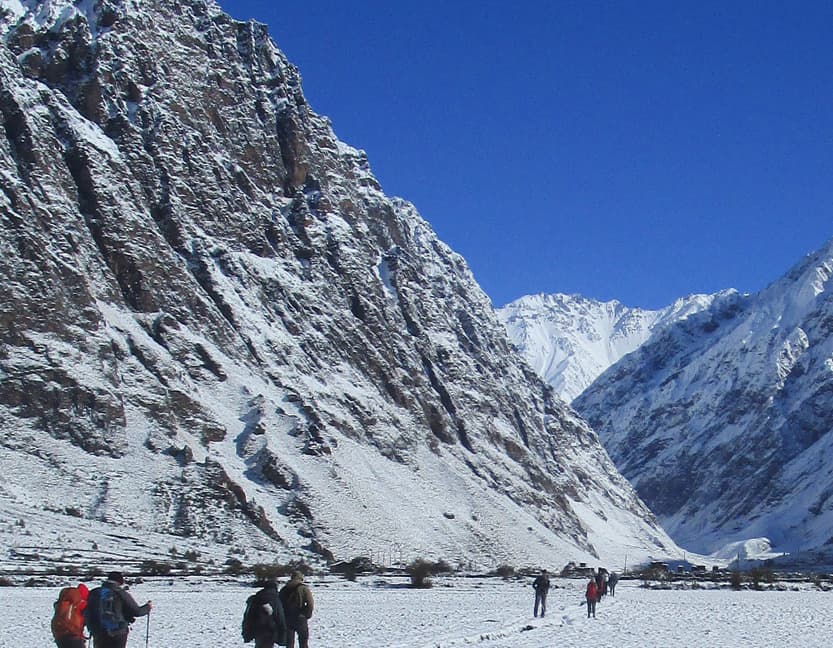
Winter (December to February): The Manaslu region during the winter seasons features freezing temperatures at night, icy trails, and heavy snowfall. These can make navigation difficult, especially near the high-altitude pass. With proper gear and preparation, trekkers can enjoy a quiet and peaceful trekking experience in this remote region.
Monsoon/Summer (June to August): The summer or monsoon season presents lush green forests, with vibrant wildflowers along the trail. However, the route can be slippery due to heavy rainfall, full of leeches, and with possibilities of poor visibility and landslides. Hikers can experience the monsoon Manaslu with proper preparation and guidance.
The Tsum Valley and Manaslu Circuit Trek is considered moderate to challenging. The journey features long walking hours in various terrain, elevation gain, and demanding pass crossings. This 21-day trek covers 173 to 178 km of total distance, from the lower elevation of Machhakhola to Larkya La Pass at 5,106 m.
Trekkers can find the Tsum Valley and Manaslu Circuit trek difficult due to the high elevation, walking on varied terrain, especially near Samdo, Dharamsala, and Larkya La pass, where the trail is rugged, often icy, and features loose rocks.
Also, thinner air and reduced oxygen levels at high altitudes can increase the risk of altitude sickness. As trekkers walk 5 to 7 hours on average each day over varied landscapes, proper preparation and basic fitness are necessary.
The Tsum Valley and the Manaslu Circuit remain one of Nepal’s off-the-beaten treks, which is best suited for adventurers seeking peaceful and quiet trails.
Read our genuine feedback from past travelers with Nepal Hiking Team sourced from TripAdvisor, Google, Facebook, and Trustpilot.
Outstanding service! Truly excellent, I would highly recommend Nepal Hiking Team for any trekking experience. If I could give 6 out of 5 stars, I absolutely would. Our journey through the Manaslu Circuit and Tsum Valley was flawless from start to finish.
From the logistics to the daily guidance on the trail, everything was handled with care and professionalism. Dilman Ghale and Sohan Lama were exceptional throughout the entire trek. Their deep knowledge of the region, patience, encouragement, and genuine hospitality made a challenging route feel smooth and enjoyable. They managed every detail perfectly, allowing us to fully immerse ourselves in the landscapes, culture, and serenity of both Manaslu and the sacred Tsum Valley.
Dilman and Sohan are true credit to their profession and to the Nepal Hiking Team. This trek became one of the most memorable journeys of our lives thanks to their dedication and warm companionship
 +
+ +
+This Is Me – The Journey of The Unlikely Hiker Through the Manaslu Circuit with Nepal Hiking Team. “I am brave, I am bruised, I am who I’m meant to be—this is me.”
As The Unlikely Hiker, I never saw myself conquering one of the most challenging high-altitude treks in the Himalayas. But thanks to the incredible support of the Nepal Hiking Team—and the unwavering encouragement of my exceptional guide, Yubraj—I achieved what once felt impossible: completing the Manaslu Circuit and crossing the mighty Larkya La Pass.
This wasn’t just a trek. It was a journey through remote villages and deep valleys, under the gaze of Mt. Manaslu, where Tibetan culture breathes and nature roars. The Manaslu Region—untouched, sacred, raw—is a place that transforms you.
And I was transformed.
From the very start, Yubraj made sure I felt seen, safe, and never alone. He never once complained about my pace, even when I took a record-long time to cross the pass. He carried soft drinks for me through isolated villages just to help me stay energized—because he noticed that small thing helped, and he cared enough to make it happen.
There were moments when I wanted to give up. When the altitude hit hard and the doubts crept in. “When the sharpest words wanna cut me down, I’m gonna send a flood, gonna drown ‘em out.” And I did—because I wasn’t doing it alone.
Yubraj and the Nepal Hiking Team marched beside me—step by step, without judgment. They understood the mountains, yes—but more than that, they understood people. They knew how to listen, how to encourage, and how to lift someone higher than they believed they could go.
“Look out ‘cause here I come, and I’m marching on to the beat I drum. I’m not scared to be seen. I make no apologies—this is me.”
As The Unlikely Hiker, I want to say this to anyone out there doubting themselves: You belong here. In these mountains. In this story. The Manaslu Region is not just for the strong, the fast, or the fearless. It’s for anyone with a dream in their heart and the courage to take the first step.
Nepal Hiking Team made my dream come true—not just by guiding me through the Himalayas, but by helping me believe I belonged there in the first place.
This is me.
This is us.
This is the magic of trekking with Nepal Hiking Team.
With endless gratitude,
The Unlikely Hiker
- Guided by Yubraj Adhikari
I honestly can’t praise Ram and Bashu enough for the patience, kindness, and care they showed throughout our Manaslu Circuit trek. I’ve done more hiking than trekking in the past, and I’ll admit, Manaslu wasn’t always the easiest, physically or mentally. But Ram and Bashu were just brilliant. Always there, always steady, making sure the whole group was well looked after every step of the way.
Watching Bashu glide along tricky trails, humming Nepali songs like he was out for a casual stroll, was something else. And Ram—completely calm and composed, even when things didn’t go to plan. You could really tell we were in safe hands.
I also want to give a proper shoutout to Ganga Thapa at Nepal Hiking Team. He patiently answered every single question I threw at him (and there were plenty!). His support and responsiveness made a huge difference, especially before the trek even started.
And finally, the porters. Absolute heroes. Walking the same tough route as us, while carrying 25kg on their backs without the luxury of trekking boots, poles, or high-tech gear. They deserve our full respect and admiration—not just in words, but through fair working conditions and job security. It’s the least they should expect for the work they do.
Very well-organized and excellent support from our guide, Navaraj Thapa, and his porters. We highly recommend them to you. Thank you for a wonderful time!

We made a 14-day Manaslu Circuit incl. transportation from Kathmandu to the trek start and to Pokhara after the trek. That included 3 side treks to Himalchuli Base Camp, Manaslu Base Camp, Rui La Pass (Tibetan border).
We are a group of 5 high school friends turning 50 this year that reconnected after many years.
From the very beginning we got a very professional service from Ganga who was achievable, responsive, flexible, provided suggestion, etc. That standard was kept by him throughout and after the trek.
Our guide Krishna turned to be a unique young person. Perfectly organized, very responsible, maturely reacting to unexpected challenges that are inevitable taking into account nature, team and length of the trek. At the same time professionally relaxed and making good team spirit, ensuring everyone and everything is OK. We could feel all the time we are in good hands and could enjoy the unique experience. He also managed to organize on the way a few elements that were not certain and we treated them as 'best case scenario', like 2 nights in the Buddhist monastery being a base for us to make the Himalchuli Base Camp 1-day side trek. I myself made the Annapurna Circuit exactly 25 years earlier when we organized everything ourselves and had no guide or porters so in the beginning I was even a bit embarrassed how caring and committed Krishna and the 3 porters were.
Finally we all made the trek exactly according to the daily itinerary. That was a splendid experience that we'll for sure remember forever. Highly recommended!
- Guided by Krishna Gurung

The group size for our standard Tsum Valley and Manaslu Circuit Trek is six to eight people per group. Likewise, the departure date listed in the Nepal Hiking Team’s departure section is guaranteed.
When you book your trip, we will depart on the scheduled date, regardless of the group size.
Yes, you can book a private trip with Nepal Hiking Team when traveling with your friends or family only. Trekkers can also customise itineraries according to their preference, timing, pace, and services.
The 16-day Tsum Valley Trek takes you through the heart of Tsum Valley up to Mu Gompa at 3,700 m. This trek offers up-close insights into Nepal’s remote Himalayan lifestyle, rich Tibetan Buddhism, and less commercialised trekking routes in Nepal.
The 21-day Tsum Valley and Manaslu Circuit Trek explores the Tsum Valley, its vibrant Tibetan culture, and century-old traditions, leading up to a high mountain pass, Larkya La Pass at 5,106 m.
No, independent trekking in Tsum Valley with the Manaslu Circuit is prohibited as the route falls within the restricted zone. Travellers are required to hire a licensed guide to trek in the Manaslu region, although the ban on solo trekking was recently lifted in 2026.
Independent trekking is prohibited in this region to avoid unregulated tourism, protect the fragile biodiversity, and preserve the culture.
Most travellers can get an arrival visa at Tribhuwan International Airport while visiting Nepal for the Tsum Valley and Manaslu Circuit Trek. Visitors should have a valid passport (with a minimum of six months of validity remaining). Also, you can simply fill out the online visa form beforehand to make the process smoother and faster.
Note: Citizens of countries such as Afghanistan, Cameroon, Iran, Iraq, Nigeria, Ghana, and a few others are required to complete the visa processing before their arrival.
Yes, airport pickup and drop-off services are included in our Tsum Valley and Manaslu Trek. Our representative will receive you at the airport on your arrival day and safely transfer you to the airport for your departure on the final day.
During your stay in Kathmandu, you will stay at a 3-star hotel such as Woodapple Hotel & Spa in the Thamel area.
Likewise, guests can upgrade their hotels according to their preferences for an extra charge. Though standard accommodations are fully covered in the itinerary, costs during upgrades are not included.
An extra night in Kathmandu can cost around USD 45 for a single-bed room and around USD 50 for a twin or double room. These prices include all taxes and a buffet breakfast.
We can swiftly arrange your extended stay in Kathmandu with prior notice.
During the pre-trek briefing in Kathmandu, we will introduce you to your guide and review the itinerary, weather updates, and discuss any schedule changes. We will provide you with essential trekking gear like a down jacket, a duffel bag, a sleeping bag, a detailed Tsum Valley and Manaslu region map, a t-shirt, and a cap.
In addition, we will collect a copy of your passport and travel insurance for record keeping and collect the remaining payment for the trip (if not cleared).
Guests can book and secure their spot for the 2026/2027 Tsum Valley and Manaslu Circuit Trek through our online booking portal. You can simply select a departure date, fill out the form with your personal details, trip information, and leave a 20% deposit to confirm the booking.
Once the online form and deposit are confirmed by our team, your trip is officially booked.
Guests can clear the remaining trip balance for the Tsum Valley and Manaslu Circuit Trek after arriving in Nepal, during the pre-trek briefing. We accept both card and cash payments.
In case of full payment, 80% of the amount will be directly refunded. However, the 20% booking payment is non-refundable and will be stored as a future credit in our company (without expiration). This allows guests to plan their treks according to their schedule anytime in the future.
The 21-day Tsum Valley with Manaslu Circuit Trek is considered moderately challenging due to long walking hours on varied landscapes. The trail traverses through lush tropical forests, local settlements, and rugged mountain terrain, including the high-mountain Larkya La Pass at 5,106 m.
Nonetheless, trekkers can complete the trek with proper preparation and fitness with cardio exercises such as squats, hiking, cycling, and strength training.
The Tsum Valley with Manaslu Circuit Trek covers 173 to 178 km in total, starting from a Machhakhola and finishing at Dharapani. The trail passes traditional villages such as Jagat, Chisopani, Chokhanparo, Deng, Namrung, Samagaun, and Bhimthan.
This 21-day package is planned and designed with proper acclimatisation, cultural immersion, and an authentic mountain trekking experience.
No, the Tsum Valley with Manaslu Circuit Trek does not have any age restrictions. Nepal Hiking Team has successfully guided travelers from a young age of 4 to adult hikers in their 70s.
Besides this, our company’s safety policy requires children under 16 to have their parents or guardians along with them during their trek.
No, the Tsum Valley and Manaslu Circuit do not have a technical climbing section, though the trail passes through varied landscapes. Trekkers can start preparing for the trek 4 to 6 weeks prior with cardio exercises such as jogging, stair climbing, and extended walks, or go hiking with a loaded backpack in varied terrain.
Similarly, you can build up leg strength with exercises like squats, lunges, and calf raises, and prepare for walking up hill and downhill on uneven terrain.
Yes, travellers are advised to get a travel insurance policy with emergency evacuation, medical emergencies, high-altitude helicopter rescue, and high-altitude trekking up to 5,500 m.
Based on our previous guests’ recommendations, providers such as Genki Traveler, AXA, Allianz, and World Nomads are some of the reliable options.
Our government-licensed guides are medically trained to recognize and handle Acute Mountain Sickness (AMS) by actively monitoring symptoms, prioritizing prevention, and descending immediately for serious conditions.
Our guides follow the “climb high, sleep low” principle, incorporating proper rest and acclimatization throughout the journey. In case of an emergency, they will lead you to safety and coordinate with the team and local authorities for an emergency helicopter rescue.
The best time to book the Tsum Valley and Manaslu Circuit Trek in 2026 is spring (March to May) and autumn (September to November). During this time, the weather and temperature are comfortable, the trails are stable, with peak visibility.
Yes, trekking the Tsum Valley and Manaslu region in winter is possible; however, the extreme cold and heavy snowfall can make the journey challenging. The winter season experiences heavy snowfall, especially near high passes like Larkya La, with most teahouses closed.
Similarly, during monsoon/summer, the trails can be slippery, muddy, and unstable due to heavy rainfall. Also, June to Aug have high chances of road blockage and potential landslides.
Planning your Tsum Valley and Manaslu Trek during these seasons requires a well-planned itinerary, suitable gear, and preparation.
Visitors are not required to get vaccinated for trekking in the Tsum Valley and Manaslu region; however, getting a rabies vaccination as a precaution is highly recommended.
As the trail passes multiple local settlements housing mountain dogs, getting emergency rabies treatment in case of a bite in such a remote region is quite challenging.
Travellers can minimize the risk of altitude sickness during the 21-day Tsum Valley and Manaslu Circuit Trek by maintaining a steady walking pace, staying hydrated, and eating proper meals.
Following a well-planned itinerary with gradual elevation gain also helps minimize the risk of AMS. Lastly, hikers should let their guide know about discomfort or any altitude-related sickness they feel before it escalates.
No, your fear of suspension bridges won’t be a problem during the Manaslu region trek as our guides will stay close to you and provide steady support whenever it's needed. Also, after crossing a few bridges along the trail, you will definitely grow confident.
Your main luggage will be carried by our porters, who carry up to 25 kgs, shared between two trekkers. Besides this, you can carry a daypack up to 5 kgs with essentials such as phone, charger, camera, permits, cash, medications, and a pair of clothes.
Yes, you can store your extra luggage at the hotel you’re staying in Kathmandu. This facility is free of cost and allows trekkers to avoid overpacking and fully enjoy the journey.
Yes, we provide essential trekking gear such as a sleeping bag and a down jacket rated -15°C for extra warmth. Similarly, we also provide a duffel bag with a capacity of 70L, a detailed Manaslu region map, an NHT t-shirt, and a cap.
Yes, each trekker receives a trek completion certification from the Nepal Hiking Team. This marks the completion of the Tsum Valley with Manaslu Circuit Trek while serving as a memento of the authentic mountain trekking.
Yes, you can purchase a Wi-Fi card for internet access from the teahouse up until Samdo village during your Tsum Valley with Manaslu Circuit Trek. After this point, Wi-Fi is rarely available; also, mobile networks can be unstable, especially near Dharamsala, Larkya La, until Bhimtang.
Yes, you can charge your devices, such as your phone and camera, for an extra cost during the Manaslu region trek. Trekkers can find a stable electricity connection until Samdo, from Samdo to Bhimtang, all the teahouses are solar powered.
Currently, electric poles are being installed in Bhimtang for better electricity facilities.
Our standard Manaslu region trek package includes twin-sharing rooms throughout the trek, which are often shared with fellow trekkers. Trekkers can request private rooms for an extra charge; however, availability is not guaranteed most of the time, as teahouses in the higher altitude have fewer rooms and limited infrastructure.
During the Tsum Valley with Manaslu Trek, you can enjoy a diverse range of meals. Many teahouses in the lower section offer Nepali, Indian, Italian, and Chinese cuisines, whereas teahouses in higher elevations provide simple, nutritious meals designed for long trekking days.
Yes, vegetarian, vegan, or gluten-free meals are available during the Tsum Valley with Manaslu Circuit Trek. However, trekkers are advised to let their guides know about their dietary restrictions so that they can communicate with the teahouses in advance for the journey ahead.
You can find various water sources along the trail that are safe to drink with the help of purification tablets. In addition, you can purchase boiled drinking water at the teahouses throughout the journey.
Carrying a refillable water bottle instead of buying plastic water bottles helps protect the fragile ecosystem of the Manaslu region.
Although tipping is not mandatory, you can show your appreciation towards your guide and porter with a certain amount after the trek ends. Tips are usually based on service, safety, and your overall trekking experience.
Trekkers should carry around NPR 30,000 to 35,000 to cover the extra expenses, such as snacks, Wi-Fi, hot showers, boiled drinking water, charging services, and others throughout the trek.
Also, ATMs are unreliable or unavailable in remote parts of Nepal; hence, you should withdraw enough cash in cities like Kathmandu to avoid last-minute hassle.