
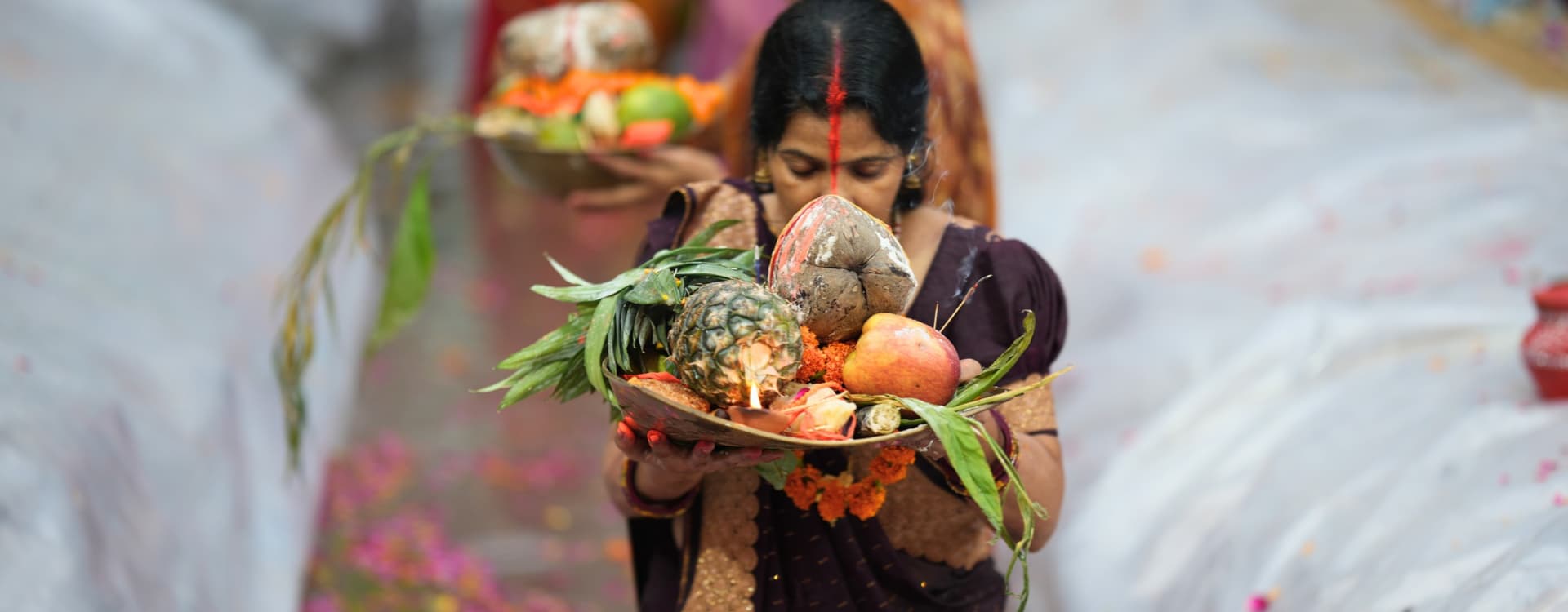
Chhath Puja (Parva) is a four-day Hindu festival dedicated to the worship of the Sun God, Surya, and Chhathi Maiya. It is celebrated to express gratitude for the Sun's role in sustaining life, seek blessings for good health and prosperity, and pray for the well-being and longevity of family members, particularly children.
In 2026, the festival will be celebrated on 15th November. The festival holds deep cultural significance in Nepal's Madhesh Pradesh and Mithila regions, as well as in India's Bihar, Jharkhand, and eastern Uttar Pradesh.
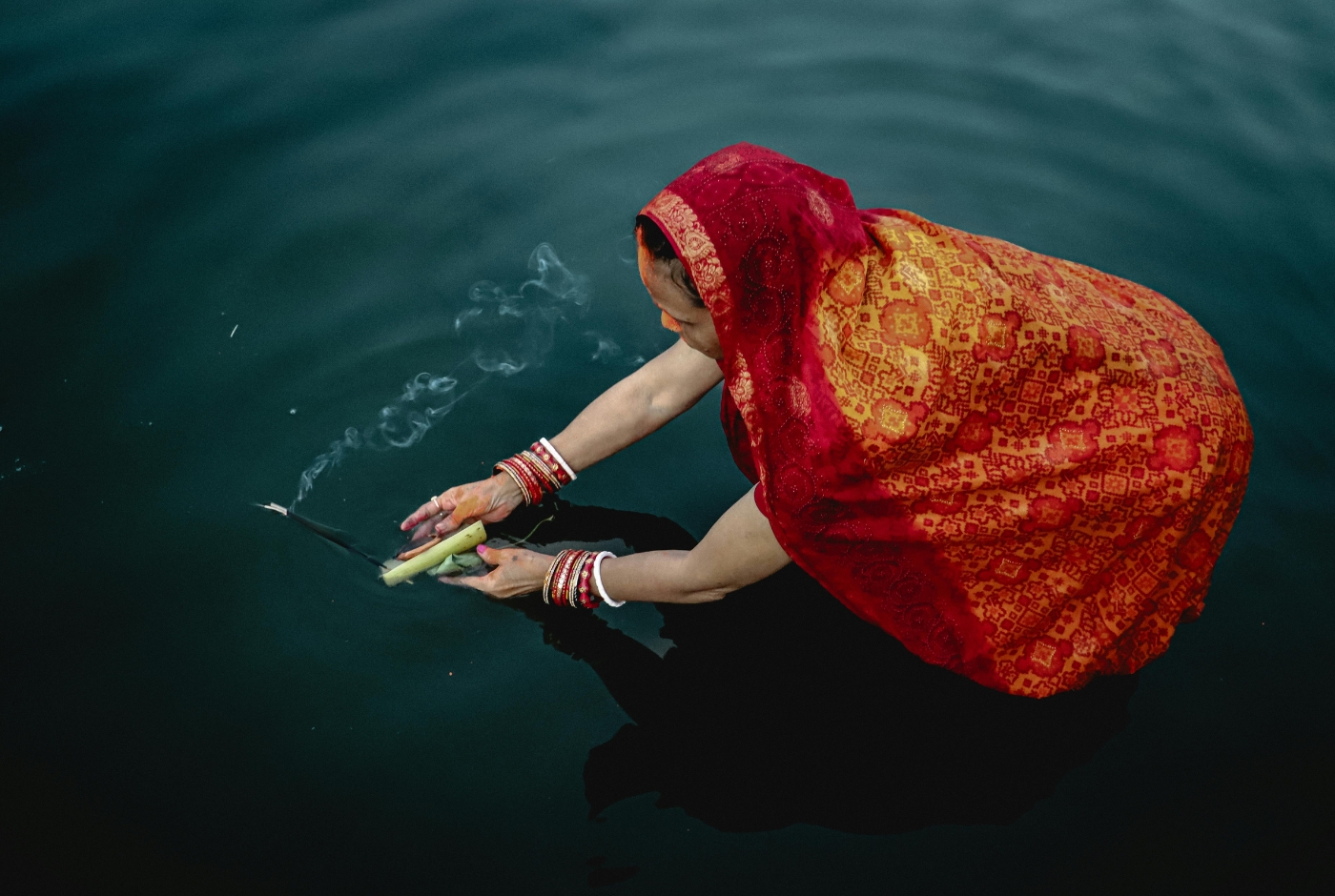
Unlike festivals that involve elaborate temple rituals or the worship of idols, Chhath Parva centres on the natural elements of the Sun and water. Devotees observe strict fasting, prepare traditional offerings at home, and gather at rivers, ponds, and other water bodies to offer arghya (a ritual offering of water) to the setting and rising Sun.
The festival is also known for its emphasis on discipline, cleanliness, family devotion, and community participation. Although its traditions are rooted in Hindu religious beliefs, Chhath Parva brings together entire communities, with people helping prepare offerings, clean water bodies, and organise shared worship spaces.
Date of Chhath Puja 2026: When is Chhath Puja this year?
The main day of Chhath Puja 2026 is Sunday, November 15, 2026 (Kartik 29, 2083, in the Nepali calendar), when devotees perform Sandhya Arghya by offering prayers and water to the setting Sun. The festival concludes on Monday, November 16, 2026, with Usha Arghya, the morning offering to the rising Sun, followed by Parana, the breaking of the fast.
According to Hamro Patro and Nepali Calendar, the following is the complete four-day schedule of Chhath Puja 2026, with English (A.D.) and Nepali (B.S.) calendar dates.
Chhath Puja 2026: Four-Day Schedule
- Day 1: Nahay Khay – Friday, November 13, 2026: Nahay Khay falls on Kartik 27, 2083, in the Nepali calendar and marks the beginning of Chhath Puja. Devotees bathe, clean their surroundings, and prepare pure vegetarian meals as they begin the festival's religious observances.
- Day 2: Kharna – Saturday, November 14, 2026: Kharna falls on Kartik 28, 2083, in the Nepali calendar. Devotees observe a day of fasting and perform the Kharna ritual in the evening. After offering prayers, they traditionally eat prasad, often including kheer and roti, before beginning the next stage of fasting. World Diabetes Day and the International Day Against Illicit Trafficking in Cultural Property are also observed on November 14.
- Day 3: Sandhya Arghya – Sunday, November 15, 2026: Sandhya Arghya falls on Kartik 29, 2083, in the Nepali calendar and is the main day of Chhath Puja. Devotees gather at rivers, ponds, and other water bodies to offer arghya, or ritual offerings, to the setting Sun while praying for the health, prosperity, and well-being of their families.
- Day 4: Usha Arghya and Parana – Monday, November 16, 2026: Usha Arghya and Parana fall on Kartik 30, 2083, in the Nepali calendar and mark the final day of Chhath Puja. Devotees offer prayers to the rising Sun in the morning and then perform Parana, the ritual of breaking the fast, to conclude the four-day festival. The International Day for Tolerance is also observed on November 16.
What is Chhath Puja and the main story behind it?
Chhath Parva, also called Chhath Puja or Surya Shashthi, is a Hindu festival that honours the Sun God, Surya, and Chhathi Maiya, a goddess associated with the protection and well-being of children. The word Chhath is commonly linked to Shashthi, the Sanskrit word for the sixth day, as the principal worship takes place on the sixth day of the waxing lunar fortnight in Kartik.
The festival is celebrated twice a year in some communities: Kartik Chhath, usually in October or November after Dashain and Tihar in Nepal, and Chaiti Chhath, in March or April. Kartik Chhath is the more widely observed celebration. Devotees pray for good health, prosperity, fertility, a safe family life, and the fulfilment of wishes. They also express gratitude to the Sun, whose light and energy sustain life and support agriculture.
The History and Origin of Chhath Parva
The precise historical origin of Chhath Parva is not established, as sun worship has a long history in Hindu religious traditions, including hymns dedicated to Surya in the Rigveda. However, the antiquity of Sun worship does not, by itself, establish that the present four-day Chhath festival existed in the same form during the Vedic period. Its history is better understood through a combination of ancient solar worship, Hindu mythology, and regional folk traditions.
Several stories from Hindu mythology explain how and why devotees celebrate Chhath:
- Karna and the Sun God: In the Mahabharata, Karna is the son of Surya and Kunti. Popular Chhath traditions associate him with disciplined Sun worship and offerings made while standing in water. His devotion is often cited as one of the mythological explanations for the festival's rituals.
- Rama and Sita: According to a popular tradition associated with the Ramayana, Rama and Sita worshipped the Sun after returning to Ayodhya from exile. In Mithila and parts of Bihar, local traditions also associate Sita with Chhath observances.
- Draupadi and the Pandavas: Another popular account says Draupadi and the Pandavas observed Sun worship during a period of hardship and sought divine assistance to overcome their difficulties.
- King Priyavrat and Queen Malini: A story associated with Shashthi Devi tells of a royal couple who lost their newborn child. The goddess appeared and instructed them to worship her, promising protection and blessings for children. The couple subsequently received blessings, and the story became associated with the worship of Chhathi Maiya.
Although these stories differ, they share a common theme: devotion to divine forces for protection, family well-being, and relief during difficult times.
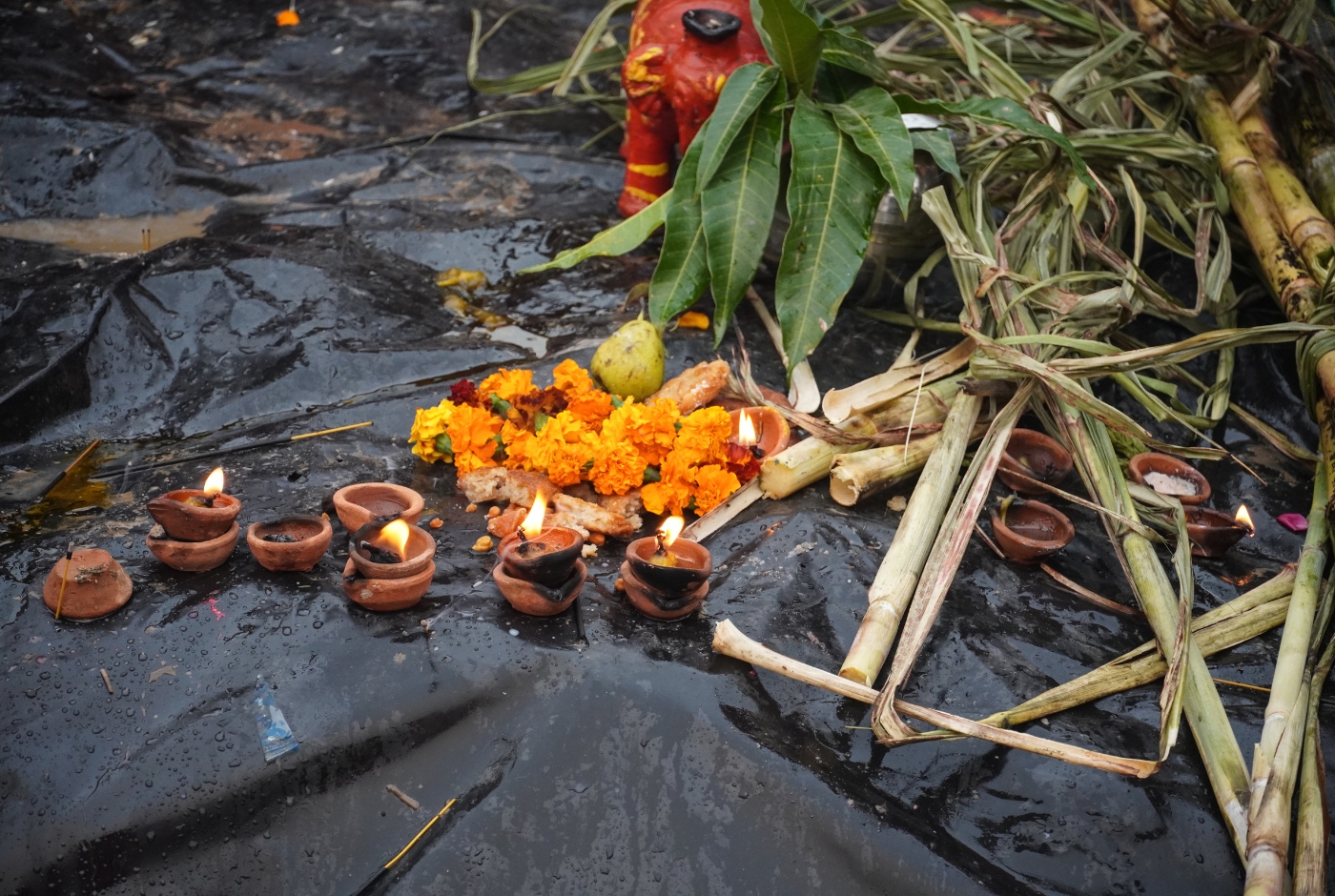
Chhath also has an agricultural dimension. Observed around the post-monsoon harvest season, the festival provides an opportunity for farming communities to express gratitude for sunlight, water, fertile land, and the crops that sustain their families. The offerings of seasonal fruits and grains reflect this connection between religious observance and everyday life.
How is Chhath Puja (Parva) Celebrated in Nepal?
In Nepal, Chhath Parva is especially important in the Madhesh and Mithila regions, including Janakpur and surrounding communities. It is also celebrated in other parts of the country, including Kathmandu Valley, where the festival has grown beyond its traditional regional base.
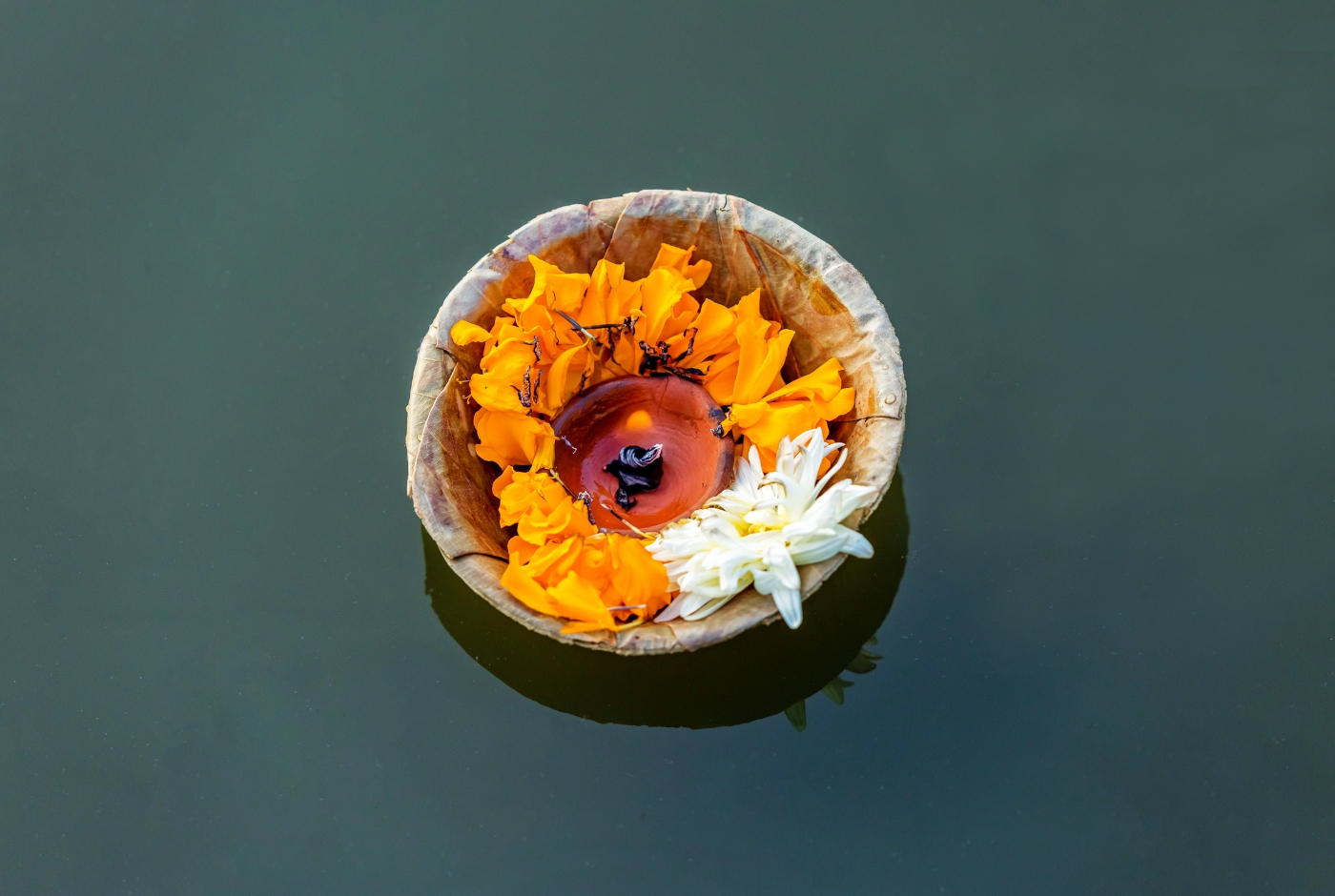
Devotees gather at rivers, ponds, lakes, and specially prepared water bodies to worship the setting and rising Sun. In Janakpur, important traditional gathering places include Gangasagar and Dhanushsagar. Families prepare offerings at home, observe fasting, and follow customs passed down through generations. The rituals often involve a vrati (the person observing the fast), family members, and neighbours who help prepare offerings and arrange the worship space.
Day 1: Nahay Khay
Devotees bathe, clean their homes, and prepare a simple, pure meal. The day marks the beginning of the observance and the commitment to ritual cleanliness.
Day 2: Kharna
Devotees fast throughout the day and break the fast after sunset with a simple offering meal, often consisting of kheer, roti, and fruit. After Kharna, the strict fast begins.
Day 3: Sandhya Arghya
Devotees carry baskets of offerings to a riverbank or pond and offer arghya to the setting Sun. Families gather at the water's edge, making this one of the most prominent parts of the festival.
Day 4: Usha Arghya
Before or around sunrise, devotees return to the water to offer prayers to the rising Sun. They then conclude the fast, often sharing prasad with family members, neighbours, and other devotees.
The festival is notable for its emphasis on personal devotion. The person observing the fast typically performs the central offerings directly to the Sun, without an idol being necessary. Family members and community volunteers support the observance by preparing prasad, arranging the ghats, and helping maintain the ritual space.
Step-by-step guide for performing Chhath Puja for the first time
Someone observing Chhath for the first time should learn the local customs from experienced family members or a trusted community priest or elder. Details can vary between households and regions, so the following is a general guide rather than a substitute for family tradition.
- Prepare on Nahay Khay: Clean the home and cooking area, bathe, and prepare the customary meal using clean utensils and ingredients. Many families follow specific rules about food preparation and purity.
- Observe Kharna: Fast during the day, then prepare and consume the traditional Kharna meal after sunset according to the household's custom. This marks the beginning of the main fast.
- Prepare the offerings: Arrange a bamboo basket or suitable tray with thekua, fruits, sugarcane, and other customary offerings. Use clean, dedicated utensils and follow the family's preparation practices.
- Offer Sandhya Arghya: On the third day, go to a designated ghat or water body and offer water to the setting Sun while praying. Follow the guidance of experienced devotees for the appropriate ritual sequence.
- Complete Usha Arghya: Return before sunrise on the fourth day, offer prayers to the rising Sun, and conclude the fast according to the tradition being followed.
- Distribute prasad: Share the offerings with family, neighbours, and other devotees as a gesture of gratitude and community goodwill.
Who is the deity worshipped in Chhath Parva, and why?
Chhath Parva primarily honours Surya, the Sun God, and Chhathi Maiya, the protective mother goddess. Both are central to the festival, although their roles and interpretations differ across regional traditions.
Surya, the Sun God
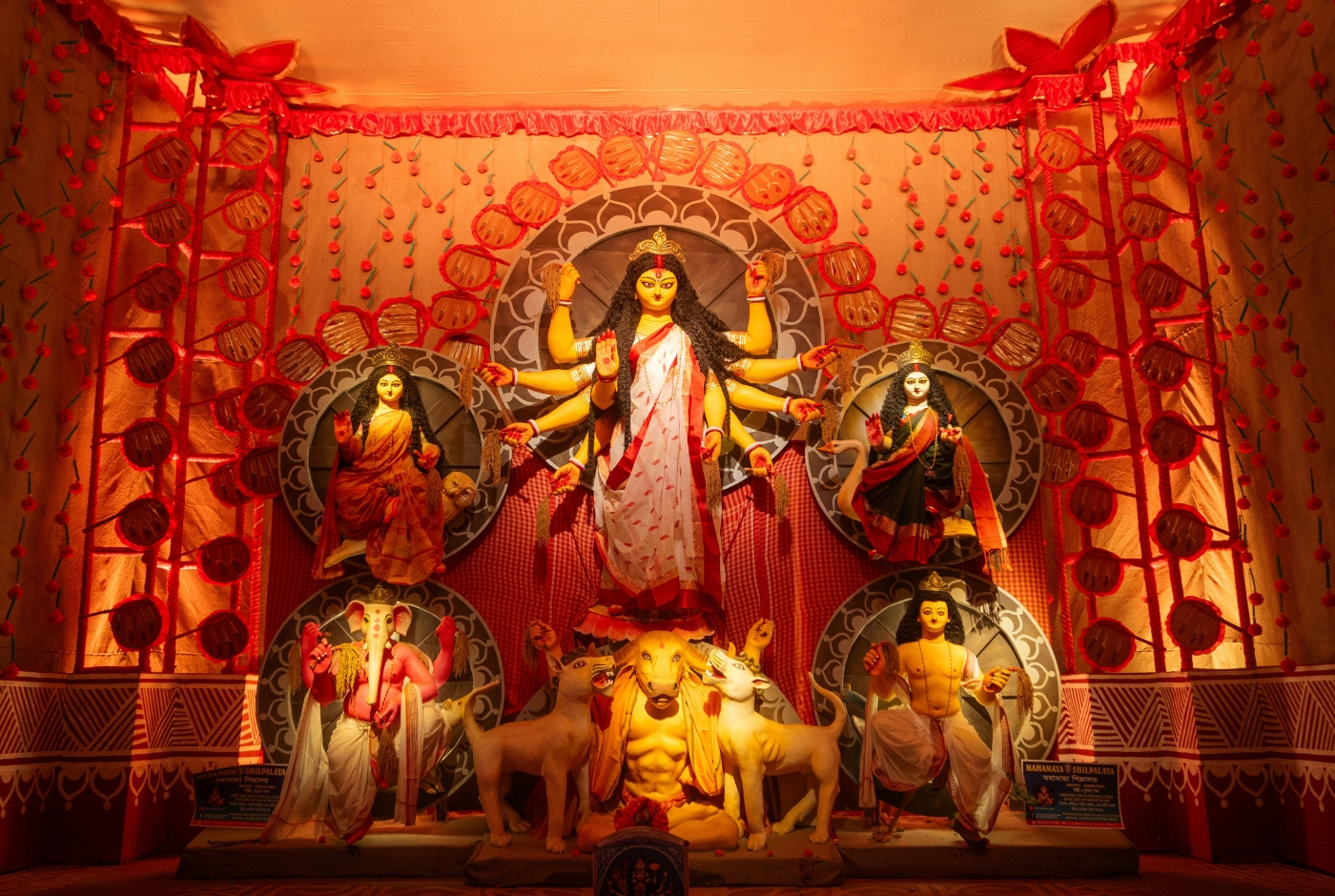
Surya represents the life-giving power of sunlight. Devotees offer arghya to both the setting and rising Sun as an expression of gratitude and as a prayer for health, prosperity, and the well-being of their families. Worshipping the Sun also reflects the recognition that sunlight is essential for agriculture and life on Earth.
Chhathi Maiya
Chhathi Maiya is associated with children's health, fertility, childbirth, and family protection. She is commonly linked with Shashthi Devi in Hindu religious traditions. Some interpretations connect her with the sixth aspect of Prakriti, while other accounts associate her with Devasena, the consort of Kartikeya. These identifications vary across texts and folk traditions.
The worship of these deities gives Chhath its distinctive character. Surya represents the universal force that sustains life, while Chhathi Maiya is invoked for the protection of children and the continuity of family life. Together, they reflect the festival's emphasis on gratitude, care, discipline, and the connection between humans and nature.
Can an unmarried girl do Chhath Puja?
Yes, an unmarried girl can observe Chhath Puja. The festival is not restricted to married women, and unmarried women may participate in its rituals and prayers according to their family and community traditions.
Although married women have traditionally been prominent among Chhath devotees, men, unmarried women, and other family members also participate. Some devotees observe the fast to pray for good health, family prosperity, a suitable life partner, or the fulfilment of personal wishes. Others participate out of faith, gratitude, or a desire to preserve their cultural heritage.
There is no universal rule that a person must be married to perform Chhath Puja. However, the customs surrounding who undertakes the full fast can vary between families. Someone observing it for the first time can consult experienced devotees to understand the practices followed in their community.
What is the difference between Chhath Puja and other solar festivals like Makar Sankranti?
Both Chhath Puja and Makar Sankranti honour the Sun God, but they differ in their timing, rituals, and religious emphasis:
| Feature | Chhath Puja | Makar Sankranti |
|---|---|---|
| Main purpose | Express gratitude to Surya and seek blessings for health, prosperity, and family well-being | Marks the Sun’s transition into Makara (Capricorn) in the traditional Hindu sidereal zodiac |
| Timing | Mainly Kartik Shukla Shashthi, usually in October to November; Chaiti Chhath is also observed | Usually around January 14, though the date can vary slightly |
| Duration | Four days of observances | Generally centred on one main festival day, with regional variations |
| Main rituals | Fasting, offerings to the setting and rising Sun, and worship beside water bodies | Holy bathing, charity, prayers, and eating seasonal foods such as sesame and jaggery |
| Food traditions | Thekua, fruits, sugarcane, rice-based offerings, and other prasad | Sesame sweets, jaggery, kichdi, and region-specific seasonal dishes |
| Regional significance | Especially associated with Mithila, Madhesh, Bihar, Jharkhand, and eastern Uttar Pradesh | Celebrated across many regions of Nepal and India under different regional names |
The most distinctive difference is that Chhath Puja involves formal offerings to both the setting and rising Sun, accompanied by a demanding multi-day fast. Makar Sankranti, by contrast, centres on the Sun's zodiacal transition and the seasonal significance associated with it.
Both festivals reflect the importance of solar worship in Hindu traditions, but Chhath places particular emphasis on personal discipline, family prayers, ritual purity and collective worship at natural water bodies.
Traditional Chhath Puja prasad recipes and their symbolic meaning
Prasad is an essential part of Chhath Parva. Families prepare offerings with care, following customs that often exclude onion, garlic, and certain other ingredients. The dishes are usually simple, made from grains, fruits, sugarcane, and other locally available produce. Their significance lies not only in their ingredients but also in the devotion and effort involved in preparing them.
1. Thekua
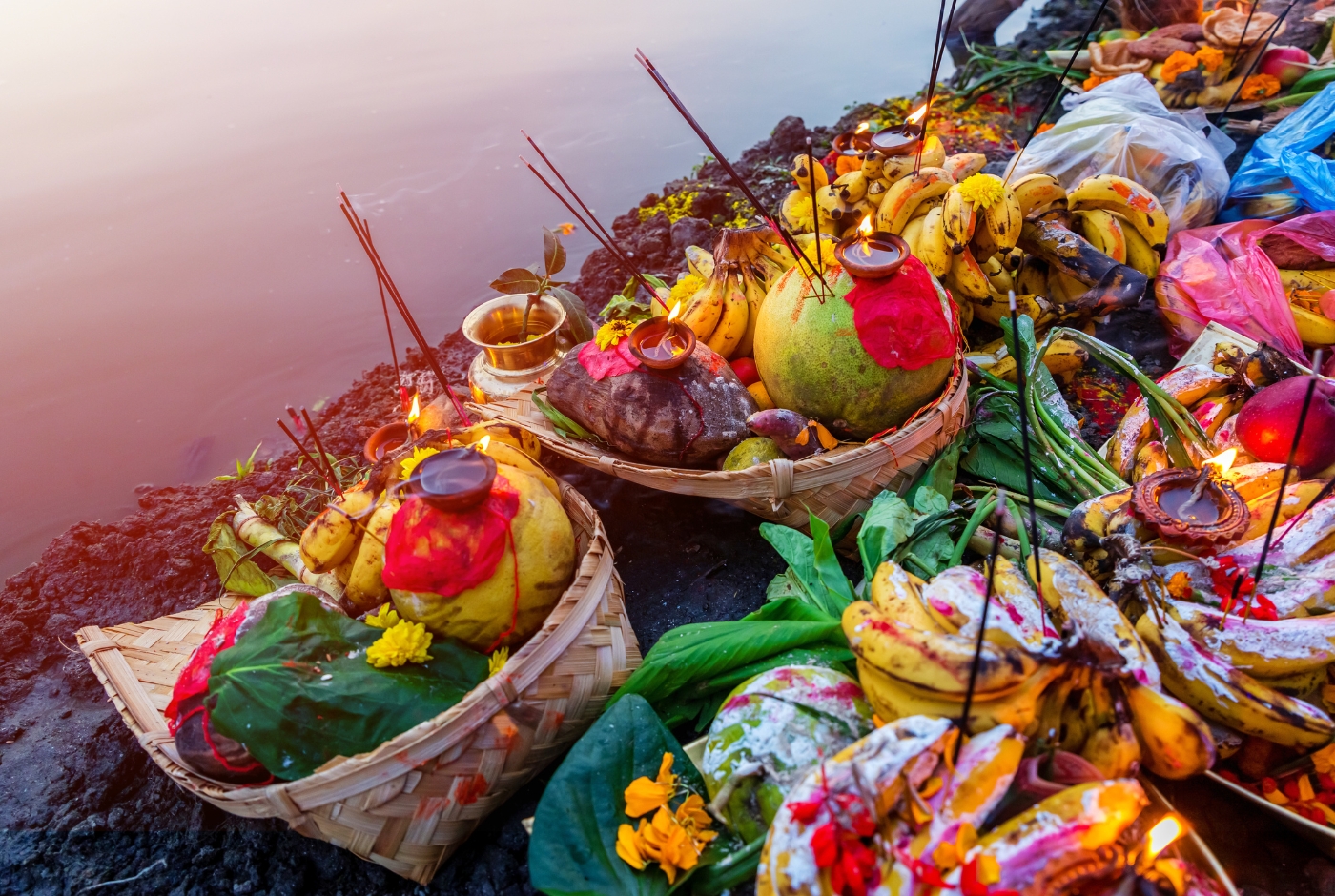
Thekua is a traditional sweet made with wheat flour, jaggery or sugar, and ghee or oil. The dough is shaped and fried until crisp. It is one of the most recognisable Chhath offerings and is commonly prepared in dedicated, clean cooking spaces. Its use of familiar household ingredients reflects the festival's connection with traditional food preparation and local culture.
2. Kheer
Kheer, a rice pudding made with milk and sugar or jaggery, is traditionally prepared for Kharna. Devotees consume it to break the daytime fast, and it may also be distributed as prasad. The dish marks the transition from the first stage of fasting to the longer fast that follows.
3. Seasonal fruits and sugarcane
Bananas, coconuts, apples, citrus fruits, and sugarcane are common offerings, although the exact selection varies by household and region. These offerings symbolise gratitude for nature's provisions, agricultural abundance, and the nourishment that supports family life.
4. Roti and other homemade offerings
Depending on local custom, devotees prepare roti, rice-based foods, and other simple homemade items. Their inclusion reflects the household's participation in the festival and the importance of preparing offerings with care and following customary rules.
The ingredients and recipes can differ across Nepal's Madhesh and Mithila communities and between individual households. It is therefore more accurate to describe these foods as traditional offerings with shared cultural meanings than to assign one fixed symbolic meaning to every dish.
After the final morning offering, prasad is distributed among relatives, neighbours and other devotees. Sharing it extends the act of worship beyond the individual household and reinforces the festival's emphasis on generosity and community relationships.
Social impact and community gathering during Chhath Parva
Chhath Parva is both a religious observance and a major community event. Although the fasting and prayers are undertaken by individual devotees, preparing for the festival often involves entire households and neighbourhoods. Family members arrange the offerings, clean the cooking area, carry baskets to the ghats, and assist those observing the fast. Communities also work together to prepare public spaces for worship.
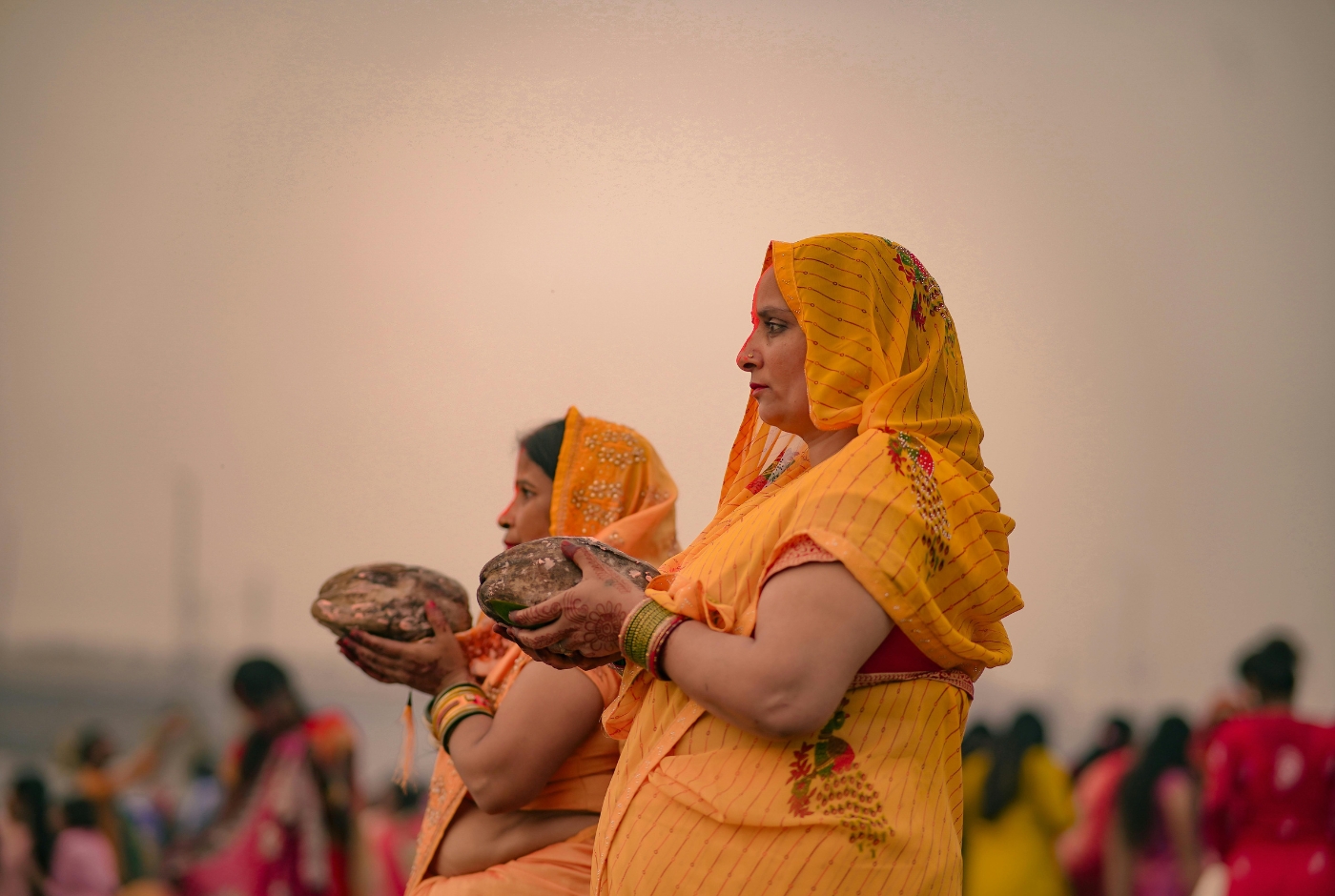
In Nepal, Chhath has an especially strong cultural connection with the Madhesh and Mithila regions. Its growth in Kathmandu and other urban areas has also helped bring people from different regions and backgrounds together. A study of Chhath in Nepal describes its expanding social and cultural significance, including its role in social bonding, local economic activity, and the continued use of traditional produce.
The festival's community impact can be seen in several ways:
- Preserving cultural traditions: Ritual songs, traditional recipes, customary clothing, and family practices pass from one generation to the next. Children and younger family members learn the meaning of the festival by participating in preparations and worship.
- Strengthening social relationships: Relatives, neighbours and volunteers share responsibilities, help devotees and distribute prasad. The shared work can build a sense of belonging that extends beyond individual households.
- Supporting local livelihoods: Demand for fruits, sugarcane, bamboo baskets, earthen lamps and traditional sweets creates seasonal business opportunities for farmers, artisans and local vendors.
- Encouraging shared public spaces: Riverbanks, ponds and ghats become gathering places for collective worship. Their preparation can encourage cooperation between residents, community groups and local authorities.
- Connecting communities across regions: People who have moved away from their ancestral homes can continue observing Chhath in new places, helping preserve cultural connections through migration and changing urban life.
Why is Chhath Puja considered an eco-friendly festival?
Chhath Puja is often considered eco-friendly because its traditional rituals rely on natural elements rather than elaborate constructed idols. Worship is directed towards the Sun, while water bodies provide the setting for the main offerings. Traditional prasad uses seasonal produce, and bamboo baskets, leaf-based materials, and earthen lamps can reduce reliance on synthetic decorations and disposable plastics.
The festival also encourages recognition of the importance of clean rivers, ponds, sunlight, agricultural produce, and biodiversity. Research on Chhath in Nepal has highlighted its relationship with local produce, water resources, biodiversity, and sustainable cultural practices.
However, the festival is not automatically eco-friendly in every modern setting. Plastic packaging, discarded offerings, food waste, overcrowding, and pollution can harm the very water bodies that are central to its rituals. A 2025 report from The Kathmandu Post also highlighted environmental pressures on Chhath celebrations in Madhesh, including pollution, shrinking wetlands and the loss of communal spaces.
Devotees and organisers can help protect the environment by:
- Choosing reusable baskets and natural, biodegradable materials where practical.
- Avoiding single-use plastic decorations, packaging and disposable utensils.
- Collecting leftover offerings and waste instead of leaving them in rivers or ponds.
- Keeping ghats and access paths clean before, during, and after the festival.
- Using designated bathing and worship areas while respecting water quality and local safety guidance.
These practices help bring the environmental values associated with Chhath into everyday action. Protecting the water bodies used for worship is particularly important because the festival's spiritual meaning is closely connected to nature.
Conclusion
Chhath Parva is celebrated to honour the Sun God, Surya, and Chhathi Maiya, seeking blessings for good health, prosperity, children's well-being, and family happiness. Although its exact historical origin remains uncertain, the festival reflects the long-standing traditions of Sun worship in Hindu beliefs and the cultural stories passed down through generations.
In Nepal, Chhath Parva holds particular significance in the Madhesh and Mithila regions, where families and communities come together for four days of fasting, prayer, and offerings. Its emphasis on natural elements, traditional foods, and shared responsibilities also reflects the close relationship between religious faith, community life, and the environment.
To experience Chhath Parva in Nepal with Nepal Hiking Team (NHT), book a trip with us and travel to the plains of southern Nepal to witness the devotional rituals, traditional offerings, and vibrant community gatherings that make this festival special. Let NHT help you plan a culturally enriching journey to discover Nepal's living traditions and experience Chhath Parva beyond the usual tourist trails.
Post a Comment