Protecting the Himalayas, Respecting Local Communities, and Taking Responsibility for Every Journey.
Nepal Hiking Team is a Nepal-based trekking and tour operator founded in 2009 by Ganga Raj Thapa and Balaram Thapa. Our work takes us through mountain trails, rural settlements, protected landscapes, and culturally significant destinations across Nepal. The quality of these journeys depends on the natural environment, the people who live in these regions, and the guides, porters, accommodation providers, and local businesses who make travel possible.
We recognize that tourism brings both opportunities and responsibilities. Trekking creates employment and supports local economies, but it can also increase pressure on water resources, waste-management systems, forests, and fragile mountain environments. Responsible tourism requires us to consider these effects when planning trips, choosing suppliers, managing our operations, and advising travelers.
Our sustainability policy sets out how we approach these responsibilities. It guides our decisions on environmental protection, staff welfare, cultural respect, local economic participation, traveler safety, and ethical business conduct. It also establishes expectations for our employees and the partners who contribute to our trips.
We understand sustainability as an ongoing responsibility rather than a claim of perfection. Our aim is to build practical improvements into the way we operate, communicate honestly about our efforts, and address problems when they arise.
Our Sustainability Principles
Human Rights and Working Conditions
The people behind every journey deserve fair treatment, respect, and safe working conditions. We are committed to upholding applicable labor laws and respecting human rights throughout our operations. We do not tolerate forced labor, child labor, human trafficking, discrimination, harassment, or exploitation.
We recognize the particular responsibilities involved in organizing trekking in remote mountain regions. Guides and porters work in conditions that can involve long walking days, changing weather, demanding terrain, and limited access to services. Their welfare must be considered when arranging workloads, equipment, accommodation, food, insurance, and emergency support.
We expect our staff and business partners to treat workers with dignity and to raise concerns about unsafe or unfair practices. Our human resources and supplier-management practices provide the basis for addressing these responsibilities.
Environmental Protection
Nepal's mountain environments support wildlife, local livelihoods, freshwater systems, and communities whose lives are closely connected to the land. We aim to reduce the environmental impact of our activities and encourage travelers to respect the places they visit.
Our trekking operations promote responsible waste handling, respect for designated trails, protection of wildlife, and care around forests, rivers, religious sites, and other sensitive locations. Guides play an important role in explaining these expectations and helping travelers make responsible choices throughout a trip.
We encourage the use of reusable items and the avoidance of unnecessary single-use plastics. We also recognize that waste collection and recycling facilities vary considerably between Kathmandu, established trekking centers, and remote mountain settlements. Our practices must account for these local conditions rather than assume that the same disposal options are available everywhere.
Our environmental commitment extends beyond reducing harm during individual trips. We support practical conservation initiatives and continue to identify opportunities to improve the way our business interacts with the natural environment.
Fair Business and Ethical Conduct
Trust is essential in travel, particularly when clients depend on an operator to organize services in unfamiliar destinations. We are committed to honest communication, fair business dealings, and compliance with applicable laws and regulations.
Bribery, corruption, fraud, and other forms of unethical conduct are incompatible with our business principles. We expect employees and relevant partners to act professionally, disclose potential conflicts of interest, and handle company and client information responsibly.
We also recognize the importance of accurate marketing. Information about itineraries, prices, inclusions, exclusions, safety arrangements, environmental initiatives, and sustainability achievements should reflect the services and practices actually provided. We do not regard unverified claims as evidence of performance.
Local Communities and Economic Participation
Tourism has greater long-term value when local people participate in the opportunities it creates. We aim to support local livelihoods through responsible employment, appropriate use of local services, and business relationships with accommodation providers, transport operators, guides, food suppliers, artisans, and other businesses in our destinations.
We recognize that the economic benefits of tourism can be unevenly distributed. Where suitable services are available, we consider local ownership, employment opportunities, purchasing practices, and community participation when making operational decisions.
We also respect the cultural identity of the communities we visit. Travelers are encouraged to follow local customs, seek permission before taking photographs of people, behave respectfully at religious sites, and recognize that villages and sacred places are living community spaces rather than attractions alone.
Our approach is to encourage meaningful and respectful interaction while allowing communities to maintain control over their traditions, privacy, and daily lives.
Sustainability in Our Operations
Trekking and Tour Management
Sustainability begins before a traveler reaches the trail. It is influenced by itinerary design, transport arrangements, accommodation choices, supplier selection, and the information provided before departure.
We aim to plan trips with appropriate consideration for local conditions, environmental sensitivity, traveler safety, and the people delivering each service. Our guides help communicate responsible trekking practices and explain relevant cultural and environmental expectations during the journey.
In high-altitude destinations, responsible planning also means recognizing the effects of elevation, weather, terrain, and remoteness. Itinerary decisions should account for acclimatization and reasonable safety considerations rather than prioritize a fixed schedule over the well-being of travelers and field staff.
We encourage travelers to prepare adequately, respect guide advice, and follow local rules and protected-area requirements. We also expect our operational teams to respond appropriately when changing conditions affect the original plan.
Water Conservation and Responsible Drinking Water
Water is a valuable resource in mountain communities, where seasonal availability, infrastructure, and demand can vary considerably. We encourage responsible water use and support practical measures to reduce unnecessary consumption.
During trekking, travelers should follow the drinking-water guidance provided for their itinerary. For Nepal Hiking Team's Everest Base Camp Trek, water purification tablets are used rather than a supplied Katadyn water filter. Travelers are encouraged to carry reusable bottles and use appropriately treated drinking water to reduce avoidable reliance on disposable bottled water.
We also encourage responsible water practices among accommodation providers and other suppliers where practical, including reducing wastage and managing wastewater appropriately.
Waste Management and Plastic Reduction
Waste left along trekking trails or around mountain settlements can affect wildlife, water sources, local communities, and the experience of future visitors. Waste management is particularly challenging in remote destinations where collection and recycling facilities may be limited.
We promote waste prevention, reuse, and responsible disposal throughout our trips. Guides should remind travelers not to leave rubbish on trails, at viewpoints, near rivers, or around accommodation. Where practical, recyclable materials should be separated and directed to suitable collection arrangements.
We encourage reusable water bottles and bags and seek to limit unnecessary packaging in our own purchasing and operational activities. We also recognize that responsible waste management depends on the facilities available at each destination, so our approach must remain practical and appropriate to local conditions.
Sustainable Accommodation
Accommodation is an important part of the environmental and social impact of travel. Our selection of hotels, lodges, and teahouses considers the needs of travelers alongside the practices of the establishments providing the service.
Where suitable options are available, we favor accommodation providers that demonstrate responsible water and energy use, appropriate waste management, fair treatment of employees, safe facilities, respect for local culture, and support for local employment and purchasing.
We recognize the differences between urban hotels and remote mountain lodges. Our expectations should reflect the operating conditions of each location while encouraging providers to make reasonable improvements.
Our Sustainable Accommodation Policy provides further guidance on the principles we apply when selecting and working with accommodation providers.
Responsible Procurement and Transportation
Purchasing and transportation decisions influence resource consumption, emissions, worker welfare, and the distribution of tourism income. We aim to consider these effects alongside quality, safety, availability, and cost.
Where practical, we favor local suppliers and suitable products that reduce unnecessary packaging, support local livelihoods, and meet our operational requirements. We encourage our transport providers to maintain vehicles properly, follow applicable safety and environmental requirements, and use fuel and other resources responsibly.
We recognize that the terrain and infrastructure of Nepal can limit the availability of lower-impact transport options, particularly in remote regions. Our objective is to make sensible choices within these constraints and improve our practices where viable alternatives become available.
Staff Welfare, Training, and Traveler Safety
Welfare of Guides and Porters
Guides and porters are essential to trekking operations. Their working conditions directly affect their safety, well-being, and ability to provide responsible service.
We recognize the importance of appropriate equipment, suitable clothing, reasonable workloads, adequate food and accommodation arrangements, insurance, and access to assistance when problems arise. We expect trip planning and field management to account for the physical demands of the route, altitude, weather, and duration of the journey.
We also expect respectful treatment from travelers, staff, and partners. Concerns about worker welfare should be taken seriously and addressed through appropriate management procedures.
Staff Development and Environmental Awareness
Responsible travel depends on informed decisions made by the people organizing and delivering each trip. We encourage staff and field teams to understand the environmental, cultural, safety, and social responsibilities relevant to their work.
Guides should be prepared to explain local customs, responsible waste practices, relevant protected-area rules, and appropriate behavior in mountain communities. They should also understand their responsibilities for traveler welfare and the importance of reporting significant safety or environmental concerns.
We aim to strengthen staff awareness through relevant guidance, communication, and professional development as our operational needs evolve.
Traveler Information and Safety
We believe travelers should receive clear and accurate information before and during their journeys. This includes relevant information about itinerary requirements, physical demands, altitude, local conditions, appropriate equipment, and responsible behavior.
We communicate the importance of suitable personal travel insurance, including checking coverage for planned activities and emergency evacuation where applicable. Travelers are also expected to follow relevant safety instructions and provide accurate information that may affect their participation.
Our commitment is to support informed decisions and responsible trip management. Safety arrangements must reflect the actual route, operating conditions, and services included in each booking.
Community Engagement and Conservation Initiatives
We believe responsible tourism should contribute positively to the destinations that make our work possible. Our approach emphasizes practical local participation, responsible business relationships, and initiatives that respond to environmental or community needs.
Nepal Hiking Team has supported a tree-planting initiative with Village Care Nepal in Dhading involving more than 450 trees. This initiative reflects our interest in contributing to local environmental efforts. We recognize that lasting results depend on appropriate planting practices and the continued care of trees after planting.
We also aim to support local livelihoods through responsible supplier selection and the use of locally available services where appropriate. These decisions can help retain more tourism spending within Nepal and create opportunities for people in the communities we visit.
We understand that community engagement requires more than isolated donations or one-time activities. We aim to consider local priorities, communicate respectfully with community partners, and evaluate opportunities for meaningful participation as our operations develop.
Sustainability Management and Responsibilities
Sustainability is a shared responsibility within Nepal Hiking Team, supported by management and carried out through the decisions of our operational teams.
Managing Director: Provides overall leadership, approves the policy, reviews significant concerns, and supports the resources and decisions needed to implement relevant commitments.
Sustainability Coordinator: Coordinates sustainability-related activities, communicates relevant requirements, maintains supporting records, identifies areas for improvement, and reports progress and concerns to management.
Operations and Reservations Teams: Consider environmental, social, safety, and supplier-related factors when planning trips and coordinating services.
Guides and Field Staff: Communicate responsible travel practices, respect local requirements, report relevant concerns, and help travelers understand their responsibilities during a trip.
Employees and Business Partners: Follow applicable company policies and legal requirements, act professionally, and cooperate with reasonable measures to improve sustainability performance.
All relevant personnel are encouraged to identify practical improvements and report concerns that may affect workers, travelers, communities, suppliers, or the environment.
Monitoring and Continuous Improvement
We recognize that a written policy must be supported by implementation and review. Nepal Hiking Team aims to assess its sustainability practices through relevant operational records, staff and traveler feedback, supplier communication, and reviews of specific initiatives.
Areas for review may include worker welfare, supplier selection, waste-management practices, traveler information, environmental initiatives, and compliance with relevant company policies.
When a concern or shortcoming is identified, the responsible team should consider its cause and determine appropriate corrective action. Depending on the issue, this may involve clarifying procedures, communicating expectations, requesting improvements from a supplier, providing additional guidance, or reconsidering a business relationship.
We also recognize the importance of reliable evidence when reporting progress. Where quantitative results are available, they should be supported by appropriate records. Where evidence is incomplete, we will avoid presenting estimates or intentions as verified achievements.
Our objective is to improve the consistency of our practices, strengthen accountability, and make sustainability an ongoing part of business management.
Communication and Related Policies
We make this policy available to communicate our sustainability principles to employees, travelers, suppliers, business partners, and other interested stakeholders.
Relevant expectations are communicated through company procedures, trip information, operational discussions, and supplier relationships. We aim to provide information that is clear, useful, and consistent with the services and practices we can substantiate.
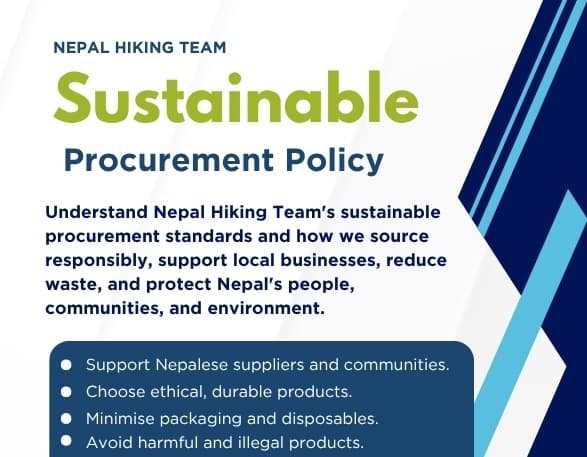
This policy works alongside our more specific sustainability and operational policies, including those covering sustainable accommodation, human resources, procurement, transportation, anti-corruption, partner agencies, and excursions and codes of conduct.
For questions, feedback, or concerns regarding our sustainability practices, interested parties may contact Nepal Hiking Team through the contact details published on our official website.
Policy Review and Approval
This policy is intended to evolve with our operations, relevant legal requirements, stakeholder feedback, and developing sustainability practices. It should be reviewed at least annually and updated when significant changes or identified concerns make revision necessary.
The Managing Director is responsible for approving the policy and supporting its implementation. The Sustainability Coordinator/Manager assists with coordination, documentation, and the identification of areas requiring improvement.
For the further information on NHT sustainble policy, conatct:
Sustainable Manager: Aryan Thapa
Review Frequency: Annually, or earlier when required
Tel: +977 14989212
Email: info@nepalhikingteam.com