
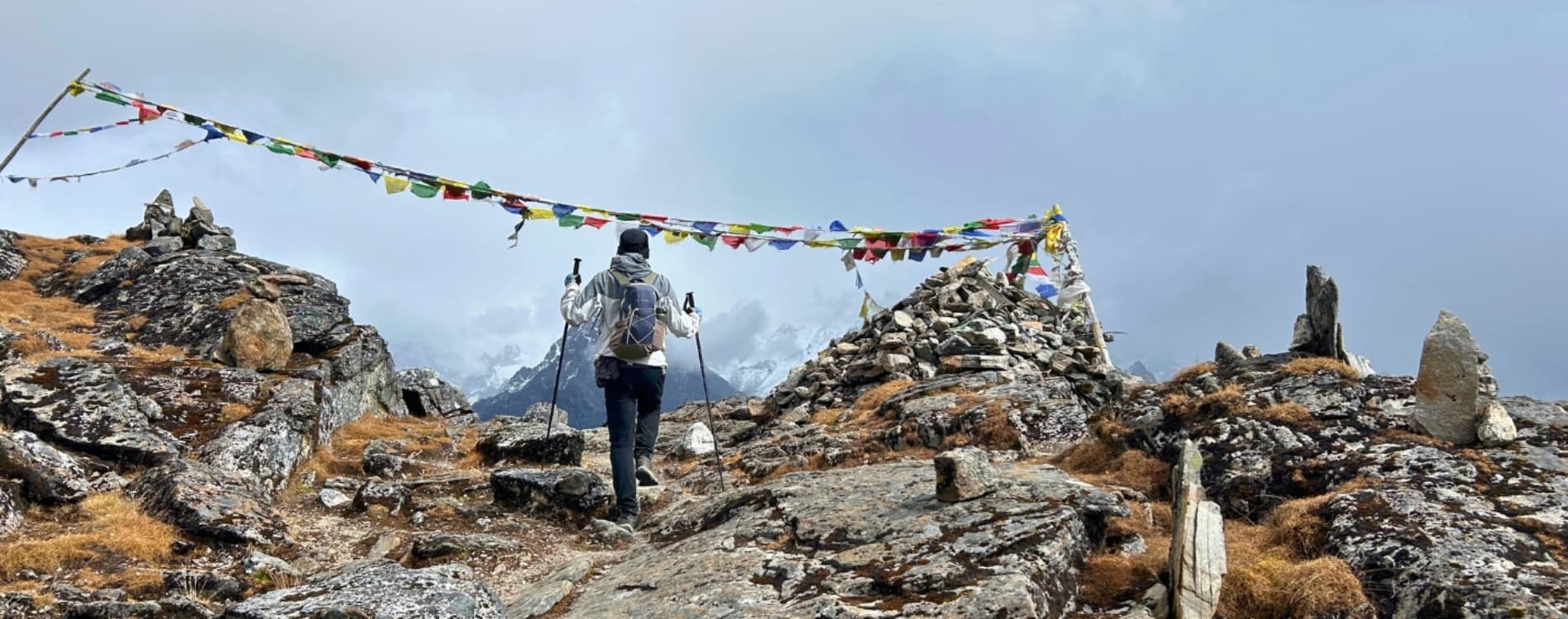
Choosing between the Makalu Base Camp Trek, Kanchenjunga Base Camp Trek, and Everest High Passes Trek is not simply a matter of deciding which mountain you want to see. All three take you deep into the Himalayas, but the experience of walking each route is quite different. Each one also appears regularly on lists of the hardest treks in Nepal, but for different reasons.
Makalu is known for its rugged terrain and Nepal’s most remote mountain regions. Kanchenjunga demands a longer commitment, with extended days on the trail and limited facilities in its eastern valleys. Whereas the Everest High Passes Trek combines three demanding mountain crossings with established Sherpa villages, Everest Base Camp, Kala Patthar, and the Gokyo Lakes.
The differences become clearer when you look beyond elevation and scenery. How much time do you have? Are you comfortable with basic accommodation and limited access to services? Would you rather spend your days crossing remote valleys or navigating high mountain passes along a more established trekking route?
This guide compares the three treks using itineraries, route-specific details, and firsthand trekker accounts. It also considers the practical side of each journey, including trail conditions, altitude, accommodation, accessibility, and preparation, to help you choose a route that matches your experience and expectations. Whether you are weighing Kanchenjunga vs Makalu for a quieter trek in eastern Nepal or comparing the Everest Three Passes vs Kanchenjunga trek for a bigger high-altitude challenge, the sections below set out the differences side by side.
Which is trek better Makalu or Kanchenjunga or Everest?
The table below provides a starting point for comparing the three routes:
| Aspects | Makalu Base Camp | Kanchenjunga Base Camp | Everest High Passes Trek |
|---|---|---|---|
| Location | Sankhuwasabha District, Nepal | Taplejung District of eastern Nepal | Khumbu region, within the Solukhumbu District |
| Highest Point | Makalu View Point (5,700 m) | Pangpema (5,143 m) | Chhukung Ri (5,550 m) |
| Length | 102 to 130 km (63 to 80 miles) | 180 to 250 km (112 to 155 miles) | Approx. 130 km (80 miles) |
| Permits | Makalu Barun National Park Permit; Makalu Rural Municipality Permit | Kanchenjunga Conservation Area Permit (KCAP); Kanchenjunga Restricted Area Permit (RAP) | Sagarmatha National Park Entry Permit; Khumbu Pasang Lhamu Rural Municipality Entry Permit; Gaurishankar Conservation Area Permit (for Jiri route) |
| Difficulty | Strenuous | Strenuous to challenging | Challenging |
| Best Season | Autumn (September to November) and Spring (March to May) | Autumn (September to November) and Spring (March to May) | Autumn (September to November) and Spring (March to May) |
| Amenities | Basic teahouses, standard meals, fried noodles, thukpa, chapati, and porridge. | Remote and rugged wilderness route with very basic teahouses, traditional local foods, and century-old customs. | Comfortable teahouses and lodges, especially in the lower regions, and Sherpa foods such as noodles, soup, dal bhat, and thukpa. |
| Trail Traffic | Low number of foot traffic even during peak trekking season. | Growing number of trekkers each year, especially during trekking season. | Highly popular among trekkers seeking an adventurous journey in the Khumbu region, beyond Everest Base Camp. |
| Mountain Views | Mt Makalu, Mt Everest, Mt Lhotse, Mt Kanchenjunga, Baruntse, Chamlang, and other surrounding peaks. | Mt Kanchenjunga, Yalung Kang, Kangbachen, Kumbhakarna, Kirat Chuli, and Yalung Peak. | Ama Dablam, Everest, Nuptse, Lhotse, Lobuche, and other surrounding peaks. |
Trek Overview for Makalu, Kanchenjunga, and Everest
Makalu Base Camp Trek
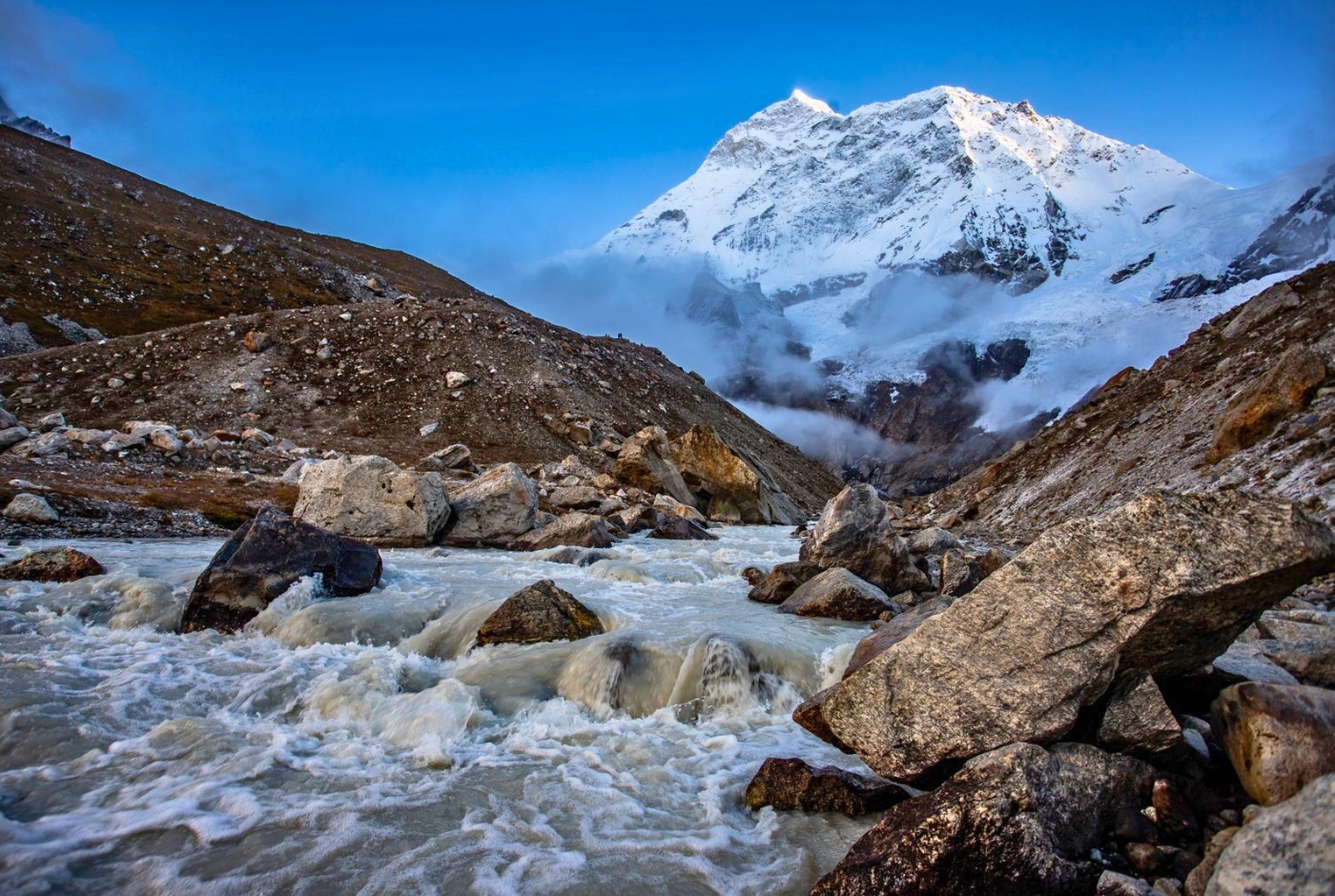
The Makalu trek is a strong choice for trekkers who want to spend time in a less-traveled part of the eastern Himalayas. The Makalu Base Camp trek itinerary is around 16-21 days and begins with a flight to Tumlingtar, followed by a road journey to Seduwa. From there, the trail climbs through settlements such as Tashigaon and Khongma Danda before crossing Shipton La and continuing into the Barun Valley. Makalu itself, at the head of that valley, is the world’s fifth-highest mountain.
The route reaches Makalu Base Camp at approximately 4,870 m. Trekkers who are properly acclimatized and whose guide considers conditions suitable can also attempt the optional Makalu View Point at around 5,700 m. That viewpoint is a substantial additional climb, not simply part of the base camp visit.
Kanchenjunga Base Camp Trek
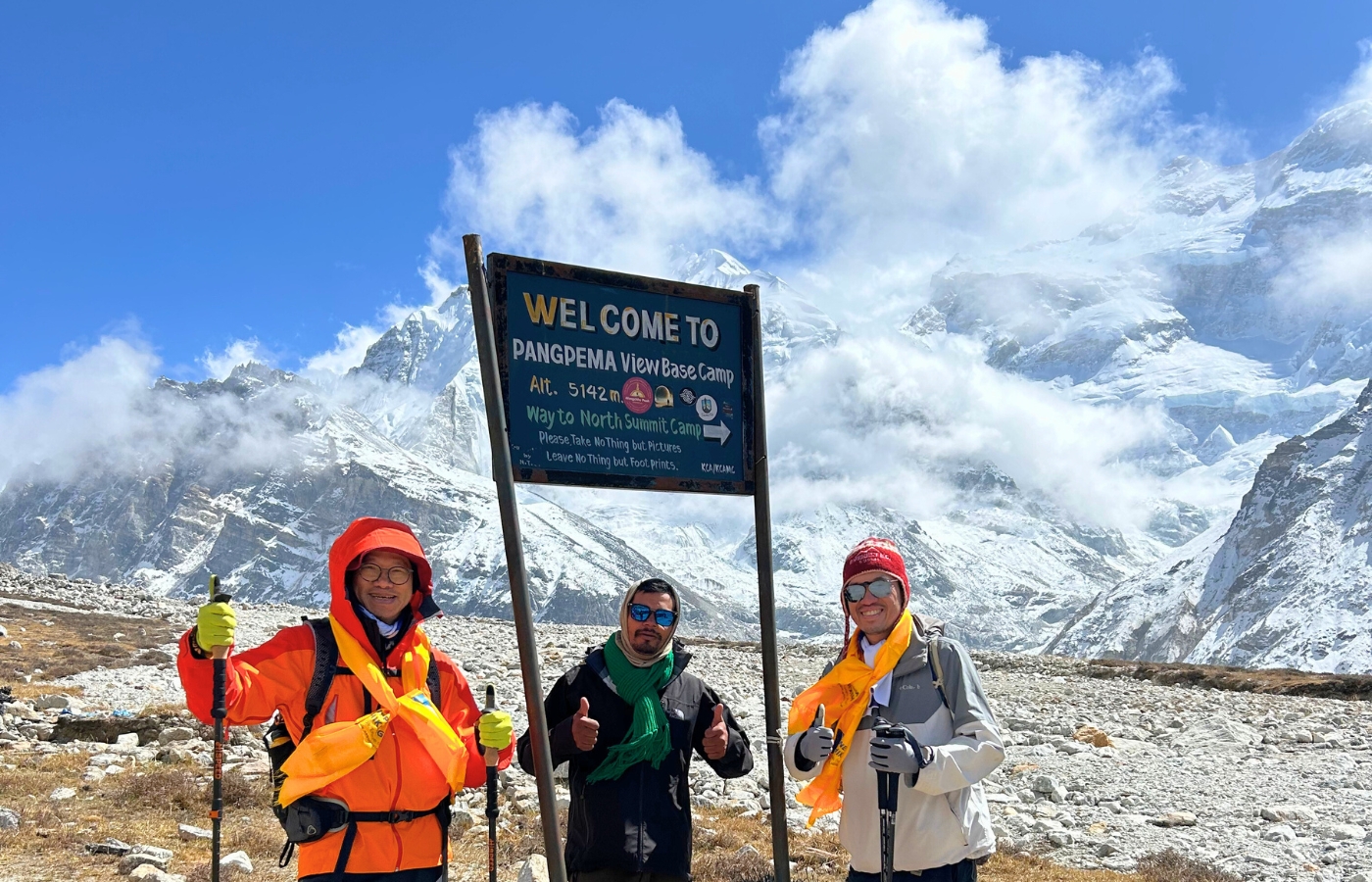
Kanchenjunga requires more time on the trail and a greater commitment to remote travel. The itinerary is between 20-25 days and starts with travel to eastern Nepal before following the trail through settlements including Ghunsa, Kambachen and Lhonak to Pangpema, the North Base Camp area at approximately 5,142 m. Kanchenjunga, also spelled Kangchenjunga or Khangchendzonga, is the world’s third-highest mountain, and this route approaches it from the Nepal side.
The combined itinerary then returns toward Ghunsa, crosses the Sele La area and continues to the southern base camp viewpoint at Oktang via Ramche. This combination gives trekkers a broader experience of the Kanchenjunga region, but also means long walking days and fewer opportunities to shorten the route once they are deep in the mountains. Itineraries that combine both base camps are often sold as the Kanchenjunga Circuit Trek or the Kanchenjunga North and South Base Camp Trek.
Everest High Passes Trek
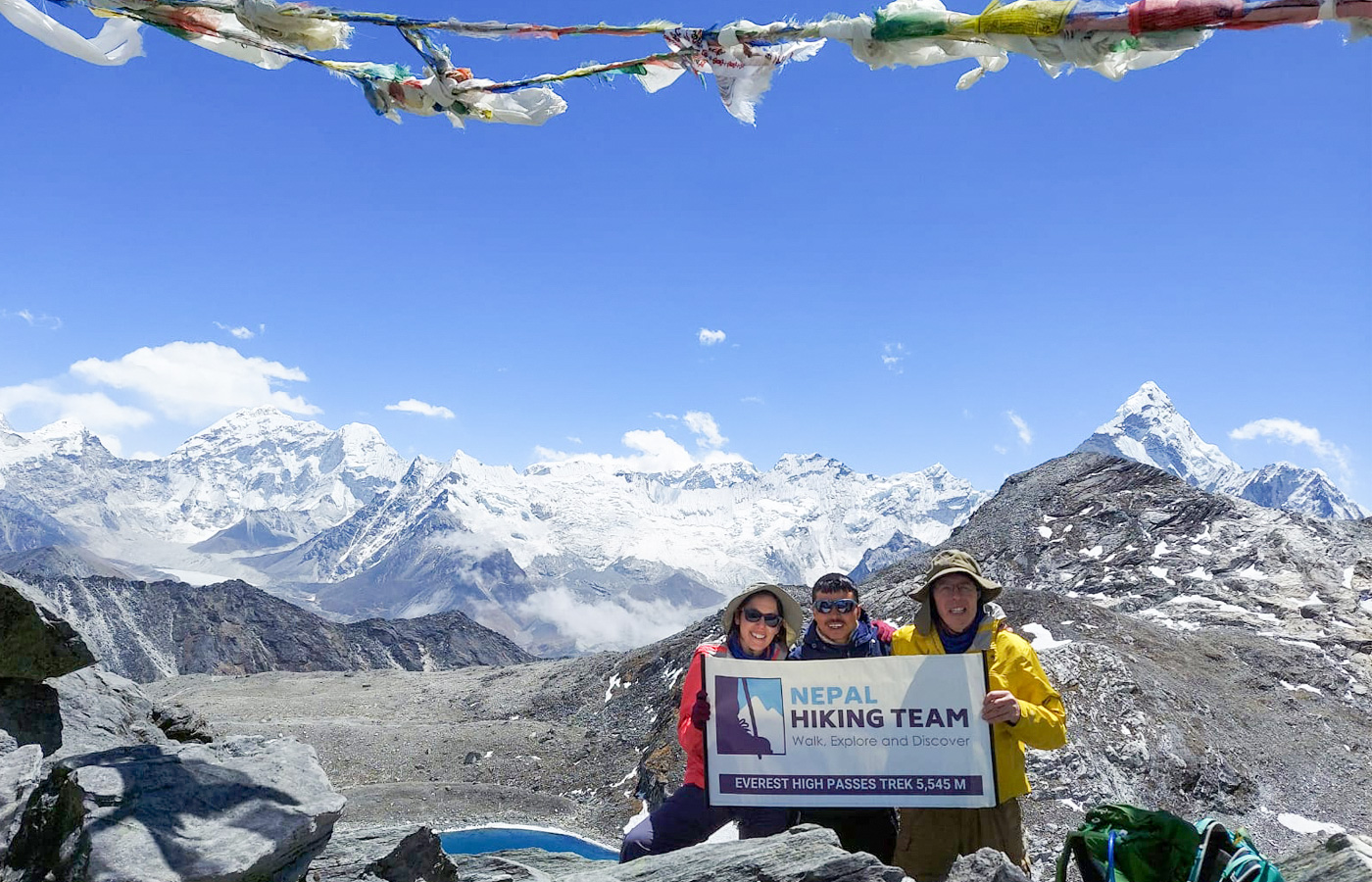
The Everest High Passes Trek is a circuit through the Khumbu rather than a straightforward out-and-back journey to Everest Base Camp. The high pass package is usually around 20-23 days and combines the three major crossings, Kongma La, Cho La and Renjo La, with Everest Base Camp, Kala Patthar, Gokyo and its lakes. For trekkers comparing the Three Passes trek vs EBC, this circuit format and the three high crossings are what set it apart from the standard Everest Base Camp route.
The established route offers more frequent teahouses and services than the remote Makalu and Kanchenjunga trails. However, that infrastructure should not be mistaken for an easy trek. The three passes involve high-altitude climbs, rocky descents, and terrain that can become difficult or impassable in snow and poor visibility. It is often described as one of the hardest teahouse treks in Nepal for exactly this reason.
Location and Total Distance of the Journey
The three treks lie in different parts of eastern and northeastern Nepal, and their locations affect much more than the mountain views. They influence how you reach the trailhead, how long it takes to enter the high mountains, and how easily you can adjust your plans if weather or trail conditions change.
Makalu Base Camp: Sankhuwasabha District
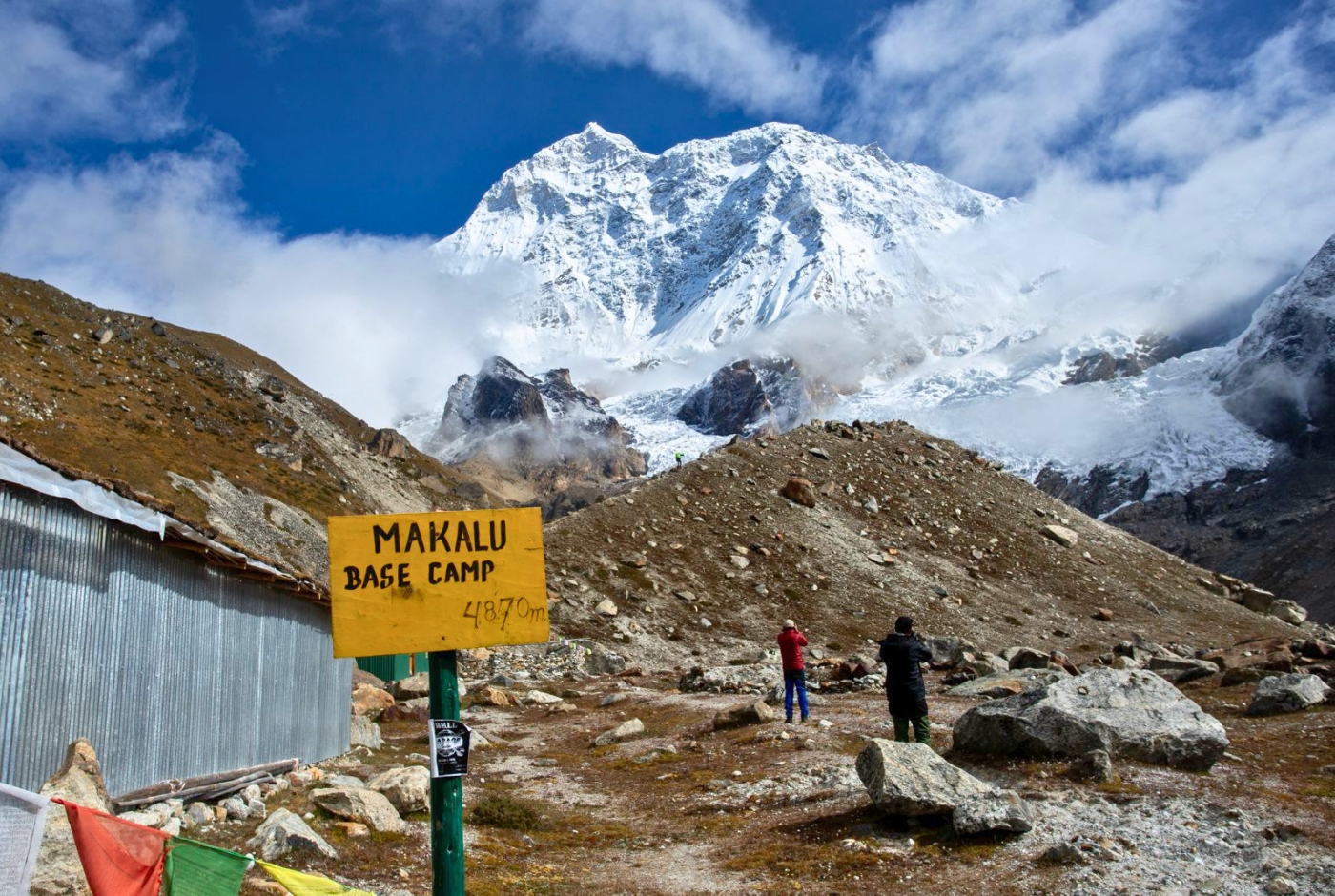
The Makalu trek starts in eastern Nepal, with a flight from Kathmandu to Tumlingtar followed by a road transfer to Seduwa. The walking route then climbs through the Makalu-Barun National Park toward the Barun Valley and the base camp.
The current distance is approximately 150–160 km for the round-trip trekking section. This is longer than some published estimates because distance figures depend on which route segments and side trips are included. Trekkers should pay attention to the terrain as well as the distance: steep stone staircases, sustained ascents, and remote sections can make a relatively short day feel demanding.
Kanchenjunga Base Camp: Taplejung District
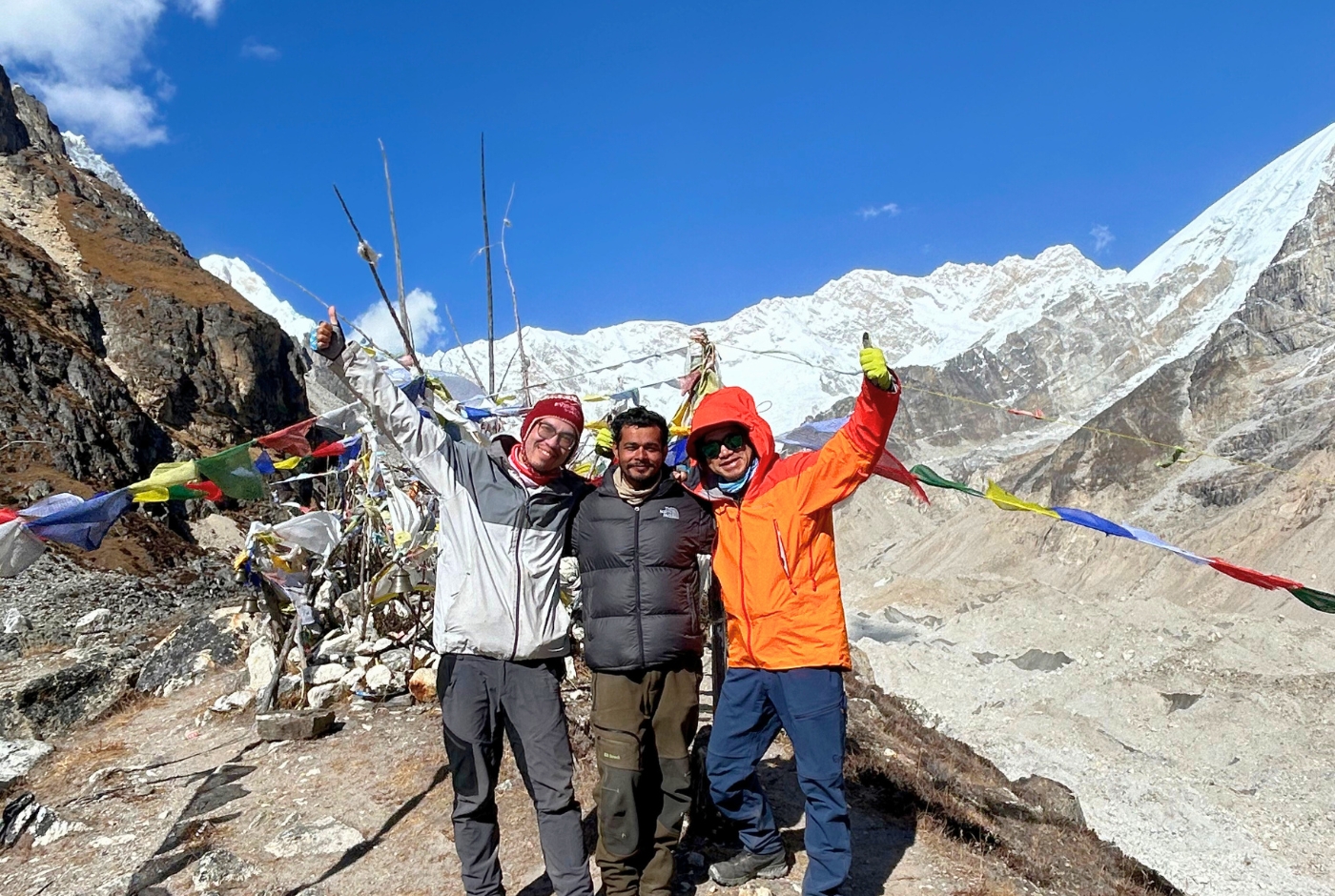
Kanchenjunga lies farther east, close to Nepal’s borders with India and China. The package begins with a flight to Bhadrapur and a long road journey toward Taplejung before the trekking route continues into the mountains.
The estimated distance is around 175–185 km for its combined base camp itinerary. That route visits both Pangpema in the north and the Oktang viewpoint in the south, crossing the Sele La area between the two sections. A shorter trek to only one base camp would have a different distance and duration. Experienced groups can even link the Makalu and Kanchenjunga regions on a longer, expedition-style route over the Lumba Sumba pass (around 5,160 m).
What matters here is not simply the extra kilometres. The trail takes you well beyond the main trekking corridors, where settlements are more widely spaced, and road access is limited. If you need an extra rest day or must change your plans, the options may be more restricted than they are in the Khumbu. This flexibility gap is one of the biggest differences in any Kanchenjunga vs Everest Base Camp trek comparison, and it carries over to the High Passes circuit as well.
Everest High Passes: Khumbu region
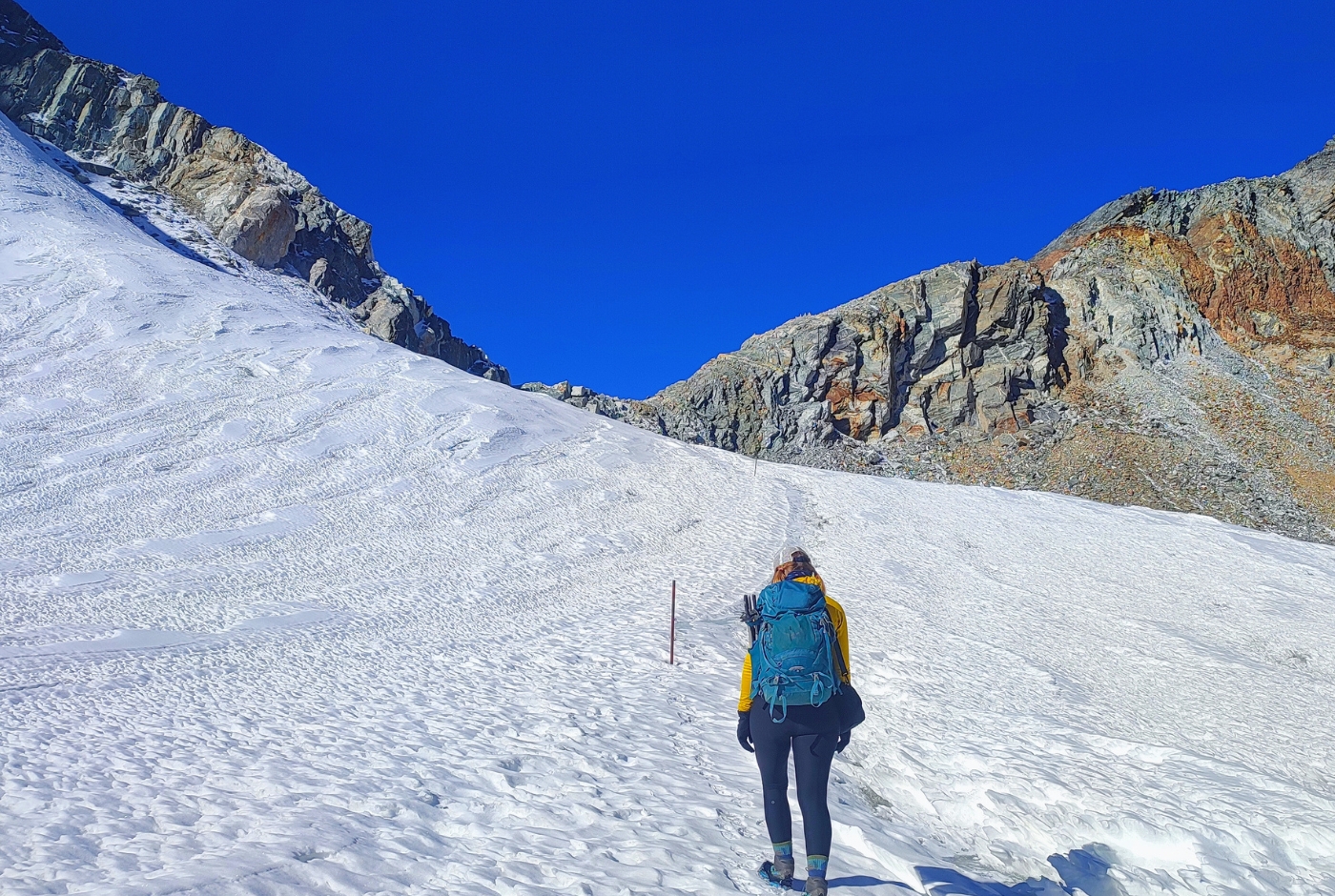
The Everest High Passes Trek begins with travel to Lukla, followed by the established trail toward Phakding and Namche Bazaar. From there, the route links the valleys around Everest Base Camp and Lobuche with the Chhukung area, the Gokyo Valley and the Renjo La crossing, depending on the direction of travel.
The total distance varies with the itinerary and optional hikes, but the main circuit is typically about 130–160 km. It includes three high passes, so the total distance doesn’t fully reflect the physical challenge. A day crossing Kongma La or Cho La can be considerably more demanding than a similar-distance day at a lower elevation.
Unlike the Makalu and Kanchenjunga routes, the Everest circuit passes through a well-established trekking network. That makes access to food, lodging, and other basic services easier in many places, although the highest and most remote sections remain exposed to severe weather.
Which is trek is more difficult: Makalu, Kanchenjunga, or Everest?
All three treks are strenuous, but they challenge trekkers in different ways. Comparing them solely by their highest elevations misses some of the most important differences: the shape of the trail, how many demanding days occur in succession, the availability of rest stops, and the consequences of changing weather. That is why any Makalu vs Kanchenjunga vs Everest Three Passes trek comparison needs to look at how each route feels day to day, not just at the numbers.
Makalu Base Camp: Steep trails and a demanding approach
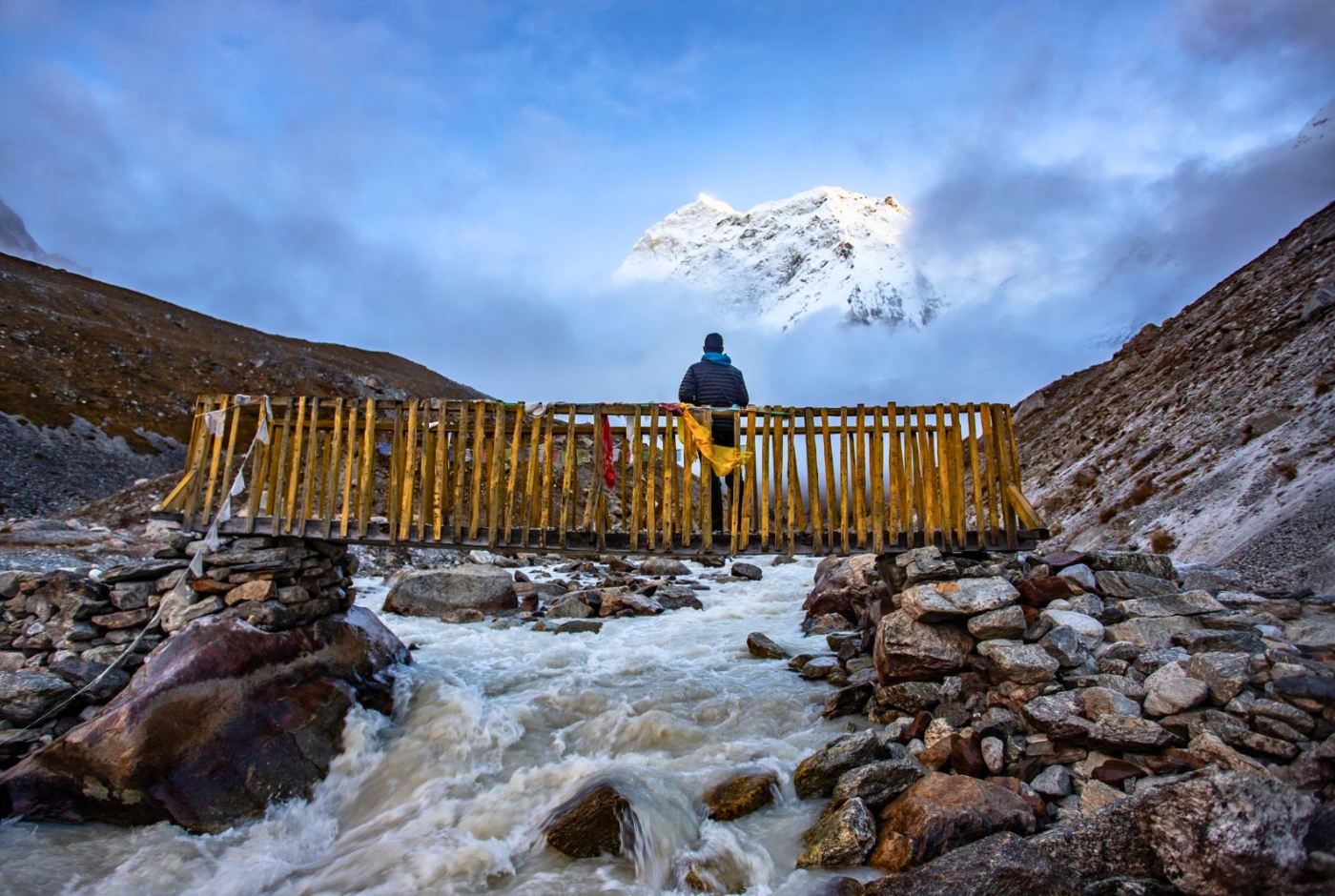
Makalu’s difficulty becomes apparent well before reaching base camp. The approach involves substantial climbing through forested hills and settlements, followed by steep stone staircases and the high crossings of Shipton La and Keke La. Beyond these passes, the trail enters the more remote Barun Valley, where rough terrain and limited facilities make each walking day more demanding.
The return journey also deserves consideration. After reaching nearly 4,870 m at base camp, trekkers retrace much of the route, including demanding ascents and descents around the passes. Tired legs can make these sections harder than they felt on the way in. Firsthand accounts from trekkers who have done both routes describe Makalu as harder than Everest Base Camp, mainly because of its steep inclines and rugged trails.
The optional climb to Makalu View Point, around 5,700 m, adds another level of difficulty. It should be attempted only if acclimatization, weather, fitness, and the guide’s assessment support it. Trekkers with good endurance who are comfortable with steep, uneven trails, basic accommodation, and spending several days away from well-developed trekking infrastructure.
Kanchenjunga Base Camp: Endurance over a longer journey
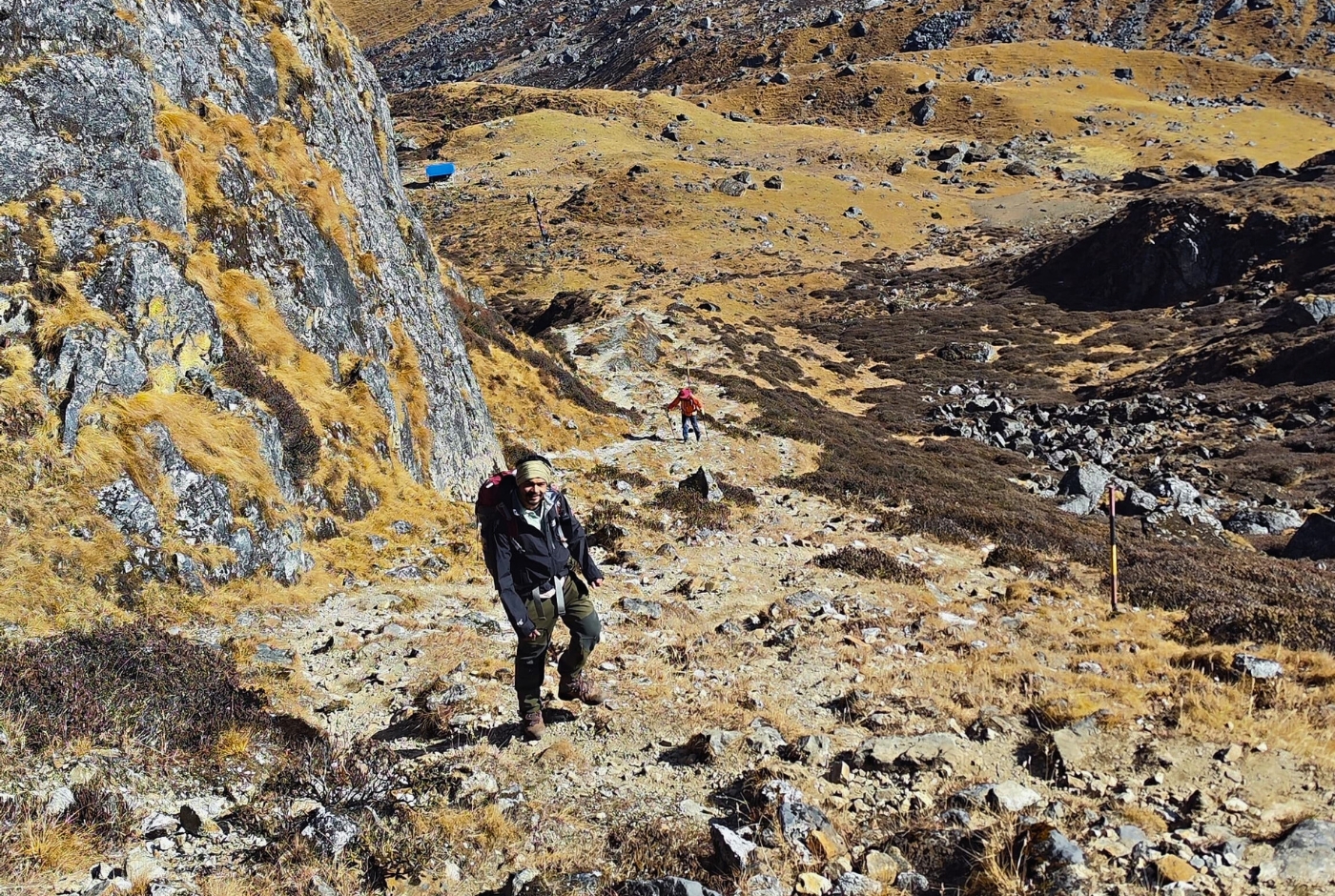
Kanchenjunga is demanding because of the combination of duration, remoteness, and cumulative fatigue. The trail includes repeated ascents and descents, long approaches through river valleys, and a high-altitude excursion to Pangpema. The combined north-and-south itinerary adds the Sele La crossing and further walking toward Oktang. Kanchenjunga Base Camp trek difficulty comes less from any single day and more from how many hard days stack up.
The trek’s distance is only part of the challenge. A long day from Lhonak to Pangpema and back, for example, involves walking on rocky and uneven terrain at elevations above 5,000 m. Even trekkers who feel strong at lower elevations may find their pace slowing considerably.
Firsthand reports from people who have completed Kanchenjunga frequently mention its remoteness, basic facilities, and the need to take landslide-prone sections seriously. These accounts are individual experiences rather than a guarantee of what every departure will encounter, but they reinforce why contingency planning matters on this route.
Experienced trekkers who have the time for a longer expedition and are prepared for extended walking days, basic facilities, and fewer options to change the itinerary once deep in the mountains.
Everest High Passes: Three crossings at high altitude
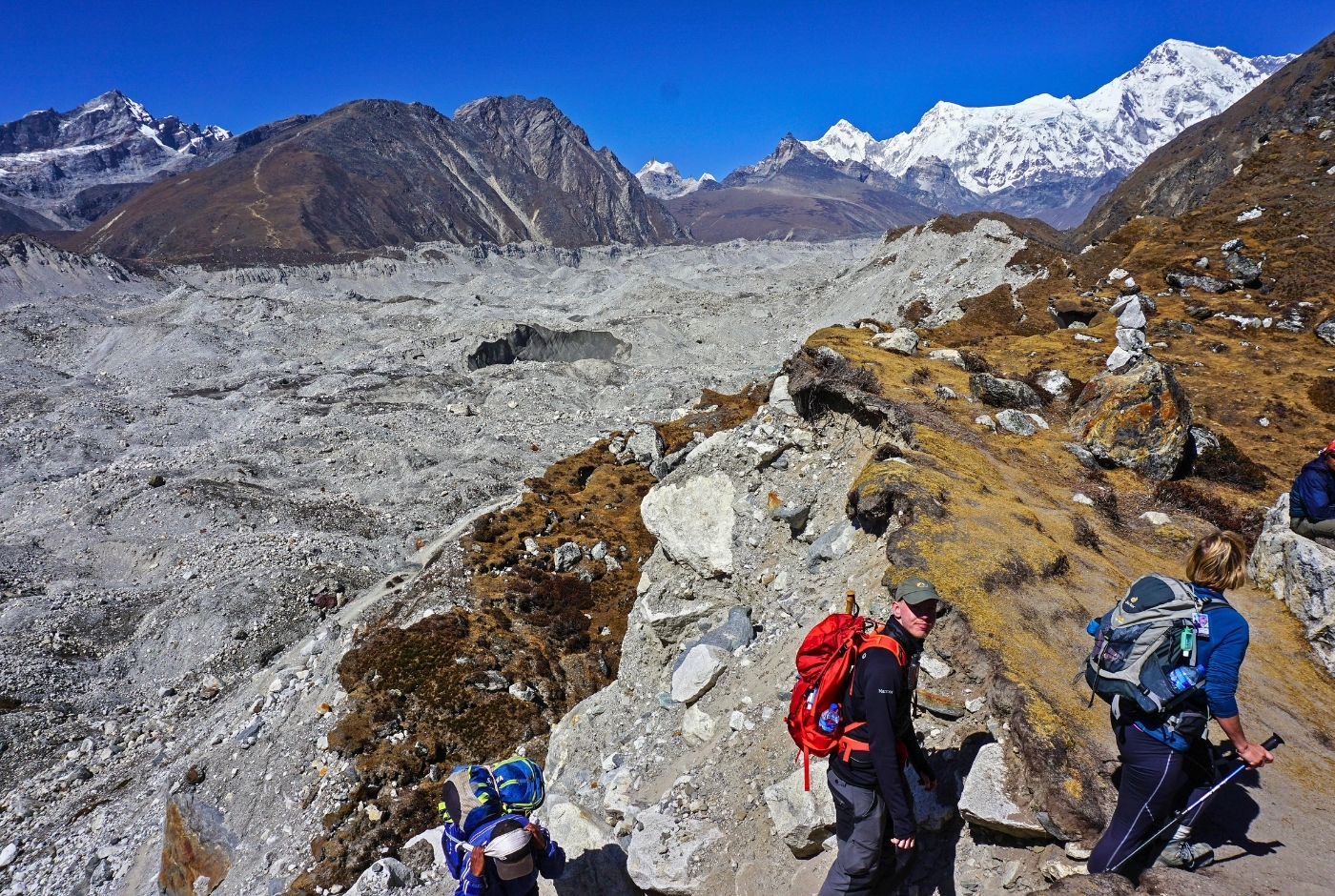
The Everest High Passes Trek has a different difficulty profile. Its main challenge lies in crossing Kongma La, Cho La and Renjo La while managing altitude, accumulated fatigue and changing trail conditions.
Kongma La involves a demanding climb and a long descent over rocky terrain and glacial moraine. Cho La can present icy or glaciated sections depending on conditions, while Renjo La requires another substantial ascent and descent after the earlier passes. Snowfall and poor visibility can make crossings unsafe or temporarily prevent passage.
Overall, the Kongma La is considered the hardest part of the trip with icy trails and steep ascents/descents. The journey is suitable for trekkers with good endurance, who are comfortable walking on rocky mountain terrain, and can manage several demanding high-altitude days. Trekkers who have already completed Everest Base Camp should expect a significantly harder trip, which is why this route features on most lists of challenging treks in Nepal.
Best time of year for Makalu, Kanchenjunga, or Everest region trek
All three share the same two windows: spring (March to May) and autumn (September to November) as the best time of the year; however, within those windows, the trails offer different experiences.
- Everest: Spring brings rhododendron forests in bloom and daytime temperatures of roughly 5 to 10 degrees Celsius, with nights that drop to -10 or colder. Autumn is the classic clear-sky season, with days of roughly 10 to 20 degrees and the biggest crowds. The summer monsoon cancels Lukla flights, and winter can close the high passes for weeks. For the Everest Three Passes trek, these windows matter even more, because the high passes are among the first sections to become unsafe after heavy snow.
- Kanchenjunga: Spring gives clear skies and open lodges, and autumn is similar but busier. Winter snow can block trails, and most high lodges close. Summer brings landslides, slippery paths, and leeches in the lower forests. Even in the good seasons, trekkers can expect surprises at high camps.
- Makalu: The best time for the Makalu Base Camp Trek is during spring and autumn. During these months, the skies are clear, trekking trails are drier, and temperatures are warm with great mountain visibility.
Whichever you pick, give yourself a buffer day at the end, as weather delays on the Lukla, Tumlingtar, and Bhadrapur flights are normal.
How is accommodation in the Kanchenjunga, Makalu, or Everest Region?
Accommodation is one of the clearest differences between these three treks. All three have teahouses and guesthouses along their standard itineraries, but the availability of facilities, the variety of meals, and the level of comfort vary by location and elevation. Older guides often describe Makalu and Kanchenjunga as camping treks, but the standard itineraries compared here rely on teahouses along the way.
Makalu has basic teahouses
On the Makalu route, accommodation is generally simple, particularly as the trail climbs beyond the lower settlements. Trekkers can expect basic rooms, often with twin beds, shared bathrooms, and communal dining areas. Meals commonly include dal bhat, noodles, soups, porridge, and other straightforward dishes. Facilities become more limited in remote sections, so do not expect the same choice of rooms, hot showers, or charging services available in larger trekking villages.
Kanchenjunga offers fewer facilities in the higher valleys
Accommodation on Kanchenjunga is also basic, with fewer alternatives in remote areas such as Kambachen and Lhonak. Rooms and dining facilities vary between settlements, and services that are routine in larger trekking hubs may be unavailable or unreliable.
Expect simple meals and be prepared for cold rooms, shared facilities and limited access to charging or connectivity. The further you travel into the high valleys, the more important it becomes to carry suitable layers, personal essentials and some flexibility about comfort.
Everest offers more choice
The Khumbu has a more established network of lodges and teahouses, particularly around Lukla, Phakding and Namche Bazaar. Trekkers can generally find a wider range of meals and services along the main route, though costs and availability vary with elevation and season.
Above the main villages, accommodation becomes simpler. The higher settlements along the Three Passes circuit may have limited room availability, fewer amenities, and colder conditions. A comfortable lodge lower down does not mean the entire route offers the same standard.
Altitude and Acclimatization
Altitude and acclimatization are major considerations on all three treks, as at higher elevations, the air pressure is lower, recovery takes longer, and symptoms of altitude illness can develop. The highest point during the Makalu Base Camp trek (4,870 m) is at the Makalu View Point at 5,700 m.
Likewise, the highest point during the Kanchenjunga Base Camp trek is Pangpema viewpoint at around 5,142 m. Whereas the highest point during the Everest High Pass Trek is Chhukung Ri at 5,550 m.
| Trek | Altitude Consideration |
|---|---|
| Makalu Base Camp | Gradual progression through the lower valleys, followed by high passes and base camp with an optional viewpoint at 5,700 m. |
| Kanchenjunga Base Camp | A long approach to Pangpema (5,142 m) and a further high crossing on the combined itinerary. |
| Everest High Passes | Multiple high pass crossings above 5,000 m, combined with high-altitude settlements and long walking days. |
Good acclimatization involves more than adding a rest day to the schedule. It means ascending at a sensible rate, allowing the body time to adjust, avoiding excessive exertion, and paying attention to symptoms.
Headaches, nausea, dizziness, unusual fatigue, and loss of appetite can be symptoms of altitude illness. Severe or worsening symptoms require prompt attention; a person with suspected serious altitude illness should not continue ascending. Descent and medical assessment may be necessary. Do not assume that someone who is fit or has trekked at altitude before is protected.
The itinerary should be designed around appropriate acclimatization, with the guide monitoring how trekkers are feeling and responding to any concerning symptoms. On remote routes, where reaching medical help may take time, prevention and early action are especially important.
Preparation and Physical Fitness
You do not need to be a mountaineer to complete these treks, but you should be prepared for sustained walking in demanding conditions. General fitness helps, yet it is only one part of preparation. The ability to walk uphill for several hours, recover overnight, and repeat the effort the following day is equally important.
A useful training plan should include the following:
- Build cardiovascular endurance. Use brisk walking, hiking, cycling, swimming, or running to improve your ability to sustain moderate effort.
- Practice long walks. Gradually increase the duration of weekend hikes, ideally on uneven terrain with some elevation gain and loss.
- Strengthen your legs and core. Step-ups, squats, lunges, and controlled step-downs can help prepare your legs for steep climbs and descents.
- Test your equipment. Break in your trekking boots and practice with your backpack, trekking poles, and clothing layers before departure.
- Prepare for consecutive days. Include back-to-back walking days in your training so you can assess how well you recover.
- Plan for cold and variable weather. Carry suitable layers, gloves, sun protection, and waterproof clothing, and understand how to use your equipment.
For Makalu, spend particular time preparing for steep ascents, stone steps, and long descents. For Kanchenjunga, endurance and recovery over a longer journey are central concerns. For Everest, prepare for steep, rocky terrain and the demands of repeated high-altitude crossings.
A practical starting point is to build a consistent training routine several weeks to a few months before departure, adjusting it to your current fitness and previous trekking experience. If you have a medical condition that could affect exercise or altitude exposure, seek advice from a qualified healthcare professional before undertaking a high-altitude trek.
Finally, fitness cannot replace acclimatization. Being able to run long distances does not guarantee that you will tolerate an elevation above 5,000 m, and walking slowly does not mean you are unfit. Your pace should allow you to maintain steady effort without exhausting yourself early in the day.
Accessibility and Trail Traffic in Makalu, Kanchenjunga, and Everest
Accessibility involves more than getting to the starting point. It also includes the frequency of transport, the availability of accommodation, the presence of other trekkers, and how easily you can adjust plans or obtain help.
Makalu: quieter trails and fewer alternatives
The Makalu route begins with a flight to Tumlingtar and a long drive to the trailhead. Once trekking starts, the route moves through increasingly remote areas. The relatively low number of trekkers compared with the main Everest corridor can make the journey feel quieter, particularly in the upper valleys. For trekkers looking for off-the-beaten-path treks in Nepal, that quiet is a large part of the appeal.
That quiet comes with a trade-off. There are fewer accommodation choices in some sections, and you cannot assume that an alternative lodge or nearby road will be available if you need to change plans. A well-organized itinerary, experienced guide, and realistic contingency arrangements are important.
Kanchenjunga: the greatest commitment to remote travel
Kanchenjunga requires a flight and a substantial road journey before reaching the walking route. The combined north-and-south itinerary also covers a large area, with long stretches between major settlements.
The route generally sees less traffic than Everest’s main trekking corridor, although numbers vary by season. The relative isolation is part of its appeal for trekkers seeking a quieter mountain experience. It also means that medical assistance, resupply, and itinerary changes may be more complicated.
Kanchenjunga is a restricted trekking region. Nepal Tourism Board’s current guidance lists both Kanchenjunga routes and Makalu Base Camp among the routes for which a licensed trekking guide and an agency-issued TIMS card are required under the applicable provisions. Restricted-area permit requirements should also be checked before departure. For the Kanchenjunga trek permit, that means the Restricted Area Permit (RAP) and the Kanchenjunga Conservation Area Permit (KCAP) listed in the table above, both arranged through a registered trekking agency.
Everest: easier access to services, but busy trail sections
The standard Everest High Passes itinerary begins with travel to Lukla, followed by the well-established route through Phakding and Namche Bazaar. The Khumbu has more developed trekking infrastructure, with a greater concentration of lodges, food services and other visitor facilities.
The route is also more popular. Sections around Namche Bazaar and the Everest Base Camp corridor can be busy during peak season. This does not mean the entire circuit feels crowded: some high-pass sections are much quieter, particularly away from the main route.
Everest’s greater infrastructure can make logistics easier, but it does not remove the risks of altitude or weather. Lukla flights can be delayed, and high passes can become unsafe after snowfall. Build flexibility into the itinerary rather than assuming transport and trail crossings will run exactly as planned.
For all three treks, permits depend on the precise route and current rules. The standard Lukla-based Everest itinerary generally requires the Sagarmatha National Park entry permit and the Khumbu Pasang Lhamu Rural Municipality entry fee. The Gaurishankar Conservation Area permit is relevant to routes using the Jiri approach, not automatically to every Everest itinerary. On the Makalu Base Camp trek, the table above lists the Makalu Barun National Park Permit and the Makalu Rural Municipality Permit.
Cultural Experience, Scenery, and Landscapes
The landscapes of these three treks are all Himalayan, but they unfold in different ways. Their cultural experiences also reflect distinct local communities, settlement patterns, and relationships with the mountains.
Makalu: Forested valleys and a rugged mountain basin
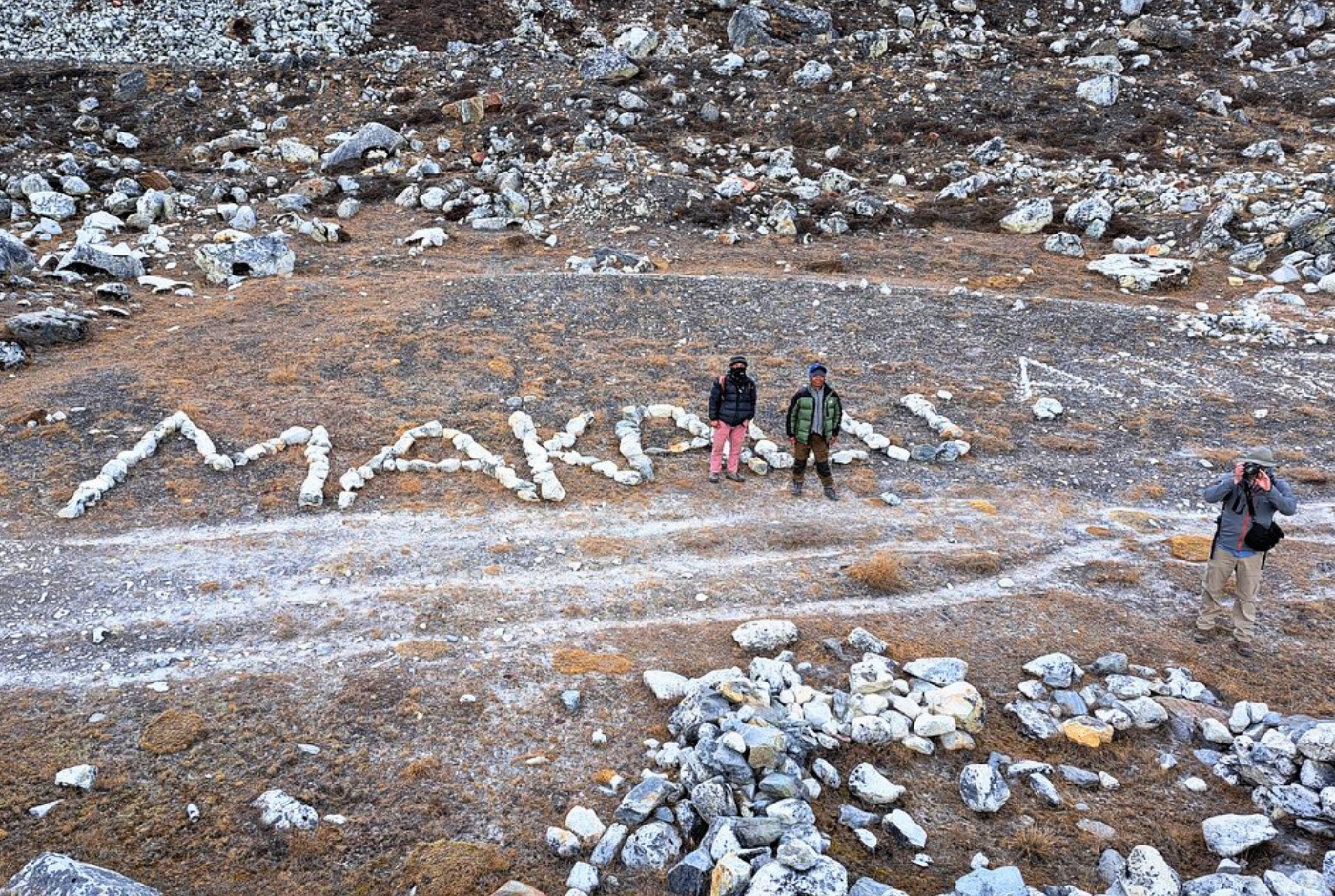
Makalu begins among farmland, forests, and small settlements before climbing into high alpine terrain. Rhododendron forests, river valleys, and the landscape around the Barun Valley create a noticeable change in vegetation and terrain as you gain elevation.
The route passes through communities with Sherpa and other local cultural traditions. As you move farther into the mountains, settlement becomes sparse, and the environment increasingly dominates the experience. The approach to base camp brings you close to Makalu and surrounding peaks, including Chamlang and Baruntse.
The appeal is not only the view from the end of the trail. Much of the experience comes from the transition between inhabited valleys and a remote high-altitude landscape.
Kanchenjunga: Remote settlements and two sides of a great mountain
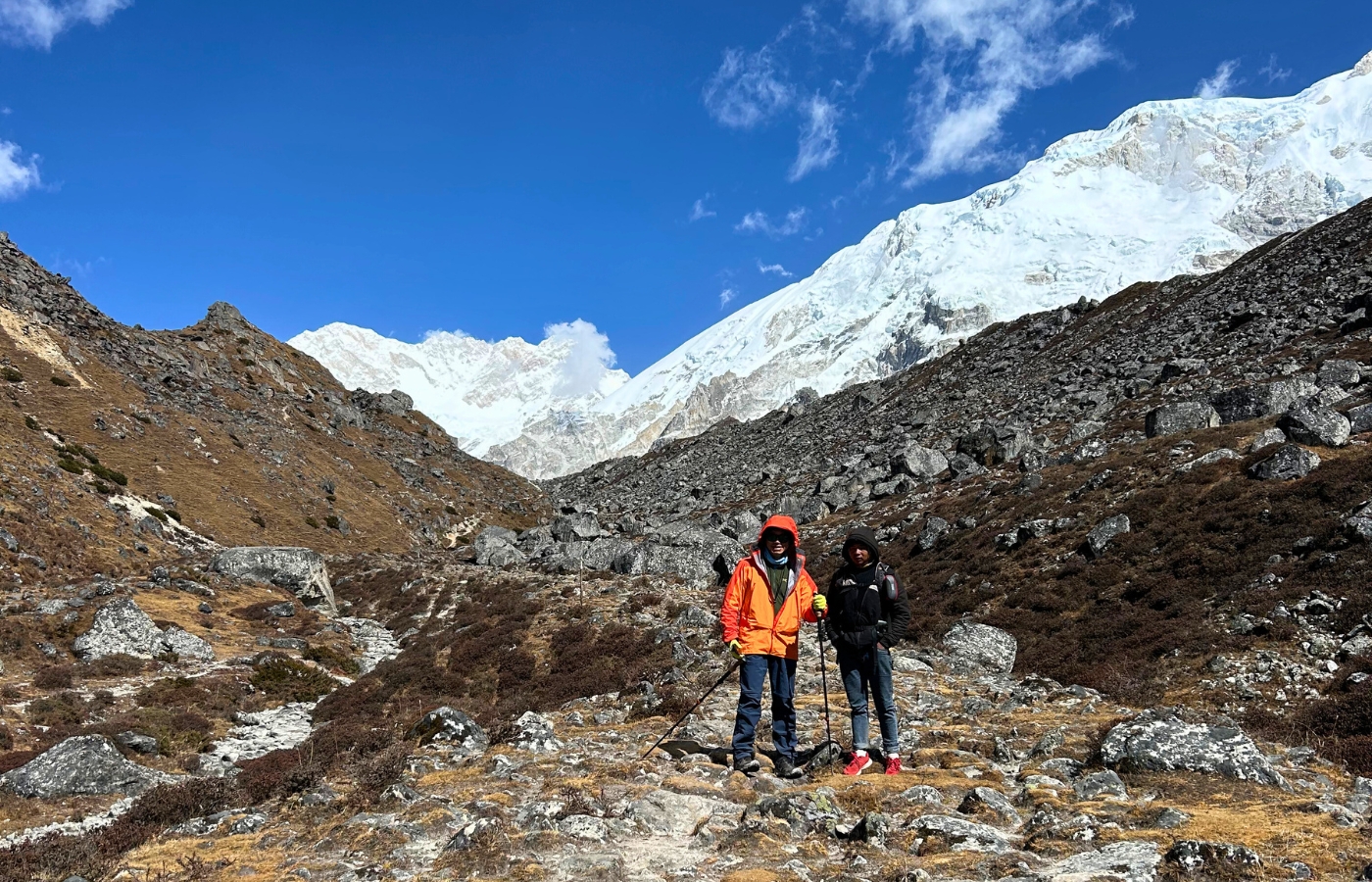
Kanchenjunga offers an extended journey through eastern Himalayan valleys, forested slopes and high glacial terrain. Lower sections feature rivers, cultivated land and villages; higher sections lead into more austere landscapes around Kambachen, Lhonak and Pangpema.
The route also offers opportunities to encounter local Buddhist traditions, monasteries and prayer flags, particularly around settlements such as Ghunsa. Cultural life is not a single uniform experience, however, and the communities encountered differ across the region.
On the combined itinerary, the northern and southern approaches provide distinct perspectives on the Kanchenjunga massif. The southern section toward Ramche and Oktang adds a different landscape and a further opportunity to understand the scale of the surrounding glaciers and peaks.
Everest: Sherpa settlements, monasteries and changing mountain views
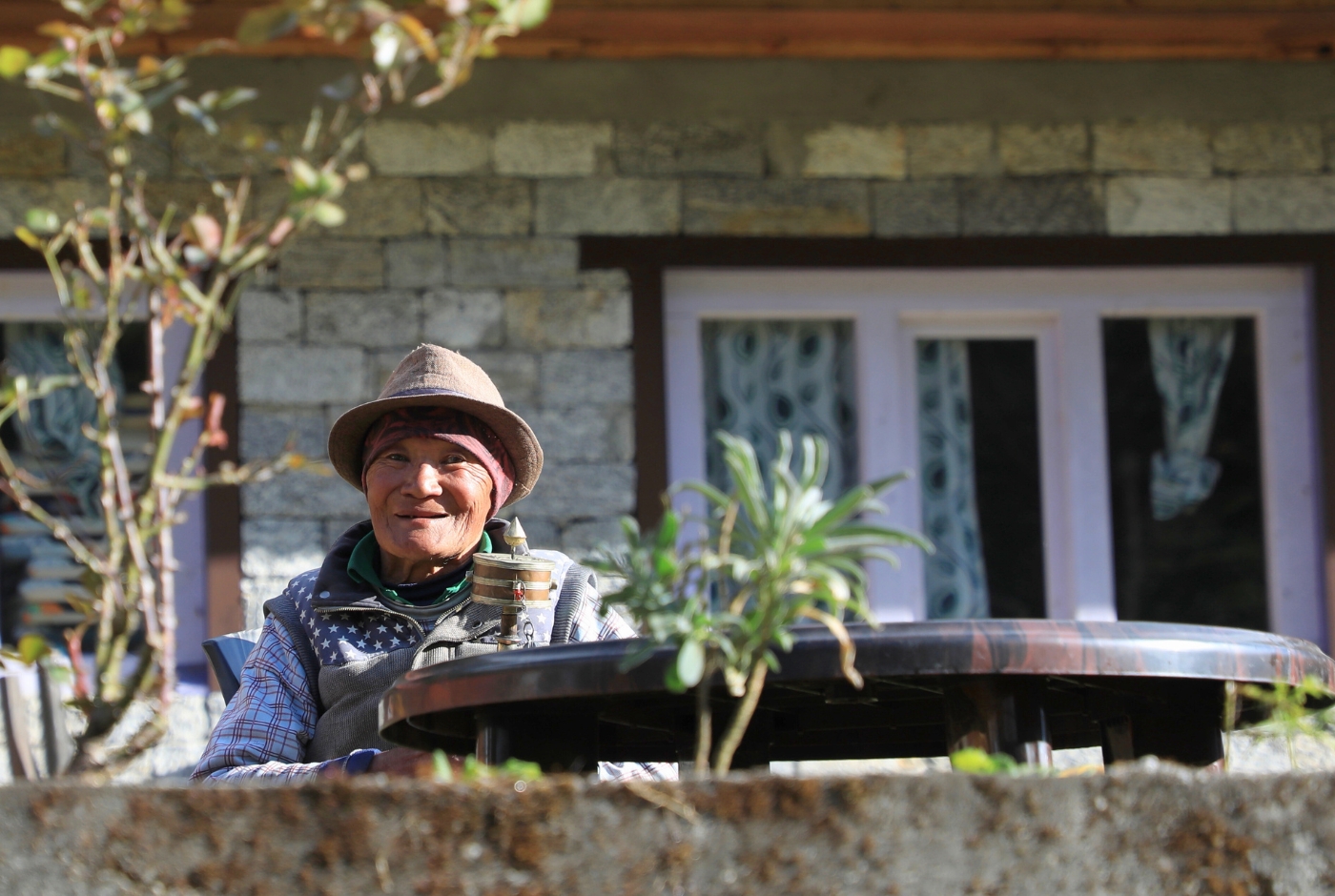
The Everest High Passes Trek combines high mountain crossings with villages and established cultural landmarks. Namche Bazaar is a major hub in the Khumbu, while Tengboche is known for its monastery and its place in local Buddhist life.
The route then links several distinct areas: the Everest Base Camp corridor, the high terrain around Kongma La, the approach to Cho La, and the Gokyo Valley. Crossing Renjo La provides another perspective on the surrounding peaks and lakes.
Because the route is a circuit, the experience changes as you move between valleys rather than following the same trail in and out. It offers a broad view of the Khumbu’s mountain landscapes and trekking culture, alongside the physical demands of the high passes.
The cultural distinction is worth considering when choosing a trek. Everest has the most established trekking network and is closely associated with Sherpa communities and Buddhist landmarks in the Khumbu. Makalu and Kanchenjunga offer longer periods in remote eastern Himalayan settings, where smaller settlements and limited infrastructure shape the pace of travel. For many trekkers choosing between eastern Nepal treks and the Khumbu, that slower pace is the deciding factor.
None of these regions should be treated as culturally interchangeable. The communities you meet, the traditions you encounter, and the time available to engage with local life will depend on the route, your guide, and how you travel.
Conclusion
The Makalu Base Camp, Kanchenjunga Base Camp, and Everest High Passes are all demanding journeys through the Himalayas. Makalu is suitable for trekkers seeking a rugged trial through a quieter part of eastern Nepal. The trail is steep, with high passes and traverses through the remote Barun Valley.
Likewise, trekkers can choose the Kanchenjunga Base Camp trek if they are seeking a longer journey through remote valleys in the far eastern region of Nepal. Lastly, choose Everest High Passes if you’re looking for a demanding circuit that combines three high crossings in the Khumbu region with EBC, Kala Patthar, and Gokyo. In short, the Kanchenjunga vs Makalu choice comes down to time and remoteness, while the Everest Three Passes trek suits those who want high crossings with more reliable teahouse support.
Nonetheless, trekkers should base their decision on more than the highest elevations or the no. of days. You should also consider the walking hours, terrain, acclimatization, accommodation, flexibility, and accessibility. Permits, domestic flights, and the total number of trekking days will also shape the overall cost of each trek.
Whether you prefer the remoteness of Makalu, the wilderness of Kanchenjunga, or the high passes of Everest, Nepal Hiking Team can help you make the perfect choice and prepare you for a trek that matches your goals and experience.
Post a Comment