

Nepal is home to some of the world's most spectacular and challenging mountain passes, acting as vital links between isolated high-altitude valleys and ancient trans-Himalayan trade routes. Primarily located in the Annapurna, Everest, and Manaslu regions, these passes often serve as the crowning achievement of iconic trekking circuits.
Challenging and intimidating are few words that describe the mountain passes in Nepal. Trekkers who have trekked the Nepal Himalayas have vivid memories of crossing those testing mountain passes. These mountain passes are nerve-wracking yet extraordinarily exciting. Lying high in the mountains, these mountain passes connect two or more incredible peaks and makes way for charming mountain villages. These mountain passes rise above the ground underneath them, concealing areas from the outside world.
Climbing these mountain passes is difficult and to pass them is another adventure you sign up for. Luckily, Nepal adorns extensive mountain ranges thus houses several exciting and scenic mountain passes. They bring trekkers to nature's doorway that bring them to new lands and new sights. But just because they offer the opportunity, don't let this let you think that they are easily conquered.
In the early days, Mountain passes in Nepal used to be a trading route for Tibetan and Nepalese merchants. The Himalayas of Nepal forms a common barrier with Tibet in the north. And because of mountain passes, traveling in the past was made easy. Thus, these mountain passes have played a vital role in migrating humans and animals between two countries for years. Due to this very reason, the people in the higher altitude share similarities in culture and lifestyle. Moreover, La, in particular, is a Tibetan word for a pass. Hence every mountain passes name ends with the Tibetan word La.
While these mountain passes have long served as a functional purpose, they also provide another opportunity to appreciate the area's natural beauty. Nepal's mountain passes, mainly located at a higher height, offer heart-pounding and breathtaking beauty, making even the most anxious tourists pleased and delighted. Henceforth, when you are in Nepal for a trekking venture, do not miss checking out Nepal's top 12 mountain passes.
List of Top High Mountain Passes in Nepal
- Amphu Labtsa Pass (5,845 m / 19,177 ft): Located in the Khumbu/Makalu region, this is Nepal's most technical ice pass requiring mountaineering ropes, anchors, and ice axes.
- Sherpani Col (5,665 m / 18,586 ft): Situated in the Makalu Barun region, it is an extremely remote, glaciated crossing that forms part of the challenging Great Himalaya Trail.
- Teri La Pass (5,577 m / 18,297 ft): Found in Upper Mustang, this highly isolated desert-alpine route connects the remote Nar Phu Valley with Mustang.
- Kongma La Pass (5,535 m / 18,159 ft): Located in the Everest region, it stands as the highest and toughest crossing of the famous Everest Three Passes Trek.
- Cho La Pass (5,420 m / 17,782 ft): A scenic crossing in the Everest region that features a glacier walk connecting the Gokyo Valley to the main Everest Base Camp trail.
- Thorong La Pass (5,416 m / 17,769 ft): Situated in the Annapurna region, this is the most famous and heavily trekked high-altitude pass in the country.
- Renjo La Pass (5,360 m / 17,585 ft): Located in the Everest region, it offers the absolute best panoramic view of Mt. Everest alongside the pristine Gokyo Lakes.
- Kang La Pass (5,306 m / 17,408 ft): Found in the Nar Phu Valley, this pass provides a steep scree descent that links hidden Tibetan-style villages back to the Annapurna Circuit.
- Ganja La Pass (5,122 m / 16,804 ft): A tricky, snow-bound crossing in the Langtang region that bridges the Langtang Valley over to Helambu.
- Larkya La Pass (5,106 m / 16,752 ft): The longest and crown-jewel crossing of the Manaslu Circuit loop, providing dramatic vistas of Himlung Himal.
- Salpa Pass (3,350 m / 10,991 ft): A lower, culturally rich pass in eastern Nepal that connects the Arun Valley to the Hinku Valley, following an ancient trade route near the sacred Salpa Pokhari lake.
- Meshokanto La Pass (5,330 m / 17,486 ft): A high, adventurous alpine pass in the Annapurna region that bridges the turquoise Tilicho Lake with Jomsom, serving as a rugged, camping-required alternative to Thorong La.
Amphu Lapcha Pass – The highest mountain pass in Nepal
Height: 5,845 m (19,177 ft), Features: Highly technical ice pass requiring ropes and ice axes, Location: Everest/Khumbu region, Difficulty: Extremely difficult, Best Time: Autumn (Oct–Nov) or Spring (Apr–May), Duration: 20 to 24 days.
At a tremendous height of 5845 meters / 19177 feet, Amphu Lapcha Pass is the highest mountain pass in Nepal. At the top of the Honku valley, it is a glaciated pass with serac cliffs. It offers access to the Honku valley, which is otherwise relatively inaccessible. The Panch Pokhari, or Five Sacred Lakes, is located in the valley's base, 5,000 meters high. It is a physically demanding pass.
The climb likewise is technical. The mountain pass remains frozen almost 12 months of the year; hence, crossing Amphu Lapcha would be too challenging for trekkers with no climbing or trekking experience. Even if the climb is endurance testing, the view is worth every tough climb. The pass's summit has breathtaking views of Everest, Kanchenjunga, Makalu, Lhotse, Cho-Oyu, and other Himalayan peaks. Lastly, the Amphu Lapcha pass is ideal for thrill-seekers who aren't scared of taking risks.
Intresting facts of Amphu Lapcha Pass
- It acts as a geographical bridge connecting the remote, uninhabited Honku Valley directly to the bustling Imja/Khumbu Valley, saving trekkers days of walking around the mountain ranges.
- The pass sits tucked directly beneath massive hanging glaciers and the sheer, towering walls of Lhotse (8,516m), Nuptse, and Island Peak.
- Though called a pass, it requires true mountaineering skills and features a notorious, near-vertical 25-meter ice and rock abseil on its northern side to safely lower climbers and gear.
Teri La Pass – one of the remote mountain passes in Nepal
Height: 5,577 m (18,297 ft), Features: Isolated desert-alpine terrain historically used as a salt-trade route near the Tibetan border, Location: Upper Mustang region (Gandaki Province), Difficulty: Strenuous to extremely difficult, Best Time: Autumn (Sep–Nov) or Spring (Apr–May), Duration: 18 to 22 days.
In the eastern Upper Mustang of Damodar Himal, close to the Tibetan border, lies Teri La Pass. Lying at a height of 5577 meters / 18297 feet, Teri La pass used to be a salt trade route between the Kingdom of Lo-Upper Mustang and Nar Phu Valley. Connecting two restricted areas of Nepal, it is fair to say it is one of the remote mountain passes in Nepal. From the summit of the Teri La pass, stunning landscape views and enthralling mountain vistas are evident. The famous mountains visible from Teri La pass are the Annapurna Range, Dhaulagiri Range, Damodar Himal, Tilicho Peak, Gangapurna, and many more.
Key Highlights of Teri La Pass
- Sits at 5,595 meters (18,356 feet), connecting the remote Nar Phu Valley to the ancient kingdom of Upper Mustang.
- A completely unpopulated, rugged route requiring a fully self-sufficient camping expedition.
- Displays dramatic contrasts between dry, Tibetan-style canyons and high Himalayan peaks.
Kongma La pass – Difficult yet extremely adventurous mountain pass
Height: 5,535 m (18,159 ft), Features: The highest, toughest, and least crowded of the famous Everest Three Passes Trek, offering a challenging crossing over the Khumbu Glacier moraine with pristine views of Nuptse and Lhotse, Location: Everest/Khumbu region (Koshi Province), Difficulty: Strenuous to difficult, Best Time: Autumn (Oct–Nov) or Spring (Apr–May), Duration: 18 to 21 days (as part of the Three Passes circuit).

Standing tall at the elevation of 5,535 meters / 18,159 feet, Kongma La pass is the most skipped mountain passes among three high passes of the Everest region. While doing Everest three high passes trek, most consider dropping this pass due to its complex nature. Some portions of the Kong ma La are completely rocky, requiring extra attention of the trekker. Nevertheless, it is a highly intriguing and exciting mountain pass that should not be skipped. Kongma La pass, besides offering the thrilling experience of climbing the mountain pass, also provide a great outlook of the Everest range. Notably, from the summit of the Kongma La pass, the vista of Mount Cho Oyu is remarkably visible.
Best Features of Kongma La pass
- Front-Row 8,000er Views: Delivers an unmatched 360-degree panorama of Everest, Lhotse, Makalu, and Ama Dablam.
- Highest of Three Passes: At 5,535 meters, it is the highest, toughest, and least crowded pass on the Everest Three Passes circuit.
- Glacial Moraine Crossing: The route features a raw, rugged trek directly over the massive, shifting boulders of the Khumbu Glacier.
Cho La Pass – Stimulating yet Picturesque Mountain pass in the Everest region
Height: 5,420 m (17,782 ft), Features: Features an adventurous and scenic crossing over an active, snow-covered glacier lake bed that directly connects the emerald Gokyo Lakes to the main Everest Base Camp trail, Location: Everest/Khumbu region (Koshi Province), Difficulty: Strenuous and physically demanding (often requiring microspikes/crampons), Best Time: Autumn (Oct–Nov) or Spring (Apr–May), Duration: 16 to 19 days

The thrilling Cho La pass stands at the height of 5420 meters / 17780 feet and lies in the Everest region connecting several significant attractions. The trail connects tranquil and turquoise Gokyo Lakes in the west and the majestic Everest Base Camp in the east. It is a part of three high passes in the Everest region and offers a breathtaking spectacle of mountains such as Mt. Everest, Cho Oyu, and many more. Crossing Cho La pass elevates the excitement of trekking Everest Base Camp if you detour majestic Gokyo Lakes and valley. The trail can be walked anticlockwise, i.e., first Gokyo, then EBC via Cho La pass.
Among the three mountain passes in the Everest area, it is one of the most grueling. Because it is the highest among the three, and climb can be technical depending upon the season. The snow or ice deposits make the climb challenging during the winter and early spring season, yet one can smoothly cross the pass with the necessary equipment.
Key Highlights of Cho La Pass
- Sits at 5,420 meters (17,782 feet), directly bridging the pristine Gokyo Lakes and the main Everest Base Camp trail.
- Glacial Crossing: Requires trekking across a slippery, active glacier lake bed that typically requires microspikes or crampons.
- Technical Rock Chute: Features a steep, rugged, and rocky scramble near the top that is highly prone to falling rocks and icy patches.
- Ama Dablam Views: Offers a distinct, stunning perspective of Ama Dablam and Cholatse from the summit.
Thorong La Pass – Gorgeous Mountain pass in Nepal
Height: 5,416 m (17,769 ft), Features: The highest point and defining climax of the classic Annapurna Circuit, marked by colorful prayer flags and offering spectacular panoramic views of Dhaulagiri, Annapurna, and the Kali Gandaki Valley, Location: Annapurna region, Difficulty: Moderate to Strenuous, Best Time: Autumn (Sep–Nov) or Spring (Mar–May), Duration: 10 to 15 days
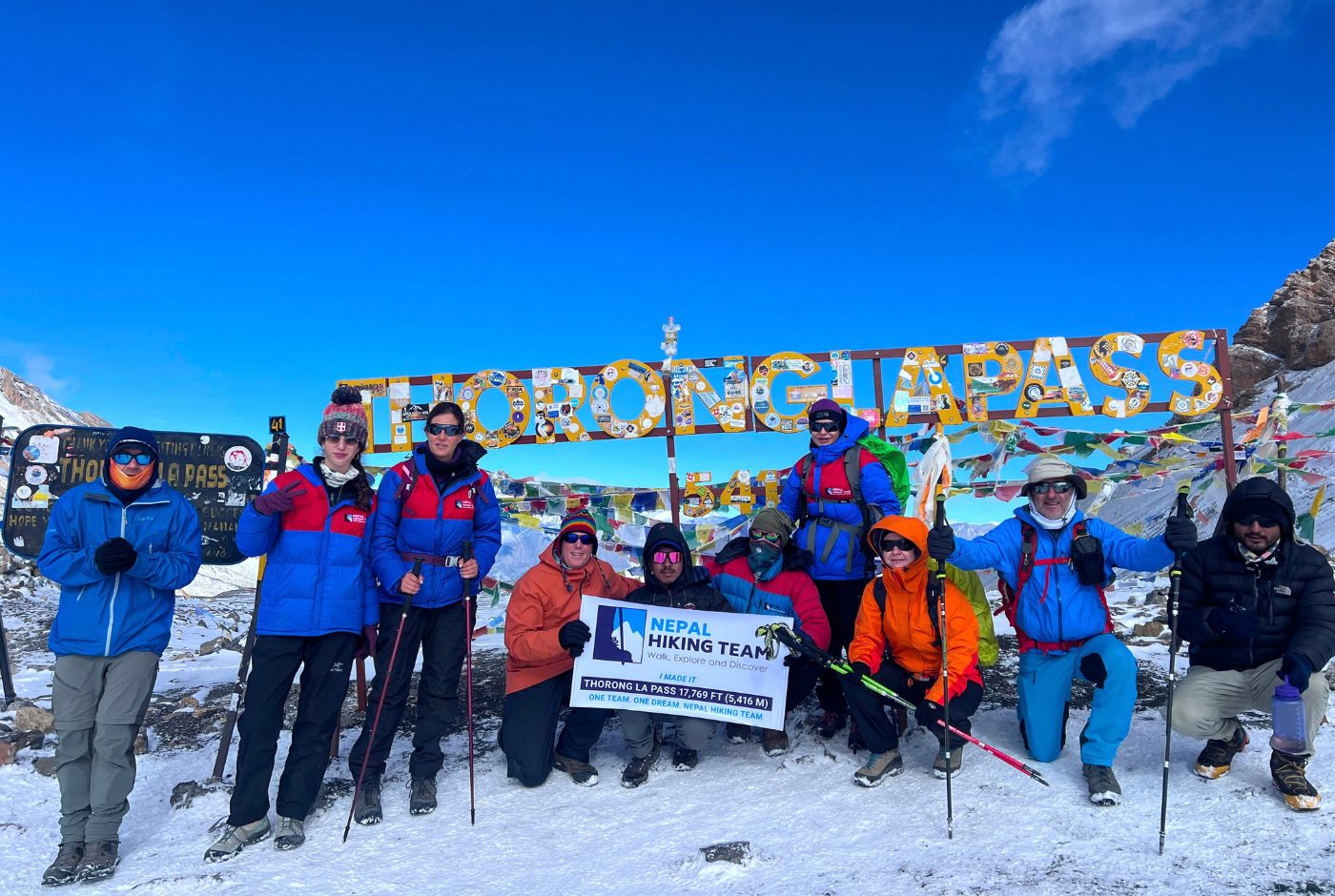
Capping out at 5416 meters / 17769 feet, Thorong La pass is a gorgeous mountain pass in the Annapurna region. The pass overlooks the giant Damodar Himal and connects the rural Manang village, sacred Muktinath temple, and few villages of the Mustang district. The pass-first was used as a trading route with Tibet, but it is actively used as a trekking route these days. The world-famous Annapurna Circuit Trek entails crossing this scenic and spectacular mountain pass. Furthermore, this is the highest elevation trekkers reach during Annapurna Circuit Trek. But, the challenging aspect of this trek is not hiking up the crown of Thorang La. The straight descent to Muktinath from Thorang la can take a toll on trekkers.
Best Highlights of Thorong La Pass
- Sits at 5,416 meters (17,769 feet), bridging the lush alpine valleys of Manang with the arid, Tibetan-style canyons of Mustang.
- Offers an immense 360-degree viewpoint looking directly at Dhaulagiri (8,167m) and the entire Annapurna range.
- Serves as the ultimate climax of the Annapurna Circuit; it is highly demanding due to altitude but requires zero technical climbing gear.
Renjo La Pass – the less crowded mountain pass in Everest Region

Standing at 5340 meters / 17843 feet, Renjo La pass is one of three Everest passes. It is another excellent mountain passes that connect Gokyo Lakes and Nagpala and is extremely remote. This pass is considerably active as a trading route than other mountain passes. One could still meet Tibetan merchants descending from Nangpa La pass with their yak caravan. It is the only pass among the three where crossing glaciers is not required. Also, it takes less time to cross the pass.
Nevertheless, just because you do not have to cross the glacier, it does not mean crossing Renjo La is any simple. It does entail its own challenges, yet most consider this an easy pass compared to the other two mountain passes. The Renjo La pass also offers one of the beguiling vistas of Everest massif and Gokyo Lakes.
Top Highlights of Renjo La Pass
- Sits at 5,360 meters (17,585 feet), acting as a scenic alpine gateway that connects the emerald Gokyo Lakes to the remote, traditional Sherpa valley of Thame.
- Widely considered the best vista in the Khumbu, offering a dramatic look at Everest, Lhotse, Makalu, and Cho Oyu framing the third Gokyo lake.
- While physically demanding, it features well-crafted stone steps on its western descent, making it the least technical of the classic Everest Three Passes.
Kang La Pass – Connecting arid villages of Annapurna region.
Height: 5,306 m (17,408 ft), Features: An ancient, secluded mountain gateway connecting the remote, Tibetan-style villages of Nar and Phu to the main Annapurna Circuit, Location: Nar Phu Valley / Manang District (Annapurna region), Difficulty: Challenging / Strenuous, Best Time: Autumn (Sep–Nov) or Spring (Mar–May), Duration: 12 to 15 days

Kang La pass stays at the great height of 5320 meters / 17454 feet and lies in the pristine Annapurna region. The mountain pass connects the village of Nar with the main Annapurna circuit trail and several towns around the area. Thus, it is fair to say that Kang La pass is a famous trekking mountain pass in the Annapurna region. Crossing this pass is strenuous; but, it is equally gripping. From the top of the pass, one can witness the fantastic scenes of Chulu east, Himlung Himal, Saribung peak, Gangapurna, and many more. Along with that, stare at the vast pasture lands in the lower slopes from the peak of Kang La pass.
Unique highlights of Kang La Pass
- Sits between 5,306 to 5,320 meters (17,408 to 17,454 feet), acting as a dramatic alpine bridge that connects the culturally isolated, restricted Nar Phu Valley back to the main Annapurna Circuit.
- Offers sweeping views of the massive Annapurna range, Manaslu, Tilicho Peak, and the unique, arid, wind-sculpted Tibetan-style landscapes of the northern Himalayas.
- Requires zero technical gear, but features a significantly narrower, steeper, and less forgiving scree or snow approach than the neighboring Thorong La, making it a true test of physical endurance.
Ganja La Pass – Enthralling mountain pass that remains frozen all through the year
Height: 5,306 m (17,408 ft), Features: An ancient, secluded mountain gateway connecting the remote, Tibetan-style villages of Nar and Phu to the main Annapurna Circuit, Location: Nar Phu Valley / Manang District (Annapurna region), Difficulty: Challenging / Strenuous, Best Time: Autumn (Sep–Nov) or Spring (Mar–May), Duration: 12 to 15 days
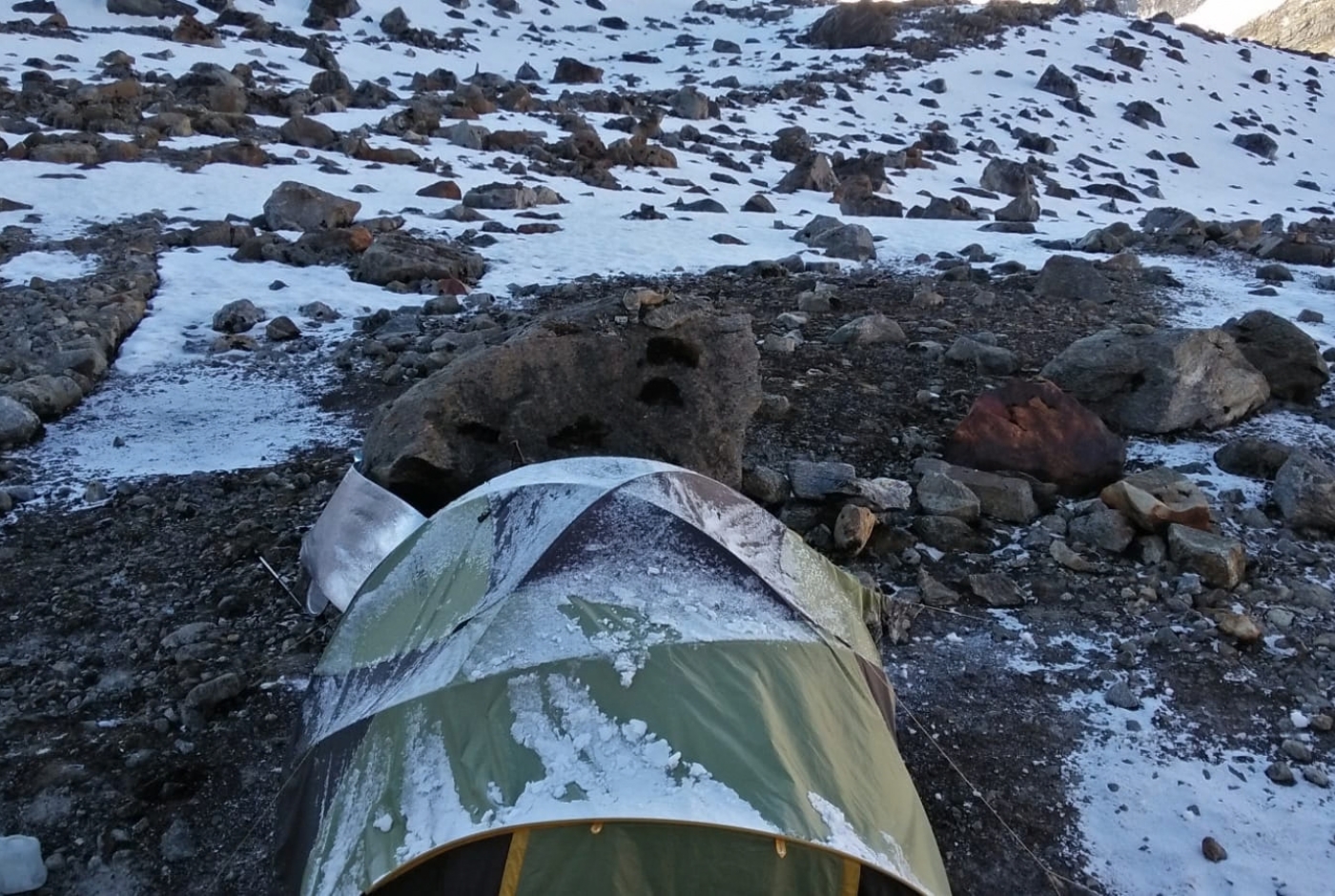
Ganja-la pass is one of the high-altitude mountain passes in the Langtang Himalayas and rests at 5122 meters / 16804 feet approx. This incredible pass offers enchanting Himalayan perspective and a verdant encompassing view of mountain villages. Along the Ganjala pass trail, trekkers can relish plentiful in the radiant climate of streams, backwoods, and high pinnacles. A journey to the Ganjala pass is a testing yet lovely adventure on the whole. Not only are trekkers accustomed to natural beauty, but they can also soak up the view in solitude. Langtang valley, in general, is a less busy trekking destination. Henceforth, trekkers can actually enjoy the unparalleled mountain scenery and unique cultures.
Best features of Ganja La Pass
- Sits at 5,122 meters (16,804 feet), acting as a wild, high-altitude alpine link that connects the Tibetan-influenced Langtang Valley to the pristine, green ridges of Helambu.
- True to its reputation, the pass remains heavily snow-bound and frozen all through the year, providing breathtaking, close-up panoramic arenas of Langtang Lirung (7,245m) and Dorje Lakpa.
- Unlike standard valley walks, the final 200 meters to the pass feature steep, icy terrain that frequently requires fixed ropes and crampons, demanding remote self-sufficient camping past Kyanjin Gompa.
Larkya La pass – Longest mountain pass of Nepal
Height: 5,106 m (16,752 ft), Features: The longest and crown-jewel mountain pass in Nepal, acting as the defining climax of the remote Manaslu Circuit Trek with unparalleled views of Mt. Manaslu, Himlung Himal, and Cheo Himal, Location: Manaslu region (Gorkha/Manang districts), Difficulty: Moderate to Strenuous, Best Time: Autumn (Sep–Nov) or Spring (Mar–May), Duration: 14 to 16 days.

Resting at 5,106m/16748 feet elevation, Larkya La Pass in the Manaslu region is one of Nepal's dramatic and longest mountain passes. Every trekker on the Manaslu Circuit Trek has a bitter-sweet moment of crossing this famous trekking pass of Nepal. Although this pass is not the highest mountain pass in Nepal, it still entails challenges and hurdles. The pass is notorious for rugged terrain and unpredictable weather conditions. However, in reward for the challenging climb, the pass offers splendid scenery of Himalayan peaks. The beautiful scenes of Manaslu, Himalchuli, Cheo Himal, and Himlung are visible from the peak of Larkya La pass.
Top Highlights
- Sits between 5,106 to 5,160 meters (16,752 to 16,930 feet), acting as the crowning high-altitude crux that connects the Budhi Gandaki and Marsyangdi river valleys.
- Noted as one of Nepal's longest mountain passes; crossing it requires an arduous, unrelenting 8-to-10-hour push over grueling glacial moraines.
- Offers jaw-dropping, close-up panoramic views of the mighty Mount Manaslu (8,163m), Himlung Himal, and Cheo Himal framed by thousands of vibrant prayer flags.
Meshokanto La Pass: A Highly Scenic Mountain Pass of Nepal.
At a great height of 5099 meters / 16729 feet, Meshokanto La Pass is one of the scenic mountain passes of Nepal. The Meshokanto La pass is part of the Annapurna Circuit Trekking route that emerges between Jomsom and Manang. It's a desolate location surrounded by landslides and glaciers. It is pretty common to go to Tilicho as a side trek of the Annapurna Circuit. But less common and highly discouraged to cross on the other side, all the way to Jomsom, via Meshokanto pass from Lake Tilicho. Typically, trekkers follow the traditional route by going back on the main circuit trail and crosses the well-known Thorang La pass. Similarly, continue along the right shore of the lake and cross somewhere lower and further south, reaching Jomsom directly.
Selele Pass – Less trodden pass in Kanchenjunga Region
Selele Pass takes visitors to the foundation of the world's 3rd highest Mountain - Mt. Kanchenjunga (8586 meters). Resting at the height of 4290 meters /14071 feet, Selele pass connects Ghunsa and Cheram. The climb is steep yet attainable and goes through dense rhododendron, moss, and juniper forest. Crossing the Selele pass is the difficult aspect of trekking the Kanchenjunga Circuit. Some of the peaks notable while crossing Selele Pass are Kanchenjunga, Jannu Peak, Chang Himal, and other surrounding peaks. Overall, with dramatic experience, Selele pass also offers seclude and diverse terrain with captivating Himalayan vistas.
Salpa Pass – Pristine mountain pass in Arun Valley
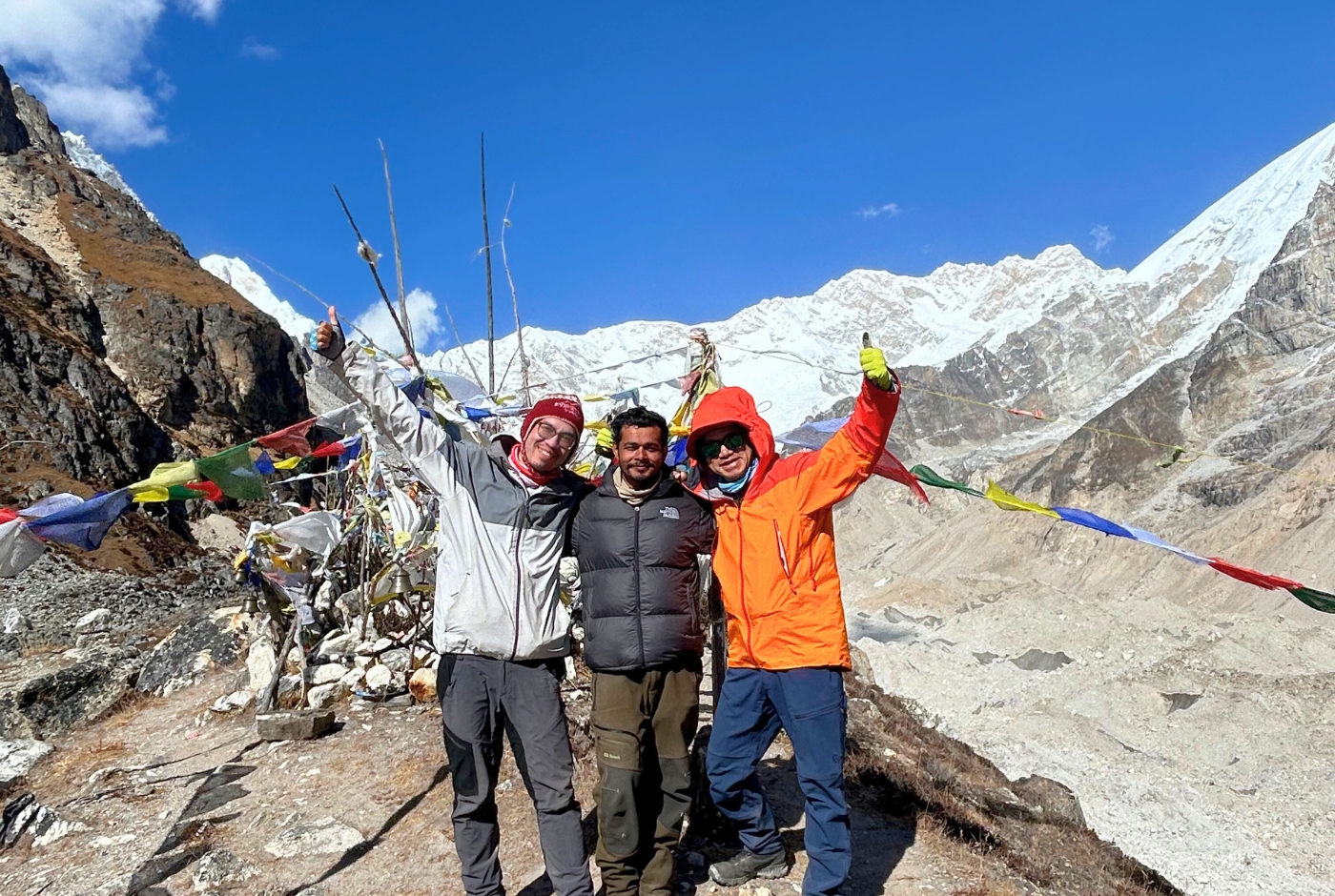
Salpa Pass is not the tallest trekking mountain pass in Nepal, but it is already a beautiful mountain pass at the height of 3,350m/10,991 feet. The Salpa Pass path is a fantastic alternative to walking into the Everest mass, following the Arun Valley's unique habitat. This hike follows an old trade route locals used to bring agricultural items to Namche Bazaar and Tibet through Nangpa-la. The holy lake Salpa Pokhari is also located in the Arun Valley. The journey to the Salpa pass is quite simple and full of spectacular views of Makalu, Mera Peak, the Everest range, and many other Himalayan peaks. Trekkers get accustomed to such delightful scenery from an unfathomable height above rice terraces and verdant woods.
FAQS about Passes in Nepal
Which is the best High Passes Trek in Nepal?
The Everest Three Passes Trek is widely considered the best overall high passes trek in Nepal, though the Annapurna Circuit Trek and the Manaslu Circuit Trek stand out as top alternatives depending on your goals.
What are the three passes in Nepal?
The "Three Passes" in Nepal refer to the iconic, high-altitude mountain crossings in the Everest (Khumbu) region. They are Kongma La (5,535 m / 18,159 ft), Cho La (5,420 m / 17,782 ft), and Renjo La (5,360 m / 17,585 ft). Traversing these involves one of the most challenging, rewarding treks in the Himalayas.
The passes combine to form the renowned Everest Three High Passes Trek, which typically takes about 17 to 20 days and connects the Everest Base Camp (EBC) route with the stunning Gokyo Lakes.
Which are famous passes mountain high passes in Nepal?
Nepal is home to some of the world's most iconic mountain passes. In the Himalayas, the word "La" translates to "pass."
The most famous passes ("La") in Nepal are heavily sought after by trekkers and climbers, offering stunning views and cultural exploration:
Everest Region (Khumbu)
- Cho La Pass (5,420m / 17,782 ft): Located between the breathtaking turquoise Gokyo Lakes and the Everest Base Camp (EBC) route.
- Renjo La Pass (5,388m / 17,678 ft): Famous for providing one of the most spectacular, unobstructed panoramic views of Mount Everest, Cho Oyu, and surrounding peaks.
- Kongma La Pass (5,535m / 18,159 ft): The highest and most challenging of the famous "Three High Passes," rewarding adventurers with a stunning high-altitude lake and 360-degree mountain view
Annapurna Region
- Thorong La Pass (5,416m / 17,769 ft): One of the most famous passes in the world and the highest point of the legendary Annapurna Circuit. It connects the Manang district with the sacred Muktinath temple.
- Kang La Pass (5,320m / 17,454 ft): A challenging, spectacular pass connecting the remote Nar Phu Valley to the main Annapurna Circuit trail.
What is the highest pass in Nepal?
The highest pass in Nepal depends on whether you mean a technical mountaineering route or a standard trekking trail:
- Saribung La is the absolute highest trekking pass in Nepal, sitting at an immense altitude of 6,320 meters (20,735 feet) near the Tibetan border.
- Thorong La is the highest popular, non-technical pass in Nepal, sitting at 5,416 meters (17,769 feet) along the famous Annapurna Circuit.
Final Words
These are few spectacular mountain passes of Nepal. One should definitely encounter these passes while traversing Nepal's beautiful and engaging treks in Nepal. These passes have been spicing up the journey for trekkers due to their complex location and arduous climb. Those who have previously walked these trails have unforgettable memories attached to the mountain pass. All that being said, if you are also looking for an exciting experience, do make plans to cross one of these intimidating mountain passes.
Post a Comment