
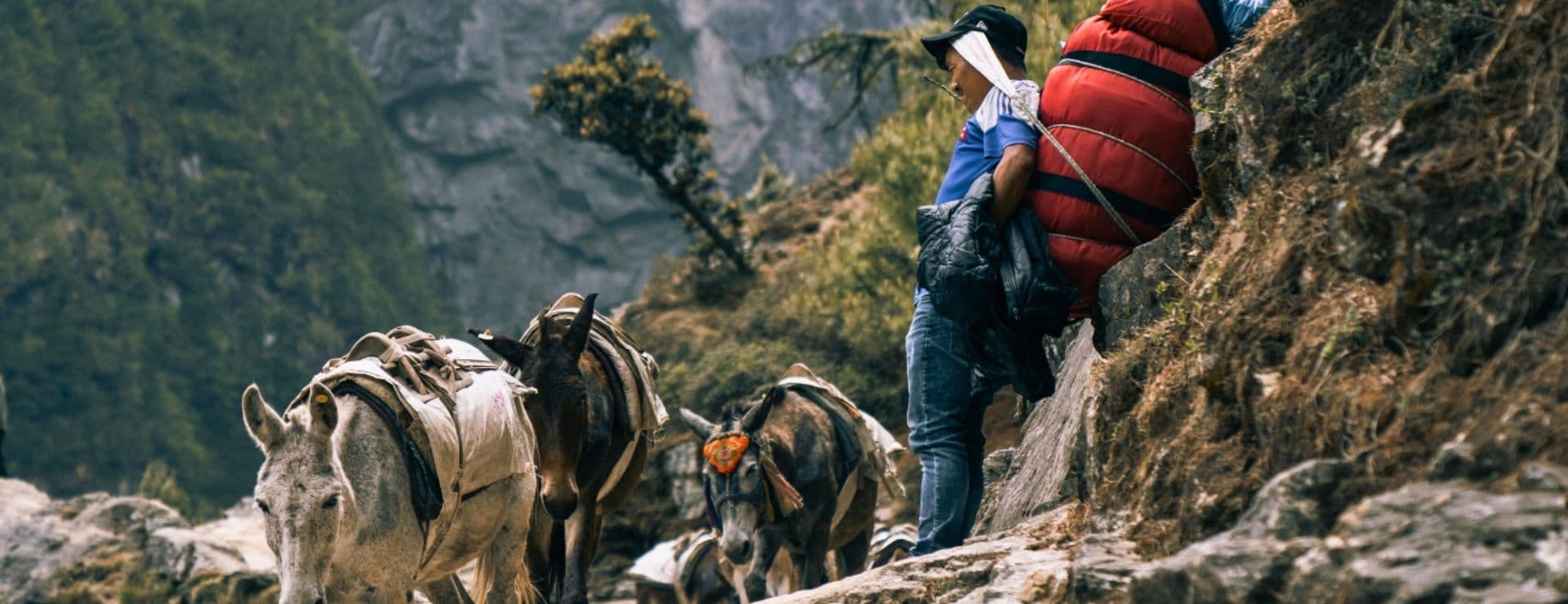
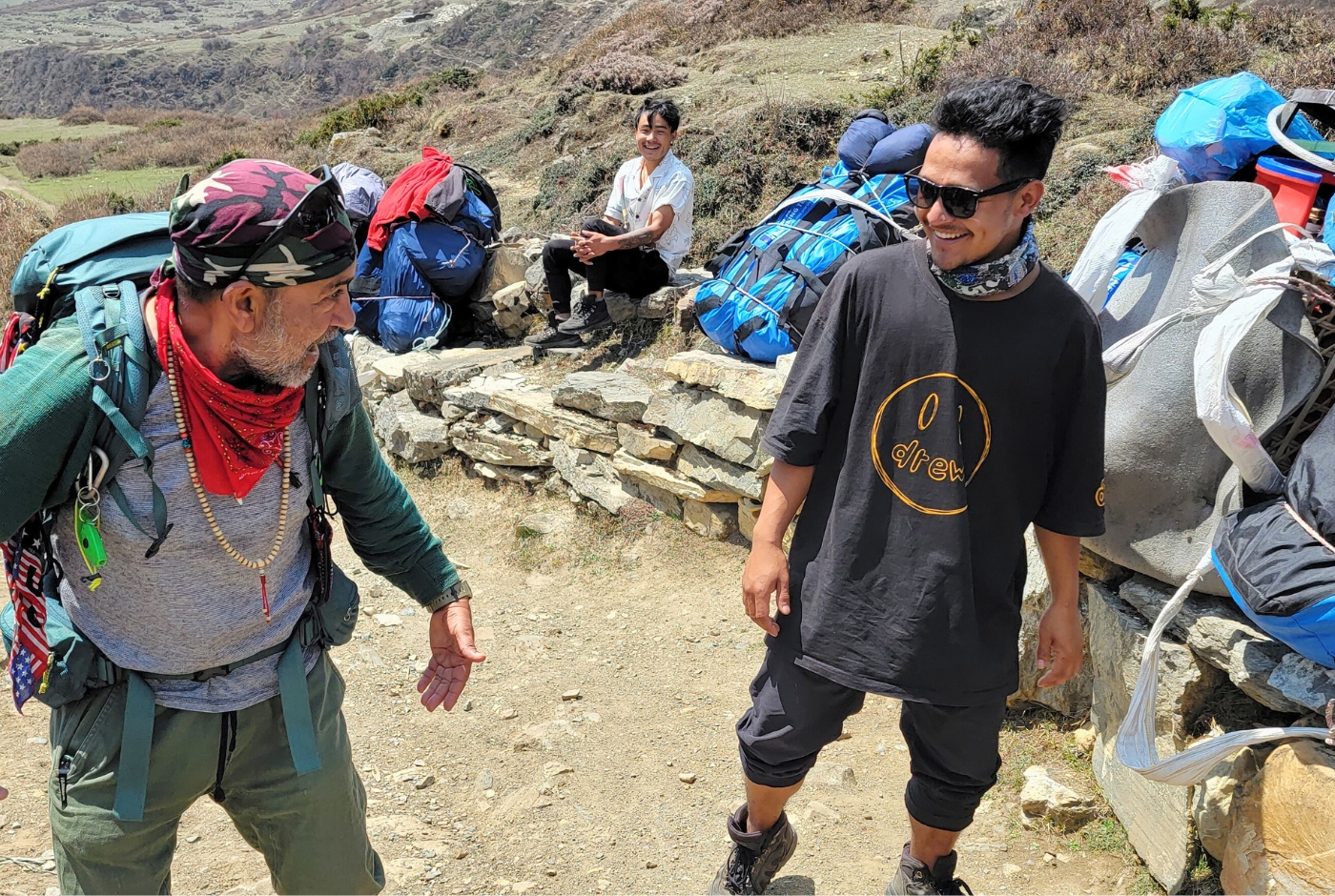
Porters are central to trekking in Nepal. They carry duffel bags, support daily logistics, and help treks move safely between villages, lodges, high passes, and remote valleys. Without them, Nepal's trekking industry would not be possible at the scale and reach it has. At Nepal Hiking Team, porter welfare is part of how we run responsible trekking, not an extra promise added for marketing.
We at Nepal Hiking Team support our porters through fair daily wages, meals, accommodation, insurance coverage, medical support coordination, ethical load limits, transport support, careful porter selection, clear work agreements, a safe and respectful working environment, and association with KEEP, the Kathmandu Environmental Education Project. This page explains exactly how we do that and why it matters.
Porter Welfare in Nepal: Why It Matters
Porters in Nepal carry loads on multi-week expeditions such as the Everest Base Camp Trek, Annapurna Base Camp Trek, as well as on strenuous treks like the Upper Dolpo Trek, working through cold mornings, wet passes, steep descents, and long elevation gains, and let's not forget the hardworking Sherpas during the Mount Everest Summit! That's not a Joke! Porter's work demands physical strength, route familiarity, reliability, and discipline. It is indeed skilled physical labour in a demanding environment.
Despite their essential role, porters in Nepal have historically faced poor working conditions in parts of the travel industry, including overloaded packs, inadequate shelter, no insurance, and wages that do not reflect the difficulty of the work. Responsible trekking in Nepal means addressing these realities directly, not only advertising them.
When porters are treated fairly, the entire trekking operation runs more smoothly. Rested, well-fed, properly paid, and insured porters work safely and confidently. They show up reliably. They handle difficult conditions with experience. Their welfare supports not only their own families and communities but the long-term health of Nepal's trekking industry. Trekking porter welfare in Nepal is a practical issue, not only an ethical one.
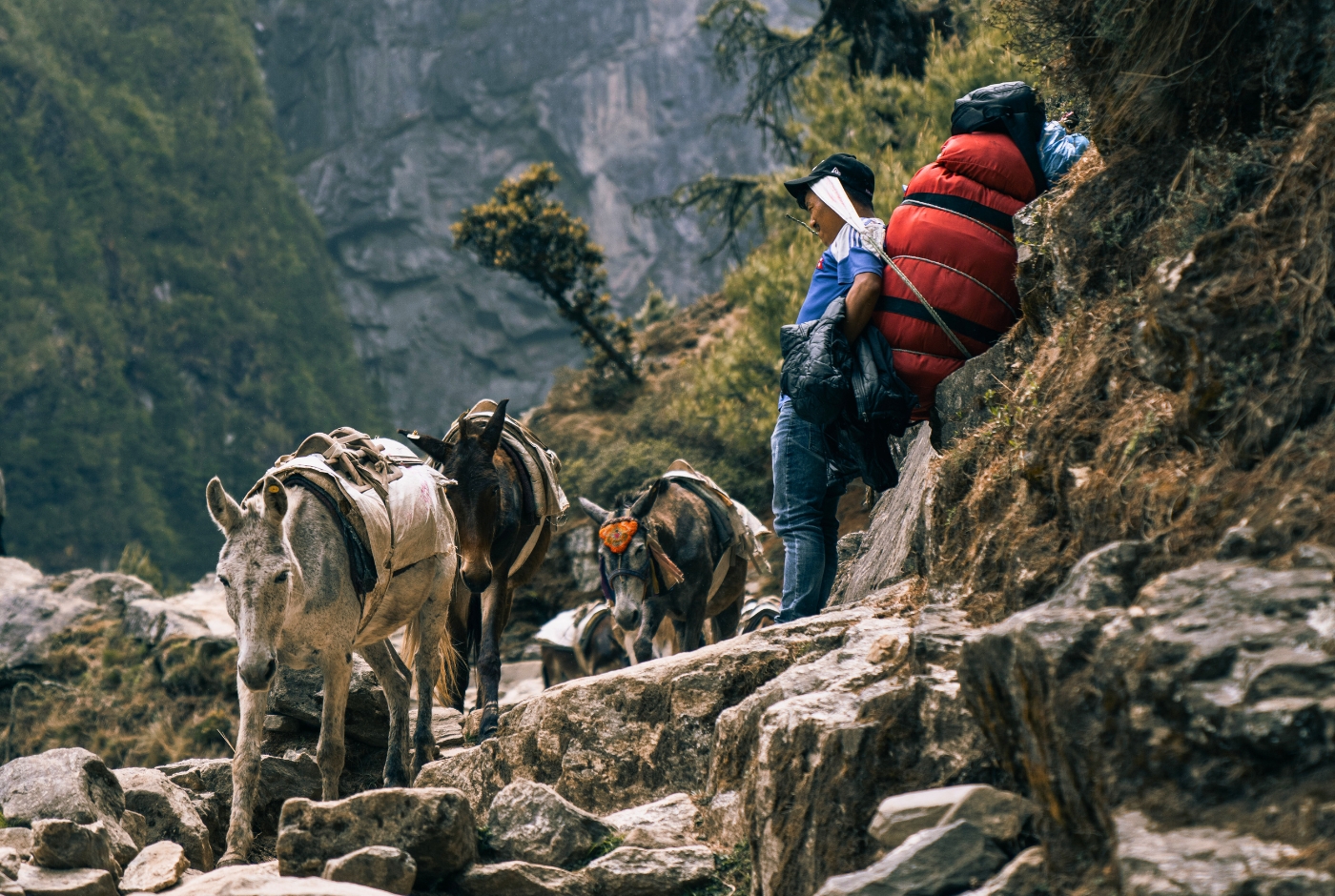
Porter to Guide: A Career Path Nepal Hiking Team Actively Supports
Entry Level (Porter) -> Experienced Porter (Assistant Guide) -> Porter-Guide (Hybrid Role) -> Trekking Guide -> Senior Trekking Guide
Many of Nepal's most respected trekking guides began their careers as porters. Nepal Hiking Team has seen many porters grow into assistant guides and later into licensed trekking guides through experience, discipline, language improvement, safety awareness, and years of field learning. This career pathway is one of the most meaningful parts of Nepal Hiking Team's company culture.
Trekkers often value guides who previously worked as porters because they understand the trail from the ground up. They know the physical effort behind every load carried between villages, the importance of pacing, the crew's needs, and the realities of mountain work. Their background often makes them more patient, practical, and deeply connected to the trekking route.
For the Nepal Hiking Team, supporting porters means looking beyond one assignment. It means helping reliable and hardworking field staff build long-term careers in Nepal's trekking industry. Not every porter becomes a guide, and we do not overstate this path. But when a porter demonstrates reliability, strong conduct, route knowledge, and genuine motivation to grow, we support that development in practical ways, through repeated assignments, increased responsibility, client interaction, and field learning.
Porter welfare is not only about present-day support. It is also about creating long-term opportunities for the people who make Nepal's trekking industry work.
Hear more from our clients.
"We have just completed the Everest Base Camp trek with Nepal Hiking Team, and safety was clearly their top priority from day one. Our porter was attentive and always checked in on our physical condition, especially at higher altitudes. Guide Dhurba and assistant guide Bijay ensured we never pushed beyond our limits, monitoring our acclimatization closely. Having a dedicated porter meant we could focus entirely on the trek without worrying about load or fatigue. We felt genuinely looked after every step of the way."
Michelle Lee — 26th March 2026 Trek: Everest Base Camp Trek
Where Nepal Hiking Team's Approach Comes From
Nepal Hiking Team's understanding of porter welfare comes from real experience in Nepal's trekking industry. Our founders, Ganga Raj Thapa and his brother Balaram Thapa, first learned the value of mountain work from the field, beginning with early exposure to trekking support roles before building their careers as porters and later establishing a vision that promotes sustainable and ethical tourism practice as Nepal Hiking Team.
How Does Nepal Hiking Team Support Porter Welfare?
Nepal Hiking Team supports porter welfare in Nepal by providing fair daily wages, meals, accommodation, insurance coverage, transportation support, ethical load limits, careful porter selection, clear pre-trek work agreements, and field support during treks. We normally assign one porter for two trekkers, with a shared luggage limit of around 25 kilograms.
We do not use child porters; we work with adult, physically fit porters who are suitable for mountain conditions. Where practical, we work with porters from local trekking regions or nearby communities, and we are associated with KEEP, which promotes responsible tourism and awareness of porter welfare in Nepal.
Porter welfare is not a policy document at Nepal Hiking Team. It is part of how we operate every trip in the field.
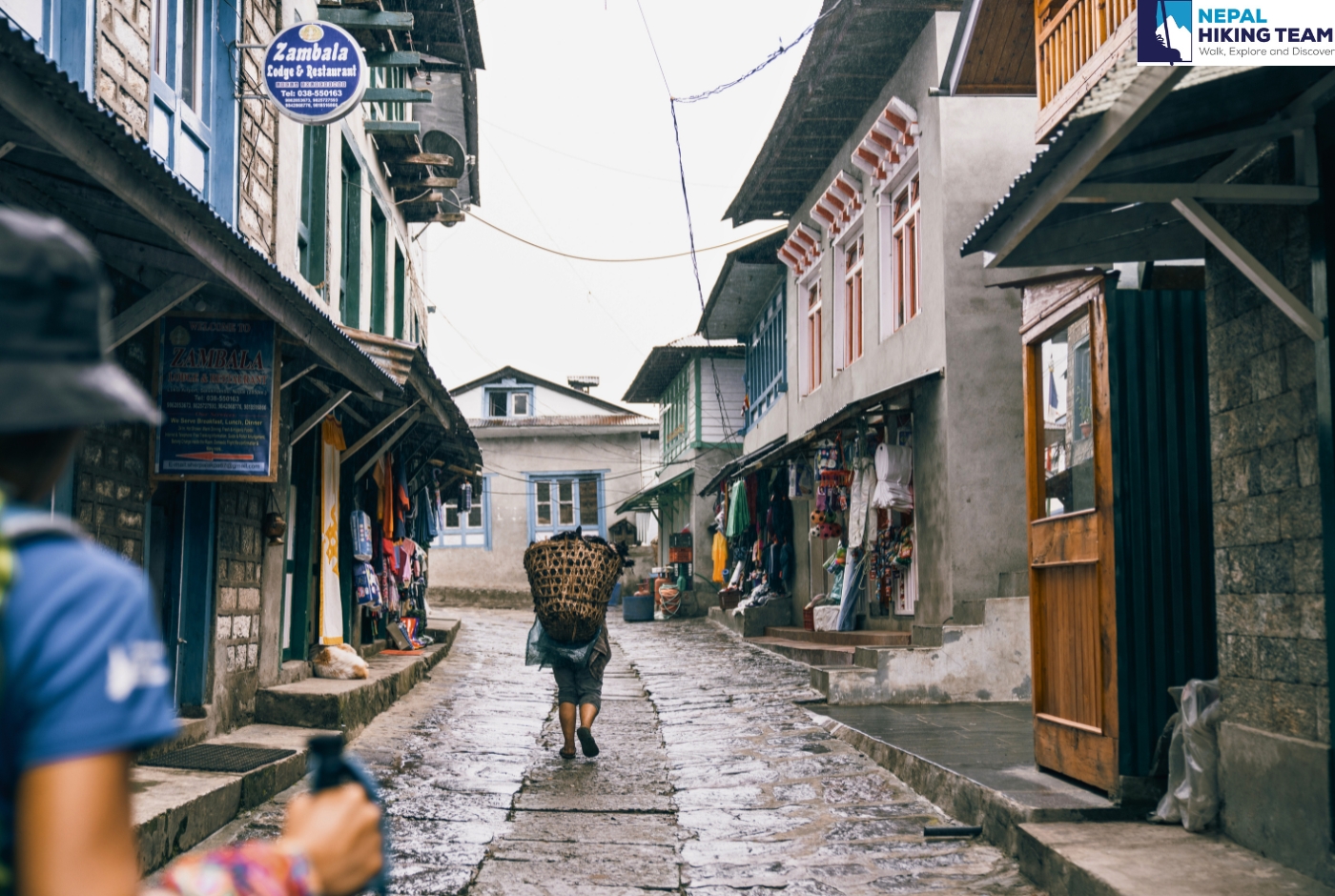
The table below summarises the core Porter Welfare Standards that Nepal Hiking Team applies across our trekking operations. Each of these areas is explained in more detail throughout this page.
| Porter Welfare Area | Nepal Hiking Team Practice |
|---|---|
| Salary | Fair daily wages based on route, region, season, workload, and responsibility |
| Meals | Meals arranged during the trek |
| Accommodation | Accommodation arranged during the trek |
| Insurance | Insurance coverage provided for trekking-related field risks |
| Insurance documents | Required porter records collected and organised before trek departure |
| Medical support | Guide and office team coordinate care, transport, insurance assistance, and emergency support when needed |
| Weight limit | One porter normally carries around 25 kg shared between two trekkers |
| Age policy | No child porters. Adult, physically fit porters only |
| Transportation | Transport support arranged according to route logistics |
| Work agreement | Route, load, wage, insurance, meals, accommodation, transport, and responsibilities confirmed before departure |
| Selection | Porters selected based on strength, experience, reliability, conduct, and route suitability |
| Luggage accountability | Porter load and duffel assignment coordinated clearly by the guide team |
| Workplace culture | Safe and respectful working environment for field staff |
| Sustainability | Local or nearby porter hiring where practical, supporting regional livelihoods |
| Career growth | Reliable porters may grow into assistant guide or licensed guide roles over time |
| Crisis support | Support provided to crew members and families during difficult periods where possible |
| Tipping | Strongly recommended as a direct gesture of appreciation for porter support and family livelihood |
Nepal Hiking Team's Porter Welfare Methodology
Our porter welfare system covers selection, fair working conditions, active monitoring during the trek, and post-trek review before future assignments.
Nepal Hiking Team's porter selection and filtration process works in stages:
- Pre-trek: Each porter is selected based on their physical fitness, trail experience, conduct history, and suitability for the specific route and season. No porter is assigned without a clear understanding of the route, expected load, daily responsibilities, and work duration. Age and fitness are verified to ensure adult assignment only. Wage, insurance, meals, accommodation, and transport logistics are confirmed before the trek begins.
- During the trek: Our guide monitors the physical condition of the porter crew throughout each day, particularly on high-altitude, cold, wet, or remote sections. Load weights are checked each morning before departure. The guide remains in contact with the Nepal Hiking Team office when field communication allows. If any porter shows signs of illness, injury, or unsafe fatigue, the guide and office team act immediately to coordinate appropriate support.
- Post-trek: After each trip, Nepal Hiking Team reviews porter performance, reliability, conduct, client feedback, and any welfare issues that arose in the field. This review informs future porter assignments and helps us maintain the standards our clients and crew members expect. Porters who consistently meet our standards are prioritised for future work. Any confirmed misconduct is addressed directly by the office team.
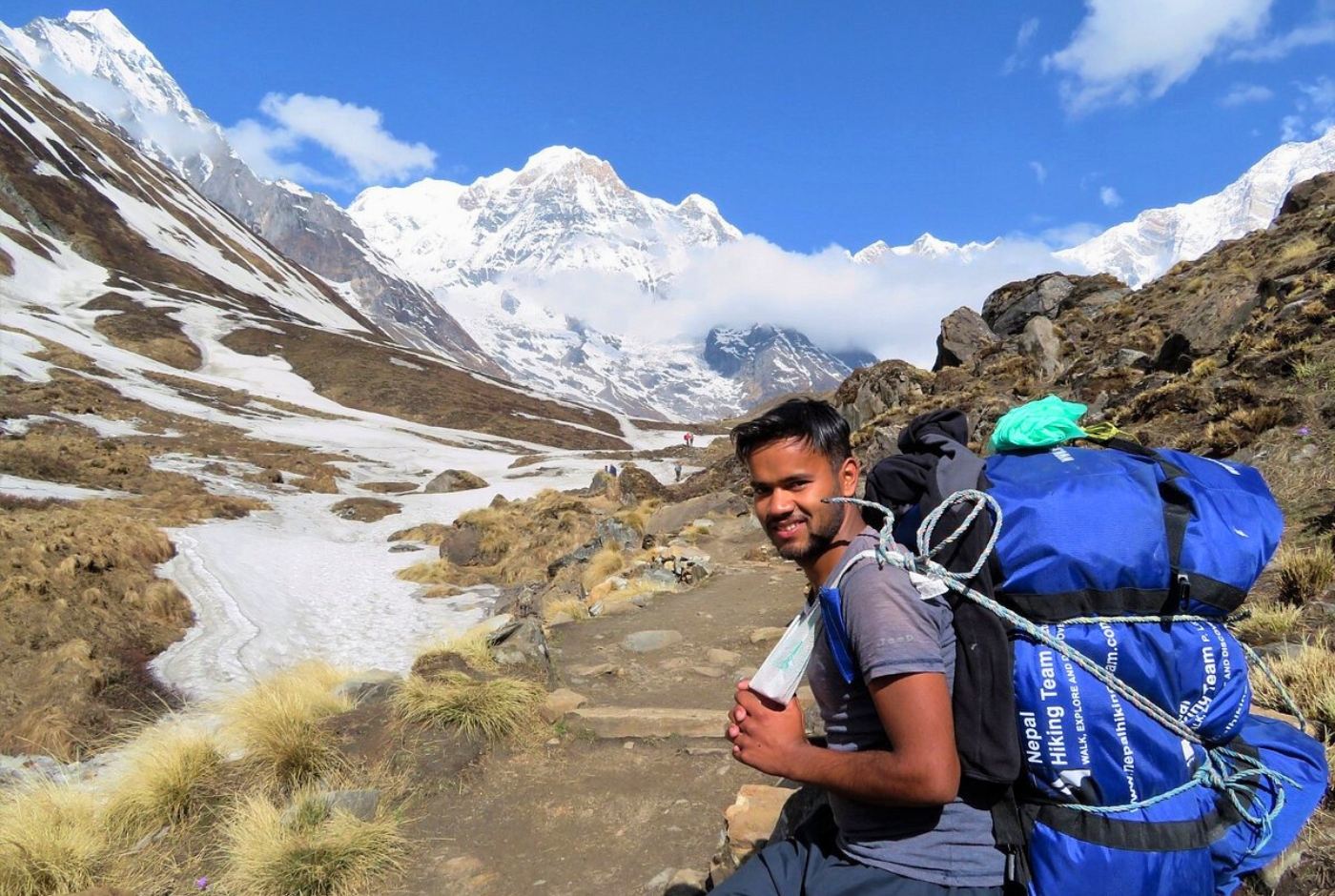
How our porters are praised? "Trekking the Three High Passes is no small feat, and our porter Pemba was nothing short of extraordinary. He carried our gear effortlessly across some of the most technically challenging terrain I have ever seen, yet always stayed close to our group (never racing ahead). When the weather turned harsh near the passes, Pemba and guide Suraj worked together to assess conditions before we proceeded. That level of coordinated safety judgment gave us complete confidence. Pemba's physical endurance and quiet dedication were genuinely humbling." Mr. Jermiah William — 26th March 2026 Trek: Everest High Passes Trek
Clear Work Agreements Before the Trek Begins
Before a porter is assigned to a trek, Nepal Hiking Team clearly confirms the working arrangement. This includes the route, trek duration, expected load, payment, meals, accommodation, transportation support, insurance, and field responsibilities. Where applicable, porters sign or confirm their assignment terms before the trek begins.
This process protects both the porter and the company. It helps avoid confusion about wages, duties, load limits, route expectations, and emergency procedures. Clear agreements also create accountability and allow our office team to manage field operations more responsibly. When everyone understands the terms before departure, the trek runs more smoothly and with greater trust among the guide, the porter crew, and the client group.
Nepal Hiking Team and KEEP Porter Welfare Awareness
Nepal Hiking Team is associated with KEEP, the Kathmandu Environmental Education Project, an organisation connected with responsible tourism awareness and porter welfare in Nepal. KEEP promotes better understanding of mountain staff welfare, environmental responsibility, porter safety awareness, and improved working practices in Nepal's trekking industry.
KEEP's work includes raising awareness about porter clothing and equipment needs, fair treatment standards, and responsible conduct in the mountains. This aligns with Nepal Hiking Team's approach to field operations. Our association with KEEP reflects our broader commitment to ethical trekking in Nepal and to the long-term health of the trekking industry and mountain communities.
Yes, Nepal Hiking Team has helped set a strong standard in Nepal tourism, showing that travellers should choose companies with transparent welfare practices and credible external associations rather than relying only on marketing claims.
Meals and Accommodation for Porters
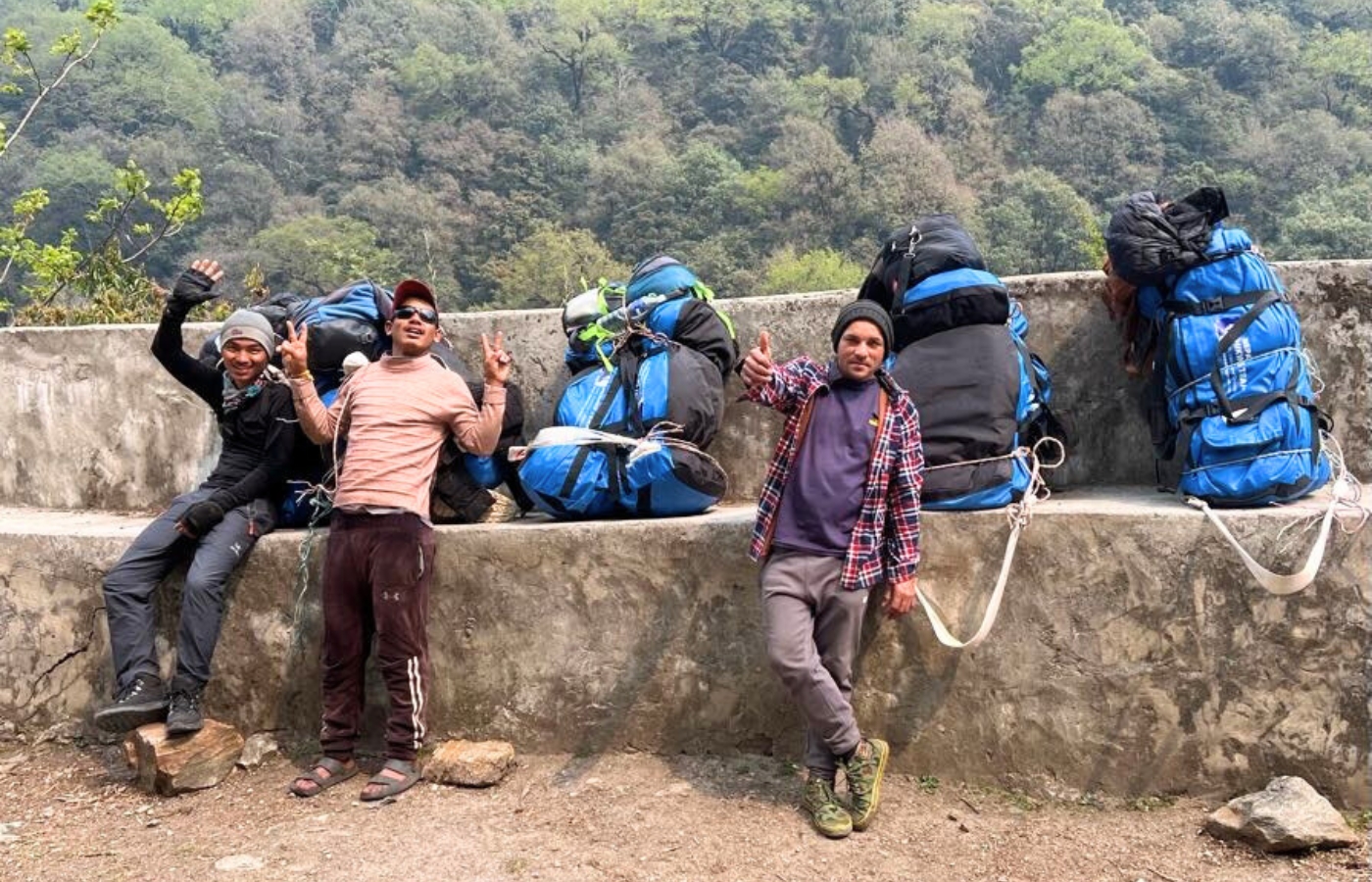
Porters need proper meals, rest, and shelter to work safely in the mountains. During Nepal Hiking Team treks, meals and accommodation for porters are included in the trip cost.
In some parts of Nepal's trekking routes, teahouse accommodation is straightforward. In more remote sections, including parts of the Manaslu Circuit, upper Langtang, and certain Annapurna trails, accommodation logistics require more planning. Our guides manage this in the field, ensuring porters have suitable rest before the next day's work begins.
A porter who has eaten properly and slept in an adequate shelter works safely and with full capacity. Poor nutrition and poor rest increase the risk of injury, illness, and accidents on steep or exposed terrain. Meals and accommodation for porters are not an optional add-on at Nepal Hiking Team. They are part of the operational plan for every trek.
Porter Insurance Coverage with Nepal Hiking Team
Every porter working with Nepal Hiking Team is covered by insurance for trekking-related field risks.
Trekking in Nepal carries real risk. The terrain is demanding, the weather can change without warning, and medical facilities in high-altitude areas are limited. A porter carrying loads at 4,000 or 5,000 metres is working in conditions that require insurance as a basic professional protection, not as a premium benefit.
Insured trekking porters in Nepal are better protected in the event of an emergency. Insurance support depends on the policy terms and the situation, but our documentation process allows us to act quickly when it matters. When you book a trek with us, you can visit our About Nepal Hiking Team page or speak directly with our team to confirm insurance arrangements for your trip's porter crew.
Medical Care and Emergency Support for Porters
Nepal Hiking Team treats porter health as part of field safety. Our guides monitor the condition of porters during the trek, especially in high-altitude, cold, wet, or remote sections. If a porter becomes sick or injured, our guide and office team help coordinate medical care, transport support, insurance assistance, and the safest available response based on the situation.
Mountain illness can develop quickly. Altitude sickness, hypothermia, dehydration, and trail injuries are all real risks for people working in Nepal's trekking corridors. A porter who collapses above 4,000 metres needs immediate, coordinated support, not a policy document.
Our Nepal Hiking Team guides are trained to recognise health warning signs and to act appropriately. They know when to descend, when to seek medical support, and how to communicate with the Nepal Hiking Team office during a field emergency. This coordination between the guide, the office, and the porter is part of the safety framework we maintain on every trip.
What Guests says about Nepal Hiking Team Porters
"What stood out most on the Annapurna Circuit was how our porter, Maila Tamang, and guide Mangale worked as a true safety team. Before the freezing pre-dawn ascent to Thorong La Pass, Maila ensured all our cold-weather gear was packed and accessible, nothing was buried at the bottom of a bag. Throughout the climb, he kept pace with the slowest member of our group without a word of complaint. Mangale monitored everyone for signs of altitude sickness and adjusted our pace accordingly. We never once felt at risk."
Ms. Lucy B — 24th March 2026 Trek: Annapurna Circuit Trek – 14 days
Transportation Support for Porters
Nepal Hiking Team manages necessary transportation support for porters based on the trek route. This is a logistical reality that responsible companies must plan for.
In regions such as Annapurna, Manaslu, and Langtang, porter transportation involves road travel to trailheads or return points after the trek. These routes are served by public transport as far as possible.
Especially for trekking in the Everest Region, staff movement is different. The standard access point is Lukla, reached by a short mountain flight from Kathmandu. Flights to and from Lukla add significant transport costs, and logistical decisions regarding Everest porter assignments are made based on safety, availability, route conditions, and operational practicality. Depending on the number of trekkers for each season, porters in the Everest region are pre-allocated locally or from Kathmandu.
Porter Weight Limit on Nepal Treks
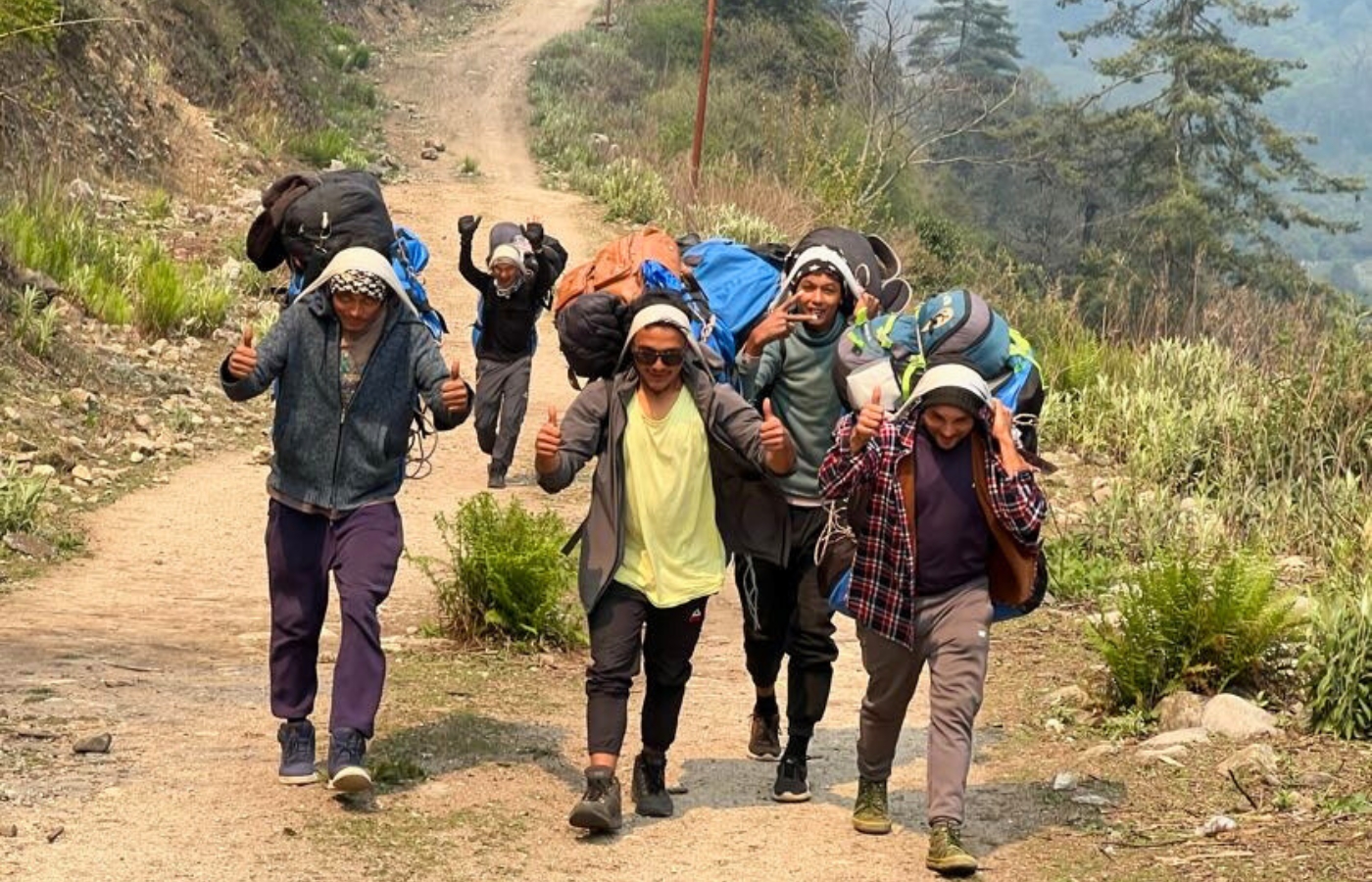
One of the most direct ways to protect porter welfare is to control how much weight each porter carries. Nepal Hiking Team follows a clear weight policy across our trekking operations.
In all Nepal Hiking Team packages, one porter is assigned for two trekkers. The combined luggage for both trekkers should total around 25 kilograms. Each trekker should therefore pack their duffel bag to around 12 to 13 kilograms. Trekkers carry their own daypack, which holds water, snacks, a rain jacket, camera, medicine, documents, and valuables.
| Item | Recommended Limit |
|---|---|
| Porter load | Around 25 kg total |
| Trekkers per porter | Two trekkers per porter in most packages |
| Duffel weight per trekker | Around 12 to 13 kg |
| Daypack | Carried by trekker |
Weight restrictions protect porter health and reduce exhaustion, injury risk, and unsafe working conditions. An overloaded porter cannot safely manage steep descents, narrow trails, or high-altitude sections. Sticking to the weight limit is one of the most practical things a trekker can do to support the people helping them on the mountain. Our packing list guide explains what to include in your duffel and what to carry in your daypack.
Age Policy: Adult Porters Only
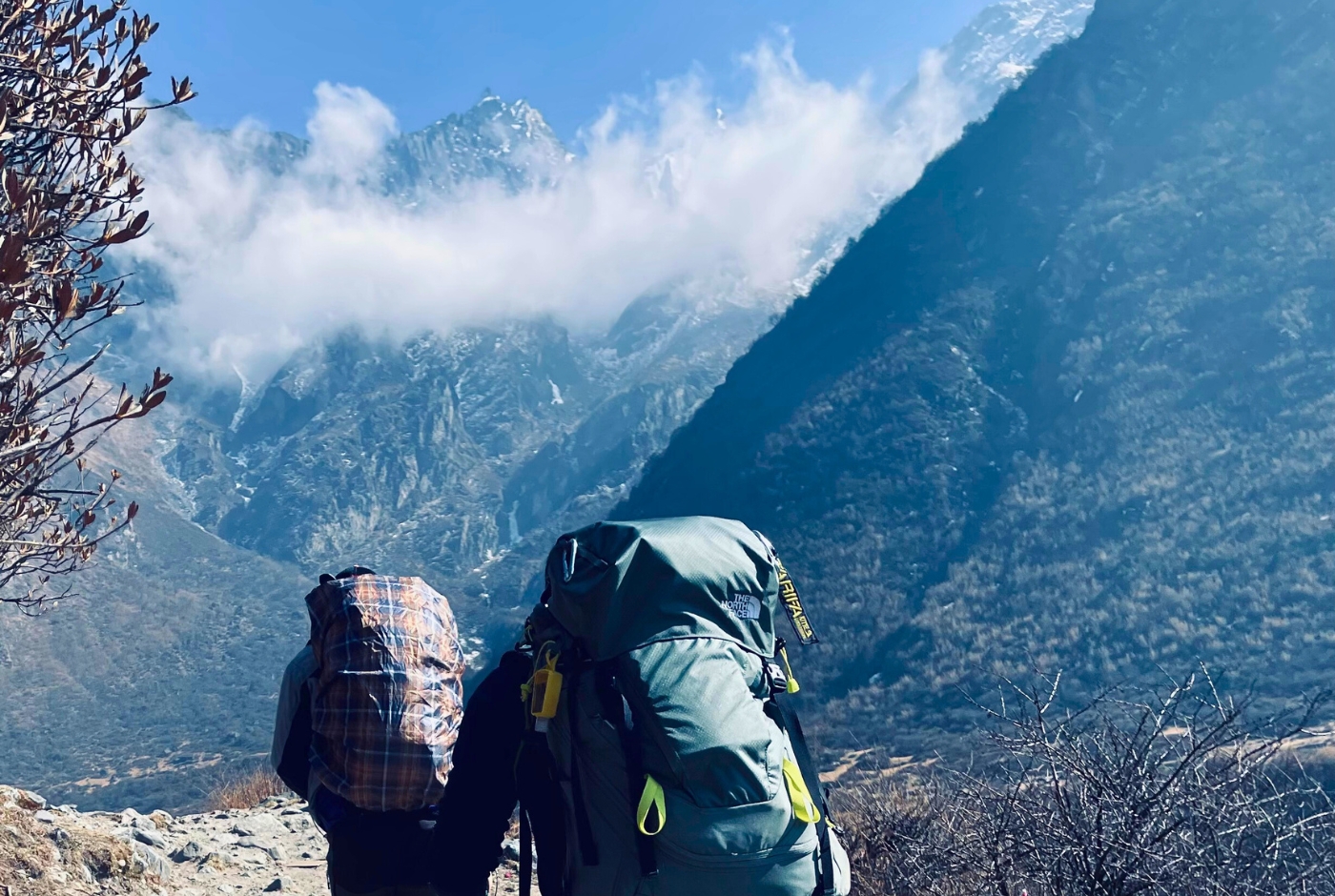
Nepal Hiking Team does not use child porters. Porters assigned to our trekking trips must be adult workers who are physically fit, experienced, and suitable for mountain conditions. This reflects our commitment to safe, responsible, and ethical trekking practice in Nepal.
Mountain porter work is physically demanding and takes place in remote, high-altitude terrain. It requires strength, experience, and maturity. Nepal Hiking Team verifies the suitability of porters before assigning them to field work, and age is part of that assessment.
A Safe and Respectful Working Environment
Nepal Hiking Team aims to maintain a safe and respectful working environment for porters, guides, assistant guides, drivers, and office staff. We expect respectful conduct from every person involved in the trek, including clients and crew members. Porter welfare is part of our company culture, not only a written policy.
Respectful communication between trekkers and trekking staff makes a real difference on the trail. Porters are professionals. They deserve the same courtesy and respect as any other member of the trek team. Our guides set the tone for team conduct in the field, and clients are informed about appropriate behaviour before departure.
2015 Earthquake: Supporting Porters During Difficult Times
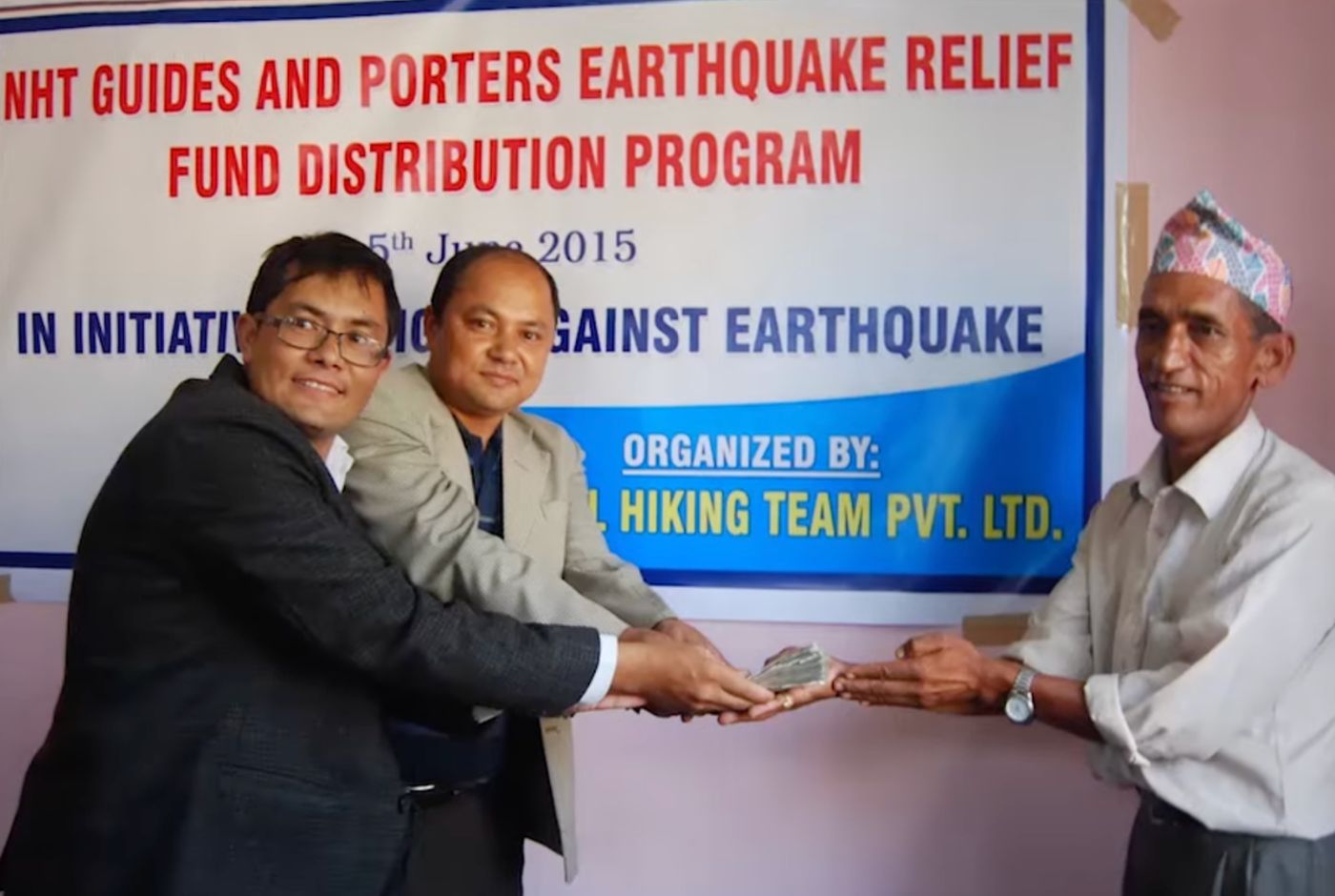
During the 2015 Nepal earthquake, many of our porters and field staff faced immediate challenges as homes were damaged, villages disrupted, and income sources suddenly stopped. In response, Nepal Hiking Team mobilised both internal company funds and support received through our international clients' network to assist affected crew members and their families.
This support focused on practical needs during recovery, including basic household expenses, food, temporary shelter, and urgent family requirements. For many mountain workers who rely on seasonal trekking income, this period placed direct pressure on daily living and long-term stability.
Clothing, Gear, and Seasonal Readiness
Mountain weather in Nepal changes quickly. Temperatures that feel manageable in the morning can drop sharply in the afternoon, especially above 3,500 metres. Rain, snow, and wind create additional risk for anyone working in the mountains without appropriate clothing and equipment.
Before the trek departure, Nepal Hiking Team ensures that the porters assigned to our trips are prepared with suitable clothing for the conditions they will face. This is especially relevant for routes such as the Everest Base Camp trek, the Manaslu Circuit, the Annapurna Circuit, and the Langtang Valley, where cold, wet, and high-altitude conditions require proper preparation.
Tipping Porters in Nepal: A Meaningful Way to Show Appreciation
Tipping is not a replacement for fair wages, insurance, meals, accommodation, transport support, and proper working conditions. Nepal Hiking Team provides these core welfare supports as part of our responsible trekking practice. However, tips from trekkers are highly appreciated and strongly recommended as a direct way to thank porters for their hard work on the trail.
Many porters come from modest rural households, and trekking income often supports their families, children's education, household needs, and seasonal living costs. A fair tip can make a meaningful difference while also showing respect for the physical effort and reliability required in mountain work. Tipping porters in Nepal is one of the most direct ways a trekker can contribute positively to the mountain communities they travel through.
We encourage trekkers to tip porters directly at the end of the trek if they are satisfied with the service. The amount can depend on trek length, difficulty, group size, and personal satisfaction, but the gesture itself is deeply valued by the trekking crew. Our guides can advise on appropriate amounts if trekkers are uncertain.
Sustainability and Community Benefit
Porter welfare is connected directly to sustainable trekking in Nepal. When porters receive fair wages, proper working conditions, and genuine professional respect, more of the economic benefits of Nepal's trekking industry remain within the mountain communities that make it possible.
Long-term, responsible porter care in Nepal helps build careers, supports families, reduces exploitation, and contributes to a trekking industry that benefits both mountain communities and trekkers.
How Many Porters Work with Nepal Hiking Team?
There is no concrete answer to the number of Porters working with the Nepal Hiking Team.
Nepal Hiking Team works with a trusted pool of experienced porters across Nepal's major trekking regions, assigning them according to route, season, group size, availability, and field requirements. Porter assignments vary by season, route, group size, and trekking demand, with peak season bringing significantly more active field staff.
How Trekkers Can Support Porter Welfare
Trekkers play an active role in porter welfare. Choosing a responsible company is the most important decision, but individual conduct and preparation also matter.
- Pack within the duffel bag weight limit of around 12 to 13 kilograms per trekker.
- Avoid packing unnecessary items. Review our Packing List before you travel.
- Carry valuables, travel documents, medicine, a camera, and a rain jacket in your daypack. Do not put these in the porter's load.
- Treat all crew members, including porters, guides, assistant guides, and drivers, respectfully throughout the trek.
- Tip porters fairly at the end of the trek if you are satisfied with their work.
- Choose a trekking company that provides insurance, fair pay, meals, accommodation, transport support, medical coordination, proper load limits, and emergency support for their staff.
Your choice of company matters more than most trekkers realise. A very low trip price can affect porter pay, insurance coverage, load limits, meals, accommodation, medical support, and emergency response capacity. Consider what the full welfare package looks like before you book.
Questions to Ask Before Hiring a Trekking Company in Nepal
Before booking a trekking trip in Nepal, ask the company directly about how they treat their guides and porters. The answers will tell you a great deal about how the company operates in the field.
| Question to Ask | Why It Matters |
|---|---|
| Are porters insured? | Insurance protects mountain staff during field-related risks. |
| What is the porter weight limit? | Fair load limits reduce exhaustion and injury risk. |
| Are meals and accommodation included for porters? | Proper food and rest are essential for safe mountain work. |
| Is transportation support arranged? | Porters often need road or flight logistics depending on the route. |
| What happens if a porter becomes sick or injured? | A responsible company should help coordinate care, transport, insurance, and emergency response. |
| Does the company use child porters? | Responsible companies should assign adult, physically fit porters only. |
| How are porters selected? | Careful selection improves safety, reliability, and conduct. |
| Is the company connected with responsible tourism organisations? | External associations can support stronger welfare and ethical standards. |
Nepal Hiking Team Porter Welfare Summary
Nepal Hiking Team supports porter welfare in Nepal through fair daily wages, meals, accommodation, insurance coverage, medical care coordination, transportation support, reasonable load limits, adult-only porter assignment, careful porter selection, clear pre-trek work agreements, respectful workplace standards, and local hiring where practical.
We are associated with KEEP, the Kathmandu Environmental Education Project, which supports responsible tourism and awareness of porter welfare in Nepal. We encourage respectful tipping as a direct appreciation of porter work, while company-level welfare remains our responsibility as the operator, not something we pass to trekkers to fund.
Many of our previous clients have praised our qualified and trustworthy porters. Learn about our porters in our dedicated Nepal Hiking Team's reviews page.
Nepal Hiking Team is a responsible trekking company in Nepal that treats its field crew with the professionalism and respect that mountain work demands. If you have questions about how porter welfare works on a specific trek, contact our team directly. We are happy to explain our practices clearly before you book.
Post a Comment