
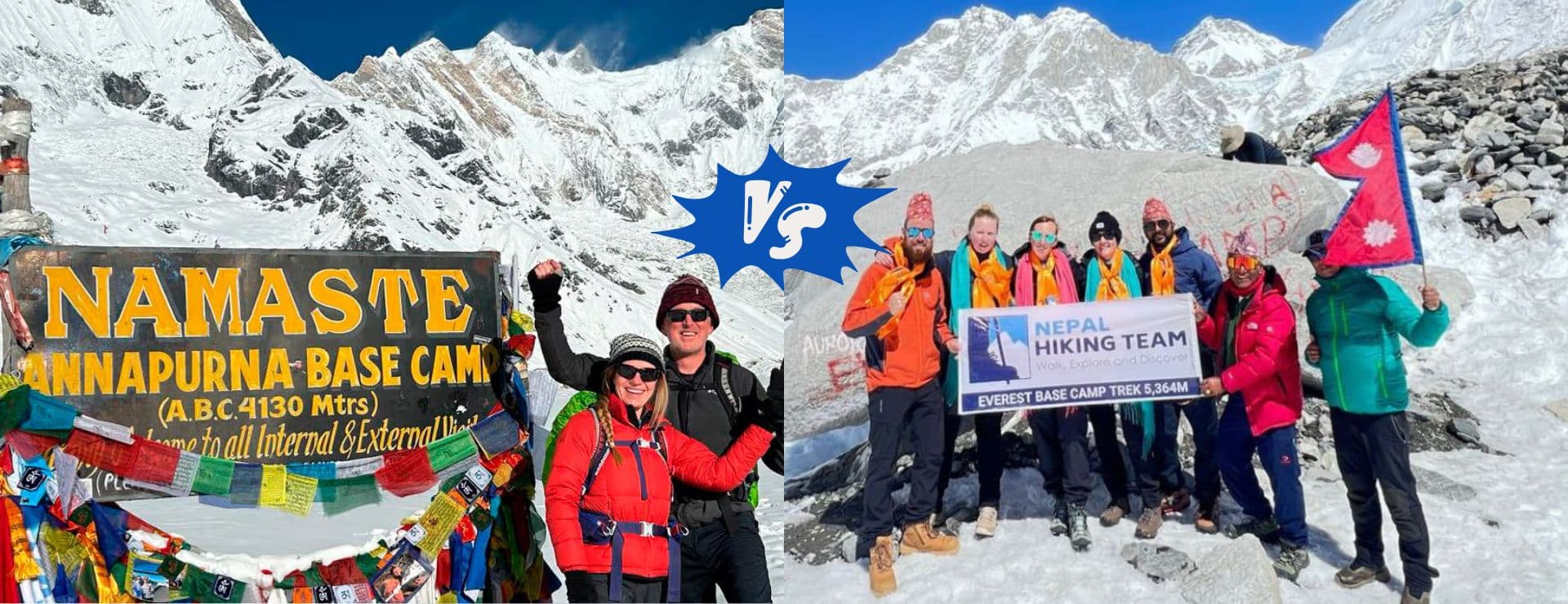
Annapurna Base Camp Trek (ABC) is better for trekkers who want a shorter, lower-altitude trek with straightforward road access from Pokhara. Everest Base Camp Trek (EBC) is better for trekkers who want a longer high-altitude journey through the Khumbu, Sherpa villages, monasteries, glaciers, Kala Patthar, and the goal of reaching the base of Mount Everest.
For most first-time Himalayan trekkers with limited time, the Annapurna Base Camp Trek is the more practical choice. Everest Base Camp Trek suits fit travellers who have 14 to 16 days, good physical preparation, and flexibility to manage Lukla flight logistics.
This guide blog aims to help any trekker willing to understand the real differences between Everest Base Camp Trek and Annapurna Base Camp Trek, so they can choose the route that suits their fitness, interests, schedule, and comfort expectations.
ABC vs EBC Trek: Side-by-Side Comparison
| Feature | Annapurna Base Camp (ABC) | Everest Base Camp (EBC) |
|---|---|---|
| Maximum altitude | 4,130 m at Annapurna Base Camp | 5,364 m at Everest Base Camp |
| Highest viewpoint | Annapurna Base Camp at 4,130 m | Kala Patthar at around 5,545 m |
| Standard duration | 8-11 days | 12-16 days |
| Difficulty level | Moderate. Demanding stone steps but lower altitude. | More challenging. Higher altitude, longer duration, colder conditions. |
| Best for | First-time Himalayan trekkers, limited time, lower altitude preference | Fit trekkers with more time, Everest goal, altitude comfort |
| Access | Road from Pokhara to the trailhead (typically Nayapul/Hile/Birenthanti). No flights needed. | Mountain flight to Lukla from Kathmandu or Ramechhap |
| Main trail challenge | Steep stone staircases, wet forest trails in season | Repeated days above 4,000 m, cold mornings, altitude fatigue |
| Altitude sickness risk | Lower risk, but possible if trekkers rush above Deurali | Higher risk due to extended days above 4,000 m and 5,000 m |
| Accommodation | Better lodges in lower villages, basic above Chhomrong | Better lodges in Namche, basic at Lobuche and Gorak Shep |
| Cost level | More affordable overall | Higher cost due to flights, longer duration, remote supply chain |
| Culture | Gurung and Magar villages, Annapurna foothill traditions | Sherpa villages, Tibetan Buddhist monasteries and mani walls |
| Mountain views | Close views of Annapurna I, Machhapuchhre, Hiunchuli, Gangapurna, and Annapurna South | Wide Khumbu views of Everest, Lhotse, Nuptse, Ama Dablam, Pumori. |
| Crowds | Busy in peak seasons but generally less crowded than EBC | Very busy during spring and autumn peak seasons |
| Emergency access | Road access possible in many sections | Helicopter evacuation usually required for serious altitude issues |
| Best season | October to November, March to May | October to November, March to May |
| Key highlight | Reaching ABC inside the Annapurna Sanctuary setting, surrounded by high peaks | Reaching EBC, Kala Patthar sunrise, Tengboche Monastery, Khumbu glacier |
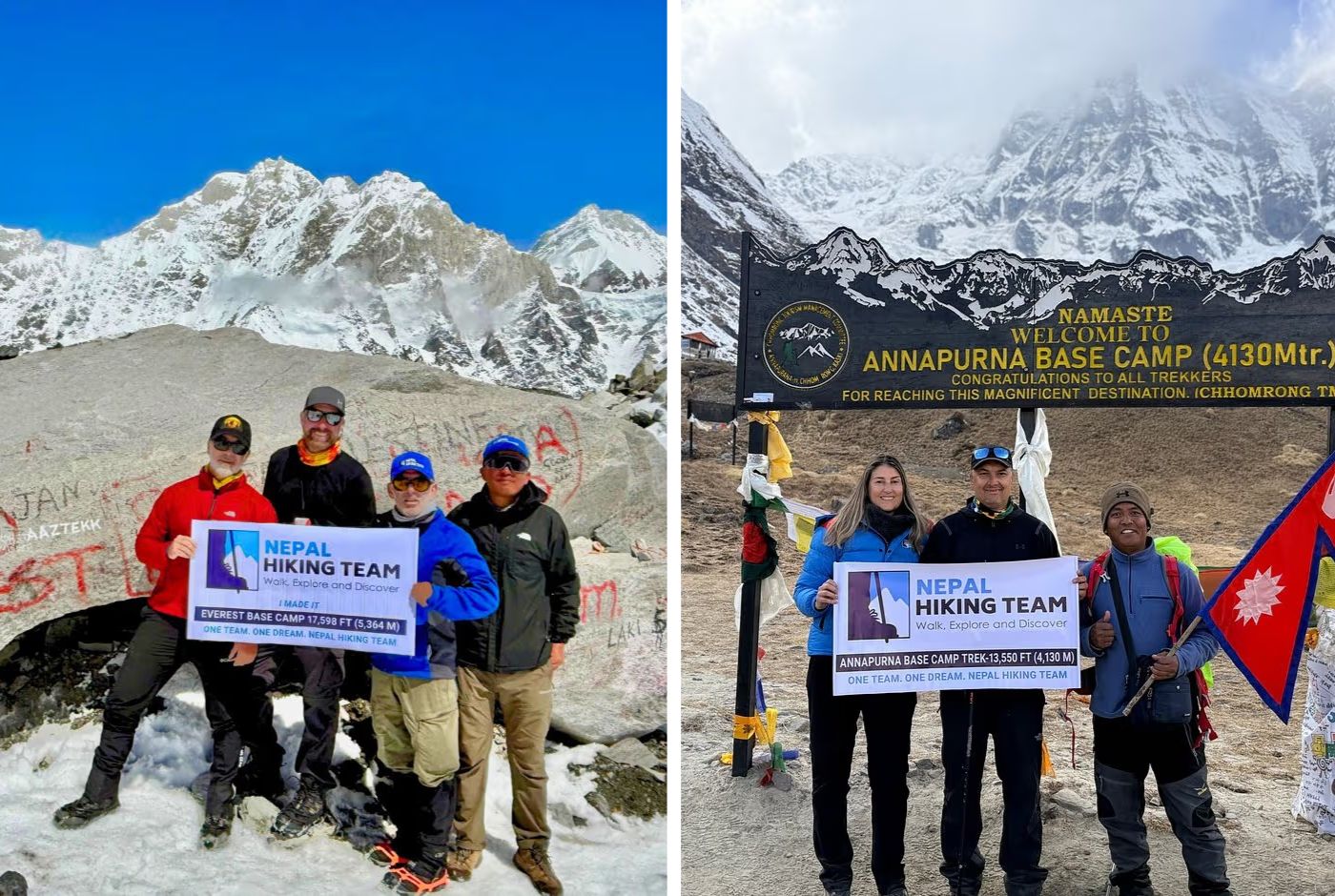
A side-by-side look at Everest Base Camp and Annapurna Base Camp, two classic Himalayan treks with different altitude levels, trail conditions, landscapes, and trekking experiences
Is Everest Base Camp More Difficult Than Annapurna Base Camp?
Yes, Everest Base Camp Trek is generally considered more difficult than Annapurna Base Camp Trek. The reasons are straightforward: EBC reaches a significantly higher altitude of 5,364 m at the base camp and around 5,545 m at Kala Patthar. Trekkers spend multiple consecutive days above 4,000 m, with acclimatization stops required in Namche Bazaar and Dingboche. The final section through Lobuche, Gorak Shep, EBC, and Kala Patthar is cold, high, and physically demanding. Mornings above 4,500 m can feel brutal, and the trek runs 12 to 16 days, requiring sustained energy throughout.
That said, ABC is not an easy trek. The stone staircases around Ulleri, Chhomrong, Sinuwa, Bamboo, and Jhinu Danda can put significant strain on the knees, particularly on descent.
Read more: Everest Base Camp Difficulty Level vs Annapurna Base Camp Difficulty Level
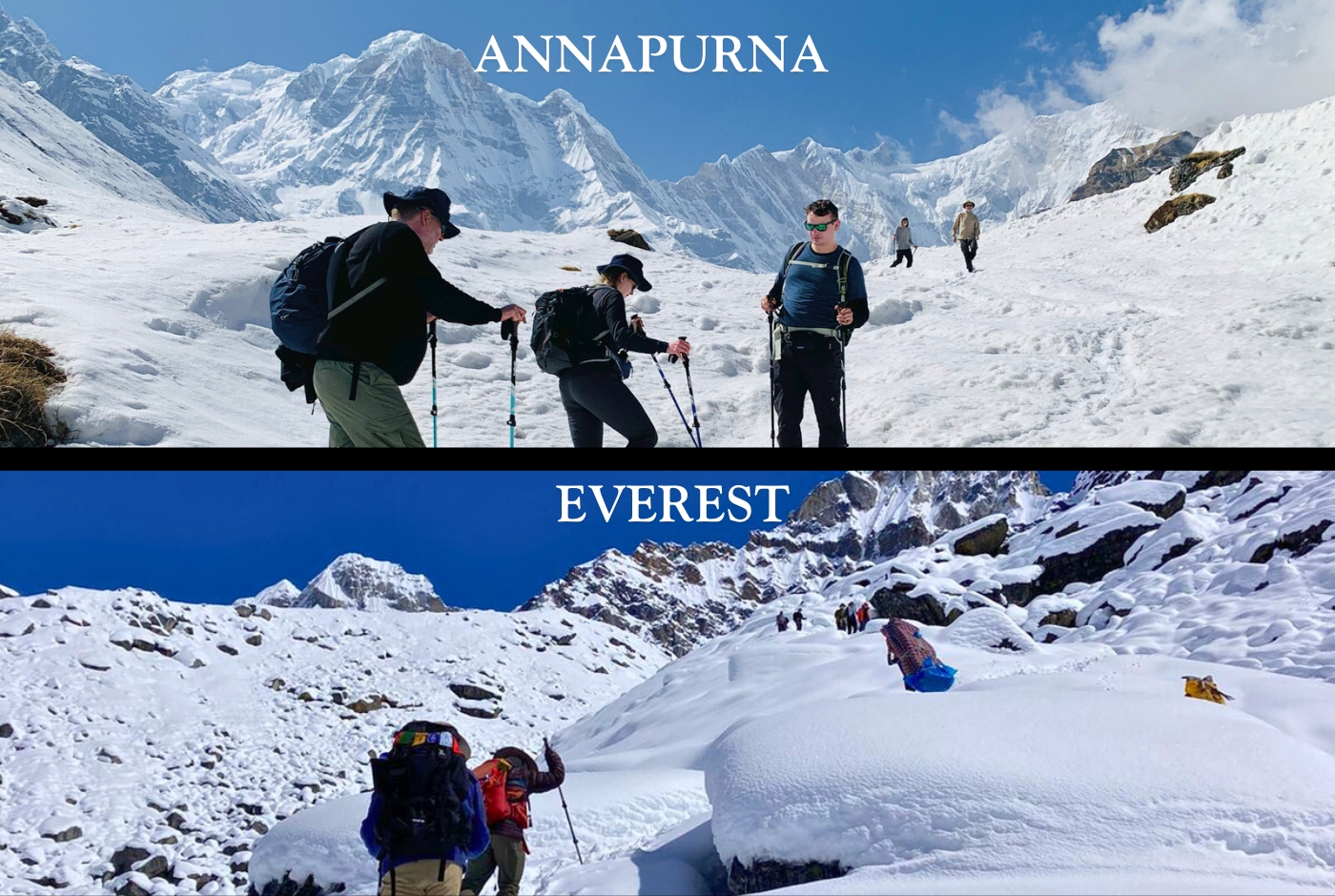
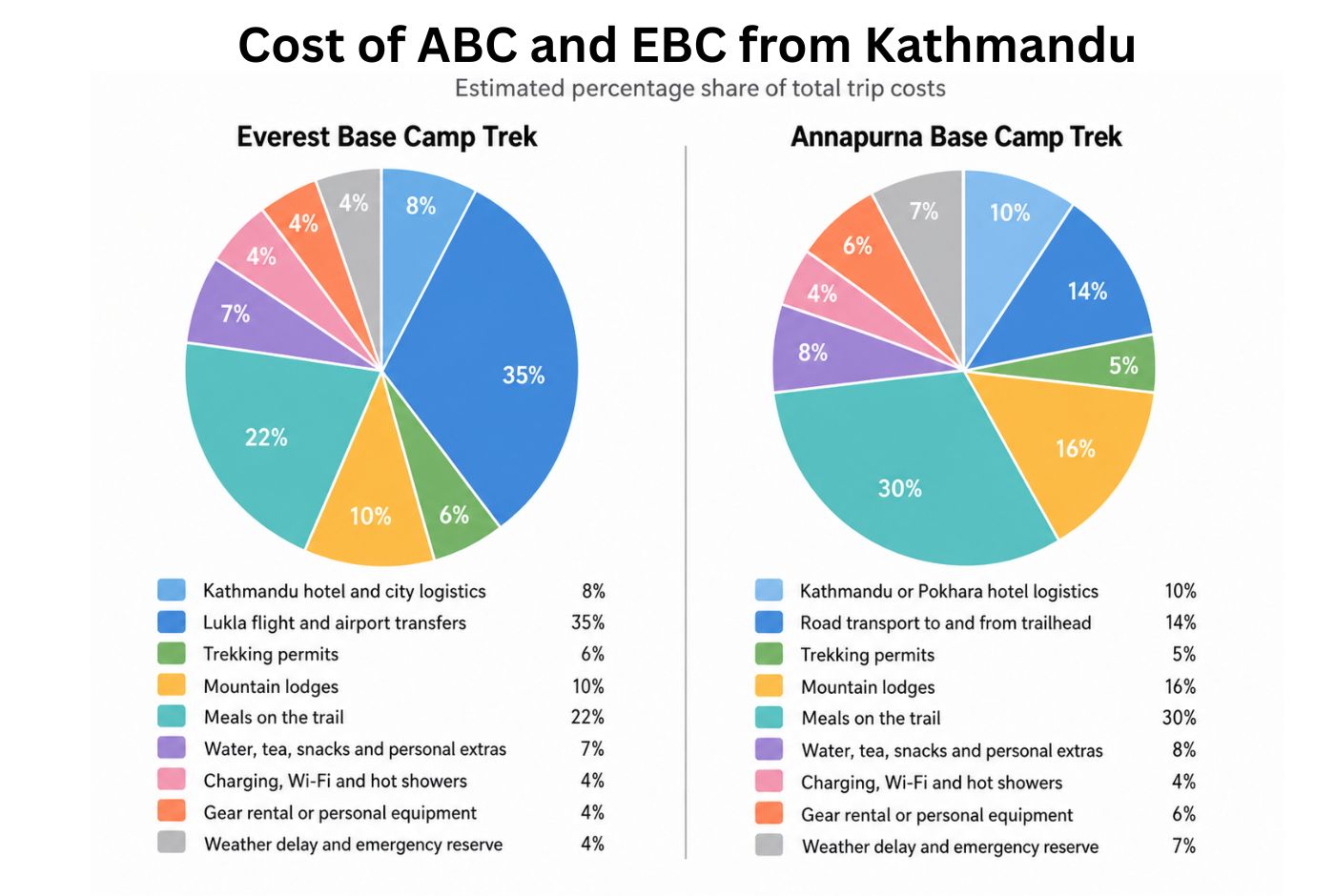
Cost Difference: Everest Base Camp vs Annapurna Base Camp Trek
EBC generally costs more than ABC, and the difference comes down to several compounding factors. The Lukla flights add a direct cost that ABC does not have. EBC also runs for more days, which means more guide and porter days, more nights in lodges, and more meals at altitude. In the upper Khumbu, food and supplies cost more because everything has to be carried or flown in. The overall logistics are more complex and more expensive.
ABC is more affordable because it has direct road access from Pokhara, fewer trekking days, and a less remote supply chain. That said, trekkers should not make the decision based on price alone. Guide experience, acclimatization planning, porter welfare, proper permits, and access to emergency support all matter more than saving a small amount on the overall cost.
| Package Type | Annapurna Base Camp (ABC) | Everest Base Camp (EBC) |
|---|---|---|
| Standard | US$ 400 to US$ 1,500 per person depending on group size and service level | US$ 1,000 to US$ 5,000+ per person depending on group size and service level |
| Short version |
US$ 800 to US$ 1,300 per person for 6 to 8 day versions like Instant Annapurna Base Camp trek (8 days), Annapurna Sanctuary Trek (11 days) |
US$ 1,300 to US$ 2,200 per person for 9 to 11-day trekking versions like Everest Base Camp Short Trek (14 days) |
| Helicopter return | US$ 2,300 to US$ 2,900 per person for trek with helicopter return to Pokhara | US$ 2,300 to US$ 2,900 per person for trek with helicopter return to Lukla or Kathmandu |
| Luxury or comfort | Limited luxury options, mainly available in lower elevation villages | US$ 2,200 to US$ 5,000+ depending on accommodation and inclusions like the Everest Signature Lodge Trek |
| Main cost drivers | Guide and porter days, accommodation, permits, road transfers | Lukla flights, guide and porter days, longer itinerary, upper Khumbu supply costs |
Permits Cost Comparison: Everest Base Camp and Annapurna Base Camp
The Everest Base Camp Trek requires two permits: the Sagarmatha National Park Entry Permit and the Khumbu Pasang Lhamu Rural Municipality Permit. The total permit cost is NPR 6,000 for foreign trekkers and NPR 3,500 for Indian citizens. The Annapurna Base Camp Trek requires the Annapurna Conservation Area Permit (ACAP). Its total permit cost is NPR 3,000 for foreign trekkers and NPR 1,000 for Indian citizens.
Based on permit fees alone, the Annapurna Base Camp Trek is cheaper than the Everest Base Camp Trek for both foreign and Indian trekkers.
| Trek | Permit | Foreigners | Indian Citizens |
|---|---|---|---|
| Everest Base Camp Trek | Sagarmatha National Park Entry Permit | NPR 3,000 | NPR 1,500 |
| Everest Base Camp Trek | Khumbu Pasang Lhamu Rural Municipality Permit | NPR 3,000 | NPR 2,000 |
| Everest Base Camp Trek | Total Permit Cost | NPR 6,000 | NPR 3,500 |
| Annapurna Base Camp Trek | Annapurna Conservation Area Permit, ACAP | NPR 3,000 | NPR 1,000 |
| Annapurna Base Camp Trek | Total Permit Cost | NPR 3,000 | NPR 1,000 |
Previously, the TIMS Card cost NPR 2,000 for foreign independent trekkers, NPR 1,000 for foreign group trekkers, NPR 600 for SAARC independent trekkers, and NPR 300 for SAARC group trekkers. However, for the both Annapurna and Everest Base Camp trek, TIMS is no longer required, saving some money.
Check the detailed cost breakdown for the Everest Base Camp Trek and compare it with the Annapurna Base Camp Trek Cost to understand each section of the budget.
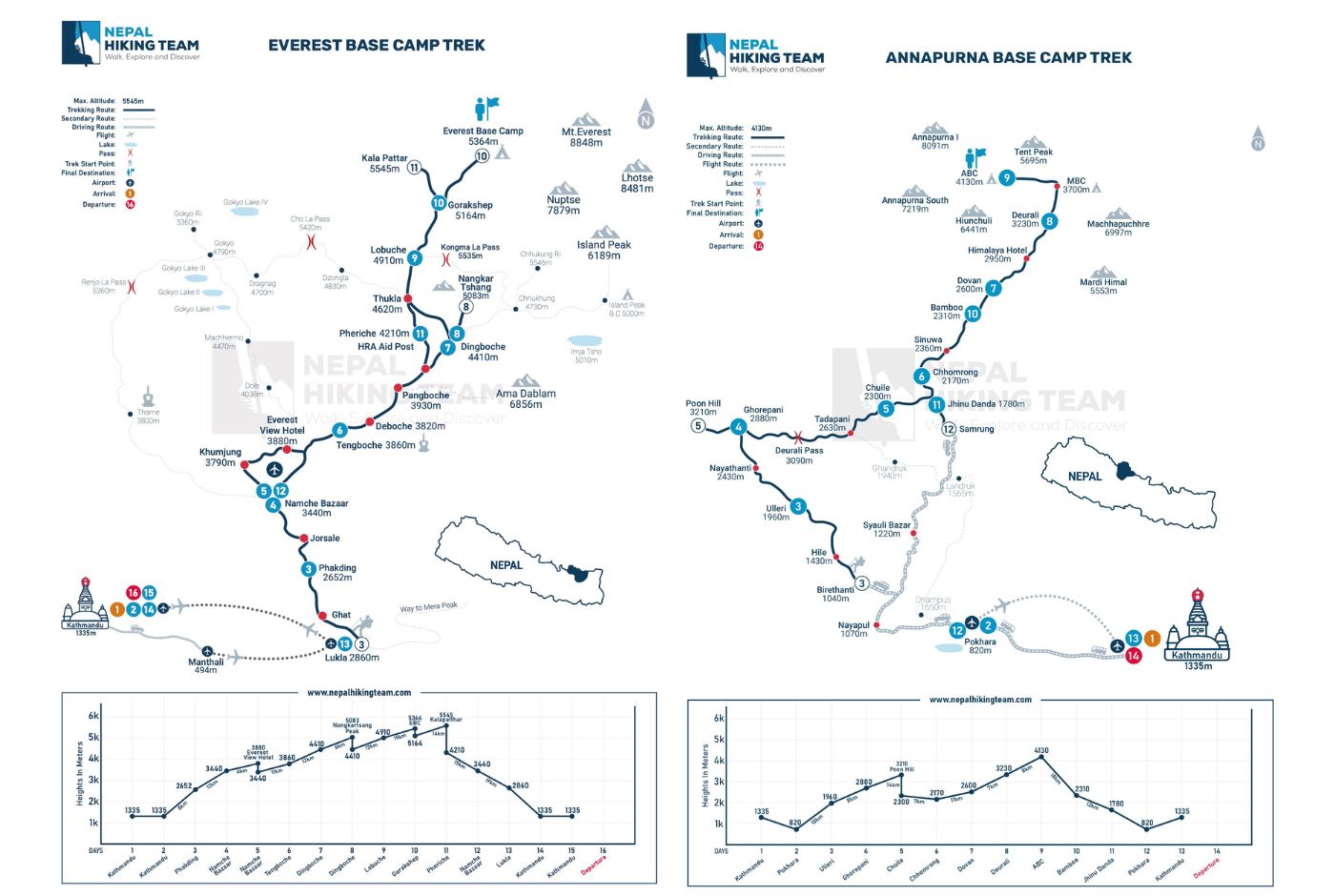
Everest Base Camp Trek vs Annapurna Base Camp Trek Map
The two routes cover entirely separate regions of Nepal and follow very different paths to their respective base camps.
ABC route overview: Located in Annapurna Conservation Area, trekking trail to ABC follows Kathmandu, Pokhara, trailhead at Nayapul, Birethanti, Ghandruk, Jhinu Danda, Kimchi, or Simrung depending on itinerary and road conditions, then continuing through Chhomrong, Bamboo, Sinuwa, Deurali, Machhapuchhre Base Camp, and Annapurna Base Camp. ABC trekking is 70 km to 110 km (43 to 68 miles) round trip.
EBC route overview: Located in Sagarmatha National Park, trekking to EBC takes off from Kathmandu or Ramechhap, flight to Lukla, then on foot through Phakding, Namche Bazaar, Tengboche, Dingboche, Lobuche, Gorak Shep, Everest Base Camp, and Kala Patthar, returning to Lukla for the flight back. EBC trekking is around 130 km (80 miles).
Learn more in our blogs: Everest Base Camp Trek Distance and Annapurna Base Camp Trek Distance Guide.
Accessibility: Pokhara Road Access vs Lukla Flight
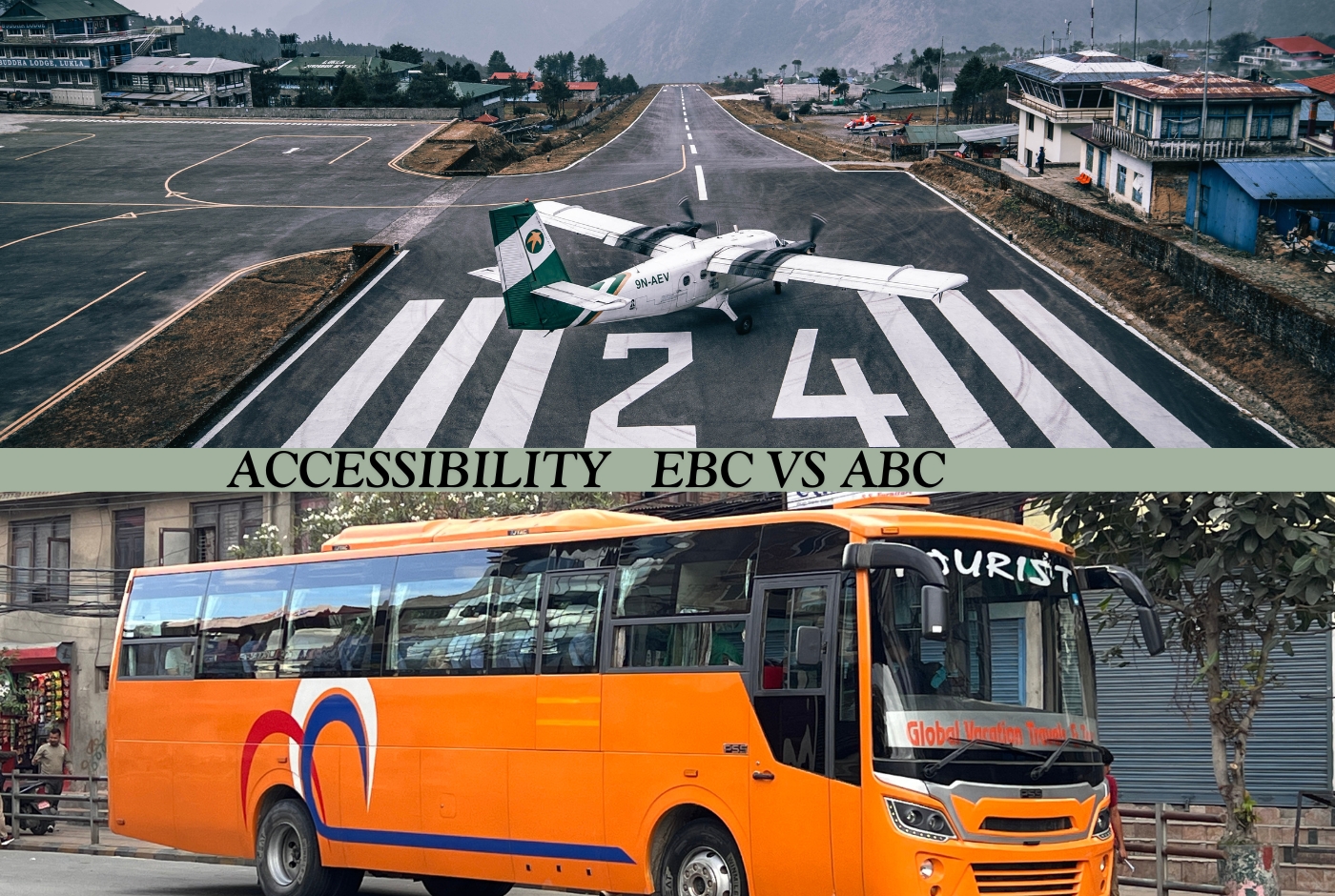
Annapurna Base Camp: Depending on the itinerary and current road conditions, trekkers can start from Nayapul, Birethanti, Ghandruk, Kimchi, Simrung, or Jhinu Danda. From Pokhara, a jeep ride to the trailhead usually takes a few hours. Most trekkers today choose starting points like Kimchi or Ghandruk to reduce the number of walking days. No domestic flights are needed, which makes schedule adjustments easier if plans change.
Everest Base Camp: Most EBC trekkers fly to Lukla from Kathmandu, or during busy seasons from Ramechhap. Lukla flights are weather-dependent and can be delayed or cancelled, sometimes for several days. Buffer days at the end of an EBC itinerary are not optional; they are necessary planning. Some trekkers choose the longer Jiri or Salleri approach to avoid Lukla entirely, though this adds significant time and effort to the overall journey.
When comparing access directly, ABC is easier to reach and more flexible. EBC requires more advanced booking, more logistical planning, and a practical buffer for flight uncertainty.
ABC vs EBC Altitude and Acclimatization
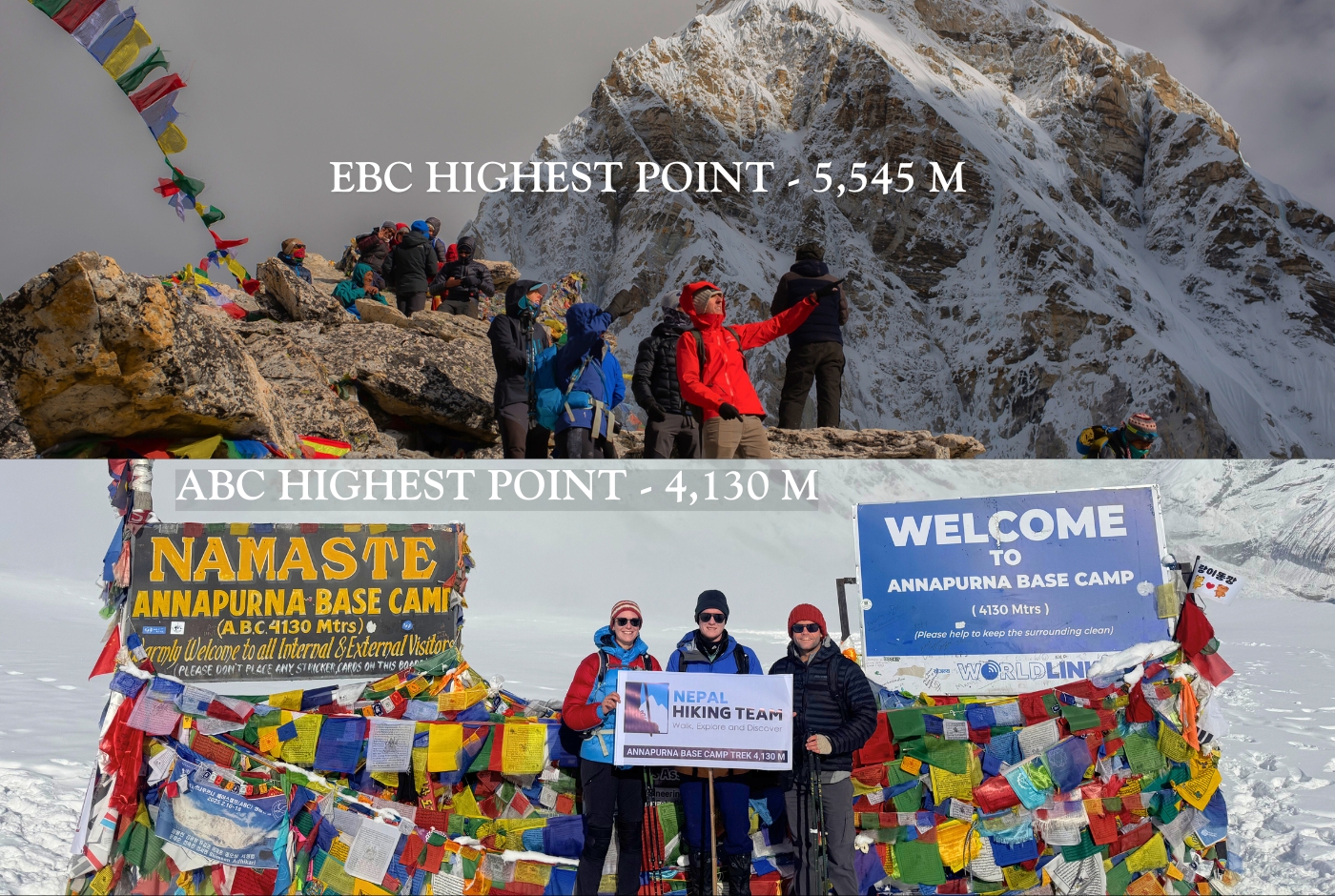
Altitude is one of the most important factors separating these two treks. EBC takes trekkers above 5,000 m and requires multiple days of acclimatization. ABC stays below 4,200 m and has a lower overall altitude sickness risk, though rushing through the final section can still cause symptoms.
| Route detail | Annapurna Base Camp (ABC) | Everest Base Camp (EBC) |
|---|---|---|
| Starting elevation | Around 822 m (Pokhara) | Around 2,800 m (Lukla) |
| Base camp elevation | 4,130 m | 5,364 m |
| Highest point on trek | 4,130 m (ABC) | Around 5,545 m (Kala Patthar) |
| Key acclimatization concern | Rushing the ascent from Deurali to MBC and ABC | Extended days above 4,000 m; acclimatization in Namche and Dingboche is essential |
| Guide advice | Steady pace from Chhomrong upward; monitor breathing and appetite above Deurali | Follow acclimatization schedule strictly; watch for headache, fatigue, and appetite loss from Namche upward (Acute Mountain Sickness) |
On EBC, trekkers spend several consecutive days above 4,000 m and reach 5,000 m during the Lobuche to Gorak Shep section. Symptoms of altitude sickness including headache, disturbed sleep, reduced appetite, and breathlessness, are common at this stage.
On ABC, the risk is lower, but trekkers who push too fast from Deurali to Machhapuchhre Base Camp and then ABC in a single day can feel the effects. A steady ascent with good hydration and proper rest reduces the risk considerably.
Annapurna vs Everest Height
Mount Everest is higher than Annapurna I, and Everest Base Camp sits at a significantly higher elevation than Annapurna Base Camp. This height difference is one of the primary reasons EBC feels harder.
| Location | Elevation |
|---|---|
| Mount Everest | 8,848.86 m |
| Annapurna I | 8,091 m |
| Kala Patthar (EBC trek highest point) | Around 5,545 m |
| Everest Base Camp | 5,364 m |
| Annapurna Base Camp | 4,130 m |
Food, Wi-Fi, and Charging on ABC vs EBC
Both routes rely on teahouse accommodation throughout. The quality and comfort of lodges vary considerably depending on elevation, with lower villages typically offering better facilities than higher ones.
Culture shapes the food and lodging on both trails. Gurung and Magar communities influence hospitality on the ABC route, while Sherpa communities guide the food traditions, lodges, and Buddhist heritage of the EBC trail.
On both routes, hot showers, device charging, and Wi-Fi access usually carry an extra charge. The Internet is more reliable in lower areas. The EBC trail uses paid Wi-Fi systems such as Everest Link in many teahouses along the route. At higher elevations on either trail, connectivity can be unreliable.
Want to learn more about the fooding culture in both the treks? Read the blog on Food during ABC trek and Staples during EBC Trek.
Food on both routes follows a similar pattern: dal bhat, noodle soup, momo, pasta, chapati, Tibetan bread, porridge, eggs, and basic bakery items in developed villages. See what foods to try while trekking in Nepal.
Accommodation on the Annapurna Base Camp Trek vs Everest Base Camp Trek
Accommodation is available on both the Annapurna Base Camp Trek and Everest Base Camp Trek, but the comfort level changes as the trail gains altitude. The overnight stays in ABC trail has good lodges in lower villages such as Ghandruk and Chhomrong, while lodges become basic above Chhomrong, especially around Bamboo, Deurali, Machhapuchhre Base Camp, and Annapurna Base Camp.
The Accomodation in EBC trail offers better lodge options in lower villages such as Lukla, Phakding, Namche Bazaar, and Deboche. However, accommodation becomes colder and simpler in Dingboche, Lobuche, and Gorak Shep, where shared bathrooms and basic rooms are common.
Mountain Lodges of Nepal on ABC and EBC Routes
Mountain Lodges of Nepal are available only in selected lower villages on both trekking routes. They do not continue all the way to Everest Base Camp or Annapurna Base Camp.
| Trek | Mountain Lodges Locations | Important Note |
|---|---|---|
| Everest Base Camp Trek | Lukla, Phakding, Monjo, Namche Bazaar, Deboche, Kongde | Luxury lodge comfort usually ends around Deboche on the standard EBC route. |
| Annapurna Base Camp Trek | Birethanti, Ghandruk, Landruk, Majgaon, Tomijong, Dhampus | These lodges are mainly in the lower Annapurna foothills, not near Annapurna Base Camp. |
Mountain Views on ABC vs EBC Trek
Both treks offer outstanding mountain scenery, but the viewing experience is different. Annapurna Base Camp gives close views of Annapurna I, Annapurna South, Machhapuchhre, Hiunchuli, Gangapurna, and Annapurna III from a high mountain basin.
The Everest Base Camp route offers wider Khumbu views, with Ama Dablam, Lhotse, Nuptse, Pumori, and the Khumbu Icefall along the trail. Everest is best seen from Kala Patthar, not from base camp itself.
Most Underestimated Challenges on ABC vs EBC
| Annapurna Base Camp Trek | Everest Base Camp Trek |
|---|---|
| Long stone staircases can be hard on the knees, especially during descent. | Altitude fatigue builds gradually after Namche Bazaar. |
| Forest trails can become wet and slippery in spring and monsoon. | Several days are spent above 4,000 m, which makes acclimatization important. |
| Lodges above Chhomrong are basic, with limited facilities near MBC and ABC. | Lodges at Lobuche and Gorak Shep are cold, basic, and often crowded in peak season. |
| Room availability can be limited near MBC and ABC during busy months. | Lukla flight delays can affect both the start and end of the trek. |
Which Trek Should You Choose?
Here are the basic checklist guidelines to help you consider for which trek to choose in Nepal.
Choose Annapurna Base Camp Trek if:
- You are trekking in the Himalayas for the first time and prefer a lower-altitude introduction
- You have limited time and need a trek that fits into 7 to 12 days
- You want to avoid mountain flight logistics and keep schedule flexibility
- You prefer road access from Pokhara without flight dependency
- You want strong close-range mountain views without extended high-altitude exposure
- You are concerned about altitude sickness risk
- You want to combine cultural village walking with forest trails and Himalayan views
Choose Everest Base Camp Trek if:
- Reaching the base of Mount Everest is a specific goal for you
- You have 14 to 16 days available and can keep buffer days for flights
- You are prepared physically and mentally for repeated high-altitude days
- Cold early mornings and basic lodges at altitude do not concern you
- You want the experience of Khumbu glaciers, Sherpa culture, and Tengboche Monastery
- You want Kala Patthar sunrise and wide views of the world's highest peaks
- You are comfortable following acclimatization guidance and adjusting your pace
| Your situation | Recommended trek |
|---|---|
| First Himalayan trek, limited time, lower altitude preferred | Annapurna Base Camp |
| Everest is the goal, fit and well-prepared, 14+ days available | Everest Base Camp |
| Concerned about Lukla flight delays affecting return travel | Annapurna Base Camp |
| Want Sherpa culture, glaciers, and Kala Patthar views | Everest Base Camp |
| Want strong mountain views with shorter duration and road access | Annapurna Base Camp |
| Happy with longer itinerary and higher altitude exposure | Everest Base Camp |
Side Trek Add-ons on the ABC and EBC Trails
Don't want to follow only the standard Annapurna Base Camp Trek or Everest Base Camp Trek route? Both trails offer excellent add-on options for trekkers who have extra time, stronger fitness, or a deeper interest in mountain views, culture, and quieter side valleys.
Annapurna Base Camp Trek Add-ons
The Annapurna Base Camp Trek is flexible because the route connects easily with nearby viewpoints, ridge walks, Gurung villages, and short cultural extensions.
| Add-on | Best For | Extra Days Needed | Route Experience |
|---|---|---|---|
| Ghorepani and Poon Hill (usually included in most ABC packages) | Sunrise views and classic Annapurna scenery | 2 to 3 days | This is one of the most popular add-ons before joining the ABC trail. Poon Hill offers wide sunrise views of Annapurna, Dhaulagiri, Machhapuchhre, and nearby Himalayan peaks. |
| Mardi Himal | Ridge walking and close views of Machhapuchhre | 3 to 5 days | Mardi Himal can be added before or after ABC for trekkers who want a quieter ridge route. The trail passes through forest, high pastures, and open viewpoints facing Machhapuchhre and Annapurna South. |
| Ghandruk Village | Gurung culture and village experience | 1 day | Ghandruk is a beautiful Gurung village with stone houses, mountain views, and strong cultural identity. It works well as a cultural stop before or after the main ABC trek. |
| Jhinu Danda Hot Spring (usually built in most ABC packages) | Relaxation after trekking | Half day to 1 day | Jhinu Danda is often included near the end of the ABC route. Trekkers can enjoy the natural hot spring after several days of walking through forest, stone steps, and high valleys. |
| Khopra Ridge or Mohare Danda | Quieter viewpoints and extended Annapurna exploration | 3 to 5 days | They offer ridge views, community lodges, and a slower experience of the Annapurna foothills. |
Everest Base Camp Trek Add-ons
The Everest Base Camp Trek has stronger high-altitude add-on options. Some are suitable for acclimatization walks, while others require extra time, better fitness, and careful planning. These additions are best for trekkers who want to explore beyond the classic Lukla, Namche, Dingboche, Lobuche, Gorak Shep, and Everest Base Camp route.
| Add-on | Best For | Extra Days Needed | Route Experience |
|---|---|---|---|
| Gokyo Lakes | Glacial lakes and wider Everest region views | 4 to 6 days | Gokyo Lakes is one of the best extensions for trekkers who want to see turquoise high-altitude lakes, Ngozumpa Glacier, and panoramic views from Gokyo Ri. |
| Cho La Pass | Adventure and high-pass crossing | 3 to 5 days | Cho La Pass connects the Everest Base Camp route with the Gokyo Valley. It is a demanding high-altitude crossing and is best suited for experienced or well-prepared trekkers. |
| Renjo La Pass | High pass views and a quieter return route | 3 to 4 days | Renjo La is often added with Gokyo for trekkers who want a scenic loop instead of returning by the same trail. It offers striking views across Everest, Lhotse, Makalu, and the Gokyo Valley. |
| Ama Dablam Base Camp | Close mountain views and a focused side hike | 1 to 2 days | This side trip is usually added from Pangboche or Dingboche. It gives trekkers a closer look at Ama Dablam, one of the most elegant mountains in the Khumbu region. |
| Thame Valley | Sherpa culture and quieter trails | 2 to 3 days | Thame is a peaceful side valley near Namche Bazaar. It is known for Sherpa heritage, old monasteries, and a quieter trail atmosphere away from the busiest EBC route. |
| Helicopter Return from Gorak Shep or Lukla | Saving time and avoiding the full return walk | Reduces trekking days | A helicopter return is a practical add-on for trekkers with limited time. It allows trekkers to complete Everest Base Camp and Kala Patthar, then fly back instead of retracing the full trail. |
Which Add-on Should You Choose? In both regions, the right add-on depends on your available time, fitness level, trekking season, and comfort with altitude. Annapurna add-ons are generally easier to adjust, while Everest add-ons require stronger acclimatization planning because the route stays at higher elevations for longer.
Final Recommendation from Nepal Hiking Team
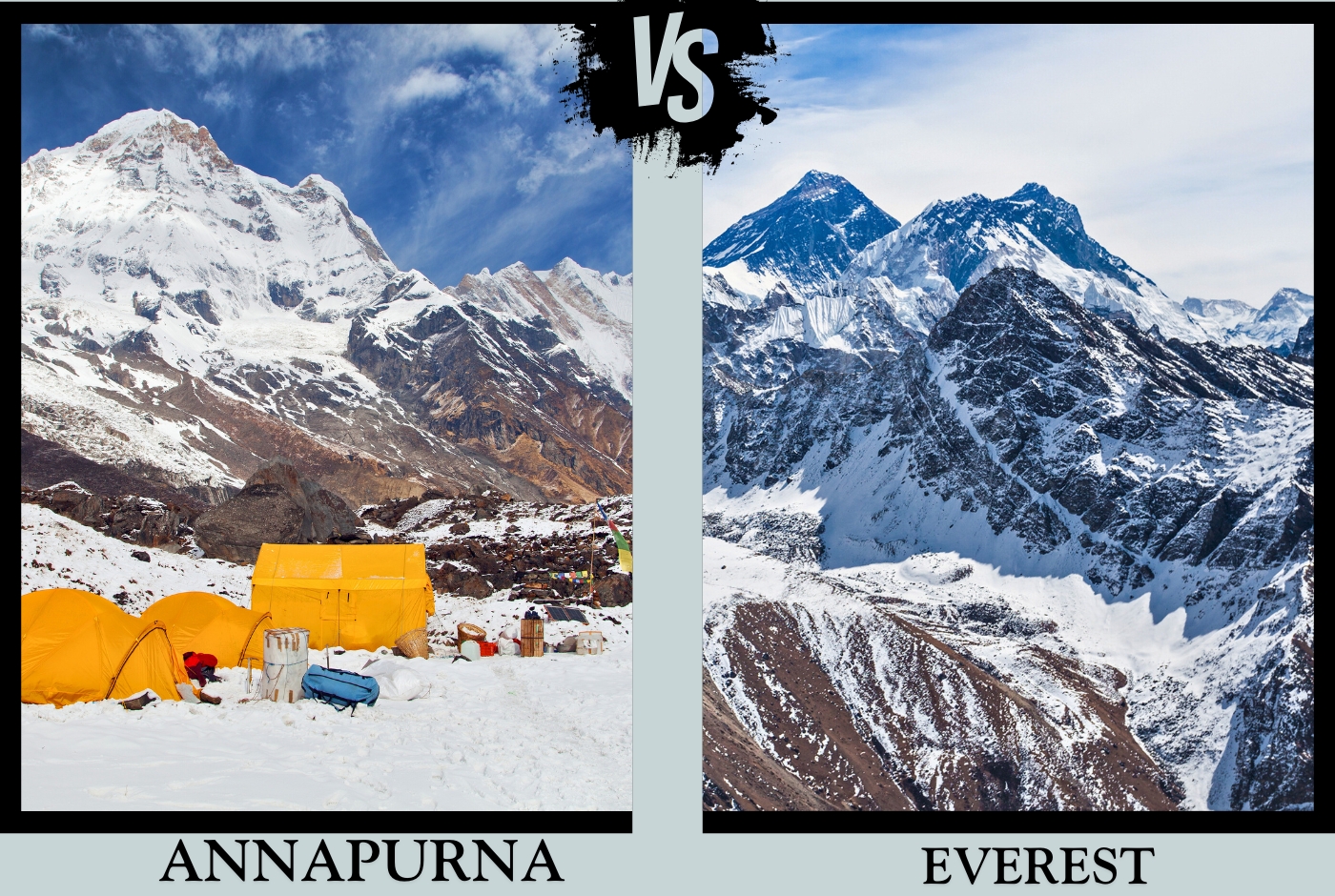
While both the iconic ABC and EBC treks are among the best treks in Nepal, for most first-time trekkers to Nepal, ABC is the more practical starting point. It is shorter, lower in altitude, easier to access from Pokhara, and requires fewer logistical buffers. The mountain scenery and cultural experience are genuinely rewarding without requiring the same level of altitude preparation and time commitment as EBC.
EBC is the better choice for trekkers who have a clear Everest goal, who are prepared for higher altitude and colder conditions, and who can plan with enough flexibility to absorb Lukla flight delays. It is a longer, harder, and more demanding journey, but it is also achievable for fit first-time EBC trekkers when they follow a proper acclimatization plan, trek with an experienced guide, and pace the route sensibly.
Both treks are rewarding when planned properly, paced steadily, and guided responsibly. We at Nepal Hiking Team run both routes every season and take the same approach to each: careful planning, honest communication, and a focus on getting trekkers safely to the destination and back.
Post a Comment