
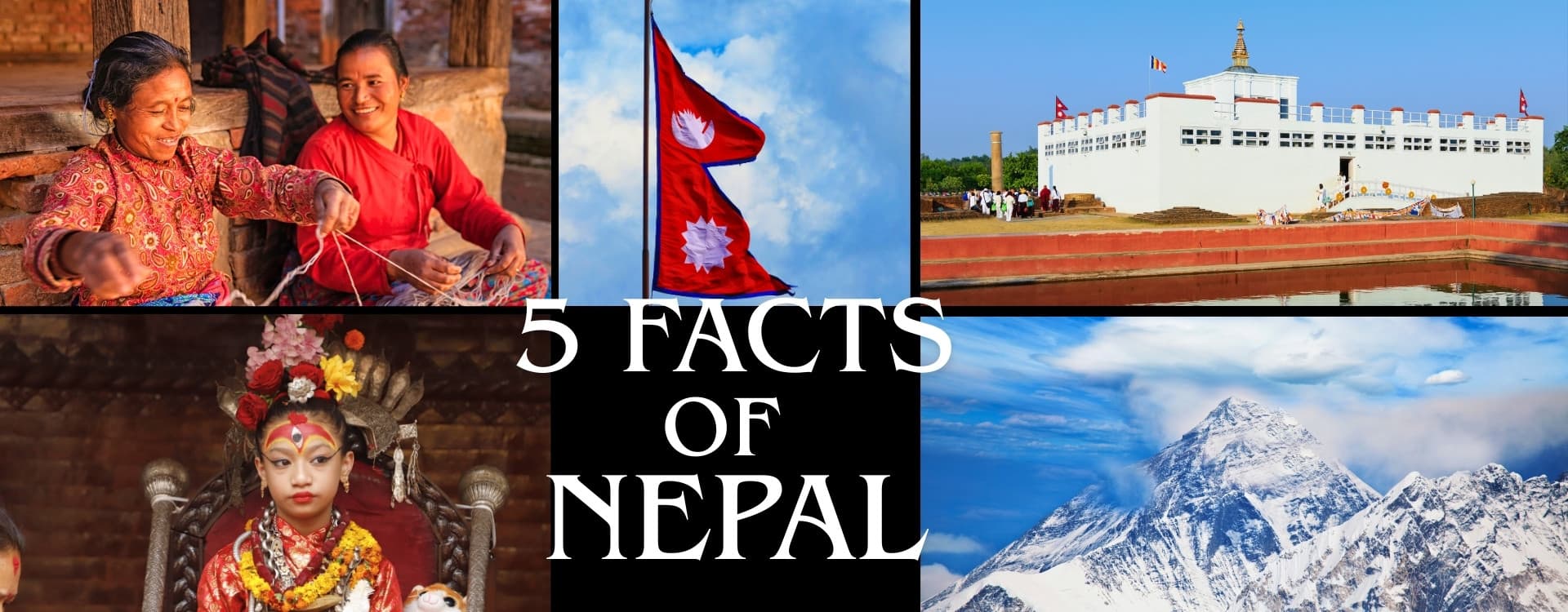
Nepal is a country where towering mountains, ancient traditions, and living culture intersect. From the world's highest peaks to sacred spiritual sites, the country offers far more than dramatic landscapes. It's the country with the world's only non-rectangular flag, and the birthplace of Buddha. It boasts incredible altitude variation from 60 to 8,848 meters and has never been colonized by a foreign power.
The country features the only non-rectangular national flag, is the birthplace of Buddha, has never been colonized, and operates 5 hours and 45 minutes ahead of GMT.
Below are five essential facts that explain why Nepal stands out globally.
Consider exploring more about the country's diverse culture or the geography of the Himalayas. Read our complete guide about Nepal geography. Are you planning a trip to Nepal? Contact Nepal Hiking Team for Next Adventure.
What are the Top 5 Facts About Nepal (Quick Overview)
- Nepal is home to Mount Everest and eight of the world's fourteen highest peaks, making it a global center for trekking and mountaineering.
- Nepal has the world's only non-rectangular national flag, symbolizing the Himalayas, peace, and national resilience.
- Lumbini, in southern Nepal, is the birthplace of Lord Buddha, a UNESCO World Heritage Site and major pilgrimage center.
- Nepal has never been colonized by any foreign power, maintaining its independence throughout its history.
- Nepal worships a Living Goddess known as the Kumari, a rare tradition blending Hindu and Buddhist beliefs.
- Unique Time Zone: Nepal uses its own specific time zone (Nepal Standard Time), which is exactly 5 hours and 45 minutes ahead of Greenwich Mean Time (GMT).
Each of these facts reveals a deeper layer of Nepal's geography, beliefs, and living heritage, explored in detail below.
Home to Mount Everest and the World's Highest Peaks
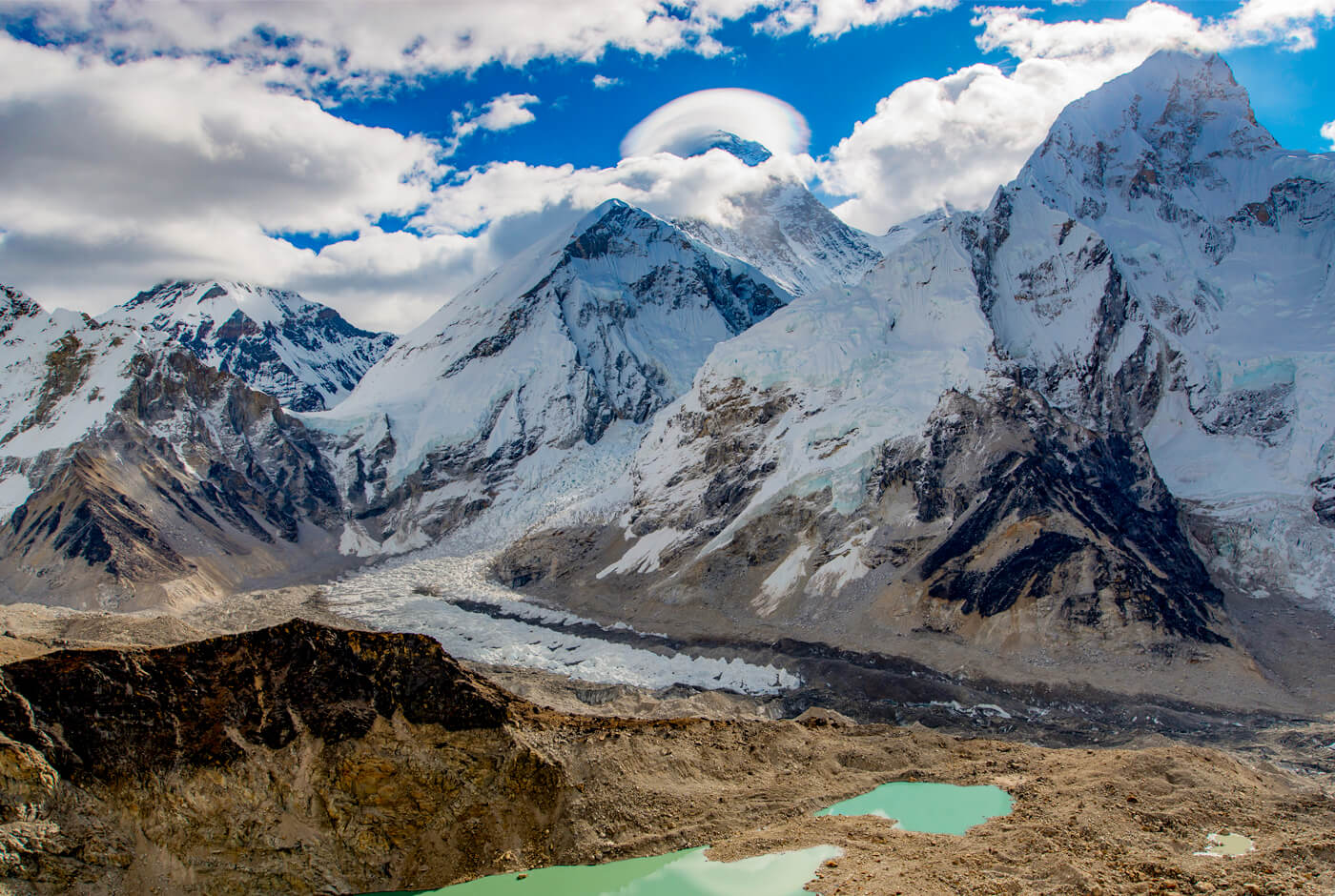
Nepal is home to Mount Everest, the tallest mountain on Earth, nestled in the Himalayas and rising to 8,848.86 meters. Known as Sagarmatha in Nepali and Chomolungma in Tibetan, it lies along the north-south China-Nepal border.
This majestic peak is one of the top reasons why thousands of adventurers and trekkers from around the world visit Nepal each year.
Additionally, Nepal is home to eight of the fourteen highest peaks above 8,000 meters, making it a paradise for mountain lovers.
Why does Everest stand out?
Mount Everest stands tall at the intersection of history, geography, human ambition, culture, and symbolism.
Titled "the top of the world", Everest was formed by the collision of the Eurasian and Indian tectonic plates and continues to grow a few millimetres every year as the tectonic plates push together, making it a living mountain.
Evidence such as fossilised trilobites, ancient marine shells, and limestone formed in shallow seas indicates that the Everest was once beneath the ancient Tethys Ocean.
Sagarmatha stands out as a global symbol of ambition, height, endurance, and respect for Mother Nature.
For the Sherpa people, Everest is known as Chomolungma, a sacred deity meaning "Mother Goddess of the World," and they view it as a living god and protector, treated with great respect.
Climbers, along with their Sherpa assistant, often participate in a traditional Tibetan Buddhist puja ceremony at Base Camp, asking the mountain for safety and blessings. The puja is led by spiritual leaders, also known as Monks or Lamas, who offer incense, butter lamps, fruits, rice, and barley flour to Everest, asking for its blessing on the equipment for divine favour and protection.
Everest drives Nepal's tourism economy: permit costs around USD $15,000, excluding additional expenses such as accommodations, guides, porters, and travel routes for climbers, which ultimately create jobs for hundreds of Nepalis each year.
Additionally, the mountain has inspired numerous records and achievements, including those of Kami Rita Sherpa, who has reached the summit 30 times!
Exploring the Everest region is more than a trek; it is a journey through Nepal's rich culture, traditions, amazing landscapes, and the lives of the people who live among the highest mountains on Earth.
Get a detailed explanation of Mount Everest in our in-depth blog: Everest's geography, history, culture, and trekking routes.
Unique Flag: The World's Only Non-Rectangular National Flag
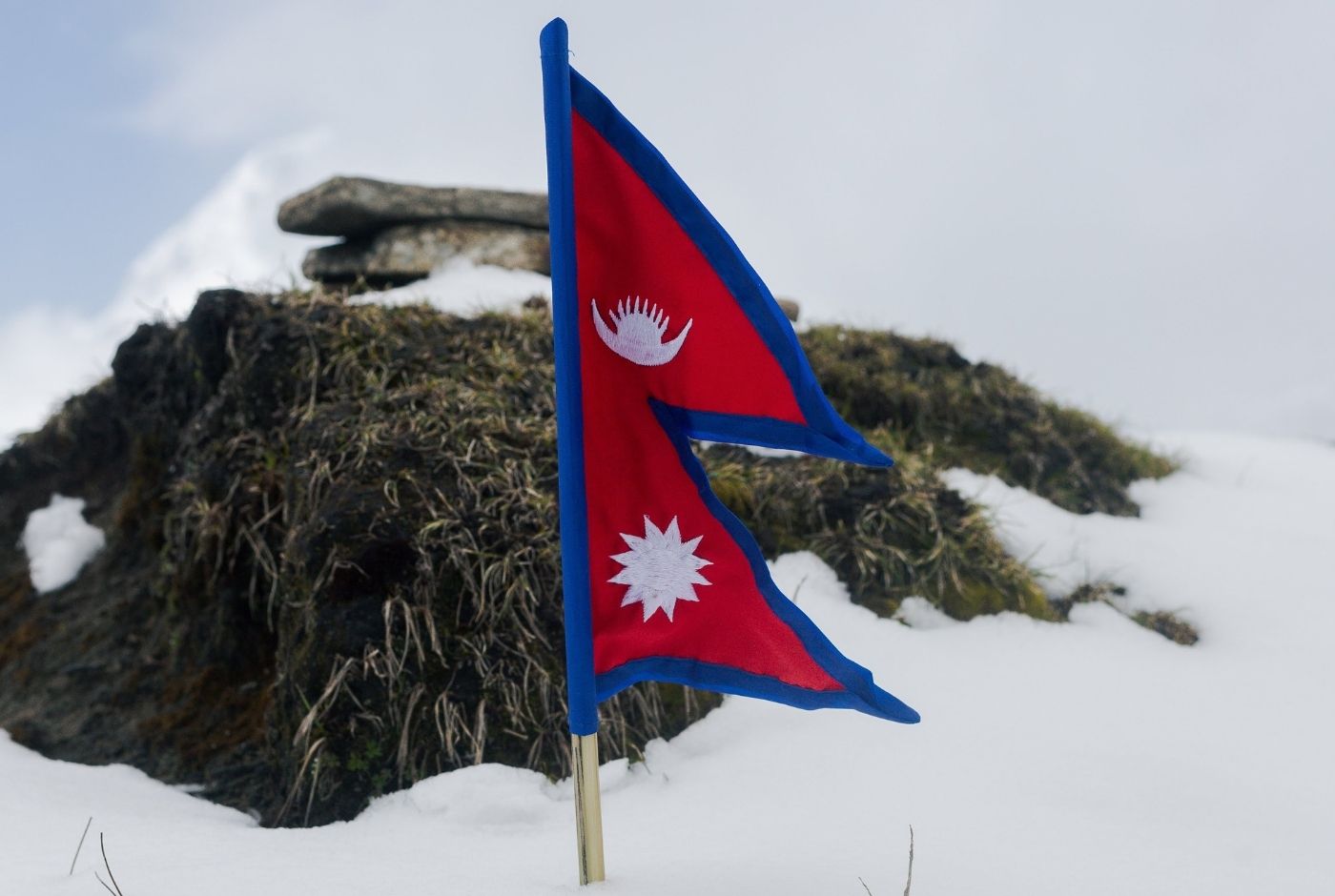
Nepal is the only country in the world with a non-rectangular national flag, making it instantly recognizable among all nations.
Unlike other countries, Nepal's flag is a modern version of its ancient banner, made of two stacked triangles known as a double pennon, symbolizing the Himalayan peaks.
From its shape to its colors and celestial symbols, every part of the flag reflects Nepal's history, culture, and independence.
The two triangles form a concave pentagon and represent the Himalayan mountain range, Nepal's natural shield and border.
Nepal's national flag proportions, about 1:1.22 height-to-width, are defined in complex mathematical terms and are set out in Nepal's constitution.
This makes it one of the most precise national flags in the world. The shape preserves ancient traditions of the Indian subcontinent and demonstrates that Nepal has consistently maintained its cultural heritage.
Symbolic Elements
- Crimson red, Nepal's national color, stands for bravery, courage, victory, and the sacrifices of the Nepali people. It also reflects the color of the national flower, the rhododendron.
- The Blue borders symbolize peace, calmness, and harmony.
- The Crescent moon on the upper triangle represents the calmness and serenity of the Nepalese people, the cooling breeze of the Himalayas, and the Chandravanshi dynasty (a royal family era).
- The Sun, with 12 rays in the lower triangle, reflects the fierce resolve, strength, energy, and determination of the people. It also represents the warmth of the lower regions (Terai), symbolizing the Suryavanshi dynasty.
Together, the flag reflects independence, resilience, cultural depth, and national pride of the Nepali people, signifying that Nepal will last as long as these celestial bodies exist.
Cultural Significance
Moreover, the triangles also stand for the two major religions practiced in Nepal, Hinduism and Buddhism, similar to temple pennants, and reflect Nepal's mountainous terrain. The flag's unique design has remained unchanged for centuries, reflecting Nepal's independence, balance, harmony, permanence, and heritage.
The modernized version was standardized and formalized by Shankar Nath Rimal, an architect and civil engineer, and was officially adopted on 16th December 1962 (B.S. 2019).
Nepal's flag is not only a decorative design but also a mathematical, cultural, and spiritual symbol, representing bravery, peace, history, strength, and a strong connection to the Himalayas.
Birthplace of Lord Buddha: Limbini
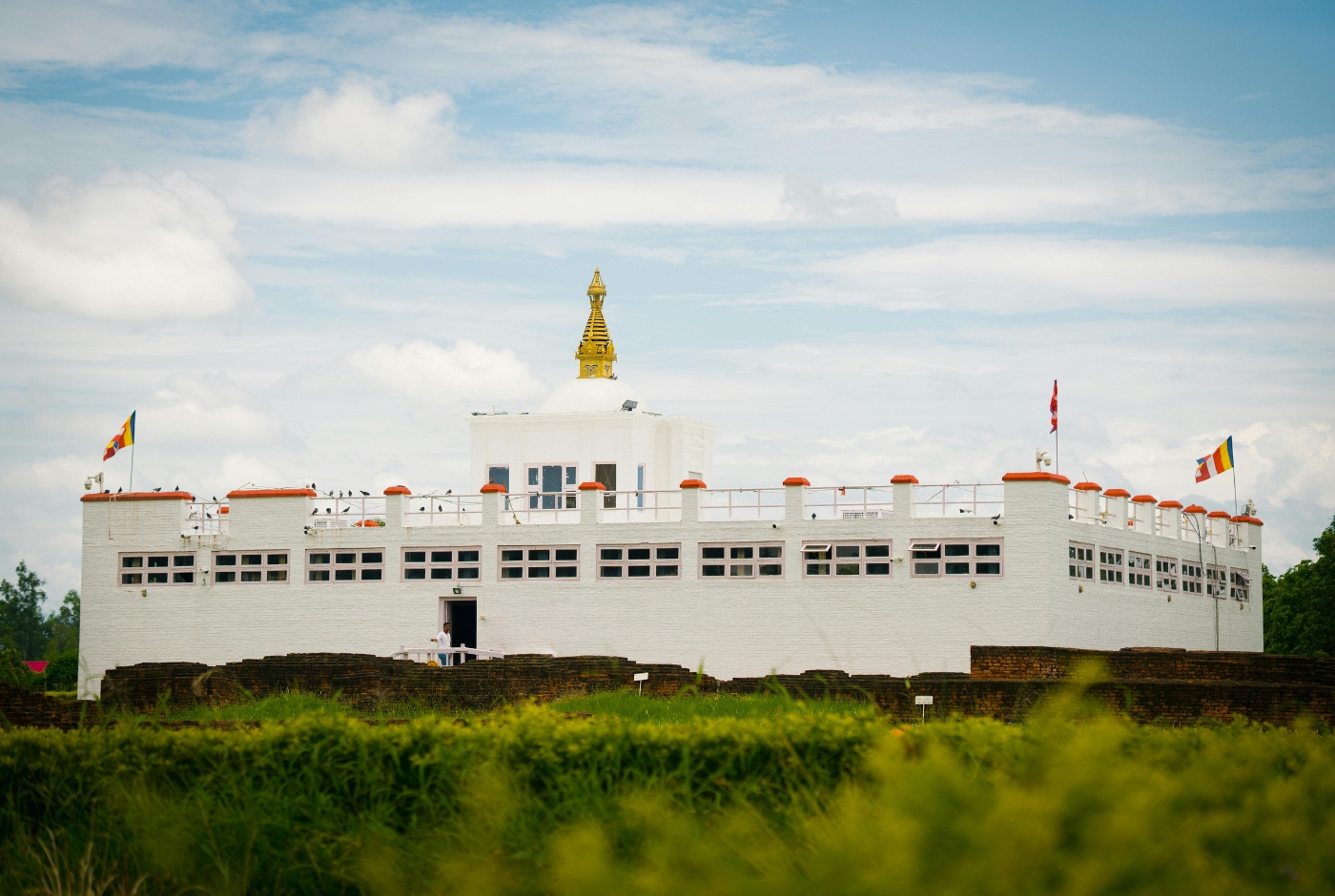
Lumbini, located in southern Nepal, is the birthplace of the Buddha and one of the world's most important Buddhist pilgrimage sites. Recognized as a UNESCO World Heritage Site, Lumbini is the birthplace of Prince Siddhartha Gautama in the 6th century BCE.
Nepal is a land of spiritual heritage and home to the light of Asia, whose teachings have inspired millions worldwide.
A Sacred Birth
Queen Maya Devi gave birth to Siddhartha Gautama in the gardens of Lumbini around the 6th century BCE while visiting her parental home. It is said that the Queen bathed in the sacred Puskarini Pond (where baby Siddhartha was ritually cleansed) near the temple before giving birth.
This moment marked the beginning of a journey that would eventually inspire millions through the teachings of Buddhism. Although Buddhism flourished significantly in India, its origin is Nepalese soil, a fact misunderstood globally.
The exact birthplace of Buddha is marked with a stone tablet with a carving of Queen Maya Devi holding a Sal tree branch while giving birth.
The site was rediscovered centuries later, when Emperor Ashoka visited in 249 BCE, as Lumbini had been forgotten and overgrown by jungle due to the decline of Buddhism in that area.
The emperor built a pillar with a Brahmi inscription confirming Lumbini as the Buddha's birthplace. This pillar remains one of the most important archaeological and historical proofs about the authenticity of Buddha's birthplace.
Key Landmarks in Lumbini
Maya Devi Temple: The spiritual heart of Lumbini, Maya Devi Temple is built over ancient temple ruins (dating back to pre-Ashokan times), marking the exact spot of Buddha's birth. It also contains a marker stone and other artifacts that confirm the site's authenticity.
Puskarni (Sacred Pond): Located right beside the Maya Devi temple, this sacred pond is believed to be where Queen Maya Devi bathed before giving birth. It symbolizes purity and devotion.
International Monastic Zone: Divided into East and West by a canal, this area is designated for other countries, including Thailand, China, Germany, and Cambodia, to construct monasteries. Each country reflects its own architectural style, symbolizing the global impact of Buddhism and its different paths.
The Eternal Peace Flame: This continuously burning flame at Lumbini was established in 1986 to commemorate the International Year of Peace and symbolize the universal desire for peace, global harmony, and unity.
UNESCO World Heritage Site
Lumbini was designated a UNESCO World Heritage Site in 6th December 1997, during the 21st session of the World Heritage Committee, to preserve the archaeological remains associated with the birth of Lord Buddha and early Buddhist pilgrimage traditions.
Why Lumbini is Special
Lumbini, widely known as the birthplace of Gautam Buddha, is special for many reasons, including its status as a historic site, a global religious and cultural hub, a UNESCO World Heritage Site, the Peace Flame, and its quiet, peaceful atmosphere.
Unlike Nepal's high-altitude Himalayan regions, Lumbini lies in the Terai plains, offering a warm climate and easy access for pilgrims and travelers. The peaceful walking zones, monasteries, and meditation spaces make it ideal for reflection and spiritual exploration.
Lumbini is not only a historical site but a living symbol of peace, reflection, and spiritual continuity. Visiting Lumbini allows travelers to connect with the origins of Buddhism in the place where it began.
Living Goddess of Nepal: The Mystical Kumari
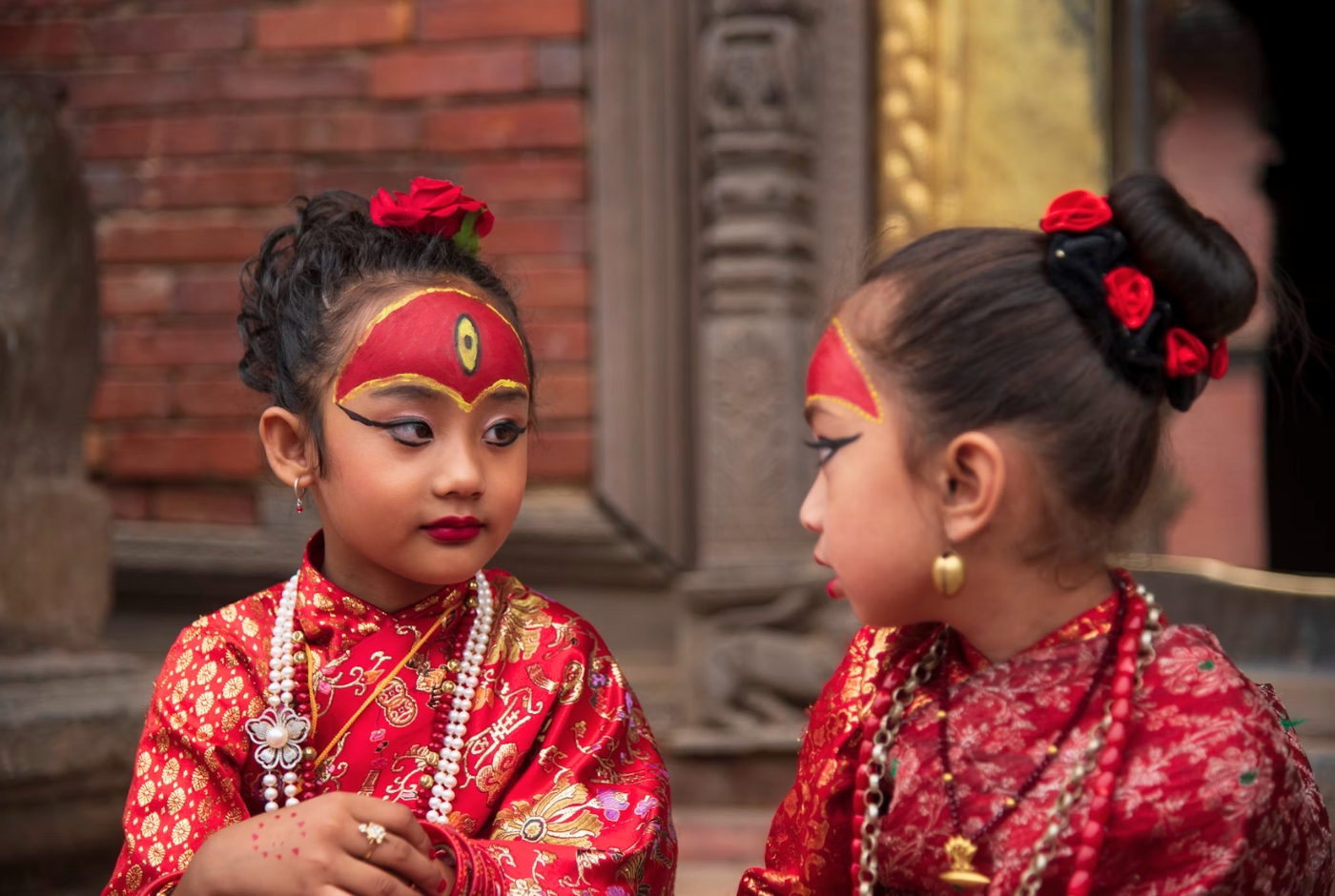
Nepal is a land full of diverse culture, values, and unique traditions, among which is the fascinating Kumari, the Living Goddess. Kumari is worshipped as the human embodiment of the Hindu goddess Taleju (a form of Durga).
This unique tradition of selecting a girl as a deity or the protector of the nation and the city began during the Malla dynasty, under King Jaya Prakash Malla. Originating in the 17th century, this tradition blends history, religion, devotion, and culture and continues to intrigue visitors and scholars alike.
Who is the Kumari?
The goddess Kumari is a young girl (prepubescent), usually 3 to 5 years old, chosen to embody the goddess Taleju Bhawani. They are usually selected from Buddhist families in the Kathmandu Valley, specifically from the Shakya or Bajracharya clans of the Newar community.
Candidates are assessed on 32 physical and character traits known as the 32 Lakshanas, such as purity, composure, and courage. The process of selecting a Kumari is strict and unique. They often say that Kumari should have eyelashes like a cow, a chest like a lion, and a body like a banyan tree.
Candidates are observed for their fearlessness and calmness during traditional tests, such as staying alone overnight during ritual ceremonies. Moreover, the final decision often involves the outgoing Kumari recognizing her successor through personal items.
The selection is conducted by Newar Buddhist priests (known as Guruju) and traditional astrologers strictly to ensure the chosen girl truly embodies the qualities of the goddess she represents. Once chosen, she is declared the Kumari, the official Living Goddess, and resides in the Kumari Ghar (palace) at Basantapur Durbar Square.
After being chosen, the goddess Kumari is carried in palanquins or by a specific person at all times to prevent her feet from touching the ground, reflecting her sacred status. She is often carried by the caretaker family of the Shakya clan, who also attend to her daily needs and routines.
Although she lives in seclusion most of the time, the Kumari emerges during major festivals like Indra Jatra. During these celebrations, she is carried on a chariot through the streets of Kathmandu to bless the devotees with prosperity and protection from harm.
Goddess Kumari has a distinctive appearance, with a painted "fire eye" on her forehead that symbolizes her divine power and perception. She rarely speaks, and her gestures are considered meaningful indications.
Nonetheless, the Kumari's divine role is temporary, and she retires when she experiences her first menstruation or loses any of the 32 required physical traits. After retirement, she returns to her family and her former life as a regular citizen. On the other hand, preparations for the search for the next Living Goddess begin in the Kumari Ghar.
Despite the temporary nature of her role, the Kumari leaves a lasting impact on Nepalese culture. It is a living example of Nepal's respect for feminine power, divinity, and spiritual heritage.
Why are the fascinating facts of Nepal?
The Kumari remains one of Nepal's most remarkable and fascinating traditions. Unlike statues or idols, the living goddess represents a living link to ancient beliefs, a symbol of divine femininity, and a unique blend of religion, culture, and history.
Visitors from around the world come to witness this mystical tradition, meet her for blessings, and pay their respects, making the living goddess, Kumari, one of Nepal's most fascinating cultural treasures.
Nepal: A Never-Colonized State
Nepal is widely recognized as one of the few countries in South Asia that was never formally colonized by any foreign power. Unlike neighboring regions that came under direct British rule, Nepal retained its sovereignty throughout history. However, its independence was shaped by regional geopolitics, especially after the Anglo-Nepalese War (1814–1816) between the Kingdom of Nepal and the British East India Company. The war ended with the Treaty of Sugauli in 1816, which resulted in Nepal losing some territories, but it did not become a colony. Instead, Nepal continued as an independent kingdom with adjusted borders and limited external influence.
Why Nepal Was Never Colonized
Geographic Terrain
Nepal’s geography played a major protective role. The country’s position in the Himalayas, combined with steep mountains, narrow valleys, and difficult access routes, made large-scale military occupation extremely challenging. For any foreign power, controlling Nepal would have required high logistical costs and sustained military presence in extremely harsh terrain, which reduced its strategic attractiveness for colonization.
Military Resistance of Gorkhalis
The Gorkhali army was another crucial factor in preserving Nepal’s independence. During the Anglo-Nepalese War, Nepalese forces demonstrated strong discipline, local terrain advantage, and effective guerrilla-style warfare. Although Nepal ultimately agreed to the Treaty of Sugauli, the British East India Company recognized that full conquest would be costly and difficult, which discouraged further attempts at annexation.
Strategic Buffer State Role
After the war, the British reshaped their policy toward Nepal. Instead of colonization, they preferred to maintain Nepal as a buffer state between British India and Tibet (and indirectly China). This strategic positioning helped the British secure their northern frontier while avoiding direct administrative responsibilities in a mountainous region.
Diplomatic and Political Balance
Nepal’s ruling elites, particularly during later periods, maintained a careful diplomatic balance with the British Empire. The Rana rulers especially adopted a policy of cooperation without surrendering full sovereignty. This included limited military alliances and political coordination, while ensuring internal governance remained independent. This pragmatic diplomacy helped Nepal avoid the fate of colonized states in the region.
Concluding Notes
Nepal is a land of peaks and stories where ancient culture and natural wonders coexist. From the towering heights of Mount Everest to the quiet sanctity of Lumbini, Nepal reflects true unity in diversity. The Living Goddess Kumari, vibrant festivals, a unique flag, and resilient people set Nepal apart with its spirituality and timeless heritage. From the tropical Terai plains to the towering Himalayas, one can feel the pulse of a country that has preserved its spirit for centuries.
We at Nepal Hiking Team are here to guide you into the heart of this culturally rich nation, beyond the pages of guidebooks and computer screens. With expert local guides, carefully curated itineraries, and deep cultural insight, we help you explore the majestic Everest Base Camp, the bravery of the Gurkhas, and the authentic cultural experience of the Terai region firsthand.
With every trek, we help you experience Nepal not just as a destination, but as a story you live through, carrying memories of its mountains, people, and spirit long after the journey ends. Let us turn your journey to Nepal into a meaningful experience, the right way.
Post a Comment