
Who This Everest Base Camp Packing List Is For
This Everest Base Camp packing list is written for trekkers planning a standard tea house trek with guide and porter support. It is designed for travelers who want to pack correctly for high altitude conditions without carrying unnecessary gear.
The list applies to most Everest Base Camp treks that follow the classic route through Lukla, Namche Bazaar, and Gorakshep during the spring and autumn seasons. It focuses on practical items needed for cold mornings, warmer afternoons, basic lodge facilities, and daily walking conditions on the EBC trail.
This guide is built to answer common planning questions clearly. It explains what you carry each day, what the porter carries, and which items actually matter for comfort, safety, and energy at altitude.
How to Use This Everest Base Camp Packing List
This Everest Base Camp packing list is structured to help you pack logically, not excessively. It separates items you will carry daily from those a porter will carry, so you know exactly which to keep light and accessible.
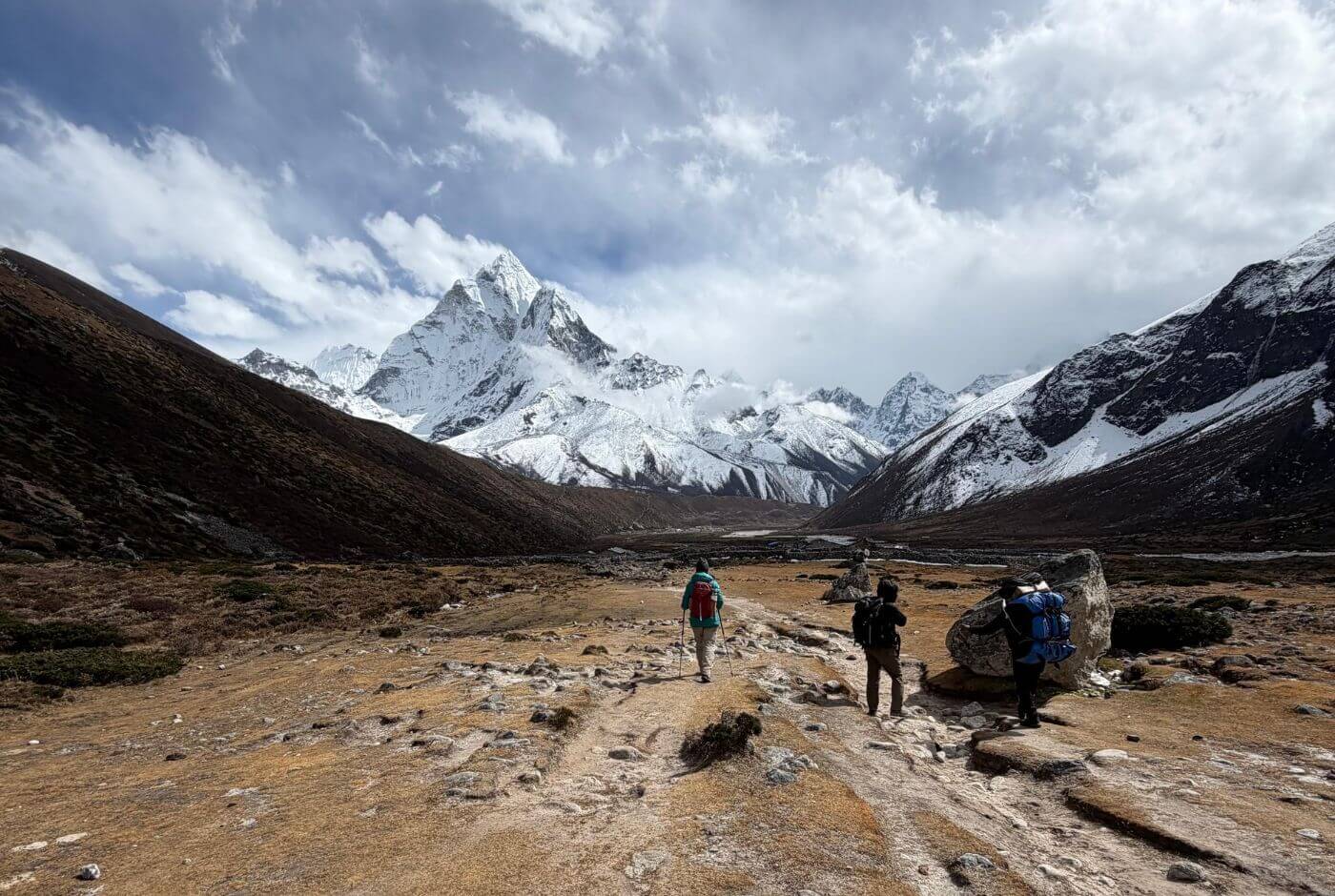
You will walk each day with a small daypack carrying essentials such as water, snacks, layers, and valuables. Your main clothing, sleeping gear, and spare items go into a duffel bag that a porter carries during the trek.
Use this list as a checklist rather than a shopping guide. If an item is already included or commonly provided by your trekking company, it does not need to be packed again. Focus on comfort, warmth, and practicality instead of brand names or extreme gear.
If you are trekking during the main Everest Base Camp season and staying in tea houses, this list covers what you actually need on the trail, nothing more.
Understanding Everest Base Camp Weather and Trail Conditions
The weather on the Everest Base Camp trek changes quickly and often within the same day. Mornings are cold, afternoons can feel warm while walking, and temperatures drop sharply after sunset. Above Namche Bazaar, wind exposure increases, and nights regularly drop below freezing during spring and autumn.
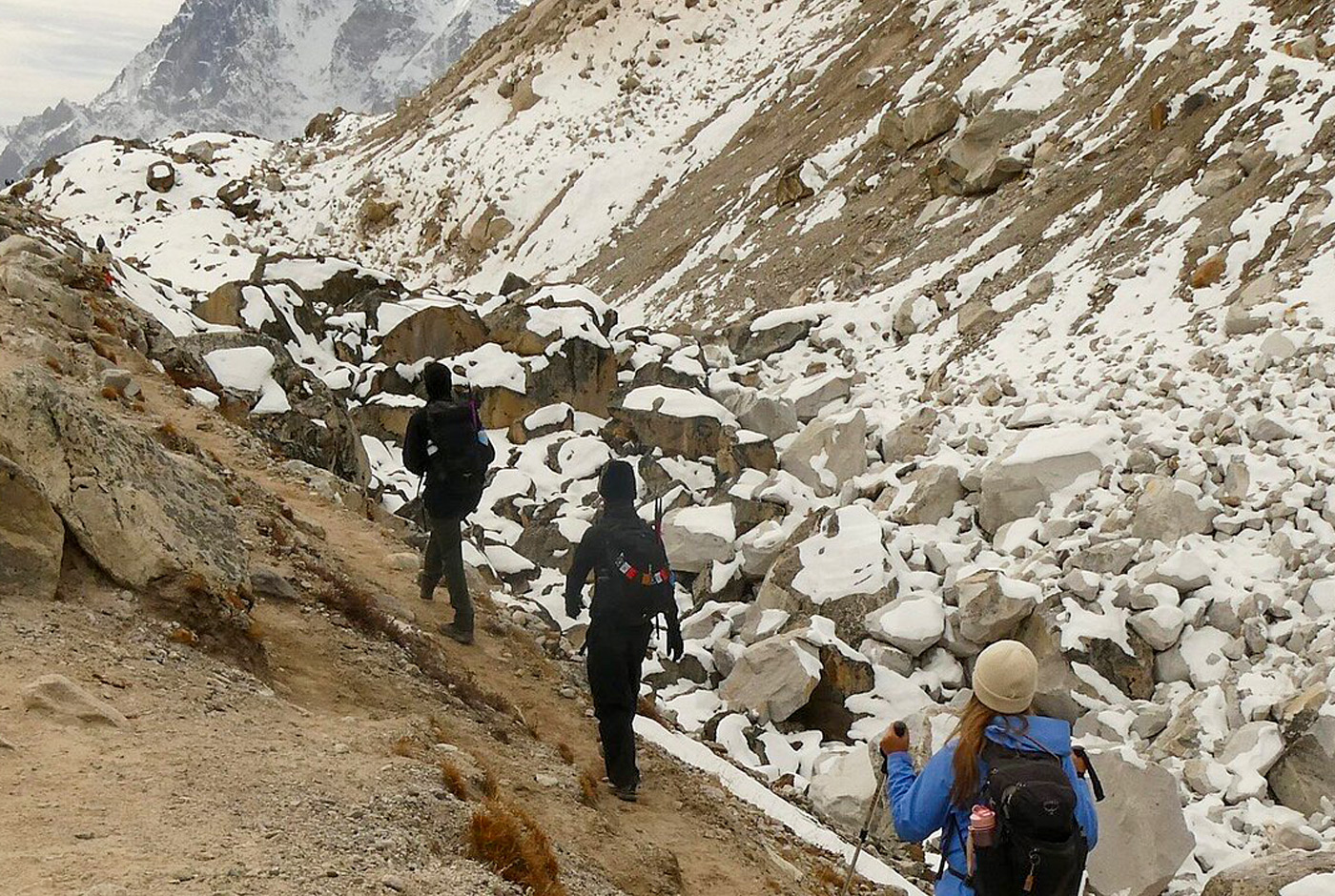
Trail conditions vary from well-maintained stone paths to rocky, uneven sections, especially between Dingboche, Lobuche, and Gorakshep. Dust is common in dry months, while snow and ice can appear at higher elevations, particularly early in the morning and near Everest Base Camp.
Sun exposure is stronger at altitude due to thinner air and snow reflection. Even on cloudy days, ultraviolet radiation remains high, making sun protection essential throughout the trek.
Packing correctly for Everest Base Camp means preparing for cold nights, variable daytime temperatures, wind, and strong sun rather than extreme expedition conditions. Layering and adaptability matter more than heavy or bulky gear.
Trail conditions and EBC trekking experience is greatly affected by the time you choose to trek. Learn more on Best time for Everest Base Camp Trek.
Clothing to Pack for the Everest Base Camp Trek
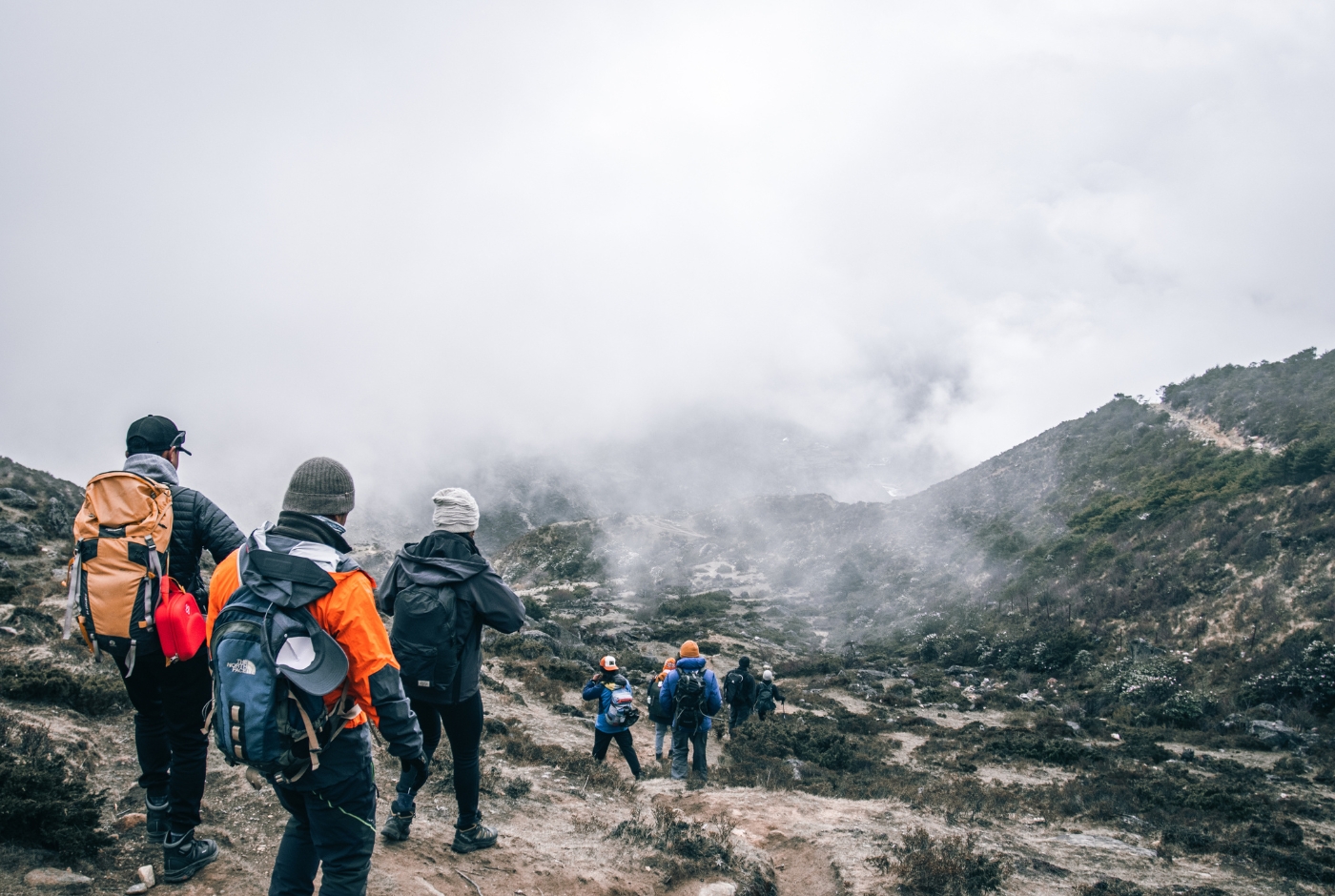
Clothing for the Everest Base Camp trek should be chosen for layering, temperature control, and comfort during long walking days. You do not need extreme mountaineering gear, but you do need clothing that works well in cold mornings, mild afternoons, and freezing evenings at higher altitudes.
Base Layers for Warmth and Moisture Control
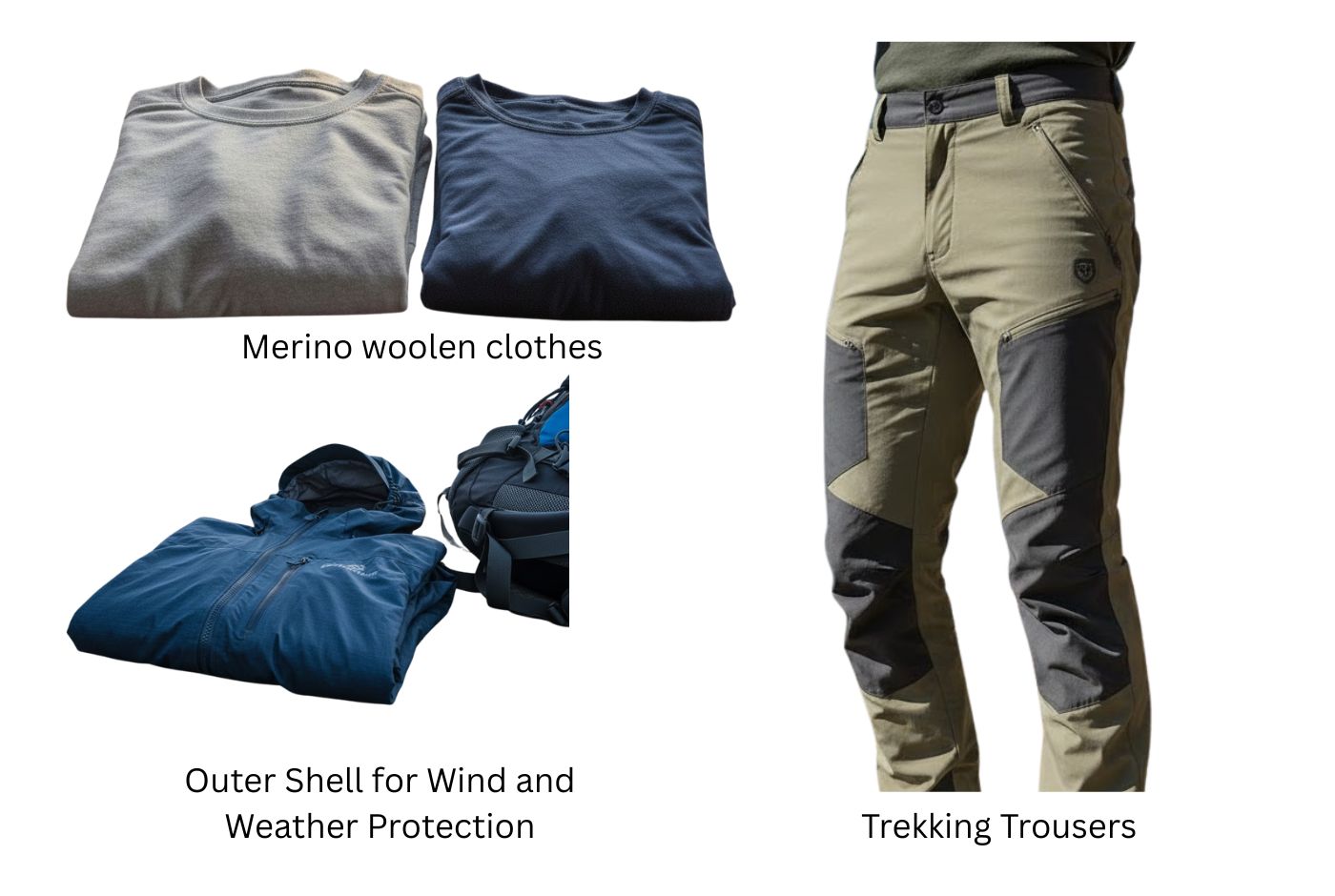
Base layers sit closest to your skin and play a key role in regulating body temperature. Lightweight thermal tops and bottoms made from merino wool or synthetic fabric keep you warm while allowing sweat to dry quickly. Two sets are usually sufficient for the entire trek, washed at tea houses occasionally.
Insulation Layers for Cold Conditions
An insulating layer is essential for mornings, evenings, and rest stops. A fleece or light insulated jacket provides warmth without restricting movement. At higher elevations such as Dingboche, Lobuche, and Gorakshep, this layer becomes important as soon as the sun drops.
Outer Shell for Wind and Weather Protection
A windproof and waterproof shell jacket protects against strong winds, snow, and occasional rain. This layer is often used above Namche Bazaar and during early morning hikes. It should be lightweight, breathable, and easy to pack.
Trekking Pants and Daily Wear
Trekking pants should be comfortable, quick-drying, and suitable for uneven trails. One or two pairs are enough for the trek. Some trekkers prefer pants with light insulation for higher sections, while others layer thermals underneath when needed.
Underwear, Socks, and Sleepwear
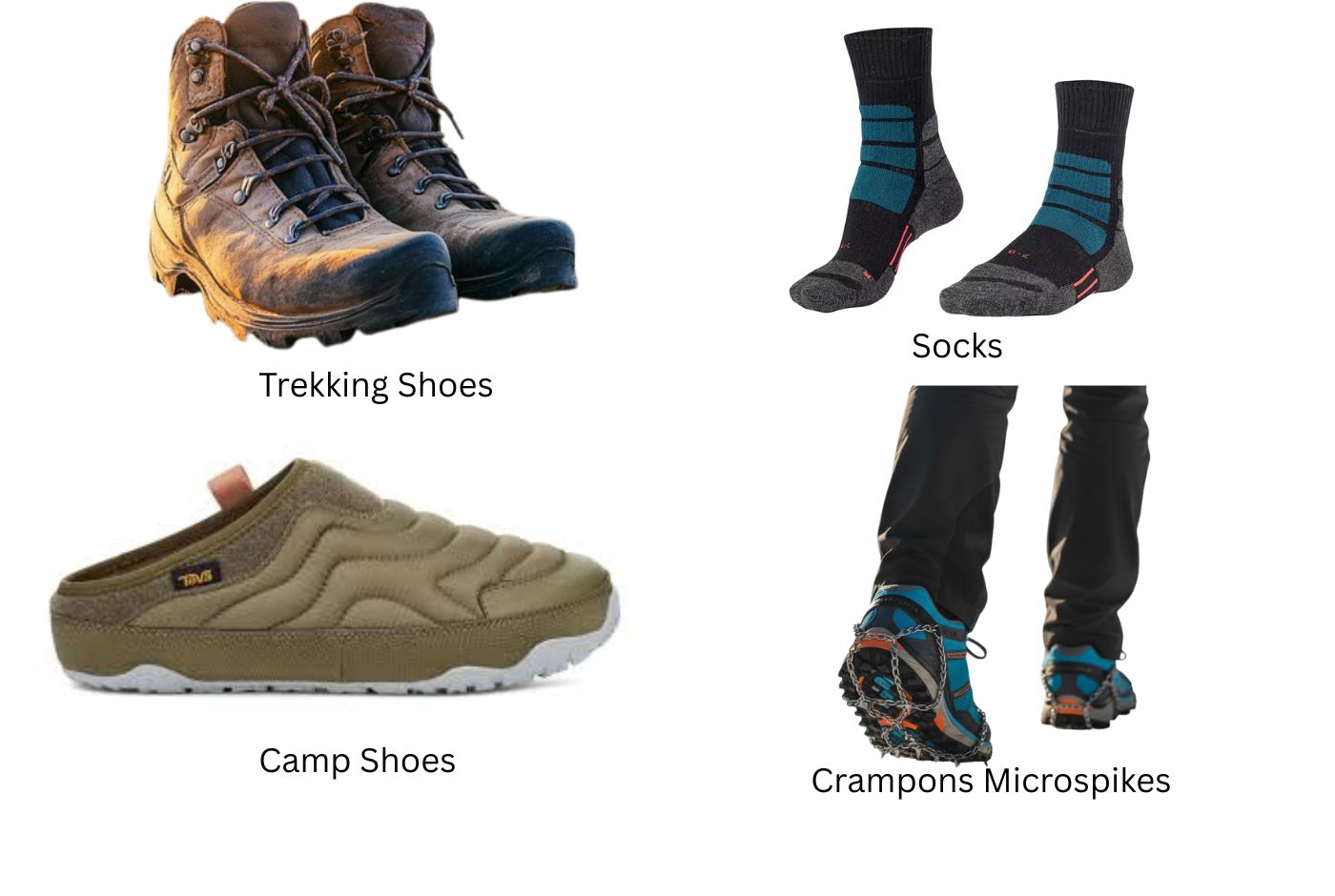
Bring moisture-wicking underwear and several pairs of trekking socks to keep feet dry and reduce the risk of blisters. Warm sleepwear or thermals are useful at night, as tea houses are unheated and temperatures drop significantly after sunset.
Footwear for Everest Base Camp Trek
Footwear plays a major role in comfort and injury prevention on the Everest Base Camp trek. The trail involves long walking days on rocky paths, stone steps, and uneven terrain, especially at higher elevations.
Trekking Boots for the EBC Trail
A pair of well-fitted trekking boots with ankle support is essential. Boots should be waterproof or water-resistant and provide good grip on stone steps, in dust, and in occasional snow. Breaking in your boots before arriving in Nepal is important to avoid blisters and foot pain during the trek.
Heavy mountaineering boots are not required for the Everest Base Camp trek. Lightweight to mid-weight trekking boots are sufficient for most trekkers during spring and autumn.
Camp Shoes for Tea Houses
Light camp shoes or sandals are useful at the end of the day. They allow your feet to rest after long hikes and are practical for walking around tea houses. These are especially helpful on cold evenings when you want to take off your trekking boots.
Socks and Foot Care
Carry a combination of trekking socks and a lighter inner sock if you are prone to blisters. Keeping feet dry and warm helps prevent discomfort and supports overnight recovery. Changing socks regularly also reduces the risk of skin irritation during multi-day trekking.
Backpacks, Duffel Bags, and Packing Organization
Packing organization is important on the Everest Base Camp trek because you will not have constant access to all your belongings during the day. Knowing what goes where helps reduce weight and avoids unnecessary stops on the trail.
Daypack for Daily Hiking
You will carry a small daypack each day with items you need while walking. This usually includes water, snacks, a warm layer, rain protection, sunscreen, sunglasses, and personal valuables. A daypack with a comfortable fit and space for at least two liters of water is ideal.
Duffel Bag for Porter Carry
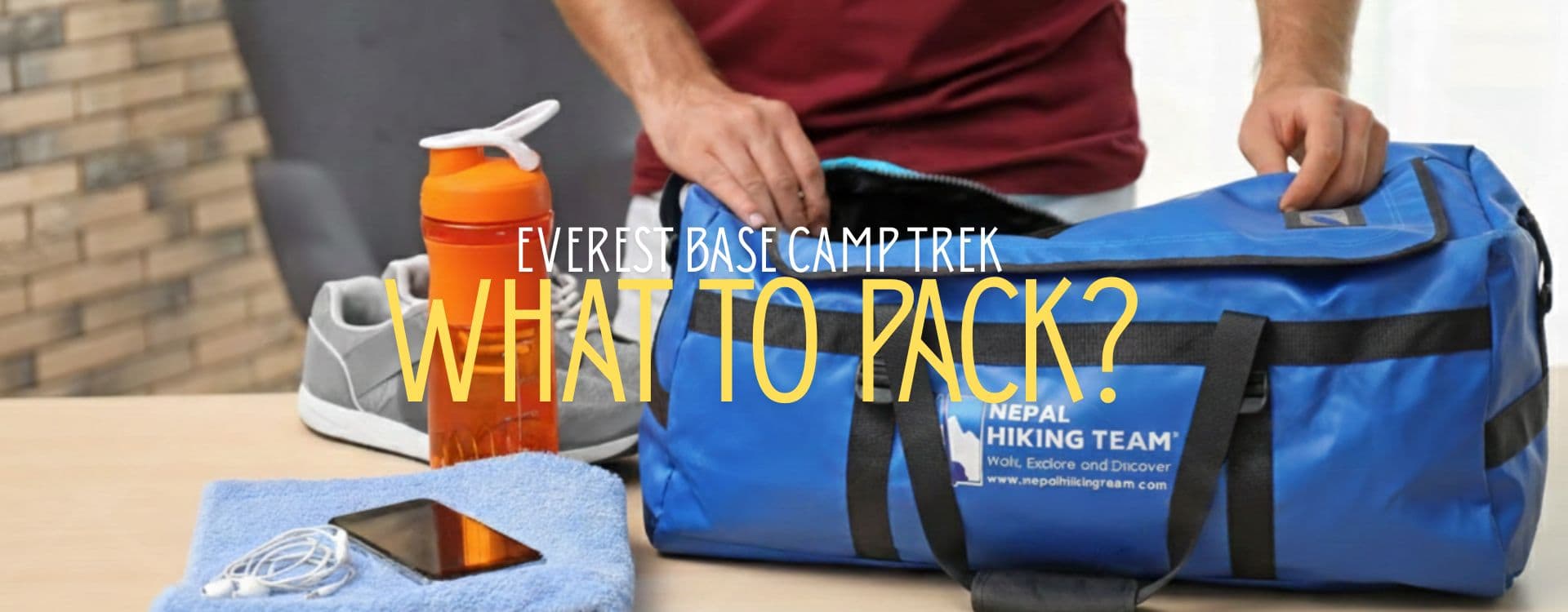
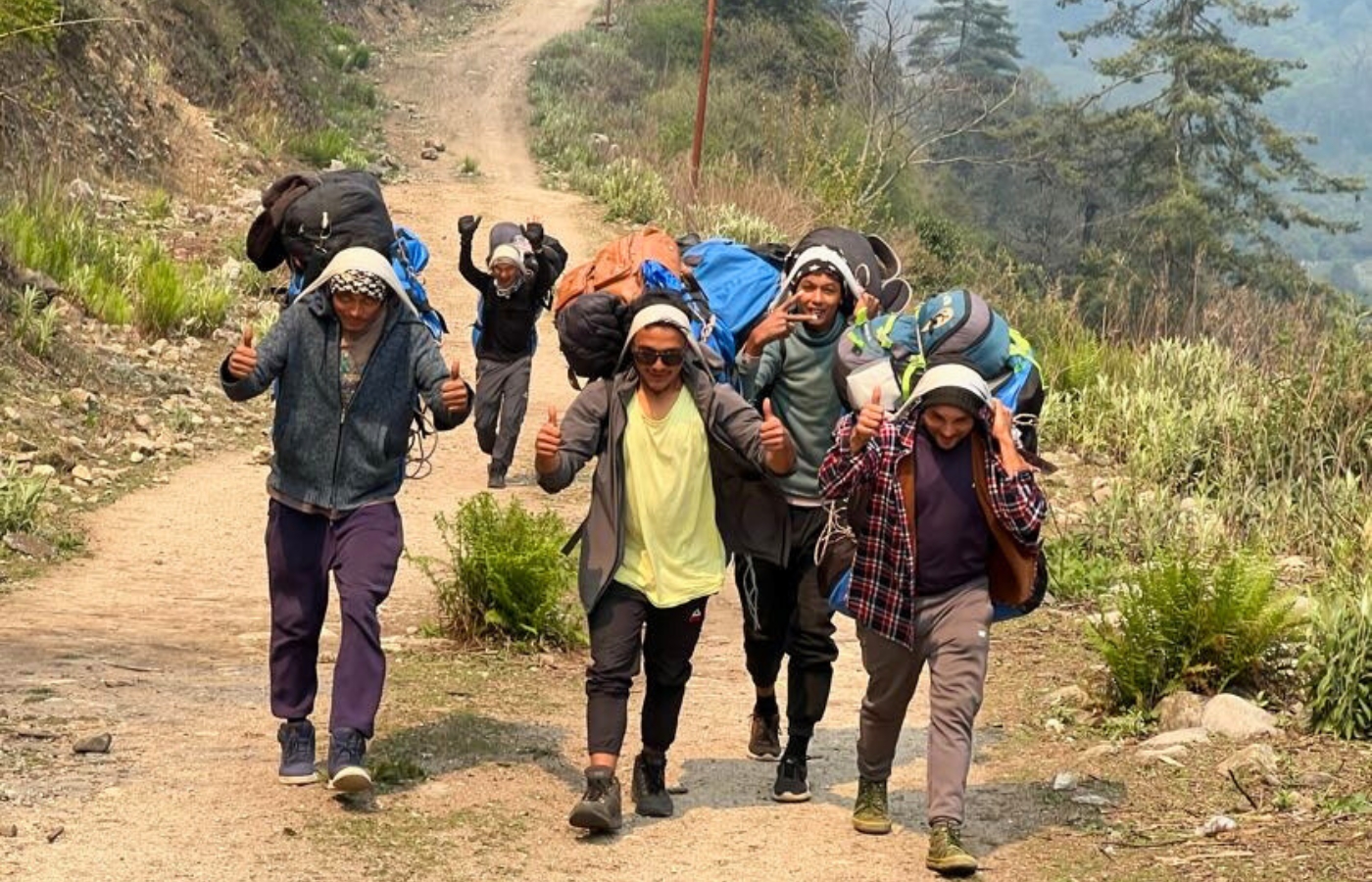
Your main gear goes into a duffel bag that is carried by a porter. This bag should be durable and easy to close securely. Most trekking companies set a weight limit, so packing efficiently is important. Items you do not need during the day should always go into the duffel bag.
Packing Organization and Dry Protection
Using dry bags or simple stuff sacks helps keep clothing and electronics protected from dust and moisture. Separating clean clothes, worn layers, and sleeping gear makes it easier to manage your bag at tea houses where space is limited.
Essential Trekking Gear for Everest Base Camp
The right trekking gear makes daily walking easier and helps manage fatigue at high altitude. These items are chosen for practicality rather than extreme conditions, as the Everest Base Camp trek follows a well-established trail with tea house accommodation.
Trekking Poles for Stability
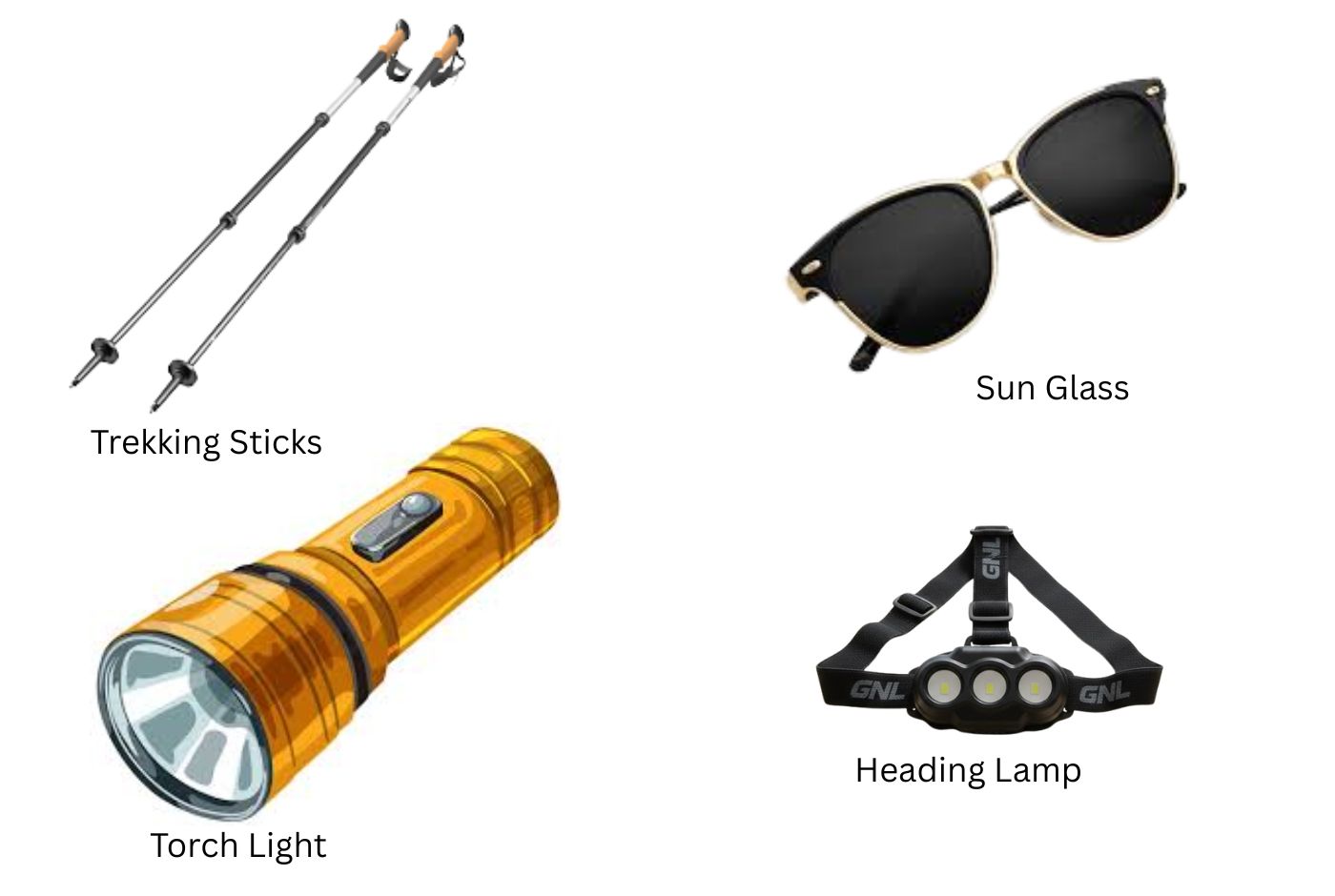
Trekking poles provide balance on uneven terrain and reduce strain on knees, especially during long descents. They are particularly useful between Namche Bazaar and Gorakshep, where stone steps and rocky paths are common. Adjustable poles allow you to adapt to changing terrain throughout the trek.
Sleeping Bag for Cold Nights
Nights on the Everest Base Camp trek can be very cold, especially above Dingboche. A good-quality sleeping bag rated for sub-zero temperatures is important for comfortable sleep. Tea houses provide blankets, but these are often not warm enough at higher elevations.
Headlamp and Lighting
A headlamp is essential for early mornings, nighttime bathroom visits, and power outages in tea houses. Choose a reliable model with fresh batteries, as cold temperatures can drain battery life quickly.
Sunglasses and Sun Protection
Strong sunlight and glare from snow increase eye strain at altitude. Sunglasses with good UV protection help prevent discomfort and protect your eyes during long days on the trail.
Electronics and Power Management on the EBC Trail
Electricity is available in most tea houses along the Everest Base Camp route, but charging is limited and often costs extra. Power supply becomes less reliable as you gain altitude, especially beyond Namche Bazaar.
A power bank is one of the most useful items to carry. Cold temperatures drain batteries quickly, and access to charging points is not always guaranteed. Carrying a fully charged power bank helps keep your phone, camera, or GPS device working throughout the trek.
If you plan to take photos regularly, bring spare camera batteries and memory cards. Battery life shortens in cold conditions, especially in places like Lobuche and Gorakshep. Keep electronics warm inside your jacket during the day to extend battery performance.
Headlamps and small devices should use fresh batteries or be rechargeable through your power bank. Keeping electronics minimal reduces weight and simplifies charging needs on the trail.
Personal Items, Toiletries, and Hygiene Supplies
Hygiene facilities on the Everest Base Camp trek are basic, especially at higher elevations. Most tea houses have shared toilets, limited running water, and no heating, so personal hygiene items should be simple and functional.
Carry travel-sized toiletries such as a toothbrush, toothpaste, biodegradable soap, and a small towel. Wet wipes and hand sanitizer are particularly useful where water access is limited or temperatures make washing uncomfortable.
Toilet paper is rarely provided in tea houses, so carrying your own supply is important. Lip balm and moisturizer help prevent dry skin and cracked lips caused by cold air and strong sun at altitude.
Keeping hygiene items compact and easy to access makes daily life on the trail more comfortable without adding unnecessary weight.
Water, Hydration, and Purification on the Everest Base Camp Trek
Staying hydrated is essential on the Everest Base Camp trek, as altitude and dry air increase fluid loss even in cold conditions. Drinking enough water helps with acclimatization and overall energy levels.
Refillable water bottles or a hydration bladder are the most practical options on the trail. Tea houses provide boiled or filtered water for a small cost, especially at higher elevations where natural water sources are not always accessible.
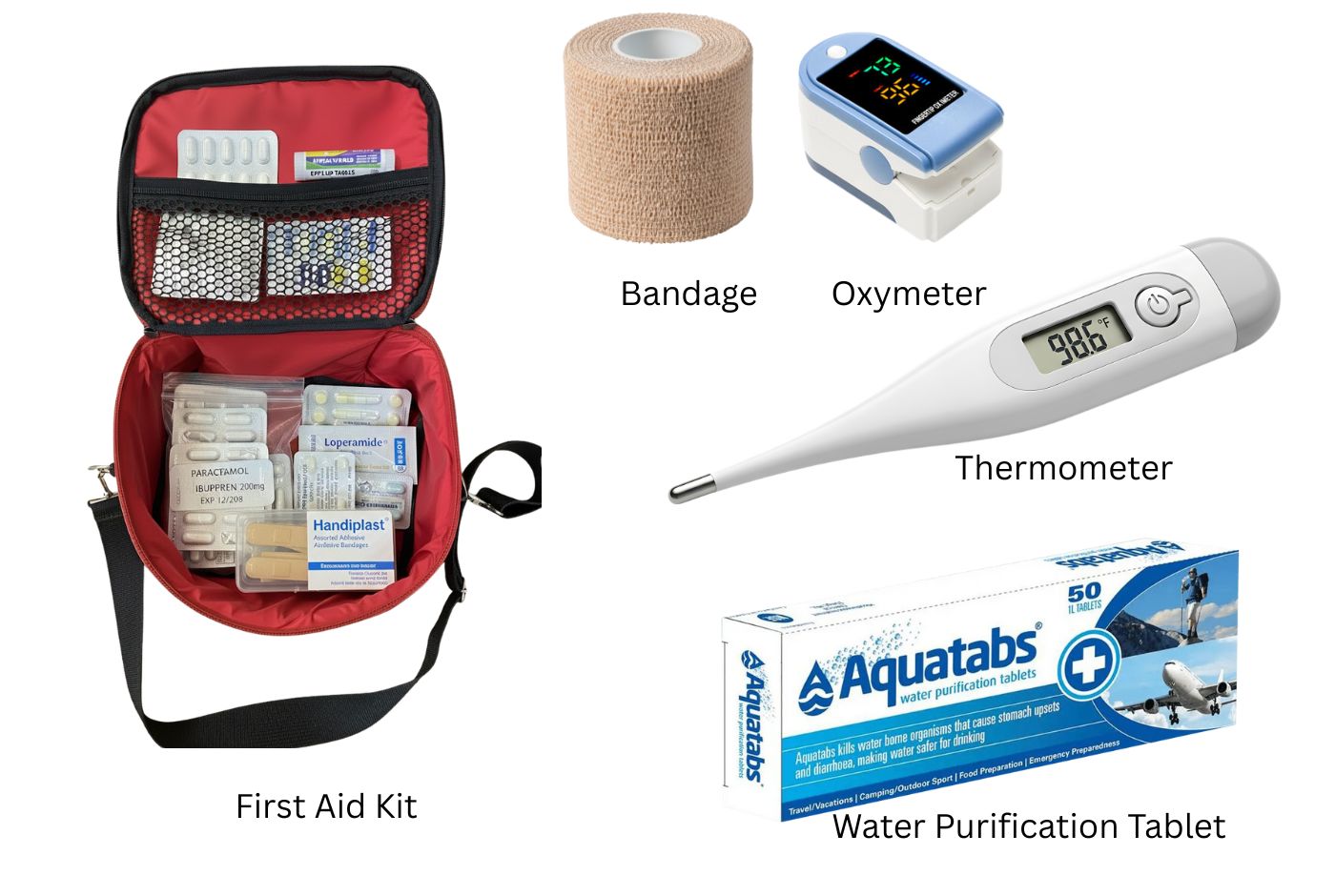
Water purification tablets or drops are useful as a backup, particularly when refilling from local sources or during long walking days. Bottled water becomes expensive above Namche Bazaar and contributes to plastic waste, so purification methods are strongly recommended.
Make a habit of drinking regularly throughout the day, even when you do not feel thirsty. Proper hydration is one of the simplest ways to improve comfort and reduce altitude-related discomfort during the trek.
Medical Kit and Personal Medications for Everest Base Camp Trek
A basic personal medical kit is important for the Everest Base Camp trek, even if you are fit and experienced. Minor issues such as headaches, blisters, or stomach discomfort are common and easier to manage when treated early.
Carry any personal prescription medications in their original packaging and in sufficient quantity for the entire trek. Include common items such as pain relief tablets, blister treatment, bandages, and rehydration salts.
Medication for altitude-related symptoms may be carried if prescribed or recommended by a medical professional. Guides closely monitor acclimatization, but having basic medication available provides peace of mind during the trek.
Keep your medical kit lightweight and easily accessible in your daypack. This ensures you can respond quickly to small issues without disrupting your walking day.
Seasonal Packing Differences for Everest Base Camp Trek
Packing for the Everest Base Camp trek varies slightly by season. Spring and autumn are the main trekking periods, but temperatures and weather patterns differ enough to affect clothing choices.
Packing for March to May
Spring brings clearer skies and gradually warming daytime temperatures. Mornings and nights remain cold, especially above Dingboche. A warm down jacket, thermal layers, and a good sleeping bag are still essential. Afternoon walks can feel warm in direct sun, so breathable layers work best. Light rain or snow is possible at higher elevations, making a waterproof shell important.
Packing for September to November
Autumn offers stable weather and colder temperatures, particularly in late October and November. Cold mornings and evenings are common, and frost is possible at higher lodges. Slightly warmer insulation, thicker gloves, and reliable cold-weather layers improve comfort. Snowfall is less frequent than in spring but can still occur near Everest Base Camp.
Items Commonly Provided by Trekking Companies
Many trekkers overpack because they are unsure what is already included in a guided Everest Base Camp trek. Knowing what is commonly provided helps reduce weight and avoid unnecessary purchases.
Most trekking companies provide a warm sleeping bag suitable for high altitude conditions. This is especially useful for trekkers who do not want to invest in an expensive cold-rated sleeping bag for a single trip.
A down jacket is often included as well, designed for cold mornings and evenings above Namche Bazaar. These jackets are practical for rest stops and lodge stays where temperatures drop quickly after sunset.
Duffel bags for porter use are usually supplied, allowing your main gear to be carried securely during the trek. Some companies also provide trekking poles, though availability varies and should be confirmed in advance.
Always check with your trekking operator before packing. Bringing duplicates of provided items adds weight without adding comfort.
What Not to Pack for the Everest Base Camp Trek
Overpacking is one of the most common mistakes on the Everest Base Camp trek. Carrying unnecessary items adds weight and makes daily life on the trail less comfortable.
Heavy books, laptops, and non-essential electronics are rarely used and difficult to keep charged at altitude. Multiple pairs of shoes are unnecessary; trekking boots and a single pair of camp shoes are sufficient.
Cotton clothing should be avoided because it absorbs moisture and dries slowly in cold conditions. Bulky towels, large toiletry bottles, and excessive spare clothing take up space without offering real benefit.
You do not need technical climbing equipment, oxygen canisters, or expedition-style gear for the standard Everest Base Camp trek. The route is well established and supported by tea houses, making simple and practical packing the better choice.
Common Packing Mistakes First-Time Everest Base Camp Trekkers Make
One of the most common mistakes is packing too many clothes. Trekkers often assume they need fresh outfits each day, but tea house trekking requires far fewer items. Layering and occasional washing are enough for the entire route.
Another frequent mistake is bringing gear that is too heavy or too technical. Expedition-style jackets, rigid mountaineering boots, and large backpacks are unnecessary for the Everest Base Camp trek and quickly become uncomfortable on long walking days.
Many first-time trekkers underestimate sun exposure at altitude. Skipping proper sunglasses, sunscreen, or lip protection often leads to sunburn and fatigue, even in cold weather.
Finally, some trekkers fail to plan packing around porter limits. Overloaded duffel bags create logistical issues and unnecessary strain. Packing with weight limits in mind improves comfort for everyone on the trail.
In well-organized trekking companies, the standard porter-to-trekker ratio is 1 porter per 2 trekkers. This ratio supports fair working conditions and safe load management. A porter typically carries up to 25 kilograms, which means an average of about 12 to 13 kilograms per trekker is considered appropriate and responsible.
Final Packing Tips for a Comfortable Everest Base Camp Trek
Packing well for the Everest Base Camp trek is about balance rather than carrying everything you might need. Choose items that work together, layer easily, and serve a clear purpose on the trail.
Keep your daypack light and accessible, as this is what you carry every day. Anything not needed while walking should stay in the duffel bag with the porter. This reduces fatigue and helps maintain a steady trekking pace at altitude.
Prioritize warmth, hydration, and sun protection over extra clothing or gadgets. Comfortable nights, steady energy levels, and protection from the elements make a noticeable difference in how your body adapts to altitude.
A well-planned packing list builds confidence and lets you focus on the experience of the Everest region rather than on managing discomfort or unnecessary gear.
When you are trekking to EBC, choosing the right company, who assit you with a detailed packing list, provides you with duffel bags, trekking maps, well-equipped first-aid kits, a sleeping bag and a down Jacket is crucial. Explore how to choose the best trekking Agency for the Everest Base Camp trek in our detailed blog.
Post a Comment