19 Days
Check Our Risk-Free Booking Policy View Details

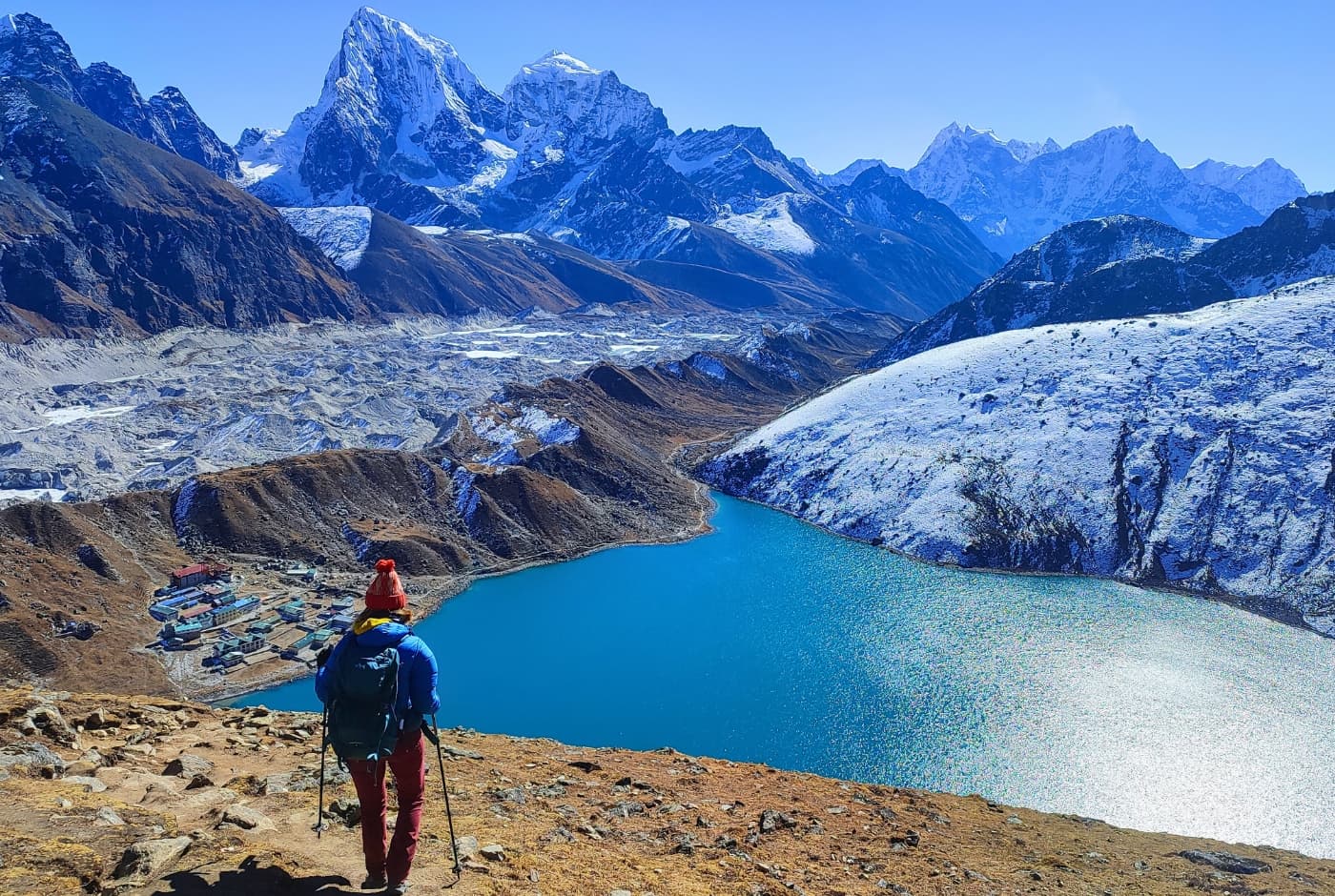
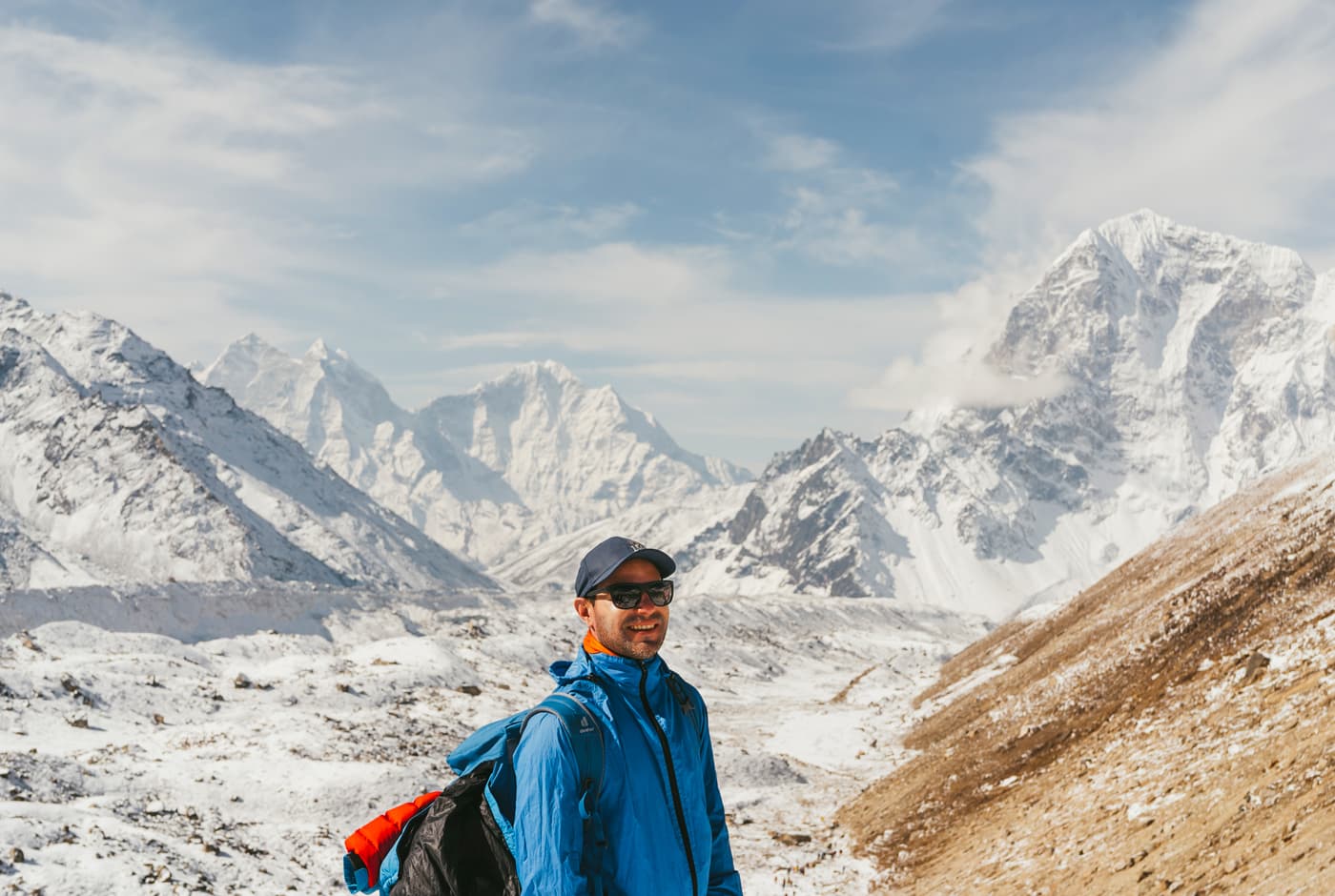
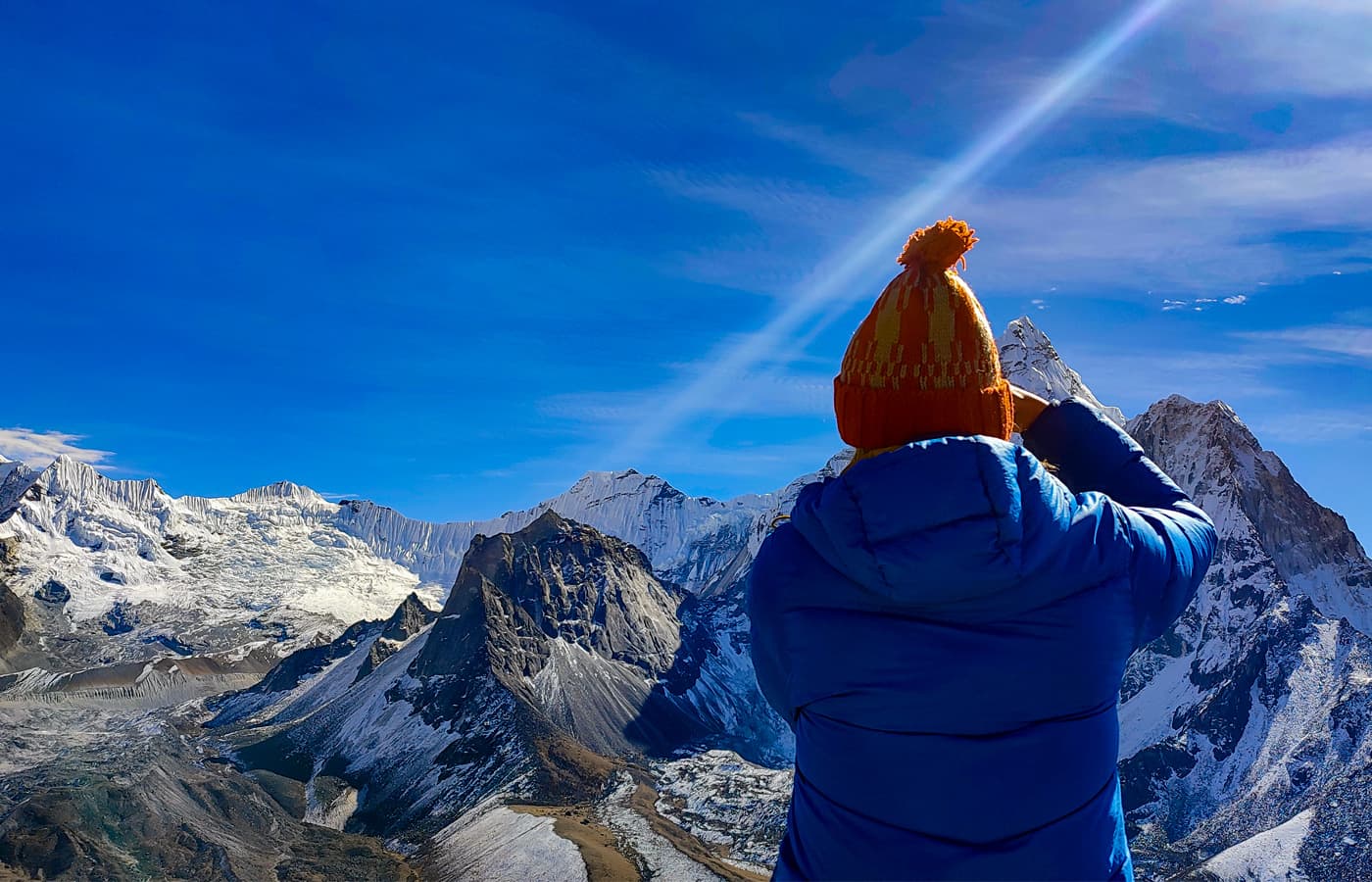
The Gokyo Lakes with the EBC Trek is a beautiful yet adventurous journey that offers the best features of the Khumbu region. This stunning journey does not just end at the lap of Mt. Everest but also continues up to the serene lakes of Gokyo Valley.
One can witness the unique lifestyle of the ethnic Sherpas in the lower region rather than the upper Khumbu areas. Therefore, despite featuring a cultural experience of the same ethnic groups, the trip offers a chance to witness a different way of life.
You can appreciate the beautiful villages of the Sherpa communities and the mesmerizing grand monasteries while taking in the majestic peaks. This tranquil trip offers some breathtaking and unforgettable experiences.
While embarking on this journey, you'll pass through one of the most spectacular routes of the Khumbu region. The journey is the perfect blend of tranquility and the serene beauty of Gokyo Lake. On this trek, you'll be near this holy lake, a sacred site for Hindus and Buddhists.
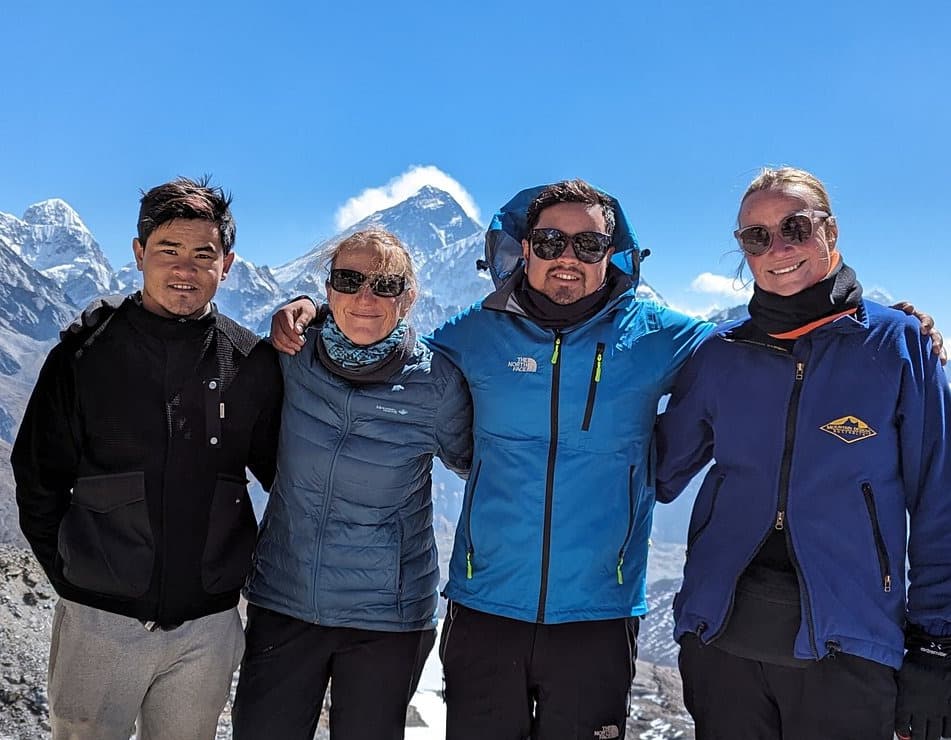
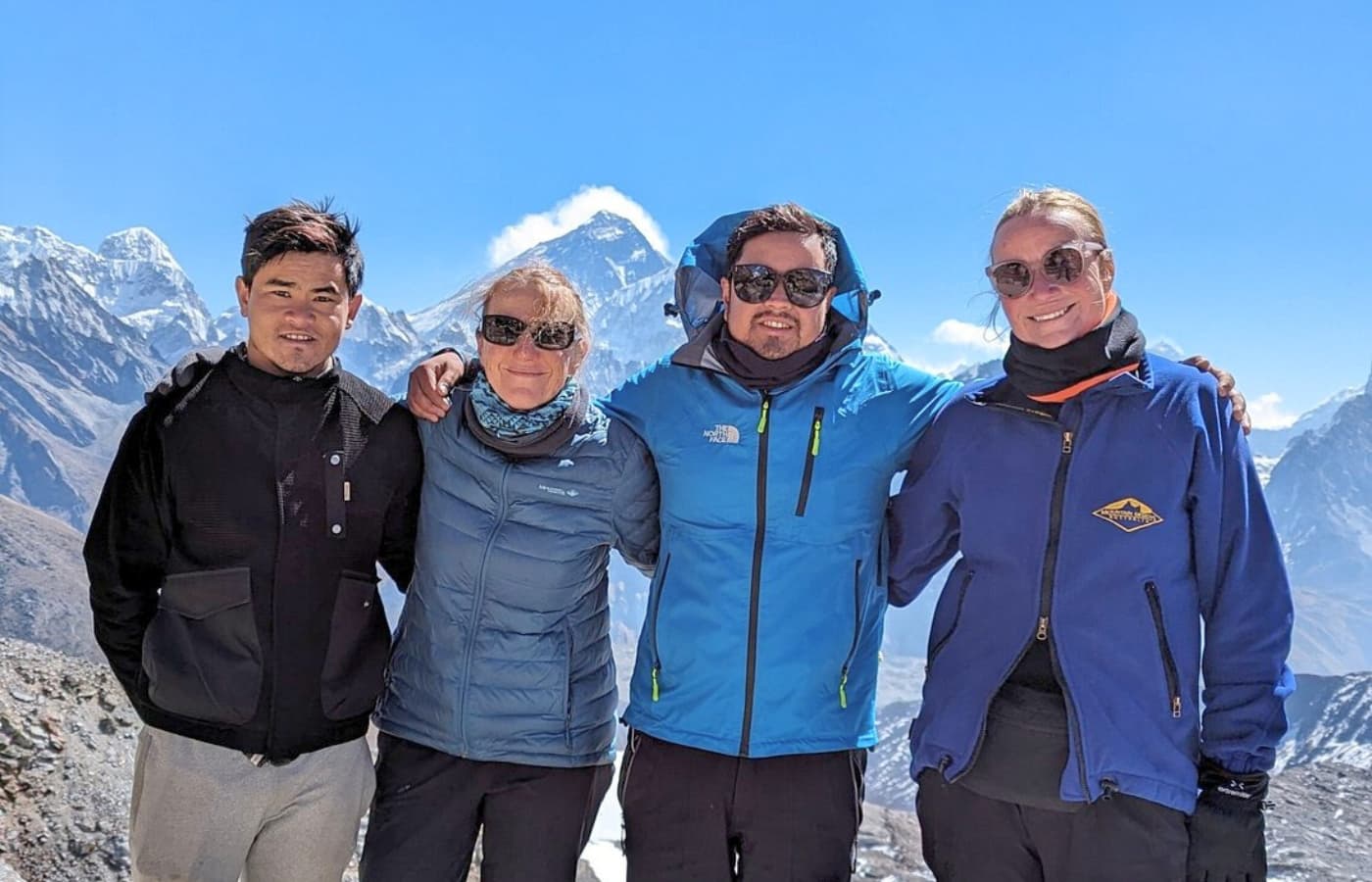
You'll also get a mesmerizing view of the Mighty Everest, as well as other notable mountains such as Nuptse, Lhotse, and Ama Dablam, which dominate the southern sky for anyone trekking to Everest Base Camp.
We welcome you on this incredible journey. With the help of our experienced trekking guides, we assure you that your trip to Nepal will be a memorable one.
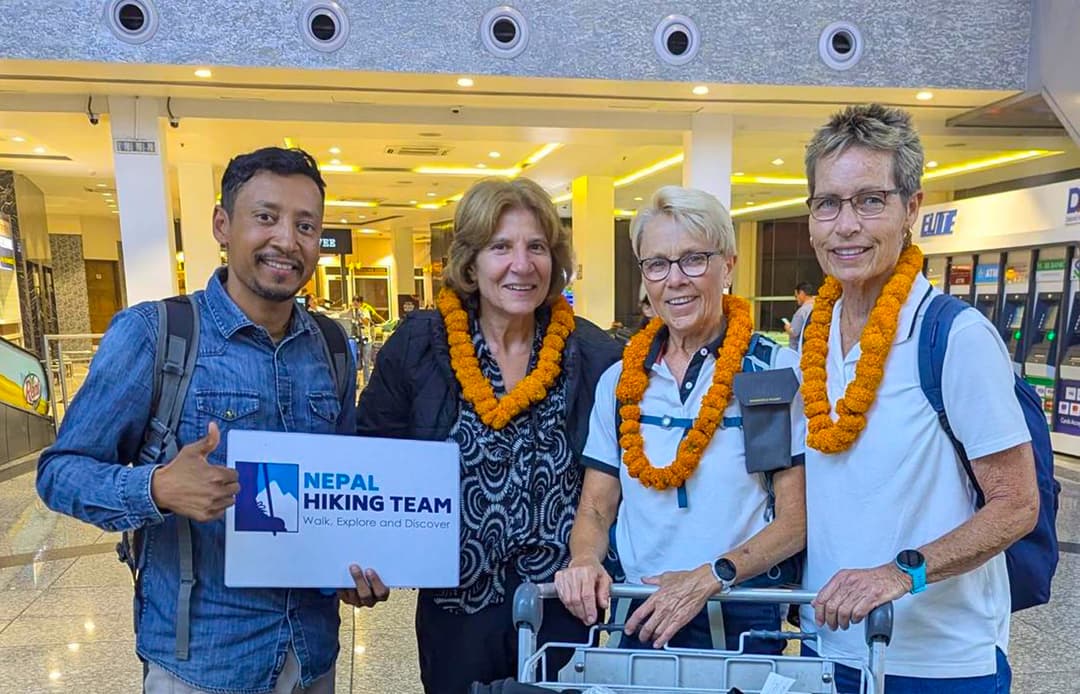
Upon arrival at Kathmandu Airport, one of our staff members will greet you in the terminal hall. Then, he will transfer you to your hotel. You will have a brief meeting about your trip to Gokyo Lake and the EBC Trek. The following day is set aside for jet lag recovery, allowing you to rest and explore Kathmandu at your own pace.
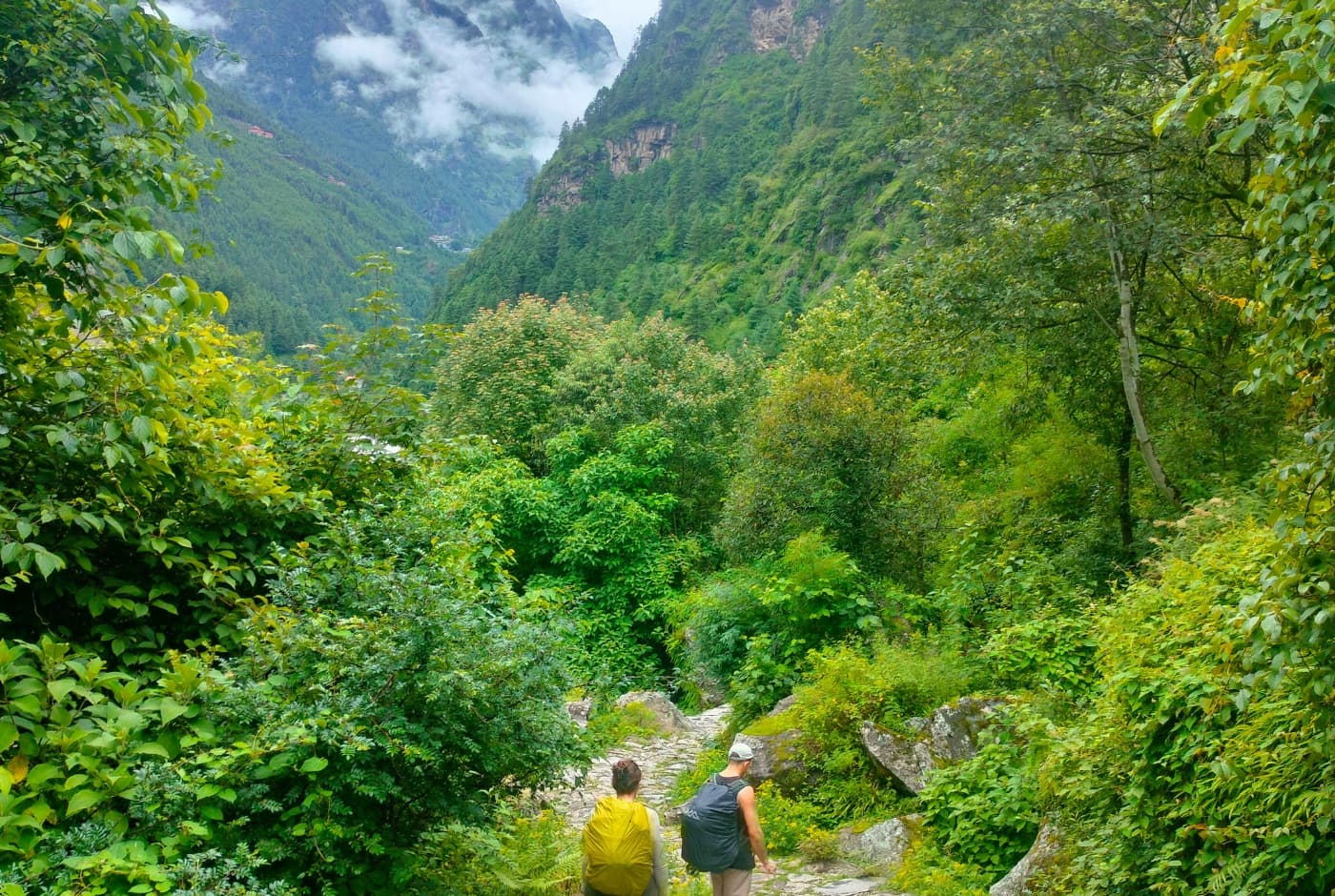
The first day of the Everest Gokyo Lake adventure starts with an exciting flight to Lukla. Depending on the season, your flight to Lukla departs from Kathmandu Domestic Airport or Manthali Airport, Ramechhap. You will meet your porter and start your trek to Phakding. You will pass by the green landscape with a view of Kusum Kanguru on your side.
After Phakding, you will follow the Dudh Koshi and ascend via the dense forest of Cedar and Himalayan Pine. You will reach a historic trading place, Namche Bazaar. To adjust to the high altitude and avoid altitude sickness, we will stay in Namche for another day as well.
The next day, we start on the easy path to Kyangjumpa, which then has some steep climbs. You will pass the small villages of Tongba, Gayle, and, lastly, Dole. If the climate permits, you can witness some wonderful mountain views of Khumbila and Taboche.
On the seventh day, the trail climbs past Lambara (4,220 m) and Luza (4,360 m) before descending slightly into the Machhermo valley. You’ll arrive in Machhermo (about 4,410–4,470 m) by evening. From the ridges and moraines around Machhermo, you get sweeping, panoramic views of the Gokyo Valley.
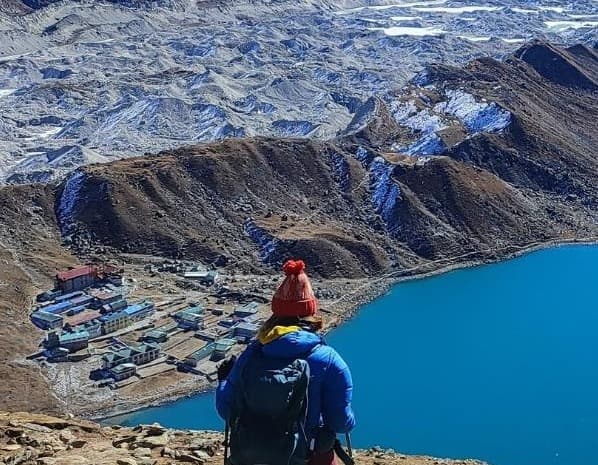
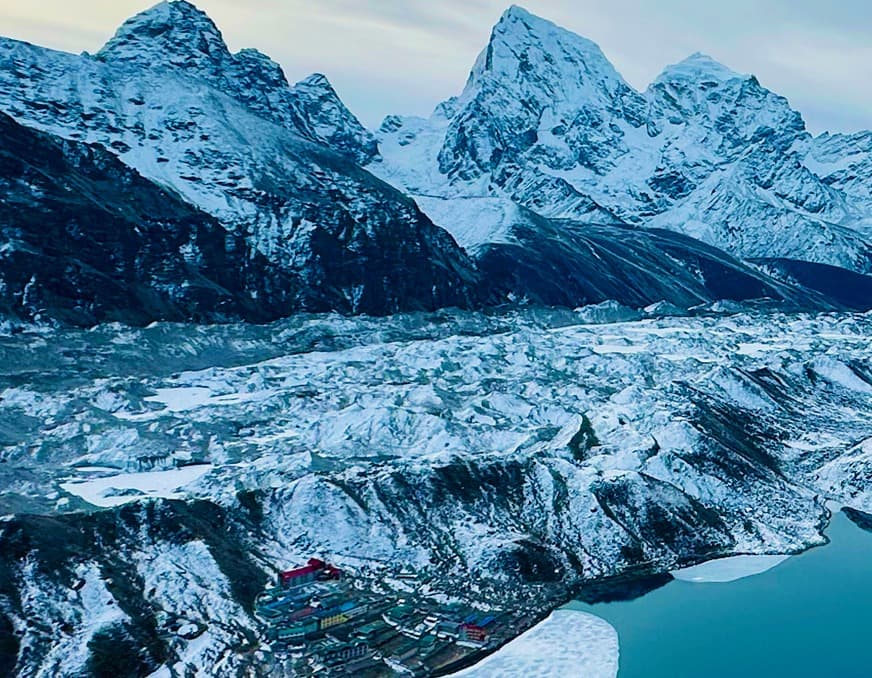
Further, you’ll climb the Gokyo Ri early in the morning, which takes approximately 2 hours to reach the peak. You will be rewarded with stunning panoramic views of the Himalayas. You will also witness the huge Ngozumpa Glacier—a spectacular vantage point for photography. Now, crossing through small Sherpa settlements like Phorste and Pheriche, you’ll reach Lobuche.
On your 13th day, you will finally reach Gorakshep and hike up to the Everest Base Camp. After the visit, you’ll descend to Gorakshep for an overnight stay. The following day, you’ll hike early in the morning up to Kala Patthar, where you can see clearer views of Mt. Everest and other peaks.
Retracing the same route, you will return to Namche Bazaar and Lukla. After staying overnight at Lukla, you will take a flight the next day and reach Kathmandu.
You can get in touch with us if you're interested in embarking on this exciting and adventurous journey. We can tailor treks to suit your preferences. So, if you're up for an adventure and want to push your limits, Gokyo Lake with Everest Base Camp (No Chola Pass) is your perfect challenge!
If you want to experience both the Gokyo Lakes and Everest Base Camp, but with different itineraries, the following options may be the right fit for you.
This classic direct route leads to Everest Base Camp and the renowned sunrise viewpoint at Kala Patthar.
This extended circuit connects the Khumbu Valley with the turquoise Gokyo Lakes by crossing the glaciated Cho La Pass.
The ultimate Everest challenge crossing the three high-altitude passes: Kongma La, Cho La, and Renjo La.
The Gokyo Lake to Everest Base Camp Trek blends two of the Khumbu region’s most spectacular highlights into a single, carefully planned adventure. With over 2,300+ positive reviews on Tripadvisor, our clients have trusted us, the Nepal Hiking Team, as reputable service providers.
The itinerary is designed to balance scenic highlights, cultural encounters, and safe acclimatization. Trekkers will visit the Gokyo Ri viewpoint for stunning lake-and-peak panoramas, cross moraine trails beside the Khumbu Glacier, and approach the Khumbu Icefall at Everest Base Camp. Daily distances and rest days are arranged to reduce altitude-related risks while allowing ample time to enjoy local villages and Sherpa cultural sites.
Safety and local expertise are central to our operations. Since 2009, our certified trekking guides and experienced support staff have led expeditions across every Himalayan region. All departures include altitude-aware schedules, first-aid equipment, experienced porters, and clear emergency evacuation procedures. We maintain strict safety standards and prioritize careful decision-making on route choices and rest days.
Comfort and responsible hospitality are part of our promise. We select teahouses that meet high standards for cleanliness, meals, and bedding, and we work closely with local communities to ensure authentic experiences. Our logistics cover permits, route planning, accommodations, and on-route support so trekkers can concentrate on the journey.
Join us for this Everest Base Camp experience via Gokyo Lake in 2025/26, which combines authentic Sherpa hospitality.
During the peak seasons for the trip-name (March to May and September to November), all the Lukla flights will be operated from the Manthali Airport due to congestion at Tribhuvan Airport.
Arrive in Kathmandu at any time. Our airport representative will welcome you and provide further details about the program. There are no planned activities for the day, so check into the hotel. Enjoy your overnight stay at the hotel.
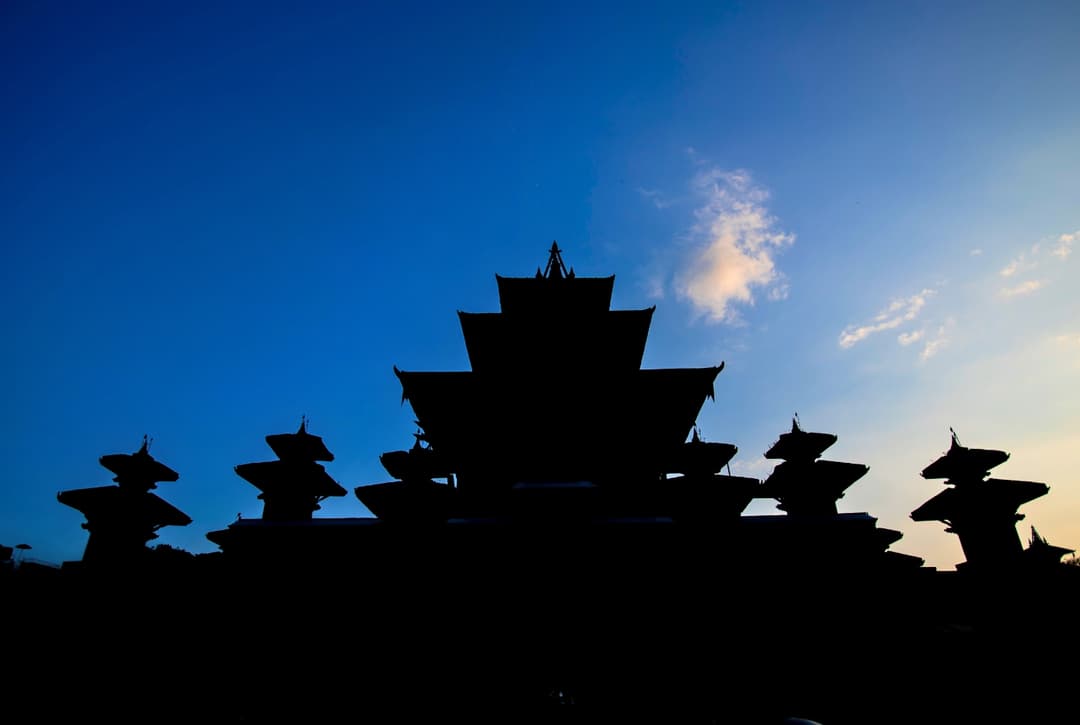
This day is designated for jet lag recovery and preparation for your Gokyo Lakes with Everest Base Camp trek. You can rest or explore the Thamel area near your hotel on this day.
A representative from the Nepal Hiking Team will meet with you for a brief meeting to discuss your trek.
Early morning transfer to the airport for the Lukla flight. The flight to Lukla is a lifetime experience in itself. The airfield is at a high elevation, and the difference between the two ends of the runway is only about 60 meters.
During the peak trekking months (March–May and September–November), flights to Lukla depart from Ramechhap. Ramechhap is a 4 to 5-hour drive from Kathmandu. Then, trek to Phakding, with its arresting green landscape and the view of Kusum Kanguru.
We follow the Dudh Koshi, ascending through Himalayan pine and cedar forests, to the celebrated village of Namche Bazaar. The village of Namche is a historic trading post where Nepalese and Tibetan traders used to exchange salt, dried meat, and textiles.
Besides being a splendid destination to shop and a central trading post for traditional crafts, Namche also attracts Himalayan and lowland merchants.
You will spend two days in Namche for acclimatization, visiting local markets, and spending time with your team. On the hike, we capture our first glimpses of Everest and neighboring peaks.
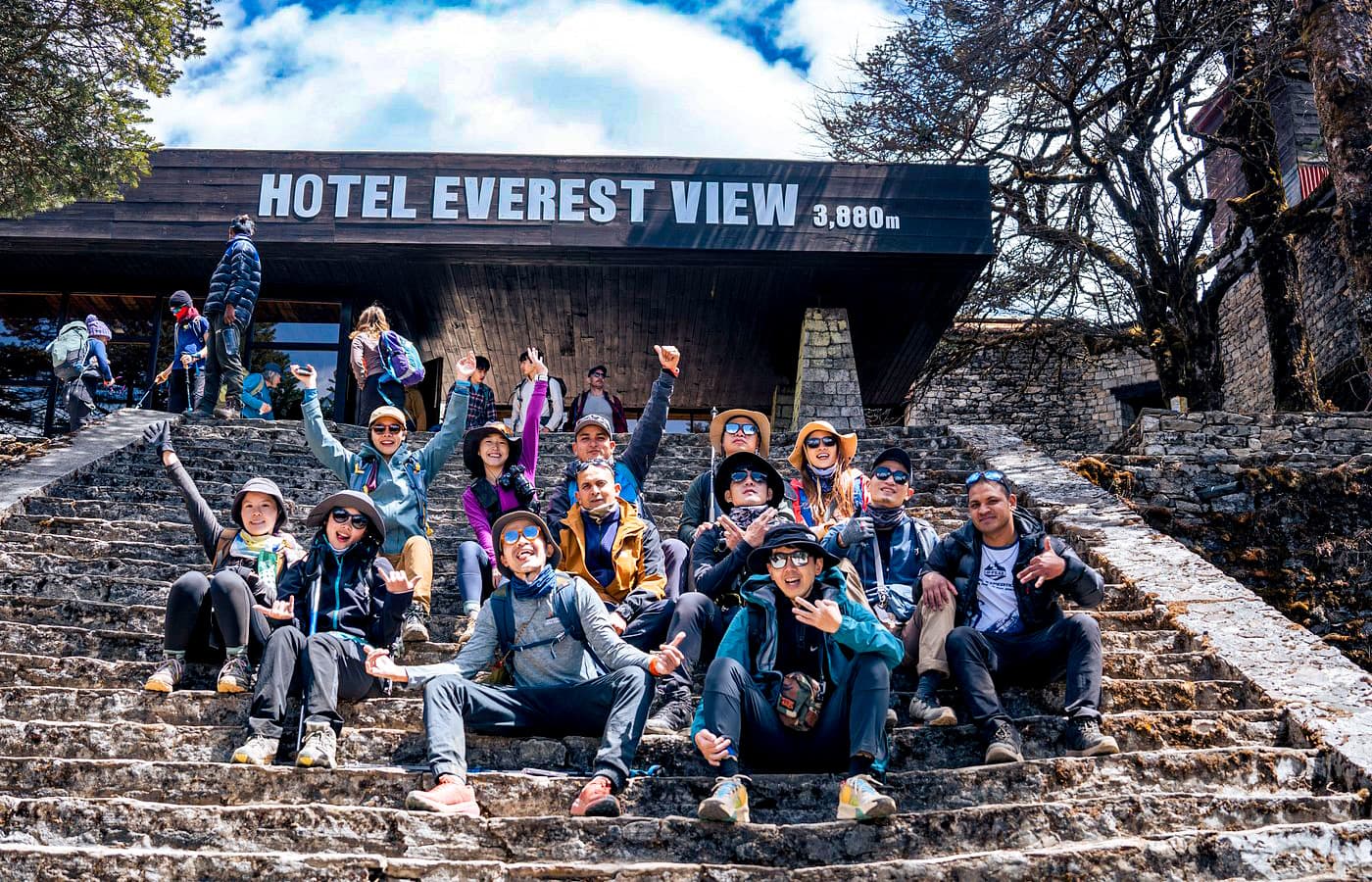
This day is especially set aside for acclimatization. We will hike to Syangboche Airport (3,700 m), reportedly the highest airport in the world. Then, continue climbing to the Everest View Hotel. From here, we can enjoy the surreal panoramic views of Everest, Lhotse, Ama Dablam, Taboche, and other surrounding peaks. On the way back, we visit the Sherpa Culture Museum and the Everest Photo Gallery.
The trails are easy until Kyangjuma, where you climb steeply through rhododendron forests. This ascent gives way to fragrant stands of juniper and large conifers as the elevation increases.
This trek is wonderful in the spring when the rhododendrons are in bloom. The trails pass many Kharkas, summer settlements used when Sherpas bring herds of yaks to graze in these high pastures.
The route passes through the settlements of Tongba (3,950 m) and Gayle (3,960 m) to Dole, where there are lodges and teahouses. The views of Khumbila and Taboche (6,542 m) are incredible throughout the day.
We will then climb to Lambara at 4,220 m and Luza at 4,360 m. The trail is steep in most places as it climbs through brush and junipers. Kharkas (alpine pastures) appear whenever there is a flat spot and the slightest hint of water.
The trails continue to ascend along the valley's side, high above the river, and cross sandy spurs leading to Machhermo at an elevation of 4,470 meters.
We climb a ridge for an excellent view, looking both down the valley to Kantega and up to Cho Oyu (8,201 m). Beyond the ridge, the valley widens as the trail passes through Pangka at 4,390 m.
Then, the route allows us to descend to the riverbank, where we can get a glimpse of Ngozumpa Glacier, which looks like a textured rocky glacier. It’s a steep climb up the moraine, switchbacking alongside the stream to the first small Lake at 4,650 m, where a family of green Brainy ducks resides.
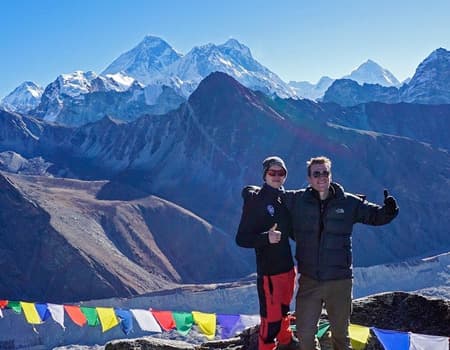
Early wake-up and climb to the Gokyo Ri for a stunning view of the Mahalangur Himalayan range. The climb to the summit of the Gokyo Ri takes approximately 2 hours. It offers a panoramic view of Cho-Oyu, Gyachung Kang, Everest, Lhotse, Makalu, Cholatse, and Taboche, as well as a stunning view of the Ngozumpa Glacier, the largest glacier in Nepal.
You’ll descend from the Gokyo area following the same valley trail toward Phortse (sometimes shown as Phortse Tenga/Phortse Thanga on maps). You shall expect a mix of rocky trail and well-worn teahouse paths, with sweeping views across the valley as you approach the village. Phortse is a high Sherpa farming village with an authentic atmosphere. It is a good place to rest and enjoy local food after the Gokyo region.
From Phortse (Phorche), you climb again towards the broad Imja/Khumbu valley. This day rewards you with outstanding panoramas of Ama Dablam, Lhotse, Nuptse, and neighboring peaks. Along the way, we pass through Pangboche and Somare, then finally go to Pheriche. Pheriche is a beautiful village with the Himalayan Rescue/medical post, making it a solid overnight.
You’ll walk across the broad valley floor toward Dughla, where trekkers commonly stop near the memorial site (a line of cairns and memorials). After Dughla, the path climbs again over moraines/rocky ground into the Lobuche yak pastures and lodge cluster.
The landscape becomes more sparse and high-alpine, and the air thins noticeably as you approach Lobuche. You will stay here at Lobuche during the magical sunset hours when the peaks glow in soft, golden light.
From Lobuche, the trail continues uphill and gradually leads to the heights on a rugged path beside the Khumbu Glacier.
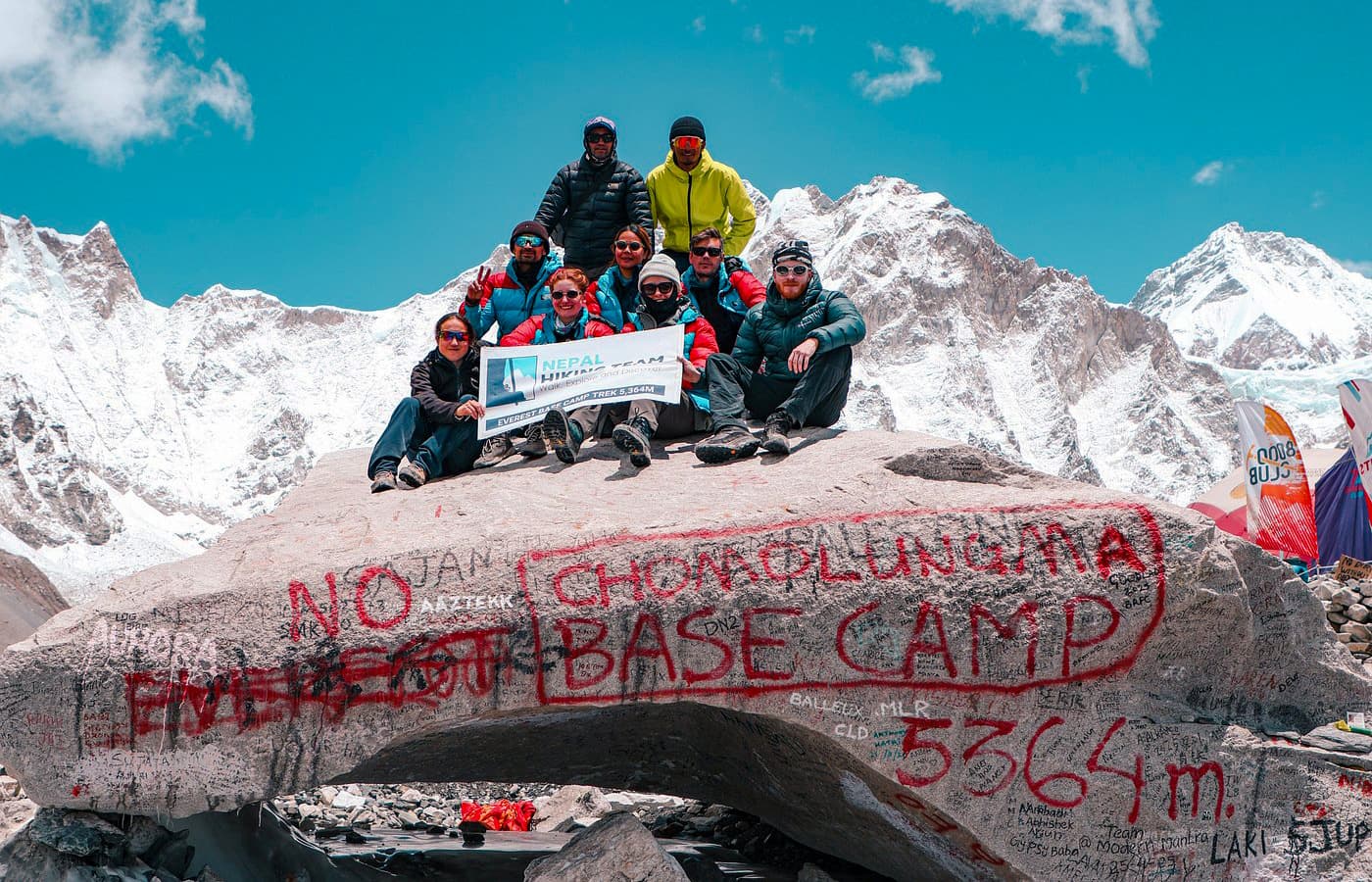
Upon arriving at Everest Base Camp, you will be able to notice stunning views of the Khumbu Icefall and the dramatic mountain scenery. At 5,364 meters, at the base of the world's highest peak, the view is truly mesmerizing. The breathtaking views of the Khumbu Icefall and the air of success make this moment all the more special!
You can celebrate the successful trek to this iconic place by taking photos with families, friends, and guides. The day concludes with a return trek to Gorakshep for the overnight stay, where you can relish every moment of your achievement by standing at the foot of Mount Everest.
The 14th day begins with a hike up to Kala Patthar (5,545 m), the best viewpoint of Mount Everest. You will also see other fantastic peaks, such as Lhotse, Nuptse, and Pumori, along with Everest. This creates one of nature's most incredible shows during your trek to Gokyo Lake with EBC.
You will get to see all its glory and the spectacular Himalayan range. We trek back to Gorekshep for breakfast and then descend and stay at Pheriche this day.
Easy walk along the Imja Khola, short climb to Tengboche, descent to Pungki Thanka, complete steep climb to Kyangjuma, and easier trail to Namche.
This busy mountain town gives you all the comforts you've been missing while still keeping that raw mountain charm that makes the Himalayas so special.
It's a wonderful feeling when you realize what you've accomplished on your Gokyo Lakes with EBC trail. The friendly faces and welcoming behavior of the locals here, as well as cozy lodges, make it even better.
The trek continues along the Dudh Koshi River to the small mountain airstrip at Lukla. On this day, you will pass through Monjo and Phakding. The quiet trails winding through the pine trees that welcomed you earlier will wave you farewell this time.
You can start celebrating with the team upon arrival in Lukla to celebrate this incredible trip to Gokyo Lake and Everest Base Camp with no Cho La Pass. You can get ready to fly back to Kathmandu the next day with many wonderful memories.
We’ll catch an early flight back to Kathmandu from Lukla. During peak seasons (March–May and October–November), we fly to Kathmandu via Ramechhap for a lovely sweep over the middle hills.
Our team handles all the transportation details, ensuring a smooth return from the mountains. This flight is a last, breathtaking look at the peaks you’ve walked before.
We’ll drop you at your hotel so you can relax and readjust to life at a lower altitude.
We built a buffer day into the Gokyo Lake to Everest Base Camp Trek itinerary to cover Lukla’s unpredictable weather and possible flight delays. It helps make sure you don’t miss international connections beyond your control.
If your flights run on time, that extra day is a bonus. This means you get another chance to rest, recover, and wander Kathmandu’s cultural sites or pick up souvenirs.
If you’d like, we can arrange extra activities, guided city tours, or other services on request for an additional fee.
After breakfast, we’ll drive you to Tribhuvan International Airport with plenty of time to complete check-in three hours before departure. Those calm last moments after the Gokyo Lakes to Everest Base Camp trek give you a chance to soak up memories that will last a lifetime.
Many trekkers are already planning their next Himalayan adventure before they leave. If you'd like to return, we’ll be delighted to design your next trip. You can plan for the missed Everest Chola Pass trekking route or any of our Nepal trekking packages. You can also choose a journey through Bhutan or a high-altitude trek into Tibet.
Backed by thousands of happy trekkers, we at Nepal Hiking Team combine deep regional knowledge, personalized care, and seamless logistics to turn your high-altitude dream into a once-in-a-lifetime experience
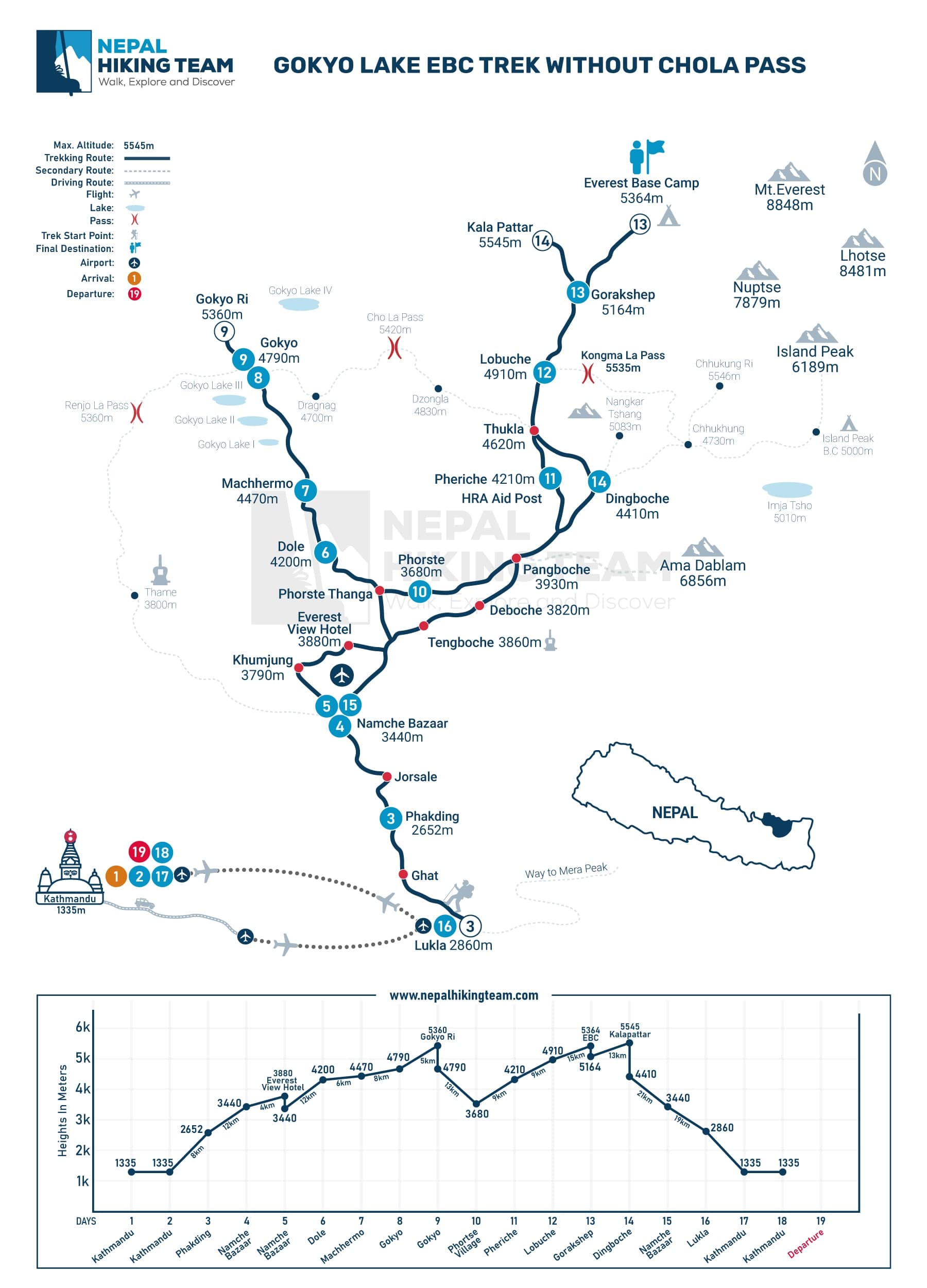
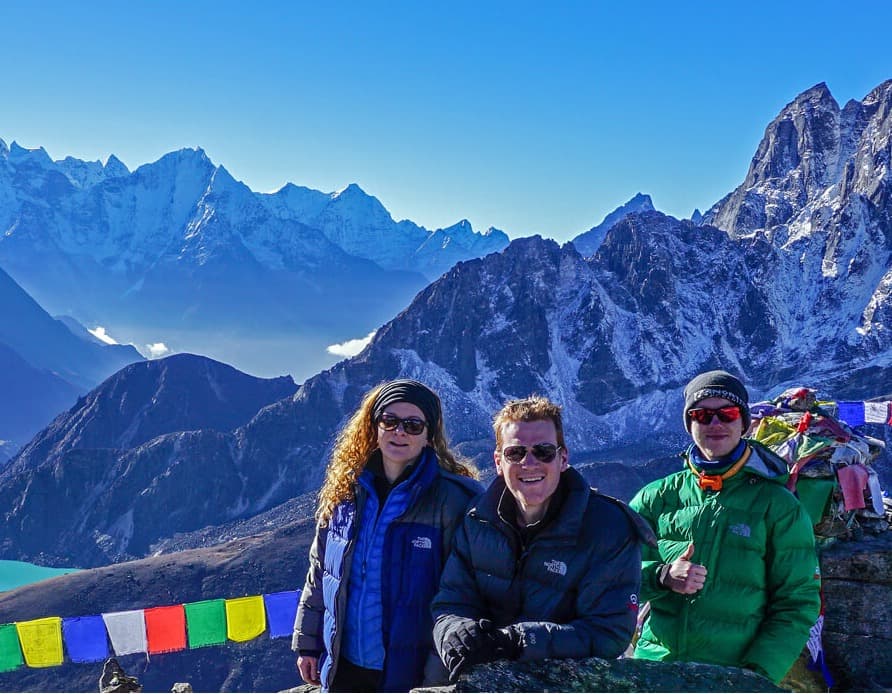
To legally trek through the Everest region and explore the Gokyo Lakes with the Everest Base Camp route, you will need two essential permits. The first is the Sagarmatha National Park Entry Permit, which grants access to the protected national park that encompasses the entire trekking zone, including the glaciers, lakes, and high-altitude passes.
The second is the Khumbu Pasang Lhamu Rural Municipality Permit, which is required for all trekkers entering the Khumbu region. Both permits can be conveniently arranged through your registered trekking agency in Kathmandu before your departure, saving you time and hassle at the trailhead. Permit checkpoints are stationed at multiple points along the trail, so always carry your documents and keep them accessible throughout the journey. Trekking without valid permits can result in fines or being turned back at checkpoints, so ensure everything is in order well before your trek begins.
One of the most critical aspects of the Gokyo Lakes and Everest Base Camp trek is understanding how high altitude affects the human body. As you ascend above 3,500 m, the air becomes noticeably thinner, meaning your body receives less oxygen with every breath. This can lead to Acute Mountain Sickness (AMS), a condition that even the fittest trekkers can experience if the ascent is too rapid. Symptoms of AMS include persistent headaches, nausea, loss of appetite, dizziness, fatigue, and difficulty sleeping. On this trek, you will reach altitudes above 5,000 m at Gokyo Ri and up to 5,545 m at Kala Patthar, making acclimatization absolutely essential. The itinerary includes strategically placed rest days — particularly at Namche Bazaar and Gokyo — to allow your body to gradually adjust to the reduced oxygen levels.
The golden rule of high-altitude trekking is to climb high and sleep low, meaning short excursions to higher elevations followed by returning to a lower camp for the night. Your guide will regularly check your oxygen saturation levels using a pulse oximeter and monitor you for any warning signs. If symptoms of serious altitude sickness develop, descent is the only safe and effective treatment, and it must happen immediately. Never push through severe AMS symptoms in hopes that they will pass — your safety always comes first on the mountain.
The Gokyo Lakes with Everest Base Camp trek is rated as moderate to challenging, and while it does not require any technical mountaineering skills, a solid foundation of physical fitness is essential to enjoy and complete the journey safely.
On most days of the trek, you will be walking for 6 to 7 hours across rocky, uneven, and sometimes steep terrain at high altitude, where every step feels more demanding than it would at sea level. Building your fitness 4 to 6 weeks before departure will make an enormous difference to your experience on the trail. Focus on cardiovascular exercises such as running, cycling, swimming, or brisk walking to build your aerobic endurance. Incorporate hill walks, stair climbing, and weighted pack hikes into your training routine to simulate the conditions you will face on the trail.
Strengthening your core, legs, and knees is equally important, as descents on rocky paths can put significant strain on the joints. If you have prior trekking experience at altitude, you will have a significant advantage, though first-time trekkers with proper preparation also complete this route successfully every season. Mental resilience matters just as much as physical fitness — there will be tough mornings, cold nights, and days when the altitude slows you down, but every step forward brings you closer to some of the most breathtaking scenery on earth.
Packing correctly for this trek can make the difference between a comfortable, enjoyable journey and an unnecessarily difficult one. The Khumbu region experiences dramatic temperature swings — warm and sunny during the day, bitterly cold at night — so layering is the most effective packing strategy. Start with moisture-wicking base layers that keep sweat away from your skin, add insulating mid-layers such as a fleece or down jacket, and top it with a windproof and waterproof outer shell. Your sleeping bag should be rated to at least -15°C, as nights at higher elevations can be extremely cold even in peak season.
Sturdy, broken-in trekking boots with good ankle support are essential, along with warm wool socks, trekking poles to reduce knee strain on descents, and microspikes for icy sections. Sun protection is often underestimated at altitude — UV radiation is significantly stronger above 4,000 m — so pack high-SPF sunscreen, UV-protective sunglasses, and a hat that shields your face and neck. A quality headlamp with spare batteries is vital for early-morning starts and for navigating lodges at night. Carry a reusable water bottle and water purification tablets or a portable filter to stay safely hydrated without relying on single-use plastic bottles.
Your daypack should ideally weigh no more than 7-8 kg, as carrying excess weight at altitude quickly drains your energy. A porter can be hired to carry your larger duffel bag, leaving you free to walk comfortably with just your essentials.
Maintaining proper nutrition and hydration throughout the trek is essential for both your energy levels and your body's ability to acclimatize. The good news is that the Everest region's teahouse trail is well-serviced with lodges offering a surprisingly varied menu at every stop. Dal bhat — a traditional Nepali meal of steamed rice, lentil soup, vegetables, and pickles — is widely considered the best fuel for trekking, as it is high in carbohydrates, easy to digest, and endlessly refillable in most teahouses. You will also find noodle soups, pasta, fried rice, porridge, eggs, pancakes, and an assortment of snacks available throughout the route.
As you gain altitude, your appetite may naturally decrease, but it is important to force yourself to eat enough to sustain your body through long trekking days. Carry high-energy snacks such as nuts, dried fruits, energy bars, and chocolate to keep your energy up between meals. Hydration is equally critical — aim to drink 3 to 4 liters of water per day to counteract the dehydrating effects of altitude and dry mountain air. Always use boiled, filtered, or purified water rather than untreated tap water to avoid gastrointestinal illness, which can quickly derail your trek.
Hot beverages like ginger tea, lemon honey tea, and hot chocolate served at teahouses are not only warming and comforting but also contribute to your daily fluid intake. Avoid alcohol and limit caffeine, as both accelerate dehydration and can worsen altitude sickness symptoms.
The entire Gokyo Lakes and Everest Base Camp trek follows a well-established teahouse trail, meaning you will have the comfort of a bed, a warm meal, and shelter at every overnight stop along the route. Teahouses — locally owned guesthouses run by Sherpa families — are the backbone of trekking hospitality in the Khumbu region, and staying in them is an experience in itself. Rooms are simple but functional, typically featuring twin beds with foam mattresses, pillows, and blankets. It is recommended to bring your own sleeping bag liner for added warmth and hygiene. Bathrooms are usually shared and located outside or in a separate block, with hot showers available for a small additional fee — a welcome luxury after a long day on the trail. Common dining areas in teahouses serve as the social heart of the lodge, where trekkers from around the world gather around yak dung stoves to share stories over steaming cups of tea. In the popular villages of Namche Bazaar, Dole, Machhermo, Gokyo, Lobuche, and Gorak Shep, teahouse options range from very basic to reasonably comfortable, with some lodges offering attached bathrooms and even Wi-Fi. During peak trekking seasons — spring and autumn — teahouses fill up quickly, and it is strongly advisable to book accommodations in advance or travel with a trekking agency that handles reservations on your behalf to avoid arriving at a full lodge after an exhausting day of hiking.
In the age of smartphones and social media, many trekkers are pleasantly surprised to find that mobile connectivity is available throughout much of the Everest trekking region. Both NTC (Nepal Telecom) and Ncell SIM cards provide coverage across most major villages on the route, though signal strength can be inconsistent at higher elevations and in remote stretches between villages. Purchasing a local SIM card in Kathmandu before your trek is highly recommended, as it allows you to make calls, send messages, and use mobile data at affordable rates.
Wi-Fi is widely available at teahouses and lodges along the route, though you should manage your expectations — connections are slow, bandwidth is limited, and access is typically charged per hour or per day. It is best used for sending brief messages and checking in with family rather than streaming or uploading large files. Electricity for charging devices is available at most teahouses, again usually for a small fee per charge.
At higher elevations, solar-powered electricity is the primary source, and power cuts are not uncommon, especially on cloudy days or at night. It is therefore strongly recommended to carry a high-capacity power bank to keep your phone, camera, and other devices charged between lodge stays. For critical communications and emergencies, many trekking agencies provide walkie-talkies or satellite communication devices, and these can be rented separately if required.
Travel insurance is not just a recommended add-on for the Gokyo Lakes and Everest Base Camp trek — it is an absolute necessity. Trekking at altitudes above 5,000 m comes with inherent risks including altitude sickness, injuries from falls on rocky terrain, and sudden changes in weather that can strand trekkers unexpectedly. In the event of a medical emergency on the trail, the only viable way to reach a hospital quickly from the remote high-altitude sections of this route is by helicopter evacuation — a service that can cost several thousand US dollars without insurance coverage. Your travel insurance policy must explicitly cover high-altitude trekking above 5,000 m and emergency helicopter evacuation, as standard travel policies often exclude these.
Read the fine print of your policy carefully before purchasing and confirm the coverage limits with your insurer. It is equally important to keep your insurer's emergency contact number easily accessible and to share your policy details with your trekking guide or agency. Beyond medical coverage, a good policy should also cover trip cancellation or delay, loss of baggage, and personal liability.
Many trekking agencies in Nepal require proof of adequate travel insurance before confirming your trek booking, underscoring just how seriously the industry takes safety preparedness in the high Himalayas.
While the Gokyo Lakes and Everest Base Camp trail is a well-marked and popular trekking route, hiring a licensed local guide is one of the most valuable decisions you can make for this journey. A certified Sherpa guide brings far more to the trek than simple navigation — they are your safety monitor, cultural interpreter, acclimatization advisor, logistics manager, and motivator all rolled into one. In high-altitude environments where conditions can change rapidly and altitude sickness can develop quickly, having an experienced guide by your side provides an essential layer of safety and reassurance.
Guides are trained to recognize early symptoms of AMS, adjust your pace accordingly, and make the critical call to descend if your health requires it. Beyond safety, your guide opens a window into the rich Sherpa culture, history, and traditions of the Khumbu region that you would otherwise miss trekking alone. In addition to a guide, hiring a porter to carry your main duffle bag is strongly encouraged.
A typical porter carries loads of 20 to 25 kg and allows you to walk freely with just a light daypack, preserving your energy for the long uphill days and high-altitude sections of the trek. Hiring local guides and porters also directly supports the livelihoods of Khumbu communities and contributes meaningfully to the local economy, making it a responsible and rewarding choice for every trekker.
The Khumbu region is not only one of the most stunning landscapes on earth — it is also one of the most ecologically fragile and culturally significant. As a trekker visiting this extraordinary part of the world, you carry a responsibility to leave as small a footprint as possible and to respect both the natural environment and the communities that call it home. Single-use plastics are a growing problem in the Himalayas, so bring a reusable water bottle and a filtration system or purification tablets to avoid purchasing bottled water along the route.
Carry out all non-biodegradable waste, including wrappers, batteries, and packaging, as proper waste disposal facilities are extremely limited above Namche Bazaar. Stay on marked trails to prevent erosion of the fragile alpine vegetation, and never disturb wildlife or pick plants along the way. When visiting monasteries, stupas, chortens, and mani walls, always walk clockwise as a mark of respect for Tibetan Buddhist traditions.
Dress modestly and ask for permission before photographing local people, their homes, or religious ceremonies. Be mindful of your water usage at teahouses, as water is a precious and limited resource at high altitude. Support the local economy by purchasing handicrafts, meals, and accommodation from local businesses rather than large commercial operators. By trekking responsibly, you play an active role in ensuring that the natural beauty and cultural heritage of the Khumbu Valley remain intact for future generations of trekkers and local communities alike.
Read our genuine feedback from past travelers with Nepal Hiking Team sourced from TripAdvisor, Google, Facebook, and Trustpilot.
We had an incredible experience with Nepal Hiking Team on the Gokyo Ri and Renjo La Pass trek, and we highly recommend them. From our initial enquiry until the end of our journey, their communication was excellent, and every request was handled with care. They were happy to customise our itinerary so we could visit the places that mattered most to us, and we felt supported throughout the entire trip.
A big part of what made this trek so unforgettable was our guide, Sun Kaji Tamang, and our porter, Robin. They worked together brilliantly and went above and beyond to ensure we had the best possible experience. When my husband became ill and had to be taken to the hospital, they showed us exceptional kindness and support, helping us through a very stressful situation with genuine compassion.
During the trek, Sun Kaji constantly looked after our well-being. He made sure we ate properly, reminded us to stay hydrated, and kept a close eye on how we were coping with the altitude. Every morning before leaving the teahouse, he checked our room to make sure we hadn't left anything behind. It may seem like a small gesture, but after long days of hiking it was incredibly helpful and showed how attentive he was.
Robin also worked tirelessly every day and was always ready to help whenever we needed him. Before continuing to the next teahouse, he often waited to ensure we were comfortable before heading off with our luggage. While crossing Renjo La Pass in snowy conditions, he even carried our daypacks in addition to our main bags to make the journey easier for us. It was an incredibly thoughtful act, and we truly appreciated his generosity.
One of the highlights of our trip was celebrating my husband's 50th birthday. We climbed Gokyo Ri that morning, and after two attempts, I finally reached the summit thanks to Sun Kaji's patience, encouragement, and unwavering support. Throughout the ascent, he gently reminded me to go "slowly, slowly," helping me stay calm and focused. Reaching the top together and celebrating such a special milestone with those breathtaking views is a memory we will always treasure. That evening, Sun Kaji and Robin surprised us with a birthday cake, music, and a wonderful celebration that made the day even more meaningful.
As a final touch, Nepal Hiking Team surprised us with a complimentary hotel room upgrade in Kathmandu. It was a lovely gesture and a perfect way to end an unforgettable adventure.
Thank you to everyone at Nepal Hiking Team for creating such an amazing experience. We are especially grateful to Sun Kaji Tamang and Robin, whose kindness, professionalism, and genuine care made this journey truly exceptional. We wholeheartedly recommend Nepal Hiking Team to anyone planning a trek in Nepal. If you have the chance to trek with Sun Kaji as your guide and Robin as your porter, you will be in excellent hands.
I would highly recommend using Nepal Hiking Team — 5 stars! This outfitter was recommended by a friend who had a great experience, and they didn’t disappoint.
We did the Gokyo Lake Trek with Everest Base Camp in April this year. Although we couldn’t make it to Gokyo due to sickness, Shyam (our guide) was amazing. He helped us adjust the itinerary, and we were still able to reach Everest Base Camp!
Shyam did a fantastic job, especially during the times when we weren’t feeling our best. If you're signing up for a trek, I highly recommend requesting him as your guide — it's worth it!
It was also incredibly reassuring, especially in a foreign country, to have a guide meet us at the airport and help with every step of the journey. That took a lot of the stress and planning off our shoulders and made the entire experience far more enjoyable.
If you're debating which outfitter to go with for EBC — look no further. Sign up with Nepal Hiking Team!
- Guided by Shyam Sitaula
We did the Tour to Gokyo Ri and really made it to the top, thanks to our wonderful guide Hari!! He sung and daced and made usw easily reach the top at 5300 m altitude even with our 11 year old son Emil.
The Company organized everything perfectly for us, so that we could enjoy our vacation from the first moment we arrived in Kathmandu until our leave. We can definitely recommend Nepal Hiking and our guide Hari to everyone, especially families travelling with children. Everything was safe and we could enjoy. Absolutely reliable, as we are used to back home in Switzerland.
This was our fourth trek with Nepal Hiking Team. We specifically requested Dipendra Dhakal, who had been our guide last year, as he was exceptional. Last year, we completed the Renjo La Pass and Gokyo Ri, so this time, we wanted to tackle the other two passes. Nepal Hiking Team created a perfect 12-day itinerary for us. We allowed for more acclimatization and decided to finish in Gokyo, opting for a helicopter ride back to Lukla to fit the trek into our schedule.
We chose luxury accommodations up to Namche where available, and Dip did a fantastic job finding the best rooms and lodges for the rest of the trek. It was evident that he was well-connected and highly respected, knowing so many teahouse owners along the route. A highlight of the trip was the day walk to Ama Dablam Base Camp—an incredible experience with stunning views and a peaceful, off-the-beaten-path atmosphere.
The trek itself was amazing, with breathtaking views throughout. Unfortunately, my husband picked up food poisoning on the day we crossed the Kongma La Pass from Chukhung to Lobuche. By the time we reached Lobuche, he was quite unwell. We decided to end the trek after eight days, cutting it short by two days. As always, Dip and the Nepal Hiking Team were fantastic, quickly rearranging our helicopter pickup from Gokyo to Lobuche at no extra cost. They also organized a comfortable hotel stay in Lukla and rescheduled our Kathmandu hotel without any additional charges.
The next day, Dip expertly managed the chaotic Lukla check-in process, ensuring we and three other NHT trekkers got on the first flight out. Despite cutting the trek short, it was another amazing trip, and Ganga and his team once again proved why they are the best. We cannot recommend them highly enough.

From the moment I was picked up at KTM airport to when I was dropped off at the end, and everything in between, the trip was incredible! Leading up to my departure, I had all sorts of questions and emailed the company numerous times—they always replied quickly and in detail. Ganga, the CEO met with me in Kathmandu the night before my departure for Lukla to ensure everything was all set.
My guide, Kisor, and porter, Bibek, were there at the heli pad to greet me, and they were fantastic throughout! Kisor’s excellent English and vast knowledge made every aspect of the journey richer, covering topics from culture and traditions to food and mountain history. Bibek was always smiling, even while carrying our gear over Renjo La! It was just me and one other person in the group, and I loved the flexibility to adjust our pace, hiking longer or shorter days as we wanted. Kisor always ensured our accommodations and meals were ready and comfortable.
After the trek, I enjoyed a wonderful tour of Kathmandu, visiting four UNESCO sites and learning so much more than I would have on my own (though I can’t recall the guide’s name). This trip was a dream come true, made even more memorable by the amazing team at Nepal Hiking Team!
- Guided by Kishor Karki

We rank among the most trusted operators because of our experienced guides, excellent logistics, and personalized care in Nepal. This Gokyo Lake added with Everest Base Camp trekking package also ensures that every trekker feels safe, supported, and inspired throughout the journey across the trail.
We have included acclimatization days on our Gokyo Lakes trek to Everest Base Camp without Cho La Pass itinerary. Additionally, we have flexible options, including smaller group sizes to provide a more personalized experience. However, unlike all other operators, we guarantee departures even for solo travelers, ensuring your journey never gets canceled.
Most groups have 6–8 trekkers, with a maximum of 10 and a minimum of 2. We guarantee every confirmed booking, whether you’re part of a group or trekking solo.
Yes! Solo trekkers are always welcome on our group departures. If you’re the only one booked on a specific date, we’ll still run the trek at the individual rates.
Of course. Private departures allow you to set your own pace, dates, and style. Many families and groups opt for this option for greater flexibility. For solo travelers, the journey is also possible, although it does come with an additional cost.
Yes. Most nationalities can obtain a visa at Tribhuvan International Airport in Kathmandu. Please bring your valid passport (valid for at least 6 months), passport photos, and the visa fee.
Yes, this Gokyo Lake with Everest Base Camp trekking package includes private airport transfers in Kathmandu.
Standard packages include a comfortable 3-star hotel in Thamel. Upgrades to 4- or 5-star hotels are available on request for an extra charge.
Booking with us is a simple process. You can simply fill out our online form with your details. A 20% deposit confirms your trip. You can visit the How to book a trip with NHT page or contact us if you have any questions or concerns.
You can settle the balance in Kathmandu during the pre-briefing session, either in cash or by card.
The 20 percent deposit is non-refundable. However, we provide full credit for any of our future treks in Nepal, Bhutan, or Tibet, with no expiry date.
Yes, in the off-season. During the peak trekking months (March–May and September–November), flights operate from Ramechhap. We’ll manage all the logistics and transfers for you.
We can arrange a helicopter flight at an additional cost of $450. This addition will only be done if every group member agrees. Otherwise, your flight is rescheduled for the next day.
In case you have booked a private package, you can easily opt for the helicopter option. Please let us know already so we can have it ready for the selected date.
It’s considered moderately challenging. Expect 5–7 hours of trekking per day on high-altitude trails. The climb to Gokyo Ri and the approach to EBC require steady endurance but no technical skills required.
The Gokyo Valley to Everest Base Camp Trail spans about 143-157 km (89-98 miles), starting from Lukla and ending in Lukla. The whole trail has two acclimatization days at Namche and Gokyo, so we need to trek roughly 6–7 hours a day for 13 days to complete this trek.
There’s no official limit. We’ve guided trekkers aged 7 to 70. Good fitness and preparation are key. Children under 15 should be accompanied by parents.
We recommend 4–6 weeks of fitness training, including cardio exercises (such as jogging or stair climbing), strength training, and practicing hikes with a daypack.
Travel insurance is required for this Gokyo Lake Trek. Your travel insurance policy should cover trekking activities up to 5,545 meters and include emergency evacuation coverage. We recommend companies that operate globally, like Genki Traveler, AXA Travel Insurance, Allianz Travel Insurance, or World Nomads.
For your convenience, we have prepared a list of travel insurance companies based on recommendations from trekkers who have traveled with us before.
Our licensed guides carry oximeters and first aid kits and keep track of your acclimatization progress. We always prioritize safety over pace.
Spring (March–May) and autumn (September–November) are ideal with stable weather and clear skies.
Yes, but trails can be muddy during the monsoon and icy in winter. These seasons are quieter and better for those seeking solitude.
To reduce altitude sickness, it is essential to hydrate well and walk at a steady pace. You will also need to follow the itinerary’s acclimatization days (such as in Namche Bazaar and Gokyo). Guides will monitor your health daily.
Yes, we offer a Gokyo Lakes trek with the Cho La Pass route for trekkers who prefer to avoid the technical crossing.
Suspension bridges are part of the trail, but our guides will support you. Most trekkers feel more comfortable after the first crossings.
Yes, acclimatization days are built into the trek at Namche Bazaar and Gokyo to help you adjust gradually.
Porters carry up to 25 kg shared between two trekkers. You’ll only need a small daypack for essentials.
The weight limit for the Lukla flight is 15 kg per person. In case of excess baggage, it can be arranged for a fee, but during peak seasons, paying extra money also may not work.
Yes, your hotel in Kathmandu offers secure storage until your return, free of cost.
We provide a sleeping bag, a down jacket, and a duffel bag. You’ll also get a trek map, team T-shirt, and cap.
Yes, Nepal Hiking Team awards a certificate celebrating your achievement of the Gokyo Lakes to Everest Base Camp trek.
Teahouses along the trail offer twin-share rooms with basic but cozy comforts. Lower villages typically share private bathrooms, while lodges at higher altitudes offer more basic facilities.
Yes, Wi-Fi is available in most teahouses (small extra charge). Mobile networks (NTC/Ncell) work up to Namche, but connections weaken as the altitude rises.
Yes, teahouses offer device charging for NPR 200-500 per device throughout the trek. Solar power at higher elevations is dependent on weather conditions, so consider bringing a power bank for reliable backup charging.
Yes, you can find western-style toilets, especially in Lukla, Namche, and Phakding. During the winter months, higher elevation locations may only have squat toilets available due to frozen plumbing systems.
In this Gokyo Lake with EBC trail, twin-sharing rooms are included as standard. Private rooms are available for an additional $250, depending on availability at each location.
The local Nepalese dishes, which include rice, lentils, vegetables, and pickles, can be found in the Gokyo Valley and the Everest region. You’ll also find momos, thukpa, and Tibetan options, such as tingmo or tsampa, alongside Indian and Italian dishes.
You’re free to choose any meal from the menu based on your taste. Each dish is freshly prepared and specially crafted to keep you fueled and energized for high-altitude trekking.
Yes, the Gokyo Valley Trek to Everest Base Camp offers vegetarian, vegan, and gluten-free meal options along the way.
If you have any food allergies or specific dietary requirements, please let us and your guide know in advance. We can arrange to provide meals that are safe and suitable for you throughout the trek.
There are a few safe ways to stay hydrated during the trek. The best option is to use spring water and treat it with purification tablets, which your guide will provide. You can also bring a filtered water bottle for added convenience.
Most teahouses also sell boiled water, which is another safe option. While bottled water is available, we recommend avoiding it, as it’s costly and contributes to plastic waste in the region.
Yes, if you're booking a private trip, we can fully personalize your Gokyo Lake Trek. Whether you want to adjust the pace, add extra rest days, or include a sightseeing tour in Kathmandu, we’ll design the itinerary to match your preferences. Customization is only available for private treks. Please let us know what you'd like, and we’ll take care of the rest.
Yes, we do! If you’d like to explore Kathmandu, we can arrange a guided day tour before or after your trek for an additional fee. This tour may include visits to some of the city’s most sacred spots and UNESCO World Heritage Sites. And if you’re planning to extend your stay a bit longer, we’d be delighted to organize day trips to Bhaktapur and Patan as well.
As your Gokyo to EBC trek comes to an end, you may tip your guide and porter in Lukla before saying goodbye. The guides and porters generally expect to receive tips; however, it is customary.
It’s a simple way to show deep appreciation for all their hard work throughout the journey. You can tip what feels right based on your overall experience, your budget, and the quality of service you received.
We recommend carrying around NPR 25,000 for extras, such as Wi-Fi, hot showers, charging, and snacks, along the trail. ATMs in and above Lukla and Namche can be unreliable, so it’s best to withdraw cash in Kathmandu.