
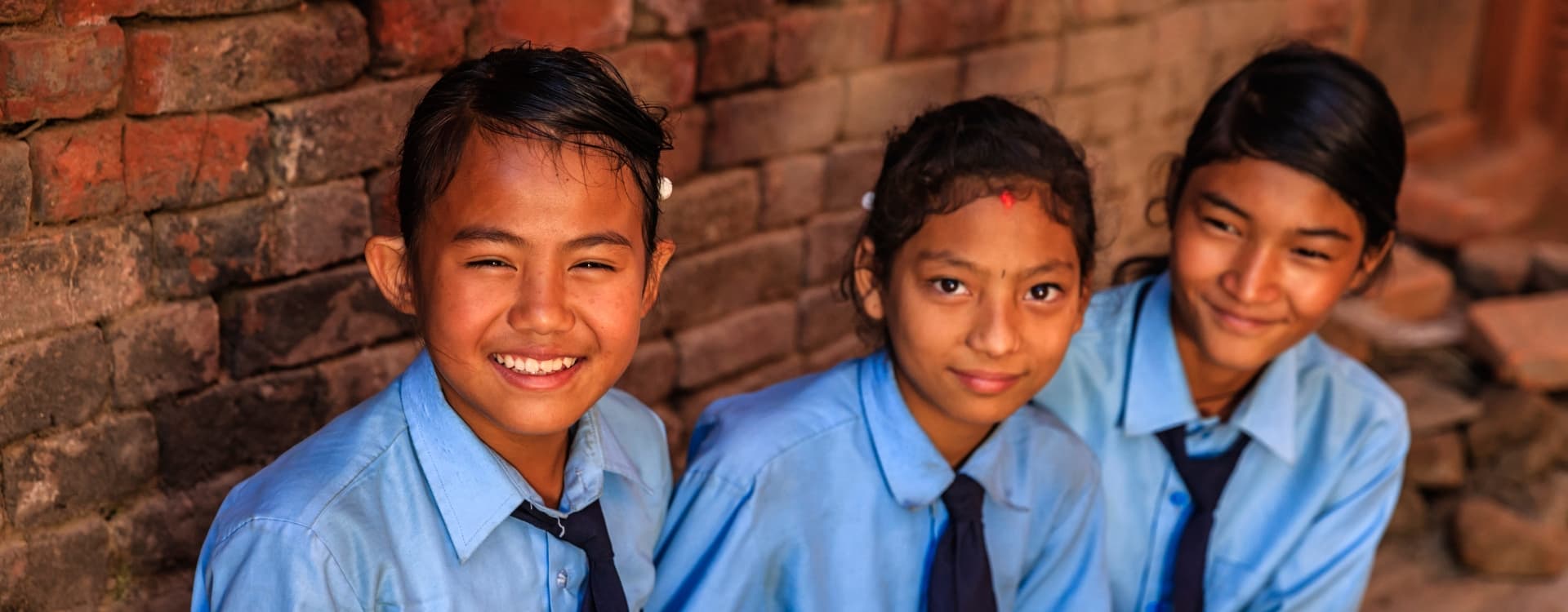
Nepal is globally famous for holding the No. 1 spot for the highest mountain on Earth, Mount Everest (8,848.86 meters). Additionally, it ranks as the No. 1 happiest country in South Asia and often ranks No. 1 in South Asia for English proficiency and press freedom. It ranks No. 1 in the world for nature connectedness, based on a 2025 study of 61 countries published in the journal Ambio.
So "what is Nepal No. 1 in" has several answers. A few are global firsts. Others are regional. Some are geographic facts no other country can claim. A lifestyle rooted in spiritual traditions, mindfulness, and simplicity keeps many people grounded. Rather than measuring life purely through material wealth, there is a strong cultural inclination toward being content with what one has.
This guide keeps only the records that hold up. Every figure traces to a named source: a peer-reviewed journal, an international index, or an official survey. That standard matters, because plenty of "Nepal is No. 1" posts circulate online with no data behind them. The verified picture is impressive enough without the exaggeration.
Nepal's No. 1 Rankings at a Glance: Regional and Global ranking
- Happiest in South Asia: Nepal consistently ranks as the No. 1 happiest country in the South Asian region.
- English Proficiency (South Asia): Leading the region for English skills, Nepal ranks first in South Asia and roughly 58th globally.
- Highest Peaks Globally: Nepal is globally renowned for its geography, hosting eight of the ten tallest peaks in the world, including the summit of Mount Everest.
- Press Freedom (South Asia): Nepal frequently tops the World Press Freedom Index within the South Asian region
|
Category |
Where Nepal Ranks |
Source and Year |
|
Nature connectedness |
No. 1 in the world (of 61 countries) |
Journal Ambio, 2025 |
|
Highest point on Earth |
No. 1 (Mount Everest, 8,848.86 m) |
Nepal and China joint survey, 2020 |
|
Eight-thousanders held |
8 of the world's 14 |
Govt. of Nepal / Wikipedia |
|
Happiness |
No. 1 in South Asia |
World Happiness Report, 2026 |
|
English proficiency |
No. 1 in South Asia (58th globally) |
EF EPI, 2025 |
|
Press freedom |
No. 1 in South Asia (87th globally) |
RSF Index, 2026 |
|
UN peacekeeping |
Among the largest troop contributors |
United Nations |
Nepal Ranks No. 1 in the World for Nature Connectedness
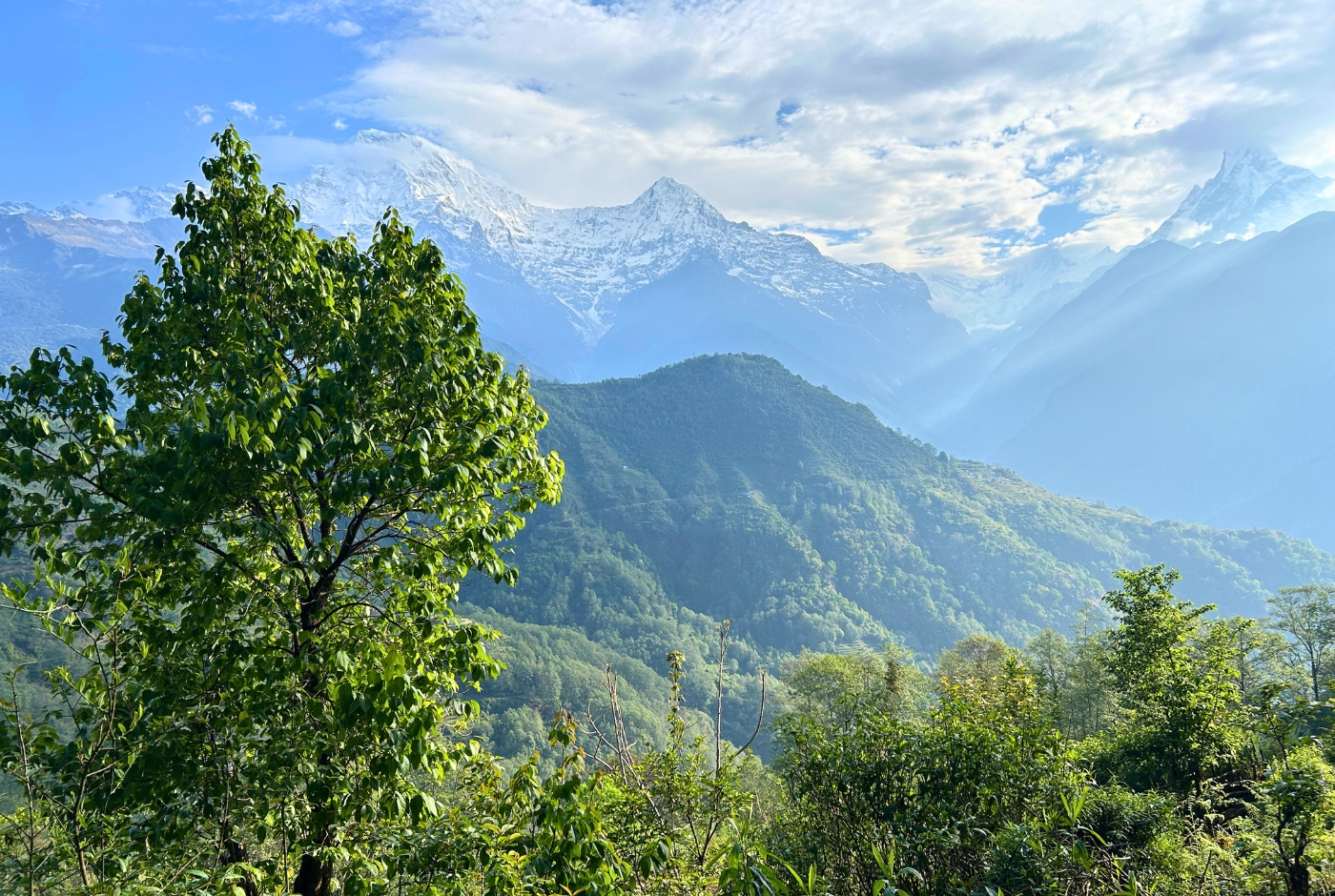
A landmark global study published in the journal Ambio ranked Nepal #1 in the world for "nature connectedness" out of 61 countries. The research measured emotional and psychological bonds with the natural world, highlighting how deeply intertwined the country's culture, spirituality, and mountain lifestyle are with the environment.
This is the standout. In late 2025, researchers ran the first large-scale global study of how strongly people feel bonded to the natural world. The work, published in the journal Ambio, surveyed 57,000 people across 61 nations to examine how social, cultural, economic, and geographic factors shape attitudes toward nature. Nepal finished first.
Iran, South Africa, Bangladesh, and Nigeria completed the top five. The other end of the table held surprises. Britain placed 55th out of 61, and Spain came last. Wealth and scenery did not predict the outcome. Spirituality did.
The authors found that higher levels of spirituality within a culture were the strongest indicators of nature connection, especially where faith stays central to daily life. That fits Nepal closely. Mountains here are not only terrain. Many are sacred. Peaks across the Annapurna and Khumbu regions carry religious meaning for Hindu and Buddhist communities, and that reverence runs through ordinary life.
The study came from outside observers. It was led by Professor Miles Richardson of the University of Derby, working with Austrian researchers, not a Nepali tourism office. That independence is what makes the No. 1 finish credible rather than promotional.
The Mountains: Nepal Holds the Highest Point on Earth
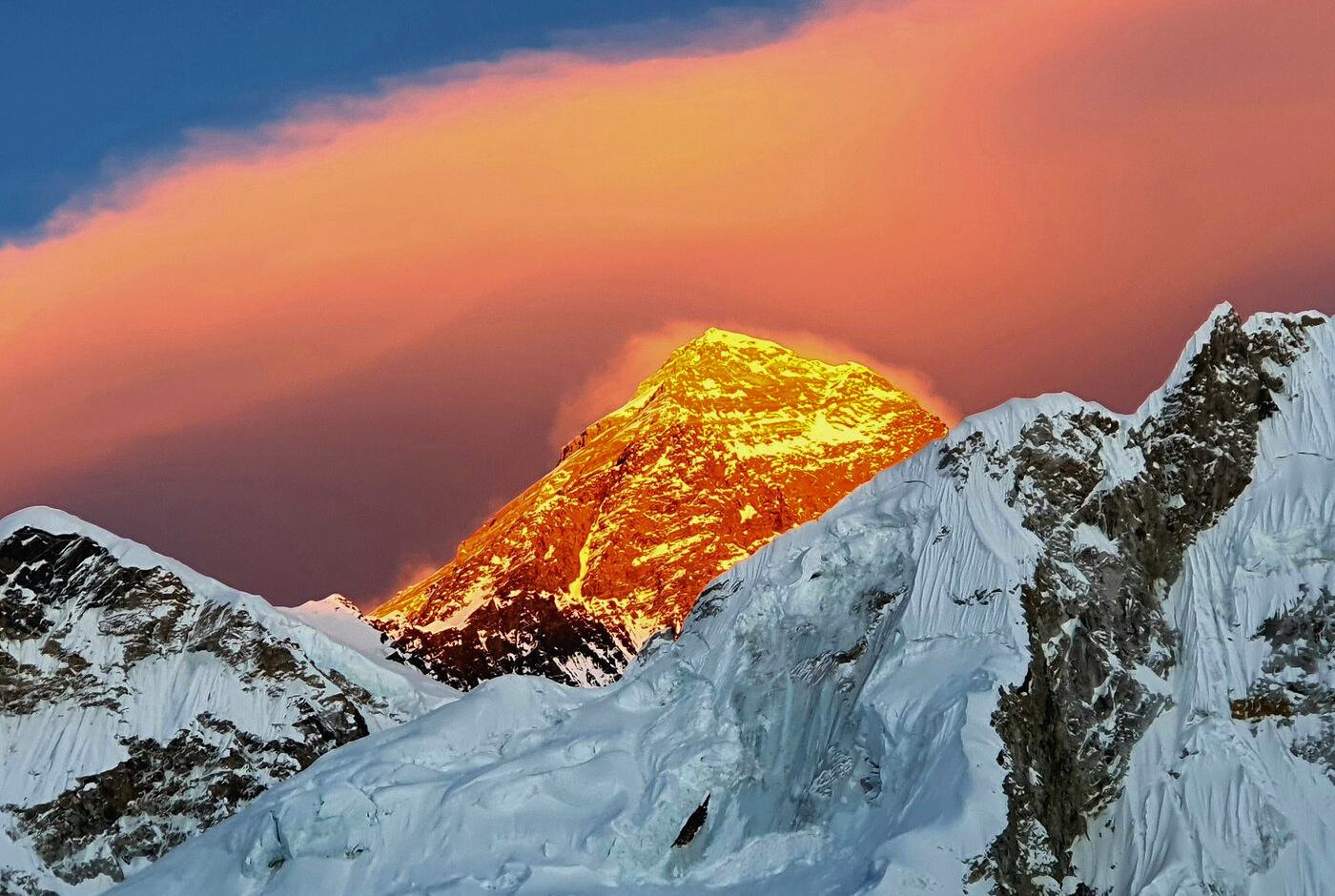
Ask most people what Nepal is famous for, and they say, Mount Everest. They are right.
Nepal holds the ultimate crown as the home to Earth's highest point, Mount Everest, which towers at 8,848.86 meters (29,031 feet) above sea level. Nestled in the Himalayan range on the border between Nepal and Tibet, this majestic peak attracts thousands of trekkers and elite climbers every year.
Mount Everest stands 8,848.86 metres tall, a height announced jointly by Nepal and China in December 2020 after both countries ran fresh surveys. No land point on the planet sits higher. The summit straddles the border, but the classic approach, the route Edmund Hillary and Tenzing Norgay used in 1953, climbs from the Nepali side.
Everest does not stand alone. Eight of the world's fourteen eight-thousanders sit in Nepal, either wholly inside the country or shared along a border with China or India. No other nation holds that concentration of extreme altitude.
|
Peak |
Height |
World Rank |
|
Everest (Sagarmatha) |
8,848.86 m |
1 |
|
Kangchenjunga |
8,586 m |
3 |
|
Lhotse |
8,516 m |
4 |
|
Makalu |
8,485 m |
5 |
|
Cho Oyu |
8,188 m |
6 |
|
Dhaulagiri I |
8,167 m |
7 |
|
Manaslu |
8,163 m |
8 |
|
Annapurna I |
8,091 m |
10 |
Annapurna I deserves a footnote. It is the deadliest of all eight-thousanders to climb, carrying one of the highest fatality rates in mountaineering. Yet the trek to its base camp asks for fitness, not technical skill, which is why thousands of walkers reach it every year without ever touching a rope.
Where Nepal Leads South Asia:
Beyond the global firsts, Nepal No. 1 finishes stacking up across its own region. These come from established international indexes, not local boosterism. Nepal consistently leads South Asia in key international indexes, ranking No. 1 regionally in World Happiness, Press Freedom, and Electric Vehicle Adoption. While its global standing varies, Nepal outpaces its regional neighbors (like India, Pakistan, and Bangladesh) in these specific socio-economic and environmental measures.
Happiest Country in South Asia
Nepal is the happiest country in South Asia. In the UN-sponsored World Happiness Report, the country consistently secures the top position in the region.
Nepal ranked as the happiest country in South Asia in the 2026 World Happiness Report, sitting in the 90s globally. The report, run by the University of Oxford's Wellbeing Research Centre with Gallup, scores countries on social support, life expectancy, freedom, generosity, and perceptions of corruption.
Nepal placed ahead of every regional neighbor, including India, Pakistan, Bangladesh, and Sri Lanka. The gap is striking given the size of those economies. Money is clearly not the whole story, and Nepal's strong community and social support help explain the result.
Despite economic challenges and resource constraints, Nepal's top regional ranking is generally attributed to strong community ties, a rich culture of social support, and the resilience of its people.
The World Happiness Report evaluates well-being across more than 140 nations using data from the Gallup World Poll. The rankings are calculated using six primary factors:
- GDP per capita
- Social support
- Healthy life expectancy
- Freedom to make life choices
- Generosity
- Perceptions of corruption
Top English Proficiency in South Asia
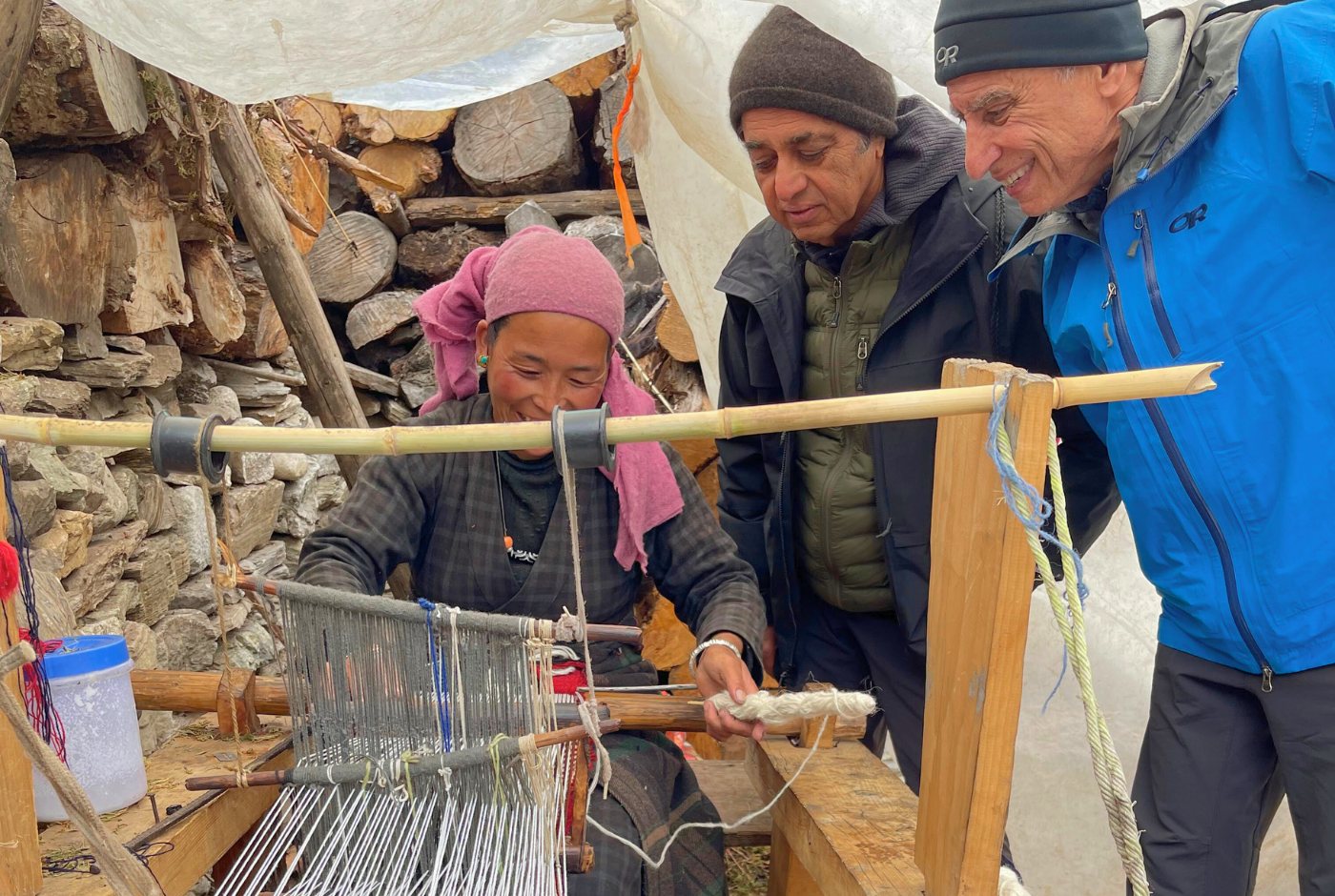
Nepal is currently the highest-ranking English-proficient country in South Asia. According to the EF English Proficiency Index (EF EPI), Nepal ranks 58th globally with a score of 514. It holds the distinction of being the only South Asian nation in the "Moderate" proficiency band.
While Nepal leads South Asia, broader EF English Proficiency Ranking 2025 data highlights how the rest of the region performs in the "Low" proficiency tier:
|
Rank (Global)
|
Country | Score | Proficiency Band |
| 58 | Nepal | 514 | Moderate |
| 62 | Bangladesh | 506 | Low |
| 67 | Pakistan | 493 | Low |
| 73 | Sri Lanka | 486 | Low |
| 74 | India | 484 | Low |
| 79 | Bhutan | - | Low |
A decade of English-medium schooling drove the climb. The index has limits, since it tests self-selected online participants and underrepresents rural areas, but the regional lead is clear.
Over the last decade, Nepal has aggressively adopted English Medium Instruction (EMI).
- Universal Adoption: Private schools use English almost exclusively as the medium of instruction.
- Public School Shifts: Government-run public schools have rapidly converted their curriculums from Nepali to English to stay competitive and meet high parental demand.
- The Tourism Impact: Tourism is a economic pillar. Locals in major cities and along major Himalayan trekking routes speak functional, highly conversational English to interact with global travelers.
- Labor Migration & Study Abroad: A vast percentage of Nepali youth actively prepare to migrate for higher education or foreign employment. Achieving English literacy is seen as the primary ticket out of local poverty.
Highest Press Freedom in South Asia
Nepal holds the highest press freedom in South Asia. In the World Press Freedom Index by Reporters Without Borders (RSF), Nepal ranked 87th globally out of 180 countries, securing the top spot in the region.
While Nepal leads the region, its media environment is still classified as "difficult" by RSF, facing ongoing challenges with political influence and physical intimidation of journalists.
The regional rankings for South Asia in 2026 highlight the following RSF index positions:
- Nepal: 87th
- Maldives: 108th
- Sri Lanka: 134th
- Bhutan: 150th
- Bangladesh: 152nd
- Pakistan: 153rd
- India: 157th
- Afghanistan: 175th
This one calls for honesty, not a victory lap. Nepal's global rank rose from 90th to 87th, yet its category slipped from "Problematic" to "Difficult," driven by government crackdowns and new restrictive laws. Nepal leads its region, but the trend at home is moving the wrong way. Saying so plainly is the trustworthy thing to do.
Despite leading the region, Nepal's media environment is categorized as "difficult" by RSF. The country faces persistent challenges, including restrictive legal provisions, political pressure on editorial independence, and a deteriorating security score for journalists facing physical intimidation.
Beyond the Rankings: UN Peacekeeping
Nepal does not always top a numbered index here, but it belongs on any honest list. The country is one of the largest contributors of troops and police to United Nations peacekeeping missions worldwide. Nepali soldiers have served in conflict zones across Africa and the Middle East for decades. It is a quieter kind of No. 1, built on reputation rather than a leaderboard.
Seeing Nepal's No. 1 Mountains for Yourself
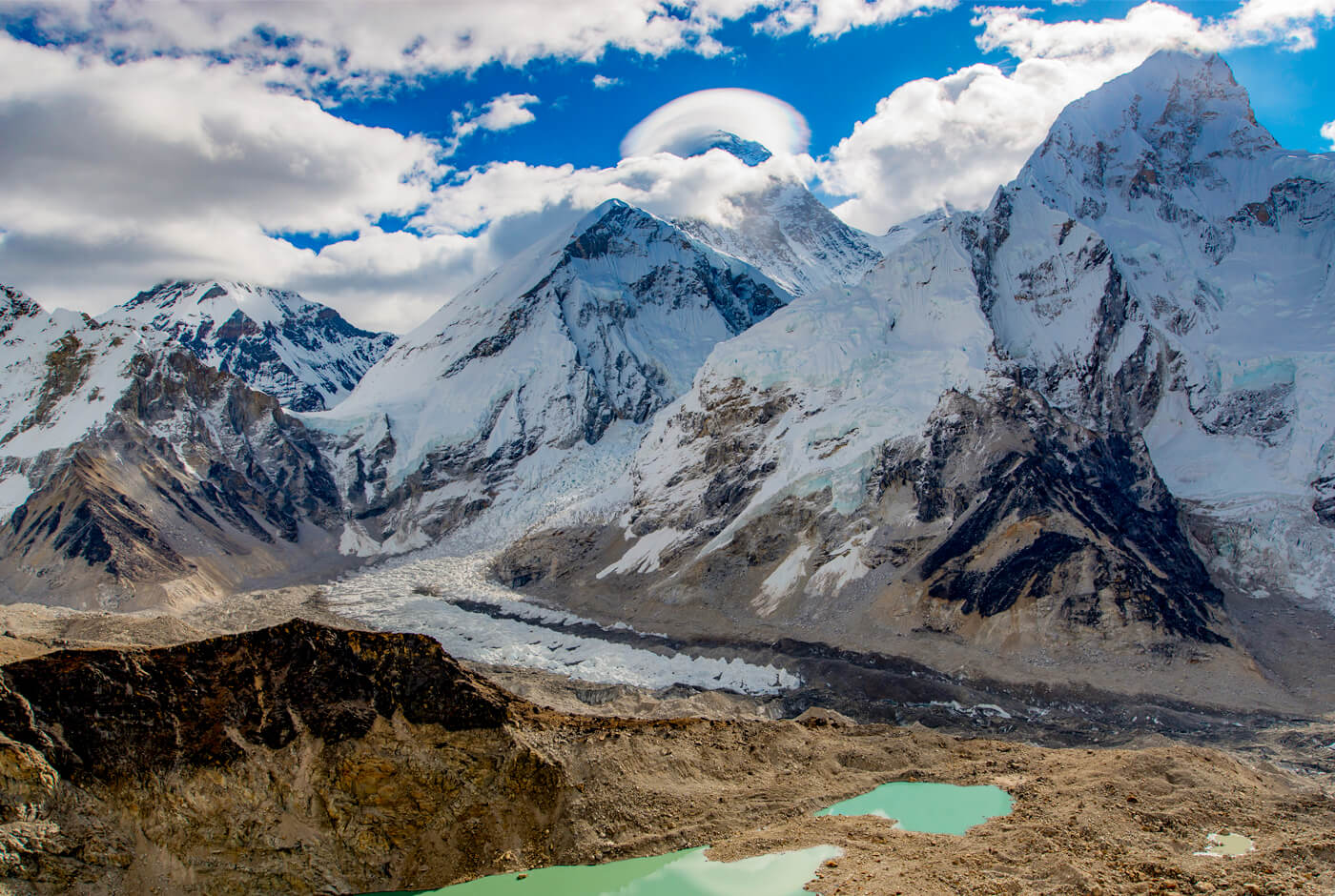
Records stay abstract until you stand under them. The clearest way to feel why Nepal ranks No. 1 in altitude is to walk to the base of Everest. To see Nepal's No. 1 peak, Mount Everest (8,848.86m), you can choose between a quick morning excursion from the capital or immersive trekking expeditions in the Himalayas. Clear, panoramic views are best experienced during peak seasons: October to December or March to April.
The Everest Base Camp trek is the classic route. Most itineraries run 12 to 14 days, flying into Lukla and climbing past Namche Bazaar and Tengboche to base camp at 5,364 metres, with a dawn push to Kala Patthar at 5,545 metres for the clearest Everest view. You do not climb the mountain. You walk to its foot, sleep in Sherpa teahouses, and watch the peak shift color at sunrise.
The hard-won part is not the distance. It is the altitude. The acclimatization day at Namche, around 3,440 metres, is the one that actually prevents trouble higher up, and the stretch above Dingboche turns bitterly cold once late October arrives. This is the kind of ground knowledge that separates a safe trek from a rushed one, and it is where an experienced operator earns its place. Nepal Hiking Team, a Kathmandu-based company, runs the Everest route along with quieter alternatives, handling permits, teahouse bookings, and the pacing that keeps walkers healthy at height.
The routes worth comparing:
- Everest Base Camp: 12 to 16 days, max 5,545 m at Kala Patthar. The icon. Stand beneath the highest point on Earth.
- Gokyo Lakes: 12 to 13 days, max 5,357 m at Gokyo Ri. Turquoise glacial lakes, far fewer crowds, and arguably a better Everest panorama.
- Annapurna Base Camp: 8 to 14 days, max 4,130 m. Shorter and lower, ending in a natural amphitheater of peaks.
- Manaslu Circuit: 14 to 16 days, crossing the Larkya La at 5,106 m. Remote, restricted, and far quieter than Everest.
- Langtang Valley: 7 to 10 days, the closest major trek to Kathmandu. Short, scenic, and rich in Tamang culture.
Pick by time and appetite. Short and accessible points to Langtang or Annapurna. Iconic points to Everest Base Camp. Remote and demanding points to Manaslu.
The Takeaway
Nepal's No. 1 claims hold up where the data is real. First in the world for nature connectedness. Home to the highest point on Earth and eight of its tallest peaks. First in South Asia for happiness, English, and a freer press. Strip away the social media noise, and a genuine record remains.
The mountains are the part you can stand inside. If these rankings make you want to see the Himalaya in person, a seasoned local operator, Nepal Hiking Team, can guide you to Everest Base Camp or a quieter alternative, on a trek paced around real trail experience rather than the clock.
Post a Comment