
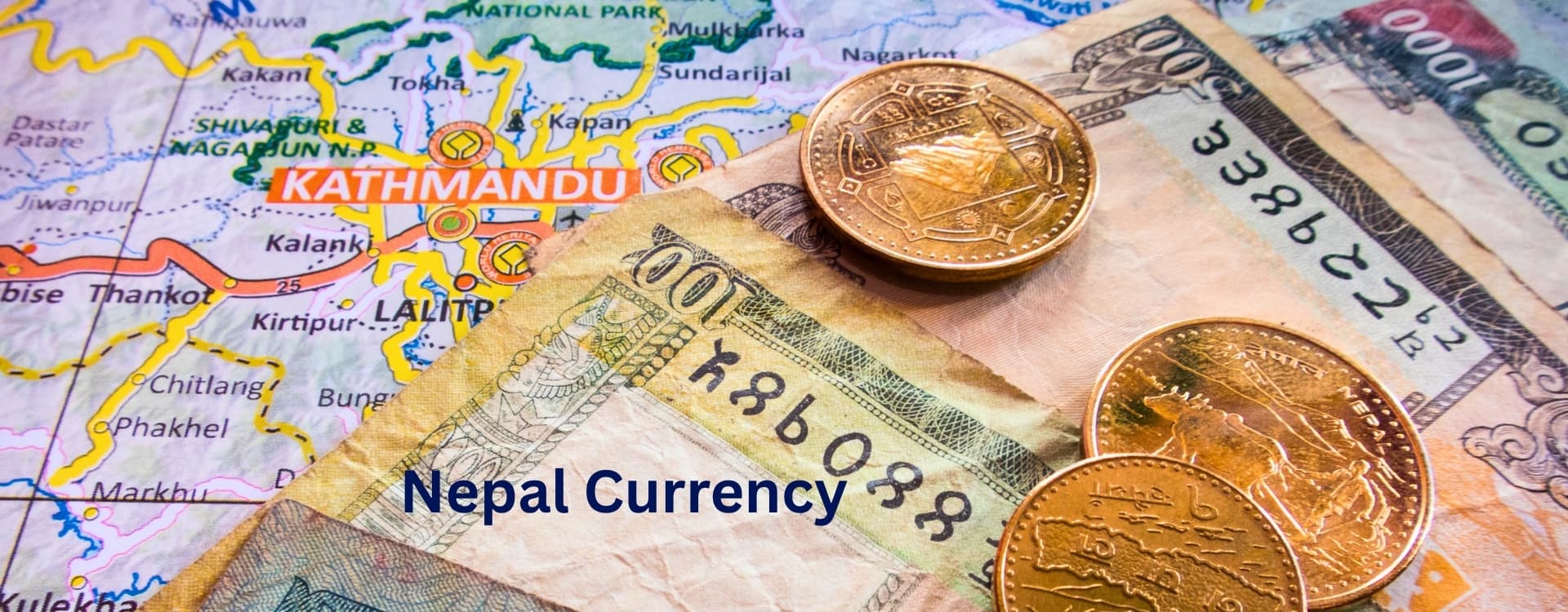
Nepal’s official currency is the Nepalese Rupee (NPR), issued and regulated by the Nepal Rastra Bank. The currency symbol is Rs or “रू”, and the currency code is NPR. Likewise, one Nepalese rupee is divided into 100 paisa.
For visitors, Nepal is relatively easy to manage financially in cities such as Pokhara and Kathmandu, where ATMs, banks, card payments, and money exchanges are widely available. However, managing money in remote Himalayan regions can be difficult where ATMs and card payments are limited or unavailable.
- Symbol: रू or Rs
- Central Bank: Nepal Rastra Bank regulates and issues the currency.
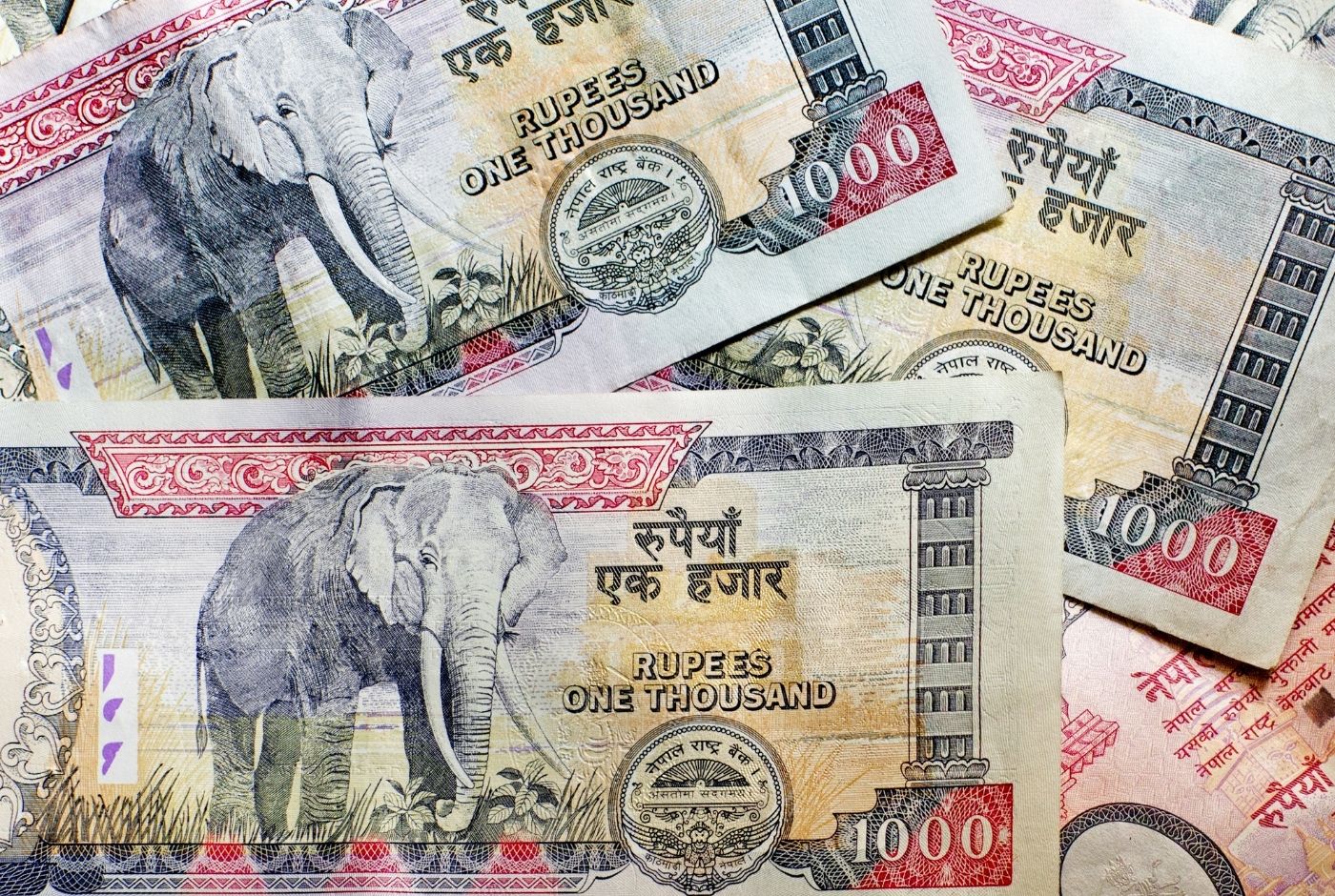
- Banknotes: Common denominations include 5, 10, 20, 50, 100, 500, and 1,000 rupees.
- Coins: Denominations include 1, 2, 5, and 10 rupees.
- Exchange Rate: The Nepalese rupee is pegged to the Indian rupee (INR) at a fixed rate of 1.60 NPR for 1 INR.
Whether you’re planning a cultural tour, a high-altitude trek to Everest Base Camp, Annapurna Base Camp, or simply visiting for sightseeing historical monuments, this Nepal currency guide explains the history, understanding of the local currency, exchange rates, cash requirements, and payment options.
What Currency Does Nepal Use?
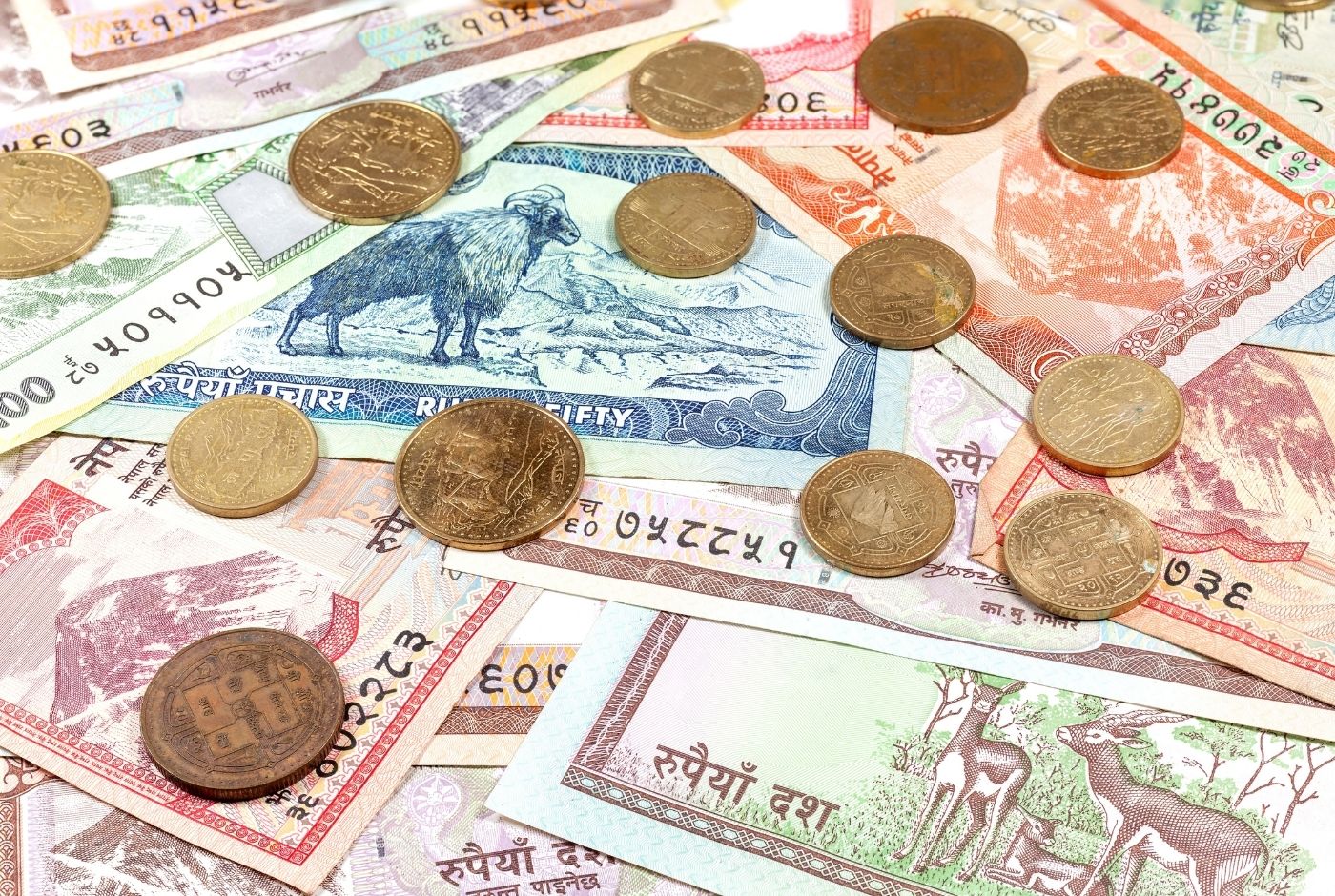
Nepal uses the Nepalese Rupee (NPR) as the official currency. You can see the currency symbol NPR, Rs, NRs, or रू in receipts, menus, hotel bills, and other transactions. The Nepalese rupee is issued and managed by Nepal Rastra Bank (NRB), Nepal's central bank. Its Currency Management Department is responsible for issuing Nepalese currency notes and coins, maintaining currency circulation, and verifying notes for authenticity and fitness.
For everyday travel expenses, Nepali rupees are the main currency you should use. Foreign currencies such as USD, GBP, and EUR are generally exchanged into NPR rather than used for ordinary purchases.
Nepal Currency Denominations
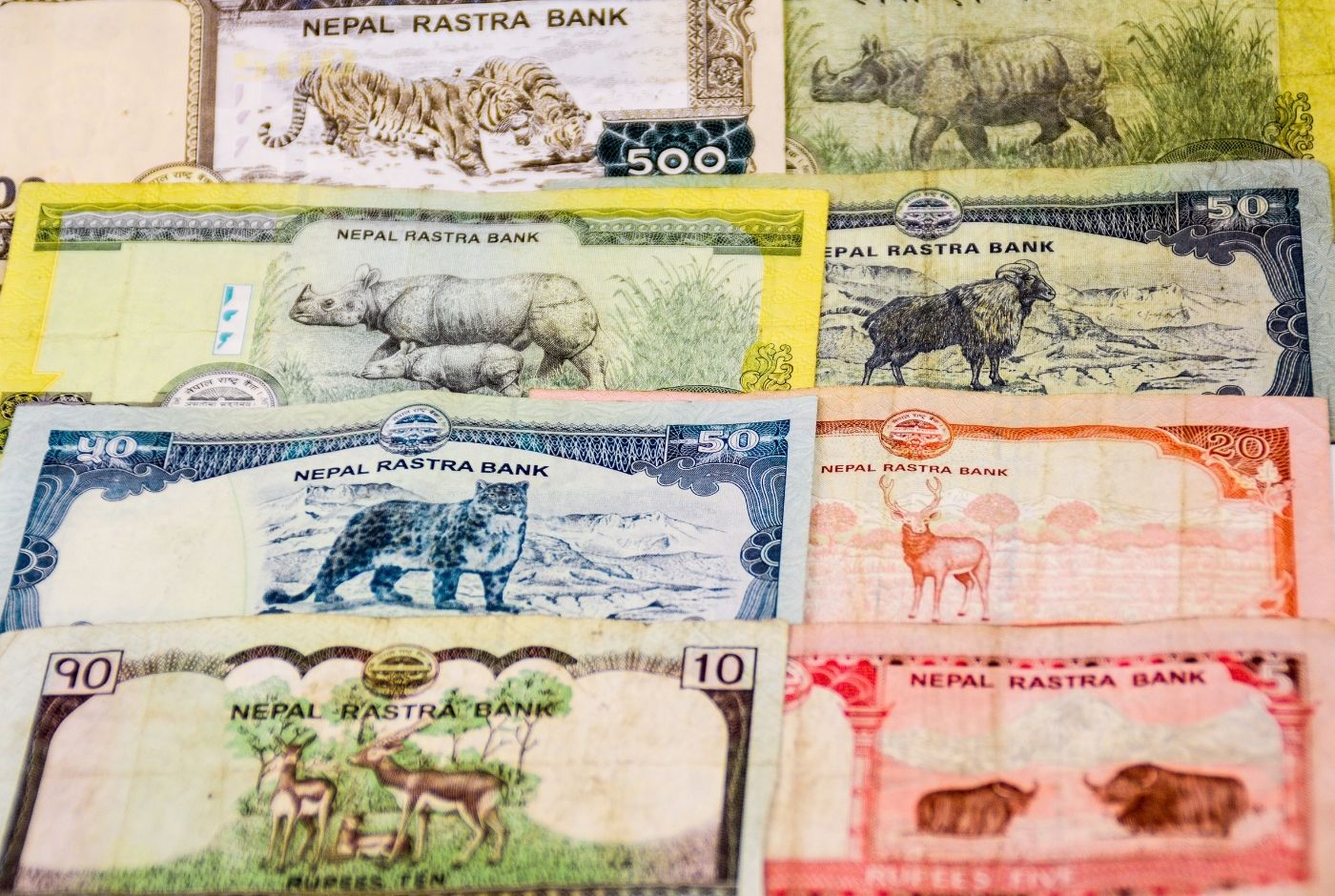
Nepalese currency is available in several denominations, such as 5, 10, 20, 50, 100, 500, and 1,000, making it useful to carry both larger notes and smaller denominations for everyday purchases.
The Nepal Rastra Bank used to print smaller currency notes such as 1 and 2 rupees; however, the central bank stopped printing them as the cost of printing low-denomination paper currency became higher than the actual face value of the notes. Now, the government relies on metallic coins for 1 and 2 rupee denominations.
Current commonly issued banknote denominations include:
|
Nepalese Rupee |
Common Use |
|
NPR 5, 10, 20 |
Small purchases, snacks, and local transport |
|
NPR 50 |
Snacks, drinks, and small purchases |
|
NPR 100 |
Meals, transport, and everyday shopping |
|
NPR 500 |
Larger everyday expenses |
|
NPR 1,000 |
Hotels, restaurants, and higher-value purchases |
Nepal Currency Exchange Rate
Exchange rates between the Nepalese rupee and foreign currencies change regularly. The Nepal Rastra Bank reference rate is not necessarily the same rate offered by individual banks or money changers, because open-market rates can vary between institutions.
For example, the Nepal Rastra Bank foreign-exchange page currently lists separate buying and selling rates for currencies such as USD, EUR and GBP. Travelers should always check the latest rate shortly before exchanging money rather than relying on an old conversion shown in a travel article.
Here is a table for Nepal Currency exchange rates for USD, EUR, and GBP:
|
Foreign Currency |
Unit |
NRB Buying Rate (NPR) |
NRB Selling Rate (NPR) |
|
US Dollar (USD) |
1 USD |
NPR 152.37 |
NPR 152.97 |
|
Euro (EUR) |
1 EUR |
NPR 177.74 |
NPR 178.44 |
|
British Pound Sterling (GBP) |
1 GBP |
NPR 207.60 |
NPR 208.41 |
It is also useful to understand the difference between:
- NRB reference rate: The rate published by Nepal Rastra Bank.
- Bank rate: The rate offered by an individual bank.
- Money changer rate: The rate offered by a licensed foreign-exchange business.
These rates may differ, so compare the rate and any applicable charges before exchanging a large amount of money.
Where Can I Exchange Money in Nepal?
Travelers can exchange major foreign currencies into Nepalese rupees through banks, licensed money changers, hotels in some cases, and exchange counters at Tribhuvan International Airport. Nepal Tourism Board specifically advises travelers to retain their foreign-exchange encashment receipts.
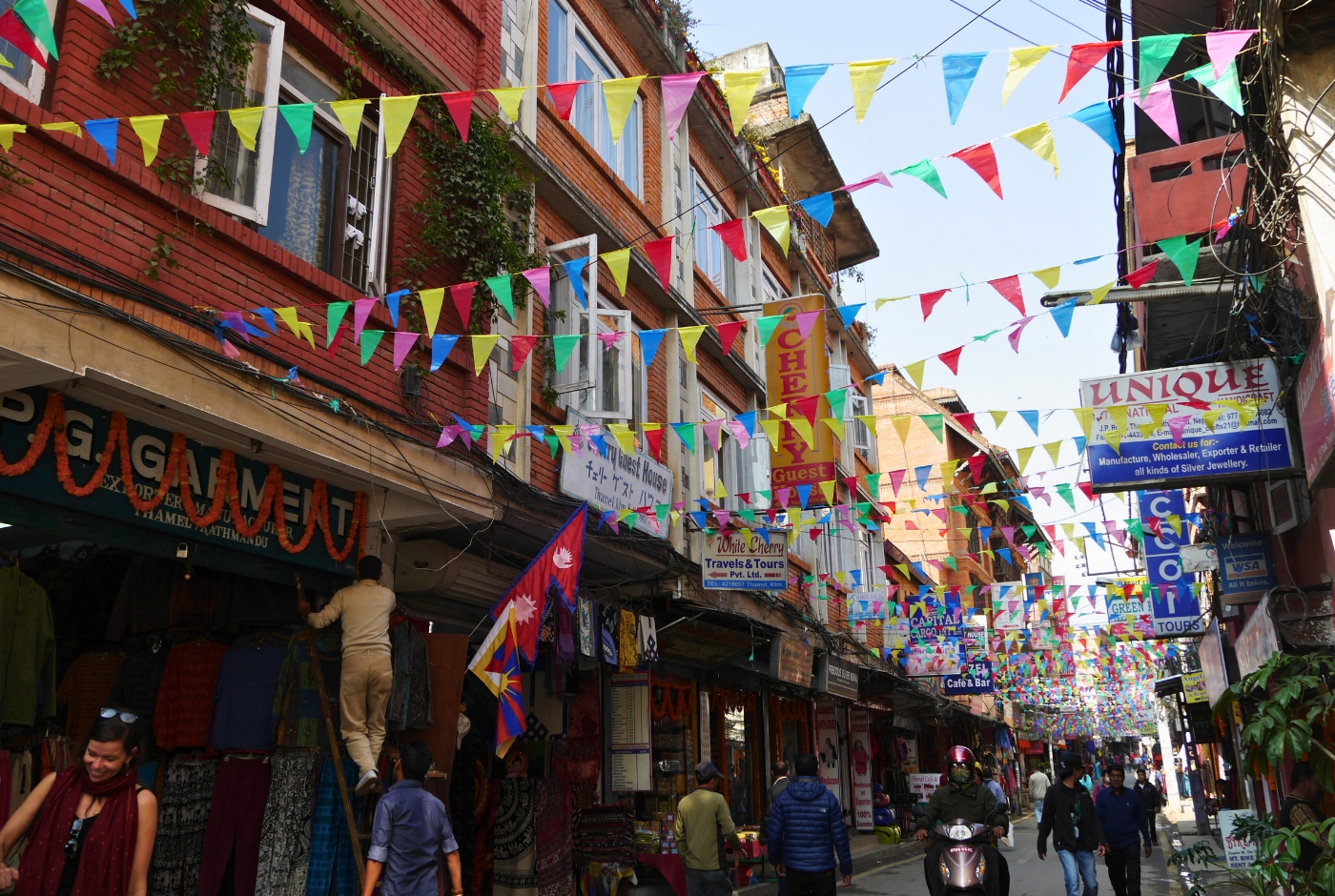
Similarly, Kathmandu has many options for exchanging foreign currency, particularly around major tourist areas such as Thamel. Licensed money changers are available throughout the city, and Nepal Rastra Bank publishes information on authorized foreign-exchange entities.
For better security and transparency, visitors should use a licensed money changer or authorized bank rather than exchanging money through unauthorized individuals.
Cash vs Card in Nepal: How much should I take for trekking in Nepal?
Nepal supports both cash and card payments in cities like Kathmandu, Pokhara, Chitwan, and other major places. Similarly, as per Nepal Tourism Board sites, major hotels, shops, and restaurants accept card payments such as American Express, Mastercard, and Visa.
On the other hand, most trekking routes, teahouses, mountain villages, and Himalayan regions don’t accept card payments. They prefer cash payments and strictly operate on a cash-only basis.
While planning a trek in Nepal, there is no specific amount of cash that trekkers should carry. The amount solely depends on your trekking destination, duration, accommodation and transportation preferences, and permits. Similarly, the amount is also determined by personal expenses such as snacks, shopping, souvenirs, and amenities like showers, Wi-Fi, charging, tips, and additional drinks.
Here is a table breakdown of why you need cash for before and during a trek:
|
Before the Trek |
During a Trek |
|
Local transportation |
Snacks and drinks |
|
SIM cards and communication |
Bottled or boiled drinking water |
|
Applicable permits and entry fees |
Hot showers, Wi-Fi, charging, and laundry |
|
Trekking equipment (rental/buying) |
Tipping guides and porters |
|
Hotel upgrades/booking |
Hotel/teahouse upgrades/booking |
|
Souvenirs and personal shopping |
Personal purchases/souvenirs shopping |
|
Sightseeing tour |
Medical emergency/rescue evacuation |
Should I Carry USD for Trekking in Nepal?
Yes, you can carry USD (US dollars) for trekking in Nepal and exchange them in Kathmandu or Pokhara for convenience during daily expenses on trekking routes. It is the most practical option as Nepalese Rupees are the primary currency used along trekking routes, particularly for meals, accommodation, snacks, hot drinks, showers, charging, and other small expenses.
While USD may be useful for larger payments, helicopter rides, tips, or emergencies in cities, most teahouses and local shops in remote mountain areas prefer or require payment in Nepalese Rupees.
For example:
- NPR= Everyday local spending in treks
- Foreign currency: Typically useful for tipping guides, emergency rescue, and helicopter services
As the Himalayan regions in Nepal do not have banks and reliable exchange agencies, carrying and planning to spend USD directly can be inconvenient while trekking.
Why Should Travelers Carry Smaller Nepalese Notes?
Although NPR 1,000 notes are convenient, carrying only large notes can sometimes be inconvenient, particularly in local shops, small restaurants, rural villages, buses, tea houses, and trekking settlements.
A practical approach is to keep a mixture of NPR 100, 500 and 1,000 notes, along with some smaller denominations. This makes it easier to pay for small purchases without depending on a shopkeeper or lodge to provide change.
How Much Cash Can a Foreign Trekker Carry while visiting Nepal?
While travelling to Nepal, foreign visitors can carry any amount of cash, but cash exceeding USD 5,000 (or its equivalent in other foreign currencies) should be declared at the customs office upon arrival.
On the other hand, higher amounts brought via credit cards, formal banking channels, or bank transfers do not have strict cash-carrying limits. Nonetheless, keeping official exchange receipts is recommended.
For Indian travellers, the limit is INR 25,000 (cash) per person. It is also restricted to INR 200 and INR 500 notes issued on or after 9th November 2016; older INR 500, INR 1,000, and new INR 2,000 notes are strictly prohibited in Nepal.
Nepal Trekking Permits and Fees
The table below is based on the latest Nepal Tourism Board information available in August 2026, using the current Nepal Rastra Bank reference rate of approx. USD 1= NPR 152.97 (selling rate).
The market exchange or selling rates can vary from one exchange agency to another.
|
Trekking Region/Permit |
Required For |
Cost in USD |
Approx. Cost in NPR |
|
Annapurna Conservation Area Permit (ACAP) |
ABC, Annapurna Circuit, Mardi Himal, Khopra, and other ACAP routes |
USD 19.61 |
NPR 3,000 |
|
Manaslu Conservation Area (MCAP) |
Manaslu Circuit, Tsum Valley, and other routes within MCAP |
USD 19.61 |
NPR 3,000 |
|
Kanchenjunga Conservation Area Permit |
USD 13.07 |
NPR 2,000 |
|
|
Makalu-Barun National Park |
Makalu Base Camp and routes inside the park |
USD 19.61 |
NPR 3,000 |
|
Sagarmatha National Park |
Everest Base Camp, Gokyo, Three Passes and other routes entering the park |
USD 19.61 |
NPR 3,000 |
|
Langtang National Park |
Langtang Valley, Gosaikunda and Tamang Heritage routes entering the park |
USD 19.61 |
NPR 3,000 |
|
Shey-Phoksundo National Park |
Trekking routes entering Shey-Phoksundo National Park |
USD 19.61 |
NPR 3,000 |
|
Rara National Park |
Rara Lake Trek and routes entering the park |
USD 19.61 |
NPR 3,000 |
|
Shivapuri-Nagarjun National Park |
Shivapuri and Nagarjun hiking/trekking routes |
USD 6.54 |
NPR 1,000 |
|
Api Nampa Conservation Area |
Treks within Api Nampa Conservation Area |
USD 13.07 |
NPR 2,000 |
|
Gaurishankar Conservation Area |
Routes within Gaurishankar Conservation Area |
USD 19.61 |
NPR 3,000 |
|
Dhorpatan Hunting Reserve |
Treks entering Dhorpatan |
USD 19.61 |
NPR 3,000 |
|
TIMS Card- Non-SAARC |
Most designated trekking routes |
USD 13.07 |
NPR 2,000 |
|
TIMS Card-SAARC |
Most designated trekking routes |
USD 6.54 |
NPR 1,000 |
The cost of trekking permits and necessary entry tickets varies according to the trekking region, as well as the market exchange rates. Travelers should check the latest fee and permit requirements before their trek, as the rates change from time to time.
Final Thoughts on Nepal Currency
Understanding Nepal currency is an important part of preparing for a comfortable trip, especially while planning a sightseeing tour or high-altitude trekking. Travelers have easy access to banks, licensed money exchange, ATMs, and card payments in Kathmandu and Pokhara. However, in the Himalayas, Nepalese cash becomes much more important as local teahouses and businesses prioritize cash.
The simplest strategy for trekkers is to exchange or withdraw Nepalese rupees for their trek, carry a mixture of denominations, keep exchange receipts, and keep an emergency reserve. With these preparations, managing Nepal currency or Nepalese rupees is simple even for foreign trekkers.
Post a Comment