
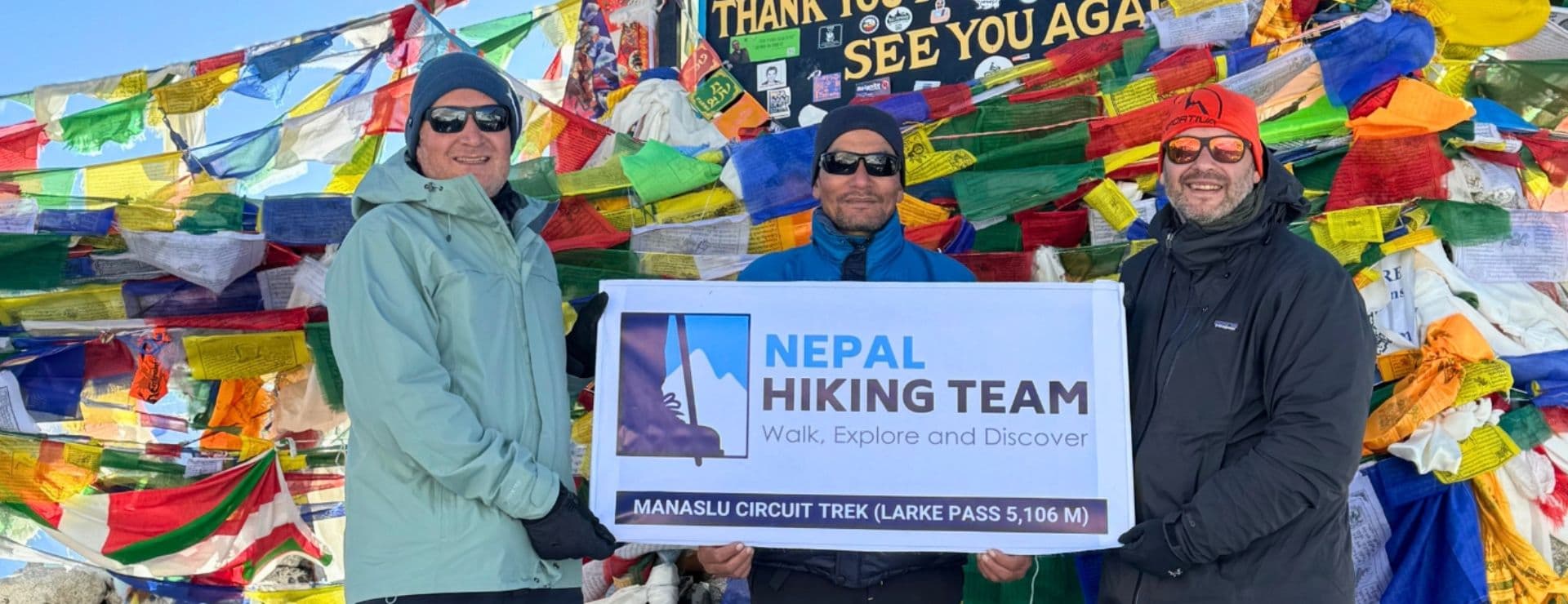
The standard Manaslu Circuit Trek requires the Manaslu Restricted Area Permit (RAP), Manaslu Conservation Area Permit (MCAP), Annapurna Conservation Area Permit (ACAP), and Chumnubri Rural Municipality Fee. If Tsum Valley is added, a separate Tsum Valley Restricted Area Permit is also required. The Manaslu RAP (and Tsum Valley RAP for Tsum Valley trek extension) must be arranged through a registered trekking agency, and a licensed guide is mandatory. MCAP and ACAP should be arranged before the trek begins because checkpoint-issued conservation permits cost double.
| Permit or Fee | Status | Applies To |
|---|---|---|
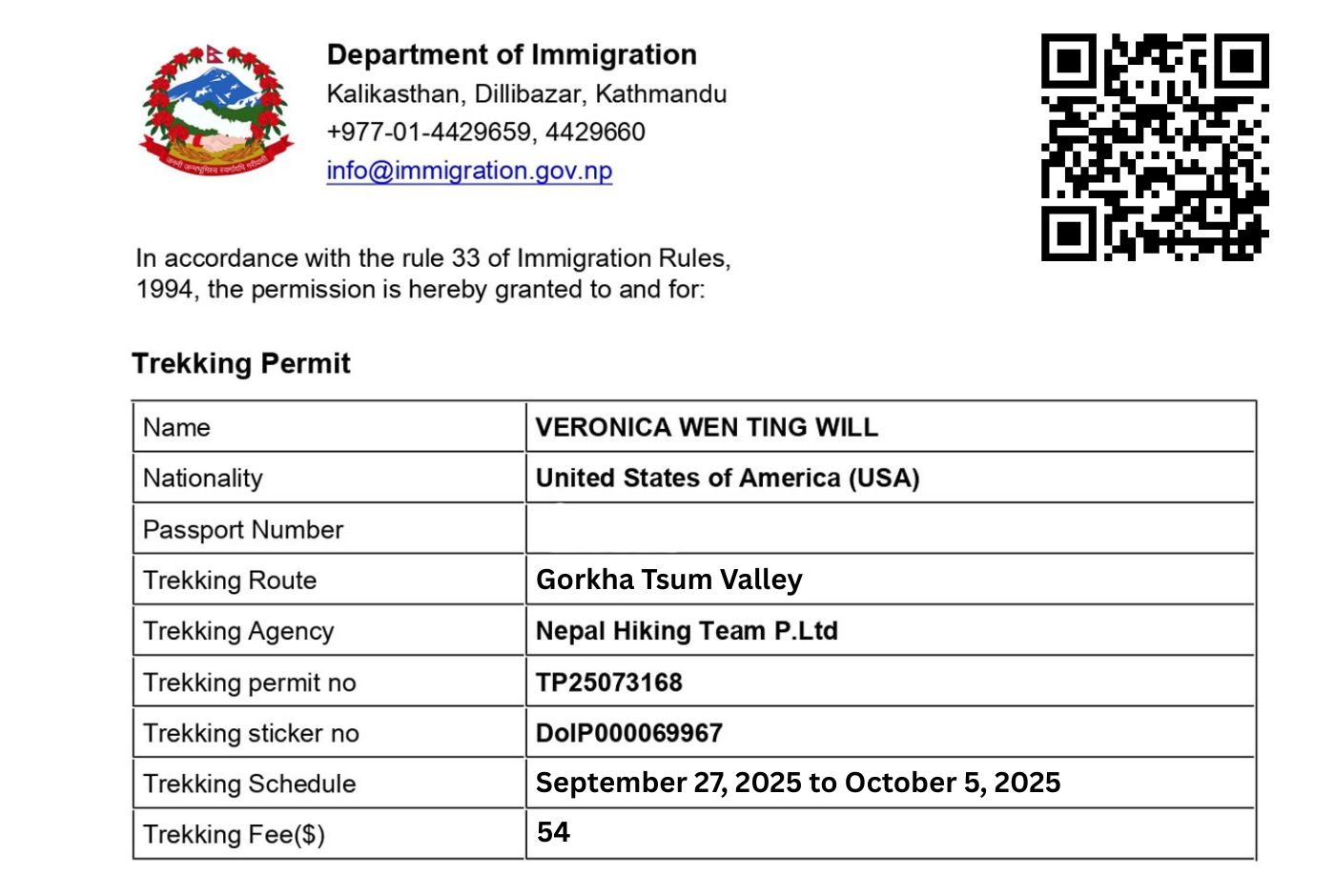
| Manaslu Restricted Area Permit (RAP) | Required | Restricted Manaslu route from the Jagat side through Deng, Namrung, Lho, Shyala, Sama Gaun, Samdo, Dharmasala or Larkya Phedi, and toward Larkya La. |
| Manaslu Conservation Area Permit (MCAP) | Required | Manaslu Conservation Area route, including Jagat, Philim, Deng, Namrung, Lho, Sama Gaun, and Samdo. |
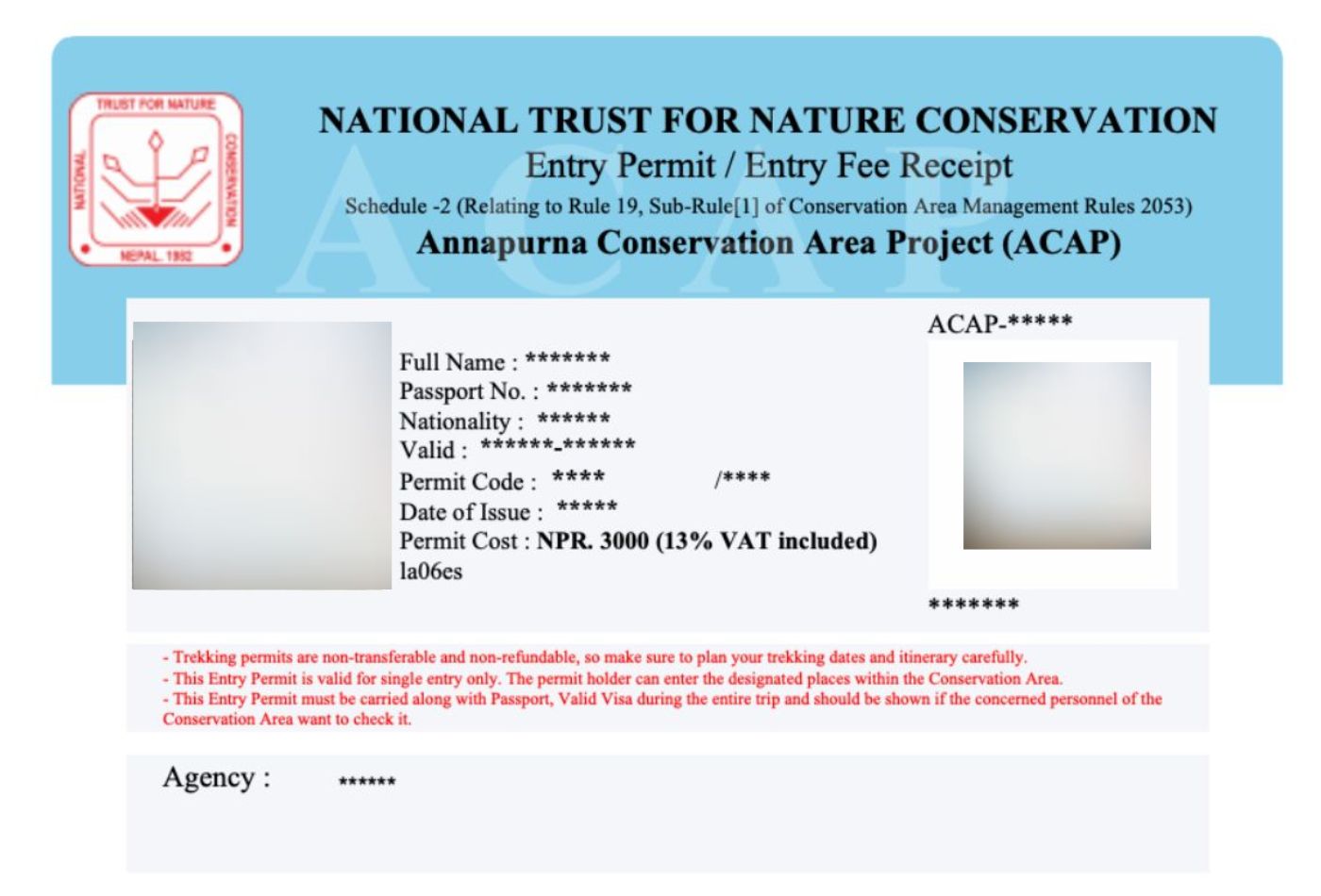
| Annapurna Conservation Area Permit (ACAP) | Required | Annapurna-side exit route after Larkya La, including Bhimtang, Tilije, Dharapani, and the Besisahar route. |
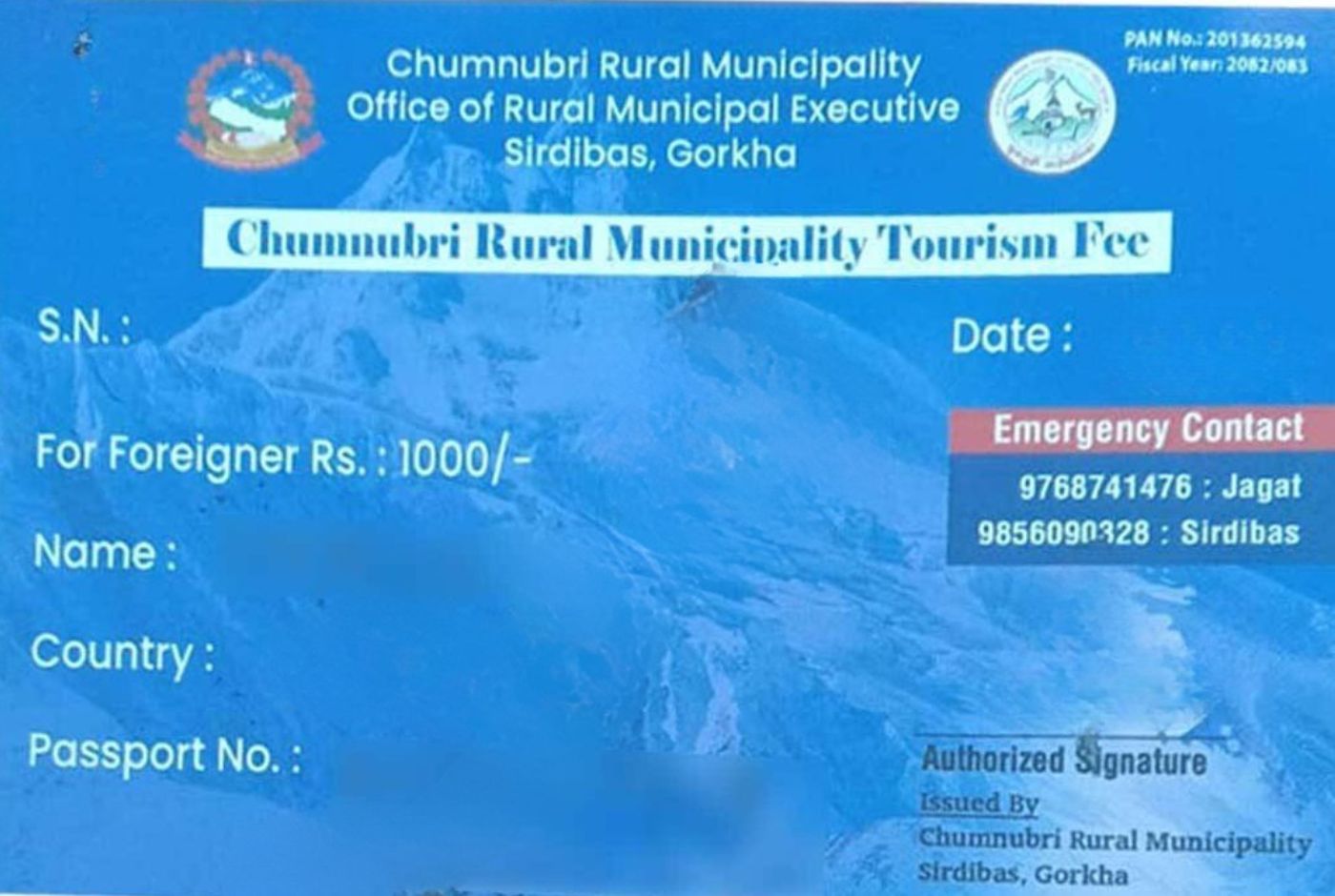
| Chumnubri Rural Municipality Fee | Required | Local entry fee collected around the Jagat checkpoint area. |
| Tsum Valley Restricted Area Permit | Optional | Only for trekkers adding Tsum Valley, including Sirdibas, Lokpa, Chumling, Chhekampar, Nile, and Chule. |
| Trekkers’ Information Management System (TIMS) card | Not Required | For all treks in Nepal, including in Manaslu region, TIMS is officially listed as required. However, due to limited implementation and inconsistent checking, TIMS is not issued or checked in practice. |
Manaslu Circuit Trek Permit Cost for Foreigners, Indian and SAARC Nationals, and Nepali Trekkers
The Manaslu Circuit Trek permit cost is not one fixed amount. It changes based on trekking season, the number of days spent inside the restricted area, nationality, itinerary length, and whether Tsum Valley is included. The Manaslu RAP carries the highest and most variable fee. MCAP, ACAP, and the Chumnubri Rural Municipality Fee are fixed amounts that do not change by season.
For the Manaslu RAP and Tsum Valley Permit, Indian and SAARC trekkers should not assume that the conservation area discount rate applies to the restricted-area permit. The RAP is charged under a separate restricted-area permit structure. At present, no separate SAARC discount is offered for Restricted Area Permits. Nepal Hiking Team confirms the applicable RAP rate for all nationalities during permit processing.
| Permit or Fee | Foreigners | Indian and SAARC Nationals | Nepali Citizens |
|---|---|---|---|
| Manaslu RAP (September to November) | USD 100 for the first week, then USD 15 per day after the first week | Same as foreigners. | Not required. |
| Manaslu RAP (December to August) | USD 75 for the first week, then USD 10 per day after the first week | Same as foreigners. | Not required. |
| MCAP | NPR 3,000 | NPR 1,000 | NPR 100 |
| ACAP | NPR 3,000 | NPR 1,000 | NPR 100 |
| Chumnubri Rural Municipality Fee | NPR 1,000 | NPR 200 | NPR 200 |
| Tsum Valley RAP (September to November) | USD 40 for the first week, then USD 7 per day after the first week | Same as foreigners. | Not required. |
| Tsum Valley RAP (December to August) | USD 30 for the first week, then USD 7 per day after the first week | Same as foreigners. | Not required. |
Checkpoint fee warning: MCAP and ACAP are arranged before the trek begins. If conservation permits are issued directly at check-posts, double fees is charged. Nepal Hiking Team prepares these permits in advance to avoid unnecessary extra costs and time delays at checkpoints.
Do children below 10 years need permits for the Manaslu Circuit Trek?
As of now, conservation area entry rules exempt children under 10 years old. Families should still confirm the requirements for restricted-area and local municipality fees with their travel agencies before finalising the Manaslu itinerary budget.
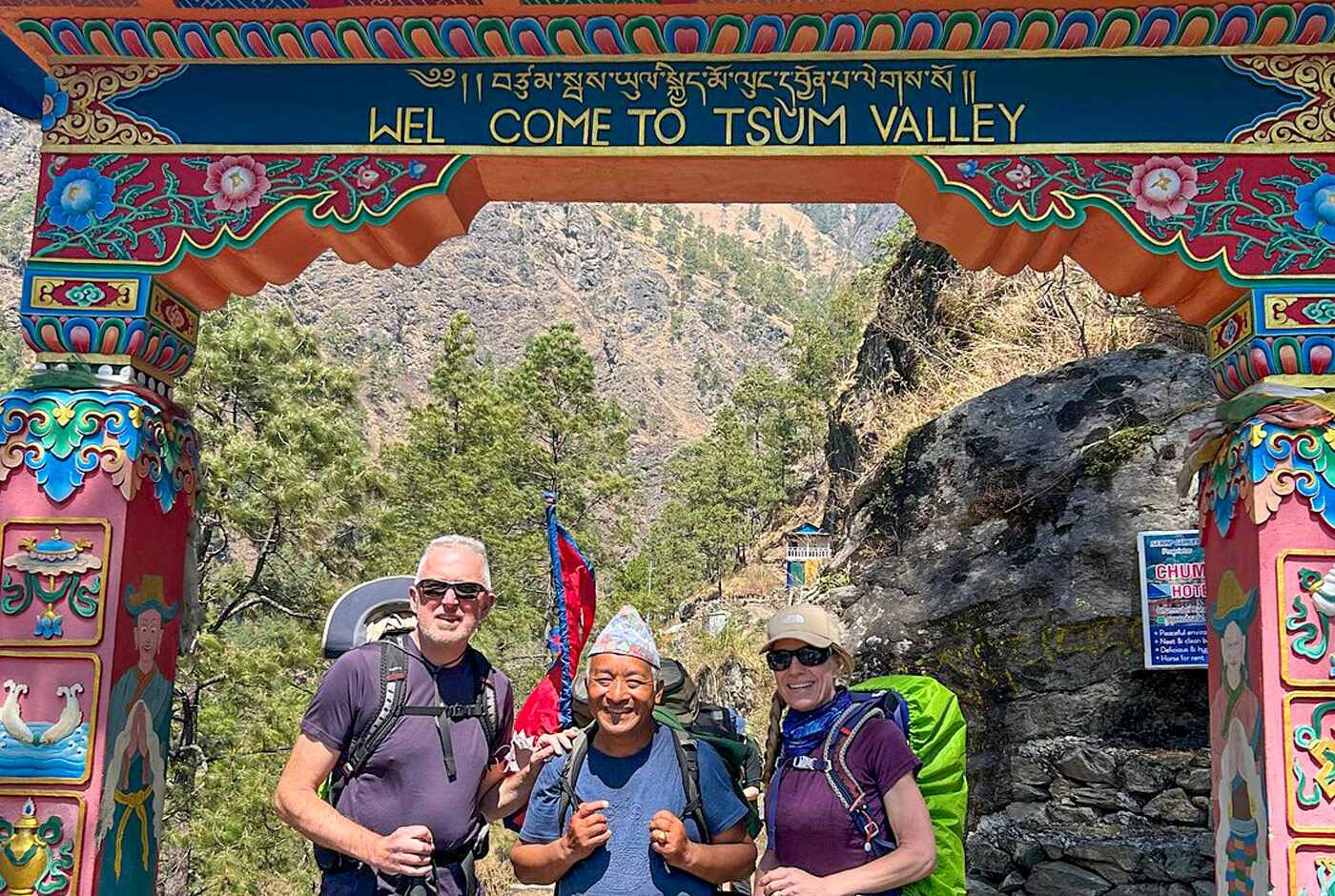
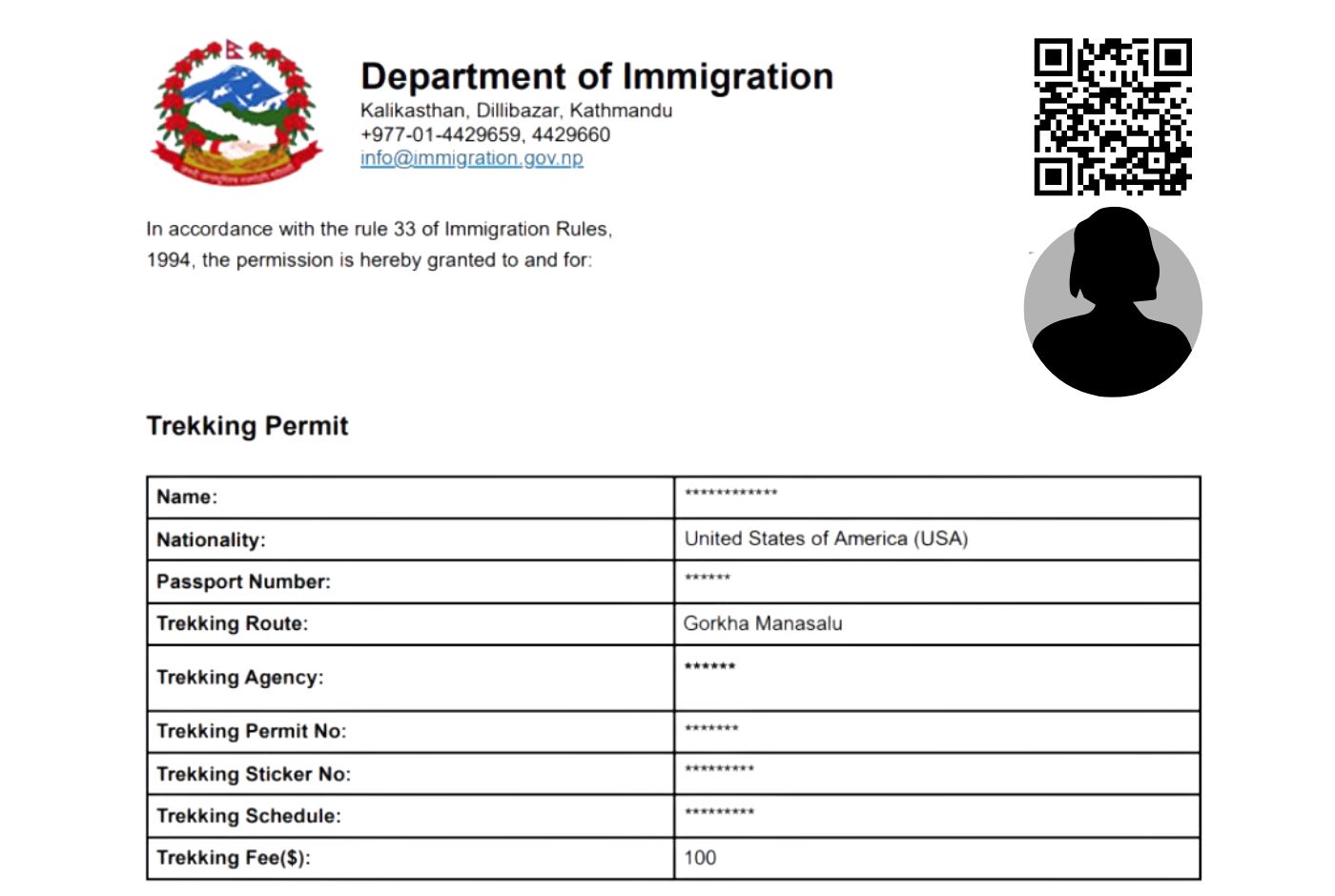
Manaslu Restricted Area Permit for the Manaslu Circuit Trek
Why the Manaslu Restricted Area Permit Is Required
The Manaslu RAP is required because the route enters the restricted area of Chumnubri Rural Municipality in Gorkha. This is a controlled border-region trekking area. The Department of Immigration lists the Gorkha Manaslu area, including all areas of Chumnubri Rural Municipality wards 1, 2, 3, and 4, under restricted trekking permit rules. Foreign trekkers need a special restricted-area permit arranged through a registered trekking agency. It cannot be purchased independently at a conservation counter or self-issued online.
Manaslu Restricted Area Permit Cost
The Manaslu Restricted Area Permit cost is calculated by season and by the number of days trekkers spend inside the restricted Manaslu route. The fee is charged in USD, and the first 7 days are covered under a fixed first-week rate. Any day after the first week is charged as an additional daily fee.
From September to November, the Manaslu RAP costs USD 100 for the first 7 days and USD 15 for each additional day. From December to August, the cost is USD 75 for the first 7 days and USD 10 for each additional day.
Indian and SAARC trekkers pay the same Manaslu RAP rate as foreign trekkers because no separate SAARC discount currently applies to restricted-area permits. Nepali citizens do not need the Manaslu RAP, but local and conservation-area fees may still apply where relevant.
Where the Manaslu RAP Applies on the Route
The Manaslu RAP applies to the restricted Manaslu route from Jagat via the upper Manaslu villages. In most Manaslu Circuit treks' itineraries, the trekking route includes the route through Jagat, Deng, Namrung, Lho, Shyala, Sama Gaun, Samdo, and Dharmasala or Larkya Phedi before crossing Larkya La. Final permit handling is completed in accordance with the confirmed itinerary and the active checkpoint process on the exit side.
Manaslu RAP Checkpoints on the Trek
In Nepal Hiking Team's standard itinerary, trekkers drive to Machha Khola first and then trek to Jagat on Day 03. Machha Khola is before the main permit checkpoint zone. Jagat is an important entry checkpoint on the Manaslu route. Philim is another common Manaslu-side permit control point, while Dharapani is commonly used on the exit-side route after crossing Larkya La and descending through Bhimtang, Goa, and Tilije. The licensed guide manages checkpoint registration and keeps the permit file ready throughout the trek.
How Many RAP Days Do You Need for the Manaslu Circuit Trek?
For Nepal Hiking Team's 14-day Manaslu Circuit Trek, the Manaslu Restricted Area Permit is calculated for 9 days. The count starts on Day 03 at Jagat, where trekkers enter the Manaslu restricted route, and ends on Day 11 after crossing Larkya La and descending to Bhimtang on the Annapurna-side exit route.
In this itinerary, the RAP days are counted as follows: Day 03 Jagat, Day 04 Deng, Day 05 Namrung, Day 06 Shyala, Day 07 Sama Gaun, Day 08 Sama Gaun acclimatisation day, Day 09 Samdo, Day 10 Dharmasala, and Day 11 Larkya La crossing to Bhimtang.
For cost calculation, 9 RAP days means the first 7 days plus 2 additional days. From September to November, this comes to USD 130 per person for the Manaslu RAP. From December to August, this comes to USD 95 per person for the Manaslu RAP.
Can Trekkers Apply for the Manaslu RAP Themselves?
No. Trekkers cannot self-issue the Manaslu Restricted Area Permit online or independently at a conservation counter. It must be arranged through a registered trekking agency, and a licensed guide must accompany the trek.
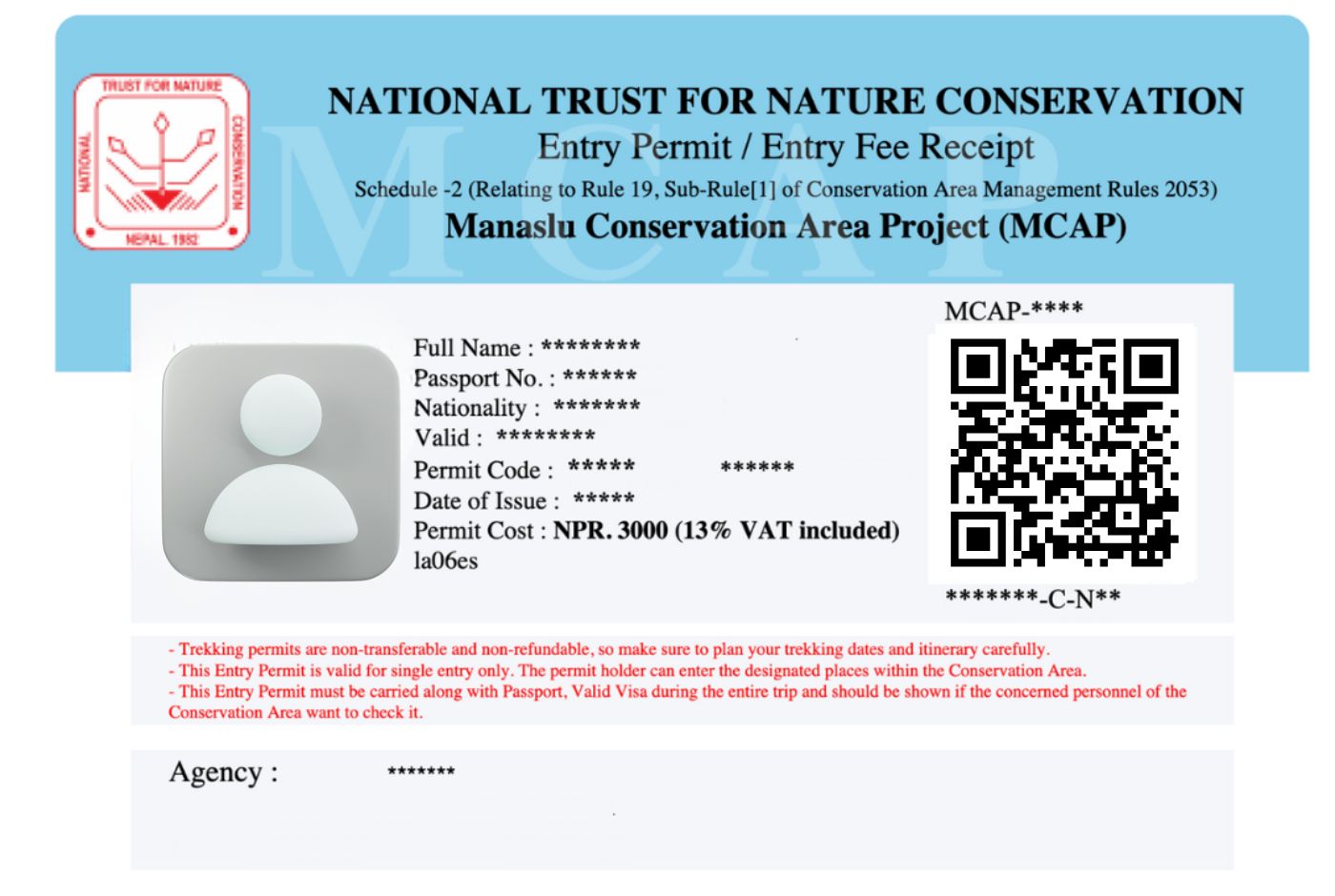
Manaslu Conservation Area Permit for the Manaslu Circuit Trek
Why the MCAP Permit Is Required
MCAP is required because the Manaslu Circuit Trek route enters the Manaslu Conservation Area. It is a conservation permit, not a restricted-area permit. MCAP supports conservation management, local environment protection, and visitor regulation inside the Manaslu region. It is issued through the NTNC e-permit system.
MCAP Permit Cost
Foreigners pay NPR 3,000 for MCAP. Indian and SAARC nationals pay NPR 1,000. Nepali citizens pay NPR 100. This fee does not change by trekking season.
Where the MCAP Permit Applies on the Route
In Nepal Hiking Team's 14-day itinerary, MCAP applies through the Manaslu-side trekking route from Jagat toward Philim, Deng, Namrung, Lho, Shyala, Sama Gaun, Samdo, and Dharmasala. It remains relevant while trekkers move through the Manaslu Conservation Area before crossing Larkya La and descending toward the Annapurna-side exit route.
MCAP Checkpoints on the Manaslu Circuit Trek
MCAP may be checked at Manaslu Conservation Area entry and internal checkposts, commonly around Jagat, Philim, and other Manaslu-side control points. Trekkers should carry the permit throughout the entire Manaslu section of the route. The guide manages permit handling at these checkpoints.
Annapurna Conservation Area Permit for the Manaslu Circuit Trek
Why ACAP Is Required for the Manaslu Circuit Trek
Trekkers need ACAP because the Manaslu Circuit Trek does not finish inside the Manaslu region. After crossing Larkya La (5,106m), the trail descends toward Bhimtang, Tilije, and Dharapani, which are part of the Annapurna Conservation Area. ACAP is therefore required even though the main focus of the trek is the Manaslu region. This is a common point of confusion for first-time trekkers planning the Manaslu Circuit.
ACAP Permit Cost
Foreigners pay NPR 3,000 for ACAP. Indian and SAARC nationals pay NPR 1,000. Nepali citizens pay NPR 100. ACAP does not change by season.
Where the Route Enters the Annapurna Conservation Area
In Nepal Hiking Team's itinerary, the Annapurna-side section begins after trekkers cross Larkya La on Day 11 and descend to Bhimtang. From there, the route continues to Goa on Day 12 and Tilije on Day 13 before connecting with road transport through the Dharapani or Besisahar route. This is why ACAP is required even though the trek is named after Manaslu.
ACAP Checkpoints Near Dharapani and Besisahar
ACAP is usually checked on the Annapurna-side exit route, especially around Dharapani and onward toward Besisahar. Trekkers should keep the permit accessible until all trail and road exit formalities are complete. The guide from Nepal Hiking Team handles permit presentation at these checkpoints.
Chumnubri Rural Municipality Fee for the Manaslu Circuit Trek
Why the Chumnubri Rural Municipality Fee Is Required
The Chumnubri Rural Municipality Fee is a local entry fee collected on the Manaslu side. It is separate from the Manaslu RAP, MCAP, and ACAP. The fee supports local tourism management and applies to trekkers entering the Chumnubri area during the Manaslu Circuit Trek.
Chumnubri Rural Municipality Fee Cost
Foreign trekkers pay NPR 1,000. Indian and SAARC trekkers pay NPR 200. Nepali trekkers also pay NPR 200. This fee is separate from conservation area permits and restricted-area permits.
Where the Chumnubri Fee Is Collected
The Chumnubri Rural Municipality Fee is commonly collected around the Jagat checkpoint area. Nepal Hiking Team includes this local fee in the permit planning and guides trekkers through the checkpoint process.
Tsum Valley Permit for Manaslu Circuit Trek Add-On
Is the Tsum Valley Permit Required for the Standard Manaslu Circuit Trek?
No. The Tsum Valley permit is not required for the standard Manaslu Circuit Trek. It is required only when the itinerary enters the Tsum Valley. Most trekkers completing the standard Manaslu Circuit do not enter Tsum Valley at all.
Tsum Valley Permit Cost by Season
The Tsum Valley Restricted Area Permit is a separate optional fee, charged independently from the standard Manaslu RAP, MCAP, ACAP, and Chumnubri Rural Municipality Fee.
| Tsum Valley Permit (Optional) | Foreigners and Indian and SAARC Nationals |
|---|---|
| September to November | USD 40 for the first week, then USD 7 per day after the first week. No separate SAARC discount is currently offered. |
| December to August | USD 30 for the first week, then USD 7 per day after the first week. No separate SAARC discount is currently offered. |
Trekkers adding Tsum Valley should confirm the current rate with Nepal Hiking Team before finalising the itinerary. Adding Tsum Valley changes the total permit cost and the number of restricted-area days.
Where the Tsum Valley Permit Applies on the Route
The Tsum Valley permit applies only when trekkers leave the main Manaslu Circuit route and enter the Tsum Valley restricted area. The Tsum Valley side route includes places such as Sirdibas, Lokpa, Chumling, Chhekampar, Nile, and Chule. It does not apply to trekkers following the standard Manaslu Circuit route without entering Tsum Valley.
Well, Tsum Valley is not only the side extension for Manaslu Circuit Trek, explore more add-ons in our detailed blog: Best places on Manaslu Circuit: Monastery, Lakes and Side Trips
Tsum Valley Permit Checkpoints
The Tsum Valley permit is checked when entering and exiting the Tsum Valley restricted area, at Tsum Valley-side checkpoints separate from the standard Manaslu Circuit control points. The guide manages the permit record at the relevant checkpoints.
When to Arrange the Tsum Valley Permit
The Tsum Valley permit should be arranged before the trek starts. It should be included in the permit file when the itinerary is confirmed because it affects total permit cost, route dates, and restricted-area planning. It should not be left until mid-trek because the permit must be arranged through the restricted-area process before entering the Tsum Valley section.
Can You Get the Manaslu Circuit Trek Permit Online?
Which Permits Can Be Processed Online?
MCAP and ACAP can be processed through NTNC's e-permit system before the trek. These are conservation area permits and are eligible for online payment and email permit delivery. These permits should be arranged before departure because checkpoint-issued conservation permits may cost double. Trekkers or their agency can use the NTNC e-permit portal to arrange these two permits before the trek begins.
Why the Manaslu RAP Cannot Be Self-Issued Online
The Manaslu RAP is a restricted-area permit and cannot be self-issued online. It must be processed through a registered trekking agency using passport details, Nepal visa details, itinerary dates, and licensed guide details. The agency submits the RAP application on behalf of the trekker through the official restricted-area permit process.
How to Get the Manaslu Circuit Trek Permit Through a Registered Agency
The standard permit process through a registered agency follows these steps:
- Confirm the final trekking itinerary and trek dates
- Send a passport copy and Nepal visa details to the agency
- Confirm restricted-area entry and exit dates
- Agency calculates the number of RAP days required
- Agency processes the Manaslu RAP, MCAP, ACAP, Chumnubri Rural Municipality Fee, and optional Tsum Valley permit
- Licensed guide is assigned for the trek
- Permit file is checked and confirmed before departure
Permit Example Using Nepal Hiking Team's 20-Day Tsum Valley with Manaslu Trek
In Nepal Hiking Team's 20-day Tsum Valley with Manaslu Trek itinerary, the Manaslu Restricted Area Permit is not calculated from all 20 package days. It is calculated from the Manaslu restricted-area trekking section, while the Tsum Valley section is covered by a separate Tsum Valley Restricted Area Permit. Based on our itinerary, the following permit budget sample uses 11 days (1 week + 4 extra days) Manaslu RAP days and the first-week Tsum Valley RAP bracket.
Permit Cost from September to November
| Permit | Foreign Trekkers | SAARC Trekkers |
|---|---|---|
| Manaslu RAP, 11 days | USD 160 (USD 100 + 4 times 15) | USD 160 |
| Tsum Valley RAP, first 7 days | USD 40 | USD 40 |
| MCAP | NPR 3,000 | NPR 1,000 |
| ACAP | NPR 3,000 | NPR 1,000 |
| Chumnubri Rural Municipality Fee | NPR 1,000 | NPR 200 |
| Total Permit Cost | USD 200 + NPR 7,000 (approx. 250 USD) | USD 200 + NPR 2,200 (approx. 215 USD) |
From December to August, the same itinerary has a lower restricted-area permit cost. For foreign trekkers, the total permit cost is USD 145 plus NPR 7,000. For SAARC trekkers, the total permit cost is USD 145 plus NPR 2,200.
Nepal Hiking Team package note: The official restricted-area permit fee changes by season, but Nepal Hiking Team keeps the Manaslu Circuit Trek and Tsum Valley Treks package price the same throughout all seasons.
Can You Do the Manaslu Circuit Trek Without a Guide?
Is a Licensed Guide Compulsory for Manaslu?
Yes. A licensed guide is compulsory for the Manaslu Circuit Trek because the route passes through a restricted area. This is a legal requirement, not a recommendation. Trekkers who do not travel with a licensed guide cannot complete the Manaslu Circuit Trek.
Can a Solo Trekker Get a Manaslu Permit in 2026?
Some outdated information online suggests that solo trekkers cannot get a Manaslu permit at all. Under the 2026 rule update, a single trekker can obtain a restricted-area permit through a registered trekking agency without needing a second trekker to form a group. However, this does not mean a trekker can walk alone without a guide. A single trekker is allowed. Unguided trekking is not allowed. The guide requirement remains in place regardless of group size. You can learn more in our blog coverage: Solo Trekking Permit For Restricted Areas & Pre-Arrival Visa Trekking Update 2026
For restricted-area treks such as the Manaslu Circuit, one licensed guide for up to 7 trekkers is now mandatory.
Documents Required for Manaslu Circuit Trek Permits
Passport Copy and Nepal Visa for Manaslu Permit
A valid passport copy and Nepal visa details are required for permit processing. If permits are prepared before arrival, the agency requires the visa application number to process the special permit.
Insurance and Emergency Contact Details
Travel insurance is not a government-issued document like a passport or visa, but Nepal Hiking Team collects insurance details for safety planning, emergency coordination, and helicopter rescue support. Emergency contact information is also collected as part of standard pre-trek documentation.
Document checklist:
- Passport copy
- Nepal visa details or visa application reference when required
- Passport-size photo if requested
- Confirmed trekking itinerary
- Travel insurance details
- Emergency contact details
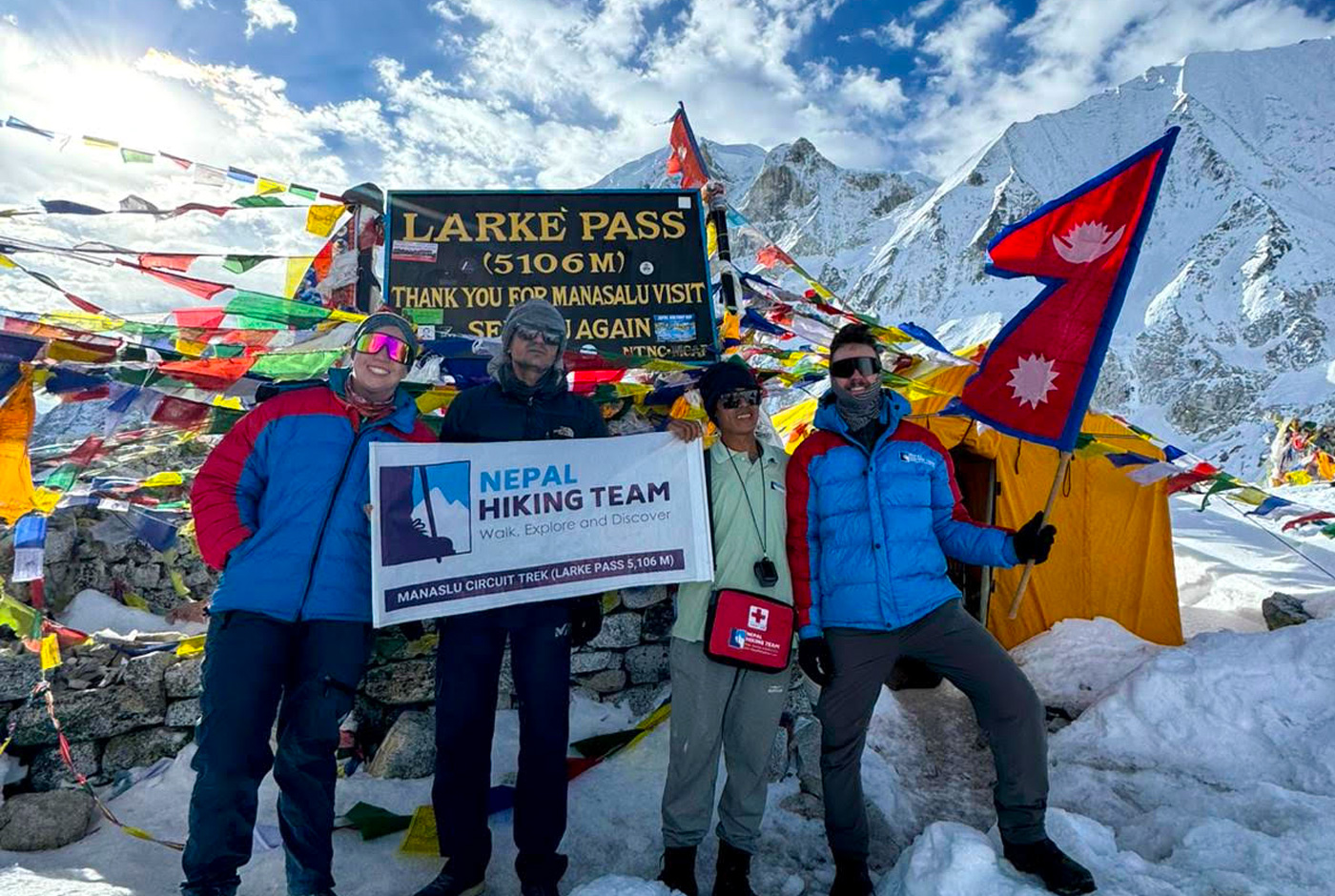
How Nepal Hiking Team Arranges Manaslu Circuit Trek Permits
Permit Preparation Before the Trek
Nepal Hiking Team confirms the itinerary, checks route dates, calculates the required RAP days, collects all required documents, and prepares the complete permit file before the trek starts. The team arranges the Manaslu RAP through the official agency process, MCAP and ACAP through NTNC, includes the Chumnubri Rural Municipality Fee in the permit planning, and adds the Tsum Valley permit if the itinerary includes that side route. All the cost for the permit fees are included in all packages.
Licensed Guide and Checkpoint Support
The licensed guide accompanies trekkers throughout the route, manages the permit file, and handles checkpoint registration at RAP, MCAP, ACAP, Chumnubri, and optional Tsum Valley control points. This helps trekkers avoid confusion and delays at checkpoints on the trail.
Nepal Hiking Team's Manaslu Circuit Trek Package Price Stays the Same Year-Round
Although the official Manaslu RAP cost changes by season, Nepal Hiking Team keeps its Manaslu Circuit Trek package price the same throughout all seasons. This means the 14-day itinerary, from arrival in Kathmandu to the Machha Khola drive, Larkya La crossing, Annapurna-side exit, and final departure, follows clear package pricing for spring, autumn, winter, and summer departures. The official permit fee is still calculated according to current government rules, but trekkers do not face a separate seasonal package surcharge from Nepal Hiking Team.
This is helpful for first-time trekkers because permit prices can look confusing online. The package remains steady, while the official RAP fee is checked and applied correctly during permit processing.
Post a Comment