
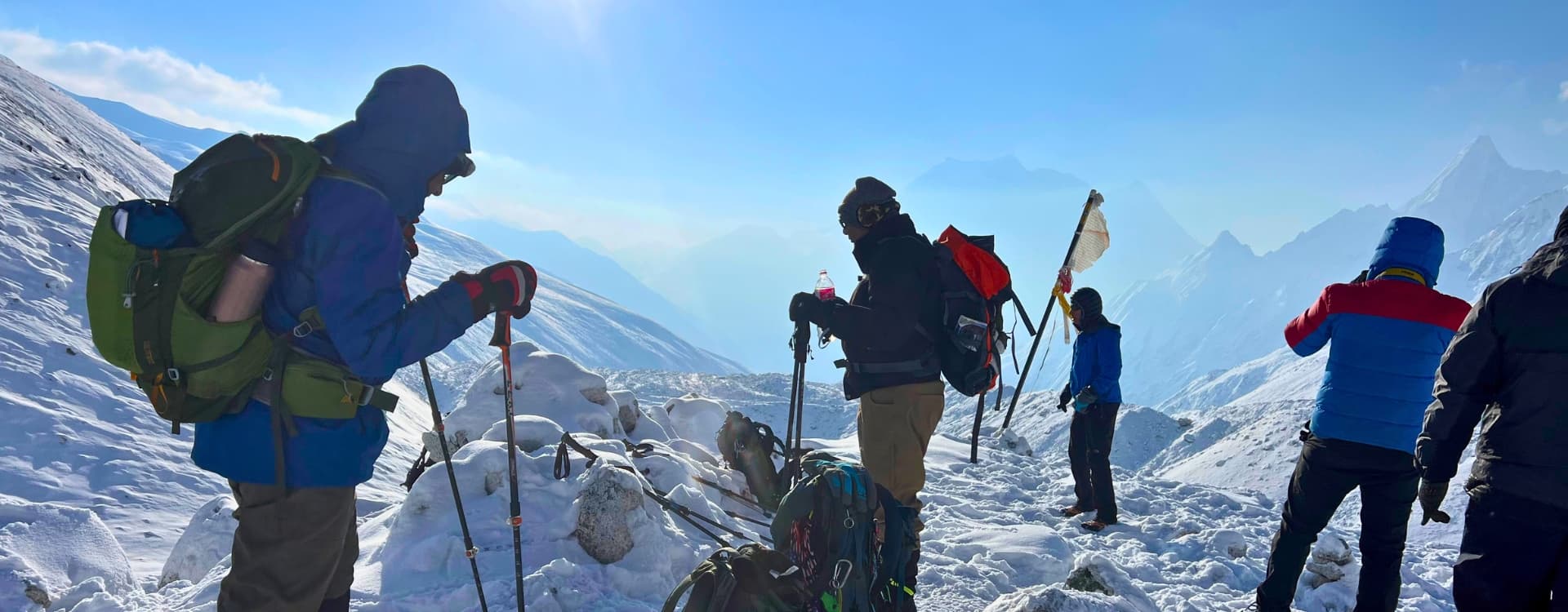
Choosing the best organization for the Manaslu Circuit Trek in 2026 involves verifying government registration (TAAN/NTB), checking for extensive local experience in the restricted region, and ensuring high safety standards, particularly for the high-altitude Larkya La Pass. Prioritize companies that provide experienced, English-speaking guides familiar with the terrain.
Because Manaslu is a restricted border region, independent trekking without a licensed guide or registered agency is not permitted. Your choice of operator determines your safety, permit legality, and overall experience on the trail.
That decision matters more on Manaslu than on almost any other trek in Nepal. The route runs through a government-restricted zone where independent trekking is prohibited. Teahouses become scarce beyond Samagaun. Helicopter evacuations from the upper sections can take the better part of a day to coordinate. On the Manaslu Circuit, the quality of your guide and itinerary directly affects whether you cross Larkya La or turn back.
This guide covers what to evaluate when comparing a Manaslu Circuit trekking company, what questions to ask before signing anything, and what operational details separate providers that genuinely know this route from those that simply list it. As of 2026, recent updates to Manaslu permit regulations have changed how solo trekkers and small groups can access the route, and those changes are covered in full below.
Is Nepal Hiking Team a suitable option for Manaslu Circuit Trek?
Nepal Hiking Team consistently rank among the best for the Manaslu Circuit Trek based on safety, reviews, and permit handling. Why Nepal Hiking Team is listed as number one Trekking operator in Nepal, including Manaslu Circuit Trek?
We are an experienced trekking company established in 2009, known for our expert knowledge, flexibility, transparency, and strong focus on safety. We adapt itineraries when weather or trail conditions change and provide personalized support throughout your journey. Our regional guides bring deep knowledge of local culture, history, and mountain trails while supporting local communities and livelihoods. We handle trekking permits for both solo and group travelers with clear pricing and no hidden fees. With more than 3,000 five-star reviews across major platforms, we are trusted by trekkers from around the world. Our local expertise, especially in the Manaslu region, helps us provide authentic experiences while maintaining professional trekking services.
What Makes the Manaslu Circuit Different from Other Himalayan Treks
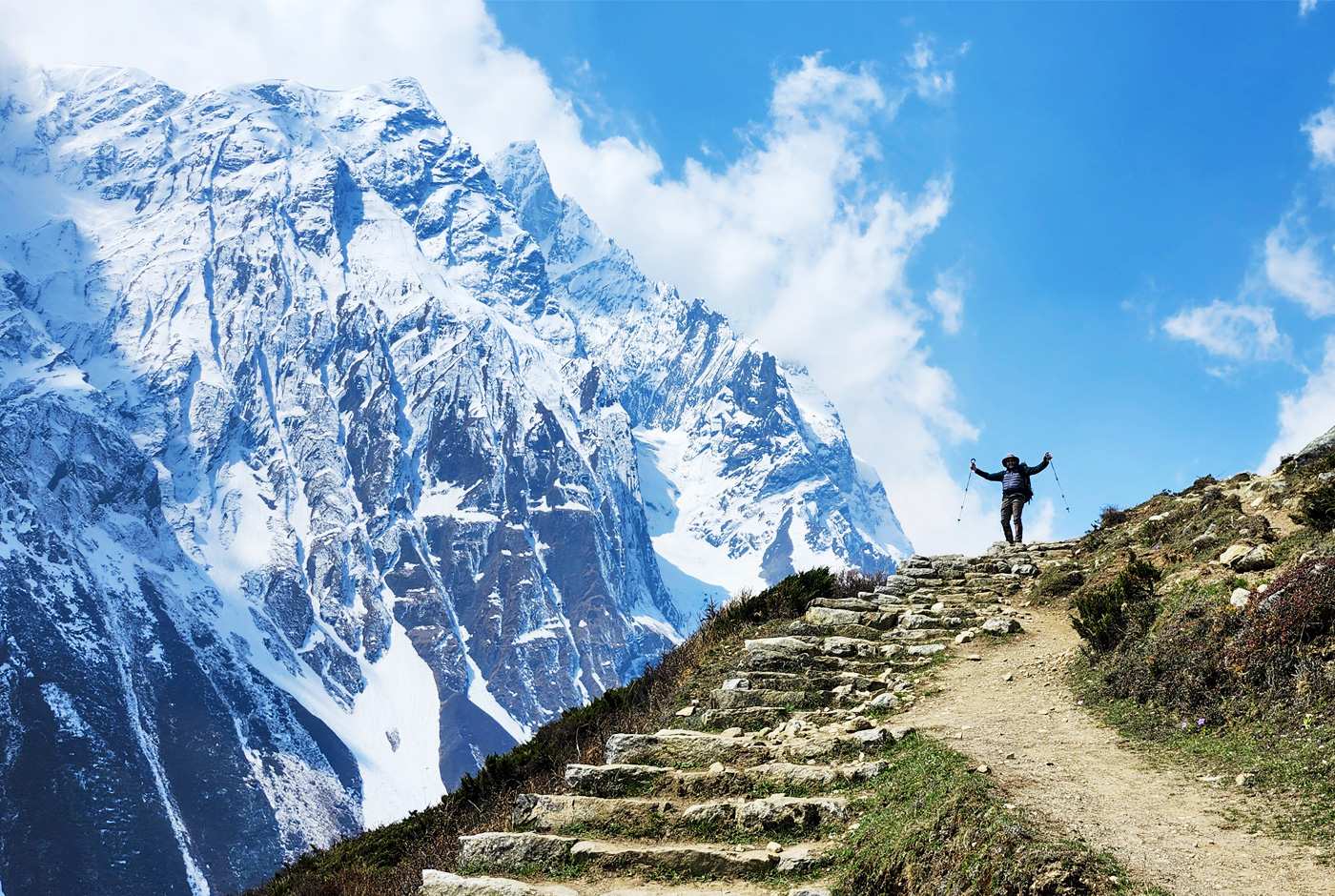
The Manaslu Conservation Area is a restricted zone under Nepalese law. That single fact changes the entire structure of how this trek operates. You cannot walk in independently, hire a local guide at the trailhead, or sort permits on arrival. Every element must be arranged in advance through a licensed trekking agency registered with the Nepal Tourism Board.
The terrain reinforces why that regulation exists. Beyond Samagaun at 3,530 metres, the trail becomes genuinely isolated. The last reliable teahouse cluster before Dharmasala sits at the edge of viable emergency access. Above that point, extraction requires a helicopter with a specific high-altitude ceiling, clear weather, and a pilot willing to fly into a narrow valley corridor. When conditions are marginal, the wait is measured in days, not hours.
The Larkya La Pass at 5,160 metres is the defining challenge of the route. Crossings begin between 3:00 and 4:00 in the morning because afternoon conditions on the pass deteriorate fast. Wind accelerates through the col and drives unconsolidated snow horizontally across the approach. The ascent from Dharmasala at 4,460 metres gains 700 metres on terrain that shifts between loose scree, packed snow, and ice depending on the season. The descent into Bimthang on the western side is long and steep, and becomes hazardous in poor visibility.
None of this is beyond a well-prepared trekker. But it is beyond a poorly planned one, and the difference between those two outcomes often comes down to which provider built the itinerary and which guide is leading the crossing.
Why the Restricted Area Permit Changes Everything
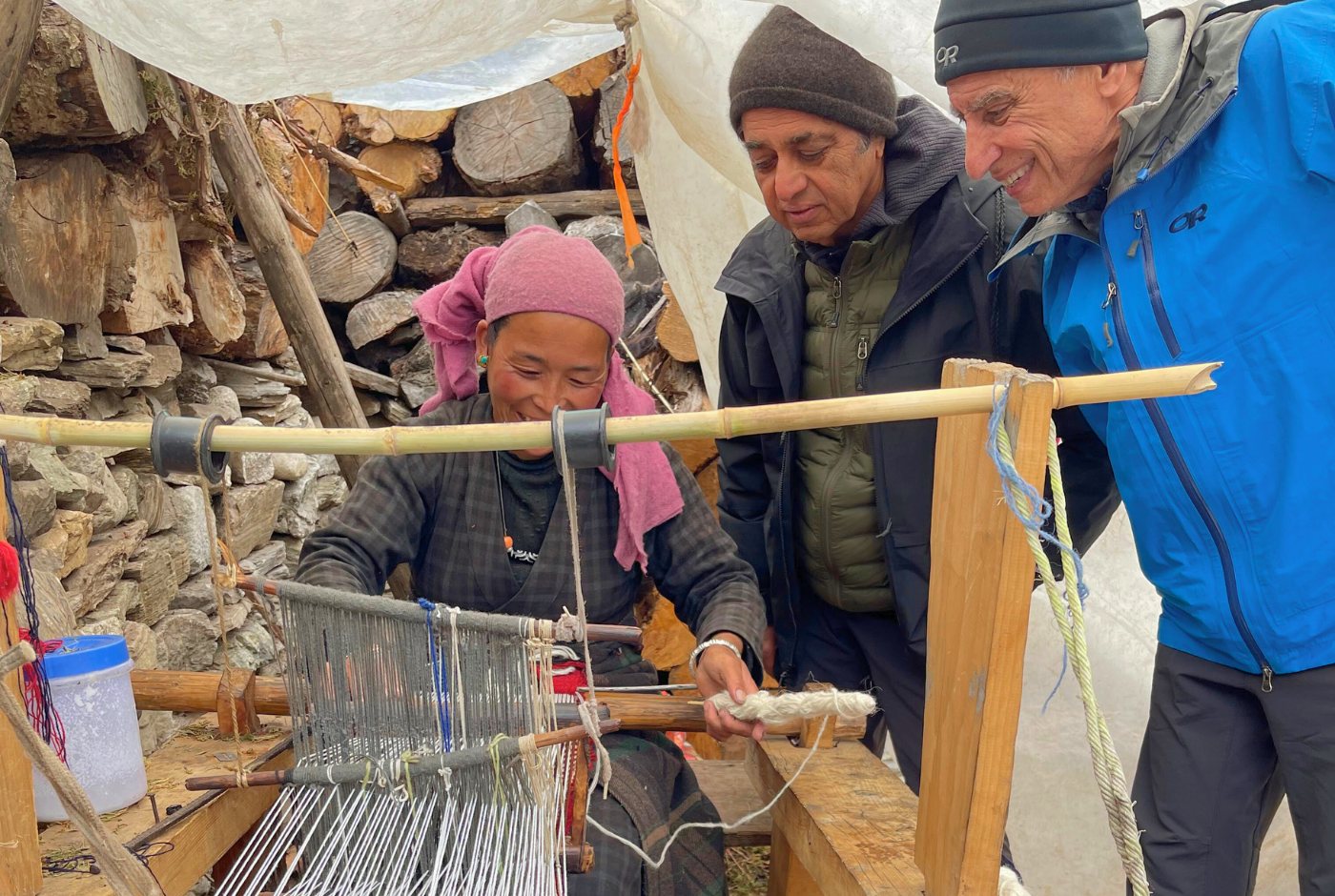
The Restricted Area Permit for Manaslu can only be obtained through a registered trekking agency. It cannot be purchased at a standard trek permit office, cannot be arranged online, and cannot be sorted on the day of departure. Processing takes several working days and requires the operator to submit documentation for every trekker in the group.
In addition to the RAP, trekkers need the Manaslu Conservation Area Permit (MCAP) and the Annapurna Conservation Area Permit (ACAP) for the section of trail that crosses into the Annapurna zone near Dharapani. Checkpoints along the route verify all three permits at different stages. Missing or incorrectly issued documentation results in being turned back, with no mechanism for refunding days already spent on the trail.
A licensed trekking agency for Manaslu handles all three permits before you arrive in Kathmandu. Confirm this explicitly when comparing operators. Ask to see a sample of the documentation they provide. A provider that processes permits correctly tends to run a more careful operation overall.
Key Factors When Choosing a Manaslu Circuit Trekking Company
Government Registration and Legal Standing
Request the Nepal Tourism Board registration number (or see directly on sites) and TAAN membership status before any other discussion. These are straightforward to verify, and a legitimate operator provides them without hesitation. An unregistered provider cannot legally issue a Restricted Area Permit. Any permit that comes through unofficial channels is a liability at every checkpoint where it is examined.
Nepal Hiking Team is a fully registered, legally compliant trekking organization in Nepal. We possess all necessary government licenses, tax compliance certifications, and institutional memberships required to operate high-altitude restricted area treks like the Manaslu Circuit.
Route-Specific Guide Experience
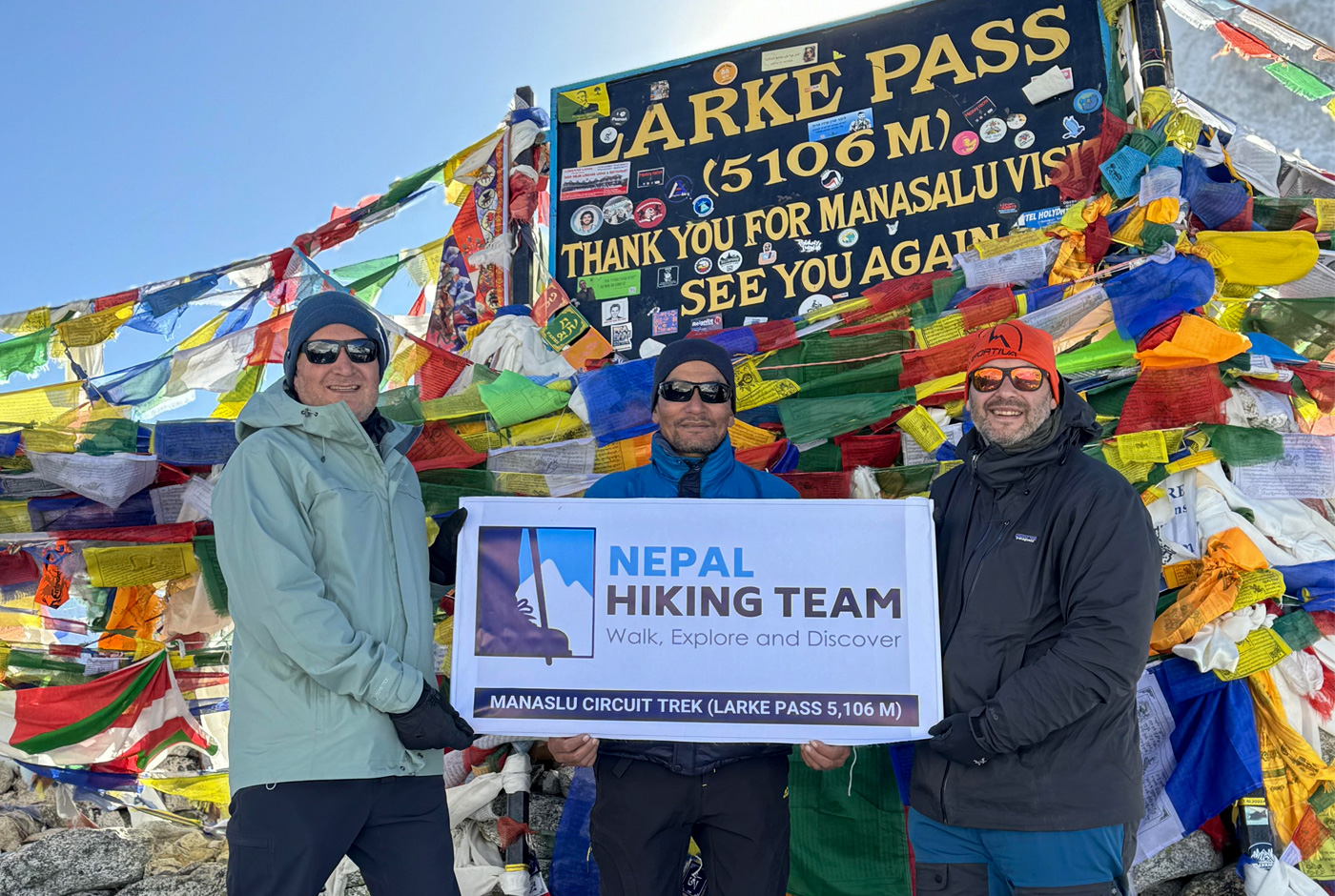
General Himalayan trekking experience is not equivalent to the Manaslu experience. Ask how many times the assigned guide has completed the full Manaslu Circuit, and specifically how many times they have led groups across Larkya La Pass. A guide who has crossed the pass six times in different seasons understands how conditions vary in ways classroom training cannot replicate. They know when the snow on the eastern approach is consolidated enough to move fast, when it is not, and how to read deteriorating weather from Dharmasala before committing the group to the crossing.
We assign dedicated region experts like Dipendra Dhakal, Arjun Dahal, and others who specialize in navigating the Manaslu Circuit's steep terrain. These certified guides of our team are extensively trained in managing high-altitude physiology, monitoring acclimatization, and organizing early morning crossings over the icy 5,106-meter Larkya La Pass. Our field competence is backed by strict safety protocols. Lead guides carry essential health tools including pulse oximeters, specialized medical kits, and portable oxygen cylinders to regularly check trekker vital signs
Acclimatisation Structure in the Itinerary
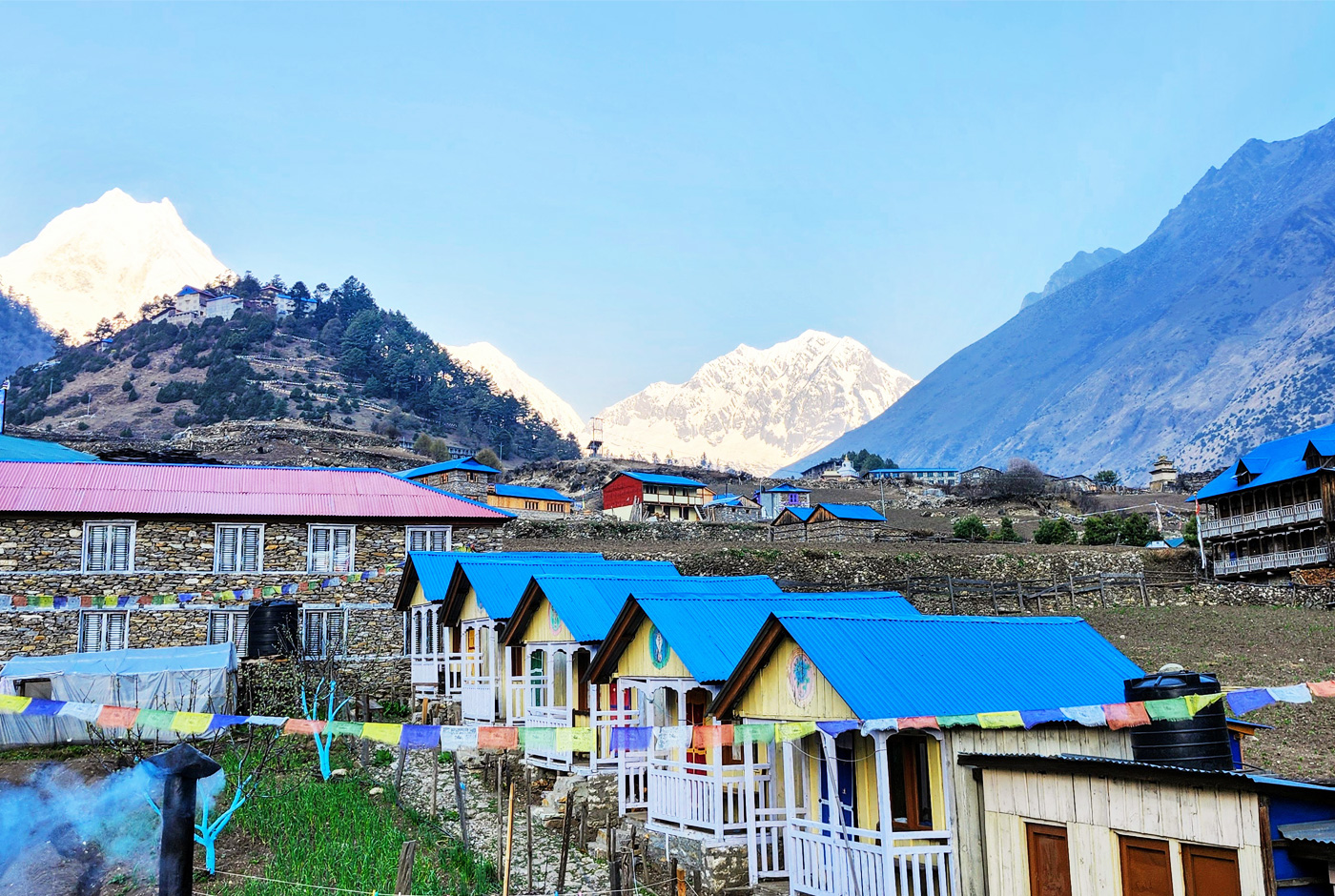
A responsible itinerary builds rest days into the schedule at Samagaun and Samdo. These stops are not optional. Samagaun at 3,530 metres and Samdo at 3,875 metres are the two locations where the body needs time to adapt before the final push to 5,160 metres. Cutting these days to compress the schedule reduces the acclimatisation window in the section of the route with the least margin for error.
Any itinerary promising a complete Manaslu Circuit in eleven or twelve days either eliminates these rest days or builds in no buffer for weather delays at the Larkya La. Fourteen days is the realistic minimum for a circuit that is safe and complete.
Manaslu Circuit Trek Package with Acclimatisation by Nepal Hiking Team
Our standard 14-day Manaslu Circuit itinerary integrates two mandatory acclimatization rest days prior to crossing the Larkya La Pass. This strategy follows the proven "climb high, sleep low" protocol to safely trigger red blood cell production as you transition into high-altitude terrain.
Transparent Pricing With Line-Item Inclusions
A credible quote lists what is included with specifics: all three permits separately with current government fees, guide and porter daily rates, accommodation category, meal inclusions, transport to and from the trailhead, and emergency evacuation insurance. A single total figure with no breakdown is not a quote. It is an invitation to discover what was excluded after the trek had already started.
The standard 14-Day Manaslu Circuit Trek package from NHT features a tiered pricing structure that ranges from $1,165 to $1,380 USD per person based on your final group size. Operating with zero hidden booking costs, the line-item inclusions explicitly cover all local ground transport, restricted park permits, field worker provisions, and your daily sustenance throughout the circuit.
Emergency Protocol and Evacuation Coordination
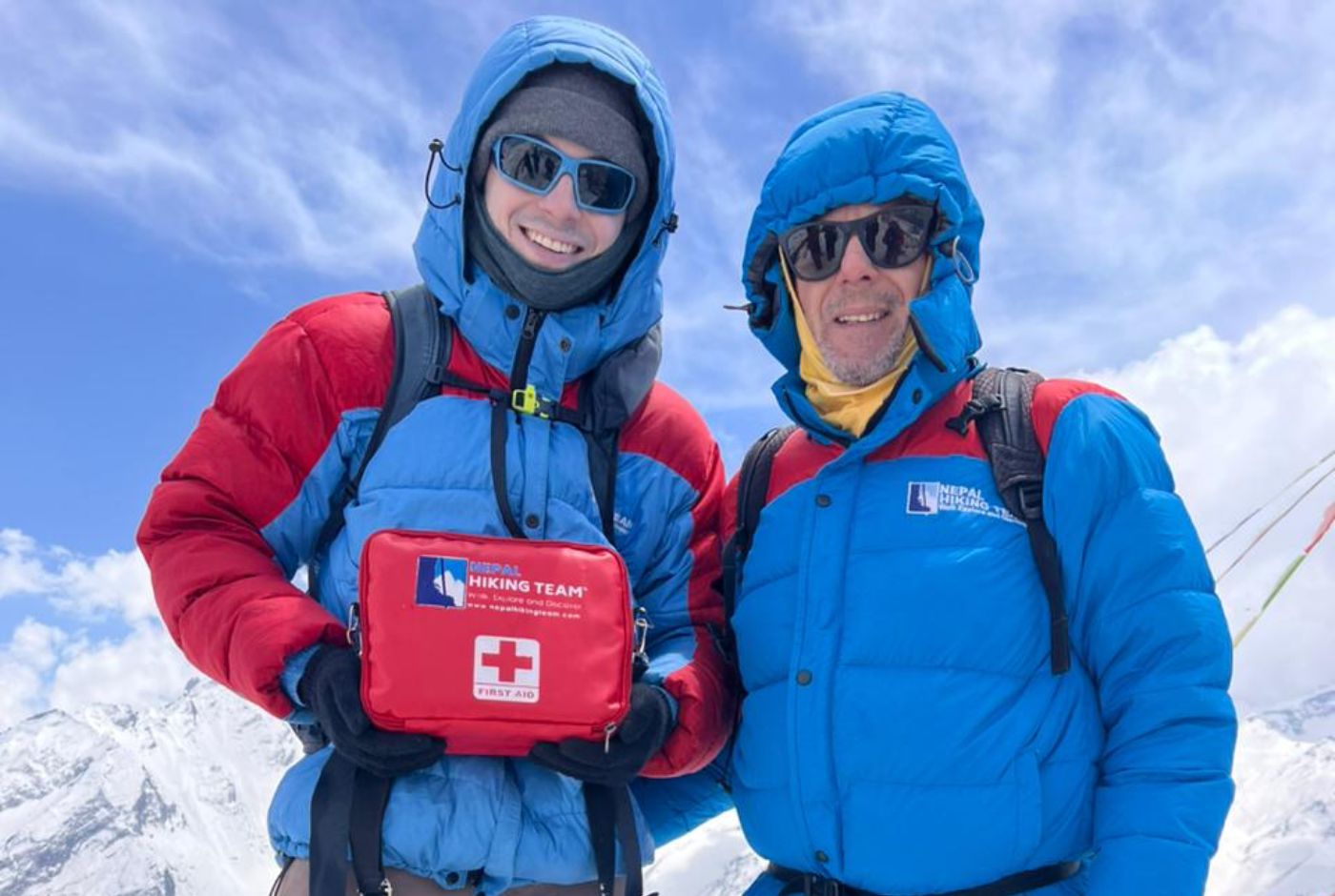
Ask the operator directly: if a trekker needs emergency evacuation from the section between Samagaun and Bimthang, what is the process and who coordinates it? A prepared provider names specific contacts, explains the weather window requirements for helicopter access in that valley corridor, and clarifies what the guide carries in terms of first aid capacity and communication equipment. Vague assurances about handling emergencies are not an answer to this question.
We operate an emergency system featuring twice-daily pulse oximeter vital checks, Lake Louise AMS scoring, and guides certified in Wilderness First Aid. In critical situations, our 24/7 Kathmandu command center uses your pre-vetted travel insurance policy to coordinate immediate helicopter evacuations from high-altitude zones like Samagaun or Dharmasala without requiring upfront out-of-pocket payments. This absolute safety protocol guarantees equal emergency priority and medical helicopter rescue coverage for both international trekkers and local field porters alike.
Group Structure, Customization and Departure Type
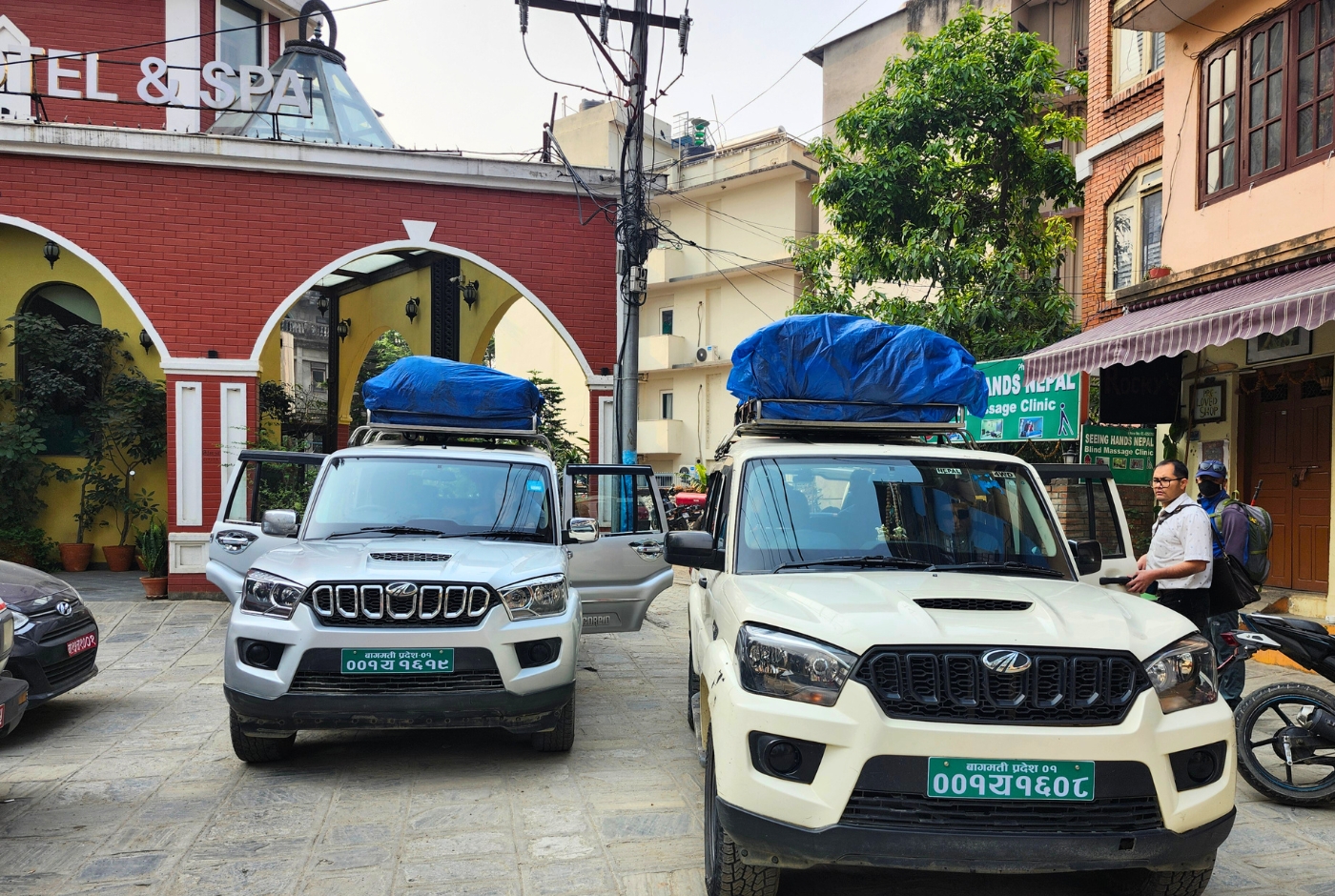
Confirm whether you are joining a fixed group departure or booking a private trek. In a fixed group, the itinerary adjusts to the group dynamic, not to any individual. Private departures allow the guide to make acclimatisation decisions based on your specific condition at each stage, which carries real weight at the altitudes this route reaches.
Nepal Hiking Team (NHT) offers both fixed group and private departures tailored to Manaslu’s restricted regulations. Fixed departures run on set dates during peak autumn and spring seasons, capping public groups at 6 to 8 trekkers to split jeep and permit costs. For larger groups, NHT automatically pairs the team with an assistant guide to maintain strict safety ratios.
Private departures allow you to select any start date with an exclusive guide and private vehicle. This setup grants full control over your daily pacing and itinerary modifications, such as adding rest days at Samdo, without group conflict.
Guide and Porter Structure on the Manaslu Circuit
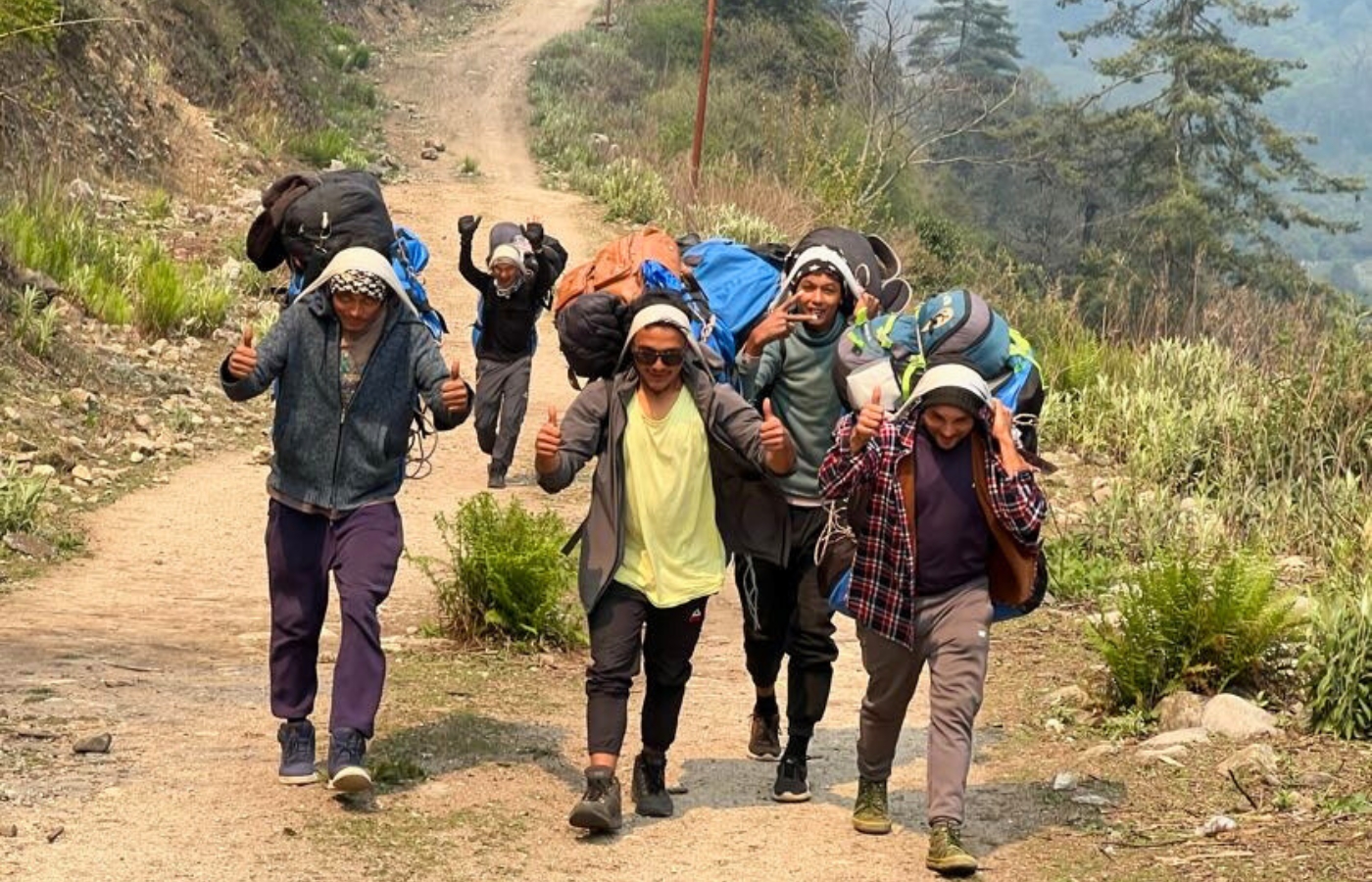
One government-licensed guide is mandatory per group, regardless of group size. This is a legal requirement, not a recommendation. Beyond the lead guide, most operators assign one porter for every two trekkers. Each porter carries a maximum of 20-25 kg, which typically covers the main bags of two trekkers. Trekkers carry only a daypack, usually 5 to 8 kg, with water, layers, and personal items for the day's stage.
On remote sections above Samagaun, porter availability is limited, which makes pre-arranged support essential rather than optional. Porters hired on the day from local villages above a certain altitude are rare and unreliable in peak season. A credible operator confirms the full guide and porter arrangement before departure, not at the trailhead.
Nepal Hiking Team enforces a strict ethical policy that limits each porter’s total carrying weight to 25 kg (55 lbs), which allocates a maximum luggage allowance of 12 to 13 kg (26 to 28 lbs) per trekker. We operate on a 1:2 porter-to-trekker ratio and automatically add a licensed assistant guide for any group exceeding 4 travelers to maintain safe trail monitoring. In alignment with the Kathmandu Environmental Education Project (KEEP), NHT protects its field staff by providing fair daily wages, proper alpine winter gear, and identical high-altitude medical and helicopter rescue insurance as paying international clients. By sourcing staff directly from local mountain communities, we ensure your trek actively supports sustainable tourism and economic growth within the Manaslu region.
Cost vs Value
For remote treks like the Manaslu Circuit Trek, where logistics, altitude, and weather matter, choosing based on overall value rather than just the lower price leads to a safer and more enjoyable trekking experience.
For example, a company may offer a trek package for USD 850, while another offers a package for USD 1,300. The higher-priced agency may include all logistics, permits, experienced guides, acclimatisation stops, and better emergency support. Whereas the cheaper package may exclude guide, transport, permits, and proper acclimatisation days.
Checklist for Evaluating Any Manaslu Trekking Agency
- Nepal Tourism Board registration number confirmed
- TAAN membership verified and current
- Named guide with documented Manaslu Circuit crossings, not a general Himalayan experience
- All three permits are listed as separate line items in the quote
- Rest days at Samagaun and Samdo confirmed in the itinerary
- Written confirmation of all inclusions and exclusions
- Documented emergency and evacuation protocol for the restricted zone
- Client reviews that reference the Manaslu route by name, not just general Nepal trekking
Red Flags That Indicate a Weak Operator
Pricing significantly below the market range is the clearest warning sign. A full-service 14-day Manaslu Circuit package from a credible provider runs between USD 1,400 and USD 2,200, depending on group size and season. Packages priced below USD 1,200 are almost always missing something operational, whether that is guide experience, permit accuracy, teahouse pre-booking, or emergency coverage.
Beyond price, these patterns consistently indicate an unreliable operator:
- No named guide, only a promise that "an experienced guide" will be assigned
- An itinerary with no rest day at Samagaun or Samdo before the Larkya La crossing
- Permit costs are bundled into a single package total with no line-item breakdown
- No physical office address or only a WhatsApp contact number
- Reviews that describe general Nepal trekking without referencing the Manaslu route
- Evasive or delayed responses to direct questions about permits and emergency procedures
- Claims of completing the full circuit in ten or eleven days
Questions to Ask Before Booking
These questions separate operators that run Manaslu from those that merely list it. A guide team that genuinely knows the route answers each one directly and with specifics.
- Who is the guide assigned to this trek, and how many times have they crossed Larkya La Pass?
- Can you provide the permit costs for RAP, MCAP, and ACAP as separate figures?
- What is the exact acclimatisation schedule between Samagaun, Samdo, and Dharamsala?
- If the Larkya La is closed due to weather, what is the contingency, and who covers the cost of additional nights?
- What communication equipment does the guide carry above Samagaun?
- How is the helicopter evacuation coordinated from the Dharmasala to the Bimthang section specifically?
- Is this a private departure or a fixed group, and what is the maximum group size?
Why Local Nepal-Based Agencies Operate More Effectively on Manaslu
A Kathmandu-based operator with established contacts along the Manaslu corridor makes decisions that a foreign booking platform cannot replicate. When a storm closes the Larkya La for two or three days, a local provider calls their contact at the Dharmasala teahouse directly, confirms bed availability for an extended stay, and adjusts the itinerary the same day. A foreign operator sends an email and waits.
Local operators also carry the relationships that matter in an emergency. Helicopter pilots who fly in the Manaslu zone are known quantities to established Kathmandu providers. The coordination required to get a helicopter into a narrow mountain valley in marginal conditions runs through trusted contacts built over years, not through a general aviation booking service.
For trekkers comparing a local Nepal agency against an international operator offering the same route, the operational gap is widest when conditions deteriorate. That is precisely when local knowledge and direct contacts change outcomes.
Recommended Approach for First-Time Manaslu Trekkers
Book a 14-day itinerary. The rest days at Samagaun and Samdo are physiologically necessary, and a 14-day schedule builds in minimal buffer for weather variation or a slower acclimatisation pace without forcing a compromise at altitude.
Trek in spring (March to May) or autumn (September to November). Spring offers stable weather and workable snow on the Larkya La. Autumn provides firm trail surfaces and clear skies after the monsoon. Both seasons see high demand on limited accommodation above Samagaun, which makes early booking and confirmed teahouse reservations a practical necessity.
Attend any pre-departure briefing the operator provides. Permit checkpoint procedures, altitude illness recognition, and specific conditions at the Larkya La crossing are worth understanding before they become immediately relevant on the trail.
Common Mistakes When Choosing a Manaslu Trekking Agency
- Choosing Based Only on Price: Many trekkers assume cheaper package offers better value. On a remote route like the Manaslu Circuit, low prices usually indicate compromises on quality guide, accommodation, rushed logistics, and weak emergency support.
- Ignoring Acclimatisation Days in the Itinerary: Many trekkers compare itineraries by total days without checking whether rest days at Samagaun and Samdo are built in. A shorter itinerary is not efficient if it removes essential acclimatisation time before crossing Larkya La Pass.
- Not Verifying Guide Experience on the Manaslu Route: Guide experience should be measured by familiarity with the Manaslu region itself and not just general trekking experience. A guide who operates on the Manaslu route is more likely to handle altitude management, remote-area coordination, and trail conditions.
- Booking Operators Without a Manaslu Track Record: Some agencies list the Manaslu Circuit despite having limited operational experience in the region, leading to inconsistent service quality and poor coordination during the trek.
- Overlooking Permit Compliance Details: The Manaslu region is a restricted area, and permits must be processed correctly through a government-registered trekking agency in Nepal. Trekkers should verify that the travel agency is properly registered with Nepal’s tourism authorities and handles RAP for Manaslu region.
Recent Permit Rule Changes for Manaslu Circuit (Updated 2026)
The permit requirements for the Manaslu Circuit have been updated. The changes affect solo trekkers and small group structures specifically and are worth understanding clearly before booking.
Previously, the Restricted Area Permit required a minimum group size of 2 trekkers. A solo traveller could not obtain the RAP and was required to join a group or be paired with another trekker through an agency to meet that minimum.
Under the updated rule, solo trekking on the Manaslu Circuit is now permitted. A single trekker can obtain the Restricted Area Permit without needing a second trekker in the group.
In addition, the guide-to-trekker ratio has been updated. A single licensed guide can now accompany up to 7 trekkers in restricted area regions such as Manaslu. This replaces the previous, more restrictive structure and allows better cost distribution in small group departures, without changing the requirement for a licensed guide.
What has not changed: a government-licensed guide remains legally mandatory. The permit must still be processed through a registered trekking agency. Independent trekking without an agency and a licensed guide is still not allowed. The requirement to book through a Nepal Tourism Board-registered operator remains fully in effect.
This update reflects a shift in permit policy, but it does not change the operational reality of the Manaslu Circuit. A licensed guide and agency coordination remain mandatory.
While these updates increase flexibility for solo trekkers and small groups, they do not reduce the operational complexity of the Manaslu Circuit. Guide experience and itinerary planning remain the determining factors for a successful crossing. Read more on: Restricted Area Permits Update 2026.
Why Nepal Hiking Team Is a Reliable Choice for Manaslu Circuit Trek
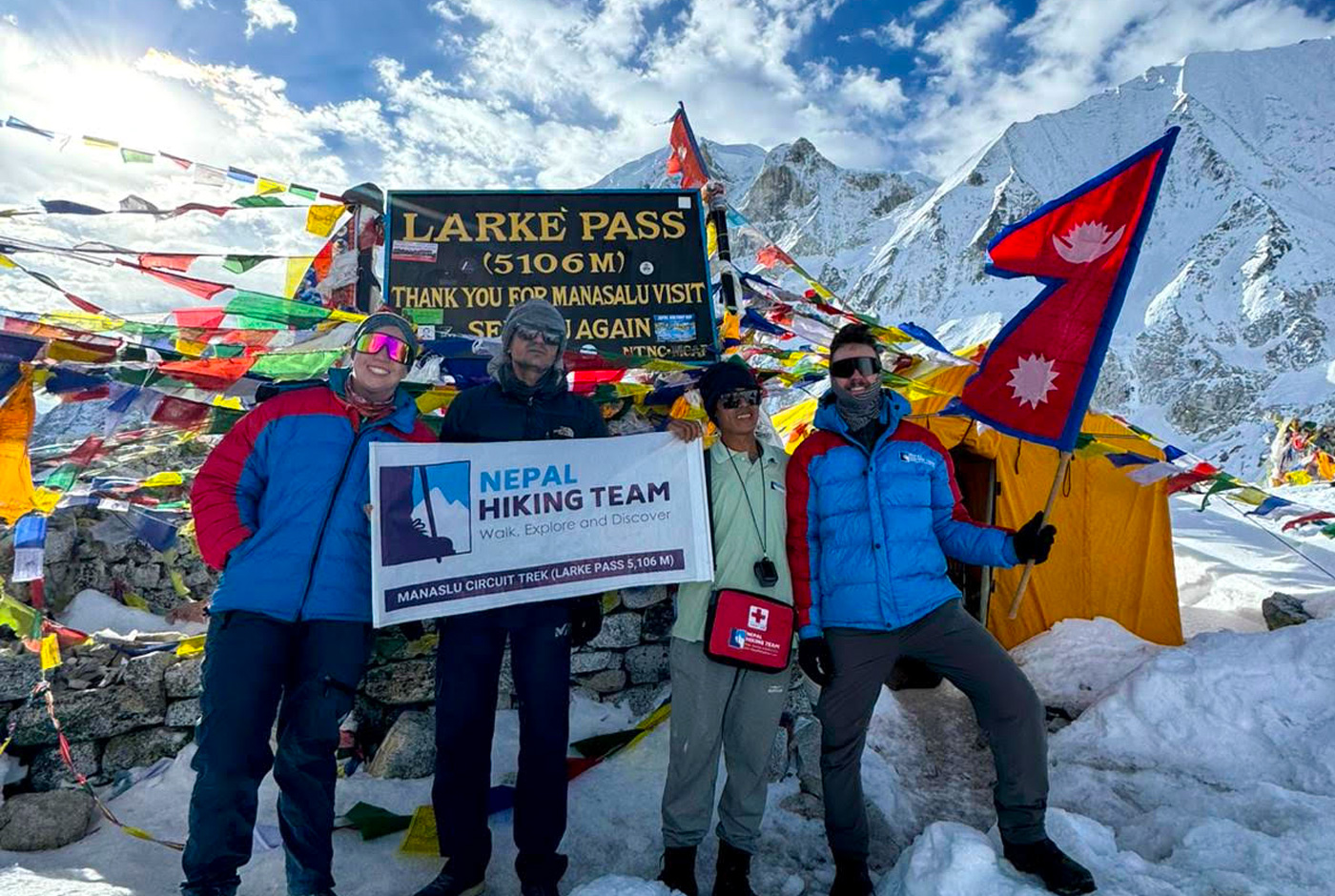
- Founded in 2009, Nepal Hiking Team brings decades of in-ground experience about the Manaslu Circuit region.
- Our team offers practical trail knowledge, local settlements and communities, and prompt emergency support, providing an ultimate trekking experience in the remote Manaslu region.
- With over 3,000 reviews and five-star ratings on major platforms like Google Reviews, TripAdvisor, and Trustpilot, our team ensures client trust and satisfaction.
- Our government-licensed guides are trained for emergency response, safety protocols, and immediate decision-making under unpredictable weather changes.
- The NHT team works closely with local communities, hiring regional guides and porters to support local livelihood and booking trusted teahouses for consistent comfort and convenience on the trail.
- We provide honest, clear, and transparent pricing, allowing trekkers to plan their Manaslu Circuit Trek with confidence.
- Transportation, accommodation, and permits are handled transparently by our team, making Nepal Hiking Team the best trekking agency for the Manaslu Circuit Trek.
Post a Comment