
Internet access is possible but limited at the Everest Base Camp (EBC), and many trekkers wonder about how to stay connected in the Himalayas. While mobile data, lodge Wi-Fi, and Airlink Wi-Fi cards provide connectivity, signals weaken with altitude and often disappear on higher sections of the trail.
Trekkers can rely on these options to stay connected in high-altitude regions; however, service is generally unavailable along much of the trail. In addition, understanding where mobile networks or Wi-Fi stop working helps plan communication with family, friends, or work.
Nonetheless, the remote Himalayan terrain naturally limits infrastructure, making internet access a luxury rather than a guarantee. Being aware of these limitations ensures a smoother experience, helping trekkers enjoy the journey without unrealistic expectations.
Quick Summary: Internet Access on EBC Trek
- Mobile data works in the lower regions like Namche Bazaar and Lukla.
- Wi-Fi is available at most teahouses for an extra charge.
- Airlink Wi-Fi provides internet service at several high-altitude lodges.
- Above Dingboche, the mobile signal usually disappears.
- Internet speeds are slow due to rugged mountain conditions and satellite connections.
Mobile Network Coverage on the Everest Base Camp Trek
There are two main mobile network providers along the Everest Base Camp Trek, Ncell and Nepal Telecom (NTC).
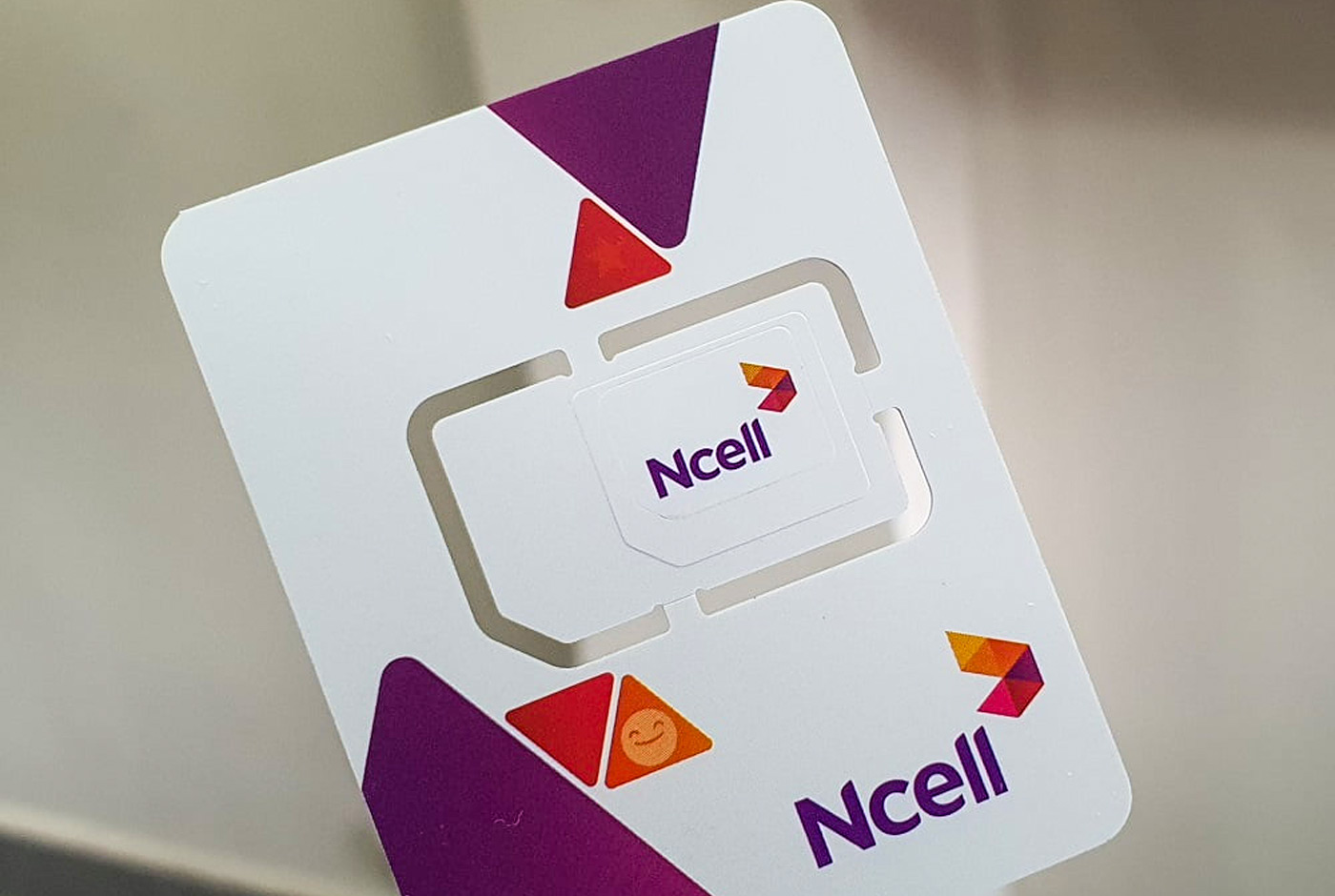
Ncell
Ncell provides decent 3G/4G coverage and is generally the stronger mobile network in the lower Khumbu region. Trekkers can get reliable coverage in villages like Lukla and Namche, and sometimes as far as Tengboche, a tiny settlement in the Khumbu region.
However, above Dingboche, Ncell becomes increasingly weaker and unreliable. Similarly, as you ascend toward higher camps and the Everest Base Camp, the signal drops completely. This limits and makes communication beyond Dingboche unpredictable.
Nepal Telecom (NTC)
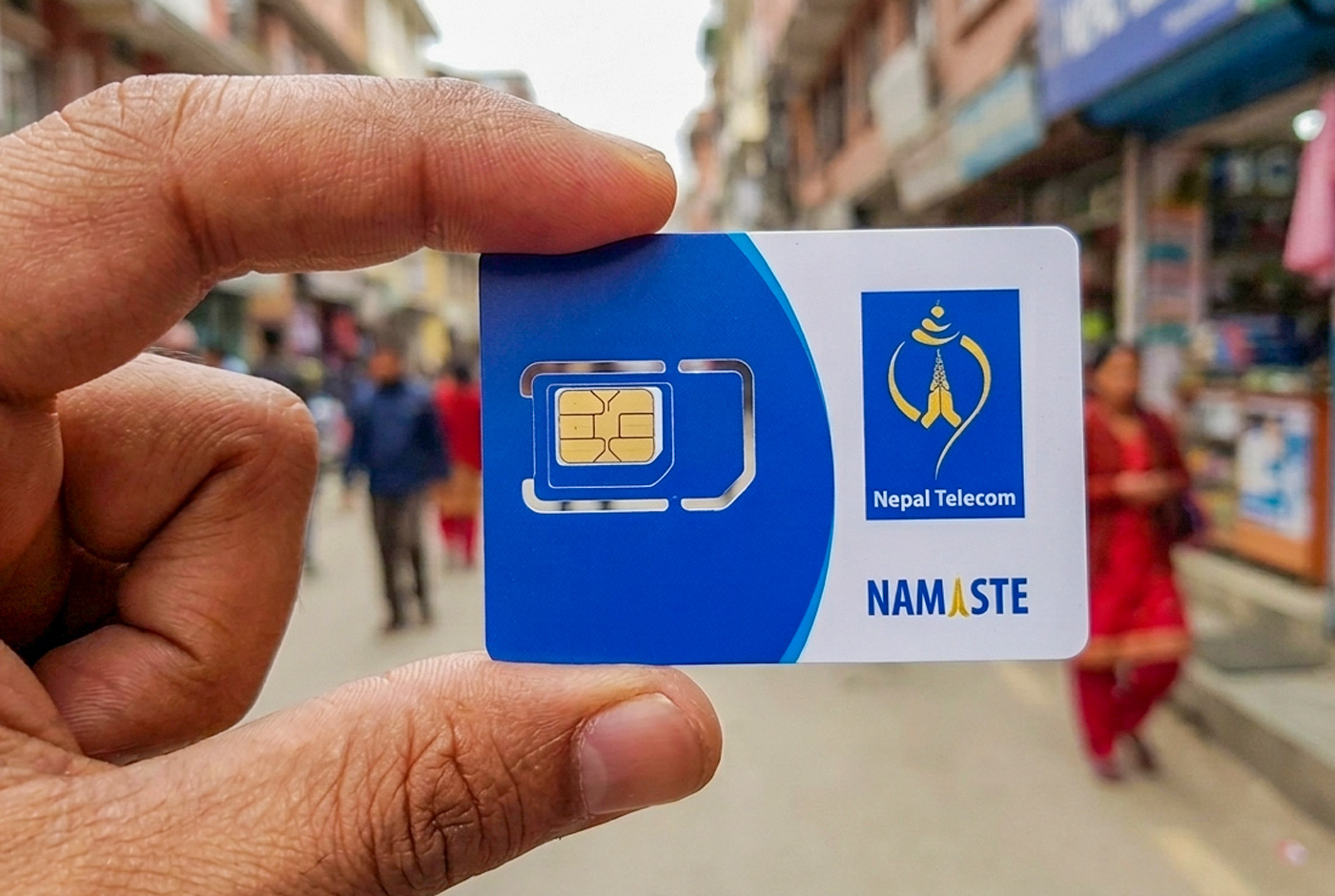
Nepal Telecom (NTC) provides wider coverage than other mobile networks in the Everest Base Camp region. Its signal is generally available in key villages like Namche, Lukla, and Dingboche. This allows trekkers to use mobile data and make calls more efficiently in these areas.
However, above Dingboche, NTC coverage weakens, and the network becomes intermittent or completely unavailable en route to Everest Base Camp. This makes communication and data access inefficient, so trekkers should not rely on it in high-altitude zones.
Here is a table about the typical signal pattern in the EBC region:
| Section | Mobile Signal Availability |
| Lukla to Namche | Reasonable signal for calls and messaging |
| Namche to Dingboche | Intermittent connectivity |
| Above Dingboche | Almost no mobile signal |
Overall, the mobile network is reliable only up to Dingboche; trekkers must rely on lodge Wi-Fi or Airlink Wi-Fi above this point.
Where Internet Stops Working on the Everest Base Camp Trek
The internet service decreases sharply as you gain altitude during the EBC trek. After leaving Dingboche, mobile data becomes very weak, and by Lobuche and Gorakshep, the data connection is entirely unavailable.
This is due to the Everest region's high altitude, harsh weather, and limited telecom tower coverage, making it challenging to maintain reliable infrastructure. A stable internet connection returns only when you descend toward Pheriche and below, on the way back to Lukla.
Wi-Fi Availability in Everest Base Camp Trek Villages
Wi-Fi is generally available in the main villages along the Everest Base Camp Trek, such as Lukla, Phakding, Namche Bazaar, Tengboche, Dingboche, and Pheriche. These connections, though limited to certain teahouses and lodges, enable trekkers to communicate with families, share updates, and check emails.
Usually, teahouses provide Wi-Fi service along the trek for a small fee. The cost may vary by location and provider; hence, trekkers should ask about the price before connecting.
Also, internet speeds are generally slow compared to urban areas, as most teahouses rely on satellite links rather than cables or cell towers. Furthermore, speed can fluctuate depending on the number of users, the quality of the satellite connection, and the weather.
In the Himalayan region, Wi-Fi is generally used for light browsing and messaging, rather than for streaming or downloading large files.
Here is a breakdown of internet connectivity by village on the Everest Base Camp Trek:
| Village | Mobile Data | Wi-Fi Availability |
| Lukla | Yes | Yes |
| Phakding | Yes | Yes |
| Namche Bazaar | Good | Yes |
| Tengboche | Limited | Yes |
| Dingboche | Limited | Yes |
| Lobuche | No | Airlink only |
| Gorakshep | No | Airlink only |
Airlink Wi-Fi on the Everest Base Camp Trek
Above Namche, the most reliable internet option is Airlink Wi-Fi, a satellite-based system. It is widely used across Khumbu lodges for internet access, where regular mobile coverage fails. It is available at most teahouses in the Khumbu region.
Likewise, trekkers can purchase prepaid data cards to access the internet in high-altitude regions. It is a useful option for staying connected when mobile networks are weak or unavailable.
Airlink Wi-Fi Pricing on Everest Base Camp Trek
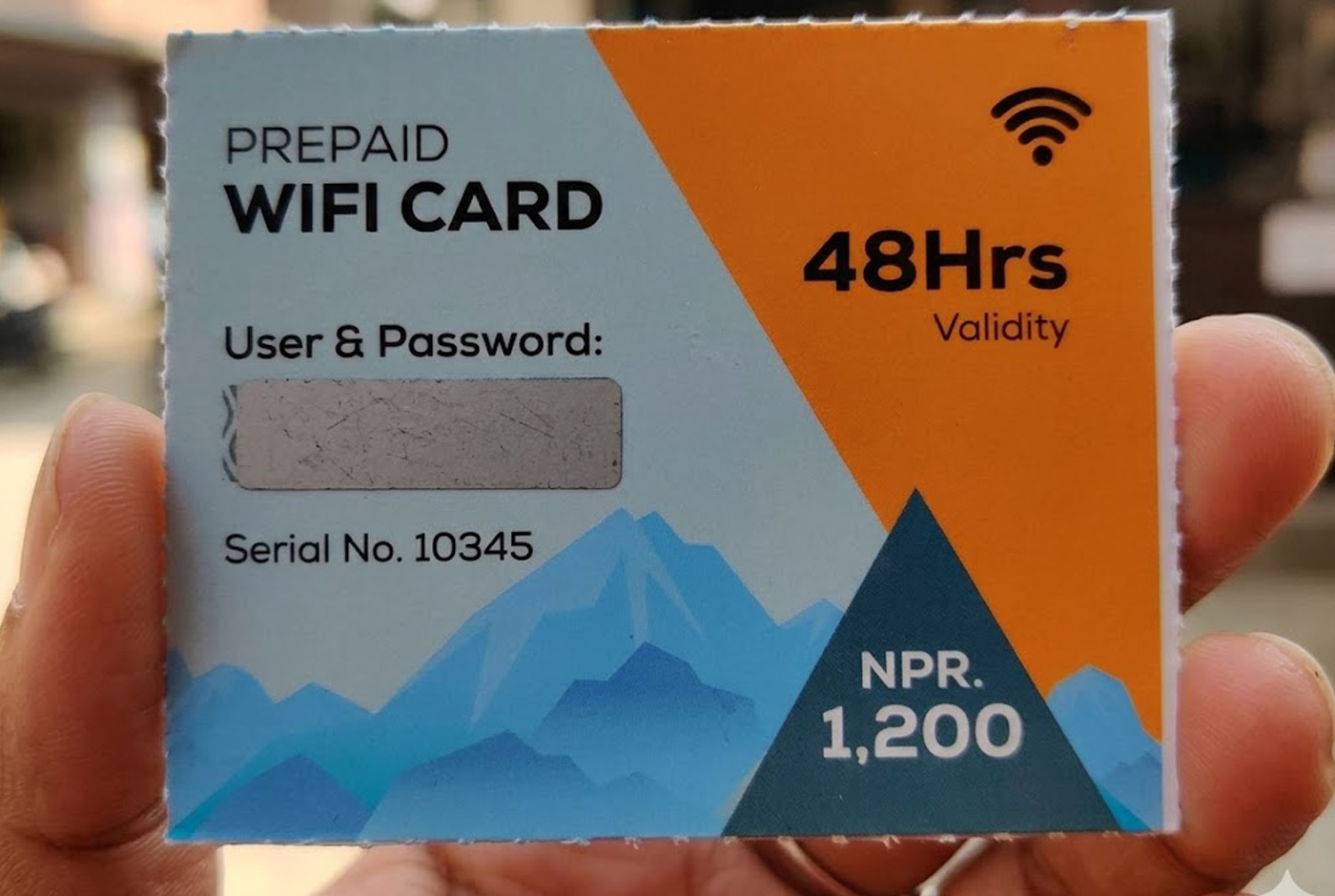
When you purchase Airlink Wi-Fi, the teahouse provides a prepaid scratch card with your username and password. Usually, both of them are the same. Moreover, Wi-Fi access is limited to the guesthouse's range and cannot be used while trekking during the day.
Here is a table with Airlink Wi-Fi pricing:
| Package Duration | Price (NPR) | Data Allocation |
| 24 hours | 1200 | 5 GB |
| 48 hours | 1500 | 12 GB |
Wi-Fi Limitations in the Everest Region
Up to the overnight stay in Tengboche, guesthouses usually offer basic Wi-Fi for a small fee. The signal is generally limited to the lodge's perimeter, with the dining hall area providing the strongest connection.
As coverage is not available outside the teahouse, trekkers should have realistic expectations regarding Wi-Fi connections. Wi-Fi can be slow or unstable, mainly during peak trekking seasons when multiple guests are online at the same time.
In addition, harsh weather and the remote mountain environment can disrupt the connection, making internet access unreliable even when it is available.
Note: Wi-Fi cost is not included in Nepal Hiking Team's 16-day Everest Base Camp Trek package, though food and accommodation are included.
Best Ways to Stay Connected During the Everest Base Camp Trek
One of the easiest ways to stay connected on the Everest Base Camp Trek is by buying a local SIM card in Kathmandu. Both NTC and Ncell provide a reliable network in the lower Khumbu villages; however, the network significantly weakens around or above Dingboche.
Furthermore, trekkers can use lodge Wi-Fi in villages such as Namche, Lukla, Tengboche, and Dingboche. In these areas, Wi-Fi works best in the dining hall, especially in the evenings. Also, Airlink Wi-Fi provides satellite internet in higher lodges, though internet speeds are significantly slower.
Most importantly, trekkers should let their families know about the limited connectivity in advance.
Despite these options, the trek offers a chance to disconnect from daily digital distractions. Although the Everest Base Camp Trek is difficult, it offers trekkers an immersive experience of Himalayan landscapes, high-altitude adventure, and local culture and traditions.
Best SIM Cards for Internet on the Everest Base Camp Trek
- Ncell SIM cards: Provide strong coverage in the lower Khumbu
- NTC SIM cards: Provide wider coverage and are slightly better at mid-altitude
- Where to buy: Trekkers can purchase SIM cards in Kathmandu with a passport ID.
- Typical data costs: Prepaid packages start from NPR 500 for basic usage.
What are the Tips for Improving Internet Connectivity on the Trek
- Connect early morning or late at night
- Stay close to the router in dining halls
- Avoid large file uploads
- Use messaging apps instead of video calls
- Download maps and important documents before the trek
How Much Does Wi-Fi Cost on the Everest Base Camp Trek?
Wi-Fi at Everest Base Camp teahouses or lodges usually costs around NPR 500–800 per use. The cost typically varies by lodge. Similarly, Airlink prepaid packages cost around NPR 1,200–1,500 and are available in higher-altitude villages.
At higher altitudes, the internet becomes more expensive due to limited infrastructure and satellite-based connections. This makes access and maintenance more costly in the upper region than in the lower villages.
Why is Wi-Fi expensive on the Everest Base Camp Trek?
Unlike cities where fibre-optic cables deliver fast connections, providing internet in the Everest region requires complex infrastructure. Most high-altitude villages in the Khumbu region depend on satellite internet systems, which are more expensive to install and operate.
Also, equipment must be transported by yaks, porters, and helicopters, which can be costly. In addition, harsh weather conditions and freezing temperatures make maintenance difficult.
As a result, Wi-Fi fees in the Everest region are higher than standard mobile data prices. The charges help teahouse owners to cover satellite bandwidth, maintenance, and equipment transport, while ensuring the internet connection remains available for trekkers.
Internet vs Satellite Communication for Emergencies
While trekking in the Everest Base Camp route, trekkers should remember that coverage is limited, and the signal disappears at higher altitudes. Though mobile networks and the internet are essential for staying in touch with family and handling communication.
Most trekking companies carry dedicated communication systems. This technology allows guides to coordinate logistics, maintain contact with their base, and check weather updates using local networks where available. It ensures smooth communication and trekking experience even when public networks are weak.
In case of emergencies, satellite communication is essential. High-altitude rescues and emergency evacuations solely rely on satellite phones or devices. They work independently from mobile networks, providing a reliable connection in areas where cell coverage and internet are unavailable.
Can You Work Remotely from the Everest Base Camp Trek?
Working remotely during the Everest Base Camp Trek is not reliably possible, especially above Namche Bazaar. Although some lodges offer Wi-Fi services, the connection is unstable, slow, and limited to the hotel perimeter. Likewise, mobile data grows weaker as you gain altitude, and at higher altitude access is nearly nonexistent.
Several factors, such as limited satellite bandwidth, high altitude, weather interruptions, and power constraints, make remote work challenging. Additionally, electricity is generated through solar energy or a small hydro system, and charging devices costs an extra charge. These factors make remote work impractical in the Khumbu region.
Also, accommodation along the Everest route consists of basic teahouses with simple twin-sharing rooms and shared bathrooms. Though it is comfortable enough for trekking, it is still not designed for digital nomads or professional remote work setups.
The Everest Base Camp Trek is best suited for disconnecting and focusing on the Himalayan experience rather than maintaining a full-time remote job.
Conclusion: Expect Limited Connectivity but Memorable Experiences
Wi-Fi on the Everest Base Camp Trek is available but comes with clear limitations. Airlink Wi-Fi provides satellite-based connectivity in higher-altitude lodges, while most villages offer paid internet through teahouses. Mobile data coverage gradually weakens and often disappears above Dingboche.
Due to the remote Himalayan terrain and limited infrastructure, internet speeds are slow, and connections can be unstable. Trekkers should prepare in advance by informing families about limited connectivity and planning important online tasks before the trek, rather than relying heavily on Wi-Fi or mobile data.
Ultimately, the Everest Base Camp journey is a digital detox with a rare opportunity to fully immerse yourself in the beauty of the Himalayas. With realistic expectations and proper preparation, Nepal Hiking Team also understands the communication challenges of high-altitude trekking and helps trekkers plan accordingly.
Having more than a decade of experience guiding treks in the Everest region, we ensure safety, clear coordination, and a well-managed journey without overreliance on internet access.
Post a Comment