
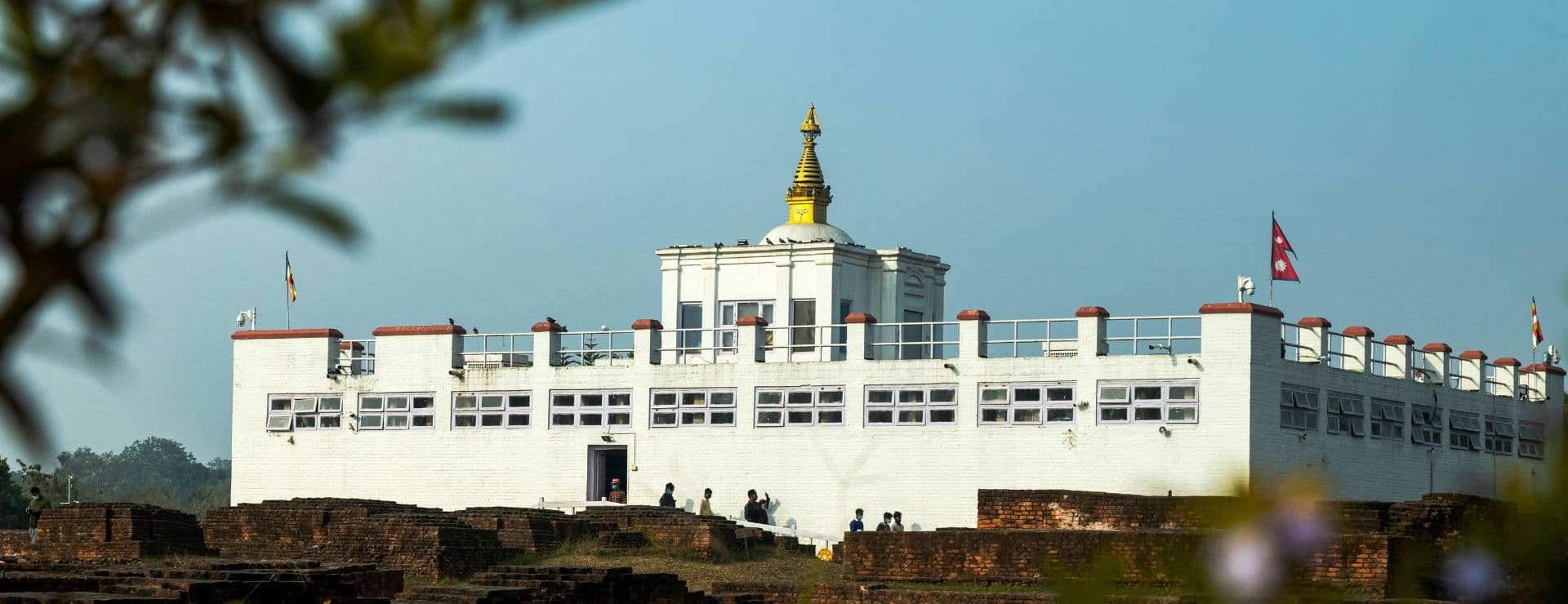
Lumbini is calm. It is open, unhurried, and quiet in a way that catches most visitors off guard. Before you arrive, you should know this: it is not a place you rush through. It is a place you walk through, slowly, with pauses built in.
This is the birthplace of the Buddha. That fact gives the entire area its weight, but your experience here will not feel like reading a history book. It will feel like moving through a carefully tended landscape, stepping in and out of temples and monasteries from a dozen different countries, and spending a lot of time simply looking at things without an agenda.
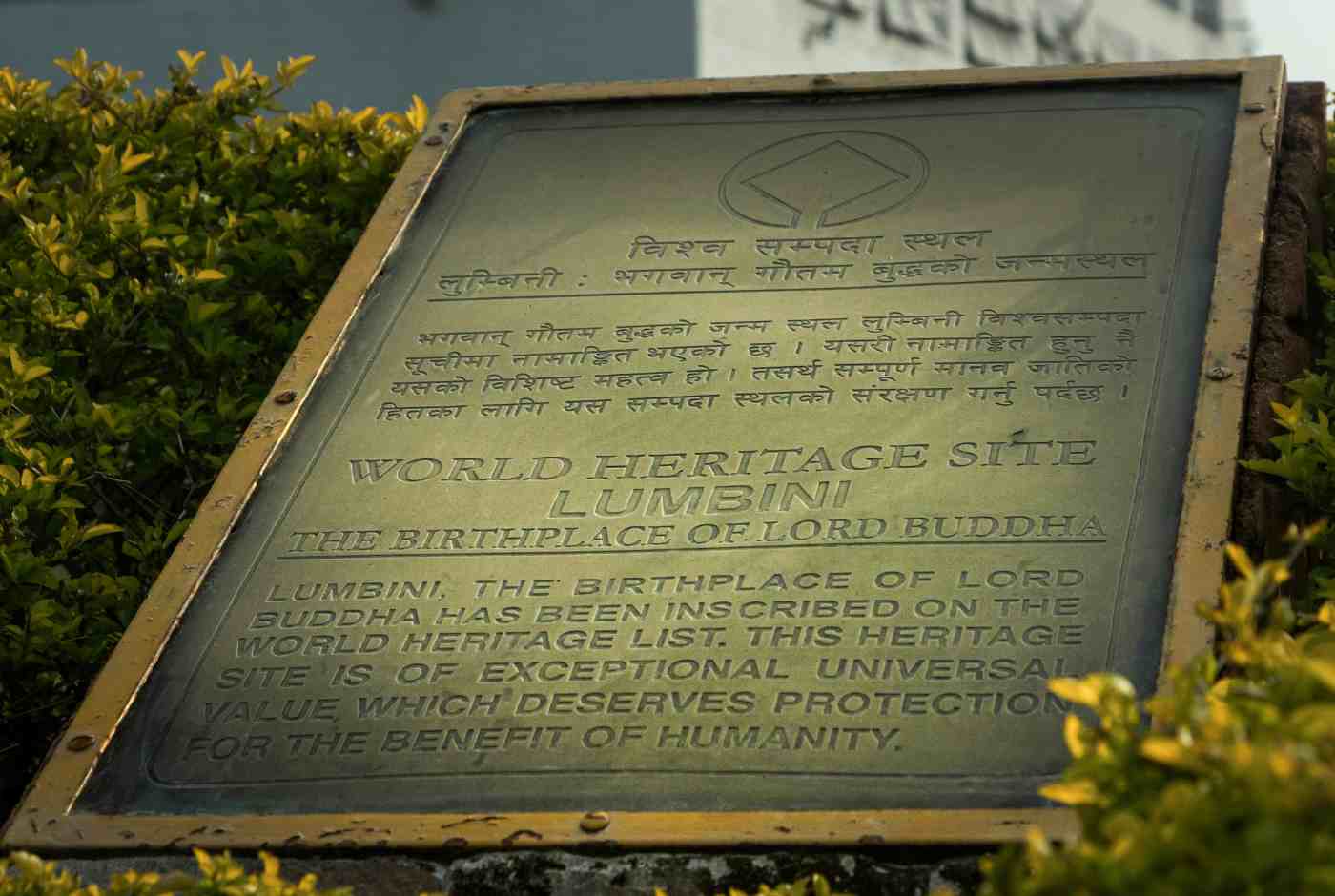
If you are planning a visit to Lumbini, Nepal and want to know what you will actually do once you are there, this is the guide. This guide focuses on the most meaningful things to do in Lumbini and how to experience them properly. As one of Nepal's most important cultural landmarks, Lumbini also ranks among Nepal's UNESCO World Heritage Sites, offering a deeper layer of historical and spiritual significance beyond what you see on the surface.
Quick List of Things to Do in Lumbini
Here are the most meaningful and well-paced experiences to focus on while visiting Lumbini:
- Visit the Maya Devi Temple
- Walk through the Sacred Garden
- See the Ashoka Pillar
- Explore the Monastic Zone
- Visit the World Peace Pagoda
- Spend time near the Sacred Pond
Visiting the Maya Devi Temple in Lumbini
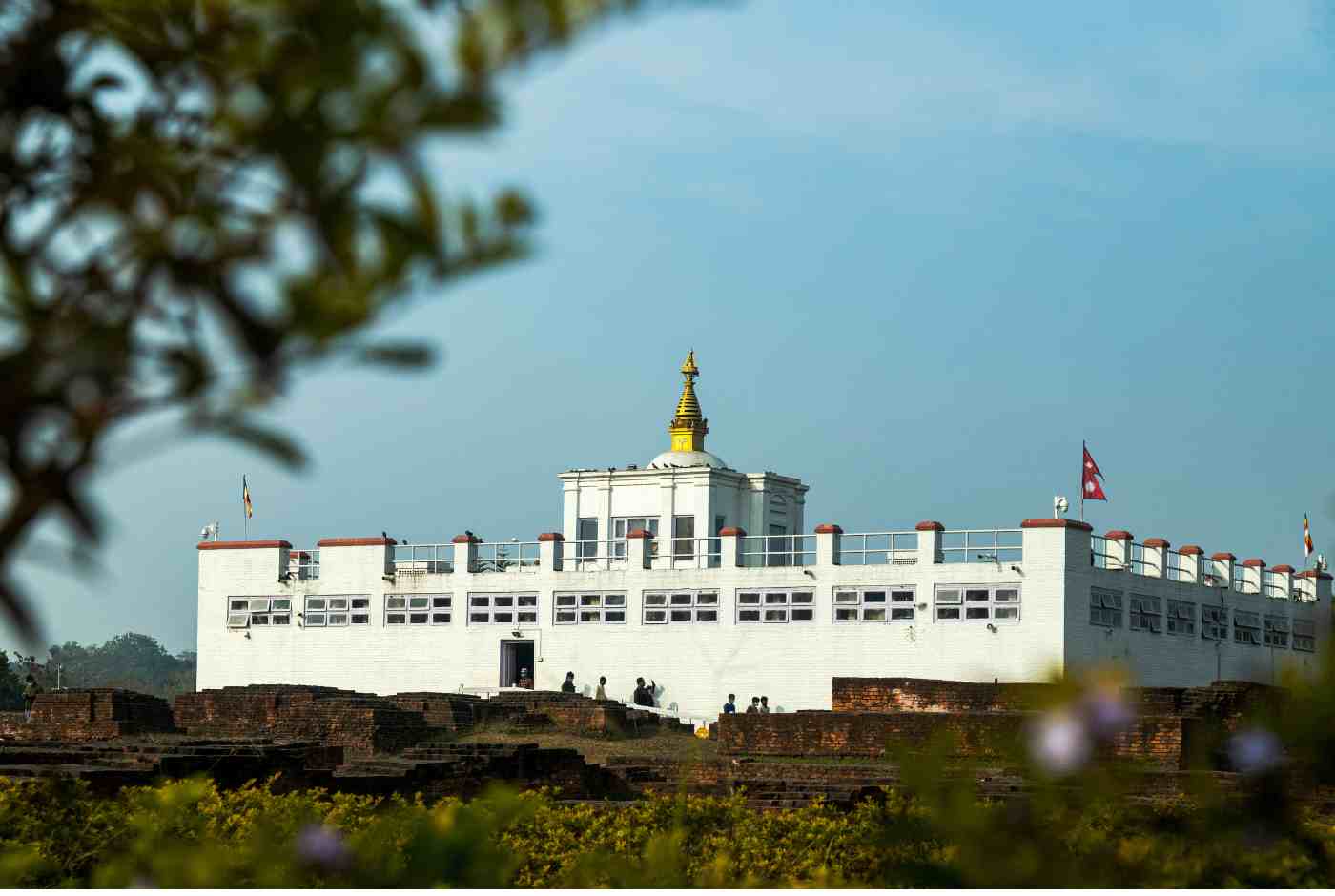
Everything in Lumbini anchors around one point: the Maya Devi Temple. This is the core of the sacred garden, the site believed to mark the exact spot where Queen Maya Devi gave birth to Siddhartha Gautama around 623 BCE. Yes, Buddha was born in Nepal.
You remove your shoes before entering. The floor can be cool or warm depending on the hour, and you notice that immediately. Inside, the space is dim and worn, with archaeological ruins visible behind protective barriers. A marker stone embedded in the floor is said to indicate the precise birthplace. It is modest in appearance. There are no grand theatrics. The significance lies entirely in context and silence.
Visitors move quietly here. Even those who have no particular connection to Buddhism tend to slow down. The atmosphere does that without asking you to.
Plan to spend twenty to thirty minutes inside, more if the space is quiet and you find yourself lingering. It is the kind of place where that happens without you noticing.
Walking Through the Sacred Garden in Lumbini
Surrounding the Maya Devi Temple is the Sacred Garden. It is a landscaped area of pathways, trees, and open ground that buffers the main temple from the rest of the complex. The garden lies peacefully without being manicured to the point of feeling artificial.
One of the simplest yet most meaningful things to do in Lumbini is to walk slowly through this space.
What to do in Lumbini's Sacred Garden is simple: walk. The paths are wide, the spacing between trees gives the area an open feel, and there is rarely the kind of crowding you find at other major pilgrimage or tourism sites in South Asia. Groups come, but they tend to spread out naturally.
The Ashoka Pillar stands here. Emperor Ashoka erected it in the third century BCE to mark his visit and commemorate the birthplace of Buddha. In person, it is tall and weathered, fenced off at a respectful distance. A brief read of the inscription tells you more than any photo can. Most people spend ten minutes here, photograph it, and continue walking.
The Puskarini Pond (also called the Sacred Pond) sits within the garden as well. According to tradition, Queen Maya Devi bathed here before giving birth. Today, it is still and reflective, surrounded by steps and low foliage. There is nothing to do here except sit for a few minutes and let the stillness register. Some visitors find this to be the most unexpectedly affecting part of the whole site.
Exploring the Monastic Zone: Unique Things to See in Lumbini
After spending time in the sacred core, the experience shifts as you move outward.
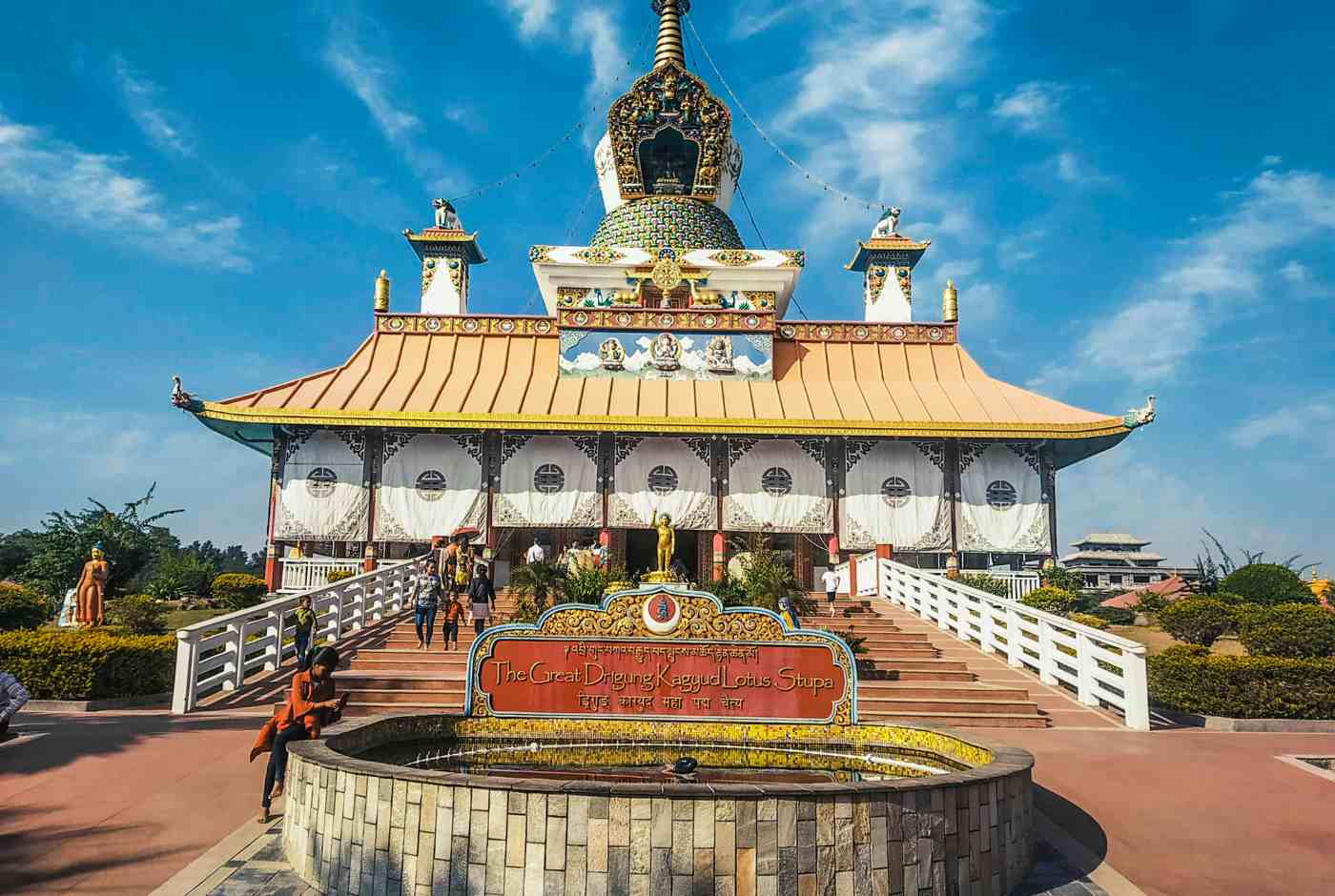
Beyond the Sacred Garden, the Lumbini Development Zone extends outward into two broad sections — the East Monastic Zone and the West Monastic Zone. This is where the variety of sights in Lumbini becomes most evident.
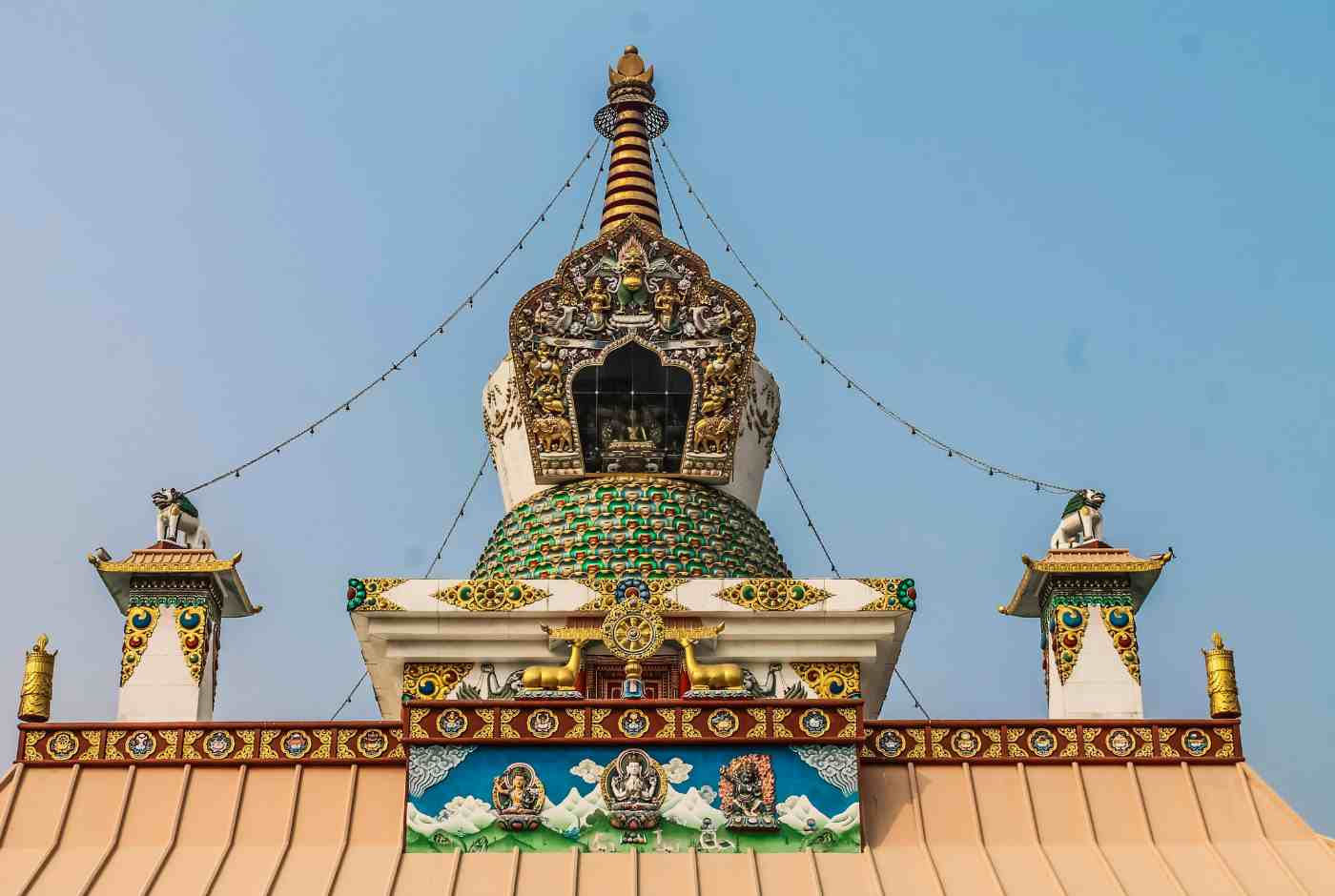
Different countries have funded and built their own monasteries and temples here. The result is an architectural collection unlike anything else you will find in one place: a German monastery with restrained European lines sits alongside a Thai temple adorned with gold-inlaid detail. A Japanese pagoda, a Chinese Buddhist centre, a Vietnamese temple, an Indian monastery. Each carries its own visual language and its own interior atmosphere.
You do not need to enter every single one. That would take the better part of two full days and begin to blur together. The more rewarding approach is to walk or cycle through, pause at the ones that draw your attention, step inside, and move on when you are ready. Most monasteries allow visitors during daytime hours. Dress modestly and behave as you would in any place of worship.
The scale of the monastic zone surprises most first-time visitors. It is large. The pathways between monasteries are long and straight, lined with trees, and in the middle of the day, the sun is direct. This is not a compact old town you can cover on foot in an hour.
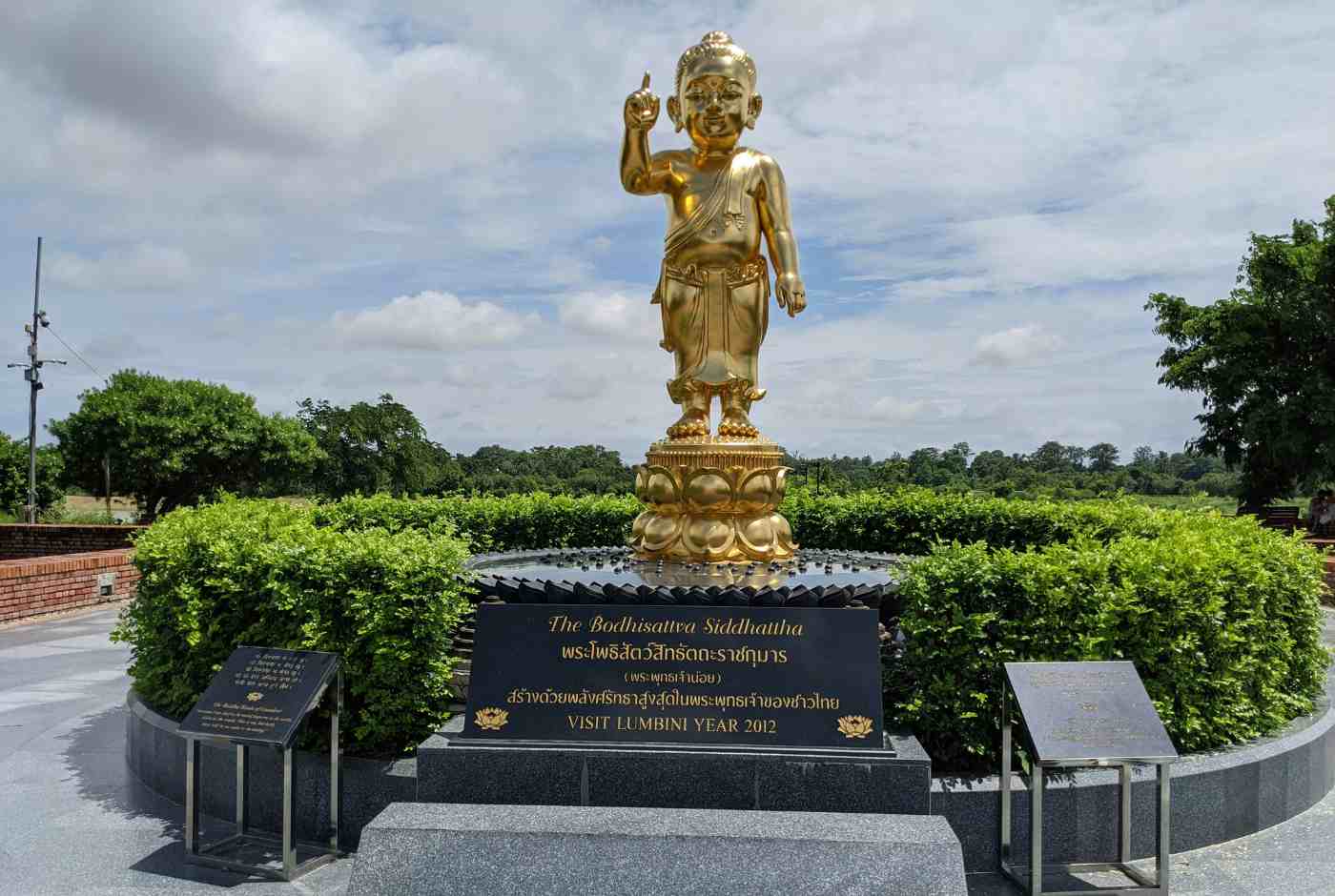
Visiting the World Peace Pagoda in Lumbini
Further south, the landscape opens up even more.
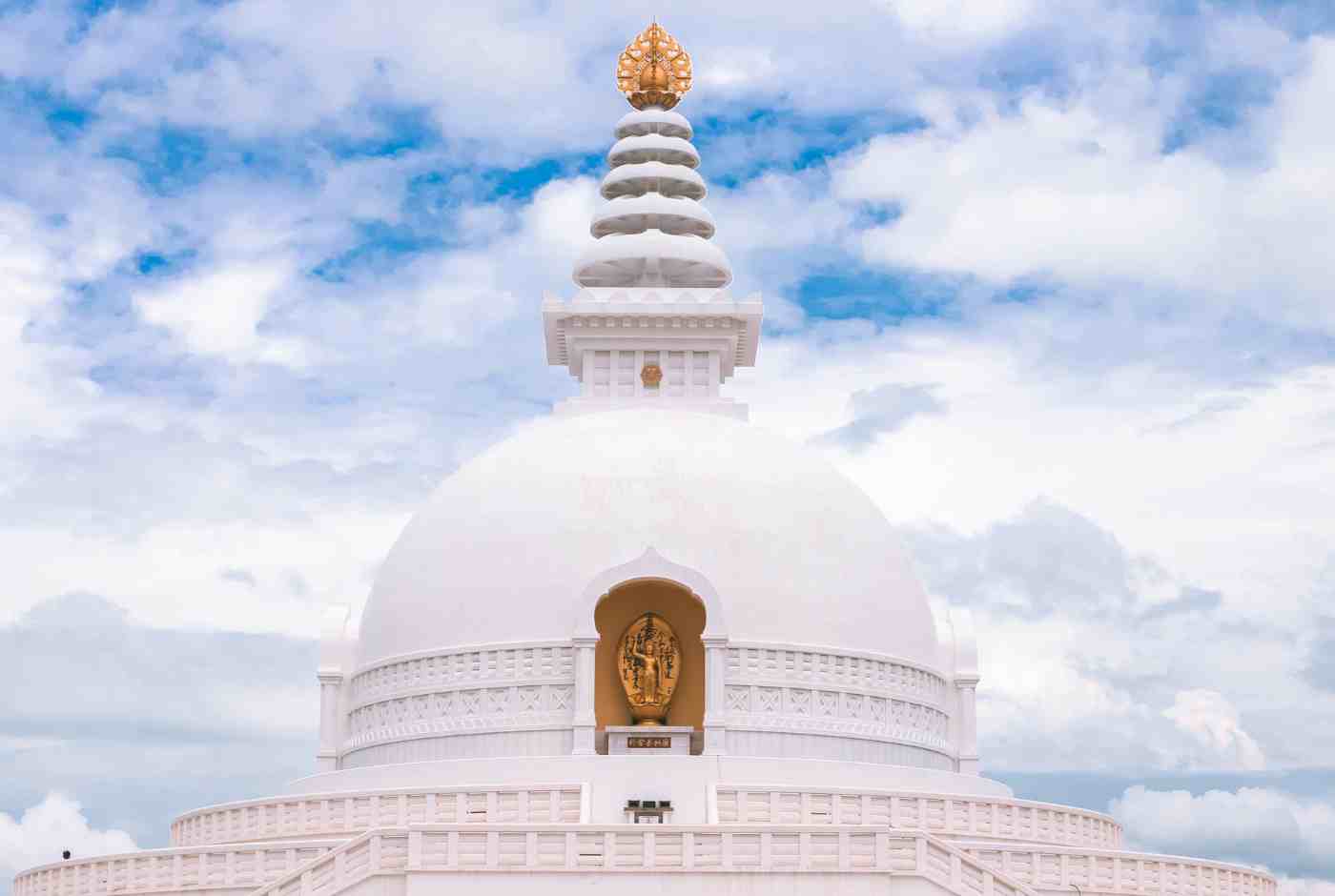
At the southern end of the complex, across a canal, stands the World Peace Pagoda, a large white stupa built by a Japanese Buddhist organisation. It is visible from some distance, and the approach to it is part of the experience.
The pagoda itself is surrounded by open ground with very little shade. What you find here is space. The horizon is flat and wide, the structure gleams in the light, and the area around it is almost always quiet. There are four golden Buddha figures set into the outer walls, each facing a different direction.
Many visitors come here in the late afternoon, when the light changes and the heat eases. It is a good place to end a day in Lumbini — not dramatic, but genuinely settling.
One-Day Lumbini Route Map
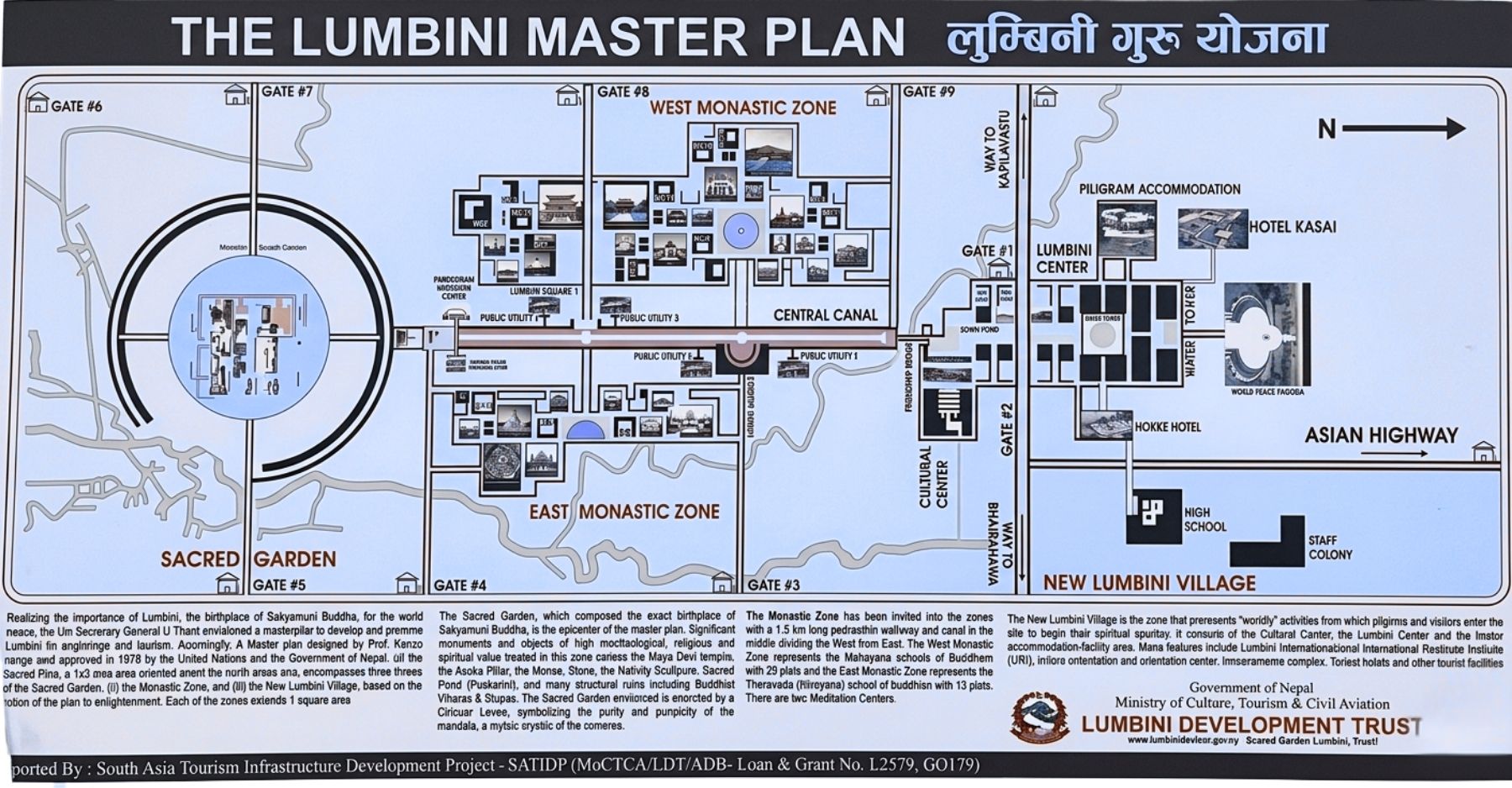
Lumbini is best explored along a structured route that follows the master plan's layout. The Sacred Garden forms the spiritual center, where the Maya Devi Temple, Ashoka Pillar, and Puskarini Pond sit within a compact walking loop that sets the tone for the day.
From here, the journey naturally expands outward into the East and West Monastic Zones, separated by the Central Canal, where wide pathways, open spaces, and monastery clusters shape a gradual transition from heritage to reflection.
As you move further south, the landscape opens toward the World Peace Pagoda and New Lumbini Village, creating a steady flow from sacred origins to quieter, contemplative surroundings.
Morning Route: Sacred Core (05:45 – 09:00)
Start → Maya Devi Temple → Sacred Garden → Ashoka Pillar → Puskarini Pond
Begin early at the main entrance and head directly to the Maya Devi Temple. Continue outward through the Sacred Garden, covering all key heritage points in one loop. This section is compact, so walking is enough and keeps the experience grounded.
Mid-Morning Route: Monastic Zone – East Side (09:00 – 11:00)
Cycle Start → Thai Monastery → Chinese Monastery → Nearby Monasteries
Rent a bicycle near the entrance before entering the wider development zone. Follow the eastern section first, where monasteries are closer and easier to navigate. Visit two or three places and spend time inside instead of rushing through many.
Late Morning Route: Monastic Zone – West Side (11:00 – 12:30)
Cross Central Canal → German Monastery → Western Monasteries
Move toward the western zone, which feels more open and less structured. Ride along the straight paths and stop where the atmosphere feels quiet or distinct. Do not try to cover everything, as distance and heat increase quickly here.
Lunch Break (12:30 – 13:30)
Exit toward the central gate area or the nearby hotels
Step out of the main zone for lunch and rest. Midday heat in the Terai can slow you down, so take a proper break here. Hydrate well and reset your pace before continuing.
Afternoon Options (13:30 – 15:00)
Option A → Lumbini Museum
Option B → Meditation Centre
Choose based on your interest and energy rather than trying to do both. The museum provides historical context, while meditation offers a quieter experience. Keep this section flexible so the day remains balanced.
Evening Route: Southern Zone (15:30 – 18:30)
Cycle South → World Peace Pagoda → Surroundings
Head toward the World Peace Pagoda using the long southern pathway. This area feels open, with fewer visitors and wide, uninterrupted views. Slow your pace here and take time to sit as the light changes.
End of Day Flow
Return or Stay Nearby → Dinner → Rest
You can return toward the central area or remain near the pagoda. The day naturally slows as the surroundings become quieter toward evening. Lumbini is best experienced through movement, pauses, and time to reflect.
How to Experience Lumbini Properly (Practical Tips)
This is the practical part. Get it right and the visit will be satisfying. Get it wrong and you will either feel rushed or exhausted without having seen much.
Walking or cycling? Cycle. Almost everyone who walks the full monastic zone regrets it by the second half. Bicycles are available for rent near the entrance for a very small fee, and the entire zone has dedicated flat cycling paths. An electric vehicle option also exists if cycling is not practical for you.
How long does it take? A focused half-day (four to five hours) covers the Sacred Garden, the Maya Devi Temple, the Ashoka Pillar, and a selection of monasteries in one zone. A full day gives you time to move through both monastic zones at a relaxed pace and visit the World Peace Pagoda without feeling hurried. Two days is the unhurried option for those who want to linger, return to certain spots, or attend a morning prayer session at one of the monasteries.
Best time to visit: Morning is better. The light is softer, the heat is manageable, and the Sacred Garden in particular has a quality in early morning that it loses once the day warms up. If you are staying nearby, try to be at the Maya Devi Temple by eight or nine in the morning. Late afternoon, as noted, works well for the World Peace Pagoda.
What visitors often misunderstand: Many people arrive expecting Lumbini to feel grand or imposing. It does not. The entire zone is deliberately low-rise and set within flat green landscape. The experience is cumulative and quiet, not a single striking moment. This is exactly as it should be — but it helps to know before you arrive.
For travellers exploring Nepal beyond trekking routes, Lumbini offers a very different kind of experience that fits well into a broader cultural journey.
How to Reach Lumbini, Nepal
Lumbini is located in Rupandehi District in Nepal's southern plains, near the Indian border.
From Kathmandu: The most practical option is a direct flight to Bhairahawa (Gautam Buddha International Airport), approximately 22 kilometres from Lumbini. Flight time is about thirty-five to forty minutes. You can then take a taxi or local bus from the airport to Lumbini. The drive takes under an hour.
By road from Kathmandu, the journey is approximately 360 kilometres and takes 8 to 10 hours, depending on road conditions and traffic. Some travellers do this as an overnight bus, arriving in the morning.
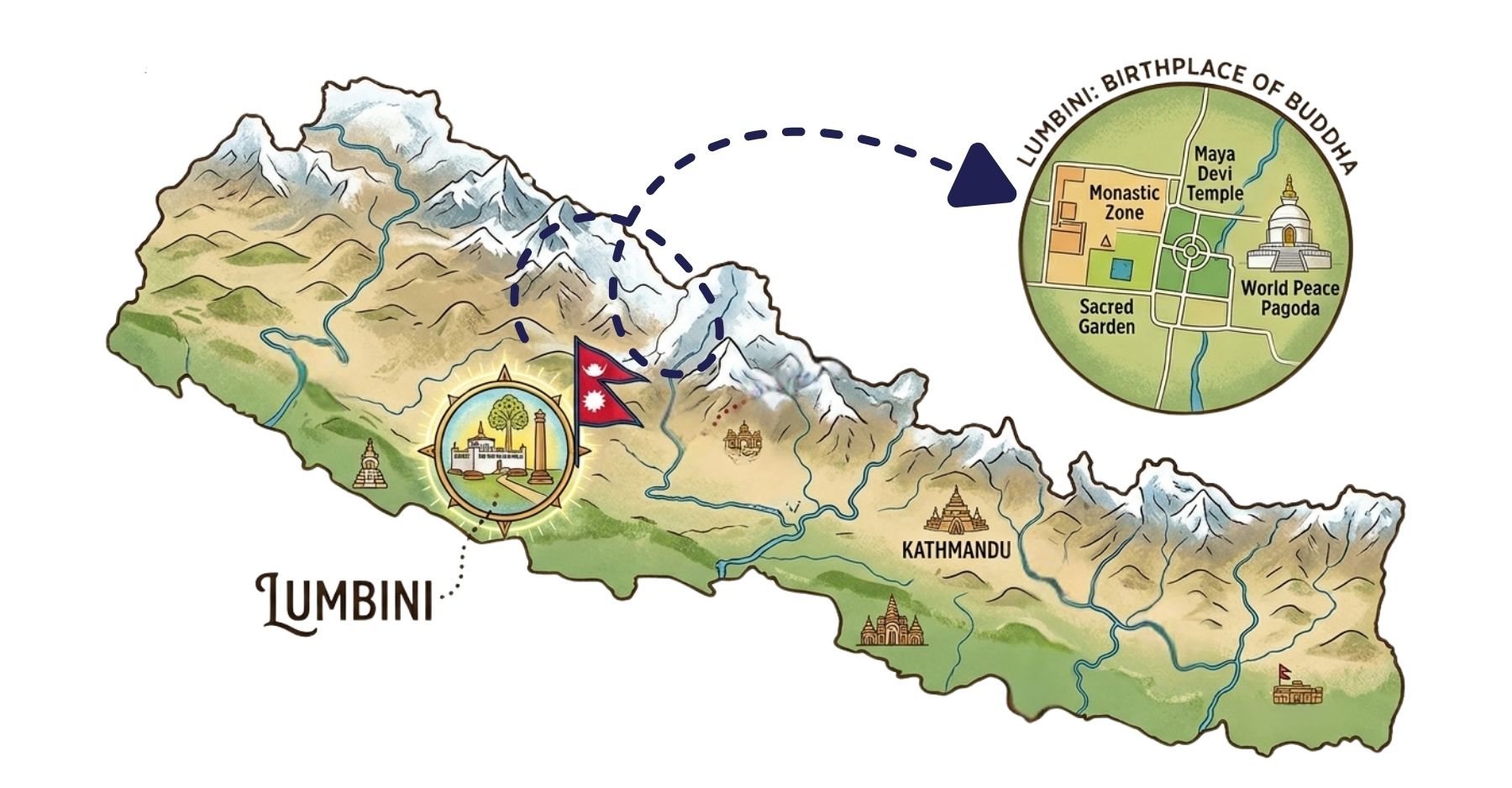
From Pokhara, Lumbini is roughly 150 kilometres away. The drive takes around four to five hours by private vehicle or tourist bus via the Siddhartha Highway. This is a scenic route, though the road can be narrow in sections. Some travellers combine Pokhara and Lumbini as part of a longer Terai and hills itinerary.
Is Lumbini Worth Visiting? Who It Is Best For
Lumbini is not for everyone, and it does not try to be.
It will not give you dramatic mountain views or adrenaline. There is no bustling bazaar, no nightlife, no visual spectacle in the way that Kathmandu or Pokhara deliver. The reward here is different. It is the reward of walking through a place that carries enormous historical and spiritual weight, quietly and without performance.
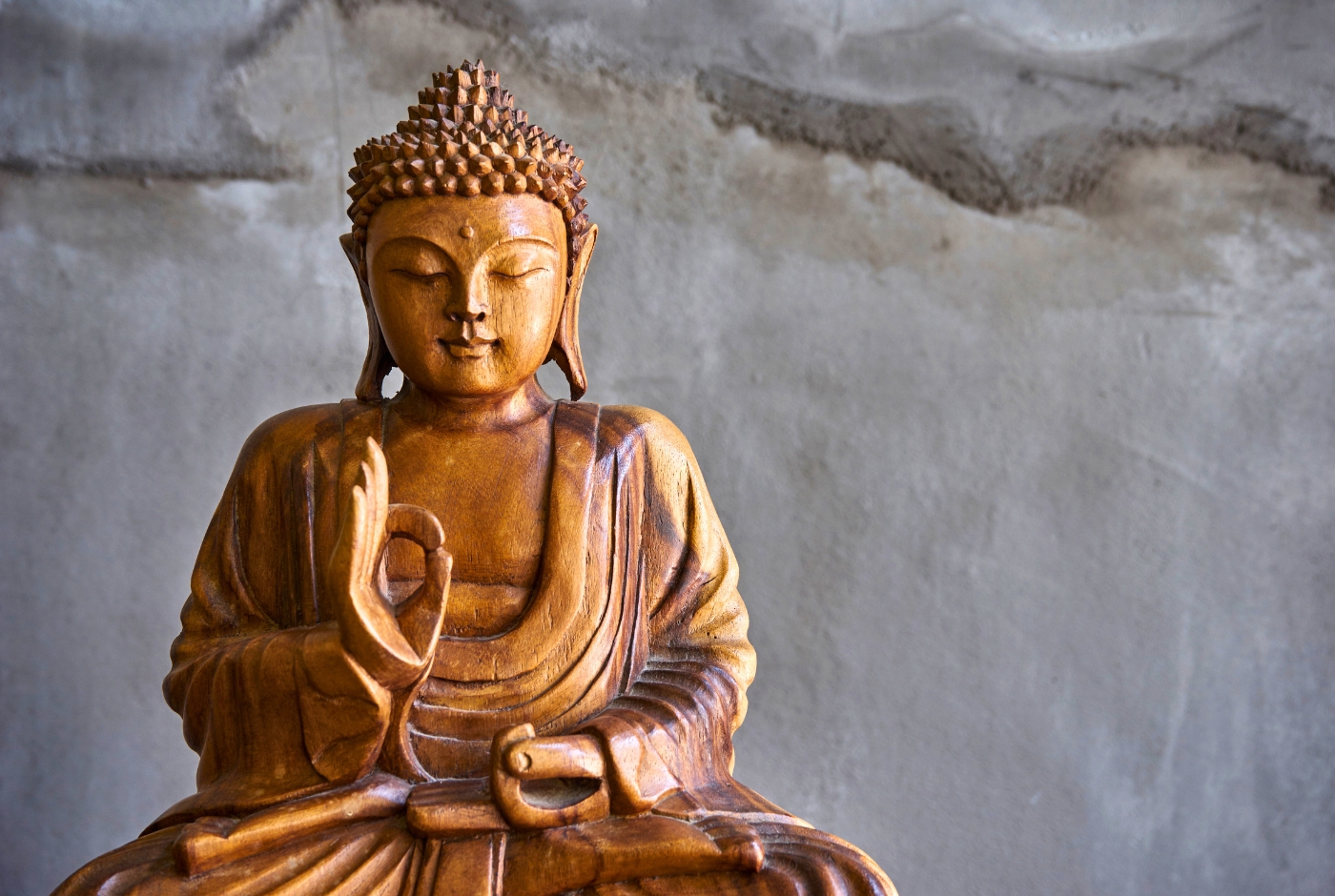
It suits travellers who are drawn to history, spirituality, or simply the experience of moving through an intentionally calm environment. It suits people curious about how Buddhism has spread across the world and what that looks like in architectural terms: 30 countries, 30 different interpretations, all in one zone.
It also suits those who are simply tired. There is something restorative about a place that makes no demands of you beyond showing up and paying attention.
If that sounds like the kind of travel you are after, Lumbini will deliver it reliably. It is a place that rewards time, attention, and a slower pace.
Post a Comment