
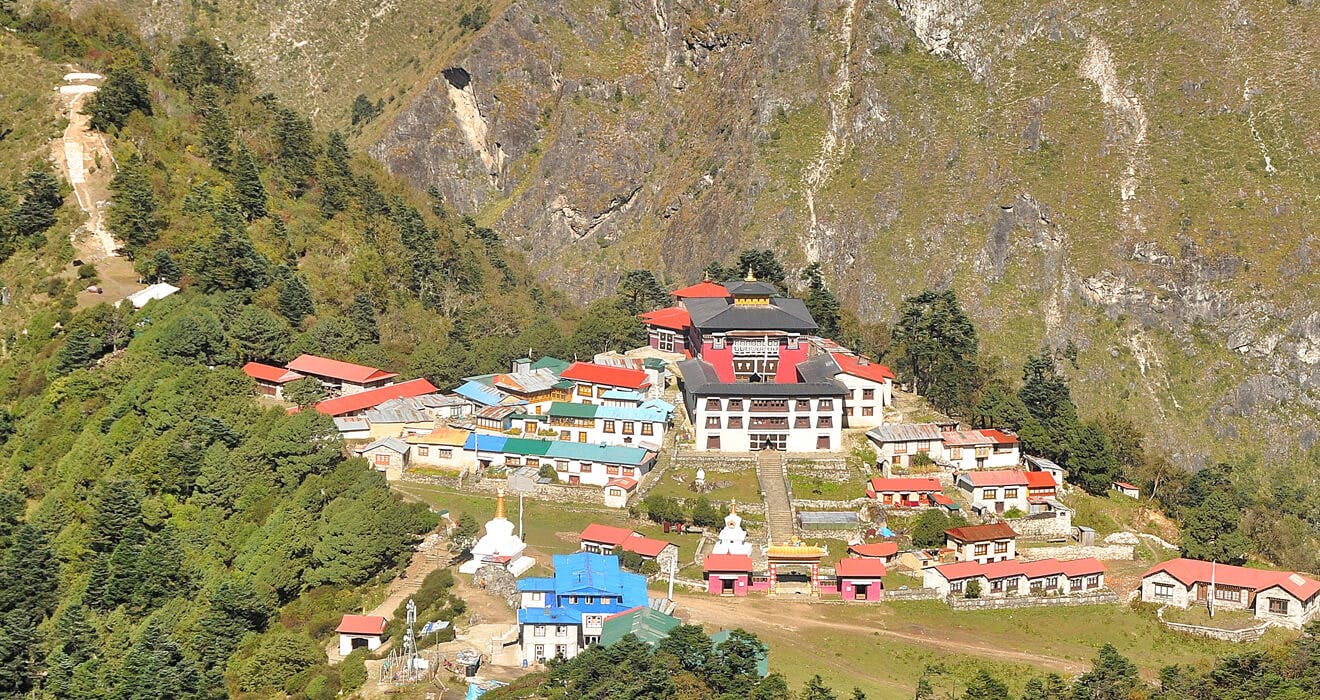
Tengboche Monastery, at 3,867 meters, anchors the spiritual life of the Everest region.
Trekkers on the Everest Base Camp trail naturally converge here, drawn by a rare mix of Himalayan scenery, Buddhist tradition, and Sherpa culture.
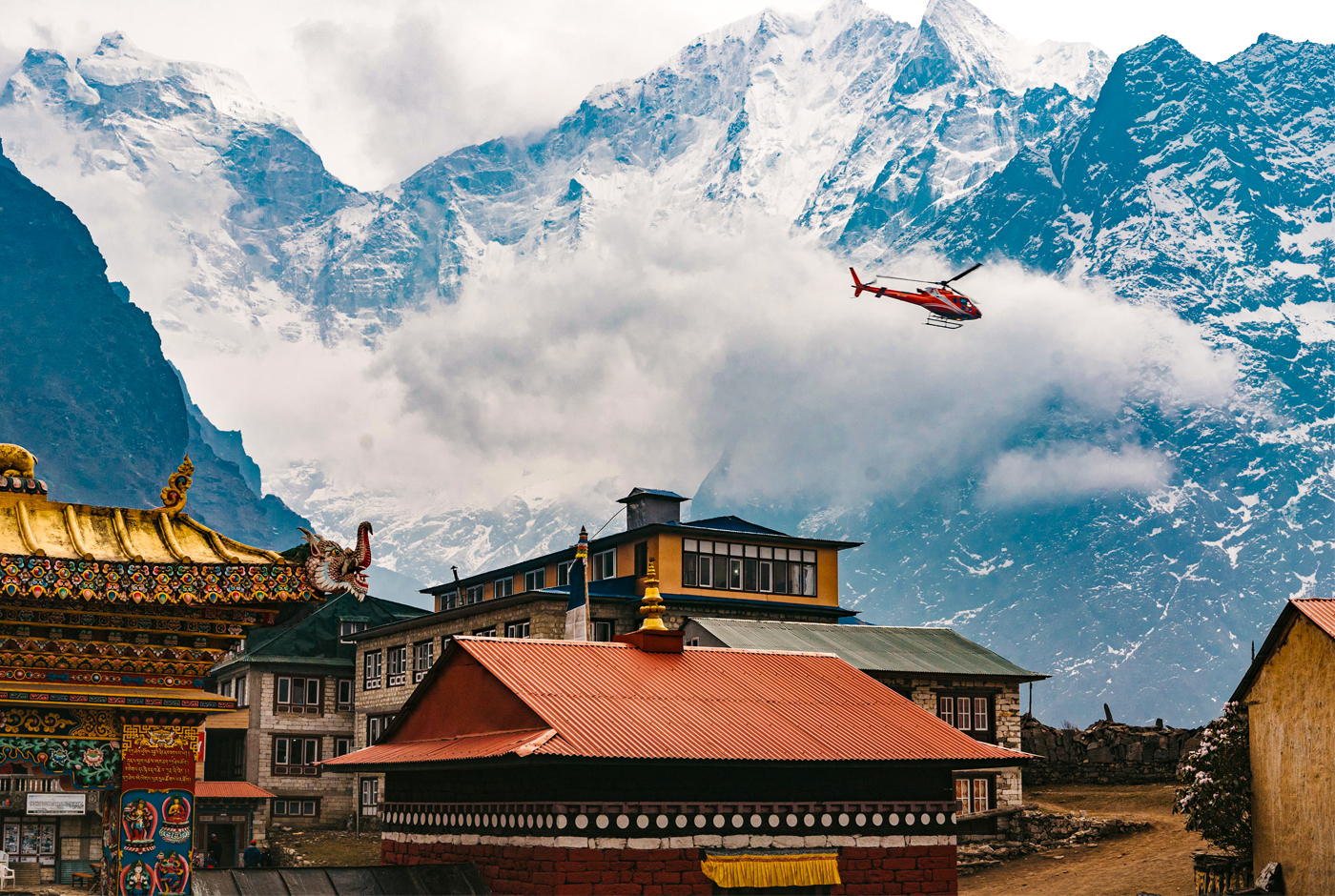
The monastery sits on an open ridge, framed by Everest, Ama Dablam, Lhotse, Nuptse, and Thamserku, offering one of the most impressive viewpoints in the Khumbu.
Its story spans from Lama Gulu’s founding in 1916 to the community’s determined rebuilding after both earthquake and fire.
Daily rituals, monk education, and blessings for climbers keep Tengboche deeply connected to local life. It remains a cultural anchor for surrounding villages and is home to the famous Mani Rimdu festival. Trekkers often pause here to listen to evening chants, admire the murals inside the main hall, and enjoy a peaceful moment that contrasts beautifully with the challenges of the trail.
This guide introduces the monastery’s history, cultural roles, festivals, natural environment, travel logistics, and insider tips.
It will help you explore Tengboche with clarity, respect, and a deeper appreciation for its place in the Everest journey.
Tengboche Monastery Location
Tengboche Monastery is located in Nepal’s Solukhumbu district, in the Khumbu region, along the main Everest Base Camp trekking route.
Its precise coordinates are 27.8336° N, 86.6999° E, placing it between Namche Bazaar and Deboche on a prominent ridge above the Imja Khola Valley.
The monastery sits at an elevation of 3,867 meters, making it one of the most significant high-altitude cultural landmarks in the Everest region.
From Prophecy to Reality: How Tengboche Monastery Was Founded
The spiritual story of Tengboche begins nearly 350 years ago, when Lama Sangwa Dorje identified the ridge as a sacred site and foretold that a major monastery would one day rise there.
This early recognition shaped the area’s religious importance long before the physical monastery existed.
Tengboche later developed strong ties to Rongbuk Monastery in Tibet, which served as its spiritual mother institution within the Nyingma tradition.
The actual founding took place in 1916, led by Ngawang Tenzin Norbu, regarded as the fifth reincarnation of Sangwa Dorje.
Norbu had already established a monastic centre at Rongbuk on the northern side of Everest, and he instructed Chatang Chotar (Lama Gulu) to build a new monastery at Tengboche.
Under Lama Gulu’s guidance, Tengboche became the first celibate Nyingmapa monastery in Solukhumbu, marking a significant milestone for Vajrayana Buddhism in the region.
The construction was made possible through three key lay sponsors: Karma, Kusang, and Tsepal.
Karma, the most influential among them, was a prosperous trader and tax collector serving under the Rana regime.
His path to sponsorship emerged from a long-standing rivalry with his brother Sangey, who had earlier financed the Chiwong Monastery.
Their political and personal conflict eventually pushed Karma toward deeper spiritual involvement, leading him into a meditation retreat guided by Lama Gulu.
It was during this period that the Tibetan master Zatul Rinpoche encouraged the creation of a celibate monastery in Solukhumbu, and Lama Gulu asked Karma to serve as its principal donor.
Karma accepted eagerly, setting the foundation for what would become the most influential monastery in the Khumbu.
Destruction and Rebuilding: A Historical Timeline of Tengboche Monastery
Tengboche Monastery’s past is shaped by moments of creation, loss, and renewal that reveal the community’s deep dedication to preserving its spiritual heart. This timeline highlights the key events that defined its journey from its founding to its present-day resilience.
| Year | Event | Details |
|---|---|---|
| 1916 | Original Construction | Lama Gulu establishes Tengboche Monastery under the guidance of Ngawang Tenzin Norbu, creating the first celibate Nyingmapa monastery in Solukhumbu. |
| 1934 | Earthquake Destruction | A massive earthquake destroys the original monastery. Sherpa villagers and monastic leaders immediately begin reconstruction. |
| 1934 to 1938 | First Rebuilding Phase | Rebuilt with local labour, community donations, and guidance from resident lamas, restoring the monastery’s presence in the Khumbu. |
| 1989 | Fire Disaster | An electrical short circuit triggers a fire that destroys the monastery along with scriptures, murals, and treasured artefacts. |
| 1989 to 1993 | Second Reconstruction | Sherpa communities, Nepali donors, and international mountaineers unite to rebuild the monastery using stronger materials and improved safety features. |
| Present Day | Renewed Legacy | Tengboche stands resilient and revitalized, symbolizing the deep devotion of the Sherpa community and its importance to climbers worldwide. |
Together, these milestones show how Tengboche Monastery has endured every challenge while remaining central to the spiritual life of the Khumbu. Its survival reflects the strength of the Sherpa community and the unwavering respect it receives from devotees and trekkers worldwide.
Architecture and Layout of Tengbouche Monastery
Tengboche Monastery reflects classic Tibetan monastic architecture, designed to feel both inviting and spiritually grounded. It follows a balanced layout where religious spaces, community areas, and monastic residences sit in harmony on the ridge. The complex stands out immediately due to its bright colours, carved windows, and traditional motifs that echo the artistic heritage of the Nyingma tradition.
At the centre of the monastery is the main prayer hall, or Dukhang, a spacious chamber used for daily rituals, teachings, and major ceremonies. Inside, visitors find large statues of Guru Rinpoche and other vital deities, surrounded by vibrant thangkas and hand-painted murals depicting stories from Buddhist scriptures. Butter lamps flicker along the edges of the hall, adding a warm glow that enhances the atmosphere during meditation and chanting sessions.
In front of the Dukhang lies the courtyard, a broad open space where monks and villagers gather during critical events. This courtyard becomes especially lively during the Mani Rimdu festival, when masked dances, blessings, and public rituals transform it into one of the most colourful cultural stages in the Everest region. Trekkers often linger here to experience the sense of community that defines Tengboche.
The monastery grounds also include long rows of prayer wheels and carved mani stones, which visitors spin or pass respectfully as part of their spiritual practice. Around the main complex are the monk quarters, functional yet straightforward rooms where resident monks live and study year-round. A small bakery nearby is popular with trekkers seeking warmth and a break from the trail. At the same time, a modest visitor area provides space for orientation and learning about the monastery’s traditions.
Together, these elements create a layout that is practical for daily monastic life yet welcoming to the many travellers who pass through Tengboche on their way toward Everest Base Camp.
Tengboche Monastery’s Spiritual Significance
Tengboche Monastery holds a central place in Sherpa Buddhist culture, shaping spiritual life across the Khumbu and guiding everyone from local families to Everest climbers. Its role extends far beyond daily rituals, offering blessings, pilgrimage experiences, and a deeply peaceful environment that enriches every journey through the region. Tengboche Monastery's Spiritual Significance primarily includes the following aspects.
- Key place for blessings before Everest and high Himalayan expeditions.
- It is an important pilgrimage destination for Sherpa Buddhists and visiting practitioners.
- Quiet setting ideal for meditation, reflection, and short spiritual retreats.
- Venue for significant community rituals during festivals and religious events.
- Regarded as a protective spiritual presence for climbers and local families.
| Aspect | What It Means | Who It Matters To |
|---|---|---|
| Blessings for Expeditions | Monks perform puja rituals for safety, clear weather, and successful climbs. | Everest climbers, trekking groups, guides, and support teams. |
| Pilgrimage Site | Visitors come to make offerings, deepen their practice, and receive teachings. | Sherpa Buddhists and international practitioners. |
| Meditation & Retreat | Its peaceful ridge-top setting supports reflection and quiet spiritual practice. | Monks, meditators, and mindful trekkers. |
| Community Rituals | Hosts festivals, blessings, memorials, and essential family ceremonies. | Sherpa villages across the Khumbu region. |
| Spiritual Protection | Seen as a guardian presence for surrounding valleys and mountain trails. | Trekkers, climbers, and local communities. |
Tengboche on the Everest Base Camp Trek
Tengboche naturally becomes a significant milestone on the Everest Base Camp trail because every trekker follows the route from Namche to Tengboche and onward to Deboche. The ascent from Namche is steady and scenic, making Tengboche an essential acclimatization point before heading deeper into high altitude. Many trekkers pause here to rest, rehydrate, and ease into the gradual climb toward Everest Base Camp.
One of the reasons Tengboche stands out is its incredible sunrise and sunset viewpoints. From the monastery grounds, Ama Dablam glows in the morning light, while Everest and Lhotse shift through shades of gold and orange at dusk. These moments become some of the trek’s most photographed scenes.
Trekkers also look forward to the evening prayer ceremony, where monks chant in the main hall as incense fills the room. The rhythm of the prayers offers a rare opportunity to witness living Buddhist tradition in a quiet, authentic setting. This experience, paired with the panoramic ridge-top views, makes Tengboche one of the most memorable cultural highlights on the entire Everest Base Camp journey.
How to reach Tengboche Monastery?
The trail to Tengboche begins from Namche Bazaar, following a well-established path used by trekkers, locals, and mountaineering teams. The route first contours above the Dudh Koshi River before descending to Phunki Tenga, where trekkers cross a suspension bridge and start the steady uphill climb toward the monastery.
From Namche to Tengboche, the distance is roughly 9.5 kilometers and the elevation gain is about 700 meters. Most trekkers complete this stretch in 4 to 5 hours, depending on pace, acclimatization, and weather conditions. The trail is well-marked and maintained, but the final ascent from Phunki Tenga is a sustained climb that can feel demanding at altitude.
Difficulty-wise, the route is moderate, with a mix of gradual traverses, short descents, and a notable final ascent. Trekkers who take their time, stay hydrated, and maintain a steady rhythm usually find the climb manageable and rewarding, especially when the ridge opens to Tengboche’s iconic mountain panorama.
Visitor Etiquette
As an active Buddhist monastery, Tengboche requires visitors to behave respectfully and mindfully at all times.- Respect sacred spaces: Walk calmly, avoid touching holy objects, and move clockwise around mani stones and prayer wheels.
- Silence during prayers: Keep phones on silent, do not talk, and remain still during chanting and rituals.
- Dress code: Wear modest clothing that covers shoulders and knees, and remove hats before entering the prayer hall.
- Joining the puja respectfully: Sit quietly at the back or side, follow the monks’ lead, and avoid entering or leaving during the ceremony.
- No drones: Do not fly drones around the monastery, as they disturb prayers, wildlife, and the peaceful atmosphere.
Entry Fee for Tengboche Monastery
Entrance to Tengboche Monastery is regulated by a small fee that helps support the upkeep of the complex and the daily life of the resident monks. Foreign visitors are asked to pay NPR 300 per person to enter the main prayer hall, while Nepali citizens can enter free of charge. Trekkers are also welcome to make additional voluntary donations that support maintenance, religious activities, and community support.
Photography is generally allowed outside the monastery buildings, where you can capture the courtyard, surrounding peaks, and exterior views. However, photos are not permitted inside the main prayer hall to protect the sanctity of the space and the monks' concentration during prayer.
Prayer and Meditation Timing in Tengbouche Monastery
Visitors often arrive at Tengboche hoping to witness the quiet rhythm of monastic life. Morning prayers usually begin around six, creating a calm and spiritual start to the day. The hall fills with soft chanting that rises gently between the monastery's walls. Many trekkers join quietly and sit at the back to absorb the peaceful atmosphere.
Evening prayers take place around three in the afternoon and offer a different kind of stillness. The light changes across the mountains while monks settle into their seats for meditation. You will notice how the slower pace invites reflection and encourages visitors to pause with intention. It is a simple moment that often becomes a highlight of the Everest region journey.
If you attend either session, remember to enter respectfully and avoid distracting movements. Photography inside the hall is not allowed, but the experience remains powerful without a single image. These prayer times help travelers understand the deep spiritual roots of Khumbu life and enrich every step that follows.
Interesting Facts and Stories about Tengbouche Monastery
Tengboche Monastery holds a unique place in Himalayan history, with several remarkable stories tied to its spiritual influence. One of the most significant is the blessing of Tenzing Norgay Sherpa before the historic 1953 Everest expedition. Local accounts recall how monks performed special prayers for his safety and success, a moment later incorporated into the legend surrounding the first ascent of Everest.
For generations, Tengboche has played a guiding role in empowering Sherpa climbers, offering blessings before major expeditions and instilling confidence before they step into high-altitude risks. Many Sherpa mountaineers credit the monastery for grounding them spiritually before challenging climbs.
The monastery is also known for its lineage of respected lamas and spiritual leaders, whose teachings have shaped the cultural and religious identity of the Khumbu. Their influence extends far beyond the monastery's walls, reaching villages across the region.
International climbing teams continue to visit Tengboche for blessings before tackling Everest and the surrounding peaks. These visits highlight the monastery’s enduring reputation as a place of protection, hope, and spiritual strength for mountaineers from all over the world.
Many trekkers say the walk to Tengboche feels more meaningful after learning its history. The monastery’s location creates a quiet space that encourages visitors to slow down and observe. Local families often visit during festivals which adds warmth and energy to the spiritual setting around them. Some travelers choose to join short meditation moments that help them appreciate the calm found only in Khumbu.
Monks are welcoming but appreciate respectful behavior from anyone entering the prayer hall. Visitors should remove hats and keep conversations low to maintain the peaceful mood inside. Photography is allowed only in the courtyard so guests can focus fully on the sacred environment during prayers. This simple respect helps preserve a tradition that has guided the Sherpa community for centuries.
Concluding Notes from Nepal Hiking Team
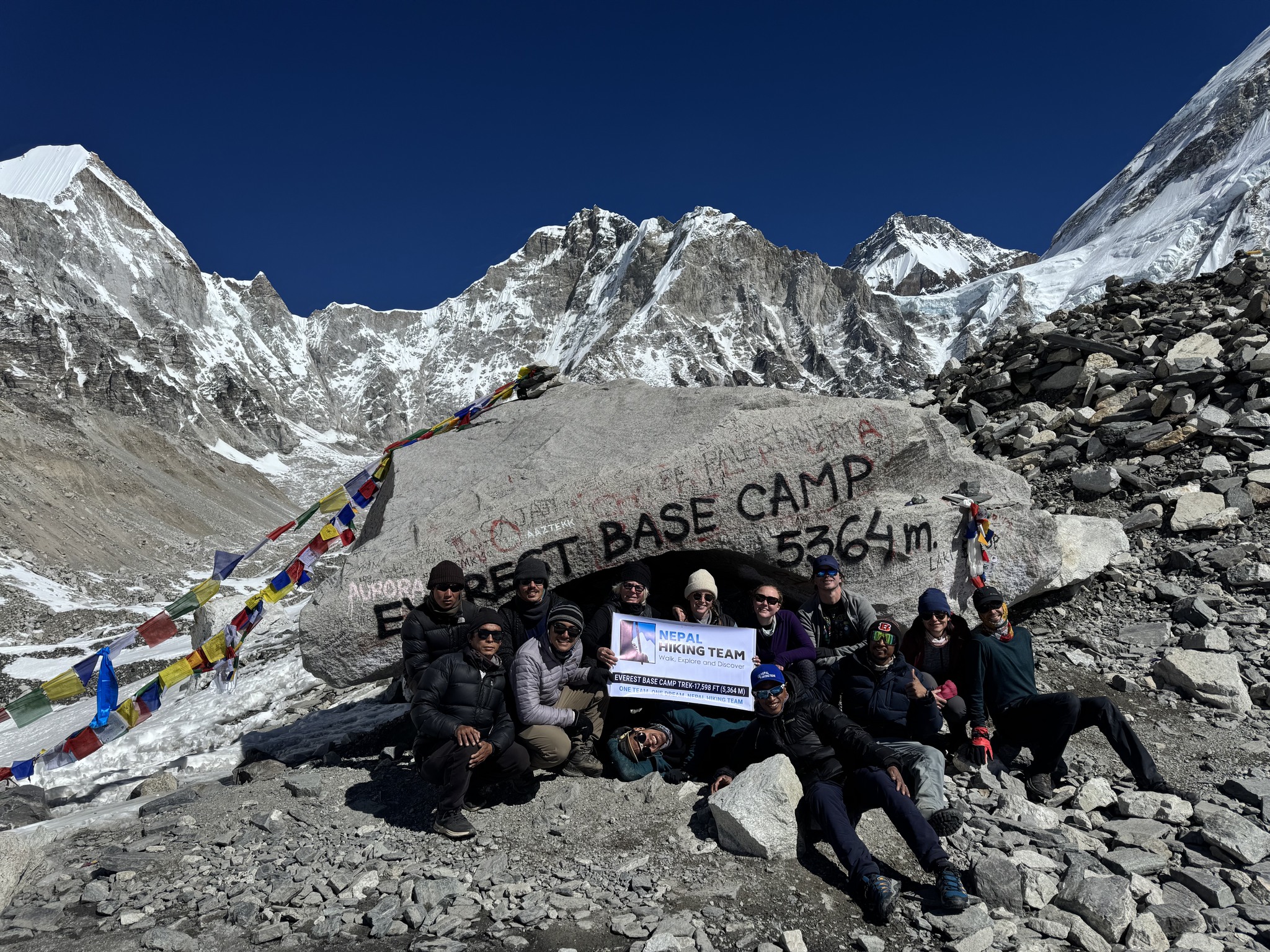
Visiting Tengboche Monastery adds depth and meaning to the Everest Base Camp journey by connecting trekkers with the spiritual heritage of the Khumbu and the traditions that shape Sherpa life. The calm atmosphere, the chanting of monks, and the dramatic Himalayan backdrop create a moment that stays with people long after they return home.
At Nepal Hiking Team, we include the Tengboche Monastery entrance fee in all our Everest Base Camp Trek packages, so our guests can simply enjoy the experience without worrying about extra costs along the trail. We guide thousands of trekkers through the Everest region every year, and we are proud to be one of the top-rated companies for the Everest Base Camp Trek in Nepal.
If you are planning to explore this legendary trail, we welcome you to join us. Our experienced guides, strong safety standards, and deep local knowledge ensure that every trekker discovers the Everest region with confidence, comfort, and meaningful cultural insight.
Post a Comment