23 Days
Check Our Risk-Free Booking Policy View Details

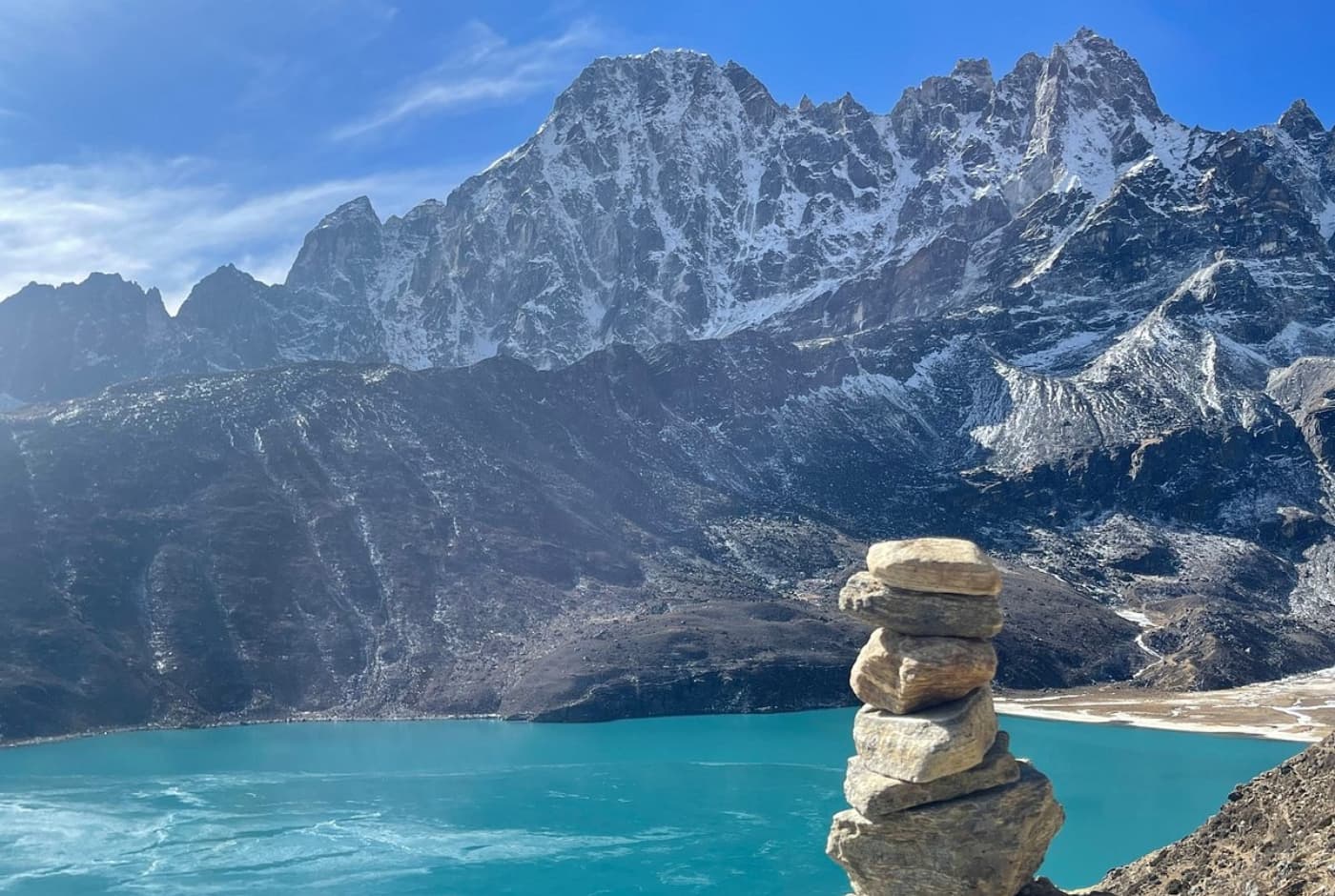
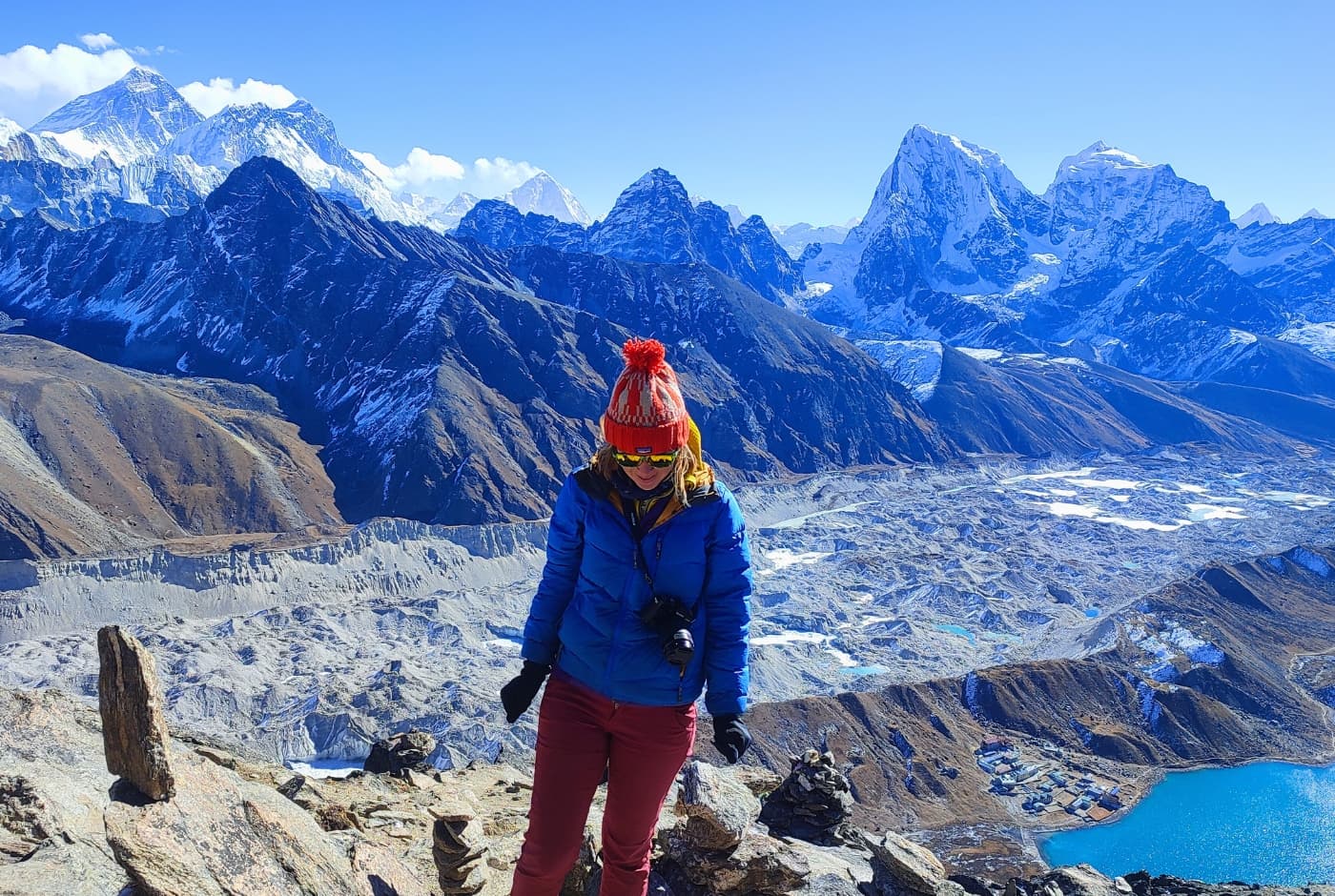
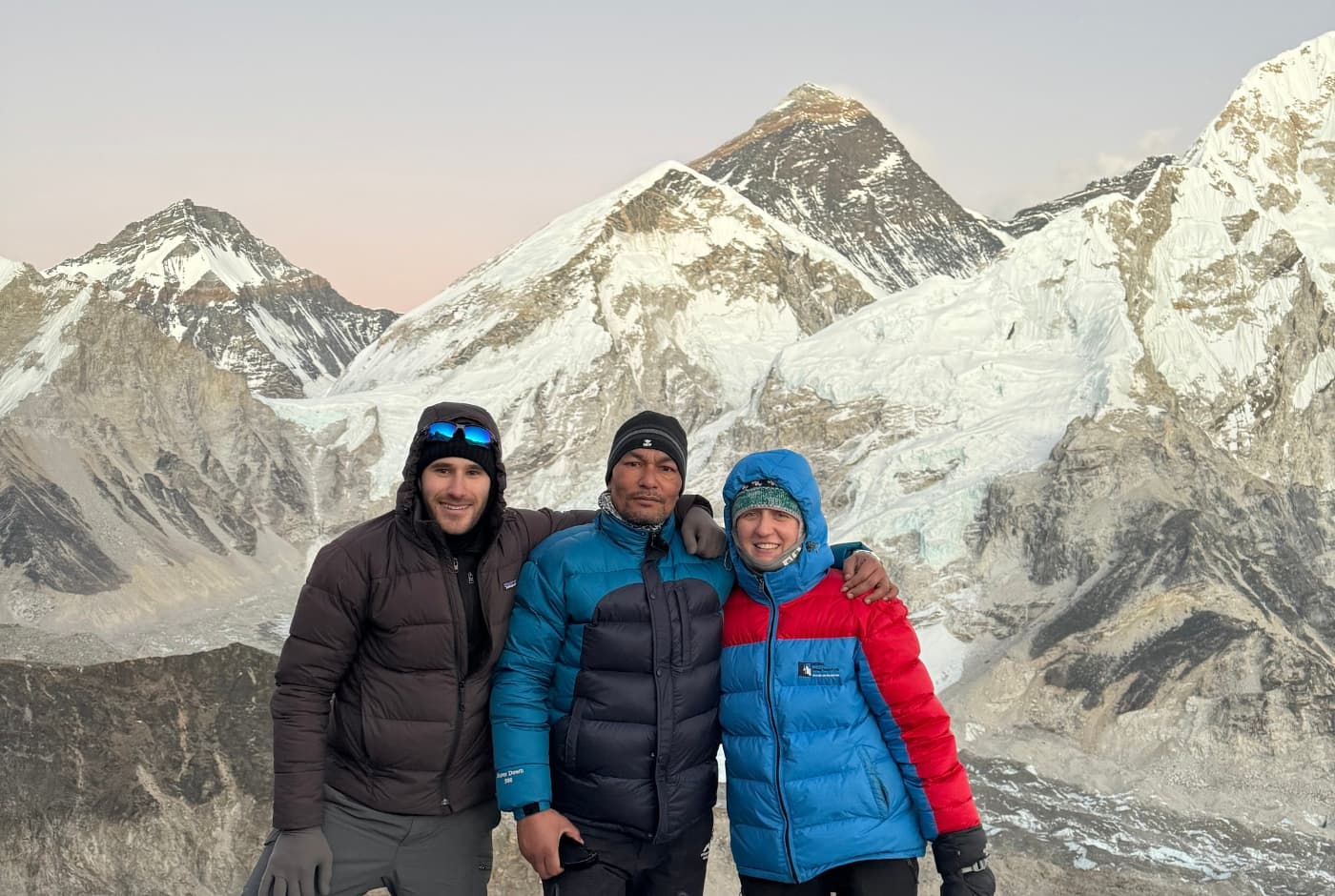
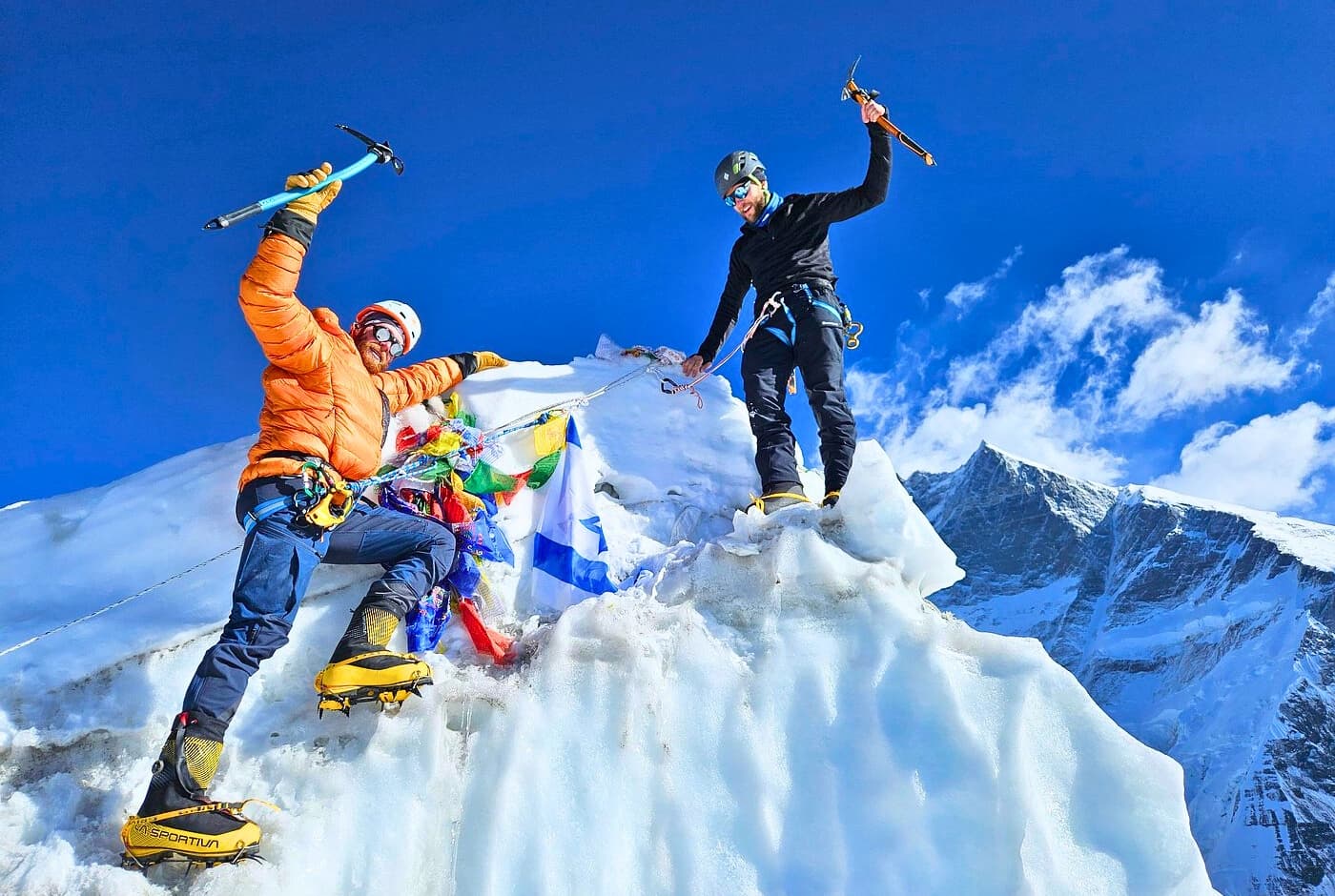
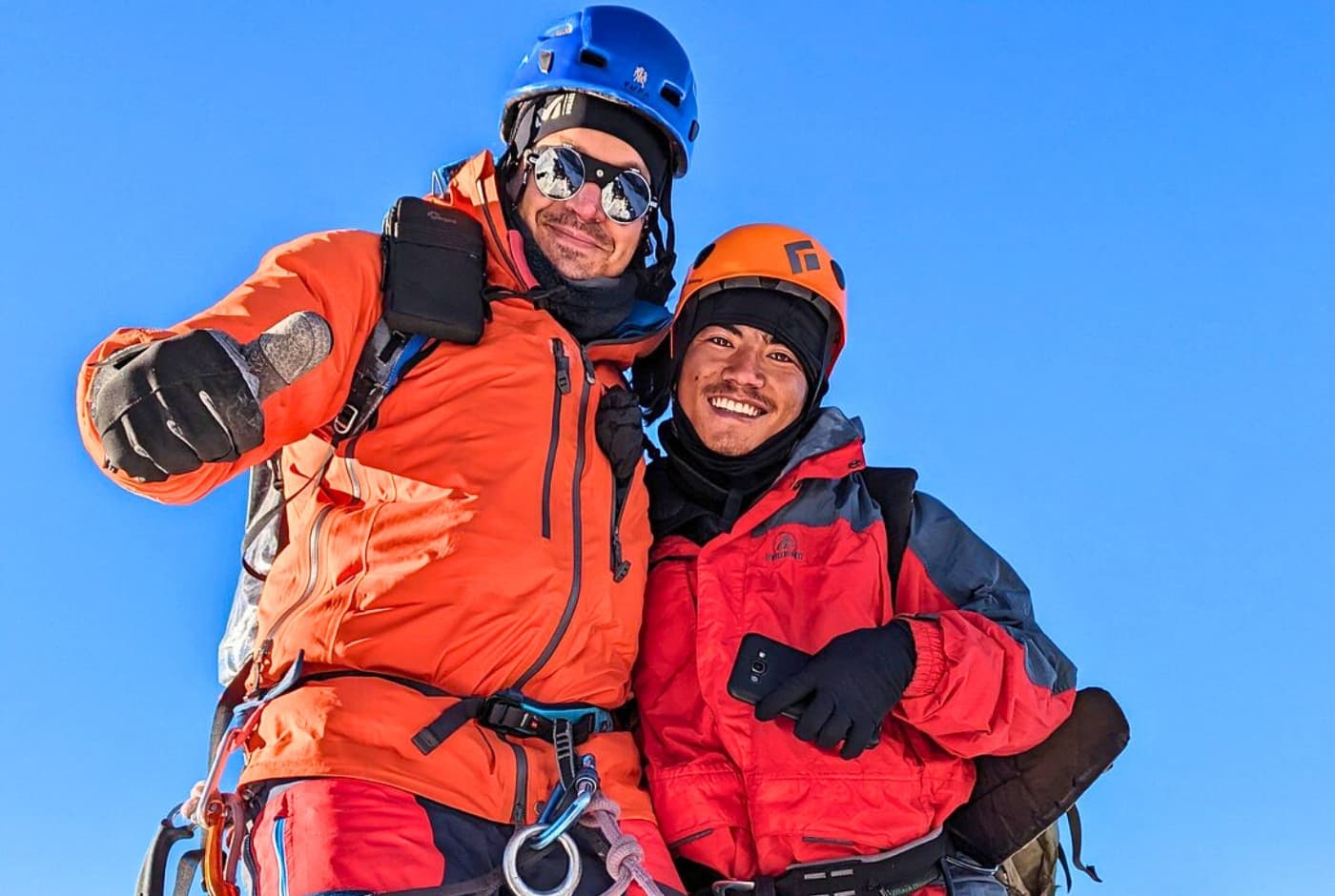
The trip is the perfect sync of trekking and climbing. The name Island Peak comes from a mountaineer, Eric Shipton. He named it so because the peak resembles an island in a sea of ice. Reaching the top of the summit can be seen as a personal challenge and sometimes even a stepping stone to one’s climbing journey.
Further, this 23-day journey will take you to hike up viewpoints such as Gokyo Ri and Kala Pathar. And the views from these viewpoints are well worth the struggle. You will see the panoramic vistas of the surrounding peaks, such as Everest, Makalu, Ama Dablam, Nuptse, and many more.
This trek sounds exciting, right? Well, now it's time to dive into the details of this journey.
When you arrive at the Tribhuvan International Airport, you’ll be greeted by one of our staff. He’ll then transfer you to the hotel in Kathmandu. The following day will be for preparation. You’ll check all the necessary trekking equipment and leave behind your other luggage. The journey initiates with a flight to Lukla. Upon landing, you’ll hike to Phakding for an overnight stay.
After Phakding, the next stop is Namche Bazar. You’ll stay here an extra night for acclimatization and walk up to Everest View Hotel. Now, you’ll pass through the small Sherpa settlements like Dole and Manchhermo to reach Gokyo Lakes. Subsequently, you’ll ascend to Gokyo Ri. Commencing the trek, you’ll make your way to Thangna and cross the Thorong La pass. After crossing the high pass, you’ll descend to Dzongla.
Further, you’ll pass by Lobuche and reach the Everest Base Camp. You’ll descend to Gorekshep to stay for the night. To get a close-up view of Mt. Everest, you’ll hike up to Kala Pathar. Thereupon, you’ll come down to Dinboche and Chukkhung. Thereupon, you’ll reach the Island base Camp and summit Peak. After the summit, you will descend to the base camp for an overnight stay. Taking a day for contingency, you’ll backtrack to Namche Bazar and then to Lukla.
Bidding farewell to the Himalayas, you’ll end the journey by flying back to Kathmandu. The next day is for relaxation in the bustling city. You can also explore and buy souvenirs for your friends and family before flying back home.
We want you to experience the most out of your journey. Hence, here are the recommended times to embark on this trek.
Spring and autumn are the perfect time to explore the beauty of the Himalayas. The temperature during these times is mild, with clear blue skies and beautiful landscapes. These two seasons are the peak seasons in Nepal. Hence, you'll get to see the Himalayas in all their glory.
Embarking in winter and monsoon is not recommended for the climb. The heavy snowfall and slippery trails will make the climb risky. Also, the mountains hide behind heavy clouds during these times, making the hike unworthy.
Are you overwhelmed by all the information on this journey? And wondering if you could complete it successfully.
Well, to start it off, the journey is considered a challenging one and is not for the faint of heart. The trek involves long days of walking on rocky and uneven terrain, with several steep ascents and descents. You'll need to be in good physical shape to endure the demanding hikes and maintain a steady pace throughout the journey. The climb to Island Peak is where the real challenge lies. You'll need basic mountaineering skills, such as using crampons, ice axes, and ascending steep snow and ice slopes.
But don't let the challenge scare you away! With the help of our guide, proper training, and preparation, you can successfully conquer this climb and reach the summit of Island Peak.
If you want to embrace this challenge, reach out to us for the best experience in the Himalayas. We are here to make your holidays worthwhile.
If this adventure didn’t suit your preference, you can always look for an alternative adventure.
The EBC Trek with Island Peak Climb is a great alternative to this trek. The 20-day journey offers a unique and unforgettable experience that skips the visit to the Gokyo Lake and takes you to the Everest Base Camp and then climbs the Island Peak.
We hope that the above option has provided you with inspiration for the type of adventure package that appeals to you. If you have any particular preferences or needs, we are more than happy to personalize your trekking experience to suit you. Our team is committed to fulfilling all of your requirements, so don't hesitate to share your preferences with us, and we will take care of everything else.
During the peak seasons for the trip-name (March to May and September to November), all the Lukla flights will be operated from the Manthali Airport due to congestion at Tribhuvan Airport.
An airport representative will greet and welcome you to Nepal upon your arrival. There are no planned activities due for the day, so we directly check into the hotel.
Overnight at the hotel.
This day is reserved for the final preparations for the trek and climbing. You will be focusing on checking your gear and packing the necessary equipment. You may leave all unnecessary belongings at the hotel and re-pack only the necessary items for the trip.
Overnight stay at the hotel. Meals: Breakfast included.
Today, we have an early morning transfer to the airport for the Lukla flight. The flight to Lukla is a lifetime experience in itself. The airfield is at a high elevation. The difference between the two ends of the runway is about a bare 60 meters only—Trek to Phakding with an arresting, green landscape with the view of Kusum Kangraru.
Overnight at the guesthouse, breakfast, lunch, and dinner included.
We follow the course of the Dudh Koshi River, ascending through the Himalayan Pine and Cedar forests to the famous village of Namche Bazaar. The village of Namche is a historic trading post where Nepalese and Tibetan traders exchange salt, dried meat, and textiles.
Besides being a splendid destination to shop for traditional crafts, Namche remains the central trading post in the Khumbu that attracts Himalayan and lowland merchants. You will spend two days at Namche for acclimatization, visit local markets and spend time with your team. We capture our first glimpses of Everest and neighboring peaks on the hike.
Overnight at the guesthouse, breakfast, lunch, and dinner included.
This day is especially sectioned for acclimatization. We hike up to the Syangboche Airport (3700m), supposed to be the highest airport in the world, then continue climbing to the Everest View Hotel. We catch some great panoramic views of Everest, Lhotse, Amadablam, Tawache, etc. We visit the Sherpa Culture Museum and Everest Photo Gallery on the way back.
Overnight at the guesthouse, breakfast, lunch, and dinner included.
The trails are accessible in the beginning up to Kyangjuma & climb steeply later out of the valley through rhododendron forests, which give way to fragrant stands of juniper and large conifers as the elevation increases.
This trek is lovely in spring when the rhododendrons are blooming. The trails pass many Kharkas; summer settlements are used when the local Sherpas bring yaks to feed in high pasturelands. The route also goes through the communes of (3950m) and Gayle (3960m) to Dole, where a few hotels exist. You can find the views of Khumbila and Tawache (6542m) are incredible throughout the day!!
Overnight at the guesthouse, breakfast, lunch, and dinner included.
The trail goes further to Lambara and Luza (4220, 4360m.), respectively. The course is usually vertical in many places as it ascends through Juniper brushes. We spot Kharkas at flatlands and water. The trails continue to climb along the side of the valley, high above the river, crossing sandy spurs to Machhermo at (4410m).
Overnight at the guesthouse, breakfast, lunch, and dinner included.
We climb a ridge for an excellent view both down the valley to Kantega and up towards Cho-Oyu (8201m). Beyond the ridge, the valley widens as the trail passes through Pangka at (4390m) then descends to the riverbank before the beginning of Ngozumpa Glacier moraine. The climbing towards the moraine is a steep one switching back along to the stream of the moraine of the Ngozumpa Glacier.
Overnight at the guesthouse, breakfast, lunch, and dinner included.
We have an early wake-up today and climb up to the Gokyo-Ri, for a panoramic view of the Mahalangur Himalayan range.
It takes us approximately about 2 hrs climb to the top of the Peak that bestows us with the panoramic views of Cho-Oyu, Gyachung Kang, Everest, Lhotse, Makalu, Cholatse, and Tawache. We also see the great-looking Ngozumpa glacier, the largest glacier in Nepal.
Overnight at the guesthouse, breakfast, lunch, and dinner included.
Today, we continue our trekking journey from the Ngozumpa glacier to reach Thagnak. The trail leading us to the foot of Cho-La pass is a brief one as we will be walking briefly for about 2-3 hours.
Overnight at the guesthouse, breakfast, lunch, and dinner included.
Today is a long trek, and we start before sunrise at 4-5 am to reach the pass by 9–10 am; otherwise, weather conditions will significantly affect our journey. We cross over at an altitude of 5300 meters. We could be exposed to strong winds if crossing too late.
A few problems may arise on this day due to the altitude and snow. Crossing the pass often causes terrible problems if it is covered by snow. However, the magnificent views reward you as you reach the top, and then we descend to the Dzongla at noon.
Overnight at the guesthouse, breakfast, lunch, and dinner included.
Today, our course is brief and more straightforward compared to the course of the trek earlier, which was complex and challenging.
Overnight at the guesthouse, breakfast, lunch, and dinner included.
After a short climb through meadows, look down at the Khumbu glacier. Straight ahead is Kalapattar – the best vantage point to view the entire south face and the surrounding peaks. After a couple of hours, we reach Gorekshep and continue our journey to the Everest base camp.
There is not much of an elevation gain, but there are a lot of ups and downs, and, combined with altitude, this can be an exhausting trek – but the journey is worth it. After approximately 3 hrs of hiking, you will arrive at the base camp and enjoy a magnificent view of the Khumbu glacier and icefall, where the Everest expeditions begin.
Overnight at the guesthouse, breakfast, lunch, and dinner included.
The day starts with a hike up to Kalapattar (5545m), an excellent standpoint to observe the Mount. Everest and innumerable spectacular mountains views. Then, we later trek back to Gorekshep for hot breakfast and descend to Dingboche (4410m).
Overnight at guesthouse, breakfast, lunch, and dinner included.
Trek from Dingboche to Chhukung follows a gradual, scenic ascent through the upper Imja Valley, with outstanding views of Island Peak, Lhotse, and Ama Dablam.
Upon arrival, those who wish may take an optional hike to Chhukung Ri (5 km round trip) for breathtaking panoramic vistas of Makalu, Baruntse, and the Lhotse Wall.
Overnight at the guesthouse; breakfast, lunch, and dinner included.
A short and steady trek leads from Chhukung to Island Peak Base Camp, skirting the glacial moraines of the Imja Glacier. The route passes through open alpine terrain surrounded by dramatic mountain walls.
Overnight at a tented camp; breakfast, lunch, and dinner included.
Pre-Climb Training: After lunch, our guides will provide training on peak climbing techniques and using climbing gear such as ice axe, climbing boot, crampons, harness, ascender et. cetera, and how to go up and down using ropes. However, please note that it is not compulsory to have a training experience for Island Peak Climbing, but a brief training does increase the chances of scaling the summit and thoroughly enjoying the experience.
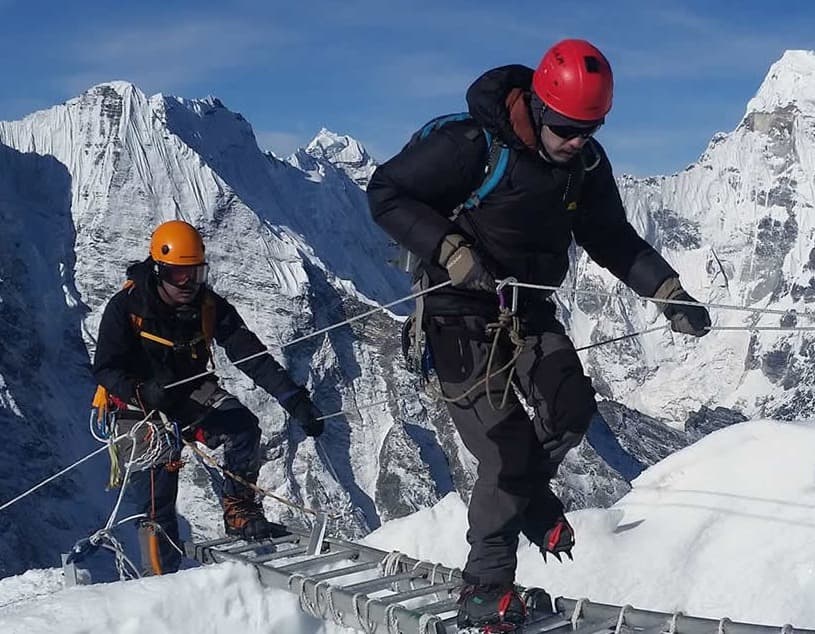
We begin the summit push shortly after midnight, ascending a rocky trail that turns into a steep gully leading to the glacier. After gearing up with crampons and harnesses at around 5700m, we rope up to cross the crevassed Imja Glacier.
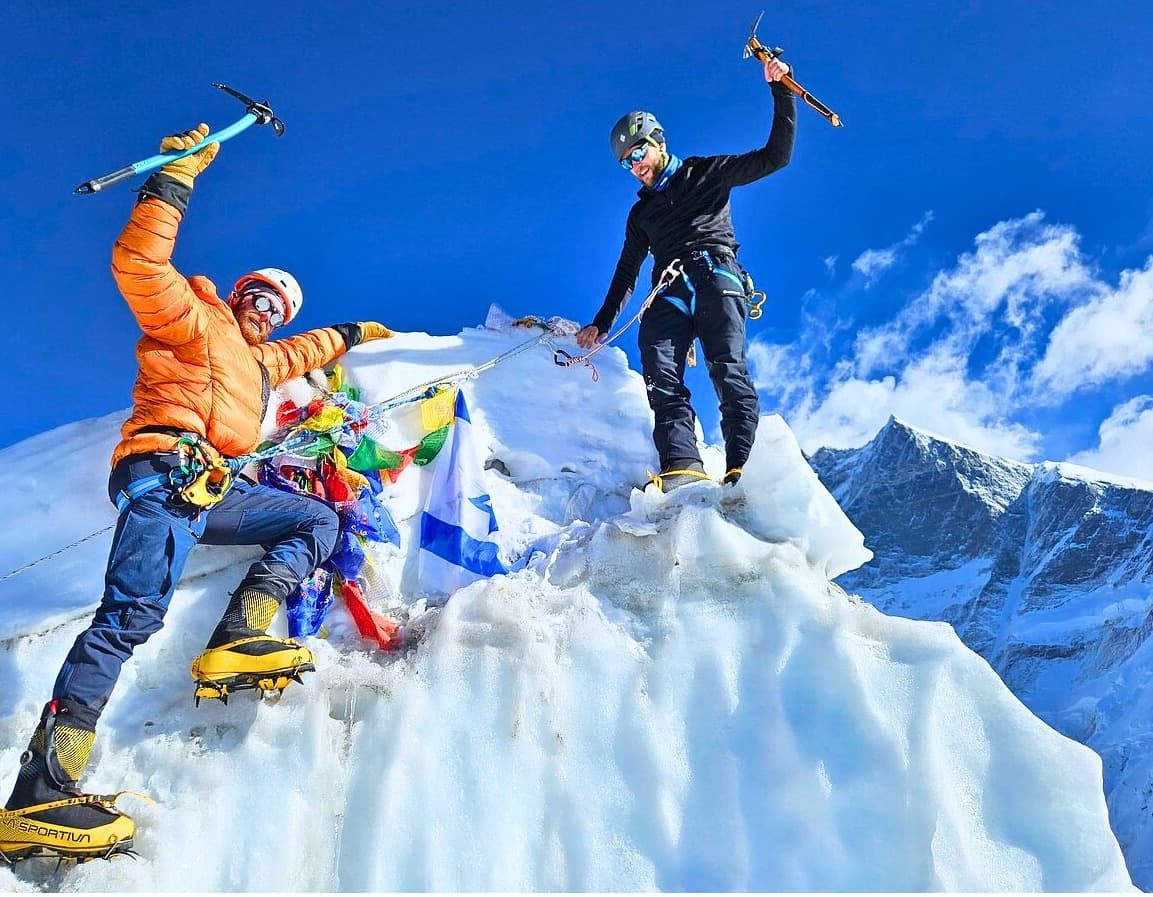
Fixed ropes and ascenders are used to climb the final 100–150m ice headwall (45–60° slope) to reach the summit ridge. The summit offers spectacular views of Everest, Lhotse, Makalu, and surrounding Himalayan peaks.
After celebrating at the top, we descend via the same route, abseiling down the headwall, crossing the glacier, and returning to Base Camp. We then continue the descent to Chhukung.
Overnight at the guesthouse; breakfast, lunch, and dinner included.
There is no assurance that we can get favorable weather on our planned day for the summit (day 17), so this day is used as a contingency if we cannot summit the Island Peak on this day.
If the weather gets exceptionally adverse, we wisely have to postpone the program of summiting the Peak. Sometimes, some trekkers in the group may get problems in acclimatizing well enough to make the ascent; we can use the extra day in that condition. If the trip goes smoothly, we stick to our original plan.
Overnight at a tented camp or guesthouse, breakfast, lunch, and dinner included.
As we leave the mountains behind us, our descent takes us through Orsho, Somare, Pangboche, Tengboche, Pungki Thanka, and a complete steep to Kyangjuma more accessible trail to Namche.
Overnight at the guesthouse, breakfast, lunch, and dinner included.
The trek continues along the Dudh Kosi River to the small mountain airstrip at Lukla, where you will catch your return flight to Kathmandu.
Overnight at the guesthouse, breakfast, lunch, and dinner included.
Today, we return to Kathmandu on a brief half-hour amazing scenic flight from Lukla.
Overnight at the hotel, breakfast included.
Today is set aside for relaxation in the bustling city. You can choose to either spend the day resting or exploring, as per your personal preference.
Overnight at the hotel, breakfast included.
Our tour finally ends today as approximately 3 hours before the scheduled flight, a representative from the Nepal Hiking Team will take you to the airport for your respective flight.
Read our genuine feedback from past travelers with Nepal Hiking Team sourced from TripAdvisor, Google, Facebook, and Trustpilot.
We had an incredible experience with Nepal Hiking Team, especially with our guide, Rudra.
The trip was fully flexible. We originally planned to do Gokyo, EBC, and Island Peak, but during the trek, we decided to change plans and just do Gokyo. It was no problem at all—they adjusted everything for us without any hassle.
We had a medical emergency, and Rudra, along with the Nepal Hiking Team, took care of everything. They arranged a helicopter back to Kathmandu, contacted our insurance, and even stayed with us at the hospital. We felt fully supported the whole time.
Rudra really understood us. He adjusted the pace to match what we were comfortable with—we never felt rushed and could enjoy the views. He also took lots of photos for us and made sure we didn’t miss any of the good viewpoints.
At the teahouses, Rudra handled it all—getting us the best rooms, taking care of food, and making sure we were comfortable.
Overall, it was an amazing experience. We’d recommend Nepal Hiking Team to anyone.
Guided by Rudra Sunwar
My husband and I completed the EBC trek with Island Peak, followed by a helicopter ride back to Lukla.
Nepal Hiking Team has been amazing in every aspect, from communication before the trip to our time in Nepal. Every detail exceeded our expectations.
We would like to take this opportunity to specially compliment and express our heartfelt gratitude to our guide, Netra. Beyond providing explanations about the trail, he ensured our well-being at every step. On the third day at Namche Bazaar, we fell sick, and Netra supported us in every possible way, ensuring we had proper nutrition and hydration to recover. He even carried our day packs to help us sustain our pace to the next location. Coming from a lifetime at sea level, acclimatization was another challenge for us. Netra offered essential support to manage our symptoms, especially headaches, and constantly checked in on us.
What touched us most was during the Island Peak hike. As a trekking guide, he could have handed us over to the mountain guide at that point and stayed back. Instead, he chose to accompany us to the base camp to ensure our well-being, health, and comfort. This meant sleeping in a smaller tent, more exposed to the cold weather and strong winds. The Island Peak hike was extremely challenging. By then, on the ninth day of trekking, we were physically drained. Carrying heavy mountaineering equipment uphill was an additional struggle. Netra volunteered to carry our equipment up to the crampon point, roughly 4.5 hours uphill, beyond which he couldn’t proceed without proper mountaineering gear. This act was especially touching and played a crucial role in our successful ascent of Island Peak.
On our return to Kathmandu, bad weather at Lukla grounded most flights, causing a two-day backlog for helicopter rides. Netra tried everything possible to get us onto a helicopter, even if it meant sacrificing his own seat. He had to make a two-day walking and land transfer back to Kathmandu instead.
Every action Netra took touched our hearts. To us, Netra is like a big brother. He said, “I’m not only your guide; I am your friend and guardian.” He put our well-being above everything else and constantly gave us positive encouragement and empowerment whenever we had self-doubt. He reminded us that we were like family and that we would always help one another.
Our porter, Dakman, was equally fantastic. Seeing that we were exhausted and unwell, he quickly carried our duffel bags to the tea houses and then returned to help with our day bags so that we could keep going.
In every way, we are beyond pleased with Nepal Hiking Team and will absolutely choose them again for future treks in Nepal. When we return, we will undoubtedly request Netra to be part of our journey again.
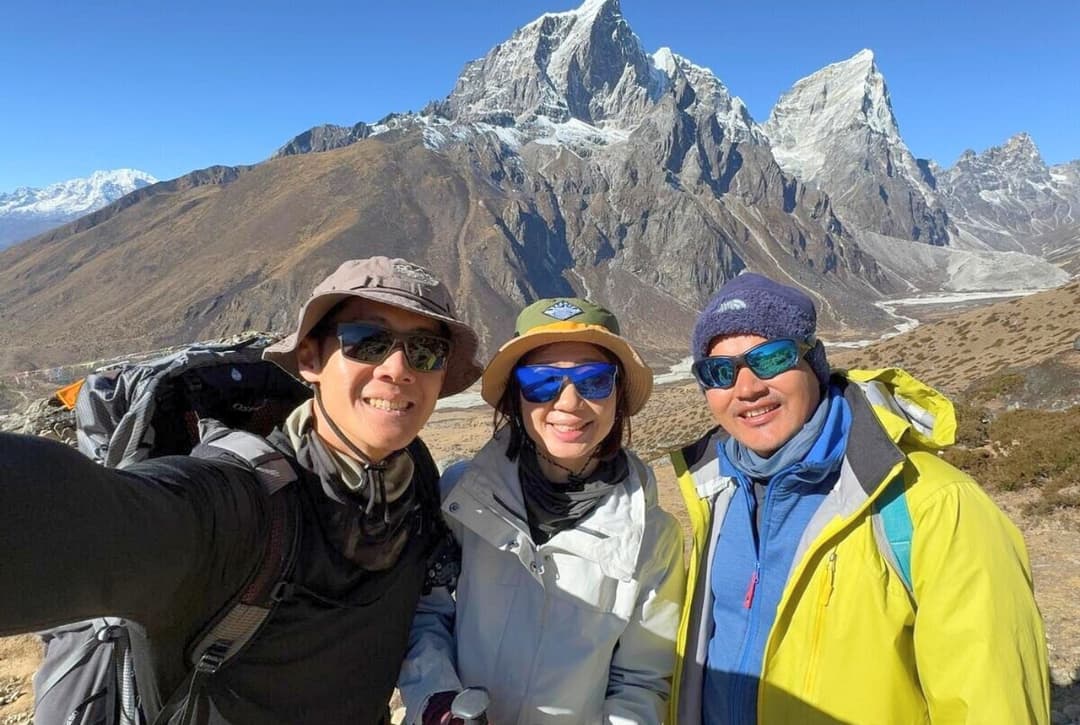 +
+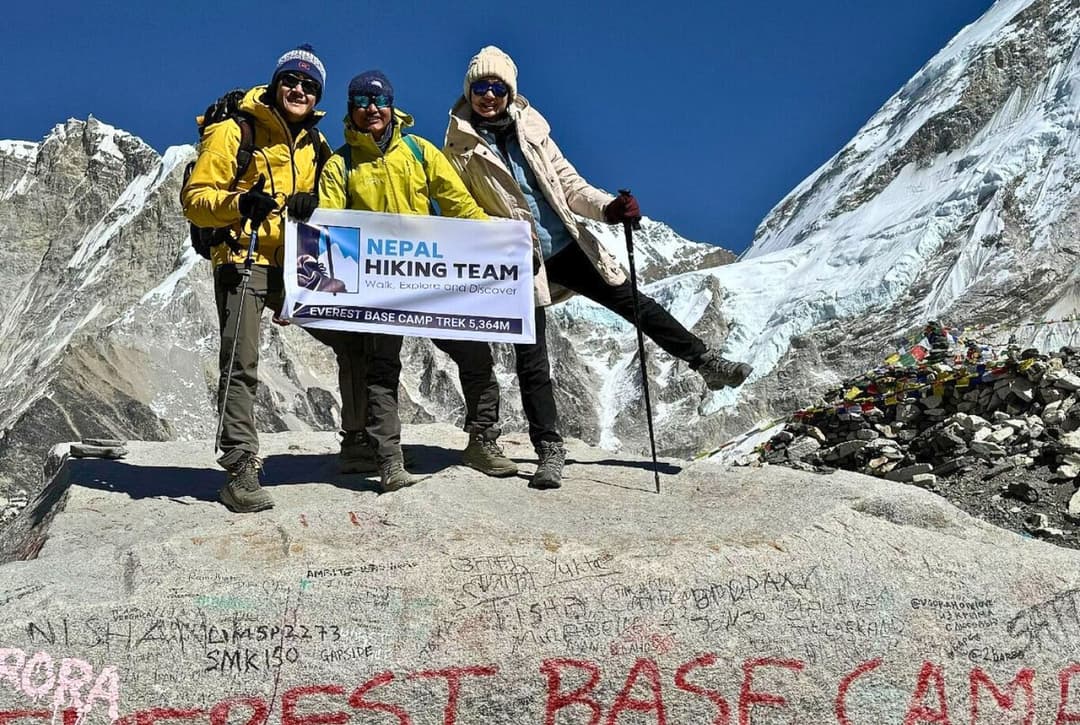 +
+
Experience of a lifetime! Leading up to the trip, I felt some excitement and uncertainty because I was traveling from New Jersey to Nepal, so it was a trip to the other side of the world. Also knowing we were going to trek to the highest region in the world.
Once we arrived in Kathmandu, we met up with our guide (Bhim). After a few minutes of talking with him, I felt a sense of calm and my excitement of joy grew from there. And I was right he and his team made sure we had the best experience possible.
The full trek going and coming was incredible. Our guide, Bhim, made sure we had the best experience. Can’t say enough of how wonderful he and his team made this one for the books!
I highly recommend booking with this company and Bhim! Namaste!
I just completed trekking in Nepal together with another solo traveler. The service of Nepal Hiking Team was exemplary from the start till the end. Nothing beats word-of-mouth good reviews.
Mr. Ganga has been very responsive to queries from Day 1 and was physically present even on the last day to officially close the loop for the package tour.
Our guide Bibek was very patient and sincere as he led us through the trek. He resolved issues with his heart and people skills and gave assurance whenever plans suddenly changed.
He ensured things were changed for the better. Our porter, Rajendran, was also good and always arrived ahead of time to ensure our rooms were confirmed.
- Guided by Bibek Dhamala
We had the best time in Nepal. The beautiful views and warm hospitality of the Nepali people are truly unparalleled.
Instrumental to our amazing experience were our guide, Netra, and porter, Vasu.
We were super well taken care of. Netra was quick to assess our physical abilities and was able to effectively set the pace for our hikes. He had very good knowledge of the route and terrain. Importantly, this was our first time attempting a hike at a high altitude, so he took extra care to check on us regularly.
On a personal note, proper gear, including a powerful down jacket for -20 degrees Celsius and a proper hiking backpack, is super essential.
Overall, I would highly recommend the Nepal Hiking Team and Netra/Vasu for your Nepal adventure!
Nepal Hiking Team is highly regarded for its personalized service, safety focus, and experienced guides. Reviews from past travelers highlight that the company offers flexible itineraries—as seen with clients who successfully changed their plans mid-trek. The team provides comprehensive support, including English-speaking trekking guides and highly experienced climbing guides for Island Peak, with all their food, accommodation, salary, and insurance covered. Your safety is prioritized, with guides trained to handle medical emergencies and coordinate helicopter rescues when needed, as confirmed by genuine traveler feedback.
Your climbing guide is specifically trained for high-altitude mountaineering and will provide pre-climb training on using gear like ice axes, crampons, harnesses, and ascenders. During the summit push, guides assist with fixing ropes, managing the roped team across the crevassed Imja Glacier, and setting the pace. Reviews specifically mention guides like Netra who went above and beyond—carrying climbers' heavy mountaineering equipment uphill to the crampon point and providing constant encouragement, demonstrating the company's commitment to your success and well-being.
Travelers consistently praise the professionalism, care, and flexibility of the team. One couple noted their guide, Netra, acted "like a big brother," carrying their day packs when they fell sick and even sacrificing his own helicopter seat to ensure they could fly back from Lukla. Another solo traveler highlighted the responsiveness of the management, with Mr. Ganga being present from day one to close the loop. The guide's ability to handle unexpected situations, from medical emergencies to weather-related flight delays, is repeatedly commended, ensuring a smooth experience even on a demanding 23-day journey.
Upon your arrival at Tribhuvan International Airport, a representative from Nepal Hiking Team will greet you and handle your transfer to a 3-star category hotel in Kathmandu. Day 1 is free for you to rest after your journey. Day 2 is a free day specifically reserved for trip preparation, where you'll check all your trekking and climbing gear, and leave any unnecessary luggage at the hotel before the expedition begins.
The Nepal entry visa is not included in the package cost. You can obtain a visa easily upon arrival at Tribhuvan International Airport or from Nepalese embassies abroad. For this 23-day itinerary, a tourist visa with a duration covering your stay (typically 30 or 90 days) is required. You'll need to bring the visa fee in USD or other convertible currency, as well as two passport-sized photos. The process is straightforward and designed for tourists.
Your first two days in Kathmandu are well-structured. Day 1 is for arrival and transfer to the hotel. Day 2 is a free day dedicated to final trip preparation. You will have a pre-trip meeting to check your gear, finalize permits, and prepare for the early morning flight to Lukla on Day 3. Four nights of 3-star hotel accommodation with breakfast are included in the cost, providing a comfortable start and end to your adventure.
The minimum group size for this package is 2 persons. This ensures you have a companion for the challenging trek and climb, and it allows for efficient logistics with shared porters (one porter for every two clients) and guides. If you are a solo traveler, you can join a scheduled group departure or inquire about private trip options.
Booking is handled directly with Nepal Hiking Team. You can contact them to check availability for the scheduled departure dates listed on the page. The company is known for being responsive to queries. A deposit is typically required to confirm your booking, with the balance due before the trip starts. If the listed dates don't fit your schedule, the team can offer alternative date options. All taxes and service charges are included in the package cost.
A garbage deposit fee of US$ 250.00 is listed in the cost excludes. This is a refundable deposit required by the Sagarmatha National Park authorities to ensure all waste is brought back from the climb. You will be responsible for this fee, and it will be refunded to you upon returning all non-biodegradable waste to the proper authorities after the expedition.
The round-trip flight between Kathmandu and Lukla is included in the package. This is a thrilling 30-minute scenic flight offering bird's-eye views of the Kathmandu valley and the Himalayas. However, the Lukla airport is one of the most challenging in the world. During peak seasons (March to May and September to November), flights often operate from Manthali Airport instead of Tribhuvan Airport due to congestion. Weather-related delays are common, which is why the itinerary includes a built-in contingency day (Day 18) and requires flexibility.
All ground transports are included in private vehicles, including your airport transfers in Kathmandu. On Day 3, you'll be transferred from your hotel to the domestic airport for your flight to Lukla. The trek begins immediately after landing in Lukla, with a 3-hour trek to Phakding. Upon return, the itinerary includes a final transfer from your Kathmandu hotel to the international airport for your departure flight.
This is a common occurrence in the Khumbu region. The itinerary is designed with this in mind, including a built-in contingency day on Day 18 that can be used for summit delays. However, if flights are delayed at the end of the trek, the company and your guide will work to manage the situation. Traveler reviews mention guides like Netra actively trying to secure helicopter rides when flights were backlogged, demonstrating proactive support. Having comprehensive travel insurance is crucial for covering such unexpected delays and potential helicopter charters.
This journey is classified as "Challenging" and is not for beginners. It involves long days of walking on rocky, uneven terrain with steep ascents and descents, reaching a maximum elevation of 6,160 meters (Island Peak summit). You must be in excellent physical condition to maintain a steady pace throughout. The climb to Island Peak itself requires basic mountaineering skills, including the ability to use crampons, an ice axe, and ascend steep snow and ice slopes (45–60° on the final headwall). Previous high-altitude trekking experience is highly recommended.
The trekking days are long and strenuous. You will cover distances up to 19 km in a day (e.g., Chhukung to Namche Bazaar) and walk for 8-10 hours on days like crossing Cho La Pass (5420m) or trekking to Everest Base Camp. The route includes significant altitude gains, with multiple acclimatization days built in at Namche Bazaar and via hikes to Gokyo Ri (5360m) and Kala Patthar (5545m). The terrain includes moraines, glacier paths, and high passes. Proper training and preparation are essential.
You are not required to have prior mountaineering experience, as your climbing guide will provide training. On Day 16 at Island Peak Base Camp, you will receive instruction on using climbing gear: ice axe, crampons, harness, ascender, and fixed ropes. The summit day (Day 17) involves a pre-dawn start, ascending a rocky trail to a steep gully, then roping up to cross the crevassed Imja Glacier. The final challenge is climbing a 100-150m ice headwall with a 45–60° slope using fixed ropes and ascenders. You will also need to be comfortable abseiling (rappelling) down the same headwall after the summit.
Acute Mountain Sickness (AMS) is a serious risk on a trip reaching over 6,000m. The itinerary is carefully designed with a gradual ascent profile and includes two key acclimatization days: one at Namche Bazaar (Day 5) with a hike to Everest View Hotel (3962m), and another rest day built into the climbing schedule. The route follows the "climb high, sleep low" principle, such as hiking to Gokyo Ri (5360m) and staying overnight at Gokyo Lake (4700m). Your guide is trained to recognize AMS symptoms and will regularly check your oxygen saturation and well-being. A comprehensive first aid medical kit is carried, and the itinerary includes a contingency day for emergencies.
Safety is paramount. You will be accompanied by a highly experienced climbing guide whose food, accommodation, salary, and insurance are covered by the company. The package includes general climbing equipment such as ropes, ice screws, and snow bars. Before the summit attempt, you'll receive thorough pre-climb training on using your personal gear (crampons, harness, ascender). The summit push begins shortly after midnight to take advantage of stable snow conditions and avoid afternoon winds. Fixed ropes are used on the steepest sections, and you will be roped up for crossing the glacier.
Your guide carries a comprehensive first aid medical kit. In case of a serious emergency, the guide will coordinate a rescue, which may involve a helicopter evacuation. Traveler reviews specifically mention guides like Rudra and Netra who managed medical emergencies effectively, arranging helicopters, contacting insurance, and staying with the affected person at the hospital. This is why comprehensive travel insurance that covers high-altitude trekking and helicopter rescue is mandatory and listed in the cost excludes.
The company provides several key items to support your journey. You will receive a Nepal Hiking Team duffle bag for your main gear (carried by porters), a high-quality down jacket suitable for temperatures down to -20°C, and a sleeping bag for the duration of the trek and climb. Additionally, they provide general climbing equipment like ropes, ice screws, and snow bars. A trekking map and a trip achievement certificate are also included.
You are responsible for your personal trekking and climbing gear. This includes sturdy, broken-in trekking boots, crampon-compatible mountaineering boots for the summit day, warm layers (base layers, fleece, insulated jacket), waterproof shell jacket and pants, gloves (liner and heavy mountaineering), warm hat, sun hat, sunglasses (with high UV protection and side shields for snow), headlamp with extra batteries, trekking poles, a 20-30L daypack, and a hydration system. The full list of required personal equipment is typically provided upon booking, and you will have a gear check on Day 2 in Kathmandu.
Your main luggage will be carried by porters (with a weight limit, usually around 15-20 kg), and you will carry a daypack with essentials like water, snacks, and layers. The company provides a duffle bag for this purpose. You can leave unnecessary belongings at the Kathmandu hotel during the trek. Packing should be strategic, focusing on layering for varying temperatures, durable clothing, and ensuring all mountaineering gear is in good condition. Seasonal fruits are provided during the trek, but you should bring personal snacks and hydration tablets.
Accommodation varies by location. In Kathmandu, you have four nights at a 3-star category hotel with breakfast. During the main trek (Phakding to Lobuche, etc.), you'll stay in "best available twin sharing lodge to lodge accommodation"—these are teahouses/guesthouses offering basic but comfortable rooms, usually with shared bathrooms. For the climbing segment, you'll have tented accommodation at Island Peak Base Camp (Day 16) and possibly on the contingency day (Day 18). The standard is basic but clean and managed by your guiding team.
Hot showers are included in the cost only at Lukla, Phakding, and Namche Bazaar. At other teahouses, you will need to pay extra for a hot shower (usually a small fee). Electricity is available for charging devices at most teahouses, but it may also incur a small fee. It's recommended to bring a power bank to ensure your devices stay charged for photos and communication.
Limited mobile network coverage (Ncell or NTC) is available in larger villages like Namche Bazaar and Dingboche, but service is unreliable or absent in more remote areas like Gokyo, Thangna, and during the climb. Many teahouses offer Wi-Fi for a fee, but speeds can be slow. Do not rely on consistent connectivity. The itinerary is designed to be remote, and your guide will be your primary point of contact for coordination and safety.
The package includes full board meals with tea/coffee—specifically breakfast, lunch, and dinner—during the trek and climb. In Kathmandu, only breakfast is included on the free days (Days 2 and 22). Meals not specified in the itinerary are excluded. During the trek, teahouses offer a variety of food, primarily Nepali (dal bhat), Tibetan (noodle soups, momos), and Western options (pasta, pizza, porridge, eggs). Seasonal fruits are also provided during the trek, which is a valuable source of vitamins at high altitude.
Boiled water will be provided during the climb portion. For the trekking days, you can purchase bottled water at teahouses, but this is a major personal expense (cost excludes drinks like water, coke, etc.). To reduce cost and plastic waste, it is highly recommended to bring a reusable water bottle and purification tablets or a filter. Many teahouses also sell boiled water for a lower fee than bottled water.
Tea and coffee are included with your meals. However, any drinks beyond those—including bottled water, soft drinks (coke, fanta), alcoholic beverages, and snacks—are considered personal expenses and are excluded from the package cost. You should budget extra for these items based on your personal preferences.
Yes, the itinerary is flexible. The page notes that if the provided 23-day itinerary does not meet your needs, Nepal Hiking Team can "design individualized travel plans based on your preferences and specifications." A traveler review also mentions their group originally planned Gokyo, EBC, and Island Peak but decided to change plans mid-trek to just Gokyo, and "it was no problem at all." You can request adjustments to the duration, route, or even upgrade to a private trek.
The listed scheduled departures are for the "group joining option." For these, you join a set itinerary with other trekkers, which is cost-effective due to shared resources (guide, porters). A private trek offers more flexibility in start date, pace, and itinerary changes, and includes a dedicated guide just for your party. For private trips, you can contact the company to arrange details and pricing. The group size for this package has a minimum of 2 persons, but private treks can be arranged for solo travelers or those wanting an exclusive experience.
Tips and gratuities for trekking staff and drivers are listed in the cost excludes. Tipping is a customary way to show appreciation for the hard work of your guide(s) and porter(s), who are essential to your safety and experience. While the amount is at your discretion, it is an important part of the trekking culture in Nepal. Your guide can advise on appropriate tipping etiquette based on the length of the trip and the level of service provided.
Island Peak (Imja Tse, 6189m) is a classic climbing peak in the Everest region, named by Eric Shipton as it "resembles an island in a sea of ice." This itinerary uniquely combines it with the full Gokyo Lakes and Everest Base Camp trek, making it a comprehensive high-altitude adventure. The summit day is technically challenging, involving a pre-dawn start, glacier travel with fixed ropes, and a steep 100-150m ice headwall with a 45–60° slope. Reaching the summit is a significant personal achievement and an excellent stepping stone for higher Himalayan peaks.
On Day 16, after trekking to Island Peak Base Camp (5240m), you will have a dedicated pre-climb training session. Your climbing guide will provide instruction on using technical climbing gear: ice axe, climbing boots, crampons, harness, ascender (Jumar), and techniques for ascending and descending fixed ropes. The page notes that while prior experience is not compulsory, "a brief training does increase the chances of scaling the summit and thoroughly enjoying the experience." This ensures you are comfortable with the equipment before the early morning summit push.
A dedicated reserve day (Day 18) is included because weather in the Khumbu region can change rapidly, especially for summit attempts. Favorable conditions are crucial for safely climbing the headwall and crossing the glacier. This day allows for flexibility if the planned summit day (Day 17) is not viable due to high winds, heavy snowfall, or if any group members need an extra day for acclimatization before making the attempt. If the summit is successful as planned, this day serves as a buffer for the descent or rest.