
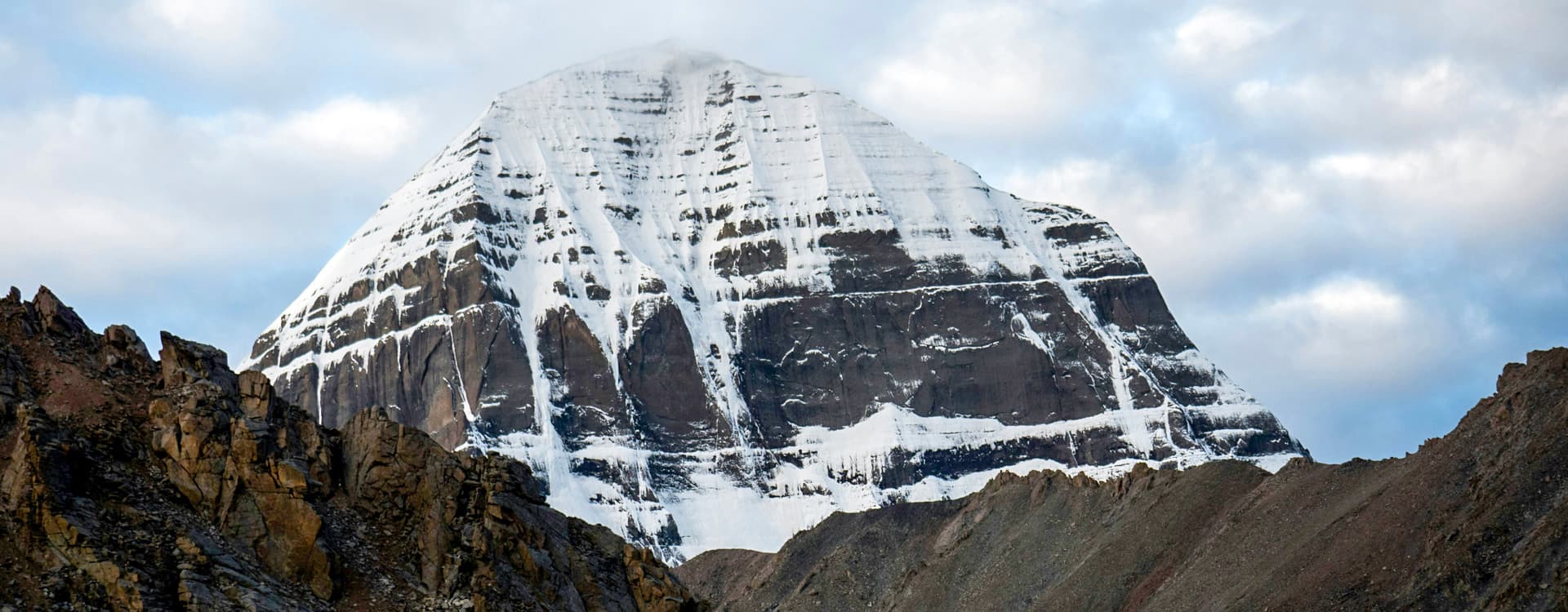
Mount Kailash (6,638 m), located in western Tibet, is a sacred peak revered as one of the most important spiritual sites in the world. Also known as Kangrinboqe, it is revered as holy by four major religions: Hinduism, Buddhism, Jainism, and Bon. In addition, the mountain is protected by both spiritual belief and technical difficulty, making it one of the unclimbed peaks.
Beyond its religious significance, Mount Kailash is popular for its unique near-perfect pyramidal shape, its connection to four major Asian river systems, and its proximity to the sacred lakes of Manasarovar and Rakshastal. Explorers and pilgrims from across Asia travel to Mount Kailash and perform Kora (circumambulation).
Kailash is seen as a symbol of devotion, solitude, and restraint, rather than a climbing destination, and the journey itself is a combination of high-altitude trekking with centuries-old spiritual traditions. From its fascinating geological history to its sacred summit, this article talks about ten interesting facts about Mount Kailash. Learn more about what makes this interesting mountain so distinctive.
Top 10 Facts About Mount Kailash
- Mount Kailash is sacred to four major religions.
- No one has ever successfully climbed Mount Kailash.
- Four major Asian river systems rise in the Kailash region.
- Mount Kailash has a distinctive pyramid-like appearance.
- The Mount Kailash Kora is a sacred 52-km pilgrimage.
- Lake Manasarovar and Lake Rakshastal differ in appearance.
- Mount Kailash is associated with the cosmic Mount Meru.
- The Inner Kora is different from the more common outer circuit.
- The best time to visit Mount Kailash is limited by high-altitude conditions.
- Mount Kailash's mysteries include popular myths that science has not verified.
Mount Kailash Is Sacred to Four Major Religions
One of the most remarkable facts about Mount Kailash is that it holds spiritual significance across four distinct religious traditions: Hinduism, Buddhism, Jainism, and Bon. Although each tradition interprets the mountain differently, all associate it with profound spiritual meaning. This shared reverence makes Kailash an important pilgrimage destination for people from different cultural and religious backgrounds.
In Hinduism, Mount Kailash is traditionally regarded as the abode of Lord Shiva and Goddess Parvati. Shiva is believed to reside there in deep meditation, representing stillness, transformation, and cosmic balance. For many Hindu devotees, visiting Kailash and performing its circumambulation is an act of devotion and a way to deepen their spiritual connection.
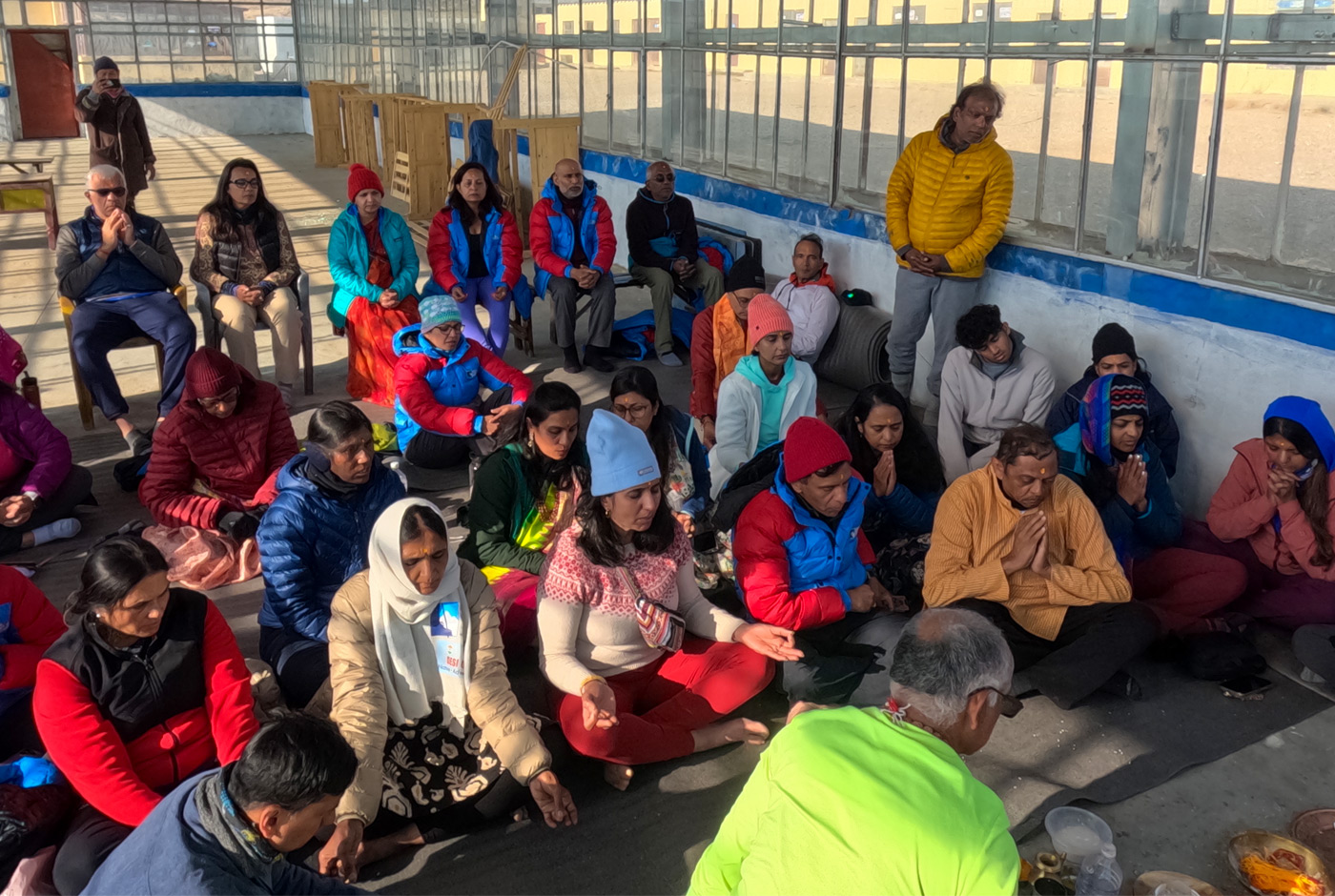
In Tibetan Buddhism, the mountain is associated with Demchok, also known as Chakrasamvara, a deity representing supreme bliss, and with the cosmological concept of Mount Meru. Jain tradition associates the region with Ashtapada, traditionally identified as the place where the first Tirthankara, Rishabhanatha, attained liberation. In Bon, the indigenous Tibetan religious tradition, Kailash is a sacred center associated with spiritual power and cosmology. These different interpretations contribute to the mountain's enduring religious importance.
Mount Kailash Has Never Been Successfully Climbed
Unlike many prominent Himalayan peaks, Mount Kailash has no confirmed recorded summit ascent. Its unclimbed status is unusual because the mountain, at approximately 6,638 meters, is lower than Mount Everest and several other Himalayan peaks that have been climbed numerous times. However, physical difficulty alone does not explain why climbers have left it untouched.
The principal reason is its sacred status. For centuries, pilgrims have regarded the mountain as a place of divine presence rather than a summit to be conquered. Climbing it would be considered disrespectful by many followers of the religions associated with Kailash. This belief has helped establish a strong cultural and ethical barrier against mountaineering attempts.
The history of modern climbing reinforces this position. British explorer Hugh Ruttledge investigated the mountain's surroundings in 1926 but did not summit it. Mountaineer Reinhold Messner reportedly declined an opportunity to climb Kailash in the 1980s because of its religious significance. In 2001, reports of a proposed Spanish expedition triggered international opposition, and climbing restrictions were reinforced by the Chinese authorities. No successful ascent has been verified.
Four Major Asian River Systems Rise in the Kailash Region
Mount Kailash is closely associated with the headwaters of four major Asian river systems: the Indus, Sutlej, Brahmaputra, and Karnali. These rivers flow in different directions from the wider Trans-Himalayan region, linking the Tibetan Plateau with extensive landscapes across South Asia. Their importance extends far beyond the mountains, as they support ecosystems, agriculture, settlements, and livelihoods across several countries.
The Indus flows west and northwest before continuing through the wider Indus basin. The Sutlej travels towards India and Pakistan, where it becomes part of the Indus River system. The Brahmaputra flows east across Tibet before turning south into India and eventually Bangladesh. The Karnali, known as the Ghaghara farther downstream, flows from Tibet into Nepal and then India, joining the Ganges River system.
Although these rivers are often described as originating at Mount Kailash, their actual headwaters are spread across the surrounding region rather than emerging from the mountain's summit itself. This distinction is important geographically. The area's combination of glaciers, lakes, and high-altitude drainage systems makes it a significant water source for a large part of Asia.
Mount Kailash Has a Distinctive Pyramid-Like Appearance
Mount Kailash stands out because of its striking shape. Its steep faces, sharply defined ridges, snow-covered upper slopes, and relatively symmetrical profile give it an appearance that resembles a natural pyramid. Against the broad, open landscape of the Tibetan Plateau, the mountain looks especially distinctive, which helps explain why it has attracted attention from pilgrims, explorers, artists, and researchers.
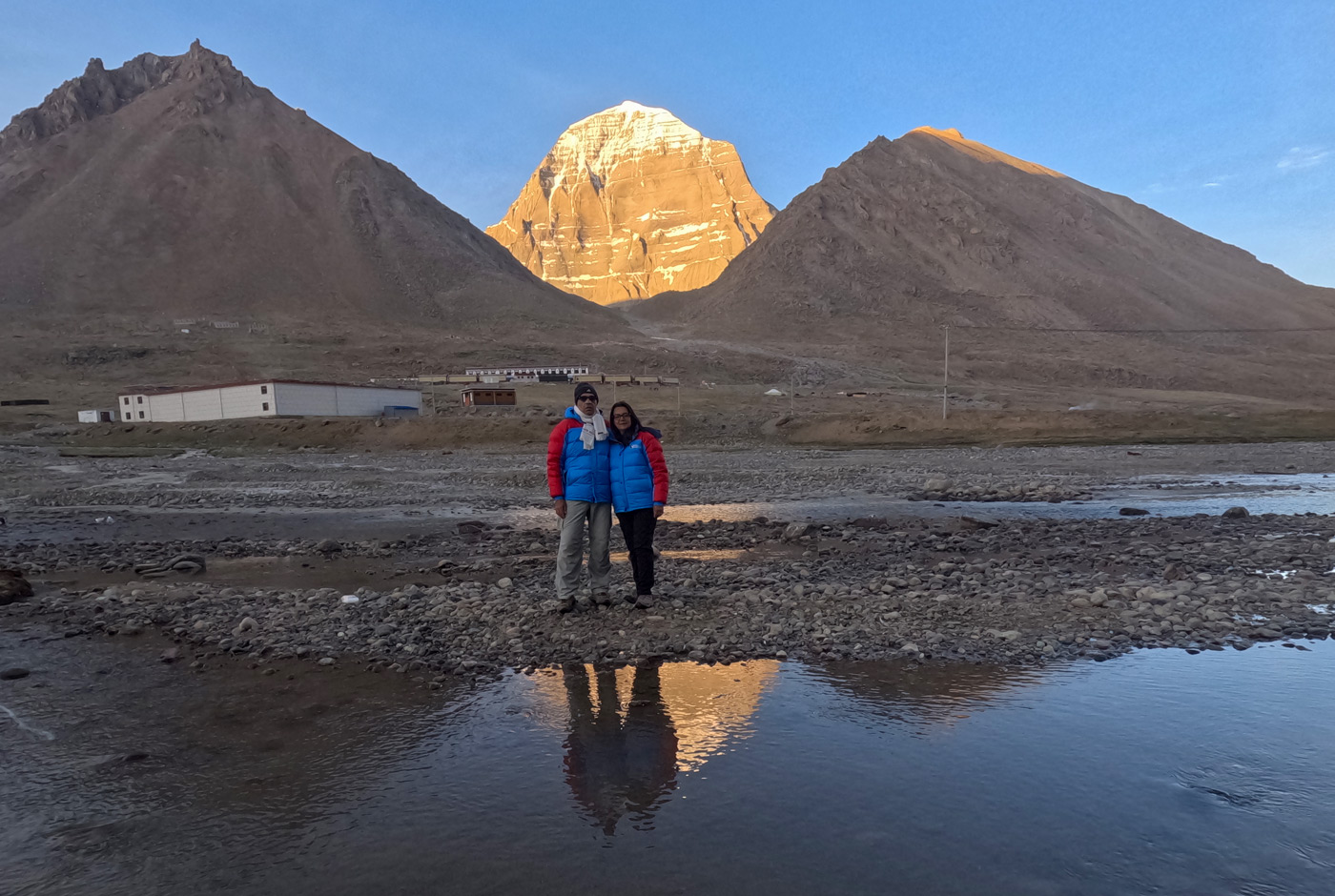
Its appearance has also inspired numerous mystical interpretations. Some people believe its shape reflects a deliberate cosmic design, while others associate its geometry with spiritual symbolism. These interpretations form part of the mountain's cultural mythology, but they should not be confused with established geological findings.
Scientific research provides a geological context for the wider Kailas region. The area contains sedimentary formations, including conglomerates, sandstones, and other rocks shaped by ancient depositional and tectonic processes. The mountain's appearance can be understood through natural geological structures, uplift, and erosion; there is no verified evidence that it is an artificial pyramid or a structure built by an unknown civilization.
The Mount Kailash Kora Is a Sacred 52-Kilometer Pilgrimage
Rather than climbing Mount Kailash, pilgrims traditionally walk around it in a religious practice known as the Kora in Tibetan Buddhism or Parikrama in Hindu traditions. The outer circuit is commonly described as approximately 52 kilometers (32 miles), although published distances vary according to route measurements and whether certain road sections are included. Most pilgrims complete the journey over three days.
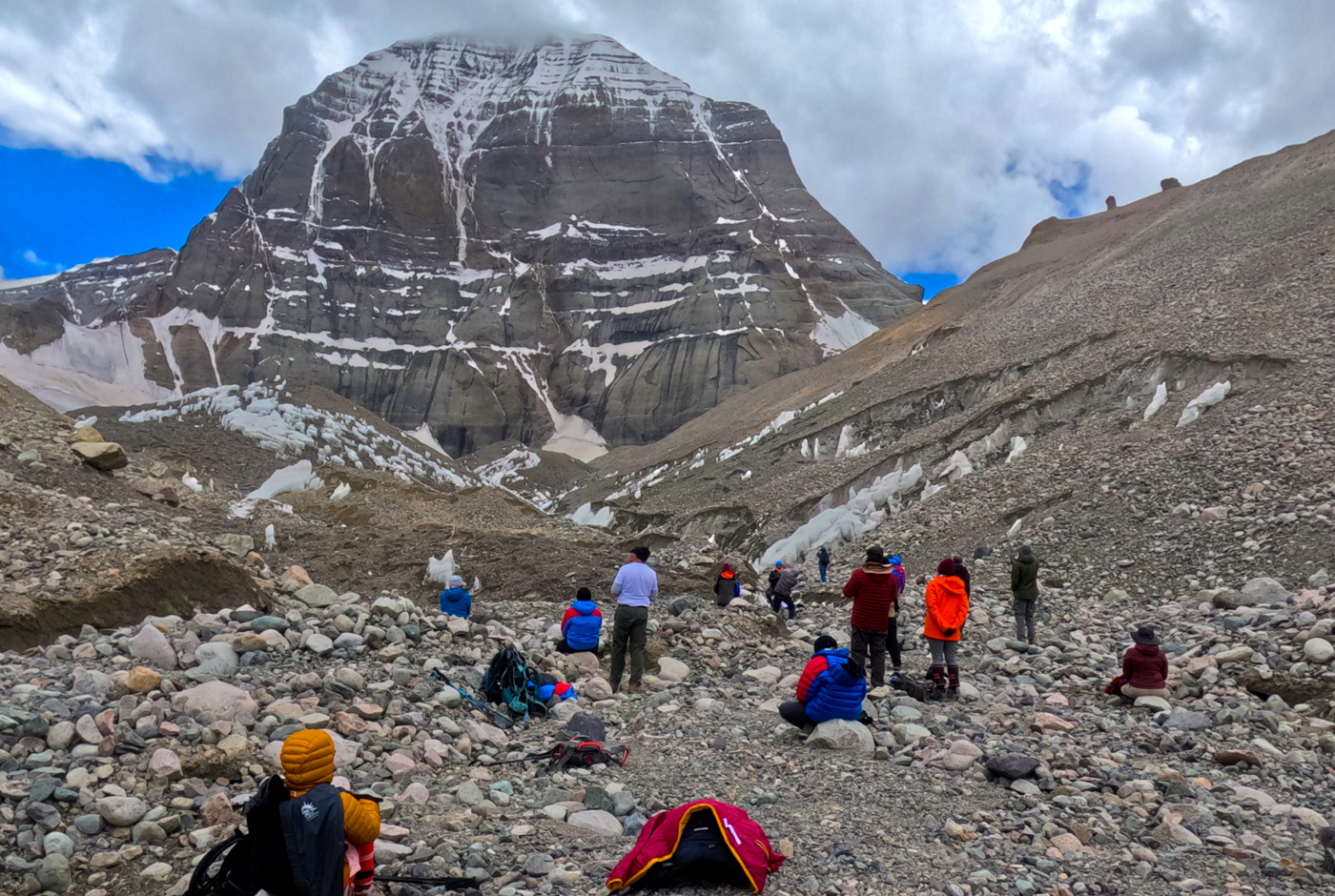
The route begins and ends near Darchen, a settlement that serves as the principal starting point for the pilgrimage. Along the way, pilgrims pass rugged valleys, rocky trails, mountain streams, and high-altitude terrain. One of the most demanding sections is the crossing of Dolma La Pass, which stands at approximately 5,630 meters (18,471 feet). The thin air, steep gradients, and unpredictable weather make this a physically challenging journey even for people who are accustomed to walking.
The Kora is not simply a trek. Many pilgrims undertake it as an act of devotion, believing that circumambulating the sacred mountain brings spiritual merit, purification, or blessings. Hindus and Buddhists generally walk clockwise, while followers of Bon traditionally walk counterclockwise. The journey therefore combines physical endurance with religious practice, making it one of the most distinctive pilgrimage routes in the Himalayas.
Lake Manasarovar and Lake Rakshastal Have Contrasting Characteristics
Two lakes near Mount Kailash add to the region's geographical and spiritual significance: Lake Manasarovar and Lake Rakshastal. Located south of the mountain, they form an important part of the wider Kailash pilgrimage landscape. Although they lie close to one another, the lakes differ in their water characteristics and their place in local religious traditions.
Lake Manasarovar is a high-altitude freshwater lake traditionally associated with purity and spiritual cleansing. It is an important pilgrimage destination, particularly for Hindu and Buddhist visitors. Some pilgrims perform rituals or bathe in its waters as an expression of faith. Its clear waters, open shoreline, and surrounding mountain landscape also make it a notable natural feature of the Tibetan Plateau.
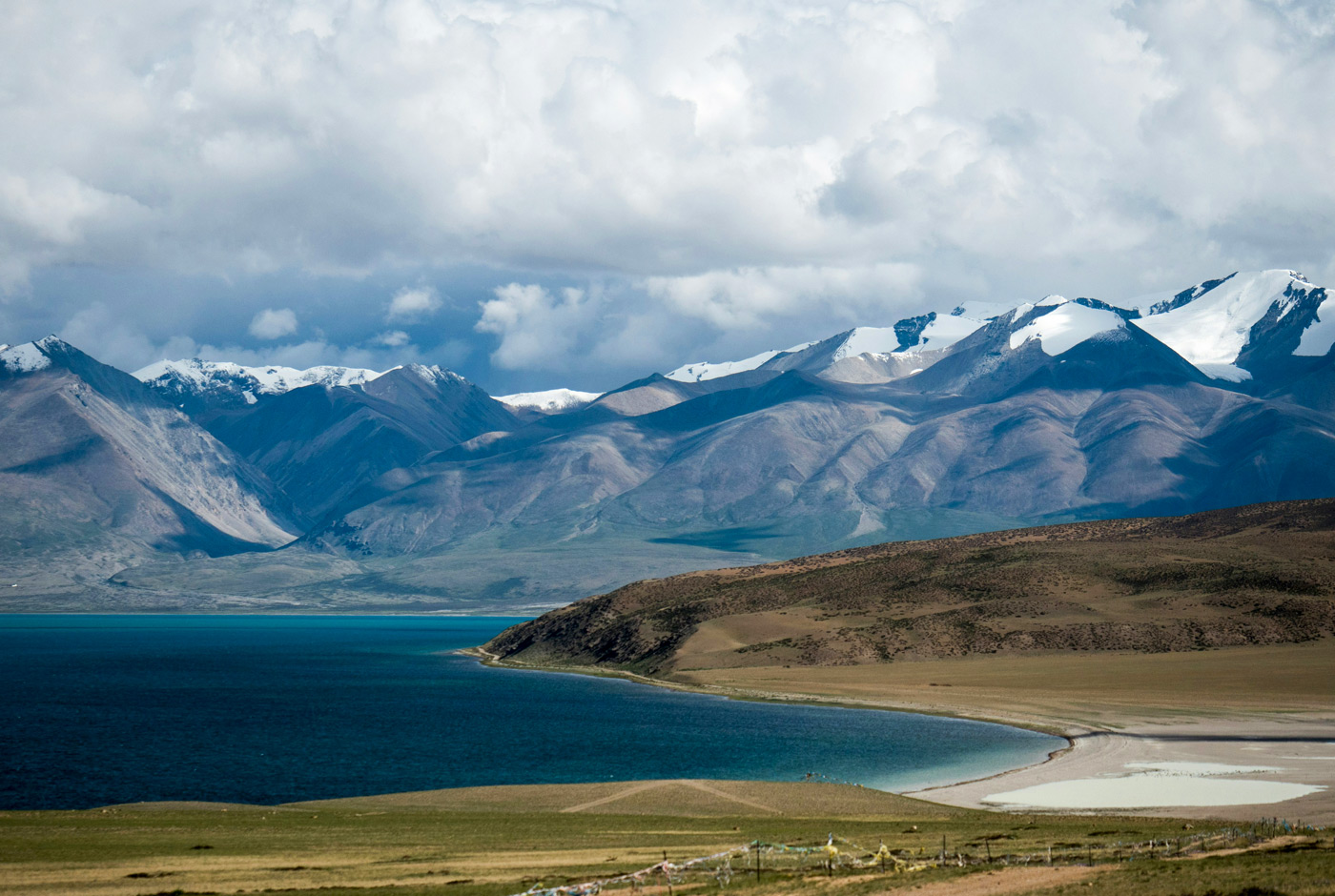
Lake Rakshastal, located to the west of Manasarovar, is a saline lake with no natural river outlet. In Hindu mythology, it is associated with Ravana, the king of Lanka, and is often contrasted symbolically with the purity attributed to Manasarovar. The lakes' differing water chemistry and religious associations make their proximity particularly interesting. Geographically, Manasarovar's overflow is connected with Rakshastal through a natural channel known as Ganga Chhu.
Mount Kailash Is Associated With the Cosmic Mountain Meru
Another fascinating aspect of Mount Kailash is its connection with the concept of Mount Meru, a sacred cosmic mountain described in several South Asian religious and cosmological traditions. Meru is often understood as the center of the universe, connecting different realms of existence. For many devotees, Kailash is a physical representation of this spiritual center, although the precise interpretations differ between traditions.
In Hindu religious thought, Kailash is closely associated with Lord Shiva and the divine order of the universe. In Tibetan Buddhist traditions, sacred cosmology also places great importance on Mount Meru, while Kailash is associated with Demchok and other spiritual concepts. The mountain's central position in these beliefs helps explain why it is regarded as much more than a geographical landmark.
This connection is symbolic and religious rather than a scientific claim that Mount Kailash is literally the center of Earth. Its importance lies in the way different traditions use the mountain to express ideas about spiritual balance, liberation, divine presence, and the relationship between the human and cosmic worlds. The continued pilgrimage to Kailash shows how a real mountain can also become a powerful symbol shared across cultures.
The Inner Kora Is Different From the More Common Outer Circuit
Most visitors who undertake the Mount Kailash pilgrimage follow the outer Kora, the approximately 52-kilometer circuit around the mountain. Less widely known is the Inner Kora, a separate and more restricted pilgrimage route associated with sacred sites closer to Kailash, including the area around Nandi Parvat. The Inner Kora is often described as shorter in distance, but it should not automatically be considered easier because the terrain and access restrictions differ.

Descriptions of the Inner Kora commonly mention sites such as Nandi Parvat, Saptarishi Cave, and Charan Sparsa. Access rules can vary, and some sections may be closed to foreign pilgrims or require special authorization. Claims that it is universally available after a fixed number of outer circuits should be treated cautiously, since religious customs and current administrative permissions are not necessarily the same.
The distinction between the two routes reflects the layered nature of pilgrimage around Mount Kailash. The outer circuit is the established route followed by many pilgrims, whereas the Inner Kora involves a different set of sacred locations and access considerations. Anyone considering either route should confirm the current rules with an authorized local operator rather than relying on older accounts or assumptions about access.
The Best Time to Visit Mount Kailash Is Limited by High-Altitude Conditions
Despite its spiritual appeal, Mount Kailash is not an easy destination to visit. The mountain lies in a remote, high-altitude environment where cold temperatures, strong winds, low oxygen levels, and sudden weather changes can affect travel throughout the year. The pilgrimage is generally undertaken during the warmer months, commonly from May to September, although the actual travel season depends on weather, road conditions, permits, and government regulations.

The Saga Dawa Festival, which usually falls in May or June depending on the Tibetan lunar calendar, is one of the most important periods for pilgrimage. It commemorates significant events in the life of the Buddha in Tibetan Buddhist tradition and attracts many visitors to the Kailash region. During busy periods, the number of pilgrims can increase considerably, so planning is important.
Even in summer, the journey requires careful preparation. The outer Kora reaches elevations above 5,600 meters, where altitude sickness is a serious concern. Headaches, nausea, dizziness, and fatigue can develop, and severe altitude illness can become life-threatening. Proper acclimatization, medical advice, suitable clothing, comprehensive travel insurance, and a willingness to stop or descend when symptoms worsen are essential.
Mount Kailash's Mysteries Include Popular Myths That Science Has Not Verified
Mount Kailash has inspired many unusual stories, including claims of strange magnetic forces, accelerated aging, supernatural energy, and unexplained effects on people who approach the mountain. These accounts circulate widely in travel writing and online discussions, contributing to Kailash's reputation as one of the world's most mysterious mountains.
However, it is important to distinguish between spiritual beliefs, personal experiences, and scientific facts. There is no reliable scientific evidence demonstrating that Mount Kailash has a unique magnetic field that causes compasses to behave abnormally, that people age faster near the mountain, or that supernatural forces prevent aircraft from flying over it. Similarly, claims that the mountain contains hidden chambers or artificial structures have not been substantiated by credible geological research.
The mountain's genuine features are remarkable enough without presenting speculation as fact. Its distinctive landforms, remote location, extreme environment, religious significance, and unclimbed status explain much of its fascination. The absence of a confirmed summit ascent also means that its upper slopes have not been studied through the kind of direct climbing-based exploration undertaken on many other peaks. Respecting the distinction between evidence and legend allows readers to appreciate both the scientific interest and the cultural importance of Mount Kailash.
Conclusion
Mount Kailash is far more than a mountain in western Tibet with distinct geological features, connection to major Asian river systems, and sacred lakes. The peak also holds great spiritual significance across Hinduism, Buddhism, Jainism, and Bon, making it one of the world's most impressive pilgrimage destinations.

In addition, its unclimbed status also reflects the deep respect that cultural and religious traditions inspire across generations. The Mount Kailash and Lake Manasarovar pilgrimage offers an opportunity to explore Tibet's unique landscapes, learn about its spiritual traditions, and complete a high-altitude trek.
Whether you're planning your next Tibet adventure or Mount Kailash trek, Nepal Hiking Team can help you explore the remote regions of Kailash Parbat. We arrange the necessary permits and travel logistics, so you can focus on the pilgrimage itself. Contact us to start planning your journey.
Post a Comment