
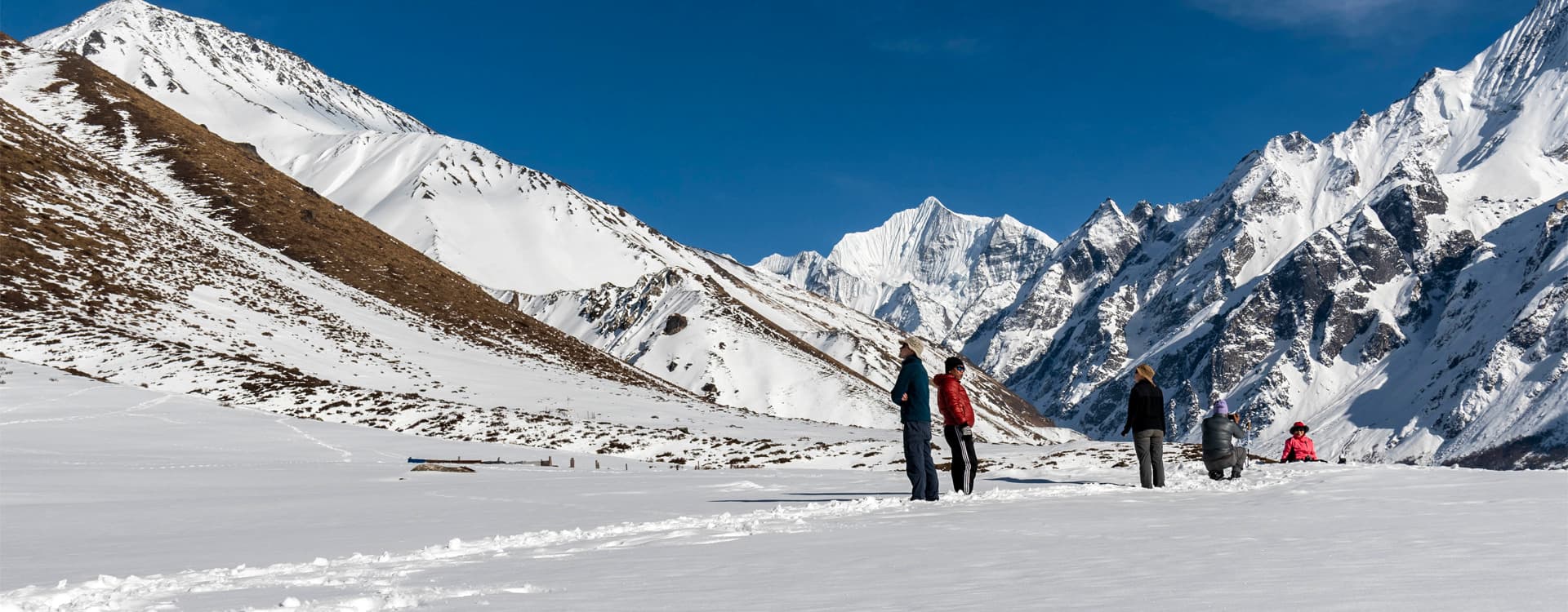
Langtang is a fully teahouse-based trek, so you can pack lightly without needing camping gear. Given the changing weather and altitude, a lightweight, layered packing system, sturdy footwear, and essential travel documents are smart and practical. Here is a field-tested packing guide designed to keep you comfortable, warm, and light throughout the trek.
How Much Weight Can You Carry on the Langtang Valley Trek?
On the Langtang Valley Trek, we provide one porter for every two trekkers. Our porter carries a maximum of 24–25 kg, meaning 12–13 kg per trekker. The porter will carry your duffel bag with your main clothing, sleeping gear, and spare items. If your duffel bag exceeds the 12–13 kg weight limit, an additional porter may be required.
Additionally, your daypack can include essentials such as a wallet, phone, charger, permits, and basic toiletries. The recommended weight for a personal daypack is 5–8 kg. Keeping the daypack light helps during long uphill sections where steady pacing is necessary.
From years of operating on this route, trekkers who pack under 12–13 kg move more comfortably above 3,500 m, especially on the climb to Kyangin.
Overpacking directly affects altitude comfort and stamina; extra weight increases fatigue and places strain on the knees. Therefore, carrying even a few unnecessary items can make trekking significantly harder.
Essential Clothing for the Langtang Valley Trek
While planning the Langtang Valley Trek, trekkers should use a layering system to pack clothes. The weather in Langtang varies rapidly, with cold mornings, warm sunny afternoons, and chilly evenings, especially above 3,000 m. Instead of packing heavy items, layering allows trekkers to manage clothing, regulate body temperature, and stay efficient throughout the trek.
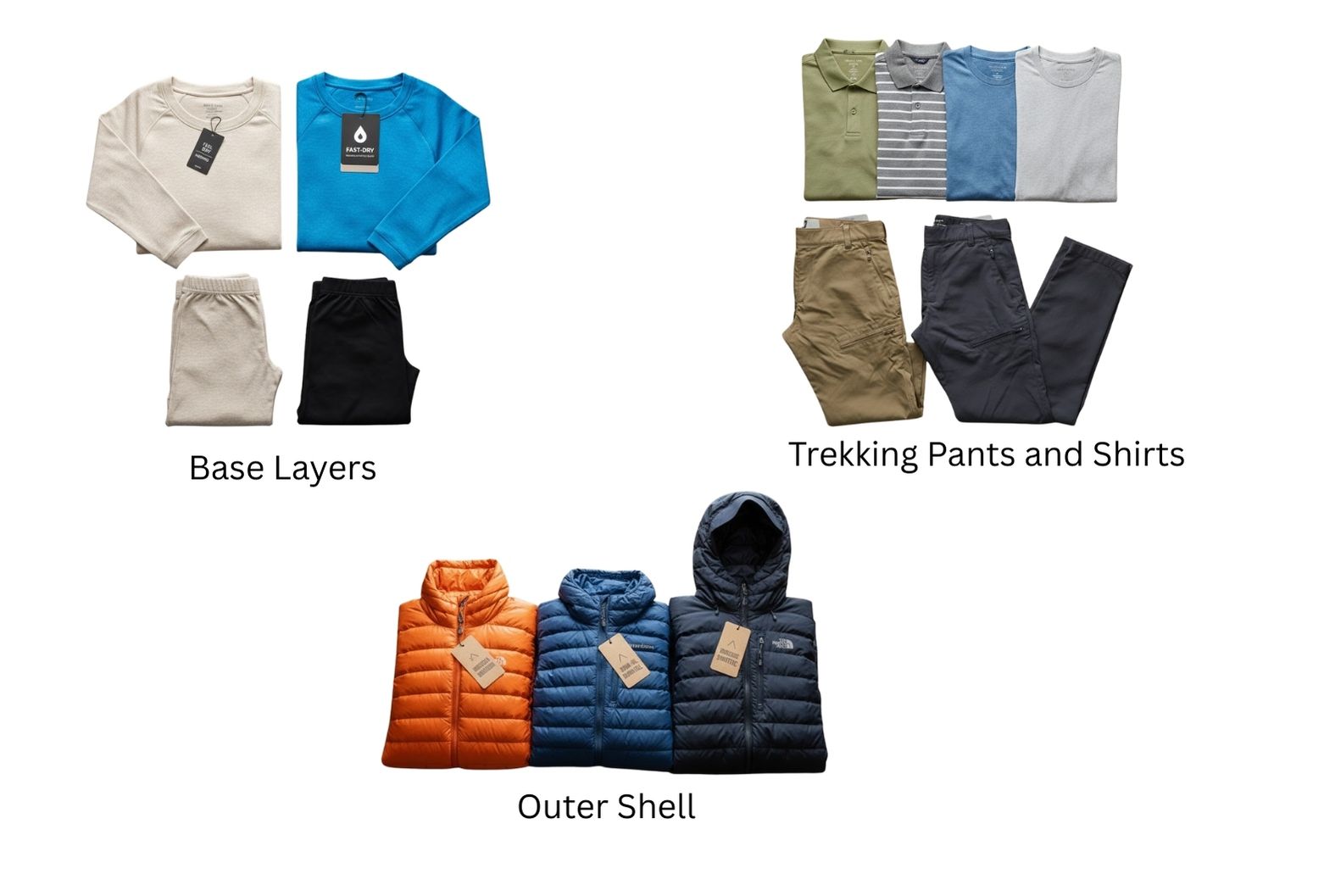
Base Layers
For base layers, moisture-wicking fabrics such as merino wool and synthetic blends (nylon or polyester) are best suited for the Langtang Valley Trek. They are designed to absorb moisture from the skin and dry quickly, while regulating body temperature after uphill climbs.
Trekkers should understand moisture management, especially at higher elevations, where temperatures drop rapidly after sunset. Proper layering ultimately makes your overall trekking experience safer and more comfortable.
Insulation Layers
Insulation layers mostly provide warmth by trapping body heat. These clothes should be lightweight, warm enough for Langtang's changing weather, and compressible for easy packing.
Down jackets are an excellent choice for their excellent warmth-to-weight ratio. They are ideal for cold, dry conditions; however, they lose insulation when wet.
Synthetic jackets retain warmth even when damp and dry faster than a down jacket. These are a better choice for mixed weather or for light snow.
Outer Shell
The outer shell or layer is usually worn to protect you from rain, wind, and occasional snowfall. An outer layer, such as a windproof or waterproof jacket, is essential given the unpredictability of mountain weather.
A windproof or waterproof layer is essential in the Langtang region, where weather changes rapidly, especially above 3,500 m. Even on a clear day, there is a chance of strong winds, sudden rain showers, and occasional snowfall. A reliable shell layer keeps you dry, prevents heat loss, and improves comfort throughout the trek.
Trekking Pants and Shirts
When planning a Langtang trek, choosing the right trekking pants and shirts is essential for your comfort on the trail. You should pack lightweight, breathable, quick-drying, and non-restrictive clothing and avoid heavy fabrics that feel stiff and trap heat.
Packing 3 to 4 quick-dry shirts and 2 trekking pants (zip-off optional) is sufficient. As high-altitude regions have limited laundry facilities, quick-drying fabrics reduce the need to carry extra clothes.
Footwear: Which Shoes Are Best for the Langtang Valley Trek?
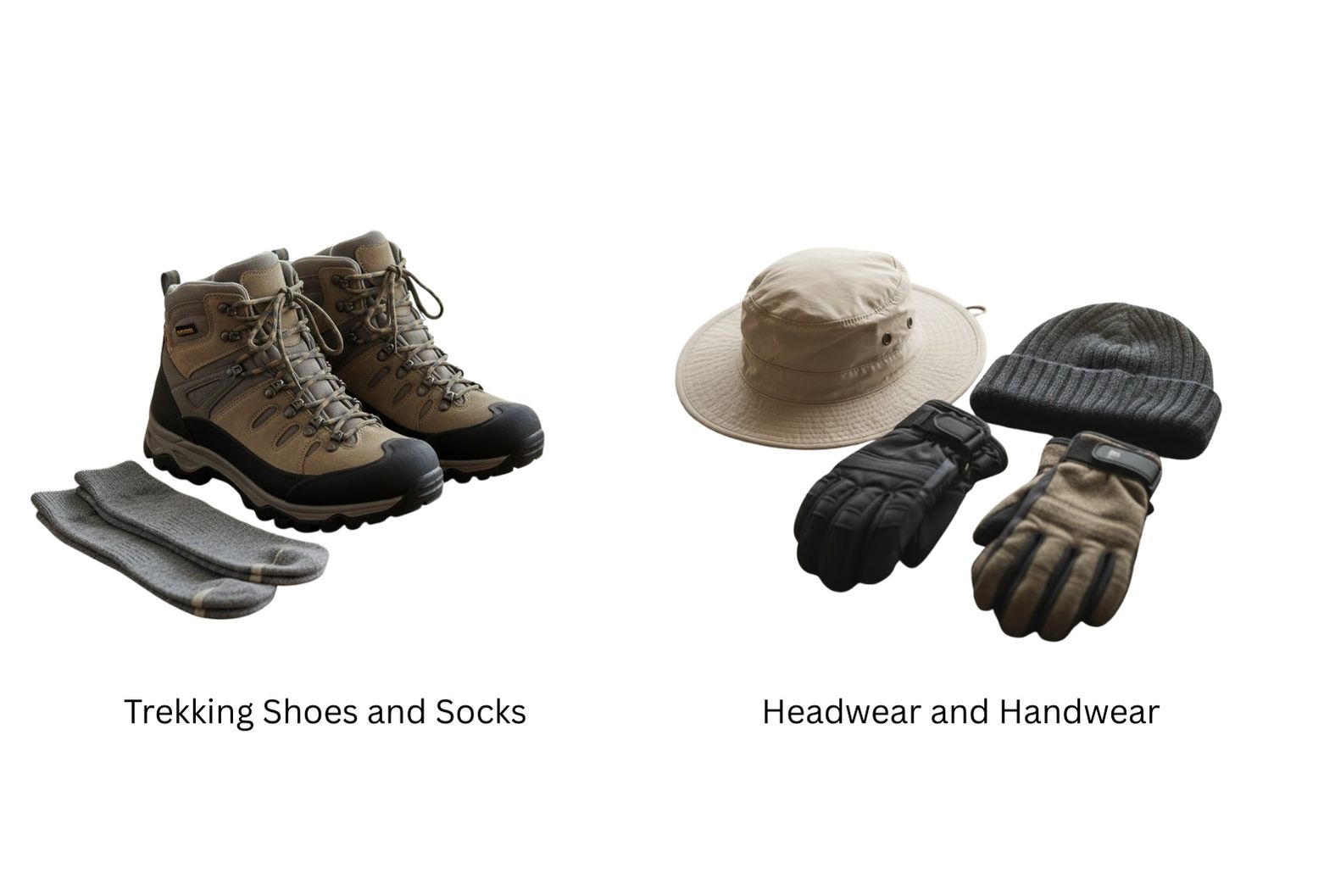
The best shoe choice for this trek is a mid- to high-cut trekking boot with good ankle support and a comfortable sole. The trail features stone staircases, rocky forest paths, suspension bridges, glacial moraine, and occasional morning frost.
Trekkers should go for water-resistant or waterproof shoes with a solid grip and firm cushioning to reduce strain during long ascents and descents. For socks, choose moisture-wicking wool or synthetic-blend socks to prevent blisters. Trekkers can also wear thin liner socks underneath thicker trekking socks for added friction control.
Trail runners are not ideal for Langtang because they provide less ankle support, offer limited protection in cold or wet conditions, and have thinner soles.
Headwear and Handwear for Changing Weather
Trekkers should pack versatile headwear and handwear, such as a sun hat, warm beanie, and lightweight insulated gloves, to account for Langtang's changing weather. These items play a key role in managing rapid temperature change, especially above 3,000 m.
For headwear, early mornings are freezing and require warm coverage; afternoons require light, breathable protection against wind, dust, and cold gusts; and evenings require a warm beanie or hat. Proper layering helps efficiently regulate overall warmth.
For handwear, trekkers should carry lightweight trekking gloves for cold mornings and windy afternoons. In the higher elevations, you may need warm wool gloves, especially during colder seasons when temperatures drop rapidly.
Trekking Gear You Should Not Skip
Essential gear for the Langtang Valley Trek includes sturdy trekking poles to traverse long staircases, uneven rocky paths, and steady ascents and descents. Using a reliable pole helps reduce knee strain, provides stability, and improves balance.
Likewise, trekkers use a duffel bag, usually carried by a porter, and a small daypack (weighing 5 to 8 kg). While a duffel bag is typically packed with heavier clothing items, a daypack is packed with essentials such as water, phone, snacks, and permits.
In addition, rain protection gear, such as waterproof jackets, pants, and raincoats, is essential given unpredictable mountain weather. Also, a rain cover for your backpack is crucial to protect your essential gear.
Sleeping Gear: Do You Need a Sleeping Bag for the Langtang Valley Trek?
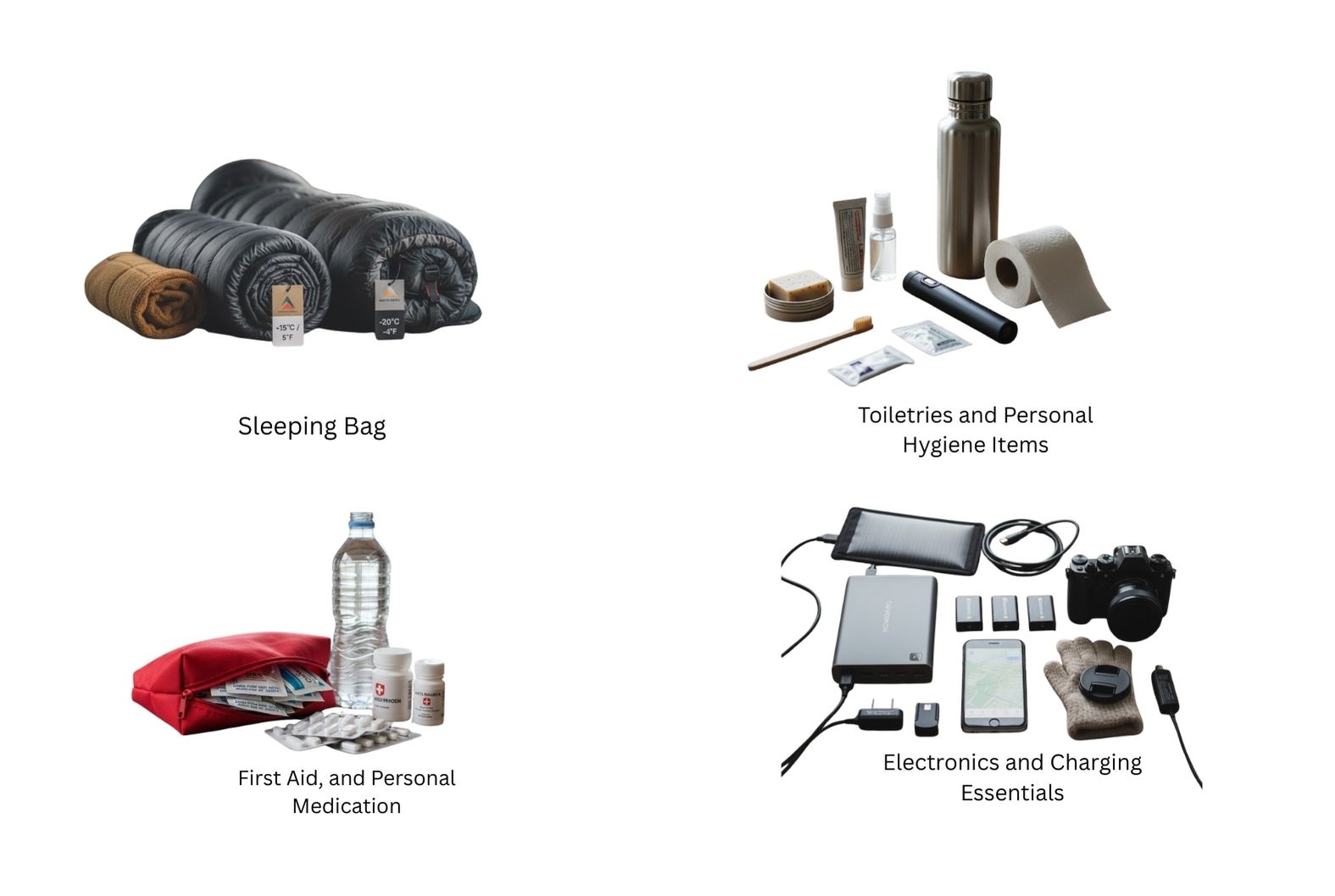
Yes, you may bring a personal sleeping bag provided by your travel agency. Although the teahouse provides beds with blankets, blanket availability may be limited, especially during peak trekking seasons.
In places like Kyanjin Gompa at 3,870 m, nights can be very cold, and relying solely on lodge blankets may not provide sufficient warmth. When trekking in spring or autumn, a sleeping bag rated for temperatures between -10 and -15 degrees is recommended. In winter, a sleeping bag rated for around -15 to -20 degrees may be necessary.
Carrying your own sleeping bag ensures consistent warmth, better insulation, and improved comfort regardless of lodge facilities. It also directly supports acclimatization and recovery. Quality sleep becomes even more important if you plan to hike to Tserko Ri at 4,984 m.
Toiletries and Personal Hygiene Items for the Trek
Packing minimal but essential toiletries is key when trekking in the region. Basic toiletry items such as toothpaste, a toothbrush, biodegradable soap, hand sanitizer, and toilet paper are sufficient. Compact, travel-sized personal care products are best for convenience and efficiency.
Likewise, reusable water bottles and water purification equipment such as UV sterilizers, chlorine tablets, and water purifiers are essential.
Lastly, environmental responsibility and waste management is crucial in Langtang National Park, and trekkers should avoid plastic waste. You should avoid single-use plastics, dispose of waste in designated areas, carry a reusable water bottle, and use eco-friendly toiletries.
Using eco-friendly toiletries and reusable bottles helps protect the Himalayan environment in the Langtang region.
Health, First Aid, and Personal Medication
Some common issues on this Himalayan trek include dehydration, altitude sickness, blisters, and headaches. Carrying a basic first-aid kit and medications such as anti-nausea medication, rehydration salts (ORS), painkillers, and Diamox (only if recommended by a doctor) is important.
Moreover, personal medicine should be carried in sufficient quantities, as teahouses don't provide prescription medications.
Trekkers should aim to drink 3 to 4 liters of water daily. Although guides are well-trained to provide basic medical aid, they can't substitute for professionals. Being proactive about your health and altitude sickness helps ensure a smooth trekking experience and reduces the risk of complications.
Electronics and Charging Essentials on the Langtang Trail
Most teahouses in the upper Langtang region are solar-powered and offer charging for a small fee. However, it may not be reliable enough for continuous charging, so carrying a power bank for backup and conserving battery is important.
Moreover, phones and cameras can also be affected, and screens may respond slowly. This usually occurs during early-morning hikes or at high passes such as Lauribina La Pass. Keeping your phone inside your jacket or close to your body helps prevent rapid battery loss.
Documents and Travel Essentials to Carry
During the Langtang Valley Trek, carrying both physical and digital copies of the national park entry permit and a TIMS card provides legal entry to the park. At this time, the TIMS card is not required for this route.
Additionally, these are checked at multiple checkpoints along the trail, so keeping them organized avoids delays and ensures a smoother experience.
Some important documents needed for the journey are:
- Printed copy of the national park permit
- Travel insurance copy
In case of evacuation, accidents, or medical emergencies, guides and lodges may request a copy of your travel insurance for proof.
Moreover, while many trekkers carry their passports throughout the trek, keeping a copy is sufficient for identification. Trekkers can store their original passport in the hotel in Kathmandu to avoid loss or theft in remote areas.
Optional but Useful Items for Langtang Valley Trek
For the Langtang Valley Trek, optional luxuries such as an eye mask, a lightweight travel pillow, and earplugs can enhance your trekking experience. However, these are not strictly necessary.
Other items such as energy bars, instant coffee or tea, and snacks between meals can provide a quick boost. Likewise, a notebook or trekking journal, a compact tripod, and binoculars can be useful for recording memories.
Although these items are helpful but not necessary, carrying unnecessary items can be an extra hassle; hence, trekkers should plan and pack essentials first.
Seasonal Packing Tips for Langtang Valley Trek
Seasonal packing for the Langtang Valley Trek depends on trail conditions, weather updates, and temperature at each time of year. Packing essentials such as footwear, clothing, and accessories ensures a smooth and safe trekking experience. Here is a clear breakdown by season:
| Season | Temperature Range | Key Gear Needed |
|---|---|---|
| Spring (Mar–May) | 5 to 15°C day / -5°C at night | Light down jacket, shell layer, sun protection |
| Autumn (Sep–Nov) | 5 to 18°C day / -5°C at night | Warm layers for mornings, wind protection |
| Winter (Dec–Feb) | -5 to -10°C day / -15 to -20°C at night | Thermal base layers, heavy insulation, gloves, beanies |
| Monsoon (Jun–Aug) | 10 to 20°C | Waterproof jacket, rain cover, quick-dry clothing |
What You Do Not Need to Pack for the Langtang Valley Trek
While packing for the Langtang Valley Trek, knowing what not to bring is essential. As the trail is a teahouse-based trek, trekkers don't need a tent, sleeping mats, food supplies, or cooking equipment.
Similarly, heavy expedition jackets, excessive changes of clothes, and multiple thick sweaters are also unnecessary. Even in winter, mountaineering gear like ropes, ice axes, and crampons is not required for the standard Langtang Valley route.
Proper layering is better than bulky clothing for the trek. Likewise, hygiene items such as full-size shampoo bottles, hardcover books, and extra shoes often add unnecessary weight without real benefit. In short, the Langtang Valley Trek requires thoughtful packing with items that are truly essential for the trek.
Common Packing Mistakes on the Langtang Valley Trek
One common mistake when packing for the trek is carrying too many clothes. Many trekkers assume that they need a fresh outfit every day, while quick-dry clothes are better. You can pack 3 to 4 quick-dry shirts and 2 to 3 trekking pants for comfort.
Likewise, another mistake is choosing uncomfortable or heavy footwear with thick, stiff soles. Choose a flexible and supportive boot that is comfortable, lightweight, sturdy, and suitable for varied terrain.
Lastly, ignoring the layering strategy is a common mistake among trekkers. Instead of carrying a single heavy jacket, packing a base layer, an insulation layer, and an outer shell makes for greater flexibility and comfort. Smart and strategic packing reduces stress and fatigue during the trek.
Final Packing Advice for a Smooth Langtang Valley Trek
Packing for the Langtang Valley Trek focuses on comfort, simplicity, and safety, as the trail is well established and supported by teahouses. Trekkers only need a smart layering system, essential documents, reliable footwear, and a few daily-use items.
You only need 3 to 4 pairs of quick-drying t-shirts and pants, a waterproof shell jacket, and sturdy trekking boots. Similarly, basic toiletries, a first-aid kit, a national park entry permit, and a copy of your travel insurance are sufficient.
While overpacking creates unnecessary strain, light, thoughtful packing builds confidence. Keeping it simple and light prioritizes safety, comfort, easier acclimatization, better management, and overall enjoyment.
Post a Comment