
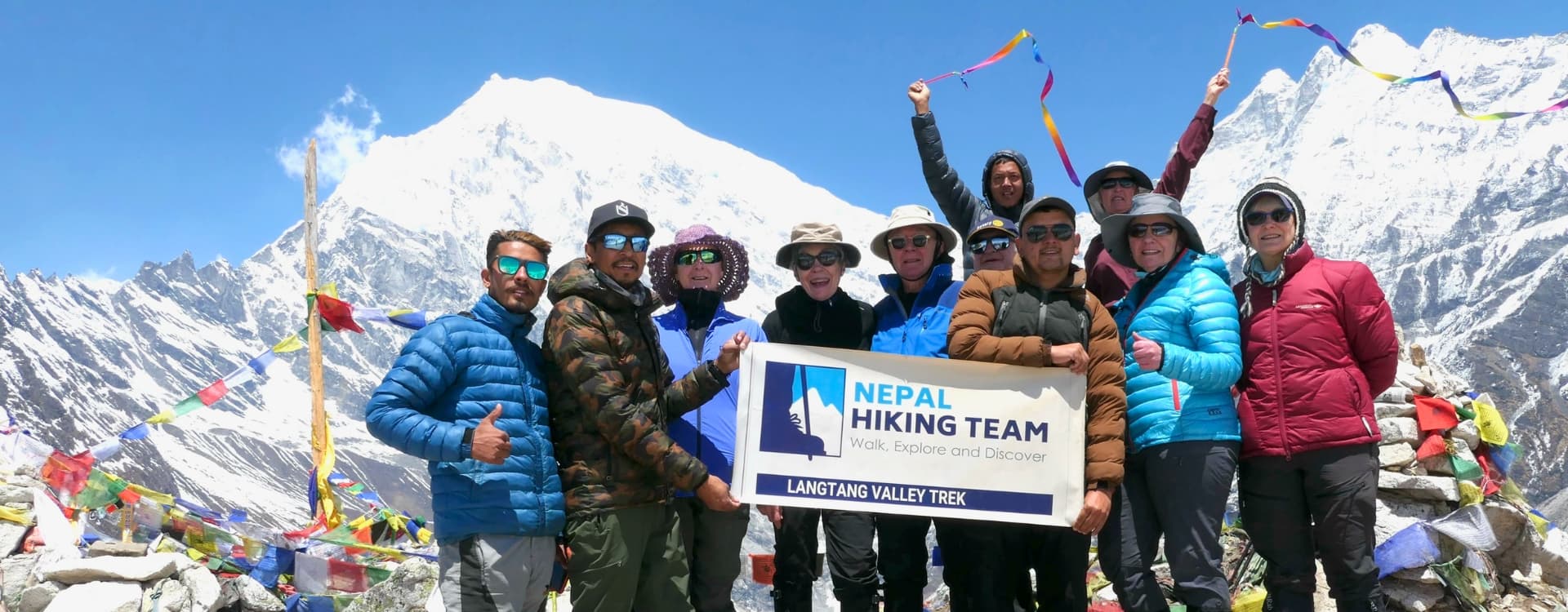
The Langtang Valley Trek cost in 2026 ranges from USD 450 to 1,500 per person, depending on trekking style, group size, itinerary length, and service level. Basic budget treks start from USD 650 to 850, but they often exclude guide support, porter assistance, organized logistics, contingency planning, and full service coordination. A mid-range guided trek usually costs USD 900 to 1,200, including a licensed guide and shared porter support. Fully organized packages through a local agency generally range from USD 1,200 to 1,500, covering better logistics, transport arrangements, itinerary planning, and reliable on-trek support.
For most international trekkers in 2026, the realistic guided range of USD 450 to 1,500 offers the best balance between safety, cost control, and comfort. Very low online estimates often exclude the services that make the trek safer and easier to manage.
| Trek Style | Realistic Cost Range | Best For |
|---|---|---|
| Basic budget guided trek | USD 450 to 1,000 | Travelers keeping services simple |
| Standard guided trek | USD 900 to 1,200 | Most international trekkers |
| Fully organized local agency package | USD 1,200 to 1,500 | Travelers wanting permits, meals, guide, porter, and logistics handled |
| Extended trek with Kyanjin Ri or Tsergo Ri | USD 1,000 to 1,350 | Trekkers adding extra viewpoint days |
Your final budget for trekking in Langtang region depends on:
- Duration of the itinerary
- Private versus shared transport
- Guide and porter support
- Food choices on the trail
- Accommodation level
- Personal expenses
- Season and road conditions
Langtang Valley Trek Permits and Government Fees
All trekkers must obtain the required government permits before entering Langtang National Park. These fees are fixed and do not change by season.
Langtang National Park Entry Permit
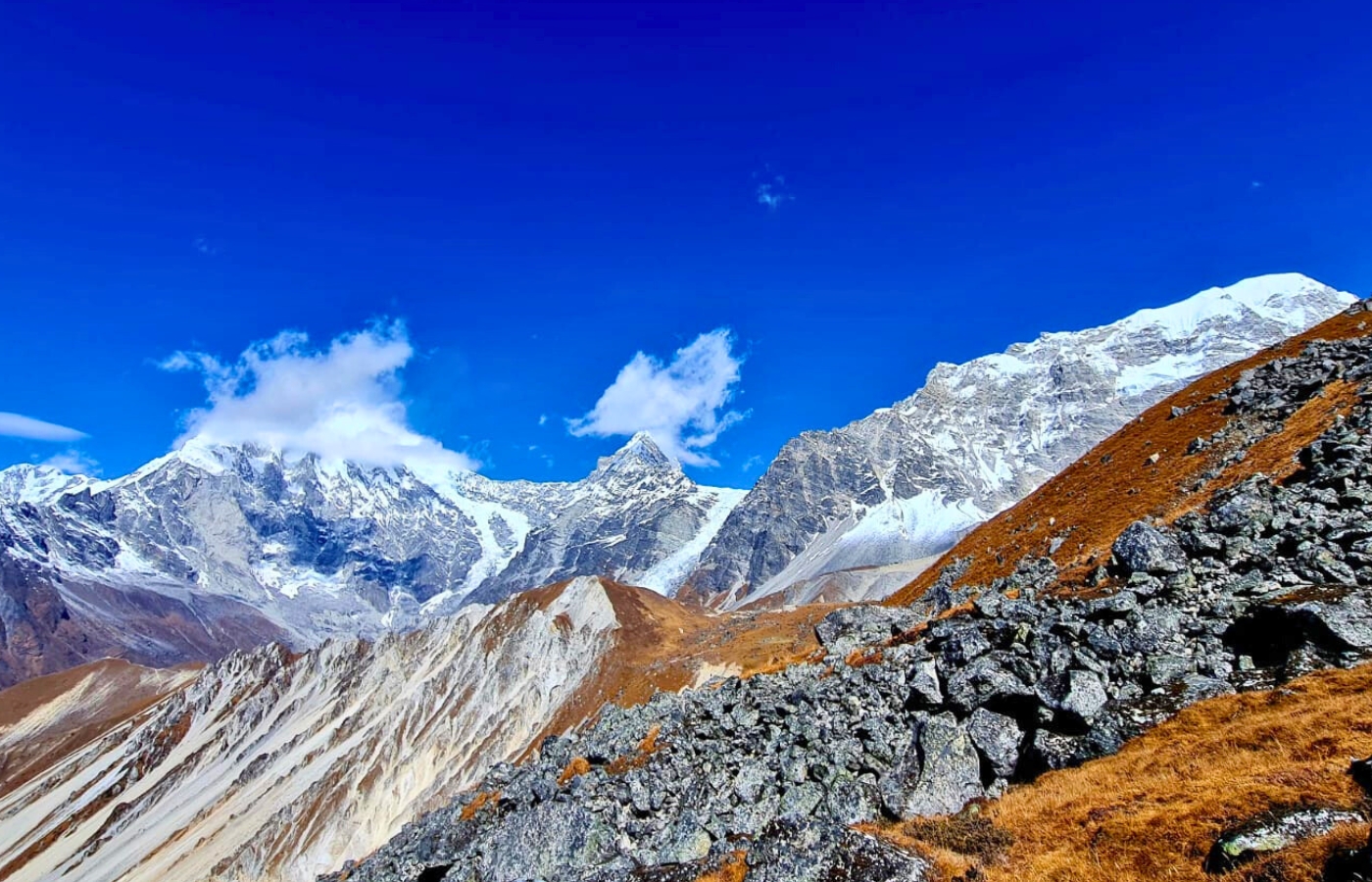
The Langtang National Park Entry Permit is mandatory for trekkers entering Langtang National Park. The fee is NPR 3,000 per person for foreign nationals, which is approximately USD 22 to 25 depending on the exchange rate. Permit fees are paid in Nepalese rupees, and USD figures should be treated as a reference only.
If you book with Nepal Hiking Team, we arrange the required route permits for you before the trek. This helps avoid confusion at checkpoints and keeps the departure process easier to manage.
For permit preparation, we normally request passport details and visa information once available. If any additional document is required, our team will inform you before the trek.
Compared to restricted trekking regions such as Manaslu or Upper Mustang, Langtang permits remain relatively affordable, making it a cost-efficient Himalayan option.
About TIMS for the Langtang Region
TIMS rules in Nepal have changed over time, and many older online guides still list TIMS as a separate trekking cost. At present, Nepal Hiking Team does not process TIMS cards separately for trekkers in normal operations. We arrange the required route permits based on the latest rules that apply to the selected trek.
For historical reference, previous TIMS fees were as follows:
| Trekker Category | Previous TIMS Fee (NPR) |
|---|---|
| Solo foreign trekker | NPR 2,000 |
| Foreign trekker in a group | NPR 1,000 |
| Solo SAARC national | NPR 600 |
| SAARC national in a group | NPR 300 |
These figures are provided as historical reference only. Trekkers booking through Nepal Hiking Team do not need to arrange TIMS separately. We confirm the current permit requirements at the time of booking and handle the process accordingly.
Transportation Cost from Kathmandu to Syabrubesi
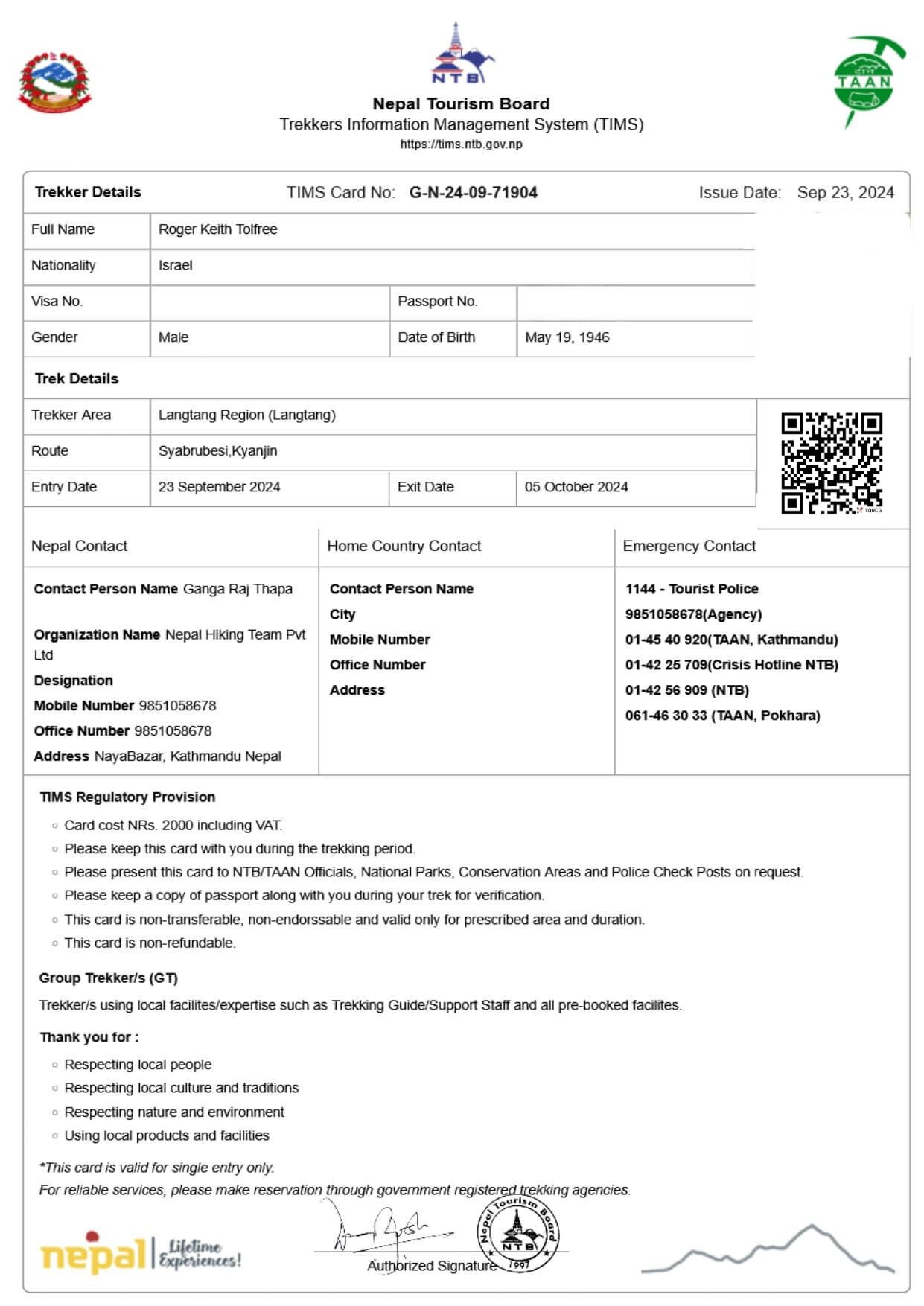
The Langtang trek begins with a road journey from Kathmandu to Syabrubesi. The drive takes 6 to 8 hours, depending on road conditions and traffic.
Travelers can choose between three transport options:
| Transport Option | One-Way Cost (USD Approx.) | Notes |
|---|---|---|
| Local Bus | $10 to $15 | Budget option, slower and crowded |
| Shared Jeep | $20 to $30 | Faster, more comfortable |
| Private Jeep | $150 to $200 per vehicle | Flexible and ideal for small groups |
Round-trip transport typically costs:
- USD 25 to 50 using the bus or shared jeep
- USD 300 to 400 for a private jeep round trip
During monsoon season or after heavy rainfall, road conditions can deteriorate. Choosing a jeep in such conditions improves reliability and safety.
Because Langtang does not require a domestic flight, transportation remains one of the main reasons this trek is more affordable than treks in the Everest region.
Accommodation Cost During the Langtang Valley Trek
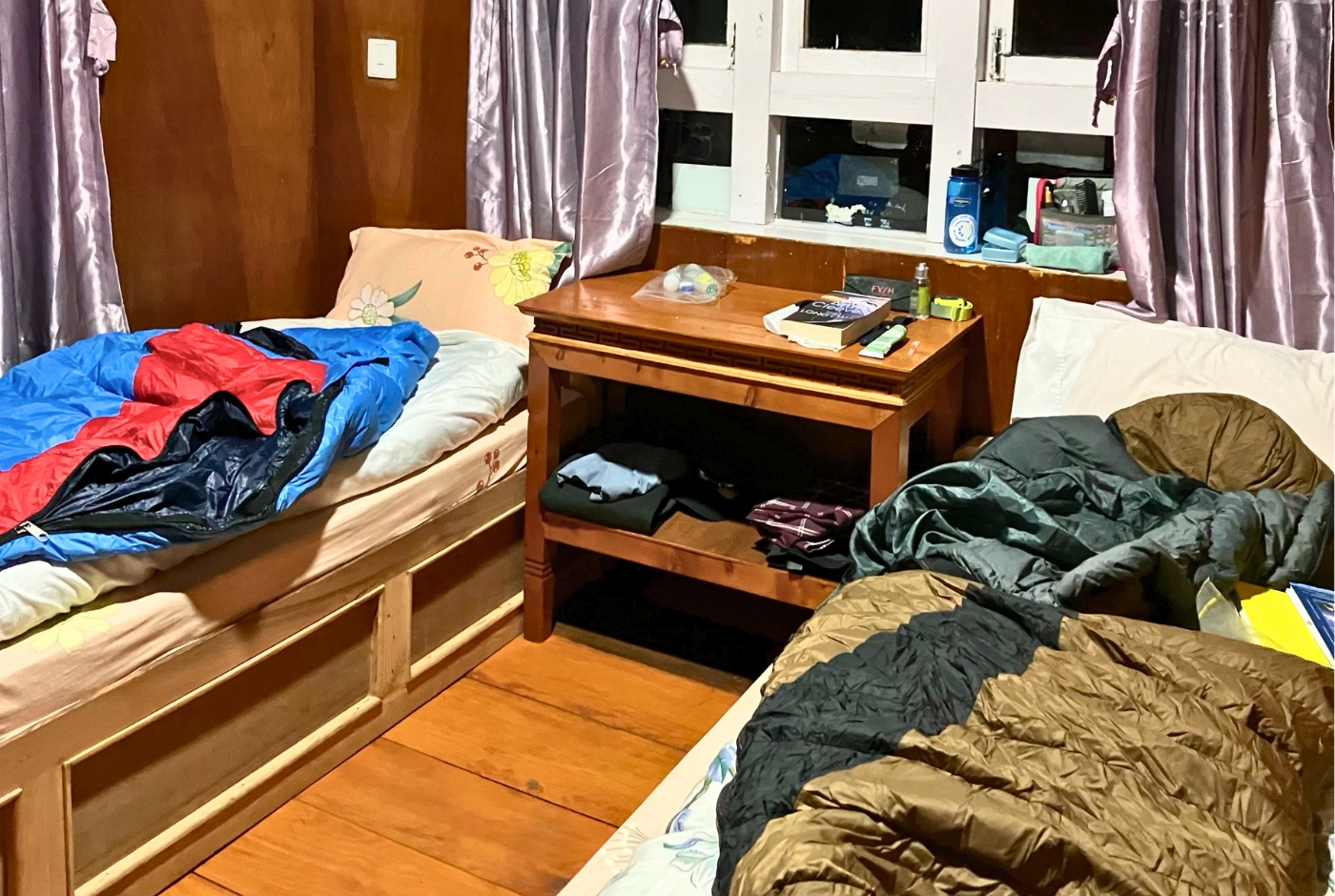
Locally operated teahouses provide accommodation along the Langtang trail. Room prices range from USD 5 to 15 per night, depending on altitude and season.
In lower villages such as Syabrubesi and Lama Hotel, rooms typically cost USD 5 to 8 for a basic twin-sharing room. As you move toward Langtang Village and Kyanjin Gompa, prices increase to USD 10 to 15 due to transportation challenges and supply logistics.
During peak trekking seasons in spring and autumn, private rooms can fill quickly. Prices do not increase dramatically, but availability becomes limited at higher elevations.
Additional lodge charges to budget for:
- Hot shower: USD 2 to 5
- Battery charging: USD 2 to 4 per device
- WiFi access: USD 3 to 5
For a 10-day trek, total accommodation costs typically range from USD 60 to 120, depending on comfort preferences and any extras selected.
Food and Drinking Water Costs on the Langtang Trail
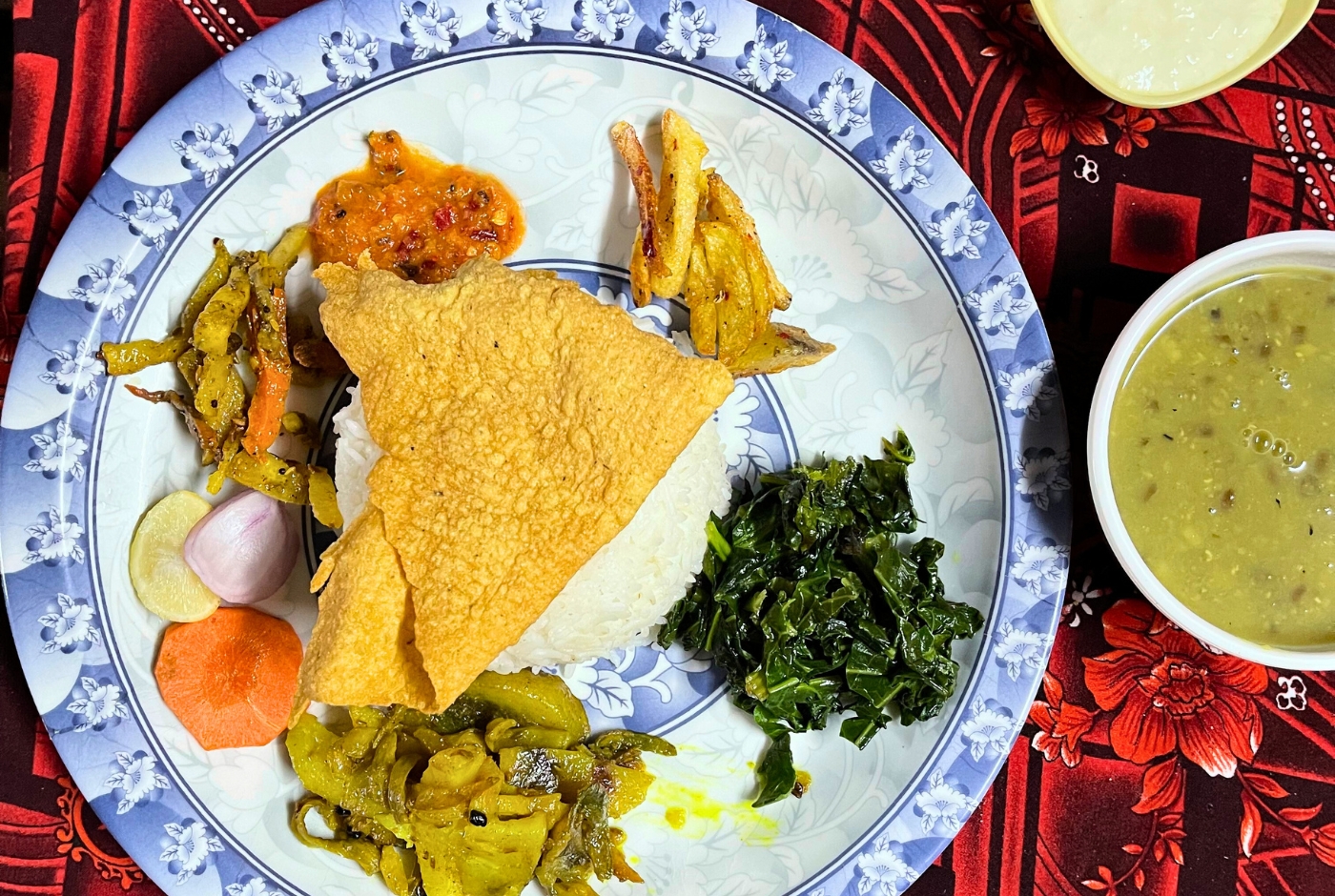
Food becomes progressively more expensive as altitude increases. Trekkers typically spend USD 25 to 35 per day on three meals.
A standard daily food budget includes:
- Breakfast: USD 5 to 8
- Lunch: USD 7 to 10
- Dinner: USD 8 to 12
Local meals such as dal bhat remain the most cost-effective and filling options. Western dishes like pizza, pasta, or pancakes incur higher costs due to the transportation of ingredients by mule and porter.
For a 10-day trek, total food expenses typically range from USD 250 to 350.
Drinking water options include:
- Boiled water: USD 1 to 3 per liter
- Bottled water: USD 2 to 4 per bottle
- Water purification tablets: minimal cost if carried from Kathmandu
Most trekkers reduce expenses by using purification tablets or refillable bottles. This approach also minimizes plastic waste in the region.
Guide and Porter Cost for the Langtang Valley Trek
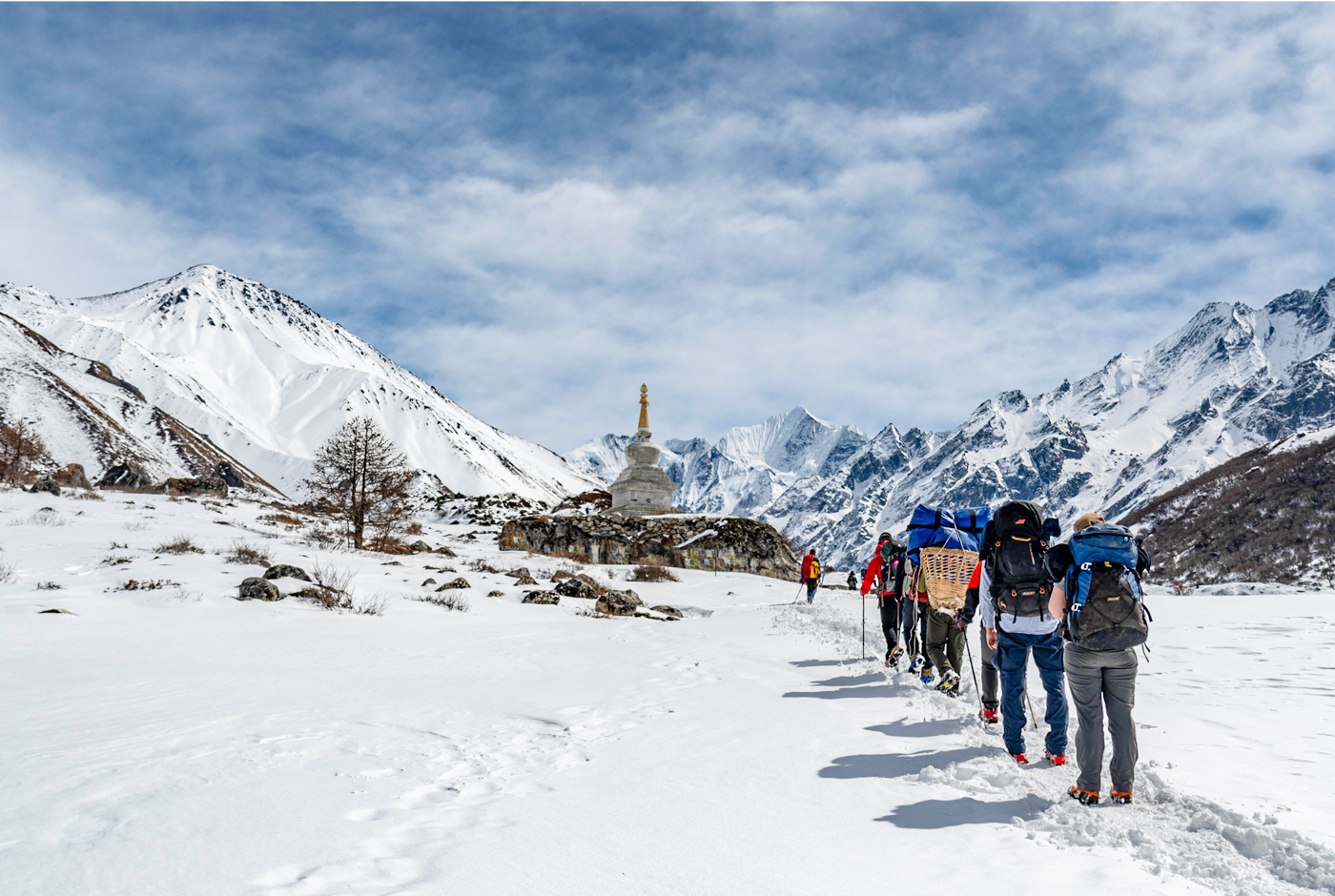
Hiring a licensed guide significantly improves safety and organization. Guide daily rates in 2026 typically range from USD 25 to 35 per day.
A guide is not only a route companion. On the Langtang trail, a good guide helps with lodge coordination, meal timing, weather judgment, altitude awareness, communication with local teahouses, and practical decisions during delays or trail changes.
This fee generally includes:
- Guide salary
- Insurance coverage
- Accommodation and meals
- National park entry for the guide
For a 10-day trek, the guide fee ranges from USD 250 to 350.
Porter services cost approximately USD 18 to 25 per day. Standard load practice is one porter for two trekkers, carrying a combined maximum of 20 to 25 kilograms, meaning approximately 10 to 12 kilograms per person.
For a 10-day trek:
- Shared porter cost per trekker: USD 90 to 125
Responsible trekking agencies ensure fair wages, proper clothing, and insurance for porters. When budgeting, it is important to choose ethical support rather than focusing only on the lowest rate.
Low-Budget Langtang Valley Trek Cost: What Travelers Should Know
Some older online guides show very low Langtang Valley Trek budgets based on basic cash-only travel. These estimates usually exclude guide support, porter assistance, organized permits, transport coordination, staff insurance, emergency support, and contingency costs.
A basic trail budget may appear lower at first, but most international trekkers should calculate the real cost with accommodation, meals, transport, required permits, guide support, and personal expenses included. This gives a more accurate picture of what the trek costs in current conditions.
For budget-conscious trekkers, the best way to reduce cost is to use shared jeep transport, choose standard teahouse rooms, eat local meals such as dal bhat, limit paid WiFi and hot showers, and share porter support with another trekker.
A realistic low-budget guided Langtang Valley Trek usually starts from around USD 850 to 1,000 per person, depending on group size, transport choice, porter arrangement, and personal spending style.
Total Cost of the Langtang Valley Trek With Guide and Shared Porter
A mid-range guided Langtang trek typically costs USD 900 to 1,200 per person for a 10-day itinerary.
This range usually includes:
- Permits: approximately USD 25 to 50
- Transport: USD 40 to 60 (shared jeep)
- Accommodation: USD 60 to 120
- Food: USD 250 to 350
- Guide (10 days): USD 250 to 350
- Shared porter (10 days): USD 90 to 125
- Tips and extras: USD 80 to 120
The price difference compared to a basic budget arrangement reflects professional support, safety monitoring, and structured coordination.
A licensed guide improves route clarity during fog or snowfall and monitors altitude symptoms. A porter reduces physical strain, which helps maintain energy at higher elevations.
For most trekkers in 2026, this balanced structure offers better overall value without dramatically increasing total cost.
Langtang Valley Trek Package Cost Through a Local Agency
Fully organized Langtang Valley Trek packages in 2026 generally range between USD 1,100 and 1,500 per person.
With Nepal Hiking Team, the package cost reflects the full trek arrangement rather than only the basic trail expenses. This usually includes required permits, licensed guide service, porter support, staff insurance, road transport, teahouse accommodation, meals during the trek, route coordination, and pre-trek guidance.
Package costs vary depending on:
- Private versus shared transport
- Group size
- Included meals
- Hotel nights in Kathmandu
- Custom itinerary extensions
While the upfront cost appears higher, packages reduce on-trail cash handling and unexpected logistics decisions. They also simplify emergency coordination if weather or health issues arise.
For travelers seeking predictability, structured support, and clearer logistics, a local agency package provides more control over both budgeting and on-trail organization.
Langtang Valley Trek Cost by Itinerary Length
The total cost of the Langtang Valley Trek increases with each additional day. Each extra day adds to your budget for food, accommodation, and staff wages.
Short Langtang Trek (7 to 8 Days)
A shorter itinerary typically costs USD 600 to 950, depending on the level of support and services arranged.
Permits and transport remain fixed, so the main source of savings comes from fewer accommodation nights and meals. However, shorter schedules often require longer daily walking hours and provide less time for acclimatization.
This format suits trekkers with limited vacation days and strong fitness levels who still want guided support on the trail.
Standard Langtang Trek (10 Days)
The 10-day itinerary remains the most popular format. Costs range between USD 900 and 1,200 for a guided trek.
This version allows gradual altitude gain and includes proper exploration time in Kyanjin Gompa. The additional days increase food and lodging expenses slightly, but they improve safety and overall trekking comfort.
For first-time Himalayan trekkers, this duration offers the best balance between cost and acclimatization.
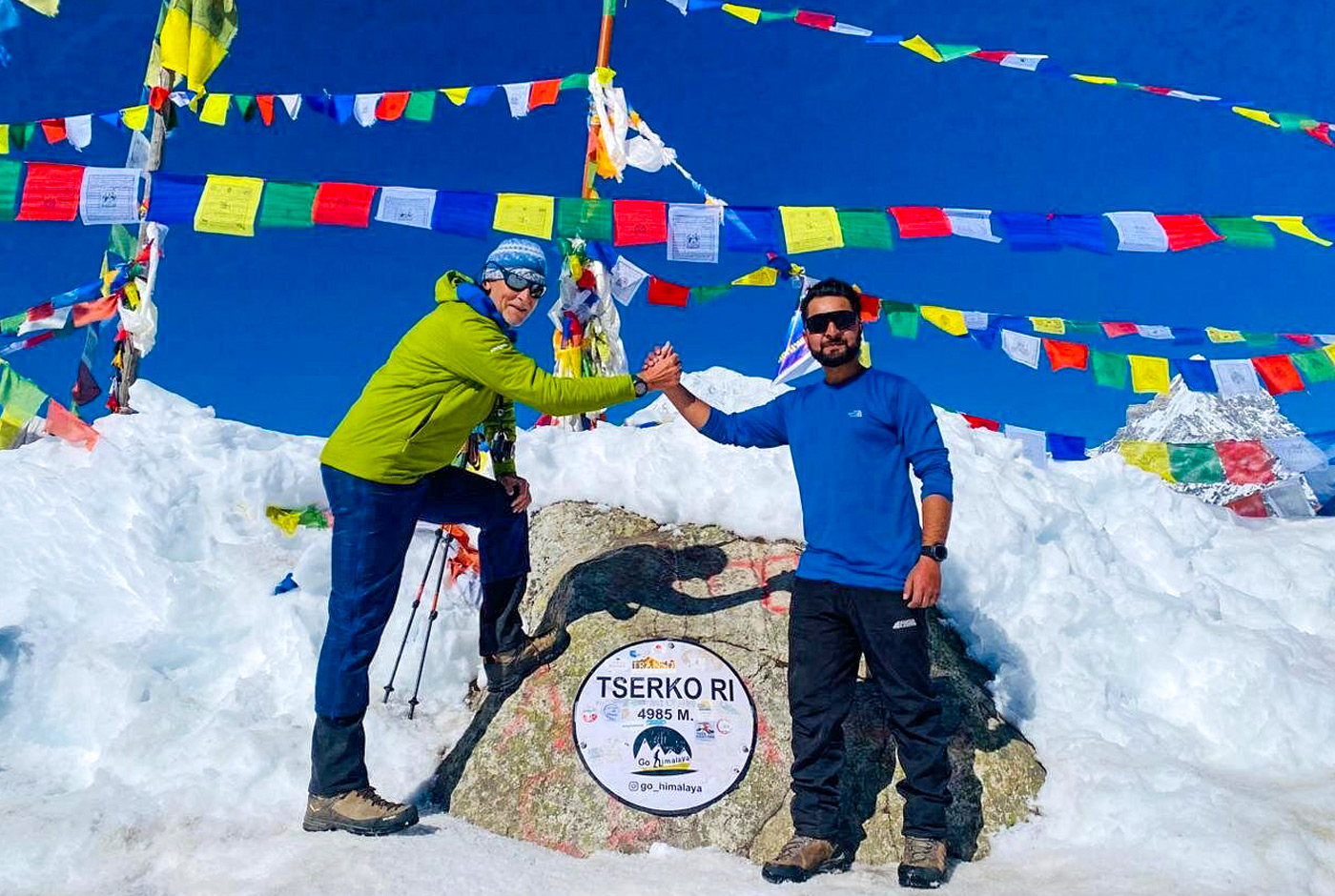
Extended Trek with Kyanjin Ri or Tsergo Ri (11 to 12 Days)
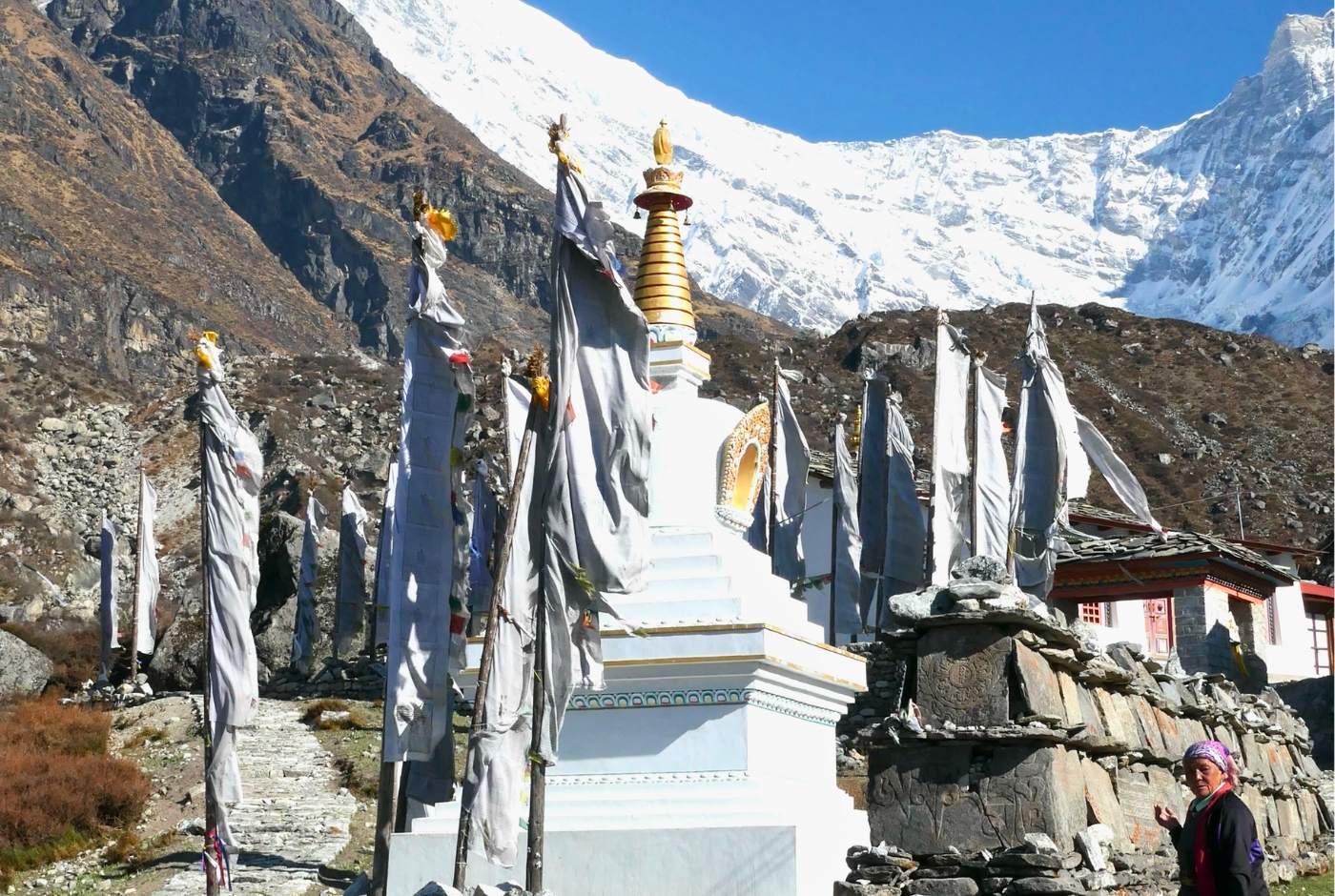
Adding an extra summit hike increases the total cost to USD 1,000 to 1,350, depending on the structure.
The added expense reflects:
- One additional lodge night
- Extra meals
- Additional guide and porter wages
The financial difference is moderate, but the experience improves significantly. Higher viewpoints such as Kyanjin Ri or Tsergo Ri provide glacier panoramas and deeper mountain immersion.
Seasonal Impact on Langtang Valley Trek Cost
Seasonal factors influence availability more than official pricing. Government permits remain fixed year-round.
Peak Season (Spring: March to May | Autumn: September to November)
During peak months, Langtang sees higher trekking traffic. Room prices remain stable, but private room availability becomes limited.
Guide and porter demand increases, so early booking secures stable daily rates. Transport services operate regularly, and weather stability reduces unexpected delays.
Overall costs do not dramatically increase, but advance planning prevents last-minute expenses.
Off-Season (Winter and Monsoon)
Winter and monsoon bring fewer trekkers. Some lodges may offer slight pricing flexibility.
However, heavy winter snowfall or road damage during the monsoon can increase transport costs. Fewer shared vehicles operate during these months, sometimes requiring private jeep arrangements.
Off-season trekking can reduce crowd pressure, but budgeting should include a contingency for weather-related adjustments.
Hidden and Extra Costs to Budget For
Small daily expenses accumulate quickly during a multi-day trek. Many trekkers underestimate these variable costs.
Common extra expenses include:
- Charging electronics: USD 2 to 4 per device
- Hot showers: USD 2 to 5
- WiFi access: USD 3 to 5
- Snacks and bakery items: USD 2 to 6
- Soft drinks: USD 2 to 4
Tipping is customary and should be budgeted respectfully. For a 10-day trek, recommended tipping guidelines are:
- Guide: USD 80 to 120
- Porter: USD 60 to 100
Carrying a contingency fund of USD 100 to 150 provides flexibility for weather-related delays or comfort upgrades.
Including these extras makes your final budget predictable rather than surprising.
Why Do Langtang Valley Trek Cost Estimates Vary So Much Online?
Langtang Valley Trek cost estimates vary because some articles calculate only basic trail expenses, while others include guide service, porter support, private transport, meals, permits, staff insurance, hotel nights, and agency coordination. Very low estimates may look attractive, but they often leave out the services that make the trek safer and easier to manage.
For a realistic 2026 budget, compare what is included rather than looking only at the headline price. A lower price may not include meals, porter support, transport upgrades, personal expenses, tips, or emergency coordination.
How Much Cash Should You Carry for the Langtang Valley Trek?
You must carry sufficient cash from Kathmandu for the entire trek. There are no reliable ATM facilities beyond Kathmandu for Langtang trekkers.
Trekkers should exchange enough money into Nepalese rupees in Kathmandu before starting the trek. Teahouses, charging stations, small shops, and local transport providers usually work on a cash-only basis, and smaller denominations are easier to use in remote villages.
For a standard 10-day guided trek, most trekkers carry around NPR 50,000 to 70,000 for personal expenses, tips, drinks, charging, hot showers, snacks, and contingency needs. This is approximately USD 370 to 520, depending on the exchange rate.
Trekkers on a longer itinerary or those planning to cover more personal expenses on the trail should carry a larger amount and plan accordingly before leaving Kathmandu.
Langtang vs Everest Base Camp Cost Comparison
Langtang is significantly more affordable than Everest Base Camp. The difference primarily comes from the costs of flights and permits.
| Trek | Average Guided Cost (10 to 12 Days) | Key Cost Difference |
|---|---|---|
| Langtang Valley Trek | USD 900 to 1,200 | Road transport, lower permit costs |
| Everest Base Camp Trek | USD 1,400 to 2,200 | Domestic flights and higher altitude food costs |
Everest requires round-trip mountain flights and higher daily food pricing at altitude. Langtang avoids internal flights entirely, which reduces overall financial pressure.
For trekkers seeking high Himalayan scenery on a lower overall budget, Langtang offers strong value.
Sample Realistic Langtang Valley Trek Budget (10-Day Guided Example)
Below is a practical mid-range example for 2026. USD figures are approximate and may vary depending on the exchange rate at the time of travel.
| Cost Category | Estimated Cost (USD Approx.) |
|---|---|
| Permits | $25 to $50 |
| Transport (Shared Jeep Round Trip) | $50 |
| Accommodation (10 Nights) | $100 |
| Food (10 Days) | $300 |
| Guide (10 Days) | $300 |
| Shared Porter (10 Days) | $110 |
| Extras and Tips | $150 |
| Estimated Total | $1,035 to $1,060 |
This example reflects a realistic mid-range guided structure. Private jeep upgrades, extended itineraries, or additional hotel nights in Kathmandu will increase the total cost accordingly.
Post a Comment