
Every year, thousands of trekkers land in Kathmandu with two names circling in their heads: Everest Base Camp and Langtang Valley. Both routes wind through the Himalayas. Both deliver mountain scenery that defies description. But they serve entirely different trekkers, and choosing the wrong one for your situation can mean arriving underprepared, overspending, or simply wishing you had picked the other.
I have walked both routes multiple times across different seasons, from the spring rhododendron bloom to the sharp clarity of October, and have guided trekkers ranging from complete beginners who have never worn hiking boots above 2,000m to seasoned trekkers chasing their fifth Himalayan route. The question I hear most in Kathmandu planning sessions is always the same: which one should I do?
This guide provides a straightforward answer based on actual data, logistics, and trail experience. The Everest Base Camp trek's difficulty, cost, and altitude demands differ fundamentally from the Langtang Valley trek's itinerary and quieter rhythms. Understanding those differences is how you make the right call.
Our team at Nepal Hiking Team has guided over 40 Everest Base Camp groups and more than 25 Langtang Valley groups across spring, autumn, and winter. We have managed Lukla flight delays that stretched three days, adjusted acclimatization schedules mid-route for trekkers showing early AMS symptoms above Dingboche, and evacuated clients from both routes. On EBC, roughly 1 in 12 trekkers we guide requires an itinerary adjustment above Dingboche due to mild altitude sickness symptoms. The figure is closer to 1 in 40 in Langtang. We don't intend to scare anyone away from EBC with those numbers. They reflect the reality of spending multiple nights above 4,500m and are exactly why proper preparation and professional guidance matter.
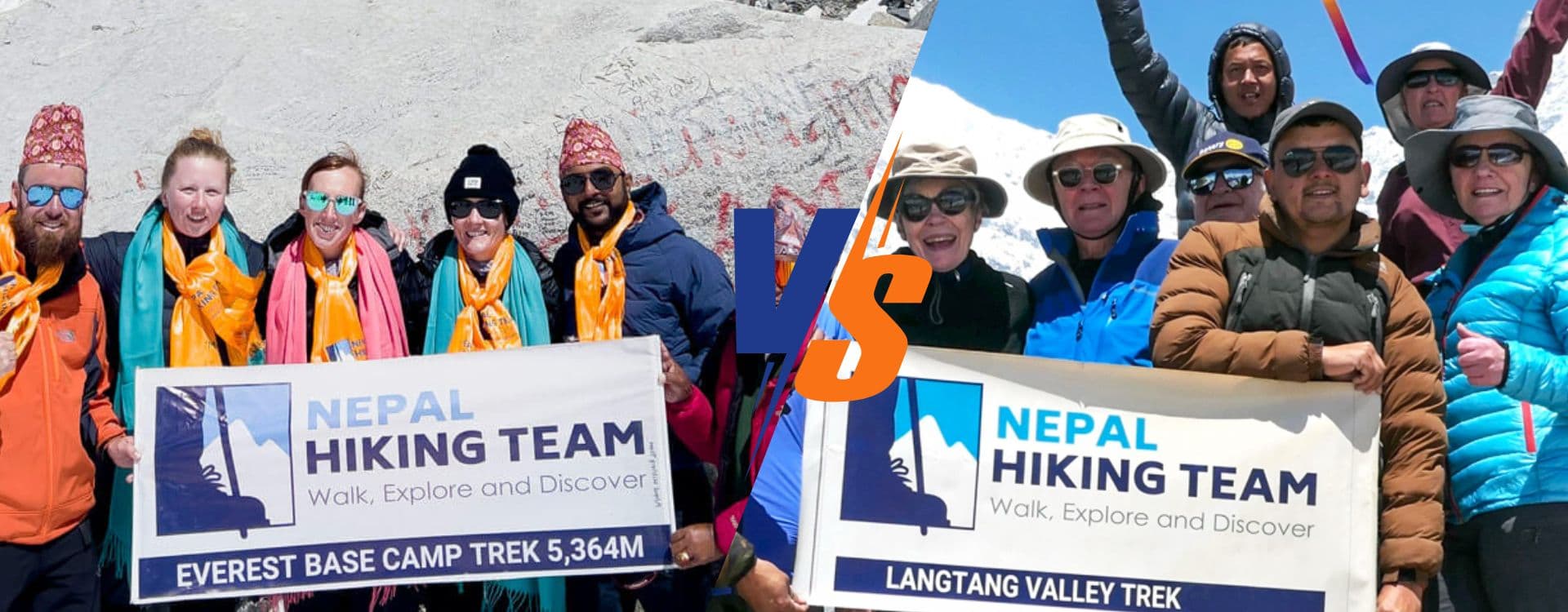
...Versus...
Quick Comparison Table
| Category | Everest Base Camp Trek | Langtang Valley Trek |
|---|---|---|
| Max Altitude | 5,545 m (Kala Patthar) | 5,050 m (Tserko Ri) |
| Trek Duration | 12–16 days | 5–8 days |
| Total Distance | ~130 km round trip | ~65 km round trip |
| Difficulty | Challenging (7/10) | Moderate (5/10) |
| Cumulative Elevation Gain | ~5,500–6,000 m total | ~3,000–3,500 m total |
| Nights Above 4,000m | 4–5 nights | 0 (day hike only) |
| Est. Daily Calorie Burn | 3,000–4,500 kcal/day | 2,500–3,500 kcal/day |
| Avg. Daily Elevation Gain | ~400–600 m | ~300–450 m |
| Cost Range (USD) | $1,200–$3,000+ | $400–$1,200 |
| Best Season | Mar–May, Oct–Nov | Mar–May, Sep–Nov |
| Sleeping Altitude (highest) | 5,164 m (Gorak Shep) | 3,870 m (Kyanjin Gompa) |
| O2 Saturation at Sleep Alt. | ~78–82% | ~88–92% |
| Annual Trekkers (approx.) | 35,000–50,000 | 5,000–8,000 |
| Culture | Sherpa/mountaineering legacy | Tamang heritage |
| Access | Flight to Lukla required | 7–8 hr drive from Kathmandu |
| Crowd Level | High (peak season) | Low to moderate |
Difficulty Comparison
Everest Base Camp Trek Difficulty
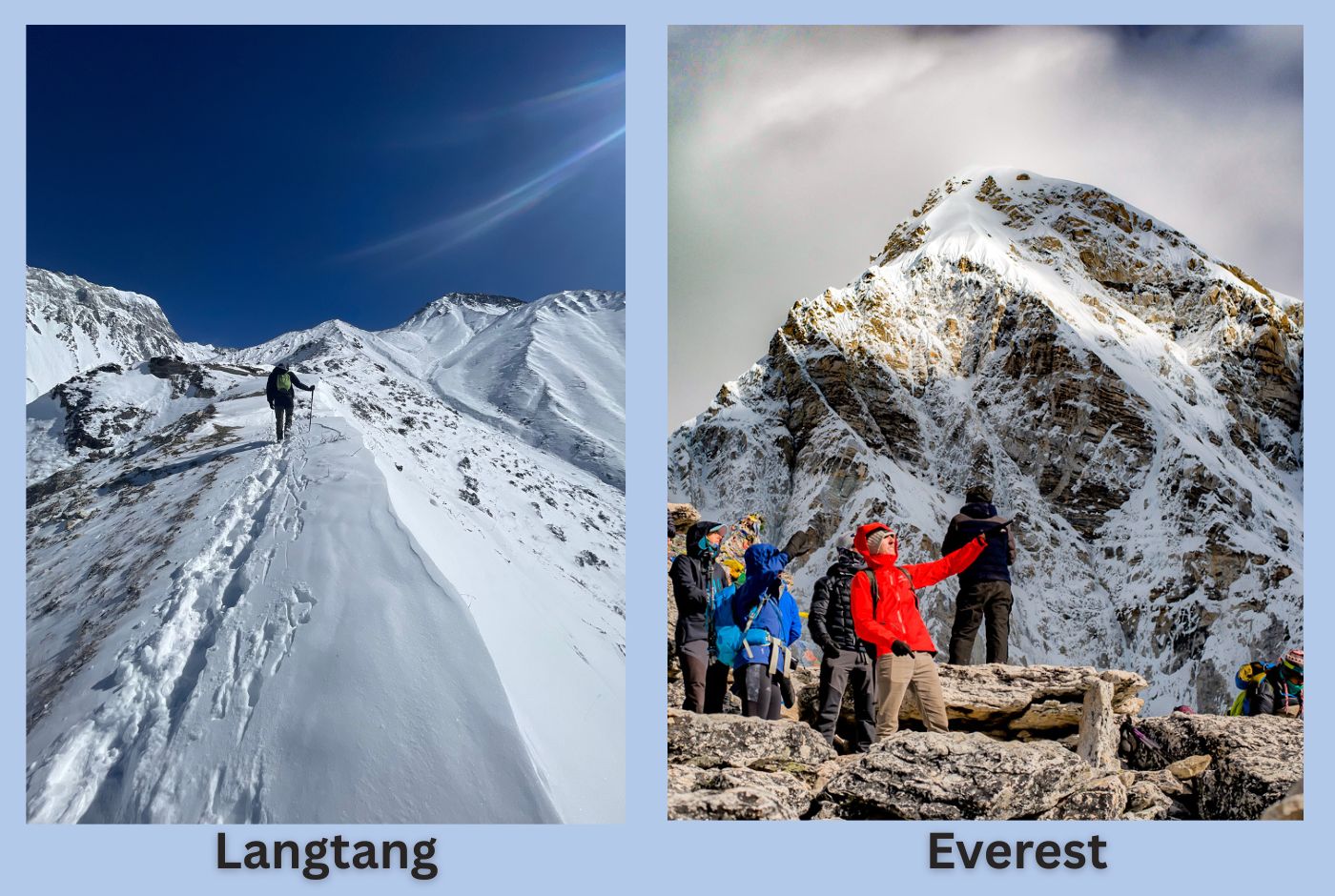
The Everest Base Camp trek earns its 7 out of 10 difficulty rating through cumulative strain rather than any single brutal day. You spend multiple nights above 4,000m, then 4,500m, and eventually push to 5,545m at Kala Patthar. Daily walking runs 6–8 hours on terrain that shifts from stone-paved village paths near Namche to rocky moraine and icy ridgelines above Lobuche. The infamous stone staircases between Namche and Tengboche have shortened many trekkers' plans, leaving them with sore ankles.
Average daily elevation gain on the ascent sits between 400 and 600 meters, with rest days at Namche (3,440m) and Dingboche (4,410m) built in to allow acclimatization. Skipping those rest days to save time is the single most common mistake we see. Mental endurance matters as much as physical fitness here. The trek is long, the weather above 4,000m can be genuinely hostile, and lodge quality drops sharply as you climb. The Everest Base Camp trek, at 12–16 days long, requires you to arrive in reasonable shape and leave your ego in Kathmandu.
Langtang Valley Trek Difficulty Level
Langtang sits at a moderate 5 out of 10. Daily walking averages 5–7 hours on well-marked trails that gradually gain altitude. The standard route peaks at Kyanjin Gompa (3,870m) for the overnight stop, with most trekkers adding the Tserko Ri ascent (4,984m) as a day hike. That climb-high, sleep-low pattern considerably reduces the risk of altitude sickness. There is no technical climbing, glacial crossings, or crampon requirements.
First-time Himalayan trekkers can handle the Langtang with a reasonable level of fitness. The ability to walk uphill for two consecutive hours without stopping is a fair benchmark. A fit beginner who has done some hill walking at home will find this route challenging but achievable. The Langtang Valley trek is less difficult than the EBC trek in every measurable way: total elevation, time at altitude, daily walking hours, and technical demands.
Cost Comparison
Everest Base Camp Trek Cost Breakdown
The Everest Base Camp trek cost for an independent trekker in 2026 looks like this:
- Sagarmatha National Park Permit: $30 USD
- Khumbu Pasang Lhamu Rural Municipality fee: $20 USD
- TIMS card: $20 USD
- Lukla flight round trip: $200–$350 USD (weather delays can add extra nights in Kathmandu)
- Accommodation and meals: $25–$60 USD per day, rising sharply above Namche
- Guide fees (recommended): $25–$35 USD per day
- Porter fees: $20–$25 USD per day
- Emergency evacuation insurance: essential, budget $80–$120 USD for a comprehensive policy
The total cost for a 14-day independent trip ranges from $1,200 to $2,500 USD. Guided packages from Nepal Hiking Team run $1,800–$3,000+, depending on group size, season, and inclusions. The Lukla flight is the single biggest cost driver separating EBC from Langtang. Everything in the Khumbu arrives by helicopter or porter, which explains why a dal bhat that costs $4 in Lukla runs $10–$12 at Gorak Shep.
Langtang Valley Trek Cost Breakdown
The Langtang Valley trek cost is considerably lower across every line item:
- Langtang National Park Permit: $30 USD
- TIMS card: $20 USD
- Bus or jeep from Kathmandu to Syabrubesi: $8–$15 USD
- Accommodation and meals: $15–$30 USD per day
- Guide fees (optional but recommended): $25–$30 USD per day
- Porter fees: $18–$22 USD per day
The total cost for an independent trip is between $400 and $800 USD for 7 days. A guided package including a guide, porter, permits, meals, and accommodation runs $800–$1,200 USD. No flight costs, no weather-delay hotel nights, and no inflated high-altitude meal prices. Langtang wins clearly on budget.
Scenery Comparison
Which Trek Is More Scenic?
Both treks are visually extraordinary, but their aesthetic characters are completely different. Langtang offers intimacy. The valley funnels you between walls of glaciated rock, with Langtang Lirung (7,227m) and the Ganesh Himal range forming a skyline that feels close enough to reach out and touch. The approach through dense rhododendron and bamboo forest builds anticipation before you break into the open alpine valley above Lama Hotel. From Tserko Ri on a clear morning, the entire Langtang and Ganesh Himal ranges spread east to west with Tibet visible just beyond the ridge. You might share that view with three other people.
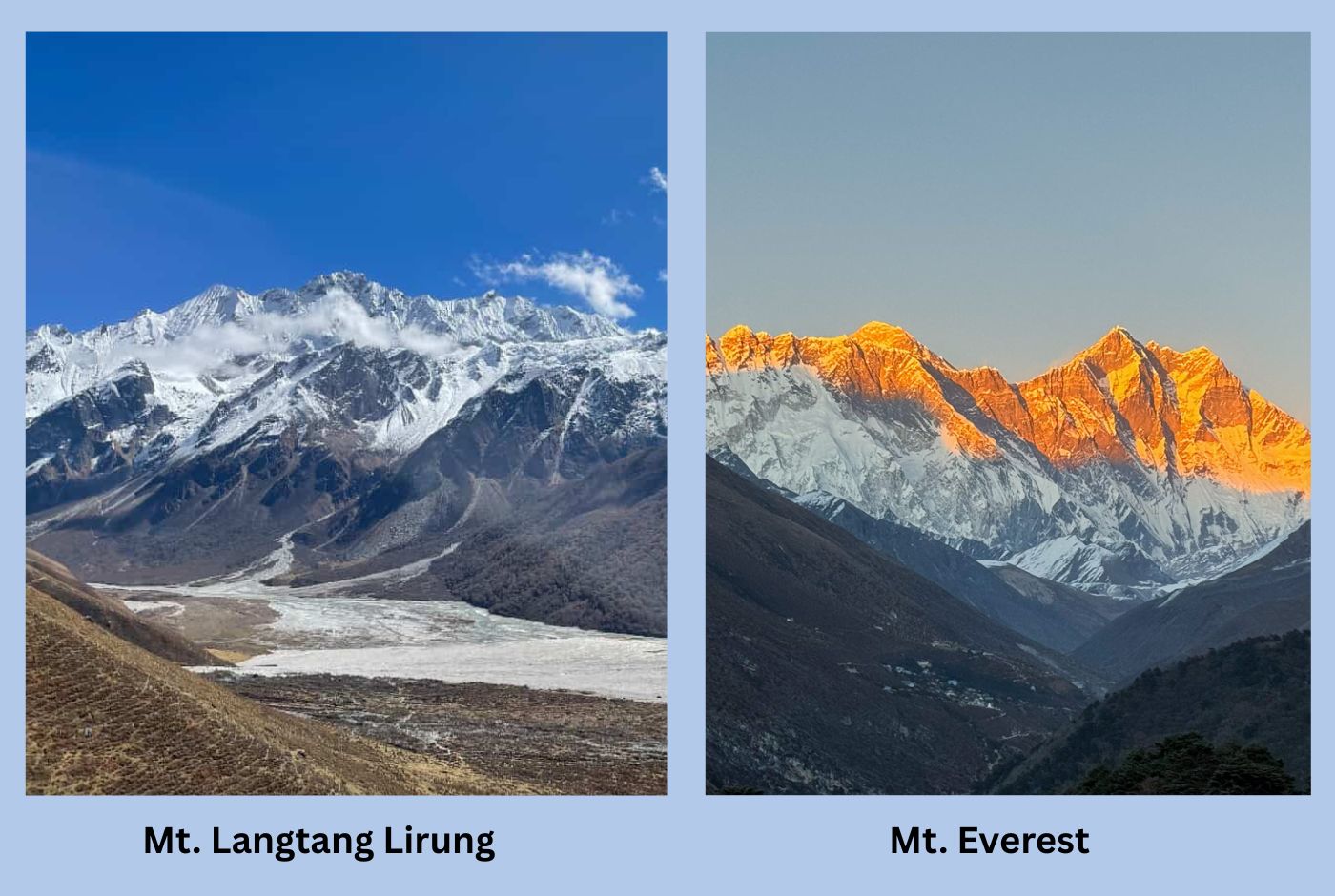
Everest delivers scale. The view from Kala Patthar includes Everest (8,849m), Lhotse, Nuptse, Pumori, and Ama Dablam, one of the most photographed peaks in the Himalayas. The landscape above Dingboche turns stark and lunar, all rocky moraine and windswept ridgelines, dramatically different from the lush forested approach. The Khumbu Glacier's ice towers are visible from multiple vantage points. For photographers, the pre-dawn light on Everest's south face at Kala Patthar is one of the finest natural compositions available to anyone without a climbing permit.
Langtang wins in variety and intimacy. Everest wins on pure scale and iconic peaks. The Langtang vs Everest scenery debate has no objective winner. It depends entirely on whether you prefer a painting you can sit in front of or one you stand back to appreciate.
Culture Experience Comparison
Sherpa Villages Along the Everest Base Camp Route
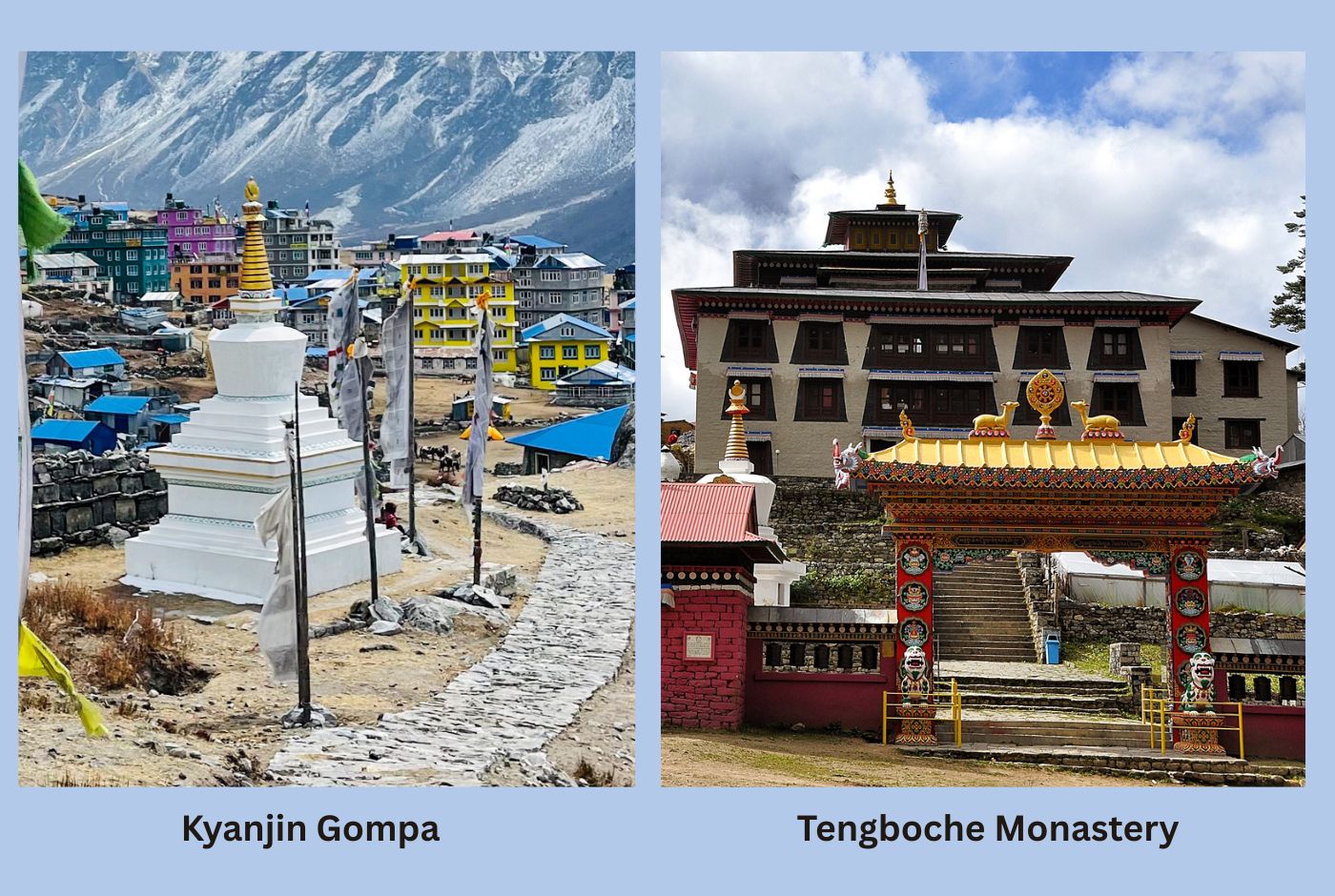
Sherpa culture in the Khumbu is inseparable from the history of Himalayan mountaineering. The region produced some of the world's most accomplished high-altitude climbers, and that legacy is visible in every village from Namche to Lobuche. Tengboche Monastery (3,867m) is the spiritual anchor of the region, blessing climbing expeditions and hosting Mani Rimdu, a three-day Buddhist festival held in October–November with costumed monks performing ancient ritual dances. Mani walls, prayer flags, and the sound of expedition teams moving through in the spring climbing season add layers that no other trek in Nepal quite replicates.
Tamang Culture on the Langtang Valley Trek
The Tamang people, of Tibetan origin, have lived and farmed in the Langtang Valley for centuries, and their culture feels genuinely inhabited rather than preserved for visitors. They actively practice their villages' blend of Tibetan Buddhism and shamanistic traditions. The 2015 earthquake devastated the valley, burying much of Langtang village under a catastrophic landslide. Trekking here now carries a quiet depth. The rebuilt teahouses are sturdier, the community is more connected to the outside world, and the people who stayed to rebuild carry a resilience that is palpable in conversation. The yak cheese at Kyanjin Gompa, made fresh in a small stone factory beside the monastery, is an unexpected highlight that trekkers remember long after the mountain views have blurred together.
Accessibility and Logistics
Getting to the Langtang Valley Trailhead
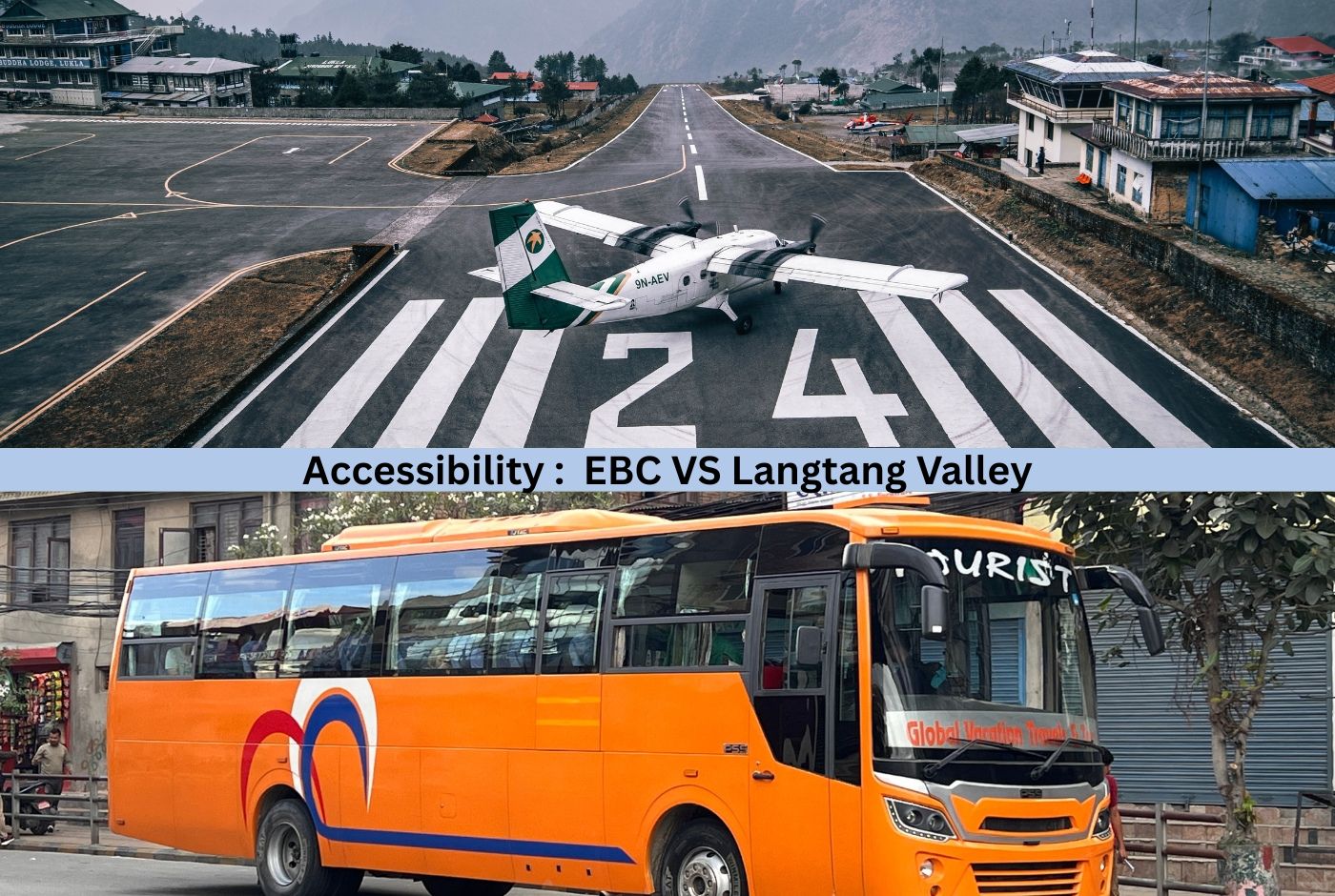
The Langtang trek begins at Syabrubesi (1,503m), reached by a 7–8 hour drive from Kathmandu on a road that has improved steadily over the past decade. No flights, no weather-dependent booking windows, and no last-minute rebooking headaches. If the road is clear, you go. Alternative starting points at Dhunche or Thulo Syabru offer slightly different approach routes. The drive itself winds through river gorges and small hill towns, and there is something satisfying about arriving at the trailhead under your own schedule rather than at the mercy of a mountain airstrip.
Getting to the Everest Base Camp Trailhead
Almost every EBC trekker flies into Lukla (2,840m) on a short mountain flight from Kathmandu. Those flights are entirely at the mercy of weather, and delays of one to three days are common, particularly in shoulder seasons. In peak October, Lukla flight cancellations affect an estimated 15–25% of scheduled departures on any given day due to low clouds or wind. Budget $200–$350 USD for the round-trip flight to Lukla and build two buffer days into your itinerary. The overland alternative from Jiri or Salleri adds 4–6 days each way but avoids the flight dependency entirely. Everest Base Camp flight to Lukla costs, logistics, and backup planning are among the most Googled aspects of EBC planning, and for good reason. The road to Syabrubesi for Langtang has a weather closure rate well under 5% during trekking seasons, making access far more predictable.
Altitude and Acclimatization
The altitude profiles of these two treks account for most of the differences in risk, difficulty, and required preparation.
The highest place to sleep on the Langtang Valley trek is Kyanjin Gompa, which is 3,870 meters high. Oxygen saturation at this elevation typically ranges from 88% to 92% for most trekkers, compared to 98% at sea level. Symptoms of mild altitude sickness—headache, reduced appetite, disrupted sleep—are possible but manageable with a gradual ascent. The Tserko Ri summit day reaches 4,984m, but you descend to sleep lower, which is the key acclimatisation strategy.
Everest Base Camp altitude demands far more from your body. The highest sleeping point is Gorak Shep at 5,164m, where oxygen saturation typically drops to 78–82%. Multiple nights at these elevations are the primary driver of the risk of altitude sickness on the EBC trek. Rescue helicopter call-outs from the Khumbu number in the hundreds each season, with altitude-related illness accounting for a significant share. Proper acclimatisation rest days at Namche and Dingboche are not optional extras. They are what get you to Kala Patthar and back safely. Diamox (acetazolamide) is widely used on EBC and is worth discussing with a doctor before departure. Travel insurance covering high-altitude evacuation, which typically costs $3,000–$7,000+ without coverage, is non-negotiable on either route.
Altitude at a Glance: Side-by-Side
A snapshot of the three most altitude-critical data points for trekkers comparing these two routes:
| Metric | Everest Base Camp Trek | Langtang Valley Trek |
|---|---|---|
| Highest Sleeping Altitude | 5,164 m (Gorak Shep) | 3,870 m (Kyanjin Gompa) |
| Nights Above 4,000m | 4–5 nights | 0 nights (day hike only) |
| Avg. O₂ Saturation at Sleeping Alt. | 78–82% | 88–92% |
Food and Accommodation
Teahouses on both routes provide the essentials: a bed, blankets, and hot meals. The standards differ considerably.
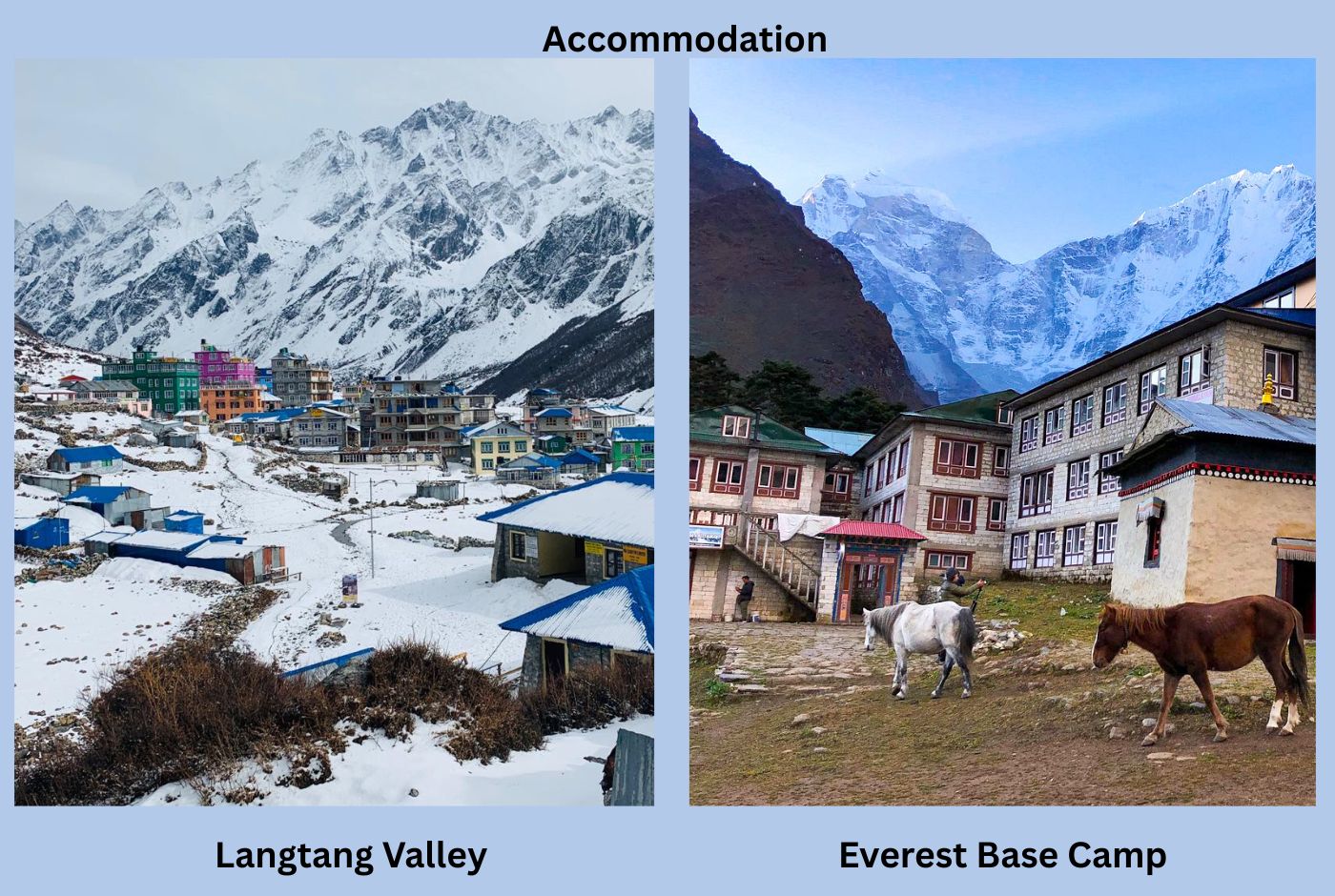
On the Langtang trail, teahouses are simpler and family-run. You can expect shared toilet facilities (squat-style at lower elevations, some Western options at Kyanjin Gompa), thin mattresses, limited charging points, and WiFi that fluctuates like mountain weather. The food is honest and filling: dal bhat with unlimited refills, noodle soups, momos, and ginger lemon honey tea that becomes a daily ritual. Kyanjin Gompa has a small bakery that produces surprisingly delicious apple pie.
EBC teahouses are more developed, particularly in Namche and Dingboche. Some lodges in Namche have heated common rooms, attached bathrooms, and proper bakeries. Higher on the trail, above Dingboche, comfort strips away fast. At Gorak Shep, you share thin-walled rooms with the Khumbu wind and hope the solar power held up enough to charge your headlamp. Meal prices climb with altitude: a dal bhat that costs $4 in Lukla can reach $10–$12 near Base Camp. Both routes have improved mobile connectivity through Nepal Telecom's NTC network, though reliability above 4,500m is inconsistent.
Crowd Levels
If solitude matters to you, this section may decide the question entirely.
The Langtang Valley sees roughly 5,000–8,000 trekkers annually, compared to the 35,000–50,000 who walk the EBC corridor. An October afternoon on the Langtang trail might bring you 30–40 other trekkers over an entire day's walk. Lodges fill up during peak season, but they rarely experience the same level of crowding, such as sleeping bags on the floor, that is seen at Gorak Shep in October.
Everest Base Camp in peak season is a genuinely different experience. Namche on a Saturday evening resembles a small mountain city. Popular lodges at Dingboche and Gorak Shep fill weeks in advance during October and November, and the trail from Namche to Tengboche moves like a slow queue. That social energy suits some trekkers perfectly, particularly solo trekkers who enjoy meeting others from around the world. Others find it detracts from the wilderness experience they came for. The Langtang vs EBC comparison on crowds is not even close: Langtang offers genuine quiet.
Which Trek Is Better for First-Time Trekkers?
This is one of the most frequently asked questions in Nepal trekking planning, and the answer is clear: Langtang Valley is the better choice for first-time Himalayan trekkers.
The reasons stack up quickly. The Langtang Valley trek itinerary is shorter (5–8 days versus 12–16), the sleeping altitude is lower (3,870m versus 5,164m), and the approach to the trailhead is a straightforward road journey rather than a weather-dependent mountain flight. The daily walking hours are manageable, the trail is well-marked, and the teahouses are spaced closely enough that you always have a fallback if energy runs low.
A useful perspective: many of the trekkers we take to Langtang return for EBC one or two seasons later. Langtang is in the Himalayas. It builds physical conditioning, altitude awareness, and the teahouse rhythm that make EBC manageable. Treating Langtang as a first chapter rather than a lesser option is entirely the right frame. Is Langtang harder than Everest Base Camp? No. Is it still a genuine Himalayan adventure? Absolutely.
Which Trek Is Safer?
Both treks are well-established and relatively safe for prepared trekkers with proper insurance. The main risks are altitude sickness, weather incidents, and minor trail injuries: twisted ankles, blisters, and wet gear in unexpected rain.
Langtang has a lower overall safety risk. The sleeping altitude is significantly lower, reducing the probability and severity of altitude-related illness. A helicopter evacuation can reach most points along the Langtang route within 1–2 hours in clear weather. Trail conditions have stabilized well since the 2015 earthquake, though a few sections near the original Langtang village still require careful footing on loose terrain.
EBC carries a higher inherent risk due to the prolonged time spent at extreme altitude. Rescue helicopter call-outs from the Khumbu are significantly more frequent than from the Langtang region, with altitude sickness the most common cause. The cost of evacuation without insurance runs $3,000–$7,000 or more. Both routes require comprehensive travel insurance covering high-altitude evacuation. Neither route requires technical climbing skills, but EBC demands that you take your physical preparation and acclimatisation schedule seriously.
Which Trek Is Better in Winter?
Winter trekking (December through February) is possible on both routes but with significantly different conditions and preparation requirements.
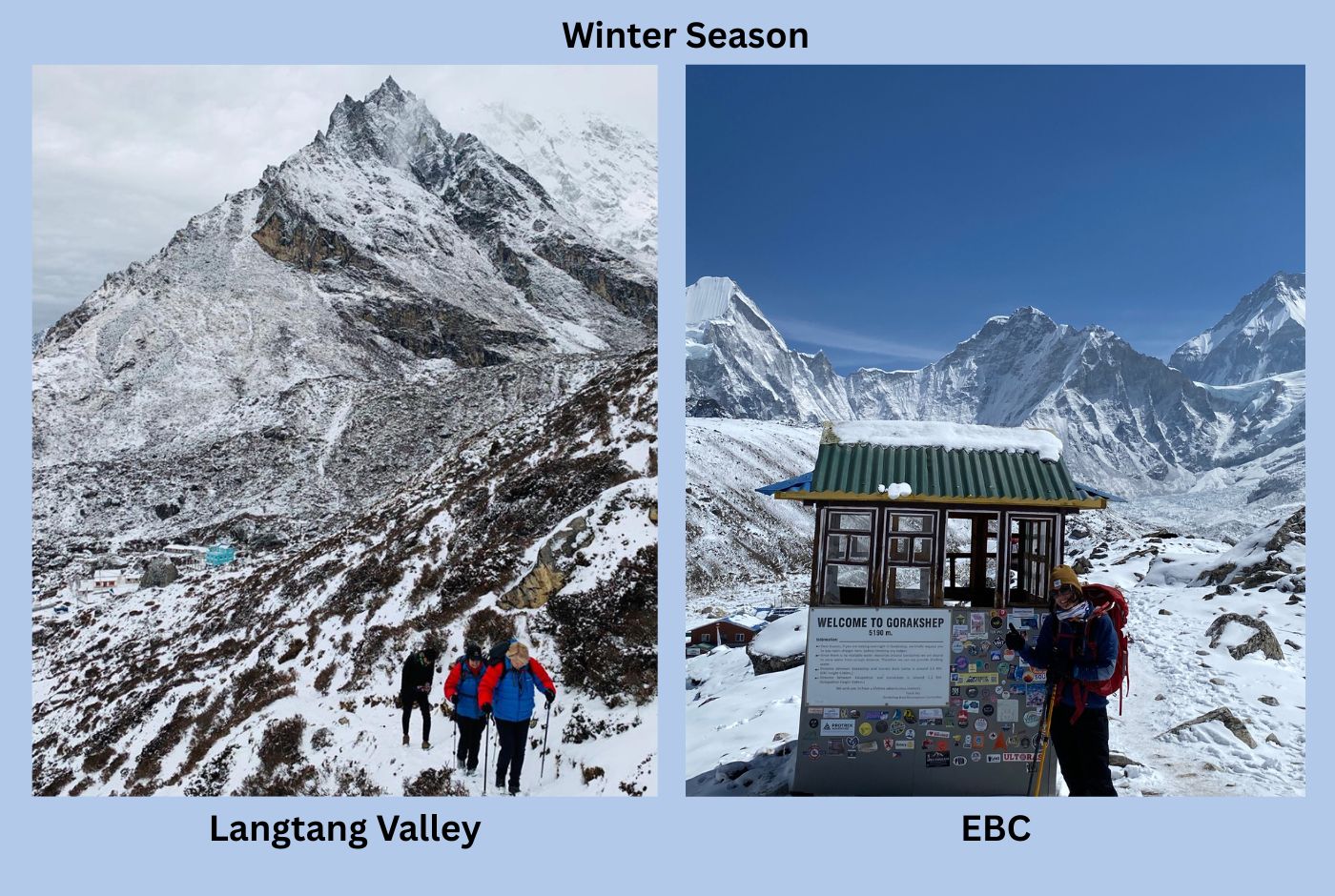
Langtang in winter is the more accessible option for well-prepared trekkers. The main trail to Kyanjin Gompa generally remains passable, though snow can close the higher sections, including Tserko Ri. Temperatures at Kyanjin Gompa drop to -15°C or lower overnight in January. The teahouses that remain open provide basic but adequate shelter, and the trail is quiet enough that you can have stretches of it entirely to yourself. For trekkers who want a true Himalayan winter experience without the extreme altitude demands of EBC, Langtang in December or early January is a genuinely rewarding option.
Everest Base Camp in winter is a serious undertaking. Temperatures above 4,000m can drop to -20°C or lower due to wind chill, and several teahouses above Namche close between December and February. Lukla flight schedules are becoming less reliable, and the risk of flight delays is increasing. Experienced trekkers with proper cold-weather gear and high-altitude experience complete EBC each winter season, but it is not a beginner route during this period. If your only available window is January or February and you have limited Himalayan experience, Langtang is the safer and more rewarding winter choice.
Is Langtang a Good Alternative to Everest Base Camp?
Yes, and framing it as an alternative undersells it. Langtang is a worthy trek, not a consolation prize. It is a distinct and complete Himalayan trekking experience that happens to cost less, take less time, and carry lower altitude risk.
The Langtang Valley vs EBC comparison is often framed as a trade-off, as if choosing one means settling for less. That framing is not accurate. Tserko Ri at 4,984m is a genuine high-altitude summit experience. Kyanjin Gompa is a living, functioning monastery in a remote glacial valley. The Tamang cultural encounter is as authentic as anything in the Khumbu. The Langtang vs EBC comparison truly comes down to two factors only: Everest as the destination and the time and budget required to reach it. If neither of those constraints applies to you, Langtang is a completely independent option.
Langtang genuinely functions as a smart EBC alternative when you have under 10 days, your budget is under $1,000, you want Himalayan culture and mountain views without a two-week commitment, or you are building towards EBC and want to acclimatise your body and expectations first. Langtang is smart, intimate, and underrated. Everest is iconic, challenging, and legendary. Both positions are accurate.
A Story Worth Sharing
A trekker I guided three seasons ago comes to mind often when this comparison comes up. She was 34, a UK nurse, fit but with no Himalayan experience. She had booked EBC, and when she came to our office for the pre-trek briefing, something in the altitude discussion gave her pause. We suggested Langtang as a first step. She was sceptical. She had told everyone at home she was going to Everest.
She did Langtang. On the second morning at Kyanjin Gompa, she woke before dawn and climbed the ridge behind the monastery alone. She sat there for an hour watching the light change on Langtang Lirung, and by her account, cried for reasons she could not fully explain. The scale of the silence, the cold, the colour of the peaks in that first light.
She came back the following October for EBC. The night at Gorak Shep was harder than she expected. At 5,164m, her sleep cut to 90-minute stretches; the wind hammered the teahouse walls; and her headache was persistent but manageable. She nearly turned back that evening. She did not. At 5:30 AM on a clear October morning, she stood on Kala Patthar, breath visible in the dark, Everest's south face catching the first orange light above the Khumbu Icefall. The mountain was so still and so enormous that she stood without speaking for nearly ten minutes. She described it later as the second-best moment of her life. The first was still Tserko Ri.
That progression—Langtang first, then EBC— is one we often recommend. We recommend this progression not because EBC is harder and therefore better, but because Langtang builds knowledge of how your body handles altitude, how teahouse trekking works, and what kind of trekker you actually are. That foundation makes EBC safer and considerably more enjoyable when you return to it.
Who Should Choose Langtang Valley Trek?
- You have 5–10 days available
- Your budget is under $1,000 USD
- This is your first Himalayan trek
- You prefer quiet trails and a more intimate mountain experience
- You want genuine cultural immersion with Tamang communities
- You want to avoid the logistics of a mountain flight
- You are building fitness and altitude experience for a future EBC attempt
- You are trekking in winter and prefer manageable cold-weather conditions
Who Should Choose Everest Base Camp Trek?
- You have 14+ days available
- You can invest $1,500 USD or more
- Standing at the foot of the world's tallest mountain is a specific goal
- You are comfortable managing altitude at 5,000 m+.
- You want the developed teahouse infrastructure and social trail atmosphere
- You want deep immersion in Sherpa mountaineering culture
- You accept the weather dependency of the Lukla flight
- You have some Himalayan or high-altitude trekking experience
Quick Decision Guide
| Choose Everest Base Camp if: | Choose Langtang Valley If: |
|---|---|
| You want the iconic achievement | You have under 10 days |
| You have 14+ days available | You prefer fewer crowds |
| You want the Sherpa mountaineering culture | You want a lower budget |
| You accept a higher cost and altitude | You want lower altitude exposure |
| You are comfortable with flight logistics | You are a first-time Himalayan trekker |
| You want developed trail infrastructure | You want intimate cultural immersion |
Final Verdict
There is no wrong choice here. There is only timing, preference, and readiness. The Everest Base Camp trek vs Langtang Valley trek question resolves differently for every person who asks it, because the right answer depends entirely on what you are bringing to the trail and what you need to take away from it.
The Everest Base Camp trek is iconic and demanding, delivering an achievement that trekkers carry for the rest of their lives. The Langtang Valley trek is smart, intimate, and one of Nepal's most underrated mountain journeys. Diminishing one to elevate the other would be inaccurate and unfair to both.
If you have the time and fitness for EBC, do it properly, and you will not regret it. If Langtang is the right fit for where you are right now, walk it knowing that the Himalayas reward presence, and that valley will give you plenty of that.
The Nepal Hiking Team has guided trekkers on both routes across every season. Reach out for a personalized planning consultation: we will help you match the right trek to your actual timeline, fitness level, and travel goals, not the one that sounds best on paper.
Post a Comment