
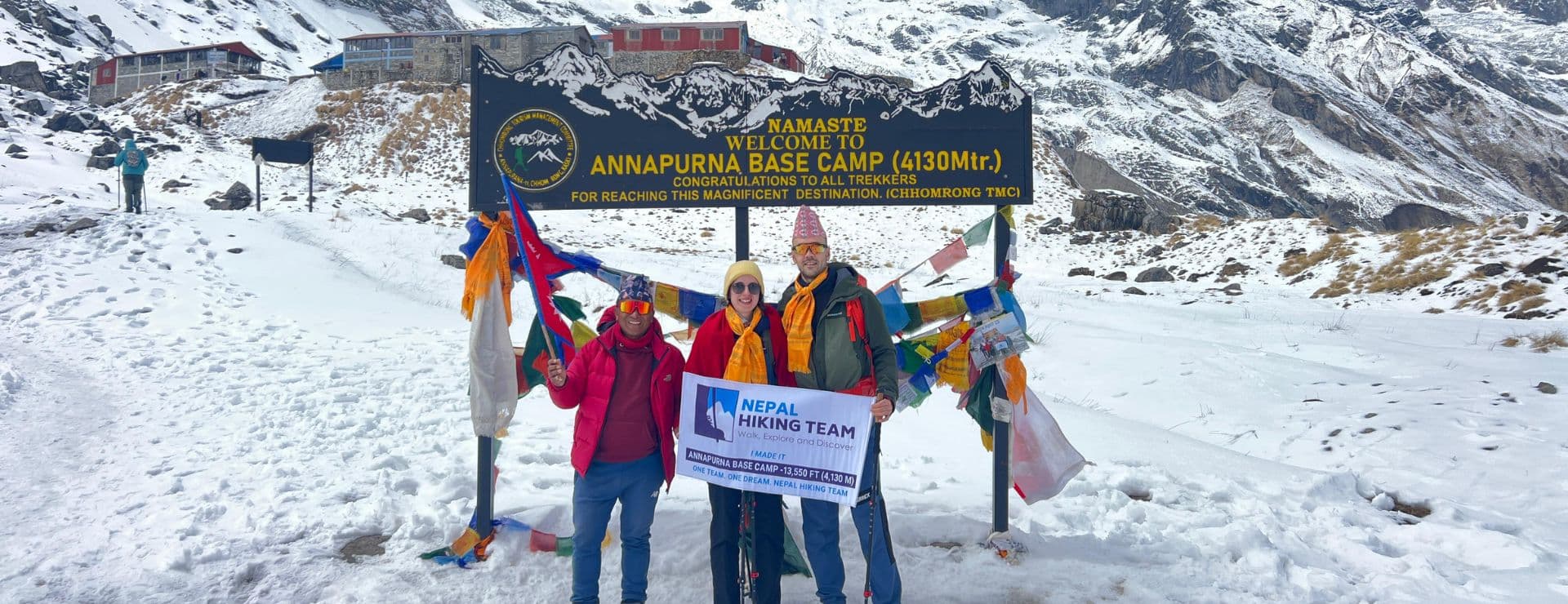
Annapurna Base Camp (ABC) trek prices typically range from $600 to $1,500 USD per person for a standard 10–14 day guided trip, depending on group size, luxury level, and season. Budget options start around $400-$600, while independent treks can be done for cheaper, though guided packages offer better value, including permits, transport, meals, and accommodation. From Pokhara, a shorter 5 to 7-day ABC trek usually costs USD 500 to 900 per person.
The final Annapurna Base Camp trek cost depends on route length, transport, permits, meals, accommodation, guide or porter support, season, and personal trail expenses. From Nepal Hiking Team's experience arranging ABC treks, permits are usually one of the smaller fixed costs. Most trekkers notice the bigger spending difference after Chhomrong, especially around Bamboo, Deurali, Machhapuchhre Base Camp, and Annapurna Base Camp, where meals, rooms, charging, hot drinks, and guide support shape the real daily budget.
Annapurna Base Camp Trek Cost at a Glance
| Cost Type | Estimated Cost | Duration | Best For |
|---|---|---|---|
| Budget Trek | USD 400 to 600 | Around 10 days | Trekkers using basic teahouses, public transport, minimal extras, and limited support |
| Standard Guided Trek | USD 800 to 1100 | 10 to 14 days | Most international trekkers seeking guide support, meals, permits, accommodation, and transport |
| Comfort Trek | USD 900 to 1300+ | 10 to 12 days | Trekkers choosing private transport, better rooms where available, and stronger logistical support |
| From Pokhara | USD 500 to 900 | 5 to 7 days | Trekkers starting directly from Pokhara with a shorter itinerary |
How Much Does the Annapurna Base Camp Trek Cost in 2026?
The Annapurna Base Camp Trek cost varies because trekkers follow different routes, start from different places, and choose different levels of support. A trek starting from Pokhara usually costs less than a Kathmandu-based itinerary. A longer route via Ghorepani and Poon Hill increases cost through extra meals, rooms, and guide days compared with a direct route through Chhomrong.
During March, April, October, and November, teahouses in Chhomrong, Bamboo, Himalaya, Deurali, Machhapuchhre Base Camp, and Annapurna Base Camp fill quickly. When rooms are limited, trekkers have fewer choices, and last-minute private room requests become harder to manage. Room pressure in peak season directly affects both availability and the flexibility of the daily itinerary.
What Money Cannot Buy on the Annapurna Base Camp Trek? During peak seasons, the Annapurna Base Camp trail sees many Nepali domestic trekkers, which can create room shortages, especially from Chhomrong to ABC. This is common in Annapurna Region due to easier access and cheaper trekking trail compared to Everest.
Even though foreign trekkers are often given priority, limited space can mean shared rooms or occasionally sleeping in dining areas. Booking in advance and starting early helps reduce this risk.
Shared jeeps from Pokhara (city of lakes) to Hile, Jhinu Danda, Siwai, or nearby trailheads keep the budget lower, while private vehicles increase the total cost. Road condition, fuel prices, group size, and departure timing all affect transport costs. The largest cost difference between trek types usually comes from service level rather than permits alone. Costs may be lower outside the main trekking months, but monsoon and winter conditions can make weather and trail conditions less reliable.
Annapurna Base Camp Trek Cost Breakdown
The total Annapurna Base Camp trek budget covers several distinct cost categories: ACAP permit, guide support, porter service, meals, accommodation, transport between cities and the trailhead, extra trail services such as charging and hot showers, travel insurance, and gear. Understanding each category separately helps avoid budget surprises on the trail.
Permit Cost
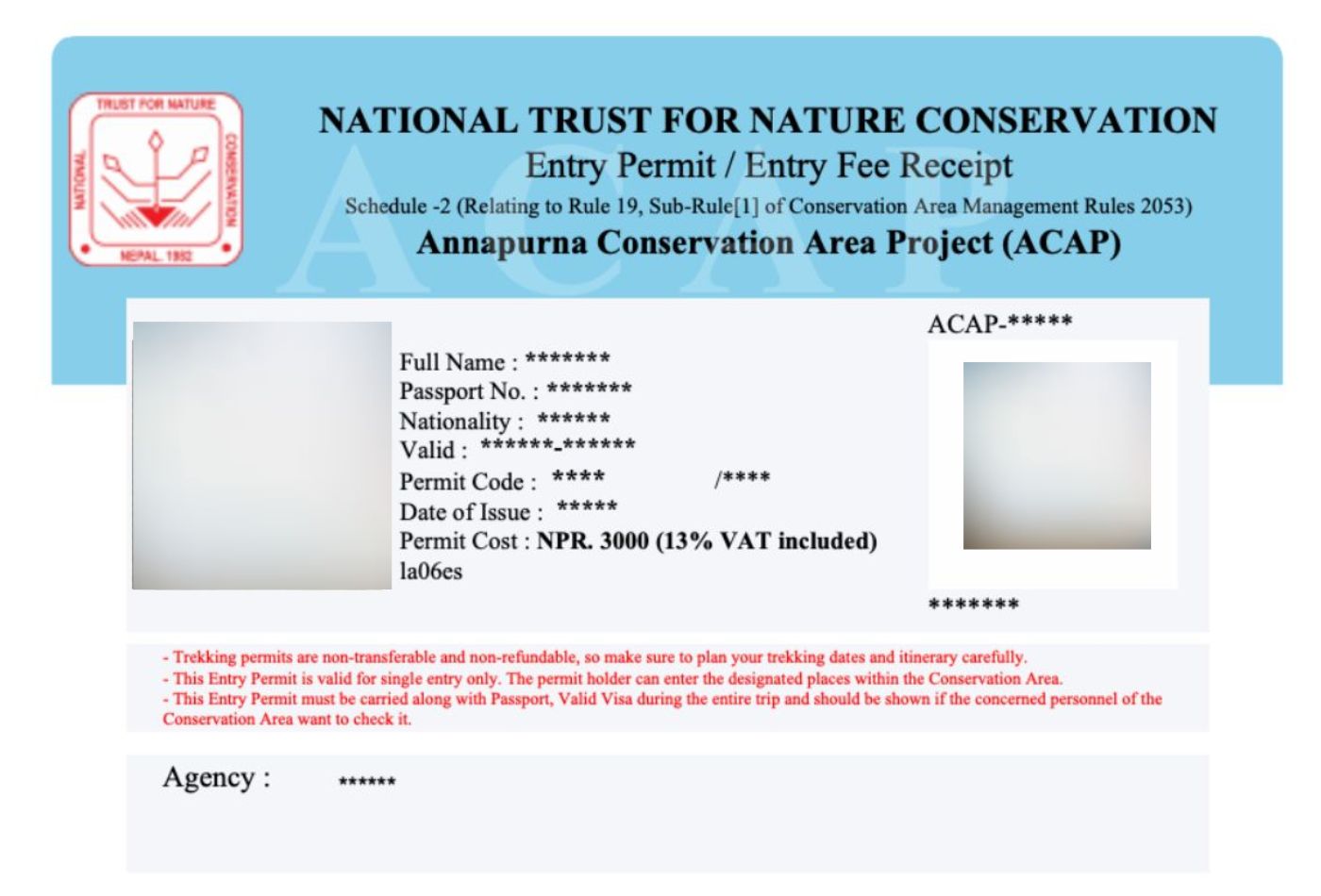
The Annapurna Conservation Area Permit (ACAP) is the primary permit required for the Annapurna Base Camp Trek and the main document checked at trail check-posts. The standard ACAP fee is NPR 3,000 per person for most foreign trekkers, which comes to approximately USD 20 to 25.
| Category | Cost | Payment Method | Important Notes |
|---|---|---|---|
| Foreign Nationals | NPR 3,000 (tax included) | Online or Counter | Online payment adds 2.9% gateway charge. No extra charge for counter payment. |
| SAARC Nationals | NPR 1,000 (tax included) | Online or Counter | Same payment rules apply as foreign nationals. |
| Online Payment | Standard fee + 2.9% | Visa or MasterCard | Permit is issued directly by email. No need to visit permit counter. |
| Counter Payment | Standard fee | Cash | Must visit permit office in Kathmandu or Pokhara with passport or valid ID. |
| Issued at Check-Post | Double the standard fee | On-site payment | Higher cost applies if permit is not arranged in advance. |
Double Cost for Permits? ACAP can be issued at entry check-post (Birenthanti), but double fees are charged for permits issued directly at check-posts.
Trekkers should arrange the ACAP permit before the trek begins, either online through the NTNC e-permit system, at the Nepal Tourism Board office in Bhrikutimandap, Kathmandu, at the ACAP/NTB permit counter in Damside, Pokhara, or through a registered trekking agency.
| Processing Method | Cost | Notes |
|---|---|---|
| Independent | NPR 2,000 (USD 12 to 15) | Applied directly by trekkers |
| Through registered agency | NPR 1,000 | Lower rate when arranged with a licensed trekking agency |
The Trekkers’ Information Management System (TIMS) card has been part of Nepal’s trekking permit system, but implementation on the Annapurna Base Camp route remains inconsistent in practice. Trekkers should confirm the latest requirement before departure, as TIMS is not always issued or checked on this route, and the potential saving is small compared with overall trek costs such as guide support, food, transport, and accommodation.
Pro Tip: Always confirm whether your trekking agency is charging for a TIMS card. On the Annapurna Base Camp route, TIMS is often not issued in practice, so this cost may not apply.
For most foreign trekkers, total permit costs range from approximately USD 20 to 50 depending on TIMS requriement status and processing method. Trekkers booking through a registered agency typically have permit arrangements handled in advance.
Guide and Porter Cost
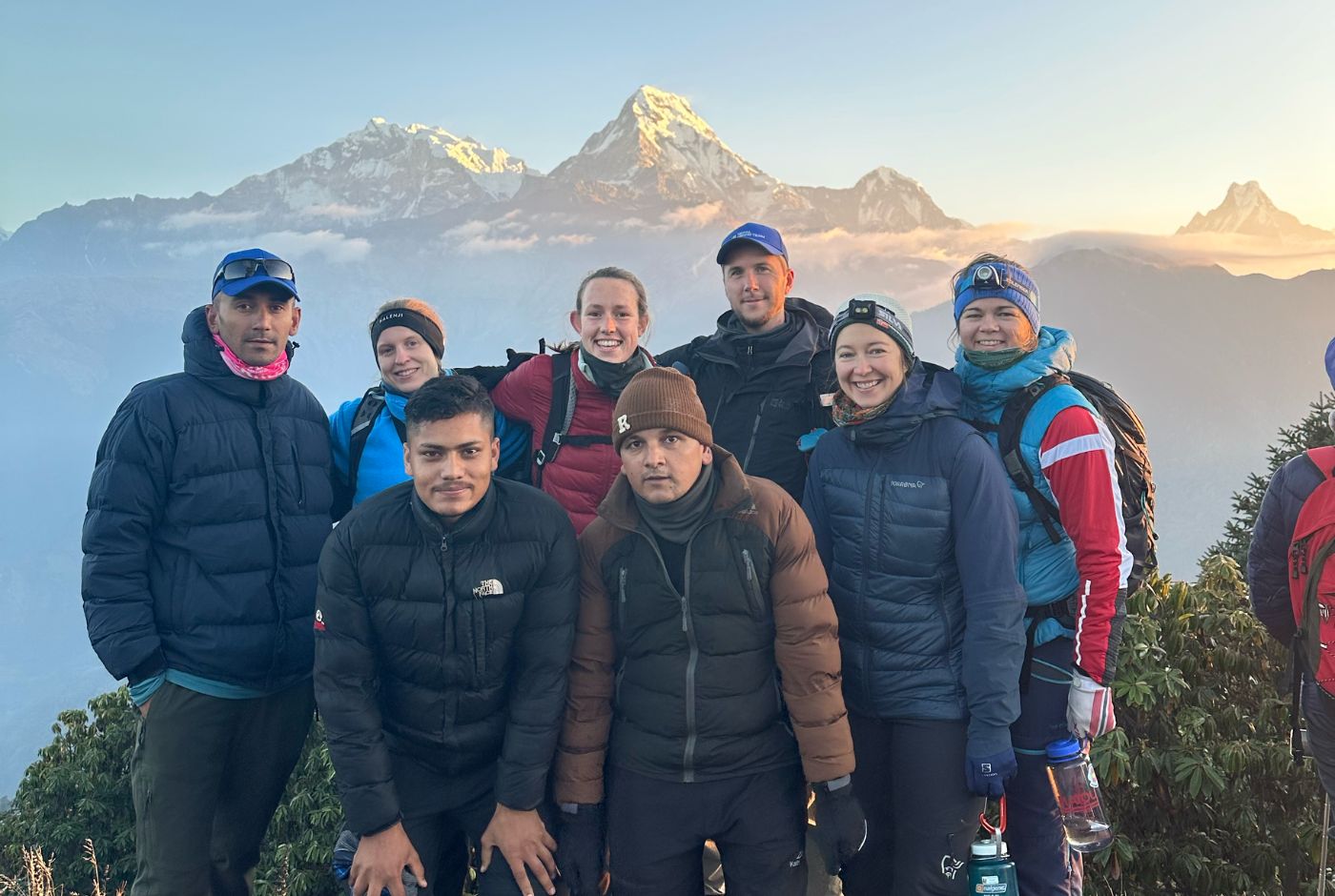
Daily rates for guide and porter support on the ABC route:
- Guide: USD 25 to 35 per day (NPR 3,000 to 5,000)
- Porter: USD 15 to 20 per day (NPR 2,000 to 2,500)
Over a 10 to 14-day trek, guide fees add approximately USD 250 to 490 to the total cost depending on daily rate and duration. Porter fees add approximately USD 150 to 280 if a porter is engaged for the full trek.
Is your guide and porter covered? Choose a trekking agency that provides proper insurance for guides and porters, including their medical care and emergency evacuation. Check the ABC cost inclusions carefully, as this reflects the company’s responsibility toward its staff and supports ethical travel
Guide support is especially useful after Chhomrong. From Bamboo to Himalaya and Deurali, the trail enters narrower valley sections where weather can change quickly, rooms are fewer, and pacing matters. A guide helps choose walking hours, checks lodge availability at the next stop, monitors altitude adjustment, judges incoming weather, communicates with teahouses ahead, and supports route decisions before Machhapuchhre Base Camp and Annapurna Base Camp.
A porter reduces physical strain by carrying the main duffel bag, usually shared between two trekkers. Porter support is helpful throughout the route and particularly around Chhomrong, Bamboo, Deurali, and the final approach to ABC where trail gradient and altitude increase together.
Food and Drink Cost

Food and drinks on the Annapurna Base Camp Trek usually cost around USD 20 to 35 per day. Lower villages near Ghandruk, Jhinu Danda, Chhomrong, and Sinuwa have wider menu choices and slightly lower prices. Prices rise toward Bamboo, Himalaya, Deurali, Machhapuchhre Base Camp, and Annapurna Base Camp because supplies are carried without road access. The biggest price difference is often in drinks, snacks, and hot beverages. Buying snacks, chocolate bars, electrolyte powder, and personal drink mixes in Pokhara before starting the trek helps control the daily budget at higher elevations.
When booking an Annapurna Base Camp trek through any agency, always check what food is included, as this strongly affects the price. A standard 10 to 14-day guided trek priced around USD 800 to 1100 should include full board meals on the trail, with basic hot drinks during meals, while drinking water is usually extra. Better agencies may also offer seasonal fruits or simple desserts. In Kathmandu and Pokhara, this price range typically includes breakfast only.
Typical price range on the trail:
- Boiled drinking water: NPR 50 to 150 per glass, NPR 150 to 300 per litre
- Tea: NPR 150 to 250
- Simple meal such as dal bhat, noodles, pasta, fried rice, or momo: NPR 900 to 1,500
- Cold drinks: NPR 200 to 350
- Snacks: NPR 100 to 300 depending on item and elevation
- Hot drinks such as coffee or hot chocolate: NPR 200 to 400, with espresso-style drinks available in some lower sections for NPR 400 to 600
Dal bhat is often the best-value meal on the trail because many teahouses offer refills at a fixed price. This makes it a practical daily option for managing food costs without limiting energy on the ascent.
Beyond Chommrong, plastic bottled water is prohibited inside the Annapurna Conservation Area to reduce waste. Trekkers should use reusable bottles and buy boiled or filtered water from teahouses throughout the route.
Accommodation Cost
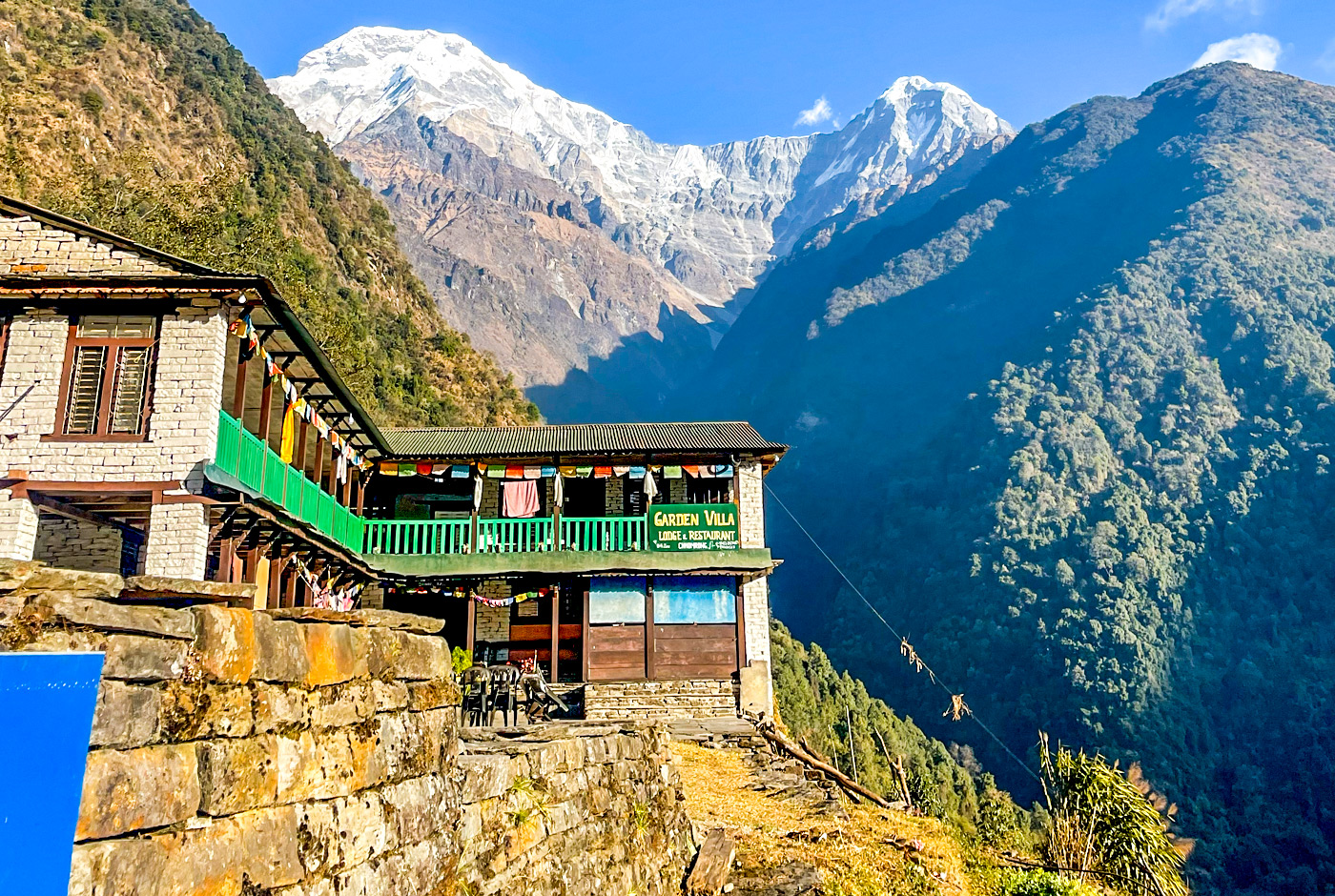
On the accomodation during Annapurna Base Camp Trek is teahouse-based throughout the route. Room prices are lower in village of Ghandruk, Jhinu Danda, Chhomrong, and Sinuwa because there are more lodges and better access to supplies. Choices become fewer and prices rise toward Bamboo, Himalaya, Deurali, Machhapuchhre Base Camp, and Annapurna Base Camp.
| Region | Route Section | Cost per Night |
|---|---|---|
| Lower Region | Pokhara to below Deurali | USD 7 to 20 |
| Higher Region | Deurali to Annapurna Base Camp | USD 25 to 30 |
There are a few higher-end lodges in the lower Annapurna region, such as Birethanti, Ghandruk, Landruk, and Dhampus, where accommodation is so-called Luxury. However, these landmarks do not lie directly on the main Annapurna Base Camp trail (except Birethanti). Once the trek passes Chhomrong, accommodation becomes basic teahouse-style with no luxury options available. Surely, the higher cost in these sections reflects limited capacity, difficult supply access, and peak-season demand.
Transportation Cost
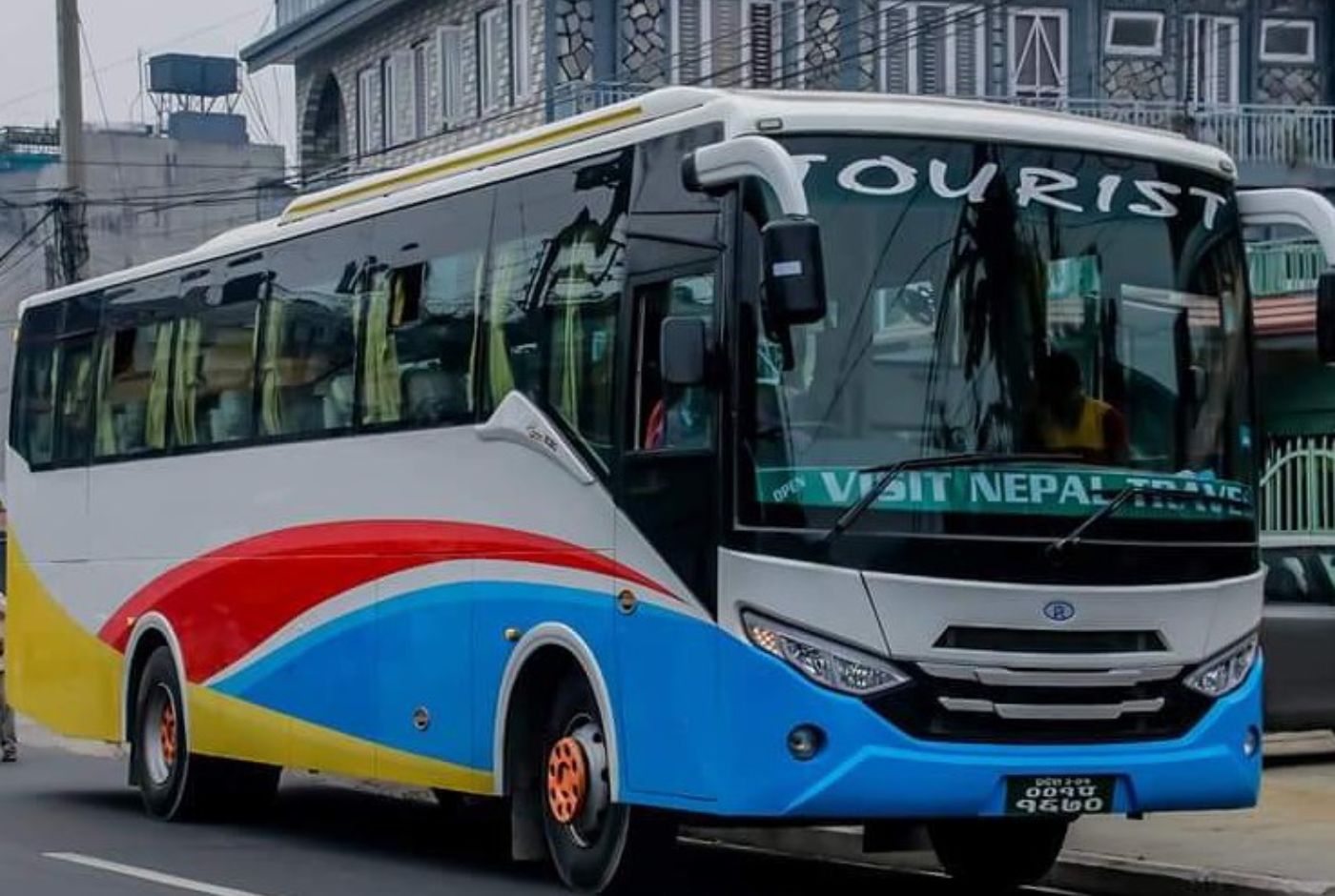
Most trekkers first travel from Kathmandu to Pokhara, then continue by jeep or local transport to the trailhead. Common access points include Hile, Nayapul, Jhinu Danda, Siwai, and Ghandruk depending on road condition, itinerary length, and whether the trek follows the direct route or the Ghorepani and Poon Hill extension.
| Route | Transport Type | Estimated Cost |
|---|---|---|
| Kathmandu to Pokhara | Tourist bus | USD 15 to 25 |
| Kathmandu to Pokhara | Flight | USD 120 to 150 one way per person |
| Pokhara to Hile, Nayapul, Siwai, Jhinu Danda, or Ghandruk | Shared jeep or local transport | USD 10 to 30 |
| Pokhara to Hile, Nayapul, Siwai, Jhinu Danda, or Ghandruk | Private jeep | USD 80 to 150+ |
| Trailhead, Jhinu Danda, or Siwai to Pokhara | Shared or private jeep | USD 10 to 150 depending on vehicle type |
Shared jeeps keep the budget lower. Private vehicles cost more but give better timing control, space for luggage, and smoother connections to hotels or onward flights. Return transport can change based on road condition, group size, vehicle availability, and the final exit point of the itinerary. Jhinu Danda and Siwai are common return points for shorter itineraries.
Emergency helicopter evacuation may be covered by travel insurance when it is medically necessary and included in the policy. Convenience helicopter returns, weather-related preferences, or non-medical exits are separate premium choices and are not part of a standard ABC trek budget.
Extra Costs on the Trail
Small additional expenses appear throughout the trek and accumulate quickly over 10 to 14 days. Organizing them by frequency helps with realistic daily budgeting.
Daily or frequent expenses:
- Boiled or filtered water: NPR 50 to 300 depending on quantity and elevation
- Tea or coffee: NPR 150 to 400
- Device charging: NPR 200 to 300 per session
- Trail snacks: NPR 100 to 300 depending on item and elevation
- Hot drinks throughout the day: NPR 150 to 400 per cup
Occasional or situational expenses:
- Hot shower: NPR 200 to 400 per shower, mostly gas-powered
- Wi-Fi access: NPR 200 to 400 per session where available, mainly below Deurali
- Jhinu Danda hot springs: NPR 150 to 200 per person
- Extra nights due to weather or acclimatisation needs: USD 20 to 40 per night including meals
- Guide and porter tips at the end of the trek: customary, usually USD 5 to 15 per trekker per trek day as a standard gesture of appreciation
Above Deurali, the Annapurna Conservation Area relies largely on solar power. Electricity availability for charging can be limited during overcast weather. Carrying a fully charged power bank from Pokhara reduces dependence on paid charging at altitude.
What Trekkers Actually Spend on the ABC Trail
Package costs and personal trail spending are two separate parts of the total Annapurna Base Camp trek budget. A package covers arranged services such as guide support, accommodation, and main meals. Personal trail spending covers water, charging, hot showers, extra drinks, snacks, and incidentals throughout each day.
On the ABC route, spending rises in stages. Around Pokhara, Ghandruk, Jhinu Danda, Chhomrong, and Sinuwa, supply links and food choices are better. From Bamboo onward, choices become fewer. By Deurali, Machhapuchhre Base Camp, and Annapurna Base Camp, prices are higher because supplies must be carried up and teahouse capacity is limited. Deurali is often the point where trekkers notice the budget changing most sharply.
Carry enough Nepali rupees from Pokhara before leaving the city. ATMs are not available on the upper ABC trail, and card payment is not reliable in teahouses. A USD 100 to 150 cash buffer converted into Nepali rupees is a sensible preparation.
| Trail Section | Typical Personal Spending | Why It Changes |
|---|---|---|
| Pokhara to Chhomrong | USD 25 to 40 per day | More lodges, better supply access, lower transport cost for food and drinks |
| Chhomrong to Bamboo and Himalaya | USD 30 to 50 per day | Fewer teahouses, higher food prices, and reduced menu variety |
| Deurali to Machhapuchhre Base Camp | USD 40 to 60 per day | Limited rooms, colder conditions, higher hot drink and charging costs |
| Annapurna Base Camp | USD 50 to 70 per day | Highest supply cost, limited teahouse capacity, and greater demand during peak season |
Annapurna Base Camp Trek Cost Per Person
Some costs on the Annapurna Base Camp Trek are fixed per person: permits, meals, accommodation, insurance, and personal trail spending. Other costs can be shared depending on group size: guide fees, porter fees, and private transport. The per-person cost decreases as these shared costs are divided across more trekkers.
A guide may cost USD 25 to 35 per day. A solo trekker pays this full daily cost alone, while two trekkers travelling together divide the same guide cost between them. The same logic applies to private jeep transport from Pokhara to the trailhead and the return journey from Jhinu Danda, Siwai, or another exit point.
| Traveler Type | Cost Pattern | Why It Changes |
|---|---|---|
| Solo trekker | Higher per-person cost | Guide, porter, and private transport costs are not shared |
| Two trekkers | Lower per-person cost | One guide, one porter, and transport can usually be shared between both |
| Small group | Best value for shared services | Guide and vehicle costs are divided across the group while the trek remains manageable |
Permits, meals, rooms, insurance, charging, hot showers, snacks, and drinks remain individual costs regardless of group size. The main saving from travelling with others comes from shared guide, porter, and transport.
Annapurna Base Camp Trek Cost Per Day
The daily cost of the Annapurna Base Camp Trek is not a flat figure across the itinerary. It is lower at the start near Pokhara, Ghandruk, Jhinu Danda, Chhomrong, and Sinuwa, and rises around Bamboo, Himalaya, Deurali, Machhapuchhre Base Camp, and Annapurna Base Camp because food, fuel, charging, and hot drinks are harder to supply at those elevations.
A standard guided trek averages USD 50 to 80 per day when permits, guide support, meals, accommodation, transport, and normal trail costs are calculated across the full itinerary. Personal extras such as charging, hot showers, Wi-Fi, snacks, extra tea, coffee, soft drinks, and hot water can add USD 10 to 30 per day on top, depending on elevation and personal habits. Carrying snacks from Pokhara and limiting paid extras at higher altitude helps control the daily budget.
| Trek Type | Daily Cost | What It Usually Covers |
|---|---|---|
| Budget Trek | USD 30 to 50 | Basic meals, teahouse room, local transport, limited extras |
| Standard Guided Trek | USD 50 to 80 | Guide support, meals, accommodation, permits, transport, and normal trail expenses |
| Comfort Trek | USD 80 to 120 | Private transport, better rooms where available, guide support, and higher personal spending |
Annapurna Base Camp Trek Cost from Pokhara
The Annapurna Base Camp Trek cost from Pokhara usually ranges from USD 500 to 900 per person for a shorter 5 to 7-day itinerary. This route still reaches Annapurna Base Camp at 4,130 meters and covers the same high-altitude terrain as a longer Kathmandu-based itinerary.
Most Pokhara-based ABC treks begin with a drive to Hile, Nayapul, Siwai, Jhinu Danda, or Ghandruk depending on itinerary and road condition. The route usually continues through Chhomrong, Bamboo, Himalaya, Deurali, Machhapuchhre Base Camp, and Annapurna Base Camp before returning toward Jhinu Danda or Siwai. Trail costs remain the same once the trek begins. The savings from a Pokhara start come from shorter duration and reduced transport, specifically the removal of Kathmandu hotel nights and Kathmandu to Pokhara travel.
A Pokhara-start ABC trek is well suited for travelers already based in Pokhara, travelers with limited time, or travelers wanting a lower total package cost. It is less suitable for trekkers wanting a slower itinerary, an extra acclimatisation margin, or a scenic extension through Ghorepani and Poon Hill.
Annapurna Base Camp Trek Cost for Nepali Trekkers
Nepali trekkers usually spend less than foreign visitors on the Annapurna Base Camp Trek. The biggest saving comes from ACAP, where Nepali citizen permit rates are free than the rates charged to foreign nationals. Using local transport from Pokhara to the trailhead can reduce costs further.
Food prices at higher-altitude teahouses are generally similar for Nepali and foreign trekkers because teahouse menus are fixed by location and supply cost. Around Bamboo, Himalaya, Deurali, Machhapuchhre Base Camp, and Annapurna Base Camp, meals, tea, snacks, boiled water, and charging are usually based on the same teahouse menu regardless of nationality. Large accommodation discounts should not be assumed in higher sections, and during peak months, room pressure affects all trekkers equally.
The best ways for Nepali trekkers to reduce cost are to travel in a small group, use shared transport from Pokhara, arrange ACAP before reaching the trail, carry snacks from the city, and keep personal extras low at higher altitude. The final cost still depends on route length, transport choice, teahouse selection, meal spending, and whether guide or porter support is used.
Why Annapurna Base Camp Trek Cost Estimates Differ Online
Online cost estimates for the Annapurna Base Camp Trek vary widely because different sources count different things. Some independent trekkers report only their direct daily spending on food and teahouse rooms, which can make the trek look very cheap. Experienced independent trekkers who know Nepal, use local transport, eat simple meals, and avoid extras can genuinely complete the trek at lower cost. This does not represent the full cost picture for most first-time international trekkers.
Low estimates usually exclude guide fees, porter service, private transport, insurance, gear, tips, charging, hot showers, Wi-Fi, extra nights due to weather delays, and emergency support. Guide fees alone add approximately USD 250 to 490 over a 10 to 14-day trek. Once all excluded items are added to an independent budget, the total typically narrows the gap with agency package pricing significantly.
Agency package prices usually include more services: permits, guide, porter, accommodation, meals, transport to and from the trailhead, airport transfers in Pokhara, hotel nights where applicable, and logistical support. International travel agencies sometimes charge higher prices because packages may include overseas sales costs, marketing margins, and local ground handling fees. A trusted Nepal-based local trekking agency manages the trek directly, which can reduce extra cost layers and allow more practical adjustments. Travelers should compare inclusions and exclusions carefully before choosing between booking options.
What Is the Cheapest Way to Do the Annapurna Base Camp Trek?
Foreign trekkers should confirm the latest guide and TIMS requirements before planning a low-budget independent trek. Under Nepal's revised TIMS provisions, foreign trekkers on listed trekking routes are expected to trek with a licensed guide. In practice, TIMS implementation on the ABC route has been inconsistent, and ACAP remains the main permit checked along the trail. Guide support should be treated as part of a safe and well-organized budget, not a simple cost to avoid.
The most practical low-cost approach combines the following steps:
- Start from Pokhara and skip Kathmandu hotel nights and Kathmandu to Pokhara transport
- Use shared jeeps or local transport to the trailhead at Hile, Nayapul, Siwai, or Jhinu Danda
- Stay in basic teahouses throughout and avoid requesting private rooms during peak season
- Eat simple meals and use dal bhat where refills are offered
- Carry snacks, chocolate bars, and personal drink mixes from Pokhara to avoid high-altitude snack prices
- Limit Wi-Fi, hot showers, cold drinks, and non-essential extras especially above Deurali
- Arrange ACAP online, in Kathmandu, in Pokhara, or through a registered agency before starting
Budget trekkers who account for guide service and basic trail expenses realistically spend around USD 400 to 600 for a 10-day trek from Pokhara using public transport and basic teahouses. The best low-cost approach is not the cheapest possible trek but the most realistic budget that still covers permits, safe pacing, enough food, reliable accommodation, and emergency readiness.
Common Budget Mistakes on the Annapurna Base Camp Trek
Pre-Trek Budget Mistakes
- Not arranging ACAP before the trek and risking higher check-post fees
- Forgetting transport costs between Kathmandu, Pokhara, and the trailhead
- Assuming a Pokhara-start trek and a Kathmandu-start trek cost the same
- Not including guide and porter daily costs in the total budget
- Choosing travel insurance without high-altitude trekking and helicopter evacuation cover
- Forgetting gear rental or purchase costs before departure
- Not withdrawing enough Nepali rupees in Pokhara before the trail begins
On-Trail Budget Mistakes
- Assuming food prices remain the same after Chhomrong
- Underestimating price increases around Bamboo, Deurali, Machhapuchhre Base Camp, and Annapurna Base Camp
- Expecting attached bathrooms or private rooms above Deurali
- Spending too much on hot drinks, snacks, charging, and showers at higher elevations
- Forgetting that bad weather can add one or more unplanned extra nights
- Not budgeting for guide and porter tips
- Carrying too little cash for higher-altitude teahouse expenses
Expenses Before the Annapurna Base Camp Trek
The Annapurna Base Camp trek budget starts before the walking day. Travelers should include international flights, Nepal visa fees, Kathmandu or Pokhara hotel nights, transport to Pokhara, permit preparation, travel insurance, gear rental or purchase, and cash withdrawal before leaving the city. These costs are separate from the trek package but form part of the total travel investment.
International Flights
International flights to Kathmandu (Tribhuvan International Airport) are arranged separately and are not included in trek packages. Airfares change depending on booking date, airline, season, and departure city. For ABC trek planning, the Kathmandu to Pokhara transport leg is more directly relevant to the trek budget. Trekkers should check current international airfares through airline websites closer to the intended travel date rather than relying on estimates that may be outdated.
Travel Insurance
Foreign trekkers planning the Annapurna Base Camp Trek must carry travel insurance that covers high-altitude trekking and helicopter evacuation. Insurance should cover trekking to at least 4,200 meters, with 5,000 meters or higher preferred to account for variations in coverage thresholds across providers. Annapurna Base Camp sits at 4,130 meters, and coverage should extend above this altitude.
The policy must cover emergency medical treatment, helicopter evacuation when medically necessary, medical repatriation, trip interruption, and 24-hour emergency assistance. Emergency helicopter evacuation may be covered when it is medically necessary and included in the policy. Convenience helicopter returns, weather-related preferences, or non-medical exits may not be covered and should not be assumed.
A standard 14-day ABC trek insurance policy costs between USD 80 and 150 per person. Costs increase for trekkers aged 50 and above, policies with trip cancellation cover, and plans that include full gear replacement.
Trekking Gear
Trekkers who do not own the necessary gear can rent or buy items in Thamel, Kathmandu, or Lakeside, Pokhara. Renting is practical for down jackets, sleeping bags, trekking poles, and backpacks. Buying is better for hiking boots, base layers, socks, gloves, and clothing that must fit properly for comfort over several walking days.
Purchasing new gear costs approximately USD 100 to 250 for essential items. Rental costs on a per-day basis:
- Down jacket: USD 1 to 2 per day
- Sleeping bag: USD 1 to 2 per day
- Trekking poles: USD 1 per day
- Backpack (50 to 65L): USD 1 to 3 per day
- Hiking boots: USD 1 to 4 per day
- Crampons or microspikes: USD 2 to 3 per day
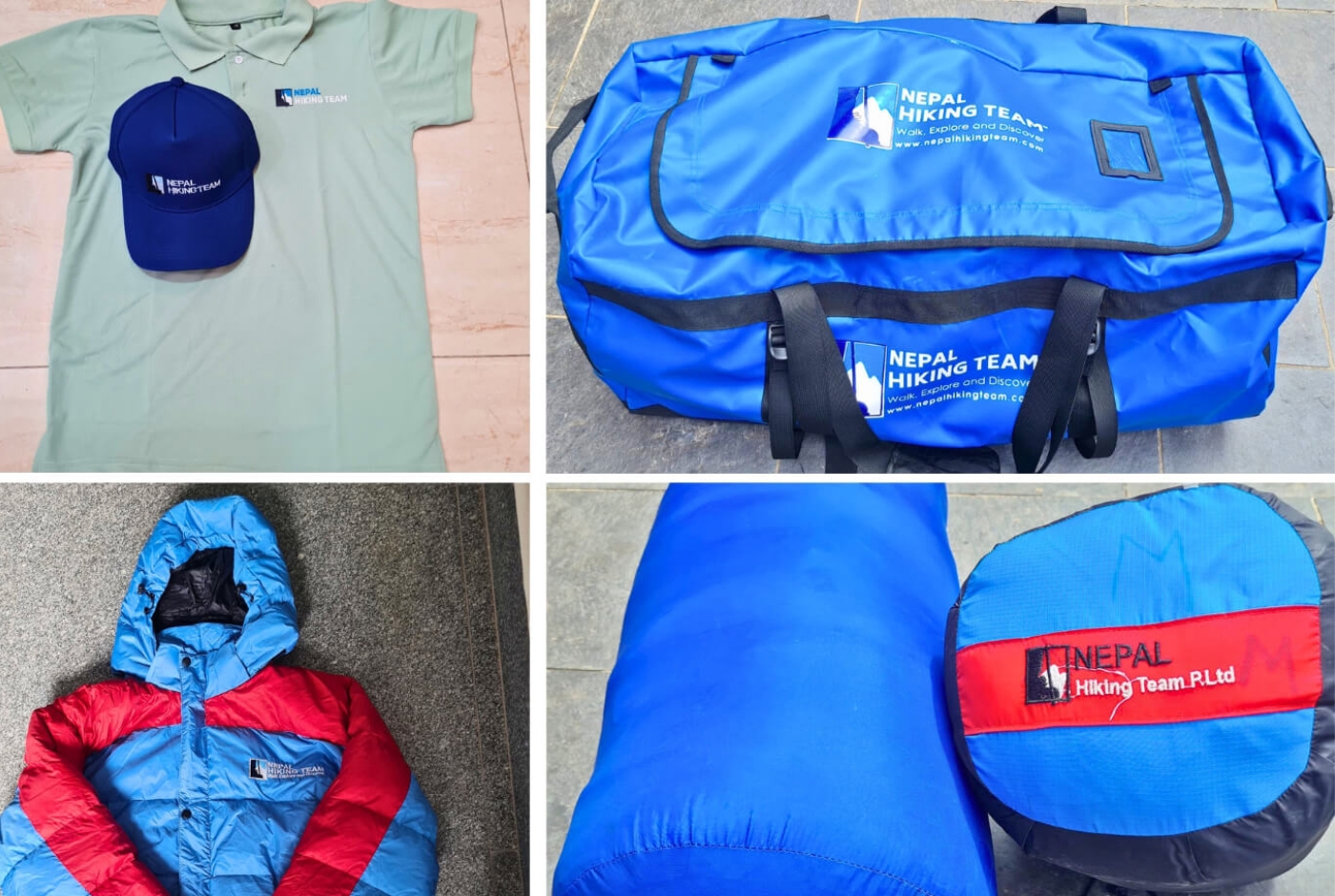
A reliable trekking agency will usually include essential gear such as a duffel bag, down jacket, and sleeping bag in the package. Always check these inclusions in advance, as they help reduce your packing load and overall trip cost.
Total rental costs for a 14-day trek typically come to around USD 80 to 100 depending on which items are needed. Comparing prices across two or three shops in Thamel or Lakeside is worthwhile before committing to a rental agreement.
Nepal Tourist Visa Cost for ABC Trekkers
International trekkers need a Nepal tourist visa before starting the Annapurna Base Camp Trek. Nepal offers tourist visas on arrival at Tribhuvan International Airport in Kathmandu and at selected land entry points. The visa cost depends on the number of days you plan to stay in Nepal.
| Visa Duration | Cost | Best For |
|---|---|---|
| 15 Days | USD 30 | Short ABC treks from Pokhara or travelers with a tight schedule |
| 30 Days | USD 50 | Most ABC trekkers doing a 10 to 14-day itinerary with time in Kathmandu and Pokhara |
| 90 Days | USD 125 | Travelers combining ABC with other treks, tours, or longer Nepal stays |
For most Annapurna Base Camp trekkers, the 30-day visa is the safest choice because it allows enough time for arrival in Kathmandu, travel to Pokhara, the trek itself, possible weather delays, and a few extra days after the trek.
The overstay cost is USD 8 per day: USD 3 per day visa extension fee plus USD 5 per day late fine when the delay is less than 150 days. Nepal Immigration also lists tourist visa extension at USD 3 per day, with a minimum extension fee of USD 45 for 15 days.
Trekkers should carry a valid passport with at least six months of validity and pay the visa fee in USD or accepted foreign currency. Visa rules and fees can change, so travelers should check the latest Nepal immigration information before departure.
Do You Need a Guide for the Annapurna Base Camp Trek?
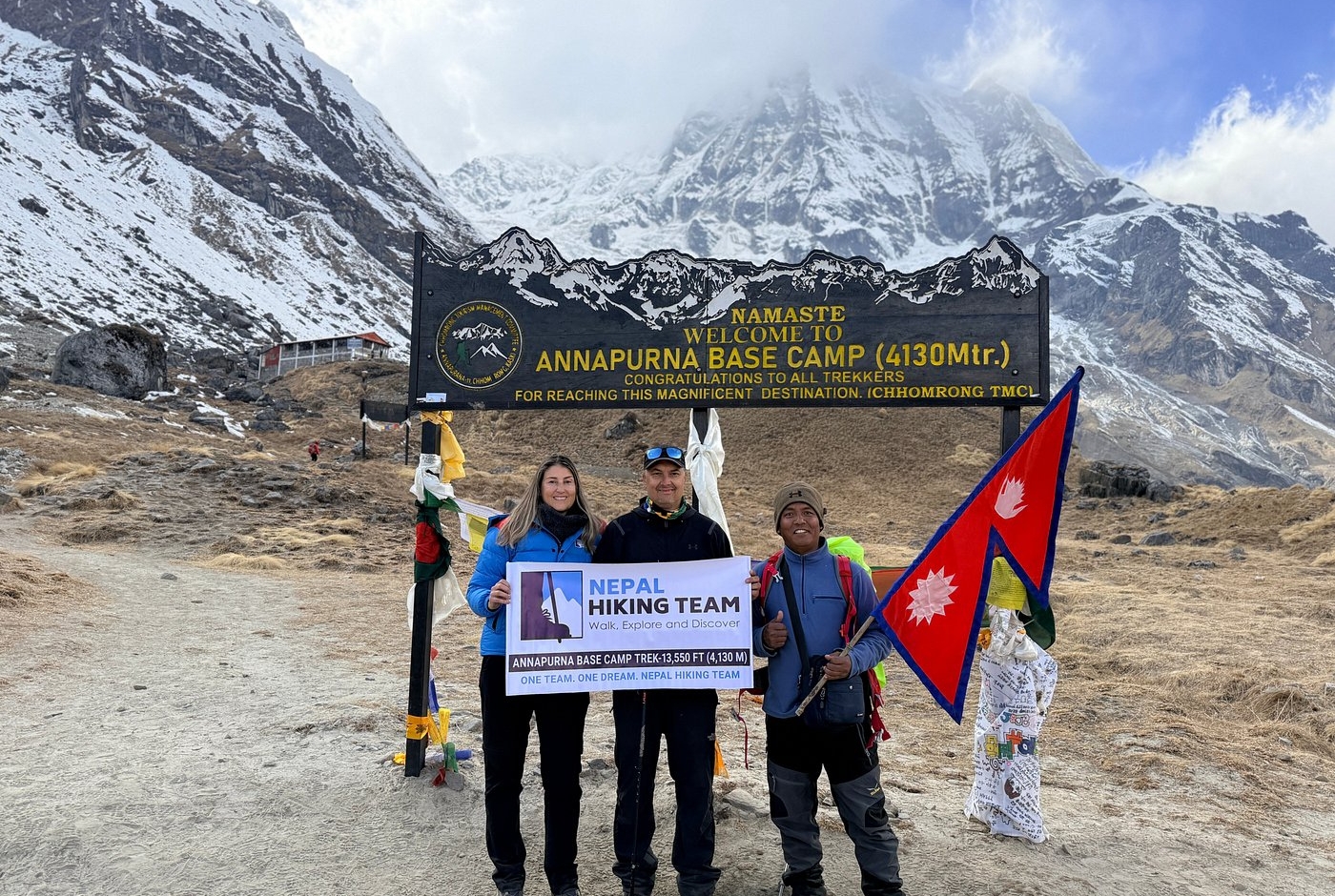
Guide support is strongly recommended for most international trekkers. The upper sections beyond Bamboo, Himalaya, Deurali, Machhapuchhre Base Camp, and Annapurna Base Camp can face sudden weather changes, cold conditions, room shortages, and altitude-related concerns. A guide checks lodge availability ahead, monitors walking pace and altitude symptoms, helps choose safe start times each morning, communicates with teahouses in advance, assists during weather changes, and coordinates evacuation support if needed.
For budgeting purposes, guide cost should be treated as part of a safe and well-organized trek. Guide support is best arranged through a registered trekking agency before departure to confirm licensing, qualifications, and availability during the planned trekking window.
Independent Trek vs Guided Trek Cost
The difference between independent and guided trekking is not only price. It affects safety, permit handling, accommodation coordination, daily decision-making, and support during weather or health problems on the trail.
| Factor | Guided Trekking | Independent Trekking |
|---|---|---|
| Cost | Higher: guide fees, logistical support, and arranged services add to the total | Lower: no guide fee; trekker pays only personal expenses |
| Permit handling | Arranged and carried by the agency or guide | Trekker processes, arranges, and carries all permits independently |
| Accommodation | Pre-booked to avoid shortages, especially during October, November, March, and April | Risk of unavailability during peak months; late arrivals may find limited choices |
| Safety | Higher: guide monitors altitude symptoms, pacing, and weather, and coordinates emergency response | Lower: managing health and safety conditions alone can delay emergency response |
| Flexibility | Lower: pace and itinerary are largely pre-arranged by the agency or guide | Higher: full control over daily pace, route variation, and rest decisions |
| Emergency support | Organised rescue coordination through the agency and guide network | Dependent on personal communication tools, preparation, and local contacts |
| Cultural insight | Guide provides context on Gurung villages, local customs, trail history, and high-altitude culture | Self-research required; cultural context depends on individual preparation |
Final Advice on Planning Your Annapurna Base Camp Trek Budget
The best way to plan the Annapurna Base Camp trek budget is to separate fixed costs from flexible trail spending. Fixed costs include ACAP, guide support, porter service if used, transport between cities and the trailhead, insurance, and gear. Flexible costs include food, hot drinks, water, charging, showers, Wi-Fi, snacks, extra nights, and tips. Both categories need to be realistic before a total budget figure is set.
Most budget problems happen when trekkers calculate only room and meal costs. A traveler who ignores charging, hot showers, drinks, snacks, extra tea, and possible extra nights may spend USD 150 to 200 more than expected across a full 10 to 14-day itinerary.
For a standard guided trek, USD 800 to 1100 per person remains a realistic range in 2026. A lower-cost trek is possible when starting from Pokhara, using basic services, and spending carefully on the trail. A comfort-focused trek costs more due to private transport, stronger support, and better rooms where available.
Before starting the trek, arrange ACAP in advance, confirm the latest TIMS and guide situation, withdraw enough Nepali rupees in Pokhara, prepare a contingency fund of USD 100 to 150, and confirm that travel insurance covers trekking above Annapurna Base Camp's elevation with helicopter evacuation included.
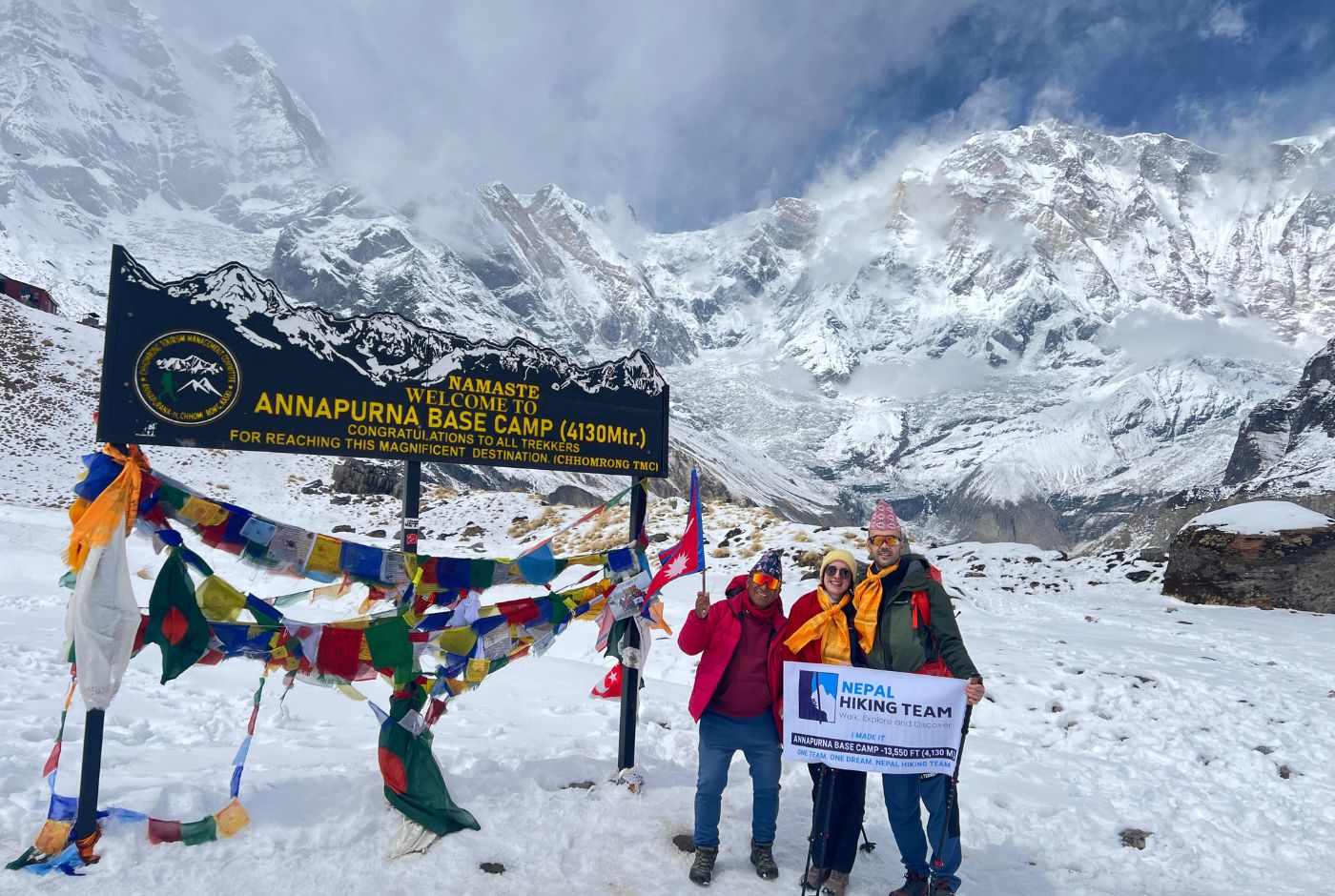
Why Plan Your ABC Trek Cost with Nepal Hiking Team?
Planning the Annapurna Base Camp Trek cost is easier when every detail is clear before departure. At Nepal Hiking Team, we explain what is included, what is extra, and where costs may rise on the trail. Our package includes essential support such as a licensed guide, porter service, permits, accommodation, meals on the trek, airport transfers, and useful trekking gear like a duffel bag, down jacket, and sleeping bag, helping trekkers avoid hidden costs, compare packages fairly, and prepare a realistic budget with confidence.
We Nepal Hiking Team are proud to stand as an industry leader in Nepal Tourism specilizing in Annapurna Regrion treks and are praised over many plateofmrs for our transparent cost pricing and open-minded and simplified cost accounting with the clients. Review what our clients say about Nepal Hiking Team.
Post a Comment