

The Mardi Himal Trek is a short, scenic trek in Nepal's Annapurna region that usually takes 4 to 7 trekking days. The route climbs through rhododendron forests, open ridges, and traditional villages before reaching Mardi Himal Upper Viewpoint at around 4,200 meters, with some trekkers continuing toward Mardi Himal Base Camp at approximately 4,500 meters. Along the way, the trail offers close views of Machhapuchhre (Fishtail), Annapurna South, and Hiunchuli.
Compared with the better-known Annapurna Base Camp and Ghorepani Poon Hill routes, this route tends to feel quieter. The teahouses are simpler, the ridge sections are less busy, and the trail suits trekkers who prefer a shorter route with close mountain views.
Quick answer: The Mardi Himal Trek is a 4 to 7 day teahouse trek in Nepal's Annapurna region. Most trekkers reach Mardi Himal Upper Viewpoint at around 4,200 meters, while some continue toward Mardi Himal Base Camp at approximately 4,500 meters. The route is moderate, suitable for prepared beginners, and best done in spring or autumn.
This Mardi Himal Trek guide covers everything you need to plan well: the route, itinerary options, altitude details, permits, cost breakdown, difficulty, best time, accommodation, guide and porter support, and practical trail advice from Nepal Hiking Team's experience arranging this trek.
Mardi Himal Trek Latest Update 2026
The Mardi Himal route is one of the most popular short treks in the Annapurna region, attracting both international and domestic trekkers. It offers an accessible and rewarding Himalayan experience in a limited timeframe.
For those planning longer journeys, such as the Everest Base Camp Trek and the Annapurna Base Camp Trek, Mardi Himal is a good, shorter and cheaper introduction to trekking in Nepal, with the best background in the Annapurna Conservation Area.
Mardi Himal Trek Overview
The Mardi Himal Trek is a short trek in Nepal's Annapurna Conservation Area, taking 4 to 7 trekking days, with a 5-day itinerary being the most popular. The route is known for its quiet ridge trails, rhododendron forests, teahouse stays, and clear views of Machhapuchhre, Annapurna South, and Hiunchuli from the upper sections.
The trail reaches Mardi Himal Upper Viewpoint at around 4,200 meters, while some trekkers continue toward Mardi Himal Base Camp at approximately 4,500 meters. High Camp, the highest regular overnight stop, sits at around 3,550 to 3,580 meters. Mardi Himal peak itself reaches 5,587 meters, but that altitude refers to the mountaineering summit and is not part of the normal trekking route.
The trek is suitable for beginners with basic fitness and for experienced trekkers who want something compact and worthwhile.
Mardi Himal Trek Key Details
| Detail | Information |
|---|---|
| Duration | Usually 4 to 7 trekking days. A 5-day walking plan is most common. |
| Highest Point | Mardi Himal Upper Viewpoint around 4,200 m. Mardi Himal Base Camp approximately 4,500 m. |
| Difficulty | Moderate. Suitable for beginners with reasonable fitness and preparation. |
| Best Time | March to May and September to November. |
| Accommodation | Basic teahouses and lodges throughout the route. |
| Common Starting Points | Dhampus, Kande, or Phedi after a drive from Pokhara. |
| Common Ending Points | Siding or Lwang village, followed by a drive back to Pokhara. |
| Permits | ACAP (Annapurna Conservation Area Permit) required. TIMS (Trekkers' Information Managment System) Card not required |
| Main Views | Machhapuchhre, Annapurna South, Hiunchuli, Mardi Himal, and the wider Annapurna range. |
| Trek Style | Teahouse trek with licensed guide and porter support available. |
Mardi Himal Trek Map and Route
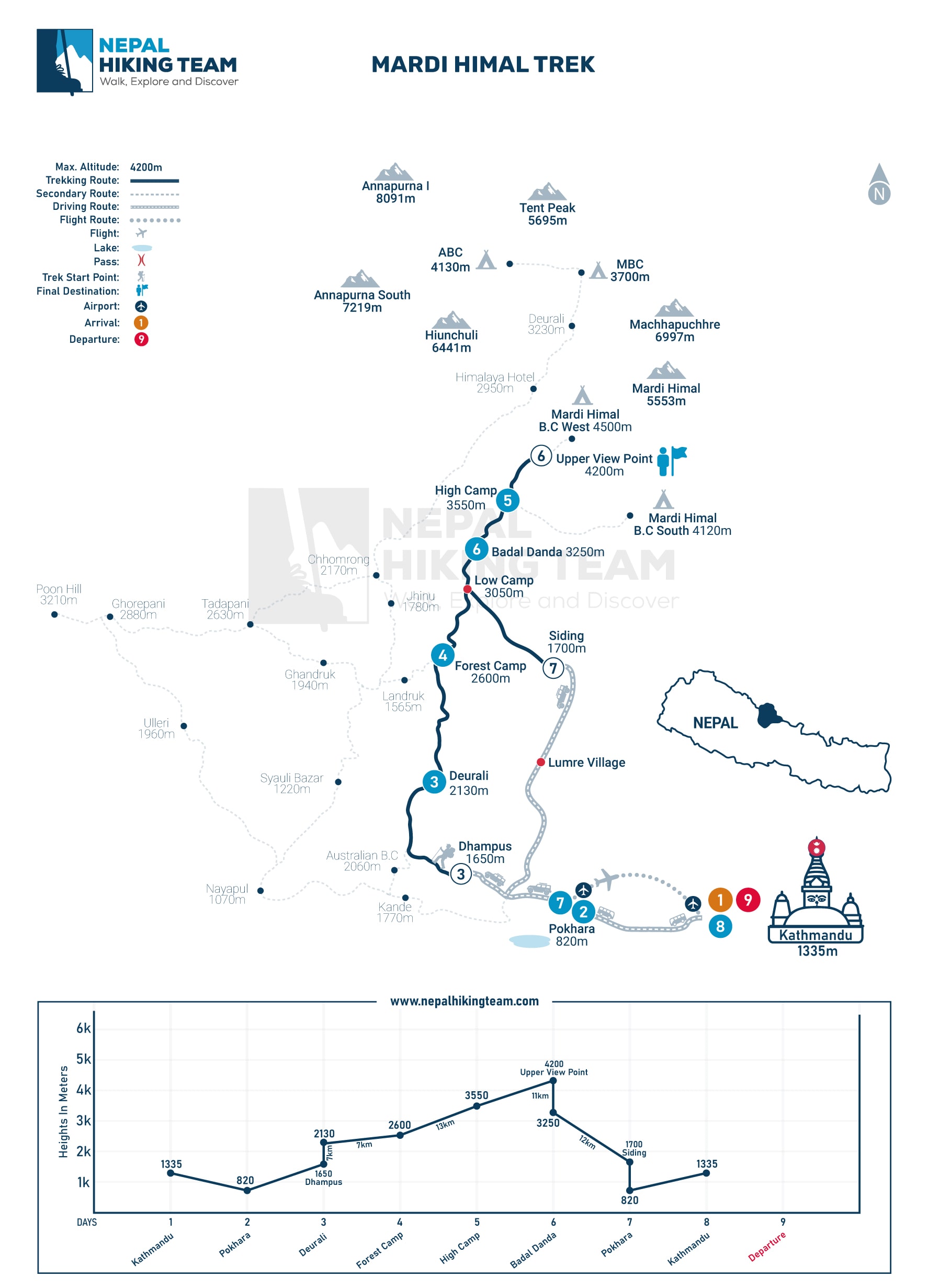
The standard Mardi Himal Trek route starts from Pokhara with a drive to Kande, Dhampus, or Phedi. The trail then climbs through Pothana and Deurali before entering the Mardi Himal trail proper, continuing through Forest Camp, Low Camp, Badal Danda, and High Camp. From High Camp, trekkers make the final ascent to Mardi Himal Upper Viewpoint at around 4,200 meters.
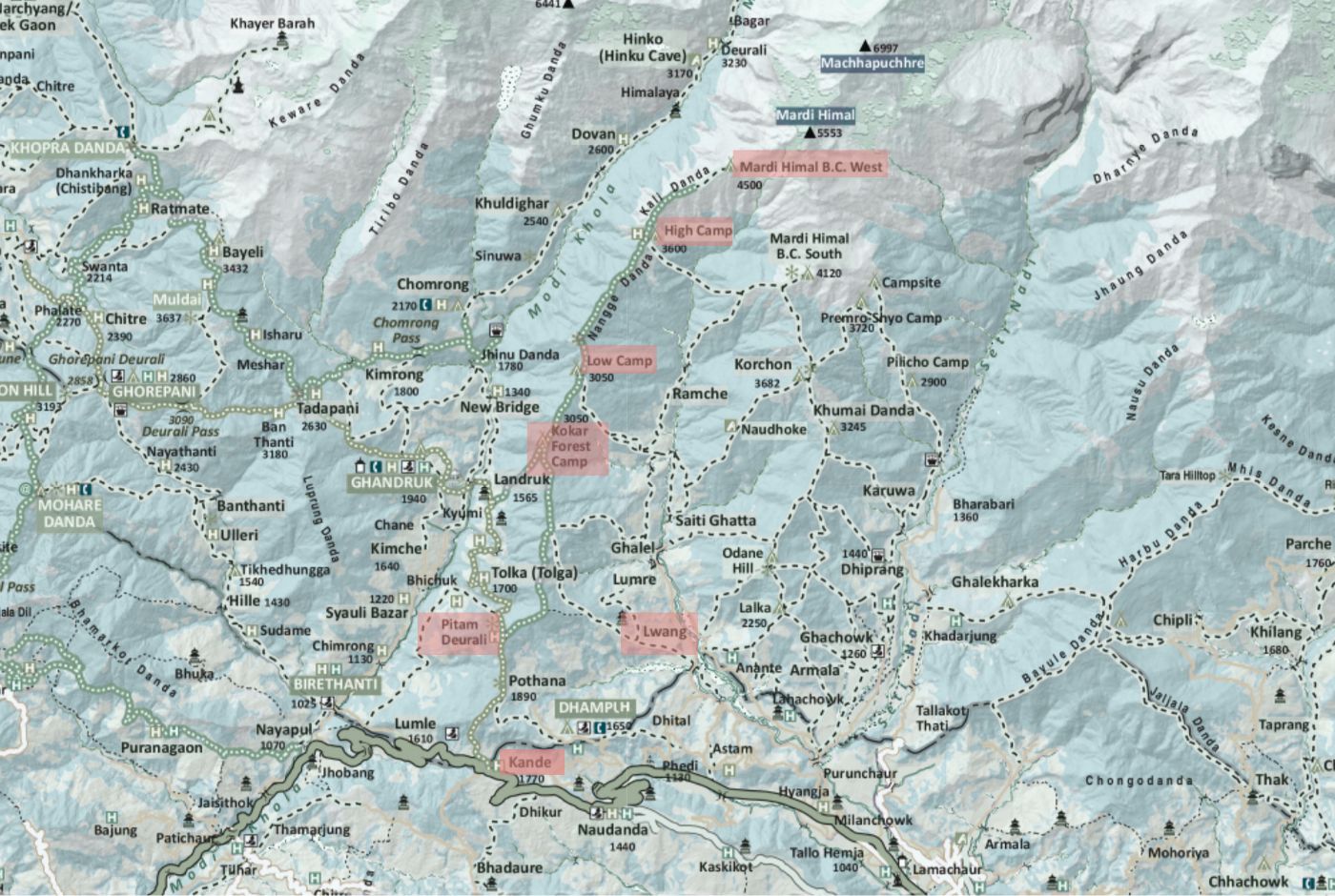
Some trekkers continue beyond to Mardi Himal Base Camp at approximately 4,500 meters, though this depends on weather, trail conditions, time, and guide advice on the day.
The descent usually follows the same ridge trail back to High Camp and Low Camp, then continues to Siding village or Lwang village before the road transfer back to Pokhara. Descending through Siding or Lwang avoids repeating the full ascent route and passes through traditional Gurung communities that feel different from the upper ridge sections.
Our field note: The section from High Camp to Upper Viewpoint is exposed, and the ridge narrows as you gain elevation. In poor visibility or after fresh snow, this section is significantly harder to navigate. Our guides assess conditions at High Camp each morning before recommending whether trekkers should push to Upper Viewpoint, attempt Base Camp, or wait for better weather. Build flexibility into your last two days rather than planning the summit day rigidly.
Mardi Himal Trek Itinerary Options
The Mardi Himal Trek itinerary can be planned across 3, 4, 5, 6, or 7 trekking days depending on fitness level, available time, and preferred pace. A shorter itinerary means longer daily walking hours and less room for weather delays or rest. A longer itinerary gives more flexibility, better acclimatization, and more time to enjoy the trail without feeling pushed.
| Duration | Best For | Notes |
|---|---|---|
| 3 Days | Fit and experienced trekkers | Long walking days, quick altitude gain, limited flexibility for weather or rest. |
| 4 Days | Travelers with limited time | Moderate to fast pace. Manageable with good fitness but still demanding. |
| 5 Days | Most trekkers | Balanced pace with better acclimatization, more enjoyment, and room for adjustment. |
| 6 to 7 Days | Beginners, families, photographers, slower walkers | Relaxed pace, extra rest days, more time at scenic stops like High Camp or Low Camp. |
Typical 5-Day Mardi Himal Trek Itinerary
The 5-day plan is the most balanced option for the majority of trekkers. Walking hours vary depending on your pace, rest breaks, weather, and exact lodge location at each stop.
| Day | Route | Approximate Walking Time |
|---|---|---|
| Day 1 | Drive from Pokhara to Kande or Dhampus, trek to Deurali or Forest Camp | 4 to 6 hours |
| Day 2 | Forest Camp to Low Camp | 4 to 5 hours |
| Day 3 | Low Camp to High Camp | 4 to 5 hours |
| Day 4 | High Camp to Mardi Himal Upper Viewpoint or Base Camp and return to High Camp | 5 to 7 hours |
| Day 5 | High Camp down to Siding or Lwang, then drive to Pokhara | 4 to 6 hours walking plus drive |
Can You Complete the Mardi Himal Trek in 3 Days?
Yes, completing the trek in 3 days is possible, but it is mainly suitable for fit and experienced trekkers. A 3-day plan requires long walking hours each day, quick altitude gain, and very little flexibility for weather delays, rest, or photography.
For most travelers, a 4-day or 5-day plan is the safer and more enjoyable option. The extra days allow better acclimatization, reduce fatigue, and give you a better chance of reaching Upper Viewpoint in clear weather rather than in a rushed or exhausted state.
Our field note: We do not usually recommend the 3-day option for beginners or first-time trekkers. The altitude gain from Pokhara to High Camp over three days is steep relative to the time available, and tired trekkers make worse decisions on the upper trail. If your schedule is tight, a 4-day plan is a much better compromise between time and experience quality.
Mardi Himal Trek Cost
The Mardi Himal Trek cost depends on several factors: the length of the itinerary, transport choices between Kathmandu and Pokhara, hotel standard in Pokhara, guide and porter support, permits, meals, accommodation at each camp, and personal spending on the trail.
With Nepal Hiking Team, the package includes trekking accommodation, three daily meals during the trek (breakfast, lunch, and dinner with tea or coffee), a licensed guide, porter support, ACAP permit arrangement, ground transportation, a duffel bag, a down jacket, and an Annapurna region map.
Personal expenses are paid separately and include hot showers, Wi-Fi, charging fees, bottled or boiled water, extra snacks, additional drinks, small souvenirs, and any personal gear rental. Trekking poles and hiking boots can be rented in Pokhara or Kathmandu before departure.
| Cost Factor | How It Affects the Price |
|---|---|
| Itinerary length | Longer itineraries include extra lodge nights, meals, guide days, and porter days. |
| Transport | Tourist bus, private vehicle, or domestic flight choices affect the total cost. |
| Guide and porter | Licensed guide and porter support add cost but improve safety, comfort, and coordination. |
| Permits | ACAP is required. |
| Food and accommodation | Prices increase with altitude because supplies are carried up by people, jeeps, or mules. |
| Personal expenses | Hot showers, Wi-Fi, charging, water, snacks, and souvenirs are paid separately on the trail. |
Mardi Himal Trek Altitude
The Mardi Himal Trek altitude reaches its highest common trekking point at Mardi Himal Upper Viewpoint, around 4,200 meters. Some trekkers continue toward Mardi Himal Base Camp at approximately 4,500 meters, though this is not guaranteed for every group. Whether you reach Base Camp depends on weather conditions, trail safety, stamina at the time, and your guide's assessment on the day.
High Camp, the highest regular overnight stop, sits at around 3,550 to 3,580 meters. Mardi Himal peak itself reaches 5,587 meters, but this altitude refers to the mountaineering summit and is not part of the normal trekking route.
| Location | Approximate Altitude |
|---|---|
| Pokhara | 822 m |
| Dhampus or Kande area | 1,650 m to 1,770 m |
| Pothana | around 1,890 m |
| Forest Camp | around 2,550 m |
| Low Camp | around 2,970 m to 3,050 m |
| Badal Danda | around 3,210 m |
| High Camp | around 3,550 m to 3,580 m |
| Mardi Himal Upper Viewpoint | around 4,200 m |
| Mardi Himal Base Camp | approximately 4,500 m |
Altitude risk usually termed as Acute Mountain Sickness (AMS) on this trek is generally manageable for most healthy trekkers who move at a steady pace, stay hydrated, dress warmly, and follow guide advice. The trail gains height gradually over several days, which helps with natural acclimatization. If you feel a persistent headache, loss of appetite, dizziness, or unusual fatigue, slow down, rest, and inform your guide. Do not push to gain more altitude when symptoms appear.
Our field note: Many trekkers feel the altitude most on Day 4, when they leave High Camp for Upper Viewpoint. The section gains significant height quickly over a short distance, and the cold, wind, and narrow trail make it more demanding than the days below. Upper Viewpoint is genuinely spectacular and is enough for the vast majority of trekkers. We only recommend continuing to Base Camp when weather is clear, the trekker is feeling strong, and the trail above Upper Viewpoint is confirmed safe on the day.
Mardi Himal Trek Distance in Kilometers
The Mardi Himal Trek distance is usually around 40 to 55 kilometers, depending on the starting point, ending point, and whether you hike only to Upper Viewpoint or continue toward Base Camp. Routes starting from Kande, Dhampus, or Phedi and ending at Siding or Lwang can vary in total walking distance.
Daily distances through the middle sections are moderate, but the stretch from High Camp to Upper Viewpoint and back is the most demanding. The combination of altitude, cold temperatures, wind, and the narrow trail makes the distance feel longer than the kilometers suggest. Do not judge this section by distance alone but by elevation gain, weather conditions, and how you feel on the day.
Mardi Himal Trek Difficulty
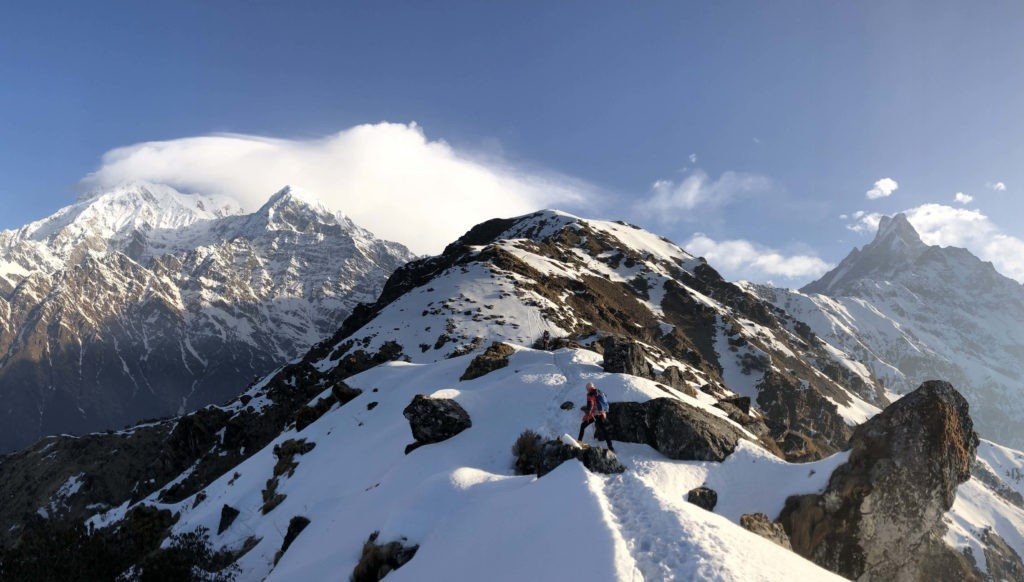
The Mardi Himal Trek difficulty is rated as moderate. The trail does not require any technical climbing or mountaineering skills, but it is not a casual walk either. Trekkers should expect to walk 5 to 7 hours per day on trails that include stone steps, steady uphill forest sections, ridge walking, and a steeper, narrower upper section above High Camp.
Basic fitness matters. Trekkers who can walk for several hours on uphill terrain without stopping frequently will find the route manageable with proper preparation.
The trail is well-marked through most sections, though forested stretches and foggy conditions near High Camp can reduce visibility. In winter, snow above Forest Camp or High Camp can make the trail slippery and physically harder. The stones in shaded sections are often covered with moss, so proper trekking boots and poles are recommended.
Our field note: Trekkers often underestimate the upper section between High Camp and Upper Viewpoint. Below High Camp, the trail feels manageable and the altitude is less noticeable. Above High Camp, the gradient sharpens, the temperature drops, and the wind can be strong. Starting the summit day early, eating a proper breakfast, and carrying warm layers makes a real difference. Our guides usually suggest departing by 5:00 to 6:00 AM to reach the viewpoint before clouds build later in the morning.
Can Beginners Do the Mardi Himal Trek?
Yes, the Mardi Himal Trek is suitable for beginners who prepare properly and choose the right itinerary. Previous high-altitude trekking experience is not required, but basic fitness is important. Beginners should be comfortable walking 5 to 6 hours per day on uphill terrain before starting the trek. Practice walking with a loaded daypack on stairs or hilly terrain in the weeks before departure.
Choosing a 5-day or longer plan makes a significant difference for beginners. A slower itinerary allows better adjustment to altitude, reduces daily fatigue, and gives more time to move through the trail without feeling overwhelmed. A rushed 3-day plan is not suitable for most first-time trekkers.
A licensed guide also makes a real difference for beginners. Guides manage the pace, provide altitude advice, coordinate lodges, and make decisions about weather and trail conditions so that trekkers can focus entirely on the walking.
When is the Best Time for the Mardi Himal Trek?
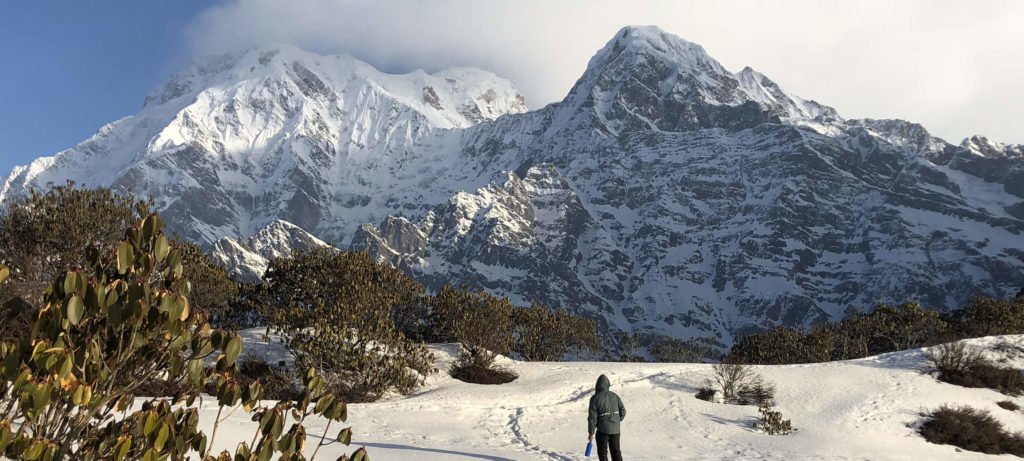
The best time for the Mardi Himal Trek is during spring from March to May and autumn from September to November. Both seasons offer stable weather, comfortable temperatures, and clear mountain views. Each season has its own character on the trail.
| Season | Months | Weather | Trail Conditions | Highlights | Suitability |
|---|---|---|---|---|---|
| Spring | March to May | Mild days, cool nights, mostly clear mornings. | Dry and stable trails with rhododendron blooms from Forest Camp upward. | Colorful forest sections, good views, warmer lower elevations. | Excellent for photography and comfortable trekking. |
| Monsoon | June to August | Warm and humid with frequent rain. | Muddy, slippery trails. Leeches in lower forest sections. Limited views. | Lush green landscapes, very few other trekkers. | Suitable only for those comfortable trekking in rain. |
| Autumn | September to November | Cool, calm, and mostly clear skies. | Dry, well-maintained trails with ideal walking conditions. | Clearest mountain views, stable weather, local harvest season atmosphere. | Best overall season for most trekkers. |
| Winter | December to February | Cold mornings and nights, crisp clear days. | Possible snow above Forest Camp or High Camp. Quieter trail. | Peaceful atmosphere, very few trekkers, clear skies between snowfall periods. | Best for experienced trekkers comfortable with cold and potential snow. |
Our field note: Spring and autumn are both strong seasons but offer different experiences. If flowers and warmer days matter to you, choose March or April when rhododendrons bloom along the Forest Camp and Low Camp sections. If mountain clarity is your priority, October tends to give the most consistently clear views from High Camp and Upper Viewpoint. Winter trekkers get the quietest trails and dramatic snow-covered upper sections, but must be prepared for cold nights and possible route closures above High Camp after heavy snowfall.
Mardi Himal Trek Permits
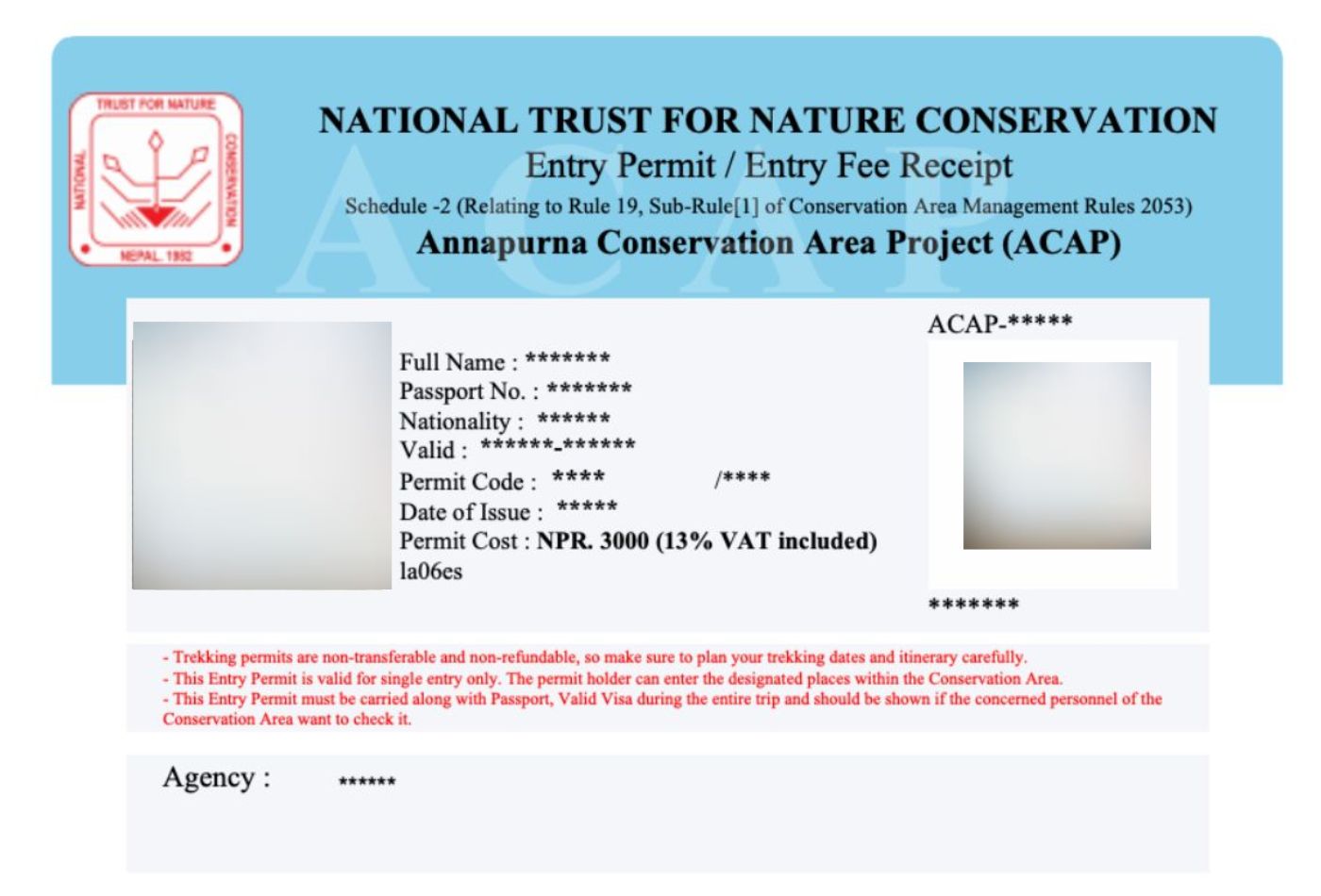
The Annapurna Conservation Area Permit (ACAP) is required for the Mardi Himal Trek because the route passes through the Annapurna Conservation Area. The ACAP is checked at Pothana, after Kande and before Forest Camp. TIMS card requirements should be confirmed before your trek departs because official rules and field enforcement can change.
| Category | Nationality | Permit Fee (NPR) | Notes |
|---|---|---|---|
| SAARC Nationals | India, Bhutan, Bangladesh, Sri Lanka, Maldives, Pakistan, Afghanistan | 1,000 | Valid for one entry into the Annapurna Conservation Area |
| Foreign Nationals | All non-SAARC international trekkers | 3,000 | Valid for one entry into the Annapurna Conservation Area |
| Nepali Citizens | Nepali trekkers | Free | Must carry valid citizenship or government-issued ID |
Documents required for ACAP:
- Valid passport (original and one photocopy)
- Two recent passport-sized photographs
- Completed permit application form (available at the issuing office)
ACAP permits can be obtained at the ACAP Permit Counter in Damside, Pokhara, or at the Tourism Office near Bhrikutimandap in Kathmandu. Both offices operate during government working hours, Sunday to Friday from 9:00 AM to 5:00 PM, excluding public holidays. Fees are payable in Nepali rupees, cash only. Online permits for ACAP can also be applied for at https://epermit.ntnc.org.np/
Food and Drinking Water on the Mardi Himal Trek

Teahouses along the route serve a mix of Nepali and international dishes at all elevations. Dal bhat remains the most reliable choice. This combination of rice, lentil soup, vegetables, and pickles provides steady energy, unlimited refills, and suits long walking days well. Breakfasts usually include porridge, eggs, Tibetan bread, or pancakes with tea or coffee. Soups, noodle dishes, fried rice, and boiled potatoes are common evening options at the higher camps.
As the trail climbs toward High Camp, food choices become simpler because supplies must be carried up by people, jeeps, or mules. Prices also increase with altitude for the same reason. A bowl of soup at High Camp costs more than it does at Forest Camp, and that difference reflects the genuine effort required to bring supplies to that elevation.
For water, the safest options are boiled or filtered water from teahouses. Bottled mineral water is available at lower sections but produces plastic waste and becomes less available and more expensive at altitude. Using a refillable bottle with purification tablets, a UV SteriPen, or a portable filter is a practical approach for the whole route. Tap or spring water along the trail should always be treated before drinking. Hot water is available in most teahouses for a small charge, which many trekkers prefer in the cold mornings and evenings above High Camp.
You can read more in the Mardi Himal Trek Food and Water Guide, which includes the food menu available at High Camp.
Accommodation on the Mardi Himal Trek
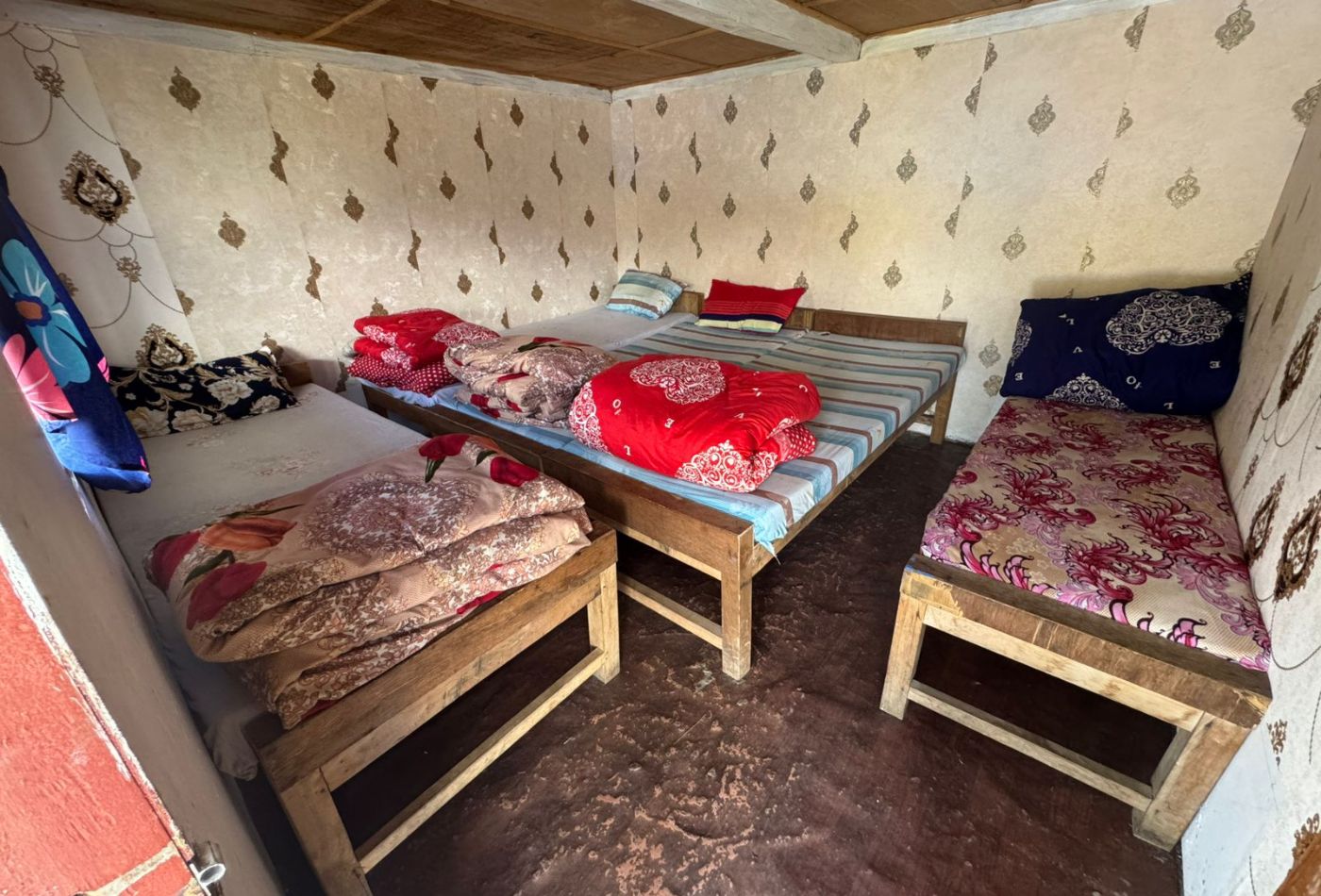
Accommodation on the trek consists of family-run teahouses and lodges at each stop along the route. Rooms are basic and usually furnished with two single beds and warm blankets. As you gain altitude, facilities become simpler. High Camp is the most basic overnight stop, with limited room choices and colder sleeping conditions. Bringing a sleeping bag or using your down jacket as extra insulation is strongly recommended for High Camp nights.
The dining rooms at most teahouses are warmer than the sleeping rooms and serve as the social center of the lodge. Trekkers often spend evenings talking, drying gear, and charging devices in the dining hall. Electricity and Wi-Fi exist at most stops up to High Camp, but both are solar-powered and can be unreliable during cloudy days or poor weather. Charging points are typically in the dining area rather than individual rooms.
When making the final ascent from High Camp to Upper Viewpoint or Base Camp, trekkers leave their main bags at the lodge. Teahouse owners keep belongings safe until you return.
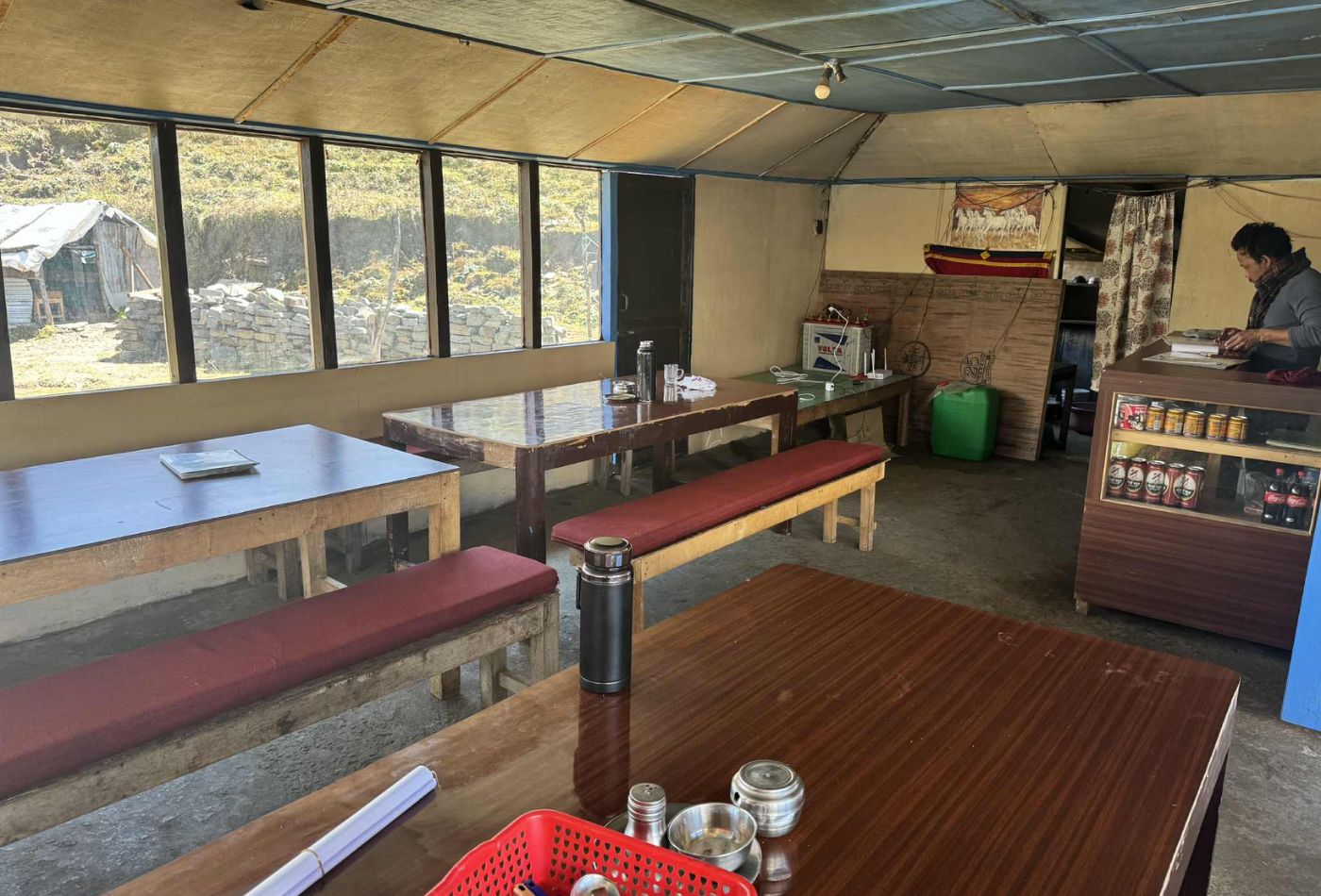
Our field note: High Camp accommodation is functional but genuinely basic. Rooms are small, walls are thin, and temperatures drop sharply at night. Do not arrive at High Camp expecting the same comfort level as Forest Camp or Low Camp. Bring warm layers, a good sleeping bag liner if you have one, and earplugs if you are a light sleeper. The views the following morning make the cold night worthwhile.
Guide, Porter, and Solo Trekking on the Mardi Himal Trek
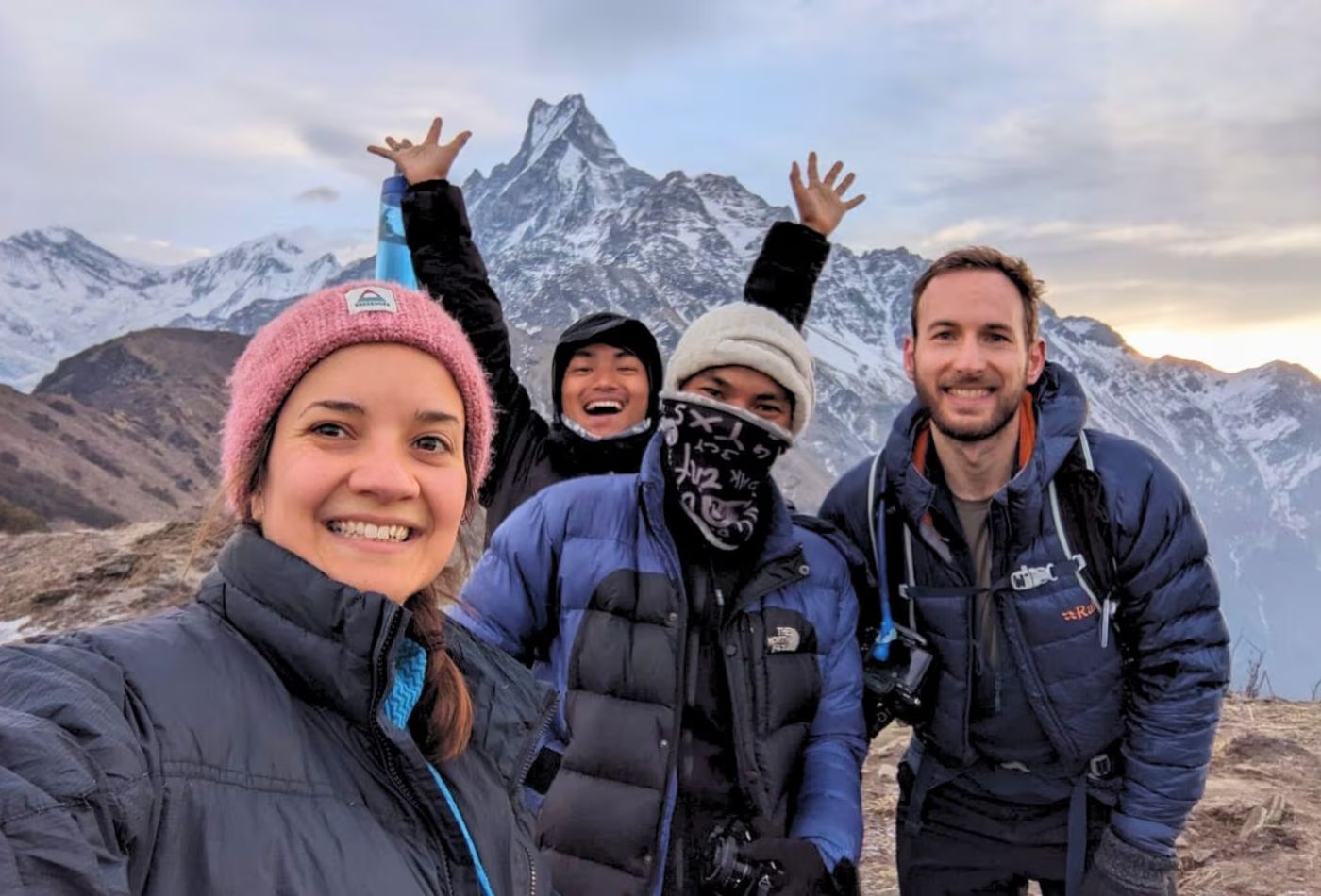
A licensed guide is strongly recommended for the Mardi Himal Trek. Above Low Camp, the trail becomes less forested, more exposed, and harder to follow in fog or poor visibility. Guides help with route finding, pacing decisions, weather assessment, lodge coordination, altitude awareness, and cultural interpretation throughout the trek. They also handle communication with teahouse owners and can arrange assistance quickly if a trekker needs help.
Porters carry your main luggage so you can trek with a light daypack. This reduces physical strain significantly, especially on longer days above 3,000 meters. With Nepal Hiking Team, one porter is assigned for every two trekkers, with up to 12.5 kilograms of luggage per person. Our guides speak English, are licensed by the Nepal government, and are trained in first aid and altitude management.
Regarding solo trekking, the Mardi Himal route has historically been accessible to independent trekkers. However, current guide requirements and TIMS rules should be confirmed before departure because regulations can change. We strongly recommend hiring a guide regardless of permit rules for safety reasons above Low Camp and during any period of poor visibility or uncertain weather.
Our field note: The section above Low Camp is where a guide's knowledge becomes most valuable. Trail junctions are less obvious, weather can change quickly, and the upper ridge in fog looks very different from how it appears in clear conditions. Trekkers without guides have turned back unnecessarily or made wrong route choices near High Camp. A licensed guide costs a fraction of your total trip budget and adds genuine safety and clarity to the most demanding part of the route.
Money, Wi-Fi, Showers, and Toilets on the Mardi Himal Trek
Carry Nepali rupees for the entire trek because there are no ATMs on the trail. Withdraw or exchange money in Kathmandu or Pokhara before you start. Digital payments and mobile banking are unreliable in high-altitude areas.
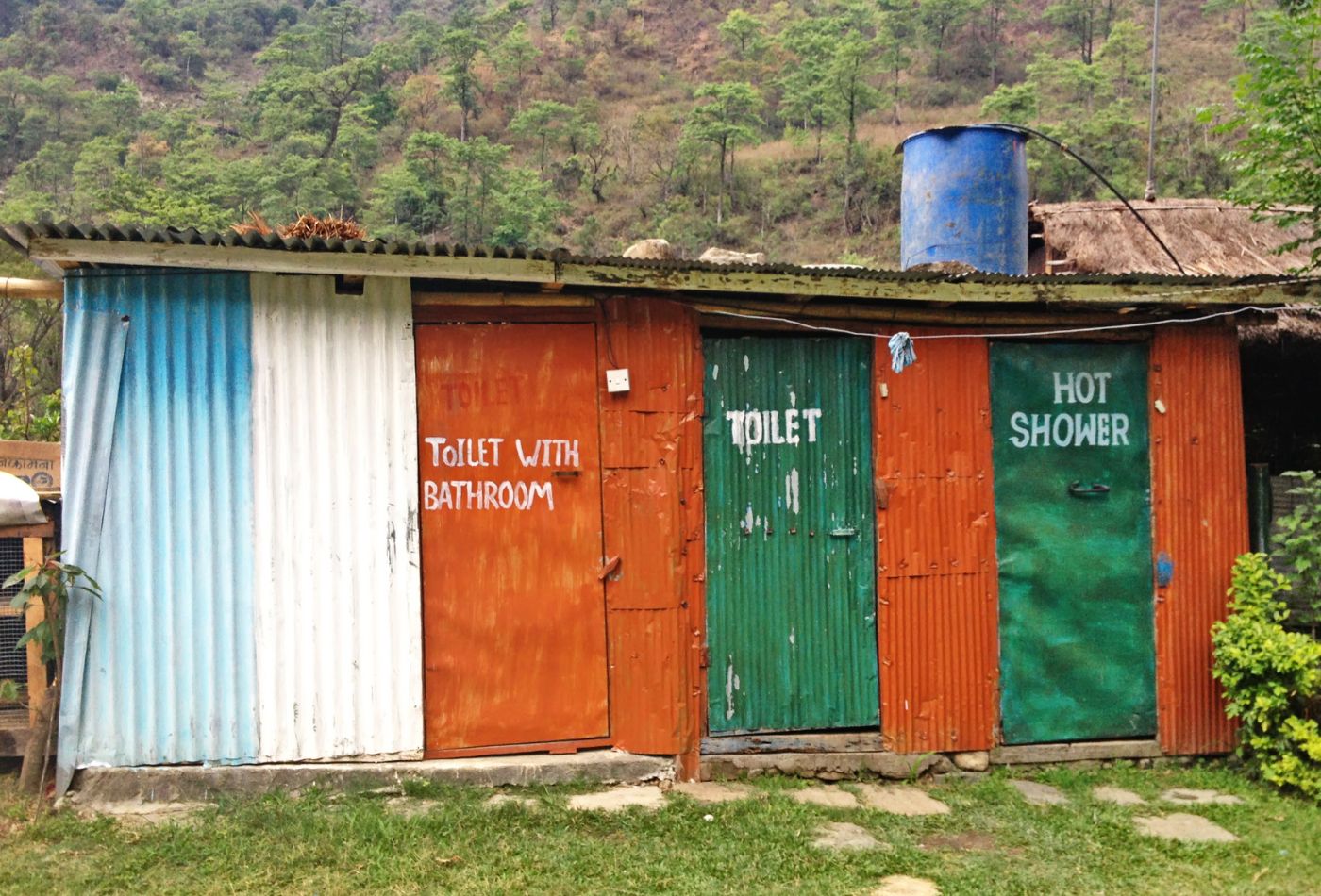
Hot showers are available at most teahouses up to High Camp and usually cost between 300 and 700 NPR depending on altitude and the lodge's facilities. Water is heated by gas or solar systems. Gas-heated showers tend to be more reliable at higher elevations where sunlight can be limited.
Wi-Fi and device charging are available at most stops up to High Camp, but both are often limited, slow, or unreliable during cloudy weather. Charging usually happens in the dining hall. Expect to pay a small fee. Do not rely on Wi-Fi for important communications during the trek.
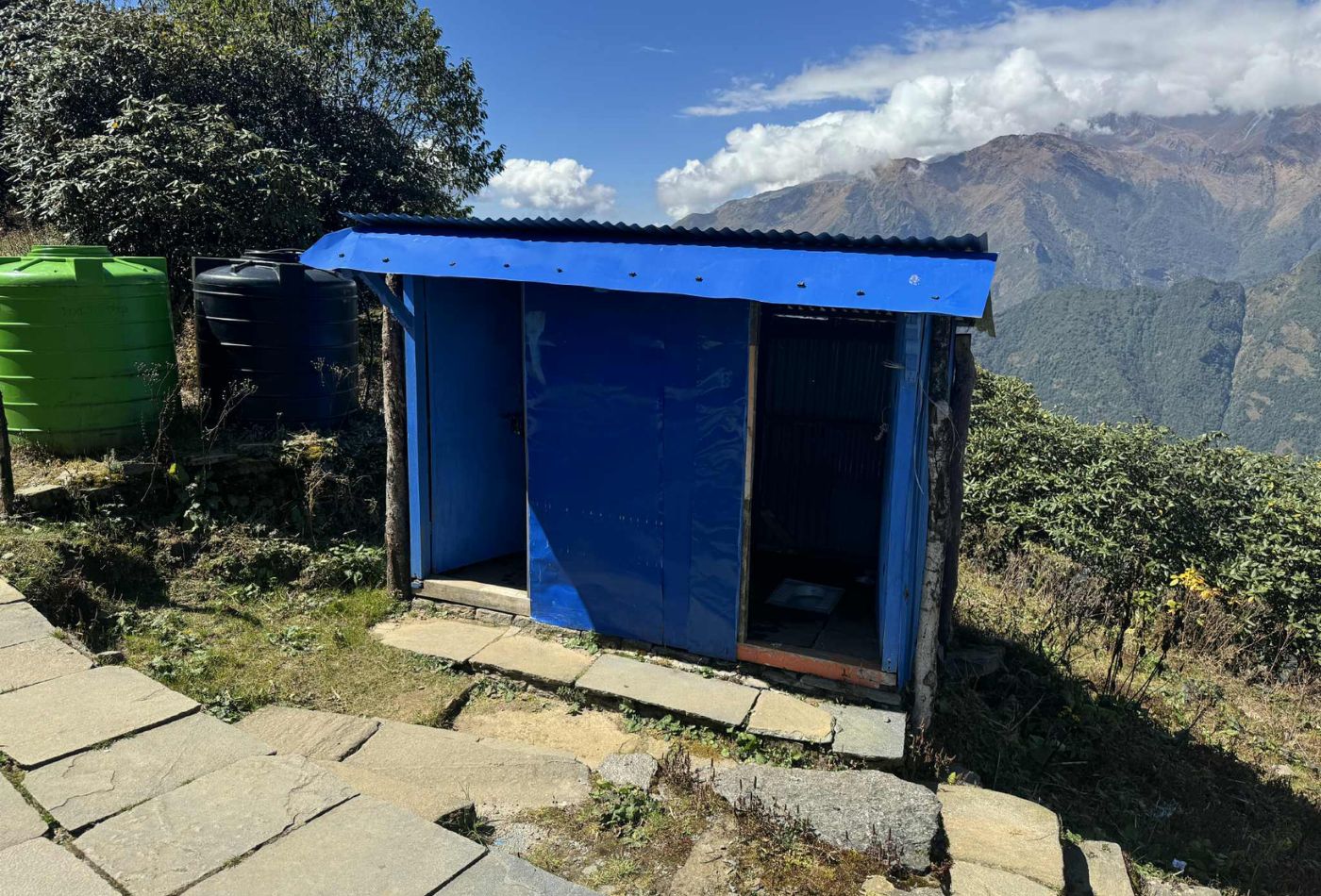
Most teahouses provide squat toilets outside the main accommodation area. Western-style washrooms are uncommon on this route. Toilet and washing facilities become more basic as you gain altitude. Carry personal toiletries, wet wipes, hand sanitizer, and toilet paper for the duration of the trek.
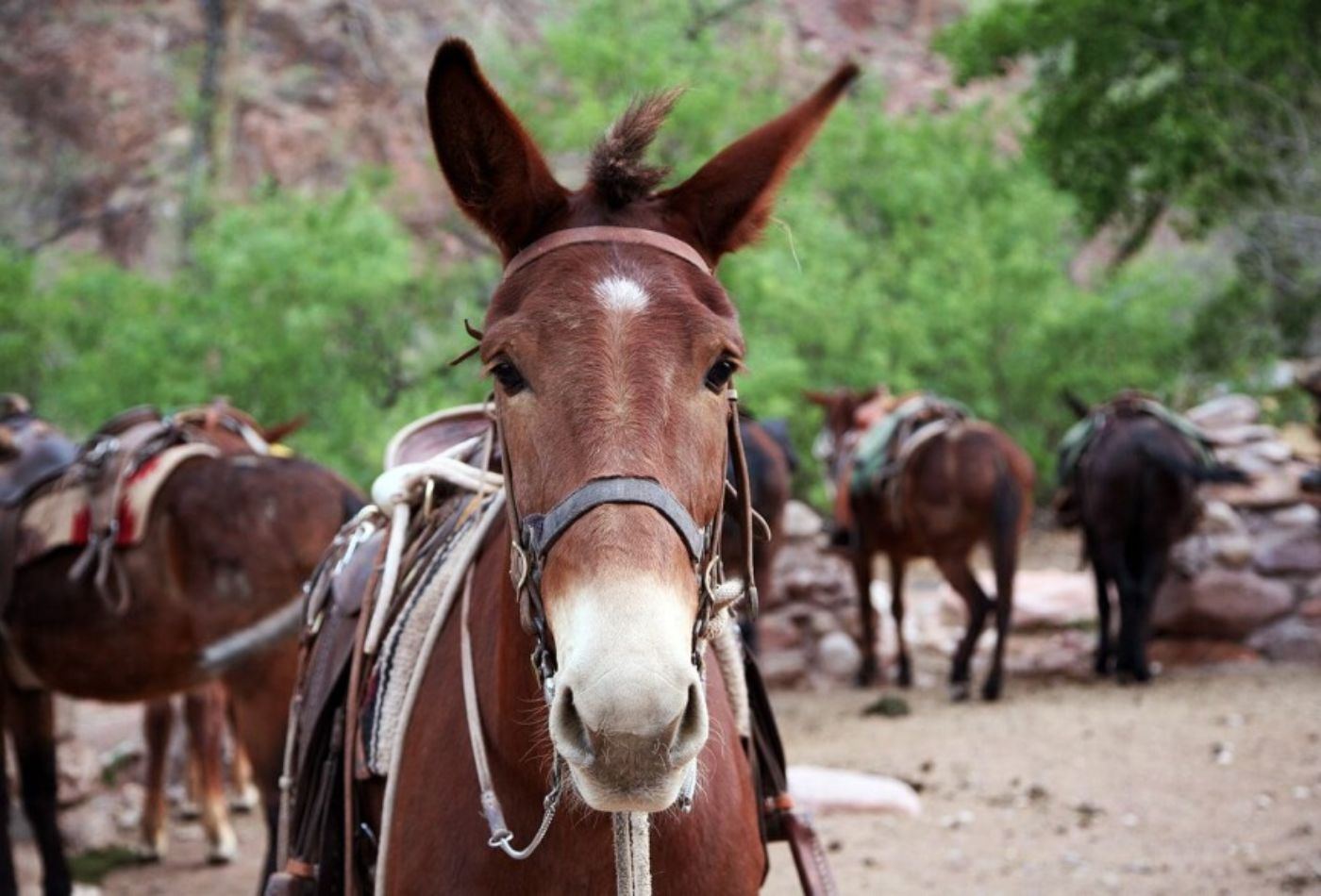
Encountering Mules on the Mardi Himal Trek
Mules are a regular presence on the trail, particularly on the lower and middle sections. Known locally as Khachar, mules carry goods and supplies to remote teahouses and villages that are otherwise difficult to reach by vehicle. They typically travel in groups of five to eight, guided by a herder, and can often be heard before they are seen because of the bells around their necks.
When you encounter mules on a narrow section of trail, step to the inner side of the path and let them pass. They are generally calm and well-trained but can react if startled.
How to Prepare for the Mardi Himal Trek
Trekkers should be able to walk 5 to 7 hours per day before starting. Practice uphill walking, stairs, or day hikes with a loaded pack in the weeks before your trip. You do not need to be an athlete, but consistent aerobic activity in the lead-up period makes the first few days on the trail much more comfortable.
Pack layers because temperature varies significantly between Pokhara and High Camp. A waterproof jacket, warm hat, gloves, sunglasses, sunscreen, trekking poles, and sturdy boots with ankle support are essential. Carry a refillable water bottle and any personal medication including blister care, pain relief, antidiarrheal medicine, and altitude medication if your doctor has recommended it.
Preparing of any trek in Nepal is crucial; get more insights for physical and mental preparation for Nepal Trekking in our blog.
Do not overpack. Your main bag will be carried by a porter if you trek with Nepal Hiking Team. Keep your daypack light with only what you need during the walking day: water, snacks, rain gear, a warm layer, sun protection, camera, and personal items. Nepal Hiking Team provides a duffel bag, down jacket, and Annapurna region map for booked trekkers.
Travel Insurance for the Mardi Himal Trek
Travel insurance is essential for the Mardi Himal Trek. Purchase a policy from a reliable insurance provider before your trip. The policy must cover trekking at altitude. Since the route reaches approximately 4,500 meters near Mardi Himal Base Camp, choose a policy that covers you to at least 4,500 meters.
Your insurance should include:
- High-altitude medical coverage up to at least 4,500 meters
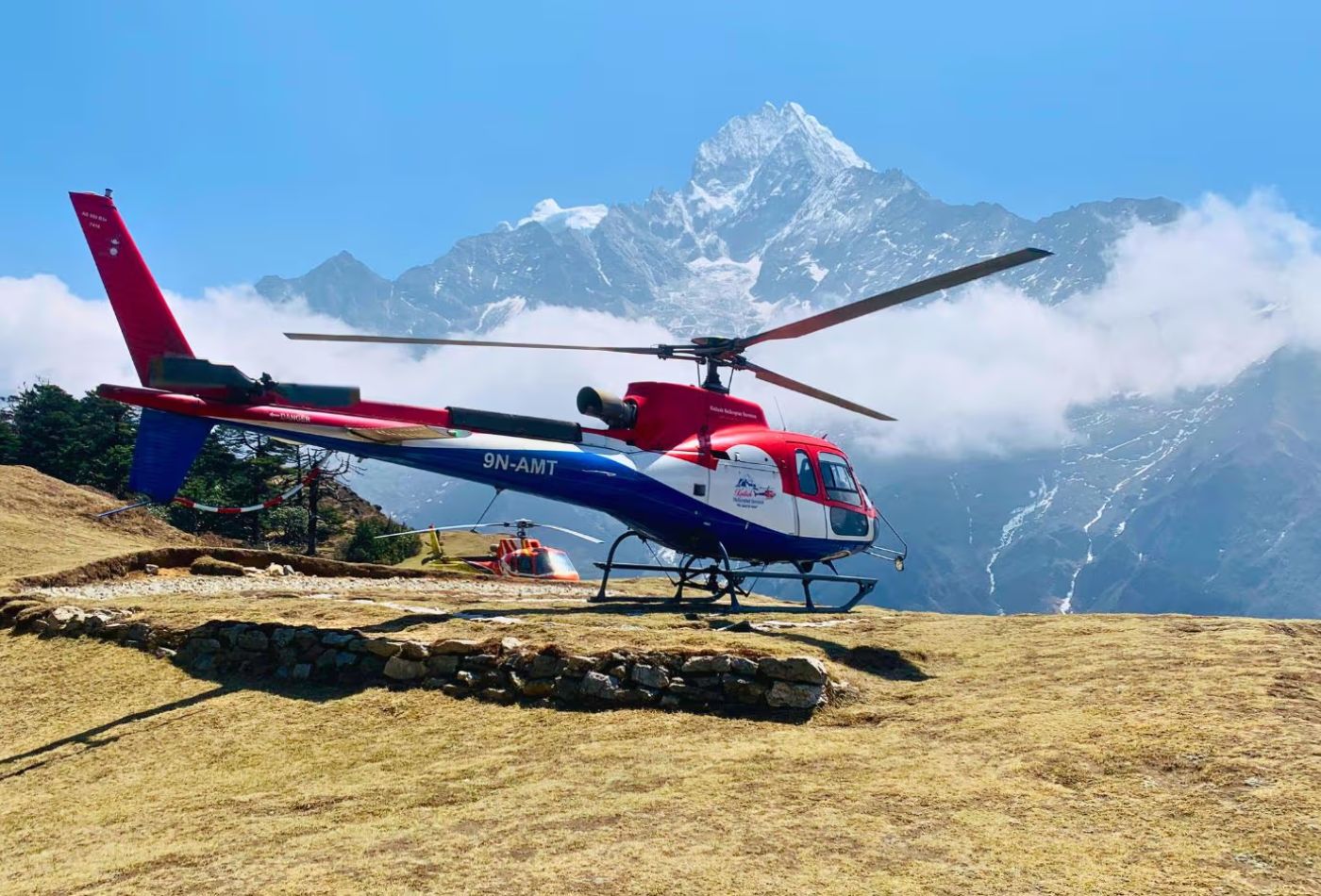
- Emergency helicopter evacuation for altitude sickness or medical emergencies
- Medical treatment and hospitalization costs in Nepal
- Trip cancellation or interruption cover
- Lost or damaged baggage coverage
Nepal Hiking Team strongly recommends that all trekkers carry valid insurance before the trek begins. Helicopter evacuation from the upper sections of the route is expensive without coverage. A proper policy significantly reduces financial risk and gives you access to faster support if an emergency evacuation becomes necessary.
Some of the reliable travel insurance providers for Mardi Himal Trek is detailed in our blog: Travel Insurance Providers for Nepal Trekking.
Trekking Alternatives to the Mardi Himal Trek
If you are considering other options in the Annapurna region, the following treks offer different lengths, trail characters, and viewpoints. Each has its own strengths depending on your time, fitness, and what you want from the trek.
Annapurna Base Camp Trek
The Annapurna Base Camp Trek is a longer and more established route that takes trekkers through Gurung and Magar villages, rhododendron forests, and the Modi Khola valley before reaching Annapurna Base Camp at 4,130 meters. It offers a 360-degree view of major Annapurna peaks including Machhapuchhre and Hiunchuli. The route is well-serviced with teahouses throughout and suits trekkers who want a fuller Annapurna circuit experience.
Ghorepani Poon Hill Trek
The Ghorepani Poon Hill Trek is one of the most accessible options in the Annapurna region, popular for its sunrise views over the Annapurna and Dhaulagiri ranges from Poon Hill at 3,210 meters. The route passes through rhododendron forests and traditional Gurung villages and is suitable for beginners. It takes 4 to 5 days from Pokhara and is less physically demanding than the Mardi Himal Trek.
Mohare Danda Trek
The Mohare Danda Trek offers quieter trails than Poon Hill while providing equally strong views of the Annapurna and Dhaulagiri ranges from its highest point at 3,313 meters. The route supports community-based tourism, with local families hosting trekkers and offering a close look at rural mountain life. It is a good option for those who want fewer crowds and a more cultural trekking experience.
Mardi Himal Trek Route Variations and Extensions
Several route variations exist for the Mardi Himal Trek, giving trekkers flexibility to customize their start and end points or combine the route with other treks in the Annapurna region. All variations begin with a drive from Pokhara to the chosen trailhead.
Starting from Dhampus: A classic approach that begins in a traditional hillside village about 45 minutes to an hour from Pokhara. The trail climbs through Pothana and Deurali before joining the main Mardi Himal route.
Starting from Kande or Phedi: This approach passes through Australian Camp before reconnecting with the route at Deurali. It adds a viewpoint stop early in the trek and is popular with trekkers starting from Pokhara.
Mardi Himal with Annapurna Base Camp extension: After reaching Upper Viewpoint or Mardi Himal Base Camp, trekkers descend via High Camp and Low Camp to Landruk, then connect through Sinuwa toward Annapurna Base Camp. This combination suits those with 10 or more trekking days available.
Mardi Himal with Ghorepani Poon Hill extension: The trek can be linked with Poon Hill by approaching through Gurung Village: Ghandruk and Tadapani before connecting to the Mardi Himal route at Landruk. This creates a longer circuit with strong viewpoints at both ends.
Our field note: In our standard 9-day package, trekkers travel between Kathmandu and Pokhara by tourist bus. A domestic flight upgrade between Kathmandu and Pokhara can be arranged on request. The upgrade price is currently USD 115 per flight per person. The trek begins from Dhampus after a short drive from Pokhara, passes through Pothana where the ACAP is checked, and continues to Pitham Deurali at the start of the dedicated Mardi Himal trail. The route ascends through rhododendron forest to High Camp at around 3,550 meters, then to Upper Viewpoint the following morning. Descent follows through Badal Danda and Low Camp to Siding village, where trekkers take a private four-wheel jeep back to Pokhara. An optional extension to Lwang village is available for those who want more time in the Gurung communities before the return journey.
Final Advice from Nepal Hiking Team
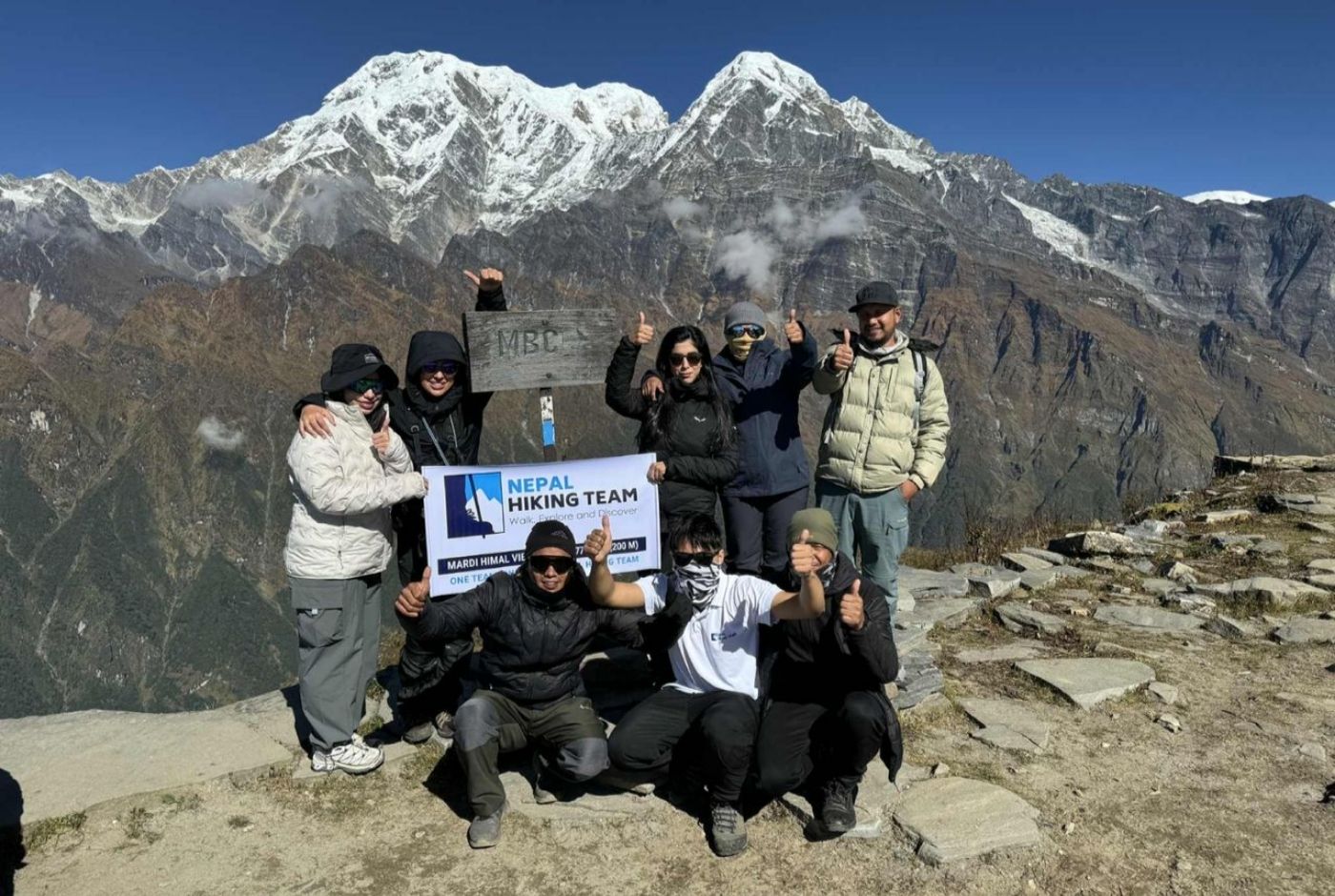
The Mardi Himal Trek is well suited for travelers who want a short Annapurna trek with close mountain views, quieter trails, and a manageable but worthwhile route. It does not require previous high-altitude experience, but it does require honest preparation, the right itinerary length, and a willingness to follow guide advice on the upper sections.
Nepal Hiking Team arranges the Mardi Himal Trek with licensed guides, porter support, permit handling, ground transportation, teahouse coordination, and flexible pacing based on weather and each group's comfort. From our experience arranging this trek, the groups that enjoy it most are those who choose a 5-day plan, take the upper section seriously, and stay open to adjusting the summit day based on what the weather and their bodies are telling them.
If you are planning the Mardi Himal Trek, Nepal Hiking Team can help you choose the right itinerary length, understand the trail conditions, and prepare properly for the route. We will guide you through the options based on your time, fitness, and preferred pace.
Post a Comment