
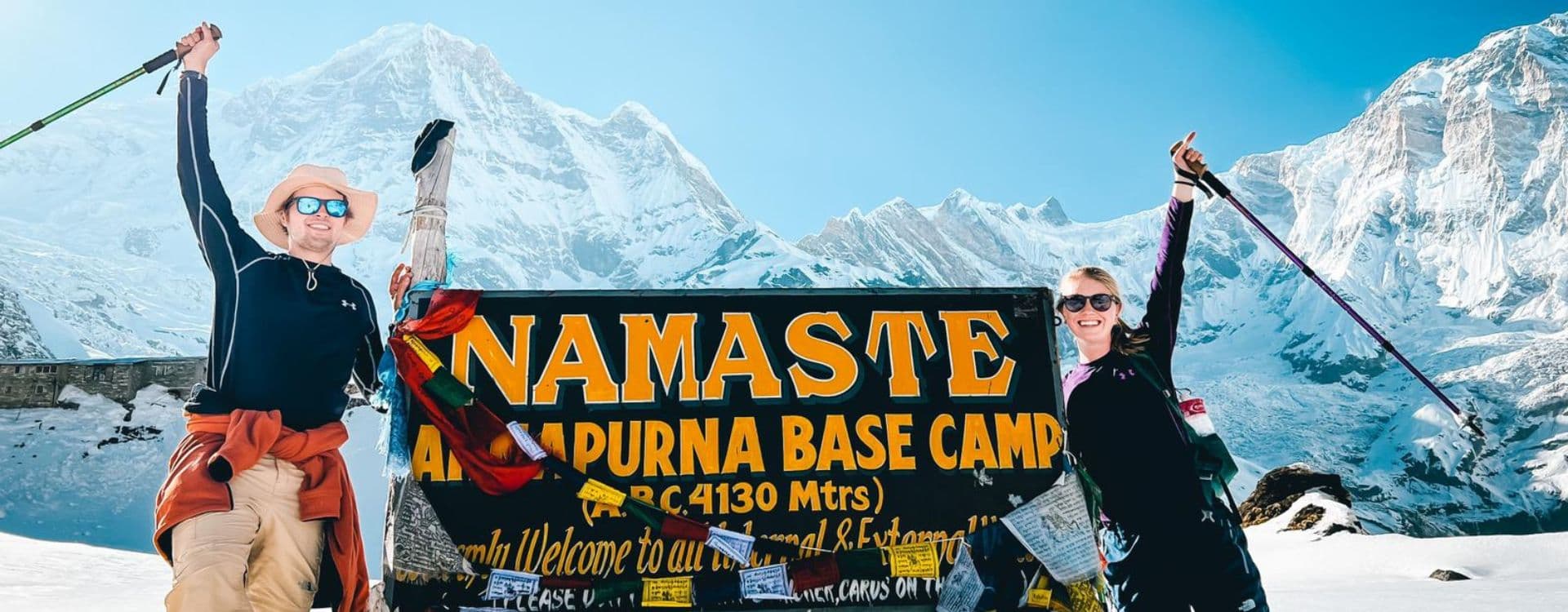
The Annapurna Base Camp Trek moves gradually through Nepal's most diverse mountain terrain. It starts in Pokhara, where the calm setting of Phewa Lake contrasts with the rugged terrain waiting ahead. In this trail, you’ll get to explore working villages like Birethanti and Ulleri, then continue to scenic stops like Ghorepani and Poon Hill, where sunrise views show you just how massive the Annapurna range really is. As you climb higher, the forests give way, leading to Machhapuchhre Base Camp and the dramatic setting of the Annapurna Sanctuary.
While trekking with us at Nepal Hiking Team, you’ll get to experience these places with the attention trekkers deserve. Our well-planned itineraries allow time for you to explore cultural centres like Chhomrong, enjoy quieter forest sections near Tadapani, and relax at Jhinu Danda Hot Springs after long days on the trail. With experienced local guides and well-paced routes, no critical viewpoint or landmark gets rushed or overlooked. The focus is on fully experiencing the trail, not just reaching the destination.
From Villages to Peaks: What to Expect Along the Trail
The Annapurna Base Camp trail unfolds gradually, revealing new landscapes with each elevation change. From flowing rivers and forested paths to towering peaks, the journey runs through a rich mix of natural elements that give the ABC trek its character.
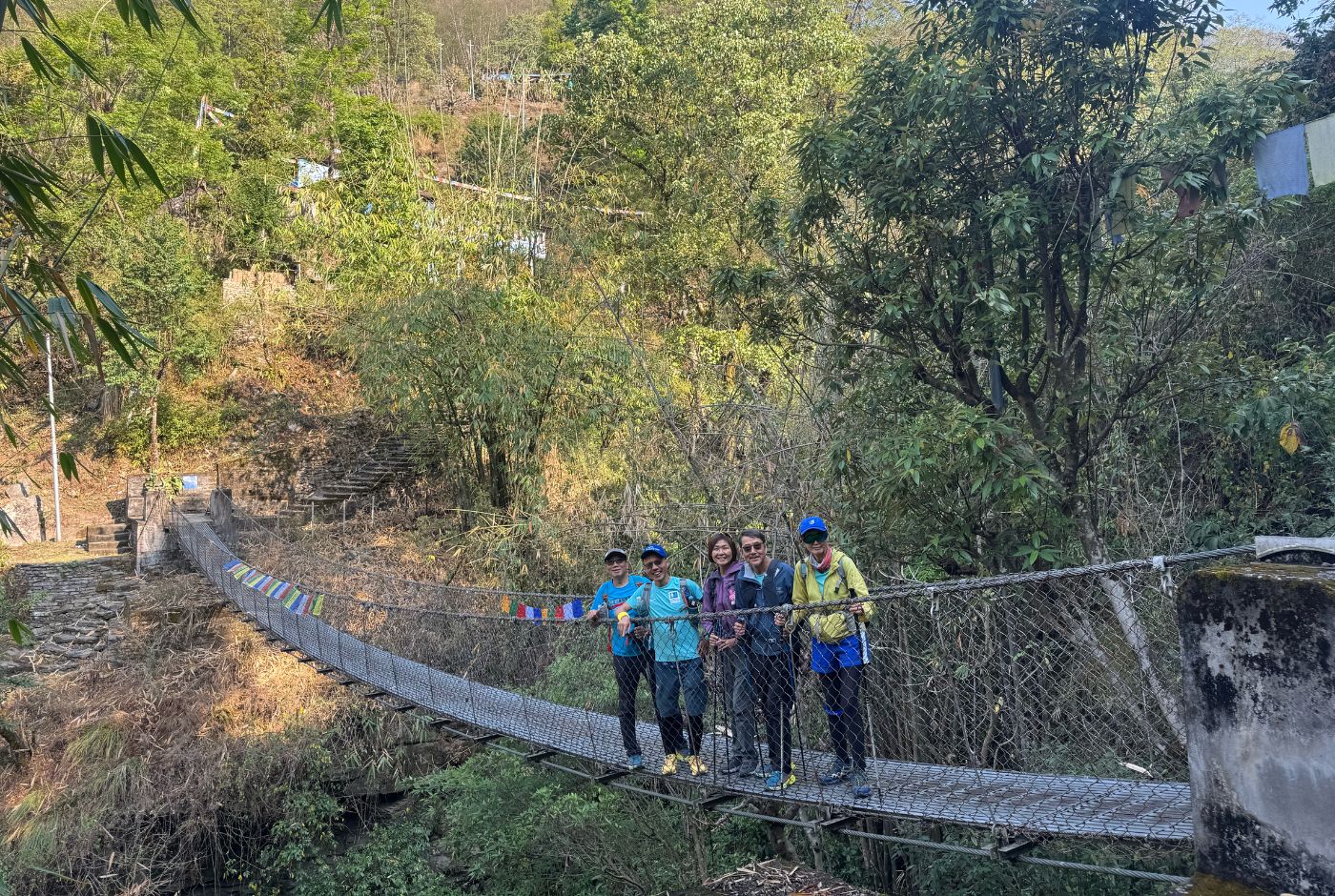
- Rivers and river valleys: The ABC trek often follows the Modi Khola, carving a clear path through the valley. Crossing suspension bridges near Birethanti, Chhomrong, and Jhinu Danda adds a quiet thrill, with the river rushing far below.
- Terraced farmland and hillside settlements: In the lower sections, you’ll get to see carefully layered fields in villages such as Ulleri, Ghorepani, and Ghandruk. These landscapes will feel personal, shaped by generations who've worked the slopes and built stone homes that blend naturally into the hillsides.
- Stone staircases and long climbs: Endless stone steps define some of the toughest parts of the route, particularly the climb to Ulleri and the climb up and down around Chhomrong. They test your legs, but each step also brings a quiet sense of achievement as the valley floor slowly drops away.
- Forest trails and changing vegetation: Between Ghorepani, Tadapani, and Hinku, the trail moves through dense forests of rhododendron, oak, and pine.
- High ridges and open viewpoints: Places like Poon Hill offer wide, open views of Dhaulagiri, Annapurna I, Nilgiri, and Machhapuchhre. Standing on these ridges at sunrise brings a sense of scale that's hard to put into words.
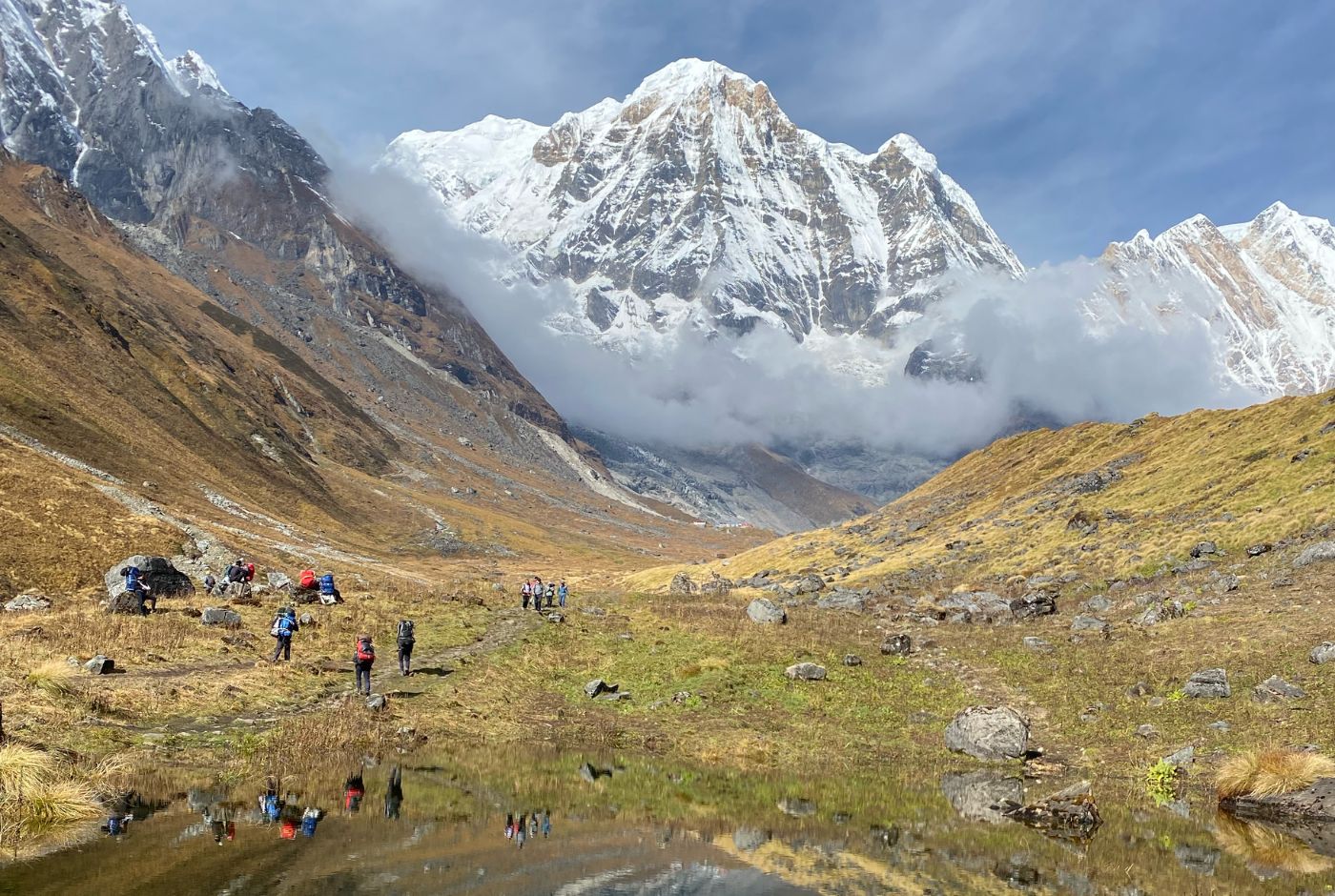
- Narrow valleys: Beyond Bamboo, Dovan, and Deurali, you’ll see a landscape that becomes quieter and more severe. The trees thin out, the air cools, and the trail follows narrow corridors shaped by glaciers.
- Mountain base camps: Machhapuchhre Base Camp (3,700 m) opens into a broad alpine bowl beneath the sacred peak of Machhapuchhre, creating a feeling of space and stillness. A little higher, Annapurna Base Camp (4,130 m) sits enclosed by the towering faces of Annapurna I, Annapurna South, Hiunchuli, and Gangapurna. You're surrounded by rock, ice, and sky.
- Glaciers and high-altitude silence: Near the base camp, glacier moraines, icefalls, and frozen walls are everywhere.
Notable Attractions Along the Annapurna Base Camp Trail
The Annapurna Base Camp Trek unfolds gradually, with each stop showing you a different side of the Himalayas. Some places offer mountain views; others draw you into village life; and the higher sections strip everything down to ice, rock, and silence.
The route stays focused on the core Annapurna Sanctuary experience. This lets you fully absorb the changing scenery along the Modi Khola valley.
Pokhara and Phewa Lake
Pokhara is in the foothills of the Annapurna Range and serves as the gateway to treks. From the lakeside, you can see Annapurna South, Machhapuchhre (Fishtail), and Lamjung Himal on clear mornings.
Phewa Lake reflects these peaks when the water's calm, creating a peaceful start to the journey ahead. The relaxed atmosphere here builds anticipation, with the mountains close yet distant enough to admire.
Jeep Drive to Hile Trailhead
The drive to Hile moves through river valleys, terraced farmland, and hillside settlements. Along the way, the Modi Khola and Bhurungdi Khola shape the landscape, cutting deep channels through the hills.
This section gradually introduces you to rural Nepal before the walking starts. It's popular for saving time on treks while still offering scenic variety and a glimpse into village life outside major towns.
Ulleri Stone Stairs and Hillside Village
Ulleri sits on a steep hillside, and you reach it by climbing around 3,284 stone steps. From the village, views open toward Annapurna South and Hiunchuli on clear days.
The climb's physically demanding, but you’ll experience authentic and grounded fields, with stone houses and cultivated fields lining the trail. People remember Ulleri as a place that challenges your legs while rewarding your spirit.
Ghorepani Village
Ghorepani sits at approximately 2,860 meters, and you reach it after a long series of stone steps that climb through dense rhododendron forests. From Ulleri to Ghorepani, you're climbing roughly 3,767 stone steps, making this one of the most physically demanding sections of the trek.
The village itself feels enclosed by forest, often shrouded in mist, which gives it a quiet, slightly mysterious feel. Ghorepani is popular primarily as a gateway to Poon Hill, but it also offers a strong sense of rest and recovery after a strenuous climb.
Poon Hill Sunrise Viewpoint
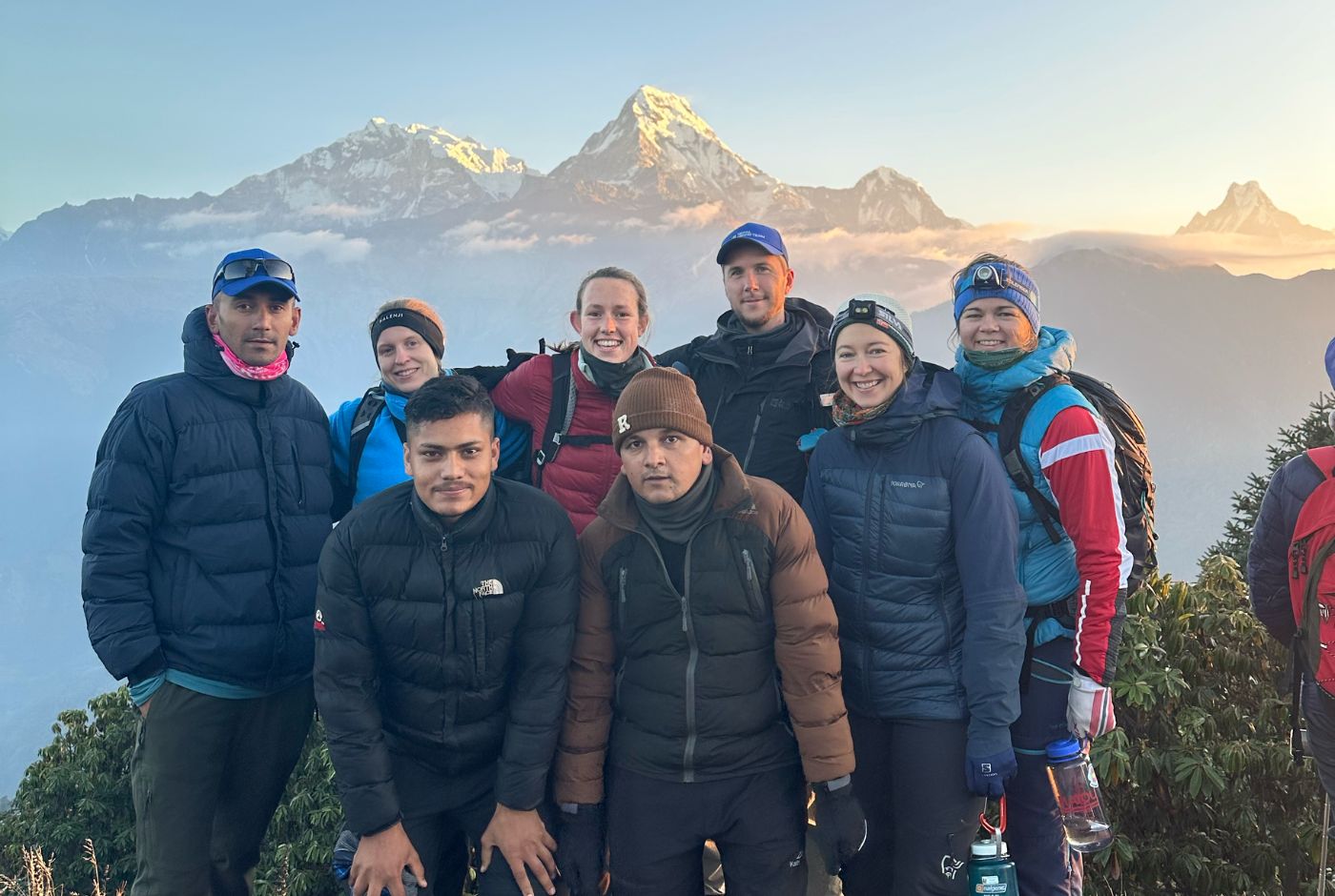
Poon Hill sits above Ghorepani at 3,210 meters, and you reach it by an early morning climb of about 300 stone steps. From this viewpoint, you're rewarded with one of the most expansive mountain panoramas on the trek.
You can see Dhaulagiri (8,167 m), Annapurna I, Annapurna South, Machhapuchhre, Nilgiri, Tukuche Peak, and Lamjung Himal. The slow shift of light across these mountains at sunrise makes this spot unforgettable and explains why it's one of the most photographed viewpoints in Nepal.
Tadapani and Hinku Forest Trail
Leaving Ghorepani, the trail to Tadapani moves through thick rhododendron, oak, and pine forests. The path features steady climbs up and down rather than long staircases, allowing you to settle into a comfortable rhythm.
Along the way, occasional clearings reveal Annapurna South and Machhapuchhre peeking above the forest. Tadapani is located on a ridge at approximately 2,630 meters and offers a calm, remote setting, with cool air and quiet evenings surrounded by trees.
Chuile (Chuile Ridge and Village)
Chuile is a small ridge settlement you reach after a series of forest trails. The climb here is gentler, but the ridge position provides surprisingly open views.
From Chuile, you can see Annapurna South, Hiunchuli, and Machhapuchhre more clearly, often glowing in late-afternoon light. What makes it special is its peaceful setting, where you slow down and truly feel the transition from forest to high-valley terrain.
Ghandruk Gurung Village
Ghandruk is one of the most extensive and most culturally rich villages on the Annapurna Base Camp route. Stone staircases wind through the village, connecting traditional Gurung homes, small museums, and viewpoints.
From Ghandruk, you get broad views of Annapurna South, Hiunchuli, Machhapuchhre, and Gangapurna. The village is popular not just for scenery but also for cultural interaction, offering a warm, lived-in feel that contrasts with the harsher landscapes higher up.
Chhomrong Ridge Viewpoint
Chhomrong is perched dramatically above the Modi Khola valley and requires a steep descent, followed by a long climb of roughly 2,500–3,000 stone steps to reach the village. This section tests your endurance, but the reward is worth it.
From Chhomrong, you get close, frontal views of Annapurna South and Machhapuchhre, making the mountains feel suddenly near. The village marks a mental shift, as it feels like the last significant settlement before entering the high sanctuary.
Jhinu Danda Hot Springs and Suspension Bridge
Jhinu Danda is reached after a steep descent from Chhomrong, followed by a steep ascent on the return journey. The hot springs are near Modi Khola and can be reached by walking several hundred steps to the riverbank.
You soak in natural pools while listening to the river flow, easing tired muscles after long walking days. This stop is popular because it offers rare physical relief and a moment of comfort in an otherwise demanding trek.
Machhapuchhre Base Camp (MBC)
Machhapuchhre Base Camp is at roughly 3,700 meters and marks the entry into the Annapurna Sanctuary. The landscape here opens dramatically, with fewer trees and broad glacial valleys.
Machhapuchhre (Fishtail) rises sharply above the camp, joined by views of Annapurna South, Hiunchuli, and Gangapurna. MBC feels raw and expansive, giving you your first authentic taste of high-altitude Himalayan terrain.
Annapurna Base Camp
Annapurna Base Camp is located at 4,130 meters, surrounded by towering peaks. From the camp, you see Annapurna I, Annapurna South, Hiunchuli, Gangapurna, Tent Peak, and Annapurna III encircling the valley.
The ground is shaped by glacial moraine, ice walls, and the Annapurna I north face icefall, creating a stark yet stunning setting. This place feels vast and silent, often leaving you with a deep sense of reflection and accomplishment.
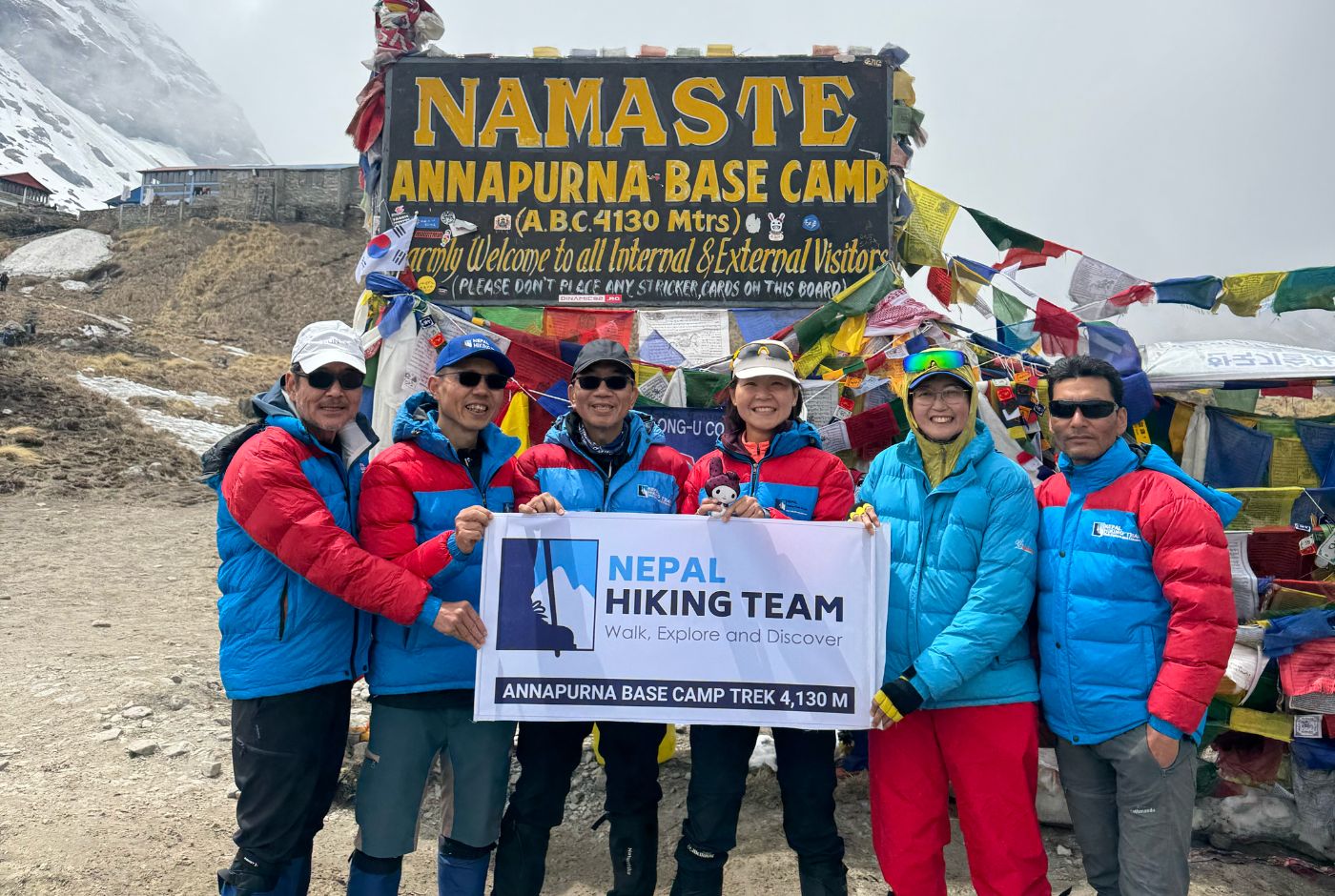
- Annapurna Base Camp (4,130m) Trek with Nepal Hiking Team
Conclusion: Why Annapurna Base Camp Leaves a Lasting Impression?
The Annapurna Base Camp Trek provides you with many sides of the Himalayas within a single, well-connected route. It moves from settled valleys and cultivated hills into dense forests, narrow glacial corridors, and finally the Annapurna Sanctuary.
Each section contributes something distinct, whether it's cultural insight, physical challenge, or quiet moments shaped by altitude and terrain. By the time the trail reaches its highest point, the journey feels complete rather than sudden, with every stage adding context to what you see at the end.
At Nepal Hiking Team, we carefully plan to ensure none of these key experiences are missed or rushed. Daily walking distances are set to allow time at major viewpoints, meaningful stops in villages, and proper rest at higher elevations.
The route is designed to highlight both the well-known landmarks and the subtle shifts between them. This thoughtful approach helps you experience the Annapurna Base Camp Trek as a continuous journey, where each location gets the time and attention it deserves.
Post a Comment