17 Days
Check Our Risk-Free Booking Policy View Details


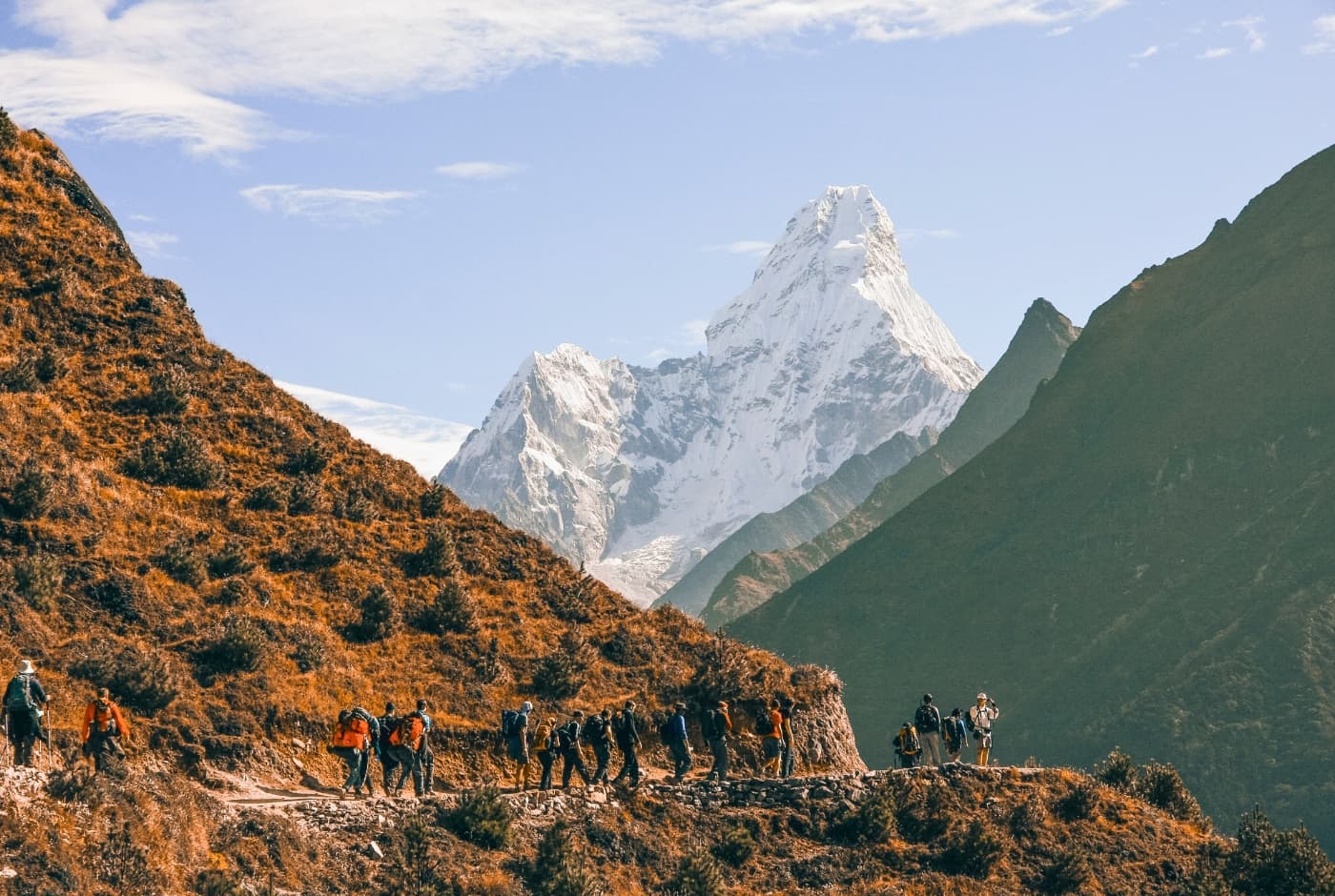


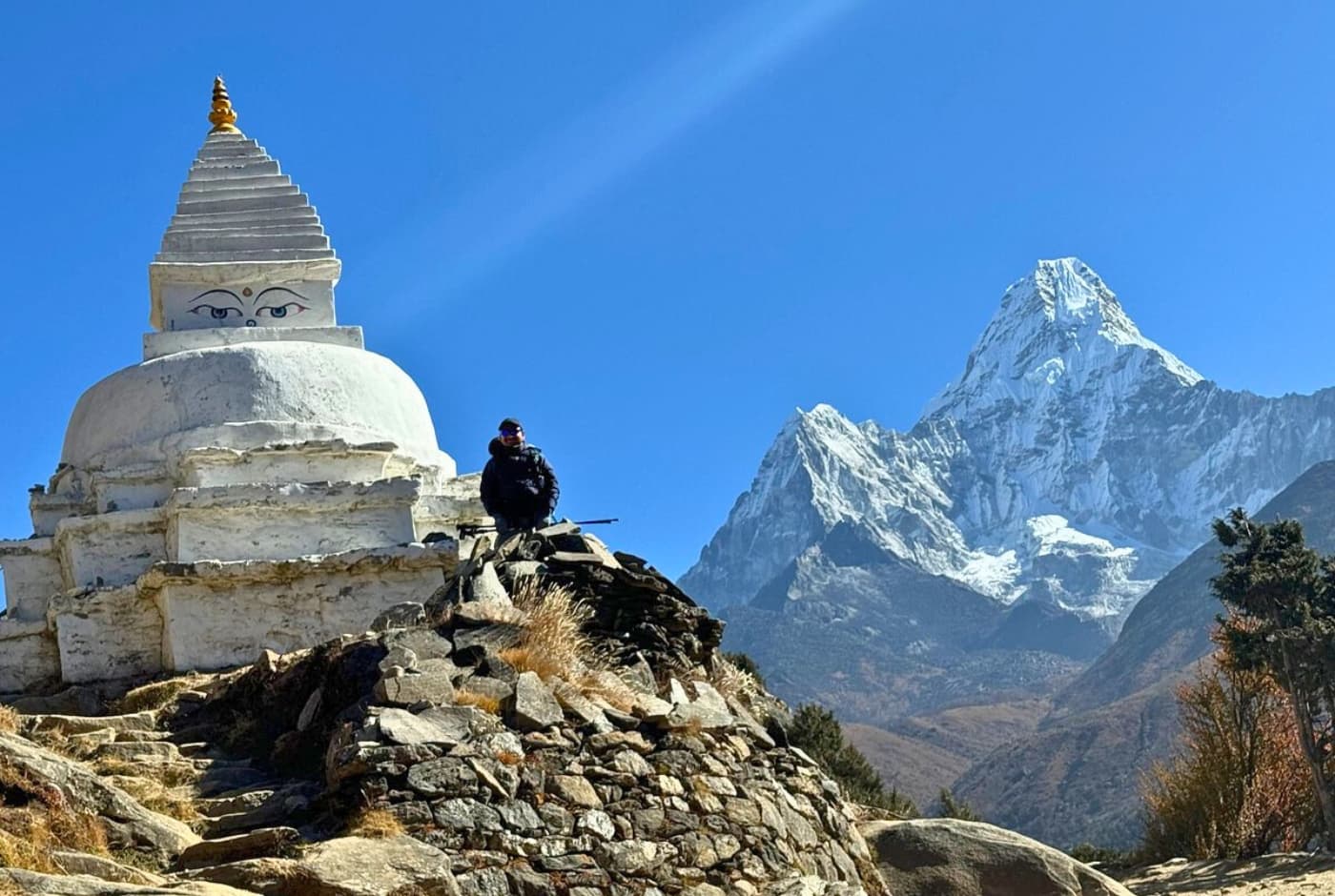
The EBC trek with the Mani Rimdu festival is Nepal's most famous mountain walk, covering 117 to 127 kilometres in total. This 17-day journey with nine walking days starts and ends in Lukla, passing through Nepal's Khumbu Valley, where Sherpa families have lived for many years. The path follows the old route of Tenzing and Hillary, going through Sagarmatha National Park and along the Dudh Koshi River. The ground changes from easy to hard, giving travelers an amazing trip among the world's highest mountains.
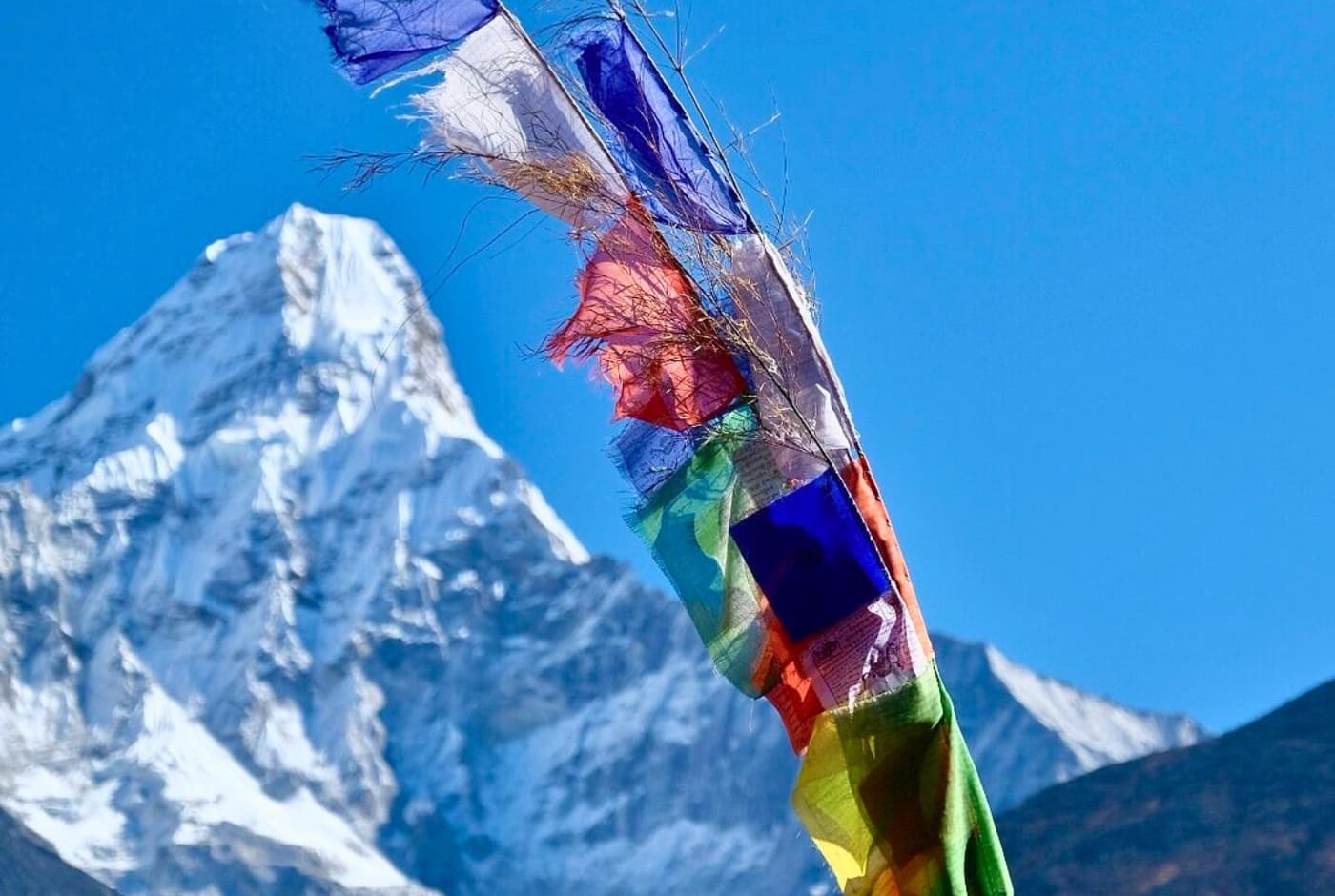
Valleys carved by ice, hanging bridges, and bright prayer flags show the way to Everest Base Camp. Big mountains like Everest, Lhotse, Nuptse, and Ama Dablam fill the sky, while forests, rocky paths, and snowy areas make the views different everywhere. Yak groups and the sound of yak bells in the valleys become part of the daily walk. Nights are spent in teahouses owned by Sherpa families, where a kind welcome shows a way of life built on Buddhist faith, old trade paths, and strength in high places.
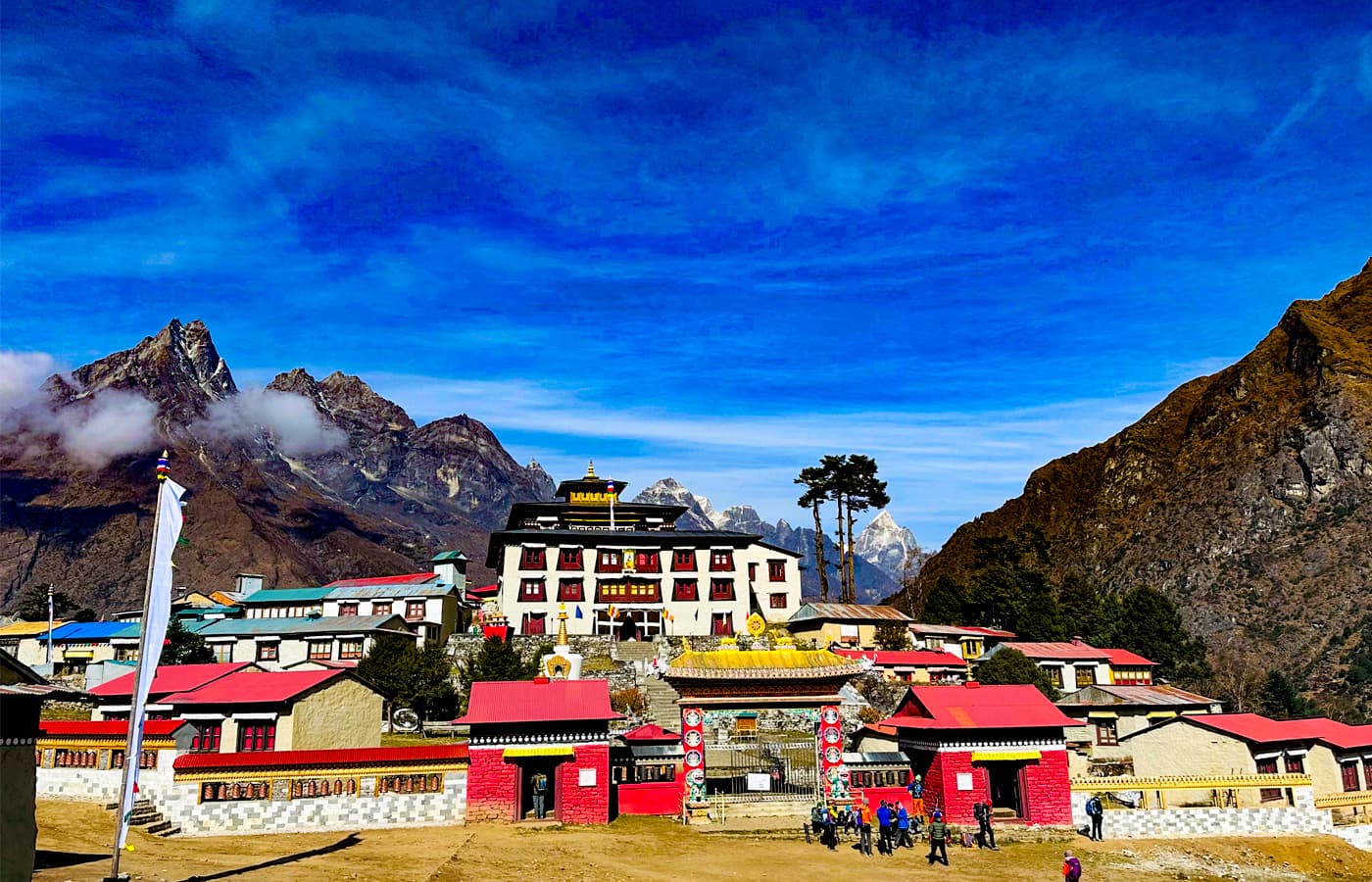
The main cultural part of this trip is the Mani Rimdu festival, held at Tengboche Monastery in the Khumbu area. This holy Buddhist celebration happens once a year, falling around the full moon in late October or November. Monks do masked dances, prayers, and detailed customs, including making holy sand mandalas, done with years of practice. The festival shows good winning over bad and gives rare looks into the Sherpa spiritual life. Mixing the hard walk to 5,545 meters at Kala Patthar with the joy of joining this yearly occasion makes the trip special. The EBC trek with festival becomes both an adventure and a cultural celebration to keep in memory.
The Mani Rimdu with Everest Base Camp Trek starts in Kathmandu with a friendly welcome and a short cultural tour of UNESCO World Heritage Sites. Walking through holy places like Pashupatinath, Boudhanath, and Swayambhunath gives trekkers a good start before heading to the mountains. These visits help people understand Nepal's rich culture and prepare mentally for the journey ahead.
A beautiful flight to Lukla from the capital marks the real beginning of the trek. The path first goes to Phakding before moving on to Namche Bazaar, the main Sherpa town in the Khumbu area. A planned rest day here lets trekkers visit the Sherpa Museum or walk to the Everest View Hotel, where amazing views of Everest, Ama Dablam, and Lhotse wait for visitors.
The walk then goes to Tengboche, one of the most spiritual places on this trek. Tengboche Monastery holds the colorful Mani Rimdu Festival, which happens once a year in October or November. During this special occasion, monks do masked dances and prayers to show good beating evil. This unique celebration makes the EBC trek with the festival much more than just a mountain walk.
Past Tengboche, the path climbs to Dingboche, with a rest day for getting used to the thin air and a good climb to Nagerjun Hill. The trail keeps going through Lobuche toward Gorakshep, passing the huge Khumbu Glacier and showing views of wild landscapes shaped by ice over many years. The air gets thinner and the ground becomes harder as trekkers move higher.
Getting to Everest Base Camp at 5,364 meters is a big moment, with the world's tallest mountains all around and the famous Khumbu Icefall nearby. Another great part is the early morning walk to Kala Patthar at 5,545 meters, where sunrise puts golden light on Everest, Lhotse, and Nuptse. These high points give trekkers memories that last forever.
The return journey is a familiar path through Pheriche, Tengboche, and Namche before arriving back in Lukla. From here, a short flight to Kathmandu marks the end of the adventure. All the trekkers get to reach Everest Base Camp and witness a cultural festival held just once each year. This rare blend of high mountain trekking and spiritual celebration makes the journey one of a kind.
For the 2026 Mani Rimdu Festival at Tengboche Monastery, the main public celebration days are October 26, 27, and 28, 2026.
Key Dates & When to Come
To witness the most significant part of the festival, you should aim to be in Tengboche for these dates:
Recommended Arrival Strategy
All these alternative treks allow trekkers to explore Base Camp and Kala Patthar. However, they get to decide to stay longer in the mountains or take a quicker way back.
Everest Base Camp trek with full trekking route and standard return on foot.
Following the same classic route to Everest Base Camp trek with helicopter return from Gorakshep, removing return trekking days.
Everest Base Camp trek extended with Gokyo Lakes (no Cho La pass), adding extra trekking days and route variation.
At Nepal Hiking Team, our Mani Rimdu with Everest Base Camp Trek gives you a special trip that mixes spiritual learning with high mountain walking. Trekkers can see the bright Mani Rimdu festival at Tengboche Monastery, a cultural party with colourful masks, old dances, and local customs. All this happens before going to the amazing Everest Base Camp and Kala Patthar.
Our skilled local guides tell great stories about Sherpa culture, Himalayan animals, and the area's past, making every step of the walk both fun and important.
This trip is different from regular Everest region trek walks because it puts together cultural learning with mountain climbing. You will not only get to the famous base camp of the world's tallest mountain, but also feel the spiritual center of the Khumbu area through the festival.
With personal trip plans, good lodges, and smart help with getting used to thin air and high passes, we keep you safe during the whole trek. People who travel with us always say good things about how we work, plan, and give real experiences, making this mixed trek something you will always remember.
You may arrive in Kathmandu at any time. You will be welcomed by one of our airport representatives. He will help you get transferred to your hotel. Further details about the plans and programs will also be provided. Overnight at Hotel.
The Kathmandu valley has one of the densest concentrations of heritage sites. Kathmandu city alone holds four heritage sites listed under the UNESCO World Heritage Sites List.
The tour will start late in the morning, and you will visit the city's heritage sites, including the Temple of Pashupatinath, the Bouddhanath Stupa, the Swayambhunath Temple, and the Kathmandu Durbar Square.
All of these sites are revered by the city's people, and the religious places are held in high regard by the Hindu and the Buddhist people. The Durbar Square of Kathmandu holds many old palaces, buildings, temples, and statues from medieval times.
The buildings are unique Nepali architecture and contain amazing wood-crafting, stone masonry, metal works, and intricate carvings on their doors and windows. Pashupatinath is considered the most sacred temple of Lord Shiva, and the cremation ceremony of the Hindus can be seen along the Bagmati’s river bank.
Bouddhanath is the largest Buddhist Mandala in the world and the Swayambhunath- located atop a hill, is a temple sacred to both the Hindu and the Buddhist people.
The heritage sites provide good insight into Nepal’s history and its past. They are great carriers of the country’s cultural and religious tenor.
After the tour, you will return back to the hotel. Overnight stay at the Hotel. Meals: Breakfast included.
From Kathmandu, a flight to Lukla commences the trek. The Lukla flight is one of the most dramatic short flights in the world.
The Lukla Airport itself is located on a hill and contains a single runway that drops off towards its end to the deep gaping valley below. Surrounded by tall mountains and jaded hills, the airstrip at Lukla is quite fascinating, and the flight is deemed a little thrilling adventure in itself.
Upon arriving at Lukla, the change in the scenery is immediately felt. The mountainous landscape becomes quite prominent, and the air carries a crisp freshness that only the Himalayan atmosphere carries.
From Lukla, the trekking trail slowly moves towards the Cheplung Village. The view of the sacred Mount Khumbila from the village at Cheplung is beautiful. From there, a gradual walk downward leads to the village of Phakding. The terrain is amazing and tall hills surround the trail like giant mounds of emeralds. From Phakding, the sight of the Kusum Kangraru Mountain can be seen.
The village of Phakding lies in the Dudh Koshi River valley north of Lukla and contains many guesthouses and lodges that cater to tourists and trekkers. Overnight stay at the Guesthouse. Meals: Breakfast, Lunch, and Dinner included.
After breakfast at Phakding, the trail further opens out to reach the celebrated mountain town of Namche Bazaar. Several smaller villages are crossed en route to Namche, like Jorsale and Monjo.
Monjo lies north of Phakding and is the entry point of the Sagarmatha National Park. The trail ventures through the national park and finally arrives at Namche. Walking along the trekking route through the Sagarmatha National Park presents many virtues, like its alpine woods, small rivers and brooks, and deciduous forests.
Thick acreages of Pine and Cedar cover the lands and provide a pleasant atmosphere to trek through. Namche Bazaar, because of its strategic location, is the commercial hub of the Khumbu region.
It is located on a mountainside, and the views of the Thamserku Peak and the Kongdi RI Himal from here are amazing. Overnight stay at the Guesthouse. Meals: Breakfast, Lunch, and Dinner included.
Namche is a great place to acclimatize. The sights around Namche are spectacular and beautiful. After breakfast, you can visit the Syangboche Airstrip on a hill above the town. From here, you can get a panoramic view of Namche and see amazing sights of the Himalayas.
Further from Namche lies the Everest View Hotel. The hotel is the highest located hotel in the world and provides a view of Mount Everest and many other Himalayan peaks from all of its windows.
Back at Namche, you can also visit the Everest Photo Gallery and the Sherpa Culture Museum.
Overnight stay at the Guesthouse. Meals: Breakfast, Lunch, and Dinner included.
An easy trail from Namche opens towards the Dudh Koshi Valley at the settlement of Phungki Thanka. From the settlement, the views of Mount Everest are magnificent.
The village of Tengboche is reached by the trail that marches along the right side of the Dudh Koshi River. The journey from Namche to Tengboche is filled with the amazing natural scenery of rivers, hills, and Himalayan peaks.
The village of Tengboche is located at the confluence of the Dudh Koshi and the Imja Khola Rivers and is surrounded by tall hills covered in rhododendron trees.
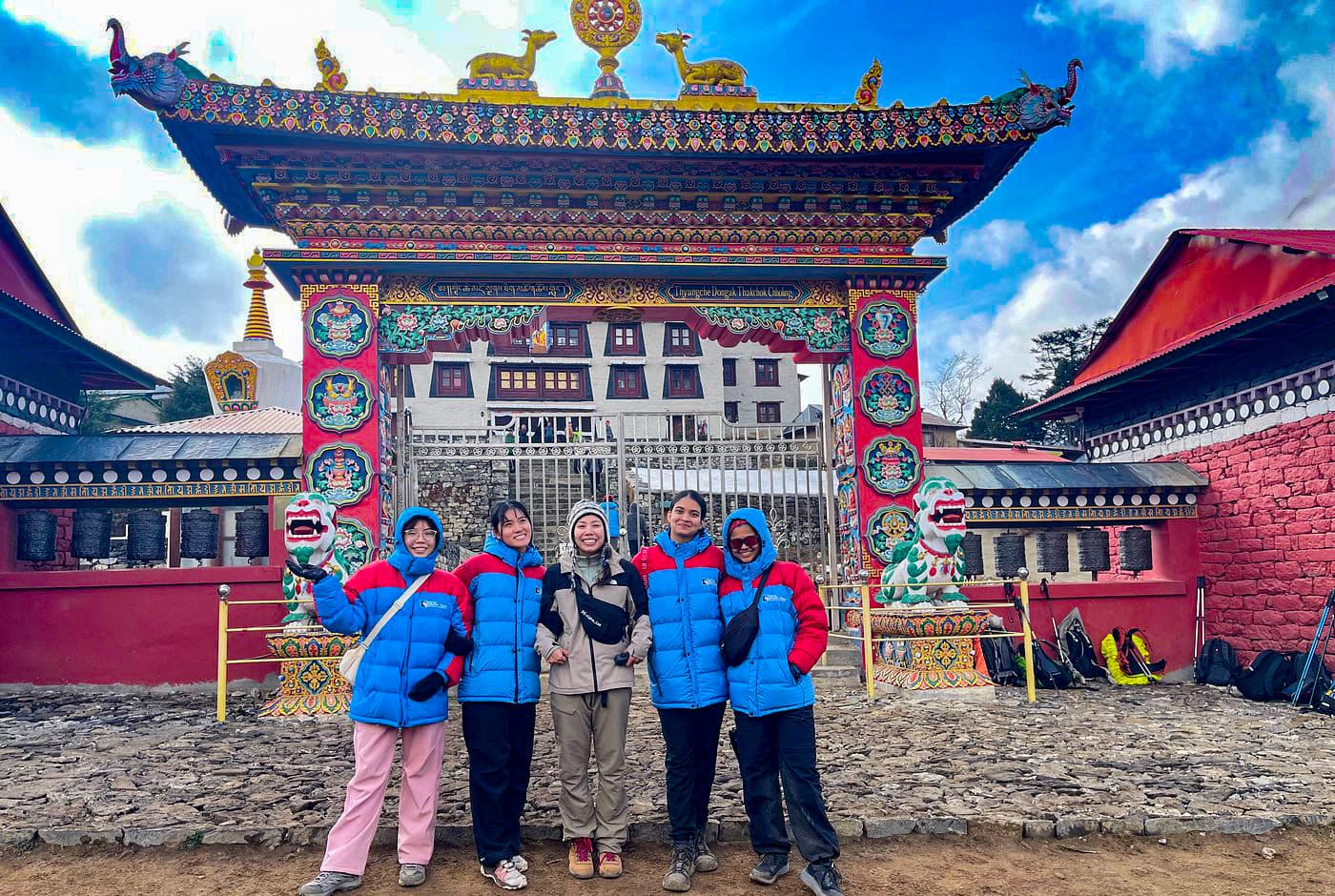
The village is also famous for Tengboche Monastery, the largest monastery in the Khumbu region. The monastery is a hamlet from where the sight of Mount Ama Dablam, Mount Everest, and numerous other peaks are beautiful to look at.
The Tengboche Monastery is also regarded as the spiritual hub of the Khumbu region and is surrounded by forests inhabited by Impeyan Pheasants and eagles.
This is the place where the celebration of the Mani Rimdu Festival will take place. You might also see the monks' preparations of the festivals in full swing at the monastery, like the construction of the Sand Mandala- which is constructed using colored sand to build complicated and symbolic designs.
Overnight stay at the Guesthouse. Meals: Breakfast, Lunch, and Dinner included.
Today, you will visit the Tengboche Monastery to witness the celebration of the fabled Mani Rimdu Festival.
There are many rituals and steps in the celebration of the holy festival. The Wong is the opening day of the public ceremony. It is performed on the full moon day of the tenth month in the Tibetan lunar calendar. The sacred Mani Rilwu (sacred or blessed pills) and Tshereel (pills for long life) are given to everyone attending. Ritualistic dances by the monks symbolize the triumph of good over evil.
There are also rituals where the lamas and monks of the monastery do on colorful robes and traditional Sherpa costumes to depict various legends and myths. The tinkling sound of the cymbals and the steady beating of the drums fill the air. The monks also chant prayers and the atmosphere is generally turned into a lively gathering of colorful robes, enchanting prayers, and impressive cultural displays. Many local Sherpa people, along with tourists, attend to witness the celebration.
After witnessing the celebration of the Mani Rimdu Festival, you will return back to the guesthouse. Overnight stay at the Guesthouse. Meals: Breakfast, Lunch, and Dinner included.
The trekking trail crosses the Imja River via a suspension bridge and moves towards the village of Dingboche.
Along the way, the village of Pangboche is passed. Dingboche is called the “Summer Valley” of the Khumbu and contains a kilometer-long wall built to protect the village’s crops from the cold winds that descends down the Imja Valley.
Dingboche, as the name reflects, receives more sun too. Graceful views of Lhotse, the Ama Dablam, and the Island Peak from Dingboche are impressive. Overnight stay at the Guesthouse. Meals: Breakfast, Lunch, and Dinner included.
Dingboche is also an excellent village for acclimatizing.
A hike to Nagerjun is a great way to spend time at Dingboche. Nagerjun is located at the height of 5100 meters and lies just above Dingboche on a hill at the edges of the Chhukung valley.
The hike is uphill and steep and requires a bit of strenuous energy. Walking for approximately 3-4 hours, we will reach Nagerjun from where the marvelous panorama of Lobuche East (6119m), Lobuche West (6145m), Kangtega (6685m),
Taboche Peak (6367m), Thamserku (6608m), and the Ama Dablam (6856m) can be seen. If you are lucky, you can also spot stunning sights of Mount Makalu, the world’s fifth tallest peak, on a clear day. The view of the Pheriche Valley from here is also splendid.
Returning to Dingboche is also very beautiful. After finishing our lunch, we can take a rejuvenating sunbath and relax in the village. Overnight stay at the Guesthouse. Meals: Breakfast, Lunch, and Dinner included.
This day begins with a gradual ascend towards Thukla; here, the scenery changes and becomes much barer and desolate, with only alpine scrubs surrounding the trail.
After some time, the trail becomes somewhat strenuous, with a steep uphill over the moraine of Khumbu Glacier. Upon climbing the steep ridge, you will arrive at the summit of Thukla Pass.
There is an area where you will see many stone shrines dedicated to fallen climbers.
Following this pass, you will walk through grassy valleys and rocky terrain to arrive at Lobuche. This village consists only of teahouses, with no permanent settlements here. It lies in a narrow meadow sandwiched between Lobuche Peak and Khumbu Glacier. You will be able to enjoy the incredible sight of Taboche and Nuptse soaring above the teahouse.
In the evening, you may take a short hike to the narrow gap of the moraine and the mountain wall to see the Khumbu Glacier.
Overnight at Guesthouse, Breakfast, Lunch, and dinner included.
An anticipated day of the trip will commence with a slow walk. Avoiding altitude sickness, a slow walk further on from Lobuche runs alongside the sight of the world’s highest glacier- the Khumbu Glacier, to the right. Walking for about 2-3 hours from Lobuche, we will get to Gorakshep (5181m/16994ft), a tranquil location with some lodges.
From here, the path moves to the top of the edge, finally arriving at the Everest Base Camp. Here, the sight of the Khumbu Icefall and the view of the Khumbutse and Lingtren mountains are quite heavenly. After spending some time at the base camp enjoying the sights and the environment, we shall return back to Gorakshep.
Overnight stay at the Guesthouse. Meals: Breakfast, Lunch, and Dinner included.
Another highlight of the trip is an early morning hike to Kalapatthar from Gorakshep. Kalapatthar is a famous vantage point popular for providing panoramic views of Mount Everest, Nuptse, Chagatse, Lhotse, and the Pumori among many other peaks.
Hike to Kalapatthar is done early at dawn because the sight of the rising sun seen from the vantage point is absolutely amazing. The sun rises from amidst the Mount Everest Mountains, and changes the mountains' color from silver to gold.
After spending time at Kalapatthar, we will return to Gorakshep and walk down to Pheriche.
Overnight stay at the Guesthouse. Meals: Breakfast, Lunch, and Dinner included.
The trail follows the Imja River again to Tengboche. From Tengboche, we will move down towards Phungki Thanka, pass the Kyangjuma, and reach Namche. It is a relaxing hike back, and the sight of the landscape and the Himalayas can be enjoyed pleasantly. The villages also live with people, and you can observe their customs and activities as you pass through.
Overnight stay at the Guesthouse. Meals: Breakfast, Lunch, and Dinner included.
The hike back to Lukla follows a trail that moves steeply downwards and crosses a suspension bridge. Chortens, prayer flags, Mani-stone walls, and small Gompas line the villages and the trail.
The Dudh Koshi River gushes by and adds a beautiful ambiance to the natural setting. Open plains, pine and rhododendron forests, and snow-covered peaks decorate the beautiful picturesque settings.
As we reach Lukla, we can just relax. In the evening, we may also celebrate the victory of accomplishing the trek.
Overnight stay at the Guesthouse. Meals: Breakfast, Lunch, and Dinner included.
A 30-minute flight back to Kathmandu from Lukla ends the trekking part of the journey. You can last revel in the changing sights of the landscapes while on the flight.
After landing at the Kathmandu airport, you will be transferred to the Hotel where you shall stay overnight. Meals: Breakfast included.
On this day, you can proceed to relax and can have another tour of the city or go shopping at the hub of “all things tourist” at Thamel.
Overnight stay at the Hotel. Meals: Breakfast included.
One of our airport representatives from Nepal Hiking Team will transport you to Kathmandu International Airport around 3 hours before your scheduled flight from where you will depart.
Meals: Breakfast included
With Nepal Hiking Team, this journey is more than just reaching Everest Base Camp, it’s also about experiencing the spiritual heart through the Mani Rimdu festival.
The Mani Rimdu with Everest Base Camp Trek package cost with Nepal Hiking Team is an all-inclusive price of $1,770 USD per person. This 16-night, 17-day journey combines the high mountain adventure of EBC with the vibrant Mani Rimdu festival at Tengboche Monastery.
This price covers all essentials for your trek, including airport transfers, flights to and from Lukla, professional guides and porters, permits, meals, and accommodation. Government taxes, festival arrangements, and trekking insurance for staff are also included, so you can focus fully on the mountains and the cultural celebration.
Extra Costs to Consider:
You may want some extra funds for bottled water, hot showers, souvenirs, snacks, or tips for your guide and porter. These personal expenses are not included in the main package price.
With this Mani Rimdu with Everest Base Camp Trek package, you experience both the adventure of the Himalayas and the joy of Nepal’s most famous Sherpa festival, all in one unforgettable journey.
The Mani Rimdu Festival is a sacred 19-day Tibetan Buddhist celebration held by the Sherpa community in the Everest region of Nepal. You can experience it at Tengboche Monastery, as well as at Thame and Chiwong Monasteries, usually in October or November during the full moon. This festival celebrates the introduction of Buddhism to Tibet by Guru Rinpoche Padmasambhava. It also shows the victory of good over evil.
On the Mani Rimdu with Everest Base Camp Trek, you and other trekkers get the rare chance to watch monks perform colorful masked dances called Chham. These dances tell stories from Buddhist teachings. During the final days, the Head Lama destroys a sand mandala, symbolizing that nothing is permanent. He also gives blessings to everyone present. You will see sacred rituals such as prayers, meditation, and the distribution of blessed red pills, called "Rilwu" or "Tshereel," for long life and well-being.
Attending the Mani Rimdu Festival while trekking to Everest Base Camp lets you combine adventure with culture. You will feel the spiritual heart of the Khumbu region. For you and other trekkers, this mix of stunning Himalayan landscapes and vibrant festival traditions makes your EBC trek with festival an unforgettable experience. It is a special occasion you will remember for years.
The Mani Rimdu Festival 2026 at Tengboche Monastery in Nepal’s Everest region is expected to have its main public celebrations on October 26, 27, and 28, 2026. The festival follows a traditional 19-day monastic ritual cycle, with private ceremonies taking place before the public events.
This sacred 19-day Tibetan Buddhist celebration, observed by the Sherpa community, marks the founding of Buddhism by Guru Rinpoche Padmasambhava and celebrates the victory of good over evil.
While the full festival spans 19 days of prayers, rituals, and sacred practices within the monastery, the public celebration open to trekkers runs for 3 days, from October 26 to October 28. These three days are the most vibrant and visually spectacular part of the entire festival.
The public celebration begins on October 26 with the opening ceremony, known as the Wong, filled with sacred prayers, blessings, and the distribution of the holy Mani Rilwu (blessed pills) and Tshereel (long-life pills) to everyone in attendance. On October 27, the festival reaches its peak as monks perform the traditional Chham masked dances, a breathtaking display of colorful costumes, rhythmic drumbeats, and symbolic storytelling showing the triumph of good over evil. The public celebration concludes on October 28 with community prayers, final blessings from the Head Lama, and the ceremonial destruction of the sacred sand mandala — a deeply moving moment that reminds all present of the impermanence of life.
For trekkers participating in the Mani Rimdu with Everest Base Camp Trek, these three public days offer a rare and unforgettable opportunity to immerse themselves in Sherpa culture and living Buddhist traditions amidst the breathtaking Himalayan backdrop of Tengboche Monastery. It is an occasion that blends high-altitude adventure with deep spiritual richness in a way that no other trek in the world can offer.
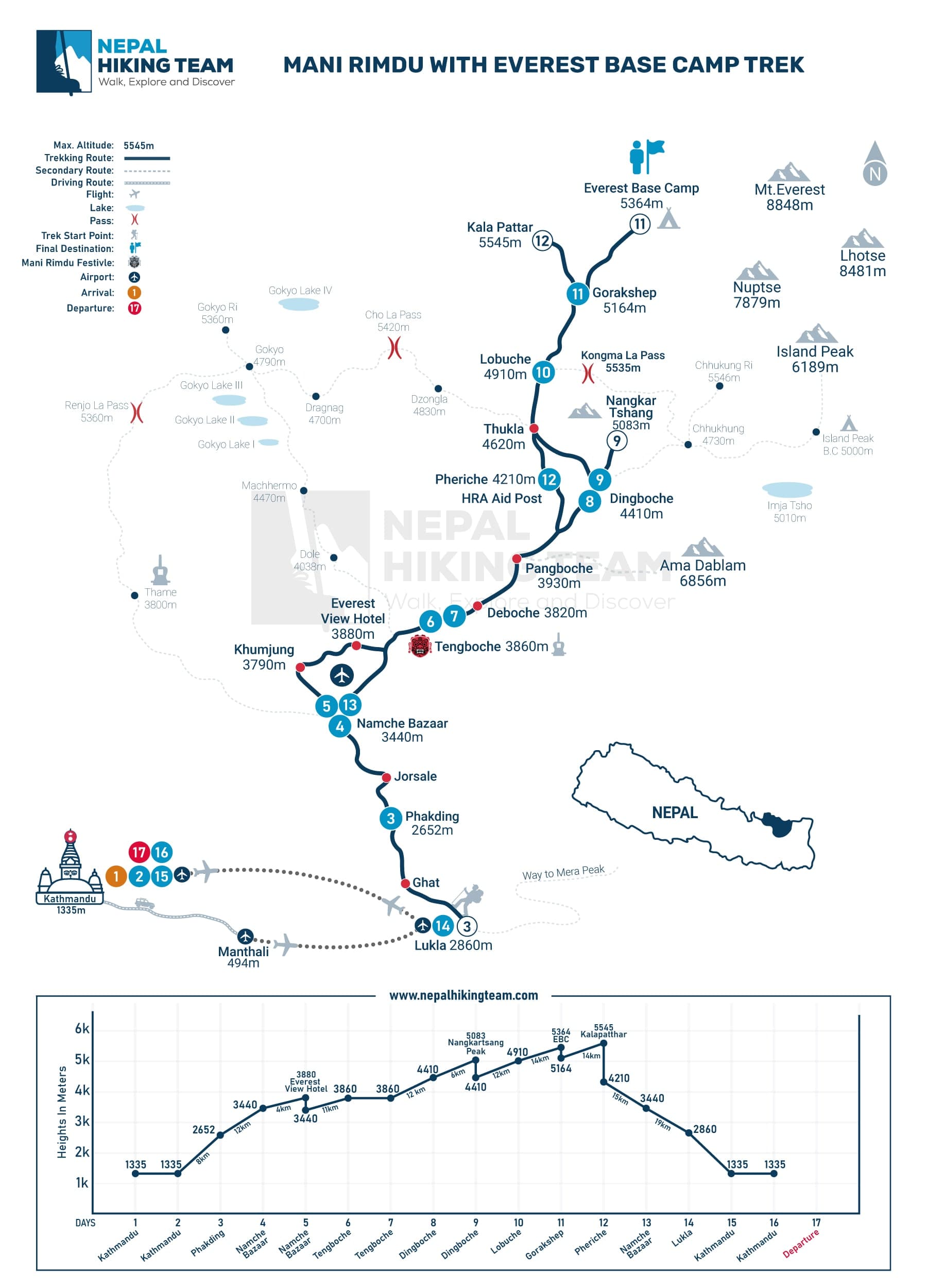
The Mani Rimdu with Everest Base Camp Trek is a moderately challenging adventure that combines high-altitude trekking with the cultural festival of Mani Rimdu. Over 17 days, you walk through the Khumbu region, covering around 117–127 kilometers with nine main walking days. The trek takes you from Lukla through Namche Bazaar, Tengboche, Dingboche, Lobuche, and Gorak Shep before reaching Everest Base Camp and Kala Patthar.
You will face long walking days, steep uphill climbs, uneven trails, and occasional river crossings. The thin air at higher altitudes, especially around Kala Patthar at 5,545 meters, can be physically demanding. Trekking at this elevation requires stamina, careful pacing, and mental focus. However, the trek is designed with acclimatization days in Namche and Dingboche to help your body adjust safely.
The difficulty is balanced by incredible rewards. Along the way, you experience the lively Mani Rimdu festival at Tengboche Monastery, where you can watch colorful masked dances, sacred rituals, and traditional ceremonies. The trek also gives you unforgettable views of Everest, Lhotse, Nuptse, and Ama Dablam, as well as the chance to interact with Sherpa communities and witness their culture up close.
Read our genuine feedback from past travelers with Nepal Hiking Team sourced from TripAdvisor, Google, Facebook, and Trustpilot.
The first time when I saw the Everest massif from Kalapatthar is something that I will never forget. Of course, the entire experience does impact the way I enjoyed the mountain views and the cultural experience in Nepal, and in my case, my experience was simply the best.
I chose the EBC with Mani Rimdu Festival Trek with Nepal Hiking Team after countless hours of browsing packages on their website. I was looking for a trek that offered me something different than the regular route, and I though experiencing the Mani Rimdu Festival was a great idea with trekking to Everest base camp.
My guide for the journey was Ram Hari Adhikari, a great enthusiastic aficionado of the Everest trails. My bedroom in the guesthouses always had great Himalayan views, my journey was well-managed in terms of time and my knowledge of the Sherpa culture and of the wonderful festival was made a hundred times better all because of Ram Hari, as without him, I am sure that trip would not have been the same. With a warm welcome from the airport all the way to the time of my departure back home, the Nepal Hiking Team staffs were extremely helpful and kind, always extending their hand to make sure that I was comfortable, and enjoying my trip. It was great to experience the renowned Nepali hospitality as my agency concretely solidified this attribute always associated with Nepal.
My experience with NHT was one of the unforgettable ones. It was, in the simplest of terms, the best time I had of my life. The care they provided in my journey, the amount of safety that I felt and the way everything was arranged made the trip a hassle-free event. I enjoyed the Khumbu's beauty and its cultural riches with a trusted companion in Ram Hari. My journey was filled with natural beauty and Himalayan vistas, but at the same time, it was also filled with good lodges, good food, good companionship and the best overall time. Nepal Hiking Team really goes over and beyond with their services. The best travel agency in all of Nepal!
Nepal Hiking Team's company founders have over 30 years of guiding experience in the Everest region, and we hold Tourism License No. 1033 with memberships in TAAN and NMA. What sets this package apart is that we combine the high-altitude adventure of Everest Base Camp with the rare opportunity to witness the Mani Rimdu Festival at Tengboche Monastery — something most standard EBC packages do not include. Our guides are not just trail experts but cultural storytellers who bring the Sherpa traditions and Mani Rimdu ceremonies to life for every trekker. We earn consistent 5-star ratings on TripAdvisor, Google, and Trustpilot, and we operate with fully transparent pricing and no hidden fees. Every detail — flights, permits, festival arrangements, meals, acclimatization days, and daily guidance — is managed by our team so you can focus entirely on the experience.
The Mani Rimdu with Everest Base Camp Trek requires a minimum of 2 passengers for a guaranteed departure. Since the Mani Rimdu Festival takes place on fixed dates each year (in late October or November), departure dates for this package are specifically scheduled to align with the festival at Tengboche Monastery. Once the minimum group size is met, your departure is guaranteed. Please contact us well in advance to confirm your spot, as festival season departures fill up quickly.
Yes, solo travelers are very welcome on the Mani Rimdu with Everest Base Camp Trek. We regularly pair solo travelers with other trekkers to meet the minimum group size of 2. If you prefer a fully private experience, that can also be arranged. As a solo traveler, you will have a dedicated guide and porter, with all included services — flights, permits, teahouse accommodation, meals, and festival attendance at Tengboche Monastery. Contact us to check current availability for solo joining options on festival-season departure dates.
Absolutely. Private departures for the Mani Rimdu with Everest Base Camp Trek are available for couples, friend groups, and families. A private trip gives your group exclusive access to your own guide and porter team, and you can travel at your own comfortable pace. Since the Mani Rimdu Festival happens on fixed calendar dates, your private departure will be scheduled to ensure you reach Tengboche in time for the celebration. Contact us with your group size and preferred travel window for a personalized quote.
Yes, most nationalities can obtain a Tourist Visa on arrival at Tribhuvan International Airport (TIA) in Kathmandu. Fees are USD 30 for 15 days, USD 50 for 30 days, and USD 125 for 90 days. You will need a valid passport with at least 6 months of remaining validity, a passport-sized photo, and USD cash or a credit card. We recommend completing the online visa application at nepaliport.immigration.gov.np before arrival to save time at the airport. Indian nationals do not require a visa. Citizens of certain countries including Nigeria, Ghana, Afghanistan, Somalia, Iraq, Syria, and a few others must obtain a visa before arriving and are not eligible for visa on arrival.
Yes, all airport transfers by private vehicle are fully included in the package. A Nepal Hiking Team representative will be waiting outside the arrivals terminal at Tribhuvan International Airport holding a Nepal Hiking Team display board to escort you to your hotel. On your final day, we will transfer you to the airport at least three hours before your international flight. If you cannot locate our staff upon arrival, call our 24-hour emergency contacts: +977 9851 058678 (Ganga) or +977 9851 058667 (Balaram).
Four nights at a comfortable 3-star hotel in Kathmandu are included in the package — two nights before the trek and two nights after your return. The hotels include twin-sharing rooms with daily breakfast. If you would like to upgrade to a 4-star or 5-star property, we can arrange this for an additional cost. Please let us know your preference at the time of booking and we will provide available upgrade options and pricing.
Extra nights at our 3-star partner hotels in Kathmandu typically cost between USD 40–70 per night including breakfast. Upgrades to 4-star properties range from USD 80–120 per night, and 5-star hotels start from USD 150+ per night. Rates vary by season and hotel availability. Contact us in advance if you plan to arrive early or extend your stay after the trek so we can arrange the best available rate.
On Day 2, after the Kathmandu valley sightseeing tour, your assigned guide will conduct a full pre-trek briefing. This covers the 17-day itinerary in detail, daily walking distances and durations, altitude profiles and acclimatization strategy, permit and documentation checks, what to expect at the Mani Rimdu Festival at Tengboche, health and safety protocols, and equipment review. This is also the best opportunity to ask questions, flag any health concerns, and ensure your gear is prepared before your Lukla flight the following morning.
You can book by contacting us via our website, email at sales@nepalhikingteam.com, or WhatsApp at +977 9851 058678. A deposit of 20% of the total cost is required to confirm your booking and secure your place on the festival-timed departure. Since this trek is tied to the fixed annual dates of the Mani Rimdu Festival and teahouse availability in peak autumn season is limited, we strongly recommend booking at least 2–3 months in advance. The remaining balance can be paid upon your arrival in Kathmandu.
The remaining 80% of the package cost is payable upon your arrival in Kathmandu before the trek begins. We accept payment by cash in USD, EUR, or GBP, or by credit and debit card including Visa, MasterCard, American Express, Discover, JCB, UnionPay, and Diners Club. Bank transfer is also available. Full payment instructions are at nepalhikingteam.com/how-to-make-payment.
If cancellation is necessary, please send us a written request and we will process it promptly. The 20% deposit paid to confirm your booking is non-refundable as it is used to secure festival-timed permits, teahouse reservations, and Lukla flight bookings during the busy autumn season. Rather than cancelling, we encourage you to postpone to the next available festival-season departure at no additional cost. We also strongly recommend purchasing comprehensive travel insurance with trip cancellation coverage. Please review our full Terms and Conditions at nepalhikingteam.com/terms-and-conditions.
Yes. Nepal Hiking Team offers free postponement for all trekking packages. Since the Mani Rimdu Festival occurs once a year in late October or November, postponing typically means rescheduling to the following year's festival-season departure. Please inform us at least two weeks before your original departure date to allow sufficient time to adjust all arrangements. Your deposit is fully preserved when postponing.
The Mani Rimdu Festival is a sacred 19-day Tibetan Buddhist celebration observed by the Sherpa community in the Everest region of Nepal. It is held at Tengboche Monastery in the Khumbu, as well as at Thame and Chiwong Monasteries, usually during the full moon in October or November. The festival celebrates the introduction of Buddhism to Tibet by Guru Rinpoche Padmasambhava and symbolizes the triumph of good over evil. Key rituals include colorful masked dances called Chham performed by monks, the creation and ceremonial destruction of an intricate sand mandala, the distribution of blessed red pills called Rilwu (for long life and well-being), and community prayers and blessings led by the Head Lama.
The Mani Rimdu Festival in 2026 at Tengboche Monastery takes place from October 24 to November 17. While the full festival spans 19 days of prayers, rituals, and sacred practices within the monastery, the public celebration open to trekkers runs for 3 days, from October 24 to October 26. The opening ceremony on October 24 includes prayers, blessings, and the sacred distribution of Mani Rilwu (blessed pills) and Tshereel (long-life pills). On October 25, monks perform the traditional Chham masked dances depicting the victory of good over evil. The festival concludes on October 26 with community prayers, final blessings from the Head Lama, and the ceremonial destruction of the sand mandala, reminding everyone of the impermanence of life. Nepal Hiking Team's departure dates for this package are specifically designed to ensure you arrive at Tengboche in time for these celebrations.
At Tengboche Monastery during Mani Rimdu, you will witness monks dressed in elaborate colorful robes and traditional Sherpa costumes performing the Chham masked dances, which depict stories and legends from Buddhist teachings. The sound of cymbals, drums, and chanted prayers fills the air as hundreds of local Sherpa people and international visitors gather together. You may observe monks in the days leading up to the main event constructing the sacred sand mandala — a detailed, symbolic artwork created grain by grain using colored sand over many days. The Head Lama distributes the sacred Mani Rilwu (blessed pills) and Tshereel (long-life pills) to all attendees. The entire atmosphere is one of color, devotion, and community celebration unlike anything else in the Himalayan world.
Tengboche Monastery visiting privileges are included in the package as part of the permits and arrangements we handle on your behalf. You do not need to separately purchase a festival entry ticket. A small donation to the monastery is always welcome and appreciated as a gesture of respect for the monks and the sacred space. Your guide will brief you on appropriate conduct and etiquette before entering the monastery grounds.
Absolutely. The Mani Rimdu Festival warmly welcomes visitors of all faiths and backgrounds. Many of the attendees are international trekkers who come specifically to witness the cultural and spiritual richness of the celebration. You are not required to participate in any religious rituals — observation is fully respectful and appreciated. Your guide will provide context and explanation for each ritual and dance so you can fully understand and appreciate what you are witnessing. Respectful dress (covering shoulders and knees) and removing footwear before entering the monastery are the key etiquette requirements.
The package includes a round-trip scenic flight between Kathmandu and Lukla. The outbound flight on Day 3 is approximately 30–40 minutes and is considered one of the most dramatic short flights in the world, offering breathtaking aerial views of the Kathmandu Valley and Himalayan peaks before landing at Lukla's mountain airstrip. The return flight from Lukla to Kathmandu on Day 15 offers a final aerial farewell to the Khumbu region. All airport transfers in Kathmandu by private vehicle are also included.
Yes. The Lukla flight is weather-dependent and occasionally subject to delays or cancellations due to low visibility, cloud cover, or strong winds. This is why a reserve day (Day 16) is built into the itinerary as a buffer in Kathmandu. If your return Lukla flight is delayed, the reserve day absorbs the disruption without affecting your international departure. We strongly recommend not booking your international onward flight on Day 16 to allow for this flexibility. Nepal Hiking Team monitors flight conditions closely and will communicate any changes to your schedule immediately.
All ground transportation throughout the package is by private vehicle and is fully included. This covers your airport arrival transfer to your Kathmandu hotel, all hotel-to-airport transfers on flight days, and the final airport departure transfer on Day 17. During the trekking days, all travel between Lukla, Phakding, Namche Bazaar, Tengboche, Dingboche, Lobuche, Gorak Shep, and back is on foot along the Khumbu trail with your guide and porter.
This trek is graded as Strenuous. Over 17 days, you cover approximately 117–127 kilometers across nine main walking days, with daily hiking durations of 3 to 8 hours. The route includes long uphill climbs, steep descents, river crossings on suspension bridges, and rocky moraine terrain near the Khumbu Glacier. The highest points reached are Everest Base Camp at 5,364 meters and Kala Patthar at 5,545 meters. At these elevations the air is significantly thinner, requiring physical stamina, careful pacing, and mental resilience. Two acclimatization rest days — in Namche Bazaar and Dingboche — are built into the itinerary to help your body adjust safely.
The full package is 17 days. This includes two nights in Kathmandu before the trek (Days 1–2), the flight to Lukla on Day 3, nine active trekking and acclimatization days in the Khumbu region (Days 3–14), the return Lukla flight to Kathmandu on Day 15, a reserve day in Kathmandu on Day 16, and departure on Day 17. The festival attendance at Tengboche Monastery takes place on Day 7 of the trek.
There is no strict age limit, but given the strenuous grading and maximum altitude of 5,545 meters at Kala Patthar, this trek is best suited for physically fit participants aged 18–65. Participants over 60 or with pre-existing cardiovascular, respiratory, or other health conditions should consult their physician before booking and may be asked to provide a medical fitness certificate. Children and teenagers may join at parental discretion, but the strenuous daily distances and high-altitude exposure make this trek unsuitable for young children.
Physical preparation should begin at least 2–3 months before departure. Key training activities include regular cardiovascular exercise such as running, cycling, swimming, or stair climbing; weekend day hikes with a loaded backpack (8–10kg) on varied terrain including uphill and downhill sections; leg-strengthening exercises such as squats, lunges, and step-ups; and if possible, practice hikes at altitudes above 3,000 meters. Building your weekly hiking distance gradually over 8–10 weeks will help condition your joints and cardiovascular system for the long trekking days in the Khumbu. Adequate rest and recovery between training sessions is equally important.
Yes — travel insurance is mandatory and must be arranged before arriving in Nepal. You must provide a copy to our team in Kathmandu. Your policy must cover high-altitude trekking up to at least 5,600 meters (to include the Kala Patthar elevation), emergency helicopter evacuation from the Khumbu region to Kathmandu, medical treatment costs, trip cancellation, and international medical evacuation if required. Given the remoteness of the Everest region, helicopter evacuation insurance is non-negotiable. A recommended list of insurance providers by region is available at nepalhikingteam.com/travel-insurance.
All Nepal Hiking Team guides are government-licensed through NATHM, trained in first aid, and carry a comprehensive medical kit including an oximeter, water purification tablets, and basic altitude medication including Diamox. Your guide monitors blood oxygen saturation levels daily throughout the trek, particularly at higher elevations. The itinerary includes strategically placed acclimatization days in Namche Bazaar (Day 5) and Dingboche (Day 9) to reduce the risk of Acute Mountain Sickness. If a trekker shows serious AMS symptoms, the guide is trained to initiate immediate descent and arrange emergency helicopter evacuation. Safety briefings on altitude awareness are provided at each key elevation gain.
This trek is exclusively an autumn season experience — the Mani Rimdu Festival takes place in October or November, making that the only window for this specific combined package. Autumn is widely regarded as the best trekking season in Nepal, with stable weather, minimal precipitation, clear blue skies, and exceptional mountain visibility. Temperatures are cold at higher elevations (below freezing at night above 4,000 meters) but manageable with proper layering. The Khumbu trails are at their most vibrant during this season, with clear views of Everest, Lhotse, Nuptse, and Ama Dablam on most days.
The itinerary is carefully structured with two acclimatization rest days — one in Namche Bazaar (3,440 meters) and one in Dingboche (4,410 meters) — to allow your body to adjust safely before ascending further. Key personal measures include: ascending gradually and never skipping acclimatization days; staying well hydrated (3–4 liters of water per day); avoiding alcohol, sleeping pills, and sedatives at altitude; eating light, nutritious meals; sleeping at or below your highest daytime altitude where possible; and communicating any symptoms to your guide immediately. Your guide carries Diamox and an oximeter and will check your oxygen saturation levels regularly. If symptoms are serious, descent is the most effective treatment and will be arranged immediately.
Hot showers are available at teahouses in Phakding, Namche Bazaar, and Lukla, which are included in the package at no extra charge. At teahouses higher up the trail — including Tengboche, Dingboche, Lobuche, and Gorak Shep — hot showers are either unavailable or available at an extra personal cost, typically USD 3–5 per shower. We recommend packing biodegradable wet wipes and a small travel towel for hygiene on days when hot shower facilities are limited.
No vaccines are legally required for entry into Nepal, but several are strongly recommended for travel to the Everest region. These typically include Hepatitis A and B, Typhoid, Tetanus-Diphtheria, Rabies (useful given the remoteness from medical care), and ensuring routine vaccinations such as MMR and flu are current. We recommend visiting a travel medicine clinic or your GP at least 6–8 weeks before departure for personalized advice based on your medical history and vaccination record.
Yes, one porter is included for every two trekkers. Porters carry your main duffel bag between teahouses, with a shared maximum of 25 kg for two trekkers (approximately 12–13 kg per person). You carry only a light day pack during hiking days containing water, snacks, warm layers, and personal items. Nepal Hiking Team provides fair wages, meals, accommodation, equipment, insurance, and medical care for all porters. Nepal Hiking Team also provides each trekker with a complimentary 70-liter duffel bag, down jacket, and sleeping bag for use throughout the trek.
Given the high altitude (up to 5,545 meters) and cold autumn temperatures, proper gear is essential. Key items include: sturdy, well-broken-in trekking boots with good ankle support, a warm sleeping bag rated to at least -10°C (a sleeping bag is also provided by NHT), a down jacket (also provided by NHT), moisture-wicking base layers, insulating fleece mid-layer, waterproof outer shell jacket and trousers, warm hat and gloves, UV-protection sunglasses, sunscreen SPF 50+, trekking poles (highly recommended for the steep descents), a light day pack (25–30 liters), water bottle or hydration system, personal medications, and a headlamp with spare batteries. A full equipment checklist is available at nepalhikingteam.com/equipment-checklist.
Yes. You can safely store city clothes, extra bags, and non-essential valuables at your 3-star hotel in Kathmandu at no charge while you are on the trek. This is standard practice — trekkers travel to Lukla with only their duffel bag and day pack, leaving behind everything not needed on the trail. Your stored belongings will be waiting for you when you return to Kathmandu on Day 15.
Yes. Nepal Hiking Team provides a complimentary warm down jacket, sleeping bag (3–4 season), and a 70-liter duffel bag to every trekker for use throughout the Mani Rimdu with Everest Base Camp Trek. These items must be returned at the end of the trek. You will also receive a detailed trek map, a Nepal Hiking Team T-shirt and cap, and an official certificate of festival trek completion upon finishing the journey.
Yes. All trekkers who complete the Mani Rimdu with Everest Base Camp Trek receive an official certificate of festival trek completion from Nepal Hiking Team. This certificate acknowledges both reaching Everest Base Camp and Kala Patthar and attending the rare Mani Rimdu Festival at Tengboche Monastery — a combination that makes this one of the most unique trekking achievements available in Nepal.
In Kathmandu, you stay for four nights at a comfortable 3-star hotel with twin-sharing rooms and daily breakfast. During the trek, you stay in handpicked teahouses and mountain lodges along the Khumbu trail. These teahouses are carefully selected by Nepal Hiking Team for their welcoming staff, basic comforts, and ideal location on the route. Rooms are typically simple twin-sharing with basic bedding and blankets, complemented by the down jacket and sleeping bag provided by NHT. Teahouses in Namche Bazaar generally offer the most comfortable facilities on the route, while those at higher elevations such as Lobuche and Gorak Shep are more basic.
Wi-Fi is available at some teahouses along the Khumbu trail, particularly in Namche Bazaar, Tengboche, and Phakding. However, connectivity is slow, unreliable, and often requires payment at each teahouse (typically NPR 300–500 per session). Higher up the trail at Dingboche, Lobuche, and Gorak Shep, Wi-Fi is very limited or unavailable. Mobile phone signal (Ncell or Nepal Telecom) is generally available in Namche and at lower elevations but weakens significantly above Tengboche. We recommend downloading offline maps, informing family of communication gaps, and purchasing a local SIM card in Kathmandu for use at lower altitudes.
Yes, most teahouses along the Khumbu trail offer device charging facilities, typically for a small fee of NPR 200–500 per charge. Power availability may be limited at higher-altitude teahouses. We strongly recommend carrying a portable power bank (20,000–30,000mAh) to ensure your phone, camera, and any other devices stay powered throughout the trek, particularly on the upper sections between Dingboche and Gorak Shep where charging opportunities are limited.
Western-style toilets are available at teahouses in Lukla, Phakding, Namche Bazaar, and Tengboche. At higher elevations including Dingboche, Lobuche, and Gorak Shep, squat-style and basic pit toilet facilities are more common. Toilet facilities are shared among all guests at each teahouse. We recommend bringing hand sanitizer and personal hygiene supplies for use throughout the trek.
The package includes twin-sharing teahouse rooms throughout the trek. If you are traveling solo, you may share a room with another trekker. If you prefer a private single room, this can be requested at an additional cost and is subject to availability at each teahouse, particularly during the busy autumn festival season when the Khumbu trail sees peak traffic. Please request single room preference at the time of booking so we can note it for your guide.
Full-board meals — breakfast, lunch, and dinner — are included throughout all trekking days (Days 3–14), plus breakfast in Kathmandu on all hotel nights. Three hot drinks (tea or coffee) are included daily, and seasonal fruits are served after dinner when available. Teahouse menus along the Khumbu trail offer a wide variety of Nepali and international dishes including dal bhat (lentil soup with rice), pasta, noodles, soups, fried rice, momo dumplings, porridge, eggs, pancakes, and bread. The quality and variety of food is generally excellent at lower elevations like Namche and Tengboche and becomes more basic above Dingboche.
Yes. Vegetarian options are widely available at all teahouses on the Khumbu trail. The standard Nepali trekking diet is largely plant-based, making vegetarian meals straightforward to accommodate. Vegan options are also available at most teahouses with advance notice. Gluten-free requirements are more challenging at higher elevations where ingredient availability is limited, but we will communicate your dietary needs to teahouses along the route. Please inform us of any specific dietary requirements at the time of booking.
Bottled mineral water and hot drinks are available at all teahouses on the Khumbu trail, but bottled water is listed as a personal expense not included in the package. Your guide carries water purification tablets and there are water purification stations at some teahouses where you can refill your own bottle for a minimal fee. We strongly recommend using a personal water filter or purification tablets to treat water from teahouses and streams, and to minimize plastic bottle consumption in the environmentally sensitive Sagarmatha National Park. Staying well hydrated is one of the most important measures for acclimatization and altitude sickness prevention.
Yes. Nepal Hiking Team can tailor this itinerary to your preferences. Since the Mani Rimdu Festival dates are fixed, customizations typically involve adjusting pre- or post-trek activities, adding side trips such as a hike to Gokyo Lakes or Chola Pass extension, extending the Kathmandu cultural experience, or combining the trek with a Chitwan jungle safari or Pokhara visit. We can also add an extra acclimatization day at higher elevations for trekkers who prefer a more gradual ascent. Contact us with your interests and group size for a personalized itinerary and quote.
Yes. A guided Kathmandu Valley sightseeing tour is included on Day 2. A professional local guide and private vehicle will take you to four UNESCO World Heritage Sites: Pashupatinath Temple, Boudhanath Stupa, Swayambhunath Temple, and Kathmandu Durbar Square. All entry fees for these sites are included. Additional guided tours such as visits to Bhaktapur Durbar Square, Patan Durbar Square, or Nagarkot can be arranged at extra cost if you wish to explore Kathmandu further during your reserve day (Day 16).
Tipping is not included in the package but is a deeply valued tradition that directly supports your trekking crew. The customary time to tip is on the final day of the trek at Lukla or upon your return to Kathmandu. For a 17-day strenuous trek with festival attendance, a common guideline is USD 15–20 per day for your lead guide and USD 8–10 per day for your porter. For a group of trekkers, tips are best pooled and presented collectively to the head guide, who will distribute appropriately among all crew members. Tips should be given in cash in USD or Nepali rupees.
Since meals, accommodation, flights, permits, and guided tours are all included, personal spending needs are relatively modest. Budget approximately USD 250–400 for personal expenses including tips for your guide and porter, bottled water and hot showers along the trail (not included), personal snacks, optional Wi-Fi charges at teahouses, souvenirs from Namche Bazaar or Kathmandu's Thamel, and any last-minute gear purchases before the trek. Bring USD cash as ATM access is limited beyond Namche Bazaar and teahouse transactions are almost entirely cash-based.