
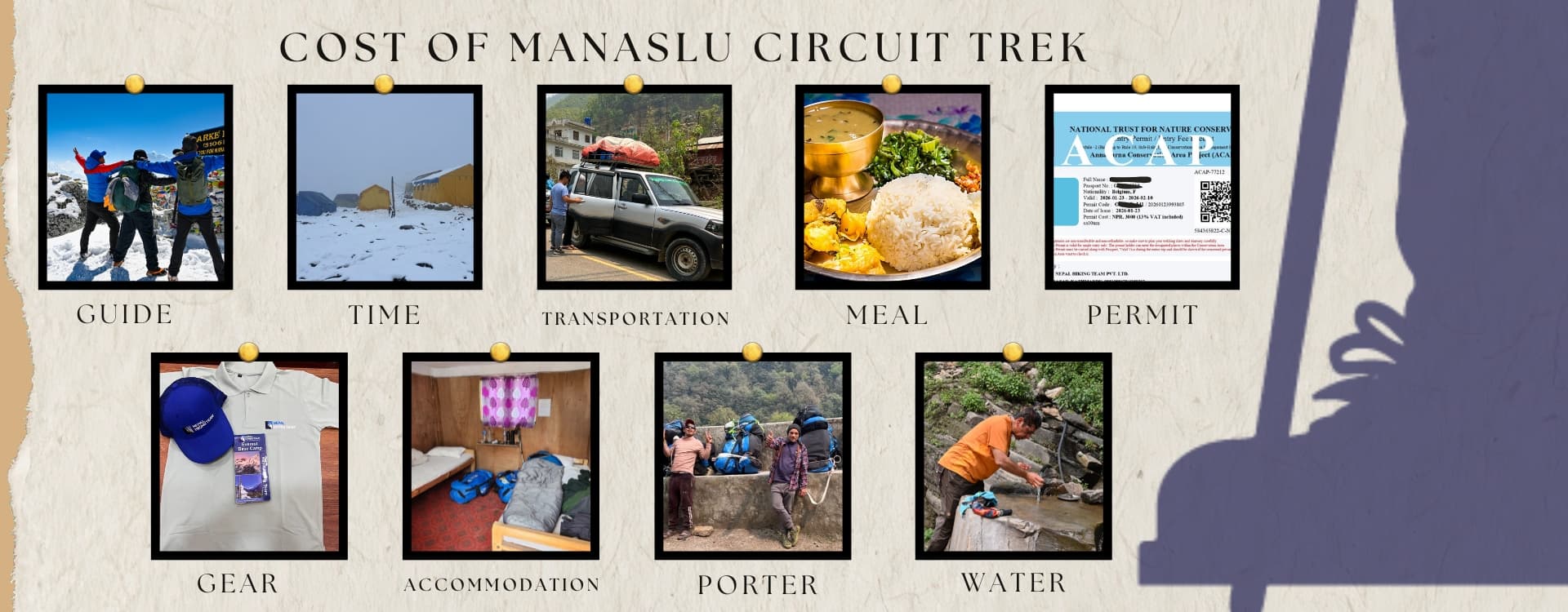
The Manaslu Circuit Trek is one of the challenging trekking destinations in Nepal, offering a less-crowded alternative to other popular Himalayan trekking routes. The Manaslu Circuit Trek costs between $900 and $1,500 USD per person on average. This price covers a standard 12- to 14-day package, including permits, a mandatory guide, teahouse lodging, all meals, and round-trip transport from Kathmandu.
In 2026/27, the total cost also depends on your trekking style, group size, level of comfort, guide/porter fees, and trip length. In addition, the Manaslu region is a restricted area that mandates 3 different permits and a licensed guide. This can significantly influence your overall budget.
Another key factor affecting the Manaslu Circuit Trek is seasonal variations, group discounts, and customisation options. This guide breaks down the total cost and expenses, from accommodation and remote logistics to permits and hidden costs, allowing trekkers to plan their Himalayan adventure with confidence.
How Much Does the Manaslu Circuit Trek Cost? Full Detail price of Manaslu Trek
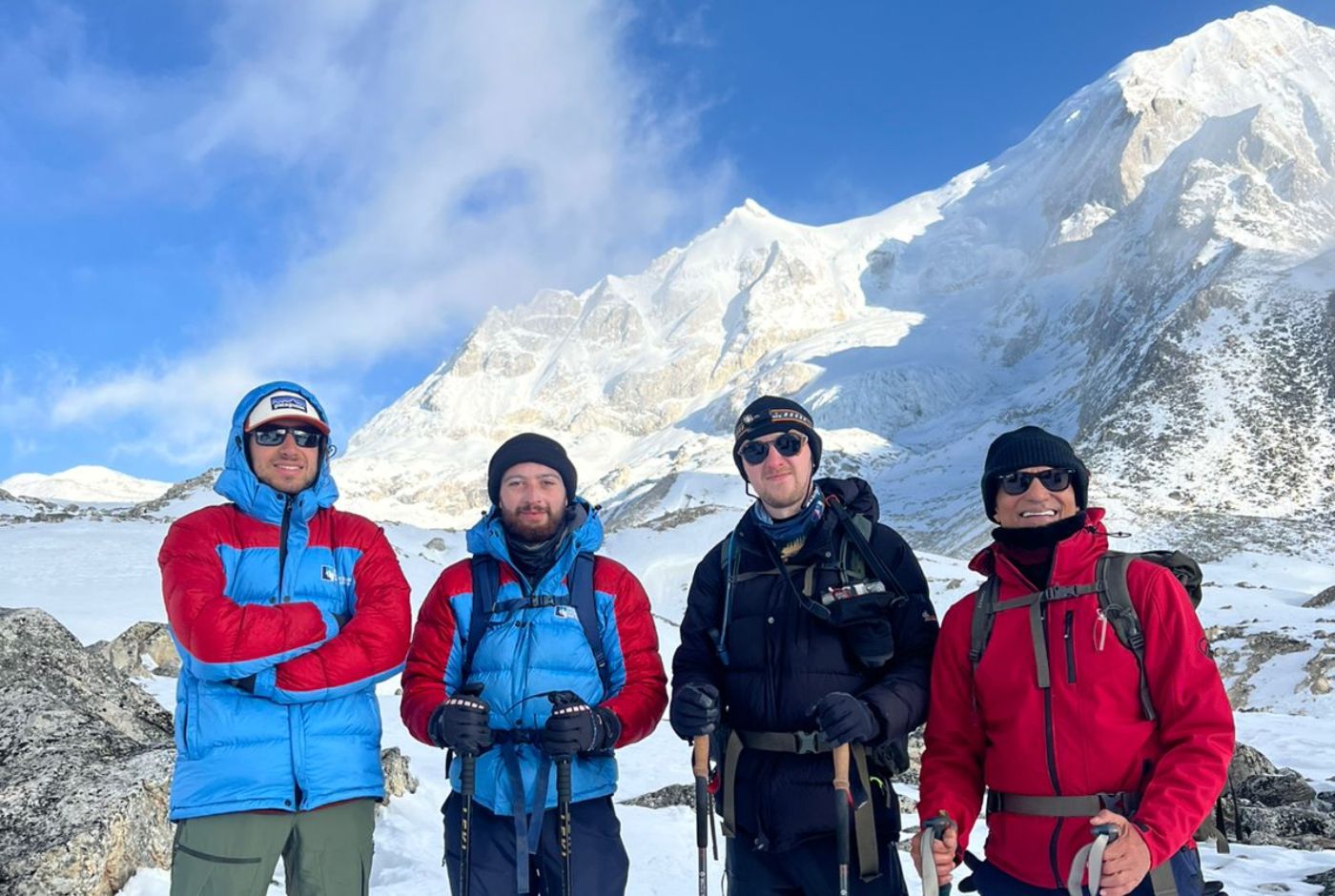
The Manaslu Circuit Trek typically costs USD 900-2,200 per person in 2026/27. Budget trekkers can complete the trek on the lower end, while standard packages with a registered agency usually range from USD 1,200 to USD 1,800. Similarly, the premium or fully customised trips with experienced guides, added comfort, and upgraded logistics can exceed USD 2,000.
For most trekkers, booking through a registered trekking agency is the most practical option. The standard 14-16 day circuit trek package includes a licensed guide, permits, transportation, accommodation, and meals. These packages not only simplify planning but also ensure compliance with the restricted area regulations of the Manaslu region.
When comparing solo vs group costs, solo trekking is now allowed only with a licensed guide. However, the costs are significantly higher compared to a group trek. Whereas group trekkers benefit from shared costs, making the overall price more affordable per person.
Here is a quick table breakdown for the Manaslu Circuit Trek cost for 2026/27:
|
Category |
Estimated Cost (USD) |
|
Budget Trek |
900-1,200 |
|
Standard Package |
1,200-1,800 |
|
Premium Experience |
1,800-2,200+ |
|
Solo Trek (with guide) |
1,500-2,200+ |
|
Group Trek (per person) |
1,200-1,700 |
Overall, the Manaslu Circuit Trek is a less crowded Himalayan experience with excellent value, when cost variations for the trip are understood.
Complete Cost Breakdown of Manaslu Circuit Trek
The complete cost breakdown of the Manaslu Circuit Trek depends on several components, such as permits, guide, meals, and hotels, that shape your overall budget. Additional costs, such as travel insurance, trekking gear, snacks, and Wi-Fi, also add up to your total budget.
Permit Costs (Fixed Government Fees)
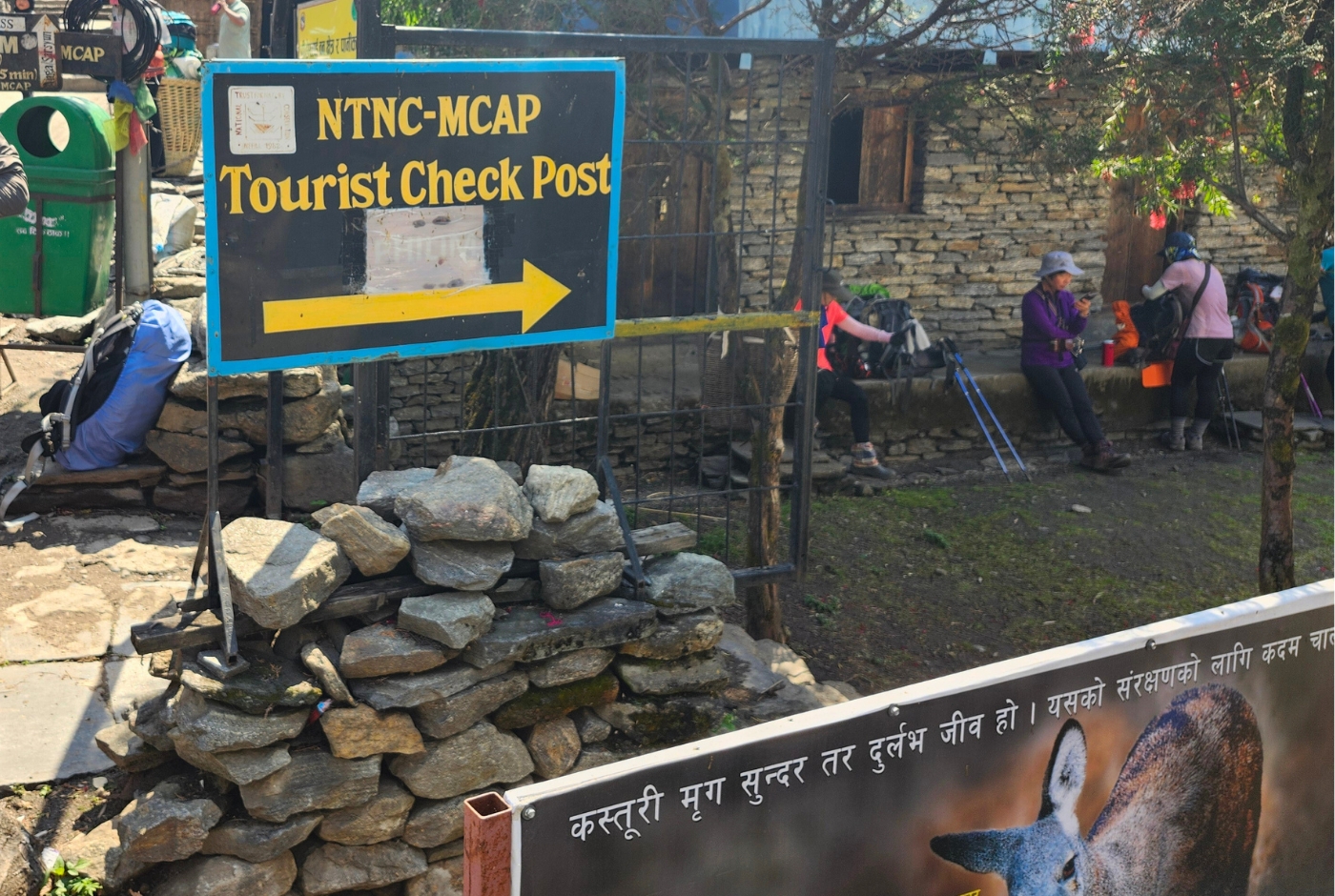
The permit costs for the Manaslu Circuit Trek are fixed government fees and form a significant part of your overall budget. The necessary permits for the Manaslu region are the Manaslu Conservation Area Permit (MCAP), Manaslu Restricted Area Permit (RAP), and the Annapurna Conservation Area Permit (ACAP).
Here is a breakdown of permit costs in the table below:
|
Permit |
Cost (USD) |
|
Manaslu Restricted Area Permit (Sept-Nov) |
$100 (first 7 days) + $15 per day |
|
Manaslu Restricted Area Permit (Dec-Aug) |
$75 (first 7 days) + $10 per day |
|
Manaslu Conservation Area Permit (MCAP) |
$30 |
|
Annapurna Conservation Area Permit (ACAP) |
$30 |
The total permit cost during peak season is between USD $140-$180+, and during the off-season, it is USD $110-$140+. These fees are fixed and apply to all trekkers.
Guide and Porter Cost
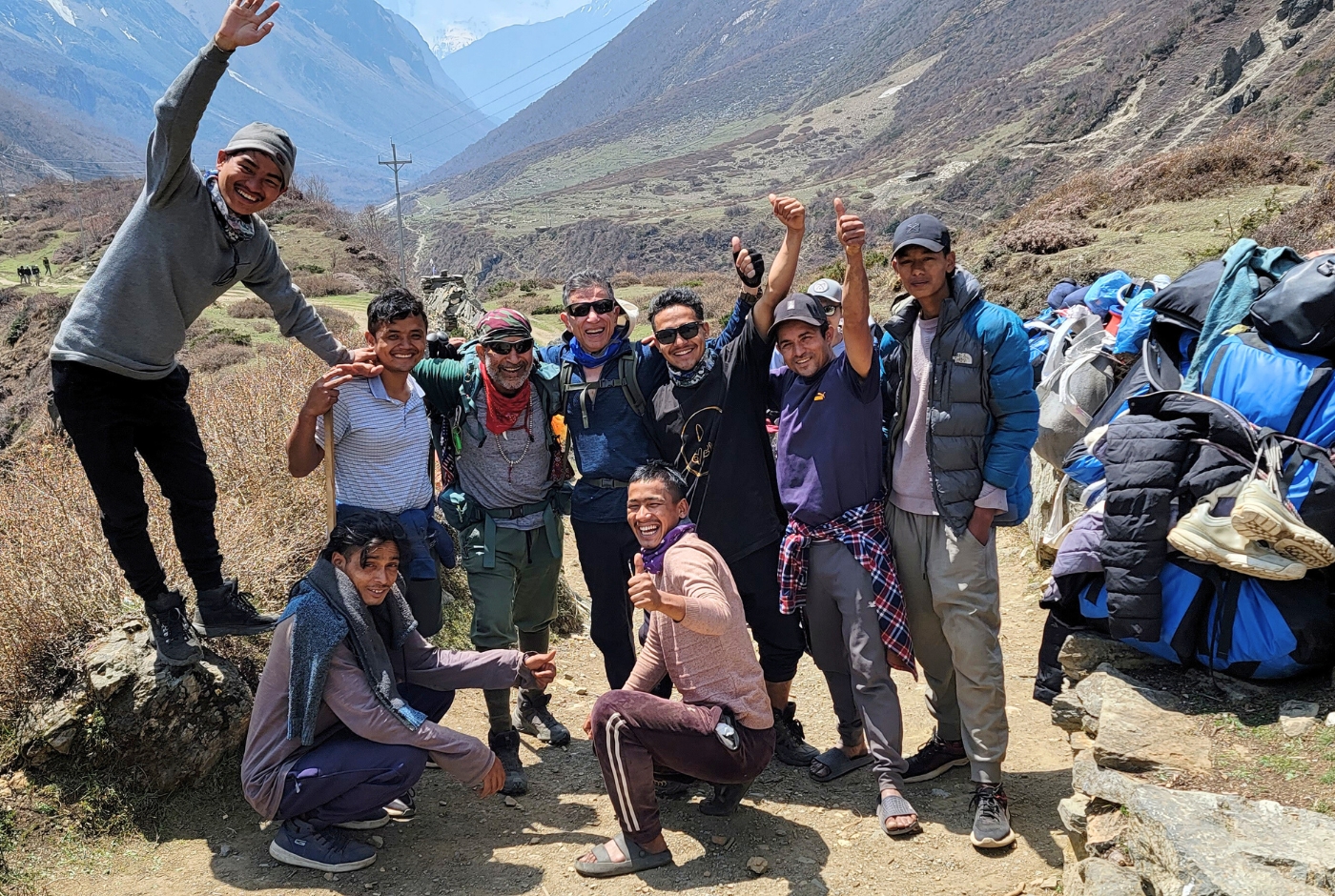
The guide and porter cost for the Manaslu Circuit Trek is a crucial part of your budget. Hiring a government-licensed guide is mandatory in this region and costs around USD $25-35 per day. Whereas porter service costs around USD $18-25 per day and can be shared between two trekkers.
|
Service |
Cost for a 14-day trek (USD) |
|
Guide |
$350 - $450 |
|
Porter |
$250 - $350 |
As per the latest guidelines, the guide-to-trekker ratio is 1:7, meaning one licensed guide can manage up to 7 trekkers in a single group. This is mandatory in the Manaslu region due to its remote trails, limited infrastructure, and restricted area status.
Accommodation Cost on the Trail
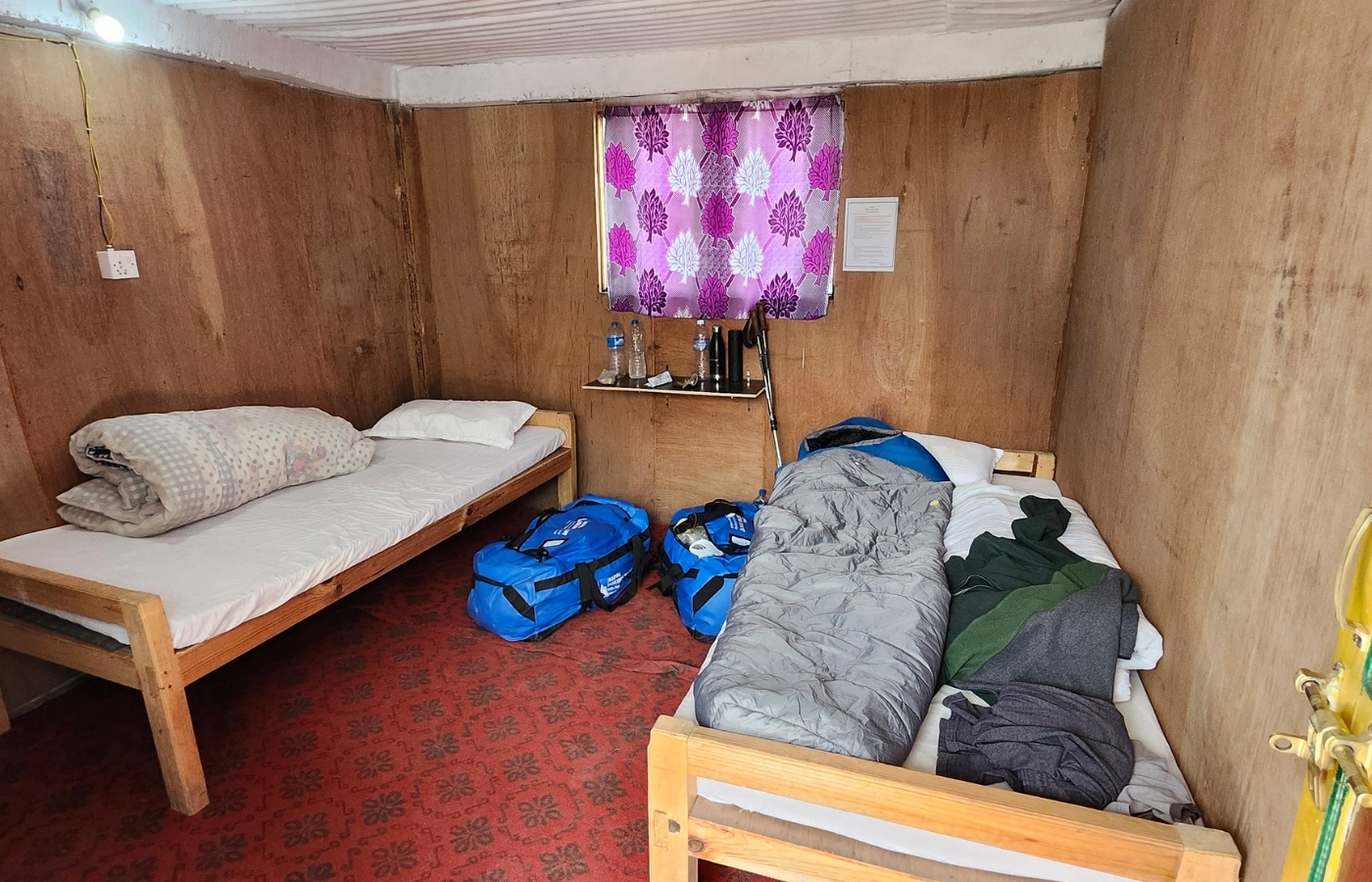
Accommodation costs on the Manaslu Circuit Trek vary by village and altitude. In the lower region, teahouse stays cost USD 5-10 per night and can reach upto USD 10-15 per night in higher elevations like Samagaon or Larkya Phedi.
Most teahouses offer twin-sharing rooms with a basic bed and blanket, and a shared toilet. At higher altitudes, amenities such as hot showers, Wi-Fi, and charging services are often subject to an extra fee due to limited facilities.
|
Accommodation Category |
Estimated Cost (USD) |
Scope / Details |
|
Standard Teahouse Room |
$5 – $15 per night |
Per room (Usually twin-sharing with two single beds) |
|
Single Supplement Room |
$15 – $25 per night |
For solo travelers wanting a private room (Subject to availability) |
|
Attached Bathroom Room |
$20 – $35 per night |
Only available at lower elevations (e.g., Jagat, Namrung, Lho) |
- Twin-Sharing Basis: Standard rooms feature two individual twin beds. If you travel with a partner or join a group, this cost is split between two people.
- The Food Condition: Teahouses offer rooms at these very low rates on the strict condition that you eat your breakfast and dinner at their attached restaurant. If you choose to eat elsewhere, they will charge you a significantly higher rate for the room (often 3 to 4 times the standard price).
- Higher Elevation Restraints: At high-altitude stops like Dharmasala (Larkye Phedi, 4,460m), accommodation is extremely basic and limited. During peak seasons, rooms fill up completely, and trekkers occasionally sleep in common dining areas or shared tents.
Food and Drinks Cost
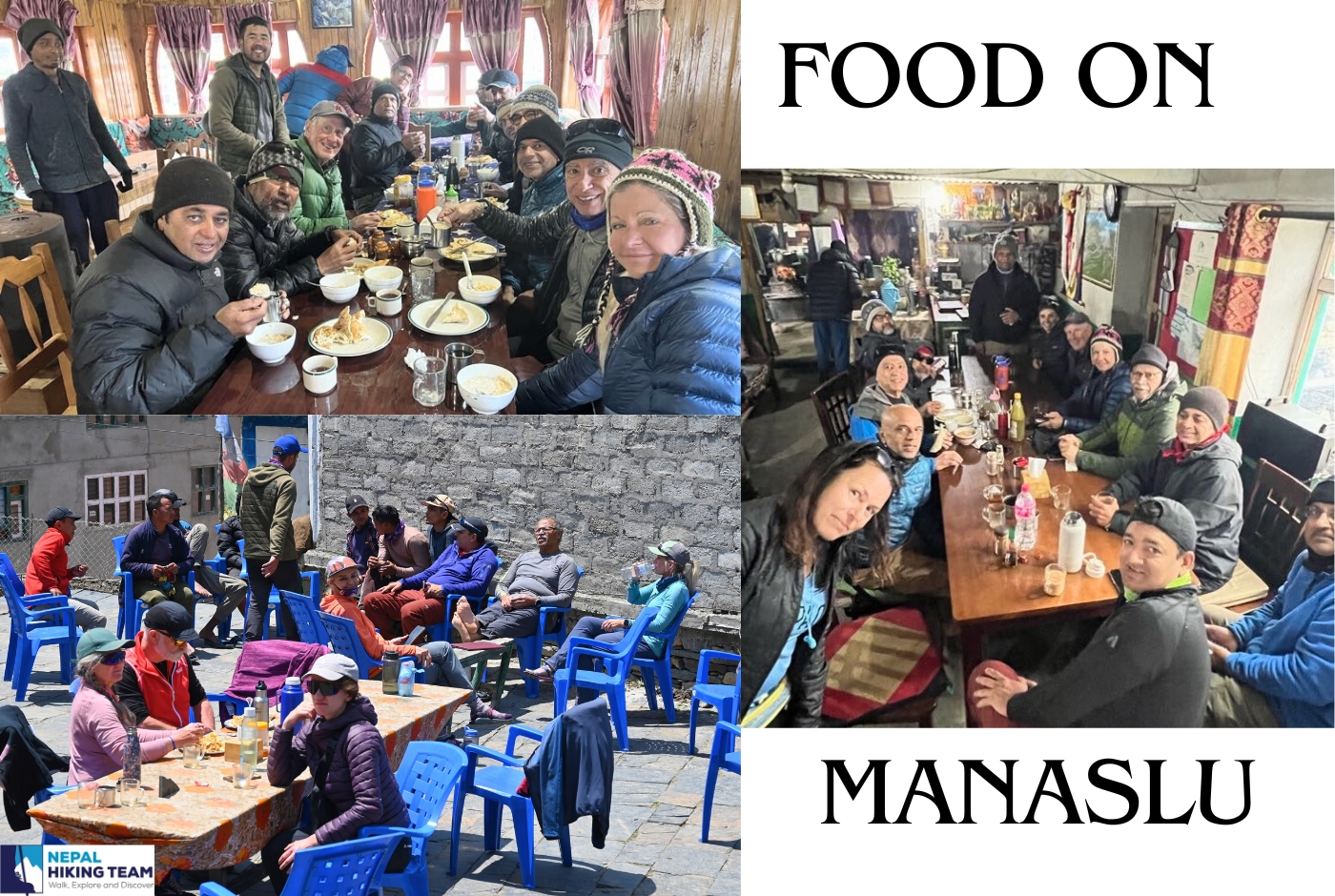
The food and drinks cost on the Manaslu Circuit Trek range between USD 5-7 for breakfast, USD 7-10 for lunch, and USD 10-12 for dinner. The price for each meal increases at higher-altitude villages due to limited supplies.
Likewise, trekkers can purchase drinking water at teahouses for USD 1-2 per litre. You can also carry water purification tablets or a filtered water bottle to purify natural spring water for drinking. This works as a cost-effective alternative and helps trekkers manage their budget efficiently.
Transportation Cost (Kathmandu to Trailhead)
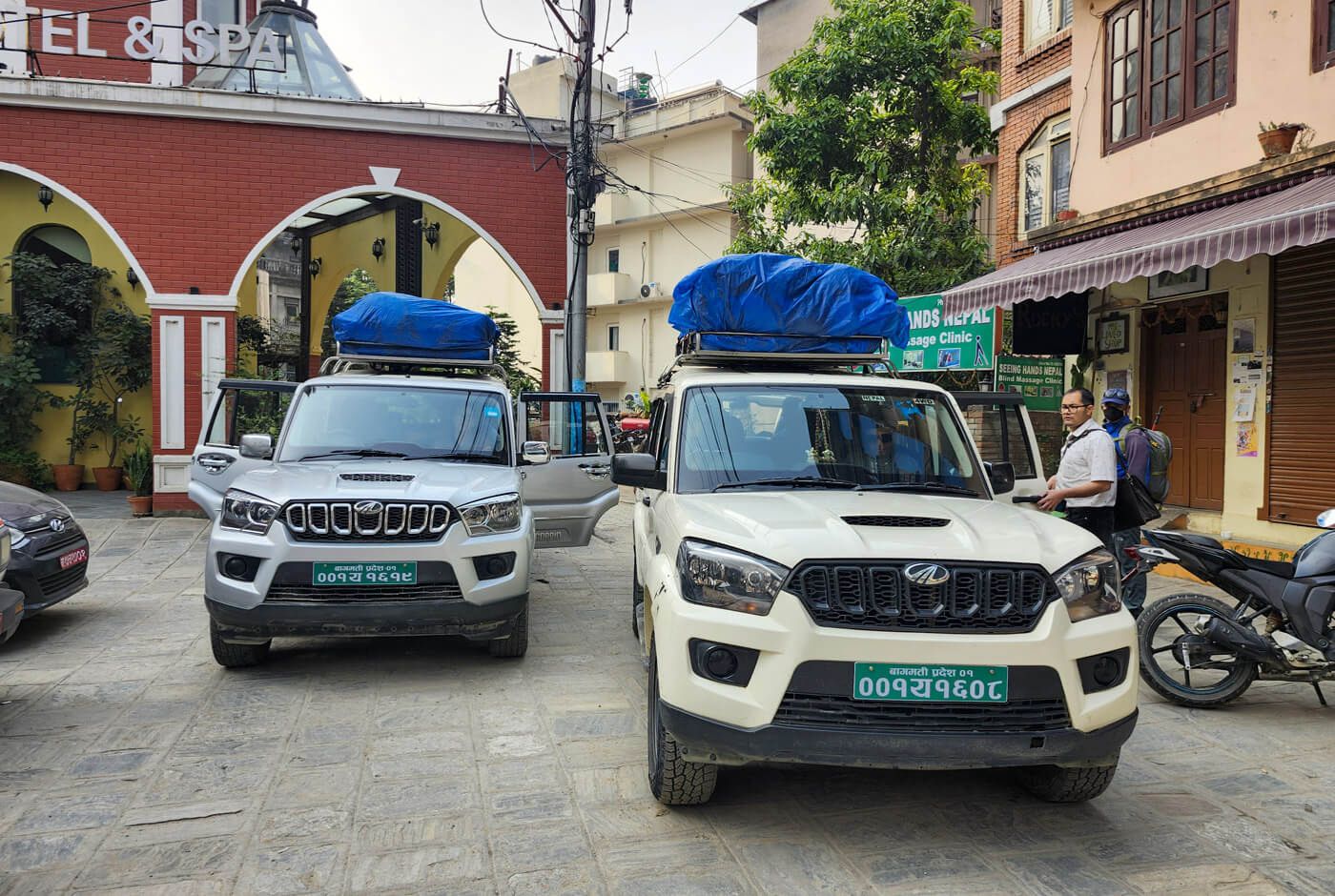
The transportation cost from Kathmandu to the trailhead at Maccha Khola depends on whether you use a private or shared vehicle. While a private jeep ride costs around USD 180-250 one-way (split among group), shared jeep rides cost around USD 30-50 per person.
|
Option Type |
Estimated Cost (USD) |
Scope / Passenger Details |
|
Local Public Bus |
$10 – $12 per person |
Departs early morning from Gongabu New Bus Park. Budget-friendly but slow and crowded. |
|
Shared Local Jeep |
$15 – $20 per person |
Departs from Gongabu Bus Park. Faster than the bus but space for luggage is tight. |
|
Private 4WD Jeep |
$195 – $250 total |
Total cost for the vehicle. Fits up to 7 passengers comfortably. Cost can be split among your group members. |
|
Option Type |
Estimated Cost (USD) |
Scope / Passenger Details |
|
Public Bus Combo |
$20 – $25 per person total |
Step 1: Shared jeep from Dharapani to Besisahar ($15–$20). Step 2: Public bus from Besisahar to Kathmandu ($13–$15). |
|
Shared Local Jeep |
$50 – $70 per person |
Direct shared option from Dharapani to Kathmandu arranged locally. Only leaves once completely full. |
|
Private 4WD Jeep |
$275 – $350 total |
Total cost for a private Scorpio or Bolero jeep directly from your lodge in Dharapani back to your Kathmandu hotel. Split among up to 6–7 passengers. |
Travel Insurance Cost (Mandatory)
For the Manasalu Circuit Trek, travel insurance is mandatory, as the trail reaches high altitude above 5,000 m at Larkya La Pass. Depending on age and coverage level, the typical cost for travel insurance ranges from USD 50 to 100 for a 2-3 week trek.
The insurance must cover medical emergencies, evacuation, and high-altitude helicopter rescue, ensuring safety in the event of altitude-related accidents or illness. As standard travel insurance may not cover extreme trekking, travellers should choose a plan specifically for high-altitude treks.
Gear and Equipment Cost
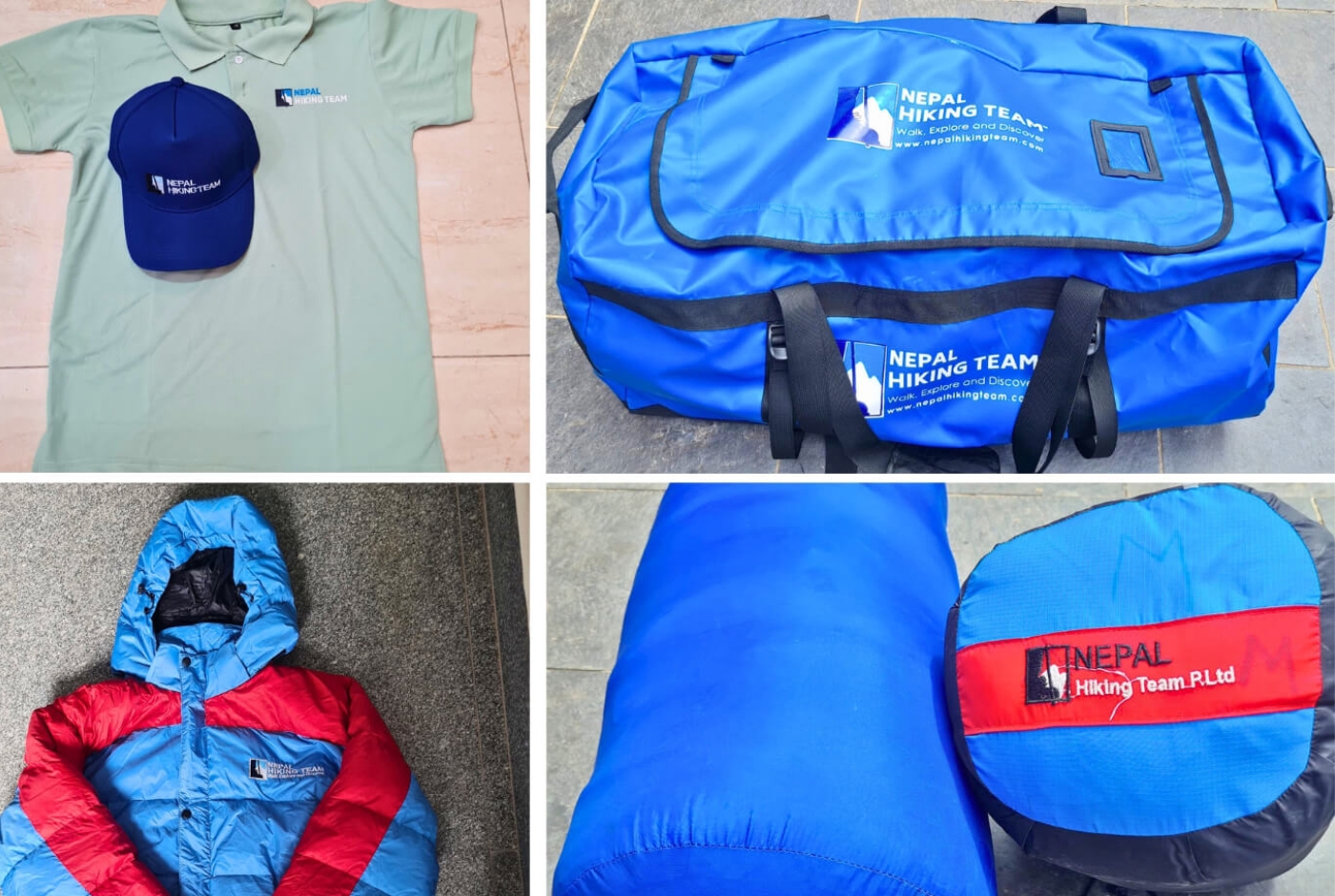
The cost of gear and equipment for the Manaslu Circuit Trek depends on whether you buy or rent. While some prefer buying items like down jackets, sleeping bags, and trekking poles, many rent them from Kathmandu to save money.
Here is a breakdown in a table for clear information:
|
Item |
Rental Cost (USD) |
|
Down Jacket |
$1 - $2 per day |
|
Sleeping Bag |
$1 - $2 per day |
|
Trekking Poles |
$1 per day |
The total cost of renting gear for a 14-day trek is around $50-100, whereas buying costs around $200-500. It is optimal to budget around $150-250 for gear to balance between renting and purchasing items for safety and comfort throughout the trek.
Miscellaneous Costs on the Trail
During the circuit trek, miscellaneous costs include daily expenses such as Wi-Fi, phone charging, and hot showers. They usually cost USD 1-3 per use at most teahouses. Similarly, trekking snacks, personal items, and beverages can add another USD 5-10 per day, depending on altitude.
In addition, it's customary to tip your porter and guide at the end of the trek, with tips ranging from $5-10 per day for a guide and $3-5 per day for a porter. The amount usually depends on service quality and group size.
|
Miscellaneous Expense Item |
Estimated Cost (USD) |
Scope / Details |
|
Hot Showers |
$3 – $6 per shower |
Usually powered by gas cylinders or solar panels. Prices double at higher altitudes. |
|
Electronic Device Charging |
$2 – $5 per charge |
Charging phones, cameras, or power banks. Often free at lower elevations but charged hourly or per device above Namrung. |
|
Wi-Fi / Internet Access |
$3 – $5 per day |
Most teahouses use card-based satellite internet (like Everest Link or Air Link) with data limits. |
|
Drinking Water |
$1 – $4 per bottle / liter |
Safe drinking water stations charge per liter. Sealed plastic water bottles are banned in certain conservation zones to reduce pollution. |
|
Snacks & Comfort Food |
$3 – $7 per item |
Chocolate bars, Pringles, bakery items, or soft drinks. Prices scale up significantly due to mule transportation costs. |
|
Alcoholic Beverages |
$5 – $8 per beer |
Local beers (like Everest or Gorkha) or local millet wine (Chang). Drinking alcohol is discouraged at high altitudes due to dehydration. |
|
Souvenirs & Donations |
$10 – $30 total |
Small donations at local monasteries (like Ribung Monastery in Lho) or buying handmade Tibetan crafts. |
Considering these miscellaneous costs helps trekkers ensure a comfortable and well-prepared trekking experience.
Total Estimated Cost for Manaslu Circuit Trek
The total estimated cost for the Manaslu Circuit Trek with a registered agency in 2026/27 typically ranges from USD 1,200 to USD 1,800 per person. The total budget includes permits, guide fees, accommodation, transportation, and travel insurance.
While premium packages cost over $2,000, budget trekkers can complete the journey for under $900-$1,200. Planning your budget with these estimates ensures a smooth, safe, and enjoyable trekking experience.
Budget Trek Cost
A budget trek on the Manaslu Circuit trail costs around $900-$1,200 per person. Trekkers stay in basic teahouses with shared services, accommodations, and simple meals. The budget trek option focuses on essential comfort while keeping daily expenses low, perfect for solo trekkers seeking an authentic trekking experience without overspending.
Standard Trek Cost (Most Popular)
The standard trek cost for the Manaslu Circuit ranges from USD 1,200 to 1,800 and offers the best balance of comfort, safety, and value. This trekking package is mostly organised through a registered trekking agency. Likewise, they include a licensed guide, porter support, meals, and accommodations in teahouses.
Luxury / Premium Trek Cost
The luxury or premium trek cost ranges from $1,800 to $2,200 per person and is designed for trekkers seeking extra comfort, convenience, and personalised service. The luxury package includes private jeep transportation, upgraded teahouses, guides, and more organised logistics.
This package is ideal for trekkers seeking the remote beauty of the Manaslu region without compromising on safety, comfort, and quality of services throughout the journey.
Cost Comparison – Solo vs Group Trek
When planning your 14-day Manaslu Circuit Trek, understanding the cost difference between group and solo trekking is essential. Group trekking is generally more economical as the costs for guides, porters, and transportation are shared among trekkers.
While solo trekking costs more, the total cost is not shared among fellow trekkers. However, it provides flexibility for independent travellers.
Note: Solo trekking in the Manaslu Region means that foreign trekkers can trek solo with a licensed guide. Previously, the Nepal Government mandated group trekking with at least 2 trekkers and a guide.
Here is a table comparison between solo and group trekking:
|
Trek Type |
Estimated Cost (USD) |
Notes |
|
Group Trek |
1,200 to 1,800 |
Costs shared for guide, porter, transport |
|
Solo Trek |
1,500 to 2,200 |
Guide mandatory, no cost-sharing benefits |
Overall, while solo trekking offers independence at a higher price, a group trek is more cost-effective. Reviewing these differences helps trekkers choose the best option that fits their preferences and budget.
How to Reduce Manaslu Circuit Trek Cost
With smart planning, trekkers can reduce the cost of the Manaslu Circuit Trek without compromising the experience or safety. One of the easiest ways is to join a group departure, allowing you to share guide and porter fees, accommodation, and transportation costs. This makes the journey significantly affordable.
Likewise, another way is to share a porter and jeep rides with fellow trekkers. This can be helpful, especially for higher-altitude logistics, which can be costly. Trekkers can rent essential gear like a down jacket, a sleeping bag, or trekking poles instead of buying.
Lastly, trekkers can save money by trekking during the shoulder season (spring or early autumn). During these seasons, the costs for permits, accommodations, and transportation are slightly lower. These strategies ensure a more budget-friendly, safe, and comfortable Masalu adventure.
Why is the Manaslu Circuit Trek Cost Higher Than Other Treks?
The Manaslu Circuit Trek costs more than other treks due to its restricted status requiring costly permits, fewer accommodations, and a licensed guide. Trekkers are required to obtain multiple permits, including MAP, MCAP, and ACAP, each with a fixed government fee.
These permits are regulated to protect the Manaslu region’s natural and cultural heritage, making independent trekking impossible.
Another reason is the remote logistics and transportation. The trailhead at Machha Khola requires long bus or jeep rides, and supplies are transported from major cities to high-altitude villages, which increases operational costs.
Lastly, the mandatory guide requirement for safety and regulatory compliance adds a fixed daily expense. These factors make the Manaslu Circuit Trek more expensive than other commercial treks, such as the Annapurna Circuit Trek or the Everest Base Camp Trek.
Hidden Costs to Watch Out For
While planning your Manaslu Circuit Trek, it is crucial to consider the hidden costs that can quickly add up when overlooked. One common expense is an extra night in Kathmandu caused by itinerary changes or flight delays.
Similarly, emergency evacuation and high-altitude helicopter rescue can be extremely expensive. If a trekker does not have travel insurance that covers helicopter rescue, the cost can be thousands of dollars.
In addition, other hidden costs include currency exchange fluctuations, which can slightly increase your overall spending when converting foreign currency into Nepali rupees. Last-minute gear purchase in Kathmandu also adds unplanned expenses to the trip.
Trekkers should be aware of hidden costs for a realistic budget and avoid financial stress during their Manaslu Circuit Trek.
Best Time vs Cost (Seasonal Price Variation)
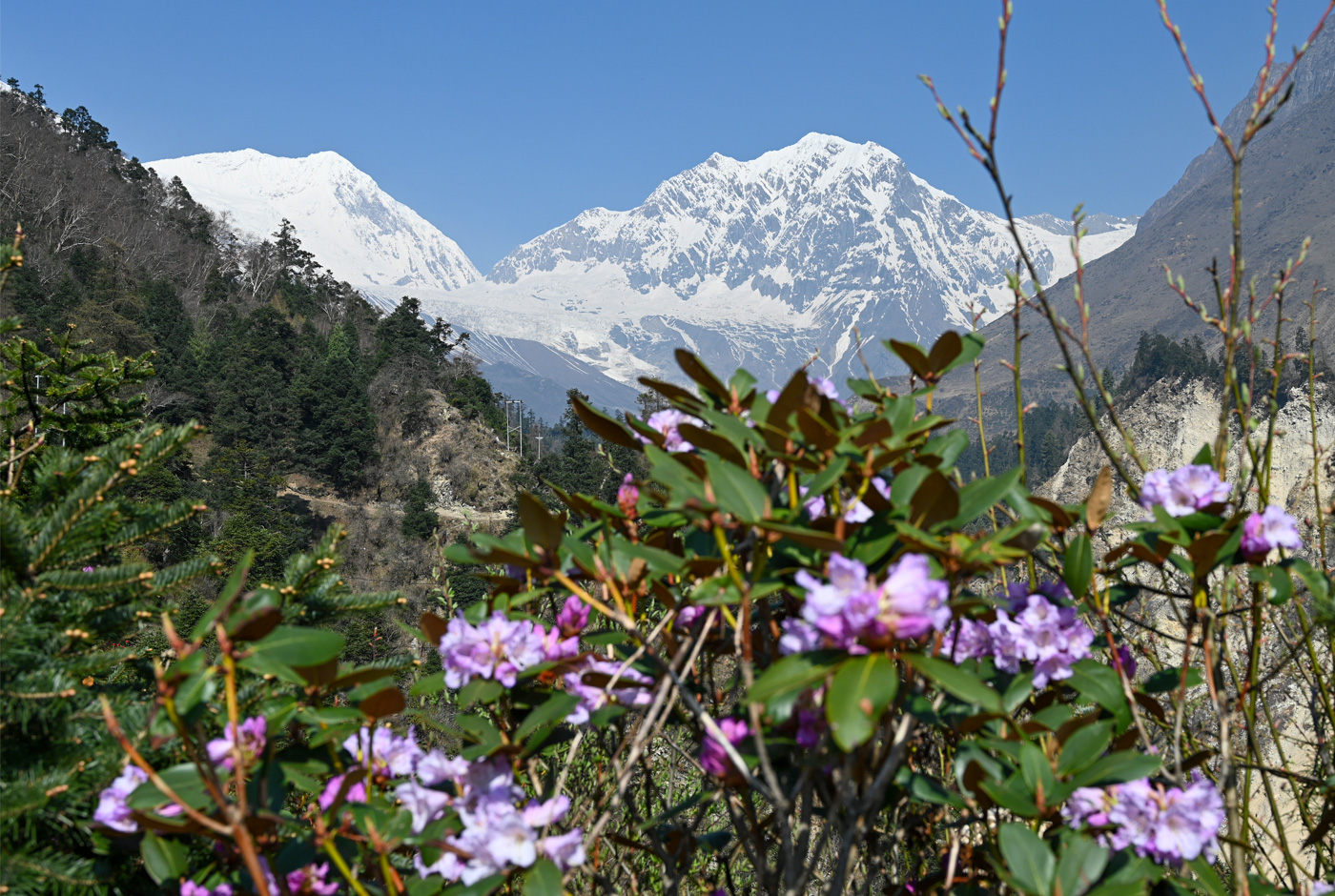
The best time to trek in the Manaslu region directly affects your overall budget. The peak seasons, such as spring (Mar-May) and autumn (Sept-Nov), have higher prices due to increased demand for accommodation, guided tours, and transportation. This is due to stable weather, excellent mountain visibility, and suitable trekking temperatures.
On the other hand, the off-season (winter and monsoon) offers lower trekking costs due to less demand for transport, guide, and accommodation. However, these seasons come with higher risks such as landslides, heavy rain and snowfall, which can affect accessibility and safety.
Here is a breakdown of the Manaslu Circuit Trek seasonal cost:
|
Season |
Cost |
Conditions |
|
Peak season (Spring/Autumn) |
Higher |
Best weather |
|
Off-season (Monsoon/Winter) |
Lower |
Higher risk |
|
Shoulder season |
Moderate |
Balanced |
Is the Manaslu Circuit Trek Worth the Cost?
The overall cost of the Manaslu Circuit Trek may seem higher than that of other high-altitude treks, but the value outweighs the price. Unlike other commercialised routes, Manaslu offers a combination of raw Himalayan wilderness, peaceful trails, and cultural authenticity.
For the price trekkers pay, they receive far more than just basic logistics. The total cost comprises a licensed guide, structured itinerary, safer high-altitude travel, and comfortable accommodations. It also covers restricted permits, mandated to help preserve the region’s untouched beauty and limit overcrowding.
Additionally, the diverse landscapes, from lush subtropical forests to crossing the dramatic Larkya La Pass, the raw experience is truly exceptional compared to standard trekking trails.
From a real trail perspective, the Manaslu Circuit stands out for its less-crowded route, remote atmosphere, and deep Tibetan cultural immersion. The Manaslu Circuit Trek is perfect for trekkers who seek solitude, culture, and a sense of true adventure.
Why Choose a Reliable Agency for the Manaslu Circuit Trek
Choosing a reliable agency for the Manaslu Circuit Trek is crucial due to the complex permit system. A professional agency ensures all documents and permits are processed currently, avoiding delays, unexpected expenses, and fines.
Proper safety, logistics, and acclimatisation are essential for planning in remote areas like Manaslu. An experienced and reliable agency provides reliable transportation, guides, and a well-structured itinerary with contingency plans for emergencies such as altitude sickness.
In the end, ground support matters more than price. Choosing the right travel agency like Nepal Hiking Team with ground experience in the Manaslu region helps you avoid hidden expenses and ensures safety, while keeping your trek budget-friendly and well-managed.
Post a Comment