
Planning the Annapurna Circuit Trek means thinking about many things at once: permits, fitness, gear, and weather. But one question comes up again and again before people hit the trail. Where exactly will I sleep each night? The good news is that Annapurna Circuit Trek accommodation is built around one of the most reliable and well-developed lodge systems in the Himalayas, and you do not need a tent, a sleeping mat, or any camping experience to complete this journey.
The teahouse trekking system in Nepal is what makes the Annapurna Circuit so accessible. These small, family-run mountain lodges sit at regular intervals along the trail, offering a bed, a hot meal, and a warm dining room after each day of walking. Some are very basic, with thin walls and shared bathrooms. Others, particularly in larger villages like Manang and Jomsom, are genuinely comfortable, with better rooms, attached bathrooms, and menus that go well beyond boiled noodles. The range is wide, and knowing what to expect at each stage of the route makes a real difference to how well you prepare.
This guide covers everything you need to know about where to stay on the Annapurna Circuit Trek before you leave home. You will find information on room conditions, bathroom facilities, shower costs, heating, WiFi, electricity, regional pricing, and practical tips for choosing the right lodge each night. Whether you are trekking independently or with an agency, this guide gives you an honest picture of life on the trail.
After guiding trekkers across the Annapurna region for more than 17 years, our team at Nepal Hiking Team has stayed in hundreds of lodges along this route across every season. The insights in this guide come directly from that experience on the trail, not from a travel brochure.
Annapurna Circuit Trek Accommodation Overview (Day-by-Day)
Here is a day-by-day summary of accommodation on the Nepal Hiking Team 14-day Annapurna Circuit Trek. Each lodge below has been selected for its cleanliness, hospitality, location, and overall quality on the trail.
| Day | Route / Destination | Hotel/Lodge |
|---|---|---|
| Day 1 | Arrive Kathmandu | Hotel Woodapple and Spa |
| Day 2 | Drive to Jagat | Jagat Guest House |
| Day 3 | Trek to Dharapani | Phulbari Hotel |
| Day 4 | Trek to Chame | 4 Seasons Hotel |
| Day 5 | Trek to Pisang | Mandala Hotel |
| Day 6 | Trek to Manang | Tilicho Hotel |
| Day 7 | Acclimatization Day – Manang | Tilicho Hotel |
| Day 8 | Trek to Yak Kharka | Hotel Thorong Peak |
| Day 9 | Trek to Thorong Phedi | Hill Top |
| Day 10 | Cross Thorong La – Trek to Muktinath | Eureka |
| Day 11 | Trek to Jomsom | Himalayan Hotel |
| Day 12 | Fly to Pokhara | Hidden Kingdom |
| Day 13 | Drive back to Kathmandu | Hotel Woodapple and Spa |
| Day 14 | Departure | — |
The sections below explain in detail what to expect at each stage of the route, from room conditions and bathroom facilities to costs, connectivity, and how to choose the best lodge available on any given night.
Annapurna Circuit Accommodation by Elevation
This table gives you a quick reference for accommodation type and lodge quality at each key stop along the circuit, organized by elevation. Use it to set realistic expectations for each night of the trek before you leave home.
| Location | Elevation | Accommodation Type | Typical Room Cost (USD) |
|---|---|---|---|
| Jagat | 1,300 m | Standard teahouse | USD 8 to 10 |
| Dharapani | 1,860 m | Basic teahouse / Standard guesthouse | USD 8 to 10 |
| Chame | 2,670 m | Standard lodge | USD 8 to 10 |
| Pisang | 3,300 m | Standard guesthouse | USD 8 to 10 |
| Manang | 3,540 m | Best lodges on circuit | USD 8 to 10 |
| Yak Kharka | 4,050 m | Basic high-altitude teahouse | USD 10 to 15 |
| Thorong Phedi | 4,450 m | Very basic teahouse | USD 10 to 15 |
| High Camp | 4,849 m | Most basic on circuit | USD 10 to 15 |
| Muktinath | 3,760 m | Standard guesthouse | USD 8 to 17 |
| Jomsom | 2,720 m | Hotel-style lodge | USD 8 to 17 |
What Kind of Accommodation is Available on the Annapurna Circuit Trek?
The teahouse is the foundation of trekking life in Nepal. These are small, family-run lodges built specifically to serve trekkers, and they exist at regular intervals along the Annapurna Circuit from the first walking day to the last. Each one provides a bed, blankets, a shared bathroom, and a kitchen producing hot meals throughout the day. Some have been operating for decades. Others are newer builds constructed as trekking in the region grew. All of them are run by local families who depend on the trail for their income.
What to expect from teahouses on the Annapurna Circuit varies considerably depending on your location. In lower villages with road access, teahouses are better stocked, better insulated, and more comfortable. As you gain altitude and move into more remote sections of the trail, supplies become harder to transport and facilities become simpler. A teahouse at Jagat and a teahouse at Thorong Phedi are very different experiences, even though both carry the same name.
Accommodation quality shifts noticeably as you gain altitude. The shift is not just about comfort but about what is physically possible to provide at 4,000 meters above sea level. Thinner walls, simpler menus, shared bathrooms, and colder rooms are the reality in high-altitude zones. Understanding this before you go means you arrive at each lodge with the right mindset rather than disappointment.
Types of Accommodation on the Annapurna Circuit
Not all lodges on the Annapurna Circuit are the same. The trail passes through villages of very different sizes and at very different elevations, which means the standard of accommodation shifts considerably from one stop to the next. Broadly speaking, you will encounter three types of lodging across the route.
Basic Teahouses
Basic teahouses are the most common type of accommodation on the trail, particularly in smaller villages and higher-altitude sections. These lodges are simple and functional. A typical room has two wooden beds with a thin foam mattress, a pillow, and one or two blankets. The walls are usually thin plywood or wood panel. The bathroom is shared and located in a separate block, a short walk from the sleeping rooms. There is no heating in the rooms at any point on the circuit.
The dining hall is where life happens in a basic teahouse. It is warmed by a central stove in the evenings, and it serves as the communal gathering space for everyone staying at the lodge. Trekkers, guides, porters, and the host family all share this space. The menu is standard: dal bhat, noodle soup, fried rice, momos, eggs, and pancakes. The food is simple but filling, and the atmosphere in the evenings is one of the genuine highlights of teahouse trekking in Nepal.
You will find this type of lodge throughout the route, from Jagat all the way to High Camp. At higher altitudes, even the basic comforts become harder to maintain, and a basic teahouse at 4,500 meters feels noticeably rougher than one at 2,000 meters. Bring your own sleeping bag. That single item changes your experience more than almost anything else you can pack.
Standard Guesthouses
Standard guesthouses represent a clear step up in comfort and are found in mid-range towns along the circuit. Villages like Chame, Bagarchap, and parts of Manang have lodges with better insulation, thicker walls, and in some cases, rooms with attached bathrooms. The mattresses tend to be more comfortable, the blankets thicker, and the dining menus broader, sometimes including fresh baked goods, proper coffee, and a wider selection of hot meals.
These lodges are usually larger operations than a basic teahouse, often with a separate reception area, a proper menu board, and staff beyond the immediate family. Prices are slightly higher than the most basic options, but the difference in comfort for a cold night at altitude is usually worth it. If you have a choice between a basic teahouse and a standard guesthouse at the end of a hard day's walking, the standard guesthouse wins almost every time.
At Chame (2,670 m), trekkers seeking premium comfort will also find MLN Chame Lodge—a Mountain Lodges of Nepal property that sits clearly above the standard guesthouse tier. It offers ensuite bathrooms, heated blankets, full bedding, mountain views of Annapurna II and Lamjung Himal, full board meals, and hot drinks. It is a notable upgrade option for trekkers who want a genuinely hotel-quality stay at this stage of the route.
Luxury Lodges (Limited Sections)
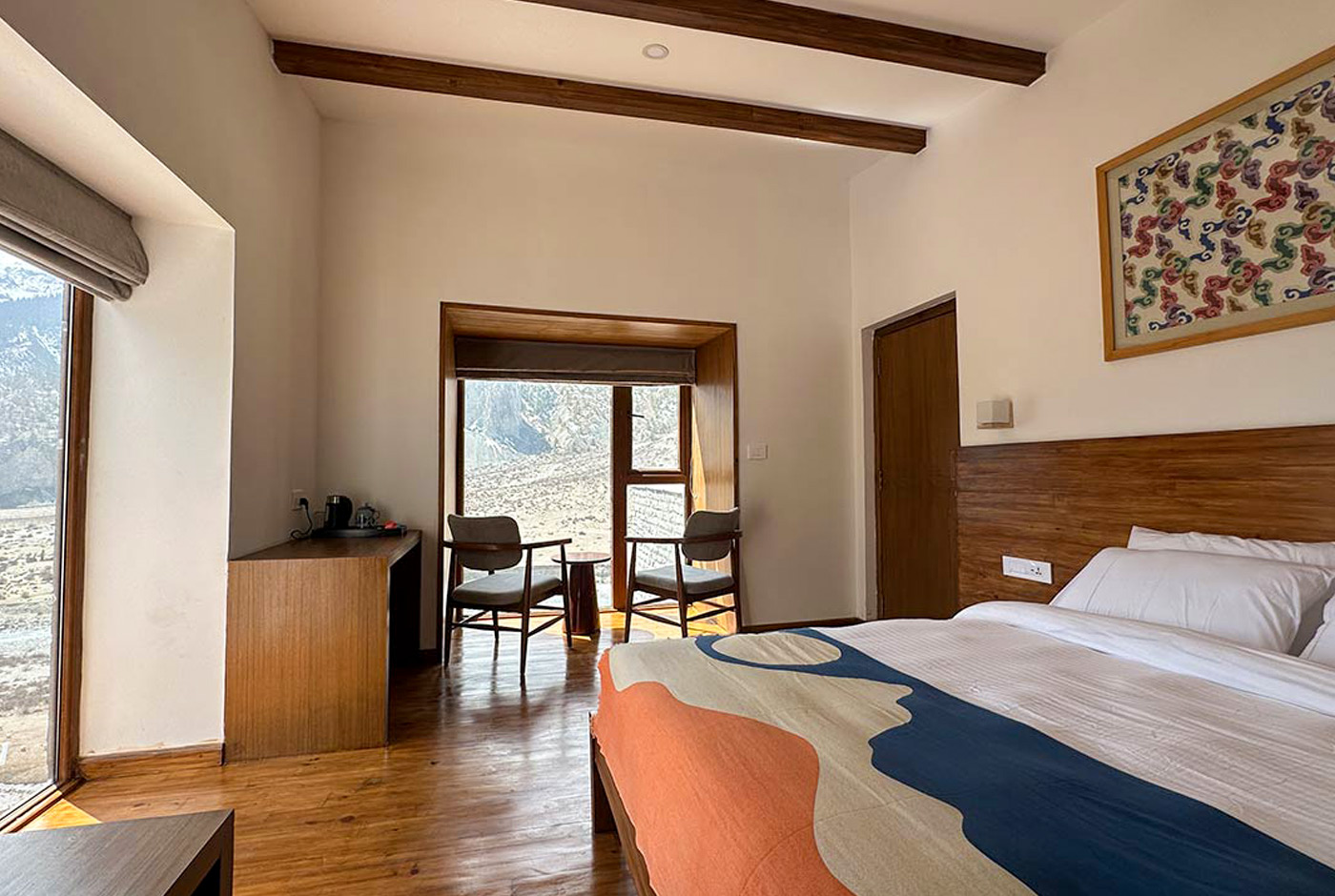
A small number of higher-end lodges exist along the lower and mid sections of the circuit, particularly in villages with good road access or strong trekking infrastructure. These lodges offer private en-suite bathrooms, better-quality beds and furnishings, and a more hotel-like feel. Some have heating options, reliable electricity, and stronger WiFi connections. They are considerably more comfortable than anything you will find above 3,500 meters.
Two standout properties in this category are operated by Mountain Lodges of Nepal (MLN)—a premium lodge network with properties at both Chame and Manang on the Annapurna Circuit.
MLN Chame Lodge sits at 2,650 m and delivers modern comfort fused with authentic local character. Amenities include mountain views, heated blankets, full bedding, an ensuite bathroom, full board, and hot drinks. The lodge has minimalist interiors designed for tranquillity and a strong connection to the Himalayan landscape.
MLN Manang Lodge sits at 3,448 m and is the newest addition to the MLN collection on this circuit. Described as a refined retreat that intertwines the elegance of tradition with the spirit of adventure, it offers mountain views of Gangapurna and Tilicho Peak, heated blankets, full bedding, an ensuite bathroom, full board, and hot drinks. Rooms are designed with minimalist interiors and a strong connection to the surrounding natural beauty.
Both MLN properties are limited-capacity premium lodges and should be booked in advance, especially during peak trekking season in October, November, March, April, and May. They are worth considering as a reward night or during the acclimatization stop at Manang. Note that above 3,500 meters, even the best available lodge is still a mountain teahouse at its core — MLN Manang being the one exception to this rule on the upper circuit.
Room Conditions and Sleeping Arrangements
The standard room on the Annapurna Circuit is twin-share. Two wooden beds sit side by side, each with a thin foam mattress, a pillow, and a blanket or two. The room is small. There is usually a window, a wall hook for hanging your pack, and very little else. Solo trekkers are generally given a twin room to themselves, while couples and trekking partners share. Private single rooms are available at some lodges, but availability is not guaranteed, and a small surcharge may apply.
At High Camp just below Thorong La Pass, some teahouses use dormitory-style rooms rather than private twins, particularly during peak season when demand exceeds the number of private rooms available. If you are trekking during October or November, be prepared for dormitory-style sleeping at High Camp and carry earplugs. Privacy on the upper circuit is limited, and door locks are not always reliable. Keep valuables in your sleeping bag or daypack rather than leaving them visible in the room.
One practical tip many trekkers miss: keep your trekking boots inside your room at very high altitudes overnight. Boots left outside can freeze solid by morning, which makes the early start before the Thorong La Pass crossing significantly more miserable than it already is.
What a Typical Teahouse Room Looks Like
If you have never stayed in a Himalayan teahouse before, knowing exactly what the room looks like helps you pack the right items and arrive with accurate expectations. A standard teahouse room on the Annapurna Circuit is small, simple, and functional. It is not designed for luxury. It is designed to provide a trekker with a dry, sheltered place to sleep after a long day on the trail.
Inside, you will find two wooden beds placed side by side or against opposite walls. Each bed has a thin foam mattress, a pillow, and one or two blankets folded at the foot. The walls are typically thin wood panel or plywood, which means sound carries easily between rooms and insulation against cold is minimal. There is usually a small window, often single-glazed, and a hook or two on the wall for hanging your jacket or daypack.
There is no heating in the room at any point on the circuit — no radiator, no electric heater, no warm air system of any kind. The floor is bare wood or concrete. At higher altitudes, the gap under the door is often wide enough to feel the cold air moving through. This is the reality of a teahouse room above 3,500 meters, and it is why your sleeping bag is not optional gear but a core safety item.
Rooms do not have individual power points. If you need to charge a phone or a camera, you have to do so in the dining hall. There is no wardrobe or storage furniture in most rooms, so your gear lives in your bag or on the floor. Locks are basic, usually a simple padlock on a latch, and they are not always reliable. Keep valuables inside your sleeping bag or on your person rather than leaving them on display in the room.
The bathroom is almost always a short walk away, down a corridor or across a courtyard. At lower altitudes, you will typically find a Western flush toilet and a simple shower cubicle. At higher elevations, expect squat-style toilets and cold outdoor facilities. The room itself is basic, but it gives you exactly what the trail demands: a place to close the door, get warm, and rest before the next day begins.
Bathroom and Shower Facilities on the Trek
Bathroom arrangements on the Annapurna Circuit vary significantly with altitude and village size. In lower- and mid-altitude sections, most teahouses have Western-style flush toilets and reasonably clean shared bathroom facilities. As you climb above 3,500 meters, squat toilets become more common. At very high-altitude stops like Thorong Phedi and High Camp, some bathroom facilities are outdoor pit toilet arrangements. None of this should come as a surprise if you know what to expect before you arrive.
Toilets at most teahouses are shared among all lodge guests. During peak season, when lodges are full, queues can form in the mornings. Starting your wash routine a little earlier than everyone else, or using the bathroom just before bed rather than at dawn, saves time. Always carry your own toilet paper — it is not reliably provided in teahouse bathrooms at any altitude.
Hot showers are available at most teahouses on the trail. The hot showers at Annapurna Circuit teahouses typically cost USD 1-3, paid separately at the lodge. Heating is done by solar panels or gas, depending on the altitude and available resources. Solar showers depend entirely on clear sky days. On overcast or heavily cloudy days at altitude, the water may be lukewarm at best. For the best experience, aim to shower in the early afternoon on sunny days, when the sun has had the most time to heat the water properly.
Cold showers at altitude are worth avoiding if possible. Taking a cold shower at 4,000 meters on a cold evening can lower your body temperature quickly, which is the last thing you need when you are trying to acclimatize and stay warm. Plan your shower time wisely, and do not assume hot water will be available after dark.
Dining Areas and Social Spaces in Teahouses
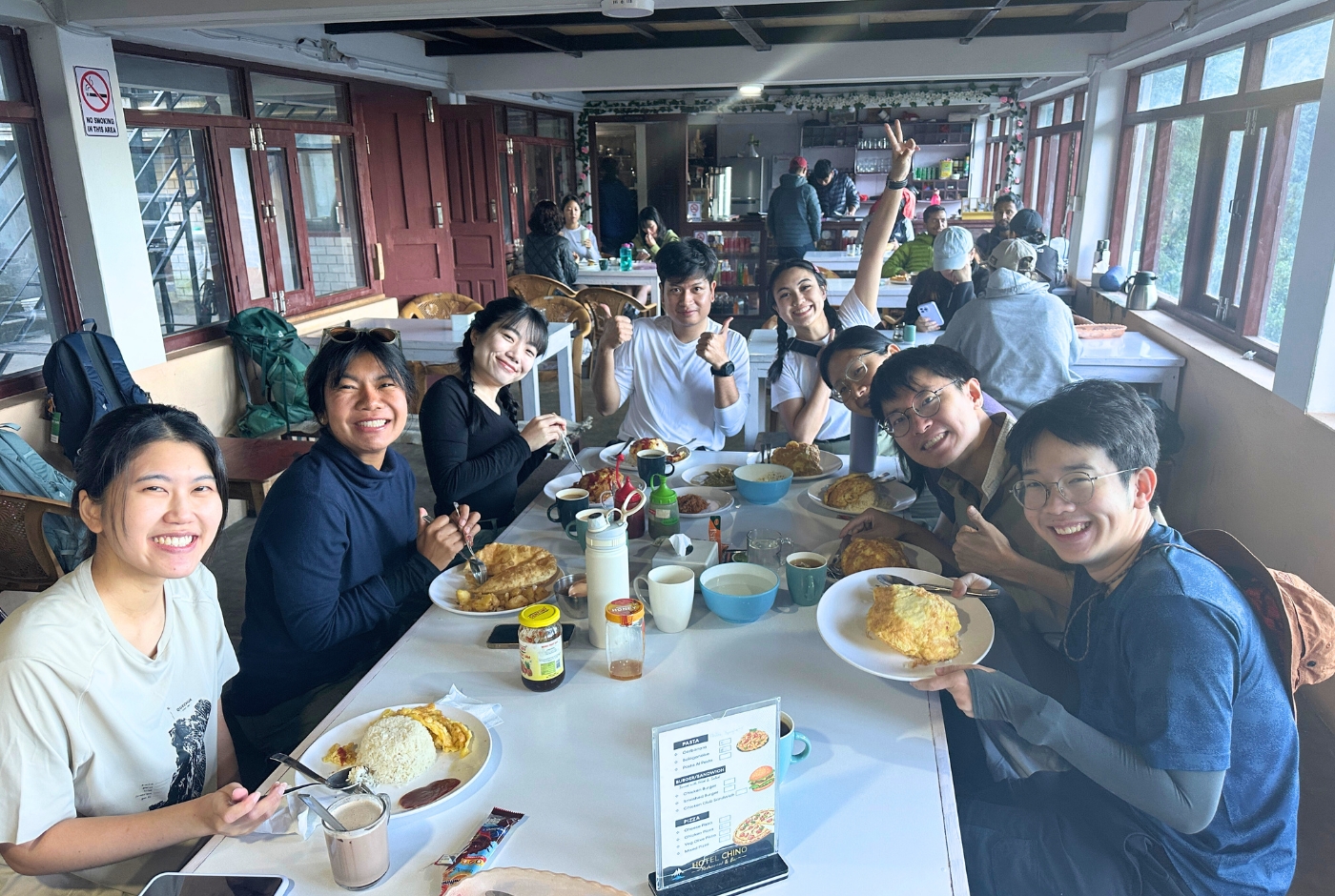
The dining hall is the heart of every teahouse on the Annapurna Circuit. Walk into any lodge on the trail and you will find the same basic scene: long wooden tables, worn benches, trekking maps or prayer flags tacked to the walls, and a central stove that becomes the focal point of the entire room once the temperature drops in the evening. This is not a restaurant in any conventional sense. It is a shared living space, and the atmosphere it creates is one of the things trekkers remember most vividly long after the trek is over.
Trekkers from different countries, guides, porters, and the host family all share this space in the evenings. Conversations start easily here. Stories get exchanged, route advice gets passed around, and friendships form in the warmth of a stove-heated room at 3,500 meters. The communal nature of Nepal trekking lodges is one of the genuinely unique social experiences that trail life offers.
Menus at teahouse dining halls follow a familiar pattern across the circuit. Dal bhat is the staple—a plate of lentil soup, rice, and vegetable curry that is filling, nutritious, and usually comes with free refills. Beyond that, most menus include noodle soup, fried rice, momos (steamed or fried dumplings), pasta, eggs prepared various ways, porridge, and pancakes. In Manang and some larger villages, you will find bakeries attached to lodges selling fresh bread, apple pie, and real coffee, which feels like a genuine luxury after several days of altitude walking.
Food prices increase steadily as you gain altitude. Everything beyond the roadhead is carried in by porters or pack animals, and that cost is reflected in the menu prices. A simple meal that costs around USD 3 to 4 in Jagat may cost USD 7 to 9 at Thorong Phedi. This is not price gouging—it is the economics of supplying a remote mountain settlement.
Accommodation Quality by Region of the Annapurna Circuit
The quality and character of lodges change significantly depending on which part of the circuit you are walking through. A general rule applies: the lower and more accessible the village, the better the facilities. The higher and more remote the location, the more basic the accommodation. Here is what to expect region by region.
Lower Annapurna Region
The lower section of the circuit, covering villages such as Besisahar, Jagat, Bahundanda, and Dharapani, offers the most developed and comfortable teahouse accommodation along the entire route. Road access in this part of the trail means that supplies arrive more regularly and in greater quantity. Rooms are better insulated, mattresses are more comfortable, and the chance of finding an attached bathroom is considerably higher here than at any altitude above 3,000 meters.
Prices in this section are also the lowest on the trail. A basic twin room in the lower villages typically costs between USD 3 and 6 per night (approximately NPR 500 to 800). This stretch is a beneficial warm-up zone for trekkers who are not yet used to mountain lodge life. You get the teahouse experience with slightly more comfort than you will find higher up, which is a useful introduction before the trail gets harder and the lodges get simpler.
Manang Region
Manang is widely regarded as offering the best accommodation on the Annapurna Circuit, and it consistently earns that reputation. This is the main acclimatization stop before the Thorong La crossing, and the village has developed a strong trekking infrastructure over the years to support the large number of trekkers who spend two nights here. Lodges in Manang are warmer, better built, and more thoughtfully run than almost anywhere else on the circuit.
For trekkers who want the very best available at this altitude, MLN Manang Lodge is the standout premium option in the village. Operated by Mountain Lodges of Nepal, it offers ensuite bathrooms, heated blankets, full bedding, full board meals, hot drinks, and spectacular views of Gangapurna and Tilicho Peak — a genuinely hotel-quality experience at 3,448 m.
Braga, a short walk from Manang, is a quieter and more traditional alternative. This beautifully preserved village has a 500-year-old monastery perched above stone-built houses, and its few lodges offer a calmer, more culturally immersive stay than the busier Manang teahouses. If you want the Manang infrastructure without the crowds, Braga is worth considering.
Thorong La Pass Region
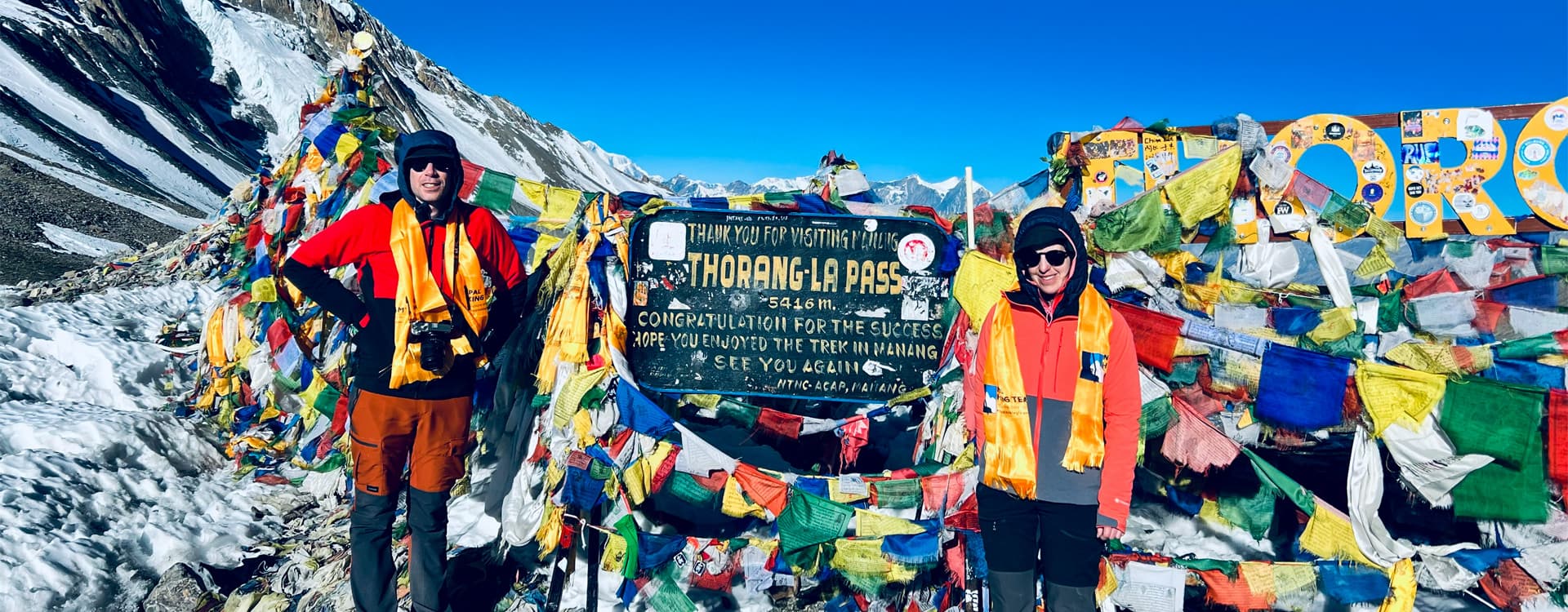
The shift in accommodation quality as you climb toward Thorong La Pass is dramatic and worth preparing for honestly. Yak Kharka at 4,050 meters, Thorong Phedi at 4,450 meters, and High Camp at 4,849 meters offer the most basic lodging on the entire circuit. Rooms are small, walls are thin, insulation is minimal, and cold seeps into everything after the sun goes down. Room prices here are among the highest on the trail — typically USD 10 to 15 per night (NPR 1,200 to 1,800) — because every supply item has been carried up by porter or mule.
Most trekkers spend only one night at Thorong Phedi before the pre-dawn crossing of the pass. The priority at this stage is rest, warmth, and an early sleep rather than comfort. Get into your sleeping bag early, set multiple alarms, and eat a proper dinner in the dining hall before the stove goes cold. The lodge experience here is a means to an end, and the achievement of crossing Thorong La the following morning makes every thin blanket and cold bathroom completely worth it.
Mustang Side (Muktinath to Jomsom)
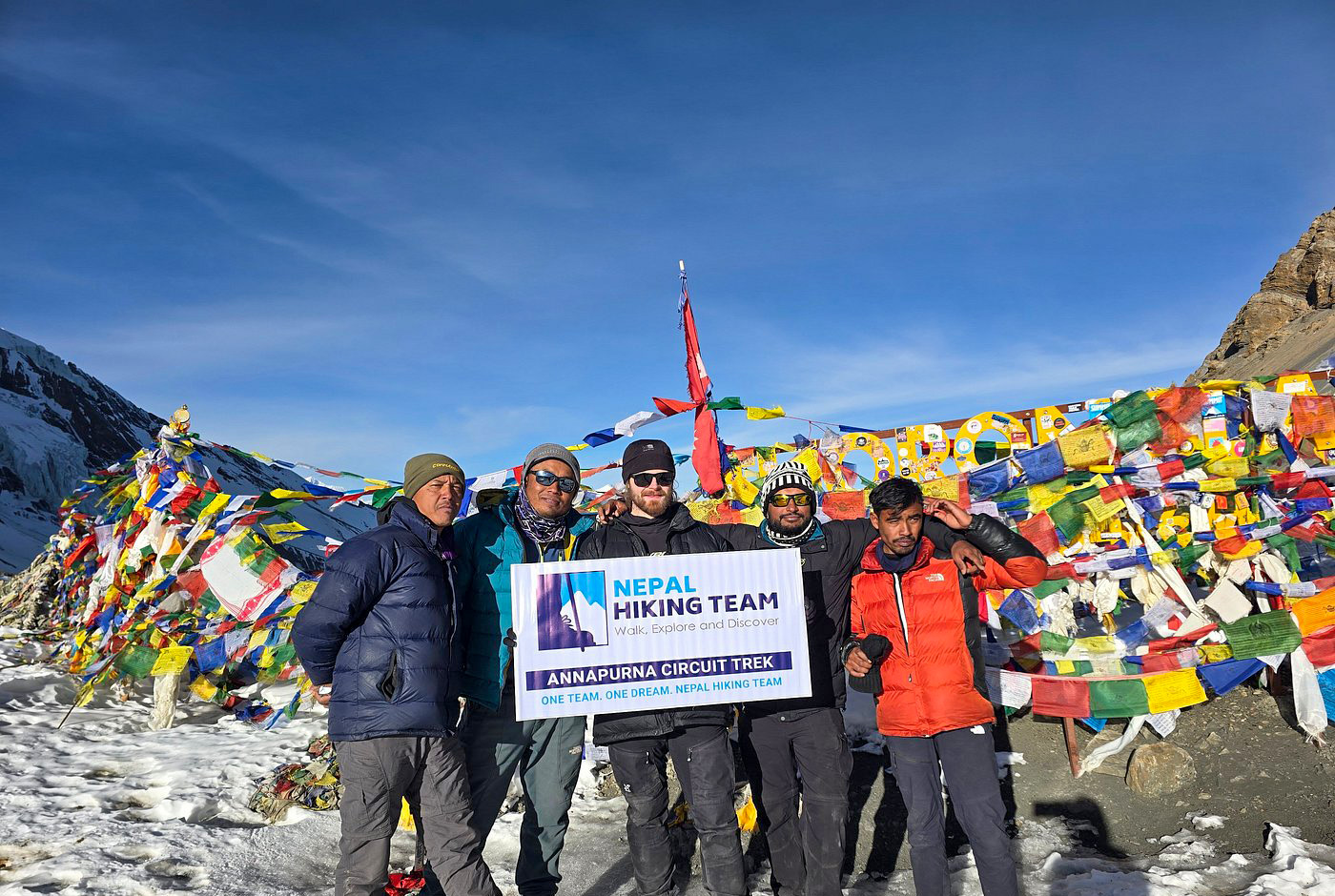
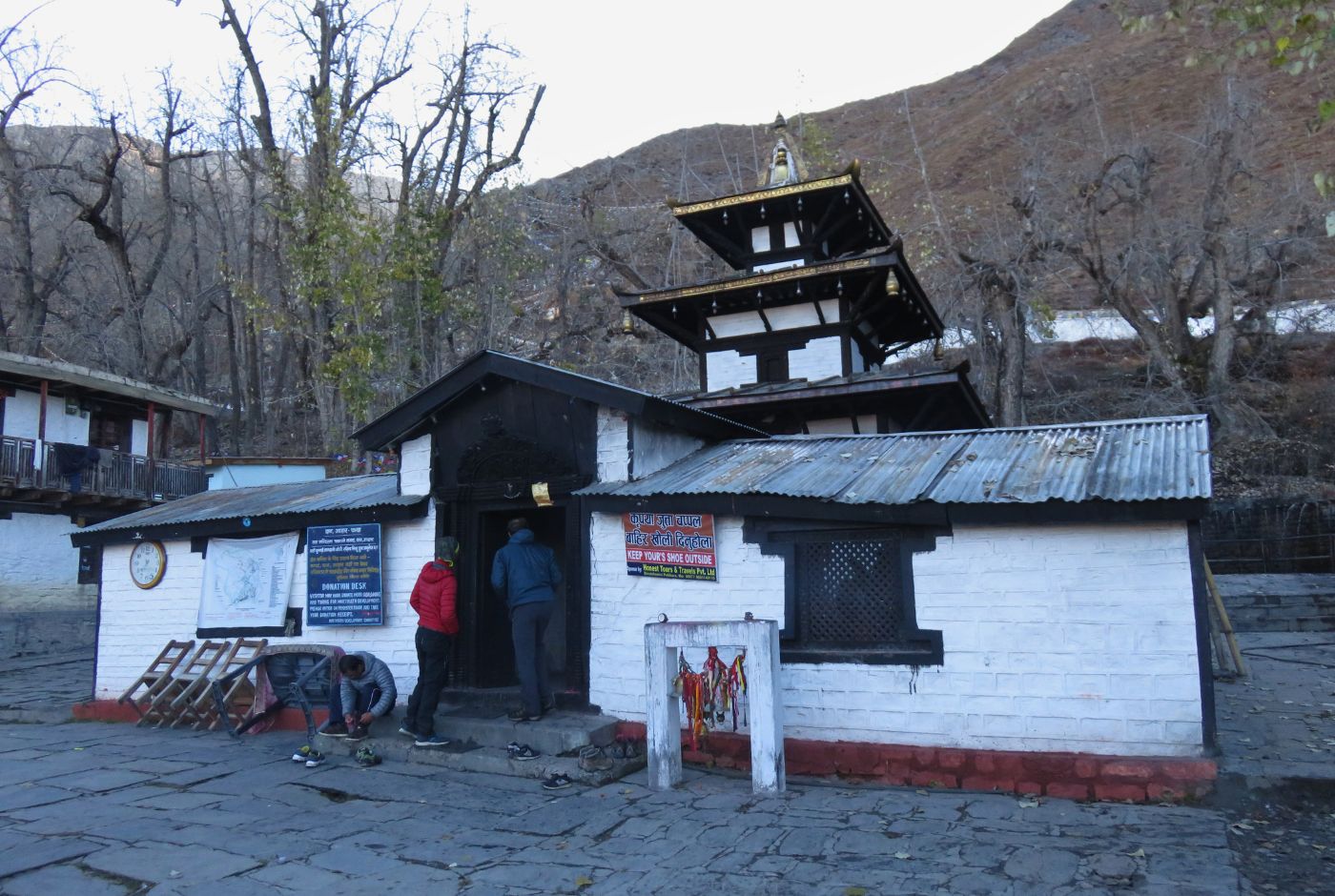
Accommodation improves significantly once you descend from Thorong La Pass into the Mustang side of the circuit. Muktinath sits at around 3,760 meters and has a genuine range of proper guesthouses catering to both trekkers and Hindu and Buddhist pilgrims. Room prices here range from USD 8 to 17 per night (NPR 1,000 to 2,000), and the quality for that price is noticeably better than what you experienced at the pre-pass stops.
Jomsom, the largest town on the Mustang side, has hotel-style accommodation with stronger amenities, more reliable electricity, and better road and flight connections. Between Muktinath and Jomsom lies Marpha, a small whitewashed village that many trekkers consider the most charming overnight stop on the entire circuit. Marpha's lodges are excellent, the village is beautiful, and the locally produced apple brandy makes for a well-deserved evening treat after the hard work of the pass crossing.
Cost of Accommodation on the Annapurna Circuit
One of the most common questions before the trek is how much does accommodation cost on the Annapurna Circuit. The honest answer is that room rates alone are very affordable, but the total cost of staying at a teahouse includes your meals, and those prices rise steadily as you gain altitude. Understanding both parts of this equation helps you budget realistically before you leave home.
- Lower villages: USD 3 to 6 per night (NPR 500 to 800)
- Mid-altitude regions (Manang): USD 7 to 10 per night (NPR 800 to 1,200)
- High-altitude stops (Yak Kharka, Thorong Phedi): USD 10 to 15 per night (NPR 1,200 to 1,800)
- Mustang side (Muktinath, Jomsom): USD 8 to 17 per night (NPR 1,000 to 2,000)
An important part of the teahouse economy is the unwritten agreement between trekkers and lodge owners. Room rates are kept low with the expectation that guests order their meals at the same lodge. Trekkers who use a lodge for sleeping but cook their own food or eat elsewhere are generally charged significantly more for the room. Working within this system is both fair and practical.
Electricity, WiFi, and Charging Facilities
WiFi and electricity in Annapurna Circuit teahouses are available along most of the route, but both come with important limitations. Electricity is generated by solar panels or small hydroelectric systems, depending on the location. Both sources are weather-dependent and can be inconsistent, particularly during heavy cloud cover or at very high altitudes.
Rooms do not have individual power points. Charging your phone, camera, or power bank must be done in the dining hall, where shared charging stations are available. A small fee of around USD 1 to 2 per device is sometimes charged at higher-altitude teahouses to offset generator costs. Carrying a portable power bank rated at 20,000mAh or more is strongly recommended as a reliable backup.
WiFi is available in many villages along the circuit, often provided through Everest Link cards sold at teahouses for a set fee. The connection works reasonably well in lower and mid-altitude villages. Above 3,500 meters, signal quality drops sharply and reliability becomes genuinely poor. Do not plan to upload photos, make video calls, or do any meaningful online work above Manang.
For better connectivity throughout the trek, purchasing a local SIM card from NTC or Ncell in Kathmandu before you leave is the most practical solution. A data package on a local SIM gives you mobile internet access in most lower and mid-altitude villages for a fraction of the cost of teahouse WiFi cards.
Heating and Warmth in Mountain Lodges
This is one of the most important practical realities of the Annapurna Circuit, and it catches underprepared trekkers off guard every season. Rooms on the Annapurna Circuit are not heated. There is no radiator, no electric heater, and no underfloor warmth waiting for you when you close your room door at night. The only heated space in any teahouse is the dining hall, where a central stove burns wood or yak dung in the evenings. Once you leave that room and walk to your sleeping quarters, you are on your own.
A few practical habits make cold nights more manageable. Wear your thermal base layers to bed rather than changing into lighter sleepwear. Use a sleeping bag liner for an extra 3 to 5 degrees of warmth. Keep your water bottle inside your sleeping bag overnight to prevent it from freezing. And keep your boots inside the room rather than leaving them in the corridor or outside the door — boots left out can freeze solid before your early morning start.
The temptation to stay in the warm dining hall as long as possible in the evenings is entirely understandable. Go to bed before the stove burns low, though. Getting into a cold sleeping bag while your body is still warm from the dining room means you heat the bag faster and fall asleep more easily than if you wait until midnight when both you and the room have cooled completely.
Tips for Choosing the Best Teahouse on the Annapurna Circuit
Arriving at a new village and choosing a lodge for the night is a skill that improves quickly with experience. During peak trekking season in October, November, March, April, and May, the best rooms fill up fast. Arriving at your planned stop before 4 PM gives you a real advantage. Trekkers who roll in at 5:30 or 6 PM find the good rooms taken and end up in whatever is left.
Asking your guide for a recommendation before you arrive at each village is one of the most underused advantages of trekking with local support. Guides know which lodges in each village keep their rooms clean, run a good kitchen, and have a stove that stays burning late into the evening. This local knowledge saves you the time of walking from lodge to lodge comparing rooms in the cold.
Before agreeing to stay at any teahouse, take a quick look at the room. Check the wall thickness and insulation. Look at the blankets provided. A lodge with a lively dining hall and a full stove fire usually indicates a more established and attentive owner. A teahouse with a broad and well-organized menu is a good sign that the owner has experience feeding trekkers properly, which matters more than room price at 4,000 meters.
Check whether the bathroom is attached or shared before paying for the room, particularly if this matters to you at the end of a long day. Avoid taking the cheapest and most isolated room in any lodge if you are trekking solo, especially in high-altitude sections where you want to be close to other trekkers in case of any altitude-related issue during the night.
Best Villages with the Most Comfortable Lodges
Manang sits at the top of this list without much competition. The lodge quality, food options, and general infrastructure of this village make it the most comfortable overnight stop on the entire circuit. Two nights here during acclimatization is one of the genuine pleasures of the trek, and most trekkers leave Manang wishing they had planned a third. For those wanting the premium end of that range, MLN Manang Lodge offers ensuite bathrooms, heated blankets, full board, and stunning mountain views — the finest accommodation available at this altitude on the circuit.
Pisang, particularly Upper Pisang, offers a more traditional atmosphere with excellent views of Annapurna II and Pisang Peak rising above the valley. The lodges here are good quality and the village is far quieter than Manang, making it a calm and memorable stop before the trail climbs higher.
Braga is the choice for trekkers who want something quieter and more culturally immersive than Manang. The ancient monastery overlooking the village, the stone-built houses, and the small number of well-run lodges make Braga one of the most atmospheric overnight stops on the circuit. It is only a short walk from Manang, which makes it easy to access the larger village's facilities during the day.
Muktinath feels like a genuine reward after the hard work of crossing Thorong La Pass. The guesthouses here are well run, the atmosphere is lively with both trekkers and pilgrims, and the descent from the pass to a proper bed with decent facilities is one of the best feelings on the entire trek.
Marpha is a village that many trekkers wish they had spent more time in. Its white-washed stone houses, narrow flagstone lanes, apple orchards, and excellent lodge options make it one of the most charming stops on the Mustang side of the circuit. If your schedule allows an extra night anywhere between Muktinath and Jomsom, Marpha is the place to take it.
Accommodation During Peak Trekking Seasons
The Annapurna Circuit sees its highest trekker numbers during two main windows: October and November in autumn, and March, April, and May in spring. During these months, the trail is busy, the lodges are full, and the dynamics of finding a good room change considerably compared to the quieter shoulder months.
At popular stops like Manang, Thorong Phedi, and Muktinath, rooms fill up by late afternoon during peak season. The nightly arrival scramble at Thorong Phedi in particular can be stressful — this is the last stop before the pass, space is limited, and every trekker crossing the circuit on that schedule arrives at roughly the same time. Trekkers who push through an extra hour in the afternoon to arrive by 3 PM consistently get better rooms than those who stop for long breaks and arrive at 5 PM.
Starting your walking day early makes a measurable difference during peak season. Leaving your lodge by 7 AM rather than 8:30 AM gives you a meaningful head start on the day's trail, which translates directly into arriving at your planned stop while the best rooms are still available. This simple habit removes a lot of the stress associated with high-season trekking on a busy route.
Do You Need to Book Accommodation in Advance?
For most of the year and most of the route, the honest answer is no. The teahouse system is built for walk-in trekkers. Lodge owners expect people to arrive without reservations, and the culture of the trail is entirely oriented around the flexibility of choosing your lodge when you arrive each afternoon. Pre-booking individual teahouses in advance is not standard practice and not necessary for the majority of the circuit.
During peak season at specific high-demand stops—particularly Manang during October and Thorong Phedi during the last week of October — a lack of planning can genuinely cause problems. At these stops, a good guide's local network matters more than any booking system. Guides working the circuit regularly have existing relationships with specific lodge owners and can call ahead in the afternoon to reserve rooms before you arrive.
For MLN Chame Lodge and MLN Manang Lodge specifically, advance booking is strongly recommended year-round, as these are limited-capacity premium properties. Independent trekkers can manage the peak season successfully by starting each walking day early, keeping daily distances realistic, and being flexible about which lodge they stay in rather than being fixed on a specific option.
What to Expect from Annapurna Circuit Teahouse Hospitality
Staying in a teahouse on the Annapurna Circuit is not a hotel experience. It is something different and, for most trekkers, something better. The families who run these lodges are mountain villagers who built their businesses around welcoming strangers into their homes. The hospitality is genuine, the food is cooked fresh in a real kitchen, and the connection you feel to the communities along the trail is one of the things that stays with trekkers long after the trek itself has faded into a collection of photographs.
Lodge owners are often Gurung, Magar, or Thakali families who have operated the same guesthouse for a generation or more. They know the trail, the weather patterns, and the needs of trekkers from dozens of different countries. Many speak good English and are genuinely interested in your background and why you came to their village.
Respecting local customs makes the experience better for everyone. Remove your shoes before entering a teahouse. Ask before photographing hosts or their families. Do not waste food. Avoid loud or disruptive behavior late in the evening when the family is trying to rest. These are small gestures, but they reflect a genuine appreciation for the hospitality being offered and they are noticed and valued by the people providing it.
The teahouse experience is also where the social life of the trail happens. Conversations between trekkers from completely different parts of the world, route advice passed between strangers over shared plates, guides and porters relaxing after long days on the trail — the dining hall creates a kind of temporary community that forms and dissolves each evening at every lodge along the circuit. It is one of the genuinely special aspects of teahouse trekking in Nepal that no amount of description fully captures until you sit down at one of those wooden tables yourself.
Final Thoughts on Annapurna Circuit Trek Accommodation
The Annapurna Circuit Trek accommodation experience ranges from surprisingly comfortable guesthouses in lower villages to stripped-down mountain shelters at 4,800 meters. Knowing this range before you go is the most useful preparation you can do. Trekkers who arrive expecting hotel comforts at altitude leave disappointed. Those who arrive with realistic expectations, a quality sleeping bag, and a genuine curiosity about mountain life leave with stories they tell for years.
Comfort on this trek is relative. A warm bowl of dal bhat, a stove burning in the dining hall, a sleeping bag rated to minus 10, and a clear morning view of Annapurna from your lodge window — these things feel genuinely luxurious after a long day on the trail. The simplicity of teahouse life strips away distraction and puts you directly in the experience of the mountains and the communities that call them home.
Come prepared: pack a proper sleeping bag rated to at least minus 10 degrees Celsius, bring a power bank, download offline maps, carry your own toilet paper, and arrive at your planned stop before 4 PM during peak season. And once you sit down in your first teahouse dining hall with a hot drink and the smell of a kitchen preparing dinner, you will understand immediately why hundreds of thousands of trekkers have made this journey before you and why most of them say they would do it again without hesitation.
Post a Comment