20 Days
Check Our Risk-Free Booking Policy View Details

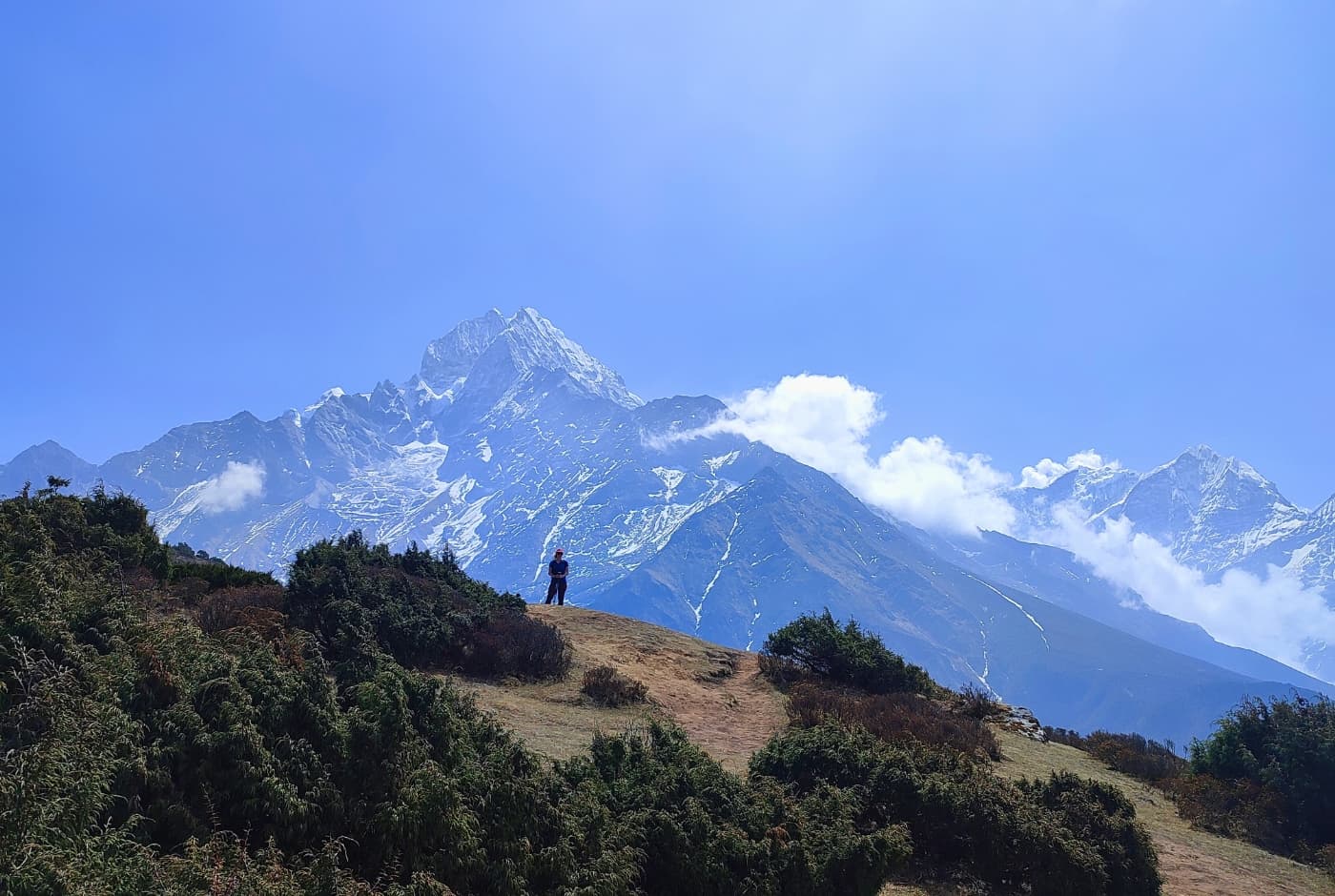
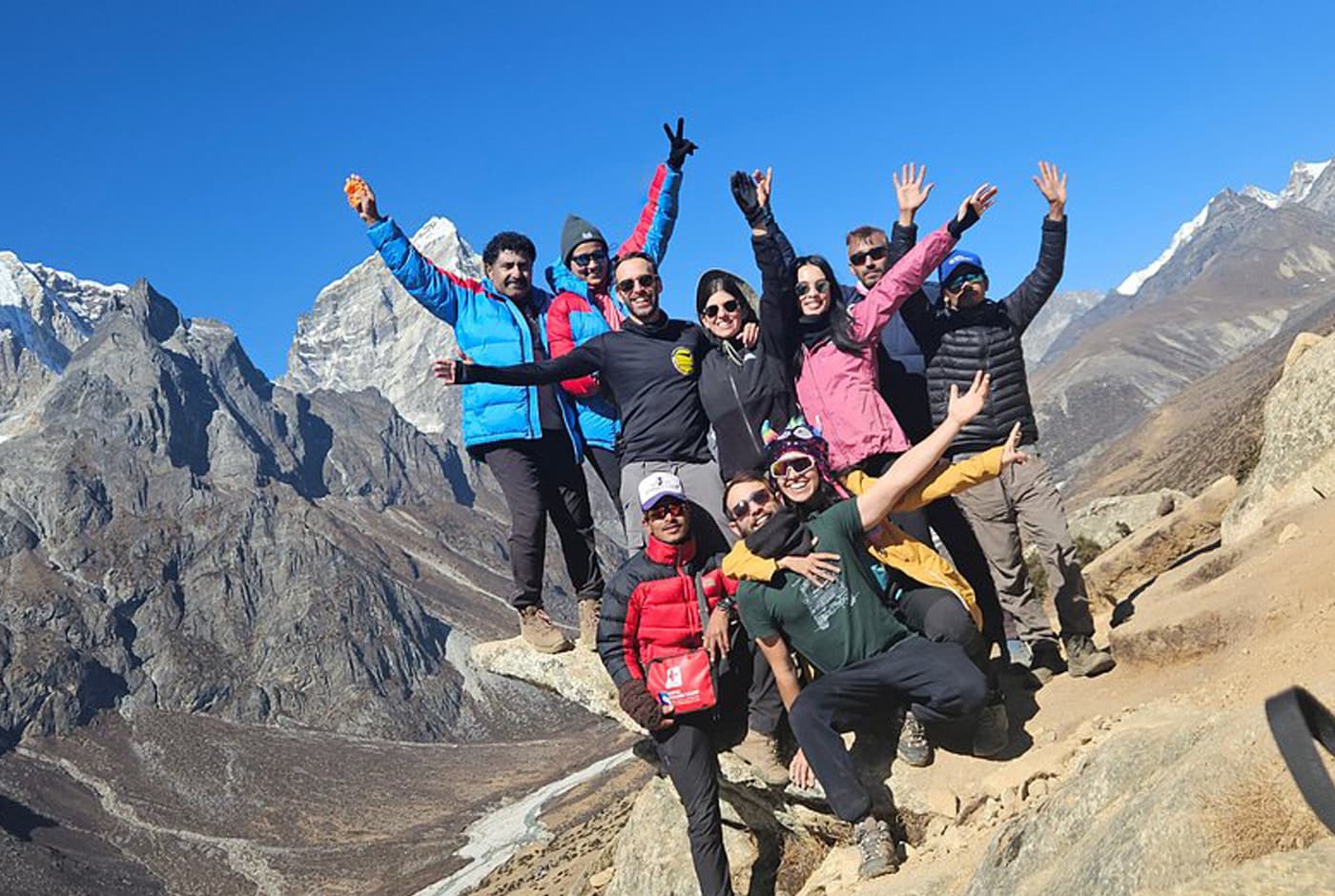
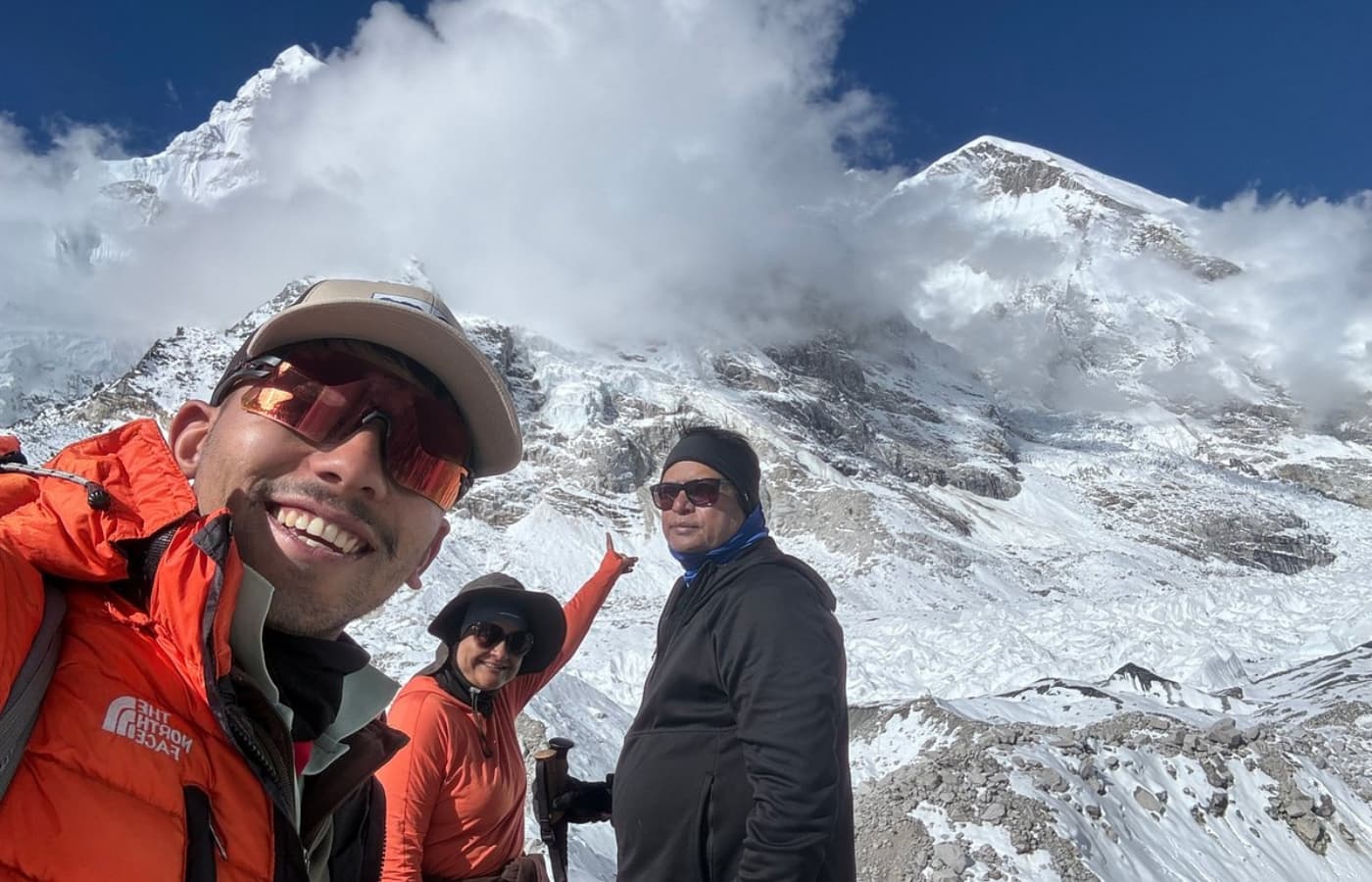
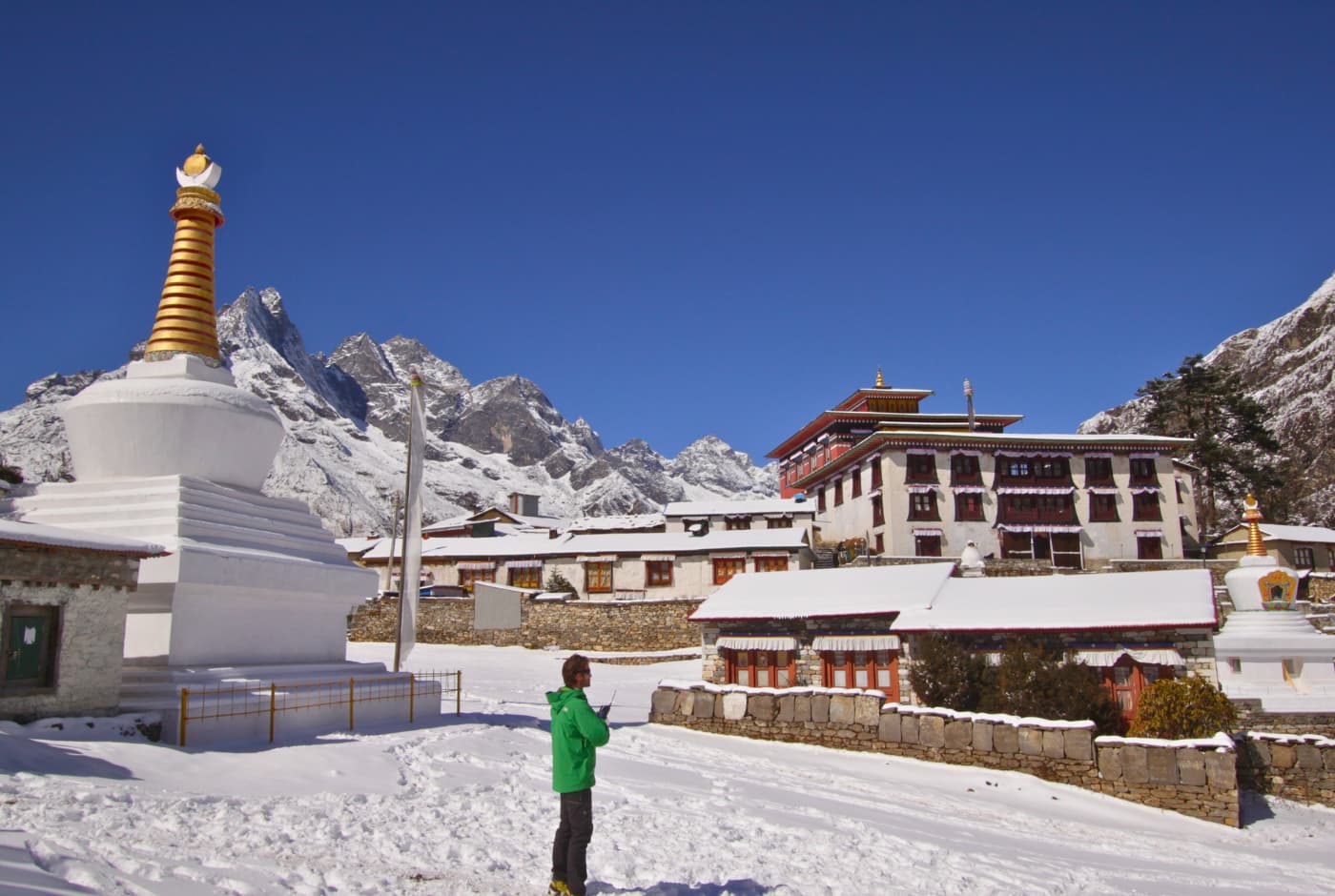
Everest Base Camp Classic Trek is an adventure tour that lasts 20 days, and you get to visit the Sherpa villages. It is a great opportunity to get acquainted with their exotic culture and to be inspired by the gorgeous scenery of the Khumbu area. It blends adventure, culture, nature, and wildlife in perfect balance, another attribute of its beauty. The planning of the trek is thoughtfully done to be as safe and comfortable as possible for the trekkers in the high altitude. Every day, walking on the trail is very beautiful. You will see luxurious forests and the steep Himalayan ranges.
This trek is another highlight of the Classic Everest Base Camp Trek, where you’ll have an opportunity to warm yourself with the rich cultural colors of the Sherpa community. Sherpa are famous for their ability to navigate through mountain terrains and their friendly disposition. They give a peek into how people in those societies live and the customs they practice. You will able to taste the local foods and interact with the people. It will make the trek a cultural experience.
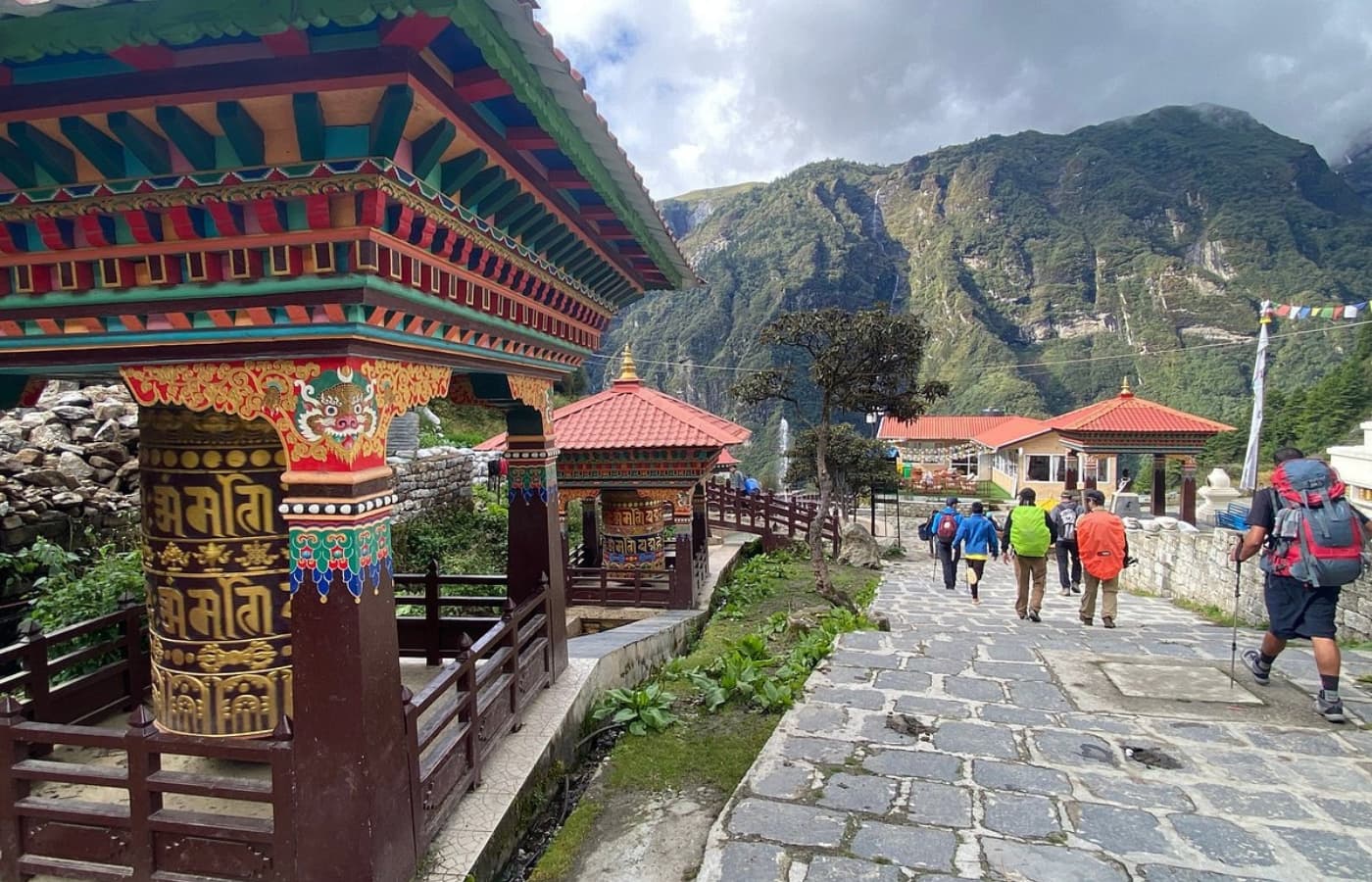
The trek is for those interested in going through the culture of Buddhism and their way of life. The villagers follow Buddhism. You will witness their monasteries, chortens, prayer walls, and wheels there. These decorations depict intricate writings intricately written in Buddhist scriptures. Tengboche Monastery is another landmark that is considered a must-visit for spiritual travelers. It is one of the largest Monasteries in the region.
The guided trekking tour comprises a professional guide from the Nepal Hiking Team. These skilled, competent, hardworking, and passionate guides ensure your journey is safe and enjoyable. They also provide essential information concerning the local social, geographical, and historical structure to enhance your trekking adventure.
We shall organize your transfer to the hotel and welcome you on arrival at the Tribhuvan International Airport. Upon check-in, an experienced guide will carefully recount the day’s tour itinerary ensuring that you are prepared for the ensuing adventurous day. The following morning, you will have a stunning road journey from Kathmandu to Bhandar via Jiri. From here, your trekking adventure starts. Trekking in the beautiful area over several hours a day, you will visit wonderful villages of Sete, Junbesi, Nuntala, Khari Khola and Puiyan.
Once you reach Puiyan, you will proceed towards a trek to Phakding and join the official Everest Base Camp Trek. On the route from Phakding to Namche Bazaar, there are high-suspension bridges that offer fantastic views. Namche Bazaar is one of the beautiful villages of this region and it will offer the trekkers a pleasant rest day. From here, one can then proceed for a trek to the Everest view hotel for very classy views of the mountains, including Ama Dablam, Thamserku, Namche & Mount Everest.
The trial the next day will take you through the villages of Tengboche and Dingboche. Second acclimatization day is also in this segment of the trip where the hikers do a 6-hour strenuous hike to reach 5100 meters of altitude. As you hike through Nangkartshang, Lobuche and arrive eventually at Base Camp, there are stunning views of the mountains that meet the eye. After visiting the base camp, you will be spending the night at Gorakshep.
The best vantage point to observe Mount Everest might be Kala Patthar, which is set at an altitude of 5,545 meters. Then, the trail descends to Pheriche, Namche, and finally Lukla, where you fly back to Kathmandu. You will then be dropped at your hotel in Kathmandu, where you'll spend the rest of your time shopping or leisurely. Your adventurous trek will be over the following day, during which you will be taken to the airport for your journey home.
Spring and Autumn seasons mark the ideal time for trekking in the Everest region. The spring season starts in March and lasts till May, and Autumn starts in September and continues till November. The temperature is moderate, and the sky is clear during this time, making it an ideal time to relish the panoramic views of the mountains fully.
Spring welcomes warm weather after the cold winter. The trails during this time are beautiful as the rhododendrons will bloom, and the skies will be clear. Likewise, the Autumn months make you witness breezy weather, which adds bliss to your hike.
Trekking during the months of winter and summer/monsoon is possible. However, it has its cons. During winter( December-February), hikers will experience heavy snowfalls on the paths. Having said that, the monsoon is also not an ideal season for the trek. The trails can be muddy and slippery, and visibility can be poor due to heavy clouds and rain. Moreover, high flight delays and cancellations will also occur during these seasons.
On a scale of 0-10, the Classic EBC Trek can be graded at 6-7 in the difficulty level. The number is high due to various factors like long hiking days and altitude.
In total, you’ll be hiking for 16 days. Even though there are rest days, you’ll still be hiking to small hills and viewpoints to acclimatize your body. Therefore, to be fit for the trek, you must rigorously train your body by walking, running, jogging, and exercising.
Altitude sickness is a severe problem in the Everest region. You’ll hike to the maximum altitude of 5545m at Kala Patthar. High chances of altitude sickness will be high, but you need not worry.
Our trekking guides are professionals who are trained exceptionally well. They will carry first-aid kits with all the essential medications for high-altitude sickness. Hence, even though the trek is challenging, we’ll help you complete the trek.
If you are still unsatisfied with the EBC Classic Trek, we’ve some other trekking packages that will keep you interested. These packages are mentioned below-
For those with minimal time, we want to suggest the standard 16-Day Everest Base Camp Trek. In this trek, you’ll take the route from Kathmandu to Lukla, besides the ride from Kathmandu to Jiri.
Keeping this aside, we also have Everest Base Camp Short Trek, which comprises a 14-day trek. It follows the same route as the above package.
With this, we’ve reached to the end of the overview. We hope that you enjoyed reading the fascinating highlights of this trek. If you want to learn more about this trek, you can contact us and send us inquiry.
Your adventure begins the moment you land at Tribhuwan International Airport in Kathmandu, the bustling gateway to Nepal and the Himalayas. Upon arrival, you will be warmly greeted by our experienced team representative who will assist with your luggage and transfer you to your hotel in the heart of the city.
After checking in, take some time to rest and recover from your journey. In the evening, our representative will brief you on the full program, the trail conditions, and what to expect over the coming three weeks. If time permits, take a short stroll around the vibrant Thamel district, famous for its trekking gear shops, warm restaurants, and lively streets. A good night's sleep is essential before the long road journey that begins tomorrow.
Today marks the true start of the classic Jiri route to Everest Base Camp, a trail that legendary mountaineer Edmund Hillary and Tenzing Norgay Sherpa once walked before roads existed. We depart Kathmandu early and head east along the Arniko Highway, winding through the lush middle hills of Nepal. The scenic drive takes us past terraced rice paddies, forested ridgelines, and small villages clinging to hillsides. Our first major stop is Jiri, a sizable hill town at 1905 m that serves as the traditional starting point for this historic trail. We pause here to stretch our legs, grab a hot cup of tea, and take in the surroundings. Continuing on, the road narrows and the scenery becomes more dramatic as we make our way to the charming village of Bhandar, where we spend our first night on the trail.
Accommodation: Guesthouse in Bhandar
The trekking begins in earnest today. We descend from Bhandar through terraced farmland and oak forests to the Likhu Khola river at approximately 1580 m. Crossing the river at Kenja, we begin the long and sometimes steep climb up toward the Lamjura Pass area, passing through settlements with both Nepali and Sherpa names, reflecting the cultural blending of this region. The trail gradually traverses through rhododendron and oak forests before arriving at Sete at 2575 m, home to an abandoned Gompa (monastery) that speaks to the deep Buddhist heritage of this region. The ascent is physically demanding but deeply rewarding, offering sweeping views back over the valleys you have crossed.
Accommodation: Guesthouse in Sete
Today is one of the most scenic days on the Jiri approach. The trail winds through dense forests and across open ridges as we make the long but gradual ascent to Lamjura La Pass at 3530 m, the highest point between Jiri and Namche Bazaar. In winter, the pass is dusted with frost and snow; in spring, it bursts with blooming rhododendrons of vivid pink and red.
The sense of achievement at the top is palpable. From the pass, we descend through Goyem at 3300 m and continue down to Tragdobuk at 2860 m, before arriving at the beautiful Sherpa village of Junbesi at 2675 m. Junbesi is a remarkably charming village with whitewashed homes, prayer flags fluttering overhead, and a welcoming monastery just above town that is worth a short visit.
Accommodation: Guesthouse in Junbesi
Today brings one of the most anticipated moments of the approach route: your very first glimpse of Mount Everest. We climb steadily to a ridge at 3080 m and, on a clear morning, the unmistakable dark pyramid of Everest slowly emerges above the surrounding peaks. The moment is unforgettable and will fuel your determination for the days ahead. We descend to the village of Salung at 2650 m before crossing the Ringmo Khola. A short but steady climb brings us to Trakshindo Pass at 3071 m, guarded by a centuries-old monastery of the same name. From there the trail descends pleasantly through pine forests to the village of Nunthala at 2320 m, your resting place for the night.
Accommodation: Guesthouse in Nuntala
From Nuntala the trail descends steeply through terraced farmland and mixed forests to the Dudh Koshi, literally the "Milk River," named for the glacial silt that gives its waters a striking milky blue-green color. This is the same river you will follow all the way up to Everest Base Camp. After crossing the Dudh Koshi, the trail turns and ascends steadily through a series of classic Sherpa villages adorned with mani walls, chortens, and prayer wheels. The lush landscape of terraced fields and oak forests slowly gives way to higher-altitude vegetation as you arrive at the compact village of Khari Khola for a well-earned rest.
Accommodation: Guesthouse in Khari Khola
Today's trail is full of variety. We climb from Khari Khola through an enchanting forest inhabited by troops of langur monkeys that can often be spotted leaping between the canopy branches above. The path passes through a dramatic narrow canyon before emerging into open terrain as we continue upward through further Sherpa settlements. The route demands steady effort but the surroundings are consistently beautiful, with the sounds of rushing streams and birdsong accompanying you throughout. By afternoon you arrive at the small settlement of Puiyan, where a warm meal and restful night await.
Accommodation: Guesthouse in Puiyan
We leave Puiyan with a gradual but continuous climb to a ridge at around 2800 m, rewarding trekkers with widening panoramas of the Solukhumbu valleys. From there the trail descends through the village of Surke before picking up the iconic Dudh Koshi valley trail, which will now guide us northward toward Namche Bazaar. You are now firmly within the Khumbu region, where the air is noticeably crisper and the mountain scenery dominates. The pleasant village of Phakding at 2610 m, nestled beside the river, offers a comfortable base for the night and your first full taste of the Khumbu atmosphere.
Accommodation: Guesthouse in Phakding
Today's stage is one of the most iconic in all of trekking. We follow the Dudh Koshi River northward through towering Himalayan pine and cedar forests, crossing several impressive suspension bridges festooned with prayer flags. We enter Sagarmatha National Park and shortly after, on a bend in the trail above a deep river gorge, catch our first stunning view of Mount Everest alongside its neighbors. The final climb to Namche Bazaar is steep and demanding but deeply satisfying. Namche, at 3440 m, is the historic trading hub of the Khumbu. It is a lively, horseshoe-shaped town terraced into a hillside, home to lodges, bakeries, gear shops, and a weekend market where Tibetan traders still come to barter. We will spend two nights here for acclimatization.
Accommodation: Guesthouse in Namche Bazaar
Acclimatization is critical at altitude, and today we put it to good use. After breakfast, we hike up to Syangboche Airport at 3700 m, reputed to be among the highest airstrips in the world, then continue upward to the famous Everest View Hotel at 3880 m. The panorama from here is extraordinary: a sweeping arc of Himalayan giants including Everest (8849 m), Lhotse, Ama Dablam, and Tawache fills the horizon. We rest here, take photographs, and absorb the view before descending back through Namche. On the return, we visit the Sherpa Culture Museum to learn about the traditions, history, and mountaineering achievements of the Sherpa people, followed by the Everest Photo Gallery, a remarkable collection of expedition photography. The golden rule of acclimatization is climb high, sleep low, and today perfectly embodies that principle.
Accommodation: Guesthouse in Namche Bazaar
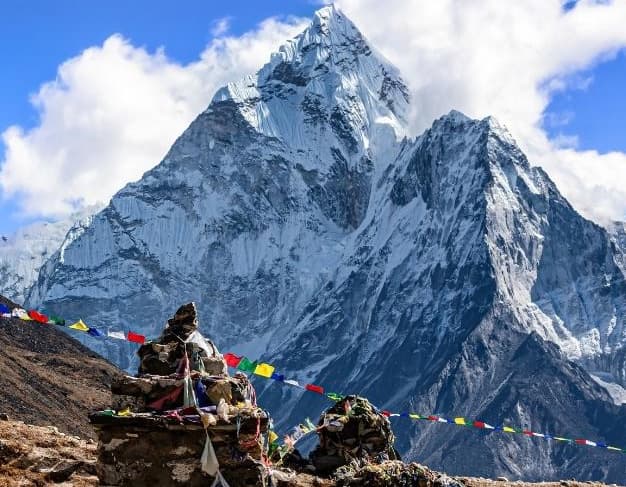
Leaving Namche behind, the trail contours around the hillside before descending into the deep Dudh Koshi Valley at Punki Thanka. From here we cross the river and begin the long but rewarding ascent along the right flank of the valley toward Tengboche. The approach to Tengboche offers some of the finest mountain scenery on the entire trek, with the magnificent spire of Ama Dablam dominating the view ahead and the white summit of Everest appearing and disappearing among the ridges. Tengboche Monastery at 3860 m is the spiritual heart of the Khumbu region. The monastery complex, rebuilt after a 1989 fire, sits in a setting of almost supernatural beauty, surrounded by silver fir trees and with the Himalayan giants as a dramatic backdrop. Evening prayers at the monastery are a deeply atmospheric experience not to be missed.
Accommodation: Guesthouse in Tengboche
We descend from Tengboche through a beautiful silver fir and juniper forest draped in old man's beard lichen, cross the Imja Khola, and trek through the ancient village of Pangboche at 3900 m, home to the oldest monastery in the Khumbu. Today is notable for maintaining relatively consistent altitude rather than the dramatic drops of previous days, making it a less tiring but no less spectacular stage. Towering above you are the extraordinary walls of Ama Dablam, Lhotse, and the broader Khumbu peaks. The trail continues through open yak pastures and traditional stone-walled fields to Dingboche at 4410 m, known as the Summer Valley. The wide, open character of Dingboche after days of narrow valleys feels both exposing and exhilarating.
Accommodation: Guesthouse in Dingboche
Our second acclimatization day is a proper physical challenge. After breakfast we ascend Nagarjun Hill at 5100 m, a demanding climb of several hours above Dingboche on the flanks of the Chhukung valley. The footpath steepens considerably toward the summit, requiring deliberate, measured steps in the thin air. From the top the rewards are immense: panoramic views encompass Lobuche East (6119 m), Lobuche West (6145 m), Taboche Peak (6367 m), Thamserku (6608 m), Kangtega (6685 m), and the regal Ama Dablam (6856 m). On a clear day the distant mass of Makalu, the world's fifth highest mountain, is also visible, along with sweeping views across the entire Pheriche Valley. Descent takes approximately two hours. Afternoon temperatures drop sharply at this altitude once the sun dips behind the peaks, so we enjoy a warm dinner and early rest to prepare for the long days ahead.
Accommodation: Guesthouse in Dingboche
Today we leave the relative warmth and shelter of Dingboche and trek along a broad, open valley floor toward the higher reaches of the Khumbu. We pass through Dughla and the Trekkers Aid Post at Pheriche at 4240 m, staffed by western volunteer doctors and supported by the Himalayan Rescue Association. The post offers free altitude sickness information sessions each afternoon and provides emergency medical care, a vital lifeline at this elevation. From Pheriche we continue up the increasingly stark and boulder-strewn valley, gaining altitude steadily with views of the immense Khumbu glacier filling the valley ahead. We arrive at the yak pastures of Lobuche at 4940 m, a sparse settlement where the cold is now sharp and persistent, and the scale of what lies ahead truly begins to sink in.
Accommodation: Guesthouse in Lobuche
This is the day you have been working toward since leaving Kathmandu. We set off from Lobuche in the early morning cold, ascending through rocky meadows before the trail opens out onto the edge of the massive Khumbu Glacier. The iconic silhouette of Kalapattar rises to the right. After a couple of hours we reach Gorekshep at 5181 m, the last settlement before Base Camp, and the place where we will sleep tonight. After a brief rest and some hot food, we push on. The final stretch to Everest Base Camp is not technically difficult but the combination of altitude, rocky moraine terrain, and the sheer anticipation make it one of the most intense walks imaginable. After approximately three hours from Gorekshep, you step onto the Base Camp plateau at 5364 m and stand at the foot of the highest mountain on Earth. The Khumbu Icefall towers immediately above, its seracs and crevasses dramatically revealing why this mountain is both irresistible and unforgiving. Soak up every moment, take your photographs, and then we head back to Gorekshep to rest.
Accommodation: Guesthouse in Gorekshep
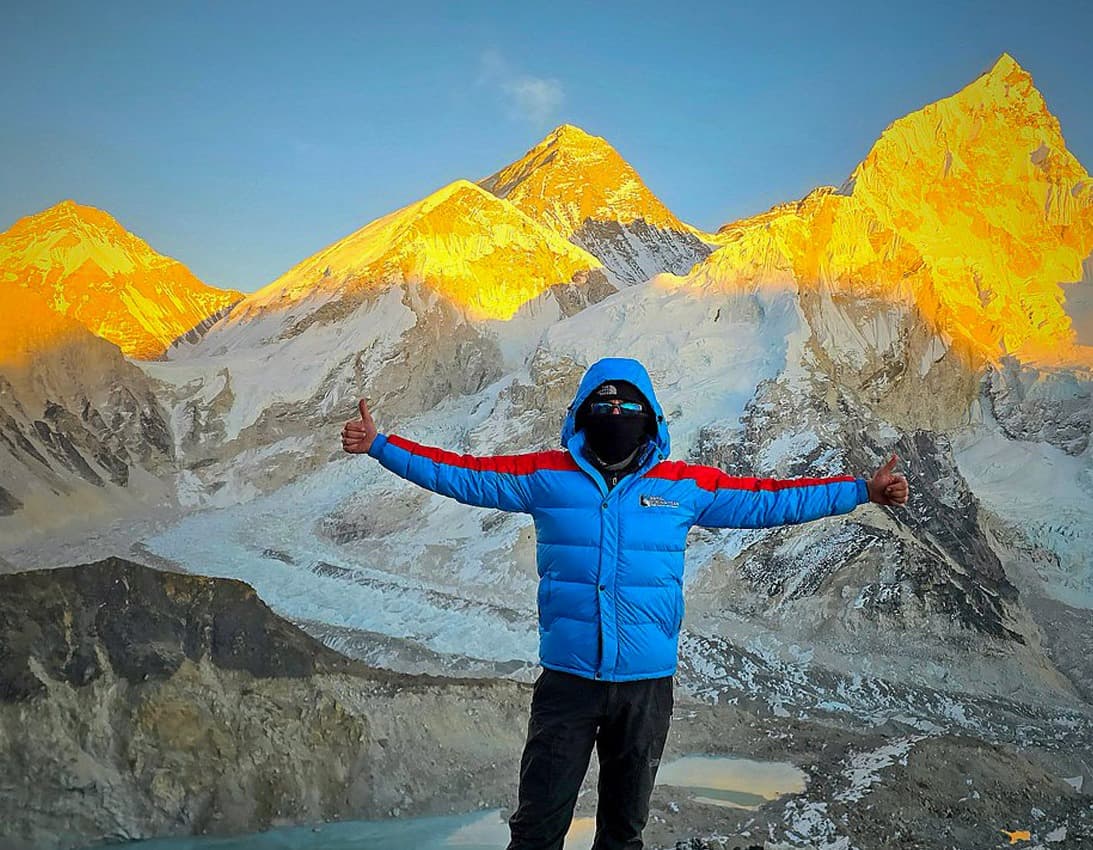
Rise before dawn for the highlight of the entire journey. We begin the steep ascent to Kalapattar at 5545 m in the pre-sunrise darkness, headlamps cutting through the thin cold air. As the first light spills over the Tibetan plateau and strikes the south face of Everest, you witness one of the most spectacular sights available to a human being on this planet. The mountain glows gold and orange, reflected in the ice, while the surrounding giants of Lhotse, Nuptse, Pumori, and Changtse stand as silent witnesses. After descending back to Gorekshep for a well-deserved breakfast, we begin the long descent back down the valley, reaching the village of Pheriche at 4210 m by afternoon. The lower altitude brings noticeably easier breathing and a welcome rise in temperature.
Accommodation: Guesthouse in Pheriche
The long descent back toward Namche begins in earnest today. We walk easily along the Imja Khola before making the short climb back up to Tengboche, where we pause to take one last look at the extraordinary mountain panorama that has been our constant companion. From Tengboche we descend steeply back into the Dudh Koshi valley at Punki Thanka, then make the steep climb up to Kyangjuma before the trail eases out for the final stretch back into Namche Bazaar. Arriving back in Namche feels like returning to a bustling metropolis after the raw, sparse high country. Celebrate with a good meal and a well-deserved hot shower.
Accommodation: Guesthouse in Namche Bazaar
The final day on the trail follows the beloved Dudh Koshi River southward for the last time. We descend steadily through the now-familiar pine and cedar forests, past suspension bridges and mani walls, bidding farewell to the many teahouses and villages that have sheltered and fed us along the way. The trail eventually brings us to the lively mountain town of Lukla at 2860 m, perched on a steep hillside and famous worldwide for its dramatic Tenzing-Hillary Airport, with its short runway ending at a sheer cliff edge. Tonight we celebrate the completion of the trek with our team, reflecting on the extraordinary journey from Jiri to the roof of the world and back. There may be last-minute gear purchases and tips to distribute to porters and guides who have made this journey possible.
Accommodation: Guesthouse in Lukla
The final Himalayan experience comes from the sky. The flight from Lukla to Kathmandu is only 30 minutes, but it delivers a breathtaking aerial perspective of the Himalayan foothills, river valleys, and terraced farmland you spent days crossing on foot. Watch for last glimpses of the distant Khumbu peaks from the aircraft window. Upon landing in Kathmandu you are transferred to your hotel, where hot showers, comfortable beds, and the full range of city amenities await. The afternoon is free to explore Kathmandu at your leisure: browse the golden temples of Thamel, revisit favorite restaurants, buy souvenirs, or simply rest.
Accommodation: Hotel in Kathmandu
Your extraordinary Himalayan adventure draws to a close today. Approximately three hours before your scheduled international flight, a representative from Nepal Hiking Team will arrive at your hotel to assist with your bags and transfer you to Tribhuwan International Airport. Use any remaining time in the city for last-minute errands, a final bowl of dal bhat, or simply to sit with the memories of one of the world's greatest trekking experiences. The trail from Jiri to Everest Base Camp and Kalapattar is a journey that lives with you long after you have come home.
Read our genuine feedback from past travelers with Nepal Hiking Team sourced from TripAdvisor, Google, Facebook, and Trustpilot.
Incredible time with Nepal hiking team. I had the pleasure of having Uttam and Ngima as our guides, with Rajas and Vinood as our porters. What an incredible team. They really made the trip memorable, easy, and funny at times.
I felt safe with them; they had a good medical first aid kit. They knew the paths well. They would coordinate tea houses for us ahead of time and were really flexible with our needs.
When hiccups happened with flights (weather-related, out of their control), they would provide us with options and how to best adjust to unforeseen circumstances. They really had a breadth of experience.
Most importantly, I saw multiple guides and porters from Nepal hiking team come together to help a young person sick with altitude illness. Their quick thinking and strong will helped them coordinate a rescue effort quickly.
I would wholeheartedly recommend Nepal Hiking Team, Uttam, Ngima, Rajas and Vinood to anyone!
A few months before the trek, I was in regular contact with Ganga, the managing owner. Since this was my first time trekking at that kind of altitude, over 5600 metres, I had a ton of questions. Ganga was super patient and always got back to me quickly, even with the big time difference. I really appreciated how clear and helpful his replies were. It gave me a lot of peace of mind before the trip even started.
When I was on the trek, I mentioned that I really wanted to spend a night at base camp. Ganga and the whole team worked hard to make it happen. It ended up being one of the best experiences of my life. I can’t thank them enough for that.
During the trek, my guide Bishal and porter Dipak were just amazing. They always checked in with me to see how I was feeling at the higher altitudes and made sure I had what I needed. This was my first trekking experience ever, and thanks to their support and encouragement, it felt way easier and more comfortable than I expected.
I would definitely recommend Nepal Hiking Team. Ganga, Bishal, Dipak, and everyone else who helped along the way made this trip a total success. I’m really grateful.
Guided by - Bishal Gurung
Absolutely amazing trek to Everest Base Camp with Nepal Hiking Team!
Our guides were Paban and Hari. Apart from them, all of the team of Nepal Hiking team were amazing to have along for the trip. The knowledge of the Everest trails, passes and mountains was superb and extremely helpful for negotiating and adapting the trip when needed.
This trek had made me want to do so many more!
We will definitely be back to trek with Nepal Hiking Team again and again!
What an unforgettable experience! Reached EBC on 17/11/24 under CLEAR SKIES every single day!
Our 11-day journey with two guides (main guide: Kishor Karki) and three porters exceeded all expectations. The service throughout the expedition was exceptional, and I couldn’t recommend the team more highly.
We always felt safe, supported, and valued. Every question was answered respectfully, and any concerns were addressed promptly and thoughtfully.
You won’t be disappointed—whether it’s the outstanding service, the breathtaking views, or the overall experience!
- Guide by Kishor Karki
I had best time on my Everest Base Camp trek! Ramesh my guide, was absolutely amazing. He was attentive to my needs, took care of everything, and made sure to bring me to the best tea houses along the way. I wouldn’t hesitate to use Nepal Hiking Team again—they truly pay attention to details and care about your experience. If I could give 10 stars, I absolutely would!
Nepal Hiking Team offers a combination of deep local expertise and personalized service specifically for this classic route. Your journey is led by highly experienced, professional guides who are not only skilled in high-altitude safety but also passionate about sharing the region's geography and culture. The company handles all logistics, from the complex drive to Jiri to the scenic flight back from Lukla, ensuring a seamless experience. Their commitment to your well-being is evident in details like providing a duffle bag, down jacket, sleeping bag, and a comprehensive first-aid kit, all while offering the flexibility to adapt to your needs, as seen in reviews where they arranged a special night at Base Camp for a trekker.
Nepal Hiking Team's guides are trained to handle emergencies and altitude sickness, carrying first-aid kits with essential medications. They also have extensive experience dealing with the common challenge of flight delays and cancellations at Lukla Airport. As noted in traveler reviews, when weather-related flight issues occur, the team provides clear options and helps you adapt plans smoothly. Their guides' "breadth of experience" ensures you're supported through unforeseen circumstances, and the company’s network in the Khumbu allows for quick coordination, such as the documented rescue of a sick trekker.
For this trek, Nepal Hiking Team provides one highly experienced, helpful, and friendly guide per group. Additionally, they provide porters, with one porter allocated for every two trekkers. These porters carry the main trekking gear, allowing you to walk with only a daypack. All staff members—guides and porters—have their food, accommodation, salary, equipment, and accidental insurance covered by the company, ensuring they are well-supported and focused on providing you with the best possible service.
Upon your arrival at Tribhuvan International Airport, a representative from Nepal Hiking Team will greet you and assist with your luggage. They will then transfer you to your hotel in Kathmandu. After you've checked in and rested, the representative will provide a detailed briefing about the itinerary, trail conditions, and what to expect over the 20-day journey, ensuring you are fully prepared before the adventure begins.
You can easily obtain a tourist visa upon arrival at Tribhuvan International Airport. A multiple-entry tourist visa valid for 30 days costs USD $40 or the equivalent in foreign currency. If you require a longer stay, a 90-day multiple-entry visa is available for USD $100. You will need to bring two passport-size photos for the visa application. The visa cost is not included in the package and is your responsibility upon arrival.
Yes, all ground transportation in private vehicles is included in the package cost. This includes both your arrival transfer from the airport to your hotel in Kathmandu and your final departure transfer from the hotel back to the airport for your international flight. The service ensures a smooth and stress-free start and end to your Himalayan adventure.
You can book this trek by contacting Nepal Hiking Team directly through their website or by sending an inquiry. The package is designed for a minimum group size of 2 people. While specific deposit and payment details are not listed on the package page, you can reach out to their team, who will guide you through the process. The page notes that scheduled departures are available for group joining, but they can also design individualized travel plans based on your preferences and availability.
The specific cancellation and refund policy is not detailed in the provided package content. For precise information regarding deposits, final payments, and cancellation terms, it is best to contact Nepal Hiking Team directly. Their managing owner, Ganga, is noted for being patient and responsive to inquiries, ensuring you have all the necessary details before committing to the trek.
While the minimum group size is stated as 2 people, the package page mentions that they can "design individualized travel plans based on your preferences and specifications." Furthermore, a traveler review on the page describes a "Solo EBC Trek" experience with Nepal Hiking Team, indicating that solo trekkers can be accommodated. Contacting the team directly to discuss your solo trek plans is the best way to confirm and make arrangements.
The defining feature of this "Classic" trek is the historic approach from Jiri. This route was the original path used by legendary mountaineers like Edmund Hillary and Tenzing Norgay before roads existed. It adds 8 days of trekking through remote middle hills, authentic Sherpa villages like Junbesi and Nunthala, and diverse landscapes—from rhododendron forests to the first glimpse of Everest from a ridge at 3080m. This approach allows for superior acclimatization and a deeper cultural immersion before joining the main Everest trail at Phakding, making the journey truly about the experience, not just the destination.
The Jiri section offers profound cultural encounters. You'll trek through villages with a blend of Nepali and Sherpa cultures, visit the abandoned Gompa in Sete, and stay in the beautiful Sherpa village of Junbesi, where you can explore its welcoming monastery. You'll walk past mani walls, chortens, and prayer wheels, and cross the Dudh Koshi River, witnessing the traditional mountain lifestyle firsthand. This extended cultural immersion is a key highlight that distinguishes this classic trek from shorter Everest Base Camp itineraries.
Yes, this 20-day Classic trek is generally considered more challenging than the standard 16-day EBC trek that starts with a flight to Lukla. The difficulty level is graded at 6-7 out of 10 due to the longer duration (16 days of hiking) and the added physical demands of the Jiri approach, which involves significant ascents and descents through the lower hills. However, the gradual gain in altitude over more days provides excellent acclimatization, which can make the high-altitude portion of the trek feel more manageable for some.
The journey begins with a scenic 7–9 hour private vehicle drive from Kathmandu to the village of Bhandar, traveling via the historic town of Jiri. This drive follows the Arniko Highway through lush middle hills, terraced rice paddies, and forested ridgelines. It's a full-day adventure that offers a glimpse into Nepal's rural landscape and serves as a gradual introduction before you start trekking.
After completing your trek, you will take a thrilling 30-minute scenic flight from Lukla's Tenzing-Hillary Airport back to Kathmandu. This flight provides a breathtaking aerial perspective of the Himalayan foothills, deep river valleys, and the landscapes you just traversed on foot. The flight is included in your package cost, along with all departure taxes, and is the final Himalayan experience of your journey.
Flight delays and cancellations are common at Lukla Airport due to its challenging location and unpredictable mountain weather. While the itinerary schedules the flight, Nepal Hiking Team's experienced guides are prepared for such contingencies. As noted in traveler reviews, they will provide you with clear options and help you adapt to the situation, whether that means waiting for the next available flight or arranging alternative transport. This flexibility and experience are key reasons to book with a professional local operator.
On a scale of 0-10, this trek is graded at a 6-7 in difficulty. The challenges include 16 days of hiking, with daily walks of 5-8 hours, and the high altitude. You will reach a maximum altitude of 5,545 meters (18,192 feet) at Kala Patthar, the trek's highest and most scenic viewpoint. The trek includes two dedicated acclimatization days (at Namche Bazaar and Dingboche) to help your body adjust to the thinning air, which is crucial for safety and success.
A good level of physical fitness is essential. Before the trek, you should rigorously train your body through activities like walking, running, jogging, and general cardiovascular exercise. You need to be comfortable walking for up to 7-8 hours a day on varied terrain, including steep ascents and descents. The trek is achievable for motivated beginners who have prepared well, but a solid fitness base will significantly enhance your enjoyment and safety.
The 20-day itinerary is thoughtfully designed to minimize the risk of altitude sickness. It features a gradual ascent, starting from the lower altitudes of the Jiri approach, which allows for superior acclimatization. Two full acclimatization days are strategically placed—one in Namche Bazaar (3440m) and one in Dingboche (4410m)—with guided hikes to higher elevations (Everest View Hotel at 3880m and Nagarjun Hill at 5100m) to follow the "climb high, sleep low" principle. Your professional guide is trained to recognize symptoms of altitude sickness and carries a first-aid kit with essential medications for it.
Your safety is a top priority. You will be accompanied by a professional guide who is exceptionally well-trained in high-altitude trekking and carries a comprehensive first-aid medical kit, including medications for altitude sickness. The itinerary is designed with a slow, steady pace and includes acclimatization days. The guide will monitor your health daily. Furthermore, the route passes the Trekkers Aid Post in Pheriche, staffed by western volunteer doctors from the Himalayan Rescue Association, who offer free altitude sickness information and emergency medical care.
If you feel unwell at any point, you should immediately inform your guide. They are trained to assess symptoms and will know the best course of action, whether it's resting, descending to a lower altitude, or utilizing medical services. Do not hide or ignore symptoms of altitude sickness. Your guide's primary role is to ensure your safety, and they are experienced in making responsible decisions for your well-being, including arranging an emergency evacuation if necessary.
Travel insurance is mandatory and is listed as a cost exclusion. Your policy must cover emergency high-altitude rescue and evacuation, as well as medical expenses, trip cancellation, and flight delays. Given the remote location and the potential for weather-related flight disruptions from Lukla, having comprehensive travel insurance is not just a requirement but a critical component of your safety net. Be sure to confirm that your policy covers trekking up to at least 5,500 meters.
You will need a range of personal trekking equipment including sturdy, broken-in trekking boots, warm layers (thermal base layers, fleece jacket, down jacket), waterproof shell jacket and pants, hats, gloves, sunglasses, a sleeping bag (rated for -10°C to -20°C), and a daypack. Nepal Hiking Team provides a duffle bag for your main gear (carried by porters), a down jacket, and a sleeping bag for the duration of the trek. A detailed packing list is typically provided upon booking.
The package includes the Sagarmatha National Park Permit fee and the TIMS (Trekkers' Information Management System) fee. You will need to bring two passport-size photos for the permits. Your guide and the Nepal Hiking Team handle the necessary paperwork and permit acquisition, so you don't need to worry about the administrative process during your trek.
Yes, it is highly recommended to bring your own reusable water bottles (e.g., Nalgene). While bottled water is available for purchase at teahouses, it is an additional cost and contributes to plastic waste. A sustainable alternative is to use water purification tablets, a UV sterilizer, or a filtered water bottle to treat tap water provided at the lodges. Staying hydrated is crucial at altitude.
Accommodation is in the "best available twin sharing lodges" (teahouses) along the route. These are basic but comfortable guesthouses that provide a warm room, a bed, and a communal dining area where meals are served. Nepal Hiking Team specifically notes that they provide private bathrooms with hot showers at Phakding, Namche, and Lukla. In other locations, bathrooms and showers are typically shared and may have an additional cost for hot water.
WiFi internet is available in most teahouses, but it is an additional cost not included in the package. The connection can be slow and unreliable, especially at higher altitudes. Similarly, mobile phone coverage is available in larger villages like Namche Bazaar but becomes intermittent as you trek higher. For emergencies, guides are equipped with communication devices, and the Trekkers Aid Post in Pheriche is also a resource. It's best to expect limited connectivity and see it as an opportunity to disconnect from the digital world.
While private bathrooms with hot showers are provided at specific stops (Phakding, Namche, and Lukla), at most other teahouses, you will use shared bathroom facilities. Hot showers are available for a small fee (typically a few dollars) at most lodges, and this cost is not included in the package (except at the three locations mentioned). The price can vary based on altitude, with showers becoming more expensive the higher you go.
The package includes full board meals (breakfast, lunch, and dinner) with tea or coffee during the trek. You can expect a variety of hearty and nutritious food from the teahouse menu, which typically includes Nepali staples like dal bhat (rice and lentils), as well as international options such as pasta, noodles, soups, eggs, and Tibetan bread. Dal bhat is a popular choice as it is nutritious, vegetarian, and often comes with refills, providing essential energy for trekking. Seasonal fruits are also included during the trek.
Drinking water is not included in the cost. You have several options: you can purchase bottled water at the teahouses (an extra cost), or you can be more sustainable by bringing a reusable bottle and using water purification tablets or a UV sterilizer to treat tap water, which is usually available for free or a small fee. Staying hydrated is essential, so factoring in this cost or preparing with your own purification method is important.
No, snacks, cold drinks (such as Coca-Cola, Fanta), and alcoholic beverages are not included and are considered personal expenses. You can purchase these items at the teahouses along the trail. The cost of these items tends to increase as you gain altitude due to the logistics of transporting them to remote locations.
Yes, Nepal Hiking Team can design individualized travel plans based on your preferences and specifications. If the standard 20-day itinerary doesn't perfectly fit your needs, you can contact them to discuss modifications, such as adjusting the pace, adding rest days, or combining it with other activities. The review mentioning a traveler who requested and received a night at Everest Base Camp highlights their willingness to personalize the experience.
The listed package offers a "group joining option" with scheduled departure dates. This is often the most cost-effective way to trek, as costs are shared among the group. A private trek offers greater flexibility in terms of start date, daily pace, and itinerary, and it ensures that the guide's and porters' attention is solely on you and your party. Private treks can be arranged for any group size, from solo travelers to families or friends, and allow for a more personalized experience.
Tips and gratuities for your trekking staff (guides and porters) are not included in the package cost and are at your discretion. Tipping is a customary way to show appreciation for their hard work, dedication, and the crucial role they play in your safety and enjoyment. A general guideline is to budget approximately 10-15% of the total trek cost to be distributed among the team, with the guide typically receiving a larger portion. It's best to ask your guide for advice on appropriate amounts based on the team size and the quality of service.