10 Days
Check Our Risk-Free Booking Policy View Details

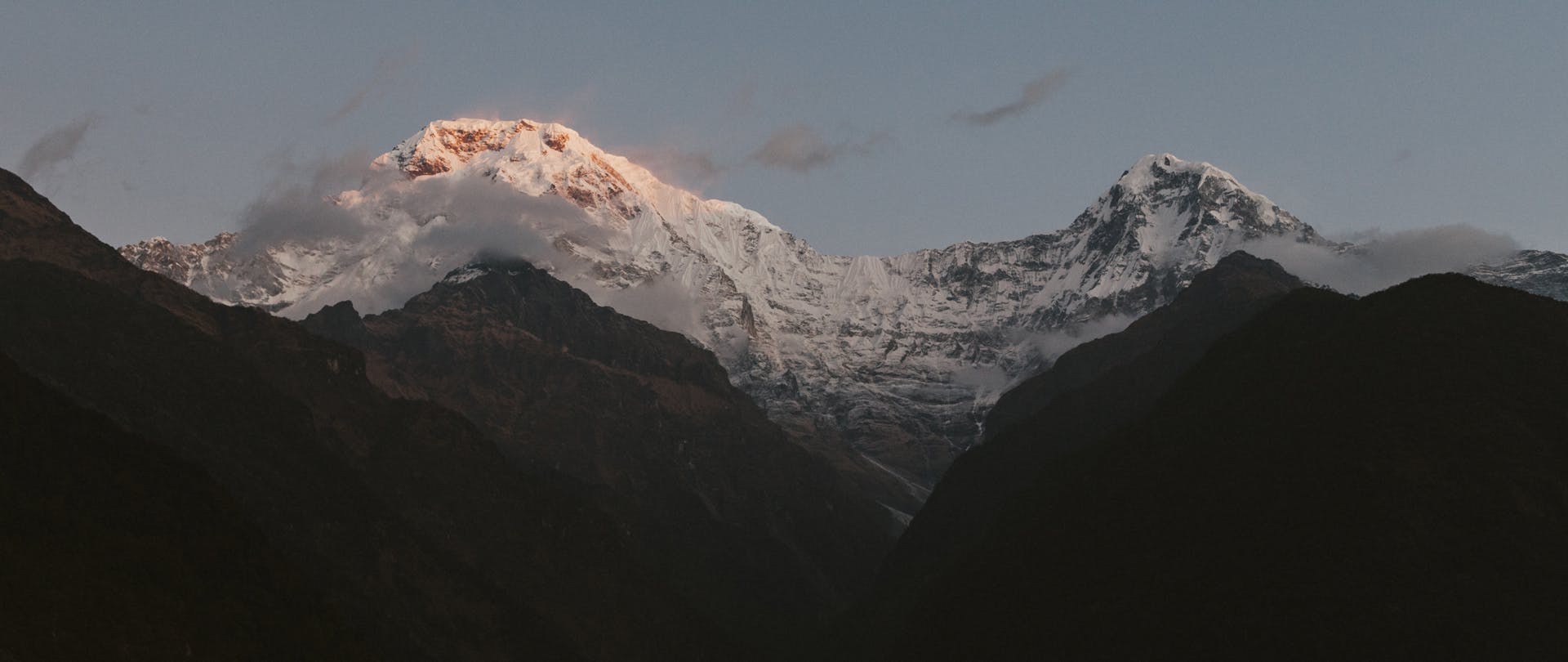
The Annapurna Trek with Yoga is a balanced Himalayan journey that combines gentle mountain walking with structured yoga and meditation practice. The route follows the classic Poon Hill trail, known for gradual elevation gain, comfortable daily distances, and wide Himalayan views, making it suitable for trekkers seeking both movement and recovery.
This experience is designed for travelers who want to stay active without pushing physical limits. Morning yoga prepares the body for walking, while meditation sessions in Pokhara support recovery and reflection. The trek moves through Gurung and Magar villages, forested ridges, and panoramic viewpoints, finishing with time for healing and rest by the lakeside.
Rather than focusing on extremes, this journey emphasizes rhythm, breath, and awareness. The mountains set the pace, and yoga helps you stay present within it.
The route begins in Pokhara and follows the lower Annapurna foothills toward Ulleri and Ghorepani. The trail climbs steadily through terraced farmland and forest, allowing natural acclimatization without pressure. The highest point, Poon Hill, is reached without technical difficulty, making the route accessible to trekkers with moderate fitness.
From Ghorepani, the path continues through forested ridges to Tadapani, offering close views of Annapurna South and Machapuchare. The descent toward Jhinu Danda brings warmer air and changing vegetation, ending beside the Modi Khola hot springs. The trek concludes with a return to Pokhara for structured yoga, meditation, and recovery sessions.
This loop avoids crowded high-altitude routes while still delivering strong mountain scenery, cultural depth, and physical balance. It is a practical Himalayan itinerary designed to feel complete without feeling rushed.
| Trip Name | Duration | Difficulty | Price (USD) | Key Feature |
|---|---|---|---|---|
| Annapurna Base Camp Trek | 14 Days | Moderate | $1090 | A time-efficient route reaching the Annapurna Sanctuary, ideal for travelers balancing trekking. |
| Annapurna Base Camp Heli Trek | 9 Days | Easy to Moderate | $2,250 | Combines trekking with a scenic helicopter return from base camp, allowing more time for relaxation and altitude-friendly pacing. |
| Annapurna Panorama Trek | 8 Days | Easy to Moderate | $710 | A low-altitude trek featuring Poon Hill sunrises and Gurung villages, well-suited for daily yoga practice and cultural immersion. |
Upon arrival at Tribhuvan International Airport, a Nepal Hiking Team representative will welcome you and escort you to your hotel in Kathmandu. After check-in, a brief meeting will cover the trek itinerary, safety procedures, and logistics. The remainder of the day is free to rest and prepare for the journey ahead.
Overnight stay in Kathmandu.
The day begins with a scenic 30-minute mountain flight from Kathmandu to Pokhara. On clear days, the flight offers aerial views of the Annapurna range (8,091m), Dhaulagiri (8,167m), Manaslu (8,163m), and surrounding Himalayan peaks. Upon arrival in Pokhara at 823 meters above sea level, transfer to your lakeside hotel.
The afternoon is kept light, with a one-hour meditation class beginning at approximately 3:00 PM. This session introduces meditation techniques to help prepare mentally for the trek ahead. The remainder of the evening is free to explore the lakeside area or rest before the trek begins.
Overnight stay in Pokhara
The day begins with a morning yoga session in Pokhara, preparing your body for the trek ahead. After breakfast, you'll drive from Pokhara along the Pokhara-Baglung Highway, passing through Nayapul and reaching Birethanti (1,039m), where ACAP permits are checked at the checkpoint. Birethanti sits at the confluence of the Modi Khola and Bhurungdi Khola rivers.
From Birethanti, the road continues along the Bhurungdi Khola valley to Hile (1,495m), a charming village with traditional stone houses and terraced fields. Hile serves as a practical trailhead, offering quieter and safer trail conditions compared to starting from busier road sections. The trek begins from Hile, following established stone paths through terraced farmland and subtropical forests.
After approximately 20 minutes, the trail reaches Tikhedhunga (1,577m), where the valley narrows.
From here, the route climbs steadily on approximately 3,000 stone steps through rhododendron and oak forests to Ulleri. This sustained ascent marks the most challenging climb of the trek, though the pace can be adjusted with regular breaks. The trail passes through lush vegetation, and on clear days, views of Annapurna South (7,219m) and Hiunchuli (6,441m) begin to appear.
Ulleri is one of the largest Magar villages in the region, with traditional stone houses and warm local hospitality. The village offers comfortable teahouse accommodation and serves as the first overnight stop on the trek. Overnight stay in Ulleri.
The trek from Ulleri to Ghorepani follows forested mountain trails through one of the most scenic sections of the lower Annapurna region. The route climbs gradually through dense rhododendron forests, particularly vibrant in spring when the trees bloom with red, pink, and white flowers. The trail is well-defined, with stone paths, and offers shaded walking for most of the day.
Along the way, the trail passes through Banthanti (around 2,250m) and Nangethanti (around 2,520m), traditional rest stops with teahouses that provide natural breaks for lunch and acclimatization. The forest is composed of oak, magnolia, and bamboo, creating a rich mountain-vegetation environment. Bird calls and occasional wildlife sightings add to the experience.
Ghorepani sits on a forested ridge at 2,880 meters and has historically served as an important resting point on trans-Himalayan trade routes. The name "Ghorepani" means "horse water," reflecting its role as a watering stop for traders and pack animals. On clear afternoons, views toward Annapurna South (7,219m), Hiunchuli (6,441m), and Machapuchare (6,993m) open up from around the village.
Upon arrival, there is time to rest and prepare for the early-morning ascent to Poon Hill the following day. Overnight stay in Ghorepani.
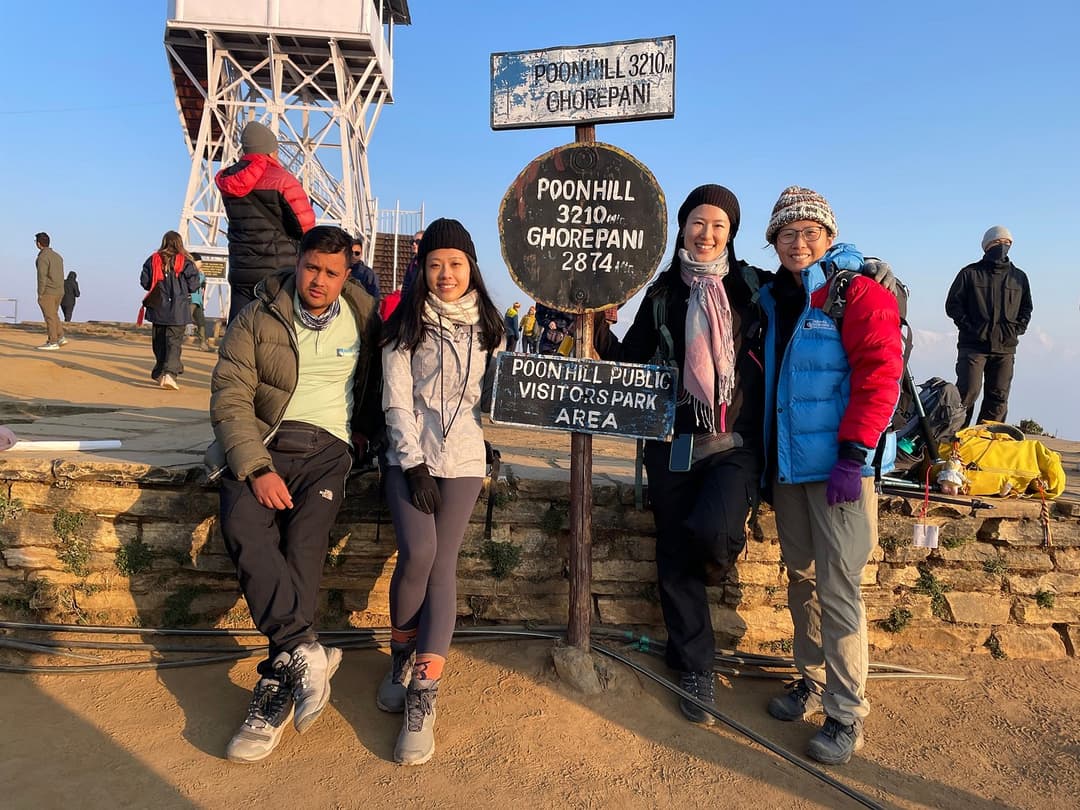
The day begins early with a pre-dawn ascent from Ghorepani to Poon Hill, reaching 3,210 meters in time for sunrise. The climb takes approximately 1 to 1.5 hours on well-maintained stone steps through rhododendron forest. Morning conditions are often cold, particularly in winter, and warm layers are essential.
From the Poon Hill viewpoint, clear-weather panoramas extend across the Annapurna and Dhaulagiri ranges. The sunrise illuminates over 20 major peaks, including Dhaulagiri I (8,167m), Annapurna I (8,091m), Annapurna South (7,219m), Machapuchare (6,993m), Hiunchuli (6,441m), Nilgiri (7,061m), and numerous surrounding summits. The golden light creates a dramatic display as it spreads across the snow-covered peaks.
After descending back to Ghorepani for breakfast, the trek continues through dense forest trails toward Tadapani. The route is predominantly forested, passing through shaded rhododendron and oak woodland with occasional clearings offering mountain views. The trail remains gradual with moderate ups and downs throughout the day.
Tadapani sits on a ridge at 2,630 meters with close-up views of Annapurna South (7,219m), Machapuchare (6,993m), and Hiunchuli (6,441m). The evening offers clear mountain panoramas and a peaceful atmosphere at the end of a rewarding day. Overnight stay in Tadapani.
The trek from Tadapani to Jhinu Danda follows a descending route through mixed forests and traditional Gurung settlements. The trail passes through bamboo and rhododendron forests, with the sound of the Modi Khola River becoming more prominent as altitude decreases. The route offers occasional mountain views through gaps in the forest, particularly of Annapurna South (7,219m) and Machapuchare (6,993m).
Jhinu Danda is a Gurung village set on a ridge above the Modi Khola River at 1,780 meters. After checking into your teahouse and enjoying lunch, a 20 to 30-minute descent through forest leads to the natural hot springs beside the Modi Khola. The springs are built into natural stone pools and fed by geothermal water heated to approximately 40-45°C.
The hot springs offer therapeutic relief for tired muscles after several days of trekking, surrounded by lush forest and the sound of the rushing Modi Khola River. After soaking, the return climb to Jhinu Danda takes 30 to 45 minutes on steep stone steps.
Overnight stay in Jhinu Danda.
After breakfast in Jhinu Danda, the journey back to Pokhara begins with a two-hour drive along mountain roads. The route retraces through the Modi Khola valley, passing terraced fields and traditional villages. Upon arrival in Pokhara, transfer to your lakeside hotel with time to rest and freshen up.
An afternoon meditation session is scheduled from 3:00 PM to 4:00 PM, allowing time to process the trekking experience and transition toward the more reflective practice scheduled for the following day. The evening is free to enjoy Pokhara's lakeside restaurants and surroundings. Overnight stay in Pokhara.
Today is dedicated to yoga, healing, and meditation practice with a professional instructor. The day follows a structured schedule designed to integrate the trekking experience and restore physical and mental wellbeing.
The evening is free to rest and enjoy Pokhara. Overnight stay in Pokhara.
The day begins with a final morning yoga session in Pokhara before breakfast. After the session, time is available for last-minute shopping or a final walk along the lakeside before departure.
In the afternoon, a 30-minute flight returns you to Kathmandu. The mountain flight offers a final aerial perspective of the Himalayan peaks including Annapurna, Dhaulagiri, and Manaslu.
Upon arrival in Kathmandu, transfer to your hotel. The remainder of the day is free to explore Thamel or rest before departure.
Overnight stay in Kathmandu.
After breakfast at the hotel, a Nepal Hiking Team representative will transfer you to Tribhuvan International Airport at least 3 hours before your scheduled flight. This marks the completion of your 10-day Annapurna Trek with Yoga journey
This trek follows a gentle Himalayan walking style focused on comfort, rhythm, and steady movement rather than endurance. Daily walking hours remain moderate, with gradual ascents and well-established trails throughout the Poon Hill route. No technical skills or high-altitude trekking experience are required, making it suitable for travelers with basic fitness who prefer mindful movement over physical strain.
Yoga and meditation are built into the journey's structure, not added to the trek. Morning yoga sessions prepare the body for walking through breathwork and mobility-focused practice, while meditation and healing sessions in Pokhara support physical recovery and mental clarity. All sessions are adaptable, and prior yoga experience is not required to participate comfortably.
The itinerary is designed to stay within a comfortable altitude range, with the highest point at Poon Hill (3,210 meters). Elevation gain is gradual, allowing natural acclimatization without pressure or rushed ascents. This approach helps reduce fatigue and common altitude-related discomforts while maintaining consistent energy levels.
Accommodation during the trek is based on established mountain teahouses along the Poon Hill route, one of the best-supported trekking corridors in the Annapurna region. Rooms are simple but clean, meals are reliable, and communal dining spaces provide warmth and comfort. Hotels in Pokhara and Kathmandu offer a more relaxed setting for recovery and yoga practice.
Spring and autumn provide the most stable conditions for both trekking and yoga, with clear mountain views and moderate daytime temperatures. Mornings and evenings can be cool at higher villages, particularly during sunrise hikes and early yoga sessions, so layered clothing is important for comfort.
This journey prioritizes balance rather than extremes. The pace is guided by terrain, breath, and awareness, allowing trekkers to stay present and connected to the landscape. Yoga supports recovery and mindfulness, while the mountains naturally set the rhythm of each day.
Read our genuine feedback from past travelers with Nepal Hiking Team sourced from TripAdvisor, Google, Facebook, and Trustpilot.
We had the best time in Nepal. The beautiful views and warm hospitality of the Nepali people are truly unparalleled.
Instrumental to our amazing experience were our guide, Netra, and porter, Vasu.
We were super well taken care of. Netra was quick to assess our physical abilities and was able to effectively set the pace for our hikes. He had very good knowledge of the route and terrain. Importantly, this was our first time attempting a hike at a high altitude, so he took extra care to check on us regularly.
On a personal note, proper gear, including a powerful down jacket for -20 degrees Celsius and a proper hiking backpack, is super essential.
Overall, I would highly recommend the Nepal Hiking Team and Netra/Vasu for your Nepal adventure!
I highly recommend the Nepal Hiking Team for anyone planning to trek in Nepal. My spouse and I had a fantastic time on our trek and greatly credit our positive experience to the thought and care put into it by Nepal Hiking Team in coming up with a personalized plan that would enable us to succeed.
Every detail was considered to match us based on our abilities and interests. We also could not have felt more cared for minute to minute by the team that supported us from the minute we arrived in Kathmandu until our departure.
Our guide, Nim, was amazing -- so careful, thoughtful, warm, and supportive. And our porters, Sabin and Ganesh, were delightful. They were all unbelievably generous in terms of how much they worked to ensure we were comfortable and prepared. They thought of every detail along the way.
- Guided By Nim Dahal
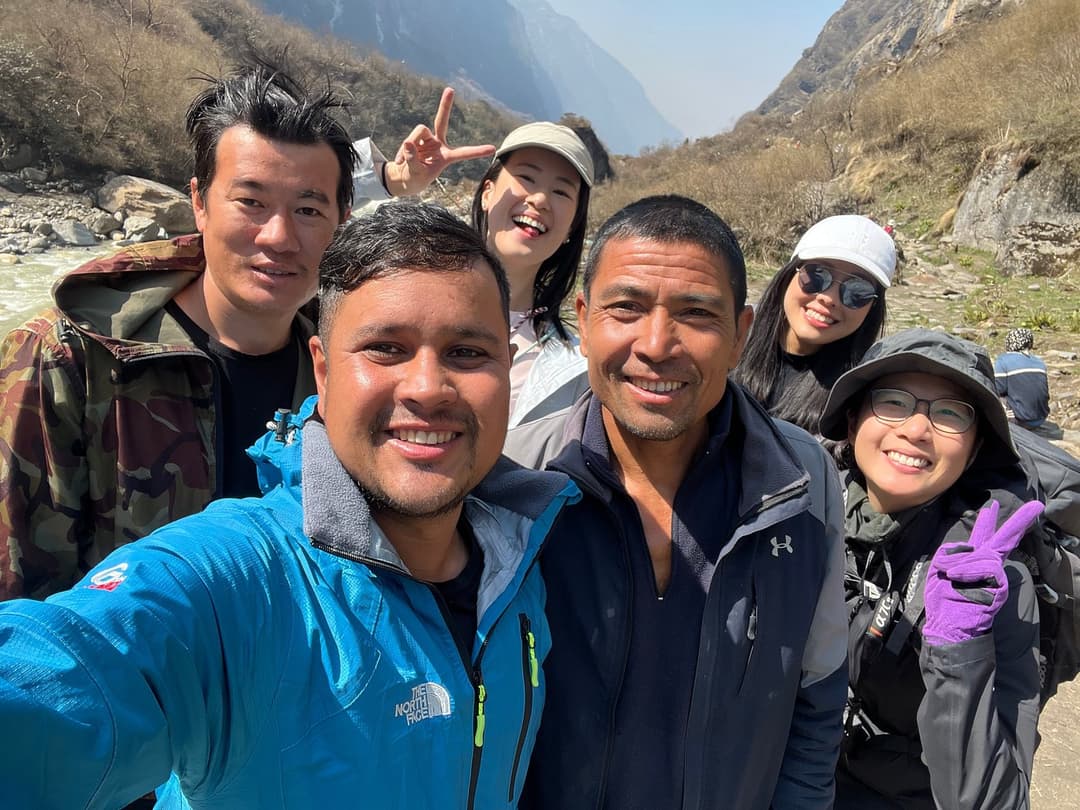
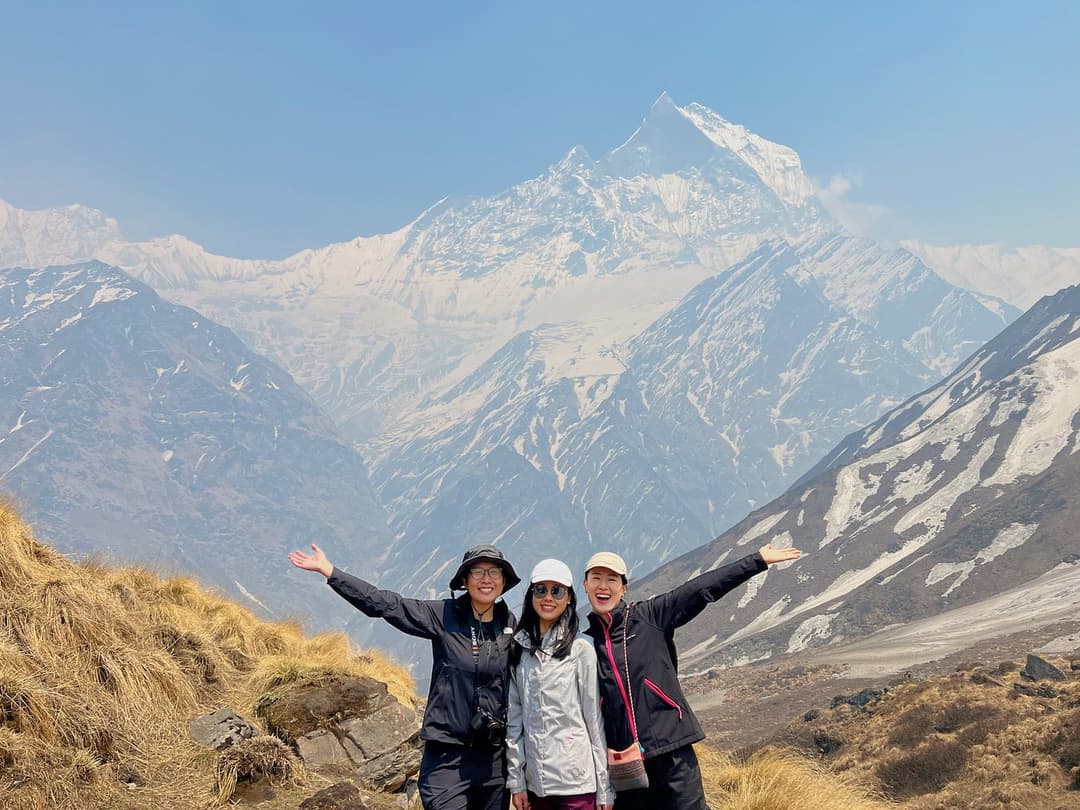
We're three friends from Hong Kong who undertook Poon Hill and Annapurna Base Camp. Two months before our Nepal adventure, we started looking for a travel agency to sort out all the details so we could enjoy a hassle-free trip. Nepal Hiking Team was incredibly responsive, offering us useful suggestions every step of the way.
We chose them to handle everything from hotel bookings to internal flights and airport pickups. Our guide, Rajesh, was both fun and young, attentive and attentive to our needs. When our flight from Kathmandu to Pokhara was canceled due to weather, Rajesh swiftly arranged a jeep to Pokhara, keeping us right on schedule.
Throughout the trek, he was vigilant about our safety, which gave us great peace of mind. Our porters, Robin and Budda, were always upbeat and industrious, carrying our bags with constant smiles and ensuring our comfort. This trek was our first hiking experience abroad, and it couldn't have been better. The people of Nepal are hot and welcoming.
The views from the mountains were breathtaking, and the sunrise over the snow-capped peaks from Poon Hill was simply stunning.
 +
+ +
+ +
+
We had to make some last-minute changes to our itinerary, deciding to spend more time in Pokhara and less in Kathmandu during our final days. Nepal Hiking Team was super flexible and happily adjusted everything for us, even on short notice.
On top of that, we wanted to book some activities like zip-lining, bungee jumping, and a helicopter tour with local providers in Pokhara. Ganga, Hari, and the team took care of all the bookings and made sure we had everything we needed.
In the end, we had an absolutely unforgettable vacation in the stunning Nepal!
Nepal is incredible on its own—but Nepal Hiking Team makes it even better!
I highly recommend booking with them, and without a doubt, I’ll be using them again for any future trips to Nepal.
My partner and I booked our entire Nepal trip with Nepal Hiking Team, and they did not disappoint! Everything was fantastic—well-organized from start to finish. Raj worked closely with us to plan the itinerary in detail, making sure we got exactly the trip we wanted.
Since we only had two weeks in Nepal, we chose the Poon Hill Trek so we could explore other places as well. It’s a great option for anyone short on time but still wanting a rewarding trek. The views from Poon Hill were stunning, and we stayed in cozy tea houses in mountain villages along the way.
Our guide, Santosh, was amazing—knowledgeable, thoughtful, and always making sure things ran smoothly. Best of all, he was fun and made the trek even more enjoyable!
If you’re planning a trek in Nepal, we highly recommend Nepal Hiking Team. Their professionalism, attention to detail, and top-notch service mean we’d 100% book with them again for our next trip!
We design this trek around balance rather than speed or extremes. Our guides understand both mountain pacing and recovery needs, and yoga sessions are integrated to support trekking, not distract from it. We run the route regularly, know the teahouses well, and structure days to allow steady walking, proper rest, and safe acclimatization.
We run small groups to keep the experience calm and flexible. Typical group size is six to eight people, with a maximum of ten. Once the minimum number is confirmed, the departure is guaranteed.
Yes, solo travelers are welcome to join our group departures. You will trek with the group while having your own space during yoga sessions and rest time whenever possible.
Yes, we arrange private trips for couples, families, or solo travelers. The itinerary remains the same, and we adjust pacing, yoga timing, and accommodation preferences based on your group.
Yes, most nationalities can obtain a visa on arrival at Tribhuvan International Airport in Kathmandu. The process is straightforward and available twenty-four hours a day.
Yes, we arrange private airport pickup and drop-off for all our clients. Our representative meets you at the airport and transfers you to your hotel.
We arrange a comfortable three-star hotel in Kathmandu as standard. Hotel upgrades are available upon request for an additional cost.
An extra night at our standard hotel generally costs USD 50 for a double or twin room, including breakfast.
We review the itinerary, check equipment, explain yoga and trekking schedules, and answer all questions. This briefing helps you understand daily routines and prepare calmly before the trek begins.
To confirm the booking, we require an online booking form and a twenty percent deposit. This secures your place on the trek.
The remaining balance can be paid upon arrival in Kathmandu. We accept cash and card payments, with a card surcharge applied.
The deposit follows our standard cancellation policy. It is non-refundable but may be credited toward a future trek depending on timing and circumstances.
We use private vehicles for ground transport and domestic flights between Kathmandu and Pokhara. Trekking begins from the designated trailhead after driving from Pokhara.
Departure times depend on road conditions and traffic. We usually leave in the morning to avoid congestion and ensure a relaxed travel day.
Yes, flights between Kathmandu and Pokhara are included in this itinerary, offering a shorter and more comfortable transfer.
This trek is graded as easy to moderate. Daily walking hours are reasonable, and yoga sessions support flexibility and breathing, making it suitable for first-time trekkers with basic fitness.
The full program runs for ten days, including trekking, yoga, meditation, and recovery time in Pokhara.
There is no strict age limit. Participants should be in good health and comfortable walking five to six hours per day.
Regular walking, light hiking, and basic stretching or yoga practice before arrival are sufficient. No technical training is required.
Yes, travel insurance is mandatory. It must cover high-altitude trekking and emergency helicopter evacuation.
Our guides monitor altitude symptoms daily, adjust pacing when needed, and carry a first-aid kit. Emergency procedures are clearly followed when required.
Spring and autumn offer the most stable weather and clear mountain views. Winter and summer treks are possible with adjusted expectations.
Yes, summer brings greenery and fewer crowds, while winter offers clear skies and colder temperatures. Yoga schedules are adjusted based on conditions.
No specific vaccines are required, but routine travel vaccinations are recommended.
Gradual ascent, hydration, proper rest, and controlled breathing during yoga sessions help minimize altitude issues.
There are suspension bridges on the route, but they are safe, wide, and manageable. Our guides assist anyone who feels uncomfortable.
Yes, one porter carries luggage for two trekkers. Your main bag should not exceed twelve to thirteen kilograms.
Standard trekking clothing, layered warmth, and personal items are sufficient. No technical climbing gear is required.
Yes, you can safely store extra luggage at your hotel in Kathmandu during the trek.
We provide a duffel bag and sleeping bag for use during the trek. These are returned after completion.
Yes, we provide a trek completion certificate upon request.
Accommodation is in local teahouses with private rooms where available. Bathrooms may be shared at higher elevations.
Wi-Fi is available in most teahouses for a small fee. Mobile network coverage is intermittent but present in many villages.
Yes, charging is available at teahouses, usually for a small cost.
Western toilets are available in many lodges, though squat toilets are still common in some areas.
Single rooms are usually available without extra charge on the trek, except in busier sections where availability is limited.
Teahouses serve a mix of Nepali and international meals such as dal bhat, noodles, rice dishes, soups, and breakfast options.
Yes, these options are widely available. Dietary needs should be informed in advance.
Drinking water is sourced locally and requires treatment. We recommend using purification tablets or filters instead of bottled water.
Yes, we can adjust yoga intensity, rest days, accommodation level, or walking pace for private trips.
Yes, guided sightseeing tours in Kathmandu can be arranged before or after the trek.
Tipping is customary and usually given at the end of the trek.
We recommend budgeting for drinks, charging, Wi-Fi, hot showers, and personal expenses. An estimate of USD 15 to 20 per day is usually sufficient.