12 Days
Check Our Risk-Free Booking Policy View Details

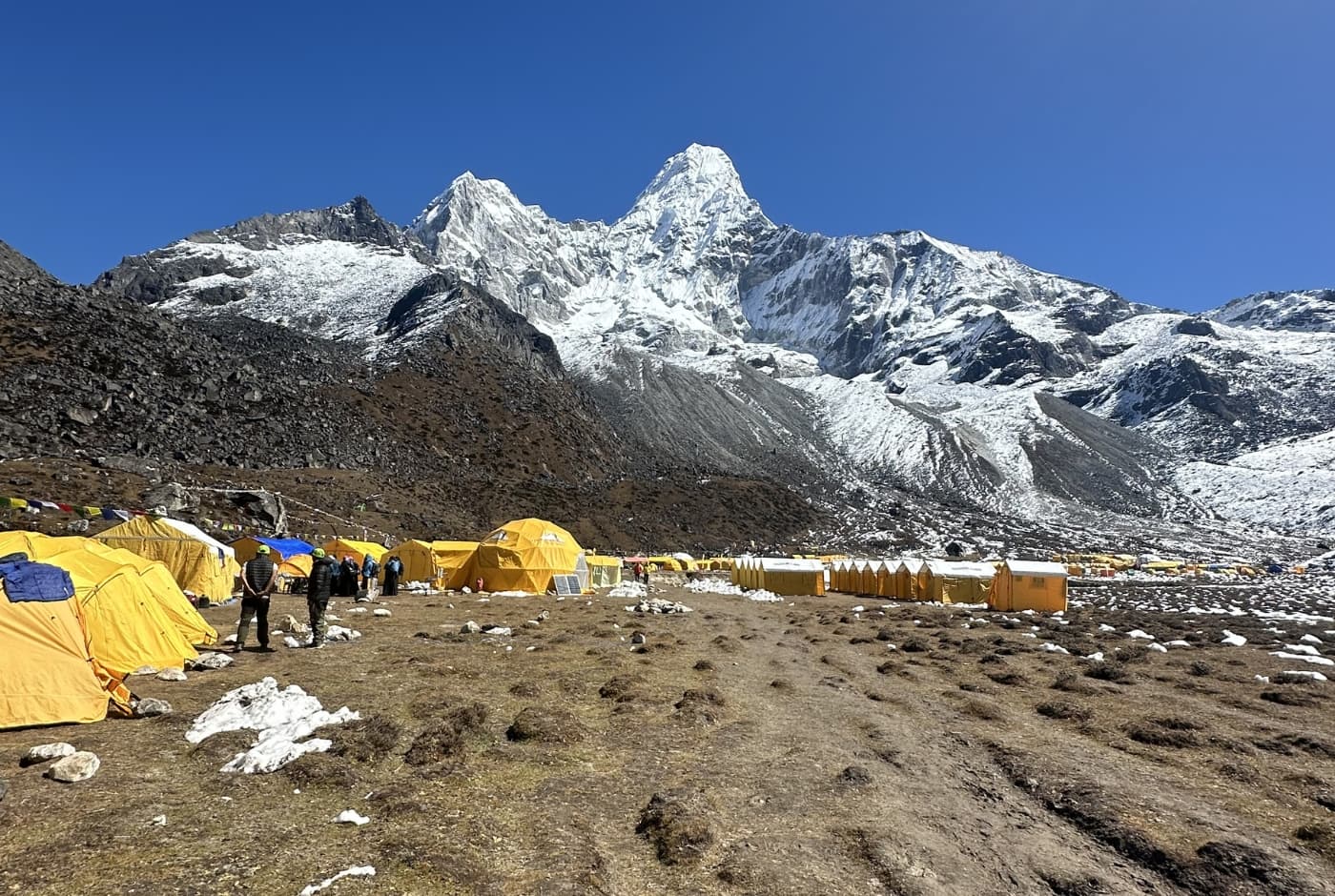
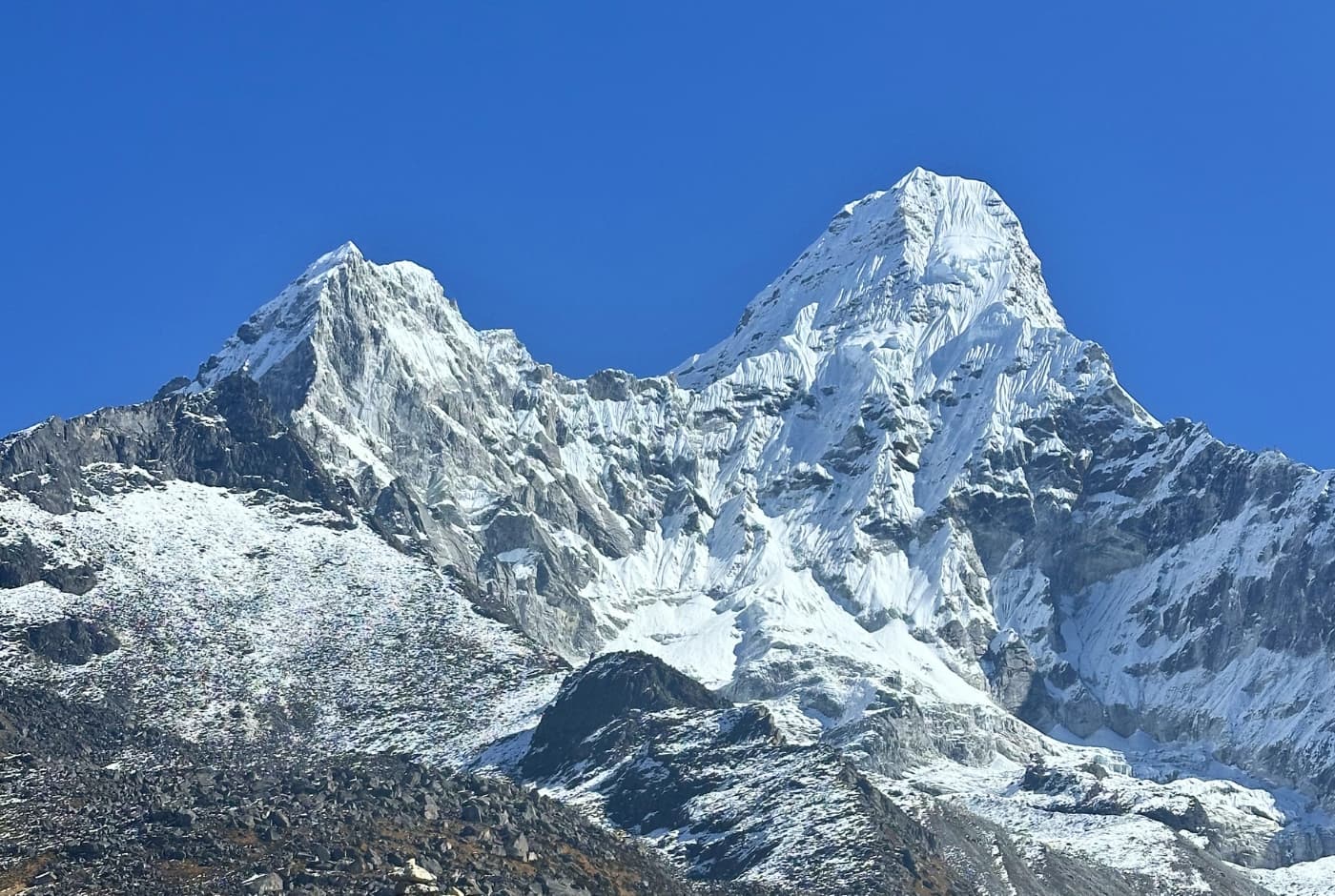
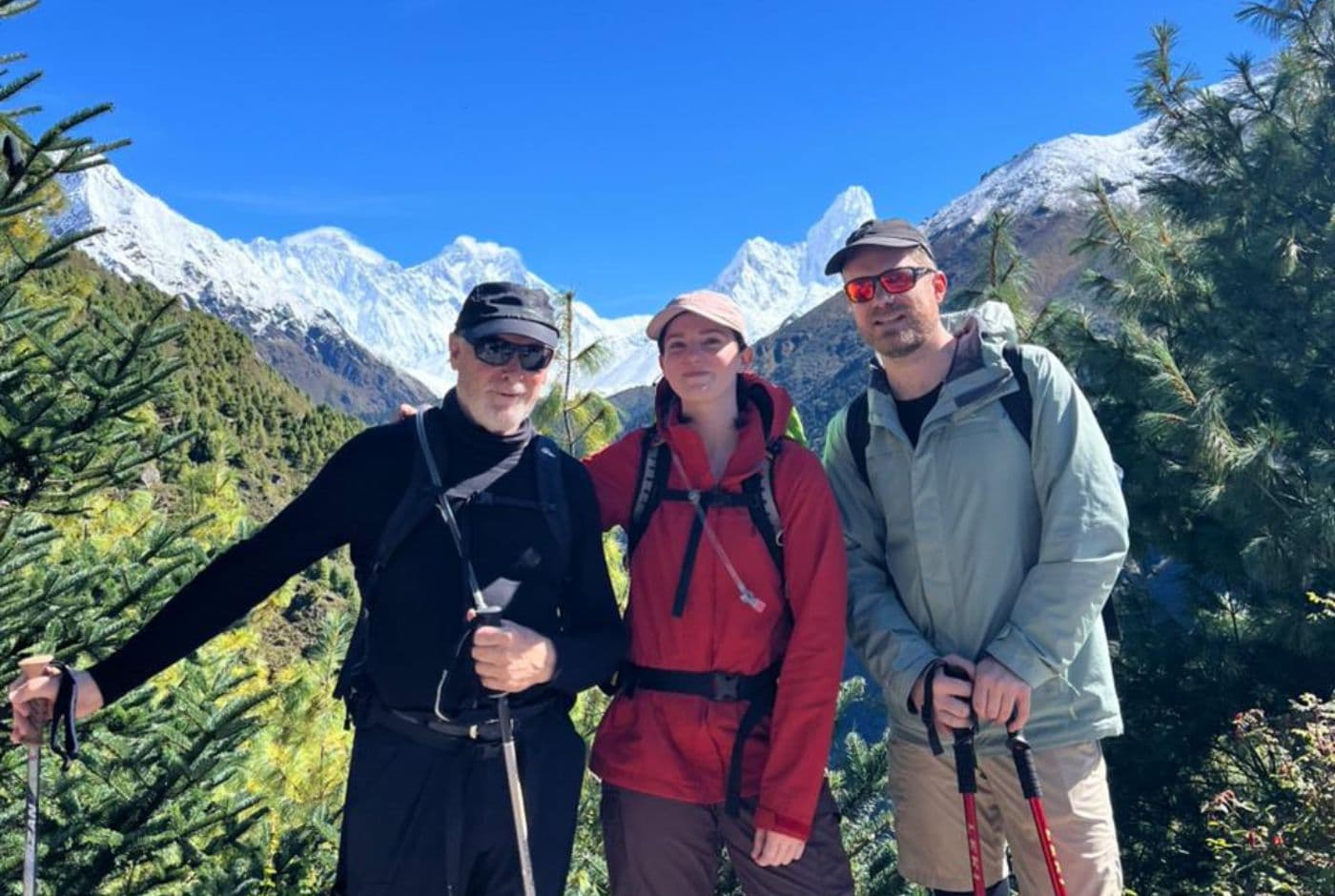
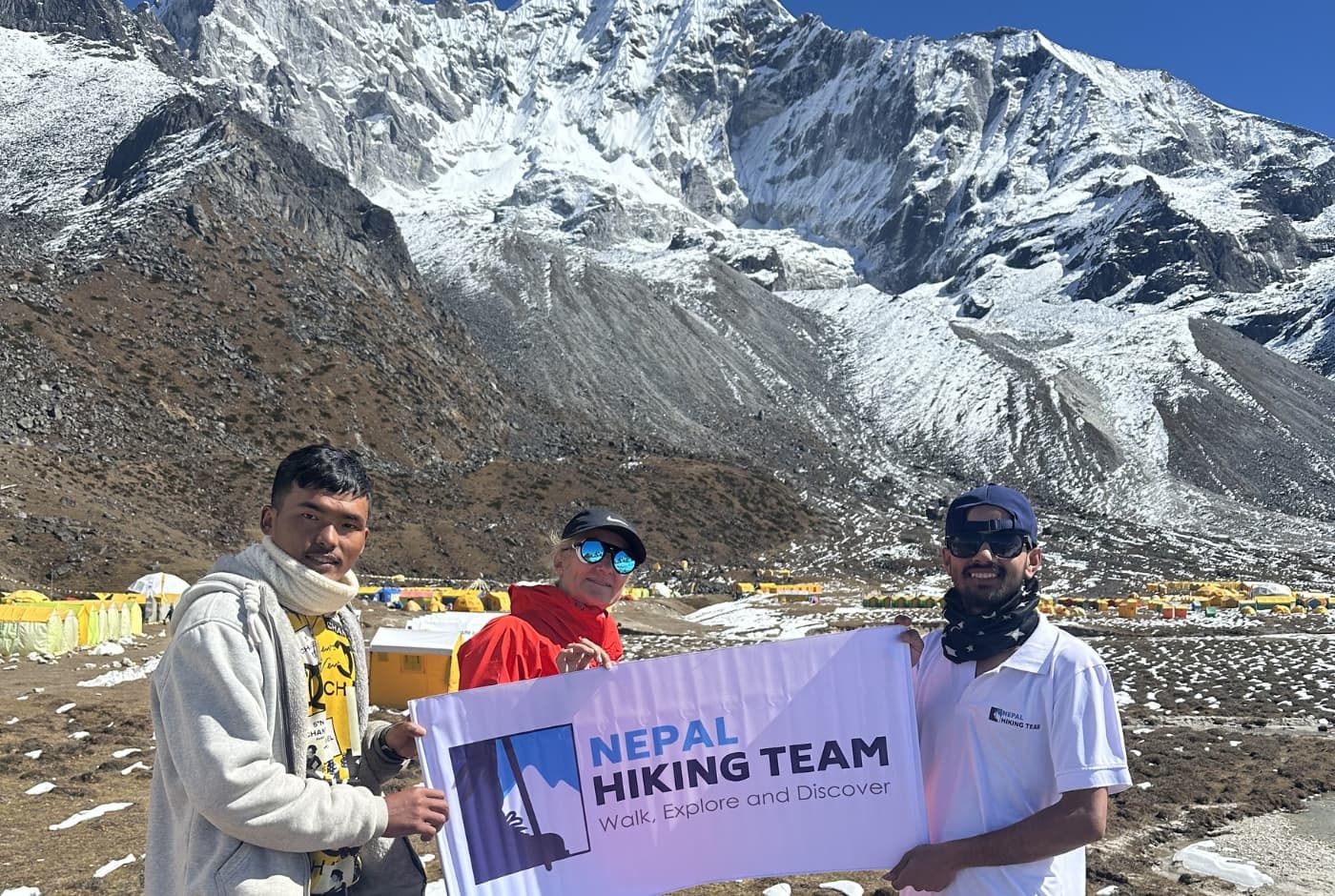
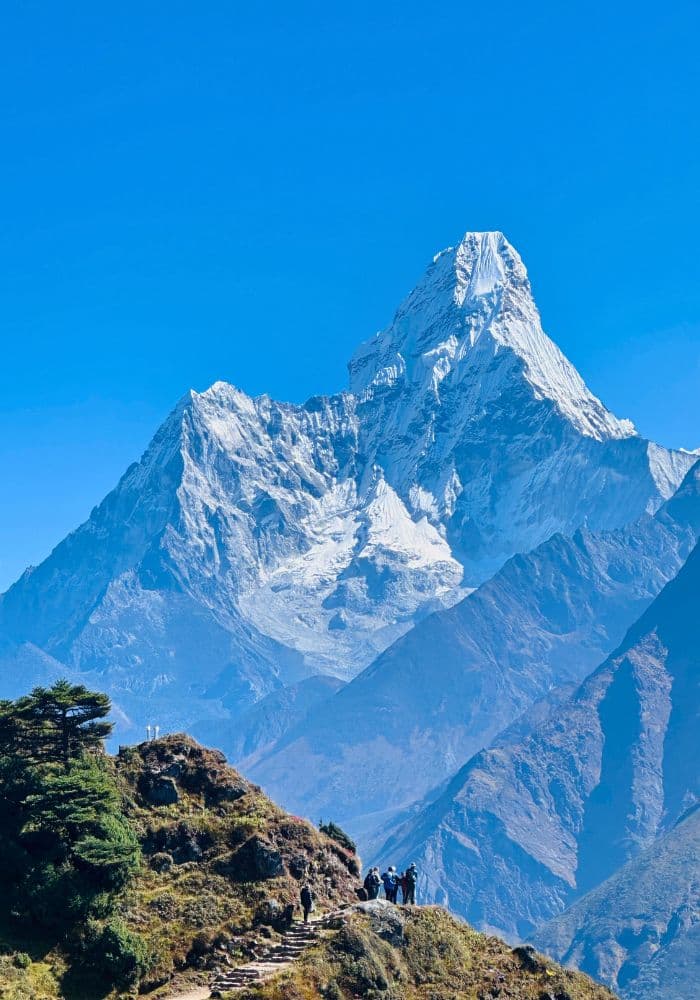
The Ama Dablam Base Camp Trek is an immersive journey through the heart of the Khumbu region to the base of Ama Dablam peak in the Himalayas. Rising above the Khumbu Valley with perfectly symmetrical ridges, a dramatic hanging glacier, and a balanced pyramid shape, Ama Dablam is regarded as one of the most visually striking mountains in Nepal.
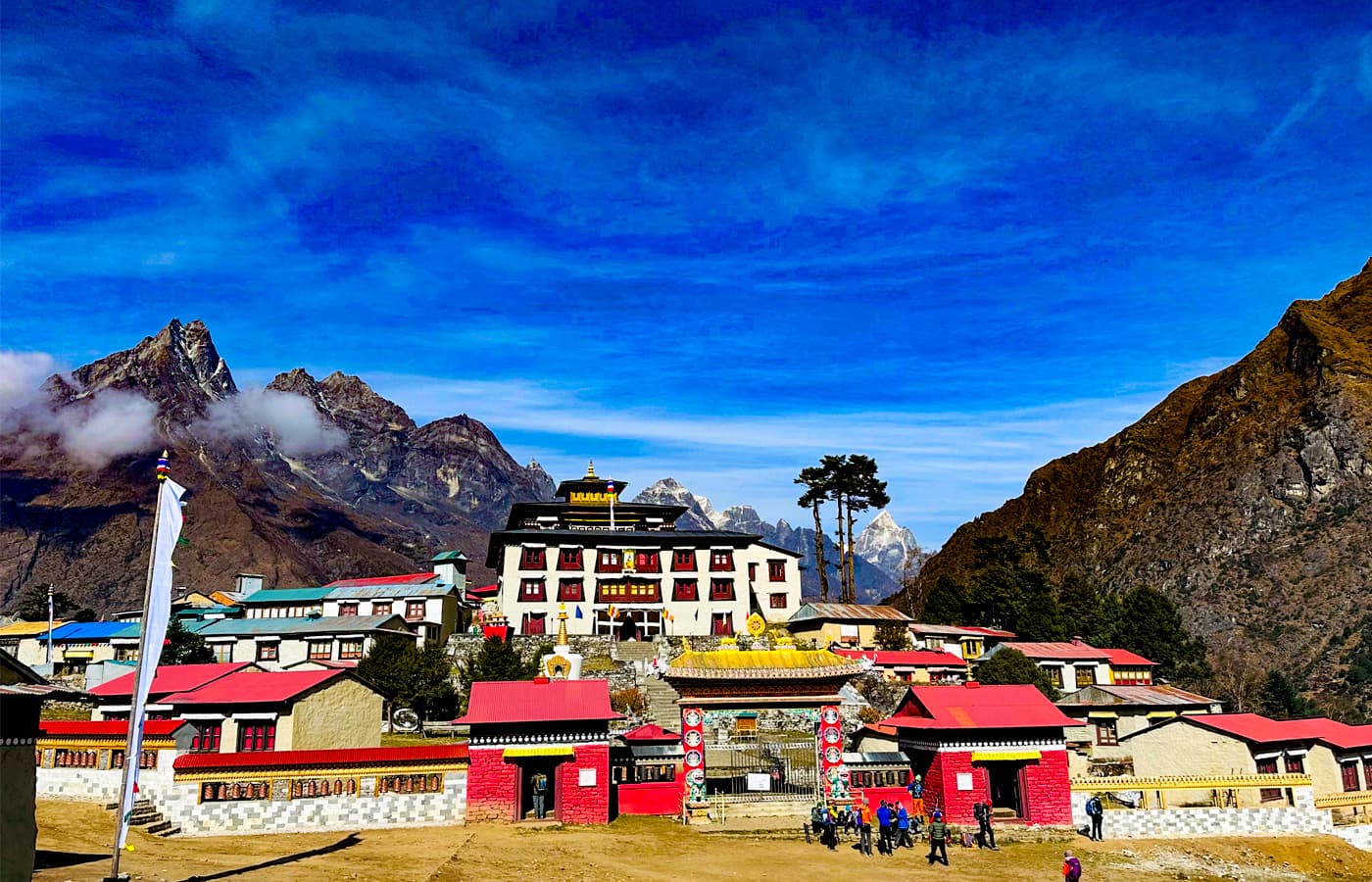
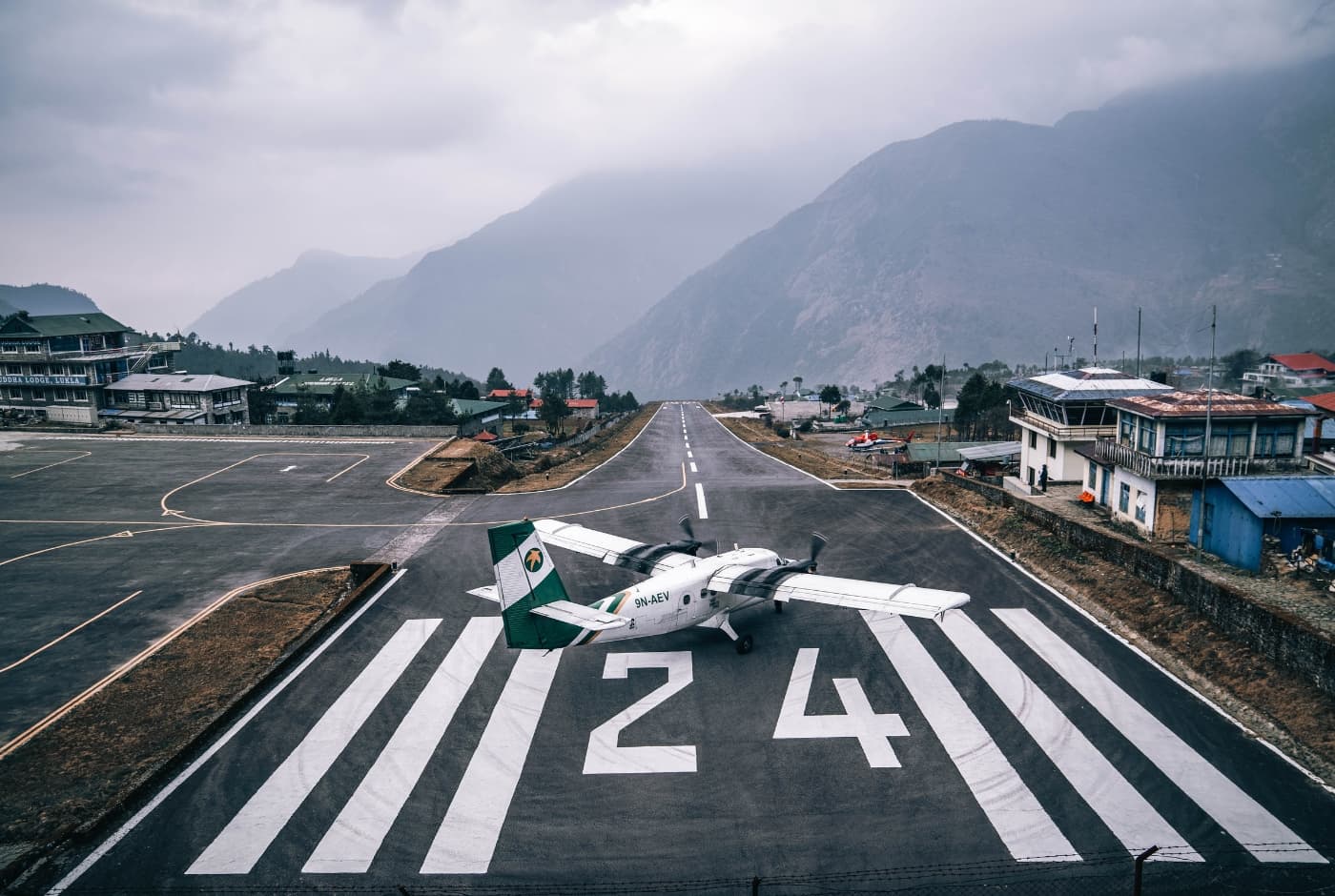
The 12-day trek starts from the Tenzing Hillary Airport, Lukla, winding through alpine forests, rivers, bridges, and local settlements such as Phakding, Namche Bazaar, and Tengboche.
The journey to the base camp is considered one of the most scenic and fascinating short treks in the Everest region. It offers a perfect balance of nature, mountain scenery, cultural insights, and tranquility that many trekkers seek.
The trail is considered moderate with steady uphill and downhill, gradual elevation gain, and a few demanding sections, like from Phakding to Namche Bazaar and Phunk Tenga to Tengboche.
Note: The Ama Dablam Base Camp route follows the main EBC trail up until Namche Bazaar, a vibrant Sherpa settlement.
The Ama Dablam Base Camp Trek requires two essential permits, including the Khumbu Pasang Lhamu Rural Municipality Entry Permit and the Sagarmatha National Park Entry Permit.
Although the trek does not involve technical climbing, it requires multiple days of high-altitude walking. Also, daily hikes with thinner air above 3,500 m, steep ascents around Namche Bazaar, and Tengboche make the trek moderately challenging.
The best time for the Ama Dablam trek is during spring (Mar-May) and autumn (Sept-Nov). With proper preparation and acclimatisation, the trek is achievable for trekkers with a basic fitness level.
The Ama Dablam Base Camp Trek starts as soon as you arrive in Kathmandu. You will fly to Lukla and start your trek with a gentle descent and gradual walk alongside the Dudh Koshi River toward Phakding. Along the trail, you will cross suspension bridges, pine and oak forests, mani walls, and ancient monasteries.
Continuing on the trail, trekkers will hike to Namche Bazaar, the official gateway to the upper Everest region. It is a vibrant Sherpa town that serves as the commercial and cultural hub of the Khumbu region. The village is mainly used as an acclimatisation point during the trek.
From Namche Bazaar, the route leaves the busier Everest Base Camp trail and moves toward Phortse Village, a traditional Sherpa village based on agriculture, at an elevation of 3,840 m (12,598 ft). As the altitude increases, the trail passes through more alpine meadows, glacial streams, and terraced fields, with Ama Dablam as a stunning backdrop.
The route then moves towards Pangboche, offering high-altitude views of the valley, peaks like Thamserku, and Tengboche Monastery across the river. As this trail is less commercialised than the main EBC trail via Tengboche, it offers peaceful and scenic pathways for trekkers.
The journey from Pangboche to Ama Dablam Base Camp is one of the highlights of the journey. The route is less crowded and gradually climbs through alpine terrain, offering a deep mountaineering atmosphere. Trekkers can witness the stunning views of the peak's southwest face while spending a night at the base camp.
From here, you will head to Namche Bazaar, passing through Tengboche, and retrace your steps back to Lukla Airport via the Namche Bazaar route, sightseeing through Sherpa villages, crossing rivers and bridges, and taking in varied landscapes. You will take a breathtaking mountain flight back to Kathmandu, ending your Ama Dablam journey.
The Ama Dablam Base Camp Trek is an unforgettable journey for trekkers seeking scenic and majestic mountain views with a peaceful trail. It offers adventure and a unique chance to connect with the local Sherpa communities of the Himalayas.
Nepal Hiking Team offers various trekking options similar to the Ama Dablam Base Camp Trek in the Khumbu Region. Each trek offers a unique trekking experience, highlights, and cultural immersion for travelers.
Classic trek to the foothills of the world’s tallest peak, Mount Everest.
Shortened EBC trek with an exciting helicopter return from Gorakshep to Lukla, offering scenic aerial mountain views.
Trek to the majestic Gokyo Lake at 4,790 m, then return by heli, enjoying panoramic views.
On your arrival day at Tribhuvan International Airport, a representative from Nepal Hiking Team will warmly welcome you and move you to your designated hotel.
After reaching the hotel, we will have a pre-trek meeting where we will introduce you to your guide and discuss the trekking routes, weather forecasts, logistics, and safety procedures. During this briefing, we will provide you with essential trekking gear
At the end of the meeting, we will collect copies of your passport and travel insurance. Similarly, the remaining balance for the trek will be cleared during the meeting.
After this, you are free to rest, relax, and prepare for the journey ahead.
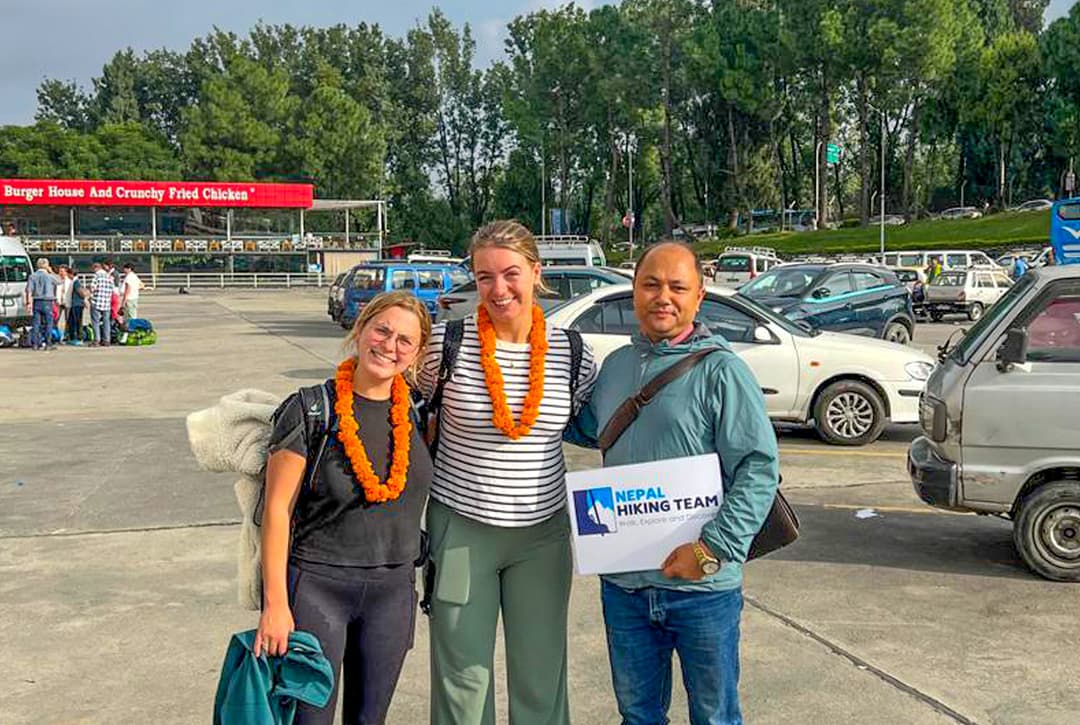
Day 2 will begin early as flights to Lukla usually operate between 6:00 am and 11:00 am. After breakfast, your guide will pick you up from the hotel and take you to the airport. During peak trekking seasons, direct flights to Lukla are taken from Manthali Airport in Ramechhap to avoid air traffic at the Kathmandu airport.
In case of the Ramechhap flight, we will start a 5-hour drive at 1:00 am and transfer you to Manthali Airport. This diversion is included in your 13-day Ama Dablam Trek package; hence, no extra charges are required.
Besides, you can also take a direct helicopter ride (on a shared basis) from Kathmandu to Lukla for a USD 450 per person charge, after deducting the regular Lukla flight cost.
After arriving at the Tenzing-Hillary Airport, you will meet your porters, who will be responsible for carrying your main luggage throughout the trek. From Lukla, your trekking part of the trip begins with a gradual descent through rhododendrons, pine, and oak trees, and crosses local villages like Chhepulung and Thadakoshi.
Along the route, hikers pass mani walls, prayer flags, and monasteries, with distant views of Mount Kongde and Kusum Kanguru. By late afternoon, you reach Phakding, your first overnight stop of the trek.
After breakfast, start your trek towards Namche Bazaar, the prime gateway to Mt. Everest. The journey begins with a gentle, riverside walk through Sherpa settlements such as Zamfute, Toktok, and Chhumuwa, pine, and dense rhododendron forests.
Upon reaching Monjo village, the entry point of Sagarmatha National Park, your permits will be checked. From Phakding to Namche, trekkers will cross multiple bridges, including the famous Hillary suspension bridge at 2,860m.
After a gradual ascent, the pine forests start thinning. On a clear sunny day, trekkers can get the first glimpse of Mount Everest from this point.
By afternoon, the trail reaches Namche Bazaar, the vibrant, commercial, and cultural heart of the Khumbu region.
Trekkers will spend an acclimatisation day in Namche Bazaar to safely adapt to increasing altitude and elevation gain. The day starts with a hearty breakfast followed by a visit to the Sagarmatha National Park Museum.
The museum was established in 1986 to preserve and promote the region’s diverse flora and fauna, Sherpa culture, traditions, and the history of mountaineering in the Everest region.
The acclimatisation hike also includes a visit to Sagarmatha Next, an environmental initiative work to reduce waste in the Everest region through sustainable tourism practices and recycling.
Likewise, trekkers learn about and take part in the Carry Me Back initiative, and help transport recyclable waste from the Everest region for recycling.
After that, hike to the famous Everest View Hotel, perched at 3,880 m, offering views of Mt Everest, Lhotse, Ama Dablam, and Thamserku on a clear day.
Trekkers can also hike up to Khumjung Village to explore Hillary School and the Khumjung Monastery.
Branching off the main EBC trail, the path heads towards Phortse Village, a remote Sherpa settlement within the Sagarmatha National Park. The route from Namche Bazaar to Phortse leaves the main EBC trail and traverses through Kyangjuma and Mong La. Later, the route descends to Phortse Tenga and ascends to Phortse Village.
The trail is rugged, quiet, and involves a steep climb to the Mong La Pass at 3,978 m, followed by a deep descent, and a final ascent through rhododendron and juniper forests to the village. The continuous uphill and downhill sections can feel demanding, requiring trekkers to maintain a steady pace and hydration.
On this part of the trail, with luck, adventurers are likely to spot various wildlife, such as the Himalayan Tahr, musk deer, Himalayan monal, mountain goat, and high-altitude bird species.
Today, you head towards Pangboche, on a high-altitude trail involving rugged terrain and noticeable elevation gain. This part of the trail sees much less foot traffic and is considerably quieter than any other trail in the Khumbu region.
The relatively short and scenic route first climbs up to the ridge of Phortse village, offering a glimpse of the Tengboche monastery, Namche valley, Khumjung, and the surrounding mountain peaks such as Thamserku, Kangtega, Taboche, Lhotse, and Everest (in the far distance).
The trail is moderately challenging with gradual ascents, stone staircases, narrow cliffside sections, and occasional descents. Along the course, trekkers will pass mani walls, yak pastures, juniper slopes, and occasional wildlife such as blue sheep, pheasants, and others.
You will witness Ama Dablam and its changing appearance as the light shifts throughout the day. Your stop for the day, Pangboche, sits directly beneath the Ama Dablam peak, creating one of the classic postcard landscapes of the Everest region.
While in Pangboche, hikers can visit the Pangboche Gompa (one of the oldest monasteries in Khumbu), which is believed to have been founded in the 17th century. The monastery is home to the traditional Buddhist relics and historical artifacts connected to the local “Yeti” folklore.
The route from Pangboche to Ama Dablam Base Camp is demanding, with a steep, challenging section towards the base camp. The total elevation gain from Pangboche to Ama Dablam Base Camp is 670 m.
The hike starts with a steady ascent through the village, passing through the rhododendron and juniper forest towards the open alpine terrain. Along the route, travellers can witness stone cairns, mani walls, prayer flags, high-altitude meadows, and seasonal herder shelters.
As the altitude increases, the vegetation becomes thinner, giving way to rocky landscapes and panoramic mountain views. The final section near the base camp is steep and rockier, with the peak towering directly above you.
You can witness multiple surrounding peaks such as Lhotse (8,516 m), Nuptse (7,861 m), Makalu (8,485 m), Thamserku (6,623 m), Island Peak (6,189 m), Taboche (6,542 m), and Everest (8,848.86 m) in the distance.
From the base camp (4,600 m), trekkers can see the southwest face of the Ama Dablam Peak (6,814 m), also known as the “Matterhorn of the Himalayas”. The name Ama Dablam translates to “Mother’s Necklace” in the Sherpa language. In poetic form, Ama (mother) refers to the mountain’s long ridges that stretch out to the sides, and Dablam (necklace) refers to the hanging glacier.
During climbing seasons, you can spot colorful expedition tents scattered along the base camp, climbers preparing equipment, and Sherpas organizing summit logistics.
Overnight stay at Ama Dablam Base Camp.
After breakfast at the base camp under the morning shadow of Ama Dablam, the journey begins with a steady downhill hike across high alpine meadows and rocky terrain. The trail drops down the valley ridge to cross a suspension bridge over the Imja Khola river, leading directly into the village of Lower Pangboche for a midday rest and lunch.
Leaving Pangboche, the path joins the main Everest trail and enters a lush forest filled with rhododendron and pine trees. The route passes through the quiet hamlet of Deboche before tackling a final, brief uphill climb to reach the hilltop settlement of Tengboche.
The trail begins with a steep descent through rhododendron forests down to the Dudh Koshi River. After crossing the suspension bridge at Phunki Thenga, you will stop for lunch before tackling a steady uphill climb out of the river valley.
The path then flattens into a scenic, cliffside trail that contours around the mountainside. You will pass through the small settlements of Sanasa and Kyangjuma, enjoying the final open views of Ama Dablam and Thamserku. The route finishes with an easy walk around the ridge, bringing you into the vibrant hub of Namche Bazaar by mid-afternoon.
Leaving Namche Bazaar, you will head down to Lukla, retracing the trail, passing through settlements such as Monjo, Jorsale, Phakding, Chheplung, Toktok, and Ghat, down the Khumbu region. Hikers can feel the elevation drop, roughly around 600 m, during the descent via steep, paved stone steps.
You will cross the same suspension bridges that led you to Namche on your ascent, including the Hillary Suspension Bridge, graced with prayer flags. Trekkers can witness mule and porter traffic, mainly on this section of the trek, as it is the main passage to and from the Everest region.
Enjoying the lush rhododendron bushes, pine forests, and distant mountain views, you will arrive at Lukla, where you will thank and bid farewell to your porter team.
Overnight stay at Hotel Ganesh Himal in Lukla.
After breakfast, we will return to Kathmandu on a morning flight. In case of peak trekking season, we will fly to Ramechhap and take a 5-hour drive back to Kathmandu to avoid air traffic.
During the flight, trekkers can witness the aerial view of the Mahalangur range one last time before bidding their farewell to the mountains. After arriving in Kathmandu, our representative will transfer you to the hotel, where you can relax and unwind from your adventurous journey.
We will also provide you with your official Ama Dablam Base Camp Trek completion certificate as a memento of your journey.
Overnight stay at Hotel Woodapple and Spa in Kathmandu.
Your Ama Dablam Base Camp Trek officially comes to an end today. After breakfast, our representative will transfer to the Tribhuvan International Airport, approximately three hours before your scheduled flight time. This allows you ample time for baggage check-in, security screening, and the immigration process to proceed smoothly.
Your Ama Dablam Base Camp Trek concludes with memories of Himalayan landscapes, Sherpa villages, and the spectacular south face of Ama Dablam.
With you boarding the plane, you bid farewell to Nepal, reminiscing about the unforgettable journey to the foothills of one of the most beautiful peaks in the Himalayas.
Transportation and Flights
Guide and Staff
Permits and Entrance Fees
Equipment and Extras
Administrative & Taxes
Choosing the Ama Dablam Base Camp Trek with Nepal Hiking Team means partnering with a highly respected, locally owned company that handles every logistical detail with precision. From expert guiding to transparent operations, we integrate everything into a seamless, worry-free adventure centered completely on your mountain experience.
Read our genuine feedback from past travelers with Nepal Hiking Team sourced from TripAdvisor, Google, Facebook, and Trustpilot.
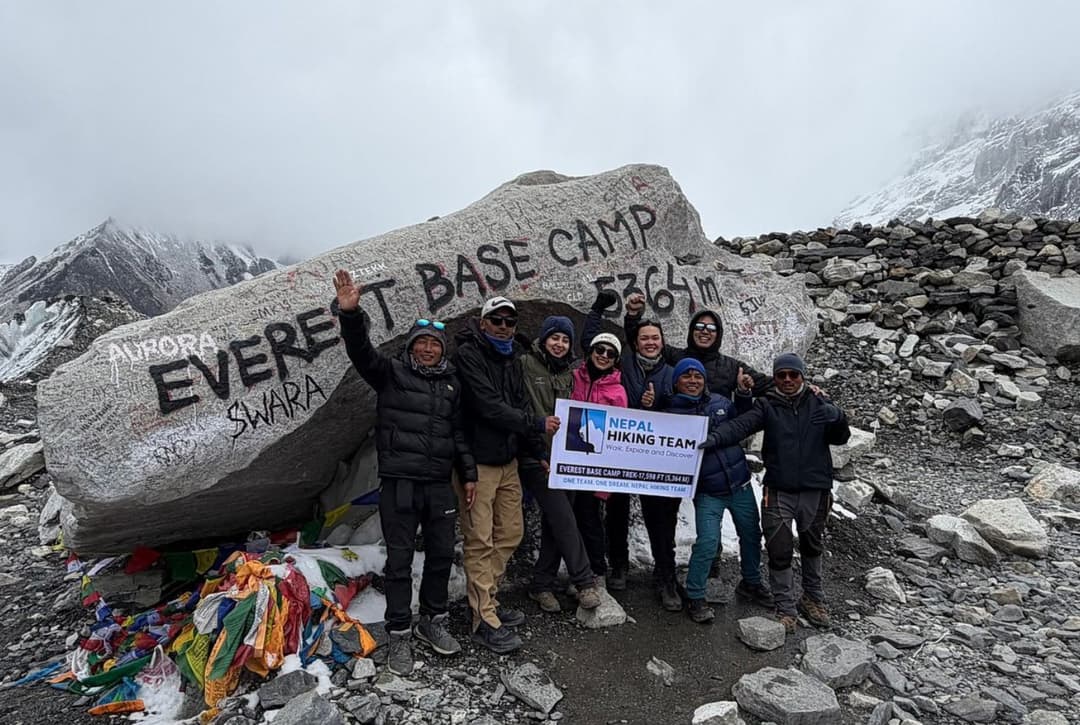
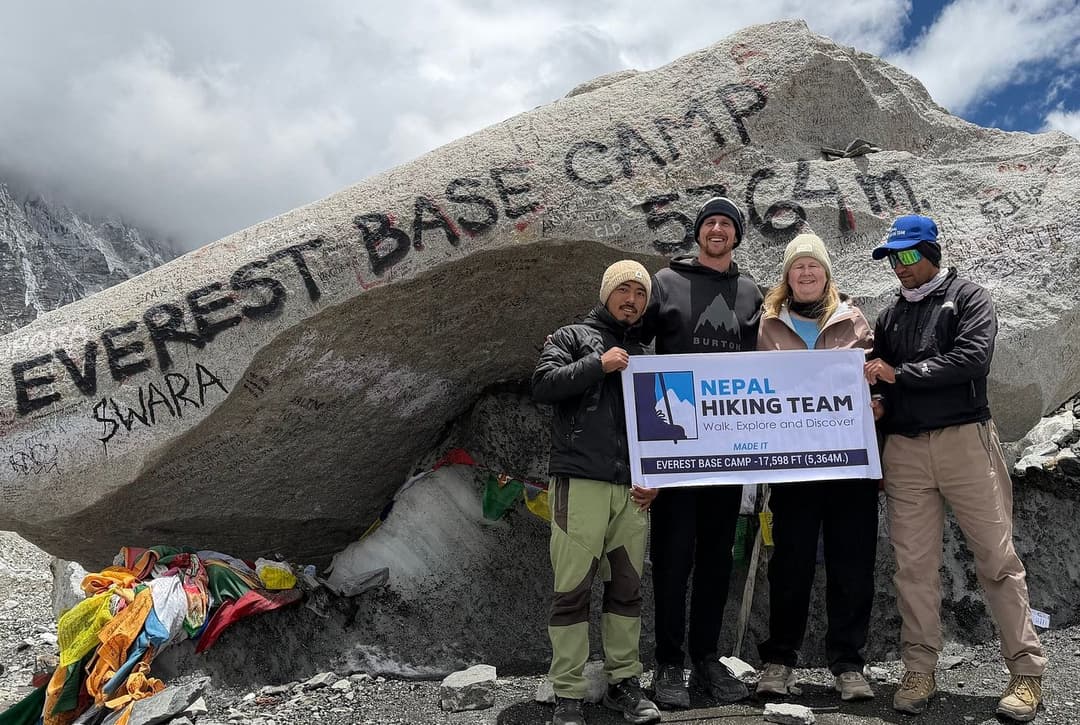
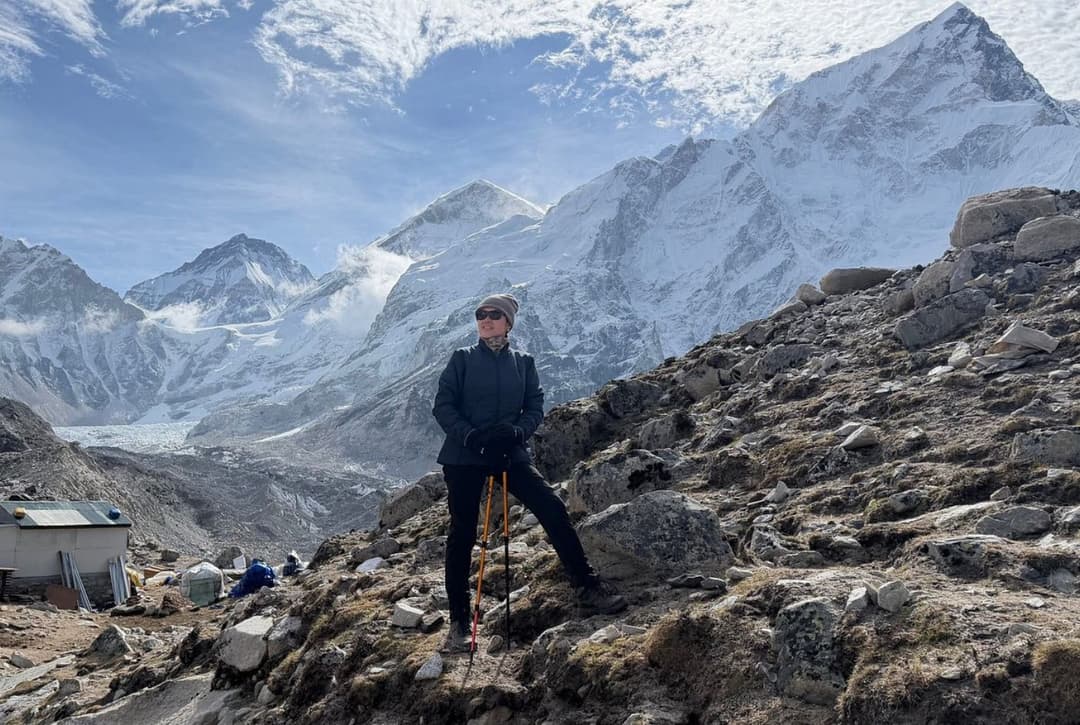
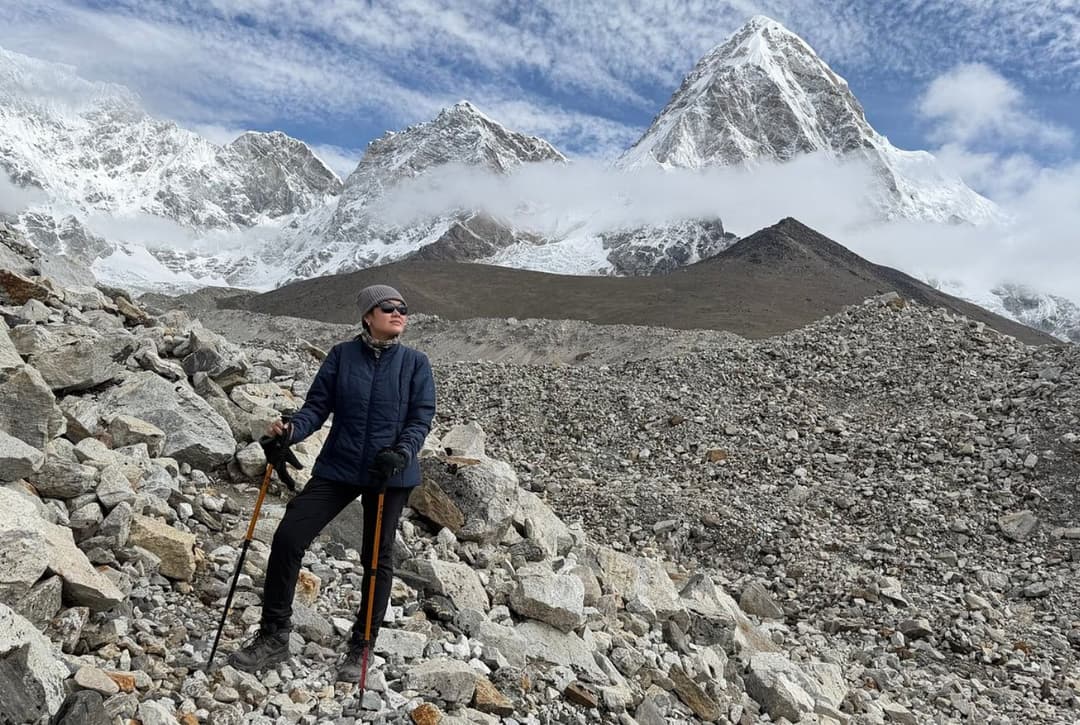
We had an absolutely incredible experience on our Everest Base Camp Trek with the Nepal Hiking Team. As novice hikers, the trek felt intimidating, but the team handled everything flawlessly from start to finish. The office staff were professional, responsive, and incredibly helpful.
We booked a private trek as a couple, and our team was top-notch. Our guide, Paban Panta, was outstanding; his leadership was excellent, and we wouldn't trek in Nepal again without him. Our porter, Ram Tamang, was also amazing, assisting us at every turn and even walking with us during our final push to Base Camp.
A perfect 5-star experience all around. We highly recommend Nepal Hiking Team, Paban, and Ram!
 +
+ +
+ +
+ +
+An excellent, well-organized experience with the Nepal Hiking Team! Ganga provided fantastic guidance before we started, and our guides, Indra and Binod, took exceptional care of us during the walk. The accommodations in Kathmandu were also first-rate.
I highly recommend them for the Everest Base Camp Trek!
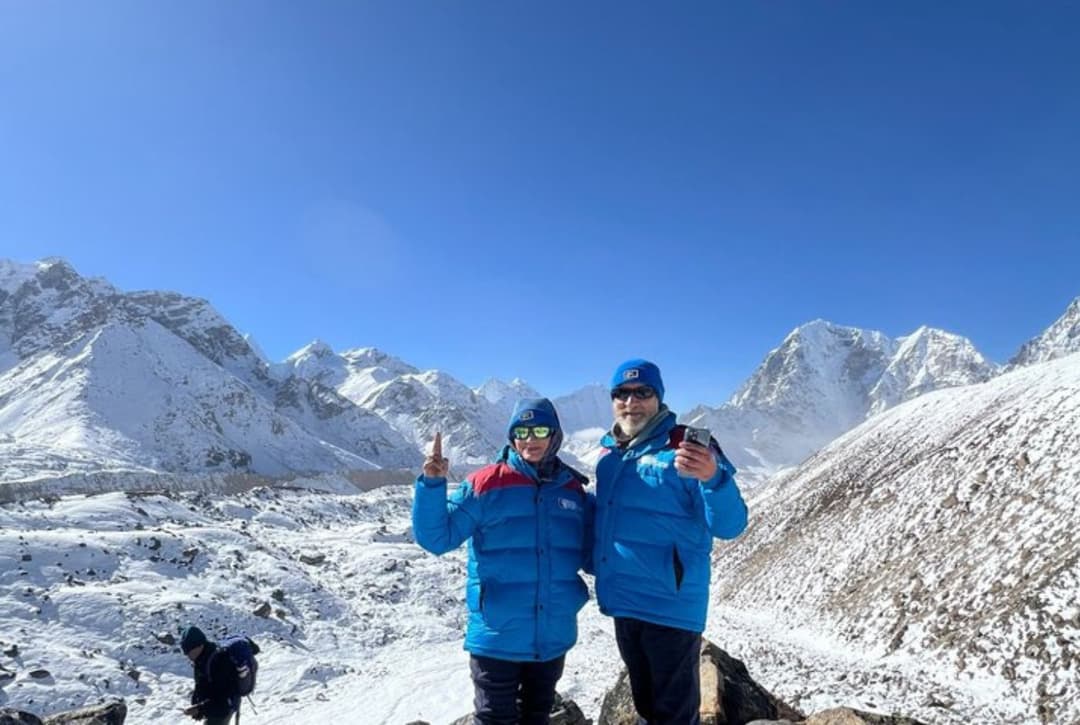 +
+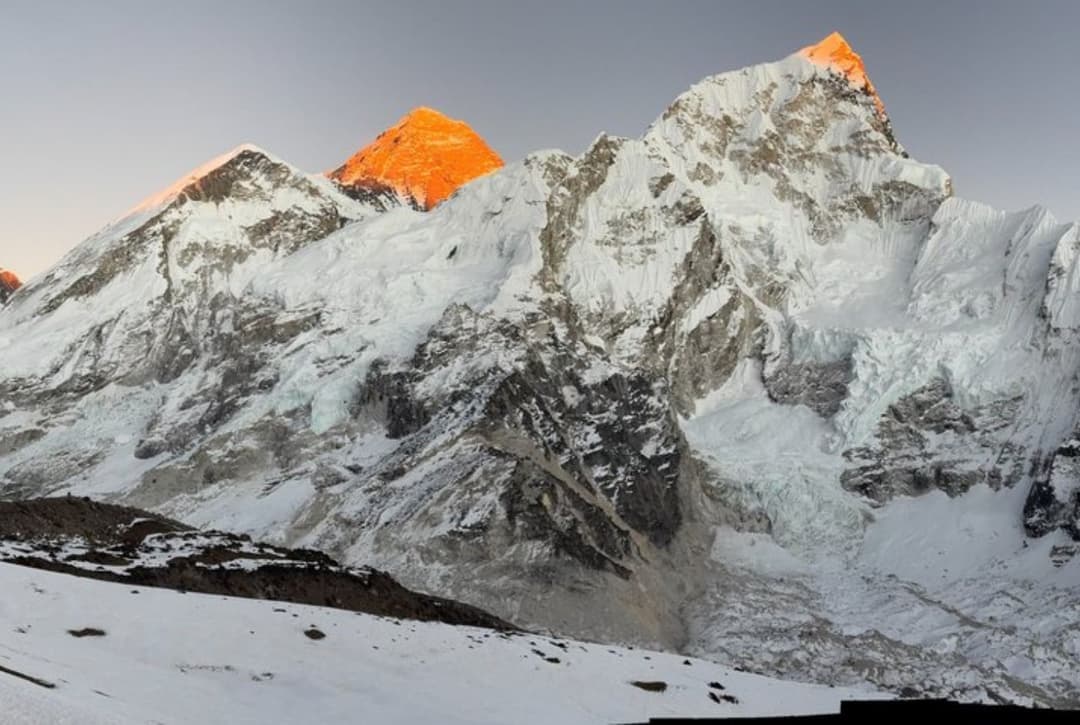 +
+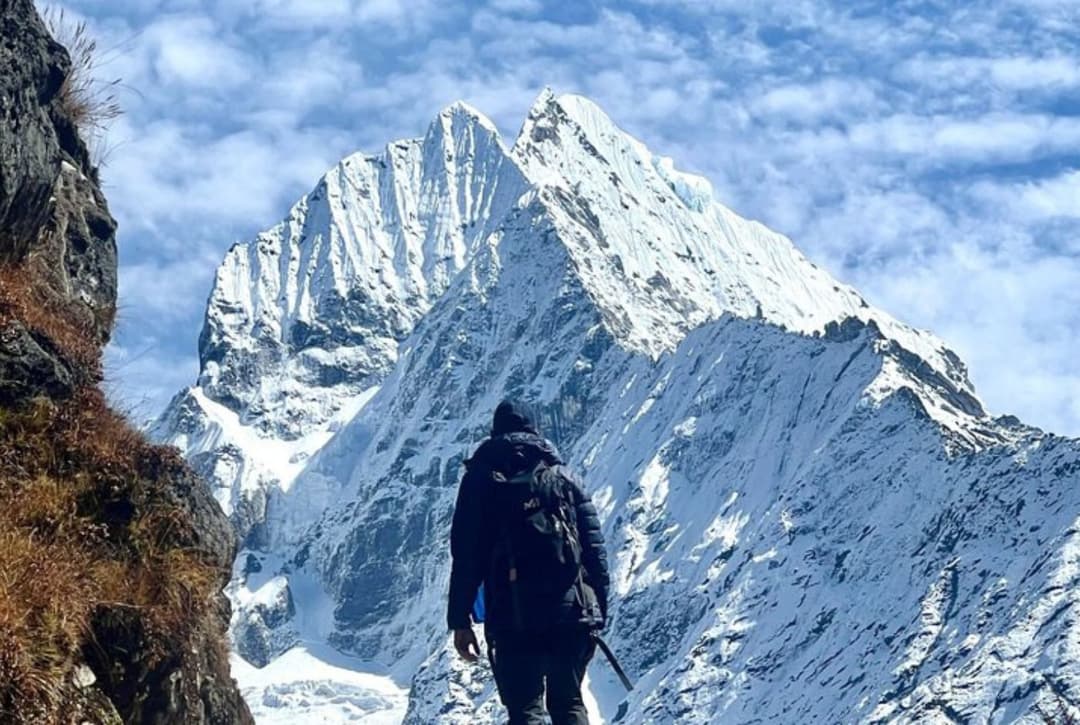 +
+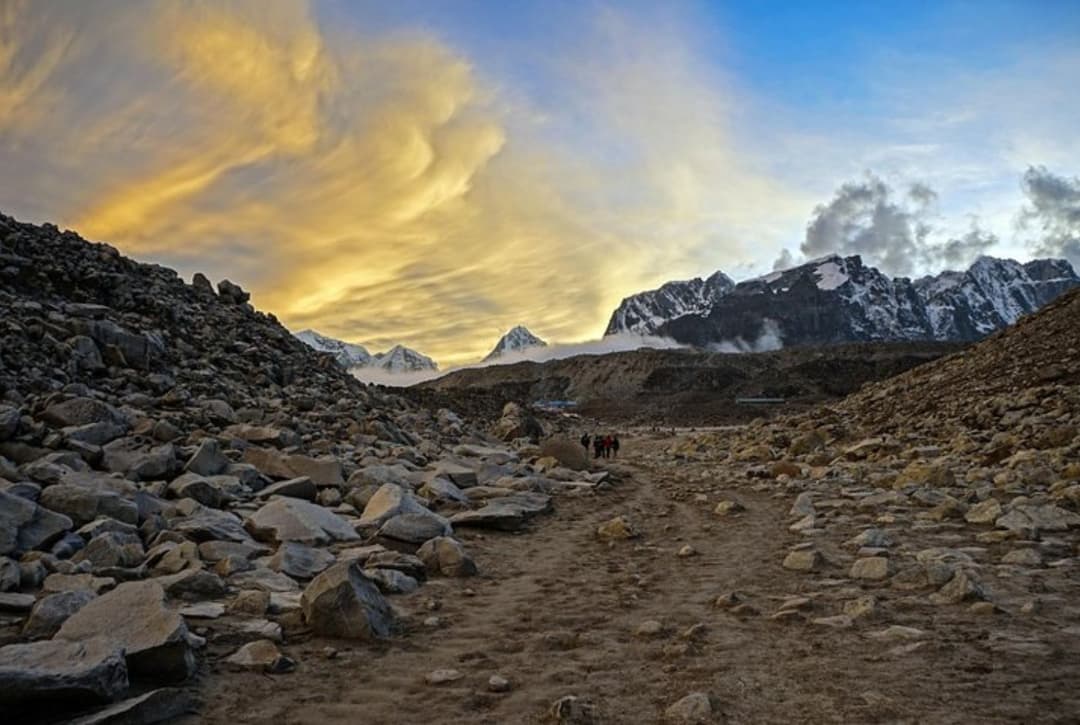 +
+I just finished the Everest Base Camp trek and am now relaxing in Kathmandu. The trip was amazing and made incredibly easy thanks to Nepal Hiking Team, who handled everything from airport transfers and permits to accommodation, meals, flights, and more.
Our guide, Gokul, along with our porters Sabin and Ramm, were outstanding. They were friendly, knowledgeable, and extremely hardworking, and I would highly recommend them. The trek is challenging, but with their support, our group made it through successfully.
 +
+
We did the Everest Panorama Trek with the Nepal Hiking Team, and we absolutely loved this trek; Ganga was very flexible and reactive to all our requests prior to the trek. During the trek, our trekking guide Ganesh was very helpful and very attentive to our health;
We highly recommend;
Choosing a local company for the Ama Dablam Base Camp Trek offers real on-the-ground knowledge, current trail conditions, Lukla flight realities, and teahouse availability. Trekkers can also get insights on emergency coordination and acclimatisation pacing in the Khumbu region.
Also, local knowledge about the Ama Dablam Base Camp Trek makes a huge difference during weather changes, altitude effects, or logistics in the higher region.
While the Ama Dablam Base Camp Trek is shorter than the EBC trek, it still reaches an altitude of 4,600 m (15,091 ft). A licensed guide helps recognise early signs of altitude sickness, provides daily health monitoring, and decides descent or emergency rescue when the situation becomes serious.
Similarly, guides manage accommodation, transportation, permits, and emergency rescue operations when needed. Although the trek is not technically difficult, experienced judgment becomes crucial in terms of altitude.
The group size for the Ama Dablam Base Camp Trek is organised in small groups, usually 6 to 8 trekkers, and a maximum of 10. Organising small groups allows for better pacing, a comfortable trekking experience, and closer guide support at high altitude.
Yes, departure is guaranteed even if no group forms on your selected date. According to Nepal Hiking Team policy, we will run the trek as a private trip with no additional cost if additional trekkers do not join you.
Yes, the Ama Dablam Base Camp trek is beginner-friendly as it doesn’t require technical climbing skills and mountaineering gear. But trekkers should be prepared for high-altitude walking, rocky trails, and elevation gain.
The Ama Dablam Base Camp Trek is considered moderate to moderately challenging. Most days involve 5 to 7 hours of walking, rocky, uneven terrain, steep ascents, and descents. Proper pacing and acclimatisation are crucial to complete the trail successfully.
Yes, the Ama Dablam peak is considered challenging to climb due to exposed ice, near-vertical rock faces, and a mixture of snow-and-rock climbing. Also, it is one of the most technical sub-7,000-meter peaks in the Himalayas.
Trekkers can start preparing for the Ama Dablam Base Camp trek with cardio exercises, leg and core strength training paired with weighted hiking. Trekkers should build endurance with squats, lunges, step-ups, and calf raises against steep mountain steps.
To complete the Ama Dablam Base Camp Trek, you should have a basic fitness level with the capability of walking 5 to 7 hours over steep, rocky, and varied terrain. Hikers should prepare for the journey at least 6 to 8 weeks with regular hiking, lower-body training, and light cardio.
Yes, the Ama Dablam Base Camp Trek is suitable for both older trekkers and families with a good fitness level, health, and following a well-paced itinerary. Our NHT team has guided trekkers as young as 6 to 70 years old, proving that with proper acclimatisation, an experienced guiding team, and a dedicated support team, both older adventurers and families can safely experience and enjoy up-close views of Ama Dablam Base Camp.
The best time for the Ama Dablam Base Camp Trek is during the spring and autumn seasons. During March to May and Sep to Nov, the skies are clearer, stable trail conditions, and Lukla flights are more reliable.
In addition, the shoulder season can suit trekkers seeking quieter and non-commercial trails with fewer crowds, with peak mountain views.
April, May, October, and November are the best months for the clearest mountain views on the Ama Dablam trek. Similarly, post-monsoon months like October and November are most popular for sharp views, crisp weather, and excellent trail conditions across the Khumbu region.
Yes, the Ama Dablam Base Camp trek is possible during the monsoon season with more challenging conditions, such as slippery roads, flight delays, and low visibility during the monsoon.
Likewise, the winter season brings freezing temperatures, heavy snowfall, and icy trails. Also, accommodations are limited during the December to Feb time period.
As the Tenzing-Hillary Airport depends entirely on stable wind conditions and clear visibility, weather plays a major role in flight operations. As the Ama Dablam trek relies on these flights to begin and end your journey, incorporating 1 or 2 buffer days in your itinerary is highly recommended.
Trekkers can see four eight-thousanders: Mount Everest (8,848 m), Lhotse (8,516 m), Makalu (8,485 m), and Cho Oyu (8,188 m). Besides this, adventurers can spot peaks like Nuptse, Thamserku, and Kantega from the base camp.
The total cost for the 12-day Ama Dablam Base Camp Trek costs around USD 1425 per person under Nepal Hiking Team’s group package. The cost covers licensed guides, Lukla flights (round-trip), permits, accommodations, meals (throughout the trek), and seasonal fruits.
For the Ama Dablam Base Camp Trek, trekkers should carry NPR 25,000 to 30,000 for personal expenses throughout the journey. While some teahouses may accept card payment in lower regions like Lukla and Namche Bazaar, it is best to carry cash to spend in higher altitudes.
During the Ama Dablam Base Camp Trek, the most common extra expenses include Wi-Fi, hot showers, charging, boiled drinking water, and snacks. Due to the higher cost of transporting goods, these basic items become progressively more expensive the higher you climb towards the base camp.
You can book the Ama Dablam Base Camp Trek through our online booking portal, where you can secure a spot on your preferred travel dates. Simply fill out the form with your personal details, select the suitable departure date, and make a 20% deposit for booking confirmation.
To confirm your booking, a 20% deposit is required. This allows us to confirm and begin securing regional logistics. The remaining balance can be paid upon your arrival in Kathmandu before the trek begins, either by credit card or cash.
Note: Trekkers should note that a 3.5% bank surcharge applies while using a credit card.
Yes, you can change or postpone your trek if your plans unexpectedly change. While the 20% deposit is nonrefundable, it remains in our records as a lifetime credit for any future trip with Nepal Hiking Team.
Check out our risk-free policy to plan your adventure to the Himalayas with complete peace of mind and confidence.
The 20% deposit is non-refundable as they are immediately utilised to secure essential trek logistics such as permits, Lukla flights, and accommodation. In case of trip cancellation, your deposit is converted into a travel credit for a future trip.
In addition, cash refunds are not possible, as these immediate advance payments are made to tourism services in the mountain region on your behalf.
Our group trek allows multiple trekkers to join one another on the same departure date, sharing the experience and logistics. Whereas a private trek is exclusively arranged for you or your group, offering more flexibility in scheduling and pace. Both of our options include the same level of service, support, and guides.
Yes, you can charge your devices and get hot shower facilities during the Ama Dablam Base Camp Trek. However, these services become limited as you gain altitude. However, most trekkers avoid showering at higher stopes as cold temperatures make it easy to catch a chill and slow altitude recovery.
During the Ama Dablam Base Camp Trek, accommodations are locally run teahouses and small mountain lodges. In the lower region, rooms can be upgraded to private rooms with attached bathrooms for comfort.
In higher regions, teahouses offer twin-sharing rooms with shared bathrooms and simple meals.
Private rooms are available in the lower villages like Namche and Lukla. The availability drops significantly as you gain altitude, as settlements closer to the base camp have fewer rooms, which are often shared with a fellow trekker.
Trekkers can enjoy a mix of Nepali, Tibetan, Indian, and Western dishes in teahouses. The most popular meal option is dal bhat or rice and lentils, which comes with free refills. In addition, meals are freshly made in teahouses every day.
Yes, both Wi-Fi and mobile connectivity are available during the Ama Dablam trek; however, connectivity scales down as you ascend. Cellular connectivity (Ncell and NTC) works well up to Namche Bazaar but becomes weak or unavailable closer to the base camp.
On the Ama Dablam Trek, Wi-Fi is usually provided through Airlink or Everest Link. Trekkers can purchase the Wi-Fi card at the teahouse and get internet access; however, the connection depends on the weather conditions.
While planning the Ama Dablam Trek, pack moisture-wicking, versatile layers to handle rapidly changing conditions and mountain temperatures. Other essential gear includes a high-quality down jacket, trekking pants, insulated gloves, broken-in trekking boots, and a warm hat.
Yes, you can buy or rent trekking gear in the Thamel area of Kathmandu. Hikers can find gear like trekking poles, hiking boots, down jackets, gloves, and sleeping bags. You should try to pick gears that perfectly fit your comfort.
Each trekker has a weight limit of 12 to 13 kg in their main luggage. Besides this, you can carry a daypack containing essentials such as cash, permits, phone, camera, and snacks. Your luggage will be carried by your porter throughout the trek.
Note: A porter carries 24-25 kg in total, which is shared between two trekkers.
The baggage limit for the Lukla flight is 15 kg (33 lbs) per person. The weight is a combination of both your duffel bag (10 kg) and your personal hang-carry (5 kg). These weight limits are strictly managed due to the aircraft’s high-altitude operating constraints.
Yes, you can directly fly from Kathmandu to Lukla for the Ama Dablam Base Camp Trek during the low trekking seasons. However, during the peak spring and autumn months, most flights are redirected to Ramechhap Airport, located in Manthali. This redirection is implemented during the peak season to avoid air traffic at Kathmandu airport.
During peak season, trekkers are required to travel 4 to 5 hours from Kathmandu to Ramechhap via private vehicle and then take the Lukla flight.
Lukla flights entirely rely on stable weather, clear visibility, and low wind for safety. At 9,334 ft, the weather conditions on Tenzing Hillary Airport shift rapidly, which can trigger immediate delays or cancellations.
When your Lukla flight is delayed or cancelled, it is rescheduled for the next flight or the following morning. If the flights don’t take off even when the weather clears, you can book a helicopter transfer at an additional cost.
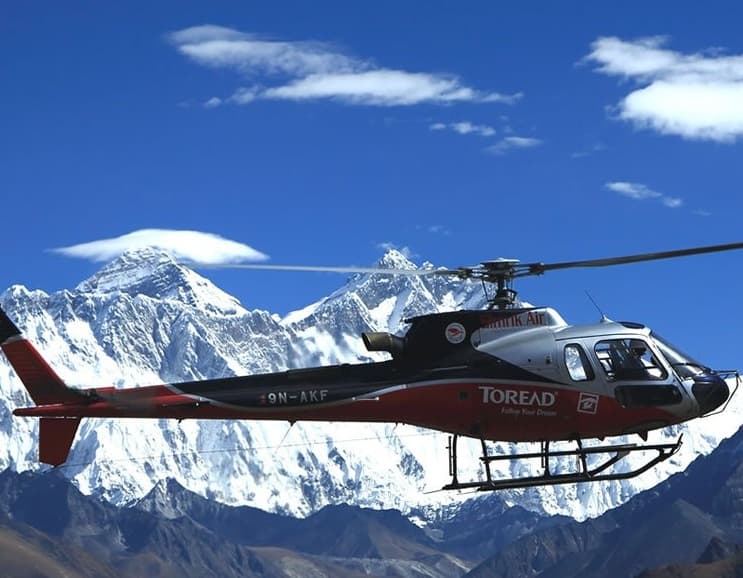
While returning from high-altitude region like Pangboche or the Ama Dablam Base Camp, the helicopter ride back to Lukla typically costs around USD 400-600 per person.
A shared helicopter ride from Lukla to Kathmandu usually costs between USD 400 to 500 per person. The heli ride cost depends on seasonal demand, passengers, and fuel prices.
Yes, most tekkers can obtain a tourist visa on arrival at Tribhuwan International Airport in Kathmandu. However, travellers from countries like Afghanistan, Iraq, Ghana, Nigeria, and few others need to complete the visa process before arriving.
Learn more about Nepal’s visa process this our Nepal Visa Information blog.
For the 13-day Ama Dablam Base Camp Trek, trekkers are highly recommended to get a 30-day tourist visa. As a 15-day visa duration leaves no room for buffer days or unexpected disruptions during the trek, foreign travellers are advised to apply for the 30-day visa.
You can complete the Nepal visa online form 15 days before your arrival to speed up the process time at the airport. Moreover, forms submitted before 15 days may expire, requiring hikers to fill it out again upon arrival.
Nepal visa days are measured in calendar days and not nights or hours. For example, your arrival day is counted as Day 1, regardless of your arrival time and your departure day is also counted as a full day.
Yes, the Ama Dablam Base Camp Trek is safe when approached with a well-planned itinerary, comfortable pacing, and an experienced guide. The primary risk is the altitude rather than the trail; hence, it is crucial to follow your guide’s instructions.
Altitude sickness is a condition that occurs when your body cannot adapt quickly enough to the reduced oxygen levels and lower air pressure, typically above 3,000 m. It can occur during the final stretch to Ama Dablam Base Camp at around 4,600 m.
Trekkers should drink plenty of water, maintain a steady pace, and acclimatise properly to reduce the risk of severe symptoms.
If your body shows signs of altitude sickness, your guide will assess your condition using a pulse oximeter. They will adjust the trek to a slower pace or descend to a lower altitude if the symptoms persist.
If the symptoms worsen, we provide prompt helicopter rescue services to bring you back to safety.
Based on the feedback from past trekkers, some of the reliable travel insurance providers are Tugo, World Nomads, Travelex, and AXA. As we personally do not sell insurance policies, we highly recommend our guests to research and compare policies at different agencies before booking.
The most popular add-on to the Ama Dablam Base Camp Trek is the Chitwan Safari Tour. This 3-day wildlife package complements your mountain trek with a relaxing jungle experience, jeep safaris, canoe rides, and guided walks around the national park to spot rhinos, crocodiles, and exotic birds.
Prices at USD 220, this extension includes full-board meals and return travel to Kathmandu.
Yes, you can fully customise the Ama Dablam Base Camp Trek itinerary; however, the customisation is exclusively available for private treks to ensure complete logistical flexibility.
Yes, we offer guided tours around Kathmandu for an additional USD 120 per person. Our city tour includes an excursion to iconic UNESCO World Heritage sites such as Kathmandu Durbar Square, Boudhanath, and Swayambhunath.